

Site & Application Audit
Map guestrooms, restrooms, kitchens, laundry, public areas, and back-of-house tasks before selecting formulas.
Commercial cleaning programs, specified clearly
Source commercial cleaners, hygiene products, dosing equipment, testing supplies, and storage systems through one hospitality-focused procurement path.
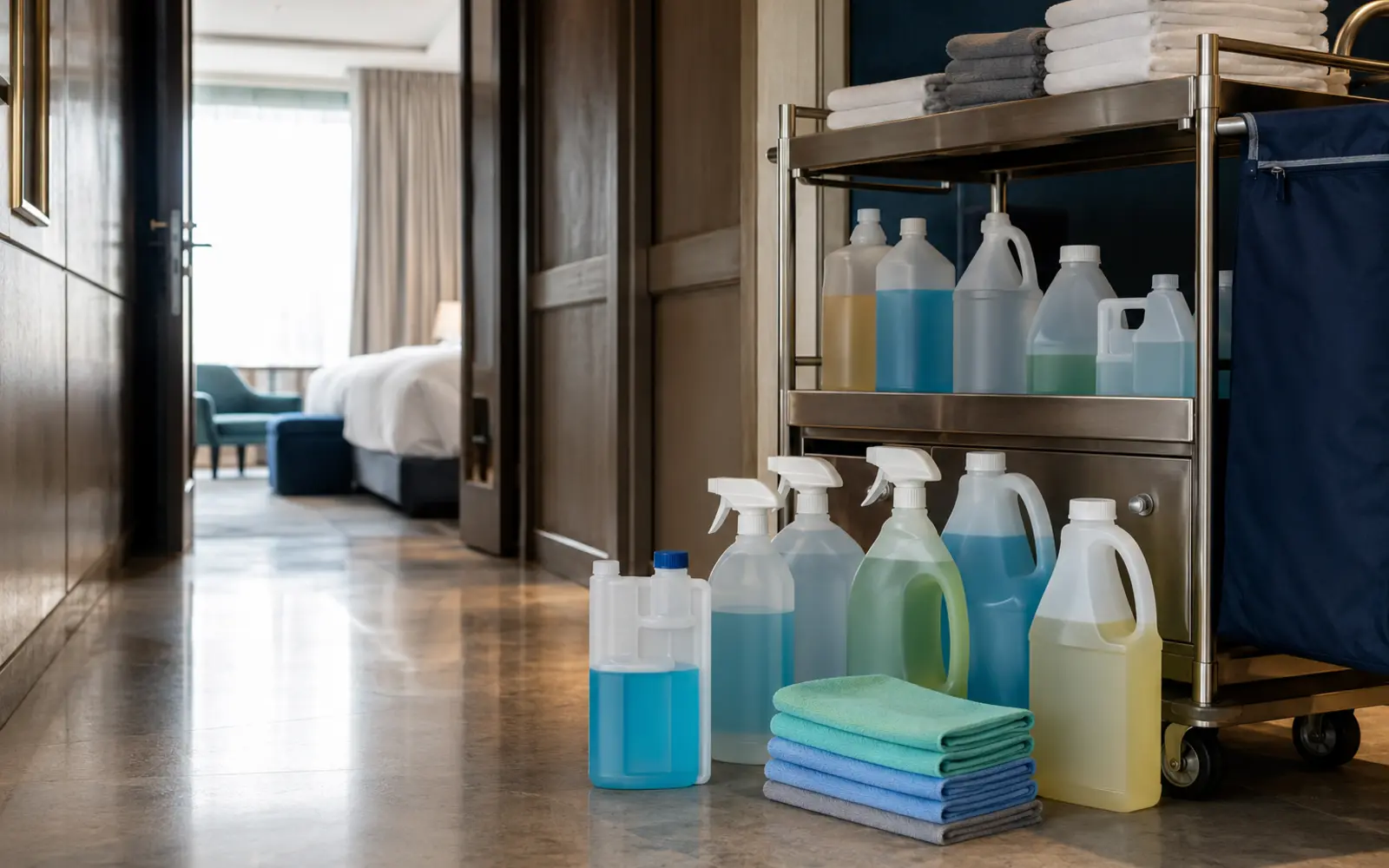
Start with the operating requirement
Begin with applications, surfaces, documentation, dosing, storage, and replenishment—not a disconnected list of product names.
Map guestrooms, restrooms, kitchens, laundry, public areas, and back-of-house tasks before selecting formulas.

Match chemistry and method to stone, tile, wood, glass, stainless steel, carpet, upholstery, and resilient flooring.
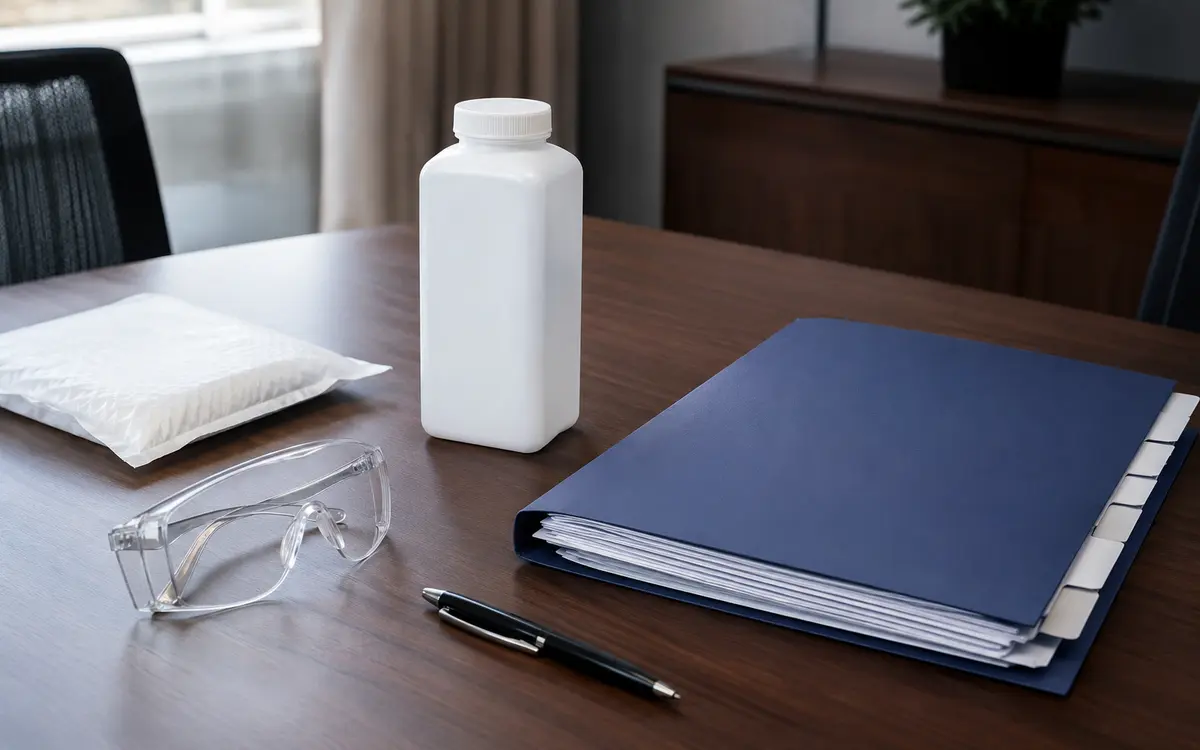
Identify required product data, handling information, concentration controls, storage rules, and destination requirements.
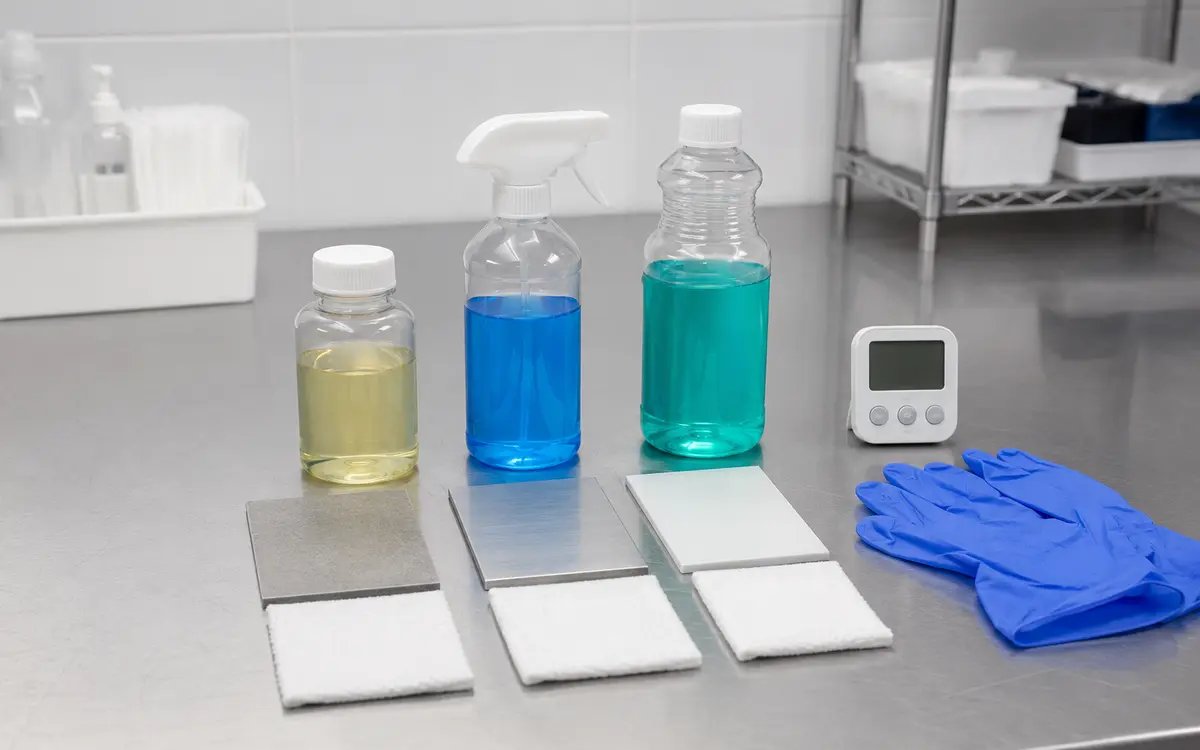
Compare performance, residue, odor, surface response, packaging, and dispensing fit under representative conditions.
Cleaning chemical product directory
Search all 24 product families or filter by cleaning task. Each card can connect to its own dedicated landing page when published.


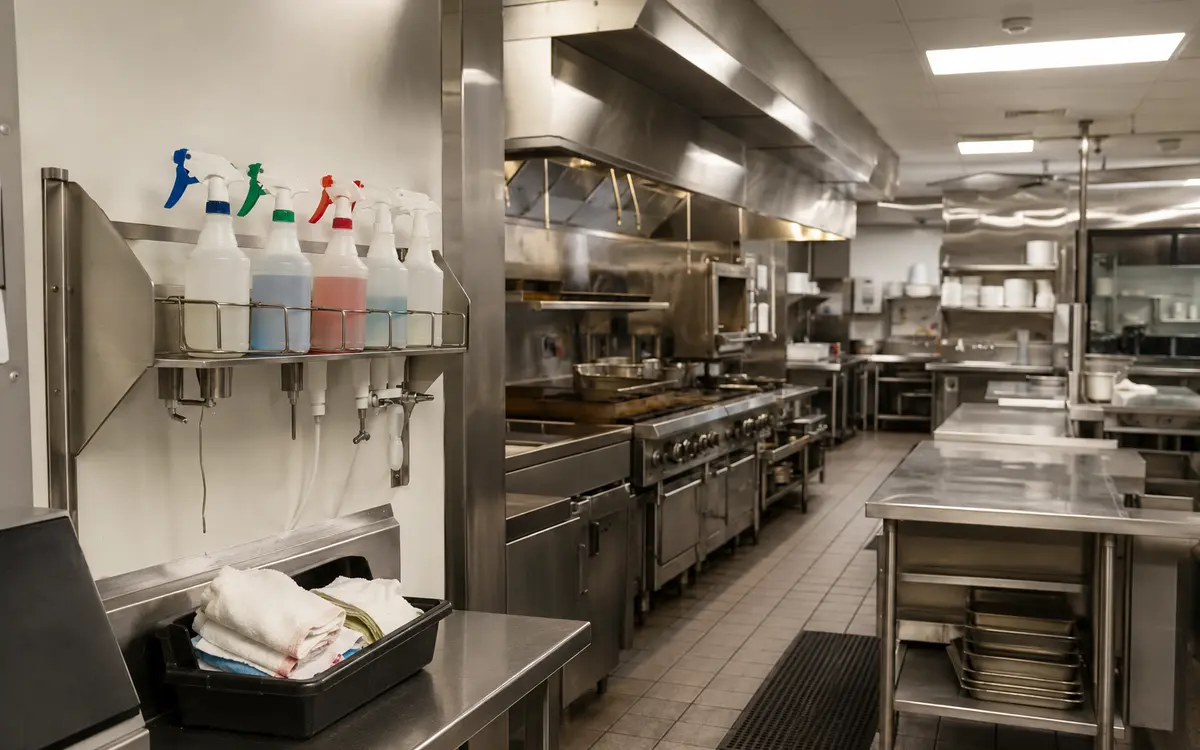

Showing all 24 categories
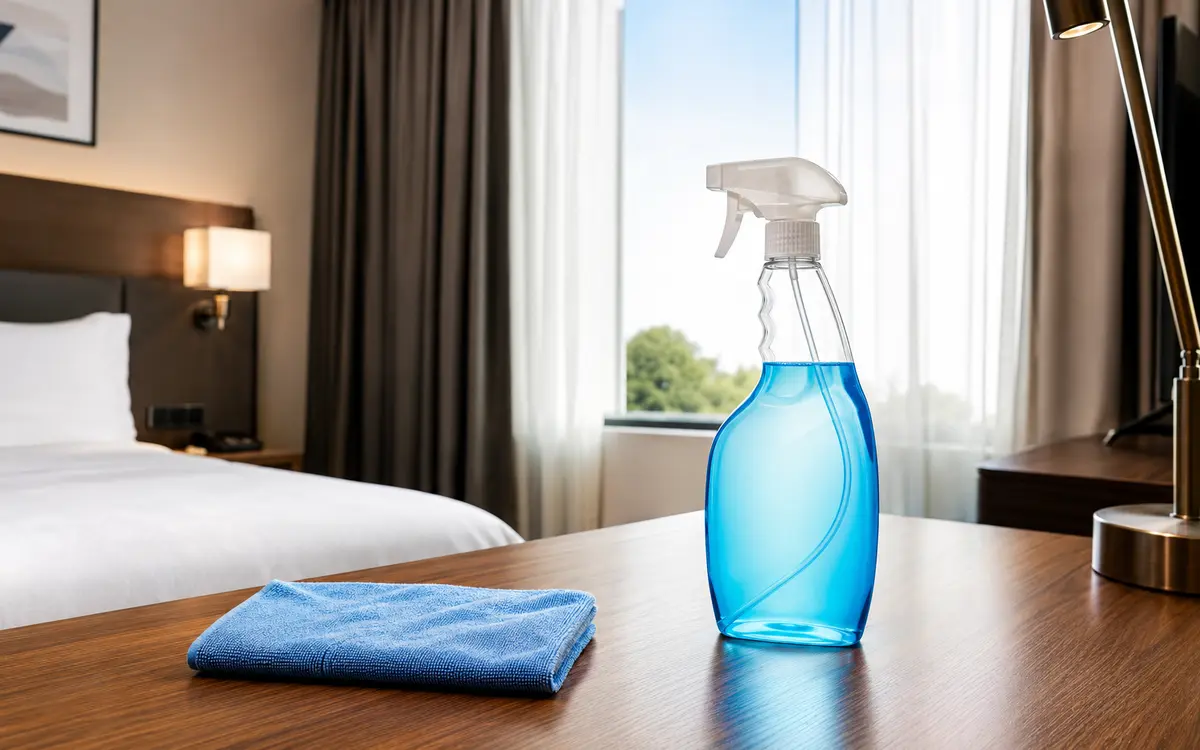 01
General Hygiene
01
General HygieneReady-to-Use Sprays · Concentrates · Neutral Cleaners
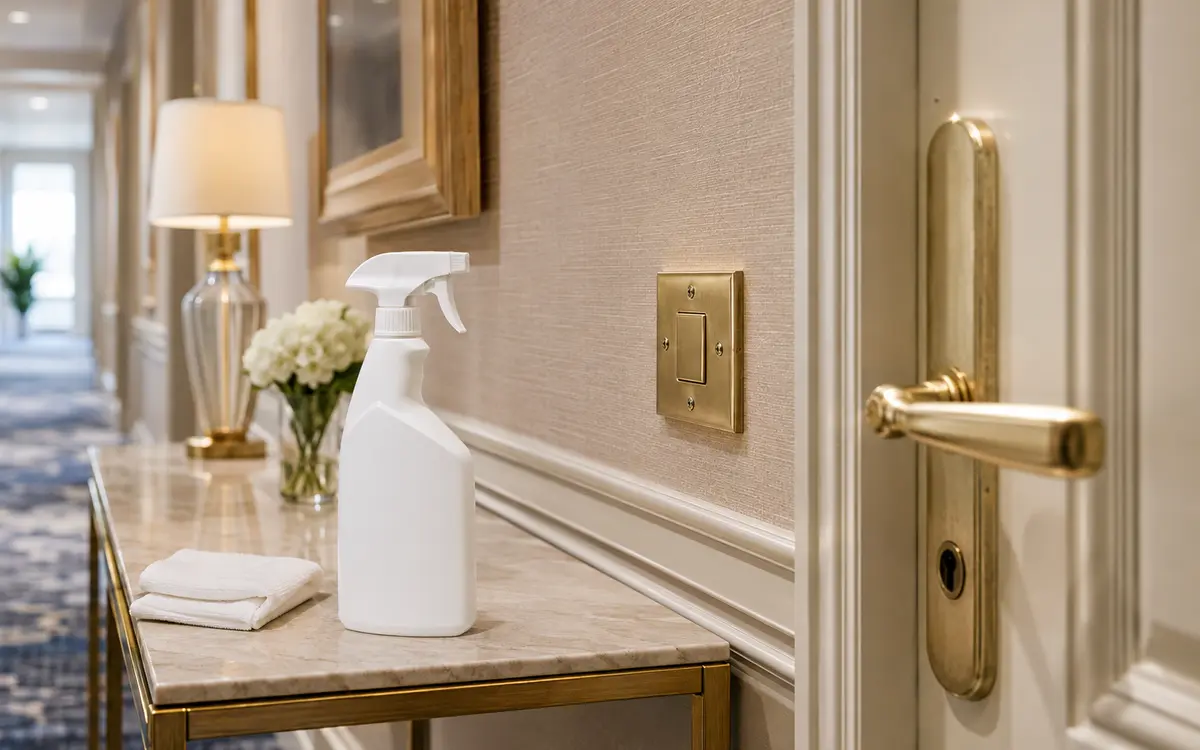 02
General Hygiene
02
General HygieneSurface Disinfectants · Wipes · Concentrates
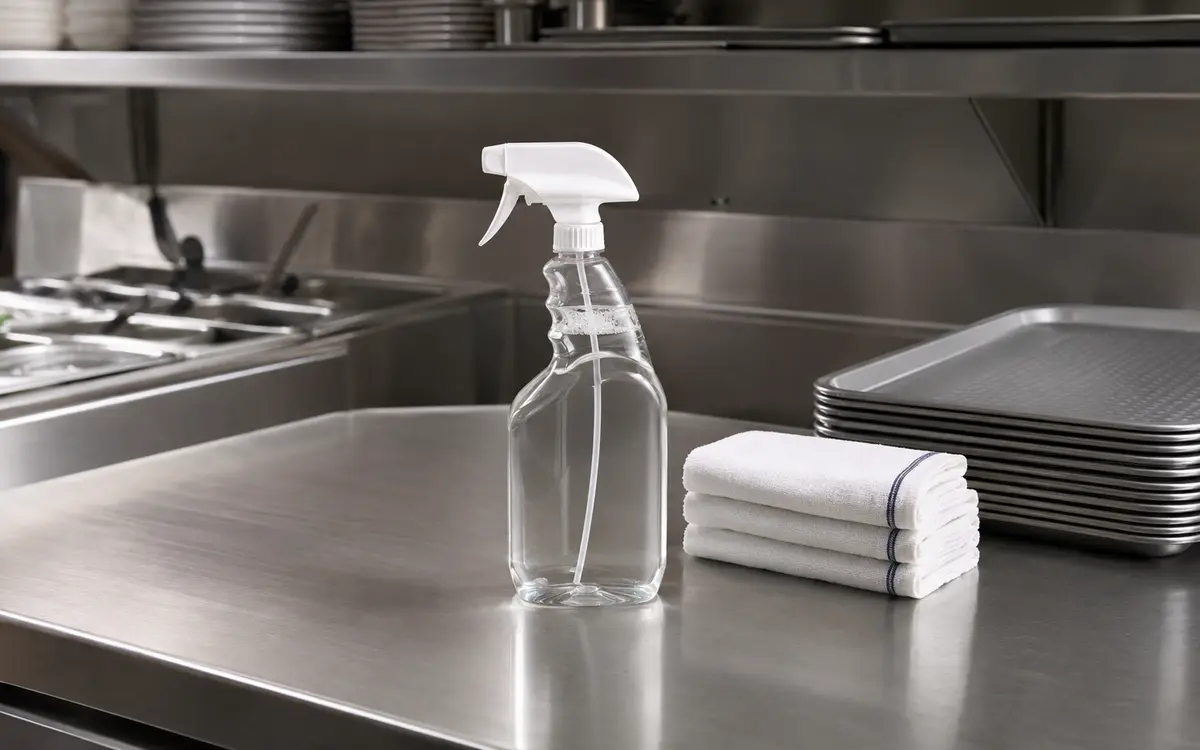 03
General Hygiene
03
General HygieneFood-Area Sanitizers · No-Rinse Options · Surface Sprays
 04
General Hygiene
04
General HygieneMirror Cleaners · Window Cleaners · Low-Streak Formulas
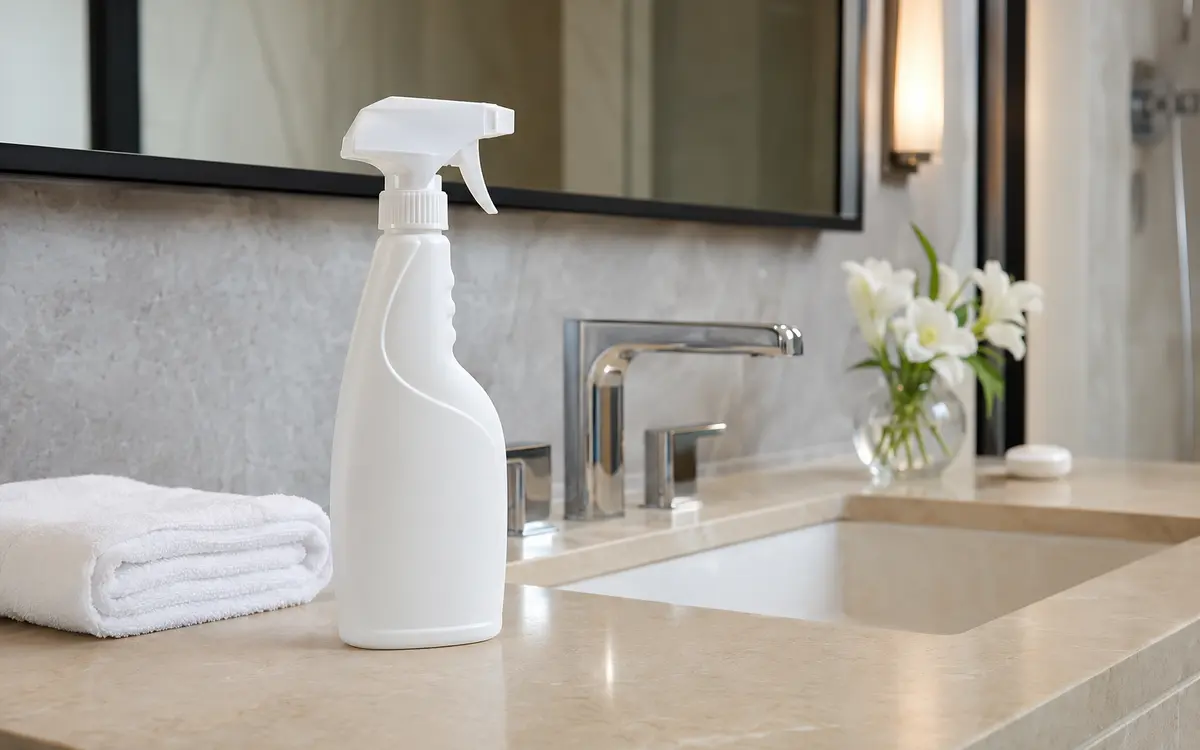 05
Restroom & Odor
05
Restroom & OdorDaily Bathroom Cleaners · Soap-Scum Removers · Descalers
 06
Restroom & Odor
06
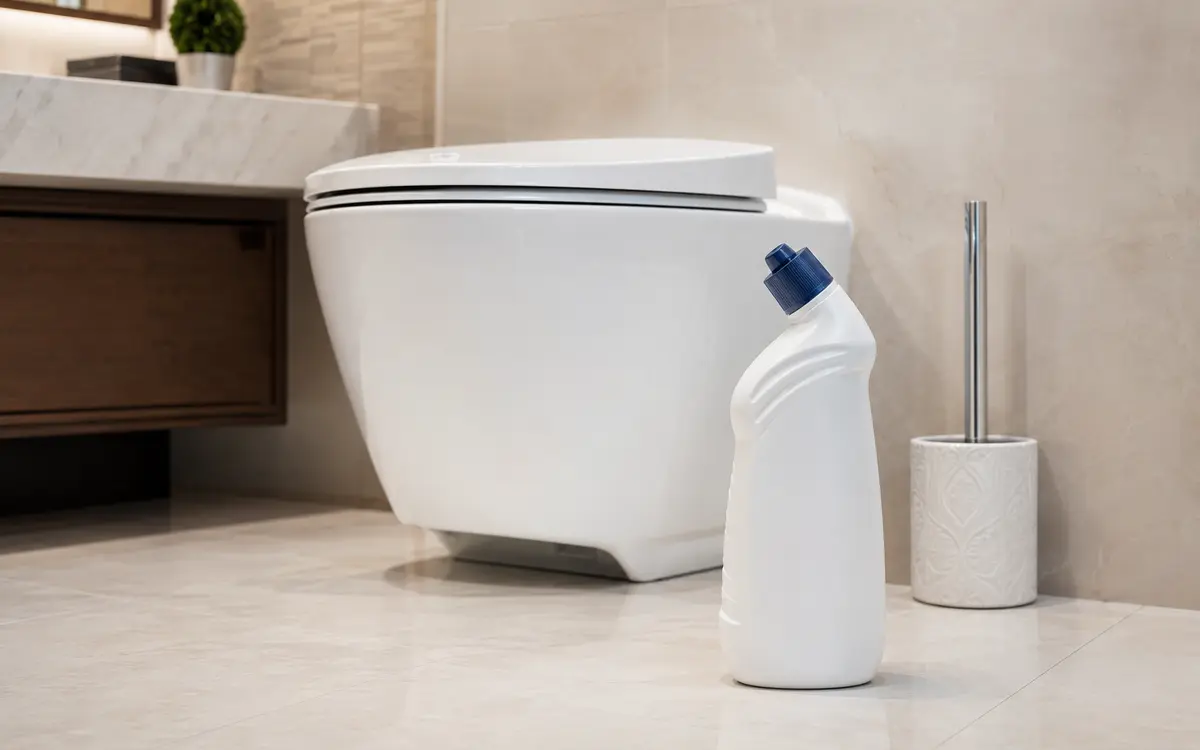
Restroom & OdorDaily Bowl Cleaners · Descaling Formulas · Clinging Gels
 07
Restroom & Odor
07
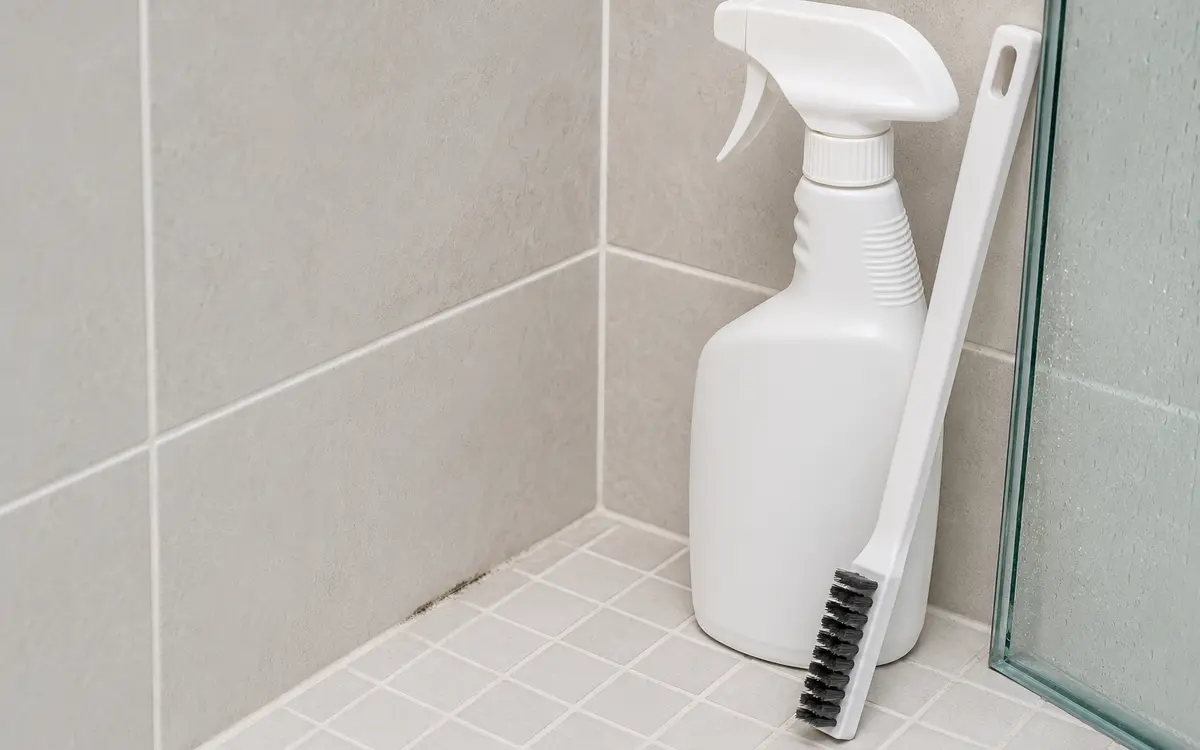
Restroom & OdorTile Treatments · Grout Treatments · Moisture-Area Cleaners
 08
Restroom & Odor
08
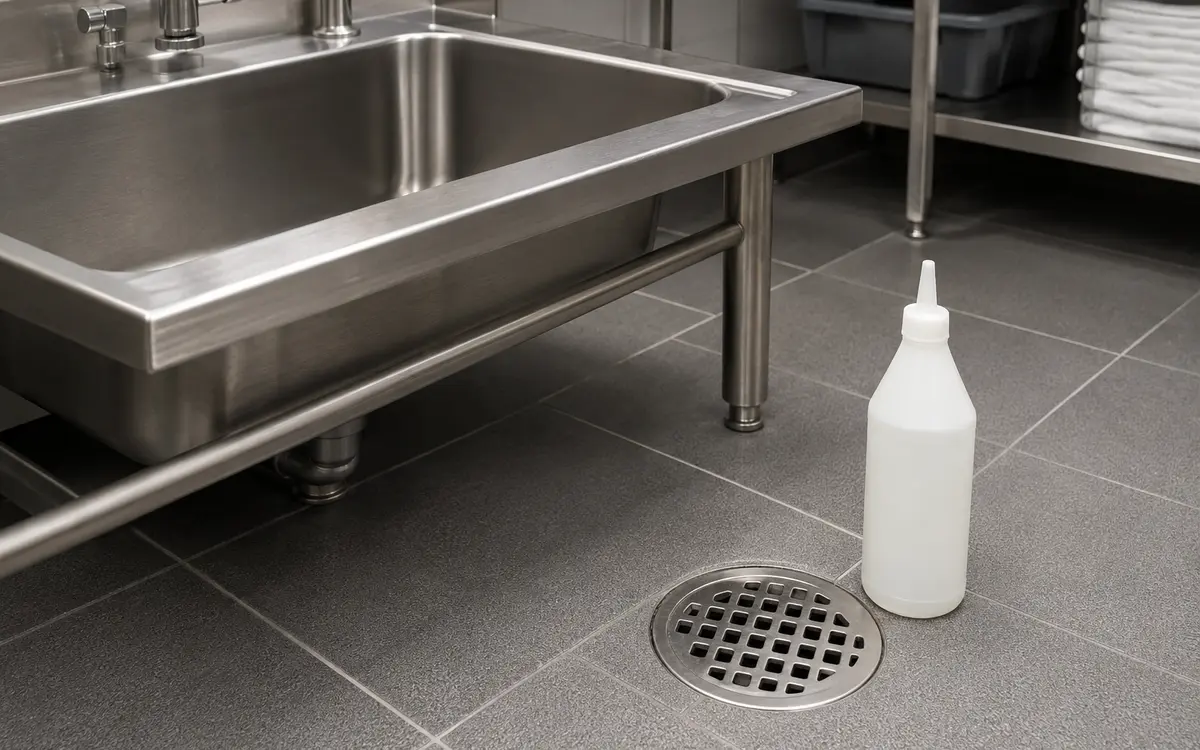
Restroom & OdorMaintenance Products · Enzyme Drain Care · Blockage Treatments
 09
Restroom & Odor
09
Restroom & OdorOdor Neutralizers · Source Treatments · Room Deodorizers
 10
Restroom & Odor
10
Restroom & OdorMetered Refills · Passive Systems · Room Sprays
 11
Surface & Floor
11
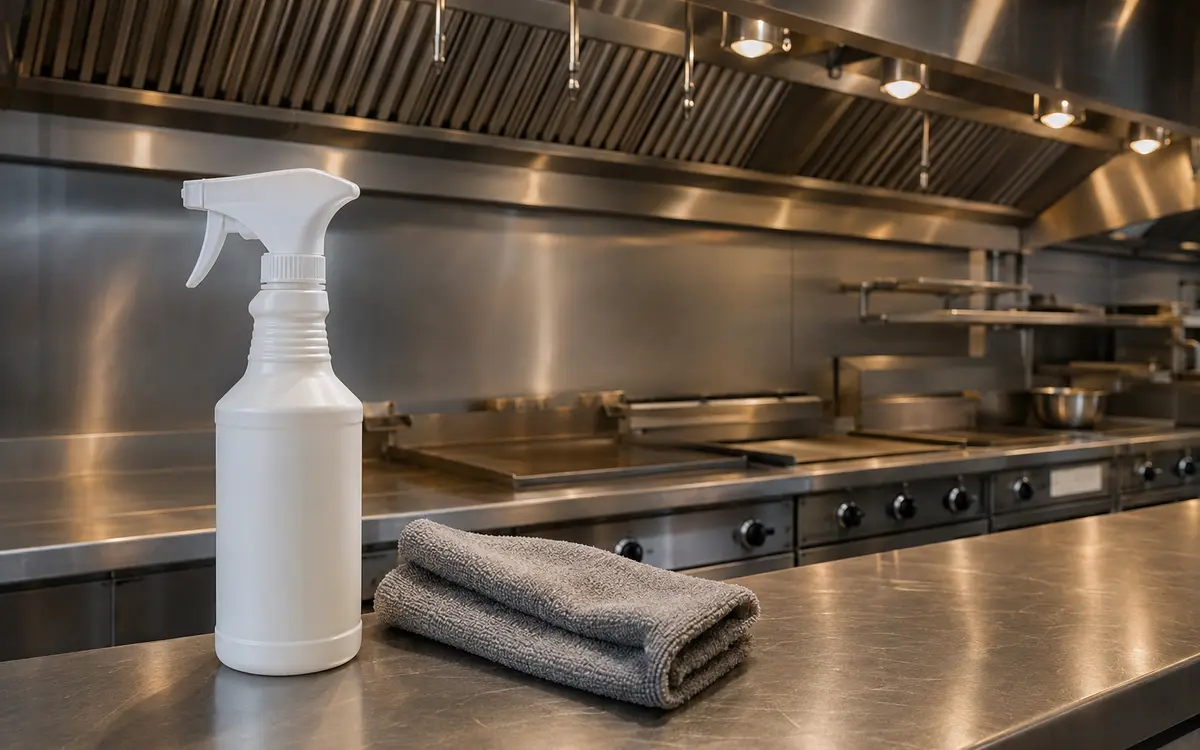
Surface & FloorKitchen Degreasers · Heavy-Duty Formulas · Low-Foam Options
 12
Surface & Floor
12
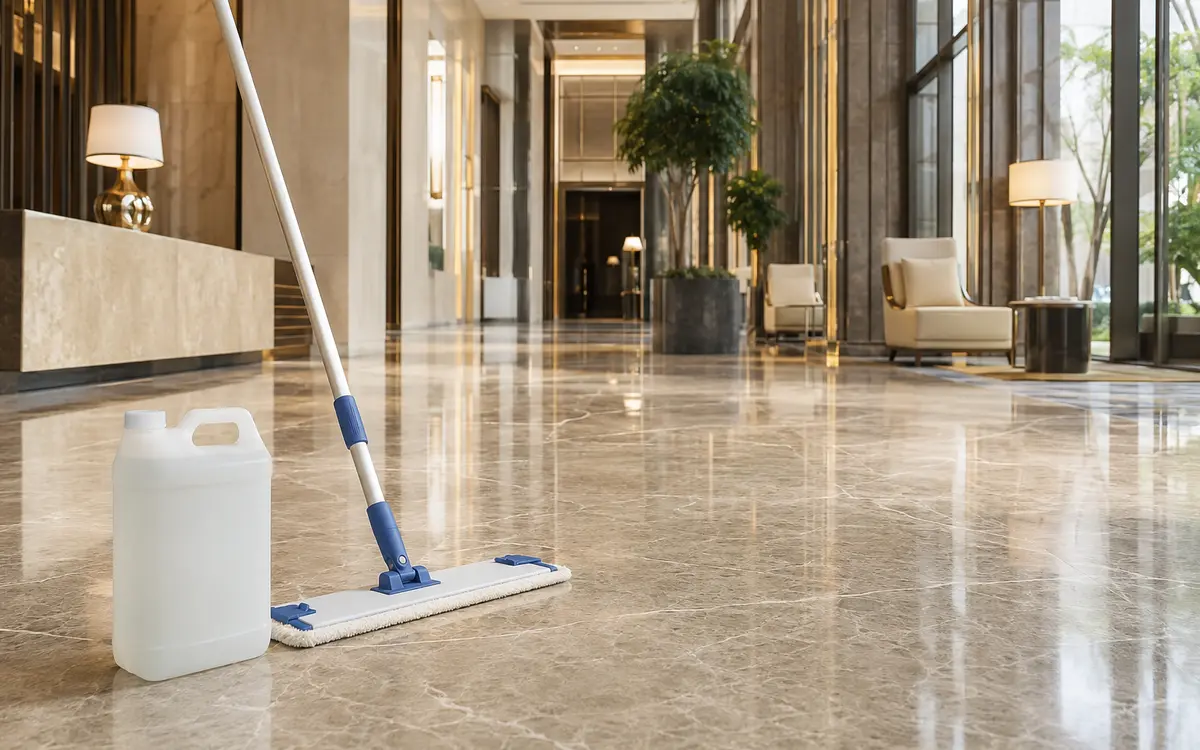
Surface & FloorNeutral Floor Cleaners · Machine-Scrub Formulas · Daily Mopping
 13
Surface & Floor
13
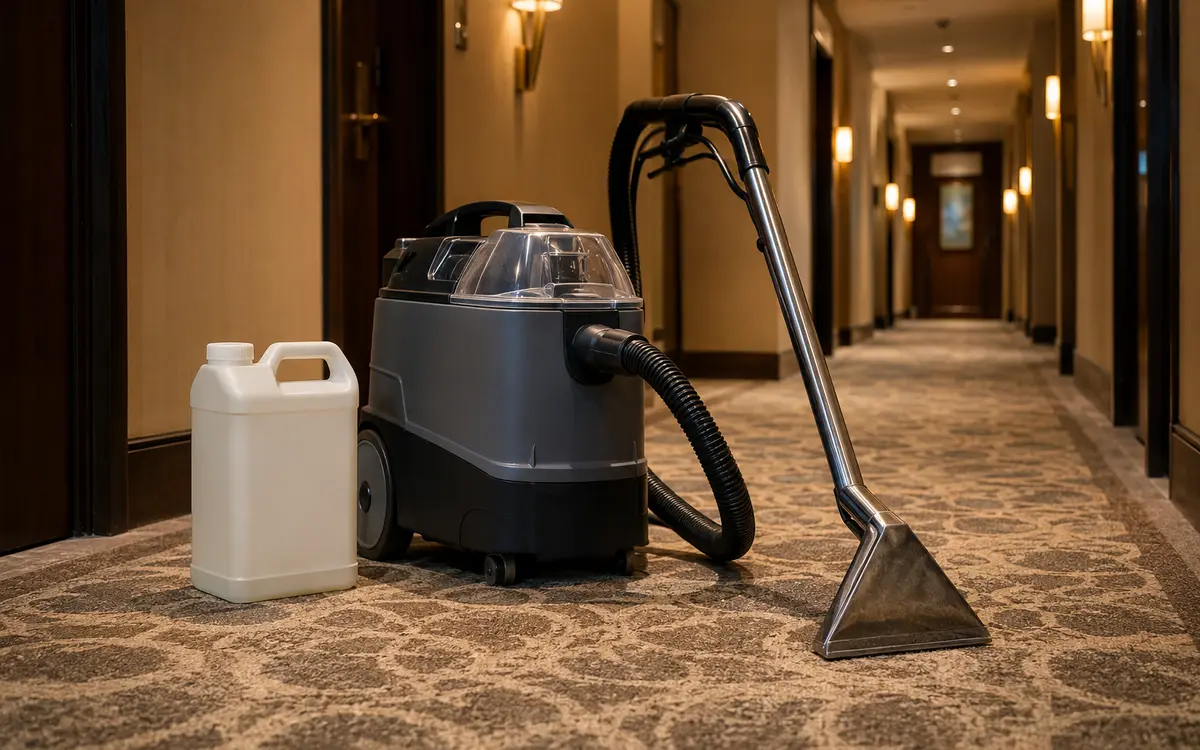
Surface & FloorExtraction Detergents · Low-Foam Shampoos · Maintenance Cleaners
 14
Surface & Floor
14
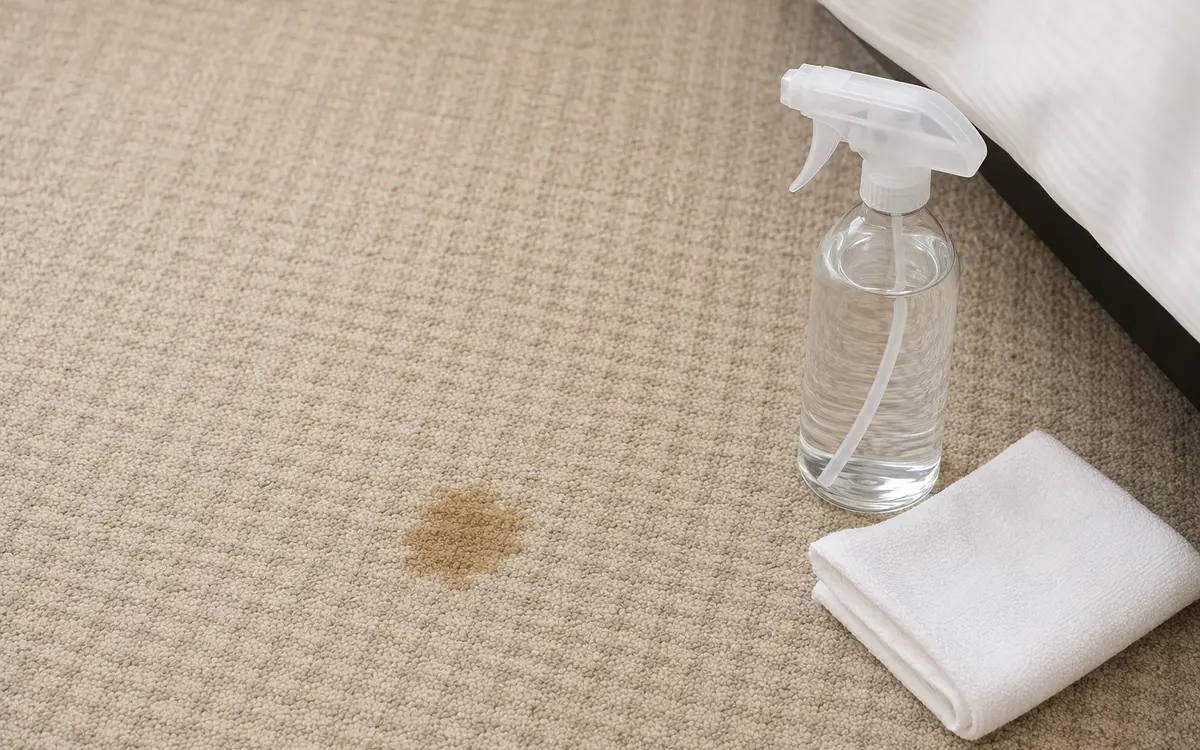
Surface & FloorOil-Based Spotters · Protein Spotters · General Spotters
 15
Surface & Floor
15
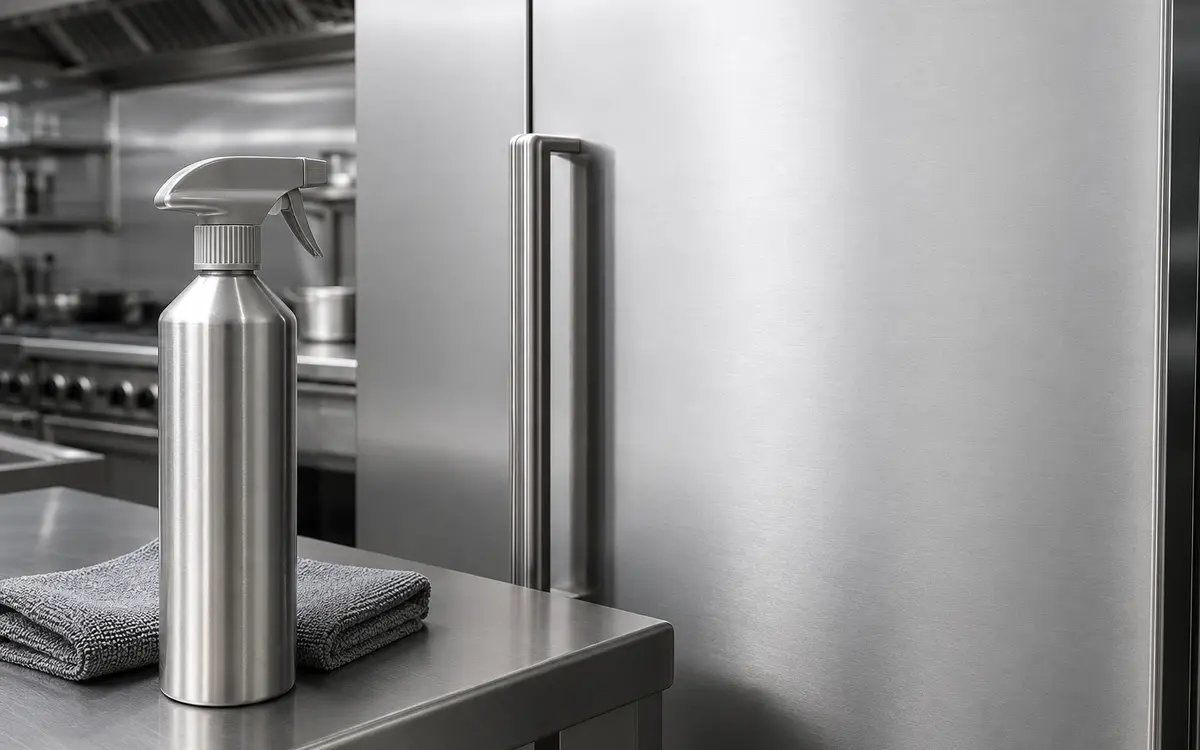
Surface & FloorCleaner-Polishes · Fingerprint Removers · Food-Area Options
 16
Surface & Floor
16
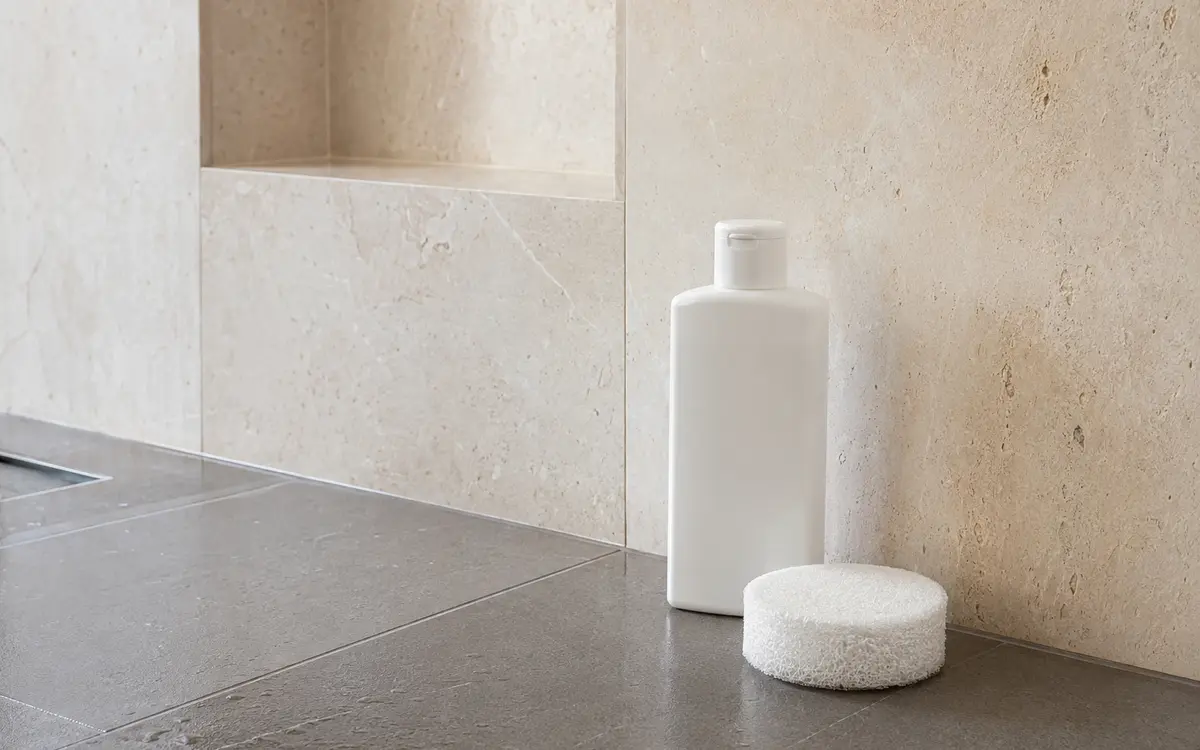
Surface & FloorFurniture Cleaners · Wood Polishes · Low-Residue Care
 17
Surface & Floor
17
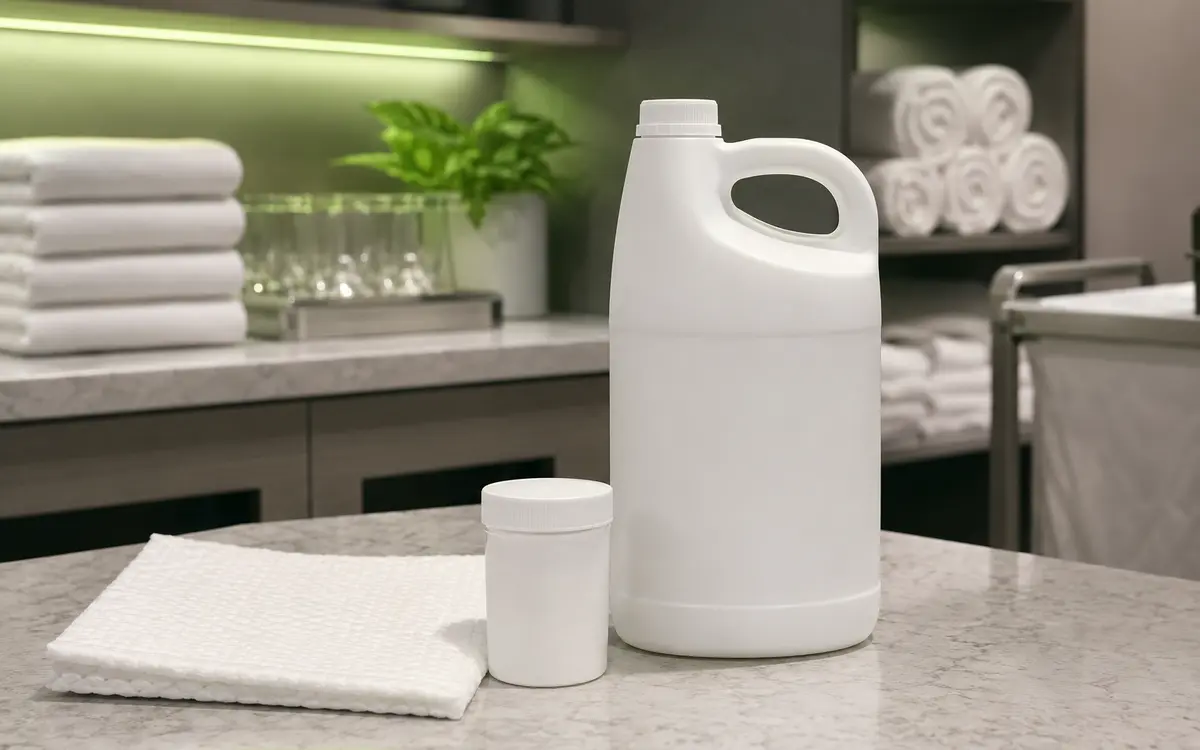
Surface & FloorStone-Safe Cleaners · Tile Cleaners · Grout Care
 18
Kitchen & Laundry
18
Kitchen & LaundryOrganic-Soil Cleaners · Drain Maintenance · Odor-Source Treatments
 19
Kitchen & Laundry
19
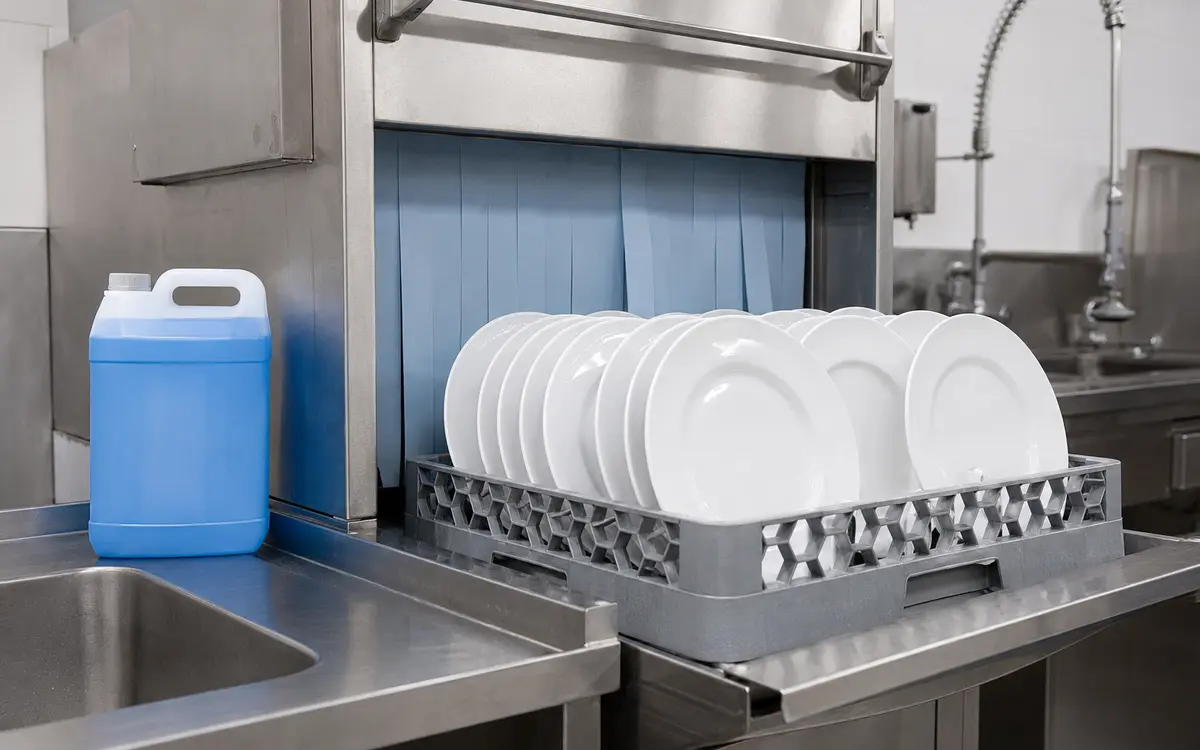
Kitchen & LaundryFoaming Soap · Liquid Soap · Dispenser Refills
 20
Kitchen & Laundry
20
Kitchen & LaundryMachine Detergents · Manual Detergents · Rinse Aids
 21
Kitchen & Laundry
21
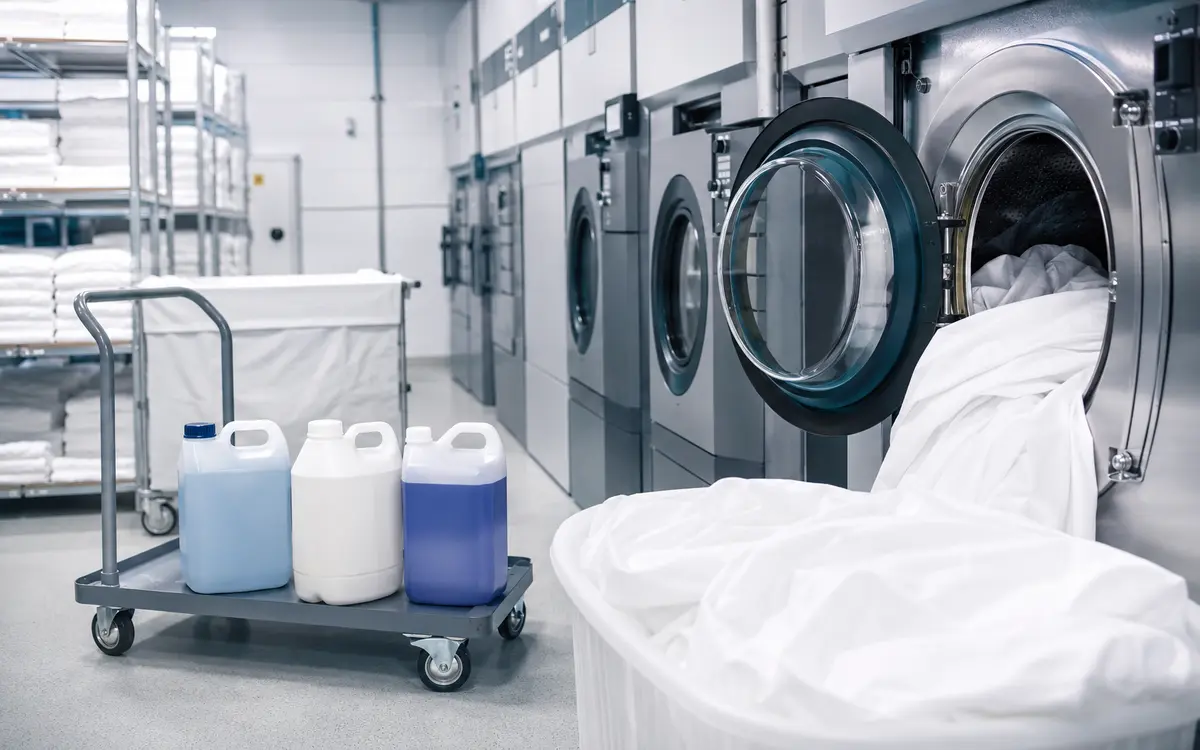
Kitchen & LaundryLaundry Detergents · Destainers · Sour & Softener
 22
Control & Storage
22
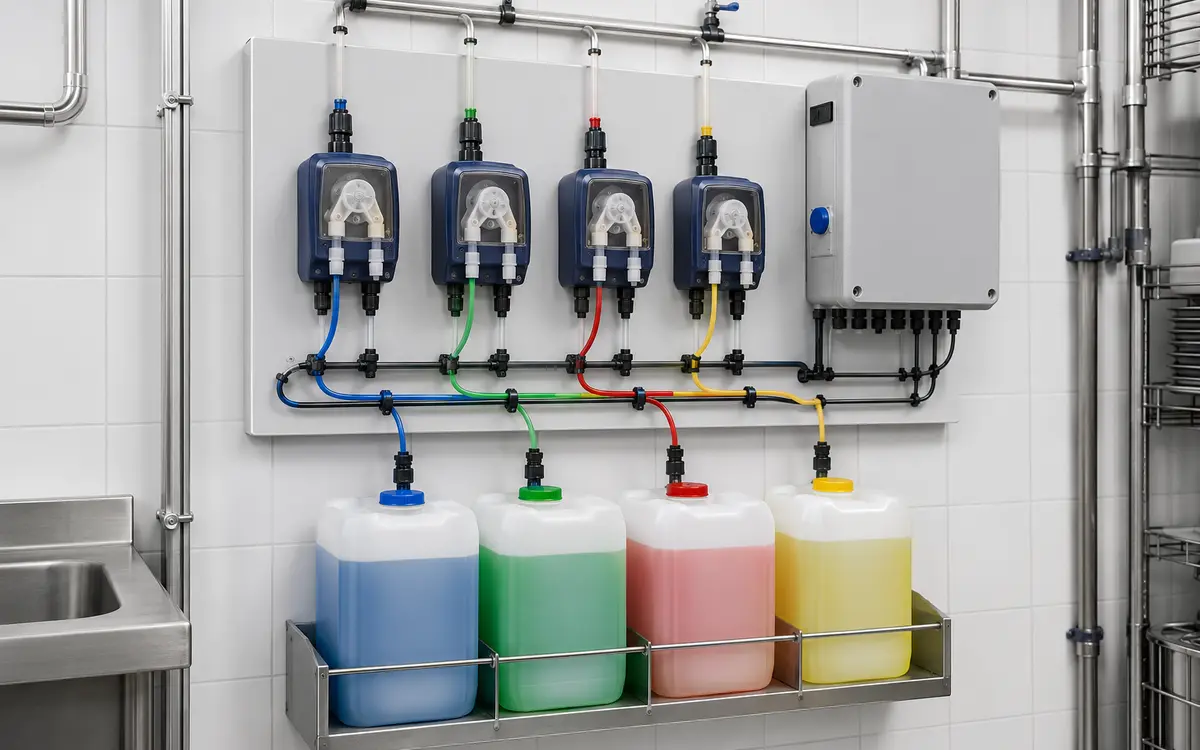
Control & StorageWall-Mounted Dispensers · Closed-Loop Dosing · Laundry Dosing
 23
Control & Storage
23
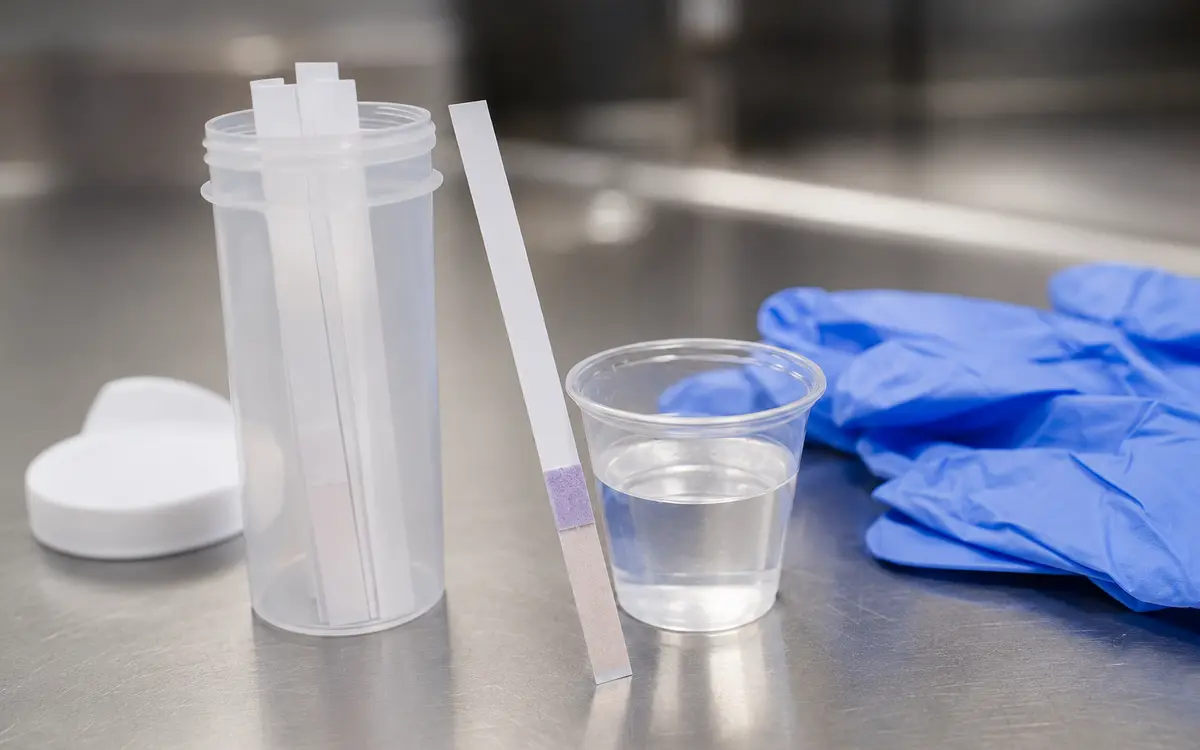
Control & StorageSanitizer Test Strips · pH Test Strips · Concentration Checks
 24
Control & Storage
24
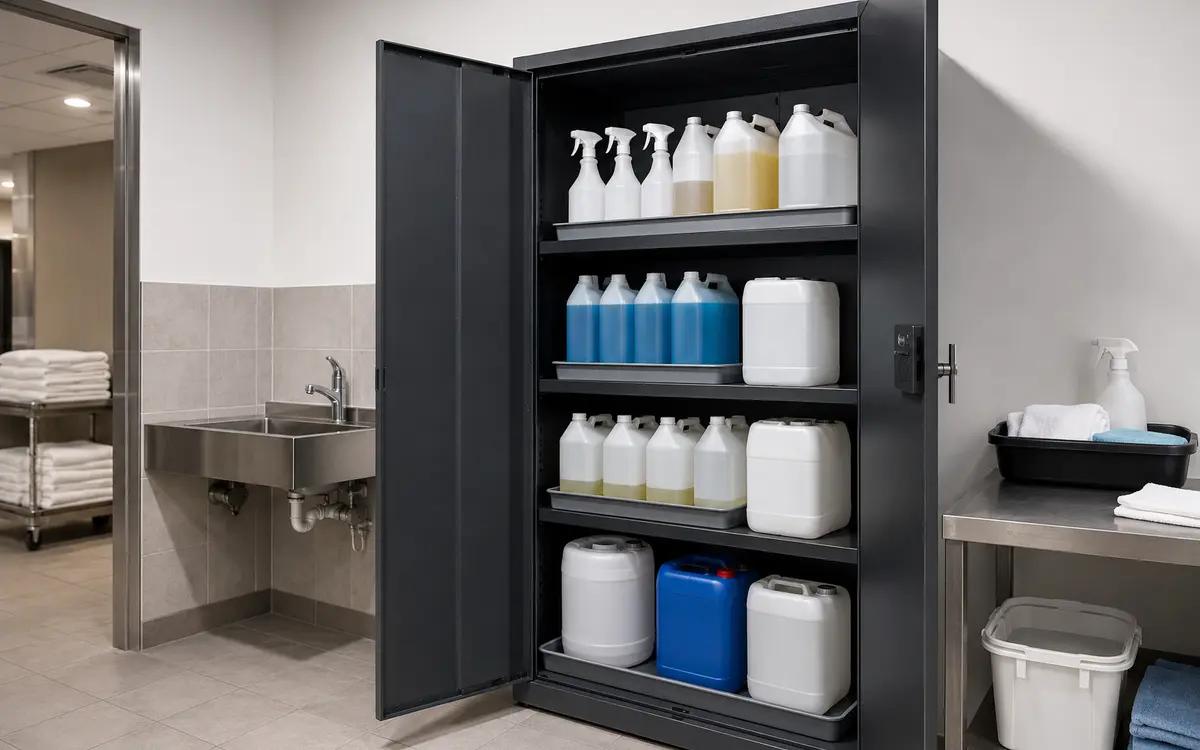
Control & StorageLockable Cabinets · Segregated Storage · Wall-Mounted Cabinets
Try a broader product term or reset the procurement-area filter.
A controlled sourcing workflow
A useful chemical brief identifies the soil, substrate, application method, frequency, dilution, packaging, documentation, storage, training, and replenishment requirements before products are compared.
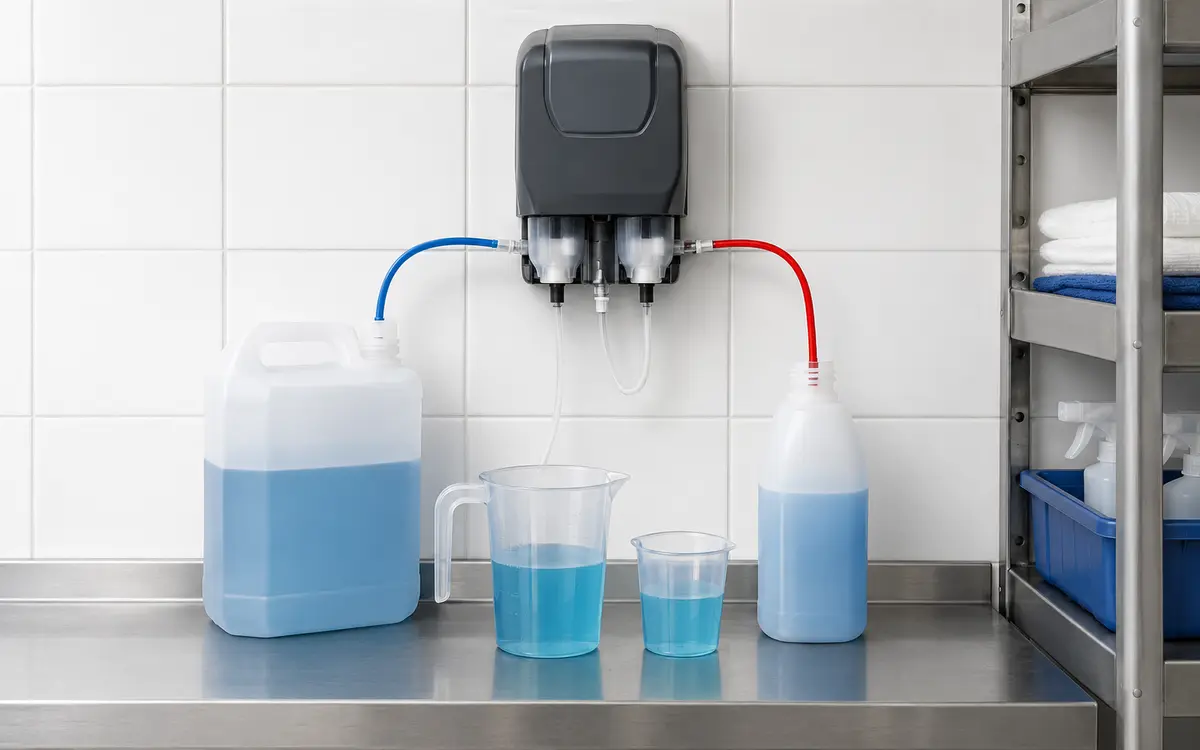
List the spaces, tasks, soils, touchpoints, cleaning frequency, equipment, and current operational pain points.
Record substrate, finish, dwell or contact requirements, rinse needs, machine compatibility, and food-area constraints.
Specify concentrate or ready-to-use format, dosing equipment, test method, secondary containers, segregation, and cabinet needs.
Align samples, documentation, pack sizes, consumption assumptions, training readiness, delivery phasing, and reorder points.
Applications, surfaces & control options
Review where the chemicals work, what materials they touch, how they are supplied, and how dilution and storage are controlled. Every image below is unique to this Cleaning Chemicals page.
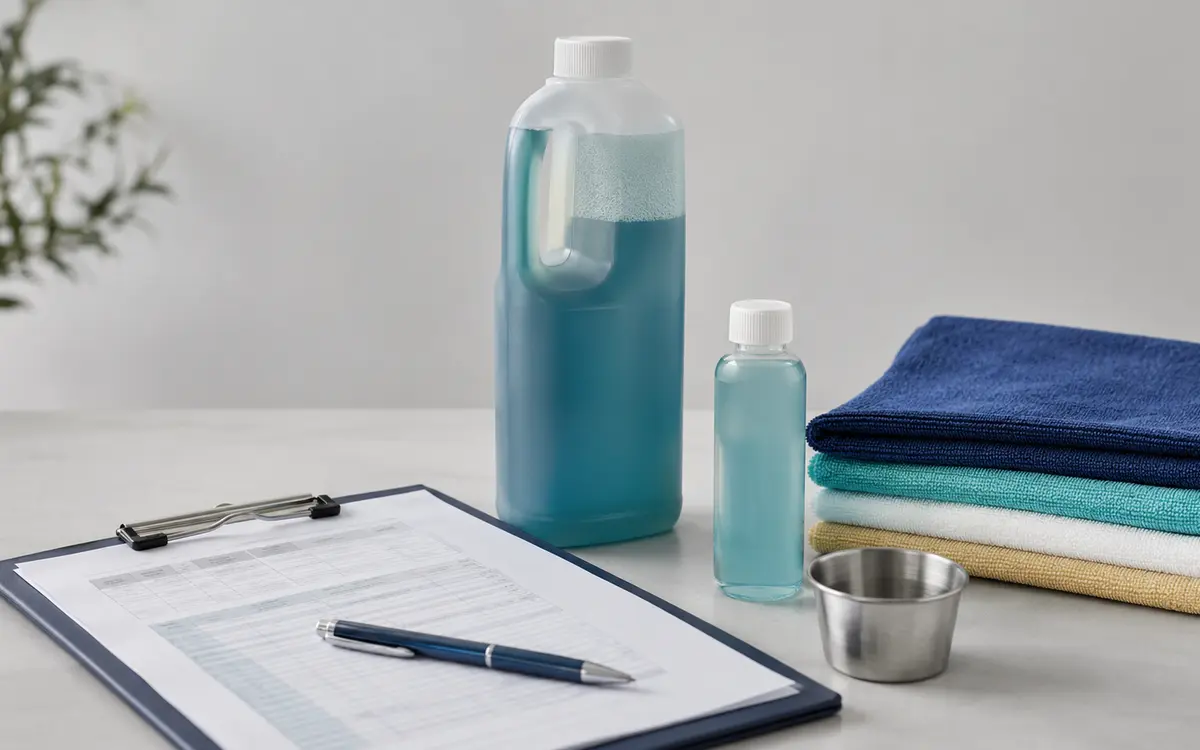
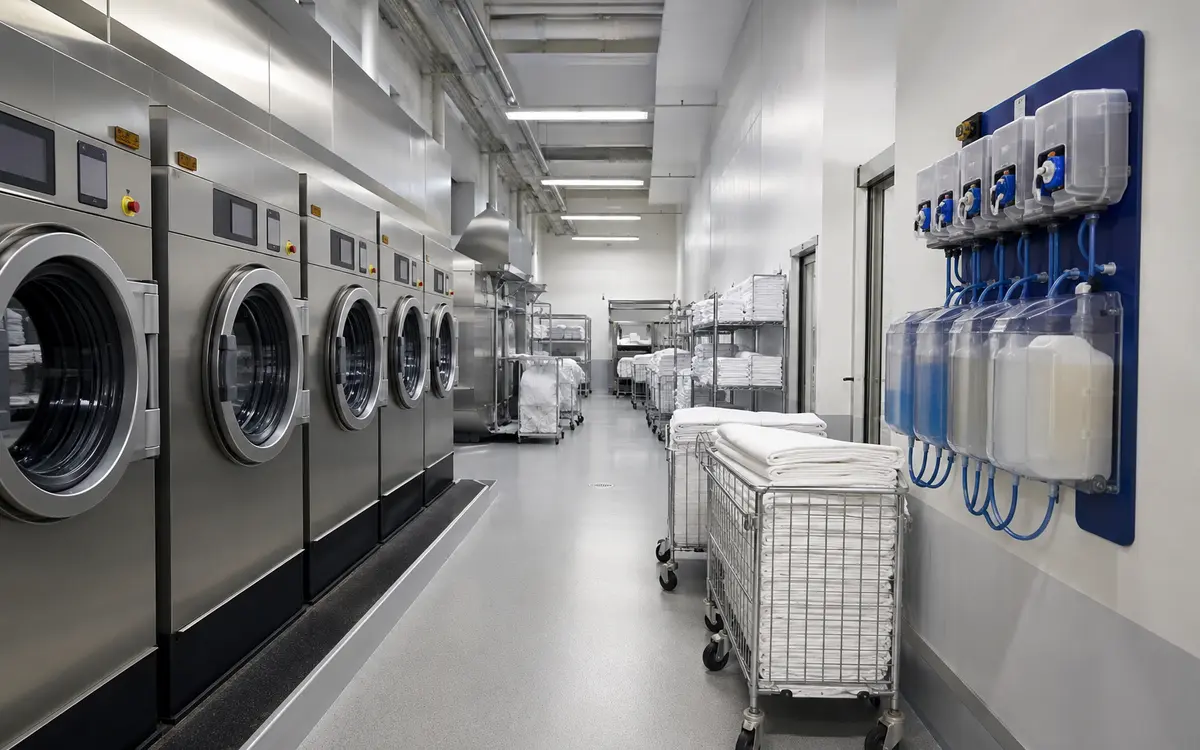


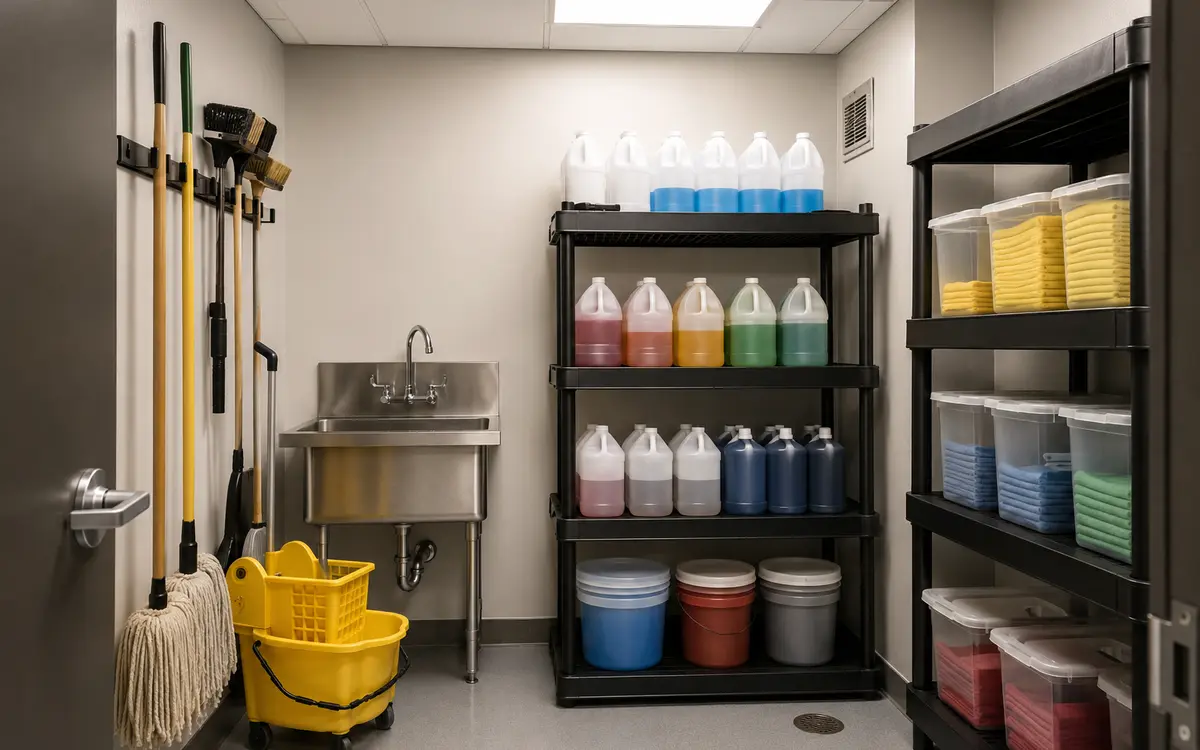
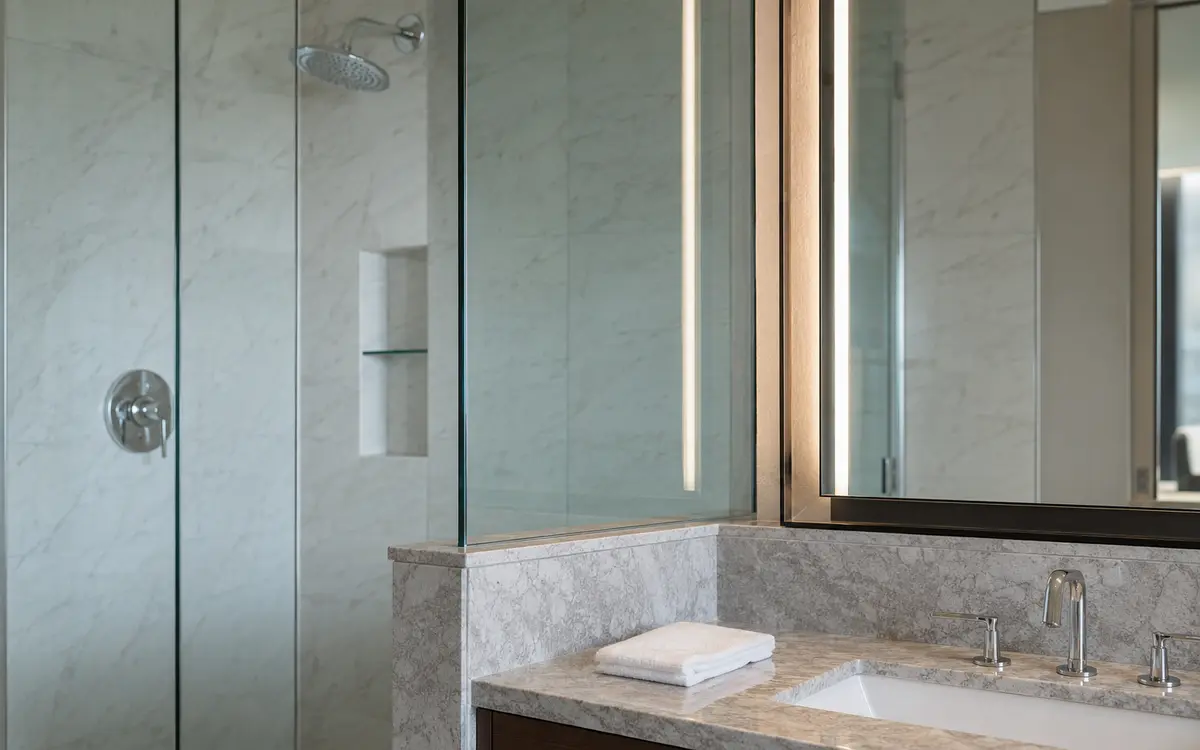
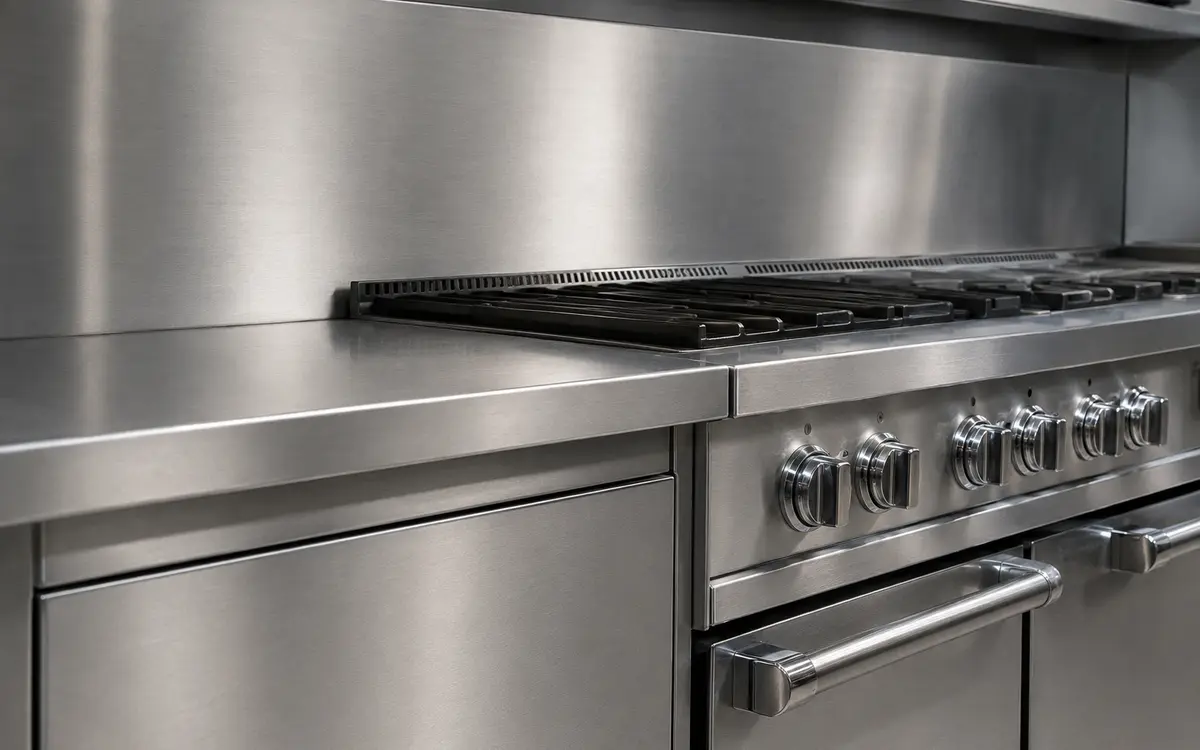

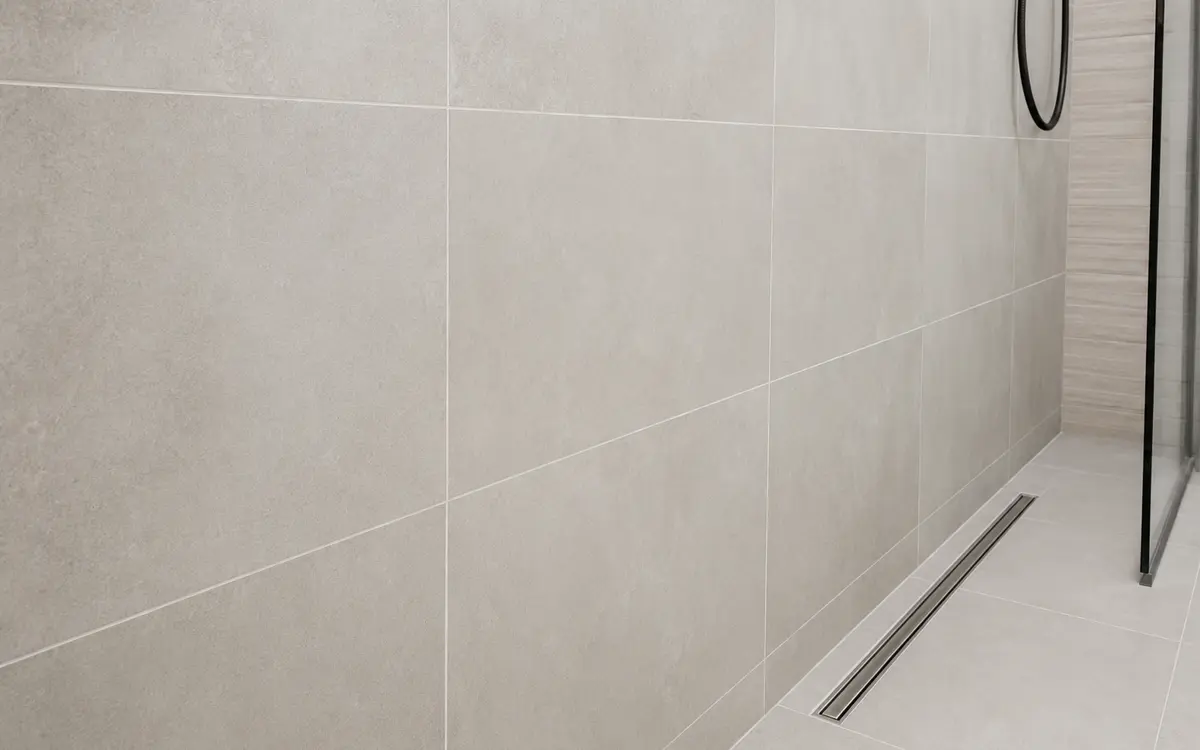
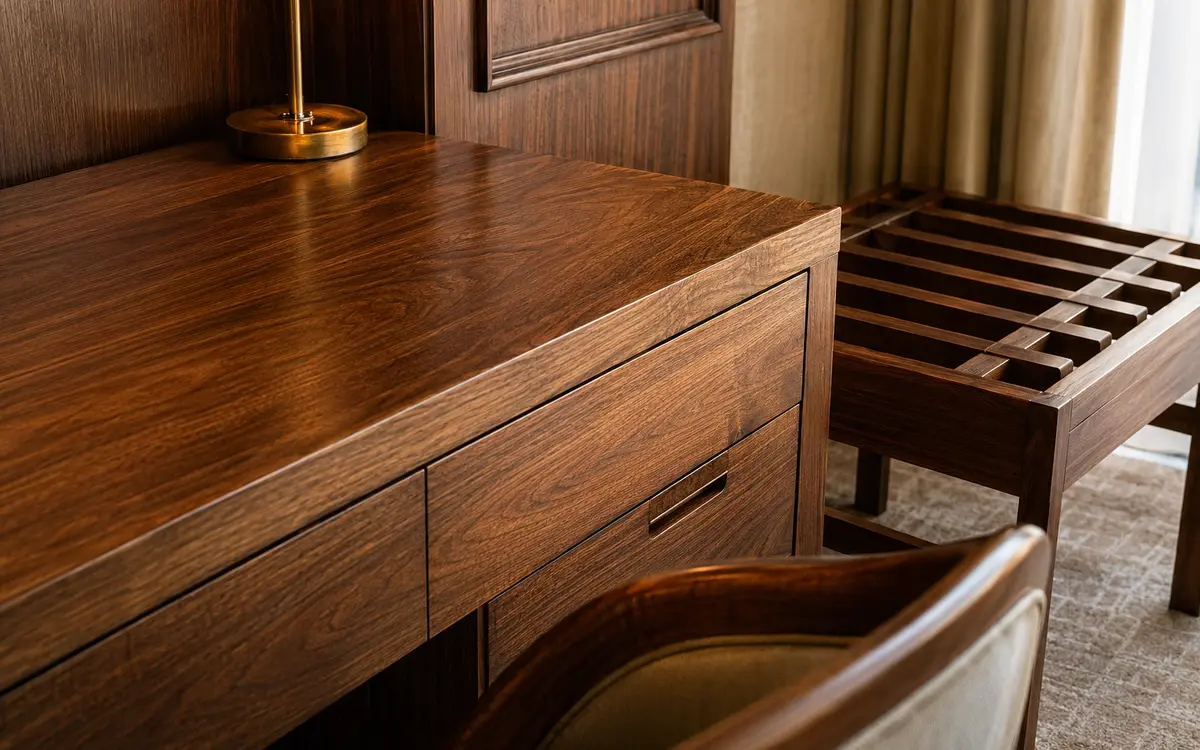

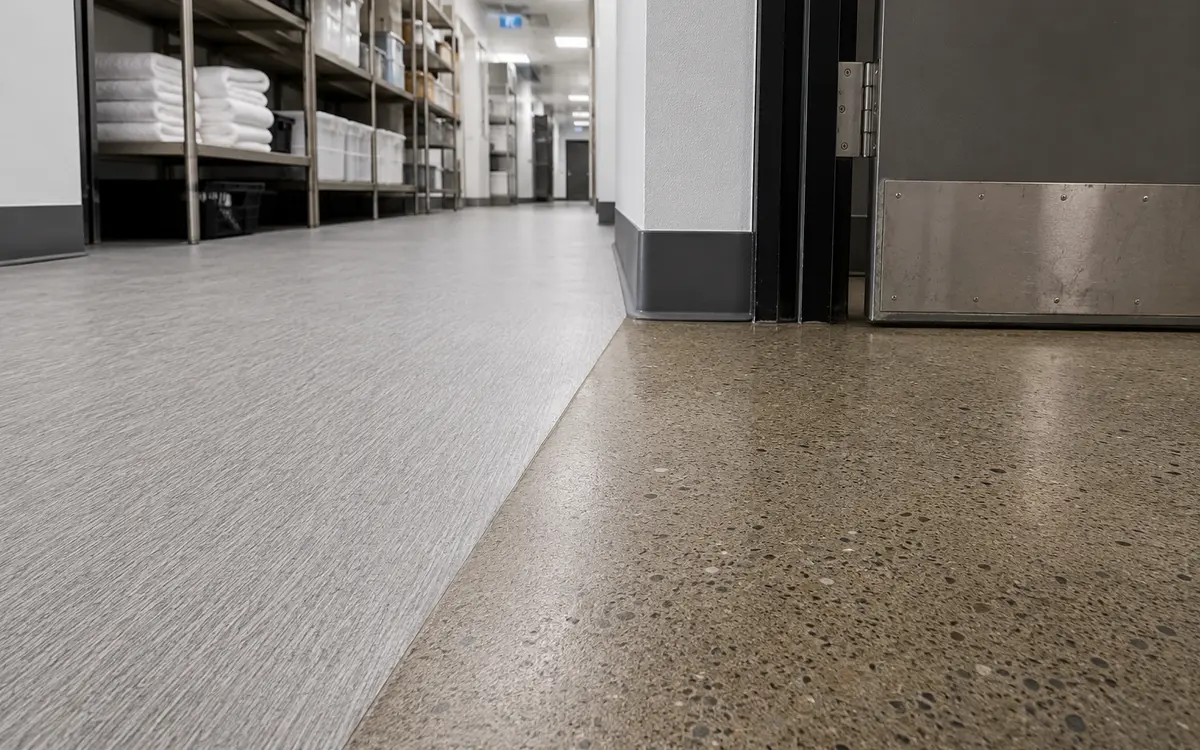
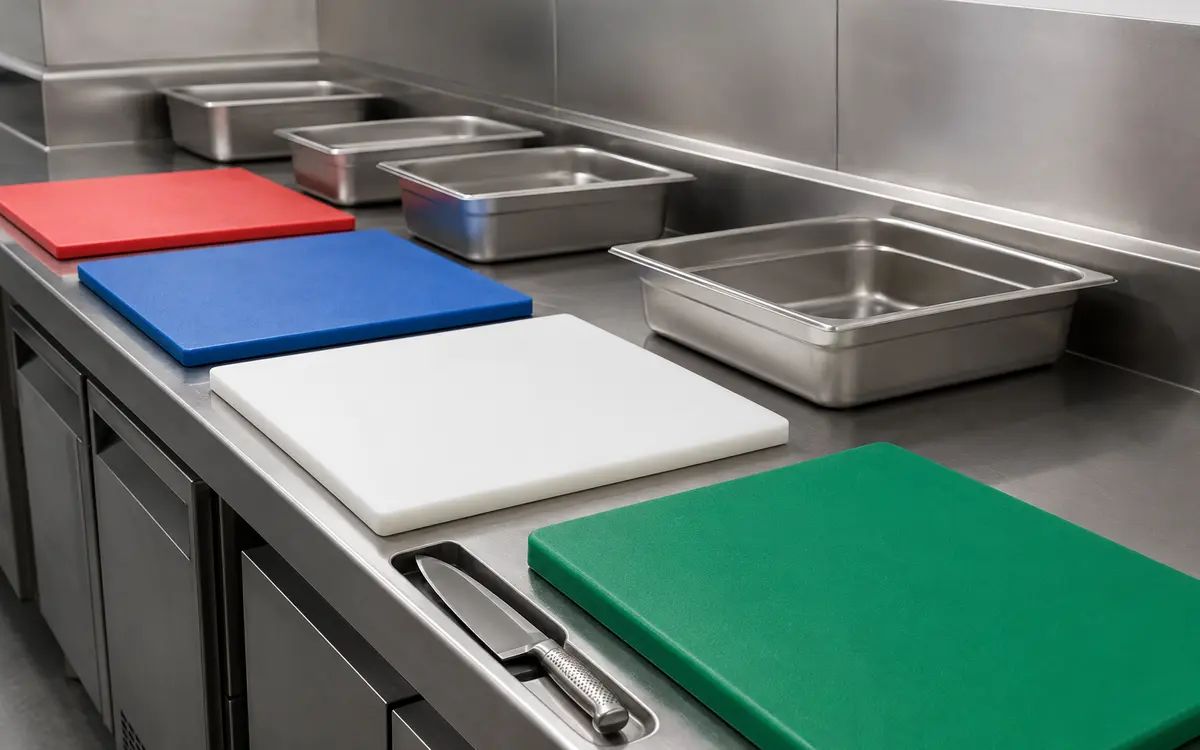
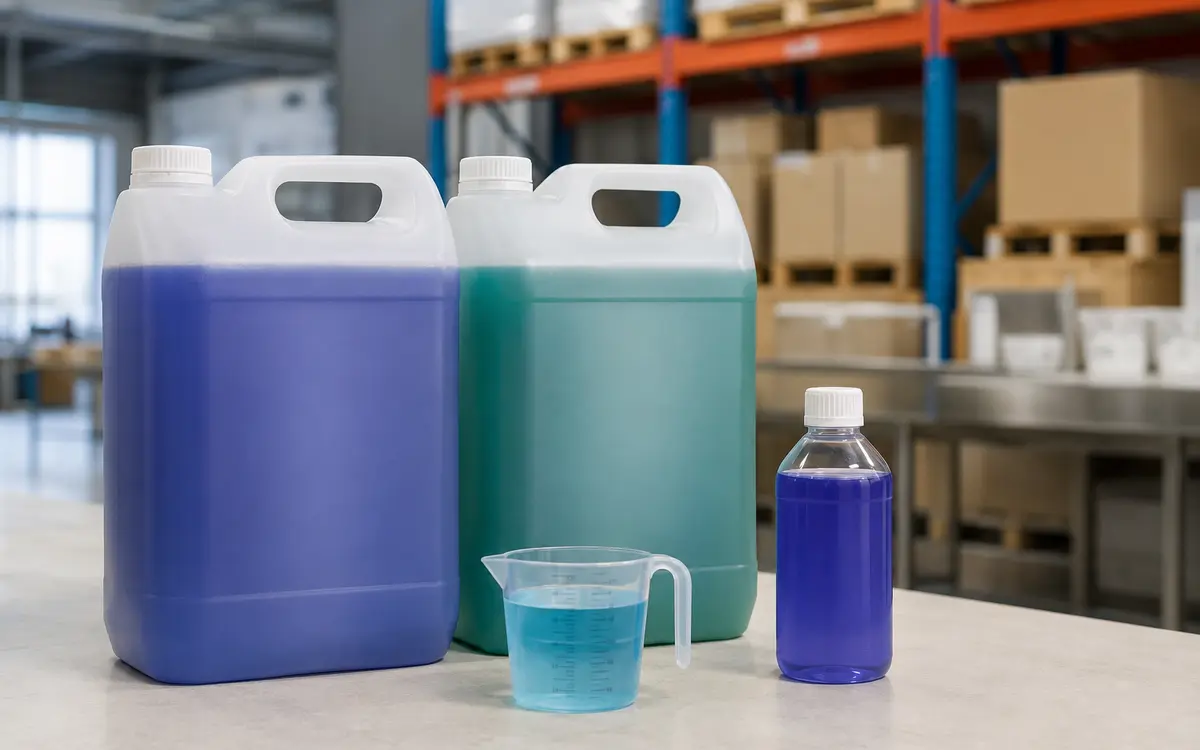
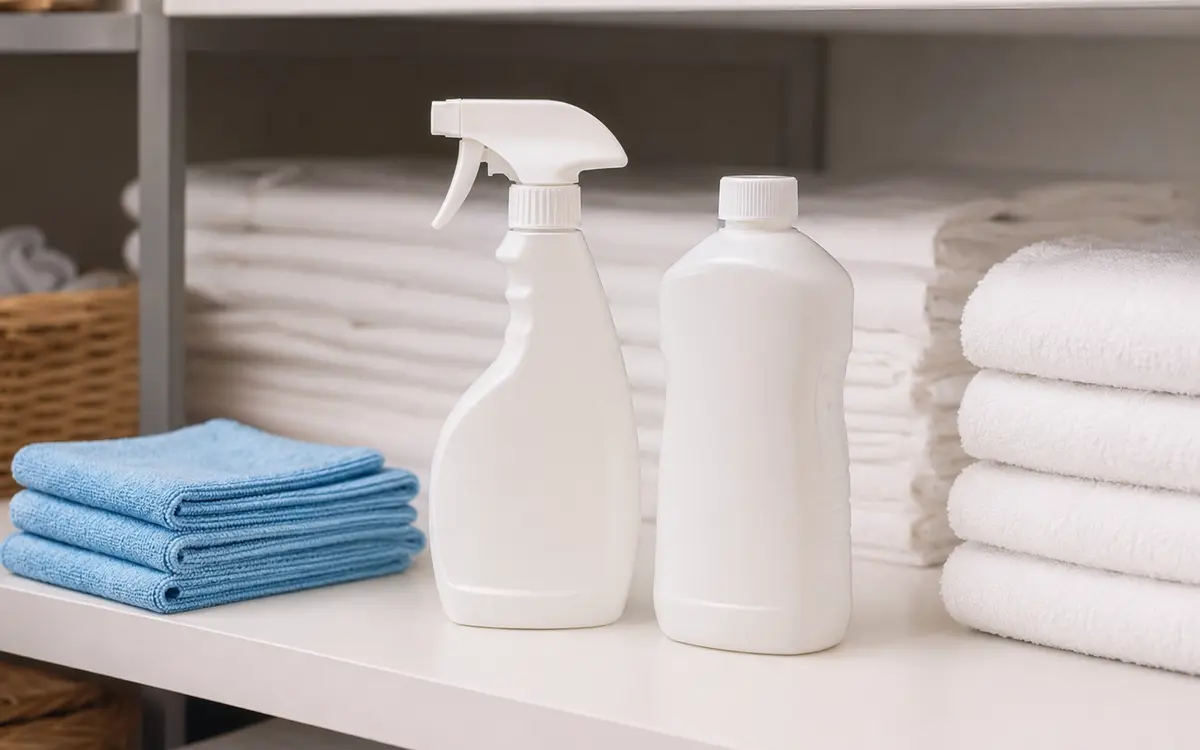
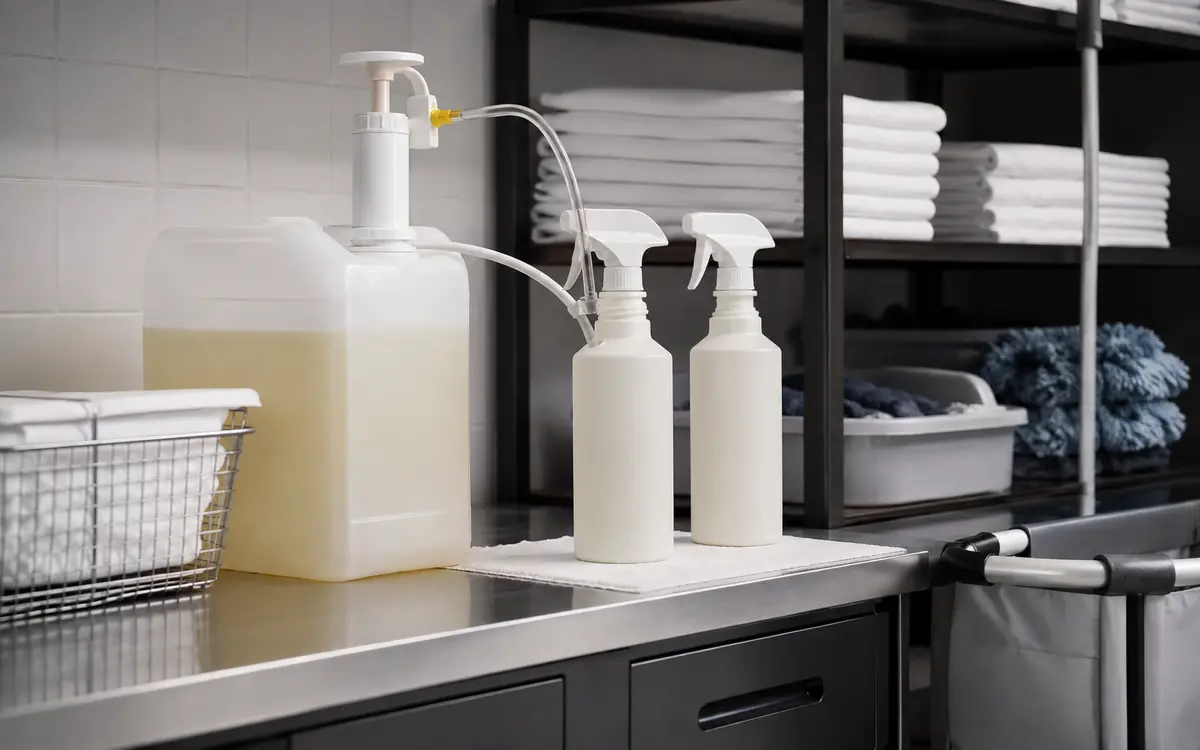


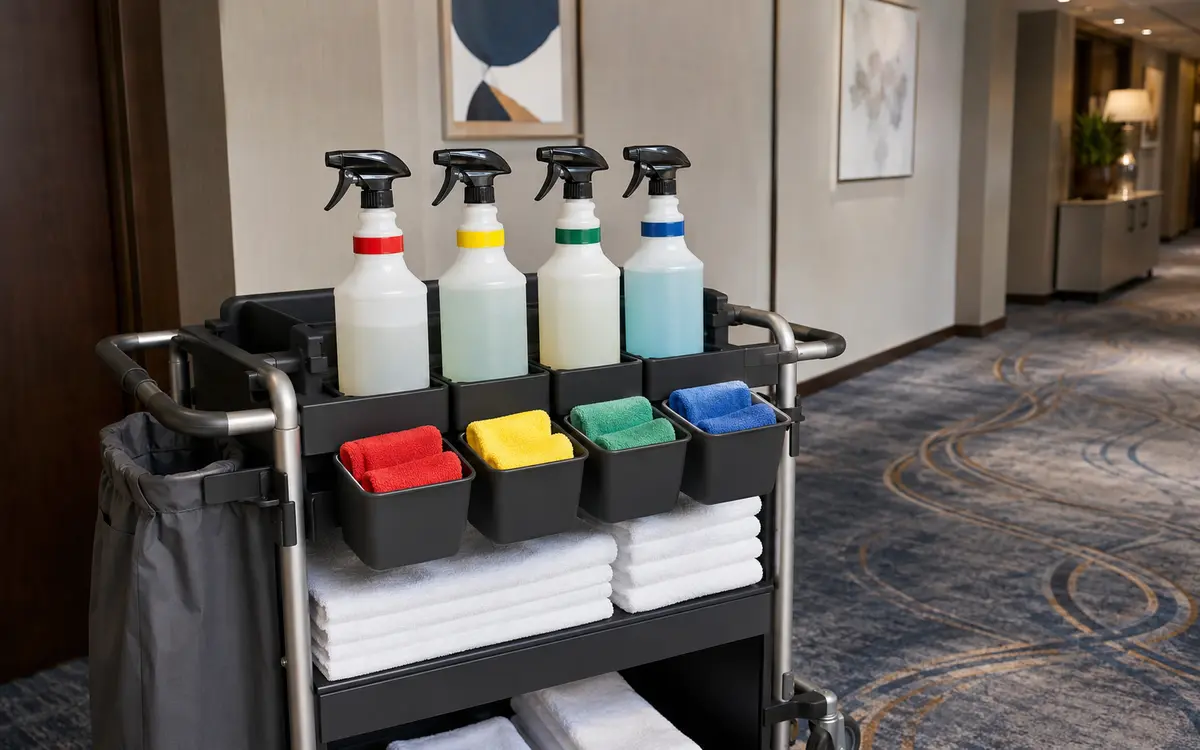
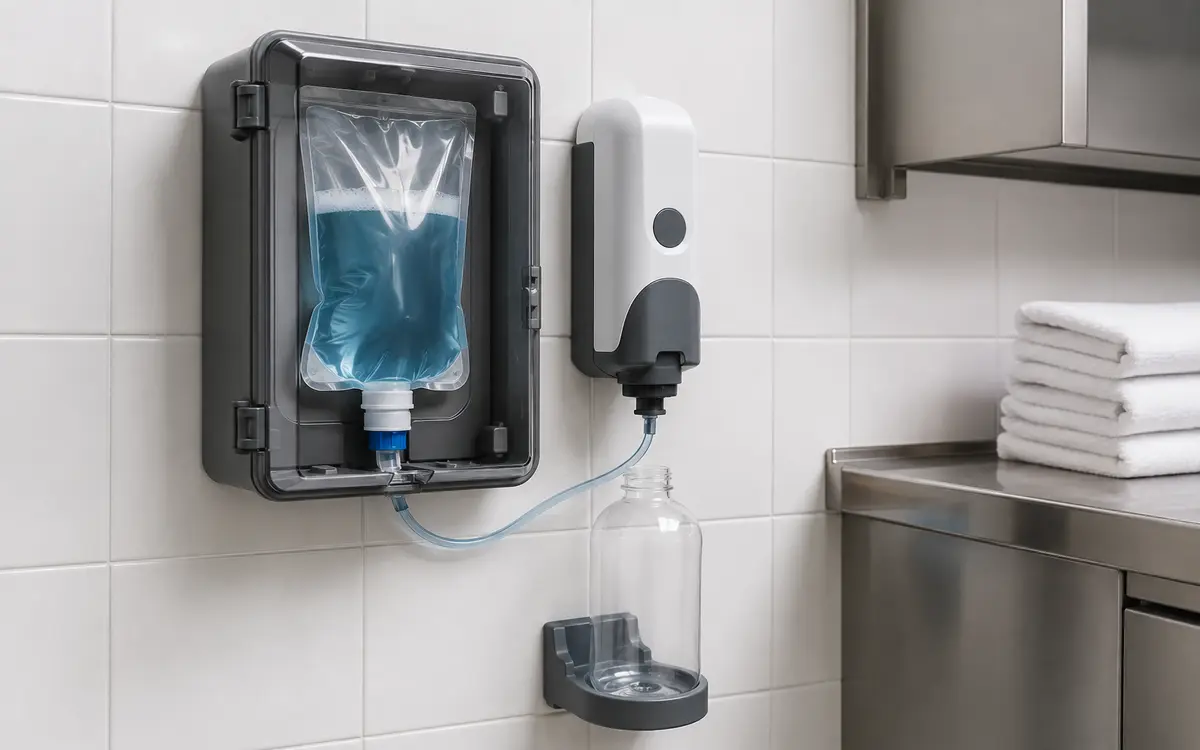
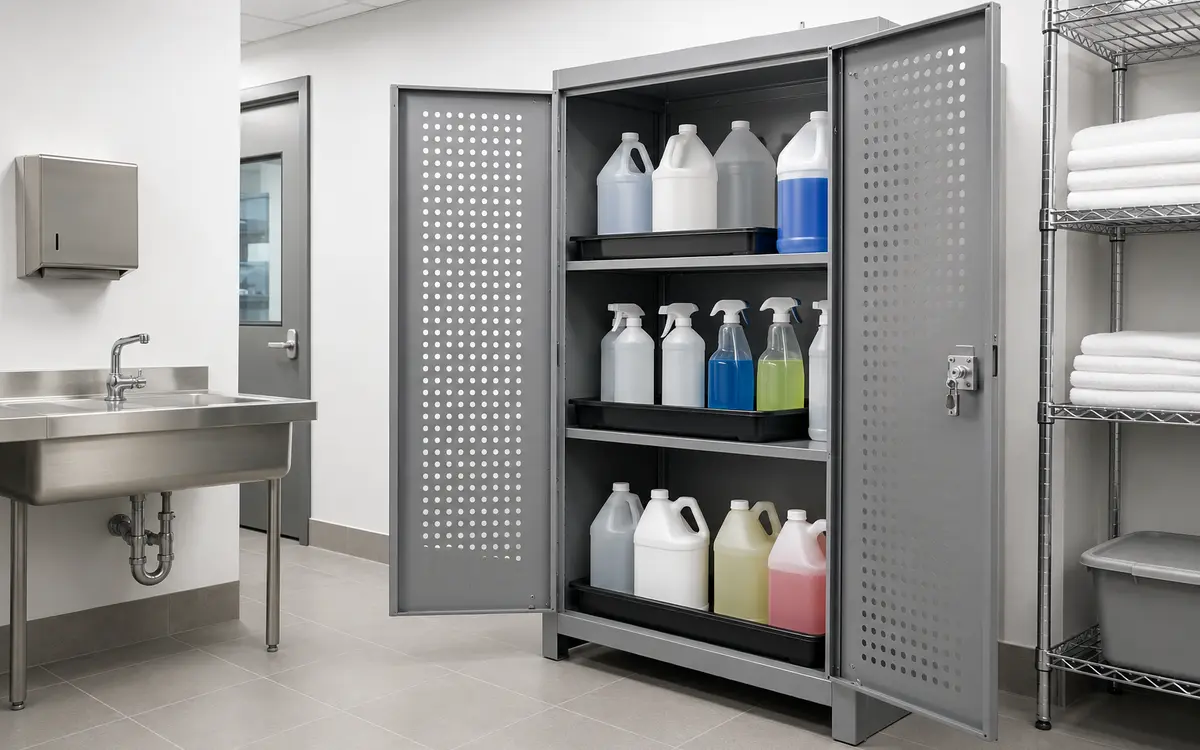
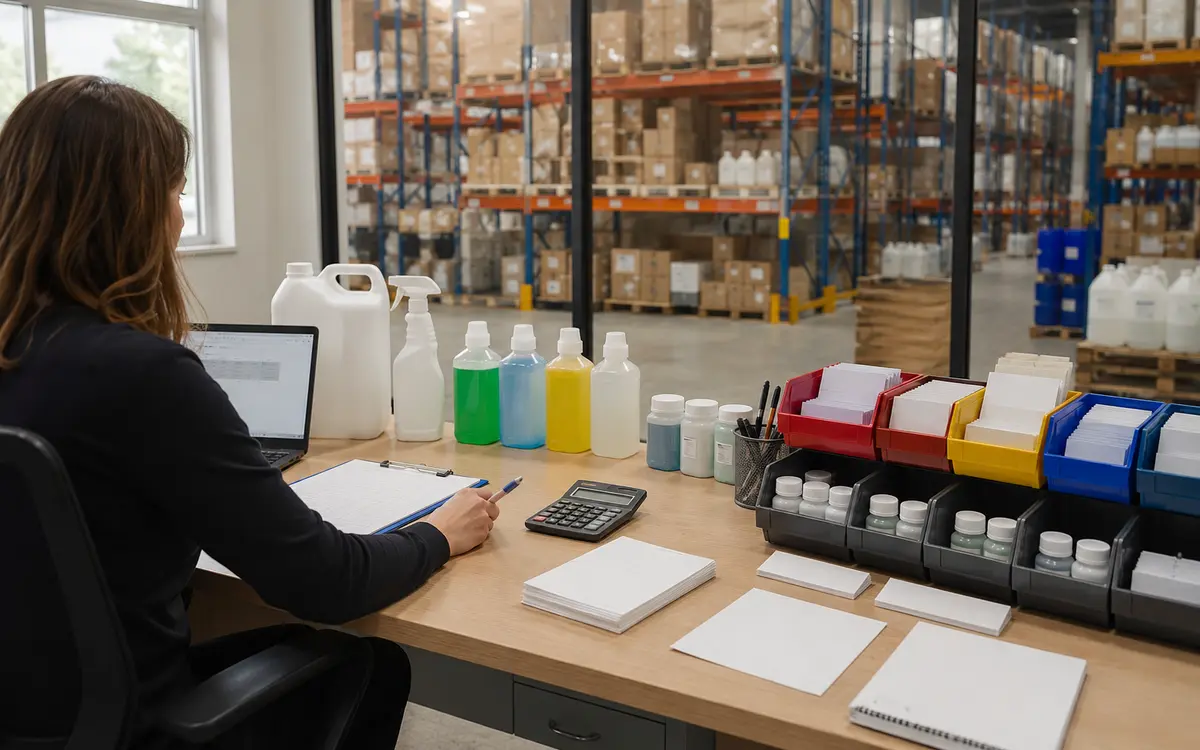
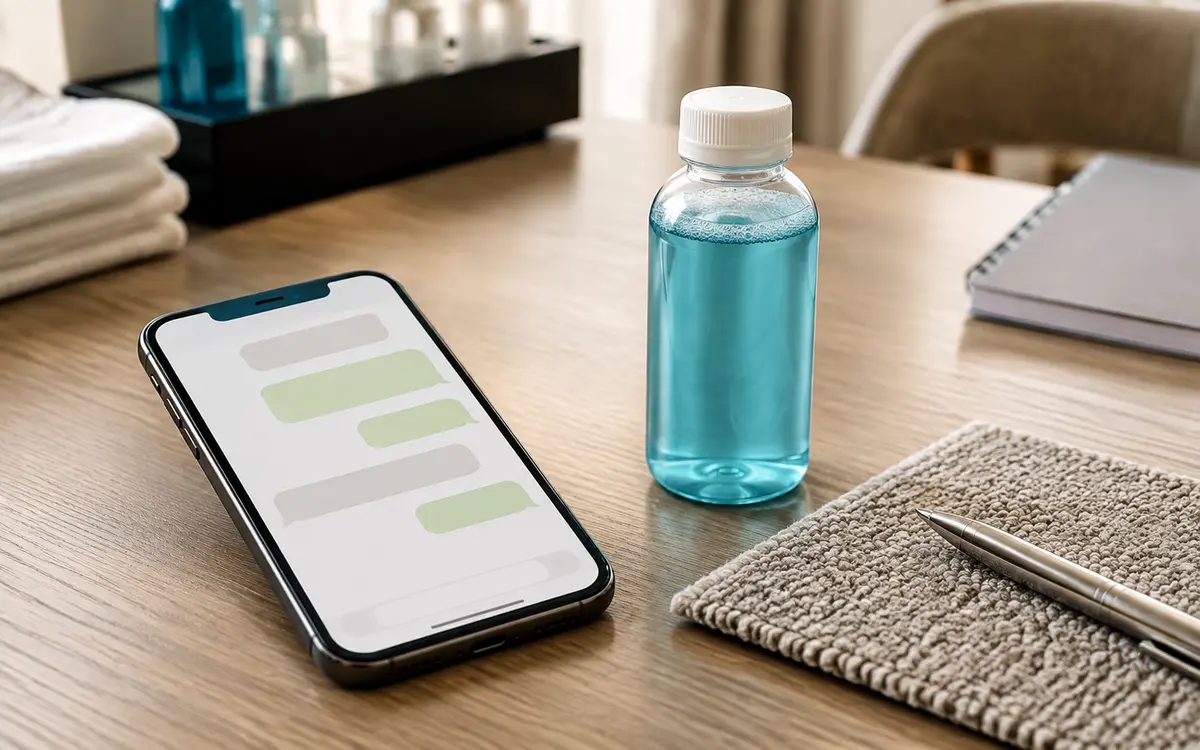
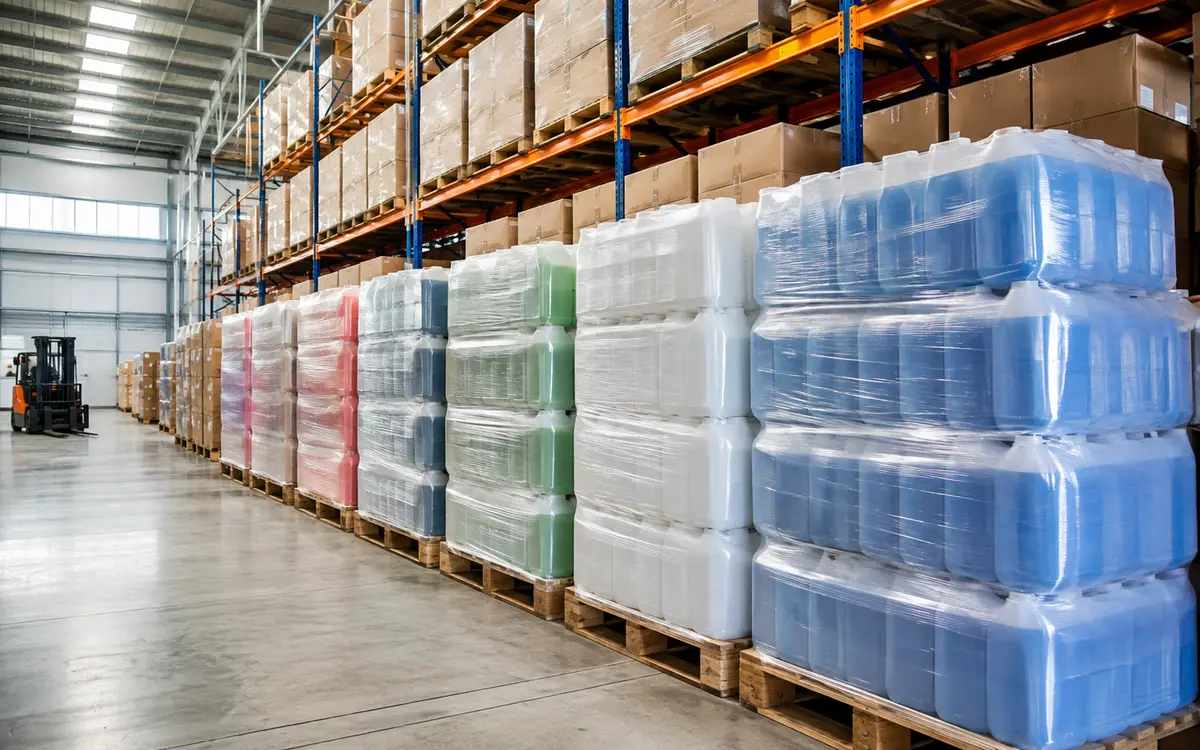
State the room or task, soil type, cleaning frequency, manual or machine method, contact or dwell requirement, and rinse expectations.
Buyer prompt: What is being removed, from where, and how often?Record substrate and finish, machine type, dispenser connection, water conditions, temperature, secondary container, and any material restrictions.
Buyer prompt: Which surfaces and equipment must remain compatible?Define concentrate or ready-to-use format, target dilution, dosing method, test strips or verification, fragrance preference, residue limits, and sample evaluation criteria.
Buyer prompt: How will teams dispense and verify the in-use solution?List consumption assumptions, pack size, minimum order, cabinet and segregation requirements, delivery address, training plan, opening stock, and reorder method.
Buyer prompt: Is the requested quantity expressed as bottles, cases, liters, or in-use solution?Purchase-order control
Small differences in concentration, pack size, dispenser connection, surface compatibility, or included documentation can make two offers operationally different.
Request a specification-based quoteReceiving & product control
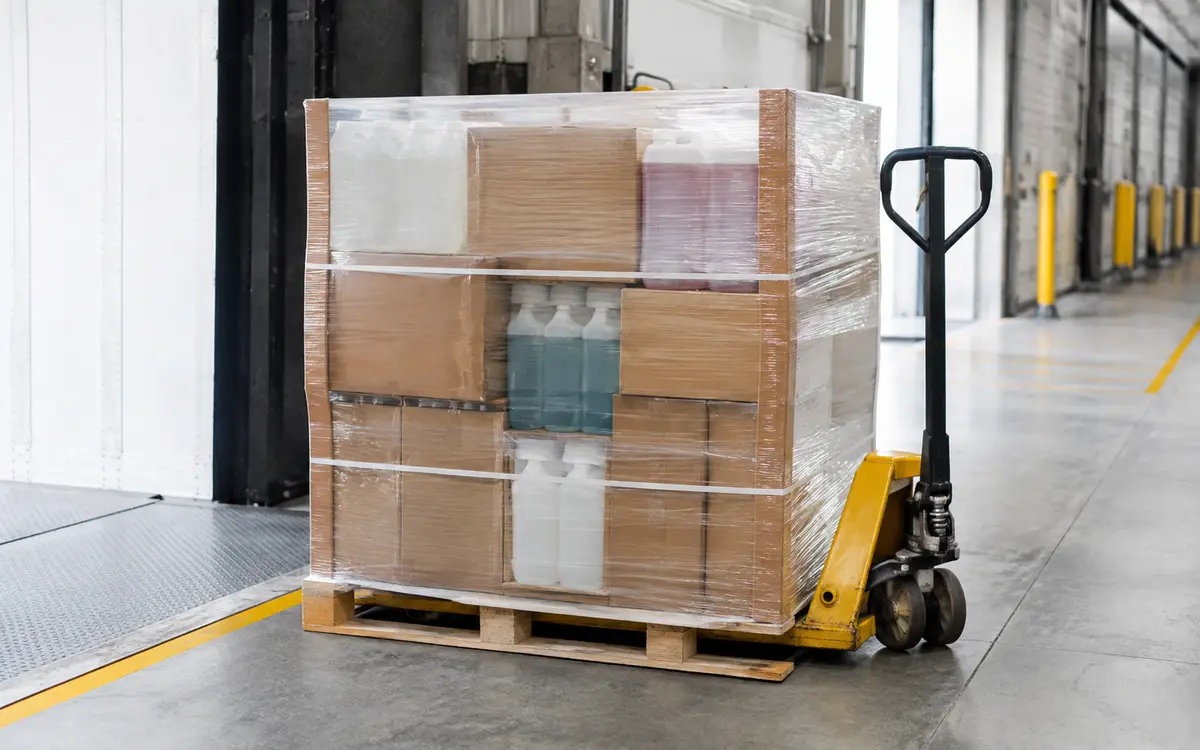
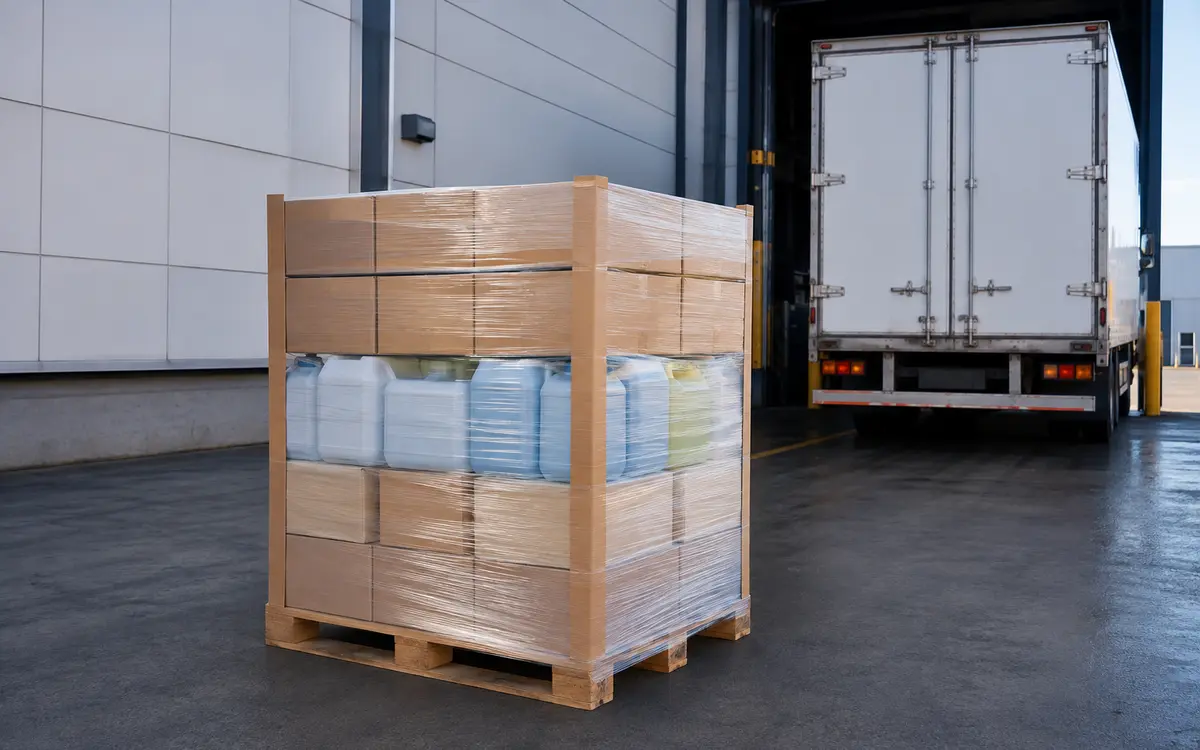
Give the receiving team the purchase order, packing list, approved product references, inspection priorities, storage route, and escalation contact before the truck arrives.
Photograph the load, pallet wrap, carton condition, labels, and any visible impact before unpacking.
Count cartons and containers; compare product identity, pack size, lot information, and quantities with the approved order.
Note visible shortage or damage on the carrier delivery record before signing; avoid an unqualified clean receipt.
Separate affected goods, retain packaging and labels, and do not install or use items awaiting claim instructions.
Send a documented claim packet promptly with order references, delivery record, photos, item numbers, quantities, and requested resolution.
Designed for controlled hospitality operations
The page connects application and surface decisions with dilution, documentation, storage, training, quality control, and replenishment.
From guestrooms and bathrooms to kitchens, laundry, public areas, wellness spaces, and back of house.
Use product pages to compare formula, substrate, soil, dilution, packaging, dispenser, and testing requirements.
Compare concentrates, ready-to-use formats, refill systems, low-odor choices, color coding, and closed-loop dosing.
Connect each of the 24 cards to a focused commercial page as the Cleaning Chemicals content library grows.
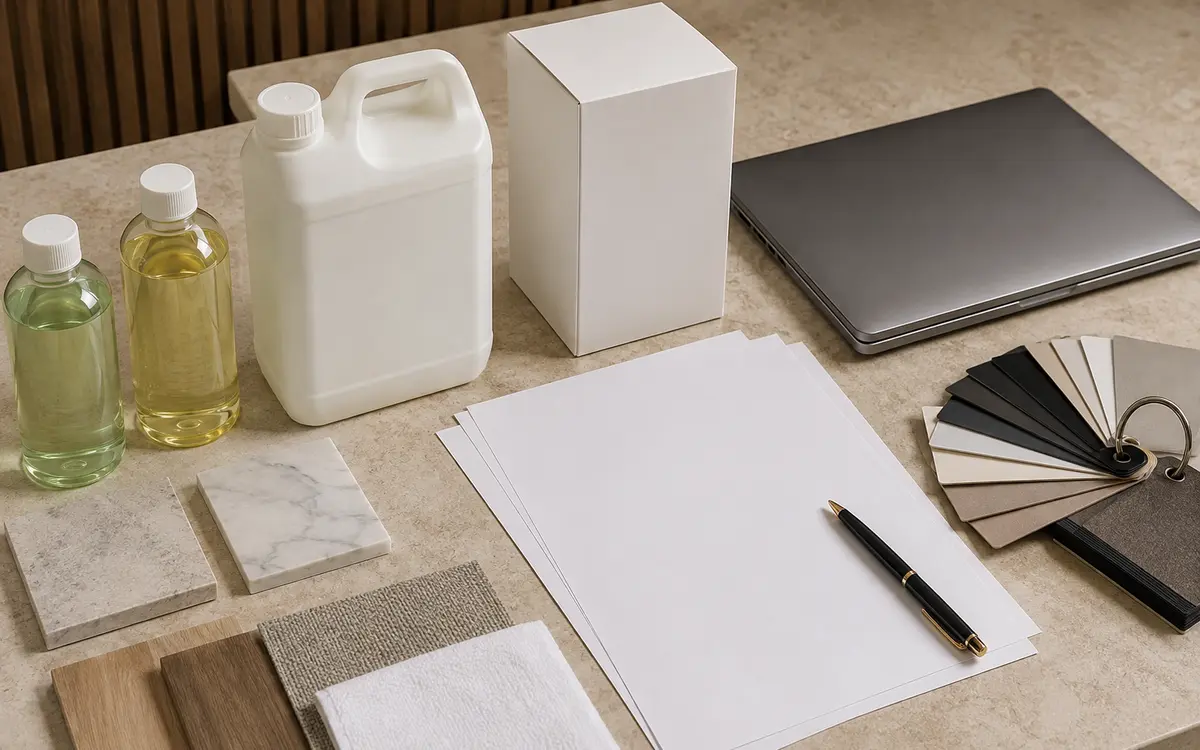


Cleaning chemical procurement questions
Use these starting points to prepare a clearer specification, compare supplier offers, and avoid preventable operational mismatches.
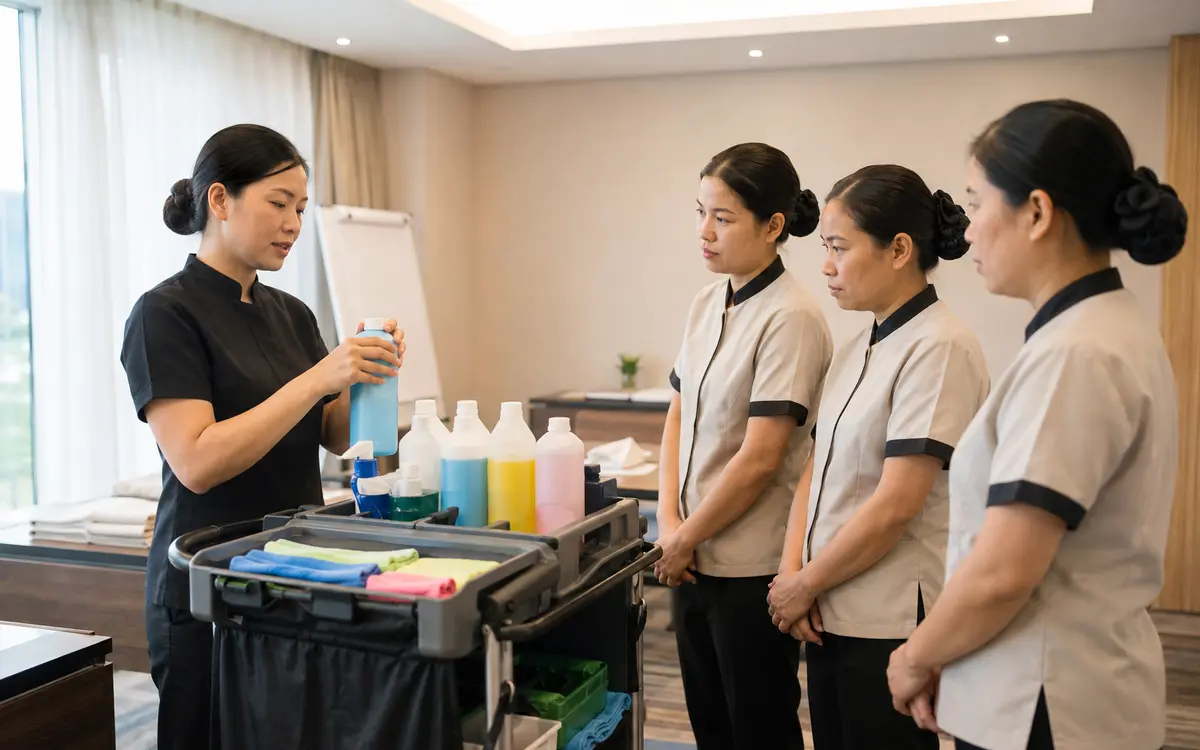
Include the property type and location, application areas, surfaces, soil types, cleaning methods and frequency, current products when relevant, preferred concentrate or ready-to-use format, dosing equipment, pack sizes, estimated consumption, documentation needs, delivery destination, and target date.
Compare the in-use cost and volume, dilution control, dispenser investment, training, storage, packaging, transport, application method, consistency, and waste—not the container price alone. State the assumptions behind every in-use calculation.
Natural stone, resilient flooring, wood finishes, metals, glass, carpet, upholstery, tile, grout, and food-area materials can have different compatibility requirements. Identify the exact substrate and finish, then verify the proposed product and method against current manufacturer instructions and site requirements.
They are different tasks and should not be treated as interchangeable. Define the required outcome, surface, destination-market rules, application method, and product directions before selecting or comparing products. Avoid relying on general marketing language as a substitute for the exact approved use.
Dosing may be useful when a property needs repeatable dilution, centralized concentrates, controlled dispensing, or integration with laundry, warewashing, or housekeeping workflows. Confirm connection type, water conditions, flow, mounting, maintenance, compatible containers, and staff training before ordering.
Confirm the substance or parameter, expected range, resolution, test procedure, storage condition, shelf life, quantity, and compatibility with the actual in-use solution. The ordered strip must match the verification task rather than simply sharing a familiar color chart.
Yes, but organize the schedule by department, application, surface, and method. Identify products that can be standardized and any tasks that require separate formulas, dispensers, storage, documentation, or training.
State the spaces and reason for the preference, then request exact product information rather than assuming similar wording means identical formulation or sensory performance. Sample evaluation under representative conditions may be appropriate before a large order.
Record the exact sample identity and batch where available, dilution and method, water conditions, surface, soil, contact time, result, residue, odor, drying, material response, packaging and dispenser fit, evaluator, date, and acceptance decision. Keep the approved reference with the purchase record.
Confirm the products and container sizes, segregation needs, cabinet capacity, construction, locking, shelves or trays, mounting, ventilation or other site requirements, placement, access control, signage responsibility, and applicable local or property rules before selection.
Estimate consumption from the application frequency, in-use quantity, dilution, occupancy or workload assumptions, pack size, lead time, delivery cadence, storage limit, training or commissioning allowance, and a documented contingency. Reconcile assumptions against measured use after operations begin.
Identify the destination market, intended application, property standards, and the current documents required before sourcing. Verify that each document applies to the exact quoted formula, concentration, pack, and intended use, then retain the approved versions with purchasing, training, storage, and receiving records.
Direct contact
Choose the office and channel that work best for your project. Both teams can help route cleaning product, dosing, documentation, quotation, and delivery questions.
+1 514 907 1637
+86 155 2127 1637
Your Cleaning Chemicals RFQ starts here
Share the property type, application areas, surfaces, current products, preferred formats, quantities, destination, and target delivery date for a more reviewable sourcing request.