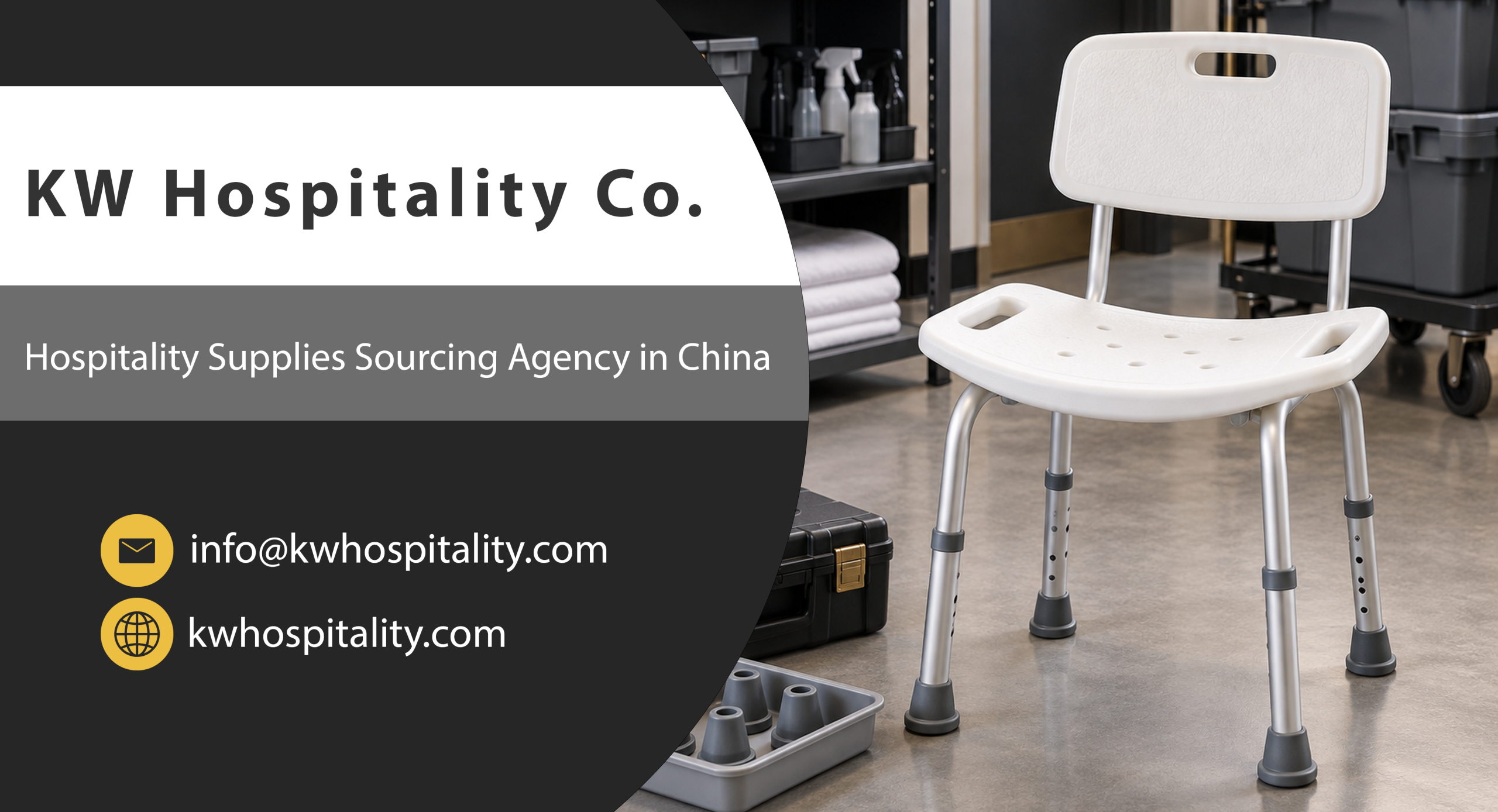
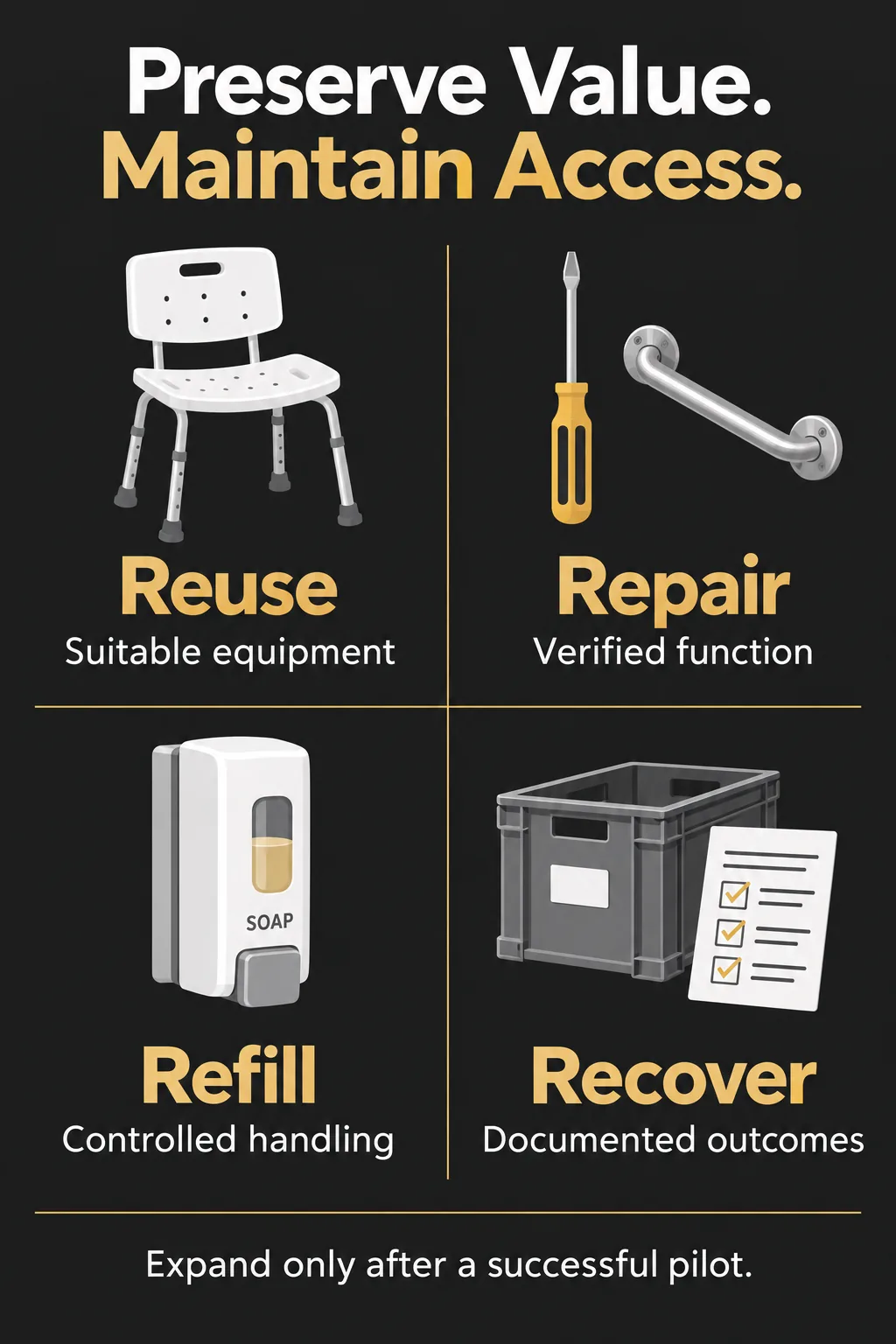
Circular procurement for accessibility supplies means keeping suitable equipment, components, and containers in use while maintaining the access they provide. Reuse is appropriate when an identifiable item remains fit for its intended setting. Repair is appropriate when an approved intervention restores a known fault and the result can be verified. Refill applies to compatible consumable systems, such as accessible soap dispensers. Recovery becomes relevant when an item cannot responsibly return to service. The route should follow the condition and function of the specific product, not a blanket preference for buying used or specifying recycled material.
For a hotel, a failed accessibility item can affect whether a guest can use a bathroom, receive a communication alert, or participate in an amenity. That makes service continuity part of the purchasing decision. A lower repair invoice is not a saving if the property loses the required function while waiting for parts. Likewise, retaining a dispenser body offers little value if a replacement pump becomes difficult to operate. Circular purchasing must preserve the complete service, including installation, cleaning, inspection, replacement support, and the ability to respond when equipment is unavailable.
This guide addresses hotel owners, purchasing managers, engineering teams, and housekeeping leaders evaluating durable accessibility equipment and related consumables for US properties. It separates procurement choices from installation approval and product-specific maintenance instructions. Requirements depend on the equipment, its intended use, the building, and the applicable jurisdiction; a reused product does not carry a general exemption from those requirements. The practical objective is to decide which value can remain in service, what evidence supports that decision, and who will deliver the next step. Begin with the existing asset and its condition, then compare the full cost and documented outcome of each feasible option.
Qualify Reuse and Repair Before Returning Equipment to Service
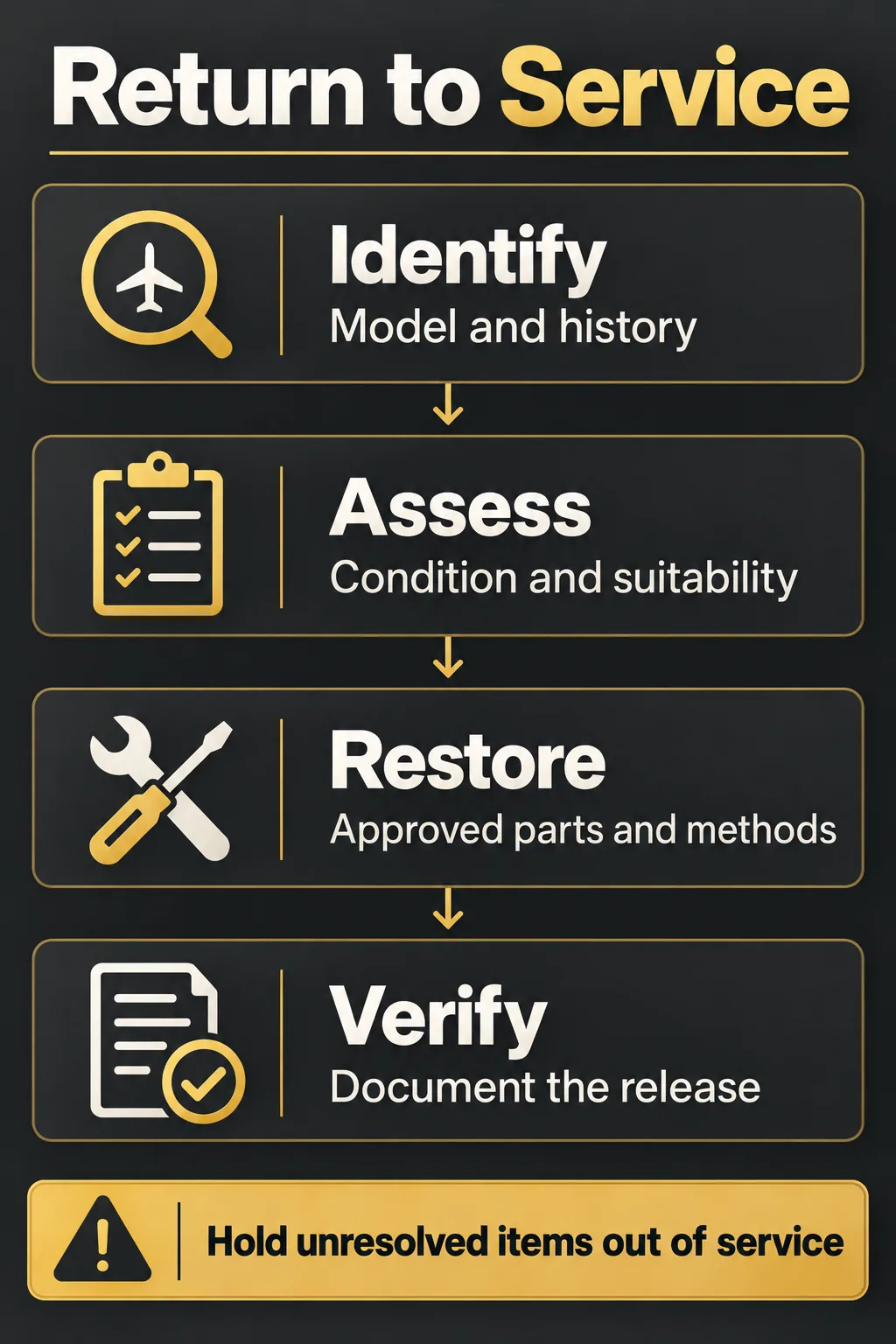
Reuse and repair are viable only when the property can identify the equipment, understand its condition, and verify its suitability for the next assignment. A clean appearance is insufficient for products that support a person or provide a critical signal. Treat the product, its mounting or supporting structure, and its service history as one assessment. A reusable component may still need new installation hardware or a different location. A repairable device may still be unavailable for too long. Establish the acceptance boundary before requesting prices, so a low-cost offer cannot bypass an unresolved safety, hygiene, or accessibility concern.
Separate continued use, redeployment, and refurbishment
Continued use leaves a functioning item in its present service. Redeployment moves it to another room or property and requires a new fit assessment. Refurbishment can combine cleaning, component replacement, and cosmetic work; the label alone says nothing about the depth of inspection or the remaining life. Ask a used-equipment supplier to identify exactly which work was completed, by whom, on which model, and under what acceptance criteria. Treat unknown age, missing identification, unresolved recalls, or an unexplained damage history as reasons to hold the item for further review.
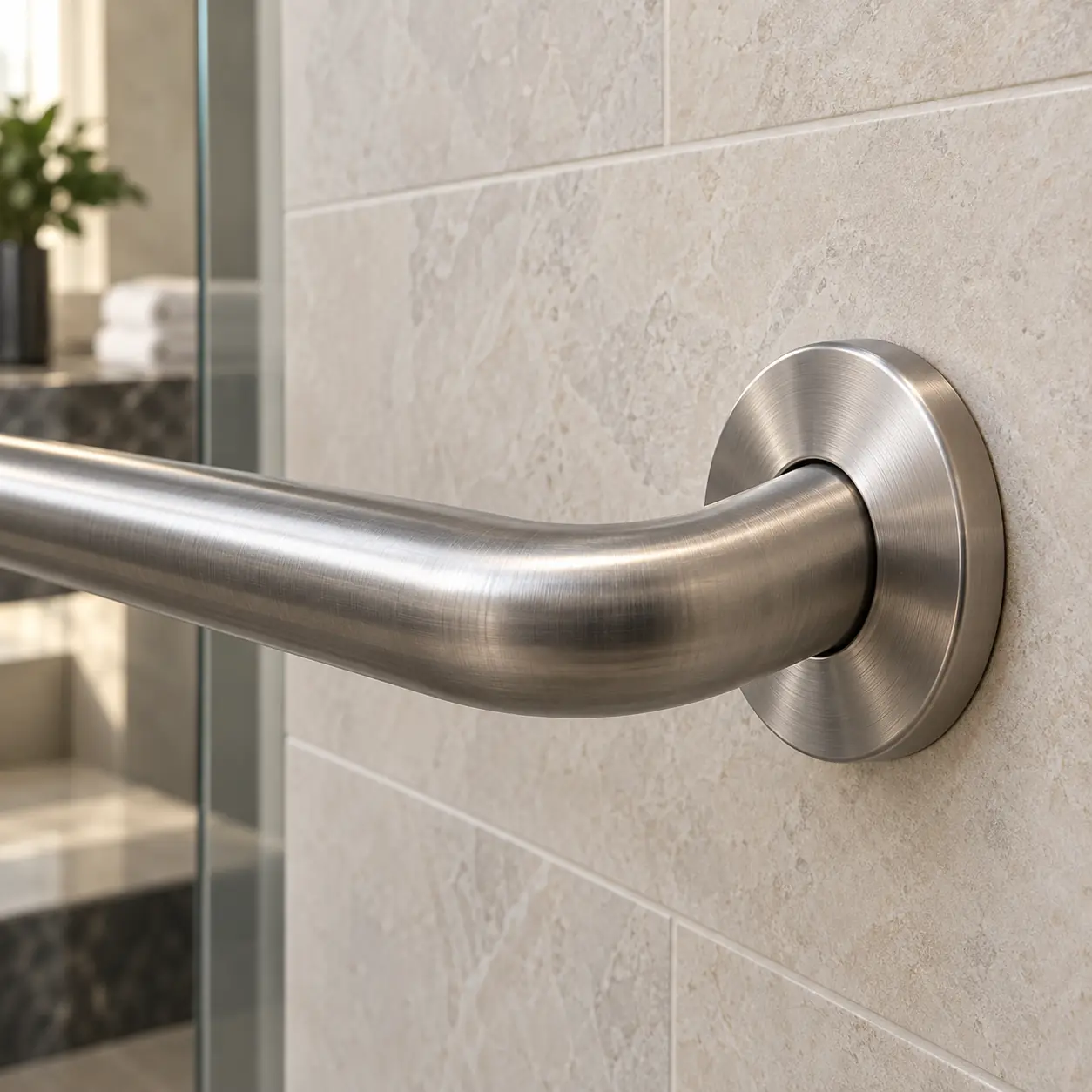
For a grab bar, moving an undamaged bar does not transfer the adequacy of its former wall connection. The new installation must be assessed as a system. For a portable shower chair or property-owned mobility aid, inspect the components and follow the applicable manufacturer procedures rather than assuming that cleaning restores mechanical fitness. Communication equipment requires confirmation that its compatible accessories and intended functions remain available. These examples illustrate separate product pathways; they are not interchangeable approvals.
| Item or condition | Potential route | Evidence that determines the route |
| Identifiable, undamaged reusable shower equipment | Reuse after required cleaning and inspection | Model instructions, complete components, condition record, intended-use suitability |
| Known device with a replaceable failed component | Authorized repair | Diagnosis, compatible part, qualified service, documented release test |
| Grab bar removed during renovation | Assess for redeployment | Condition of bar and fittings, new substrate and fastening assessment, installation requirements |
| Accessible dispenser with a serviceable pump | Repair or controlled refill | Approved pump/formula combination and unchanged usability |
| Unknown structural damage or unsupported safety-critical device | Hold; replace service capacity if needed | Competent assessment before any reuse; verified recovery route if retired |
Define a release decision, not a cosmetic grade
Separate appearance from function in the acceptance record. Record the asset identifier, original fault, parts used, technician or service provider, cleaning completion, test method, test result, and person authorizing return. Confirm whether the work changes the warranty and whether the repaired assembly still matches the configuration covered by its documentation. A shiny finish cannot compensate for looseness, corrosion, a damaged load path, or missing compatibility evidence. Do not improvise welding, drilling, adhesive repairs, or substitute hardware on a support assembly.
Retain an item in a clearly segregated hold area until it passes the release process. Front-desk and housekeeping inventory must distinguish available equipment from equipment awaiting inspection. Arrange equivalent service capacity before sending essential units away, and coordinate any room or amenity restrictions with the responsible operations team. A repair queue is not usable inventory. If the intended service cannot be maintained safely, the purchasing decision needs an immediate replacement or another suitable operational response.
Use Refill Systems That Preserve Hygiene and Independent Operation
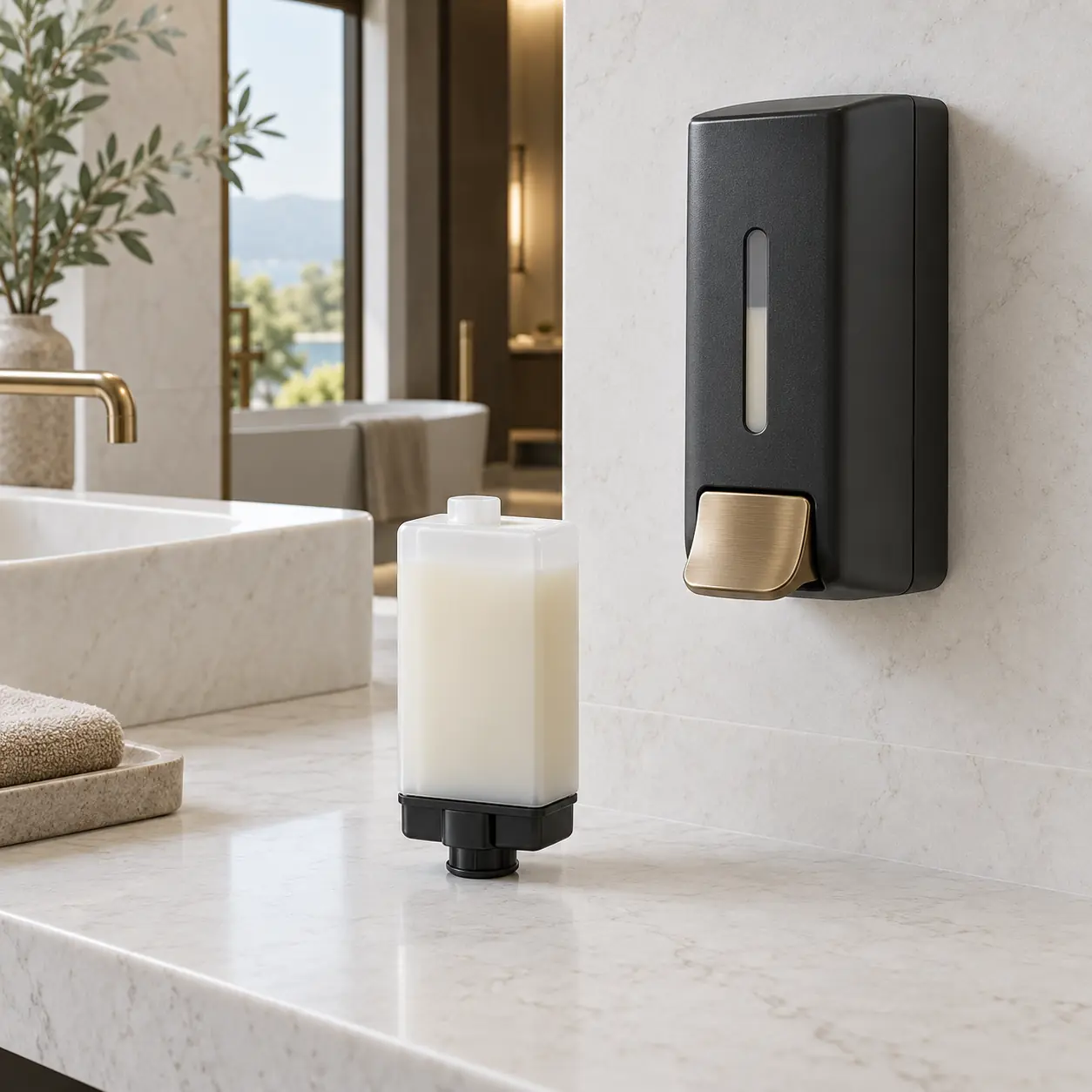
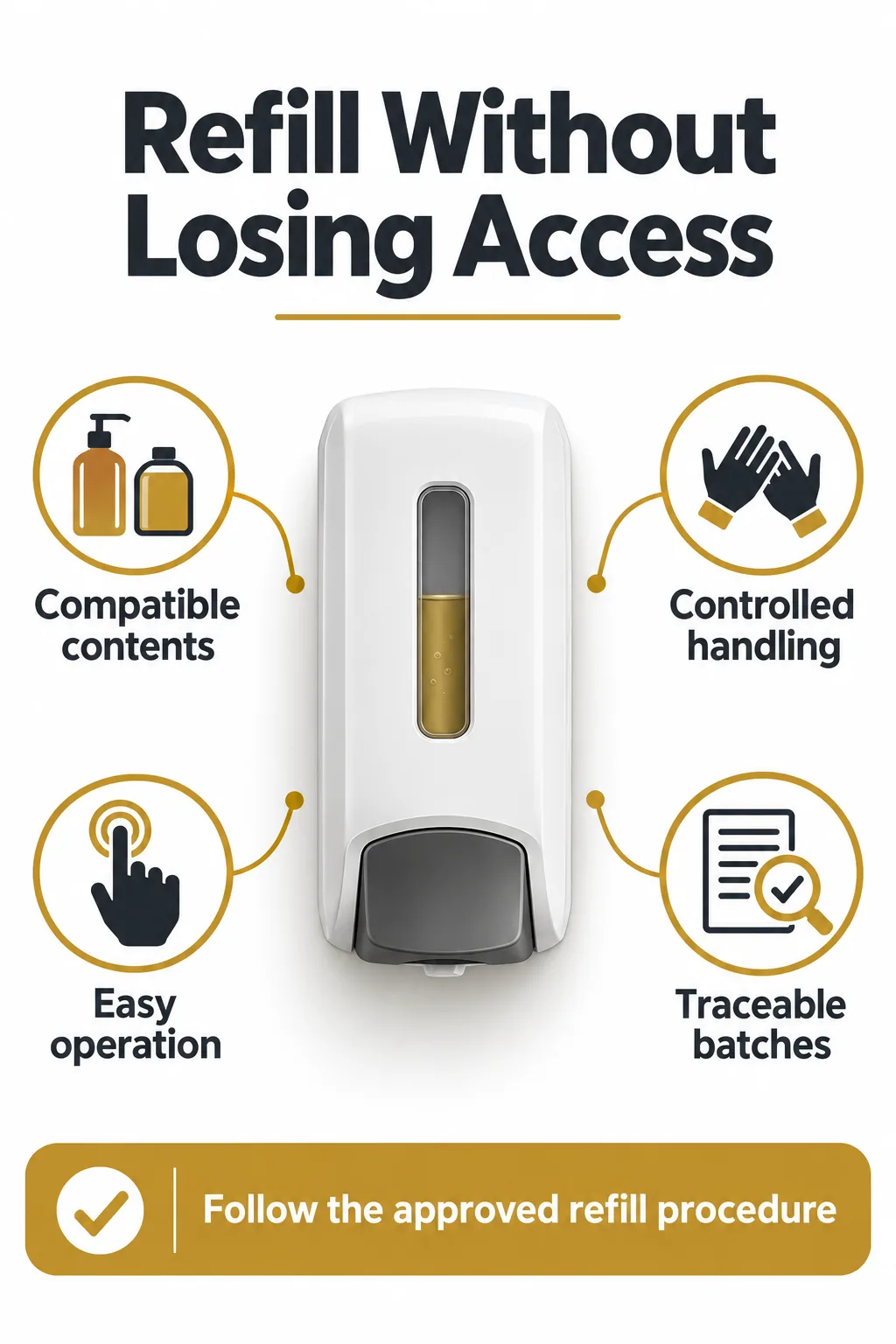
Refill is a circular option for consumable delivery systems, not a general treatment for accessibility equipment. In an accessible guest bathroom, retaining a dispenser can reduce container replacement, but the complete system must remain cleanable, compatible, and usable. Compare the dispenser body, pump, bracket, product formulation, refill pack, and staff procedure together. A change in viscosity or pump design can affect dispensing, while a different mounting arrangement can affect access. Approve the replenishment method before committing to bulk supply, and include replacement parts and an alternative supply arrangement in the purchasing scope.
Choose the handling method before the pack size
Distinguish sealed replacement cartridges from an open refillable reservoir. A cartridge system may limit handling of the contents, but it still consumes packaging and may depend on a proprietary supply. An open reservoir can offer different purchasing flexibility, yet requires a documented emptying, cleaning, drying, and refilling procedure suitable for the actual product and dispenser. Select the system the property can operate consistently; neither format earns automatic approval simply because it is described as sustainable.
For soap, do not establish a routine of adding fresh product to partially empty reservoirs. Use the manufacturer-supported replenishment process, prevent mixing formulations, and retain batch identity. Hand sanitizer requires its own product-specific controls; do not assume the soap procedure applies. Store refills as directed and reject compromised containers. These are procurement and operating controls, not a substitute for the dispenser and consumable manufacturers’ instructions.
Test the retained dispenser as guests will use it
Evaluate the mounted assembly, including approach space, reach, identification, and operation. A pump that works on a purchasing desk may behave differently when installed over a counter or beside another fitting. Confirm the applicable operable-part requirements and inspect actual operation rather than relying on an accessibility icon in a catalog. Where feasible, include people with relevant access needs in usability evaluation; their feedback complements the technical review and can reveal awkward handling that a sample inspection misses.
Run representative replenishment cycles before scaling. Record leakage, incomplete dispensing, time spent servicing each unit, consumable waste during changeover, and periods when the dispenser is empty or unusable. If a refill supplier proposes a new formulation, require compatibility review and approval before substitution. Keep a suitable spare pump or replacement dispenser where it materially reduces service interruption. Training must cover both routine work and what staff should do when a container, batch label, or dispenser condition is uncertain.
Measure packaging against equivalent service
Compare packaging mass over the same measured amount of dispensed product or the same defined service demand. Include refill containers, cartridges, shipping cases, and a fair allocation of dispenser replacements. Separate packaging reduction from total environmental impact: additional cleaning, product loss, transport, and equipment replacement can change the wider result. Do not count every refill as an avoided bottle unless the baseline bottle size and actual demand support that conversion.
Specify Recovery Routes and Control Every Handoff
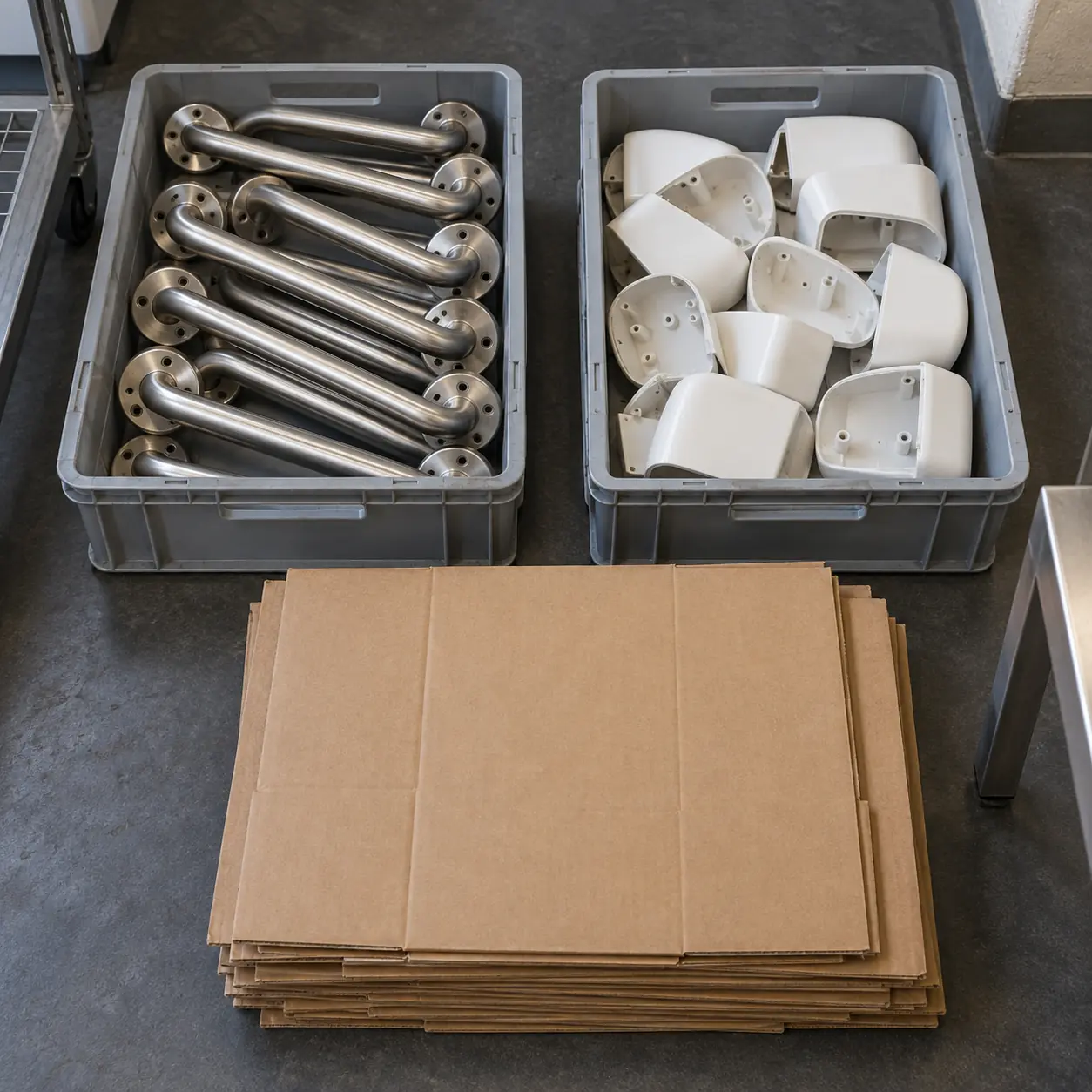
Recovery should have a named destination and an observable outcome before retired accessibility supplies leave the property. A collection receipt proves transfer, not successful recycling or reuse. Distinguish whole-item donation, component recovery, material recycling, energy recovery, and disposal in the agreement and the report. Some products combine metal, plastics, electronics, batteries, or contaminated components that need different handling. Ask the receiving organization what it actually accepts and what happens to rejected material. The most credible program records both successful outcomes and losses instead of placing everything collected under a single circularity claim.
Do not turn donation into an exit for unresolved defects
Donation is a reuse route and therefore needs a suitability decision. Confirm that the recipient wants the specific item, can use it as intended, and receives the necessary identification and service information. A hotel should not describe unknown or unsafe equipment as ready for use. Where a qualified refurbishment organization accepts items for assessment, document that status and its acceptance terms. Never move an unresolved problem into another property merely to avoid a disposal cost.
For retired assemblies, obtain material and disassembly information where available. Avoid asking hotel staff to dismantle electrical or structural equipment beyond their competence or the approved procedure. Electrical devices and batteries may require specialist collection; agree on separation, safe storage, packaging, and carrier acceptance for the actual waste stream. An item being mostly metal does not establish that a local recycler will accept the whole assembly.
Price the return journey explicitly
Specify who removes installed items, isolates equipment where necessary, labels the return, provides packaging, stores it, loads it, and pays each freight leg. Record minimum collection quantities, booking lead time, accepted condition, rejected-load charges, and ownership at handoff. For international supply, a local recovery partner may be more practical than shipping low-value material back to the factory. Compare the actual route, including border and waste-shipment requirements where relevant, before accepting a take-back promise.
Set a maximum holding period matched to storage capacity and safe handling. A full return bin must not obstruct an accessible route or displace ready-to-use equipment. For mixed loads, use item or material categories that the downstream partner can reconcile. Photographs, asset records, measured weights, transfer documents, and final outcome reports should refer to the same load identifier so quantities can be followed across organizations.
Report results without double counting
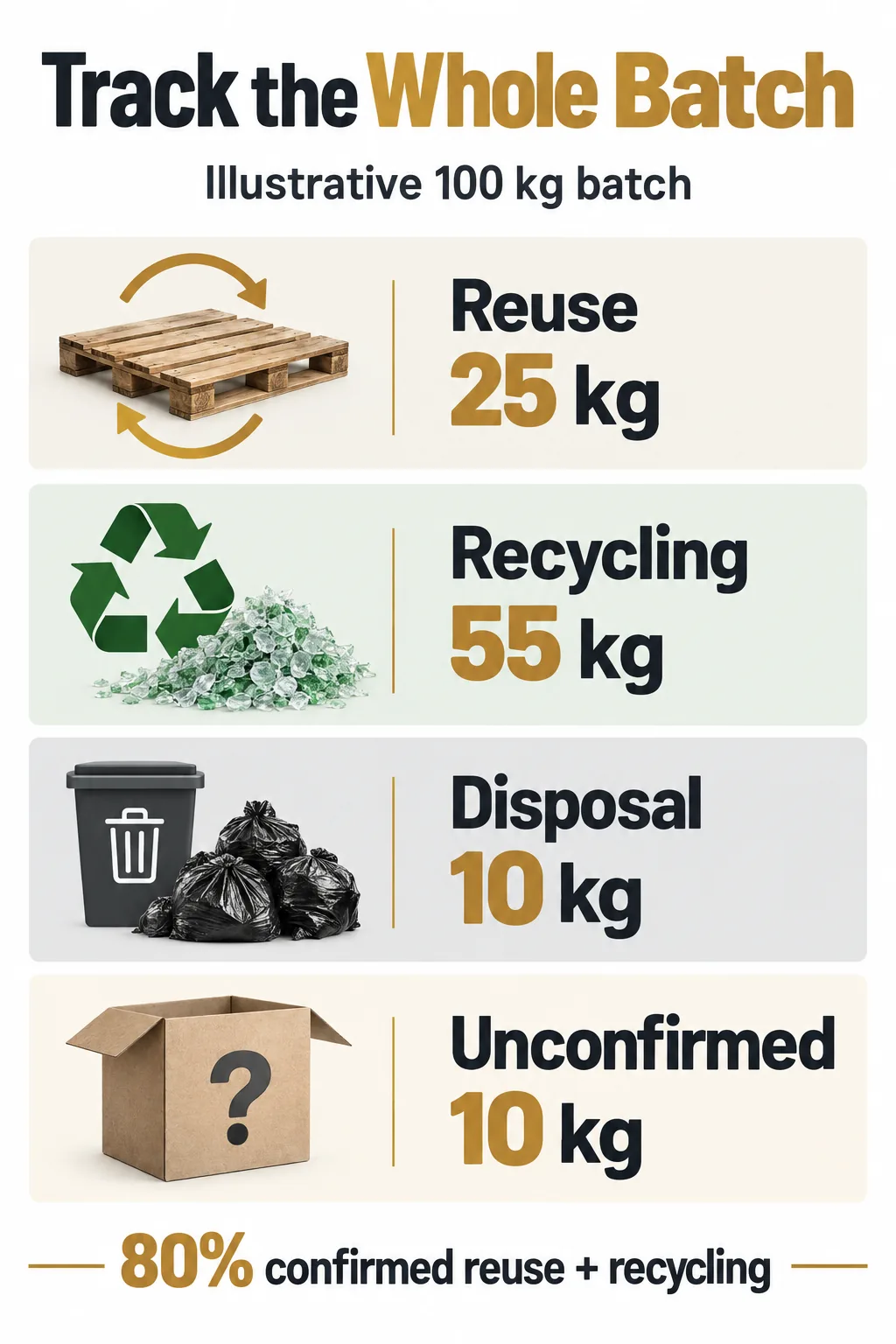
An illustrative retirement batch weighs 100 kg: 25 kg is accepted for whole-item reuse, 55 kg is documented as material recycled, 10 kg is disposed of, and 10 kg awaits confirmation. Report those four outcomes separately. Confirmed reuse plus recycling is 80 kg, or 80% of the original batch. Do not present the unconfirmed share as recovered, and do not count the reused mass again as recycled. This is an accounting example, not a forecast of achievable recovery.
Track reusable transit packaging separately from the accessibility products. A returnable tote is beneficial only if it completes sufficient useful trips under the actual collection arrangement; deposits, damage, loss, cleaning, and empty-return transport belong in the comparison. For broader room-item planning, the principles in the circular procurement guide for guest room supplies can support coordination, while accessibility equipment retains its own release and continuity requirements.
Compare Service Costs and Put Circular Support in the Contract
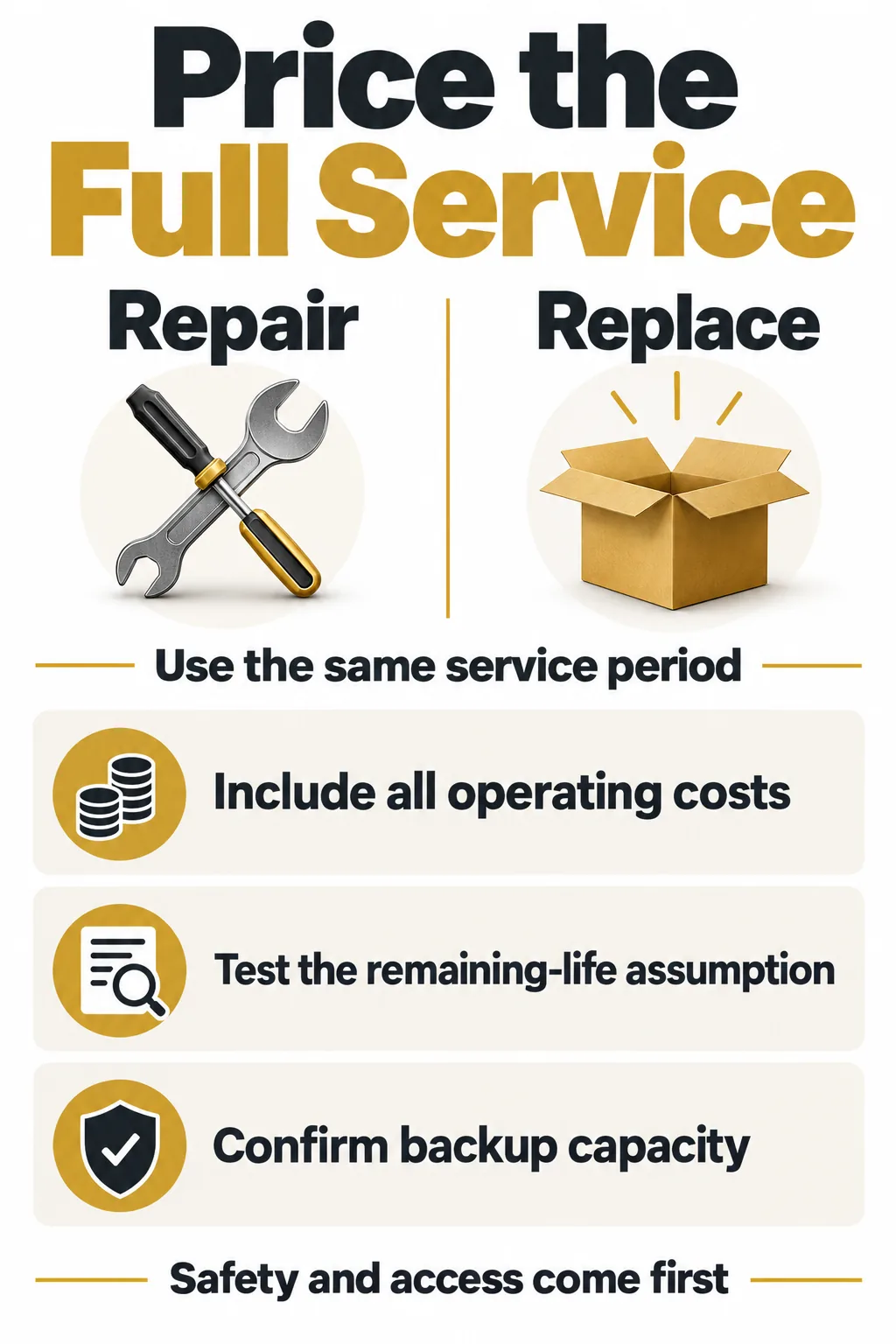
Compare circular options over a common service requirement, with safety and accessibility treated as entry conditions. Cost scoring should begin only after an option is suitable for the product and property. Define the number of functioning units needed, the evaluation period, expected utilization, and the time allowed for service restoration. Then price acquisition, inspection, cleaning, parts, labor, transport, backup capacity, and retirement. A repair quote that excludes return freight or a refill quote that omits servicing labor is incomplete. Use realistic uncertainty ranges for remaining life and repair success instead of treating supplier estimates as guarantees.
Use cost per usable unit-year for durable equipment
For a simple undiscounted comparison, divide the total cost of providing the required equipment service over the evaluation period by the usable unit-years delivered. Include all replacements needed to cover that period and deduct only a supportable residual credit. For long horizons or material financing differences, use a discounted cash-flow comparison. Keep service availability as a separate acceptance condition so an inexpensive but frequently unavailable option does not appear attractive through its average cost alone.
| Illustrative three-year case: one suitable unit | Repair existing unit | Buy replacement |
| Repair or purchase | $140 | $300 |
| Installation and release verification | $40 | $50 |
| Logistics, service, and backup costs over the period | $60 | $30 |
| Total cost, assuming no residual credit | $240 | $380 |
| Usable service assumed | 3 unit-years | 3 unit-years |
| Cost per usable unit-year | $80.00 | $126.67 |
These invented values demonstrate the method; they are not market prices or an estimate for a particular product. The repair case is preferable on cost only if the three-year service assumption and all acceptance conditions are credible. If the repair provides only one year and a replacement is then needed, add that replacement and its associated costs to the same three-year model. Do not compare a one-year repair bill with a three-year replacement total. Test the decision against shorter life, higher freight, delayed parts, and failed repair scenarios.
Ask for commitments that can be checked
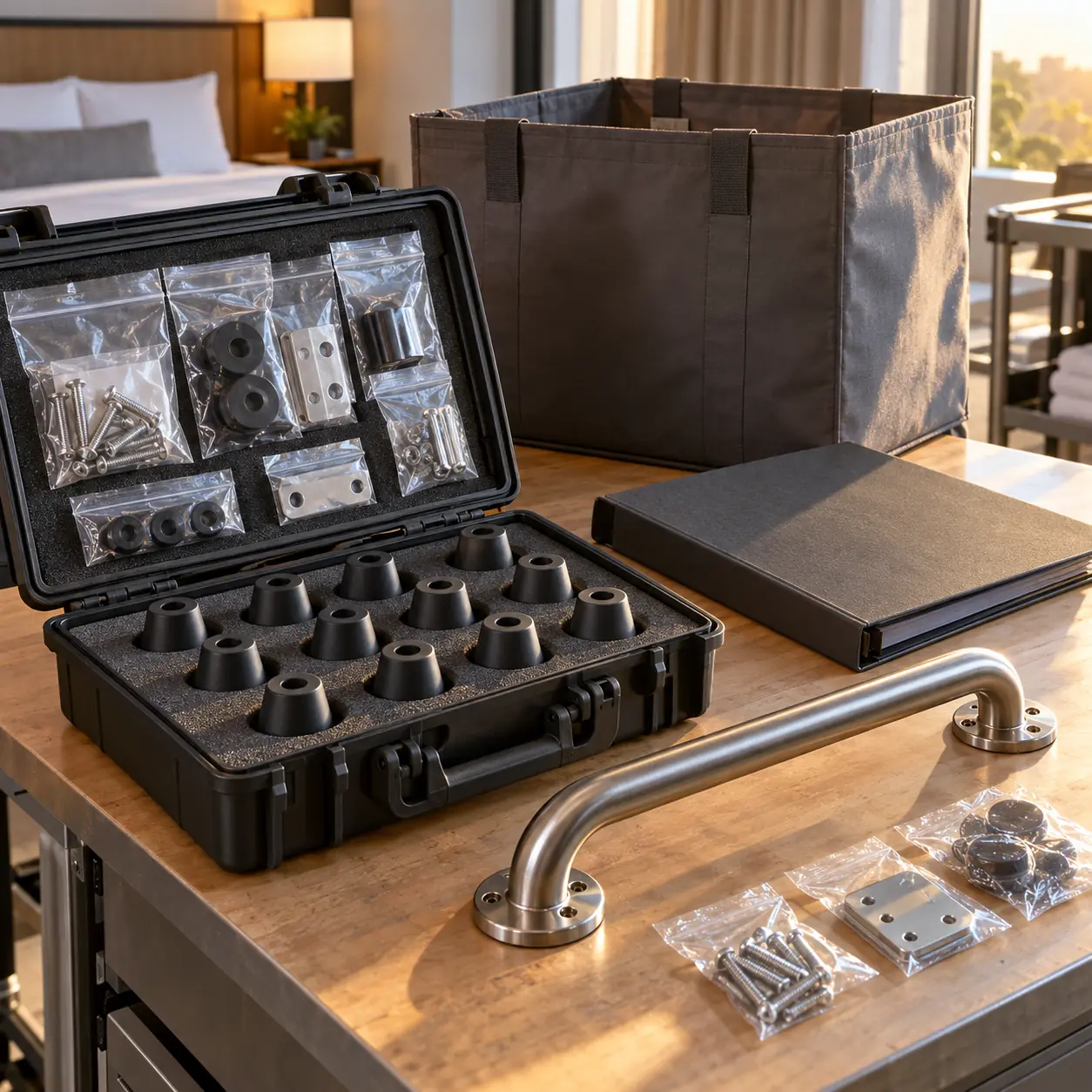
Require model-specific parts lists, ordering references, current prices or an agreed pricing basis, support periods, service locations, training requirements, and documented repair procedures. Define the turnaround clock: receipt at the service center is different from collection at the hotel. State whether loan equipment is included, what constitutes an equivalent replacement, and who bears the cost if the repair fails inspection. Specify the warranty on repaired assemblies and replacement components rather than assuming the original warranty continues unchanged.
For refill and recovery services, identify approved consumables, accepted returns, collection geography, charges, reporting frequency, and evidence of final outcomes. Require approval before changes to material, pump, formulation, repair method, or downstream processor. Address contract exit: who owns the dispensers, what happens to deposits, whether software or proprietary refills remain necessary, and how the hotel can continue service if the supplier withdraws. A circular offer should reduce avoidable replacement without creating an unmanaged dependency.
Pilot at the scale that reveals operating constraints
Select a representative group of equipment and locations with enough service activity to observe the proposed repair or refill cycle. Establish the existing failure rate, servicing time, consumption, and availability before the change. Assign procurement to commercial records, engineering to technical release, housekeeping to daily handling, and operations to guest-service continuity. Agree in advance which failures stop expansion and who decides whether to correct the system or discontinue it.
Review successful repairs returned to service as a share of units submitted, but also record repeat faults and time out of service. For refills, compare packaging per defined demand alongside leaks and servicing time. For recovery, compare verified outcomes with the complete retired batch. Expand only when the technical result, operational workload, and commercial support are reproducible. A small favorable pilot does not establish the result for different room types, equipment models, or destinations.

Conclusion
Circular procurement for accessibility supplies works when the property retains useful value without weakening the service a guest depends on. Reuse needs identifiable, suitable equipment; repair needs an approved method and a verified return to service; refill needs controlled handling and independent operation; recovery needs a documented destination and outcome. The decision is strongest when engineering, housekeeping, procurement, and operations share the same acceptance rules. Start with a defined equipment group, establish the full service cost, and confirm who will restore capacity when something fails. Expand the arrangement only when the evidence supports repeatable performance.
Before seeking proposals, assemble the product models, condition records, quantities, installation locations, destination, and required service schedule. Ask suppliers to distinguish products they can support from routes that still need technical or local recovery confirmation. This keeps a circular objective attached to a deliverable operating arrangement.
To discuss suitable product and sourcing options, request an accessibility supplies sourcing review from KW Hospitality. Include the existing equipment, intended reuse or repair scope, refill requirements where applicable, delivery location, and target dates. Ask for written confirmation of any parts support, service, or take-back arrangement proposed for your project.
Frequently Asked Questions
Can a hotel buy secondhand accessibility equipment from another property?
Potentially, but the previous setting does not establish suitability for the new one. Obtain the model identity, condition and service records, necessary instructions, and a clear account of included components. Arrange the product-specific review and any installation assessment before acceptance. If that evidence is unavailable, keep the item out of guest service until the uncertainty is resolved.
Does recycled content prove that an accessibility product is suitable?
No. Recycled content describes a material attribute, not the performance of the assembled product or its installation. Evaluate required functionality, durability, cleanability, support, and documentation independently. Also distinguish the percentage of recycled content from whether the finished item is actually accepted by a recovery service at the property’s location.
Can refinishing restore a damaged grab bar to service?
A cosmetic finish does not establish structural fitness. Damage, corrosion, mounting problems, or an altered grip surface need a competent assessment and an approved remedy. Do not coat over a defect to make the item look acceptable. If refinishing is permitted for the model, verify that the resulting surface and complete installation remain suitable before release.
Is a leased accessibility device automatically a circular choice?
No. Leasing changes the commercial arrangement, but the product may still be replaced frequently or disposed of without recovery. Ask who maintains it, supplies backup equipment, determines end-of-life condition, and documents subsequent reuse or recovery. Compare the whole service agreement and exit obligations, not only the monthly fee.
What should happen when a repair supplier cannot provide an approved part?
Keep the affected item out of service if its suitability is unresolved, and arrange the necessary service capacity through a suitable alternative. Ask the manufacturer or authorized service organization whether an approved replacement or superseding component exists. Do not accept an apparently similar part solely because it fits; its compatibility and effect on the complete assembly still need verification.