
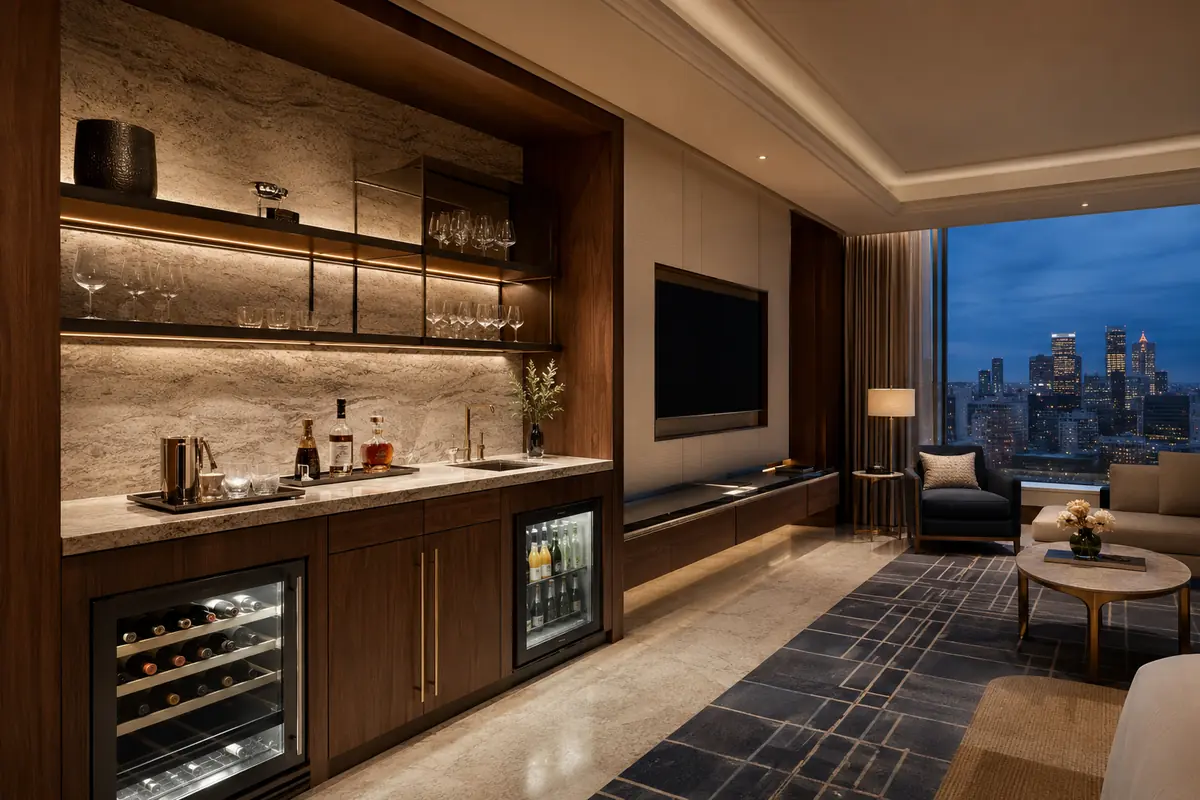
Luxury Hotel Program
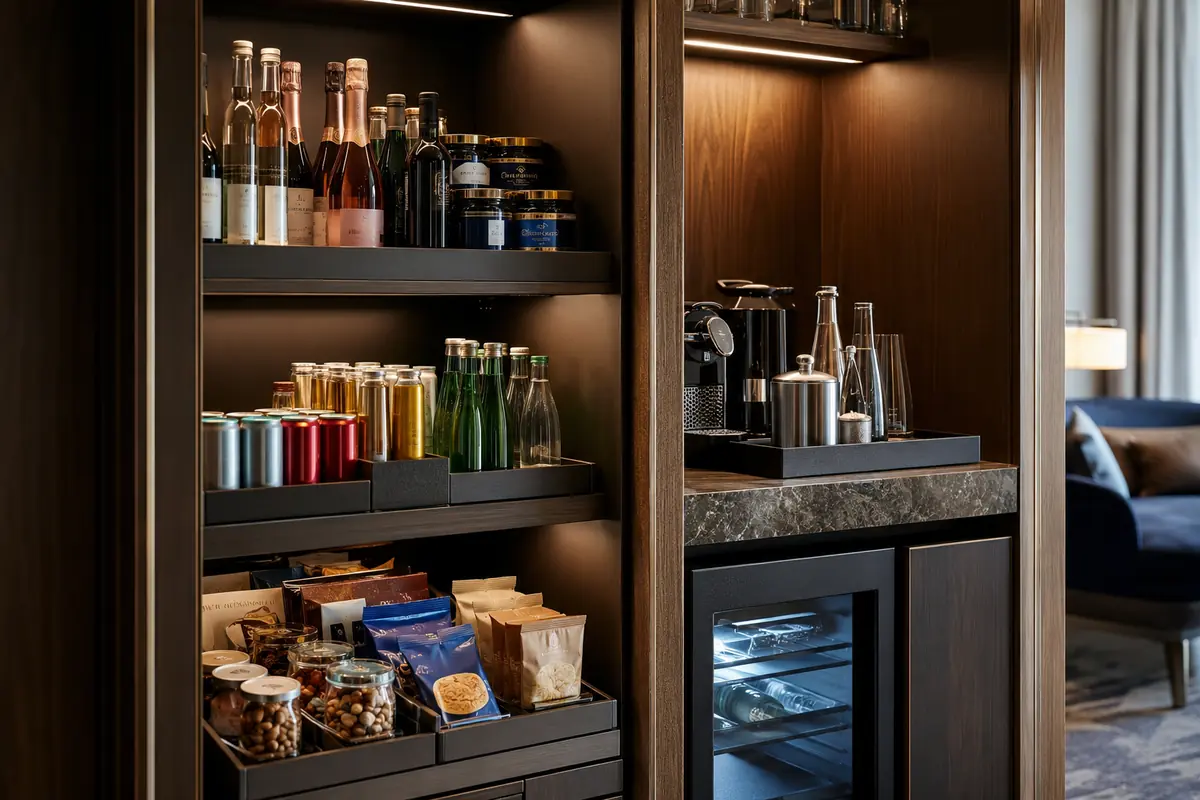
Coordinate premium refrigeration, glassware, welcome beverages, curated snacks, and discreet smart controls.
In-room refreshment, specified for hospitality
Source minibar refrigeration, coffee and tea service, drinkware, guest hydration, accessories, and inventory-control solutions through one organized procurement path.
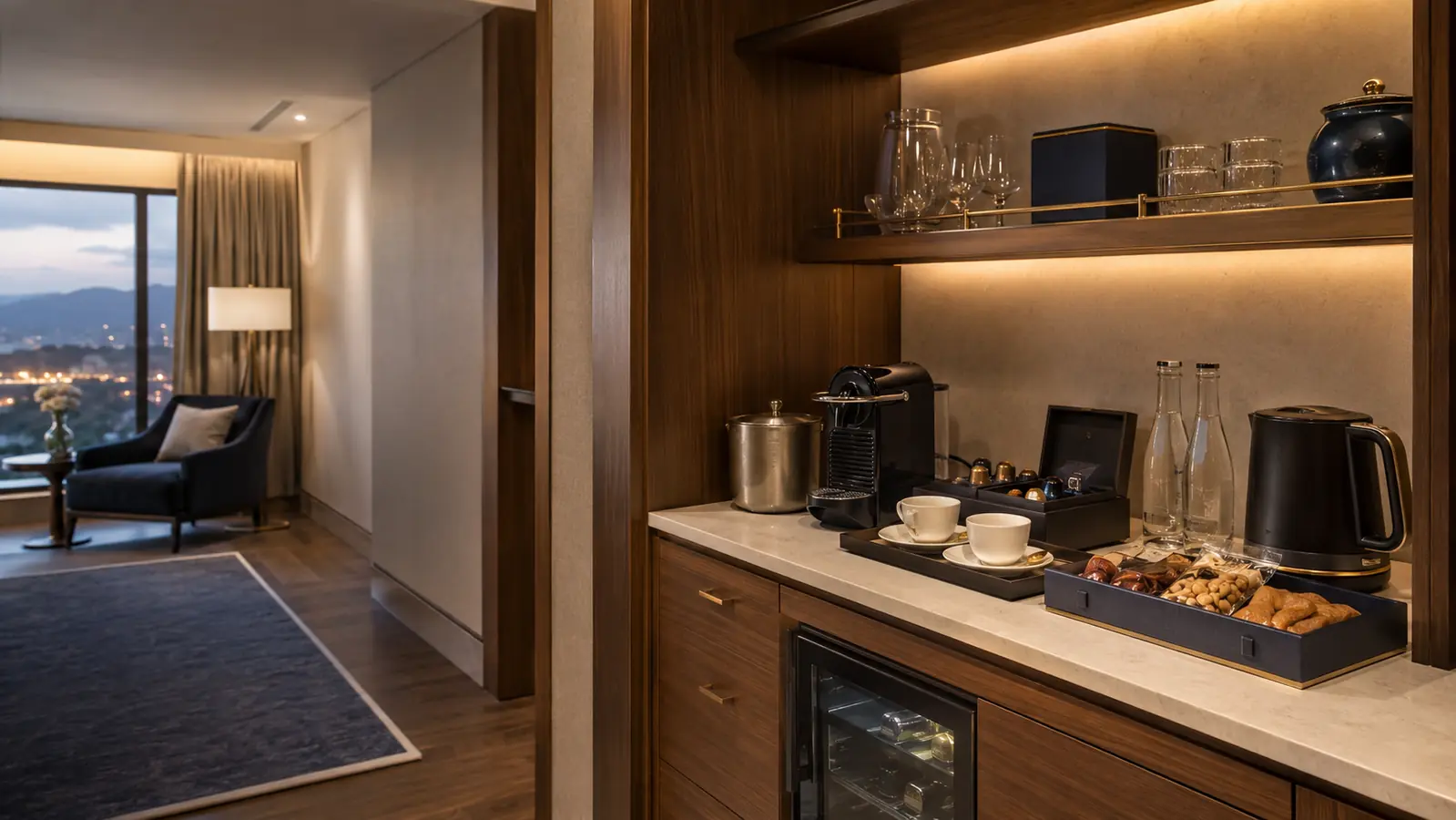
Start with the guest experience
Match equipment, presentation, replenishment, and controls to the property type, room count, service promise, and operating model.
Coordinate premium refrigeration, glassware, welcome beverages, curated snacks, and discreet smart controls.
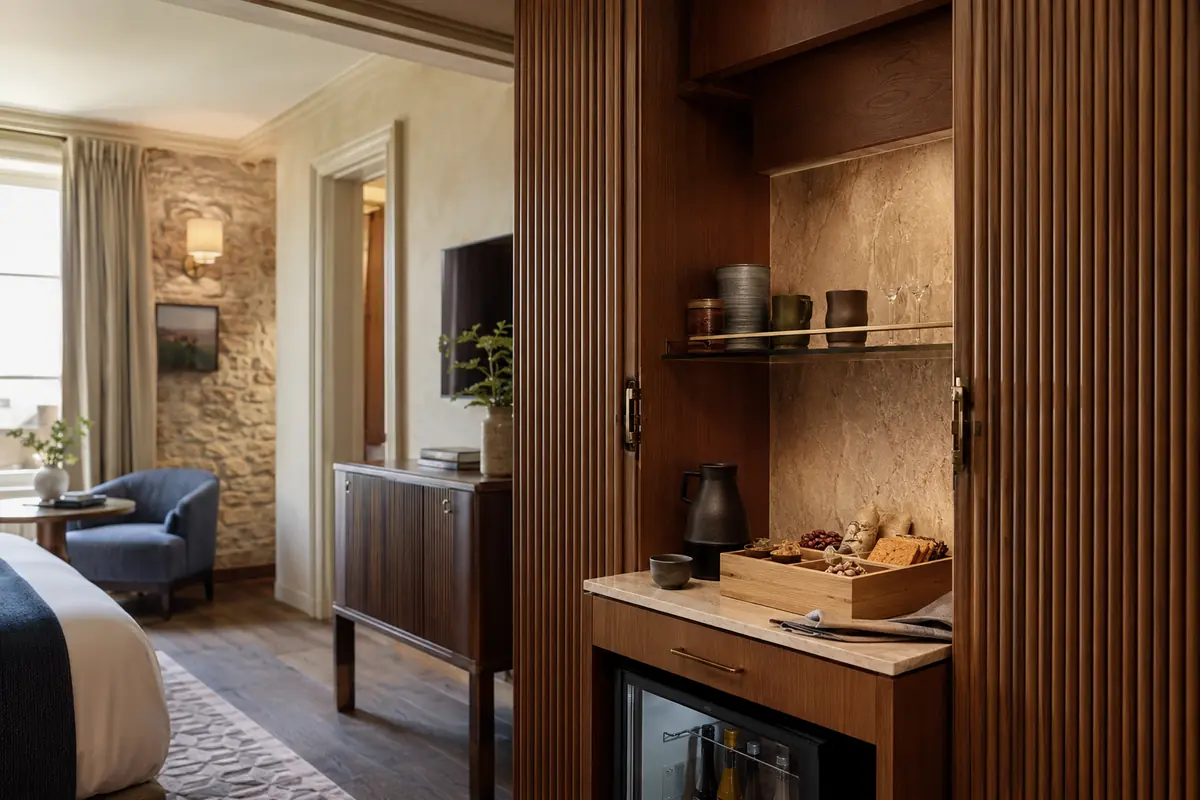
Use compact equipment, distinctive materials, local beverage stories, and brand-led presentation.
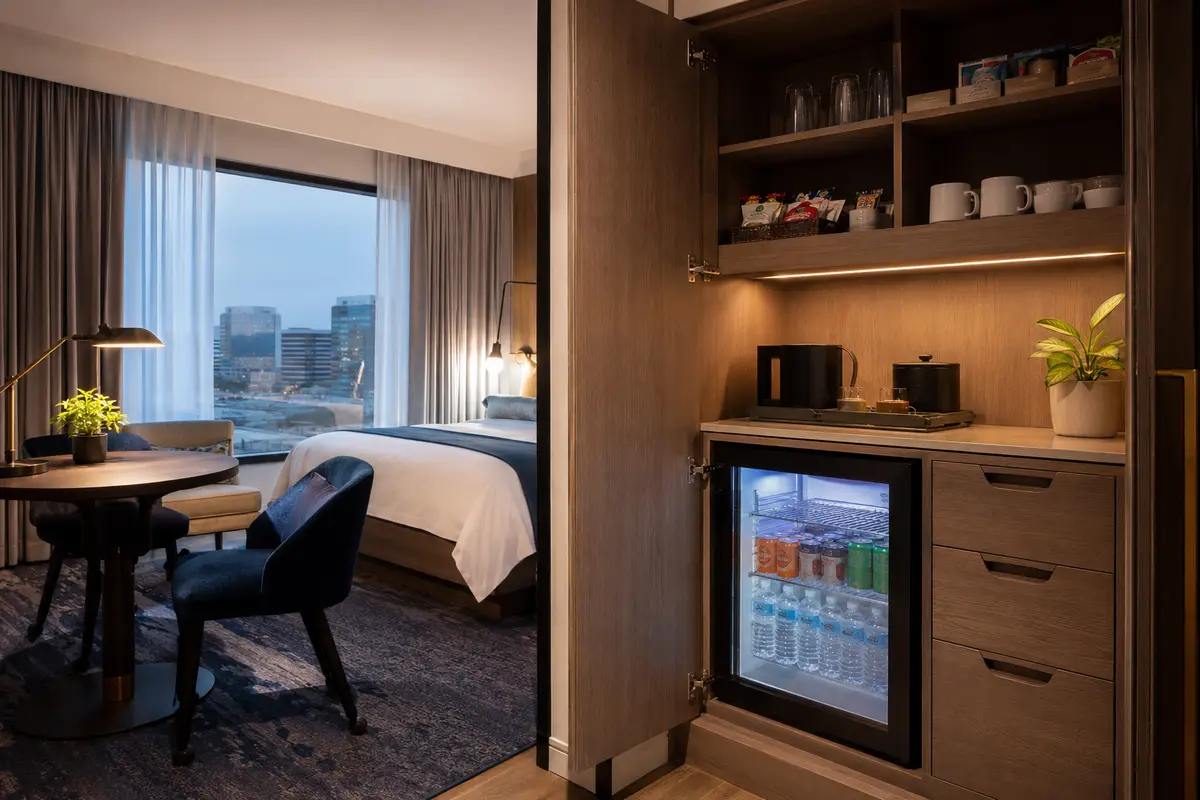
Prioritize usable capacity, refillable hydration, durable drinkware, and efficient self-service replenishment.
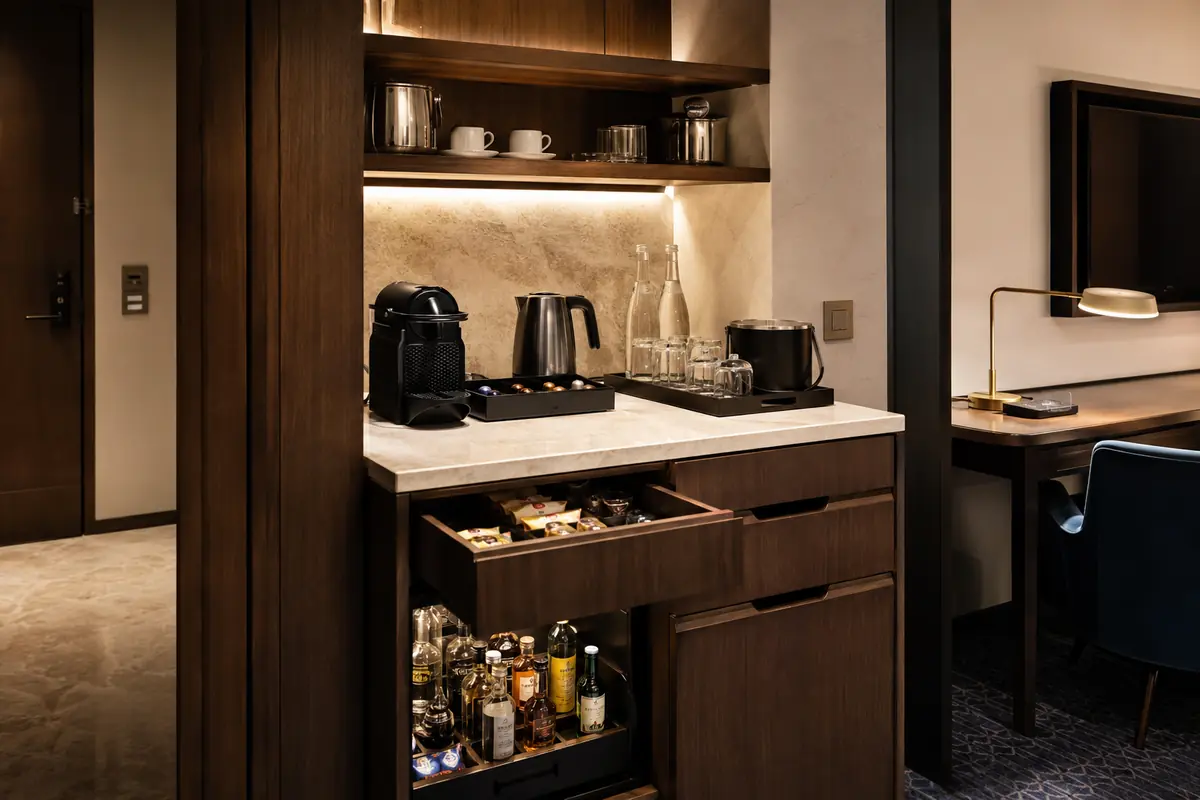
Standardize fast coffee service, quiet cooling, clear merchandising, and quick housekeeping resets.
Complete minibar directory
Search the complete collection or filter by service area. Every card has an independent destination field for its future category landing page.
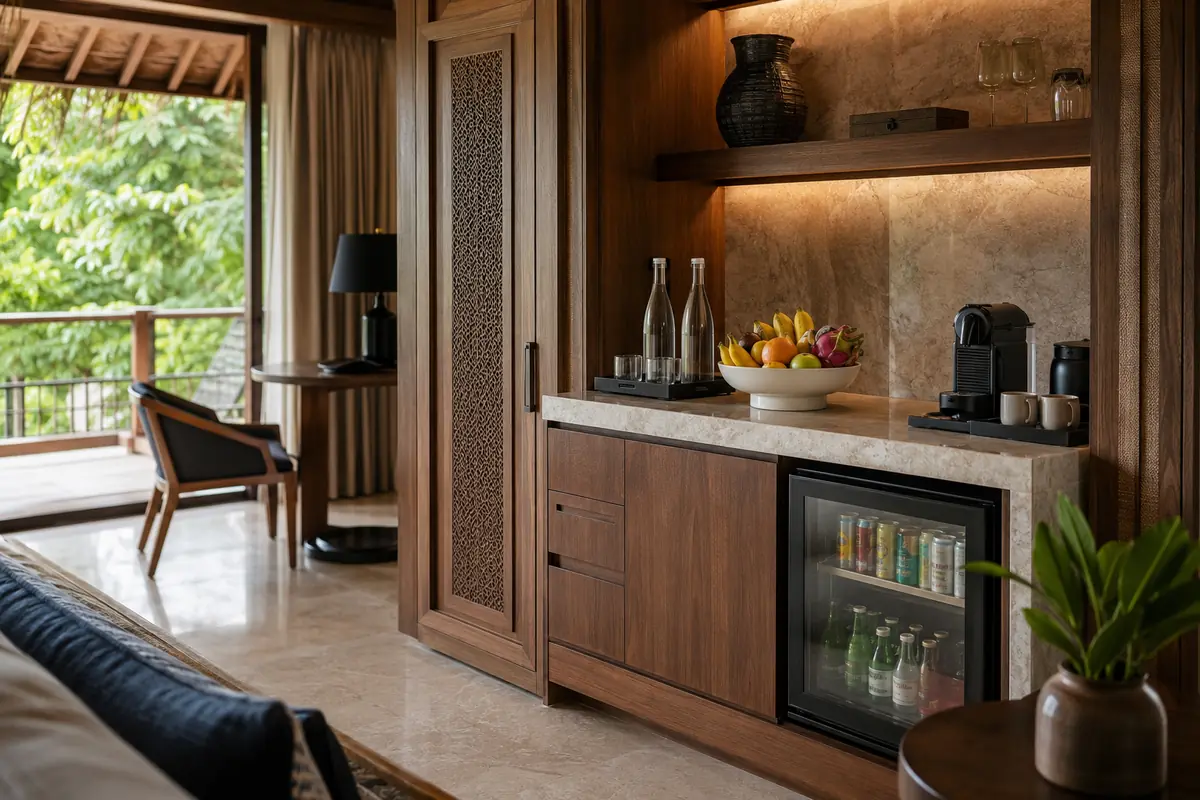
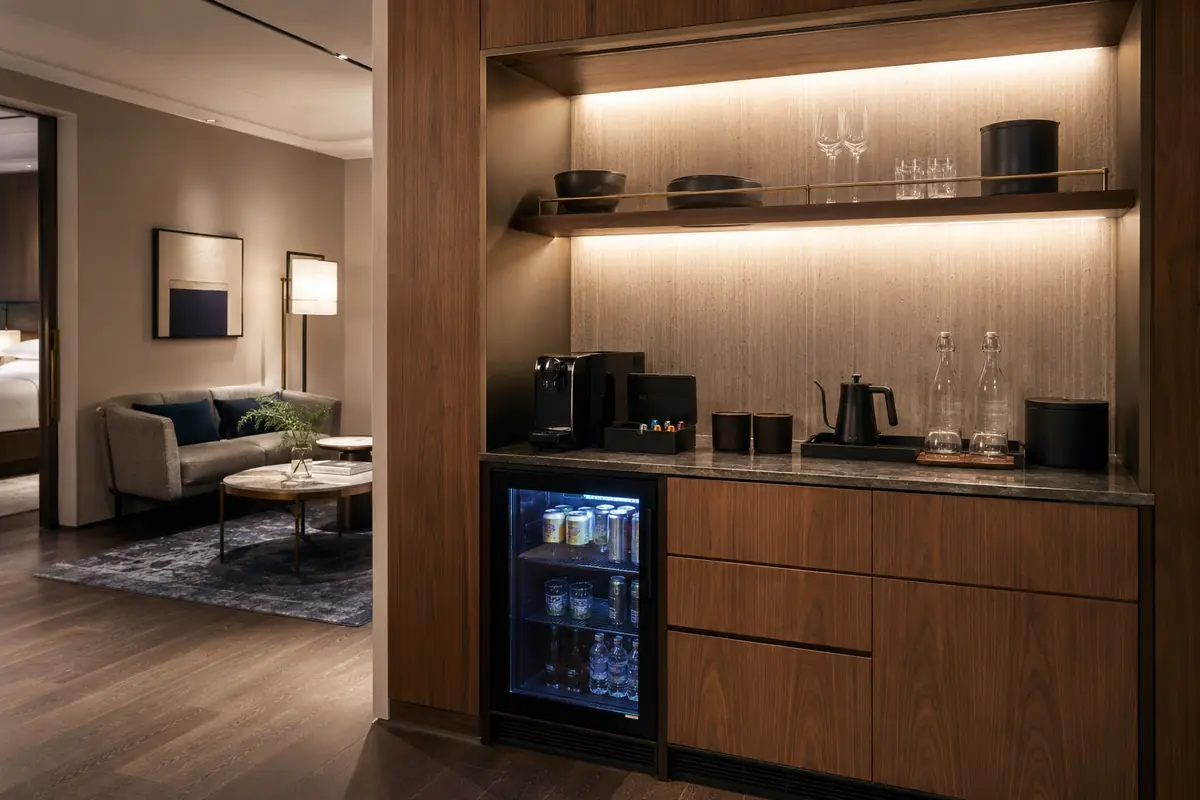
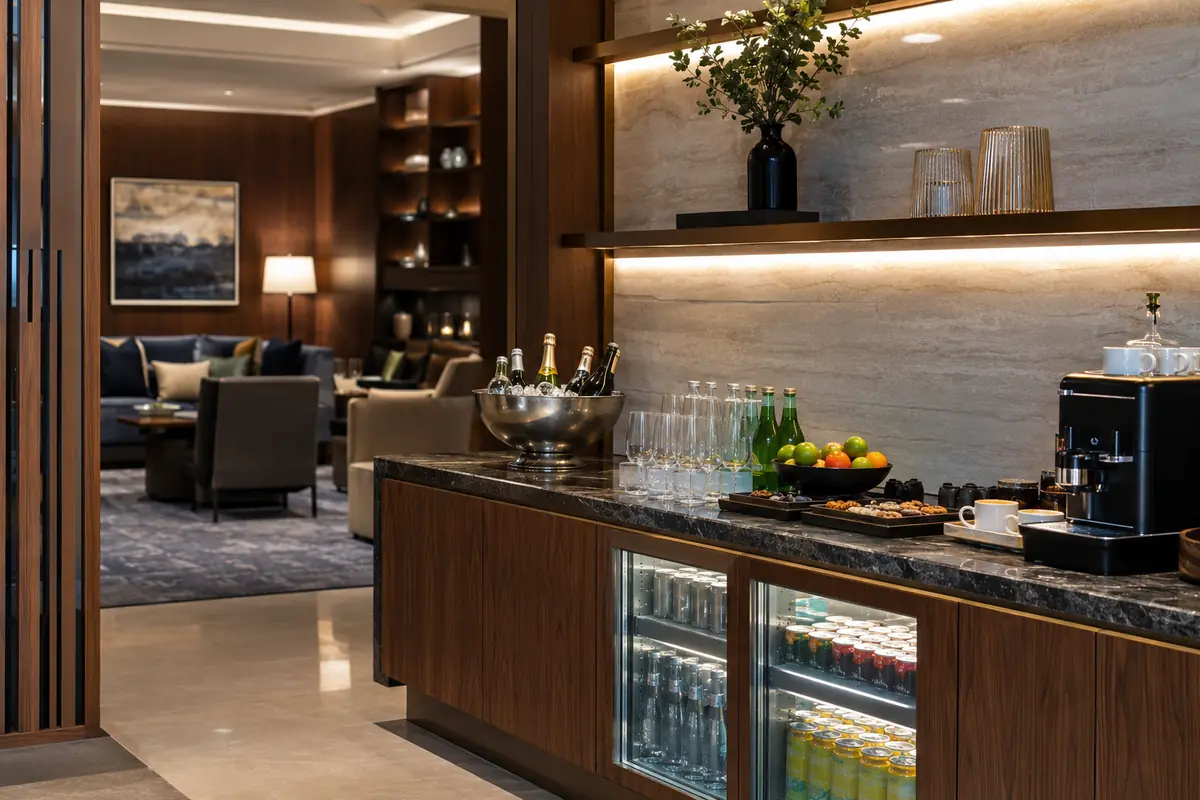
Showing all 21 categories
 01
Cooling
01
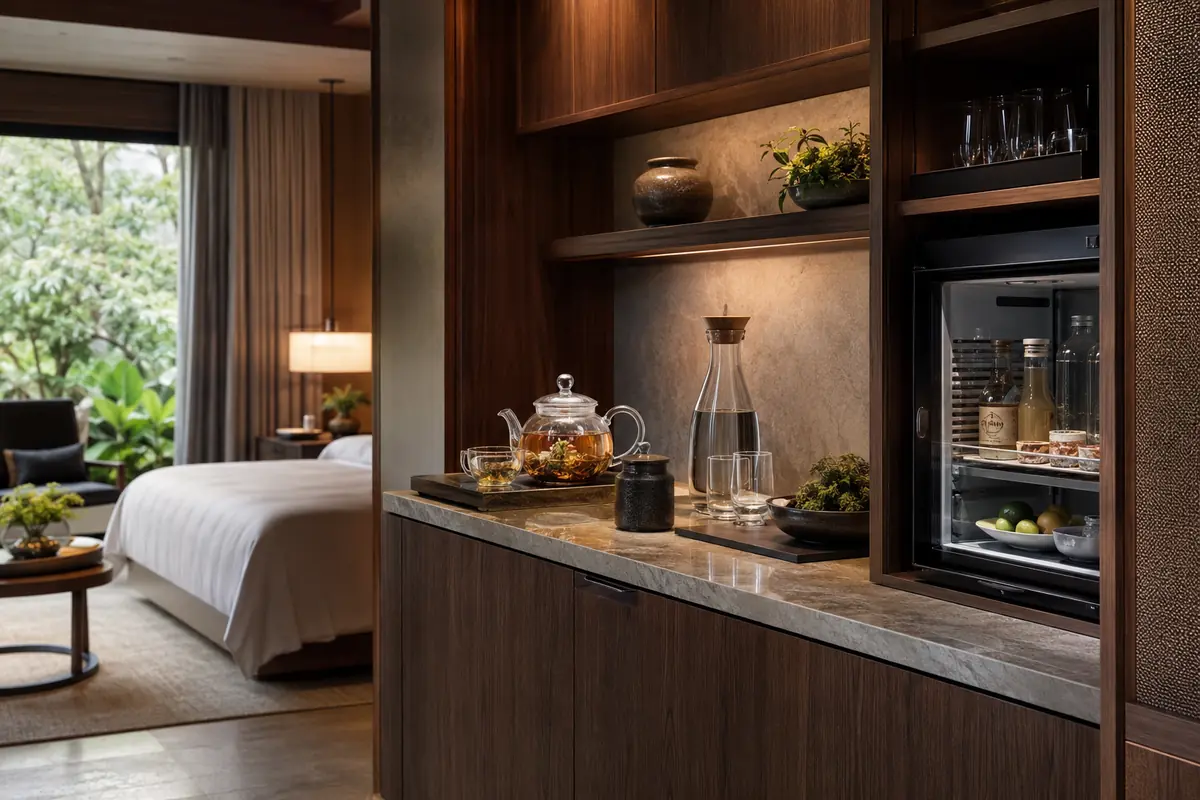
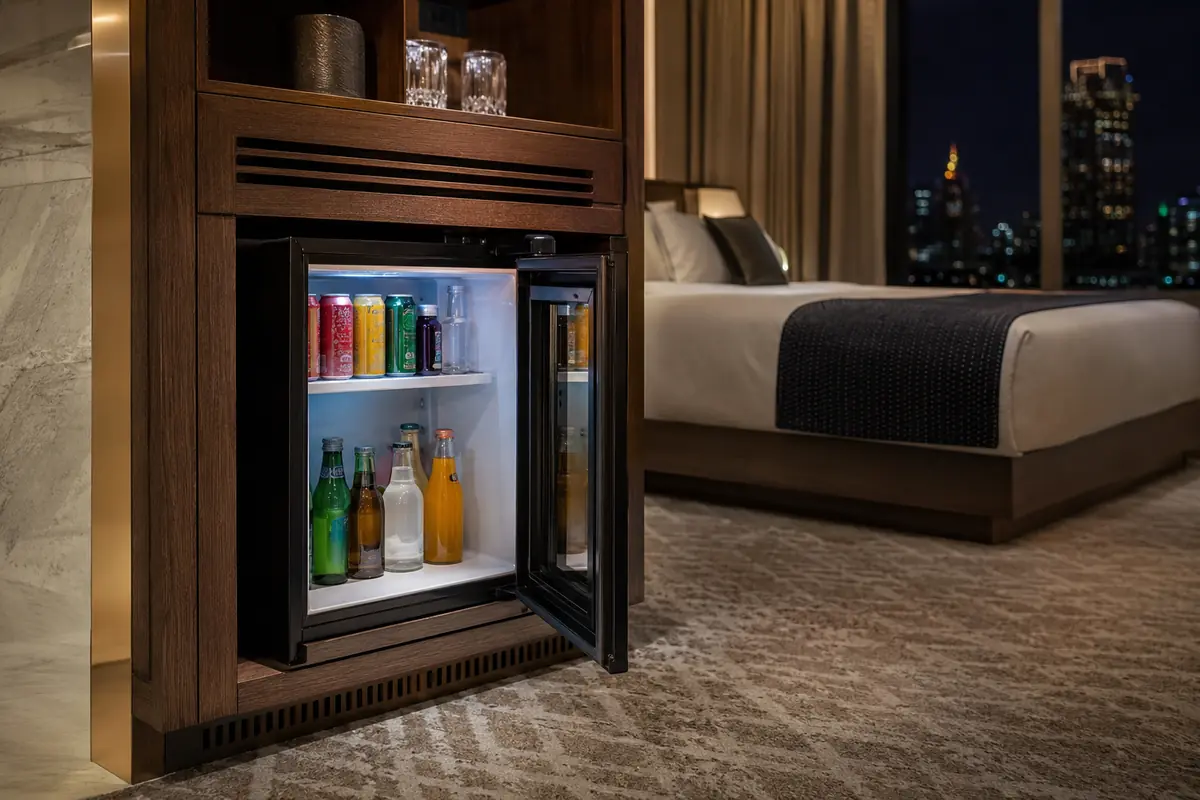
CoolingSilent Cooling · Multiple Capacities · Hotel-Ready Finishes
 02
Cooling
02
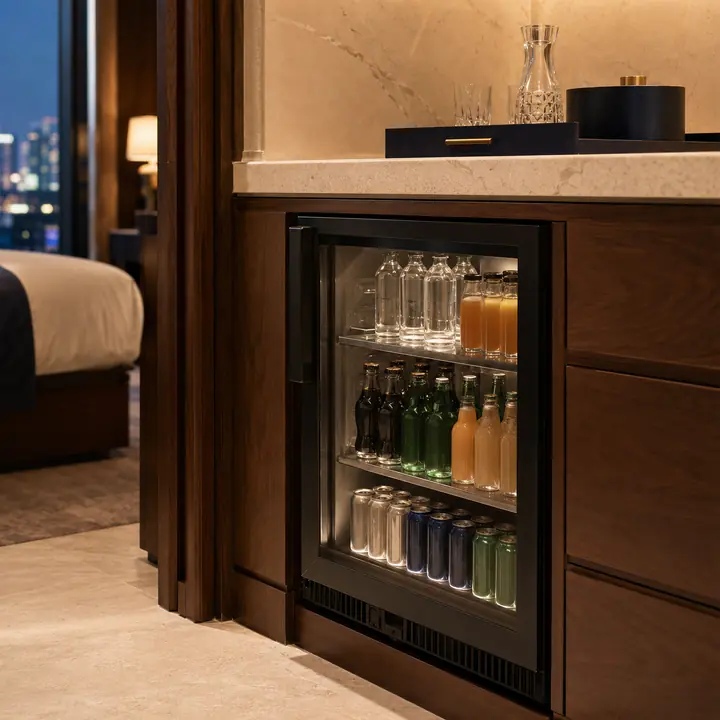
CoolingAutomated Detection · PMS Integration · Inventory Visibility
 03
Cooling
03
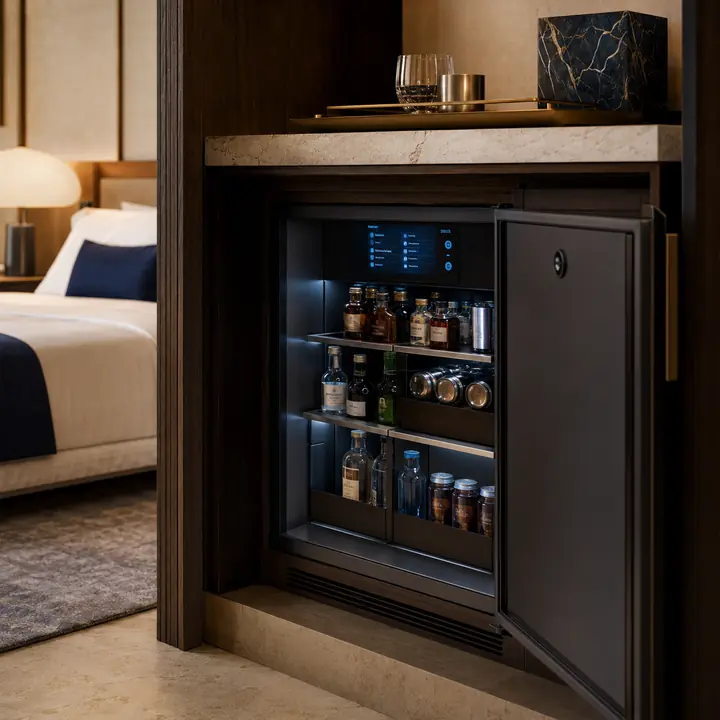
CoolingVentilated Joinery · Custom Finishes · Integrated Storage
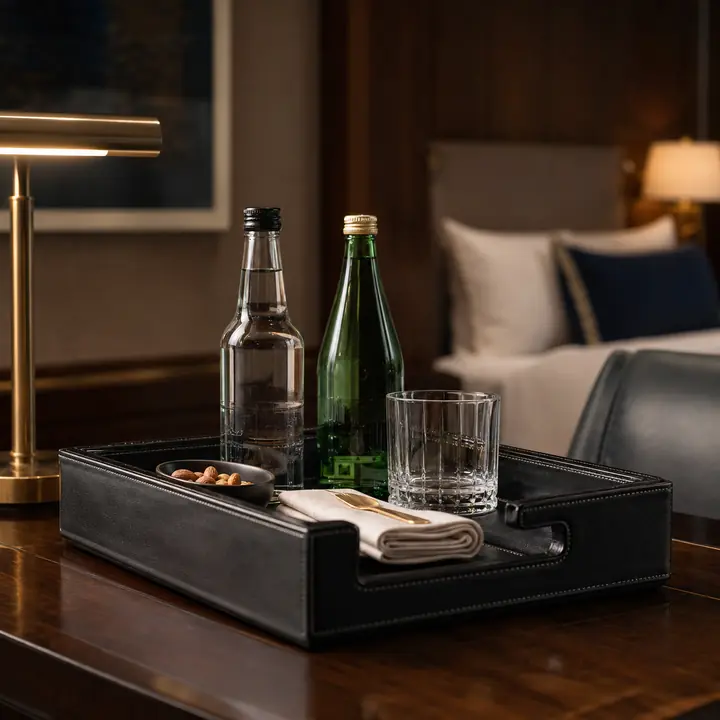 04
Cooling
04
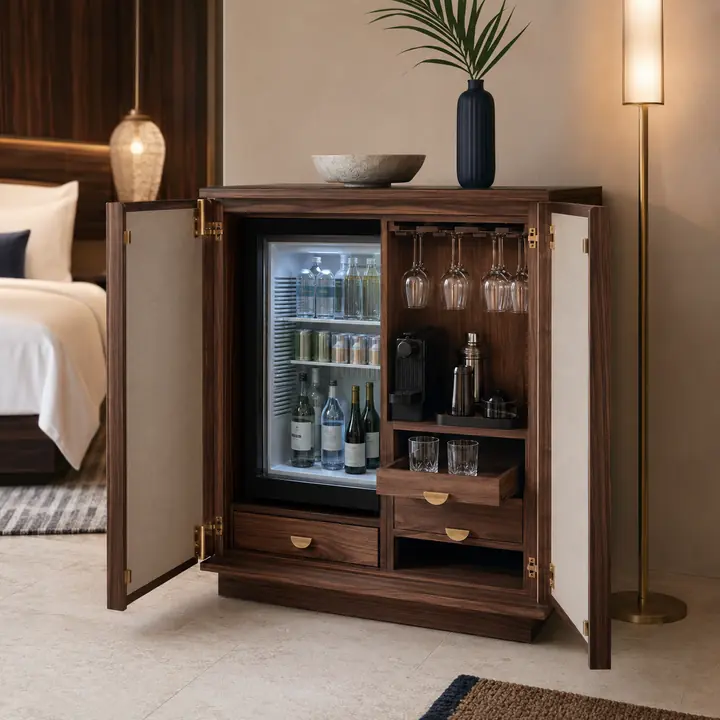
CoolingGuestroom Presentation · Non-Slip Surfaces · Custom Branding
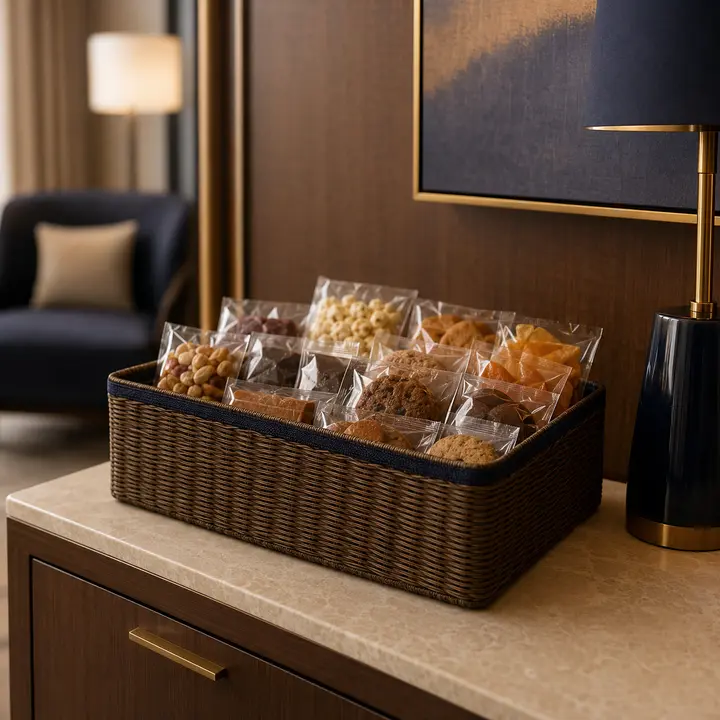 05
Cooling
05
CoolingWoven Designs · Metal Displays · Easy Replenishment
 06
Cooling
06
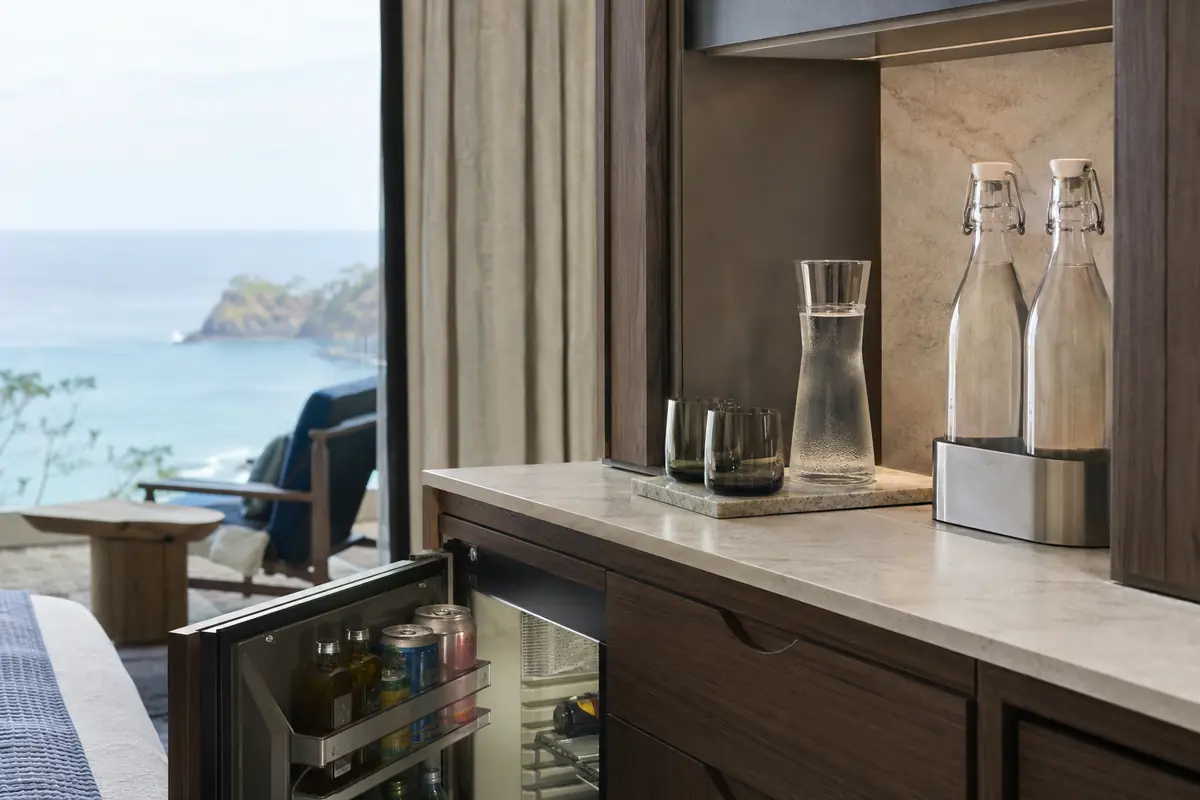
CoolingCoffee Stations · Water Service · Coordinated Inserts
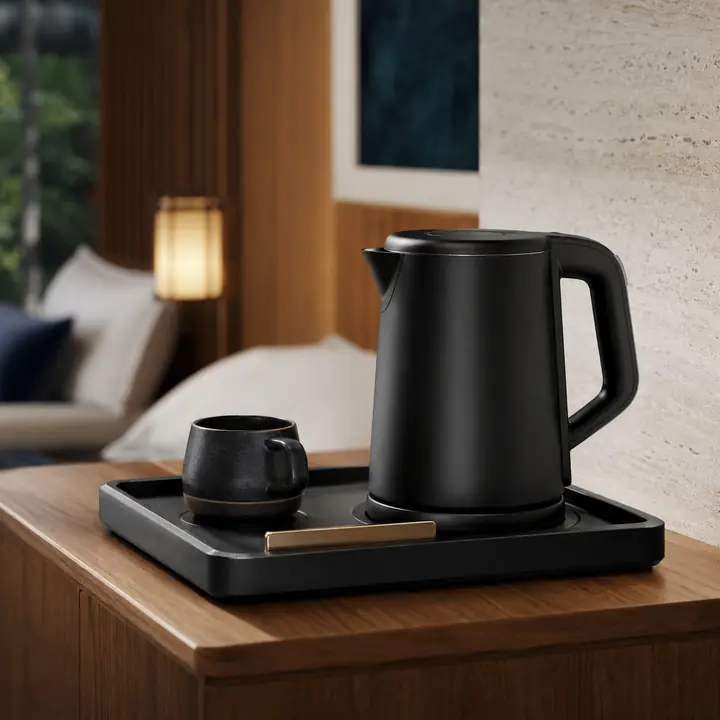 07
Coffee & Tea
07
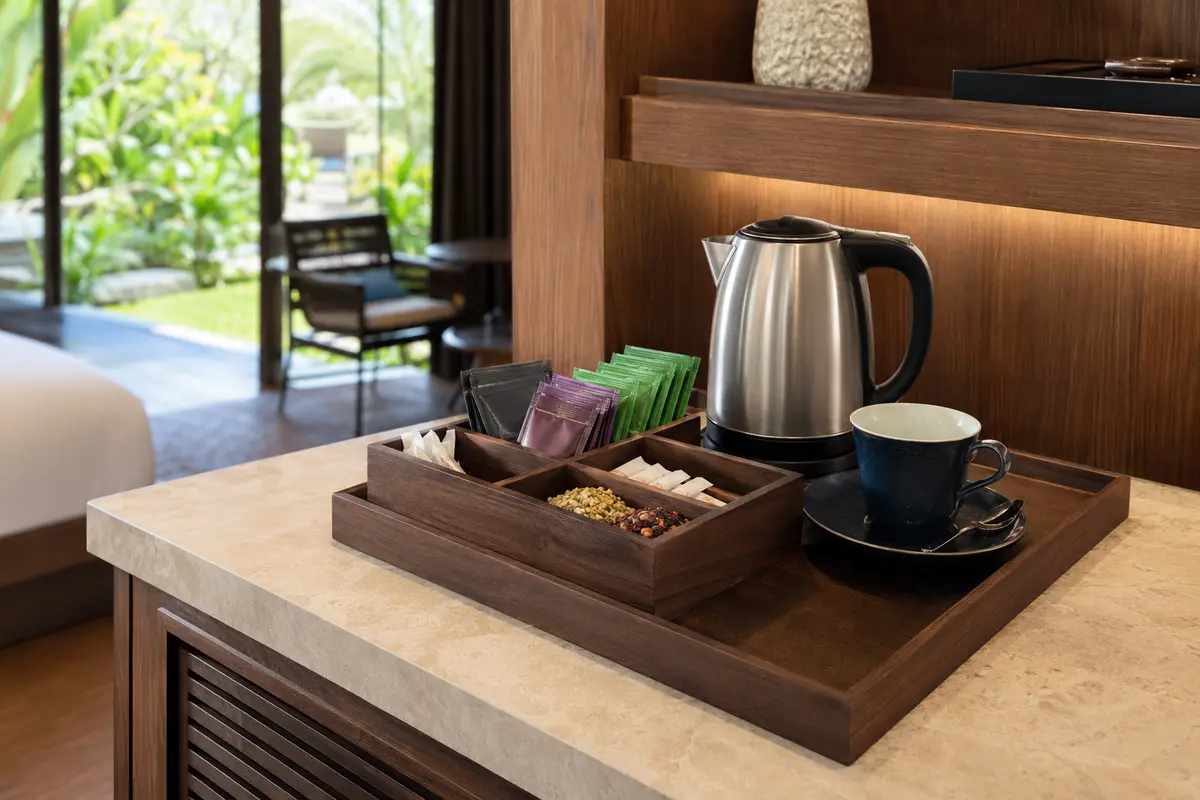
Coffee & TeaAuto Shut-Off · Boil-Dry Protection · Guestroom Voltage Options
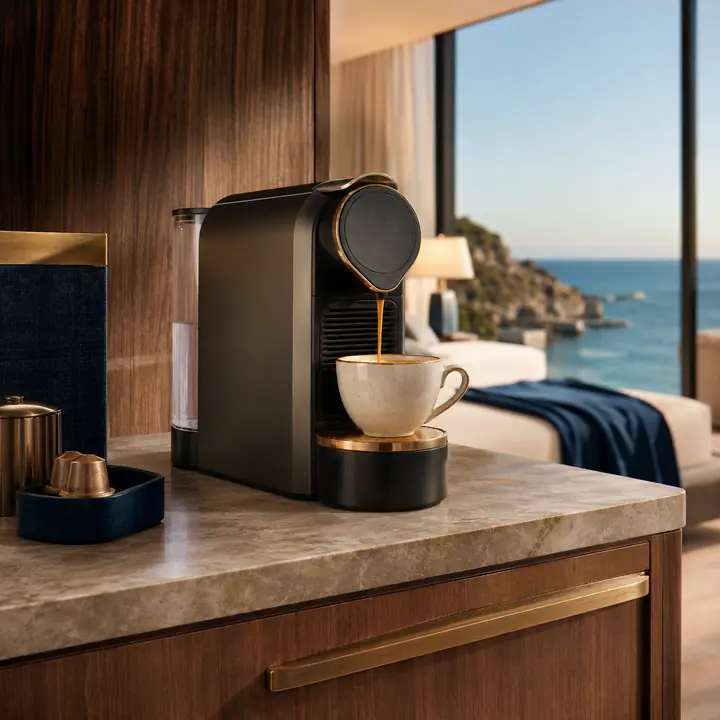 08
Coffee & Tea
08
Coffee & TeaCompact Footprints · Simple Operation · Consistent Extraction
 09
Coffee & Tea
09
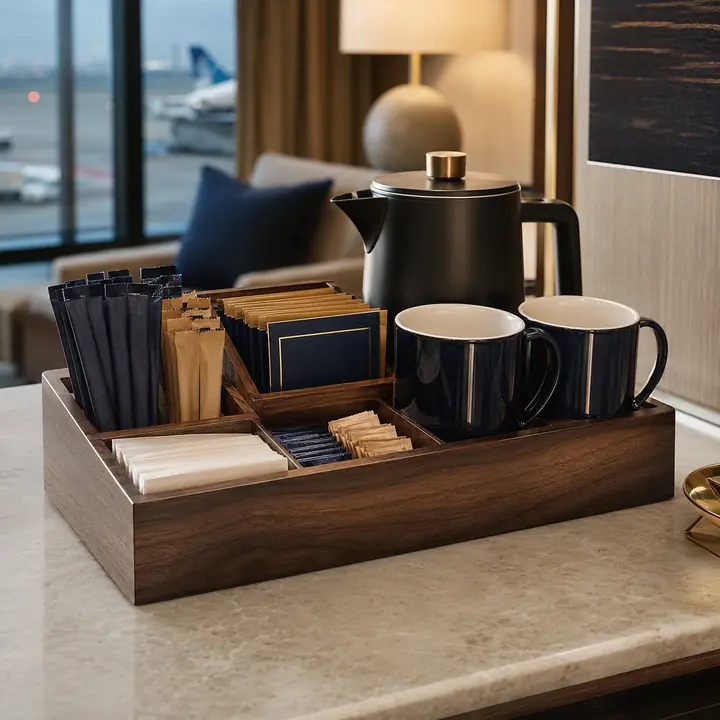
Coffee & TeaTea Selection · Coffee Service · Guest Amenities
 10
Coffee & Tea
10
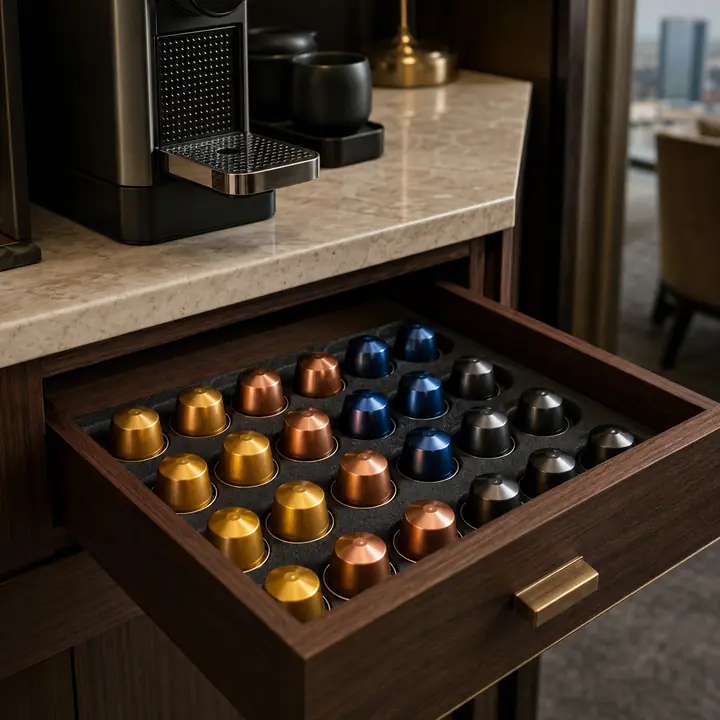
Coffee & TeaCompatible Formats · Flavor Assortments · Case-Pack Planning
 11
Coffee & Tea
11
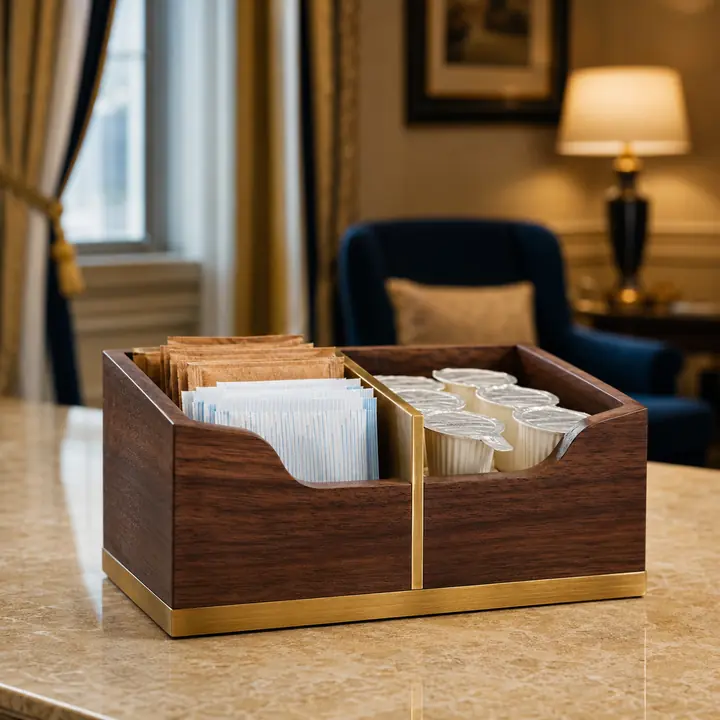
Coffee & TeaOrganized Condiments · Easy Cleaning · Compact Presentation
 12
Coffee & Tea
12
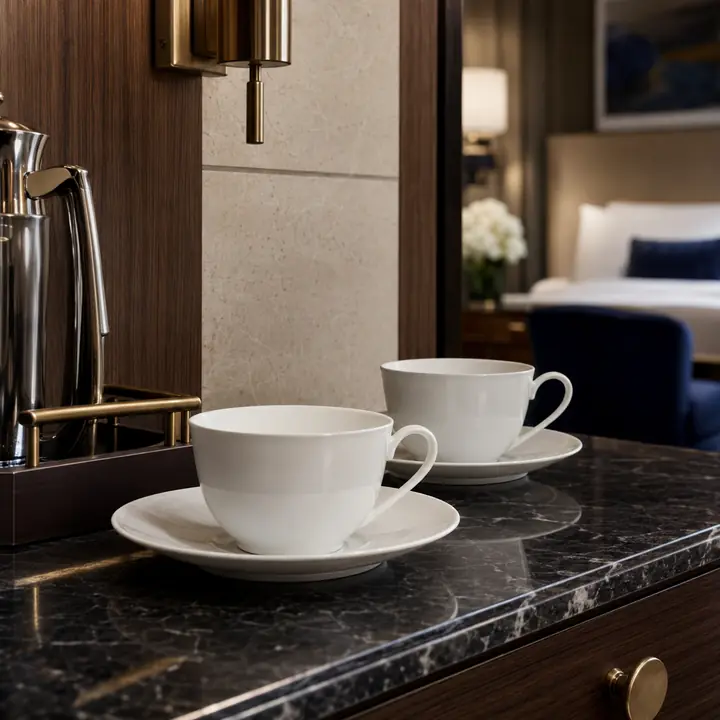
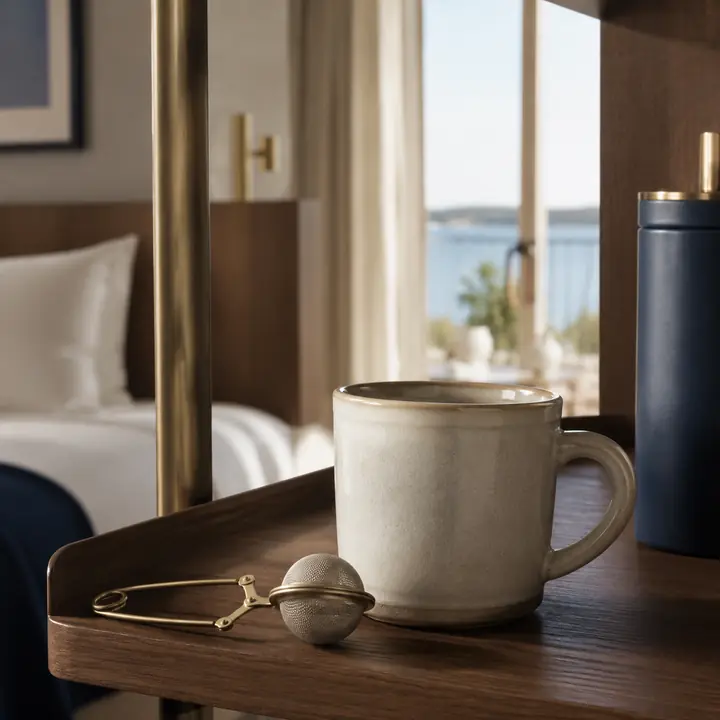
Coffee & TeaPorcelain Sets · Durable Glazes · Coordinated Service
 13
Coffee & Tea
13
Coffee & TeaGuestroom Sizes · Stackable Options · Brand-Ready Styles
 14
Drinkware
14
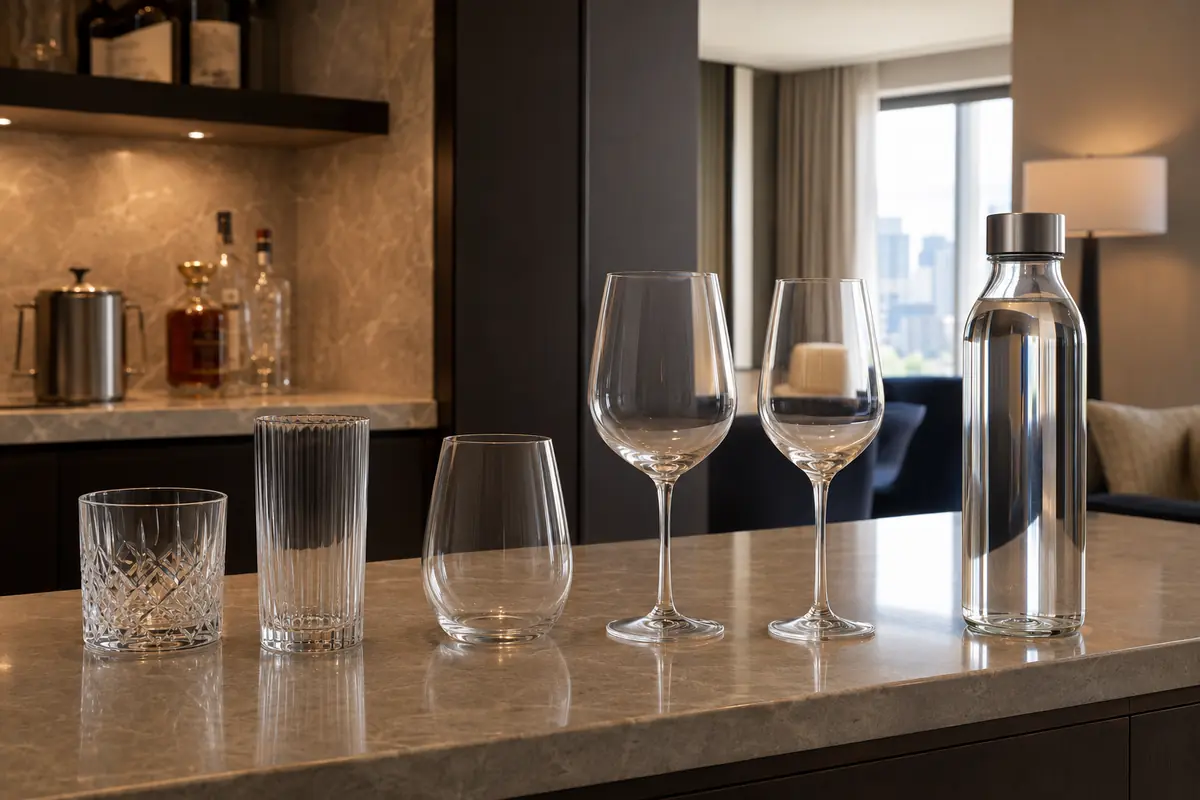
DrinkwareWater Tumblers · Durable Glassware · Room-Standard Sets
 15
Drinkware
15
DrinkwareStill & Sparkling · Reusable Options · Welcome Presentation
 16
Drinkware
16
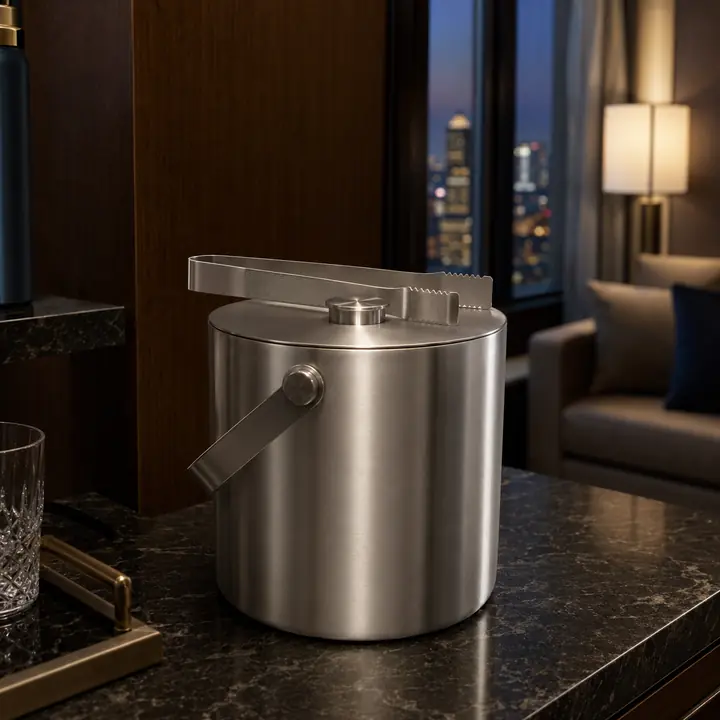
DrinkwareInsulated Buckets · Lids & Liners · Coordinated Tongs
 17
Drinkware
17
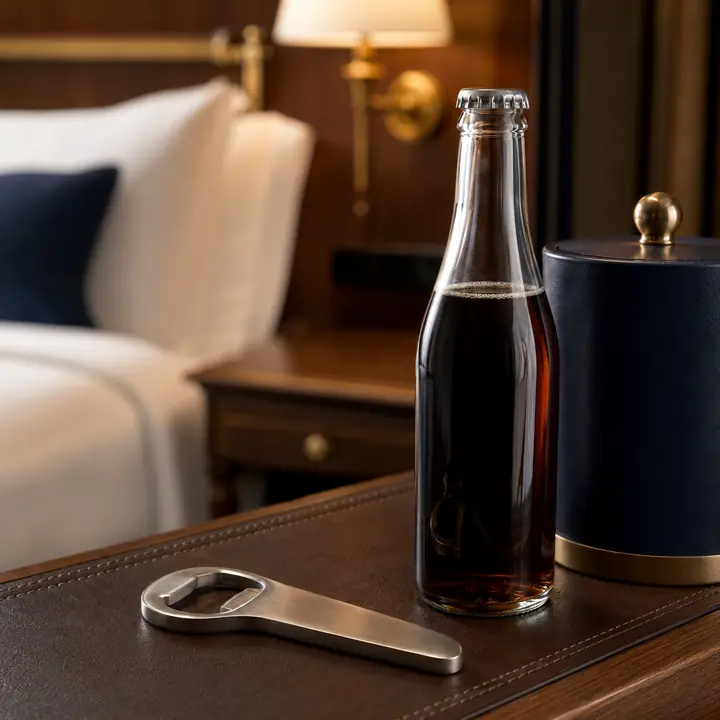
DrinkwareCompact Tools · Durable Finishes · Guestroom Placement
 18
Drinkware
18
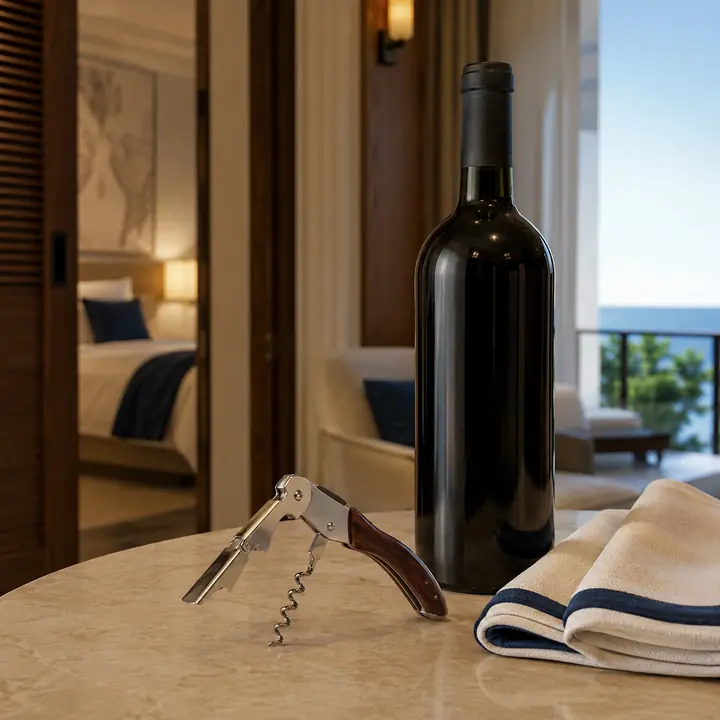
DrinkwareWaiter Styles · Lever Options · Gift-Ready Presentation
 19
Drinkware
19
DrinkwareReusable Materials · Custom Branding · Surface Protection
 20
Controls
20
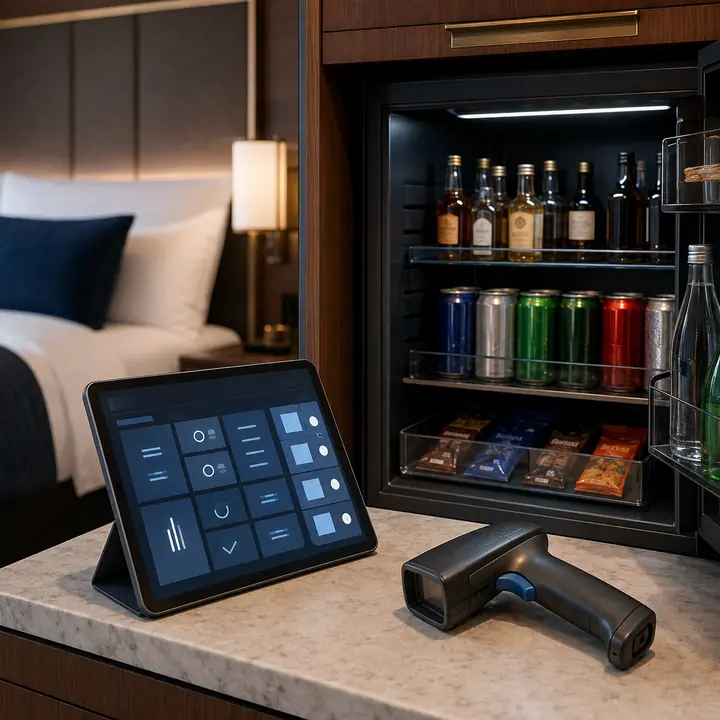
ControlsStock Tracking · Charge Workflows · Replenishment Reporting
 21
Controls
21
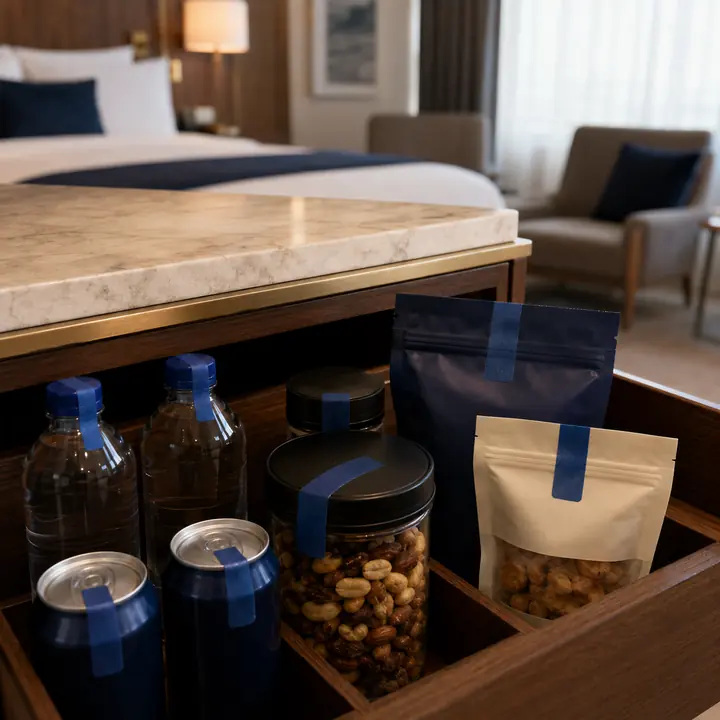
ControlsVisible Seals · Guest Confidence · Loss-Control Support
Try a broader product term or reset the procurement-area filter.
A clearer sourcing workflow
Define the assortment, equipment, presentation, room count, reserve stock, electrical conditions, housekeeping workflow, and delivery sequence before comparing proposals.
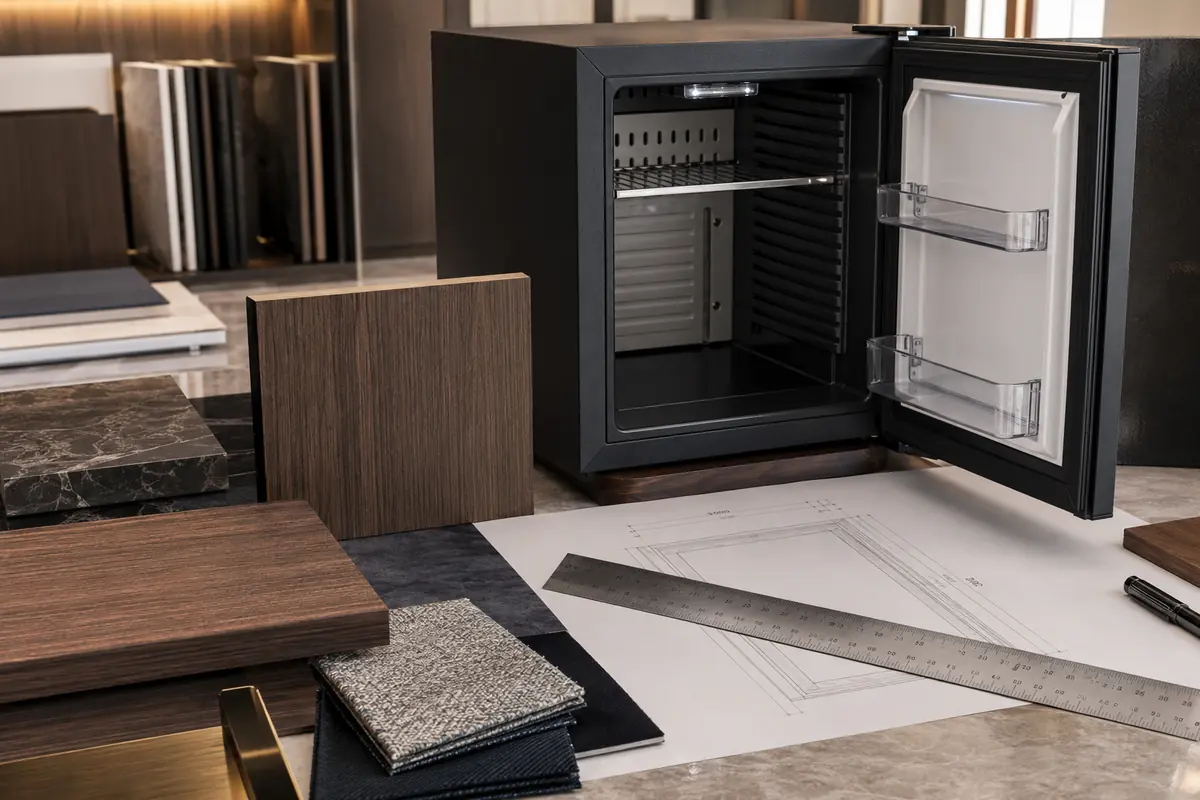
Property type, room count, room tiers, guest promise, opening date, and service model.
Select refrigeration, coffee and tea, drinkware, accessories, consumables, complimentary items, and chargeable products.
Compare capacity, noise, ventilation, voltage, joinery, tray footprint, cleaning, and replenishment access.
Lock the sample, quantities, branding, commercial terms, packing plan, room allocation, and delivery sequence.
Practical buyer toolkit
A useful quote should make equivalent options easier to compare. Capture the commercial, technical, operational, and delivery requirements below before the request reaches suppliers.
State where the product will be used, expected frequency, load or capacity, cleaning method, service level, and any accessibility, fire, food-safety, or brand-standard requirements.
Buyer prompt: What must this item withstand every day?Record installed dimensions, clearances, door and elevator limits, mounting conditions, and available voltage, phase, gas, water, drainage, ventilation, or network connections.
Buyer prompt: Can it reach, fit, connect, and be serviced in place?Define the material grade, finish, color, fabric performance, corrosion or moisture exposure, cleaning compatibility, warranty, spare-parts expectation, and sample approval process.
Buyer prompt: Which attributes are mandatory, and which allow alternatives?List quantities by property or department, opening par and spares, unit of measure, case pack, minimum order quantity, delivery address, required date, unloading limits, and phased-delivery needs.
Buyer prompt: Is the quantity stated in pieces, sets, rooms, cases, or pallets?Purchase-order control
Small ambiguities become expensive after production or shipment. Make the approved quote, purchase order, samples, and delivery instructions agree on the same product and scope.
Request a specification-based quoteReceiving & damage control
Give the receiving team the purchase order, packing list, delivery contact, inspection priorities, and escalation route before the truck arrives.
Photograph the load, pallet wrap, carton condition, labels, and any visible impact before unpacking.
Count cartons and compare item numbers and quantities with the packing list and purchase order.
Note visible shortage or damage on the carrier delivery record before signing; avoid an unqualified clean receipt.
Separate affected goods, retain packaging and labels, and do not install or use items awaiting claim instructions.
Send a documented claim packet promptly with order references, delivery record, photos, item numbers, quantities, and requested resolution.
From specification to the guest room
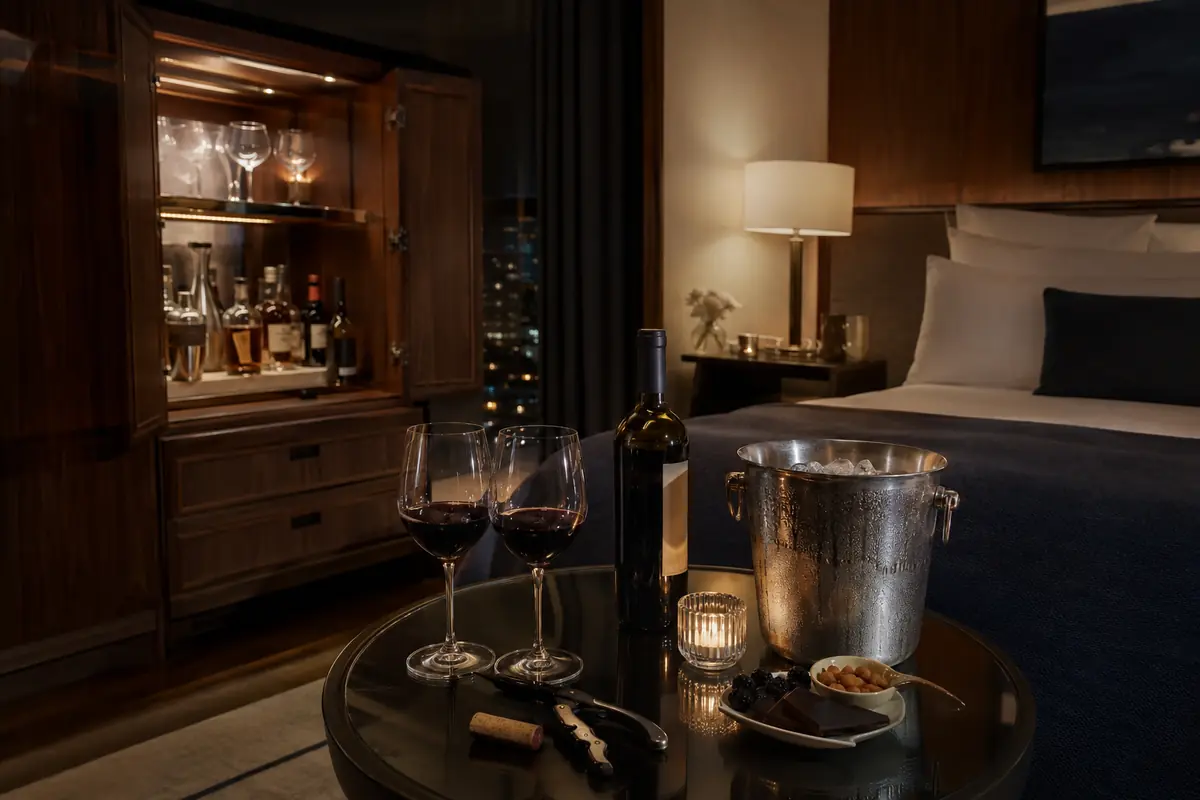
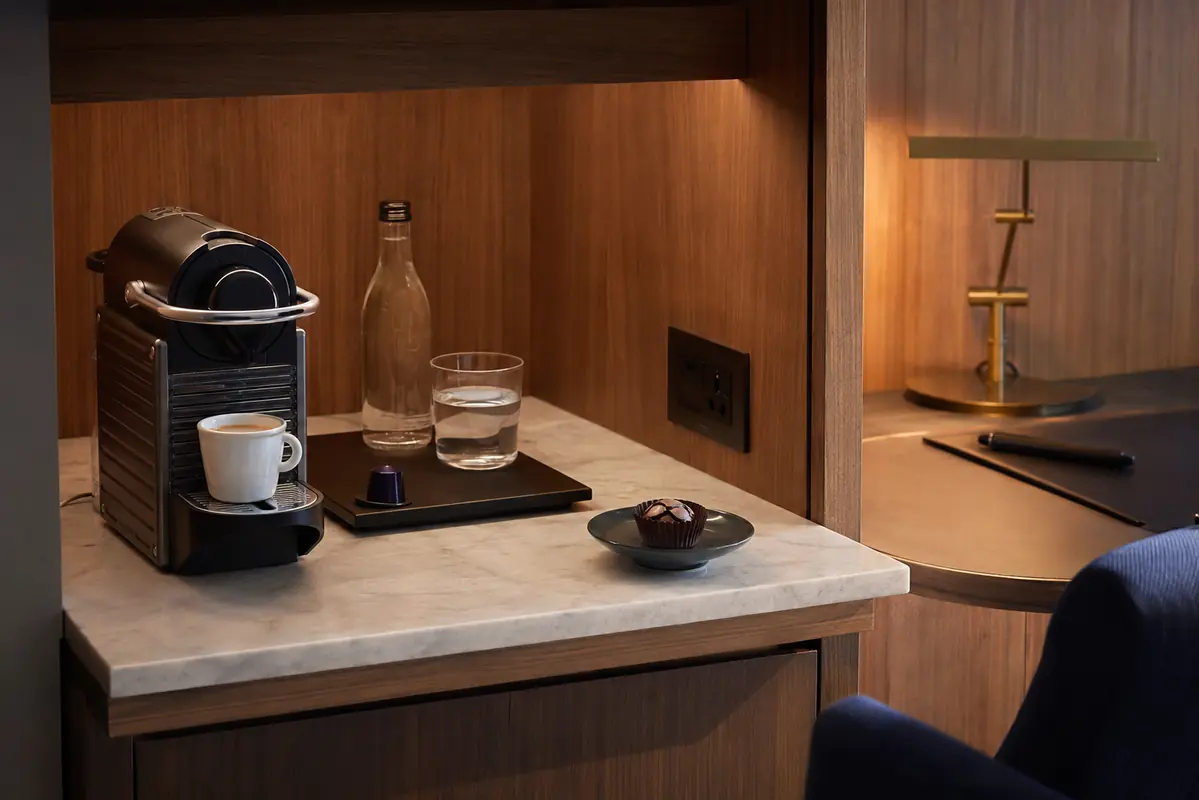
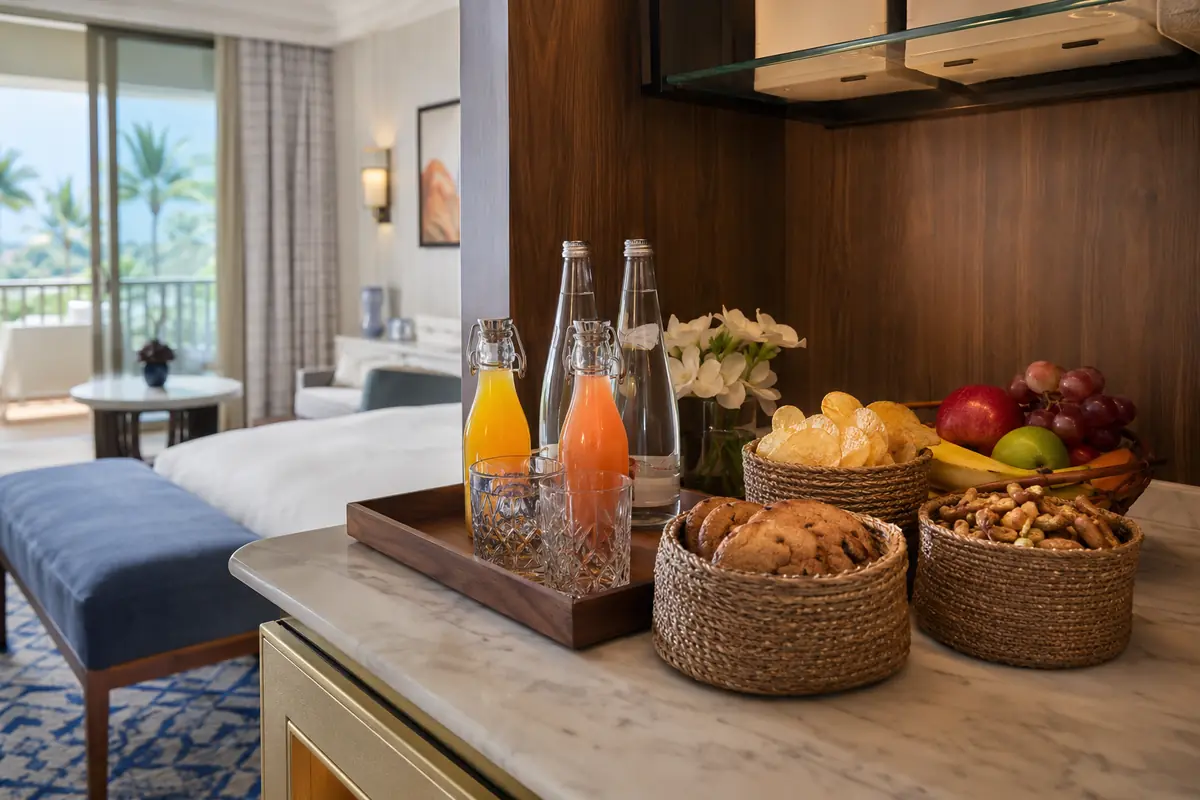
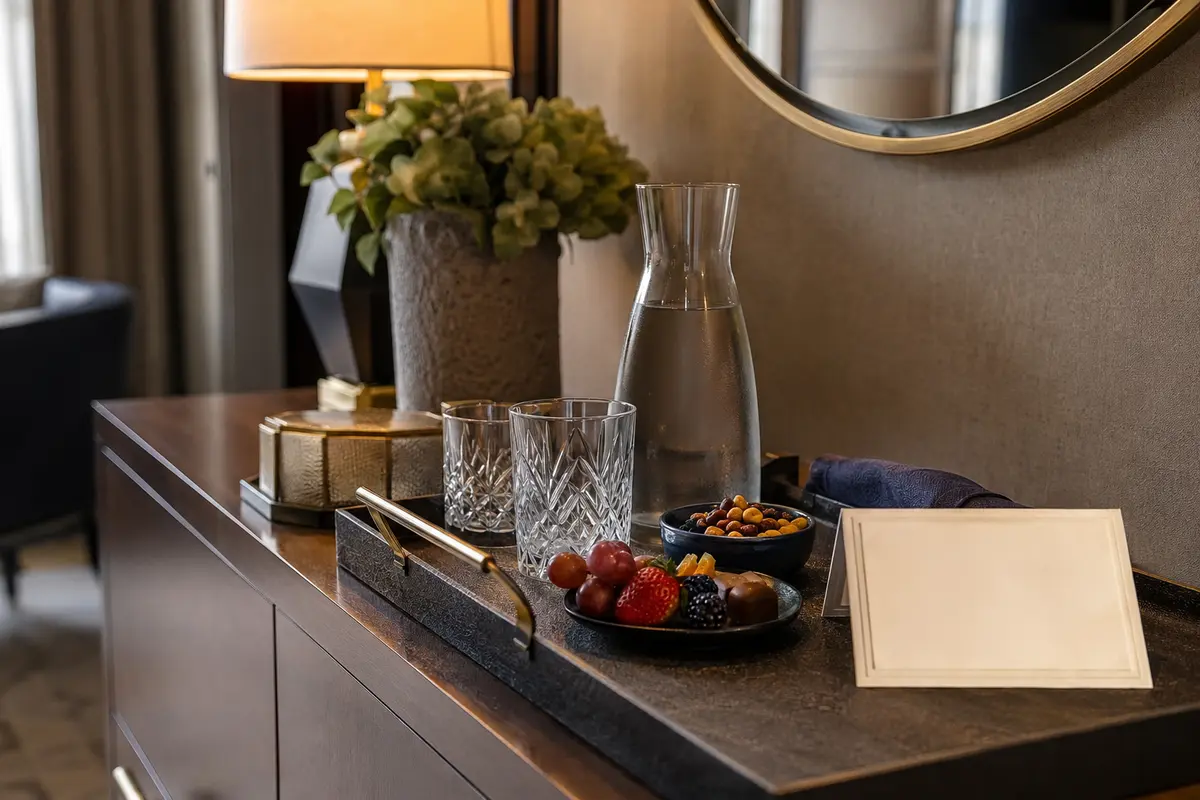
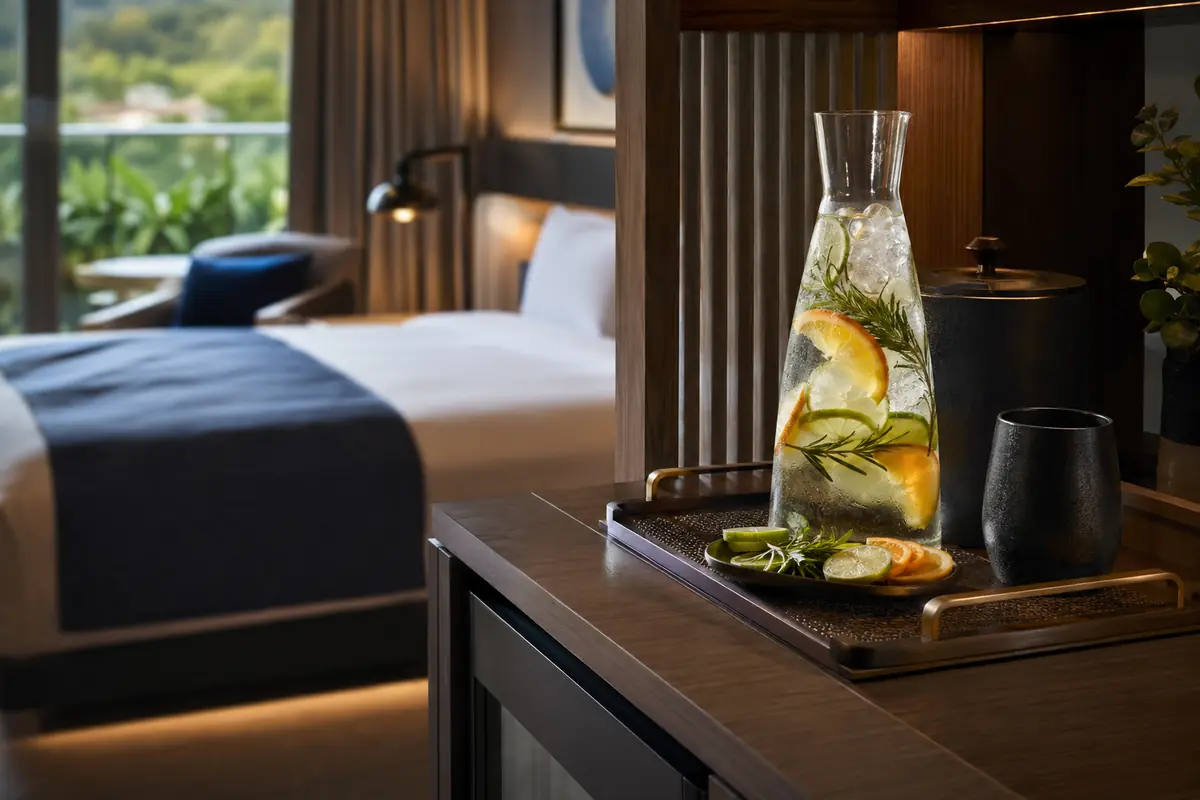
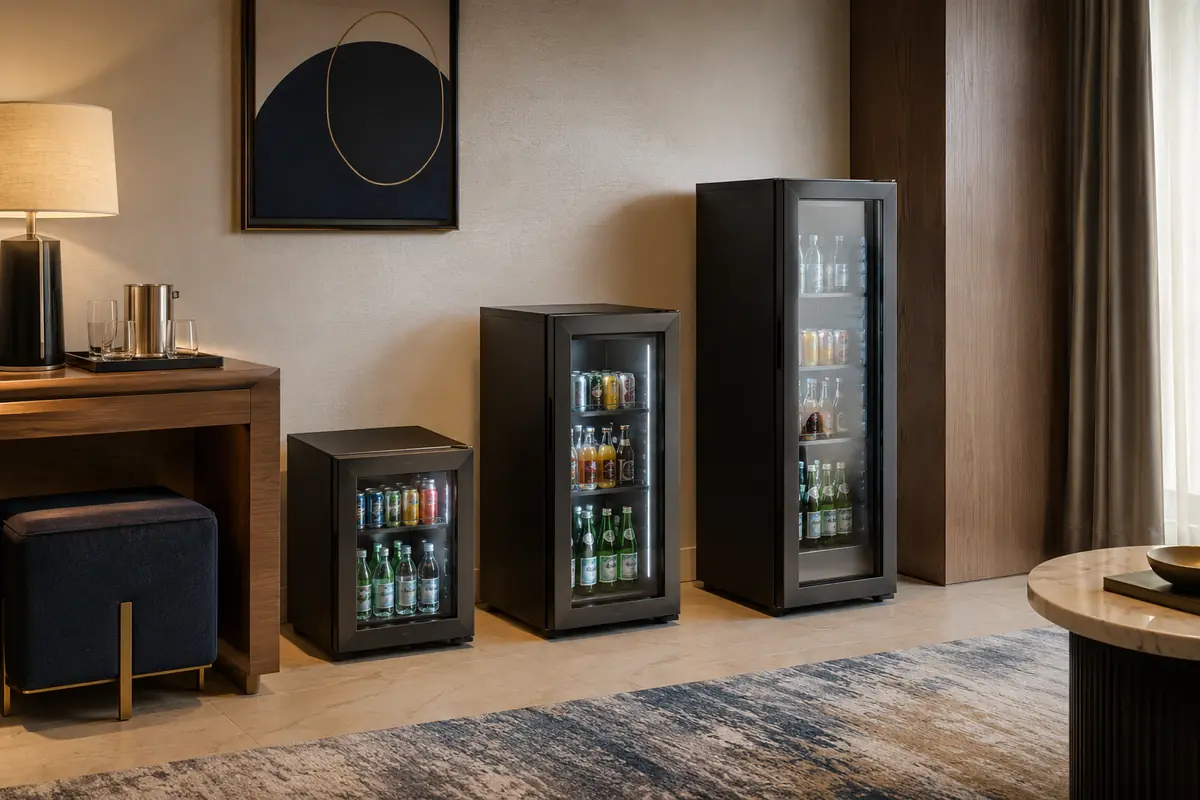
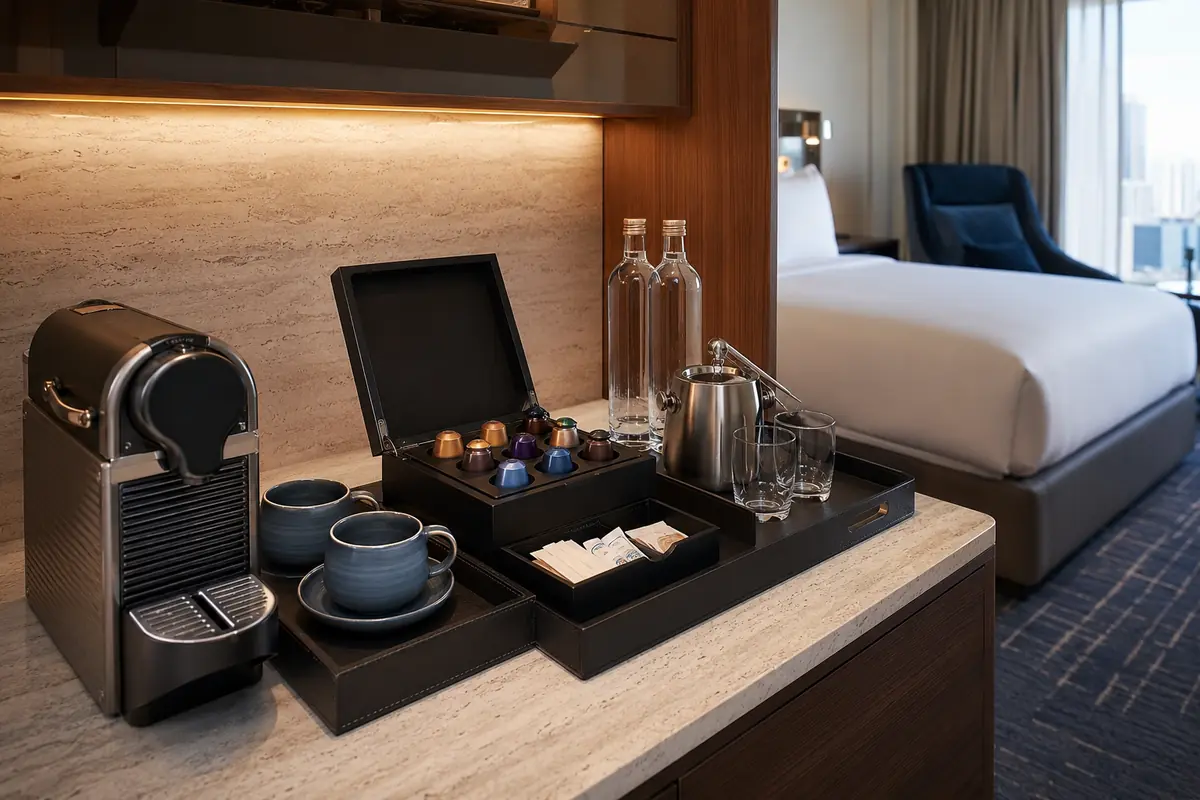
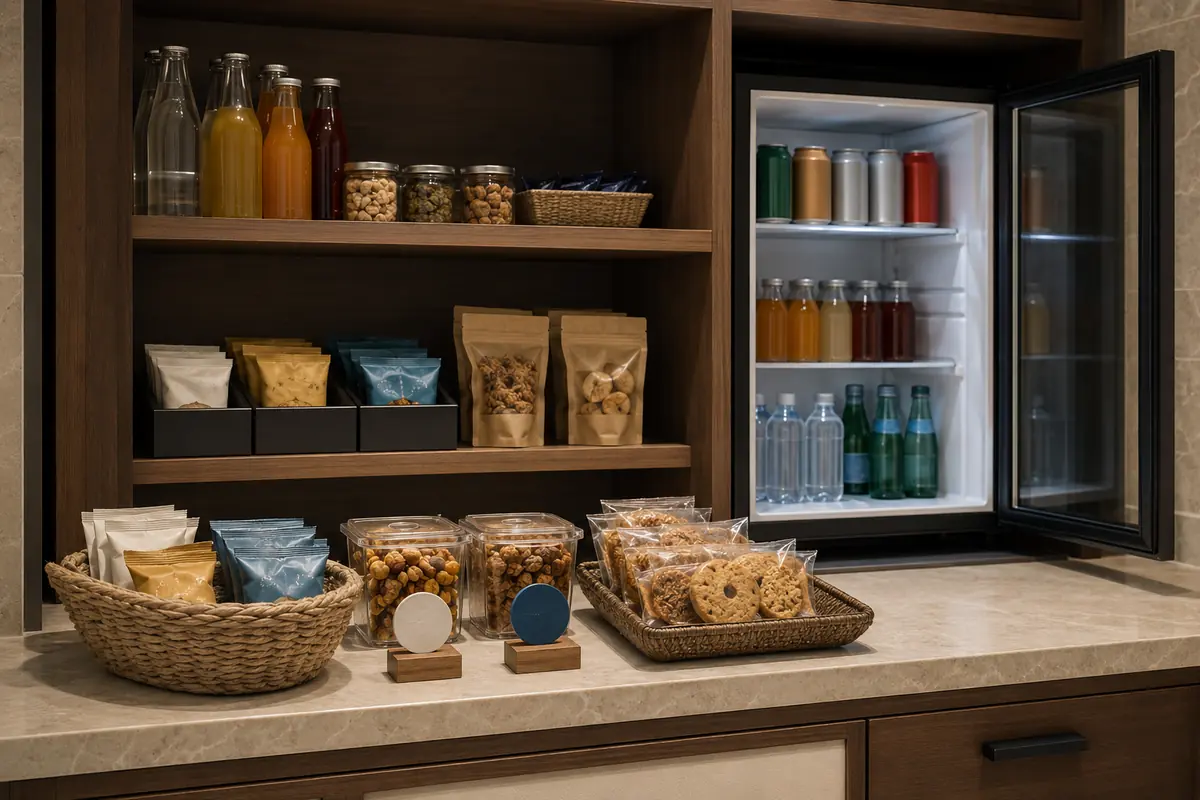
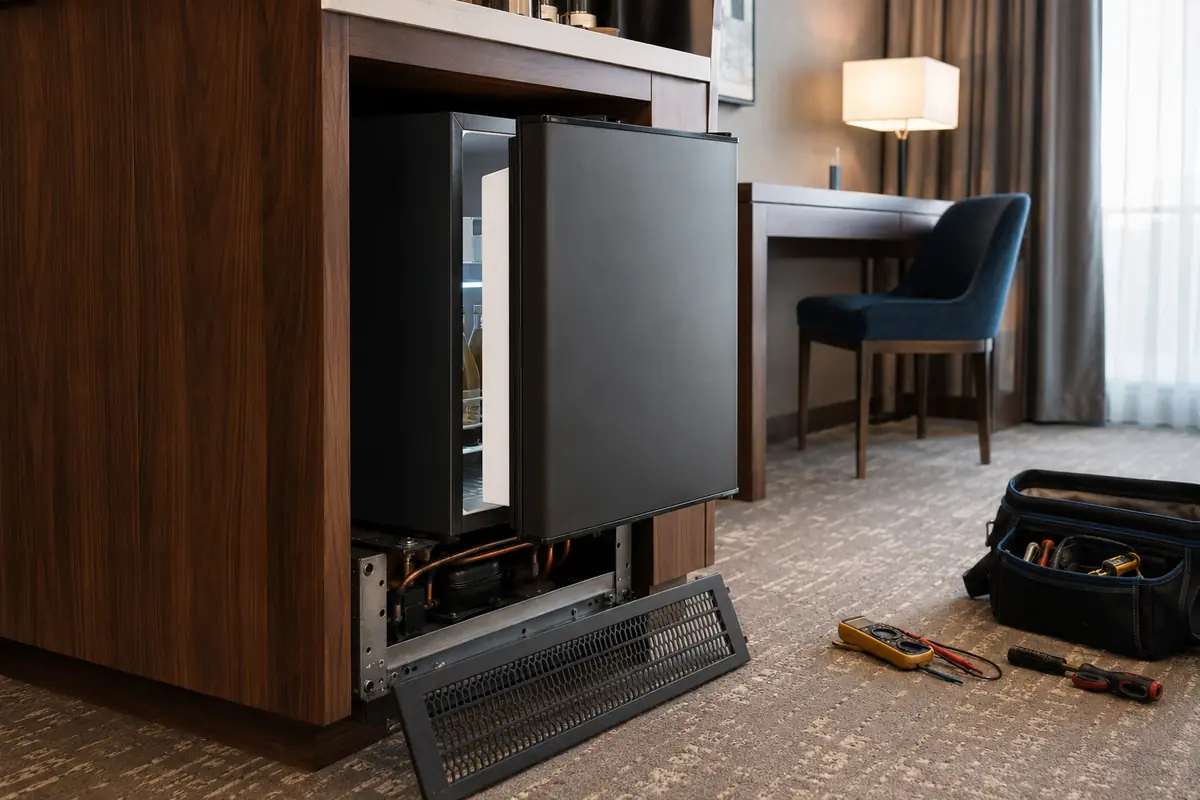
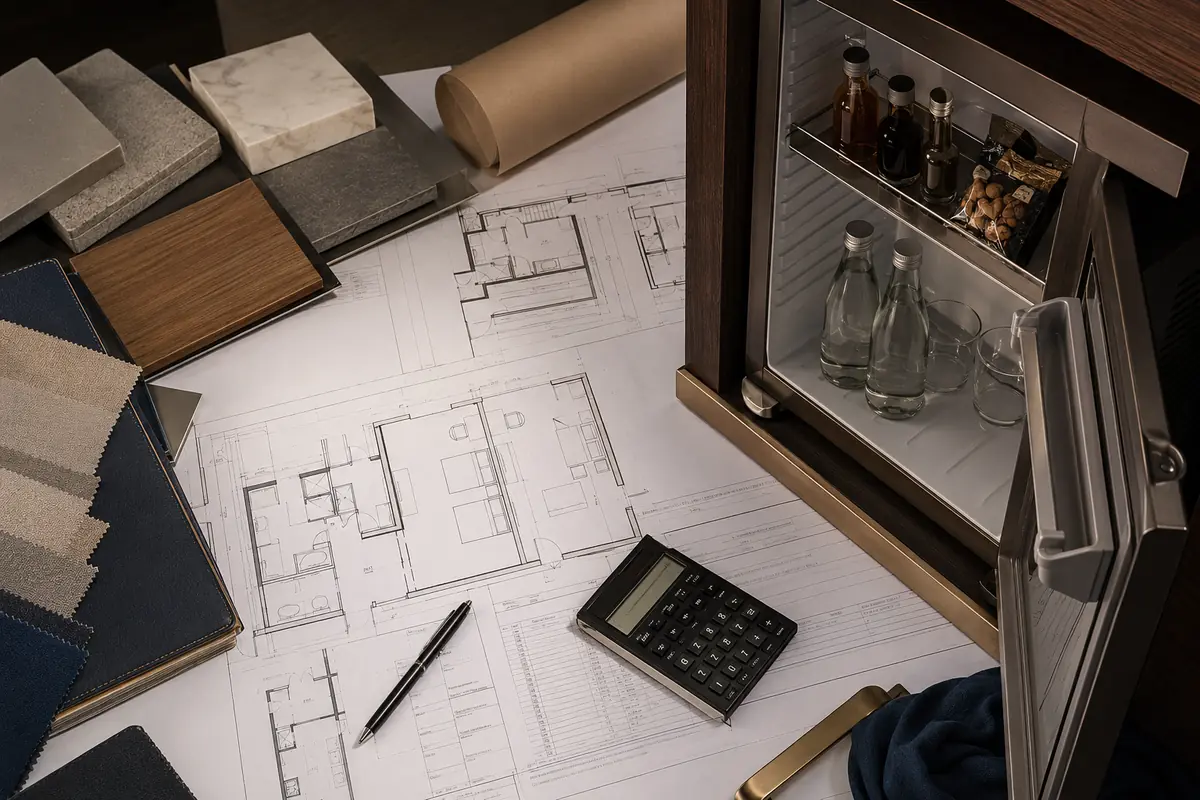
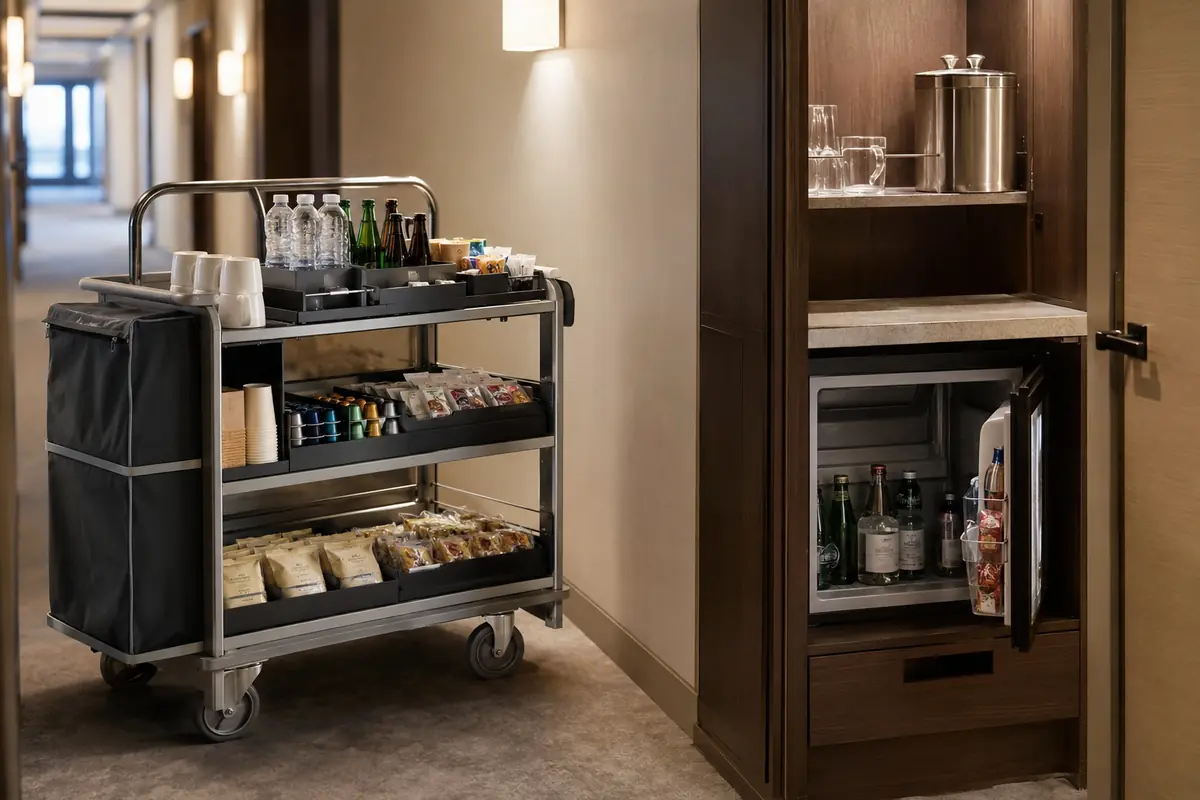
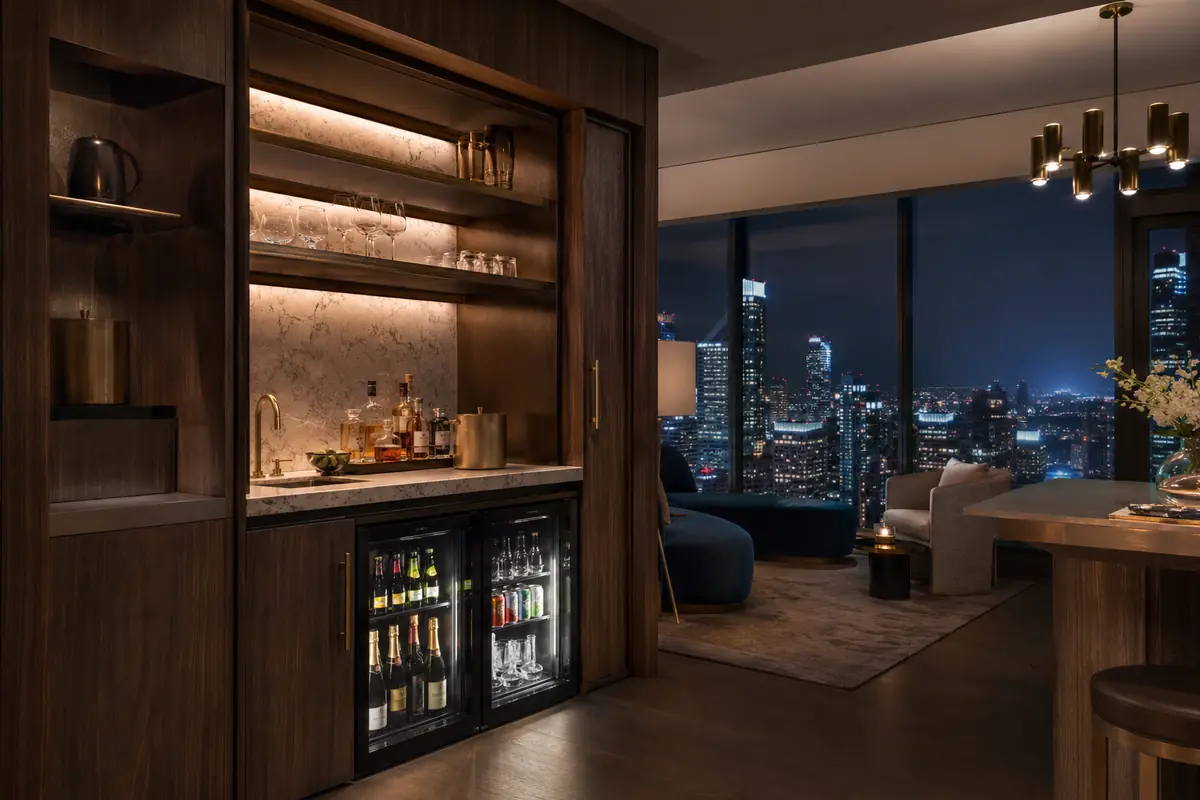
Explore the practical decisions behind capacity, coffee and tea, presentation, sustainability, hygiene, maintenance, replenishment, quality control, and room rollout.




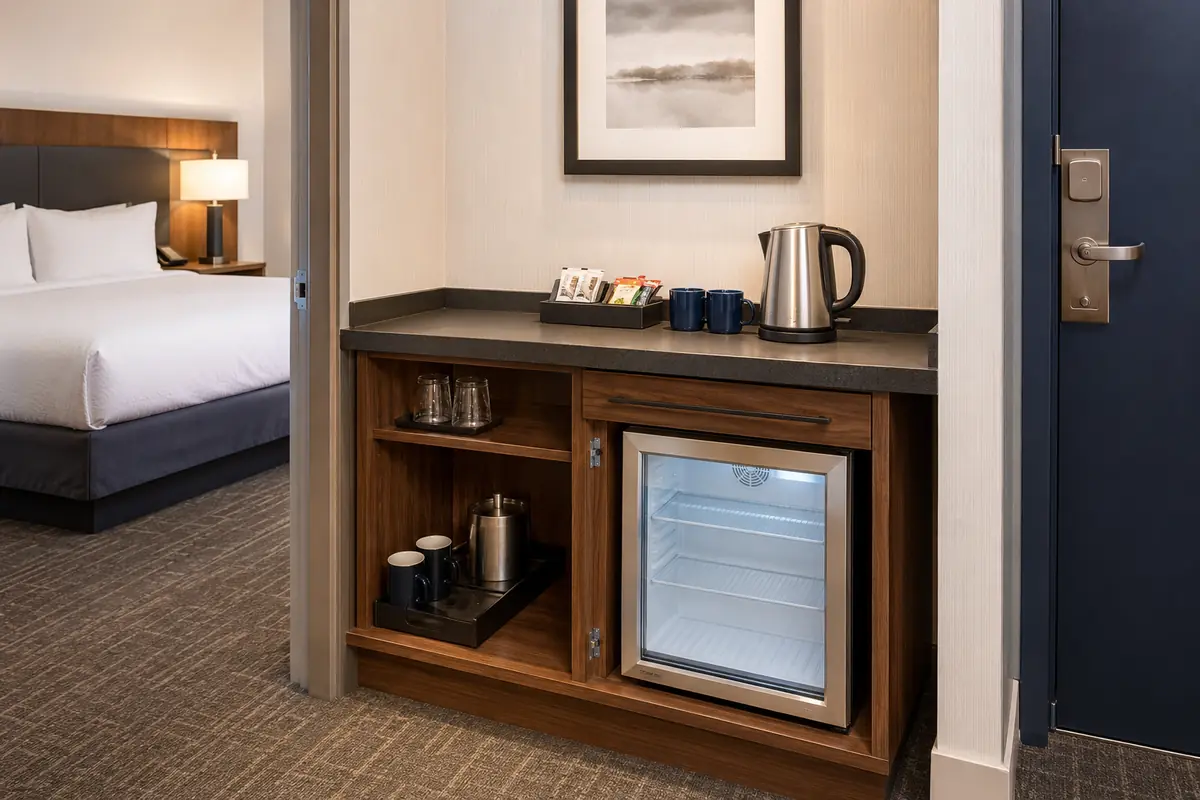
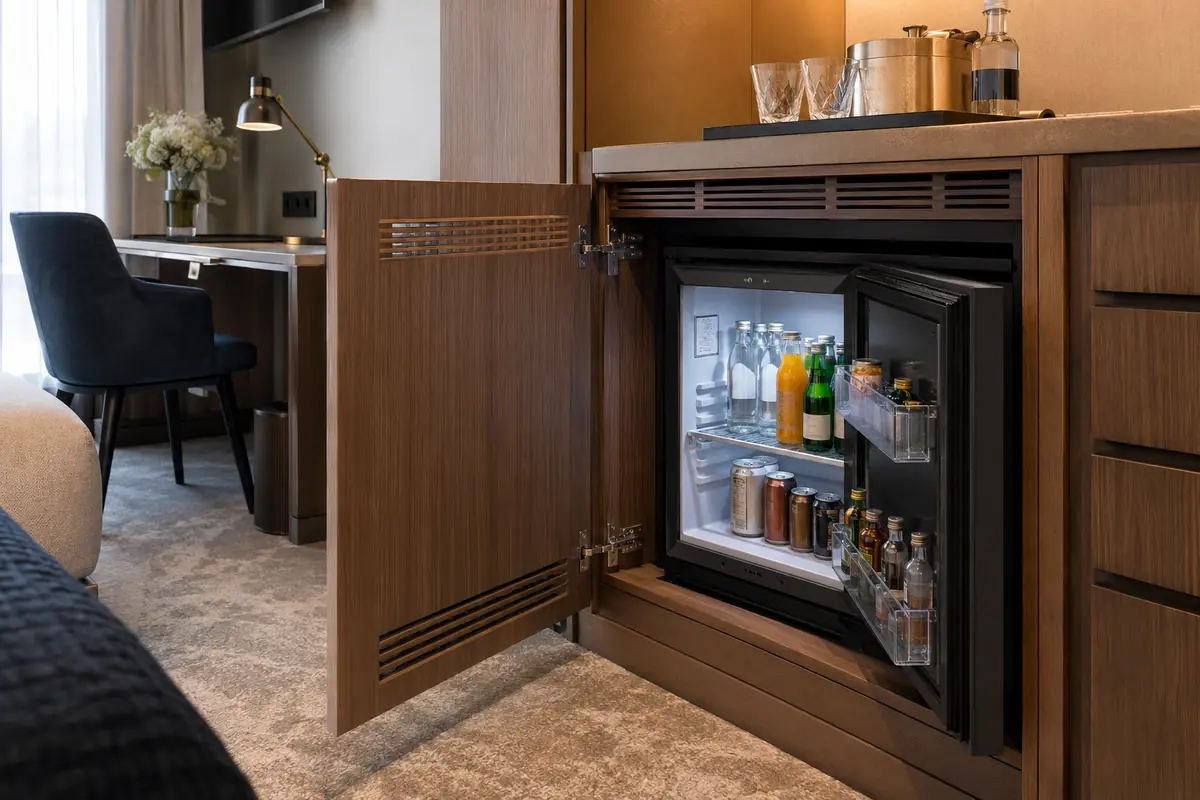
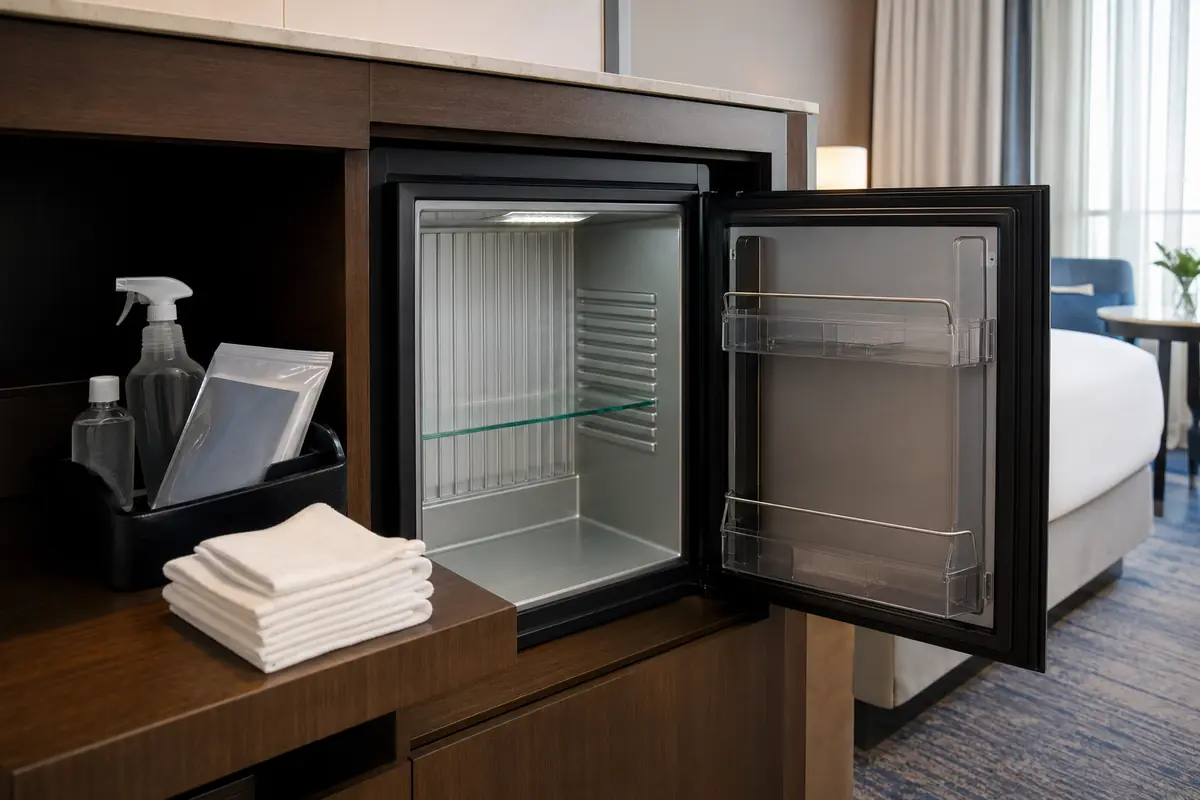
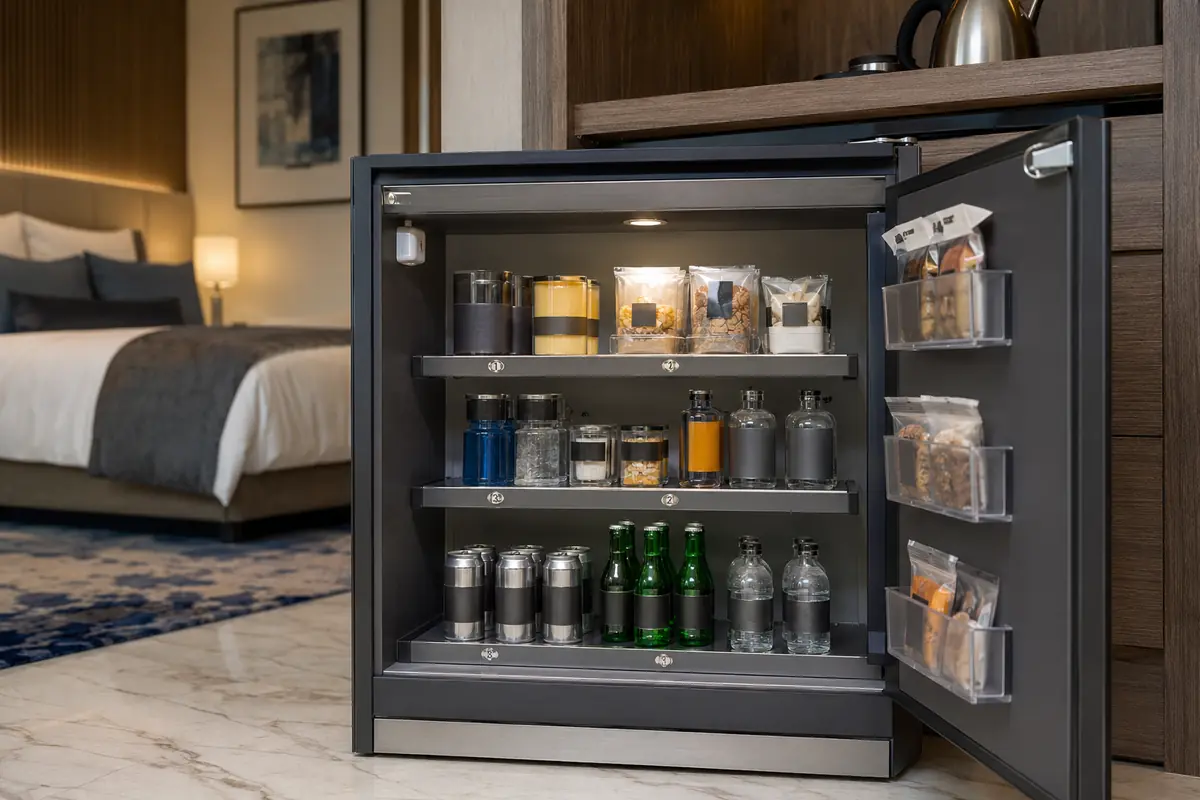
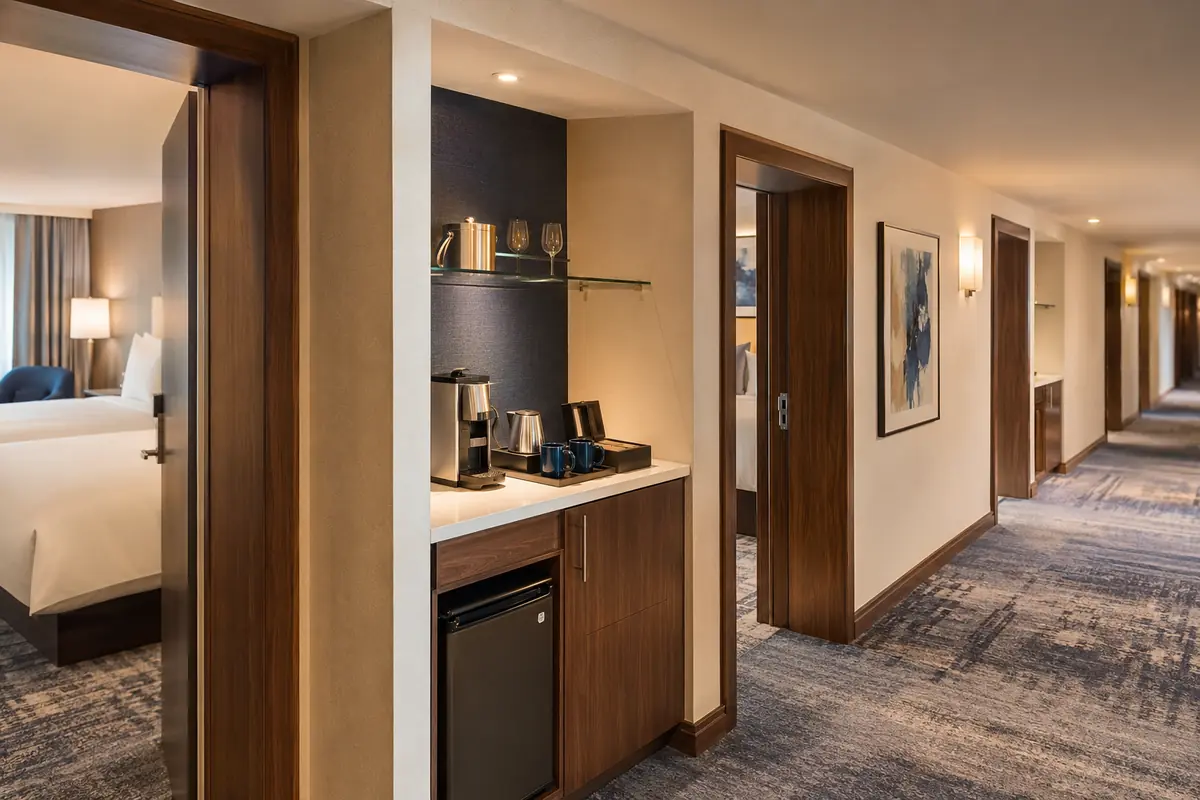
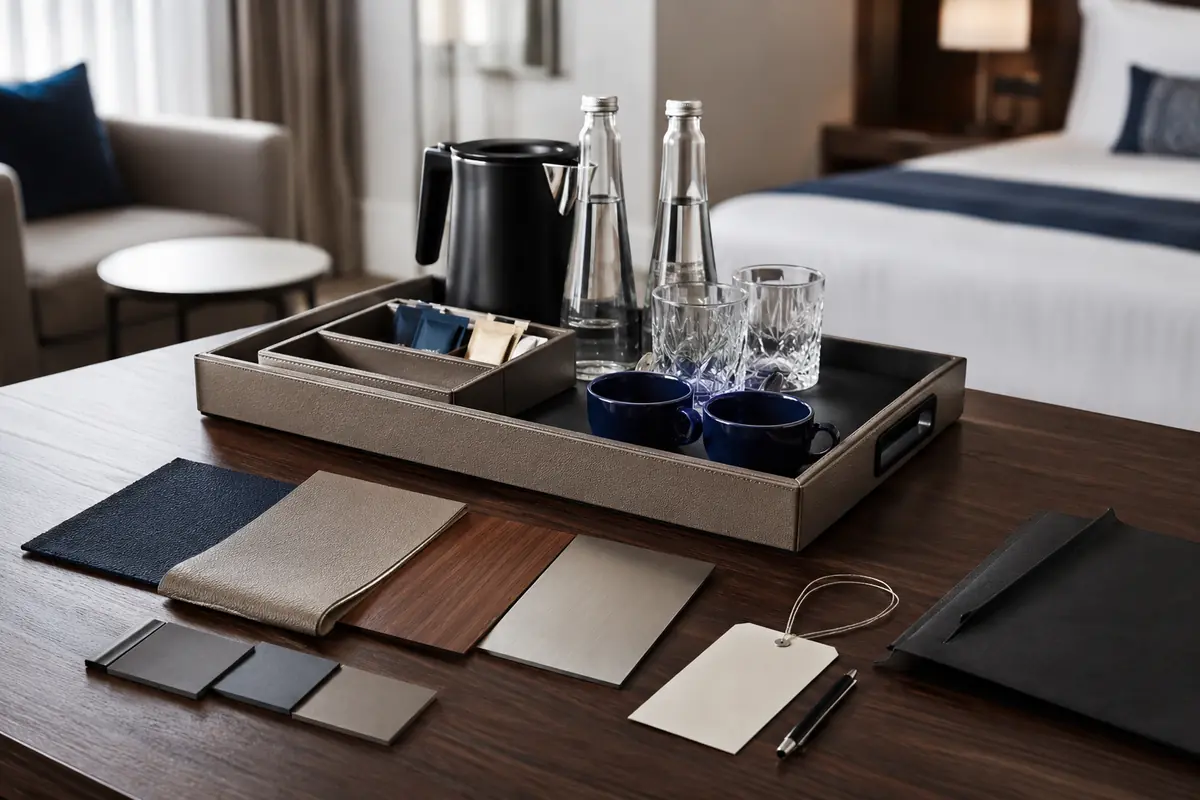
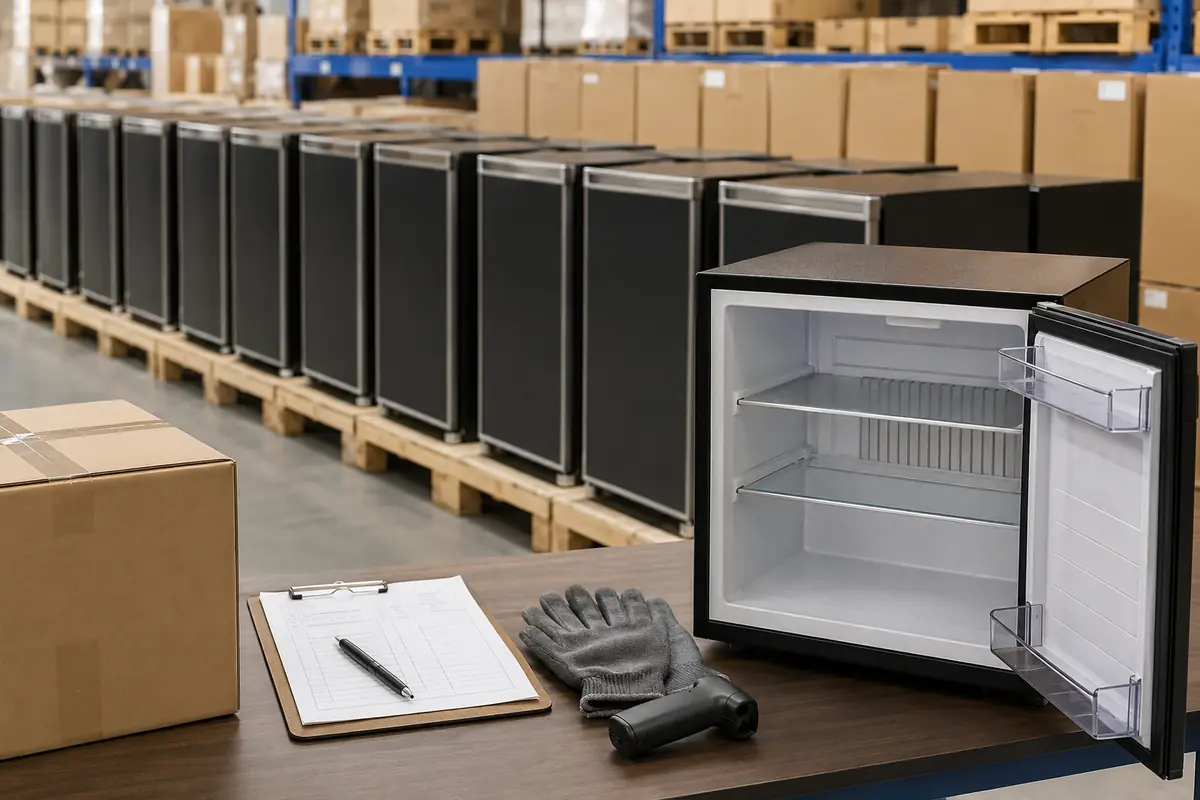
Designed for commercial buying teams
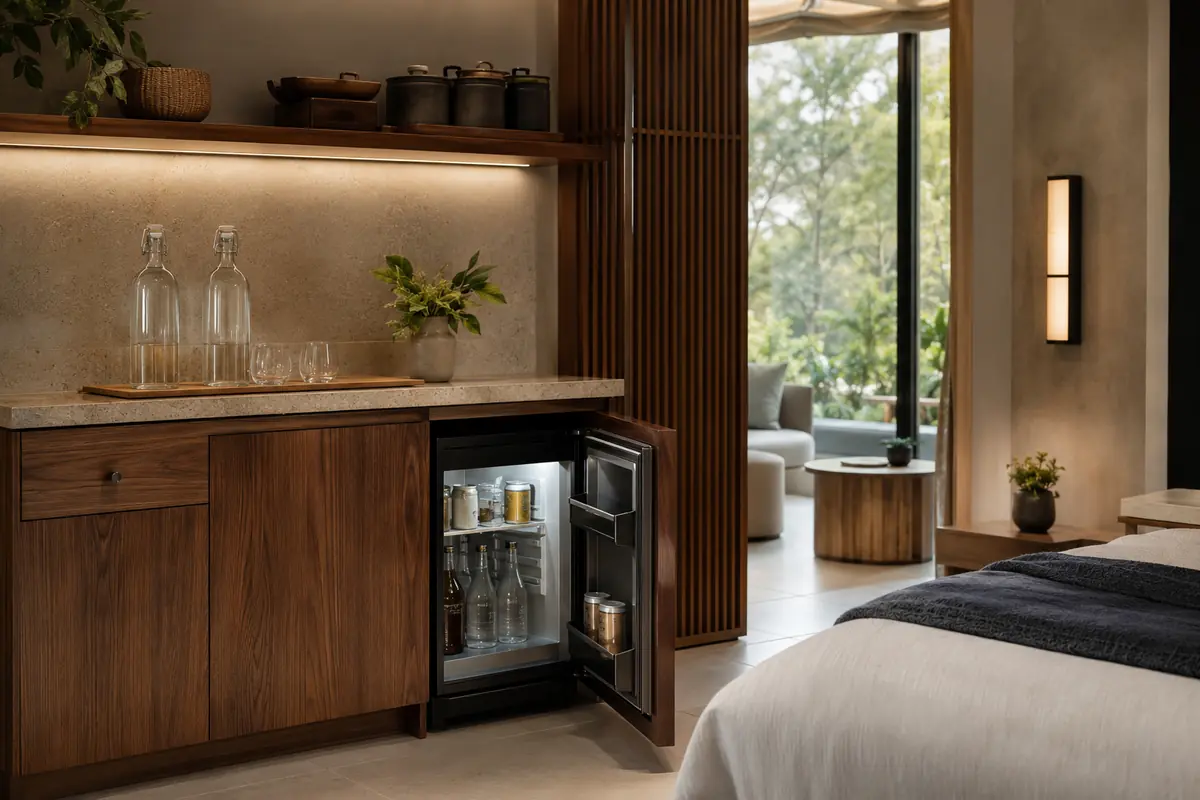
The directory connects presentation, refrigeration, beverage service, replenishment, cleaning, loss control, and inventory visibility in one buying journey.
From refrigeration and coffee service to water, glassware, opening tools, coasters, and inventory controls.
Use category pages to guide buyers toward size, material, finish, capacity, care, and compatibility decisions.
Searchable, keyboard-accessible, and optimized for desktop, tablet, and mobile procurement workflows.
Connect every card to its own focused commercial page as the minibar product library grows.
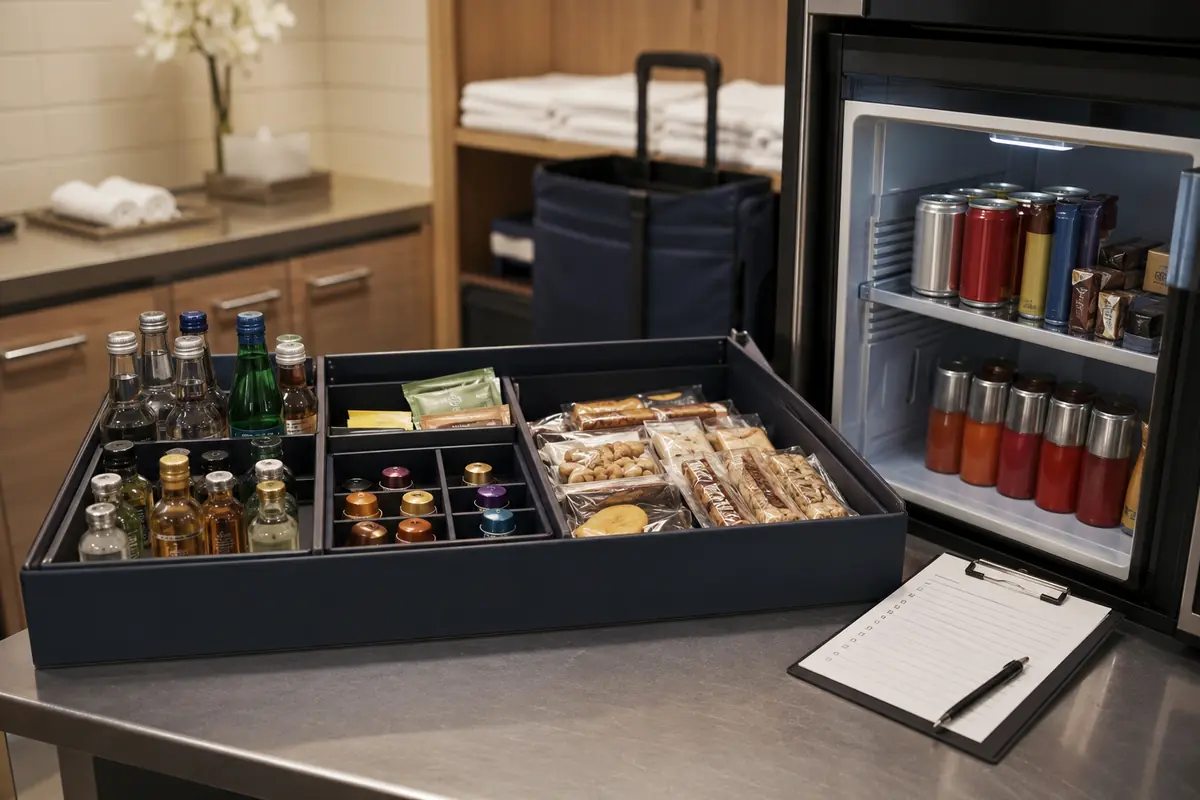
Minibar procurement questions
Use these answers to prepare a clearer RFQ and avoid preventable specification, installation, and replenishment issues.
Include property location, room count, room types, opening or renovation date, required delivery window, target budget range, product categories, preferred capacities and finishes, electrical requirements, branding needs, estimated quantities, reserve percentage, and any reference images or drawings.
Start with the exact assortment and packaging dimensions, not liters alone. Confirm bottle height, can diameter, snack footprint, shelf adjustability, door storage, room tier, replenishment frequency, ventilation allowance, and the space available in the cabinet.
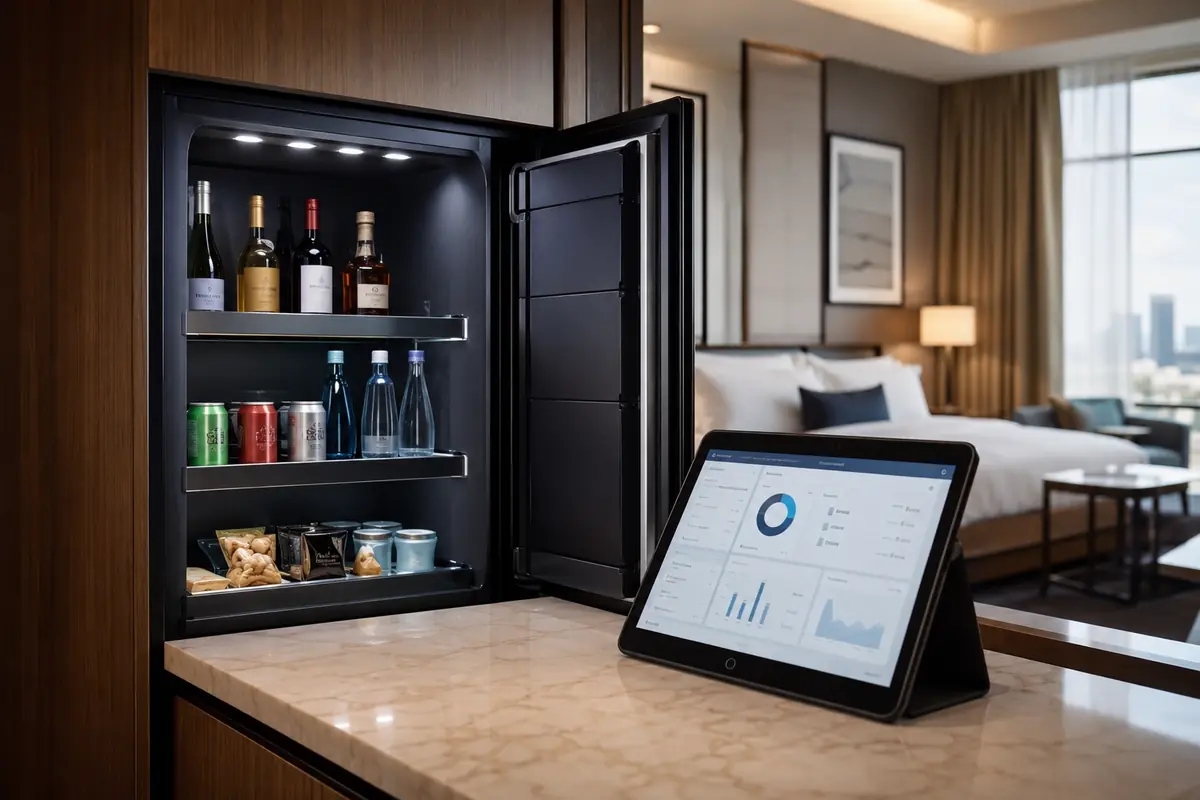
A standard minibar relies on manual checks and posting. A smart minibar can use sensors or connected inventory logic to record product movement and support faster reconciliation. The right choice depends on labor model, integration requirements, product mix, exception handling, and total operating cost.
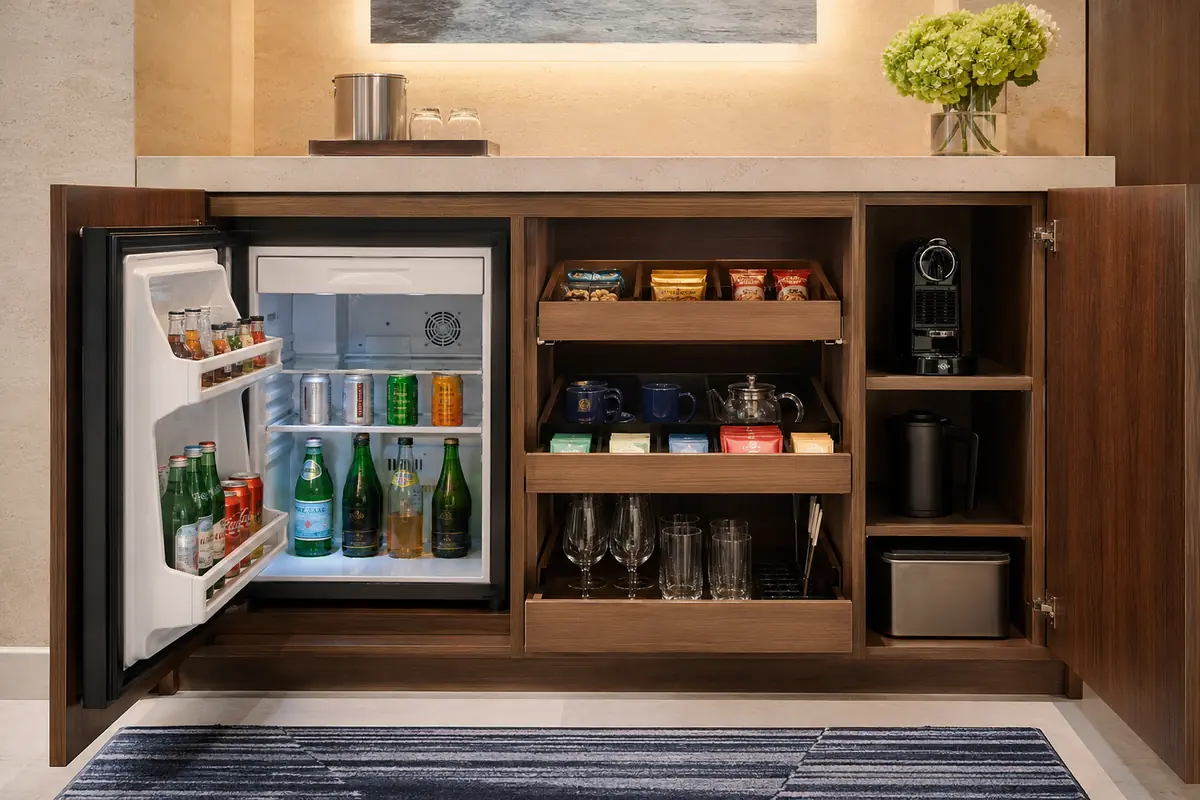
Yes. Cabinet dimensions, finish, hardware, shelving, ventilation, cable access, tray storage, glassware zones, lighting, and equipment integration can be coordinated with the room concept. Final details should be approved through drawings and a representative sample or mock-up.
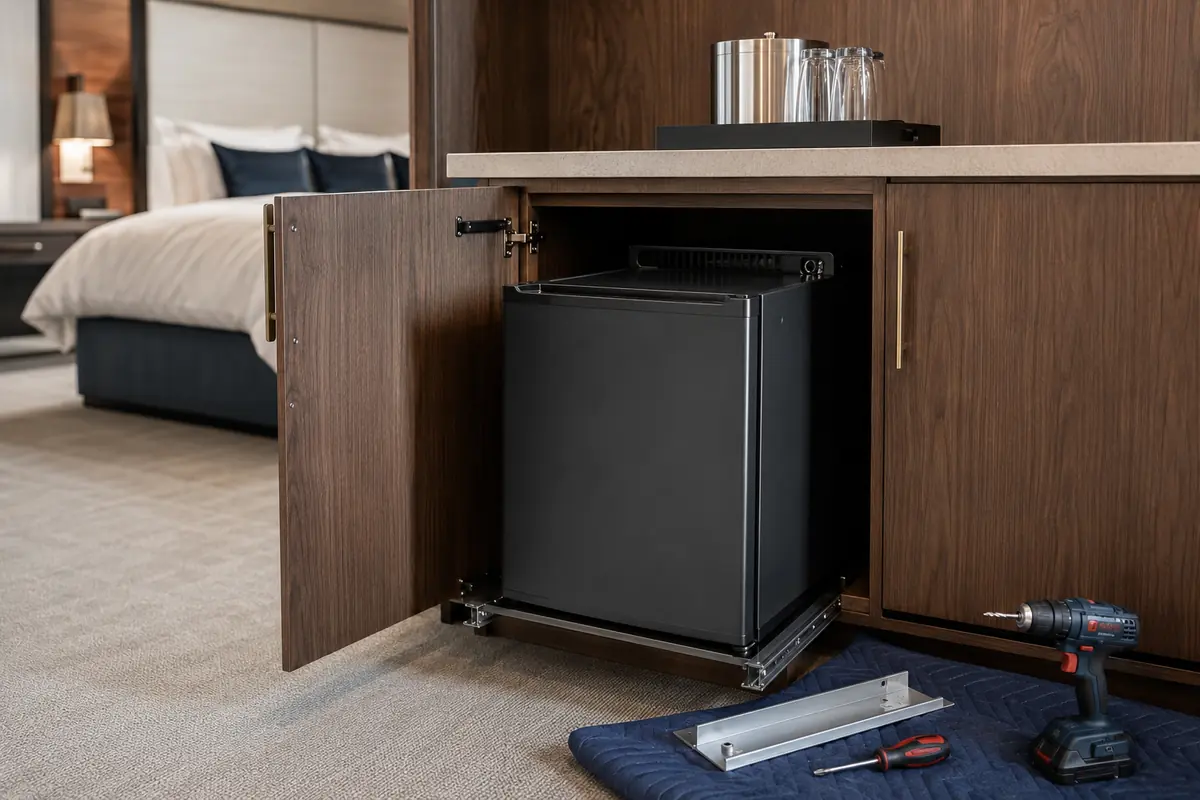
Verify the approved appliance dimensions, door swing, ventilation clearances, heat path, power outlet position, service access, floor level, cabinet opening, trim clearance, weight support, and manufacturer installation instructions.
There is no universal answer. Compare required temperature performance, room climate, noise target, product load, ventilation, energy use, recovery behavior, maintenance skills, and lifecycle cost. Evaluate the actual model in a representative cabinet before a large rollout.
Reserve quantity depends on breakage, failure rate, replacement lead time, standardization strategy, location, opening risk, and storage capacity. A planning percentage can create an initial estimate, but the final reserve should be agreed category by category.
Yes. A coordinated program helps confirm capsule compatibility, beverage size, cup capacity, tray footprint, water handling, waste, cleaning, storage, consumption assumptions, pack quantities, and replenishment timing before launch.
Many presentation and consumable items can support custom color, logo, marking, label, sleeve, carton, or pack configuration. Method, minimum quantity, artwork format, color tolerance, placement, sample approval, and lead time should be documented before production.
Standardize shelf positions and par levels, organize carts in the same sequence, separate chargeable and complimentary items, use visible tamper controls, define exceptions, simplify posting, and train with a room-level restock checklist.
Favor removable shelves and organizers, accessible corners, wipeable finishes, controlled gaps, stable bottles, sealed products, clear spill procedures, approved chemicals, and enough clearance for staff to inspect every surface.
Define the accepted seal condition, receiving inspection, room-check method, treatment of broken seals, product replacement rule, guest-charge policy, disposal path, and staff escalation process. The seal is one control within a broader workflow.
Review refillable water feasibility, local water quality, washing and sealing, reusable drinkware, packaging weight, portion size, product expiry, equipment energy, transport, storage, guest communication, and operational loss. Avoid shifting impact into an unmanageable back-of-house process.
Not necessarily. Standardization simplifies operations, while room-tier variation can support guest expectations and revenue. Use a controlled base assortment and document only the deliberate differences for suites, family rooms, executive floors, and special packages.
Check dimensions, function, capacity, color, material, workmanship, branding, accessories, packaging, labeling, fit with surrounding items, cleaning behavior, electrical requirements, and the approved reference used for mass-production comparison.
Begin early enough to complete specifications, samples, approvals, production, inspection, freight, customs if applicable, staging, installation, and punch-list replacement before room handover. Build the schedule backward from the required on-site date and update it after supplier confirmation.
Direct contact
Choose the office and channel that work best for your project. Both teams can help route product, sourcing, quotation, and delivery questions.
+1 514 907 1637
+86 155 2127 1637
Your next sourcing brief starts here
Share the property type, room count, room tiers, required categories, capacities, finishes, branding needs, target delivery date, and reserve percentage.