
A hospitality property needs enough accessibility supplies to keep its required features operational and meet simultaneous guest needs while equipment is being cleaned, inspected, repaired, or replaced. There is no single percentage of guest rooms that produces the right purchasing quantity for every item. A shower chair, an amplified telephone, a wheelchair offered for guest use, and an installed pool lift have different allocation rules, service cycles, and failure consequences. Start with the approved accessibility schedule, then calculate the shared equipment pool separately for each compatible product type.
For reusable portable supplies, the practical planning relationship is dedicated units plus peak shared demand plus turnaround allowance plus disruption reserve. Subtract existing units only after confirming their condition and suitability. This is an operating model, not a legal minimum or an industry benchmark. Required rooms, installed features, communication access, and other obligations must be established for the actual property and jurisdiction. A reserve wheelchair cannot compensate for an inaccessible bathroom, and a portable notification kit cannot automatically replace a required installed alarm.
The distinction matters most when arrivals overlap with departures. A hotel may own several units yet have none ready because one is assigned to a guest, another is awaiting cleaning, and a third lacks an essential accessory. Counting purchases therefore gives a different answer from counting usable capacity. Longer stays, group bookings, several buildings, and limited overnight staffing can widen that gap even when average occupancy appears modest.
This guide shows owners, procurement teams, and hotel operators how to separate the inventory pools, estimate concurrent demand, and maintain a defensible reserve. The worked example uses explicitly hypothetical quantities so the method can be adapted to a property’s records. The objective is a purchasing schedule that explains what each unit serves, when it becomes available, and who can deliver it when a guest needs it.
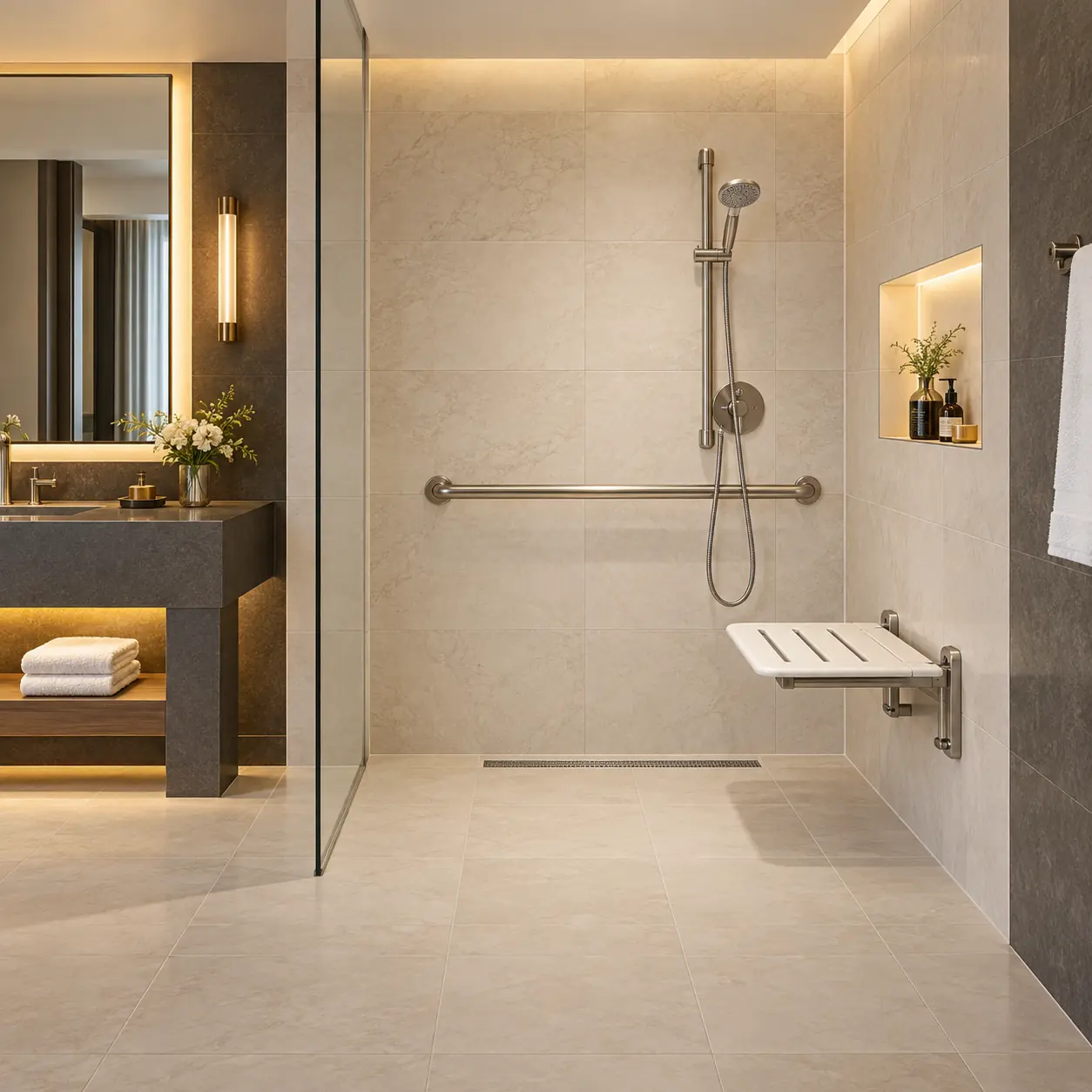
Separate Required Features from Shared Equipment
Begin by dividing accessibility capacity into installed features, dedicated portable equipment, shared equipment, and service reserves. Each pool answers a different question. Installed features follow the approved building and facility design. Dedicated units remain assigned to their designated rooms or functions. Shared units serve requests across the property, while reserves protect availability during turnaround or disruption. Keep the pools distinct in the inventory record even when the same supplier provides them. Otherwise, a unit already supporting a required room may be counted again as available for another guest, creating a shortage that remains hidden until arrival.
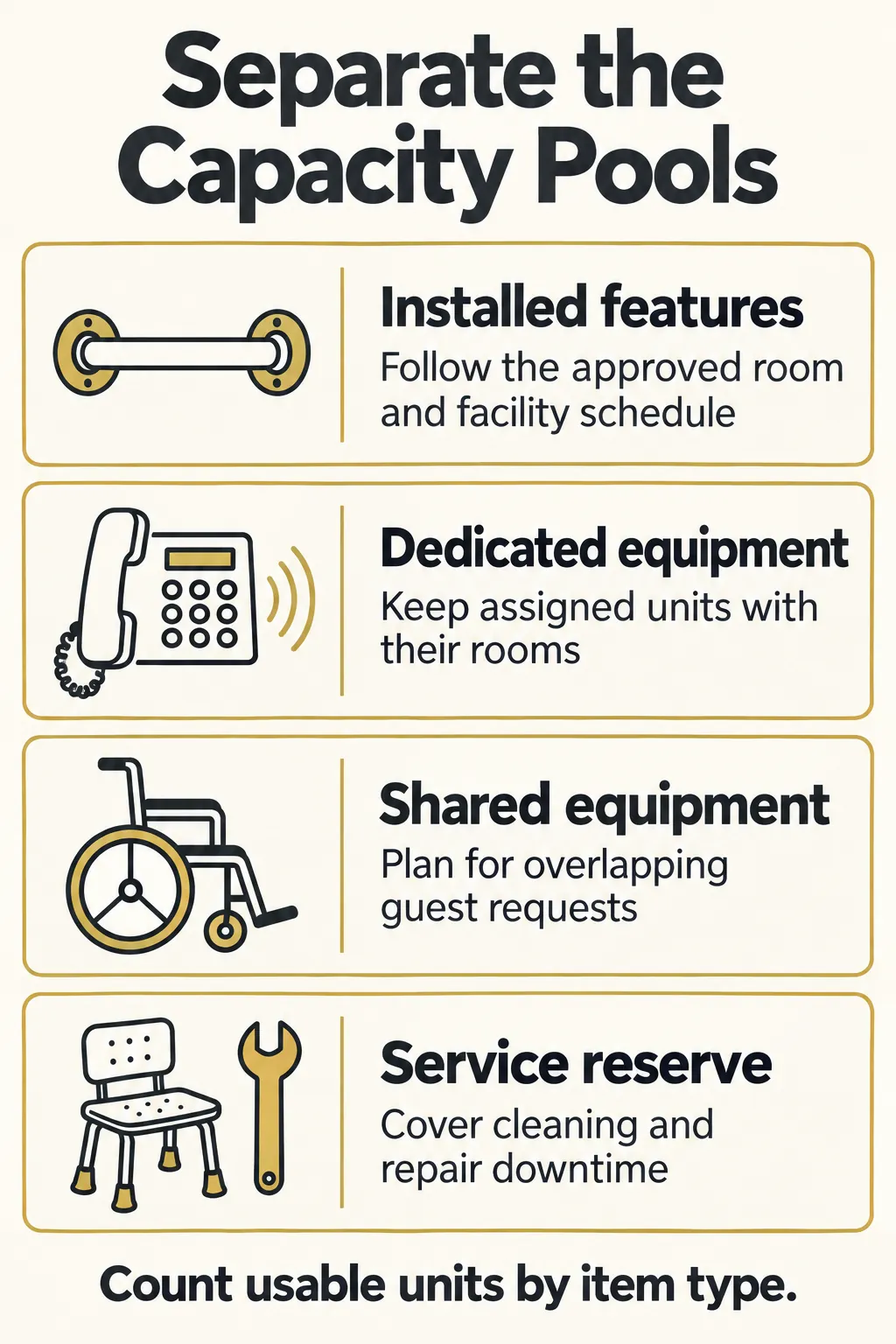
Establish the property-specific baseline
For U.S. properties, room requirements distinguish mobility features from communication features and include rules about room types and distribution. Establish the applicable schedule with the project’s qualified accessibility and design reviewers before converting it into purchase quantities. Existing buildings, alterations, and new construction may require different analysis. Canadian properties need the applicable provincial and local review; an American room-count table is not a substitute. Record legal requirements separately from brand standards and optional service commitments.
Treat fixed grab bars, required shower seats, accessible routes, and applicable alarm systems as location-specific assets. Determine their quantities from approved plans and maintain their intended function. Low usage does not justify removing a required feature. Public areas also need their own review: meeting spaces, pools, dining facilities, and other amenities cannot be sized solely from overnight room demand.
| Inventory pool | Quantity basis | Do not count as spare capacity |
| Installed features | Approved room and facility schedule | An installed item at another location |
| Dedicated portable equipment | Units allocated to specific rooms or functions | A unit already assigned to a room |
| Shared portable equipment | Overlapping requests for each compatible item type | Equipment reserved for an arriving guest |
| Service reserve | Turnaround and credible disruption scenarios | Incomplete, damaged, or untested units |
Define what counts as one usable unit
A complete kit is the full combination needed for its intended function, including compatible power supplies, receivers, connectors, instructions, and any required accessories. Ten boxes do not necessarily represent ten working kits. If each kit needs one dedicated adapter and only seven working adapters are available, at most seven kits are complete. Track components as well as finished kits, and avoid combining incompatible generations merely because they share a product name.
Product compatibility also divides the pool. A chair may be unsuitable for a particular bathroom or guest need because of its dimensions, load rating, transfer arrangement, or intended use. Keep those specifications visible and confirm the actual setup. Staff should ask about the function or equipment the guest needs rather than infer needs from appearance or a diagnostic label.
Before including a model in the capacity count, use the property’s safety and accessibility review for guest room supplies to connect product approval with its installed or deployed condition.
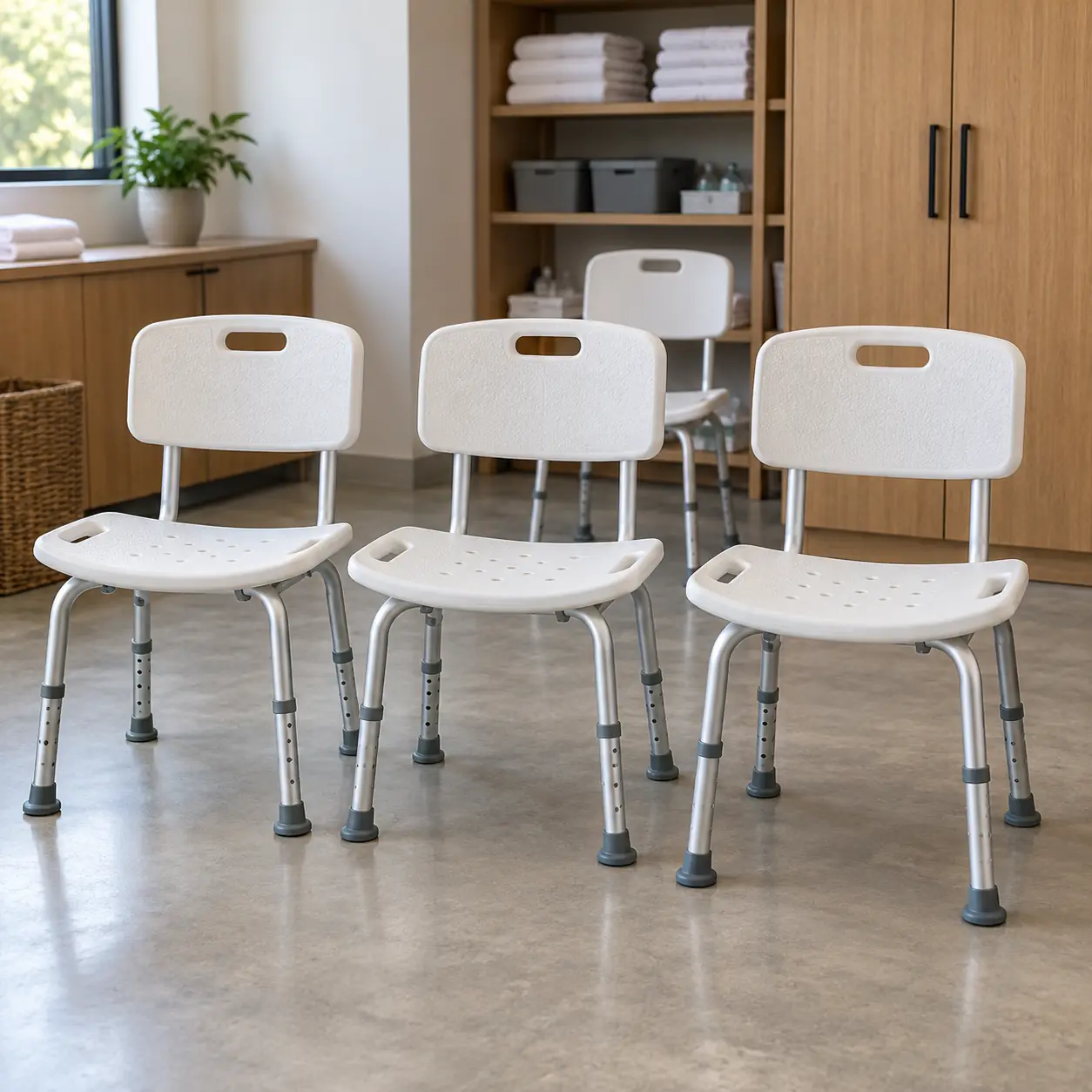
Calculate Peak Demand and the Reserve for Each Item
Size the shared pool from concurrent use, not the number of requests received during a month. A unit assigned for a four-night stay remains unavailable to other guests throughout that period. Build a timeline for each item type that includes reservation holds, actual use, and release back into service. Then consider busy dates, known group requirements, and plausible late requests. Add an explicit allowance for cleaning or inspection and a separate disruption reserve only where these are not already represented in the timeline. This approach makes each additional unit traceable to a specific operating need.
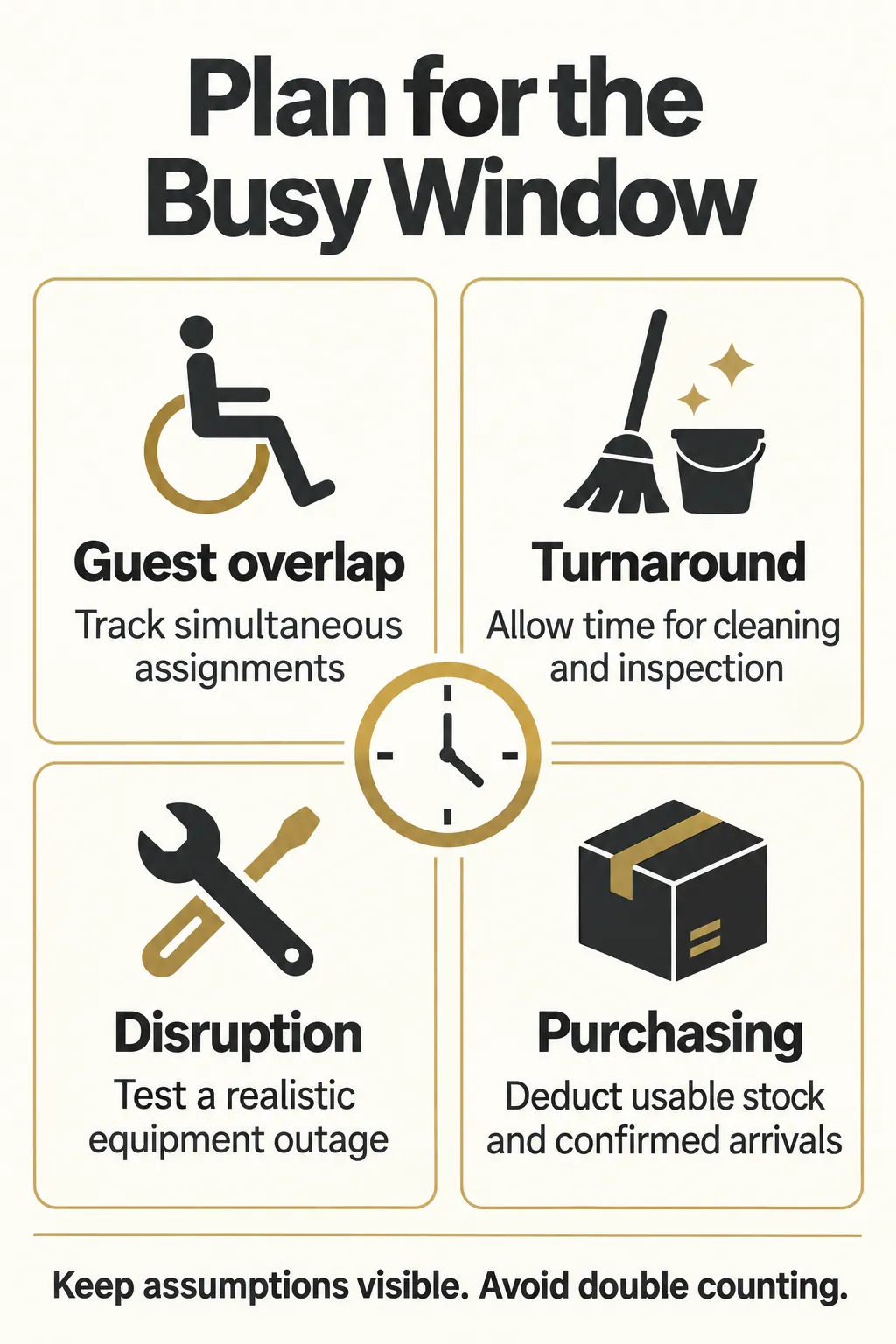
Use records that reveal hidden demand
Record the requested item and quantity, required delivery time, assignment period, release time, outcome, and reason for any delay or refusal. Include requests fulfilled through an outside provider and requests the hotel could not fulfill; checkout records alone underestimate need after a stockout. Collect only the operational information needed to provide the service. A useful starting review covers a full seasonal cycle where records exist, with separate attention to peak weekends and major events.
The average request rate can support an initial estimate but cannot establish the peak by itself. If requests average one unit per day and each assignment lasts three days, average use may approach three units under stable conditions. Clustered arrivals can require substantially more. For a new property, use comparable operating information, confirmed bookings, and low, expected, and high demand scenarios. Label these assumptions and revise them as actual request data develops.
Apply one transparent equation
For a reusable portable item type, define D as dedicated units, P as peak simultaneous shared assignments, T as additional units unavailable during normal turnaround at that peak, and R as a separate reserve for a selected disruption. The planning target is Q = D + P + T + R. Use whole units. If P already includes cleaning and inspection until the ready time, set the corresponding T allowance to zero. The same outage or late request must not be included twice.
For replenishing an existing property, calculate purchase quantity = max(0, Q − E − I), where E is retained, compatible inventory and I is confirmed incoming inventory that will be accepted and ready by the required date. E includes retained units in use as well as those currently ready; it excludes units scheduled for retirement or unlikely to return to service in time. Outstanding purchase orders with uncertain delivery dates should not automatically reduce the opening requirement.
Worked example for a portable shower-chair pool
Assume a hypothetical 120-room hotel has separately established its required room and fixed-feature schedule. For the portable chair type considered here, its operating plan assigns two dedicated units, anticipates four simultaneous shared assignments, allows one unit in cleaning at that time, and holds one further unit against a repair outage. These figures are scenario assumptions, not legal quantities inferred from the 120-room size.
| Input | Illustrative units | Reason |
| D: dedicated | 2 | Assigned outside the shared pool |
| P: peak shared use | 4 | Concurrent guest assignments |
| T: turnaround | 1 | Cleaning at the peak |
| R: disruption reserve | 1 | One repair outage |
| Q: target inventory | 8 | 2 + 4 + 1 + 1 |
| E: retained inventory | 5 | Suitable and serviceable by the planning date |
| I: confirmed incoming | 1 | Accepted and ready by that date |
| New purchase | 2 | 8 − 5 − 1 |
If a group booking adds two overlapping requests beyond the modeled peak, the target becomes ten units and the new purchase becomes four, assuming the other inputs stay unchanged. If that group was already included in the four-unit peak, no further addition is justified. Write the overlap assumption beside the quantity so procurement and reservations use the same interpretation.
Choose reserves by failure consequence
A percentage reserve can be misleading for a small pool: ten percent of three units does not answer which failure the hotel can absorb. Instead, test a concrete situation such as one failed unit during the busiest arrival window, delayed return of a long-stay assignment, or a replacement shipment arriving late. Select a reserve that addresses the scenario and document the response if demand exceeds it. A statistical service target helps compare inventory choices; it does not authorize refusing an obligation or treating a known request as expendable.
Keep Planned Capacity Available in Daily Operations
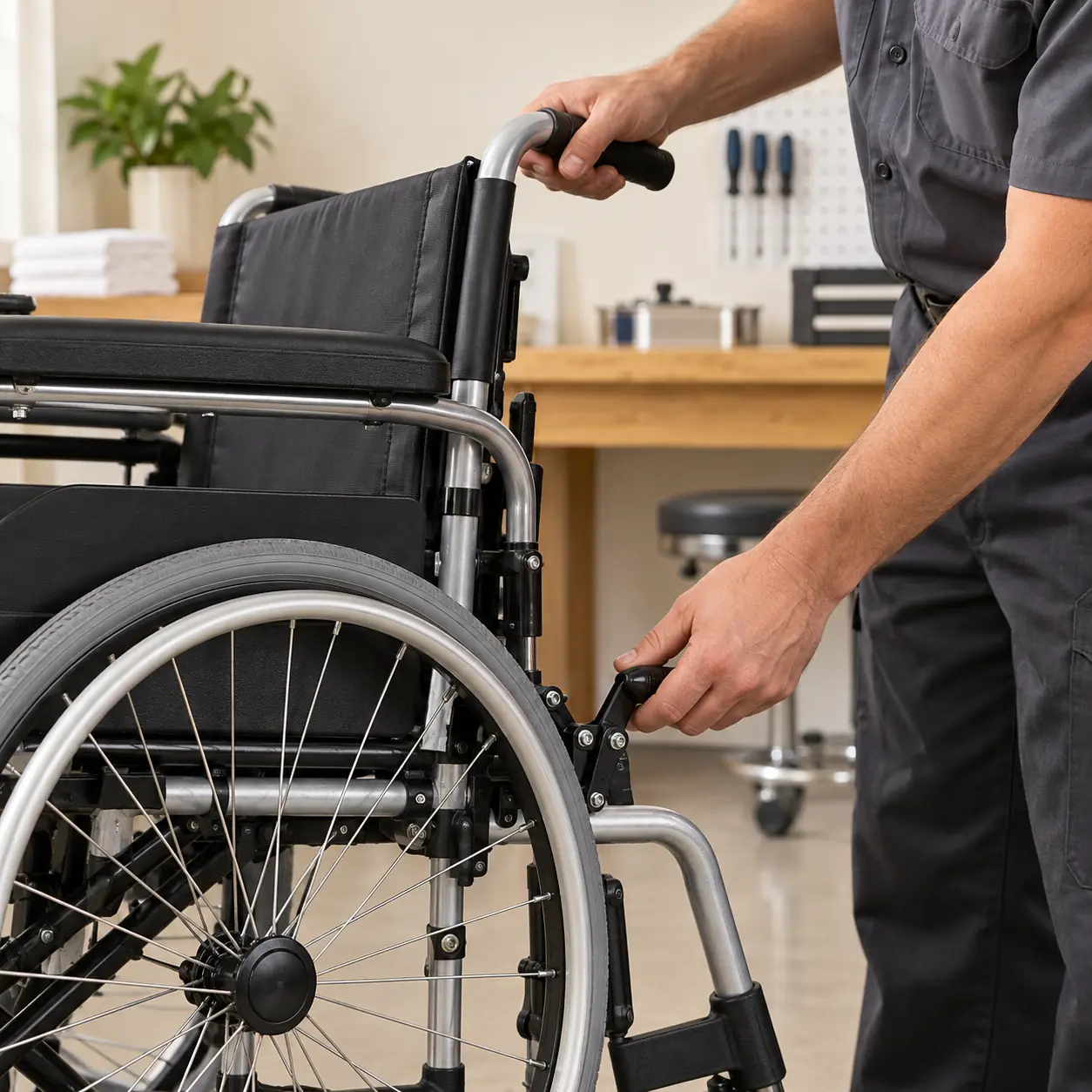
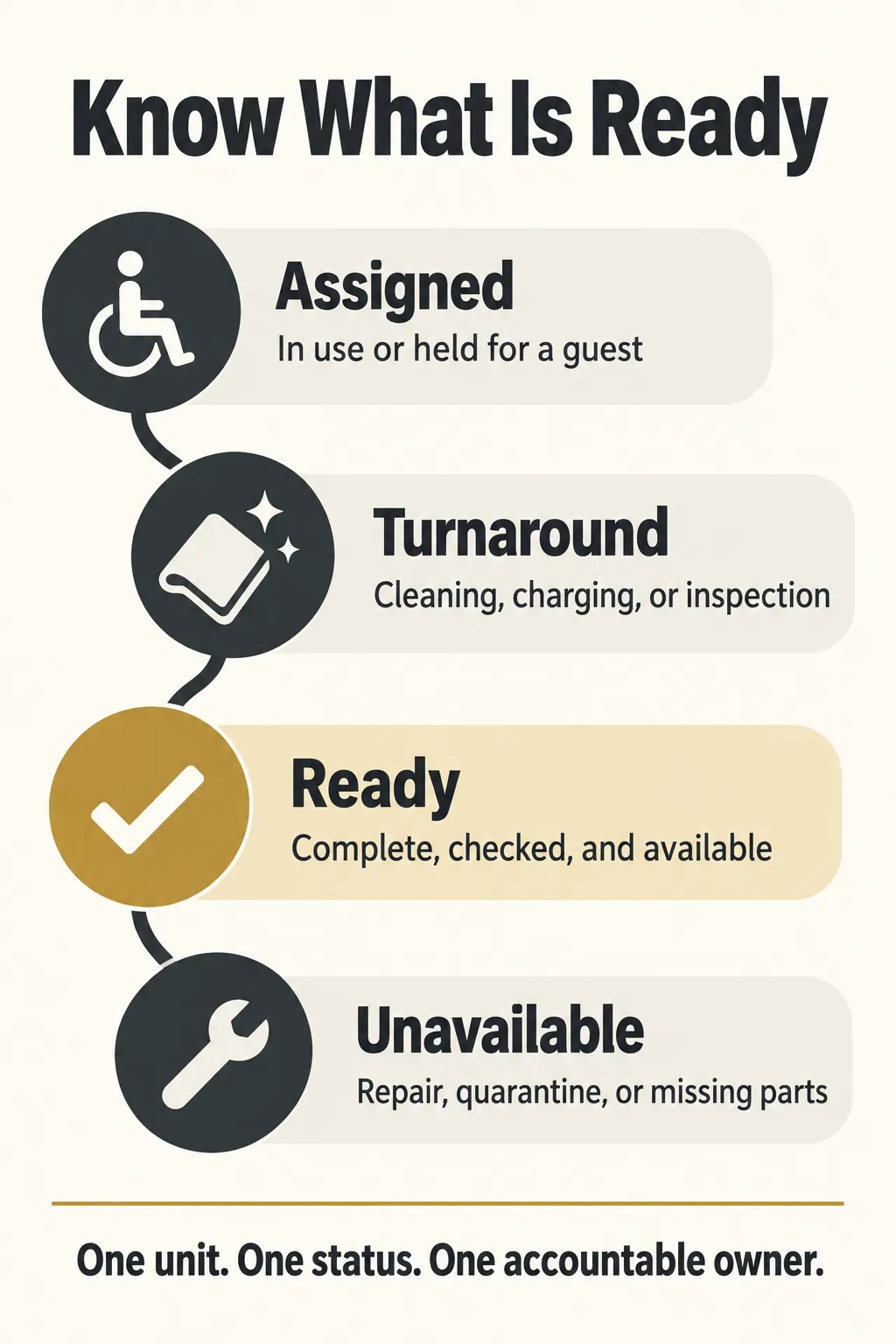
A calculated quantity becomes useful capacity only when staff can locate, prepare, and deliver the equipment within the required time. Manage every unit through clear states: assigned, awaiting turnaround, ready, or unavailable. Reservations and front-desk teams need the same current view as housekeeping and engineering. An item on a shelf should not be marked ready until it is complete, inspected, and suitable for the next assignment. This discipline often resolves an apparent purchasing shortage, while also revealing real gaps caused by missing parts, slow turnaround, or equipment that cannot reach another building promptly.
Separate physical inventory from immediate availability
For a particular delivery window, start with units physically on site and deduct dedicated allocations, overlapping guest assignments, reservation holds, cleaning, charging, inspection, and quarantine. Use mutually exclusive states so a reserved unit being cleaned is not deducted twice. The result is the ready balance for that window. Keep a forecast of expected releases as well, but do not promise a unit solely because its previous guest is expected to check out.
A shared pool across buildings works only if transport and staffing can meet the needed delivery time. Test the actual handoff during overnight staffing and busy check-in periods. If travel or access creates unacceptable delay, position some inventory locally and reflect that allocation in the count. A unit cannot serve two simultaneous requests simply because both buildings appear in one central register.
Make turnaround measurable
Measure the interval from equipment return to its release as ready. Follow the cleaning and inspection instructions supplied for the equipment, including drying and any product-specific contact time. Do not shorten a required process to make the capacity calculation fit. Inspect the complete assembly, relevant moving parts, feet, brakes, cables, batteries, and accessories as appropriate for the equipment type. Remove damaged units from guest service and record who can approve their return.
For communication equipment, test the intended function with the property’s actual systems and confirm how guests will receive setup instructions. Effective communication may also require services rather than a stocked device. Staff knowledge, access to appropriate assistance, and an escalation route therefore belong in the operating plan even though they are not physical inventory. Do not assume every guest benefits from the same aid.
Plan replacements and consumables separately
Reusable equipment returns to the pool; consumables are depleted. For a consumable with stable usage, an initial reorder point can equal expected demand during replenishment lead time plus a safety allowance. With periodic ordering, include the review interval as well. Use actual units and days, account for shelf life and pack sizes, and revise the allowance when demand or lead time varies. Keep this consumption calculation separate from concurrent equipment assignments.
For durable equipment, review the projected serviceable fleet through the next replenishment window. Include expected retirements, unresolved repairs, confirmed arrivals, and upcoming demand peaks. A spare part may shorten downtime but is not a ready replacement unit until the repair is completed and checked. Supplier minimum order quantities may affect the purchase decision, but they do not establish operational need; compare excess stock with an acceptable replenishment arrangement.
Review the signals that change the target
Review delays, unfulfilled requests, peak shared use, turnaround duration, failed inspections, and replacement lead times by item type. Set a regular review cadence and reassess before a major group arrival, seasonal peak, renovation, or new service offering. Increasing stock is appropriate when the gap is insufficient equipment. If units are already available but staff cannot find or release them, correct ownership and handoffs first. Low recorded utilization also deserves investigation because guests may not know how to request available support.
Once the assumptions are agreed, send KW Hospitality your accessibility supplies requirements with item specifications, dedicated and shared quantities, reserve quantities, destination, required delivery date, and accessory needs. Ask for model-specific documentation, replacement-part availability, and confirmed lead times so the quotation can be compared against the operating plan.

Conclusion
The right accessibility supplies capacity is a set of item-specific quantities supported by a service plan. Establish the property’s required features, keep dedicated allocations separate, and calculate the shared pool from overlapping guest needs. Add turnaround and disruption allowances without double counting, then deduct only retained and incoming units that will actually be usable when needed. The resulting number should remain connected to real assignments, inspection status, staffing, and replenishment. A smaller well-managed pool may outperform a larger poorly tracked one, but operational efficiency never removes the need to provide required access or address a guest’s actual needs.
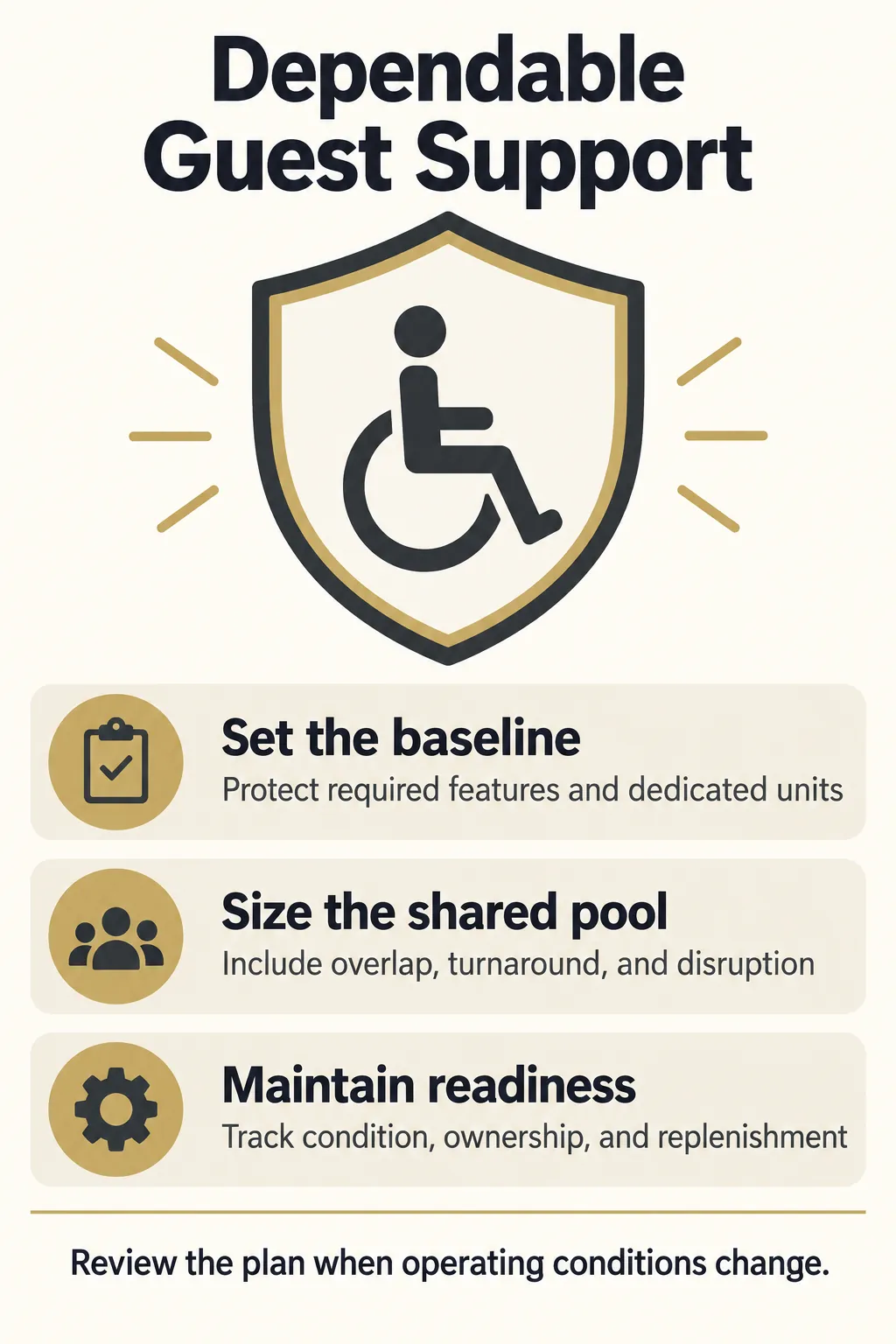
Give one operational owner responsibility for reconciling the quantity plan with reservations, housekeeping, engineering, and procurement. Keep the assumptions beside the current target and revisit them when demand or delivery conditions change. That makes the next purchasing decision explainable and helps the property maintain dependable support through both routine stays and peak periods.
Frequently Asked Questions
Can a hotel use one standard percentage for all accessibility supplies?
No. Installed features follow the applicable property schedule, while portable equipment depends on allocation, concurrent requests, compatibility, and downtime. A single percentage hides these differences and can leave a critical item unavailable even when the total equipment count appears generous.
Should every accessible room receive an identical portable kit?
Only if the approved room specification and intended function call for that configuration. Mobility and communication needs differ, and individual preferences vary. Identify what belongs permanently in each room and what may be provided from a shared pool without compromising required features or timely service.
Can nearby hotels share reserve equipment?
Sharing may provide supplementary contingency capacity when compatibility, availability, delivery time, and responsibility have been verified. Do not count the same unit in both properties’ simultaneous peak plans. An informal promise from another hotel is not dependable on-site capacity and does not replace required features.
What if the property has no request history?
Start with the approved baseline, confirmed guest requirements, and clearly labeled demand scenarios. Seek relevant operating comparisons and establish a workable contingency arrangement. Log requests from opening day, including unsuccessful requests, and revise the provisional shared pool as evidence develops.
Does equipment in repair count toward the purchase calculation?
Count it as retained inventory only when its return, condition, and compatibility are sufficiently confirmed for the planning date. It never counts as ready capacity while unavailable. Keep uncertain repairs separate so they do not cancel a purchase needed for an approaching peak.
What should staff do when demand exceeds available equipment?
Escalate immediately, confirm the guest’s actual functional need and timing, and pursue an appropriate solution through the designated manager and verified support arrangements. Do not offer an incompatible substitute or promise equipment that cannot arrive in time. Record the outcome and use it to revise the capacity plan.