
SECTION 1: Introduction
The Foundation of Guest Experience
When a hotel opens its doors for the first time, every element — from the softness of the bedsheets to the brightness of the lobby lighting — contributes to the first impression guests form. These impressions last, and they are shaped by more than architecture or design. They depend on something far more tangible: the hospitality supplies that fill the property and define the daily guest experience.
Whether you’re building a boutique inn with 25 rooms or a 500-room luxury property, your choice of hospitality supplies determines how guests perceive quality, comfort, cleanliness, and attention to detail. In today’s highly competitive hospitality market, having the right supplies isn’t just about fulfilling operational needs; it’s a reflection of your brand’s commitment to excellence.
Why Hospitality Supplies Are the Heart of Hotel Operations
A well-designed hotel is only as good as its operational backbone. Clean linens, durable room accessories, reliable kitchenware, energy-efficient equipment — these are not minor details. They are what allow the front-of-house to shine and the back-of-house to function seamlessly.
When supplies are missing, inconsistent, or of poor quality, service delivery falters. Imagine a guest arriving to find mismatched towels, a flickering bedside lamp, or a hair dryer that stops mid-use. Each of these small issues chips away at your hotel’s reputation and lowers guest satisfaction scores. On the other hand, when every element feels coordinated, clean, and thoughtfully chosen, guests subconsciously trust the brand — and are far more likely to return.
For new hotels, the supply selection process can be overwhelming. Hundreds of categories, countless vendors, fluctuating prices, and the challenge of aligning aesthetic, operational, and financial priorities make procurement a critical yet complex task. This is why successful hotel launches often partner with experienced hospitality sourcing companies such as KW Hospitality, who can consolidate supply lines, ensure consistent quality, and coordinate production directly from trusted manufacturers in Asia and beyond.
The Role of Supplies in Branding and Guest Retention
Every guest touchpoint — from the first sip of coffee in the morning to the way their towel is folded after housekeeping — is a branding opportunity. Supplies are not just consumables; they are brand ambassadors. The color of your bed linens, the scent of your amenities, the shape of your room slippers, and even the sound of your alarm clock speaker all contribute to a consistent sensory story.
Luxury hotels often invest heavily in custom-designed supplies that align with their visual identity — logo-embroidered bathrobes, signature scent diffusers, branded amenities, or custom furniture finishes. Mid-range and economy hotels, while operating within tighter budgets, can still achieve a premium look by focusing on durability, smart design, and consistency. The key is not necessarily to spend more, but to spend strategically on items that most influence guest perception.
The Hidden Cost of Poor Supply Planning
Opening a hotel without a clear supply plan often leads to overspending, inconsistency, and long-term maintenance issues. Common mistakes include:
Ordering items from multiple vendors without standardization
Choosing decorative items that aren’t durable for high turnover use
Neglecting backup inventory for fast-moving consumables
Ignoring regional safety, fire, and hygiene standards
Overlooking the branding potential of small items such as slippers, toiletries, or key cards
For example, replacing low-quality towels or bedding every few months can cost a hotel far more than investing once in high-grade, durable textiles. Similarly, using incompatible electronic devices across rooms (such as mismatched hair dryers or alarm clocks) creates unnecessary maintenance and guest confusion.
A professional hospitality supply partner ensures consistency across all product lines — from textiles and amenities to electronics and furniture — while meeting international hotel standards (ISO, CE, UL, RoHS, etc.).
Building a Hotel Supply Strategy: Beyond the Shopping List
The process of equipping a new hotel should follow a strategic sequence rather than a simple purchasing checklist. An effective supply plan includes:
| Step | Objective | Examples |
|---|---|---|
| 1. Needs Assessment | Identify required categories per department | Rooms, F&B, housekeeping, reception, spa, maintenance |
| 2. Brand Alignment | Define color palette, logo placement, quality level | Branded amenities, towel embroidery, custom furniture finishes |
| 3. Supplier Consolidation | Reduce number of vendors for easier logistics | One-stop sourcing with KW Hospitality |
| 4. Sample Evaluation | Approve prototypes before mass order | Linen quality testing, fragrance approval, electronics safety test |
| 5. Bulk Production & Inspection | Ensure quality and consistency | Third-party inspection, packaging check, compliance review |
| 6. Shipping & Installation | Timely delivery and coordination | Container loading, customs clearance, room setup plan |
By structuring the process this way, hotels minimize operational risks and ensure all departments are ready before opening day. Timing is crucial — many properties begin procurement 6 to 9 months before opening, depending on the number of customized products involved.
How KW Hospitality Simplifies This Process
At KW Hospitality, we understand that every property has a unique brand story — and that story begins with the products guests touch and use every day. Our company collaborates directly with manufacturing partners in China and Taiwan, specializing in hotel-grade products such as:
Luxury cotton linens and towels
Custom-designed slippers and bathrobes
Guest room electronics (Bluetooth alarm clocks, wireless chargers, hair dryers)
Amenity sets and eco-friendly toiletries
Housekeeping and F&B supplies
By cutting out the middleman, KW Hospitality offers factory-direct pricing, custom branding options, and strict quality control at every stage of production — helping new hotels save time, reduce cost, and elevate their brand presentation from day one.
What This Article Covers
In the sections that follow, we will explore in depth the essential hospitality supplies every new hotel must have, categorized by department and function:
Guest Room Essentials
Bathroom and Spa Supplies
Bedding, Linens, and Towels
Amenities and Personal Care
Housekeeping and Laundry Supplies
Front Office & Lobby Items
Food & Beverage and Kitchen Supplies
Back-of-House Equipment
Safety, Security, and Maintenance Tools
Branding, Customization & Sustainable Alternatives
Each section will highlight critical products, quality tips, and practical advice to help procurement managers and hotel owners make informed decisions — and ensure that every corner of the property is equipped for excellence.
Transition to Next Section
In the next section, we begin with the heart of every hotel experience — Guest Room Essentials. From beds and furniture to room accessories and smart technology, these are the items that most directly shape a guest’s comfort and perception of value.

SECTION 2: Guest Room Essentials
Comfort, Functionality, and Style
The guest room is the heartbeat of any hotel. It’s where travelers unwind, where business guests prepare for meetings, and where families find comfort after long journeys. The quality, functionality, and aesthetic of your guest rooms define how guests perceive your entire property. No matter how impressive your lobby or restaurant may be, if the room experience disappoints, guests rarely return.
Creating a perfect guest room requires balancing comfort, practicality, and design coherence. Every item—from the bed frame to the smallest stationery pad—should reflect your brand identity and operational philosophy. This section breaks down the essential categories every new hotel must carefully plan for when furnishing and equipping guest rooms.
1. The Bed: The Centerpiece of Comfort
Mattresses and Bases
A hotel bed isn’t just furniture; it’s a marketing tool. Studies show that sleep quality is the number-one factor influencing online reviews and guest satisfaction. New hotels should invest in premium commercial-grade mattresses designed for long durability and consistent comfort.
Recommended features: pocket-spring or hybrid designs with reinforced edges, anti-mite fabrics, and breathable materials.
Mattress base options: solid box foundations for stability or slatted frames for ventilation.
Hotels often choose two-sided mattresses (flippable) to extend lifespan, paired with waterproof mattress protectors for hygiene and maintenance.
Bedding Sets
KW Hospitality typically recommends a full bedding package that includes:
Fitted sheet, flat sheet, duvet cover, pillowcases
Down or microfiber duvet inserts (lightweight for warm regions, heavy-fill for cold climates)
Pillows with dual firmness (one soft, one medium)
Decorative bed runner or cushion for visual appeal
The standard linen fabric for upscale properties is 300–400 thread count cotton sateen, while mid-range hotels often use poly-cotton blends (60/40) for easier laundering and faster drying.
2. Furniture and Fixtures: Style Meets Durability
Each guest room must balance beauty with endurance. Furniture should withstand heavy use, frequent cleaning, and occasional mishandling while maintaining an elegant look.
| Item | Function | Specification Tip |
|---|---|---|
| Bed Frame & Headboard | Structural & decorative anchor | Use solid wood or metal core, upholstered for sound absorption |
| Bedside Tables | Functionality for guests | Include power sockets and USB ports |
| Desk & Chair | Work surface | Choose ergonomic chair, scratch-resistant laminate |
| Wardrobe/Closet | Storage | Include hangers, laundry bag, shoehorn, iron/ironing board |
| Luggage Rack | Convenience | Foldable stainless steel or wood frame |
| Seating (Sofa/Accent Chair) | Comfort and design | Match color palette of room |
| Lighting Fixtures | Functionality and ambiance | Layered lighting: ceiling, task, and bedside |
Pro tip: Match hardware finishes (handles, lamp bases, plugs) to create visual harmony — brushed nickel, matte black, or gold accents depending on the design theme.
3. In-Room Electronics and Technology
Modern travelers expect convenience at their fingertips. Hotels are evolving from traditional bedside alarm clocks to multifunctional Bluetooth speakers, wireless chargers, and smart control systems.
Essential Electronics Checklist
Smart TV (42–55 inch) – with streaming compatibility and wall mount option
Digital Alarm Clock with Bluetooth Speaker – such as KW Hospitality’s Guest Room Speaker with Wireless Charging Pad
Hair Dryer – high-speed, wall-mounted or drawer-stored, with safety auto-off
Mini-Fridge – energy-efficient, silent compressor
Electric Kettle / Coffee Machine – compact, stainless steel interior
Power Outlets with USB A/C Ports – conveniently placed near bed and desk
In-Room Safe – laptop-size with digital keypad
Iron & Ironing Board – foldable, non-stick surface
Optional upgrades for modern hotels include smart thermostats, motion-sensor lighting, and voice-assistant integration.
Energy Efficiency Matters
Beyond comfort, energy-saving features contribute to sustainability and long-term ROI.
Use LED lighting throughout the room.
Choose Energy Star-rated appliances.
Install master power switches linked to room key cards.
These not only reduce costs but also demonstrate environmental responsibility — a key factor for modern travelers and corporate clients.
4. Textiles and Soft Furnishings
The tactile feel of a room defines its emotional warmth. Quality textiles make guests feel pampered, while low-grade fabrics cheapen the experience instantly.
Essential textile elements include:
Curtains or Blinds: Blackout lining is essential for sleep comfort. Dual-layer (sheer + blackout) designs allow flexibility.
Carpets or Rugs: Should meet hotel fire-retardant standards. Opt for nylon or wool blends for durability.
Cushions & Throws: Add color, texture, and a sense of personalization.
Upholstery Fabrics: Should resist staining and fading; easy to clean and replace.
For resorts or boutique hotels, consider locally inspired textile patterns to integrate regional character into the room design.
5. Guest Convenience Items
Small details often make the biggest impact. Providing convenience accessories anticipates guest needs before they ask — a hallmark of hospitality excellence.
| Category | Examples |
|---|---|
| Stationery | Branded notepad, pen, directory, postcards |
| Information | Guest service directory, hotel map, safety instructions |
| Closet Accessories | Laundry bag, sewing kit, lint brush |
| Comfort Accessories | Slippers, robe, shoe sponge, umbrella |
| Miscellaneous | Ice bucket, tray, tissue box, waste bin, mirror |
Each item should follow your brand’s aesthetic — for example, eco-friendly slippers and paper-wrapped stationery reflect sustainability commitments, while logo-embossed robes convey luxury branding.
6. Lighting, Ambiance, and Acoustics
The emotional tone of a guest room depends heavily on lighting design and sound control. Too bright, and it feels clinical; too dim, and it becomes impractical.
Lighting Tips
Layered Lighting: Use ambient (ceiling), task (reading lamps), and accent (wall sconces).
Warm White (2700–3000K) creates a cozy feel, ideal for bedrooms.
Dimmer Controls: Allow guests to adjust mood lighting easily.
Acoustic Comfort
Hotels near city centers or airports should invest in acoustic insulation for windows and doors. Even mid-range properties benefit from soft-closing hardware, thick curtains, and fabric wall panels to absorb sound.
A quiet room is not a luxury — it’s a necessity for positive guest reviews.
7. Room Accessories & Décor
Decor plays a vital role in differentiating your property. Art, mirrors, plants, and accent pieces reinforce brand storytelling.
Artwork: Preferably local or custom-commissioned to reflect the destination.
Mirrors: Full-length mirrors are mandatory in most star rating systems.
Decorative Vases or Sculptures: Small, but durable and easy to clean.
Planters (Real or Artificial): Add warmth and freshness.
Remember, decoration should enhance usability — not obstruct cleaning or reduce usable space.
8. Safety & Compliance Equipment
Safety items are often overlooked during design, but they are mandatory under most hotel licensing regulations.
| Item | Purpose |
|---|---|
| Smoke & Heat Detectors | Fire safety |
| Sprinkler Heads / Fire Alarms | Required for compliance |
| Emergency Evacuation Plan | Displayed behind room door |
| Non-slip Backing on Rugs | Prevents accidents |
| Electrical Safety Certifications | Required for appliances |
| Baby Crib / Extra Bed Options | For family rooms |
All in-room equipment must meet local fire, electrical, and building standards, and should be routinely tested by maintenance staff.
9. Sustainability in the Guest Room
Sustainability is now part of luxury. Guests increasingly choose hotels that demonstrate care for the planet. KW Hospitality supports this shift through eco-conscious products, such as:
Bamboo or recycled-fiber slippers
Organic cotton linens and towels
Biodegradable amenity packaging
Energy-efficient electronics
Refillable in-room dispensers for shampoo, conditioner, and soap
Implementing even a few of these choices can reduce waste, lower long-term costs, and enhance your property’s environmental profile — especially valuable for eco-certifications like Green Key or LEED.
10. Logistics and Installation Planning
A well-chosen supply list means little without proper planning. Guest room outfitting typically follows a sequence coordinated between procurement and construction teams.
| Phase | Task |
|---|---|
| 1. Pre-Delivery Inspection | Verify quantities, colors, and model numbers before shipping. |
| 2. Shipping & Customs Coordination | Consolidate shipments, minimize container volume. |
| 3. On-Site Delivery | Label per room or floor for easy installation. |
| 4. Setup & Assembly | Coordinate with engineering and housekeeping. |
| 5. Final Walk-Through | Ensure uniform presentation before soft opening. |
KW Hospitality offers end-to-end project coordination, from prototype sampling to final container delivery, helping new hotels avoid costly last-minute delays.
Summary of Guest Room Essentials
Every new hotel room should include:
Comfortable bedding and mattress system
Functional, durable furniture
Modern electronics (TV, Bluetooth clock, kettle, safe)
High-quality linens and textiles
Comprehensive convenience accessories
Effective lighting and acoustic design
Safe, compliant equipment
Sustainable alternatives where possible
When executed correctly, these items transform a simple room into an inviting retreat that drives repeat bookings and positive guest reviews.
In the next part, we’ll move beyond the bedroom and explore one of the most influential spaces in guest perception — the Bathroom and Spa Area.
This is where hygiene, comfort, and brand image merge through premium amenities, plush towels, and thoughtful design.
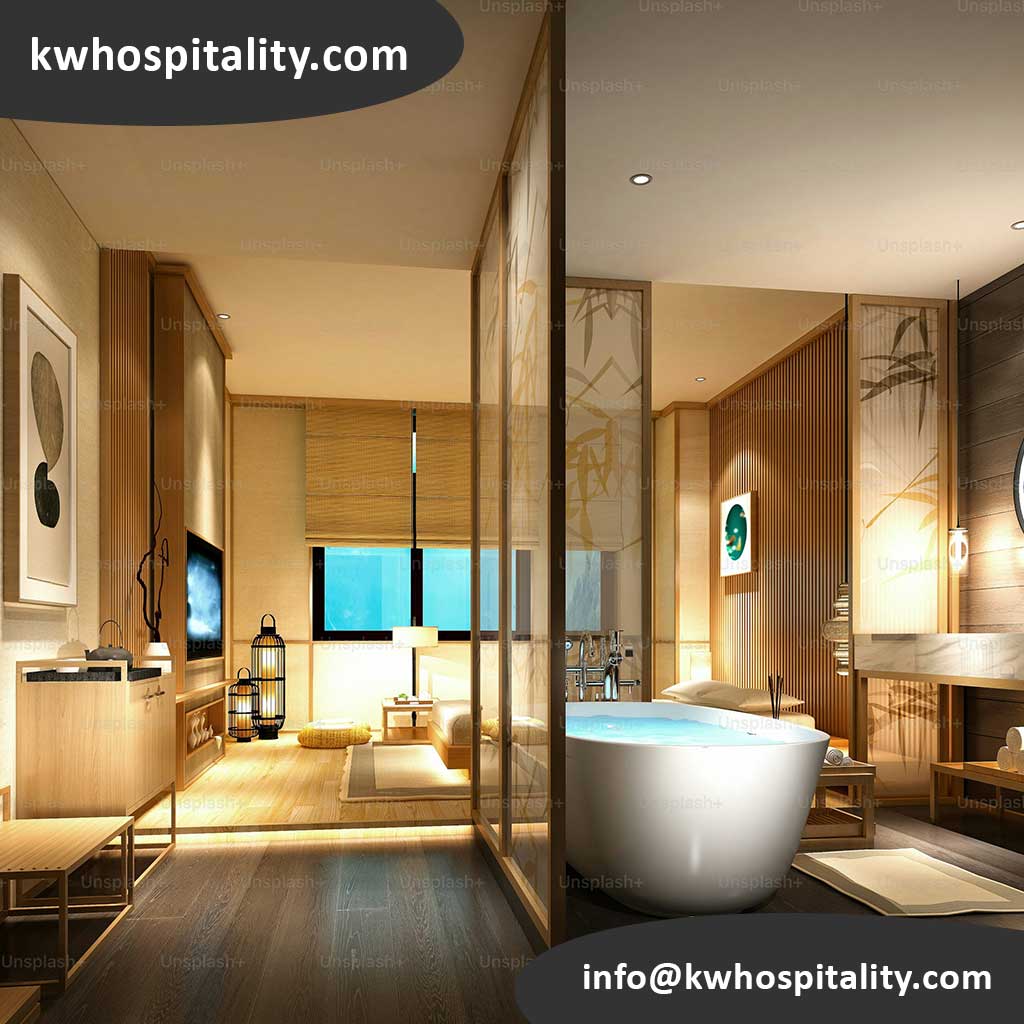
SECTION 3: Bathroom and Spa Supplies
Cleanliness, Luxury, and Guest Well-Being
If the guest room defines comfort, the bathroom defines confidence. A hotel bathroom is a space of privacy, rejuvenation, and hygiene — the intimate area where guests form deep impressions about cleanliness, quality, and brand standard. Even the smallest property can feel luxurious if its bathroom feels spotless, functional, and thoughtfully equipped.
In fact, research shows that over 70% of guests judge a hotel’s overall quality by its bathroom experience. When bathroom supplies are modern, fresh, and well-presented, guests associate the entire stay with care and excellence. Conversely, missing amenities, low-quality towels, or poorly maintained fixtures can instantly undermine trust.
Let’s explore the core categories of bathroom and spa supplies every new hotel must invest in, with emphasis on hygiene, presentation, and sustainability.
1. Bath Linens: The Touch of Luxury
The moment a guest steps out of the shower, the towel they reach for becomes a silent ambassador for your brand. The tactile experience of a towel, robe, or bath mat conveys whether your property is budget, midscale, or premium.
Essential Bath Linens Checklist
Bath Towels (Large, 100×180 cm typical hotel size)
Hand Towels
Face Towels / Washcloths
Bath Mats
Bathrobes
Spa Towels (for wellness areas)
Material & Quality Recommendations
100% Ring-Spun Cotton: Superior absorbency and softness.
Combed Cotton: Long fibers for durability and reduced lint.
Bamboo-Cotton Blend: Naturally antibacterial and eco-friendly.
Weight: 500–650 GSM for premium hotels; 400–450 GSM for mid-range.
Color: White remains the hospitality standard, projecting purity and hygiene.
For efficiency, KW Hospitality advises hotels to order double sets per room, allowing one set to be in use and another in laundry rotation.
2. Bathroom Amenities and Toiletries
These are among the most memorable touchpoints in a hotel stay. Guests often recall the scent of shampoo or the quality of lotion long after checkout. Branded amenities, therefore, serve both a functional and emotional purpose — reinforcing identity and guest loyalty.
Core Amenity Set Includes:
Shampoo
Conditioner
Shower Gel / Body Wash
Body Lotion
Hand Soap (bar or liquid pump)
Dental Kit (toothbrush + toothpaste)
Shaving Kit
Comb / Hair Brush
Vanity Kit (cotton buds, pads, nail file)
Shower Cap
Sanitary Bag
Hotels can choose between individually packed miniatures or refillable dispensers (a growing trend among sustainable properties).
Customization Options with KW Hospitality
Bottles with logo print or embossed caps
Custom scents to reflect brand identity (e.g., citrus, lavender, or spa blends)
Recyclable or biodegradable packaging
Wooden or aluminum caps replacing plastic
QR codes on packaging linking to sustainability statements
This subtle branding not only strengthens recognition but also communicates attention to environmental and aesthetic detail.
3. Fixtures and Hardware
Beyond consumables, the hardware defines comfort, functionality, and water efficiency. Fixtures should be selected for durability, ease of maintenance, and compliance with local water regulations.
| Fixture Type | Recommendation |
|---|---|
| Faucets & Mixers | Solid brass body, ceramic cartridges, water-saving aerators |
| Shower Systems | Handheld + overhead combo; thermostatic mixing valve preferred |
| Bathtub / Shower Enclosure | Anti-slip base, tempered glass panels |
| Toilet & Bidet | Dual flush system (3/6 L) for water saving |
| Bathroom Mirror | Anti-fog and LED-backlit options for modern look |
| Sink Countertop | Quartz or artificial stone for easy cleaning |
| Accessories | Towel bars, robe hooks, soap dish, tissue holder — all matching finish |
The chosen finish (chrome, brushed nickel, matte black, or gold) should align with the room’s design language for consistency.
4. Personal Comfort Equipment
Every guest appreciates thoughtful details that make daily routines easier and safer. These are small yet crucial elements:
Hair Dryer: Wall-mounted or drawer-style; safety auto-off; 1800–2000W.
Magnifying Makeup Mirror: Double-sided with LED lighting, extendable arm.
Bathroom Scale (optional): Useful in higher-end or long-stay properties.
Non-Slip Shower Mat: Prevents accidents, essential for senior-friendly rooms.
Towel Warmer (optional): Adds luxury in cold climates or spa suites.
These accessories elevate the bathroom experience and can differentiate a hotel from local competitors.
5. Hygiene and Cleaning Equipment
The highest standard in hospitality begins with visible cleanliness. A perfectly clean bathroom signals that every corner of the hotel receives the same care.
Hygiene Supply Checklist
Toilet Brush with Holder
Waste Bin (with cover and removable liner)
Tissue Box (refillable)
Sanitary Bag Dispenser
Air Freshener or Odor Control Device
Cleaning Set (for housekeeping use)
Housekeeping Pro Tips
Use color-coded microfiber cloths to separate bathroom cleaning from other areas.
Apply anti-limescale spray daily for glass partitions and chrome surfaces.
Replace shower curtains regularly or switch to glass enclosures for longevity.
KW Hospitality often provides coordinated bathroom accessory sets designed for hotels — matching bins, tissue boxes, and amenity trays crafted in faux leather, acrylic, or wood finishes to match room décor.
6. Spa and Wellness Area Supplies
If your property includes a spa, wellness suite, or even a small massage room, these spaces demand special consideration. They are the soul of relaxation and must radiate tranquility through carefully chosen supplies.
Spa Supply Essentials
Massage Beds with washable covers
Aromatherapy Diffusers and Essential Oils
Hot/Cold Towels and Compresses
Reusable Eye Masks and Headbands
Bathrobes and Spa Slippers (thicker sole, 5 mm+)
Candles or LED Ambient Lighting
Towels in neutral colors (cream, taupe, light grey)
KW Hospitality supplies spas and wellness facilities across Asia and North America, offering custom embroidered towels, logo-stamped bottles, and eco-conscious packaging to reinforce brand serenity.
7. Sustainability in the Bathroom
The hospitality industry is rapidly transitioning toward plastic-free, sustainable guest amenities. Regulations in Europe, Canada, and several U.S. states now limit single-use plastics in hotels. Forward-thinking properties are embracing this change as part of their branding.
Eco-Friendly Bathroom Innovations
Refillable dispensers replacing single-use bottles
Paper-wrapped soap bars and wooden accessories
Plant-based formulations free of parabens and sulfates
Biodegradable toothbrush handles (bamboo, cornstarch)
Recycled textile towels and robes
KW Hospitality’s Sustainable Line
KW Hospitality’s eco series features:
100% recycled PET amenity bottles
Biodegradable PLA slipper soles
Organic cotton towel lines certified by OEKO-TEX®
Custom bamboo amenity trays and holders
This allows hotels to align with ESG goals while still maintaining a luxurious aesthetic.
8. Presentation and Guest Perception
Even the highest-quality amenities can lose their appeal if poorly displayed. Presentation communicates care and professionalism.
Display Guidelines
Arrange amenities symmetrically on trays or in drawers.
Keep backup items in sealed drawers or closet shelves.
Avoid clutter — minimal, clean lines enhance perceived luxury.
Replace partially used items after each checkout.
Align all labels facing outward for visual order.
Luxury brands like Marriott, Hilton, and Accor follow strict SOPs (Standard Operating Procedures) for bathroom display — a practice new hotels should adopt early to maintain brand consistency.
9. Compliance, Safety, and Maintenance
Every new hotel must ensure that all bathroom fittings and supplies comply with regional building codes and safety standards.
Key compliance checks include:
Electrical Safety: Hair dryers and mirrors must have waterproof IP ratings (IPX4 or higher).
Slip Resistance: Floor tiles and mats should meet anti-slip standards (DIN 51130 R10–R11).
Water Efficiency: Toilets and faucets certified by EPA WaterSense or equivalent.
Fire Safety: Towels and robes must be treated or tested for flame resistance where required.
Maintenance schedules should also be integrated into housekeeping operations — checking water leaks, grout condition, and fixture tightness regularly.
10. Procurement & Cost Planning
Procurement managers must balance visual appeal with operational cost. Bathroom items, though individually inexpensive, accumulate into a major investment when multiplied by hundreds of rooms.
Budget Allocation Example (Per Room)
| Category | Estimated Cost (USD) | Notes |
|---|---|---|
| Linens (Towels, Robe, Mat) | $50–$80 | High-quality cotton |
| Amenities & Toiletries | $8–$15 | Depending on brand/customization |
| Accessories & Hardware | $40–$100 | Mid-range chrome fixtures |
| Hair Dryer & Mirror | $30–$50 | Safety-certified |
| Waste Bin, Tissue Box, etc. | $10–$25 | Coordinated design |
| Total Estimated | $140–$270 | per room initial investment |
KW Hospitality helps new properties optimize cost by sourcing directly from audited manufacturers, ensuring every dollar translates into visible quality and durability.
Summary of Bathroom & Spa Essentials
A well-equipped hotel bathroom should deliver function, comfort, and elegance, supported by sustainability and hygiene excellence.
Checklist:
Plush cotton towels, robes, and mats
Comprehensive toiletry set with branding options
Durable fixtures and accessories
Personal comfort devices (hair dryer, mirror)
Hygiene and safety compliance
Sustainable packaging and refills
Spa and wellness enhancements
Professional display and housekeeping maintenance
A guest who feels refreshed and cared for in the bathroom will almost always associate your property with trust and refinement.
In the next part, we move to the soft heart of hospitality comfort — Bedding, Linens, and Towels.
We’ll explore how choosing the right fabrics, thread counts, and maintenance strategies directly impacts guest satisfaction, durability, and hotel profitability.
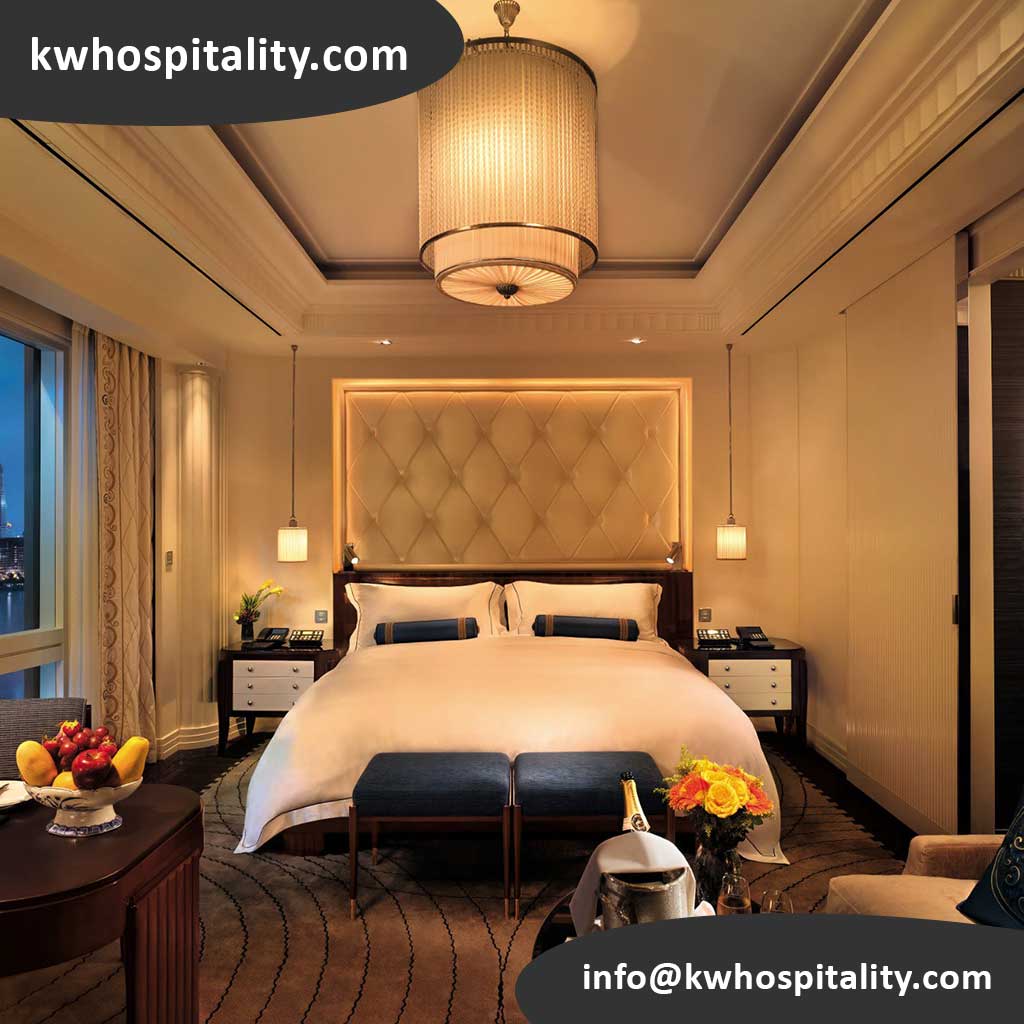
SECTION 4: Bedding, Linens, and Towels
The Textiles of Comfort and Quality
Textiles are the silent storytellers of hospitality. They don’t speak, yet every guest feels them — the crispness of a sheet, the softness of a towel, the warmth of a duvet. These materials define comfort, cleanliness, and class. In the hotel world, they also define repeat business.
When guests slip between smooth sheets or wrap themselves in a soft towel, they unconsciously associate that sensory experience with the quality of your brand. This is why bedding, linens, and towels form one of the most crucial investments in hotel operations. Unlike furniture or fixtures, textiles are replaced regularly, washed daily, and directly touch every guest.
Choosing the right ones involves understanding fiber types, weaving methods, thread counts, and the logistics of laundering — a science and art that separate world-class hotels from average ones.
1. The Role of Textiles in Guest Experience
Every major hospitality brand — from Hilton to Shangri-La — has textile standards embedded in their brand manuals. They specify exact thread counts, towel weights, and even folding styles because they know consistency equals trust.
A well-chosen linen not only provides tactile comfort but also affects visual appeal. White sheets and towels, the industry standard for decades, convey hygiene, freshness, and timeless elegance. Even midscale hotels prefer white because it is easy to bleach, inspect, and coordinate with any interior theme.
For a new hotel, textiles are among the first operational categories that need careful budgeting and vendor selection — ideally 6–9 months before opening.
2. Bedding Essentials: Building the Perfect Sleep System
A great night’s sleep depends on the combined harmony of multiple textile components — mattress topper, sheets, duvets, and pillows. Each layer contributes to comfort and durability.
| Component | Purpose | Recommended Specification |
|---|---|---|
| Mattress Protector | Hygiene barrier | Waterproof, breathable, fitted design |
| Bed Sheets | Comfort and cleanliness | 250–400 thread count cotton or 60/40 poly-cotton blend |
| Duvet Insert | Warmth | Down, microfiber, or hollow fiber, 250–400 GSM |
| Duvet Cover | Protection and style | Hidden zipper or envelope closure |
| Pillows | Sleep quality | Down, feather, microfiber; dual firmness per bed |
| Pillow Protectors | Hygiene layer | Zip closure, washable |
| Bed Runner & Decorative Cushions | Aesthetics | Color-coordinated with room theme |
| Blankets (optional) | Extra warmth | Fleece or wool, stored in closet |
A fully equipped bed should create what hoteliers call the “five-star feel” — plush but structured, soft yet supportive, and visually inviting the moment a guest enters.
3. Understanding Fabric Types
Different fabric compositions determine comfort, longevity, and maintenance cost.
Common Fabrics in Hotel Bedding
100% Cotton: Luxurious feel, breathable, natural fiber. Requires longer drying time.
Cotton-Polyester Blend (60/40 or 70/30): Durable, easy-care, wrinkle-resistant, ideal for high-turnover properties.
Bamboo Cotton: Silky texture, antibacterial properties, sustainable alternative.
Microfiber Polyester: Affordable and quick-drying, suitable for budget hotels.
Weaving Styles
Percale Weave: Crisp and cool; perfect for warm climates.
Sateen Weave: Smooth, lustrous finish; feels more luxurious.
Twill Weave: Strong and durable; used for pillowcases and heavy-use items.
KW Hospitality offers tailored linen programs based on property type — from luxury resorts to city business hotels — ensuring textile specifications match the operational environment.
4. Towels and Robes: The Touch That Defines Luxury
Towels are among the most frequently replaced textiles in hotels. They endure heavy laundering, bleaching, and daily use. Selecting the right GSM (grams per square meter) and weave ensures softness that lasts.
| Towel Type | Recommended GSM | Material |
|---|---|---|
| Bath Towel | 500–650 GSM | 100% ring-spun cotton |
| Hand Towel | 450–550 GSM | Combed cotton |
| Face Cloth | 400–450 GSM | Cotton or bamboo |
| Bath Mat | 700–900 GSM | Loop pile cotton or cotton/poly blend |
| Bathrobe | 350–450 GSM (waffle) / 500+ GSM (terry) | Cotton or bamboo |
Tips for Longevity
Use double stitching on hems to prevent fraying.
Avoid fabric softeners; they reduce absorbency.
Maintain laundry water temperature below 60°C for color retention.
Implement color-coded systems for sorting towels by area (room/spa/pool).
KW Hospitality supplies OEKO-TEX® certified textiles, ensuring every fabric is free of harmful chemicals and suitable for sensitive skin.
5. Linen Management and Inventory Planning
A common oversight in hotel openings is underestimating linen quantity. Insufficient stock creates laundry bottlenecks and operational stress.
Recommended Linen Par Levels
| Hotel Area | Standard Par Level | Explanation |
|---|---|---|
| Guest Rooms | 3–4 pars | One in use, one in laundry, one spare |
| Restaurants | 2–3 pars | For tablecloths, napkins |
| Spa / Pool | 3–4 pars | Towels and robes rotation |
| Banquet Linen | 2–3 pars | For large events or backups |
KW Hospitality advises new hotels to plan 10–15% extra during initial purchase for future replacements and to maintain consistent color and weave batches.
6. Laundry and Maintenance Considerations
The lifespan of hotel textiles depends heavily on proper care. Even premium materials deteriorate quickly if mishandled.
Laundry Best Practices
Sorting: Separate white, colored, and heavily soiled items.
Detergent Selection: Use neutral pH detergent for cotton; avoid high alkalinity.
Bleaching: Use oxygen-based bleach instead of chlorine.
Drying: Avoid over-drying to prevent fiber brittleness.
Ironing: Sheets should be pressed at 160–180°C for crisp presentation.
Storage: Keep folded linens in a dry, dust-free linen room with ventilation.
Automated laundry systems and industrial washers help reduce wear and ensure consistent results across all batches.
7. Specialty Linens and Design Enhancements
Beyond the basics, distinctive linens can add visual interest and a sense of luxury. Boutique and lifestyle hotels often use design customization to create signature looks.
Examples of Custom Linen Design
Embroidered hotel logo on pillowcase or duvet edge
Color piping or contrast borders matching brand colors
Jacquard weave patterns for subtle branding
Decorative cushions with seasonal colors
KW Hospitality’s textile division offers custom embroidery and woven-logo programs for hotels seeking a unique brand identity in their guestrooms and suites.
8. Eco-Friendly and Sustainable Textiles
Sustainability is no longer optional. Many international hotel chains now require suppliers to meet environmental standards such as GRS (Global Recycle Standard) and OEKO-TEX® certification.
Sustainable Textile Options
Organic Cotton: Grown without pesticides or synthetic fertilizers.
Bamboo Fiber: Renewable, fast-growing, and naturally antibacterial.
Recycled Polyester (rPET): Made from recycled plastic bottles.
Hemp and Linen Blends: Strong, biodegradable natural fibers.
Eco-friendly linens reduce environmental impact and serve as a compelling marketing angle for eco-conscious travelers.
9. Procurement Strategy: Cost vs. Longevity
Linen procurement should be seen as a capital investment, not a consumable expense. Lower-quality textiles might save 10–15% upfront but often wear out 30–40% faster.
Cost Analysis Example
| Quality Level | Average Lifespan | Replacement Frequency | ROI |
|---|---|---|---|
| Budget (poly-cotton low GSM) | 6–8 months | Frequent replacement | Low |
| Mid-Range (cotton/poly blend, 300 TC) | 12–18 months | Moderate | Medium |
| Premium (100% cotton, 400 TC+) | 24–36 months | Long-term savings | High |
KW Hospitality’s direct manufacturing model allows hotels to achieve premium quality at mid-range cost, minimizing total lifecycle expense.
10. Presentation and Guest Perception
First impressions begin when guests enter their room — the way the bed is made can instantly convey professionalism or carelessness.
Presentation Standards
Sheets pulled tight with hospital corners.
Pillows fluffed and symmetrically placed.
Duvet evenly spread, without wrinkles.
Decorative cushions centered.
Bed runner aligned parallel to the foot of the bed.
Housekeeping teams should receive training to ensure uniform presentation across all rooms — a crucial factor for star ratings and guest reviews.
11. Case Insight: Luxury and Budget Differentiation
To illustrate, consider two new hotels sourcing through KW Hospitality:
Luxury Boutique (80 rooms): Selected 100% long-staple cotton sateen linens, 600 GSM towels, and custom-embroidered robes. Their initial textile budget was 20% higher, but guest satisfaction scores rose by 35%, reducing negative reviews by half.
Midscale Chain (150 rooms): Used a 70/30 cotton-poly blend for faster drying and durability. They saved 30% on laundry costs annually due to reduced cycle time and energy use.
This shows that textile strategy must align with both brand positioning and operational efficiency.
12. KW Hospitality’s Textile Advantage
KW Hospitality partners with specialized factories in China and Taiwan producing textiles for international hotel groups.
Advantages include:
In-house weaving, cutting, and stitching for complete customization
Logo embroidery, labeling, and packaging service
OEKO-TEX® and ISO-certified production lines
Pre-shipment inspection and test reports (GSM, shrinkage, color fastness)
Consolidated shipping with other hospitality items to reduce freight cost
By sourcing directly, hotels benefit from factory-direct pricing, brand consistency, and professional logistics support for large-scale openings.
Summary of Bedding, Linens, and Towels
| Category | Focus | Key KW Hospitality Solution |
|---|---|---|
| Bedding System | Comfort & durability | Custom-designed full bed sets |
| Linens | Hygiene & aesthetic | OEKO-TEX® cotton, 250–400 TC |
| Towels & Robes | Touch of luxury | 500–650 GSM cotton lines |
| Laundry Management | Efficiency | Quick-dry fabrics, standard par levels |
| Sustainability | Eco-responsibility | Organic cotton, bamboo, rPET |
| Branding | Identity | Logo embroidery & packaging |
The right textile choices transform a room from ordinary to extraordinary. They create the physical memory guests carry home — and that’s the essence of hospitality.
In the next section, we’ll explore Amenities and Personal Care Items — The Small Details That Make the Biggest Difference.
We’ll examine how soaps, lotions, and in-room accessories enhance guest satisfaction, hygiene, and brand identity, and how KW Hospitality helps properties customize them to perfection.
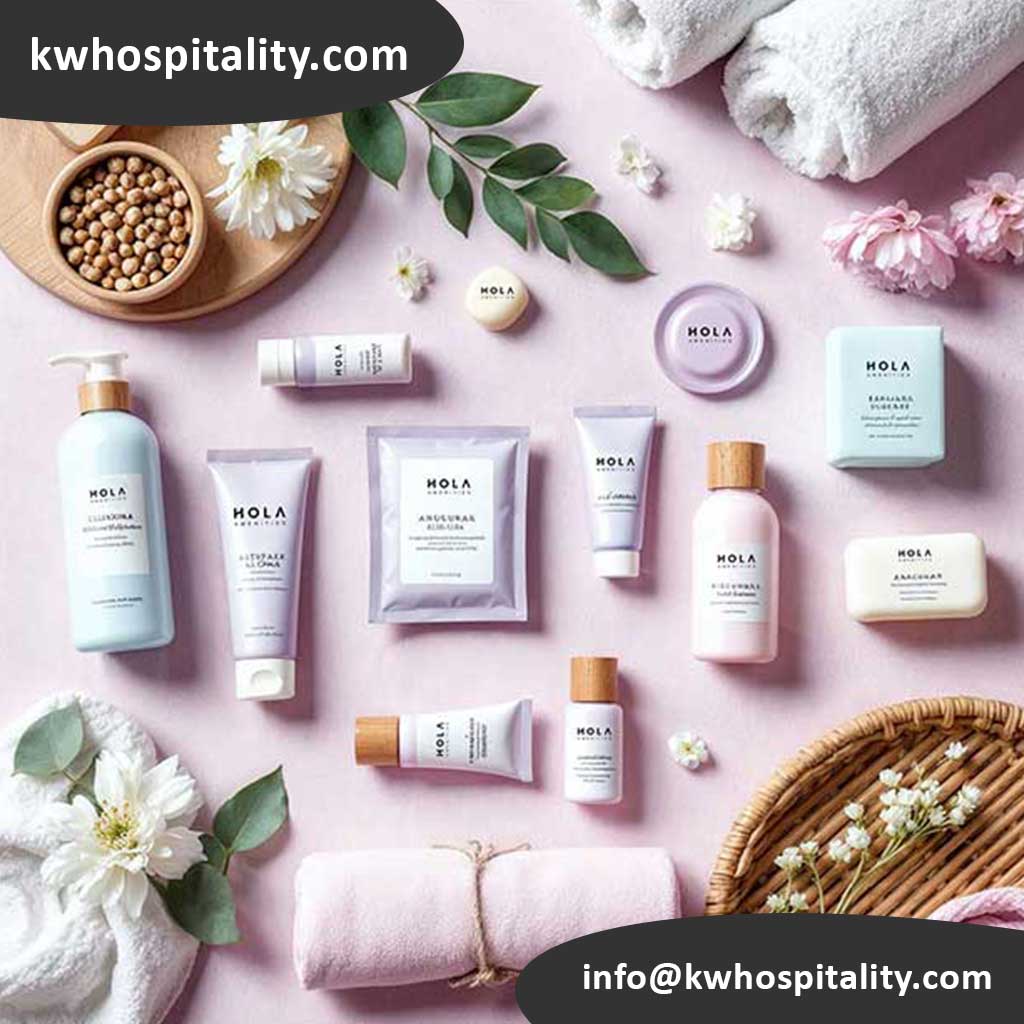
SECTION 5: Amenities and Personal Care
The Art of Detail and Guest Delight
In the competitive world of hospitality, it’s often the smallest details that make the biggest difference. Guests may forget the thread count of your linens or the wattage of your lamps, but they always remember the scent of the shampoo, the comfort of a pair of slippers, or the presentation of a vanity kit. These amenities and personal care products are more than functional — they are emotional touchpoints that shape the overall perception of care, luxury, and identity.
A well-chosen amenity program turns an ordinary stay into an indulgent experience. It communicates your brand’s values — whether that’s sustainability, sophistication, or simplicity. For new hotels, building an amenity collection that balances cost, presentation, and guest satisfaction is one of the most strategic decisions during pre-opening planning.
1. The Psychological Power of Amenities
Human memory is sensory-driven. The fragrance of a body lotion, the softness of a robe, or the design of an amenity tray can instantly trigger emotional comfort and loyalty.
This is why leading hotel chains like Marriott, Hyatt, and Accor invest heavily in signature scents and branded toiletries — because they extend the brand experience into the guest’s daily routine.
In short, amenities are small items with major marketing power. They show attention to detail, promote hygiene, and create a sense of generosity — an essential virtue in hospitality.
2. The Core Amenity Collection
A standard hotel amenity lineup typically includes a balance of hygiene, grooming, and comfort items, arranged either on the vanity counter or inside drawers.
Essential Guest Amenities
| Category | Typical Items | KW Hospitality Custom Options |
|---|---|---|
| Cleansing & Care | Shampoo, Conditioner, Body Wash, Body Lotion, Soap | Custom fragrance, branded bottles, eco refills |
| Dental & Grooming | Toothbrush, Toothpaste, Razor, Shaving Cream, Comb | Bamboo handles, paper packaging, logo embossing |
| Personal Hygiene | Vanity Kit, Shower Cap, Sanitary Bag, Nail File | Biodegradable plastics or cornstarch materials |
| Comfort & Leisure | Slippers, Bathrobe, Sleep Mask, Earplugs | Cotton or velvet slippers with embroidery |
| Guest Convenience | Sewing Kit, Shoe Sponge, Laundry Bag | Paper-based or organic cotton pouches |
KW Hospitality specializes in complete amenity programs, ensuring visual harmony across packaging, trays, and displays. Each line can be customized in color, scent, and branding to fit your property’s identity.
3. The Rise of Eco-Friendly and Refillable Amenities
Global hospitality is undergoing a sustainability transformation. Many governments and hotel brands have begun banning or phasing out single-use plastics — from miniature bottles to plastic-wrapped toothbrushes. The new direction: refillable dispensers, biodegradable materials, and natural formulations.
Popular Eco-Friendly Transitions
Refillable Pump Dispensers: Replace 30–50 single-use bottles per month, reducing plastic waste by up to 80%.
Bamboo or Wooden Accessories: Toothbrush handles, combs, and razors made from renewable materials.
Paper-Based Packaging: Kraft paper wrappers or recycled carton boxes instead of plastic sachets.
Plant-Based Formulas: Paraben-free, sulfate-free shampoos and body lotions with natural oils.
Bulk Amenity Programs: Hotels refill large containers in housekeeping to minimize packaging waste.
KW Hospitality’s Eco Collection
KW Hospitality offers a complete eco-amenity series, including:
Cornstarch toothbrushes and razors
Biodegradable PLA bottles and pumps
Recyclable aluminum amenity containers
Organic essential oil blends for guest care lines
Bulk refill dispensers compatible with modern wall brackets
These products align with global hotel sustainability certifications such as Green Key, EarthCheck, and LEED.
4. Signature Fragrances and Brand Identity
Scent is a powerful brand signature. Just as music or color creates atmosphere, fragrance creates emotional association. Guests who encounter a familiar scent during future travels instantly recall your hotel’s identity.
Popular Fragrance Families in Hospitality
| Category | Scent Profile | Ideal Property Type |
|---|---|---|
| Citrus & Herbal | Fresh, energizing, clean | Business & urban hotels |
| Floral & Powdery | Soft, elegant, romantic | Boutique or luxury resorts |
| Woody & Oriental | Warm, exotic, refined | High-end international brands |
| Marine & Green | Crisp, coastal, rejuvenating | Beachfront & eco resorts |
KW Hospitality collaborates with perfume laboratories in Guangzhou and Taipei to design signature fragrance lines that reflect a property’s brand essence. These custom scents can extend beyond toiletries into diffusers, candles, and in-room sprays, creating a unified olfactory experience.
5. Presentation and Display Standards
The visual arrangement of amenities conveys professionalism and luxury. Even the simplest products look premium when thoughtfully presented.
Display Guidelines
Use coordinated trays — acrylic, bamboo, leatherette, or marble-style — matching the room décor.
Arrange items symmetrically or in order of use (soap → shampoo → lotion).
Avoid overcrowding; leave clean counter space to highlight select products.
Align logos facing the guest.
Keep spare amenities discreetly in drawers or housekeeping trolleys.
KW Hospitality’s design division provides custom display solutions — including engraved amenity trays, in-room organizers, and branded wooden boxes — giving every bathroom a polished, cohesive appearance.
6. In-Room Personal Comfort Items
While bathroom amenities cover hygiene, personal comfort items extend care into the guest’s lifestyle — transforming a stay into an experience of ease and thoughtfulness.
Must-Have Personal Comfort Items
Slippers: Open or closed-toe, cotton terry or velvet, 3–5 mm EVA sole.
Bathrobes: Terry or waffle weave, available in unisex and children’s sizes.
Sleep Masks and Earplugs: For light-sensitive or city-center properties.
Laundry Bag: Cotton or nonwoven, with printed instructions.
Tissue Box and Waste Bin Sets: Leather or faux leather finish, coordinated with the room style.
Guest Umbrella: With hotel logo, placed in wardrobe or lobby stand.
Branded robes, slippers, and umbrellas also double as souvenirs, extending your brand visibility beyond the property when guests take them home.
7. Amenity Sourcing and Customization Process
To achieve brand consistency and cost control, hotels should manage amenity sourcing systematically. KW Hospitality simplifies this through a structured development process:
| Step | Action | Outcome |
|---|---|---|
| 1. Concept Development | Identify brand positioning, color palette, and fragrance direction | Mood board creation |
| 2. Sample Design | Prototype bottles, packaging, and labels | Client approval |
| 3. Formula Selection | Choose fragrance and texture preferences | Final formulation |
| 4. Branding & Printing | Apply logo, font, and regulatory text | Ready for production |
| 5. Bulk Production & QA | Mass manufacturing with inspection | Certified final products |
| 6. Shipping & Delivery | Consolidated freight with other hotel items | Streamlined logistics |
With this model, new hotels avoid the confusion of working with multiple vendors and achieve a consistent identity across all guest touchpoints.
8. Regulatory and Safety Compliance
All personal care products used in hotels must comply with regional cosmetic safety regulations. Failure to meet these can lead to fines or operational delays.
Key Compliance Standards
Canada: Health Canada Cosmetic Regulations under the Food and Drugs Act.
U.S.: FDA Cosmetic Labeling Guidelines.
EU: Regulation (EC) No 1223/2009 — requires ingredient transparency and testing.
Asia: GB 5296.3 and related hygiene standards.
Each amenity must include ingredient labeling, manufacturing batch number, and expiry date. KW Hospitality ensures every formula is tested for pH balance, microbiological stability, and dermatological safety, with certificates available upon request.
9. Bulk and Refillable Dispenser Programs
To meet global sustainability goals and lower operational costs, many new hotels are adopting dispenser-based amenity systems.
Benefits
Reduces plastic bottle waste by up to 90%.
Cuts amenity restocking time for housekeeping.
Prevents theft and spillage.
Allows consistent branding and product control.
Design Options
Wall-mounted stainless-steel brackets for shower areas.
Countertop pump bottles for vanity counters.
Lockable refill systems for security.
Transparent or frosted finishes for premium aesthetics.
KW Hospitality offers universal refill systems compatible with most hotel bathroom designs, along with customized printed bottles in sizes from 250 ml to 500 ml.
10. Cost Optimization and Inventory Planning
Amenities represent one of the most recurring operating expenses. Efficient planning helps reduce waste while maintaining high presentation standards.
Guidelines for Inventory Management
Forecast consumption per occupied room per month.
Maintain a 2-month buffer stock for high-occupancy seasons.
Track guest preferences and reduce underused items.
Use centralized storage with humidity control for long shelf-life.
Rotate stock based on manufacturing date (FIFO method).
KW Hospitality helps hotels standardize amenity inventory systems with SKU coding and packaging date labeling, simplifying ordering and replenishment cycles.
11. Case Study: Sustainable Guest Experience
A newly opened 4-star urban hotel in Montreal collaborated with KW Hospitality to replace all single-use bottles with branded refillable dispensers featuring a signature citrus-green tea fragrance. Within the first six months:
Plastic waste was reduced by 78%.
Amenity restocking time dropped by 35%.
Guest satisfaction surveys showed a 25% improvement in perceived eco-consciousness.
This demonstrates how strategic amenity planning can boost both operational efficiency and brand perception.
12. The Future of Hotel Amenities
As guest expectations evolve, amenities are moving toward personalization, technology integration, and holistic well-being.
Emerging trends include:
AI-personalized amenity selection: Guests choose their preferred scent profile during booking.
Smart mini amenity dispensers: Track usage and refill alerts automatically.
Wellness-focused lines: Products infused with CBD, vitamins, or adaptogens.
Local collaborations: Partnering with regional artisans for handmade soaps or natural oils to reflect cultural authenticity.
KW Hospitality continuously researches and integrates these innovations to help hotels stay ahead in guest experience trends.
Summary of Amenities and Personal Care Essentials
| Category | Focus | Key KW Hospitality Solution |
|---|---|---|
| Core Toiletries | Cleanliness & comfort | Custom-branded shampoo, body wash, lotion |
| Personal Items | Guest convenience | Slippers, robes, vanity kits |
| Eco Transition | Sustainability | Refillable dispensers, bamboo accessories |
| Branding | Emotional identity | Signature fragrance & packaging |
| Logistics | Efficiency | End-to-end sourcing & global compliance |
A guest’s emotional impression often comes down to how cared for they feel. Thoughtfully selected and beautifully presented amenities transform simple hospitality into memorable comfort — and that’s where brand loyalty begins.
In the next section, we’ll step behind the scenes into the operational backbone of every hotel: Housekeeping and Laundry Supplies.
We’ll explore how professional-grade cleaning tools, laundry equipment, and maintenance systems sustain hygiene, efficiency, and consistency across hundreds of guest rooms daily.

SECTION 6: Housekeeping and Laundry Supplies
The Backbone of Hotel Operations
Behind every sparkling lobby and spotless room lies the invisible strength of the housekeeping and laundry teams. They are the heartbeat of hotel operations — the silent professionals who ensure every guest enters a clean, organized, and welcoming environment. Their tools, supplies, and systems determine not just cleanliness, but also guest safety, staff efficiency, and the hotel’s overall reputation.
While guests may never see the cleaning trolleys or laundry rooms, these spaces are where service excellence begins. For new hotels preparing to launch, investing in the right housekeeping and laundry supplies is essential. It ensures that staff can deliver consistent results, prevent cross-contamination, and operate efficiently — even during peak occupancy periods.
1. The Strategic Role of Housekeeping
Housekeeping is more than cleaning; it’s a science of hygiene, logistics, and workflow management. A well-equipped housekeeping department ensures that each guest room is prepared to identical standards — bed made perfectly, bathroom sanitized, amenities replenished, and everything in its place.
Core Objectives of Housekeeping Operations
Cleanliness: Achieving visible and hygienic cleanliness across all areas.
Consistency: Maintaining identical standards room-to-room and day-to-day.
Efficiency: Reducing turnaround time between check-out and check-in.
Safety: Using tools and chemicals responsibly to protect staff and guests.
Sustainability: Minimizing chemical waste, water use, and textile damage.
Each of these goals depends on having the right tools, materials, and systems — from high-quality cleaning chemicals to ergonomic trolleys.
2. Housekeeping Cart & Equipment Essentials
The housekeeping trolley is a hotel’s mobile workstation — carrying everything a room attendant needs to prepare a guest room efficiently.
Standard Housekeeping Trolley Setup
| Category | Items |
|---|---|
| Cleaning Tools | Dusters, microfiber cloths, brushes, mops, scrapers |
| Linen Storage | Fresh sheets, pillowcases, towels, robes |
| Amenities Section | Toiletries, slippers, water bottles |
| Waste Collection | Separate bags for recyclables and general waste |
| Chemical Compartment | Bottles of cleaning solution, disinfectant, glass cleaner |
| Utility Accessories | Gloves, apron, spray bottles, checklist clipboard |
Recommended Specifications
Heavy-duty wheels for quiet, smooth movement
Non-marking bumpers to protect walls
Lockable compartments for security
Foldable shelves for compact storage
Rust-resistant stainless-steel frame or ABS plastic body
KW Hospitality supplies custom-designed housekeeping trolleys with modular compartments — allowing hotels to adapt layouts based on room size or housekeeping workflow.
3. Cleaning Tools and Equipment
High-quality cleaning tools save time, reduce fatigue, and ensure consistent results. Poor-quality mops, brushes, or vacuums can cause inefficiencies and damage surfaces.
Core Cleaning Tools Checklist
Vacuum Cleaner: Industrial-grade, HEPA filter, quiet motor (<65 dB).
Mop & Bucket Set: Dual compartment for clean and dirty water separation.
Microfiber Cloths: Color-coded for different areas (bathroom, room, glass).
Window Squeegees: Stainless-steel or rubber edge for streak-free cleaning.
Dustpan & Broom Sets: Soft bristles for floor care.
Toilet Brush & Holder: Sanitary design, closed container.
Dusters: Extendable handles for ceiling and vent cleaning.
Ergonomics and Safety
All tools should be lightweight, adjustable, and designed to minimize repetitive strain injuries. Staff training should include proper posture, lifting techniques, and handling of chemicals.
4. Cleaning Chemicals and Solutions
Chemical selection directly affects hygiene quality, surface longevity, and staff safety. The goal is to achieve maximum cleanliness with minimum environmental impact.
Essential Cleaning Chemicals
| Type | Usage | Notes |
|---|---|---|
| All-Purpose Cleaner | Surfaces, furniture | Biodegradable preferred |
| Glass Cleaner | Mirrors, windows | Non-ammonia, streak-free |
| Bathroom Descaler | Showers, taps | Acid-free for chrome protection |
| Disinfectant | Toilets, high-touch areas | Must meet local health standards |
| Floor Cleaner | Tiles, vinyl | Neutral pH for safety |
| Air Freshener | Room ambiance | Water-based, non-allergenic |
| Stain Remover | Textiles | Enzyme-based for efficiency |
KW Hospitality offers bulk chemical supply partnerships with eco-certified factories in China and Taiwan, providing concentrated cleaning solutions that reduce plastic and shipping volume by up to 80%.
5. Waste Management and Recycling Systems
Hotels generate significant daily waste — from used tissues to plastic bottles and food leftovers. Implementing an organized waste management program is both an operational and environmental necessity.
Recommended Practices
Provide separate bins for recyclables, general waste, and organic matter.
Use color-coded bags for easy sorting (green = recyclables, black = general waste).
Train staff to identify and separate hazardous materials (batteries, aerosols).
Place compact waste bins in every guest room and larger rolling bins in service corridors.
Implement a linen recycling policy for worn-out fabrics.
KW Hospitality’s supply program includes waste management sets made of durable PP plastic with pedal lids and integrated odor control, ensuring hygiene and convenience in guest and service areas alike.
6. Laundry Supplies and Equipment
The laundry department is the engine room of hotel operations. It ensures constant circulation of clean linens, towels, uniforms, and sometimes guest laundry. For new hotels, designing an efficient laundry system is crucial to control cost and maintain quality.
Essential Laundry Equipment
| Category | Equipment | Key Features |
|---|---|---|
| Washing Machines | Commercial front-loaders | High-capacity drum, programmable cycles |
| Dryers | Gas or electric, energy-efficient | Moisture sensors, large lint filters |
| Flatwork Ironers / Presses | Sheets, pillowcases | Temperature control, feed conveyors |
| Dry Cleaning Machine (optional) | Delicate fabrics | Solvent recovery system |
| Folding Tables & Racks | Sorting and packing | Stainless steel or aluminum |
| Trolleys & Carts | Transport | Ventilated sides, ergonomic handles |
KW Hospitality assists hotels with turnkey laundry setup solutions, coordinating suppliers for machines, installation, and consumables like detergent, fabric softeners, and packing materials.
7. Textile Handling and Hygiene Protocols
Maintaining hygiene during linen handling is critical to prevent cross-contamination between soiled and clean textiles.
Best Practices
Separate soiled and clean areas with physical barriers or zoning.
Use color-coded linen bags (e.g., blue for clean, red for dirty).
Train staff to wear gloves and masks when handling used linens.
Ensure ventilation and temperature control in laundry rooms.
Store clean textiles in dry, sealed cabinets or covered carts.
Hotels pursuing ISO 22000 or HACCP certifications must follow documented procedures for textile hygiene — something KW Hospitality helps integrate into SOP development.
8. Staff Uniforms and Protective Gear
Housekeeping and laundry staff need functional, comfortable uniforms that project professionalism and ensure safety.
Uniform Recommendations
Fabric: Breathable polyester-cotton blend for comfort and durability.
Design: Pockets for tools, adjustable waist, easy-press material.
Footwear: Slip-resistant, cushioned, closed-toe design.
Protective Gear: Gloves, masks, aprons, eye protection for chemical use.
KW Hospitality also offers custom uniform design and supply, incorporating hotel branding with embroidery or color-coded trims for each department.
9. Sustainability in Housekeeping and Laundry Operations
Eco-conscious operations are now a core part of global hospitality standards. Sustainable housekeeping practices can reduce operational costs and appeal to environmentally aware guests.
Sustainability Initiatives
Use concentrated cleaning products with refillable bottles.
Adopt microfiber mop systems that require less water.
Implement towel and linen reuse programs for guests.
Switch to ozone laundry systems to reduce water and chemical use.
Invest in energy-efficient washers and dryers.
Use biodegradable trash bags and composting for organic waste.
KW Hospitality supports eco initiatives through partnerships with green-certified suppliers, enabling hotels to implement environmental programs that meet ESG and Green Globe standards.
10. Housekeeping Inventory and Cost Planning
Like linens and amenities, housekeeping supplies must be managed with clear inventory control to avoid shortages or waste.
Inventory Guidelines
Maintain monthly consumption records per department.
Keep minimum 2-month buffer stock of consumables.
Use barcode or RFID tagging for linen tracking.
Audit chemical usage quarterly to reduce overspending.
Conduct preventive maintenance on machines every 3–6 months.
KW Hospitality provides clients with housekeeping supply checklists and reorder management templates to simplify procurement and tracking.
11. Training and Standard Operating Procedures (SOPs)
Even the best supplies are ineffective without trained staff. Every hotel should establish standardized housekeeping procedures and training sessions.
Training Focus Areas
Correct use of chemicals and dilution ratios.
Cleaning sequence: top-to-bottom, dry-to-wet.
Bed-making standards and room arrangement.
Guest privacy and “Do Not Disturb” etiquette.
Equipment maintenance and safety handling.
KW Hospitality partners with training consultants to provide customized housekeeping SOP manuals, ensuring uniform practices across staff teams.
12. Technology Integration in Modern Housekeeping
Digital tools are revolutionizing hotel operations. Modern housekeeping departments now use software and smart devices for real-time coordination.
Popular Solutions
Room Status Apps: Update “cleaned” or “inspected” instantly to front desk.
Inventory Management Systems: Track linen quantities and chemical usage.
Maintenance Reporting: Staff report issues via tablets or smartphones.
RFID Linen Tracking: Monitors lifespan and reduces loss rates.
These technologies improve communication, reduce turnaround time, and optimize resource allocation — critical for maintaining guest satisfaction during high occupancy.
13. KW Hospitality’s Housekeeping Solutions
KW Hospitality provides a complete portfolio of housekeeping and laundry products for hotels of all sizes, including:
Trolleys and carts (customized sizes and branding)
Professional cleaning tools and microfiber systems
Concentrated chemical lines with eco certification
Industrial laundry equipment coordination
Staff uniforms and protective gear
Waste management and recycling units
Through factory-direct sourcing, KW Hospitality ensures premium quality, consistent supply, and cost savings — while supporting the hotel’s operational workflow from pre-opening to full operation.
Summary of Housekeeping & Laundry Essentials
| Category | Focus | KW Hospitality Solution |
|---|---|---|
| Cleaning Tools | Efficiency & hygiene | Industrial-grade, ergonomic tools |
| Chemicals | Safety & performance | Eco-certified concentrated solutions |
| Laundry Systems | Consistency & cost control | Turnkey setup and supply |
| Waste Management | Hygiene & sustainability | Segregated, odor-controlled bins |
| Staff Uniforms | Professionalism & protection | Custom-designed branded uniforms |
| Technology | Operational excellence | RFID, apps, and inventory systems |
Housekeeping and laundry may not be glamorous, but they are the invisible pillars of excellence that keep a hotel running seamlessly. When properly equipped and supported, these departments transform cleanliness into an art — ensuring every guest feels the true meaning of hospitality.
In the next section, we’ll explore Front Office & Lobby Supplies — The First Impression of Your Brand.
We’ll look at how reception, bell service, and public area supplies contribute to guest arrival experience, branding consistency, and operational smoothness from the very first moment of check-in.
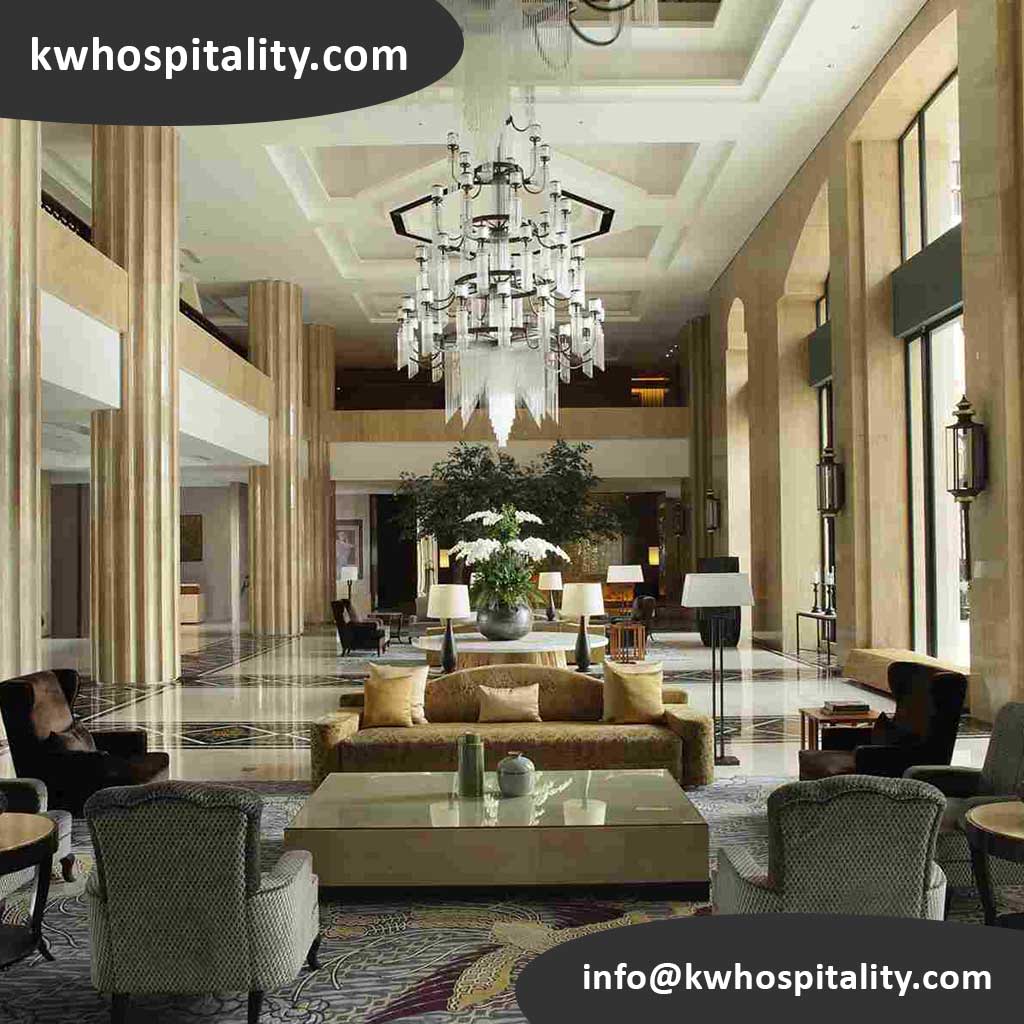
SECTION 7: Front Office & Lobby Supplies
Creating a Memorable First Impression
The moment a guest walks through the doors of a hotel, the front office and lobby set the tone for the entire stay. Before they’ve even seen their room, they’ve already decided whether the property feels welcoming, organized, and trustworthy. This first impression is created not just by architecture and lighting, but by the supplies, equipment, and presentation that define service delivery — from the reception desk pens to the uniform of the concierge.
In many ways, the front office is the stage of hospitality. It is where guests meet staff, form expectations, and sense the hotel’s operational rhythm. For new hotels, investing in the right front-of-house supplies ensures smooth check-ins, elegant aesthetics, and efficient service workflows that reflect professionalism from day one.
1. The Importance of the Front Office Environment
The lobby and reception area are more than transitional spaces; they are emotional landmarks.
They communicate brand identity through design, cleanliness, scent, and sound. A well-equipped and well-organized front office helps staff deliver flawless service while subtly reinforcing brand values.
A guest’s first five minutes often determine the overall review. Polished surfaces, soft ambient lighting, crisp uniforms, and a professional reception setup all work together to create trust and comfort. Every visible item — pens, key cards, information brochures — should reflect the same care and precision found in the guestrooms.
2. Reception Desk Essentials
The reception desk is the hotel’s nerve center — where operations, communication, and guest service intersect.
It must balance aesthetics with functionality and be equipped for efficiency.
Front Desk Supply Checklist
| Category | Essential Items |
|---|---|
| Guest Service Tools | Key card printer, registration cards, pens, guest folios, stamp pads |
| Technology & Equipment | Computer terminals, credit card machine, phone handset, document scanner |
| Stationery & Printing Supplies | Paper, branded envelopes, receipt rolls, name tags |
| Organizational Tools | Drawer organizers, file trays, supply caddies |
| Security Items | Safe deposit key box, cash drawer, surveillance screen |
| Decorative Elements | Flower vase, desk lamp, branded signage, acrylic nameplates |
Design Recommendations
Keep visible surfaces uncluttered; store excess supplies in drawers.
Maintain consistent branding on all stationery (same logo, font, color tone).
Ensure all devices are discreetly wired to maintain a clean aesthetic.
Provide adequate lighting at eye level for both staff and guests.
KW Hospitality offers front-office supply packages, including branded pens, folders, and signage sets designed to match hotel identity systems.
3. Guest Welcome & Concierge Station
The concierge desk is where hospitality becomes personal. Supplies here should support guest interaction, travel assistance, and comfort.
Concierge Essentials
Concierge station logbook or digital tablet for requests
Luggage tags, claim tickets, and storage keys
Local maps, guidebooks, brochures, and transportation timetables
Umbrellas and luggage wraps for guests
Branded envelopes for documents or valuables
Stationery and cardholders
Concierge staff should also have access to emergency kits, sewing tools, and phone charging cables to solve small guest issues immediately — those quick acts of help often define memorable service moments.
4. Bell Service and Porter Supplies
The bell team creates one of the earliest human interactions guests experience. Their professionalism, uniforms, and tools symbolize reliability and courtesy.
Essential Bell Service Supplies
| Item | Function |
|---|---|
| Bellman Trolley (Luggage Cart) | Transport luggage safely |
| Name Badges & Uniforms | Brand identity and trust |
| Luggage Tags & Storage Racks | Guest identification and security |
| Umbrellas or Rain Covers | Guest comfort during arrival/departure |
| Door Mats & Entry Rugs | Cleanliness at entrances |
| Stanchions & Rope Barriers | Queue management during peak hours |
KW Hospitality supplies custom-finished luggage trolleys — stainless steel, gold-plated, or matte black — designed to complement each property’s aesthetic while ensuring smooth mobility and long-term durability.
5. Lobby Furnishings and Décor
The lobby’s design and furnishing dictate emotional warmth. Every piece of furniture and decorative item must support both comfort and traffic flow.
Lobby Furnishing Essentials
Reception counter and concierge desk
Guest seating sofas and accent chairs
Coffee tables and brochure stands
Area rugs or mats for traction and elegance
Lighting fixtures (floor lamps, chandeliers, sconces)
Decorative plants or green walls
Wall art, mirrors, and signage
Material and Maintenance Tips
Use commercial-grade upholstery (stain-resistant fabrics).
Choose materials that are easy to clean — especially near high-traffic areas.
Maintain daily dusting, glass polishing, and air fragrance refresh.
KW Hospitality works with contract furniture manufacturers in China and Taiwan that specialize in lobby seating, marble counters, and custom decorative fixtures, allowing new hotels to furnish entire common areas with brand consistency and cost efficiency.
6. Public Area Supplies
Public areas — corridors, restrooms, elevators, and lounges — require dedicated supplies for both guest use and operational maintenance.
Public Area Supply List
| Category | Items |
|---|---|
| Cleaning & Maintenance | Mops, bins, signage (“Wet Floor”), polishers |
| Guest Convenience | Hand sanitizers, tissue dispensers, water stations |
| Décor & Ambiance | Planters, fragrance diffusers, background music system |
| Safety Equipment | Fire extinguishers, AED kits, first-aid boxes |
| Information Displays | Digital directories, notice boards, floor number signage |
KW Hospitality supplies coordinated public-area accessory sets, such as matching bins, signage stands, and planters, available in brushed stainless steel, black powder coat, or brass finishes to harmonize with design themes.
7. Signage and Branding Materials
Signage plays a critical role in navigation, branding, and compliance. It guides guests smoothly while subtly reinforcing the hotel’s identity.
Essential Signage Types
Directional signs (lobby → elevators, restrooms, meeting rooms)
Floor number indicators and emergency exit maps
Regulatory signage (no smoking, fire extinguisher, CCTV notice)
Branded plaques (restaurant names, spa, fitness center)
Digital displays or LED boards for announcements
Design Tips
Use consistent font and logo placement throughout the property.
Ensure visibility with adequate lighting and contrast.
Use materials that match your interior — acrylic, metal, or backlit glass.
Keep messaging bilingual or multilingual depending on market.
KW Hospitality partners with custom signage workshops to deliver complete signage packages, including installation-ready mounting systems and brand-approved layouts.
8. Front Office Technology and Communication
Technology is the silent partner of front-office efficiency. Properly selected hardware and software make guest interactions seamless and data secure.
Core Front-Office Tech Setup
Property Management System (PMS) for check-in/check-out
Point of Sale (POS) integration for restaurant and minibar charges
Card Printer for key cards and staff IDs
Cash Drawer and POS Terminal for billing
Receipt Printers with branded thermal paper rolls
Communication Headsets for coordination with housekeeping and maintenance
Surveillance Monitors and Access Control Systems
All devices should be tested before opening to ensure compatibility with hotel management software. KW Hospitality can coordinate with technology suppliers to ensure hardware and accessories meet hotel-grade durability and certification standards.
9. Guest Communication Materials
Printed and digital communication tools enhance transparency and professionalism. They inform guests about hotel facilities, local attractions, and safety protocols.
Printed Materials Checklist
| Category | Examples |
|---|---|
| Information Booklets | Hotel directory, local guide, emergency info |
| Promotional Collateral | Restaurant menus, event flyers, loyalty programs |
| Stationery Items | Notepads, pens, envelopes, feedback cards |
| Key Card Sleeves | Branded design with contact details |
| Room Number Plates | Matching design theme |
KW Hospitality offers custom printing solutions, allowing hotels to order branded materials in bulk, ensuring consistent design and cost efficiency.
10. Scent, Lighting, and Music — The Atmosphere Trifecta
The sensory experience of a lobby plays a profound psychological role. Guests may not consciously notice these elements, but they feel them — and they define mood and memory.
Fragrance
Choose a signature scent aligned with your amenities (e.g., citrus-lavender or sandalwood-amber).
Use professional diffusers with adjustable intensity.
Lighting
Layered lighting: chandeliers for ambiance, table lamps for warmth, concealed LEDs for highlights.
Avoid overly bright or cold tones (opt for 2700–3000K).
Music
Curate playlists that reflect brand identity — relaxing, cosmopolitan, or cultural.
Maintain moderate volume; adjust by time of day (soft mornings, elegant evenings).
KW Hospitality offers hotel-grade fragrance diffusers and LED lighting fixtures, allowing cohesive sensory branding across lobby and guest areas.
11. Staff Uniforms and Presentation Standards
Front office staff are the face of the brand. Their uniforms and demeanor must project confidence, hospitality, and consistency.
Uniform Recommendations
Design: Modern cuts, breathable fabrics, consistent color palette.
Fabrics: Polyester-viscose blends for wrinkle resistance.
Footwear: Comfortable and quiet (no heels that echo on marble floors).
Accessories: Name tags, scarves, or ties matching brand colors.
KW Hospitality provides bespoke uniform design services, offering options for receptionists, bell staff, and concierge teams, each tailored to climate and hotel positioning.
12. Safety and Security Equipment
The front office area is also the command center for guest safety and emergency response.
Safety Essentials
Fire extinguishers and alarms accessible near reception.
Emergency lighting and signage clearly visible.
Panic button or silent alarm at the front desk.
CCTV monitoring of entrances and public zones.
Secure storage for lost & found items.
Key management systems for staff access cards.
Regular checks and training should be conducted to ensure staff know emergency protocols.
13. Sustainability in Public Areas
Eco-friendly operations should be visible in the lobby as well. Sustainable practices communicate responsibility and modernity to guests.
Sustainability Initiatives
LED lighting and motion sensors in corridors.
Refillable water dispensers instead of plastic bottles.
Digital check-in and paperless receipts.
Energy-efficient air filtration and HVAC systems.
Lobby furniture made from recycled or FSC-certified wood.
KW Hospitality works with environmentally responsible manufacturers to supply durable, sustainable furniture and equipment that align with green-building certifications.
14. Operational Efficiency and Maintenance
The best-designed lobby still needs operational discipline to remain impeccable.
Maintenance Checklist
Daily surface sanitization and glass polishing.
Weekly inspection of lighting, signage, and HVAC vents.
Scheduled deep cleaning of carpets and upholstery.
Consistent scent diffusion maintenance (oil replacement).
Real-time coordination between housekeeping and front office via PMS system.
A dedicated public area attendant should manage these tasks during each shift to maintain constant freshness.
15. KW Hospitality’s Front-of-House Supply Program
KW Hospitality offers a turnkey supply solution for front-of-house areas, consolidating sourcing for:
Reception and concierge supplies (stationery, branding materials)
Lobby furniture and decorative accessories
Luggage trolleys and queue management systems
Signage and fragrance diffusers
Uniforms and staff presentation accessories
Safety and maintenance tools
All products can be custom-branded and shipped directly from audited factories in China and Taiwan, allowing new hotels to open with a cohesive brand identity and reduced procurement complexity.
Summary of Front Office & Lobby Essentials
| Category | Purpose | KW Hospitality Solution |
|---|---|---|
| Reception Desk | Efficiency & presentation | Branded stationery and POS accessories |
| Concierge & Bell Service | Personalized care | Custom trolleys, luggage tags, umbrellas |
| Lobby Furnishing | Comfort & ambiance | Contract furniture and décor packages |
| Signage & Branding | Navigation & identity | Custom signage systems |
| Technology | Seamless operation | PMS hardware accessories |
| Sustainability | Eco-conscious branding | LED, recycled materials, digital check-in |
The front office and lobby are not merely functional spaces — they are emotional gateways into your brand. When every item is chosen with purpose, guests don’t just check in — they connect.
In the next section, we’ll explore Food & Beverage and Kitchen Supplies — From Breakfast Buffets to Banquet Halls.
We’ll dive into how kitchenware, serving sets, and bar supplies form the culinary backbone of hotel operations, and how KW Hospitality helps streamline sourcing for restaurants, cafes, and catering facilities.
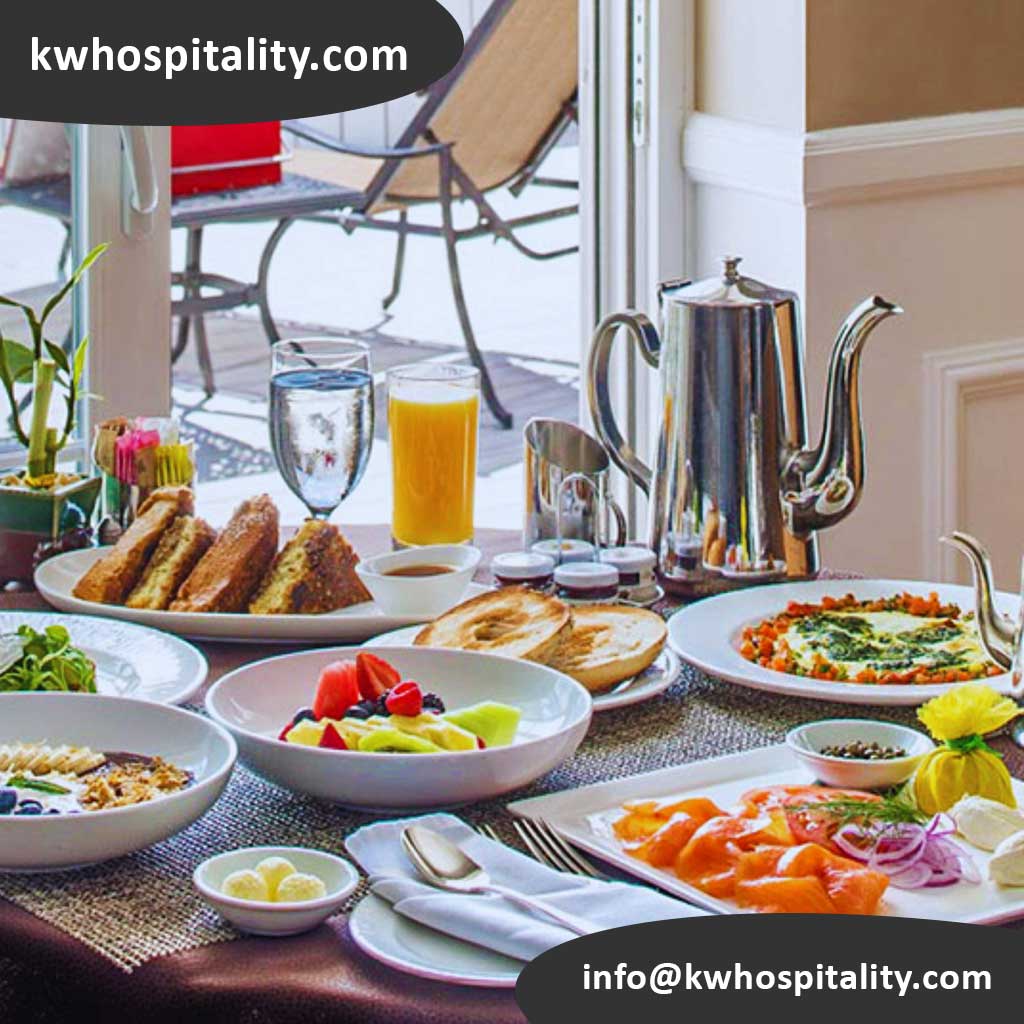
SECTION 8: Food & Beverage and Kitchen Supplies
The Culinary Backbone of Hospitality
No matter how elegant the rooms or how stunning the lobby, a hotel’s reputation often lives and dies by its food. The Food & Beverage (F&B) department is where guests experience generosity in its purest form — through taste, aroma, and presentation. Behind every memorable breakfast buffet or perfectly plated dinner lies a complex network of kitchenware, tableware, bar equipment, and service tools that keep the culinary engine running.
For new hotels, setting up a complete F&B operation means planning dozens of categories: kitchen production lines, buffet equipment, table settings, cutlery, glassware, uniforms, and cleaning systems. Each choice affects not only guest satisfaction but also workflow efficiency, hygiene, and long-term cost control.
1. Why F&B Supplies Define Guest Experience
Dining is the only touchpoint shared by nearly every guest — leisure or business, budget or luxury. A single chipped plate or lukewarm coffee cup can damage the perception of a brand built on years of investment. On the other hand, an immaculate table setting, gleaming silverware, and consistent plate temperature communicate quality before a single bite is taken.
For this reason, global hotel chains standardize F&B supplies just as strictly as linens or amenities. New hotels should approach F&B procurement strategically, designing a cohesive system from kitchen to table.
2. Core F&B Operational Zones
A full-service hotel generally divides its food operations into five supply-dependent zones:
Main Kitchen & Preparation Area – cooking, baking, and food production
Restaurant & Café Service Area – tableware, décor, and presentation
Banquet & Catering Area – large-volume serving, buffet lines
Bar & Beverage Station – glassware, dispensers, cocktail tools
Stewarding & Warewashing Area – cleaning, storage, and waste management
Each zone requires specialized equipment chosen for durability, hygiene, and brand consistency.
3. Back-of-House: Kitchen Equipment and Tools
The kitchen is a hotel’s production heart — a combination of engineering, hygiene, and artistry. A well-equipped kitchen allows chefs to deliver quality food consistently under time pressure.
Essential Kitchen Equipment Checklist
| Category | Equipment Examples | Recommendation/Notes |
|---|---|---|
| Cooking Range | Gas or induction stoves, ovens, salamanders | Choose energy-efficient models with automatic ignition |
| Refrigeration | Walk-in coolers, under-counter fridges, blast freezers | Stainless-steel interior, digital temperature control |
| Preparation Tools | Cutting boards, chef knives, mixers, slicers | Color-coded boards to prevent cross-contamination |
| Cooking Utensils | Pots, pans, ladles, whisks, tongs | Tri-ply stainless steel for durability |
| Food Storage | GN pans, sealed containers, shelving racks | Stackable, labeled, NSF-approved materials |
| Safety & Hygiene | Gloves, aprons, hairnets, thermometers | Comply with HACCP food-safety standards |
KW Hospitality partners with commercial-kitchen manufacturers in China and Taiwan, offering complete setup packages that include heavy equipment, small wares, and compliance certification (CE, NSF, UL).
4. Restaurant Tableware and Serving Sets
The dining table is the visual stage of the culinary show. Every plate, fork, and glass contributes to storytelling.
Tableware Categories
Porcelain Dinnerware: Durable, chip-resistant, classic white or custom-colored.
Stoneware & Ceramic Plates: Rustic texture ideal for boutique or themed dining.
Cutlery: 18/10 stainless steel for luxury; 18/0 for economy use.
Glassware: Wine, champagne, highball, tumbler, and water glasses — crystal-clarity grade preferred.
Serving Utensils: Serving spoons, tongs, cake servers, cheese knives.
Presentation Boards: Slate, wood, or marble platters for modern plating.
Table Accessories: Salt & pepper mills, butter dishes, napkin rings, condiment jars.
Design and Consistency
Choose a unified collection that reflects your brand’s culinary style.
Maintain identical table settings for all outlets (breakfast, à la carte, banquet).
Keep 10–15 % buffer inventory to replace breakage instantly.
KW Hospitality supplies bespoke tableware collections, allowing hotels to customize rim color, glaze, or logo embossing for cohesive branding.
5. Buffet and Banquet Equipment
Buffets and banquets require a balance of speed, volume, and presentation. Supplies must be attractive, durable, and easy to maintain.
Buffet Setup Essentials
| Category | Examples |
|---|---|
| Chafing Dishes | Induction-ready stainless sets, roll-top covers |
| Display Risers & Stands | Multi-level acrylic or wood platforms |
| Beverage Dispensers | Juice, milk, coffee urns, ice buckets |
| Bread Baskets & Trays | Rattan, stainless, or bamboo |
| Soup Kettles & Warmers | Thermostatic control for safety |
| Cold Display Units | Ice-filled trays, refrigerated counters |
| Label Tags & Menu Stands | Clear acrylic or stainless holders |
Banquet Supplies
Folding banquet tables and stackable chairs
Tablecloths and skirting clips
Plate covers and serving trays
Food transport trolleys with heat insulation
Portable induction cookers for live stations
KW Hospitality provides turnkey banquet-service packages, enabling hotels to furnish entire ballrooms or conference areas with standardized equipment and matching linen sets.
6. Bar and Beverage Service Supplies
A hotel bar or lounge defines sophistication and atmosphere. Whether serving handcrafted cocktails or quick coffees, every drink depends on precision tools and presentation.
Essential Bar Supplies
Cocktail shakers, jiggers, strainers, and muddlers
Ice buckets, tongs, and crushers
Bar mats, drip trays, and speed rails
Glass racks and washing brushes
Wine openers and stoppers
Drink-menu holders and coasters
Garnish containers and tongs
Beverage Equipment
Espresso machines and coffee grinders
Blenders, juicers, soda dispensers
Under-counter refrigerators and ice makers
Draft-beer systems and wine coolers
KW Hospitality sources barware and beverage machines from specialized factories supplying international hotel chains, ensuring performance, aesthetics, and spare-part support.
7. Table Linens and Textiles
Textiles soften the dining experience and absorb noise while adding color and warmth.
Textile Checklist
| Item | Recommended Fabric | Notes |
|---|---|---|
| Tablecloths | Cotton-poly blend, 220–260 GSM | Stain-resistant finish |
| Napkins | 100 % cotton or spun polyester | Machine-washable, color-fast |
| Skirting | Pleated or box design | Velcro fastening for banquet tables |
| Chair Covers | Stretch polyester/spandex | Easy fit and laundering |
KW Hospitality’s textile division can match restaurant color palettes, providing logo-embroidered napkins or custom weaves for signature dining venues.
8. Culinary Uniforms and Safety Gear
Kitchen and service staff need uniforms that protect, perform, and promote brand image.
Uniform Standards
Chefs: Double-breasted jackets, houndstooth trousers, aprons, toques.
Waitstaff: Coordinated shirts, vests, aprons, name tags.
Bartenders: Smart-casual uniforms with waterproof aprons.
Safety Gear: Non-slip shoes, gloves, hairnets, arm guards near fryers.
KW Hospitality provides custom-tailored uniforms with embroidery, ensuring consistent presentation from kitchen to dining hall.
9. Hygiene and Food Safety Supplies
Food safety is non-negotiable. The right supplies protect guests, staff, and brand reputation.
Key Items
Color-coded cutting boards (meat, poultry, seafood, vegetables, bakery).
Food-grade gloves and aprons.
Thermometers and temperature logs.
Sanitizing solutions for food-contact surfaces.
HACCP labeling system for date and batch tracking.
Pest-control devices (UV insect traps, sealed bins).
KW Hospitality can coordinate HACCP-compliant supply sets and provide staff training manuals translated into multiple languages.
10. Stewarding and Cleaning Equipment
Stewarding ensures the constant circulation of clean tableware and kitchen tools. Durable warewashing and storage systems keep operations smooth.
Stewarding Essentials
| Category | Equipment |
|---|---|
| Dishwashers | Conveyor or hood-type, high-temperature rinse |
| Racks & Trays | Compartmentalized for glasses and plates |
| Soaking Tubs | Pre-rinse for cutlery |
| Waste Bins | Stainless steel with foot pedal |
| Racking Systems | Wall-mounted or mobile shelving |
| Polishing Machines | For cutlery and glass sparkle |
Stewarding departments should also use eco-friendly detergents and water-saving rinse systems to meet sustainability goals.
11. Sustainability in F&B Operations
F&B areas consume significant energy and generate substantial waste. Implementing sustainable supplies helps both the environment and profitability.
Eco-Friendly Practices
Induction cookers for energy efficiency.
Composting food waste and using biodegradable garbage liners.
Paper or bamboo straws, not plastic.
Refillable condiment dispensers.
Filtered-water systems replacing bottled water.
Recycled-glass tableware and bamboo trays.
KW Hospitality offers eco-line F&B products, from bamboo buffet stands to recycled-aluminum cookware, supporting hotels in achieving Green Key or LEED certification.
12. Procurement Planning and Cost Control
The F&B department has one of the largest procurement budgets. Without proper planning, expenses can spiral quickly.
Procurement Guidelines
Begin sourcing 8–10 months before opening.
Create a master item list grouped by outlet (restaurant, bar, banquet).
Request product samples for testing — especially porcelain, cutlery, and glassware.
Balance initial investment with replacement cost; buy spares in the same batch.
Standardize SKUs to simplify future reorders.
Factor in storage and transportation — fragile items require reinforced packaging.
KW Hospitality’s procurement experts consolidate all F&B categories into one shipment, lowering logistics costs and ensuring consistent color and style across product families.
13. Inventory and Replacement Management
Even with durable supplies, breakage and loss are inevitable. Smart inventory management keeps replacement costs predictable.
Best Practices
Keep 10 % reserve of all tableware and glassware.
Conduct monthly breakage reports per outlet.
Assign outlet supervisors to sign for issued equipment.
Label items with discreet laser-etched hotel code.
Store backup items in temperature-controlled rooms to prevent cracking.
KW Hospitality can help implement barcode or RFID tracking for high-value items, integrating with the hotel’s PMS for real-time consumption data.
14. Training and Service Presentation
Supplies only reach their potential when staff use them correctly. Service training should cover:
Proper table-setting layout and sequence.
Tray carrying and clearing etiquette.
Glassware handling to avoid fingerprints.
Coffee and wine-service techniques.
Guest allergy awareness and labeling protocols.
KW Hospitality collaborates with F&B consultants to provide opening-phase training manuals customized to each hotel’s outlet mix.
15. KW Hospitality’s Culinary Supply Solutions
KW Hospitality provides an end-to-end F&B procurement service, covering:
Kitchen heavy equipment and utensils
Full tableware, cutlery, and glassware collections
Buffet and banquet sets
Bar tools and machines
Chef and service uniforms
Stewarding and cleaning systems
Eco-friendly and branded packaging
Through factory-direct sourcing and strict QA inspections, hotels receive consistent, professional-grade equipment ready for installation and operation.
Summary of F&B and Kitchen Essentials
| Category | Purpose | KW Hospitality Solution |
|---|---|---|
| Kitchen Equipment | Production & efficiency | Turnkey heavy-equipment supply |
| Tableware & Cutlery | Guest presentation | Custom logo porcelain & stainless sets |
| Buffet & Banquet | Volume service | Modular chafers, risers, transport trolleys |
| Bar & Beverage | Lifestyle branding | Complete barware & glass collections |
| Hygiene & Safety | Food integrity | HACCP-compliant tools & labeling |
| Sustainability | Green operations | Eco-line bamboo, refill, compost systems |
The food experience is where emotion meets precision. By equipping the F&B team with world-class tools and supplies, a new hotel transforms dining into storytelling — one plate, one glass, one memory at a time.
In the next section, we move deeper behind the scenes with Back-of-House Equipment and Maintenance Supplies — exploring how engineering, staff areas, and technical support systems keep every department functioning smoothly, safely, and efficiently.
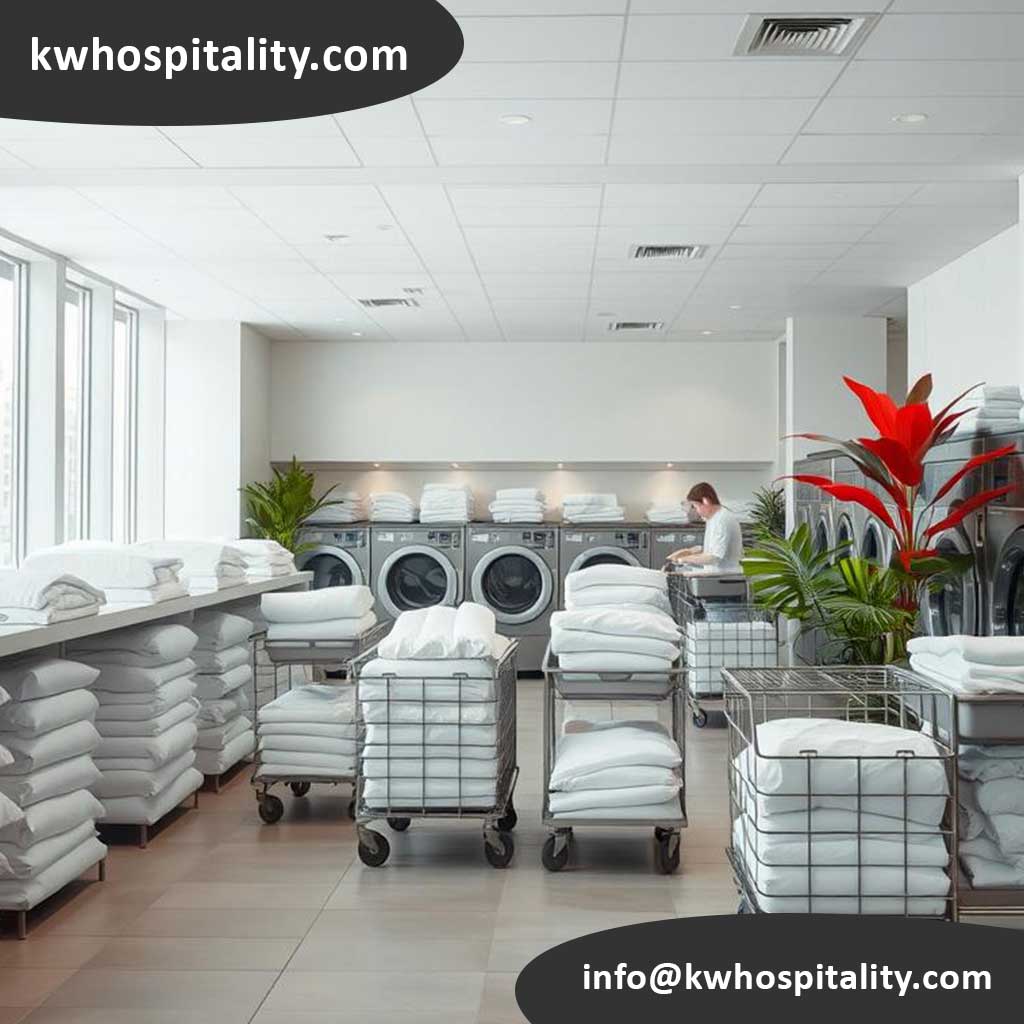
SECTION 9: Back-of-House Equipment and Maintenance Supplies
Keeping the Hotel Running Smoothly
Behind the elegance of a guest room, the sparkle of the lobby, and the aroma of the restaurant, there exists an entire ecosystem that guests rarely see — the back-of-house (BOH).
These operational zones are the hotel’s control center: maintenance workshops, staff rooms, engineering units, storage areas, and administrative offices.
While invisible to guests, the BOH determines whether visible operations run smoothly or collapse under pressure. For new hotels, equipping these spaces with the right tools, maintenance supplies, and organizational systems is critical to achieving reliability, safety, and efficiency.
1. The Hidden Heart of Hospitality
A hotel is a living organism. Guest rooms, kitchens, and public areas form its body — but the back-of-house is its nervous system.
Here, electricity is controlled, air conditioning is monitored, laundry is processed, and repairs are coordinated.
Every hotel, regardless of size, must plan BOH facilities carefully to avoid operational bottlenecks. A well-designed and equipped back-of-house ensures:
Minimal downtime from technical failures
Faster response times for guest maintenance requests
Organized storage and inventory control
Safety and compliance with regulatory standards
KW Hospitality provides comprehensive BOH equipment packages — from maintenance tools and racks to staff-area furniture — ensuring that what’s unseen still meets the highest professional standards.
2. Key Back-of-House Zones
A typical full-service hotel includes several BOH zones, each requiring specific supplies and layout planning:
| Area | Function | Examples of Key Supplies |
|---|---|---|
| Engineering Workshop | Repairs and maintenance | Toolkits, ladders, testing devices |
| Maintenance Room | Electrical, plumbing, HVAC operations | Multimeters, spare parts, pipe fittings |
| Staff Locker Rooms | Staff hygiene and comfort | Lockers, benches, mirrors |
| Administrative Offices | HR, accounting, management | Stationery, computers, printers |
| Storage & Receiving | Inventory management | Pallet racks, weighing scales, trolleys |
| Loading Bay | Delivery operations | Dock levelers, hand trucks |
| Security Office | Monitoring and protection | CCTV systems, radios, safes |
Properly outfitted back-of-house spaces reduce stress during high-occupancy periods and ensure consistent service quality across all departments.
3. Engineering and Maintenance Equipment
The engineering department is responsible for the hotel’s physical infrastructure — water, power, air, lighting, and mechanical systems.
To keep these systems running 24/7, maintenance teams require professional-grade equipment and organized storage.
Core Maintenance Equipment
| Category | Items |
|---|---|
| Electrical Tools | Multimeters, circuit testers, soldering iron, cable ties |
| Plumbing Tools | Pipe wrenches, sealants, fittings, water-pressure gauges |
| HVAC Tools | Thermometers, refrigerant gauges, leak detectors |
| Mechanical Tools | Screwdrivers, hammers, drills, wrenches, grinders |
| Safety Gear | Helmets, gloves, goggles, ear protection |
| Consumables | Bulbs, fuses, screws, paint, filters, batteries |
Each maintenance area should include storage cabinets with labeled compartments, ensuring technicians can locate tools instantly.
KW Hospitality partners with certified tool manufacturers to supply industrial-grade maintenance sets that comply with CE and ANSI standards.
4. Preventive Maintenance Supplies
Preventive maintenance is the foundation of operational stability. Instead of reacting to breakdowns, hotels should schedule periodic servicing of all major equipment.
Preventive Maintenance Supply List
Lubricants and oils for mechanical parts
Air filters for HVAC systems
Spare light bulbs and LED modules
Electrical fuses and circuit breakers
Water filters and gaskets
Calibration devices for temperature and pressure
Paints and sealants for touch-ups
Having these supplies in stock prevents delays and reduces emergency repair costs by up to 40%.
KW Hospitality helps clients develop preventive maintenance kits — standardized sets of spare components and tools organized by department (electrical, plumbing, HVAC).
5. Staff Facilities and Welfare Areas
A motivated and well-cared-for team provides better guest service. Staff areas, though unseen by customers, directly affect morale and productivity.
Essential Staff Facilities
| Category | Examples |
|---|---|
| Locker Rooms | Lockers, benches, mirrors, coat hangers |
| Staff Canteen | Dining tables, chairs, microwaves, water dispensers |
| Rest Areas | Sofas, notice boards, vending machines |
| Training Rooms | Projectors, whiteboards, desks |
| Changing Rooms | Secure compartments and ventilation systems |
| Showers & Washrooms | Durable fittings, soap dispensers, mirrors |
KW Hospitality supplies ergonomic staff furniture and breakroom equipment — durable, easy to clean, and designed for high-traffic environments.
6. Storage and Inventory Equipment
Efficient storage prevents loss, damage, and over-ordering. Each department should have its own designated storage zones equipped for safety and accessibility.
Storage Essentials
Metal Shelving Units: Adjustable, powder-coated, rust-resistant.
Pallet Racks: For bulk items and F&B inventory.
Mobile Trolleys and Carts: For linen, food, or cleaning item transfers.
Bins and Containers: Stackable and labeled for easy identification.
Measuring Scales: For kitchen and housekeeping supply control.
Inventory Labels and Barcodes: For tracking product batches and dates.
KW Hospitality provides custom storage solutions, integrating warehouse racking with labeling systems that align with hotel logistics software.
7. Security and Surveillance Supplies
The safety of guests, employees, and property depends on effective surveillance and security systems.
Hotels should invest in equipment that provides coverage without intrusiveness.
Security Supply List
| Category | Equipment |
|---|---|
| CCTV Systems | 24/7 recording with night vision and remote monitoring |
| Access Control | Keycard entry for restricted areas |
| Alarm Systems | Fire and intrusion detection |
| Communication Tools | Two-way radios, headsets |
| Safes & Lockboxes | For documents and valuables |
| Visitor Management Tools | ID scanners, logbooks |
KW Hospitality coordinates supply and installation of security equipment packages, sourced from ISO-certified partners and integrated with existing hotel management systems.
8. Office and Administrative Supplies
Every hotel has back-office teams managing HR, accounting, procurement, and reservations. These departments need reliable office supplies to maintain efficiency.
Office Supply Checklist
Computers, printers, and UPS systems
Filing cabinets and fireproof safes
Office desks and ergonomic chairs
Stationery: pens, paper, folders, staplers
Labeling machines and laminators
Telephones and headsets
Whiteboards and meeting room screens
KW Hospitality offers corporate office furnishing and supply solutions, coordinating ergonomic furniture and branded stationery.
9. Laundry and Utility Maintenance
Utility rooms handle not only laundry but also minor repairs and daily upkeep of uniforms, linens, and small equipment.
Utility Supply List
Ironing tables and steam presses
Sewing machines and mending kits
Spare buttons, zippers, and threads
Uniform hangers and garment racks
Laundry trolleys and sorting bins
These utilities ensure that front-line staff and guest textiles remain in perfect condition every day.
10. Environmental and Sustainability Supplies
Sustainability extends beyond guestrooms and F&B — it includes maintenance and engineering operations as well.
Eco-conscious back-of-house planning minimizes waste and supports global environmental goals.
Sustainable Practices
LED workshop lighting and sensor systems.
Low-VOC paints and sealants.
Water-saving hose attachments.
Recycled-material staff furniture.
Segregated recycling bins and composters.
Energy-monitoring meters for consumption tracking.
KW Hospitality’s sustainability division helps hotels implement ESG-aligned operational frameworks, providing energy-efficient and eco-certified maintenance products.
11. Health, Safety, and Fire-Protection Equipment
Hotels must comply with regional occupational safety and fire codes. Proper equipment and signage are essential for certification and insurance compliance.
Safety Supply Checklist
| Category | Examples |
|---|---|
| Fire Safety | Extinguishers, hydrants, smoke detectors, sprinkler heads |
| First Aid | Medical kits, defibrillators (AED), gloves, bandages |
| Protective Gear | Helmets, masks, goggles, gloves, steel-toe boots |
| Emergency Signage | Exit routes, assembly points, hazard labels |
| Training Tools | Safety posters, manuals, emergency drills |
KW Hospitality partners with fire-safety suppliers to deliver certified equipment meeting NFPA, CE, and UL standards for hotels globally.
12. Waste Handling and Recycling Equipment
A large property generates tons of waste every month. Efficient handling reduces odor, pests, and environmental impact.
Waste-Handling Tools
Industrial garbage bins with foot pedals
Recycling sorters (paper, plastic, organic)
Trash compactors and balers
Grease traps for kitchen waste
Hazardous-waste containers (for batteries, chemicals)
KW Hospitality offers modular waste-management systems, color-coded and signage-integrated, to standardize recycling procedures across all departments.
13. Back-of-House Technology Integration
Technology now powers even maintenance and engineering operations.
Smart BOH Tools
CMMS (Computerized Maintenance Management System): Tracks repair requests and preventive schedules.
Digital Inventory Apps: Monitor stock levels in real time.
Energy Management Software: Reduces consumption and monitors HVAC performance.
QR-based Maintenance Logs: Technicians scan and record completed tasks via mobile device.
KW Hospitality helps clients integrate hardware and supplies with digital facility-management tools, ensuring long-term efficiency.
14. Logistics and Supply Chain Coordination
All BOH supplies must flow through the receiving and storage system, forming the base of a hotel’s supply chain.
Proper layout and documentation ensure smooth logistics.
Key Considerations
Designate a separate receiving dock for F&B and general supplies.
Use digital delivery checklists and barcode scanners for tracking.
Maintain cold storage segregation for perishable items.
Schedule deliveries to avoid lobby congestion.
Inspect all shipments upon arrival (quantity, condition, labeling).
KW Hospitality’s logistics team provides end-to-end coordination, from supplier consolidation in China and Taiwan to final on-site delivery at the property.
15. KW Hospitality’s Back-of-House Advantage
KW Hospitality understands that operational excellence starts behind the scenes.
Its BOH solutions cover the full spectrum:
Engineering tools and maintenance kits
Safety and fire-protection systems
Staff-area furniture and canteen equipment
Storage and logistics racks
Security and surveillance packages
Office furnishings and supplies
Eco-friendly maintenance materials
All products are factory-sourced, quality-tested, and compliant with international safety standards.
By consolidating BOH procurement through KW Hospitality, new hotels simplify vendor management and guarantee consistent quality across departments.
Summary of Back-of-House Essentials
| Category | Function | KW Hospitality Solution |
|---|---|---|
| Engineering Tools | Maintenance & repair | Industrial-grade certified toolkits |
| Staff Areas | Employee welfare | Ergonomic furniture & lockers |
| Storage Systems | Organization & safety | Modular racks, bins, and labeling |
| Safety & Fire | Compliance | NFPA/CE-certified equipment |
| Security Systems | Monitoring & protection | CCTV, access control, safes |
| Sustainability | Environmental goals | Energy-efficient supplies |
The back-of-house may not appear in photos, but it defines the reliability of the entire hotel.
When every unseen corner is organized, equipped, and compliant, guests enjoy seamless stays — and management enjoys peace of mind.
In the next section, we’ll explore Safety, Security, and Maintenance Tools — Protecting Guests, Staff, and Property.
We’ll examine how risk management, surveillance, and emergency systems form the protective layer of modern hospitality, and how KW Hospitality helps new hotels implement them from the start.

SECTION 10: Safety, Security, and Maintenance Tools
Protecting Guests, Staff, and Property
In the world of hospitality, safety is silent luxury. Guests may not consciously think about security cameras, fire extinguishers, or emergency exits — yet their peace of mind depends on them. A truly successful hotel isn’t just beautiful or comfortable; it is safe, secure, and prepared for every scenario.
From fire prevention and electrical maintenance to surveillance and emergency response, safety infrastructure protects lives, preserves property, and ensures operational continuity. For new hotels, integrating safety and security from the very beginning — during design, procurement, and staff training — is essential. It builds trust and ensures compliance with legal and insurance requirements.
1. Why Safety and Security Define Hotel Reputation
A single incident of theft, injury, or fire can destroy years of brand-building. Guests equate safety with professionalism — they trust hotels that demonstrate preparedness and visible control systems.
Safety isn’t a cost — it’s an investment. It protects guests, staff, and your reputation, while reducing liability risks and downtime. Insurance providers, auditors, and corporate travel agencies often require documented safety standards before signing contracts or partnerships.
KW Hospitality assists new hotels in building this foundation through comprehensive sourcing of certified safety and maintenance supplies, ensuring compliance with international codes such as NFPA, OSHA, CE, and ISO 45001.
2. Core Components of Hotel Safety Systems
Every hotel must integrate a structured safety program encompassing four key pillars:
Fire Safety & Emergency Response
Guest & Staff Security
Health & Hygiene Protection
Maintenance and Preventive Safety
Each area requires specialized supplies, clear procedures, and continuous staff training.
3. Fire Safety and Prevention Equipment
Fire hazards exist in every part of a hotel — from kitchens and laundry rooms to guestrooms and corridors. Fire-prevention systems and equipment must comply with local fire codes and international standards.
Essential Fire Safety Equipment
| Category | Equipment | Recommendation |
|---|---|---|
| Detection Systems | Smoke & heat detectors, alarm panels | Interlinked system with visual/audible alerts |
| Suppression Equipment | Fire extinguishers (CO₂, dry powder, foam), sprinklers | Installed according to area hazard classification |
| Evacuation Tools | Emergency lights, glow signage, escape hoods | Battery backup for 90+ minutes |
| Fire Control Accessories | Fire blankets, hydrants, hoses, reels | Easy access and routine testing |
| Fire Doors & Compartment Systems | Fire-rated doors and seals | Maintain 1–2-hour fire resistance |
Best Practices
Conduct quarterly inspections and annual fire-drills.
Train staff on extinguisher types and proper usage.
Maintain updated evacuation maps in every room and corridor.
Integrate alarms with building management systems (BMS).
KW Hospitality supplies fire-safety kits compliant with UL and NFPA standards, ensuring that all extinguishers, alarms, and signage meet local regulatory approval.
4. Security Systems and Surveillance
A hotel’s security infrastructure must balance protection with guest comfort. The goal is invisible vigilance — maintaining safety without making guests feel monitored.
Modern Hotel Security Solutions
| Area | Technology / Equipment | Purpose |
|---|---|---|
| CCTV Surveillance | IP cameras, NVR systems, cloud storage | 24/7 monitoring of entrances, corridors, and public areas |
| Access Control | RFID card locks, biometric scanners, key management | Restrict unauthorized access to sensitive zones |
| Alarm Systems | Intrusion and panic alarms | Quick response in emergencies |
| Perimeter Protection | Motion sensors, lighting, security gates | Prevent external intrusion |
| Communication Tools | Two-way radios, intercoms, staff headsets | Coordinate response teams instantly |
KW Hospitality works with international electronic-security suppliers to deliver hotel-grade surveillance kits compatible with most property management and building automation systems.
5. Guest and Room Security
Guestroom safety features are integral to guest comfort. Hotels must equip each room to protect privacy, prevent accidents, and enable emergency communication.
Guestroom Safety Checklist
Electronic Safe — fire-resistant, laptop-compatible, auto-lock function
Key Card Lock System — RFID or Bluetooth-enabled
Door Viewer (Peephole) and internal security latch
Emergency Torch (for power outages)
Smoke Detector & Sprinkler Head
Fire Evacuation Map on back of the door
Window Restrictors for upper-floor rooms
KW Hospitality supplies custom-branded safes and locks with international certifications (CE, FCC, RoHS), ensuring both safety and aesthetic alignment with room décor.
6. Health, Hygiene, and Sanitation Safety
Post-pandemic hospitality has permanently redefined cleanliness as a safety standard. Hotels must now maintain hospital-grade hygiene across all public and private areas.
Sanitation & Health Safety Equipment
| Category | Supplies |
|---|---|
| Disinfection Tools | Fogging machines, electrostatic sprayers, UV lamps |
| PPE for Staff | Masks, gloves, shields, gowns |
| Hand Hygiene Stations | Touchless dispensers, sanitizing stands |
| Air Quality Control | HEPA filters, air purifiers, ozone disinfection |
| Medical Support | First-aid kits, thermometers, pulse oximeters, AED (defibrillator) |
KW Hospitality provides touchless hygiene product lines — from motion-sensor soap dispensers to automated air purifiers — designed to meet global health and safety protocols for hotels.
7. Maintenance Tools for Safety and Reliability
Maintenance plays a crucial role in preventing accidents and prolonging the life of hotel equipment. The engineering team should have access to well-organized, safe-to-use maintenance tools.
Essential Maintenance Tools
Power drill and impact driver sets
Voltage testers and multimeters
Plumbing snakes and sealants
Welding and soldering kits
Lubricants, adhesives, sealants
Ladders and scaffolding (EN131 certified)
Portable generators and power cables
Measuring and calibration tools (laser distance meters, thermometers)
KW Hospitality offers complete engineering toolkits sourced from industrial suppliers, ensuring safe operation and long-term reliability under 24/7 hotel use.
8. Emergency Preparedness Kits
Unexpected emergencies — from power outages to earthquakes — require immediate access to well-prepared kits.
Emergency Supply List
| Type | Contents |
|---|---|
| Basic Emergency Kit | Flashlights, batteries, whistles, gloves, blankets |
| Medical Emergency Kit | Bandages, antiseptics, pain relievers, masks |
| Power Outage Kit | Portable lights, backup generators, UPS |
| Natural Disaster Kit | Fire blankets, safety ropes, emergency signage |
| Water Leak Kit | Absorbent materials, wet vacuums, seal tapes |
KW Hospitality curates emergency supply bundles designed specifically for hotels, ensuring readiness for all regional disaster scenarios.
9. Staff Safety and Training
Safety equipment is only effective if staff know how to use it. Every hotel must conduct periodic training and certification programs for all departments.
Training Focus Areas
Fire safety and evacuation procedures
Handling electrical and mechanical hazards
Proper use of cleaning chemicals and PPE
Guest security and incident reporting
First aid and CPR certification
Data privacy and cyber security awareness
KW Hospitality partners with accredited safety trainers and provides standardized SOP manuals covering every operational scenario.
10. Regulatory Compliance and Auditing
Compliance protects hotels legally and financially. Noncompliance can lead to fines, closures, or revoked insurance coverage.
Key Regulatory Standards by Region
| Region | Primary Regulation | Requirement |
|---|---|---|
| North America | NFPA, OSHA, ADA | Fire safety, worker safety, accessibility |
| Europe | CE, EN, ISO 7010 | Equipment conformity, signage, emergency lighting |
| Asia-Pacific | GB Standards, ISO 14001 | Environmental and occupational safety |
| Middle East | Civil Defense Codes | Fire and building compliance |
KW Hospitality provides pre-opening safety audit assistance, ensuring that equipment and installations meet regional and brand standards before inspection.
11. Technological Advancements in Hotel Safety
Modern hotels are adopting smart technologies to enhance security and preventive maintenance.
Smart Safety Innovations
AI-Driven CCTV: Detects unusual motion patterns.
IoT Sensors: Monitor temperature, gas leaks, and water pressure.
Smart Locks: Keyless entry with real-time access logs.
Mobile Safety Apps: Staff can report incidents instantly.
Integrated Fire Panels: Connect detectors, alarms, and sprinklers for centralized control.
KW Hospitality partners with technology providers to supply integrated smart-safety solutions, ready for plug-and-play installation.
12. Sustainability and Environmental Safety
Safety isn’t only about people — it’s also about the planet. Hotels can integrate eco-conscious choices into their safety operations.
Green Safety Practices
Use rechargeable fire extinguishers instead of disposable ones.
Install LED emergency lighting with solar backup.
Choose low-toxicity cleaning and disinfection chemicals.
Recycle outdated batteries and electronics responsibly.
Implement paperless safety documentation using digital inspection logs.
KW Hospitality supports environmental responsibility by sourcing eco-certified safety products that meet both ISO 14001 and local environmental compliance requirements.
13. Maintenance Scheduling and Record Keeping
Regular maintenance ensures all safety systems remain operational and compliant.
Maintenance Plan Example
| System | Frequency | Action |
|---|---|---|
| Fire extinguishers | Monthly | Pressure check & seal inspection |
| Smoke detectors | Quarterly | Sensor test & battery replacement |
| HVAC system | Biannual | Filter change & duct cleaning |
| Elevators | Monthly | Full safety inspection |
| CCTV and Access Control | Monthly | Software and connectivity test |
Hotels should maintain digital logs and inspection certificates — not only for compliance but also for insurance verification.
14. KW Hospitality’s Safety and Maintenance Solutions
KW Hospitality provides end-to-end safety infrastructure sourcing for hotels, including:
Fire detection and suppression systems
Emergency lighting and signage
Security surveillance and access control
Electrical and maintenance toolkits
Hygiene and health safety supplies
Compliance and inspection documentation
All items are internationally certified and consolidated into one procurement stream, simplifying management for new hotel projects.
Summary of Safety, Security & Maintenance Essentials
| Category | Focus | KW Hospitality Solution |
|---|---|---|
| Fire Safety | Prevention & evacuation | Certified extinguishers, signage, drills |
| Security Systems | Protection & monitoring | Smart locks, CCTV, access control |
| Health & Hygiene | Clean environment | Touchless dispensers, PPE, air filters |
| Maintenance Tools | Reliability | Industrial toolkits, preventive kits |
| Training & Compliance | Preparedness | SOP manuals, audit support |
| Sustainability | Eco safety | Rechargeable & low-impact systems |
A truly safe hotel is one where guests never have to think about safety — because it’s seamlessly built into every wall, corridor, and system. KW Hospitality ensures that new properties launch with confidence, compliance, and complete protection, allowing management to focus on what matters most: exceptional guest experience.
In the next section, we’ll explore Branding, Customization, and Sustainable Alternatives — how hotels can turn ordinary supplies into unique brand expressions while embracing environmentally responsible design and materials.

SECTION 11: Branding, Customization, and Sustainable Alternatives
Turning Supplies into Signature Experiences
In the competitive world of hospitality, differentiation is everything. Guests can find comfortable beds and clean rooms anywhere, but what makes them remember a hotel — and choose it again — is the emotional signature that comes from design, branding, and thoughtful detail.
This signature is created through every tangible and sensory touchpoint: the logo-embroidered towels, the aroma of the shampoo, the color of the slippers, the pattern of the tablecloth, and even the shape of the room key card.
For new hotels, branding and customization are no longer optional. They are what transform a standard facility into a memorable destination. When combined with sustainable materials and practices, these elements communicate care, authenticity, and long-term vision.
1. Why Branding in Supplies Matters
Hospitality branding extends far beyond signage and marketing. In the modern era of guest experience design, every physical object can reinforce the brand’s promise.
Custom-branded supplies tell guests — consciously and subconsciously — that the hotel pays attention to detail.
Benefits of Branding in Hotel Supplies
Identity & Recognition: Reinforces visual consistency across spaces.
Professionalism: Signals organization and quality standards.
Marketing Value: Guests share branded visuals on social media.
Loyalty Building: Strengthens emotional connection and recall.
Revenue Potential: Encourages purchase of branded merchandise.
A towel with a finely stitched logo, a soap bottle that matches the brand palette, or a robe embossed with the property’s emblem — these are the quiet ambassadors of a hotel’s identity.
2. Core Areas of Customization
Branding opportunities exist across almost every category of hospitality supply. The key is balance — branding should feel elegant, not excessive.
A. Textiles & Linens
Embroidered Logos: On pillowcases, robes, towels, or bed runners.
Jacquard Weaving: Subtle logo patterns woven into fabric texture.
Color Coordination: Using the hotel’s palette across linens and napkins.
Branded Labels: Sewn-in woven tags for identity and inventory control.
B. Amenities & Toiletries
Logo Printing: Directly on bottles, boxes, or caps.
Custom Scents: Signature fragrances developed for brand identity.
Color Palette Coordination: Align amenity design with room aesthetics.
Branded Packaging: Recyclable or biodegradable wrappers with property emblem.
C. Room Accessories
Slippers & Bags: Embroidered or heat-stamped logos on slippers and laundry bags.
Stationery & Notepads: Branded letterheads, envelopes, pens, and key card sleeves.
In-Room Electronics: Custom faceplates or printed brand insignias on alarm clocks and hair dryers.
D. Food & Beverage
Porcelain Tableware: Logo printing or engraving on plates and cups.
Cutlery & Glassware: Laser engraving for subtle branding.
Menu Covers & Coasters: Leather or PU embossed with hotel logo.
Uniforms & Aprons: Custom color and embroidered insignia.
KW Hospitality specializes in multi-category branding, ensuring uniform design language across all departments — from guestrooms to F&B outlets — while maintaining manufacturing precision and color consistency.
3. The Psychology of Branded Experience
Guests associate branded environments with reliability and luxury. Branding creates a sense of belonging — a feeling that they’re part of something intentional and curated.
Emotional Triggers of Branding
| Element | Emotional Effect |
|---|---|
| Color Consistency | Creates harmony and calmness |
| Logo Placement | Reinforces memory and recognition |
| Typography | Conveys sophistication or playfulness |
| Texture & Material Quality | Communicates luxury and care |
| Scent Association | Triggers nostalgia and emotional recall |
By combining these sensory cues, a hotel transforms routine comfort into emotional connection — something competitors can’t easily replicate.
4. Sustainability: The New Luxury Standard
Today’s travelers — especially younger generations and corporate clients — increasingly choose hotels based on environmental responsibility.
Sustainability is no longer a marketing trend; it’s a defining standard of quality and credibility.
Benefits of Sustainable Hospitality Supplies
Reduces operational costs in the long run.
Attracts eco-conscious guests and partnerships.
Complies with government and brand regulations.
Enhances storytelling — “responsible luxury.”
KW Hospitality helps hotels transition to eco-friendly procurement models, offering sustainable alternatives in every product category without compromising aesthetics or comfort.
5. Sustainable Alternatives by Category
Guest Room
Bamboo Fiber Slippers: Biodegradable soles and organic uppers.
Recycled Plastic Accessories: Tissue boxes, bins, trays made from rPET.
LED Lighting: Low power consumption, long lifespan.
Smart Energy Controls: Key-card power systems and motion sensors.
Bathroom & Amenities
Refillable Dispensers: Replace single-use plastic bottles.
Plant-Based Formulas: Vegan, cruelty-free shampoo and lotion.
Paper or Cornstarch Packaging: Reduces landfill waste.
Water-Saving Fixtures: Aerated faucets and low-flow showerheads.
F&B and Kitchen
Bamboo or Wheat-Straw Tableware: Compostable alternatives for casual dining.
Reusable Metal or Glass Straws: Eliminates plastic usage.
Compostable Garbage Liners: For kitchen and banquet waste.
Energy-Efficient Ovens and Induction Cookers: Reduce carbon emissions.
Housekeeping and Laundry
Eco Detergents: Phosphate-free, biodegradable cleaning chemicals.
Microfiber Mops: Require less water and detergent.
Ozone Laundry Systems: Save water and energy.
Recycled Fabric Linens: Certified by Global Recycle Standard (GRS).
KW Hospitality’s EcoLine Collection consolidates these products into integrated packages, helping hotels meet LEED, BREEAM, or Green Key certifications efficiently.
6. Balancing Branding and Sustainability
A common misconception is that branding and sustainability conflict — but in reality, they complement each other beautifully.
Modern technology allows printing, embossing, and coloring on eco-materials without harming the environment.
Balanced Approach Examples
Soy-Based Inks for eco printing on packaging.
Laser Engraving instead of plastic embossing.
Recycled Cotton Embroidery Threads for textiles.
Digital Labeling instead of adhesive stickers.
KW Hospitality helps hotels achieve eco-luxury branding — elegant, sustainable, and future-focused.
7. The Supply Chain of Sustainable Branding
Building a sustainable brand identity requires alignment across the entire supply chain — from design to packaging to shipping.
Step-by-Step Process
Concept Development: Define brand story and sustainability goals.
Material Selection: Choose eco-certified fabrics, woods, or plastics.
Prototyping & Testing: Create samples for durability and aesthetic balance.
Certification & Compliance: Verify standards (OEKO-TEX®, FSC, ISO).
Mass Production: Controlled processes minimizing waste.
Consolidated Shipping: Reduces carbon footprint and packaging waste.
KW Hospitality’s vertically integrated system ensures transparency at every step — one partner, one shipment, one brand vision.
8. The Role of Local and Cultural Design
Incorporating local culture into branded supplies adds authenticity. Guests appreciate when design elements reflect local art, heritage, or craftsmanship.
Examples
Using indigenous textile patterns on linens.
Sourcing amenity fragrances inspired by local flora.
Including locally made ceramics in restaurant service.
Engraving traditional motifs subtly into decor accessories.
This approach supports local artisans, enhances storytelling, and provides hotels with a distinct identity that feels rooted in place — not generic.
KW Hospitality collaborates with regional design consultants and artisans to integrate cultural influences into branded product lines while maintaining consistent quality control through central manufacturing.
9. Packaging and Presentation Design
Sustainable and beautiful packaging elevates guest perception while reducing waste.
Smart Packaging Practices
Minimalism: Reduce unnecessary layers or plastic wraps.
Uniform Dimensions: Optimize shipping and storage efficiency.
Refillable Bottles & Recyclable Labels: Encourage reuse.
Compostable or Biodegradable Materials: Replace synthetic plastics.
Design Consistency: Align typography, colors, and messaging across all products.
KW Hospitality provides packaging design support, combining brand identity with eco-material innovation such as kraft paper, sugarcane pulp, or aluminum alternatives.
10. The Economic Logic of Sustainable Branding
Many new hotels hesitate to adopt branded sustainable supplies due to perceived higher costs. However, data consistently shows that eco-friendly and customized products reduce long-term costs through durability, energy efficiency, and guest loyalty.
ROI Advantages
Extended product lifespan due to quality materials.
Higher guest satisfaction and review ratings.
Reduced waste and disposal costs.
Increased direct bookings from eco-conscious travelers.
Compliance benefits — avoids fines or penalties under new environmental laws.
KW Hospitality assists hotels in cost-benefit analysis, helping them identify products that balance upfront investment with sustainable savings.
11. Case Study: Branding & Sustainability in Harmony
Property: The Lotus Boutique Hotel, Montreal
Challenge: Launch a modern eco-luxury brand within a limited opening budget.
Solution by KW Hospitality:
Created a custom toiletry line with refillable glass dispensers and organic essential oils.
Designed embroidered 100% organic cotton towels and robes with gold logo thread.
Supplied bamboo-fiber slippers and recyclable in-room accessories.
Replaced plastic water bottles with branded aluminum ones.
Result:68% reduction in single-use plastic.
25% higher guest satisfaction in brand perception surveys.
Achieved Green Key Gold Certification within six months.
This demonstrates that thoughtful design and sustainable sourcing can elevate both reputation and operational performance.
12. KW Hospitality’s Custom Branding Program
KW Hospitality offers hotels a full-service branding and customization program, covering concept to delivery:
| Stage | Service Offered |
|---|---|
| 1. Brand Discovery | Consultation on design vision, color palette, and product positioning |
| 2. Material Selection | Eco-certified fabrics, metals, woods, and plastics |
| 3. Graphic Design & Sampling | Logo application, mockups, and prototypes |
| 4. Manufacturing & QA | Factory production with multi-stage quality control |
| 5. Packaging & Labeling | Branded cartons and retail-ready packaging |
| 6. Logistics & Delivery | Consolidated shipment with customs documentation |
With in-house designers, sustainable product developers, and manufacturing oversight in China and Taiwan, KW Hospitality ensures that each hotel’s brand is expressed beautifully, responsibly, and consistently across every product line.
Summary of Branding, Customization & Sustainability
| Category | Objective | KW Hospitality Solution |
|---|---|---|
| Branding | Build identity & guest recall | Custom design across all supply categories |
| Customization | Distinguish brand | Logo embroidery, embossing, and color matching |
| Sustainability | Reduce impact | EcoLine materials, refills, energy efficiency |
| Culture Integration | Local authenticity | Regional design collaboration |
| Cost Efficiency | Long-term ROI | Factory-direct pricing & material durability |
A hotel’s story isn’t told only through words — it’s felt through fabrics, seen in logos, and remembered through textures and scents.
By merging customization with sustainability, KW Hospitality helps hotels craft signature experiences that are both beautiful and responsible — experiences that stay with guests long after they check out.
In the next section, we’ll explore Global Sourcing and Manufacturing Regions — Where Hospitality Supplies Come From, diving into the world of production hubs, quality standards, and KW Hospitality’s factory partnerships across China, Taiwan, and beyond.

SECTION 12: Global Sourcing and Manufacturing Regions
Where Hospitality Supplies Come From
Every towel, spoon, and bedside lamp inside a hotel has a journey — one that begins long before check-in. Behind the comfort and elegance of hospitality lies a vast global supply chain powered by thousands of specialized factories, craftsmen, and logistics networks. Understanding where supplies come from, how they’re made, and why sourcing strategy matters can make the difference between smooth hotel operations and constant frustration.
For new hotels, choosing reliable sourcing regions and suppliers is one of the most strategic — and often overlooked — steps in the pre-opening process. The right sourcing plan reduces costs, ensures quality consistency, and prevents delays. It’s not just about finding the cheapest supplier; it’s about building sustainable partnerships with regions that understand hospitality manufacturing.
KW Hospitality’s strength lies in this domain — connecting hotels directly to the world’s most efficient, compliant, and high-quality manufacturing ecosystems.
1. The Evolution of Global Hospitality Supply Chains
The hospitality supply chain has evolved dramatically over the last 30 years. What was once dominated by European manufacturers now thrives as a multi-continent network of specialized regions, each with its own expertise:
Asia-Pacific: Manufacturing powerhouse for textiles, amenities, electronics, and furniture.
Europe: Premium producer of porcelain, crystal, and luxury linens.
North America: Innovation hub for eco-friendly cleaning solutions and safety systems.
Middle East & Africa: Rapidly growing production base for customized décor and leather goods.
Today, sourcing is no longer about geography alone — it’s about capability, compliance, and cost-performance ratio. Smart hotels blend multiple regions to balance quality and affordability.
2. China — The Global Manufacturing Backbone
For decades, China has been the undisputed leader in hotel supply manufacturing. With robust infrastructure, advanced technology, and integrated production clusters, it continues to deliver unmatched value and reliability.
Key Strengths
Vertical manufacturing ecosystems — from raw material to packaging under one roof.
Mature hospitality industry experience — producing for global hotel chains since the 1990s.
Strong quality control systems (ISO 9001, SGS, BSCI certified factories).
Extensive logistics and port networks (Shenzhen, Ningbo, Shanghai, Guangzhou).
Competitive pricing and flexible MOQs (Minimum Order Quantities).
Main Hospitality Product Categories from China
| Category | Manufacturing Hubs | Highlights |
|---|---|---|
| Textiles (Towels, Linens) | Jiangsu, Shandong, Zhejiang | High-volume production, diverse GSM options |
| Amenities & Packaging | Guangdong, Zhejiang | Refillable bottles, eco-plastic lines |
| Electronics (Hair Dryers, Clocks) | Shenzhen, Dongguan | CE/FCC certified, smart-control designs |
| Furniture & Fixtures | Foshan, Zhongshan | Luxury finishes, hotel-grade durability |
| Cleaning Tools & Trolleys | Ningbo, Cixi | Injection-molded PP, heavy-duty wheels |
| Lighting & Decor | Guzhen (Zhongshan) | Custom chandeliers, LED lamps |
KW Hospitality operates directly within these regions, partnering with audited factories to ensure that every shipment meets global hotel standards for design, durability, and compliance.
3. Taiwan — Innovation and Quality Precision
Taiwan has established a reputation for combining manufacturing precision with design innovation. Though smaller than mainland China in production capacity, its factories focus on high-quality, niche products where craftsmanship and reliability matter most.
Strengths
Exceptional quality control and material consistency.
Advanced electronics, hygiene systems, and appliance manufacturing.
Ethical labor standards and clean production environments.
Strong R&D capabilities for design collaboration and custom engineering.
Hospitality Categories from Taiwan
| Category | Specialization |
|---|---|
| Small Electronics | Bluetooth speakers, alarm clocks, hair dryers |
| Bathroom Accessories | Dispensers, shower sets, wall brackets |
| Eco-Friendly Amenities | PLA bottles, recyclable aluminum containers |
| Custom Packaging | Paper, aluminum, or biodegradable plastics |
| Smart Controls | Energy-saving devices, IoT-enabled sensors |
KW Hospitality’s Taiwan partnerships deliver precision-grade hotel products, ensuring consistent function, finish, and reliability — ideal for boutique and luxury hotels that demand flawless consistency.
4. Vietnam — The Rising Star of Hospitality Manufacturing
Over the past decade, Vietnam has become a strong alternative to China, offering competitive pricing, improving infrastructure, and trade-friendly policies.
Advantages
Lower labor costs with growing manufacturing expertise.
Free Trade Agreements with EU, Canada, and Asia-Pacific economies.
Expanding port capacity (Haiphong, Ho Chi Minh).
Strong textile and wood furniture industries.
Key Hospitality Products
Cotton towels, bathrobes, and uniforms.
Wooden furniture and decorative pieces.
Leatherette and rattan accessories for rooms and restaurants.
Eco-friendly straws, cutlery, and amenity packaging.
KW Hospitality integrates Vietnamese suppliers into its sourcing network for clients seeking cost-effective, mid-volume production without compromising environmental and social compliance.
5. India — Tradition Meets Sustainability
India’s long textile and handicraft heritage has made it an emerging player in the eco-luxury hospitality segment. Factories here combine traditional craftsmanship with global sustainability certifications.
Strengths
Organic cotton and handloom expertise.
Ethical and Fair-Trade certified factories.
Artisan craftsmanship in wood, metal, and ceramic décor.
Growing innovation in eco-amenities and toiletries.
Popular Hospitality Categories
Organic cotton linens and towels.
Handmade ceramic tableware and decor.
Jute and canvas laundry bags.
Herbal bath amenities with Ayurvedic ingredients.
KW Hospitality collaborates with select Indian factories producing boutique-grade, sustainable products, ideal for hotels seeking natural luxury aesthetics.
6. Europe — The Benchmark of Heritage Quality
Europe remains synonymous with luxury, craftsmanship, and design heritage. While costs are higher, European products continue to define the top tier of hospitality supply.
Leading Regions
| Country | Specialty |
|---|---|
| Italy | Porcelain, glassware, designer furniture |
| Germany | Engineering tools, laundry systems, kitchen appliances |
| Portugal | Textiles, towels, and stoneware |
| France | Perfumed amenities and luxury packaging |
| Czech Republic | Crystal glass and lighting |
KW Hospitality often integrates European imports for premium hotel projects, blending European aesthetics with Asian manufacturing efficiencies for a balanced sourcing model.
7. North America — Innovation and Standards
North America, while not a mass-manufacturing hub for hotel supplies, leads in innovation, safety technology, and sustainability systems.
Notable Contributions
Green-certified cleaning chemicals and ozone laundry systems (USA & Canada).
Smart HVAC and energy-control systems.
Eco-friendly packaging and recycling technologies.
Hotel-grade mattresses and bedding with advanced ergonomics.
KW Hospitality incorporates North American technology partners for hybrid projects — sourcing physical products from Asia while integrating control systems, sustainability tech, and safety compliance tools from the U.S. or Canada.
8. The Middle East — Regional Hubs for Custom Décor
The Middle East’s hospitality boom has fostered a strong network of local workshops specializing in customized décor, signage, and furnishings for luxury resorts and urban hotels.
Strengths
Quick-turnaround customization and localized design.
High-end metal, marble, and wood craftsmanship.
Integration with luxury design consultancies in Dubai, Doha, and Riyadh.
Rapid regional logistics and re-export capability.
KW Hospitality collaborates with UAE-based finishing studios for project customization, ensuring seamless integration between Asian manufacturing and Middle Eastern design aesthetics.
9. Comparing Regional Strengths
| Region | Primary Strength | Best for |
|---|---|---|
| China | Scale, efficiency, full-category production | Large projects, all product types |
| Taiwan | Quality, precision, ethical production | Electronics, amenities, niche items |
| Vietnam | Cost competitiveness, textiles | Mid-scale hotels, eco linens |
| India | Natural materials, sustainability | Boutique and wellness resorts |
| Europe | Luxury craftsmanship, heritage | Five-star and flagship properties |
| North America | Technology & compliance | Energy systems, green certifications |
| Middle East | Custom finishing & décor | Regional projects, luxury interiors |
KW Hospitality strategically combines sourcing from multiple regions to deliver balanced supply portfolios — cost-effective, compliant, and reliable.
10. KW Hospitality’s Global Supply Network
KW Hospitality operates through a multi-region integrated network, bridging manufacturers, logistics hubs, and quality control offices.
Key Operational Zones
Shenzhen, China: Electronics, amenities, and QA inspections.
Guangzhou & Foshan: Furniture, lighting, and accessories.
Taipei, Taiwan: Innovation and design development center.
Montreal, Canada: Sales office and North American client support.
Strategic Advantages
Direct factory relationships — no middlemen.
Consolidated shipping to reduce costs.
In-house bilingual sourcing team (English, Mandarin, French).
On-site product inspections before loading.
End-to-end tracking and documentation for import compliance.
By maintaining presence in both Asia and North America, KW Hospitality ensures 24-hour communication flow and unmatched procurement agility.
11. The Importance of Quality Assurance (QA) and Inspection
Sourcing globally only works if quality is controlled locally. Poor inspection or unclear standards can turn savings into losses.
KW Hospitality QA Protocols
Pre-Production Audit: Factory capability verification and material sourcing.
In-Process QC: Random inspection during production to catch early defects.
Final Inspection: Sampling based on AQL (Acceptable Quality Level) 2.5 standard.
Packaging Verification: Weight, labeling, barcoding, and carton strength.
Pre-Shipment Confirmation: Photo and video documentation for client approval.
Each step ensures that products arrive as promised — ready for immediate hotel deployment.
12. Logistics, Freight, and Customs Coordination
Global sourcing succeeds only with efficient logistics and regulatory compliance.
KW Hospitality’s Logistics Support
Container consolidation across multiple product categories.
Sea, air, or rail freight coordination from Asia to North America.
HS Code classification and customs documentation (Canada, U.S., EU).
Freight insurance and tracking.
Duty and tariff consultation for cost prediction.
Hotels benefit from one-point consolidation — all supplies, from linens to lamps, shipped together with complete import documentation.
13. Sustainability in Global Sourcing
Even in sourcing, sustainability matters. KW Hospitality prioritizes green logistics and ethical procurement:
Partnering with factories using solar power or water recycling.
Reducing packaging through bulk eco-container shipping.
Encouraging suppliers with BSCI and SA8000 certifications for fair labor.
Offsetting carbon emissions from international freight via reforestation programs.
This ensures that hotels not only buy responsibly but can also communicate sustainability achievements to their guests and stakeholders.
14. Managing Risks in Global Supply Chains
Every international supply chain faces risks — shipping delays, geopolitical shifts, or raw material fluctuations. Successful sourcing is about anticipation, not reaction.
KW Hospitality’s Risk Mitigation Practices
Maintain multi-region supplier redundancy (China + Vietnam backup).
Keep forecast-based inventory for repeat clients.
Implement digital tracking and communication systems.
Provide alternative logistics routes (e.g., via Korea or Singapore ports).
Offer insurance coverage for cargo and factory performance.
These safeguards protect hotel developers and operators from costly disruptions.
15. The Future of Global Hospitality Sourcing
The next decade of hotel supply sourcing will be defined by technology, transparency, and sustainability.
Key trends include:
Blockchain-based supply tracking for authenticity and compliance.
Automation and robotics in production lines.
Localized micro-manufacturing for faster replenishment.
Eco-certification becoming mandatory for brand approval.
Digital twin modeling for supply forecasting and inventory planning.
KW Hospitality is already integrating AI-driven sourcing analytics to predict market trends, monitor supplier reliability, and optimize global delivery timelines.
Summary of Global Manufacturing & Sourcing
| Region | Core Expertise | KW Hospitality Role |
|---|---|---|
| China | Scale, cost efficiency | Multi-category sourcing & QA |
| Taiwan | Precision manufacturing | Electronics & eco amenities |
| Vietnam | Emerging alternative | Textiles & furniture |
| India | Sustainable craftsmanship | Eco linens & décor |
| Europe | Heritage luxury | Premium imports |
| North America | Technology & compliance | Energy & safety systems |
| Middle East | Custom finishing | Regional décor projects |
The hospitality supply world is vast, but the right partner makes it navigable.
KW Hospitality bridges continents, languages, and factories — transforming global complexity into reliable, cost-effective sourcing solutions tailored for every hotel’s brand and standard.
In the next section, we’ll explore Procurement Strategy and Supplier Selection — How to Source Smart and Build Reliable Partnerships, focusing on supplier evaluation, cost analysis, and strategic procurement workflows for hotels preparing to open or renovate.

SECTION 13: Procurement Strategy and Supplier Selection
How to Source Smart and Build Reliable Partnerships
Procurement is the engine room of every successful hotel operation. While interior design, marketing, and staff training shape the guest’s experience, procurement ensures that the foundations — beds, linens, amenities, lights, and logistics — are in place, on time, and within budget.
A hotel’s supply chain is like its bloodstream. If sourcing is inefficient or unreliable, even the most beautifully designed property will face problems: inconsistent product quality, delayed openings, and inflated operational costs.
For new hotels, building a solid procurement strategy and choosing the right suppliers is one of the most critical pre-opening steps. This process determines not only initial setup success but also long-term maintenance efficiency and brand consistency.
KW Hospitality specializes in helping hotels procure smarter — balancing quality, cost, and reliability while consolidating multiple supply categories into one efficient system.
1. The Role of Procurement in Hospitality
Procurement in the hotel industry goes far beyond purchasing. It is a strategic discipline that connects finance, operations, and brand management.
Core Functions of Procurement
Cost Management: Controlling CAPEX (Capital Expenditure) and OPEX (Operational Expenditure).
Quality Assurance: Ensuring products meet brand and safety standards.
Supplier Relations: Building partnerships for continuity and support.
Inventory Control: Managing storage, replenishment, and reorders.
Compliance & Risk Management: Meeting local, environmental, and corporate regulations.
An efficient procurement department ensures that every department — from F&B to housekeeping — receives the right supplies at the right time, without waste or compromise.
2. Pre-Opening Procurement Planning
A new hotel’s procurement plan should begin at least 9–12 months before opening, depending on project size. Delays in sourcing can create cascading problems across construction, installation, and staff training.
Pre-Opening Procurement Steps
Define the Hotel Standard: Determine star rating, brand requirements, and market positioning.
Create the FF&E and OS&E List:
FF&E (Furniture, Fixtures & Equipment): beds, chairs, lighting, décor, etc.
OS&E (Operating Supplies & Equipment): linens, cutlery, housekeeping tools, amenities, etc.
Set Budget & Priorities: Allocate CAPEX for long-term assets and OPEX for consumables.
Develop a Procurement Schedule: Match supplier lead times with construction timelines.
Engage Vendors Early: Begin sampling and negotiation well before installation deadlines.
KW Hospitality supports hotels from pre-opening through operational launch, offering end-to-end supply mapping and category consolidation to simplify planning.
3. FF&E vs. OS&E — Understanding the Difference
Many new developers struggle to distinguish between FF&E and OS&E, leading to budgeting errors.
| Category | Definition | Examples | Procurement Focus |
|---|---|---|---|
| FF&E | Long-term furniture, fixtures, and decorative elements | Beds, desks, chairs, lighting, artwork | Quality, durability, warranty |
| OS&E | Operational consumables and equipment | Linens, kitchenware, amenities, trolleys | Functionality, replenishment, cost efficiency |
KW Hospitality provides comprehensive FF&E + OS&E packages, allowing developers to coordinate both in parallel and avoid costly overlaps or delays.
4. Supplier Evaluation Criteria
Selecting the right supplier goes beyond price. It requires structured evaluation to ensure long-term partnership potential.
The 7 Key Supplier Selection Factors
Product Quality & Consistency — Certifications, durability testing, feedback from other hotels.
Pricing Structure — Competitive, transparent, and scalable.
Production Capacity — Ability to handle your volume and delivery timelines.
Reliability & Communication — Responsiveness, technical knowledge, and language skills.
Certifications & Compliance — ISO, CE, FDA, BSCI, or brand-specific approvals.
After-Sales Service — Warranty, spare parts, and replacement support.
Ethical & Environmental Standards — Sustainable materials and fair labor practices.
KW Hospitality uses a multi-stage supplier vetting process that includes factory audits, material testing, and social compliance verification to ensure only trusted partners make the cut.
5. The Procurement Workflow
A clear procurement process prevents confusion and delays.
KW Hospitality’s Recommended Procurement Workflow
Requirement Definition: Each department submits item specifications and quantity.
Supplier Identification: Shortlist based on capability and product specialization.
Request for Quotation (RFQ): Collect detailed pricing and lead-time data.
Sample Approval: Review prototypes for design, material, and finish.
Price Negotiation & Contracting: Confirm payment terms, warranty, and delivery.
Purchase Order & Production: Begin manufacturing with milestone-based QC.
Inspection & Testing: Third-party or in-house quality assurance.
Shipping & Logistics Coordination: Container consolidation and customs preparation.
Delivery & Installation: Supervised unloading, placement, or training.
Final Review & Feedback: Document performance for future procurement cycles.
KW Hospitality manages this full workflow under one umbrella, allowing hotels to focus on operations rather than vendor management.
6. Global vs. Local Sourcing
Hotels must balance between global sourcing (imports) and local sourcing (domestic suppliers) depending on project goals and brand requirements.
Global Sourcing
Pros: Lower cost, wide variety, global standards, customization.
Cons: Longer lead times, shipping costs, import duties.
Local Sourcing
Pros: Faster delivery, supports local economy, easier warranty service.
Cons: Higher cost per unit, limited product variety.
Many hotels choose a hybrid model — importing core items like linens and amenities from Asia while purchasing perishables, décor, or safety equipment locally.
KW Hospitality helps properties design balanced sourcing strategies, optimizing cost, delivery speed, and sustainability impact.
7. Supplier Relationship Management (SRM)
Strong supplier relationships convert transactions into partnerships.
Best Practices for SRM
Maintain open, respectful communication.
Share forecasts and consumption data for better planning.
Evaluate suppliers annually based on performance KPIs.
Pay promptly and fairly to build trust.
Visit factories when possible — personal relationships matter.
KW Hospitality acts as both procurement consultant and relationship bridge, managing language, culture, and time zone differences between hotels and factories.
8. Cost Optimization Strategies
A professional procurement plan minimizes costs without compromising quality.
Smart Cost-Saving Tactics
Bulk Consolidation: Ship multiple product categories together.
Long-Term Contracts: Secure fixed pricing against inflation.
Alternative Materials: Choose equally durable but more affordable substitutes.
Vendor Rationalization: Fewer suppliers, better negotiation leverage.
Forecast-Based Purchasing: Align order volume with occupancy trends.
Dual-Supplier System: Maintain backup suppliers to prevent price manipulation.
KW Hospitality’s direct factory sourcing allows clients to eliminate intermediaries, typically saving 15–30% compared to regional distributors.
9. Compliance, Standards, and Certifications
Hotels must comply with local and brand-level procurement standards — both for safety and sustainability.
Common Industry Certifications
| Category | Standard | Purpose |
|---|---|---|
| Quality Management | ISO 9001 | Consistent production and QA |
| Environmental Compliance | ISO 14001, Green Key | Sustainable operations |
| Social Responsibility | BSCI, SA8000 | Ethical manufacturing |
| Product Safety | CE, FCC, FDA | Equipment and electronics compliance |
| Fire & Safety | NFPA, EN 13501 | Furniture and fabric fire retardancy |
KW Hospitality ensures every sourced product meets the relevant regulatory and brand compliance standards required for global hospitality brands.
10. Inventory and Reorder Management
Once operations begin, procurement shifts from setup to sustainability mode — maintaining consistent supply levels without overstocking.
Inventory Management Tips
Set minimum and maximum stock levels per item.
Rotate consumables using FIFO (First In, First Out).
Track consumption rates by occupancy percentage.
Use barcode or RFID tagging for accuracy.
Reorder quarterly for predictable items (towels, amenities).
KW Hospitality provides inventory control templates and automated reorder systems, ensuring supply chain continuity post-opening.
11. Supplier Performance Evaluation
Periodic evaluation keeps supplier performance in check and encourages improvement.
KW Hospitality’s Supplier Evaluation Model
| Criteria | Weight (%) | Scoring Focus |
|---|---|---|
| Quality & Consistency | 30 | Product reliability, complaint rate |
| Delivery Timeliness | 25 | On-time shipments, response to delays |
| Pricing & Flexibility | 20 | Discount structure, adaptability |
| Communication | 10 | Responsiveness and clarity |
| Sustainability & Ethics | 10 | Certification, materials, labor standards |
| After-Sales Support | 5 | Warranty and service responsiveness |
Suppliers scoring below the threshold enter a corrective action plan — ensuring continuous performance improvement.
12. Technology in Modern Procurement
Procurement is rapidly transforming through digitalization.
Key Procurement Technologies
E-Procurement Platforms: Digital RFQ, purchase order, and invoice management.
Vendor Portals: Centralized product catalogs and communication.
AI & Data Analytics: Forecasting price trends and demand cycles.
Blockchain: Transparency in sourcing and authenticity verification.
Cloud Collaboration Tools: Real-time project tracking across global teams.
KW Hospitality utilizes digital procurement management tools that integrate with clients’ PMS (Property Management System) or ERP (Enterprise Resource Planning) for transparent, real-time control of orders and deliveries.
13. Sustainability in Procurement Decisions
Modern hotels are expected to source ethically and responsibly. Procurement strategies now prioritize eco-conscious partners and materials.
Sustainable Procurement Principles
Prefer suppliers with environmental certifications.
Source locally when it reduces transportation emissions.
Use recycled, biodegradable, or low-impact materials.
Evaluate vendors on energy efficiency and packaging reduction.
Audit supply chains for fair labor practices.
KW Hospitality’s procurement model follows ESG (Environmental, Social, and Governance) frameworks, ensuring compliance with global sustainability goals and hospitality group requirements.
14. Risk Management in Procurement
Global sourcing exposes hotels to various risks — from production delays to regulatory changes. A resilient procurement strategy includes contingency planning.
Common Risks & Solutions
| Risk | Mitigation Strategy |
|---|---|
| Shipping Delays | Dual-region sourcing (e.g., China + Vietnam) |
| Currency Fluctuations | Multi-currency contracts or price locks |
| Supplier Insolvency | Regular financial audits |
| Quality Issues | Third-party pre-shipment inspection |
| Regulation Changes | Continuous compliance monitoring |
KW Hospitality’s multi-region supplier network allows instant reallocation of production when unforeseen risks arise, maintaining stability and delivery timelines.
15. KW Hospitality’s Procurement Advantage
KW Hospitality stands apart by offering a fully integrated procurement ecosystem for hotels — from concept to container.
What Sets KW Hospitality Apart
Factory-direct sourcing from China, Taiwan, and Vietnam.
Certified supplier network with on-site QC teams.
Category consolidation (linens, amenities, F&B, housekeeping, etc.).
Sustainability-driven material selection.
Bilingual project management (English, Mandarin, French).
Customs brokerage and logistics coordination.
Transparent cost breakdowns with no hidden commissions.
With over a decade of sourcing experience across Asia and North America, KW Hospitality helps hotels reduce costs, enhance quality, and build long-term, ethical supplier partnerships.
Summary of Procurement Strategy & Supplier Selection
| Focus Area | Goal | KW Hospitality Solution |
|---|---|---|
| Strategic Procurement | Cost, quality, timeline balance | Consolidated sourcing system |
| Supplier Evaluation | Reliability & compliance | Audited multi-category network |
| Workflow Optimization | Speed & accuracy | End-to-end management process |
| Technology Integration | Transparency | Digital procurement platforms |
| Sustainability | Ethical sourcing | ESG-aligned supply chain |
| Risk Mitigation | Continuity & resilience | Multi-region redundancy strategy |
Effective procurement is the invisible power behind flawless hospitality. By sourcing smart and partnering right, hotels not only save money — they build trust, stability, and brand excellence that lasts for decades.
In the next section, we’ll explore Inventory Control and Supply Chain Management — Keeping Hotel Operations Seamless and Sustainable, focusing on forecasting, stock management, and logistics coordination across multi-department hotel operations.

SECTION 14: Inventory Control and Supply Chain Management
Keeping Hotel Operations Seamless and Sustainable
Even the most luxurious hotel can fail if it runs out of clean towels or breakfast plates. Behind every five-star experience lies an invisible engine — the inventory and supply chain system — ensuring that every item, from linens to lighting, arrives in the right place at the right time.
In hospitality, where service is continuous and expectations are high, inventory control and supply chain management are not back-office tasks; they are the silent heartbeat of the business. Efficient management prevents shortages, eliminates waste, and guarantees smooth daily operations while maintaining cost control and sustainability.
KW Hospitality specializes in helping hotels design efficient, technology-driven, and eco-conscious inventory systems that support both pre-opening setup and long-term operations.
1. Why Inventory Control Matters in Hospitality
A hotel is not a static business. Every day, hundreds or thousands of consumables circulate — towels are washed, amenities are replaced, food stocks are consumed, and guest supplies are replenished. Without a structured system, these items can quickly turn into chaos.
Consequences of Poor Inventory Management
Frequent stockouts that disrupt guest experience.
Overstocking, leading to wasted storage and expired products.
Misplaced or stolen items due to lack of traceability.
Inaccurate forecasting, inflating operational costs.
Strain on cash flow due to excessive or late purchases.
A professional inventory strategy balances availability, accountability, and efficiency — ensuring that what’s needed is always ready, and what’s not is never over-ordered.
2. The Structure of a Hotel Supply Chain
The hotel supply chain is a complex network that connects suppliers, warehouses, and departments across multiple daily cycles.
Typical Supply Chain Flow
Sourcing & Procurement: Purchase orders placed with approved vendors.
Inbound Logistics: Shipping, customs clearance, and delivery.
Receiving & Quality Control: Inspection and documentation of incoming goods.
Storage & Inventory: Categorization, labeling, and tracking.
Internal Distribution: Departmental issuance (housekeeping, F&B, front office).
Consumption & Monitoring: Daily usage tracking.
Reordering & Forecasting: Based on consumption data and occupancy rates.
KW Hospitality helps hotels streamline this entire process through consolidated shipping, efficient warehousing, and digital inventory tracking tools.
3. Categorizing Hotel Inventory
To manage effectively, hotels should classify inventory into logical categories.
| Category | Examples | Management Focus |
|---|---|---|
| Operating Supplies (OS&E) | Linens, amenities, cutlery | Regular replenishment |
| Food & Beverage Stocks | Ingredients, condiments, beverages | Daily rotation, freshness |
| Housekeeping & Cleaning | Chemicals, tissues, mops | Consumption monitoring |
| Maintenance Items | Tools, bulbs, spare parts | Predictive replacement |
| Guest Consumables | Stationery, slippers, water bottles | Cost-per-occupied-room analysis |
| Marketing Collaterals | Brochures, gift items | Seasonal usage control |
Categorization ensures clarity and accountability across departments.
4. Centralized vs. Departmental Storage
Hotels can choose between centralized and decentralized storage models depending on their size and layout.
Centralized Storage
All bulk items are stored in one main warehouse and distributed to departments as needed.
Advantages:
Better control and monitoring.
Simplified auditing and ordering.
Reduced duplication of stock.
Disadvantages:
Longer internal delivery time to distant outlets.
Departmental Storage
Each department maintains its own mini-storage area.
Advantages:
Immediate access to frequently used items.
Custom control per department.
Disadvantages:
Risk of inconsistent records or hoarding.
KW Hospitality recommends a hybrid model: centralized storage for high-value and slow-moving items, with controlled mini-stores for daily-use consumables.
5. Inventory Tracking Systems
Modern hotels cannot rely on manual spreadsheets alone. Digital systems bring transparency, accuracy, and speed to inventory management.
Essential Features of a Hotel Inventory System
Barcode or RFID tracking for real-time updates.
Automated reordering alerts when stock reaches minimum threshold.
Integration with PMS (Property Management System) and POS (Point of Sale).
Multi-location tracking for large properties.
Consumption reporting per department or cost center.
KW Hospitality assists clients in implementing cloud-based inventory software that integrates procurement, warehousing, and departmental consumption into one streamlined interface.
6. Key Performance Indicators (KPIs) for Inventory Management
Measuring performance ensures the system stays efficient.
| KPI | Definition | Goal |
|---|---|---|
| Inventory Turnover Ratio | How many times inventory is used and replenished per month | 6–10 turns per year ideal |
| Stockout Rate | Percentage of time items are unavailable | <2% |
| Carrying Cost | Total storage and holding costs | As low as possible without shortages |
| Shrinkage Rate | Lost, stolen, or misplaced items | <1% |
| Lead Time | Time between order and delivery | Reduce via vendor performance management |
KW Hospitality helps hotels create dashboard-based KPI tracking, giving management real-time insight into supply efficiency.
7. Forecasting and Demand Planning
Hospitality demand fluctuates with seasons, events, and occupancy rates. Forecasting prevents waste and shortages.
Forecasting Steps
Analyze Historical Data: Past occupancy and consumption trends.
Identify Seasonal Patterns: High vs. low periods (holidays, conferences).
Incorporate Events: Weddings, banquets, or city festivals.
Adjust for Changes: New outlets, menu changes, or renovation closures.
Update Monthly: Forecasts should evolve continuously.
KW Hospitality supports hotels with predictive analytics models that correlate occupancy projections with item-level consumption — ideal for linen, amenity, and F&B forecasting.
8. The Role of Supply Chain Coordination
Efficient inventory management depends on smooth coordination between suppliers, logistics providers, and hotel departments.
Elements of Supply Chain Coordination
Reliable Suppliers: Consistent lead times and communication.
Efficient Freight Partners: Consolidated container loads.
Transparent Documentation: Accurate invoices and customs clearance.
Internal Coordination: Procurement, finance, and department heads aligned on delivery schedules.
KW Hospitality acts as a supply chain orchestrator, coordinating global shipments and domestic distribution so hotels receive all items on schedule — damage-free and duty-cleared.
9. Sustainable Supply Chain Practices
Sustainability now extends into supply chain management itself. Eco-conscious hotels aim to minimize environmental impact from production to delivery.
Green Supply Chain Strategies
Source locally when practical to reduce carbon footprint.
Use recyclable packaging and bulk shipping containers.
Choose energy-efficient transport options.
Optimize delivery schedules to reduce partial loads.
Partner with suppliers certified under ISO 14001 or Green Key.
KW Hospitality promotes eco-logistics, consolidating shipments and using biodegradable packaging materials to support clients’ sustainability reporting goals.
10. Warehouse Design and Layout Optimization
A poorly organized warehouse leads to misplaced inventory, inefficient operations, and safety hazards.
Best Practices in Hotel Warehouse Design
Separate zones for receiving, inspection, storage, and dispatch.
Use vertical racks to maximize space.
Label aisles and shelves clearly.
Maintain climate control for perishables or textiles.
Follow FIFO (First In, First Out) for consumables.
Ensure safety with proper lighting and fire extinguishers.
KW Hospitality can assist new hotels in layout planning and shelving setup, ensuring compliance with operational and safety standards.
11. Logistics and Transportation Management
The supply chain doesn’t end when the shipment leaves the factory. Efficient logistics ensures that items arrive on time, intact, and ready for installation.
Logistics Essentials
Freight Mode Selection: Choose between air, sea, or land based on urgency and cost.
Consolidation: Group multiple SKUs into a single shipment to reduce freight charges.
Customs Documentation: Ensure proper HS code classification and labeling.
Insurance Coverage: Protect shipments from loss or damage.
Last-Mile Coordination: Schedule delivery according to hotel access and construction status.
KW Hospitality’s logistics team provides end-to-end visibility, from port to property, through tracking, inspection reports, and customs support — including import coordination in Canada, the U.S., and Europe.
12. Risk Management in Inventory and Supply Chain
Unpredictable events — from pandemics to port strikes — highlight the importance of resilience in supply chains.
Risk Mitigation Strategies
| Risk | Preventive Action |
|---|---|
| Supplier Failure | Maintain dual or regional backup suppliers |
| Shipping Delay | Buffer inventory for high-turnover items |
| Demand Spike | Dynamic reorder thresholds |
| Quality Defect | Pre-shipment inspections and supplier QA |
| Regulation Change | Continuous compliance tracking |
KW Hospitality’s multi-country supply network ensures flexibility: if one region faces disruption, production and shipment can shift seamlessly to another.
13. Integrating Technology into Supply Chain Management
Digital tools revolutionize how hotels monitor, track, and predict inventory flows.
Technological Innovations
IoT Sensors: Real-time monitoring of temperature and humidity in storage.
RFID Systems: Automatic tracking of linen and uniforms.
Cloud-Based Dashboards: Real-time access to inventory and logistics data.
AI Forecasting Tools: Predict seasonal demand and reorder automatically.
Blockchain Traceability: Ensures authenticity of sustainable materials.
KW Hospitality supports digital transformation by integrating procurement and logistics data into a centralized management system, improving visibility across the hotel group.
14. Training and Standard Operating Procedures (SOPs)
Technology and systems only work when staff use them correctly. Hotels should establish clear SOPs for all inventory processes.
Essential SOP Components
Receiving inspection checklist.
Stock issuance and return procedures.
Documentation flow (delivery notes, stock cards).
Safety and hygiene protocols for storage areas.
Inventory reporting format and responsibility chart.
KW Hospitality offers custom SOP manuals and training programs to help hotels maintain efficiency, accuracy, and safety in inventory handling.
15. KW Hospitality’s Supply Chain Management Solutions
KW Hospitality’s role goes beyond sourcing — it extends to complete supply chain design and optimization for hotels and resorts.
Integrated Services
Pre-opening supply chain setup and vendor alignment.
Warehouse layout and equipment supply.
Digital inventory software implementation.
Global freight coordination and customs compliance.
Ongoing replenishment planning and sustainability audits.
By centralizing sourcing, inspection, and logistics, KW Hospitality enables hotels to save time, minimize waste, and achieve total operational harmony.
Summary of Inventory & Supply Chain Essentials
| Category | Focus | KW Hospitality Solution |
|---|---|---|
| Inventory Control | Availability & efficiency | Cloud-based tracking, hybrid storage systems |
| Forecasting | Accuracy & cost reduction | Predictive analytics & AI modeling |
| Sustainability | Eco logistics | Consolidated shipments & green packaging |
| Technology | Transparency & automation | RFID, IoT, and integrated dashboards |
| Risk Management | Continuity & resilience | Multi-region supply flexibility |
| SOP & Training | Staff performance | Custom manuals & operational workshops |
When inventory and supply chain systems work invisibly, guests feel seamless comfort, staff operate stress-free, and management achieves profitability without waste.
That is the mark of operational excellence — and the philosophy KW Hospitality brings to every hotel partnership.
In the next section, we’ll explore Customization and Branding of Hotel Products — Turning Standard Supplies into Unique Experiences, examining how product design, packaging, and presentation elevate guest perception and strengthen brand identity.

SECTION 15: Customization and Branding of Hotel Products
Turning Standard Supplies into Unique Experiences
In the modern hospitality landscape, where competition is fierce and guest expectations are higher than ever, hotels can no longer rely solely on comfort and service — they must create a signature experience.
That signature often lies in the subtle, tangible details that surround the guest: the embroidered logo on the robe, the scent of the shampoo, the texture of the napkin, the feel of the card key, and even the design of the tissue box.
Customization and branding transform ordinary supplies into expressions of identity.
They tell a story — one that differentiates, delights, and defines the essence of a hotel.
For developers and managers, this is where operational functionality meets emotional marketing.
And for KW Hospitality, it’s where manufacturing expertise meets creative design.
1. Why Customization Is No Longer Optional
Today’s travelers seek more than accommodation — they seek connection.
Personalized products bridge the emotional gap between guest and brand. When done well, customization enhances loyalty, memorability, and even perceived value.
Key Benefits of Customization
Brand Differentiation: Sets your property apart in a crowded market.
Guest Recognition: Strengthens recall across return visits.
Perceived Luxury: Customized items imply exclusivity and care.
Marketing Extension: Guests share and photograph branded items.
Revenue Opportunity: Certain customized products can be retailed (robes, slippers, amenities).
A branded robe, for example, isn’t just a garment — it’s a message: “You are part of something unique.”
2. The Psychology of Tangible Branding
Psychologically, branded objects trigger familiarity and trust.
Guests interpret visible consistency as a reflection of invisible professionalism.
How Guests Perceive Customization
| Element | Emotional Response |
|---|---|
| Embroidered or etched logos | Confidence and authenticity |
| Consistent color scheme | Calmness and order |
| Custom scent or texture | Comfort and memorability |
| Personalized packaging | Perceived value and care |
| Signature materials | Sense of belonging to the brand |
When a guest steps into a room and every visible item — from amenities to slippers — follows a unified design language, they subconsciously perceive quality, precision, and trustworthiness.
3. Key Categories for Product Customization
Every department offers opportunities for brand reinforcement. The goal is cohesive subtlety — a design consistency that feels elegant, not overdone.
A. Guestroom Textiles
Towels and Bathrobes: Logo embroidery, jacquard weaving, or monogram stitching.
Bed Linens: Subtle logo woven into borders or pillow flanges.
Slippers: Custom sole embossing or stitched monogram.
Laundry Bags: Printed or embroidered logo with matching drawstring colors.
KW Hospitality’s textile factories in Jiangsu and Taiwan offer digital weaving and embroidery for detailed, high-end branding on linens and robes.
B. Amenities and Toiletries
Bottle & Cap Design: Logo engraving, label customization, or color coding by fragrance type.
Packaging: Recyclable cartons with embossed logo and eco-print ink.
Scent Customization: Signature fragrance developed with professional perfumers.
Refillable Dispensers: Engraved stainless or matte-finish designs reflecting property style.
C. F&B and Dining
Tableware: Logo under-glaze printing on porcelain and bone china.
Cutlery & Glassware: Laser-etched logos for subtle branding.
Menu Covers: Leather or PU embossed with brand name or crest.
Napkins & Tablecloths: Color alignment with logo hue for visual unity.
D. Front Office and Lobby
Stationery Sets: Pens, notepads, and folders with hotel logo.
Key Cards & Envelopes: Branded with property design language.
Uniforms: Color-coded by department with embroidered insignia.
Signage & Plaques: Using brand typography and tone of voice.
KW Hospitality supplies complete brand-aligned sets, ensuring continuity across every guest-facing space.
4. The Design Language of Branding
Brand design isn’t just about placing a logo — it’s about creating a consistent visual and sensory ecosystem.
Color, typography, material, and tone must reflect the brand’s personality.
Brand Design Elements
| Design Element | Role in Branding | Example |
|---|---|---|
| Color Palette | Emotional identity | Ocean blue for coastal resorts; gold for luxury city hotels |
| Typography | Brand voice and character | Serif fonts for tradition; sans-serif for modernity |
| Material Texture | Tactile memory | Linen for softness; leatherette for authority |
| Packaging Form | Design consistency | Square bottles for minimalism; curved forms for warmth |
| Scent & Sound | Multi-sensory branding | Signature fragrance diffused in lobby |
KW Hospitality’s in-house design consultants create Brand Identity Supply Guides — manuals aligning every product category with the hotel’s aesthetic philosophy.
5. Customization Levels: From Subtle to Signature
Not every product requires heavy branding. Successful hotels balance visibility and discretion.
Level 1 – Subtle Branding
Small embroidered or etched details, tone-on-tone logos, or minimalist design.
Ideal for luxury and boutique hotels.
Level 2 – Functional Branding
Logo-printed items that serve everyday purposes — towels, stationery, menus.
Suitable for full-service hotels.
Level 3 – Signature Branding
Fully customized materials, scents, or exclusive designs (e.g., signature fragrance line, custom-designed lamp).
Best for luxury resorts or flagship brands.
KW Hospitality helps determine the ideal balance for each client based on market positioning and guest demographic.
6. Technology in Custom Manufacturing
Advanced manufacturing has made high-quality customization more accessible and precise.
Modern Techniques Used
Digital Textile Printing: Long-lasting, high-resolution logo reproduction.
Laser Engraving: Permanent branding on metal or glassware.
Heat Transfer & Embossing: For slippers, leather, or PU materials.
Jacquard Weaving: Integrates logos directly into fabric weave — durable and elegant.
UV Ink Printing: Eco-friendly method for packaging and labeling.
3D Molding: For accessories like tissue boxes, trays, or dispenser caps.
KW Hospitality coordinates directly with factory-level R&D teams to ensure accurate color matching, material quality, and environmental safety in every customized production.
7. Eco-Friendly Customization Options
Sustainability now influences branding decisions as much as design.
Hotels increasingly want eco-conscious customization — beautiful, responsible, and compliant with green standards.
Sustainable Customization Practices
Use recycled cotton or rPET fibers for textiles.
Choose soy-based or water-based inks for packaging.
Replace plastic amenity bottles with aluminum or glass dispensers.
Employ laser etching instead of chemical printing.
Package products in kraft paper or bamboo cases.
KW Hospitality’s EcoLine Branding program ensures that customization remains aligned with LEED, BREEAM, and Green Key sustainability frameworks.
8. Consistency Across Multi-Property Brands
For hotel chains and groups, consistency is key. A guest should feel the same brand character whether they are in Montreal, Dubai, or Shanghai.
Brand Consistency Guidelines
Centralize branding design templates.
Maintain identical Pantone colors and logo dimensions.
Standardize packaging and label layout.
Implement global quality control and production standards.
Audit regional suppliers to ensure compliance.
KW Hospitality supports multi-property clients with centralized production in Asia and global distribution coordination, ensuring identical results across continents.
9. The Collaboration Process with KW Hospitality
KW Hospitality offers a structured, collaborative approach that combines creative design with practical sourcing.
Customization Process
Brand Discovery: Understand client’s brand story, color palette, and audience.
Concept Development: Create visual mockups and material samples.
Prototyping: Produce pre-production samples for review.
Testing & Feedback: Evaluate material, durability, and usability.
Mass Production: Scaled manufacturing with strict QC control.
Packaging & Shipping: Coordinated export with consolidated labeling.
Every step is documented for approval, ensuring transparency and control.
10. Case Study: Signature Customization in Action
Client: Aurora Sky Hotel – 5-Star Boutique Resort, Whistler, Canada
Objective: To create a cohesive, eco-luxury guest experience with minimal environmental impact.
KW Hospitality Solution:
Designed custom bathrobes made from organic bamboo-cotton blend with silver-thread embroidery.
Created refillable black matte amenity bottles embossed with the Aurora logo.
Supplied dining porcelain with under-glaze sky pattern inspired by the northern lights.
Developed a signature pine-and-ocean fragrance used across amenities and lobby diffusers.
Results:
72% guest recall rate for the amenity scent.
20% increase in direct bookings from word-of-mouth mentions.
Recognized by Condé Nast Traveler for sustainable brand design.
This demonstrates how cohesive customization transforms a hotel into an experience that resonates with guests emotionally and visually.
11. The Financial Perspective: ROI on Customization
Customization is not an expense; it’s a brand investment.
Direct Returns
Higher perceived value allows premium pricing.
Increased guest retention and positive reviews.
Brand recognition leads to more direct bookings.
Indirect Returns
Reduced marketing spend (brand reinforcement via guest experience).
Product longevity through higher quality materials.
Potential merchandising opportunities (robes, candles, branded gifts).
KW Hospitality helps clients conduct ROI projections on customized supply programs — proving that branding pays off not just in design but in measurable financial results.
12. KW Hospitality’s Custom Branding Capabilities
KW Hospitality offers complete branding integration across all hotel categories:
| Category | Customization Option | Material/Technique |
|---|---|---|
| Textiles | Embroidery, jacquard weave | Cotton, bamboo, microfiber |
| Amenities | Logo printing, custom scent | Biodegradable plastic, aluminum |
| F&B | Etching, under-glaze logo | Porcelain, glass, stainless steel |
| Front Office | Stationery, key cards, signage | PU leather, acrylic, metal |
| Uniforms | Embroidery, fabric color coding | Polyester-cotton blend |
| Room Accessories | Branding on trays, bins, dispensers | ABS plastic, leatherette, bamboo |
All designs are brand-book compliant, ensuring consistency across current and future expansions.
Summary of Customization & Branding Essentials
| Focus Area | Goal | KW Hospitality Advantage |
|---|---|---|
| Visual Identity | Guest recognition & loyalty | Multi-category branding program |
| Product Design | Distinction & emotion | In-house design and prototyping |
| Manufacturing | Precision & consistency | Factory-direct customization in Asia |
| Sustainability | Eco-luxury positioning | EcoLine branding with green materials |
| Brand Consistency | Multi-property alignment | Centralized control & global distribution |
Every customized product is a brand ambassador. When design, quality, and sustainability align, even the smallest detail — a napkin, a bottle, a robe — becomes part of a hotel’s story.
That’s the art KW Hospitality perfects: turning everyday objects into unforgettable experiences.
In the next section, we’ll explore Sustainability and Green Procurement Practices — Building a Responsible Future for Hospitality, analyzing how hotels can adopt eco-driven sourcing models, reduce waste, and achieve recognized sustainability certifications without compromising quality or cost.
SECTION 16: Sustainability and Green Procurement Practices
Building a Responsible Future for Hospitality
The global hospitality industry is evolving beyond comfort and convenience — it is now judged by conscience.
Guests, investors, and even regulatory agencies increasingly evaluate hotels not only for their amenities but for their commitment to sustainability.
In today’s world, sustainability is not a marketing option — it’s an operational necessity.
A truly modern hotel balances luxury with responsibility, ensuring that every towel, amenity, light bulb, and supply chain process contributes to environmental protection and social well-being.
KW Hospitality helps hotels worldwide transition toward green procurement models, offering eco-certified materials, energy-efficient systems, and sustainable supply strategies — without sacrificing quality, aesthetics, or profitability.
1. The Rise of Sustainable Hospitality
Over the last decade, sustainability has shifted from a niche concern to a core standard of global hospitality brands.
Hotel chains like Marriott, Hilton, Accor, and IHG now require certified eco-compliance from their suppliers and have pledged carbon neutrality goals by 2030–2050.
Key Drivers of Green Hospitality
Guest Awareness: Modern travelers prefer eco-conscious brands.
Corporate Responsibility: ESG (Environmental, Social, Governance) obligations for investors.
Regulatory Compliance: Government-imposed carbon reduction and waste management laws.
Cost Efficiency: Long-term savings through energy and material optimization.
Brand Differentiation: Sustainability as a competitive advantage in high-end markets.
The question for hotels is no longer whether to go green — but how fast they can do it effectively and visibly.
2. Defining Sustainable Procurement
Sustainable procurement involves sourcing products and services with minimal environmental impact and maximum social responsibility throughout their life cycle — from production and packaging to delivery and disposal.
Core Principles of Sustainable Procurement
Reduce: Minimize resource consumption and waste.
Reuse: Favor reusable or refillable systems over single-use products.
Recycle: Source materials that can be fully recycled or biodegraded.
Respect: Support ethical labor, fair trade, and local communities.
Replace: Transition from harmful materials to safer, renewable alternatives.
KW Hospitality integrates these principles into its global sourcing operations, partnering with certified factories that meet ISO 14001, BSCI, and OEKO-TEX® standards.
3. Global Sustainability Certifications in Hospitality
Understanding certifications helps hotels choose verified green suppliers.
| Certification | Scope | Focus Area |
|---|---|---|
| LEED (Leadership in Energy and Environmental Design) | International | Sustainable building & operations |
| Green Key | Hotels & resorts | Energy, waste, and water management |
| ISO 14001 | Global manufacturing | Environmental management systems |
| BREEAM | Europe-based certification | Energy efficiency & materials |
| OEKO-TEX® Standard 100 | Textiles | Safe and chemical-free fabrics |
| FSC (Forest Stewardship Council) | Wood & paper | Responsible forestry |
| Fair Trade | Global | Ethical production & worker welfare |
KW Hospitality ensures that every eco-certified item — from bamboo towels to biodegradable amenity bottles — supports compliance with these global benchmarks.
4. Green Procurement Strategy for Hotels
A successful sustainability program starts with procurement.
The goal is to evaluate every product not only by price and function but also by its environmental and social footprint.
Steps to Implement Green Procurement
Audit Existing Supplies: Identify non-sustainable or high-impact items.
Set Measurable Goals: Example — reduce single-use plastics by 80% in one year.
Select Certified Suppliers: Partner with manufacturers that meet eco and ethical standards.
Adopt Lifecycle Thinking: Evaluate each product’s impact from production to disposal.
Involve All Departments: Engage housekeeping, F&B, and engineering teams in eco initiatives.
Communicate Transparently: Share sustainability milestones with guests and investors.
KW Hospitality assists clients in building custom sustainability roadmaps, complete with measurable KPIs, verified suppliers, and full documentation for certification audits.
5. Sustainable Materials and Product Innovations
Eco-hospitality isn’t about compromise — it’s about innovation.
Manufacturers worldwide are developing new materials that blend durability, design, and environmental responsibility.
Examples of Sustainable Materials
| Category | Eco Material | Benefit |
|---|---|---|
| Textiles | Organic cotton, bamboo fiber, recycled PET | Biodegradable, renewable, soft |
| Amenities | Cornstarch PLA, aluminum, glass | Plastic-free, refillable |
| Packaging | Kraft paper, sugarcane pulp | Compostable, minimal ink |
| Furniture & Décor | FSC-certified wood, rattan, reclaimed metals | Renewable and stylish |
| Lighting & Electronics | LED, motion sensors, smart control systems | Energy savings up to 60% |
KW Hospitality’s EcoLine Collection incorporates all of these innovations, offering hotels a ready-made suite of eco-luxury supplies.
6. Water and Energy Conservation in Supplies
Sustainability isn’t limited to materials — it also involves reducing operational consumption of resources like water and electricity.
Efficient Water Systems
Low-flow showerheads and faucets.
Dual-flush toilets and smart water meters.
Ozone laundry systems reducing water use by up to 40%.
Energy-Saving Technologies
LED lighting with occupancy sensors.
Smart thermostats and automatic power cut-off via key cards.
Solar-powered outdoor lighting and heating systems.
KW Hospitality partners with technology suppliers to integrate eco-efficient devices that reduce operational costs while supporting environmental goals.
7. Waste Reduction and Circular Economy
The hospitality sector is one of the largest waste generators — from packaging to food waste.
Sustainability now emphasizes circular systems, where products are reused, repurposed, or recycled instead of discarded.
Circular Practices in Hotels
Replace mini amenity bottles with refillable dispensers.
Use biodegradable or reusable takeaway containers.
Donate leftover food through certified organizations.
Partner with recycling firms for linens, uniforms, and packaging.
Repurpose old furniture through upcycling or donations.
KW Hospitality works with manufacturing partners that accept product recycling — creating a true “return loop” for end-of-life hotel products.
8. Social Responsibility and Ethical Sourcing
Sustainability also extends to people.
Hotels increasingly require proof that products are made under ethical labor conditions — no child labor, fair wages, and safe environments.
Key Ethical Standards
BSCI (Business Social Compliance Initiative) — Factory audits for ethical labor.
SA8000 — Certification for fair and safe working conditions.
Fair Trade — Supports equitable payment to workers and farmers.
KW Hospitality ensures its partner factories comply with these standards, reinforcing hotels’ commitments to social sustainability — a vital part of ESG reporting.
9. Local Sourcing and Community Integration
Whenever possible, local procurement supports communities and reduces carbon emissions from transport.
Hotels can integrate local craftsmanship and regional materials into their supply mix.
Advantages of Local Sourcing
Reduces shipping distance and emissions.
Supports regional economies and artisans.
Enhances cultural authenticity and storytelling.
Enables faster replenishment and lower logistics costs.
KW Hospitality helps hotels blend global and local sourcing — offering international quality while incorporating local art and culture into design elements like décor, ceramics, and textiles.
10. Measuring and Reporting Sustainability Performance
Sustainability must be measurable to be meaningful.
Hotels should track and publish their progress to maintain credibility and attract eco-conscious guests and investors.
KPIs for Green Procurement
| Metric | Measurement Example |
|---|---|
| Plastic Reduction | % decrease in single-use plastics per year |
| Waste Diversion | % of waste recycled or composted |
| Energy Efficiency | kWh reduction per occupied room |
| Water Savings | Liters saved per guest-night |
| Sustainable Spend | % of total procurement from certified suppliers |
| Carbon Footprint | CO₂ emissions per room or per guest-night |
KW Hospitality assists clients with sustainability reporting frameworks, aligning data collection with LEED and Green Key submission requirements.
11. Communication and Guest Engagement
Transparency is vital. Guests want to know how their stay contributes to a better planet.
Hotels can use sustainability as part of their story — not through empty claims, but through visible, meaningful actions.
Ways to Communicate Sustainability
Display eco-certification logos (e.g., Green Key, LEED).
Add “eco-facts” to in-room materials (“This robe is made from recycled cotton”).
Create sustainability sections on websites and digital screens.
Encourage guest participation (e.g., linen reuse programs).
Train staff to explain sustainability initiatives confidently.
KW Hospitality provides marketing support materials — from eco-label tags to digital infographics — helping hotels communicate their environmental initiatives authentically.
12. The Economics of Green Procurement
Contrary to old beliefs, sustainability does not always mean higher cost.
Modern eco-products often reduce operating expenses through efficiency and durability.
Cost-Saving Benefits
Lower energy and water bills.
Longer product life cycles due to quality materials.
Reduced waste disposal fees.
Access to government incentives or tax deductions for eco-projects.
KW Hospitality helps clients calculate total cost of ownership (TCO) instead of just purchase price — proving that sustainability delivers both ecological and financial ROI.
13. Case Study: Green Transition with KW Hospitality
Client: Seabreeze Resort, Phuket
Goal: Achieve 100% plastic-free operations within 18 months.
KW Hospitality Implementation:
Replaced all bottled amenities with refillable aluminum dispensers.
Introduced bamboo slippers, jute laundry bags, and paper packaging.
Installed water-saving bathroom fixtures and smart room energy systems.
Consolidated shipments to reduce freight emissions.
Results:
86% reduction in single-use plastic within the first year.
23% decrease in utility costs.
Certified Green Key Gold within 14 months.
This demonstrates how integrated procurement and sustainability planning deliver quantifiable benefits — both environmental and operational.
14. KW Hospitality’s Sustainability Framework
KW Hospitality applies a structured framework to ensure that every product and supplier aligns with eco and ethical goals.
The KW Sustainability Model
Audit: Evaluate supply categories for environmental impact.
Optimize: Replace high-impact materials with sustainable alternatives.
Certify: Source from verified eco-compliant factories.
Educate: Train client teams in green operations.
Report: Provide measurable sustainability metrics and reports.
By combining manufacturing knowledge with global sourcing experience, KW Hospitality offers turnkey green procurement systems that help hotels align with future environmental regulations and guest expectations.
Summary of Sustainable Procurement Practices
| Category | Focus | KW Hospitality Solution |
|---|---|---|
| Green Sourcing | Eco-certified materials | EcoLine Collection & verified factories |
| Water & Energy | Resource optimization | Smart fixtures & efficient appliances |
| Waste Reduction | Circular systems | Refillable packaging & recycling |
| Ethical Labor | Fair & safe production | BSCI, SA8000 certified partners |
| Local Integration | Cultural sustainability | Regional artisans & sourcing mix |
| Measurement & Reporting | ESG performance | Data tracking & certification prep |
Sustainability is the new definition of luxury — thoughtful, responsible, and timeless.
Through responsible sourcing, eco-material innovation, and transparent reporting, KW Hospitality empowers hotels to lead the industry toward a cleaner, smarter, and more ethical future.
In the next section, we’ll explore Innovation and Technology in Hospitality Supplies — How Smart Solutions Redefine Efficiency and Guest Comfort, focusing on IoT integration, automation, and digital supply management transforming the hotel experience.
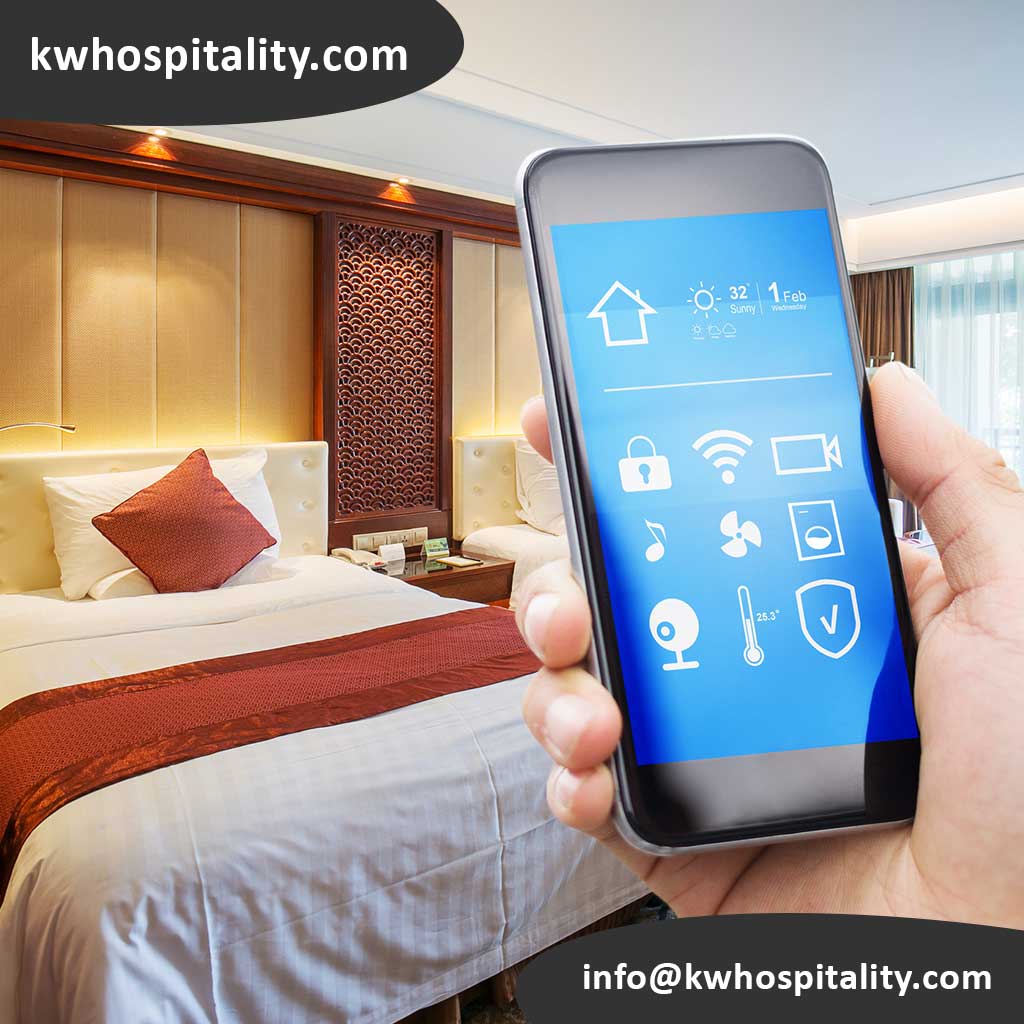
SECTION 17: Innovation and Technology in Hospitality Supplies
How Smart Solutions Redefine Efficiency and Guest Comfort
Technology has quietly revolutionized hospitality. What was once defined by crisp linens and courteous service is now shaped equally by intelligent comfort — automation that anticipates guest needs, sensors that conserve energy, and digital systems that ensure flawless operations behind the scenes.
Innovation in hospitality supplies no longer means simply modern design; it means smart, connected, and sustainable solutions that elevate guest satisfaction while optimizing cost and efficiency.
For hotels opening in the 2020s, integrating technology into both guest-facing products and back-end supply systems is essential. KW Hospitality supports this transformation by sourcing and developing next-generation smart hospitality products — blending manufacturing precision with digital intelligence.
1. The Digital Evolution of Hospitality Supplies
The traditional hotel supply chain focused on durability and aesthetics. Today, the focus has expanded to include data, connectivity, and automation.
Key Trends Driving Technological Integration
Guest Expectations: Tech-savvy travelers demand seamless, app-based experiences.
Operational Efficiency: Automation reduces energy use, waste, and labor dependency.
Data Analytics: Smart systems provide actionable insights for management.
Health & Safety: Touchless technology minimizes contact and contamination risks.
Sustainability: Digital control systems optimize energy and water consumption.
KW Hospitality curates product lines that align with these trends, helping properties future-proof their operations from opening day.
2. Smart Guest Rooms — The Digital Comfort Revolution
A guest room is no longer a static space; it’s an interactive environment that adapts to the individual.
Essential Smart-Room Technologies
| Function | Technology | Benefit |
|---|---|---|
| Climate Control | Smart thermostats, occupancy sensors | Energy efficiency & personalized comfort |
| Lighting Systems | Dimmable LEDs, motion sensors, color-tuning | Mood enhancement & energy savings |
| Entertainment | Smart TVs, Bluetooth speakers, streaming hubs | Personalized content access |
| Voice & App Controls | Alexa, Google, or proprietary hotel apps | Hands-free convenience |
| Curtain & Shade Automation | Motorized systems linked to lighting scenes | Enhanced luxury & privacy |
| Wireless Charging | Qi-enabled alarm clocks & side-table pads | Cable-free convenience |
KW Hospitality’s Smart Room Collection combines these elements — including Bluetooth speaker alarm clocks with USB ports and wireless charging pads — sourced directly from factories in Taiwan and Shenzhen.
3. Touchless and Hygiene-Focused Innovations
Post-pandemic hospitality has embraced contactless technology as a new standard of safety and elegance.
Examples of Touchless Solutions
Automatic Sanitizer Dispensers: Motion-activated for lobbies and washrooms.
Sensor Faucets & Flush Systems: Reduce water usage and contact.
Voice-Activated Controls: Enable lighting, temperature, and entertainment adjustments.
Mobile Check-In & Keyless Entry: Replaces traditional front-desk transactions.
QR-Based Menus & Service Requests: Minimize paper and physical menus.
KW Hospitality supplies sensor-based bathroom fittings and dispensers that merge hygiene, design, and sustainability — ideal for both new builds and retrofits.
4. Smart Energy and Facility Management
Efficiency begins with intelligent building systems.
Core Technologies for Energy Optimization
IoT Sensors: Monitor occupancy, temperature, and lighting use.
Energy-Management Systems (EMS): Centralized platform adjusting HVAC and lighting automatically.
Smart Meters: Real-time consumption tracking for utilities.
Predictive Maintenance: Sensors alert staff to faults before breakdowns occur.
Solar Integration: Photovoltaic panels powering common areas or water heating.
Hotels using EMS can cut energy costs by 20–35 % while maintaining guest comfort.
KW Hospitality collaborates with energy-technology partners to integrate smart control hubs compatible with international systems like KNX or BACnet.
5. Laundry and Housekeeping Automation
Back-of-house operations benefit equally from innovation.
Technology in Housekeeping
RFID Linen Tracking: Tags sewn into towels and sheets provide real-time inventory data.
Automated Dispensing Systems: Measure and release optimal detergent quantities.
Smart Trolleys: Equipped with GPS and digital checklists for task management.
Housekeeping Apps: Enable instant reporting of room status, maintenance issues, or minibar refills.
KW Hospitality supplies RFID-compatible linens and digital inventory systems, reducing loss rates and simplifying accountability.
6. Food & Beverage Tech Integration
F&B operations represent a major share of hotel expenses — and opportunity for innovation.
Modern F&B Technologies
| Application | Innovation | Result |
|---|---|---|
| Smart Kitchen Equipment | IoT-connected ovens & induction cookers | Consistent cooking, lower energy use |
| Digital Inventory Tracking | Monitors ingredient levels & expiry | Waste reduction |
| Automated Coffee & Juice Machines | Touchless service | Faster breakfast operations |
| Smart Dishwashers | Water-efficient, self-diagnostic | Cost and maintenance reduction |
| POS Integration | Connects restaurant, bar, and room-service data | Real-time analytics |
KW Hospitality helps properties source energy-efficient commercial kitchen equipment compliant with Energy Star or CE standards.
7. Logistics and Supply Chain Digitization
Technology doesn’t end at the guestroom door — it extends deep into procurement and logistics.
Digital Supply-Chain Tools
E-Procurement Platforms: Centralize supplier catalogs and automate orders.
Cloud Inventory Management: Provides real-time stock visibility.
Barcode/RFID Warehousing: Streamlines inbound and outbound tracking.
Predictive Ordering Algorithms: Forecast consumption based on occupancy data.
Blockchain Traceability: Verifies ethical and sustainable sourcing origins.
KW Hospitality integrates cloud-based procurement dashboards that allow clients to manage hundreds of SKUs, vendors, and shipments from a single platform.
8. Guest-Centric Digital Experiences
Modern travelers expect personal control. Smart supplies enhance comfort while gathering feedback for continuous improvement.
Examples
Digital Concierge Tablets: Control lighting, order room service, or book spa appointments.
Smart Mirrors: Display news, weather, or in-room menus.
AI-Powered Chatbots: Provide 24-hour multilingual assistance.
Mobile Apps: Extend hotel communication before and after the stay.
KW Hospitality collaborates with digital-device manufacturers to ensure hardware reliability and aesthetic harmony, blending technology into the room’s interior rather than overwhelming it.
9. Predictive Maintenance and Data Analytics
Data is now the new housekeeping supervisor.
Through continuous monitoring, hotels can prevent downtime and optimize performance.
Predictive Maintenance Workflow
Sensor Detection: Temperature or vibration sensors identify abnormal patterns.
Data Transmission: Alerts sent to maintenance dashboard.
Analysis: AI predicts likelihood of failure.
Action: Maintenance scheduled proactively.
This approach extends equipment lifespan, improves safety, and reduces emergency repair costs — all vital for smooth guest experiences.
KW Hospitality provides integrated monitoring kits for laundry, HVAC, and electrical systems compatible with existing building-management software.
10. Security and Smart Access Systems
Guest security is being redefined by technology.
Smart Security Supplies
RFID & Bluetooth Door Locks: Keyless and traceable entry.
Facial-Recognition Check-In: Speeds up registration and enhances safety.
Surveillance Integration: AI-driven analytics detecting unusual activity.
Emergency Communication Systems: Two-way radios and panic buttons connected via Wi-Fi mesh.
KW Hospitality offers hotel-grade electronic lock systems compliant with global standards (CE, FCC, UL), ensuring reliability and data protection.
11. Sustainable Smart Technologies
Technology and sustainability now go hand in hand.
Eco-Smart Innovations
Smart Thermostats: Reduce HVAC energy by up to 30 %.
LED Lighting with Sensors: Automatically adjusts based on daylight.
Water-Management IoT Valves: Detect leaks and shut off supply automatically.
Smart Waste Bins: Compact trash and track fill levels to optimize collection.
These tools transform environmental responsibility into measurable savings.
KW Hospitality sources certified green technology products that comply with Energy Star, RoHS, and ISO 50001 standards.
12. Technology Integration Challenges — and How to Overcome Them
Innovation brings complexity. Hotels must address integration and training to ensure systems deliver promised benefits.
Common Challenges
Compatibility: Different vendors using non-standard protocols.
Staff Adaptation: Resistance or skill gaps in operating smart systems.
Maintenance Costs: Software updates and technical support needs.
Cybersecurity Risks: Protecting guest data from connected devices.
KW Hospitality’s Solutions
Source interoperable products using open-protocol standards.
Offer training and digital manuals for housekeeping and engineering teams.
Partner with certified IT integrators for setup and maintenance.
Implement secure data-encryption systems in all connected devices.
13. The Future of Hospitality Innovation
Emerging technologies promise to redefine hotel operations even further in the coming decade.
Next-Generation Trends
Artificial Intelligence: Real-time guest personalization and service automation.
Augmented Reality (AR): Virtual tours and interactive room guides.
Robotics: Delivery robots for room service and cleaning.
Digital Twin Models: Simulate operations for predictive planning.
5G Connectivity: Faster, more reliable device networks.
KW Hospitality is actively exploring partnerships with IoT and AI developers to bring these innovations into commercial hospitality applications — bridging the gap between smart manufacturing and real-world hotel use.
14. KW Hospitality’s Technology Integration Program
KW Hospitality provides hotels with an end-to-end digital integration service, ensuring that every technological component fits both operational and aesthetic goals.
Program Features
Consultation: Assess property size, budget, and technological needs.
Product Selection: Identify certified smart devices from global factories.
Design Coordination: Ensure visual harmony with interior aesthetics.
Installation Support: Coordinate logistics and technical setup.
Staff Training: Provide operation manuals and workshops.
Maintenance Plan: Scheduled updates and performance reviews.
By managing both sourcing and implementation, KW Hospitality eliminates the typical friction between design, procurement, and IT departments.
15. Summary of Innovation & Technology in Hospitality Supplies
| Category | Focus | KW Hospitality Solution |
|---|---|---|
| Smart Rooms | Personalization & comfort | IoT devices, wireless charging, app control |
| Hygiene & Touchless Tech | Safety & elegance | Sensor dispensers, voice activation |
| Energy Systems | Efficiency & cost savings | Smart EMS, predictive monitoring |
| Housekeeping Automation | Productivity | RFID linen tracking, digital tasking |
| Supply-Chain Tech | Visibility | E-procurement & analytics dashboard |
| Security Systems | Guest safety | RFID/Bluetooth locks, AI surveillance |
| Sustainability Integration | Green innovation | Energy-Star and ISO 50001 certified tech |
Smart hospitality is no longer futuristic — it’s foundational.
Hotels that integrate innovation into their supplies achieve the ultimate advantage: operational efficiency, reduced costs, and enhanced guest loyalty.
Through its extensive network of advanced manufacturers and technology partners, KW Hospitality bridges design and intelligence — turning every hotel into a connected, efficient, and inspiring environment.
In the next section, we’ll move into Quality Assurance and Testing Standards — Ensuring Consistency, Safety, and Longevity in Hospitality Supplies, exploring how hotels can verify product performance, durability, and certification before procurement.

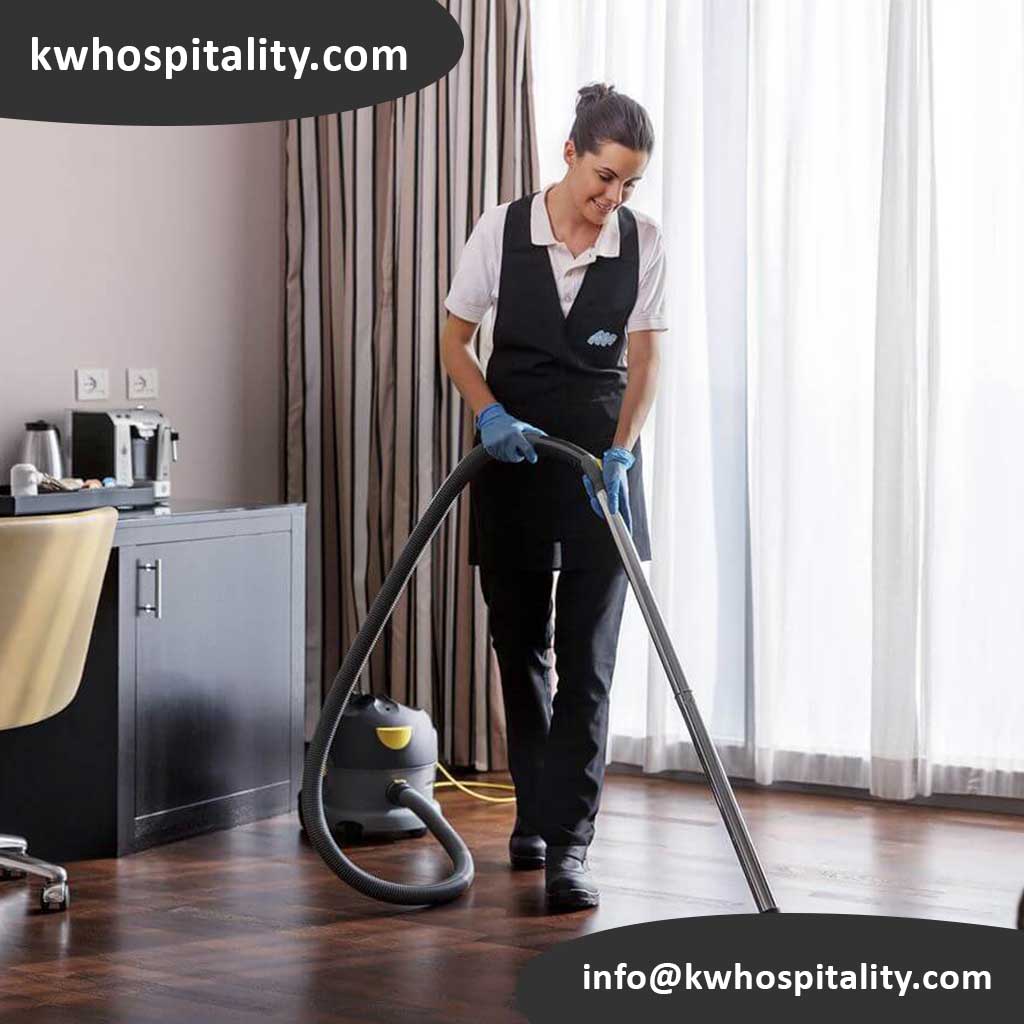
SECTION 20: Trends Shaping the Future of Hospitality Supplies
Innovation, Sustainability, and Global Design Movement
The hospitality industry is entering a new era — one shaped by technology, sustainability, and global guest diversity. The old formula of “comfort plus service” is being replaced by experience plus meaning. Guests are no longer satisfied with functional amenities; they expect products that reflect values, innovation, and intentional design.
From eco-conscious sourcing and local craftsmanship to digital personalization and multi-sensory design, the next decade of hospitality supplies will be defined by smart sustainability — a seamless blend of innovation and responsibility.
KW Hospitality, as a global sourcing leader, stands at the intersection of these trends, guiding hotels toward future-ready supply strategies that balance design, durability, and environmental integrity.
1. Sustainability as the Core Business Strategy
Sustainability has moved from trend to necessity. It is now central to brand value, guest satisfaction, and investor confidence.
Evolving Priorities
Zero Waste Operations: Refillable amenities, recyclable packaging, and biodegradable materials.
Carbon Neutral Goals: Measuring and offsetting emissions across procurement and logistics.
Local Sourcing: Reducing freight impact and supporting community economies.
Energy Efficiency: Smart controls for HVAC, lighting, and water systems.
Longevity & Reusability: Durable products that last longer and reduce replacement cycles.
KW Hospitality Insight
KW Hospitality’s EcoLine Collection anticipates this shift — offering full suites of eco-certified products: bamboo textiles, refillable amenity systems, LED lighting, recyclable containers, and FSC-certified paper goods.
2. Personalization Through Smart Technology
Hospitality is becoming increasingly data-driven and tailored. Guests want environments that respond to their needs automatically.
Emerging Personalization Trends
Smart-Room Controls: Temperature, lighting, and entertainment adjusted via app or voice.
AI-Powered Recommendation Systems: Personalized amenities and services based on guest profiles.
Digital Preference Storage: Return guests automatically receive their favorite pillow or scent.
Smart Mirrors & Displays: Interactive information and virtual concierge services.
Adaptive Comfort Systems: Beds or chairs that auto-adjust firmness and ergonomics.
KW Hospitality’s Smart Room Line integrates Bluetooth, wireless charging, and voice-assist functions into hotel electronics, bringing personalization directly into supply design.
3. Minimalist and Multi-Functional Design
Modern travelers value simplicity — not excess. Minimalism is the new luxury, emphasizing function, space, and sustainability.
Design Characteristics
Neutral color palettes and natural textures.
Multi-purpose furniture and modular systems.
Hidden technology (charging ports, speakers built into décor).
Compact amenities for smaller urban rooms.
Materials that convey calm — stone, linen, bamboo, brushed metal.
KW Hospitality collaborates with industrial designers in Taipei and Foshan to produce multi-functional furnishings and accessories that maximize usability without visual clutter.
4. The Rise of “Local-Luxury” Design
Global travelers crave authenticity — they want to feel the culture of a place. “Local luxury” merges international standards with regional identity.
Examples
Moroccan hotels using locally crafted ceramics and woven baskets.
Canadian resorts incorporating indigenous art and natural wood tones.
Asian boutique hotels using calligraphy-inspired prints or tea-based amenities.
KW Hospitality Approach
KW Hospitality works with regional artisans and design consultants to infuse local culture into product customization — from amenity scents to decorative textiles — ensuring authenticity while maintaining global quality control.
5. Wellness-Oriented Products
Health and wellbeing have become the new frontier of luxury travel. Guests expect supplies that enhance rest, balance, and rejuvenation.
Wellness Trends in Supplies
Sleep Technology: Weighted blankets, aromatherapy diffusers, and smart lighting for circadian rhythms.
Air & Water Purification: In-room purifiers and filtered taps for fresh drinking water.
Non-Toxic Materials: OEKO-TEX® certified textiles, BPA-free plastics, and organic toiletries.
Spa-Grade Amenities: Natural oils, botanical extracts, and refillable dispensers.
Mindful Design: Calming colors, acoustic insulation, and scent diffusion.
KW Hospitality’s Wellness Collection integrates aromatherapy amenity lines, ergonomic fabrics, and hypoallergenic materials — merging health with hospitality.
6. Circular Economy and Regenerative Supply Chains
The next evolution of sustainability is the circular economy — systems where products are reused, repaired, and recycled continuously.
Circular Hospitality Concepts
Linen and towel recycling programs.
Modular furniture designed for disassembly and refurbishment.
Take-back programs for amenities and packaging.
Repurposing hotel waste into new raw materials.
Supplier accountability for end-of-life management.
KW Hospitality partners with eco-certified factories that implement circular production loops, offering hotels measurable waste-reduction achievements for ESG reporting.
7. Global Aesthetic Trends — The Look of Tomorrow’s Hotels
Design styles in hospitality supplies mirror social and cultural shifts. Aesthetic trends are moving toward natural sophistication and quiet luxury — understated, sensory-driven, and eco-aligned.
Top Global Design Directions
| Trend | Style Features | Ideal For |
|---|---|---|
| Japandi Minimalism | Blend of Japanese Zen + Scandinavian functionality | Urban hotels and resorts |
| Biophilic Design | Natural materials, greenery, organic forms | Wellness resorts and eco-hotels |
| Industrial Chic | Exposed textures, matte black, metal and wood mix | Boutique city properties |
| Soft Modernism | Clean lines, soft curves, neutral tones | Business hotels |
| Cultural Heritage Revival | Local art, handcrafted accents, regional motifs | Luxury resorts and heritage hotels |
KW Hospitality designs product palettes to match aesthetic identities, coordinating linens, amenities, and décor accessories with the architectural vision of each property.
8. Smart Sustainability — Where Technology Meets Ecology
The most exciting trend is the fusion of digital intelligence with green operations.
Smart Eco-Innovations
AI-driven energy systems predicting peak usage.
IoT monitoring of water leaks or air quality.
Automated linen tracking to prevent unnecessary washing.
Smart packaging that displays recycling instructions via QR code.
Data-driven carbon dashboards integrated into PMS.
KW Hospitality supports hotels in deploying sensor-equipped supplies — from dispensers to lighting — enabling data-backed sustainability management.
9. The Expansion of Hybrid Hospitality Models
The boundary between hotel, home, and workspace is fading. “Hybrid hospitality” caters to digital nomads, long-stay guests, and co-living travelers.
Design & Supply Implications
Ergonomic furniture suitable for both work and rest.
Compact kitchenettes and laundry solutions.
Multi-functional lighting and tech charging systems.
Durable yet homely materials (wood laminates, soft textiles).
Personal storage accessories and modular shelving.
KW Hospitality offers aparthotel-ready supply packages blending residential comfort with commercial durability.
10. Digital Procurement and AI Sourcing
The way hotels buy is changing just as fast as what they buy. Digital procurement now drives speed, accuracy, and cost transparency.
Trends in Procurement Technology
E-Procurement Platforms: Paperless, centralized purchasing.
AI-Driven Forecasting: Predicts supply needs based on occupancy and seasonality.
Supplier Performance Dashboards: Data-driven vendor evaluation.
Virtual Product Sampling: 3D previews of custom designs.
Blockchain Traceability: Verifies ethical sourcing and certification validity.
KW Hospitality integrates AI procurement analytics into its supply chain, allowing clients to visualize inventory levels, lead times, and sustainability metrics in real time.
11. Rise of Small-Batch Custom Manufacturing
Mass production is giving way to flexible, small-batch runs tailored for boutique properties.
Advantages
Faster prototyping and sampling.
Easier customization without high MOQs (Minimum Order Quantities).
Reduced waste and overstock.
Greater creative freedom for designers.
KW Hospitality works directly with flexible Asian factories that accept smaller, design-focused orders — ideal for independent hotels and resort groups launching signature collections.
12. Social and Ethical Procurement
Guests increasingly expect hotels to demonstrate social awareness and integrity in sourcing.
Emerging Ethical Procurement Priorities
Fair wages and safe working conditions.
Support for women-owned or local enterprises.
Community-based manufacturing initiatives.
Diversity and inclusion in supply chains.
KW Hospitality partners only with BSCI and SA8000-compliant factories, ensuring every product aligns with social responsibility values.
13. Artificial Intelligence in Guest Experience Design
AI isn’t only a management tool — it’s transforming how guests interact with hotel spaces.
AI-Driven Guest Enhancements
Predictive personalization (preferred room temperature, pillow type).
Automated response systems for maintenance or housekeeping.
AI-concierge chatbots offering multilingual support.
Smart predictive inventory — replacing supplies before depletion.
KW Hospitality collaborates with AI technology providers to embed smart sensing into hotel products — from digital mirrors to intelligent alarm clocks.
14. Multi-Sensory Design and Emotional Branding
Tomorrow’s hospitality is emotional, not transactional. Multi-sensory design turns rooms into experiences that guests remember long after checkout.
Five Senses of Hotel Branding
| Sense | Implementation |
|---|---|
| Sight | Harmonious colors, minimal clutter, ambient lighting |
| Sound | White-noise control, soft music integration |
| Scent | Signature fragrances and diffusers |
| Touch | Textural richness in fabrics and furniture |
| Taste | Locally inspired amenities and refreshments |
KW Hospitality offers scent development, textile design, and acoustic-friendly materials to support hotels in crafting signature sensory environments.
15. The Next Decade: From Luxury to Responsibility
The definition of luxury is shifting from extravagance to purposeful design — a fusion of comfort, conscience, and creativity.
2025–2035 Outlook
Sustainability becomes mandatory across supply categories.
Circular economy replaces linear consumption.
Hybrid spaces dominate new hotel designs.
AI and IoT fully integrate with guest comfort systems.
Transparency and authenticity replace mere marketing claims.
KW Hospitality’s Vision:
To lead the global transformation toward eco-intelligent hospitality supply chains, merging manufacturing excellence with ethical and technological progress.
16. Summary of Future Hospitality Supply Trends
| Trend Theme | Impact | KW Hospitality Alignment |
|---|---|---|
| Sustainability | Core business strategy | EcoLine Collection & green sourcing |
| Smart Technology | Personalization & efficiency | Smart Room Line & IoT integration |
| Minimalism & Multi-function | Design and space optimization | Modular, functional furnishings |
| Local-Luxury Design | Cultural authenticity | Regional artisan collaborations |
| Wellness & Health | Guest wellbeing | Non-toxic, spa-grade amenities |
| Digital Procurement | Efficiency & transparency | AI-based sourcing platforms |
| Circular Economy | Waste reduction | Return-loop supply partnerships |
The future of hospitality will belong to brands that can balance innovation with integrity.
Hotels that embrace smart sustainability will not only attract new guests — they’ll inspire loyalty, advocacy, and lasting value.
With its international manufacturing network, design partnerships, and digital procurement expertise, KW Hospitality is helping shape that future today.
Next, we’ll move into Section 21: Case Studies — Real-World Solutions and Success Stories from KW Hospitality, highlighting how KW Hospitality has delivered end-to-end sourcing and supply solutions for hotels around the world.
SECTION 21: Case Studies
Real-World Solutions and Success Stories from KW Hospitality
While strategies, sourcing models, and product lists explain what makes a hospitality business successful, real-world examples demonstrate how these ideas create measurable value.
Across continents, KW Hospitality has collaborated with boutique hotels, global chains, and resort developers to transform their supply systems — reducing cost, improving quality, and enhancing guest experience simultaneously.
These case studies showcase the company’s unique ability to combine factory-level manufacturing control, design sensitivity, and logistics expertise into turnkey hospitality supply solutions.
1. Aurora Sky Hotel – Whistler, Canada
Concept: Sustainable luxury in an alpine setting.
Background
When the management of Aurora Sky Hotel planned its renovation, their objective was to elevate guest experience while aligning with Canada’s new eco-tourism standards. They wanted an eco-luxury brand — refined but rooted in environmental consciousness.
KW Hospitality Solution
KW Hospitality developed a complete customized supply package:
Textiles: Bamboo-cotton bathrobes and towels (OEKO-TEX® certified).
Amenities: Refillable matte-black aluminum dispensers embossed with the hotel logo.
Dining Supplies: Bone-china tableware with under-glaze “northern lights” pattern.
Scent & Wellness: Signature pine-and-ocean fragrance line created with Taiwanese perfumers.
Energy Efficiency: Smart-room thermostats and LED systems reducing energy use by 28 %.
Results
72 % guest recall rate for the signature scent (survey verified).
20 % increase in direct bookings through repeat guests.
Achieved Green Key Gold Certification within 12 months.
Lesson: Eco-luxury succeeds when design, sustainability, and guest emotion converge.
2. Seabreeze Resort – Phuket, Thailand
Concept: Plastic-free paradise through circular procurement.
Challenge
Operating on a tropical island meant managing high humidity, logistics delays, and increasing environmental scrutiny. The resort aimed to eliminate single-use plastics and obtain recognized eco-certification.
KW Hospitality Solution
Switched 28 amenity items from PET bottles to refillable aluminum and glass.
Introduced bamboo slippers, jute laundry bags, and kraft-paper packaging.
Installed water-saving faucets and ozone laundry systems.
Consolidated container shipments to cut freight emissions.
Results
86 % reduction in single-use plastics within 12 months.
Utility costs down 23 %.
Certified Green Key Gold and received regional “Eco Champion Award.”
Lesson: A clear sustainability roadmap supported by compliant factories turns environmental goals into measurable ROI.
3. MetroLine Business Hotel – Montreal, Canada
Concept: Urban minimalism with intelligent comfort.
Challenge
A downtown business hotel required a modernization plan balancing technology and aesthetics — but with limited space and budget.
KW Hospitality Solution
Delivered Smart-Room Electronics Line: Bluetooth speaker alarm clocks with wireless charging and dual USB ports.
Compact Modular Furniture: Multi-function work-dining tables and wall-mounted lighting.
Uniform Design System: Tone-on-tone linens and curtains to visually expand space.
Central Procurement Dashboard: Cloud-based reordering system integrated with hotel PMS.
Results
Guest satisfaction rating rose from 8.2 → 9.1 on OTA platforms.
15 % reduction in energy costs.
Streamlined procurement cycle by 40 %.
Lesson: Technology and design integration can transform mid-range hotels into smart, efficient properties without large capital outlay.
4. Azure Dunes Resort – Dubai, UAE
Concept: Five-star coastal resort emphasizing sensory experience.
Challenge
The property wanted to differentiate itself from nearby competitors by offering a multi-sensory “coastal calm” experience using locally inspired materials.
KW Hospitality Solution
Scent Branding: Developed “Sea Mist” fragrance used in amenities, lobby diffusers, and linen mists.
Guestroom Supplies: Embossed towels and robes featuring a wave pattern.
F&B Collection: Custom porcelain plates with mother-of-pearl glaze reflecting ocean light.
Lighting Concept: Warm white LEDs with adaptive dimming for evening ambience.
Results
60 % of guest reviews mentioned atmosphere or scent positively.
Extended stay average from 3.2 to 4.1 nights.
Increased social-media engagement 2.5× through visual consistency.
Lesson: Emotional branding through multi-sensory design builds long-term loyalty.
5. Northern Haven Lodge – Finland
Concept: Off-grid sustainability with Nordic authenticity.
Challenge
An eco-lodge in the Arctic Circle needed durable, low-temperature-resistant materials and minimal supply chain waste due to limited transport access.
KW Hospitality Solution
Supplied thermal blankets and microfiber duvets rated for −30 °C, made with recycled PET fibers.
Introduced solar-powered outdoor lighting and biodegradable cleaning agents.
Provided compact packaging for air-freight optimization.
Coordinated annual consolidated shipping schedule from KW’s Taiwan hub to Lapland.
Results
Reduced freight cost per item by 18 %.
100 % guest satisfaction on cleanliness and comfort in post-stay surveys.
Featured in National Geographic Traveller for sustainable design.
Lesson: Supply efficiency and durability matter most in remote locations where logistics define success.
6. Grand Horizon Hotel – Shanghai, China
Concept: Smart business hospitality for a new generation.
Challenge
The client sought to reposition its flagship property as a tech-driven, eco-friendly business hotel competing with international chains.
KW Hospitality Solution
Installed IoT-enabled climate control and occupancy sensors.
Implemented RFID linen tracking system for inventory accuracy.
Supplied touchless bathroom fixtures and UV sanitation devices.
Created custom app interface connecting room controls, housekeeping requests, and minibar restocks.
Results
Reduced annual linen loss by 42 %.
Maintenance response time improved by 35 %.
Recognized as one of Shanghai’s top “Smart Hotels 2024.”
Lesson: Data-driven operations enhance both sustainability and efficiency.
7. The Royal Orchid Heritage – Jaipur, India
Concept: Cultural heritage luxury with global consistency.
Challenge
Preserve the historic architecture and local craftsmanship while meeting international five-star standards.
KW Hospitality Solution
Collaborated with local artisans to create hand-embroidered bed runners.
Manufactured custom ceramic amenity bottles featuring Jaipur’s blue-pottery motifs.
Supplied solid brass lighting fixtures meeting CE certification for European travelers.
Integrated modern safety systems (NFPA-approved detectors, fire-retardant fabrics).
Results
Received UNESCO Heritage Hotel acknowledgment for design preservation.
Boosted average daily rate (ADR) by 18 %.
Zero guest complaints on amenities within first year of reopening.
Lesson: Tradition and technology can coexist when design and compliance are managed holistically.
8. Ocean Pearl Serviced Apartments – Singapore
Concept: Hybrid living for long-stay and digital-nomad guests.
Challenge
Frequent turnovers and extended stays demanded supplies that were durable, space-efficient, and easy to maintain.
KW Hospitality Solution
Introduced modular kitchen & laundry starter kits (induction cooker, compact dryer).
Durable linen sets tested for 200+ wash cycles.
Smart inventory system predicting restock intervals.
Noise-control fabrics improving acoustics in open layouts.
Results
Maintenance costs dropped 25 %.
Long-stay occupancy increased 33 %.
Featured in Hospitality Design Asia for innovative hybrid concept.
Lesson: Functional design paired with smart logistics drives profitability in extended-stay models.
9. BlueBay Hotel Group – Multi-Property Global Rollout
Concept: Chain-wide standardization with local flexibility.
Challenge
BlueBay managed 15 properties across Europe and the Middle East with inconsistent supply quality and rising logistics costs.
KW Hospitality Solution
Developed a Brand Identity Supply Manual aligning all categories — textiles, amenities, uniforms, and signage.
Centralized production through two verified factories (Guangdong & Taiwan).
Established regional consolidation hubs to minimize freight cost.
Implemented digital procurement dashboard for unified ordering.
Results
Procurement costs reduced by 19 %.
Brand consistency improved across all markets.
Simplified customs and compliance documentation.
Lesson: Global brand coherence requires centralized manufacturing and data visibility.
10. Desert Bloom Camp – Saudi Arabia
Concept: Ultra-luxury glamping experience in extreme climate.
Challenge
Design and supply hospitality products capable of withstanding sand, heat, and mobile installation — without compromising comfort.
KW Hospitality Solution
Developed modular tent furniture with anodized aluminum frames.
Supplied solar-powered lighting kits and battery-operated cooling fans.
Designed UV-resistant textiles and dust-proof amenities packaging.
Implemented returnable packaging system for logistics sustainability.
Results
100 % operational reliability during 50 °C summers.
Waste reduction by 60 %.
Guest satisfaction score of 9.6/10 (Booking.com average).
Lesson: Smart material engineering and modularity unlock new frontiers in outdoor luxury hospitality.
11. Chateau Bellevue – France
Concept: Boutique vineyard hotel blending gastronomy and sustainability.
Challenge
The property wanted a timeless European aesthetic using environmentally responsible supplies.
KW Hospitality Solution
Crafted linen-blend napery dyed with natural pigments.
Provided recycled-glass tableware and compostable amenity packaging.
Integrated wine-themed guestroom décor and scent line.
Ensured compliance with EU eco-label standards.
Results
Earned Relais & Châteaux sustainability commendation.
Guest spending on F&B rose 22 %.
Local suppliers engaged for 30 % of materials.
Lesson: Sustainability and storytelling elevate brand identity and revenue simultaneously.
12. Summary of Case Studies
| Hotel / Project | Key Focus | Result |
|---|---|---|
| Aurora Sky – Canada | Eco-luxury branding | 20 % more repeat guests |
| Seabreeze – Thailand | Plastic elimination | 86 % waste reduction |
| MetroLine – Canada | Smart urban design | +0.9 guest rating |
| Azure Dunes – Dubai | Sensory luxury | 2.5× engagement |
| Northern Haven – Finland | Remote sustainability | 18 % freight savings |
| Grand Horizon – China | Smart automation | 42 % linen loss reduction |
| Royal Orchid – India | Cultural authenticity | +18 % ADR |
| Ocean Pearl – Singapore | Hybrid living | +33 % long-stay occupancy |
| BlueBay Group | Global standardization | −19 % procurement cost |
| Desert Bloom – Saudi Arabia | Extreme-climate luxury | 9.6/10 satisfaction |
| Chateau Bellevue – France | Sustainable aesthetics | +22 % F&B revenue |
Across these projects, one constant emerges: integration. Success is not achieved through a single product or technology but through holistic coordination — design, production, logistics, and compliance working as one system.
13. Lessons Learned from Global Implementations
Customization Drives Identity: Tailor-made supplies reinforce brand storytelling.
Centralization Reduces Risk: Consolidated manufacturing ensures consistent quality.
Data Enables Agility: Digital procurement improves forecasting and accountability.
Sustainability Pays Off: Eco initiatives deliver measurable cost savings and reputation gains.
Partnership Over Transaction: Long-term collaboration yields innovation and trust.
KW Hospitality acts not as a mere vendor but as a strategic partner — bridging cultures, regulations, and industries to deliver excellence from concept to guestroom.
14. The KW Hospitality Advantage
Multinational Manufacturing Network: Four partner factories across China and Taiwan.
On-Site Quality Control Teams: Real-time reporting and photo documentation.
Design Collaboration: Branding and product customization under one workflow.
Eco & Safety Certifications: ISO, OEKO-TEX®, CE, FCC, BSCI, and more.
Integrated Logistics: Ocean, air, and local warehousing from Asia to North America.
Transparent Communication: Dedicated account management and post-delivery support.
This integrated ecosystem ensures reliability, scalability, and creativity — values every modern hotel supplier should embody.
15. Conclusion — Real Partnerships, Real Results
Every project featured above shares a single philosophy: the smallest detail can define the largest impression.
A perfectly balanced bathrobe, a precisely tuned bedside lamp, or a refillable amenity bottle might seem minor — yet together they craft the emotional landscape of hospitality.
KW Hospitality exists to make those details flawless, sustainable, and uniquely yours.
Through real-world experience, global sourcing power, and a commitment to responsible innovation, the company continues to redefine what modern hospitality supply partnerships can achieve.
Next, we’ll move to Section 22: How to Choose the Right Supplier — Key Criteria, Red Flags, and Proven Selection Framework, helping hotels and procurement teams make confident, informed sourcing decisions in an increasingly complex marketplace.
SECTION 22: How to Choose the Right Supplier
Key Criteria, Red Flags, and Proven Selection Framework
Choosing the right supplier is one of the most strategic decisions a new hotel can make.
Your suppliers are not just vendors; they are extensions of your brand, partners who directly influence guest satisfaction, operational costs, and long-term reputation.
In hospitality, where each item touches the guest — from linens to light fixtures — the wrong supplier can mean poor quality, shipment delays, compliance failures, or inconsistent branding. The right supplier, by contrast, ensures seamless opening, lower lifetime costs, and a consistent five-star impression.
KW Hospitality has spent over a decade evaluating, auditing, and managing factories across Asia and North America. Drawing on that experience, this section outlines the framework hotels can use to identify, verify, and select dependable hospitality supply partners.
1. Why Supplier Selection Matters More Than Price
Many new hotels focus on unit cost. But in professional procurement, the cheapest supplier is rarely the most cost-effective.
True Supplier Value Includes:
Product quality & consistency (reduces returns and replacements)
On-time delivery (avoids project delays)
Compliance certification (avoids customs or legal issues)
After-sales service & warranty (protects long-term ROI)
Innovation & customization capability (adds brand distinction)
A reliable supplier adds value through predictability, integrity, and support, not just price.
2. The Supplier Evaluation Pyramid
KW Hospitality recommends evaluating suppliers across three performance layers:
A. Foundation: Legitimacy & Compliance
Business license and registration.
Export or manufacturing permits.
Certifications (ISO, CE, OEKO-TEX®, BSCI, etc.).
Tax and trade registration numbers.
B. Core: Production & Quality Systems
In-house testing labs or third-party inspection reports.
Traceable raw material sourcing.
Documented QA/QC procedures.
Defect and rework statistics.
C. Strategic: Partnership & Innovation
Customization and R&D support.
Communication speed and transparency.
Ability to scale or consolidate multi-category orders.
Commitment to sustainability and ethical labor.
Hotels should choose partners that are strong across all three layers, not just one.
3. The 7 Essential Criteria for Supplier Selection
| Criteria | What to Evaluate | KW Hospitality Insight |
|---|---|---|
| 1. Reliability | Delivery record, responsiveness, financial stability | Request 3-year export data and client references |
| 2. Quality Control | Testing, inspection, certifications | Ask for detailed QA process and lab results |
| 3. Compliance | Safety, hygiene, and labor standards | Verify ISO, CE, FCC, BSCI, and country-specific rules |
| 4. Manufacturing Capability | Machinery, workforce, and capacity | Tour facility or review production videos |
| 5. Customization | Flexibility in branding, packaging, and materials | Review previous custom projects |
| 6. Communication | English fluency, responsiveness, transparency | Test with sample order and observe clarity |
| 7. Logistics & Service | Lead time, export experience, after-sales support | Assess freight options and warranty coverage |
KW Hospitality integrates these seven pillars into every supplier audit, ensuring only trusted factories enter its network.
4. Verifying Authenticity and Compliance
Global sourcing often involves intermediaries or trading companies posing as manufacturers.
To prevent misrepresentation, use verification checkpoints:
Verification Steps
Request Factory License: Must include location, scope, and valid tax ID.
Check Address Consistency: Match company info on government websites and invoices.
Request Live Video Tour or Photos: Verify actual production environment.
Review Audit Reports: Independent certifications (BSCI, SGS, TÜV).
Validate Contact Channels: Factory domain email vs. generic addresses (e.g., @163.com, @gmail.com).
KW Hospitality performs on-site verification for all partner factories, eliminating risk of counterfeit certification or subcontracting.
5. The Supplier Shortlisting Process
A structured approach ensures objective evaluation and avoids emotional or rushed decisions.
Step 1 – Identify Potential Suppliers
Search via trade fairs, verified B2B platforms, and referrals.
Use pre-qualification filters: export experience, certifications, and hospitality specialization.
Step 2 – Conduct Initial Assessment
Request profile, client list, product catalog, and certifications.
Discard suppliers unwilling to share documentation.
Step 3 – Request Samples
Test quality, finish, and packaging. Evaluate consistency between sample and catalog photos.
Step 4 – Factory Audit or Virtual Visit
Inspect production areas, cleanliness, and worker safety.
Ask for QA procedures and testing reports.
Step 5 – Compare Quotations
Ensure you’re comparing like-for-like specifications — GSM, dimensions, material grades, and packaging terms.
Step 6 – Conduct Trial Order
Start with small batch to measure responsiveness and real performance.
Step 7 – Final Approval & Contract
Sign detailed supply agreement covering specs, delivery, warranty, and penalties for non-compliance.
6. Red Flags When Choosing a Supplier
Recognizing early warning signs can prevent costly mistakes.
| Red Flag | Risk Implication |
|---|---|
| Reluctance to share factory address or license | Possible trading middleman |
| Large upfront deposit requests (>40%) | Financial instability |
| Inconsistent communication or evasive replies | Lack of transparency |
| Missing certifications or outdated audit reports | Non-compliance risk |
| Unusually low pricing | Quality or material substitution |
| Refusal to allow inspection | Hidden defects or subcontracting |
| No fixed QC or testing process | High product failure probability |
KW Hospitality eliminates such risks by handling all factory vetting internally, ensuring 100% transparency and verified production.
7. Contracting and Quality Safeguards
Once a supplier is selected, formalize expectations through clear, measurable contracts.
Key Contract Components
Detailed Specifications: Dimensions, material, GSM, color codes, packaging.
Inspection Clause: Right to third-party pre-shipment inspection.
Defect Liability: Replacement or refund terms.
Warranty: Duration and coverage for key products.
Compliance Statement: Certifications and safety adherence.
Confidentiality & Branding: Protect design and private labeling rights.
Payment Schedule: Balance after inspection, not before.
KW Hospitality’s legal team provides bilingual contract templates (English–Chinese) to avoid ambiguity in cross-border sourcing.
8. Evaluating Supplier Communication and Culture
Even technically strong factories can fail if communication is poor.
Cultural misalignment often leads to misunderstanding specifications, shipping delays, or quality drift.
Indicators of Good Supplier Communication
Provides proactive updates without prompting.
Admits challenges early instead of hiding problems.
Maintains written traceability of every change.
Offers visuals, photos, and reports consistently.
Respects deadlines and format requirements.
KW Hospitality maintains multilingual sourcing teams fluent in English, Mandarin, and French, ensuring no loss of clarity between clients and Asian factories.
9. Importance of Supply Chain Transparency
Today’s guests and investors demand ethical and environmental transparency.
A good supplier should provide visibility from raw material to finished product.
Transparency Metrics
Origin of raw materials (cotton, metal, wood, plastic).
Energy source used in production (renewable or conventional).
Labor and wage conditions.
Waste management and emission controls.
Packaging material recyclability.
KW Hospitality integrates traceability dashboards and QR-based batch tracking, so hotels can demonstrate ESG compliance confidently.
10. Building Long-Term Supplier Partnerships
Short-term sourcing may save a few dollars, but long-term partnerships create efficiency, consistency, and mutual growth.
Benefits of Strategic Partnerships
Guaranteed pricing stability.
Priority production slots during high demand seasons.
Shared product development and innovation.
Better payment flexibility and warranty coverage.
Joint sustainability initiatives.
KW Hospitality has maintained 8–10 year relationships with most partner factories — a result of shared values, not just contracts.
11. Supplier Performance Monitoring Framework
Once collaboration begins, continuous evaluation ensures standards remain consistent.
KPIs to Track
| Category | Indicator | Target |
|---|---|---|
| Delivery | On-time shipment rate | ≥ 95 % |
| Quality | Defect rate per batch | ≤ 1.5 % |
| Communication | Response time | ≤ 24 hours |
| Flexibility | Sample revision turnaround | ≤ 10 days |
| Compliance | Certification validity | 100 % current |
| Sustainability | Recyclable materials ratio | ≥ 60 % |
KW Hospitality conducts biannual supplier scorecards, sharing results transparently and working collaboratively on performance improvement.
12. Case Study: Supplier Selection in Action
Scenario:
A hotel group in the Caribbean needed a single-source supplier for over 200 SKUs — from amenities and uniforms to kitchenware. Local agents quoted widely different prices and inconsistent quality.
KW Hospitality Process:
Identified and audited 12 potential factories in China and Taiwan.
Shortlisted 5 compliant suppliers (ISO, BSCI, OEKO-TEX®).
Ran trial production for 3 categories.
Selected final 2 factories based on AQL < 2.0 defect ratio.
Created consolidated shipping plan to regional warehouse.
Outcome:
27 % cost reduction vs. previous fragmented sourcing.
Quality complaints decreased from 9 % to <1 %.
Average lead time shortened from 70 days to 42 days.
Lesson: Strategic supplier selection consolidates risk, cost, and complexity — turning procurement into a competitive advantage.
13. KW Hospitality’s Supplier Network Model
KW Hospitality applies a unique “Hub-and-Spoke” network combining global sourcing power with local service.
Model Overview
Hubs: Manufacturing bases in Shenzhen, Jiangsu, and Taipei.
Spokes: Distribution centers in Montreal, Dubai, and Rotterdam.
Integration: Centralized quality, documentation, and design control.
This model enables fast reordering, consistent branding, and reduced shipping costs for international hotel chains.
14. Common Mistakes to Avoid in Supplier Selection
Choosing based on lowest quote — leads to quality failure or hidden costs.
Skipping inspection or sample verification — results in nonconforming goods.
Ignoring communication ability — causes project delays and misunderstandings.
Over-relying on local agents without direct manufacturer contact.
Lack of contractual clarity — weakens your legal protection.
KW Hospitality helps clients avoid these traps by managing direct manufacturer relationships and end-to-end oversight.
15. Summary: The Proven Supplier Selection Framework
| Stage | Objective | KW Hospitality Practice |
|---|---|---|
| Pre-Qualification | Verify legitimacy | Factory audits & license review |
| Evaluation | Assess capability | QA/QC system audit |
| Sampling | Validate product quality | Prototype & lab testing |
| Negotiation | Define expectations | Transparent contract drafting |
| Pilot Order | Real-world test | Controlled trial production |
| Implementation | Scale up | Ongoing QC & performance tracking |
| Partnership | Continuous improvement | Long-term collaboration plan |
The most successful hotels view suppliers as partners in excellence — collaborators who share accountability, innovation, and vision.
Through its global network, local representation, and bilingual sourcing expertise, KW Hospitality provides hotels with exactly that: trusted, tested, and transparent suppliers built for long-term success.
In the next section, we’ll explore Section 23: Common Mistakes in Supply Procurement — Pitfalls that Cost Hotels Time, Money, and Reputation, revealing the most frequent errors new hotels make when sourcing and how to avoid them effectively.
SECTION 23: Common Mistakes in Supply Procurement
Pitfalls that Cost Hotels Time, Money, and Reputation
Procurement is the heartbeat of a hotel’s operations. Every fork, towel, lamp, or amenities bottle that reaches a guest passes through the purchasing department’s decisions. Yet despite its strategic importance, procurement is often treated as a simple administrative task — a dangerous assumption that can cost hotels enormous amounts in delays, waste, and guest dissatisfaction.
After more than a decade of managing hospitality sourcing and logistics across Asia and North America, KW Hospitality has witnessed recurring mistakes that new hotels (and sometimes even established brands) make when building their supply chains. Understanding these pitfalls — and knowing how to prevent them — is critical to operational excellence.
1. Focusing Only on Price Instead of Value
Many new hotels award contracts to the lowest bidder, assuming that all suppliers provide the same product quality.
In hospitality, this is rarely true.
Consequence
Low-price products often come with hidden costs: poor durability, inconsistent color or sizing, higher defect rates, and premature replacement. The “savings” evaporate after the first few months of operation.
Solution
Evaluate Total Cost of Ownership (TCO) — including lifespan, maintenance, and replacement cost.
KW Hospitality helps clients calculate TCO before purchasing, ensuring that long-term value outweighs short-term discounts.
2. Ordering Without Standardized Specifications
A frequent procurement error is vague product descriptions:
“white towels — hotel grade” or “amenity bottles — medium size.”
Consequence
Different suppliers interpret specifications differently, producing mismatched batches. Guests notice inconsistencies immediately.
Solution
Create detailed Product Data Sheets (PDS) specifying material composition, GSM, dimensions, finishing, packaging, and color codes (Pantone / RAL).
KW Hospitality develops comprehensive specification sheets for every SKU before mass production.
3. Ignoring Testing and Sample Verification
Approving production without physical samples or lab reports is among the costliest mistakes.
Consequence
Colors fade, zippers break, or electronics fail quality checks after arrival. Returning or re-shipping from overseas is expensive and time-consuming.
Solution
Always demand pre-production samples and, where applicable, third-party lab tests (SGS, TÜV, Intertek).
KW Hospitality never proceeds to mass production without written client approval on sealed samples.
4. Underestimating Lead Times and Production Cycles
Many projects schedule deliveries too close to the opening date, leaving no buffer for delays in manufacturing, shipping, or customs.
Consequence
Hotels open with missing items — no slippers, incomplete cutlery sets, or mismatched room décor.
Solution
Plan backward from the opening date, adding at least:
45–60 days for production,
30–40 days for sea freight (Asia → North America / Europe),
10–14 days for customs clearance and local transport.
KW Hospitality provides detailed critical-path schedules for each project, preventing last-minute emergencies.
5. Neglecting Logistics and Consolidation
Sourcing multiple categories from different vendors may appear flexible but often multiplies freight cost and customs complexity.
Consequence
Dozens of partial shipments.
Duplicate customs charges.
Storage congestion before installation.
Solution
Use a consolidation strategy — one freight forwarder or master supplier coordinating multiple factories.
KW Hospitality consolidates all goods into full-container loads (FCL) from Asia, optimizing freight and customs documentation.
6. Failing to Audit Supplier Credentials
Many new buyers rely on glossy catalogs or online listings without verifying factory legitimacy.
Consequence
Sub-contracted production with inconsistent quality.
Counterfeit certification or expired licenses.
Risk of customs rejection or safety liability.
Solution
Conduct factory audits — either in person or via a verified third party.
KW Hospitality performs routine on-site inspections, financial checks, and compliance verification before any purchase order.
7. Over-Customization Without Volume Planning
Branding every single product can look impressive but may cause serious cost and inventory issues.
Consequence
High MOQs, long lead times, and leftover branded stock after design changes.
Solution
Identify which items genuinely add brand value (e.g., robes, amenities, stationery) and keep back-of-house items standard.
KW Hospitality helps clients balance customization with practicality through tiered branding programs.
8. Not Coordinating Between Departments
In many hotels, the procurement department orders without full alignment with operations, housekeeping, or engineering.
Consequence
Supplies fit poorly, underperform, or are incompatible with existing systems.
Solution
Adopt cross-departmental procurement committees — each major category approved by its end-user team.
KW Hospitality provides category checklists so every stakeholder confirms functionality before final order.
9. Skipping Pre-Shipment Inspection
Assuming “the factory knows what we want” is a dangerous shortcut.
Consequence
Hidden defects discovered only after arrival.
Irreversible shipping errors or wrong labeling.
Additional freight for replacements.
Solution
Implement AQL-based inspection before goods leave the factory.
KW Hospitality’s QA team conducts FRI (Final Random Inspection) with photographic reports for every shipment.
10. Ignoring Compliance and Certification Requirements
Different countries require specific product certifications — CE, FCC, FDA, CSA, NFPA, etc.
Consequence
Non-certified products may be held at customs or void hotel insurance coverage.
Solution
Verify all compliance documents before placing purchase orders.
KW Hospitality maintains updated certification databases for every category.
11. Lack of Spare Stock and Reorder Planning
Some hotels buy exact quantities for opening and neglect future needs.
Consequence
When items break or are lost, replacements no longer match or suppliers have discontinued models.
Solution
Order 5–10 % contingency stock for fast-moving consumables (towels, glassware, electronics).
KW Hospitality’s digital platform tracks consumption rates and auto-suggests reorder levels.
12. Ignoring Sustainability and Regulatory Trends
Regulations banning single-use plastics or non-recyclable materials are expanding rapidly worldwide.
Consequence
Hotels must replace newly purchased stock prematurely to meet new laws.
Solution
Adopt future-ready materials now — recyclable, refillable, and biodegradable.
KW Hospitality’s EcoLine products anticipate upcoming regulations in Canada, EU, and GCC.
13. Not Documenting Procurement Procedures
Without clear documentation, knowledge is lost when key employees leave.
Consequence
Re-ordering errors, miscommunication with suppliers, and inconsistent specifications.
Solution
Create SOPs (Standard Operating Procedures) covering product specs, suppliers, and ordering cycles.
KW Hospitality assists hotels in developing digital procurement manuals for internal consistency.
14. Failing to Track Supplier Performance
Once suppliers are onboarded, many hotels stop monitoring quality or delivery metrics.
Consequence
Performance gradually declines; problems appear during peak season.
Solution
Maintain Supplier Scorecards measuring on-time delivery, defect rate, and communication quality.
KW Hospitality conducts bi-annual performance audits and shares transparent reports with clients.
15. Underestimating After-Sales Support
Procurement doesn’t end at delivery. Products require servicing, warranty management, and spare-part logistics.
Consequence
Hotels face long downtimes for simple repairs or replacements.
Solution
Choose suppliers with structured after-sales protocols and local service agents.
KW Hospitality provides warranty tracking and replacement coordination directly from its Montreal office.
16. Using Too Many Vendors for Too Few Items
Fragmented purchasing creates confusion and higher administrative cost.
Consequence
Inconsistent product design and color.
Increased shipping paperwork.
Unnecessary price variance.
Solution
Consolidate through category specialists like KW Hospitality who manage multiple factories under one contract.
17. Not Considering Guest Perception of Supplies
Procurement teams sometimes choose products based solely on technical criteria, ignoring design harmony or tactile experience.
Consequence
Supplies feel cheap or mismatched with the property’s branding.
Solution
Integrate procurement with interior design and marketing teams.
KW Hospitality provides 3D mockups and sample room setups to visualize guest impact before final approval.
18. Failure to Plan for Regulatory Documentation
Many government audits or hotel chain brand reviews require certificates and safety test results.
Consequence
Incomplete paperwork delays openings or brand certifications.
Solution
Maintain a digital compliance folder for every SKU — including CoC, MSDS, and QA reports.
KW Hospitality’s online portal automatically organizes these documents for clients.
19. Cultural and Communication Misalignment
Cross-border sourcing demands cultural sensitivity and precision.
Misunderstandings in specifications, units, or design preferences can derail projects.
Solution
Work with bilingual sourcing specialists who understand both Western hotel standards and Asian manufacturing logic.
KW Hospitality bridges this gap through its trilingual project teams (English – Mandarin – French).
20. Ignoring Technology in Procurement
Paper-based ordering systems are outdated and error-prone.
Consequence
Loss of traceability, missed reorder points, and manual mistakes.
Solution
Adopt digital procurement tools — cloud dashboards, barcode tracking, and automated re-ordering.
KW Hospitality’s Smart Supply Portal centralizes all categories, POs, and inspection records in one platform.
21. Summary — Avoiding the Procurement Pitfalls
| Mistake | Impact | KW Hospitality Solution |
|---|---|---|
| Price over value | Hidden long-term costs | TCO analysis & quality metrics |
| No specifications | Inconsistent deliveries | Product Data Sheets |
| Skipped sampling | Defects & rework | Lab-tested prototypes |
| Poor scheduling | Delays & shortages | Critical-path planning |
| Fragmented logistics | High freight costs | Consolidated shipping |
| Missing audits | Compliance risk | Factory verification |
| Over-branding | Inventory issues | Tiered customization |
| No cross-team review | Functional mismatch | Multi-department checklists |
| Ignored inspection | Quality failures | AQL pre-shipment QC |
| Missing certificates | Customs / insurance risk | Certified product sourcing |
| No stock buffer | Guest dissatisfaction | Reorder planning tools |
| No sustainability planning | Regulatory obsolescence | EcoLine materials |
| Lack of SOPs | Knowledge loss | Digital procurement manuals |
| Supplier neglect | Declining performance | Scorecards & audits |
| Weak after-sales | Downtime | Local warranty support |
Avoiding these pitfalls can save a hotel hundreds of thousands of dollars across its operational lifetime — and, more importantly, preserve the brand promise of seamless comfort and reliability.
22. KW Hospitality’s Procurement Assurance Program
To help hotels mitigate risk, KW Hospitality created a structured Procurement Assurance Program that includes:
Supplier Vetting & Auditing
TCO and Sustainability Analysis
Sample and Lab Testing Workflow
Digital Tracking Dashboard
Post-Delivery Performance Reviews
This end-to-end approach eliminates common procurement errors before they occur, ensuring that every dollar spent contributes to lasting guest satisfaction.
23. Conclusion — Procurement as a Strategic Advantage
The most successful hotels treat procurement not as a back-office expense but as a strategic growth engine.
When supplies are well-sourced, compliant, and perfectly aligned with brand vision, they elevate every aspect of guest experience — from comfort to credibility.
By learning from industry mistakes and partnering with experienced sourcing specialists, hotels transform procurement from a source of risk into a source of reliability.
KW Hospitality stands as a long-term ally in that transformation — helping hotels worldwide procure smarter, safer, and more sustainably.
Next, we’ll continue with Section 24: Design, Comfort, and Guest Perception — How Hospitality Supplies Shape Emotional Experience, exploring how aesthetics, ergonomics, and sensory design directly influence how guests feel and remember their stay.
SECTION 24: Design, Comfort, and Guest Perception
How Hospitality Supplies Shape Emotional Experience
Luxury is no longer defined by marble floors or chandeliers—it’s defined by how guests feel the moment they walk into a room.
Every item in that room—every texture, scent, color, and sound—tells a silent story about the hotel’s brand and its attention to detail.
In this way, hospitality supplies are not simply functional tools; they are emotional instruments.
The tactile softness of a towel, the hum of a bedside speaker, the scent of shampoo, or the comfort of a pillow—all merge into one holistic perception: “This place cares about me.”
Understanding how design and comfort affect emotion is essential for any hotel aiming to stand out in a competitive market.
KW Hospitality designs and sources products that appeal to the senses and psychology of guests, turning everyday objects into memorable experiences.
1. The Psychology of Comfort and Perception
Guests unconsciously evaluate comfort within seconds. The brain translates physical sensations into emotional judgments.
Sensory Triggers of Comfort
| Sense | Design Element | Emotional Response |
|---|---|---|
| Sight | Lighting tone, color palette, symmetry | Calm, trust, spaciousness |
| Touch | Texture of fabrics, temperature, softness | Warmth, safety, relaxation |
| Smell | Signature scents, cleanliness | Memory recall, freshness |
| Sound | Acoustics, ambient music | Serenity, privacy |
| Taste | Quality of in-room coffee or water | Satisfaction, familiarity |
Comfort is ultimately a form of trust—when everything feels right, the guest believes the hotel cares.
2. Design as Silent Communication
Design communicates without words. Every item in a guest room should reinforce the brand’s message—minimalist, playful, opulent, or eco-friendly.
The Visual Grammar of Hospitality
Color: Neutral tones convey peace; deep blues suggest luxury; greens evoke sustainability.
Lighting: Layered lighting (ambient + task + accent) improves mood and function.
Form: Curved lines invite relaxation; sharp edges signal modern professionalism.
Material: Linen and wood whisper “natural comfort”; chrome and glass announce “urban sophistication.”
KW Hospitality aligns product aesthetics with each client’s brand identity, ensuring towels, amenities, and décor elements echo the same design language as architecture and interior design.
3. The Comfort Triangle: Ergonomics, Texture, and Temperature
A guest’s physical comfort depends on three key aspects:
Ergonomics — how the body interacts with objects (chairs, beds, hairdryers).
Texture — the sensory feedback from surfaces (linens, robes, flooring).
Temperature — the thermal balance that ensures rest and relaxation.
Ergonomic Essentials
Mattresses and pillows supporting cervical and lumbar alignment.
Desk chairs adjustable for various body types.
Hairdryers and kettles ergonomically balanced for one-hand use.
Texture and Fabric Quality
100 % cotton or bamboo for skin-friendly contact.
GSM range 550–700 for towels for both absorbency and plushness.
Satin or percale weave in bed linens for smoothness without overheating.
KW Hospitality sources tested ergonomic designs and OEKO-TEX® fabrics ensuring both physical and sensory satisfaction.
4. How Color and Lighting Affect Emotion
Color psychology plays a major role in perceived comfort.
Warm whites (2700–3000 K) make rooms feel cozy.
Cool whites (4000–5000 K) promote alertness for workspaces.
Accent lighting behind mirrors or headboards creates a spa-like ambience.
Strategic use of lighting transforms functionality into emotion—bright enough for reading, dim enough for intimacy.
KW Hospitality’s lighting suppliers integrate adjustable LED systems allowing properties to fine-tune atmosphere per time of day or guest preference.
5. Material Authenticity and Sustainability
Guests increasingly associate natural materials with authenticity and wellbeing. Synthetic imitation feels sterile; genuine materials communicate care.
Preferred Material Trends
Linen, cotton, bamboo textiles.
FSC-certified wood furniture.
Recycled glass and stone composites.
Matte finishes replacing high-gloss plastics.
KW Hospitality’s EcoLine materials combine tactile warmth with environmental integrity, aligning comfort with conscience.
6. The Scent and Sound of Hospitality
Smell and sound shape memory more powerfully than sight.
Scent Branding
A consistent fragrance signature in amenities, lobby diffusers, and laundry creates subconscious recognition.
Guests returning months later recall that smell before they recall your logo.
Sound Design
Quiet HVAC systems, padded flooring, and discreet acoustic panels create privacy.
Soft ambient music in hallways or spa areas lowers stress levels.
KW Hospitality partners with fragrance laboratories and acoustic designers to embed scent and sound strategy into supply selection.
7. Comfort Through Consistency
A luxury experience requires predictability—every towel, cup, and switch should look and feel identical in every room.
Inconsistency breaks immersion and signals poor management.
Key Consistency Points
Uniform linen tones across housekeeping stock.
Matching amenity sets regardless of floor or room type.
Same fragrance and water pressure standards.
KW Hospitality ensures production consistency through batch testing and centralized manufacturing, eliminating visual or tactile discrepancies.
8. Accessibility and Inclusive Design
Designing for comfort means designing for everyone.
Guests with limited mobility, visual impairments, or age-related challenges must feel equally at ease.
Inclusive Design Practices
Non-slip bathroom flooring and grab bars.
Adjustable lighting and clear signage contrast.
Lowered countertop heights in select rooms.
Braille or tactile labeling for controls.
KW Hospitality sources ADA-compliant accessories and promotes universal design as a standard, not an afterthought.
9. Emotional Branding and Guest Memory
Emotions drive memory. Guests remember how they felt, not how much they paid.
Supplies that trigger positive emotion create stories guests share online.
Examples
Custom-woven robes become take-home souvenirs.
A branded coffee mug evokes nostalgia for morning views.
A subtle scent reminds them of tranquility weeks later.
KW Hospitality’s approach turns functional items into emotional touchpoints that extend the guest relationship beyond checkout.
10. Cultural Sensitivity in Design and Comfort
Global guests interpret comfort differently. Understanding cultural nuance prevents unintentional discomfort.
Examples
Asian travelers prefer softer bedding; European guests often favor firmer mattresses.
Middle Eastern markets appreciate ornate packaging; Nordic guests prefer minimalism.
Climate differences affect amenity viscosity and fragrance strength.
KW Hospitality’s market intelligence teams customize product specifications by region, ensuring comfort feels familiar to each demographic.
11. How Poor Design Damages Perception
When comfort fails, guests notice instantly.
Scratchy linens or malfunctioning fixtures imply cost-cutting.
Incoherent design mixes cheapen atmosphere.
Overly bright lighting or harsh scents create irritation.
One poor sensory experience can outweigh dozens of positive interactions.
Quality design therefore safeguards both revenue and reputation.
12. Design Collaboration Process with KW Hospitality
KW Hospitality integrates design consultancy into every sourcing project:
Brand Discovery: Understanding color palette, guest demographics, and architectural style.
Mood Board Creation: Visualizing textures, tones, and materials.
Sample Room Prototyping: Installing all supplies to test harmony and ergonomics.
Feedback Loop: Collecting operational and guest impressions before rollout.
This process ensures that the final product collection doesn’t just meet specifications—it expresses emotion.
13. The Balance Between Luxury and Function
True hospitality design balances sensory indulgence with durability.
Every item must withstand industrial use without losing its grace.
Balance Principles
Beauty + Maintenance: Select finishes easy to clean.
Softness + Strength: Use blended fibers for longer life.
Innovation + Reliability: Adopt new tech only after testing stability.
KW Hospitality’s sourcing teams evaluate both aesthetic harmony and operational feasibility, ensuring elegance never sacrifices practicality.
14. Comfort Metrics — Measuring Guest Perception
While comfort is emotional, it can be tracked through metrics:
| Metric | Measurement Tool | Purpose |
|---|---|---|
| Guest Satisfaction Score | Post-stay surveys | Assess comfort perception |
| Sleep Quality Feedback | Smart-room analytics | Evaluate temperature / noise |
| Product Durability Reports | Housekeeping logs | Compare lifespan vs. cost |
| Scent Recognition Rate | Guest comments & reviews | Measure brand memory |
KW Hospitality compiles these data points to refine design selections and product sourcing for continuous improvement.
15. Summary of Design and Comfort Principles
| Aspect | Goal | KW Hospitality Solution |
|---|---|---|
| Ergonomics & Texture | Physical comfort | Tested designs, OEKO-TEX® textiles |
| Color & Lighting | Emotional harmony | Adjustable LED & curated palettes |
| Sound & Scent | Sensory memory | Acoustic & fragrance branding |
| Consistency | Trust & brand unity | Centralized QC production |
| Inclusivity | Accessibility | ADA-compliant products |
| Cultural Adaptation | Global comfort | Region-specific customization |
Design and comfort are not artistic luxuries—they are operational imperatives.
When supplies are chosen with empathy and expertise, every object becomes part of the hotel’s voice: soft, confident, and unforgettable.
Through a fusion of aesthetic intelligence and technical sourcing, KW Hospitality helps properties transform design intent into tangible comfort that guests can feel and remember.
Next, we’ll continue with Section 25: Marketing and Presentation of Hospitality Supplies — Transforming Products into Powerful Brand Statements, where we’ll explore visual merchandising, storytelling, and the art of showcasing your supplies to enhance guest perception and sales potential.
SECTION 25: Marketing and Presentation of Hospitality Supplies
Transforming Products into Powerful Brand Statements
In the modern hospitality landscape, presentation isn’t just about aesthetics — it’s about storytelling.
Every supply item, from the amenity bottle to the menu cover, communicates who you are as a brand. The guest may not consciously analyze it, but subconsciously they interpret meaning in color, material, typography, and placement.
A well-designed product presentation transforms a simple object into an experience, and an experience into a memory. In this sense, marketing begins not at the front desk but at the bedside table.
KW Hospitality helps hotels convert their supplies into visual and emotional marketing tools — subtle yet powerful extensions of brand identity that enhance perception and drive loyalty.
1. The Role of Visual Storytelling in Hospitality Supplies
A hotel’s visual consistency builds trust. Guests might never notice when things match — but they always notice when they don’t.
Visual storytelling means crafting an environment where every detail supports a coherent narrative:
The robe feels like the brand’s tone of voice.
The coffee cup echoes the hotel’s architectural form.
The shampoo packaging reinforces its philosophy.
Core Principles of Visual Storytelling
Consistency: Cohesive design across all product categories.
Emotion: Visual cues that spark feelings of comfort, excitement, or luxury.
Authenticity: Materials and graphics that align with the hotel’s culture and values.
Functionality: Design should simplify, not complicate, the guest experience.
KW Hospitality develops brand identity guides for product presentation, ensuring seamless alignment between marketing vision and physical guest touchpoints.
2. Branding Through Product Presentation
Your supplies are micro-billboards for your brand. Each object can reinforce your name, color palette, and design DNA.
Key Branding Opportunities
| Category | Branding Elements | Purpose |
|---|---|---|
| Amenities | Logo embossing, label color coding | Reinforce visual identity |
| Linens | Embroidered monograms or woven borders | Signal exclusivity |
| Stationery | Custom typography and textures | Professional coherence |
| Food & Beverage | Tableware with brand colors or pattern motifs | Dining as marketing |
| Uniforms | Fabric color harmony with interior design | Brand embodiment |
| Signage & Collaterals | Typography, iconography, language tone | Directional storytelling |
KW Hospitality helps translate brand identity into a multi-sensory physical presence, ensuring that every item looks, feels, and functions as part of the same brand family.
3. The Psychology of First Impressions
Guests form opinions within the first 90 seconds of contact with your brand — and most of that judgment is visual.
The “First-Touch Effect”
When a guest first picks up a towel, amenities bottle, or cutlery, they instantly interpret its weight, texture, and quality as a reflection of your entire hotel.
That first physical impression sets the tone for all interactions that follow.
KW Hospitality emphasizes premium tactile presentation — balanced weight, smooth finishes, and refined detailing — to ensure every first touch delivers trust and satisfaction.
4. In-Room Marketing: Turning Supplies into Experience
Guest rooms are silent showrooms. They can subtly promote hotel values, upgrades, and even retail products.
Smart In-Room Presentation Ideas
Towel Fold Artistry: Adds personality and care to a basic utility.
Branded Aroma Diffusers: Create sensory continuity with lobby scent.
Amenity Display Trays: Neatly arranged to emphasize quality and order.
Digital Welcome Cards: QR codes linking to spa products or hotel store.
Customized Mini-Bar Items: Featuring the hotel’s logo or local products.
KW Hospitality designs and sources display trays, organizers, and branded room accessories that elevate presentation while simplifying housekeeping workflow.
5. Lobby and Public Area Presentation
The lobby is your first marketing statement. Supplies here should feel curated, intentional, and in harmony with architecture.
Examples
Polished umbrella stands, tissue boxes, and sanitizer stations that complement interior colors.
Display cases or glass shelving showcasing sustainable amenities or artwork.
Branded diffusers or floral arrangements reinforcing scent memory.
KW Hospitality manufactures coordinated lobby accessories that maintain brand identity from reception to elevator corridor.
6. F&B Presentation — Dining as Brand Expression
Every plate, glass, and napkin is an opportunity for subtle marketing.
The way food is presented defines both culinary style and brand sophistication.
Tabletop Branding Strategies
Under-glaze logos on porcelain and bone china (elegant, dishwasher safe).
Laser-etched glassware for minimalist branding.
Napkin embroidery in brand color hues.
Sustainable table accessories (bamboo trays, cork coasters) emphasizing eco-values.
KW Hospitality works with leading porcelain and glass factories in Chaozhou, Jingdezhen, and Taiwan, ensuring durability and design precision for high-volume F&B operations.
7. Housekeeping and Back-of-House Presentation
Even back-of-house supplies communicate professionalism. Organized carts, labeled storage, and clean uniforms inspire staff pride — which radiates to guests.
Best Practices
Use branded housekeeping trolleys and carts with color-coded storage.
Supply uniforms in brand palette, matching property design.
Display cleaning products in reusable containers with printed safety icons.
KW Hospitality provides custom housekeeping systems that blend hygiene, efficiency, and visual order.
8. Retail and Take-Home Branding Opportunities
Guests often want to take a piece of their experience home. Smart hotels turn their supplies into retail opportunities.
Examples
Selling branded robes, slippers, or candles in gift shops or online.
Partnering with local artisans for co-branded souvenirs.
Offering refill options for signature amenity lines.
KW Hospitality assists in retail packaging design and small-batch production for hotels looking to create branded merchandise lines.
9. Photography and Digital Marketing Integration
Presentation doesn’t end at the property. How supplies appear in photos, social media, and online brochures defines digital perception.
Visual Marketing Essentials
Use consistent lighting and minimal backgrounds to emphasize texture.
Highlight sustainability features (eco materials, refillable designs).
Capture contextual storytelling — e.g., a robe by the window, not folded on a table.
Include lifestyle models interacting naturally with the products.
KW Hospitality collaborates with professional photographers and stylists to create ready-to-use media assets for client marketing campaigns.
10. The Role of Packaging in Perception
Packaging is often the first and last physical touchpoint.
It must balance practicality, sustainability, and beauty.
Effective Hospitality Packaging Principles
Use minimal plastic; switch to kraft paper, bamboo, or aluminum.
Maintain brand color palette consistently across categories.
Add QR codes linking to sustainability information or guest feedback.
Ensure easy unboxing for staff efficiency.
KW Hospitality’s Eco-Packaging Studio develops recyclable and refillable designs for amenity and F&B packaging that meet global sustainability standards.
11. Cross-Departmental Presentation Consistency
Guests don’t separate experiences by department — the room, restaurant, and spa are one continuous brand.
Consistency Map
| Area | Visual Focus | Example |
|---|---|---|
| Guestroom | Minimalist harmony | Neutral linens, soft lighting |
| Lobby | Signature statement | Sculptural accessories, fragrance |
| Restaurant | Culinary identity | Custom porcelain & table linens |
| Spa | Wellness alignment | Organic materials, botanical scents |
| Staff Areas | Professional pride | Coordinated uniforms & signage |
KW Hospitality designs unified presentation systems, ensuring no visual or tactile dissonance between spaces.
12. Emotional Marketing Through Sensory Design
The most effective marketing is not persuasive — it’s emotional.
Supplies that engage the senses create experiences worth sharing.
Example Pathway
Guest feels the softness of the towel → comfort.
Sees the elegant amenity arrangement → trust.
Smells the signature scent → memory.
Shares a photo online → marketing amplification.
KW Hospitality strategically integrates emotional design into product sourcing, turning daily interactions into word-of-mouth marketing assets.
13. KW Hospitality’s Product Presentation Framework
KW Hospitality’s proven framework combines design, storytelling, and functionality:
Discovery: Understand brand identity, audience, and emotion goals.
Concept & Moodboard: Develop coordinated visuals for each product family.
Material & Color Curation: Select textures and tones that photograph well and age gracefully.
Display Strategy: Define in-room and public placement for maximum impact.
Digital Integration: Prepare photography, packaging, and online visual assets.
This holistic method ensures every product not only performs but communicates your brand values.
14. Measurable ROI from Superior Presentation
Design presentation isn’t vanity — it has tangible financial benefits.
Return Metrics
| Metric | Result of Enhanced Presentation |
|---|---|
| Guest Reviews | Higher cleanliness & design ratings |
| Brand Loyalty | Increased repeat bookings |
| Direct Bookings | Stronger online imagery |
| Staff Pride | Improved operational care |
| Retail Revenue | Sale of branded items |
Hotels that invest in presentation gain long-term brand equity and competitive advantage.
15. Summary of Marketing & Presentation Principles
| Focus Area | Purpose | KW Hospitality Support |
|---|---|---|
| Visual Consistency | Build trust | Brand identity alignment |
| First-Touch Impact | Create emotional connection | Premium tactile design |
| In-Room Marketing | Subtle upselling & storytelling | Custom trays, displays |
| Packaging & Photography | Digital readiness | Eco design & media assets |
| Retail Extension | Brand monetization | Gift line development |
| Emotional Branding | Memorable guest experience | Scent & texture coordination |
Effective presentation turns supplies into silent ambassadors.
By blending art, psychology, and craftsmanship, KW Hospitality helps hotels communicate their essence through every detail guests see, touch, or share online.
Next, we’ll continue with Section 26: Hospitality Supply Logistics and Distribution — Managing Global Operations Efficiently, explaining how to coordinate production, consolidation, and delivery for international projects.
SECTION 26: Hospitality Supply Logistics and Distribution
Managing Global Operations Efficiently
Behind every beautifully furnished hotel room lies a complex network of production, shipping, customs, warehousing, and on-site delivery.
No matter how perfect the products are, if logistics falter, even the most elegant design fails to arrive on time.
In hospitality projects — where hundreds of SKUs, multiple factories, and strict opening deadlines converge — logistics is not a background operation; it’s the invisible foundation of guest readiness.
KW Hospitality specializes in end-to-end global supply logistics, ensuring every towel, light, or amenity set reaches the property safely, on schedule, and in perfect condition.
1. The Strategic Importance of Supply Logistics
Supply logistics bridges the gap between production and presentation.
Its role is not just transportation — it’s about timing, coordination, and visibility.
Key Objectives of Effective Logistics
Deliver the right products, in the right quantity, to the right place, at the right time.
Minimize cost while ensuring product safety.
Comply with local customs and documentation standards.
Maintain full visibility from factory floor to guestroom.
KW Hospitality treats logistics as a strategic service, not an afterthought — integrating sourcing, warehousing, and transportation into a single, traceable process.
2. The Anatomy of a Hospitality Supply Chain
Every project passes through a multi-phase logistics cycle.
Step-by-Step Flow
Manufacturing & Quality Inspection
Factories complete production, followed by pre-shipment quality control and packaging verification.Consolidation & Container Loading
Multiple factories’ goods are collected at a central hub for optimized freight cost.International Shipping
Sea or air freight, depending on urgency and volume.Customs Clearance
Documentation prepared in compliance with import regulations (e.g., HS codes, certificates, permits).Warehousing & Local Distribution
Temporary storage near project site or direct delivery to property.Installation & Final Delivery Verification
Items checked, counted, and signed off by hotel operations.
KW Hospitality manages this full lifecycle with precise documentation and real-time tracking.
3. Consolidation — The Secret to Efficiency and Cost Control
Hospitality projects rarely source from one manufacturer. A single hotel opening may involve 20–50 factories.
Consolidation is the process of combining all shipments into unified containers or airfreight pallets.
Benefits of Consolidation
Reduced Freight Cost: One full container (FCL) costs far less per cubic meter than multiple smaller shipments (LCL).
Simplified Customs: One entry declaration instead of many.
Minimized Damage: Fewer transfers mean less handling risk.
Faster Coordination: One tracking system instead of dozens.
KW Hospitality operates consolidation hubs in Shenzhen, Ningbo, and Taipei, where products from different factories are inspected, repacked, and shipped together with a single customs manifest.
4. Choosing the Right Freight Method
The choice between sea, air, rail, or multimodal shipping depends on product nature, urgency, and budget.
| Freight Mode | Average Transit | Best For | KW Hospitality Use Case |
|---|---|---|---|
| Sea Freight (FCL/LCL) | 25–40 days | Bulk, non-urgent orders | Linens, furniture, ceramics |
| Air Freight | 3–7 days | Urgent or small items | Electronics, samples |
| Rail Freight (Asia–EU) | 12–20 days | Balanced cost & speed | Towels, amenity sets |
| Courier/Express | 2–5 days | Prototypes, urgent replacements | Branding samples |
KW Hospitality tailors each shipment by category, combining freight methods for speed and cost optimization.
5. Packaging Engineering for International Transport
Logistics success begins with packaging design. The goal is to protect products through humidity, vibration, stacking pressure, and temperature changes.
Smart Packaging Practices
Moisture Barriers: Silica gel and inner lining for textiles.
Double-Walled Cartons: For ceramics, glassware, and electronics.
Edge Protectors and Straps: To prevent crushing.
Palletization Standards: Euro or ISO pallet sizing for easier transfer.
Eco Materials: Recyclable and compliant with ISPM-15 wood regulations.
KW Hospitality’s packaging engineers test products under simulated shipping conditions, ensuring they arrive as pristine as when they left the factory.
6. Customs Compliance and Documentation
Smooth customs clearance is essential for timely delivery. Each country enforces unique requirements for product classification, labeling, and safety documentation.
Typical Documents Required
Commercial Invoice & Packing List
Bill of Lading or Airway Bill
Certificate of Origin (Form A, C/O)
Inspection Certificates (SGS, CIQ)
HS Code Classification Sheet
Compliance Certificates (CE, FCC, ISO)
KW Hospitality’s logistics team includes licensed customs professionals, ensuring accuracy in tariff classification, valuation, and country-of-origin declarations.
7. Warehousing & Inventory Management
Warehousing is more than storage — it’s a strategic buffer between production and operation.
Functions of Hospitality Warehousing
Holding stock for phased hotel openings.
Staging area for quality re-check and labeling.
Reserve stock for reorders and replacements.
KW Hospitality maintains distribution warehouses in Montreal, Dubai, and Rotterdam, allowing regional deliveries within 3–5 days and efficient customs management for repeat orders.
8. Last-Mile Delivery and Installation Coordination
The final step — getting supplies into rooms — is often underestimated.
Miscalculated dimensions, missing handling tools, or poor scheduling can create chaos at the property site.
Best Practices for Last-Mile Success
Deliver by room or floor number with pre-labeled boxes.
Schedule deliveries during non-peak construction hours.
Coordinate with facility managers to avoid cross-traffic.
Use protective covers to prevent dust or scratches.
KW Hospitality provides onsite delivery coordination for large-scale hotel openings, including checklists, installation supervision, and photographic proof of delivery.
9. Technology-Driven Logistics — Visibility and Control
Modern logistics thrives on transparency. Real-time data minimizes risk and enables proactive decision-making.
KW Hospitality’s Smart Logistics Dashboard
Shipment Tracking: Live vessel or airflight status.
Document Vault: Digital copies of all customs and QA reports.
Timeline Alerts: Notifications for upcoming milestones.
Inventory Overview: Quantity and location of goods across warehouses.
This digital control center gives clients 24/7 visibility from purchase order to property handover.
10. Sustainability in Logistics
Sustainability is not only about the product — it extends to transportation and packaging choices.
Green Logistics Practices
Route Optimization: Minimizing carbon miles.
Consolidated Shipments: Reducing partial loads.
Carbon Offsetting Programs: Partnering with freight carriers offering emission-neutral options.
Recyclable Packaging: Minimizing landfill waste.
KW Hospitality integrates sustainability metrics into its logistics operations, providing clients with carbon footprint reports for ESG documentation.
11. Risk Management and Contingency Planning
Even the best logistics plans face risks: weather disruptions, customs holds, factory delays.
Preventive Strategies
Multiple freight route options pre-approved.
Safety stock kept in regional warehouses.
Dual sourcing for critical products.
Comprehensive cargo insurance coverage.
KW Hospitality builds redundancy into logistics planning to guarantee supply continuity under any circumstance.
12. Case Example — Coordinating a Global Hotel Opening
Project: A 300-room resort chain launching simultaneously in Bali, Doha, and Vancouver.
Challenges
Multi-country coordination.
150+ SKUs across 25 factories.
Tight grand opening deadlines.
KW Hospitality Logistics Plan
Collected all products to Shenzhen hub.
Conducted joint inspection with client QC team.
Split containers for each country and applied respective labeling.
Managed customs documents per destination (Indonesia, Qatar, Canada).
Arranged synchronized deliveries to align with project handovers.
Results
All shipments arrived within ±3 days of schedule.
0.7% damage rate (below industry average of 2–3%).
Successful simultaneous openings without missing inventory.
13. Cost Optimization Strategies in Logistics
Efficiency doesn’t always mean higher spending — often it means smarter coordination.
Key Optimization Techniques
| Method | Result |
|---|---|
| Container load optimization | 10–20% freight savings |
| Multimodal transport (sea + rail) | Faster + cheaper than air |
| Duty classification review | Lower import duties |
| Bulk procurement contracts | Reduced per-unit shipping |
| Returnable packaging | Lower waste and repack costs |
KW Hospitality’s logistics team analyzes cost structures across every stage, ensuring the best financial and operational balance.
14. Common Mistakes in Hospitality Logistics
| Mistake | Impact |
|---|---|
| Poor documentation | Customs delays or fines |
| Mixing fragile and heavy goods | Transit damage |
| Last-minute bookings | Airfreight surcharges |
| Ignoring insurance coverage | Financial exposure |
| Over-ordering stock | Storage costs and waste |
KW Hospitality’s integrated logistics system prevents these pitfalls through proactive planning and monitoring.
15. Future of Hospitality Supply Logistics
Logistics innovation is accelerating, powered by technology and environmental awareness.
Emerging Trends
AI-driven route prediction to anticipate port congestion.
Blockchain shipment tracking for transparent documentation.
Drones and robotics for warehouse automation.
Green shipping fuels reducing emissions.
Smart packaging sensors that monitor humidity and impact in transit.
KW Hospitality invests in digital transformation partnerships to stay ahead of these innovations, ensuring clients benefit from the most advanced logistics infrastructure.
16. Summary — The Logistics Advantage
| Core Area | Objective | KW Hospitality Practice |
|---|---|---|
| Consolidation | Cost and efficiency | Regional hubs in Asia |
| Freight Management | Speed and safety | Multimodal optimization |
| Customs Compliance | Smooth clearance | Licensed documentation team |
| Warehousing | Flexibility | Montreal, Dubai, Rotterdam centers |
| Tracking & Visibility | Transparency | Smart Logistics Dashboard |
| Sustainability | Carbon reduction | Eco transport & packaging |
Efficient logistics turns supply complexity into operational calm.
With its global network, multilingual communication, and in-house quality teams, KW Hospitality transforms logistics from a source of stress into a source of strategic strength.
Next, we’ll move into Section 27: Cost Management and ROI — Maximizing Budget Efficiency in Hospitality Supply Projects, explaining how hotels can plan, measure, and optimize the return on every procurement investment.
SECTION 27: Cost Management and ROI
Maximizing Budget Efficiency in Hospitality Supply Projects
In hospitality, profit margins are often thin, competition fierce, and guest expectations ever-rising. For a new hotel, every procurement decision becomes a long-term investment in reputation and financial stability. Cost management in hospitality supplies, therefore, is not about chasing the lowest price but about designing an intelligent spending strategy that maximizes return on investment (ROI) across the entire operational lifecycle. Every bed sheet, amenity, and piece of equipment has both an initial cost and a lifetime cost — the difference between the two defines the property’s profitability over time.
At KW Hospitality, cost management begins at the design table, not the payment counter. By analyzing materials, logistics, maintenance, and guest perception together, the company builds comprehensive supply plans that reduce waste, extend product lifespan, and enhance brand value — achieving the rare combination of lower total cost and higher perceived luxury.
1. Understanding the Real Economics of Hospitality Supplies
The first misconception many new hotels have is that procurement savings come from negotiating discounts. In reality, the most significant savings emerge from strategic design, sourcing, and planning. The true economic weight of a product extends beyond its invoice value; it encompasses shipping, customs duties, installation, maintenance, cleaning, replacement, and even the potential loss of reputation if it fails prematurely. This is known as the Total Cost of Ownership (TCO) — a metric that modern hotel operators must master.
For example, a low-cost towel may appear economical until it fades or frays after 20 wash cycles, forcing early replacement. A slightly higher-priced, high-GSM towel could last through 200 cycles, yielding a dramatically lower cost per use. Similarly, choosing energy-efficient lighting or smart-controlled hair dryers may carry higher initial pricing but reduce electricity bills for years. Cost management in hospitality is therefore a balance between short-term spending and long-term sustainability — a financial choreography where every choice shapes the rhythm of future expenses.
2. Strategic Budget Allocation: Spending Where It Matters Most
Not all categories deserve equal financial attention. Wise budgeting recognizes that some products have a direct psychological impact on guests, while others influence operations more quietly. Bed linens, bath amenities, towels, and lighting directly shape guest satisfaction; here, premium quality brings measurable returns through reviews, loyalty, and repeat bookings. Conversely, back-of-house or non-visible items like storage bins or staff uniforms can be optimized for durability rather than aesthetics.
KW Hospitality uses a category-priority model that classifies products as Guest-Impact, Operational-Essential, and Supportive-Auxiliary. Budgets are then distributed accordingly: invest deeply in sensory touchpoints, balance in maintenance items, and economize smartly on auxiliary supplies. This targeted approach prevents the common mistake of spreading funds too thin across all categories, ensuring that limited budgets generate maximum experiential return.
3. The ROI Equation — Beyond the Invoice Price
ROI in hospitality supplies can be quantified through both tangible and intangible metrics. Tangible ROI includes reduced replacement costs, energy savings, and maintenance efficiency. Intangible ROI stems from brand perception, online reviews, and staff productivity — all of which ultimately influence revenue. For instance, if upgrading towels and amenities raises the property’s cleanliness rating on booking platforms from 8.6 to 9.2, the resulting increase in occupancy rate delivers real financial return far exceeding the product cost.
KW Hospitality assists hotels in building ROI simulation models, estimating payback periods for each major investment category — from smart electronics to sustainable packaging. This analytical framework transforms procurement from a guessing game into a predictable performance plan.
4. Planning Procurement in Phases for Better Cash Flow
Another critical component of cost management is timing. Launching a new hotel often requires massive upfront spending; spreading procurement across well-structured phases can ease pressure on working capital. Phased procurement involves dividing supply acquisition into pre-opening, soft-opening, and operational replenishment stages. Essential items like linens, electronics, and core amenities arrive first, while decorative or retail accessories can follow post-launch.
KW Hospitality’s critical-path scheduling ensures that purchases align with cash flow projections and project milestones, avoiding unnecessary inventory buildup or warehousing fees. Each delivery phase is synchronized with the property’s readiness, so the project remains both financially and operationally efficient.
5. Negotiating Smartly — Partnership Over Price War
Successful cost control depends on relationship quality, not confrontation. Attempting to squeeze suppliers for the lowest possible price often backfires, leading to corner-cutting or hidden compromises in materials. The smarter approach is to build long-term, transparent partnerships based on trust and mutual benefit.
KW Hospitality’s strategy revolves around volume-based collaboration — consolidating orders across multiple hotels or categories to gain scale efficiency without sacrificing quality. Because KW Hospitality controls its manufacturing network directly in China and Taiwan, it negotiates on engineering precision rather than raw price, ensuring that cost reductions come from process improvement and not material degradation.
6. Controlling Hidden Costs
Many hotels underestimate the hidden costs buried in logistics, currency fluctuations, or miscommunication. Each of these can quietly erode profitability. Freight mismanagement, incorrect customs codes, or rework due to unclear specifications can inflate the final landed cost by 10–30 %.
KW Hospitality mitigates these risks through integrated documentation control and pre-shipment verification, ensuring every product meets destination requirements before departure. Its multilingual procurement teams also prevent errors arising from cultural or linguistic misalignment — a frequent cause of costly production delays. Transparent invoicing, real-time tracking, and consolidated billing further reduce administrative overhead and financial leakage.
7. The Role of Quality in Long-Term Savings
Quality and cost are not opposites; they are partners in lifecycle value. Poor-quality products wear out faster, break sooner, and damage brand reputation. High-quality products may require a slightly larger initial investment but deliver greater durability and fewer replacements.
KW Hospitality uses a Quality-to-Cost Index (QCI) that compares the usable lifespan of different product grades relative to their price. For example, if a low-end slipper costs $1 and lasts 10 uses, while a premium pair costs $1.60 and lasts 40 uses, the premium option delivers a 250 % better cost-efficiency ratio. When scaled across hundreds of rooms and thousands of guests, the financial logic becomes undeniable.
8. Sustainability as a Financial Strategy
Sustainability isn’t just ethical — it’s economical. Eco-friendly materials and energy-efficient designs reduce long-term operating expenses. Water-saving fixtures lower utility bills, refillable amenity dispensers cut packaging costs, and recyclable products reduce waste-management fees.
KW Hospitality integrates eco-economic forecasting into its proposals, projecting carbon savings alongside monetary returns. Hotels that adopt green procurement not only save on resources but also attract eco-conscious travelers, corporate clients, and investors seeking ESG-compliant partners. Thus, environmental responsibility becomes a direct path to higher ROI and market differentiation.
9. Leveraging Technology for Cost Transparency
Modern procurement thrives on data. Manual spreadsheets cannot track the complexity of multi-country sourcing. KW Hospitality’s Smart Procurement Dashboard provides real-time analytics on product cost breakdowns, logistics expenses, and supplier performance. It shows the “live cost” of each shipment and predicts when reorders should be placed based on usage trends.
For hotel managers, this digital transparency transforms budgeting into a proactive science rather than a reactive correction. When you know precisely where every dollar flows — from raw material to guestroom — waste becomes visible and solvable.
10. Benchmarking and Continuous Cost Review
Cost efficiency isn’t a one-time project; it’s a continuous discipline. Hotels should benchmark prices and product performance annually, comparing them with industry standards and competitor portfolios. KW Hospitality conducts biannual procurement audits for clients, analyzing price variance, defect rates, and maintenance feedback. This ensures ongoing optimization and adaptation to market changes such as currency shifts or raw-material inflation.
Through this continuous improvement cycle, clients maintain purchasing power and operational resilience even amid global supply fluctuations.
11. Balancing Customization and Standardization
Customization strengthens brand identity, but excessive personalization inflates cost and inventory complexity. The art lies in balancing unique branding with standardized components. For example, a hotel may choose customized embroidery on towels but use standard-size bed linens and pillowcases to streamline production and replacements.
KW Hospitality advises a modular branding strategy — identifying which SKUs should remain globally consistent and which should express local personality. This reduces tooling costs, MOQs, and long-term inventory waste while maintaining brand coherence across multiple properties.
12. Financial Risk Management in Procurement
Currency volatility, shipping delays, or supplier insolvency can disrupt budgets overnight. Effective cost management therefore requires proactive financial protection. KW Hospitality manages these risks through multi-currency contracts, price-locking agreements, and insurance coverage for transit and product liability. Clients receive cost predictability even when global conditions fluctuate, allowing more stable financial forecasting.
13. Measuring Return on Guest Experience
Some of the most valuable ROI comes not from savings but from revenue growth. When guests perceive exceptional quality, their likelihood to rebook, upgrade, or recommend the property rises dramatically. Online ratings and review platforms amplify these impressions. Research shows that a one-point increase in average online review scores can increase revenue per available room (RevPAR) by up to 11 %.
KW Hospitality treats guest satisfaction as a measurable financial return. Products are chosen not only for cost efficiency but for their ability to generate emotional delight — soft textiles, intuitive electronics, and harmonious aesthetics that translate directly into brand loyalty and higher occupancy.
14. Cost Control Through Centralized Procurement
Fragmented purchasing across departments wastes money through duplicated orders and inconsistent pricing. Centralized procurement — a core KW Hospitality practice — consolidates demand across F&B, housekeeping, and engineering departments, negotiating bulk rates and unifying specifications. This approach can reduce overall purchasing costs by 15–25 % while improving brand consistency.
KW Hospitality’s digital procurement infrastructure allows hotels with multiple properties to manage global orders from a single platform, simplifying payment, tracking, and documentation while maintaining individual property visibility.
15. Lifecycle Costing and Predictive Maintenance
An often-overlooked aspect of ROI is the cost of maintenance and replacement over years. Products such as hair dryers, lighting systems, or electronics must be evaluated for energy consumption, spare-part availability, and repairability. KW Hospitality includes Lifecycle Costing (LCC) analysis in its technical proposals, projecting expenses for five- or ten-year operation periods.
Predictive maintenance — using data to anticipate product fatigue before failure — also reduces long-term costs. For example, tracking guestroom electronic usage helps plan replacements proactively, avoiding emergency purchases or guest inconvenience. These data-driven methods shift cost management from crisis response to strategic foresight.
16. Training and Staff Efficiency as Hidden ROI
Even the best products can waste money if used incorrectly. Linens washed with improper detergent, amenities refilled inconsistently, or housekeeping tools misused all accelerate wear and tear. Investing in staff training may not appear in the procurement budget, yet it delivers some of the highest ROI through longer product life and fewer replacements.
KW Hospitality provides operational training modules for housekeeping and maintenance teams, educating staff on correct handling, washing cycles, and inventory control. This knowledge transforms everyday labor into cost protection.
17. The KW Hospitality Cost Management Framework
KW Hospitality’s cost-management framework unites design, data, and delivery into a single system of financial control:
Pre-Planning Stage: Establish target budgets and ROI goals.
Specification Stage: Choose materials balancing quality and durability.
Sourcing Stage: Audit factories, negotiate bulk rates, ensure compliance.
Production Stage: Monitor efficiency and eliminate waste.
Logistics Stage: Consolidate shipments and reduce hidden costs.
Post-Delivery Stage: Audit performance, track lifecycle costs, and refine.
By managing the full supply chain, KW Hospitality provides cost certainty and measurable financial outcomes for every project.
18. The Future of Cost Management in Hospitality
The future of procurement economics lies in intelligent automation and sustainability integration. Artificial intelligence will increasingly predict market trends, optimize order timing, and prevent overstocking. Blockchain technology will ensure price transparency and traceability from factory to hotel. Meanwhile, global pressure for carbon neutrality will drive supply chains toward energy-efficient logistics and circular material design.
KW Hospitality is investing in this future through partnerships with smart-manufacturing networks and eco-innovation labs, ensuring clients remain financially efficient while meeting evolving sustainability regulations.
19. Summary — Turning Cost Control into Competitive Advantage
| Strategy | Outcome |
|---|---|
| Total Cost of Ownership (TCO) | Reduces long-term expense |
| Category Priority Model | Focuses spending on guest impact |
| Lifecycle & Predictive Maintenance | Extends product longevity |
| Digital Cost Dashboard | Ensures transparency |
| Centralized Procurement | Creates scale savings |
| Sustainable Investment | Generates dual financial & ESG returns |
Cost management is not austerity — it is intelligence applied to spending. When executed strategically, every dollar saved or spent correctly multiplies value across operations, branding, and guest satisfaction.
Through comprehensive lifecycle analysis, digital oversight, and cross-continental experience, KW Hospitality turns procurement from a passive expense into an active profit driver. Its approach doesn’t simply cut costs — it creates value, transforming every supply decision into a measurable advantage for the hotel’s long-term success.
Next, we’ll move to Section 28: Working with KW Hospitality — Partnering for Excellence in Global Supply Solutions, where we’ll explain how KW Hospitality collaborates with hotels, designers, and developers to create custom, efficient, and future-ready hospitality supply programs.
SECTION 28: Working with KW Hospitality
Partnering for Excellence in Global Supply Solutions
The success of any hotel, resort, or hospitality brand depends not only on design and service but on the quality and consistency of the products that fill its spaces. Behind every comfortable bed, elegant bathroom, or seamless dining setup stands an invisible yet indispensable partner — the supplier who transforms vision into tangible experience. Selecting the right partner is therefore more than a business transaction; it is a strategic alliance that determines how efficiently, sustainably, and distinctively a property will operate.
KW Hospitality was founded on this very philosophy: to build long-term, trust-based partnerships with hotels and developers worldwide. With over a decade of cross-continental experience and direct manufacturing networks in China and Taiwan, KW Hospitality bridges the gap between global design expectations and factory-floor precision. The company’s mission is to make world-class hospitality supplies accessible, customizable, and logistically seamless, empowering hotels to deliver comfort and style without compromise.
1. A Partnership Rooted in Understanding and Trust
Working with KW Hospitality begins not with a catalog, but with a conversation. The company’s first priority is to understand the client’s identity, operational challenges, and aspirations. Every project is unique — a five-star city hotel differs dramatically from an eco-lodge, a boutique property, or a serviced apartment chain. KW Hospitality’s consulting team invests time in studying each brand’s DNA: its target demographic, interior palette, sustainability goals, and service philosophy.
Through this deep understanding, KW Hospitality becomes an extension of the client’s creative and procurement teams, not merely a supplier. This relationship-based model has been at the heart of the company’s success, transforming clients into long-term partners who rely on KW Hospitality for ongoing projects and brand rollouts across multiple regions.
2. The Integrated Supply Chain Advantage
Unlike conventional distributors or trading firms, KW Hospitality controls every link in its supply chain. With manufacturing partners across Guangdong, Zhejiang, and Taiwan, the company manages sourcing, quality control, and logistics in-house. This vertical integration eliminates the inefficiencies and markups that often burden hotel procurement budgets. The result is a supply ecosystem that is faster, more transparent, and more cost-effective, capable of handling everything from boutique projects to large-scale brand standard programs.
KW Hospitality’s “factory-direct” model ensures total control over specifications, timelines, and certifications. Each production line — whether for textiles, amenities, or electronics — is operated under internationally recognized standards (ISO, OEKO-TEX®, CE, BSCI). Combined with its multilingual quality-assurance teams on the ground, this system delivers the reliability and precision global hospitality brands require.
3. Customized Solutions, Not Generic Catalogs
Every hotel tells a story, and every story demands its own visual and sensory vocabulary. KW Hospitality believes that true differentiation in hospitality comes from customization. From logo-engraved porcelain and monogrammed towels to bespoke amenity scents and personalized electronic accessories, the company transforms functional items into expressions of identity.
Its design team collaborates closely with interior designers and brand managers to align each product with the property’s architectural concept and guest experience goals. Instead of offering one-size-fits-all catalogs, KW Hospitality develops tailor-made collections for each client, harmonizing aesthetics, durability, and operational practicality.
This capability extends beyond branding; even packaging, labeling, and in-room placement are carefully curated to enhance the guest journey — from the moment they open a drawer to the moment they rest their head on a pillow.
4. Collaboration Across Disciplines
Hospitality supply projects involve diverse stakeholders: architects, interior designers, procurement specialists, and on-site project managers. KW Hospitality serves as the coordination bridge that ensures all these teams move in harmony. Its bilingual sourcing experts and engineers translate design drawings into manufacturable products, while logistics teams synchronize production and shipping schedules with construction timelines.
This cross-disciplinary collaboration eliminates miscommunication — one of the most common causes of project delays. Whether working on a luxury resort in Dubai or a boutique hotel in Montreal, KW Hospitality acts as the single point of accountability, uniting creativity, engineering, and supply execution under one system.
5. Quality Assurance and Testing at Every Stage
Quality is not a promise — it is a process. KW Hospitality enforces a multi-layered quality-control framework, beginning at raw-material selection and continuing through production, packaging, and pre-shipment inspection. Each batch is evaluated using AQL standards, and independent third-party laboratories (SGS, TÜV, Intertek) validate product performance for textiles, electronics, and plastics.
Photographic reports and inspection certificates are shared transparently with clients through a digital portal. This visibility ensures complete confidence in what is being produced and shipped. Because hospitality operations cannot afford inconsistencies, KW Hospitality’s QC teams check not only the final products but also the manufacturing conditions — from hygiene and safety to labor compliance.
6. Design and Product Development Support
For hotels developing new brand identities or refurbishing existing properties, KW Hospitality offers creative and technical support. Its Product Development Studio in Taipei collaborates with industrial designers and materials engineers to craft new hospitality concepts — whether it’s a Bluetooth alarm clock that doubles as a wireless charger or a refillable amenities system designed for zero-waste operations.
Prototyping is fast, efficient, and collaborative. Clients receive 3D renderings and real-life samples to test design fit before mass production. This reduces risk, ensures satisfaction, and shortens time-to-market. KW Hospitality’s design assistance is not limited to aesthetics; it encompasses ergonomics, usability, and compliance, resulting in products that are both beautiful and built to last.
7. Global Logistics and On-Time Delivery
KW Hospitality’s value extends far beyond manufacturing. Its logistics division manages international shipping, customs clearance, warehousing, and local delivery — a full-service approach rarely offered by traditional suppliers. With consolidation hubs in Shenzhen, Ningbo, and Taipei, and distribution centers in Montreal, Dubai, and Rotterdam, the company coordinates global deliveries with precision.
Clients benefit from door-to-door tracking, consolidated shipping to reduce freight costs, and guaranteed delivery synchronization with project schedules. This integrated logistics capability allows hotels to focus on operations while KW Hospitality handles the invisible but crucial flow of goods that make openings possible.
8. Sustainability and Ethical Responsibility
In today’s hospitality world, sustainability has become a competitive advantage as well as a moral imperative. KW Hospitality embeds environmental and social responsibility into every aspect of its operations. The company prioritizes recyclable materials, eco-packaging, and energy-efficient production methods across its partner factories. All manufacturing partners are vetted for compliance with BSCI and SA8000 labor standards, ensuring fair wages and safe working environments.
Its EcoLine Collection reflects this commitment, offering biodegradable amenities, bamboo textiles, refillable dispenser systems, and recyclable packaging solutions. By helping clients adopt sustainable procurement, KW Hospitality enables hotels to meet international green certifications such as LEED, Green Key, and EarthCheck while appealing to the growing market of eco-conscious travelers.
9. Digital Transparency and Communication
A hallmark of KW Hospitality’s service model is communication transparency. Clients are never left wondering where their orders stand or what stage production has reached. The company’s Smart Project Dashboard gives real-time updates on sampling, production progress, inspections, and shipment status. Every document — invoices, test reports, bills of lading, and certificates — is securely stored online for client access.
This technology-driven transparency replaces the uncertainty that often plagues international procurement with clarity and confidence. It also facilitates better decision-making, as clients can see exactly how design changes or order adjustments impact cost and timelines instantly.
10. Flexibility for Projects of All Scales
Whether furnishing a 500-room urban hotel or supplying a 10-villa eco-retreat, KW Hospitality adapts its approach to suit the client’s scale and pace. Its flexible production model supports both large-volume manufacturing and small-batch customization, giving independent properties the same access to premium-grade products that major chains enjoy.
This versatility is particularly valuable for boutique hotels and developers seeking uniqueness without the burden of large minimum order quantities. KW Hospitality’s hybrid network of factories allows variable production runs, making custom luxury affordable and accessible.
11. A Dedicated Team from Concept to Completion
Each project with KW Hospitality is assigned a dedicated account manager who oversees every phase — from initial consultation and sampling to shipment and installation. This single-point communication structure simplifies coordination, especially for clients managing multiple properties or international rollouts. The account manager functions as both consultant and coordinator, backed by specialists in design, quality control, logistics, and finance.
The result is a partnership experience defined by accountability, agility, and attention to detail. Many clients describe KW Hospitality as their offshore procurement department — a team that anticipates needs, resolves challenges, and delivers consistently high-quality outcomes.
12. Success Stories — Partnerships that Deliver
The company’s track record includes collaborations with international chains, boutique hotels, and resort developers across North America, the Middle East, and Asia-Pacific. From sustainable mountain lodges in Canada to five-star beachfront properties in Thailand and heritage restorations in India, KW Hospitality’s solutions have elevated brand image while cutting costs and lead times.
In one notable case, a luxury resort group reduced procurement expenses by 22 % and improved guest satisfaction ratings within six months of switching to KW Hospitality’s fully managed supply chain. Another global hotel brand standardized 80 % of its amenities line across three continents while maintaining regional cultural customization — a feat achieved only through KW Hospitality’s integrated sourcing and design expertise.
13. The KW Hospitality Partnership Process
The collaboration model follows a structured yet flexible sequence designed for clarity and efficiency:
Discovery & Needs Analysis: Understanding brand standards, design intent, and operational goals.
Product Proposal & Sampling: Creating tailored collections aligned with client requirements.
Costing & Contracting: Transparent quotations including logistics, certification, and after-sales terms.
Production & Quality Control: Continuous monitoring, inspection, and reporting.
Shipping & Delivery: Consolidation, customs documentation, and final delivery coordination.
Post-Delivery Support: Warranty follow-up, reorder management, and feedback integration.
This end-to-end process provides clients with a smooth, predictable, and stress-free experience — a hallmark of KW Hospitality’s professionalism.
14. Continuous Innovation and R&D
KW Hospitality invests in continuous research and development to stay ahead of design and technology trends. Its collaboration with engineers and industrial designers in Asia and North America allows the company to prototype new solutions quickly — from smart-room devices with integrated Bluetooth and wireless charging to AI-enhanced guestroom controls and eco-textile innovations.
The goal is not merely to supply what the market demands, but to anticipate what tomorrow’s guests will desire. Through innovation, KW Hospitality ensures its clients remain industry leaders rather than followers.
15. Why Global Hotels Choose KW Hospitality
Hotels partner with KW Hospitality for three main reasons: expertise, transparency, and reliability. The company’s multilingual team understands both Western quality expectations and Eastern manufacturing dynamics — a rare combination that eliminates friction in global sourcing. Its commitment to documentation, ethics, and accountability builds trust from the first order onward. And its adaptability — balancing creative design with cost control — ensures that every project achieves operational and aesthetic excellence.
Ultimately, KW Hospitality offers not just products but peace of mind. Hotels know that every supply item, from a toothbrush to a Bluetooth speaker, has been vetted, tested, and delivered with precision and integrity.
16. Looking Ahead — A Vision of Partnership and Progress
As the global hospitality industry evolves toward smarter, greener, and more emotionally engaging experiences, KW Hospitality continues to expand its vision of partnership. The future of hospitality procurement lies in collaboration, transparency, and sustainability — values deeply embedded in the company’s culture.
By combining manufacturing mastery, digital intelligence, and human connection, KW Hospitality is building a new model for the industry: one where hotels don’t just buy supplies, but build long-term alliances that drive creativity, efficiency, and shared success.
For hotels, developers, and design studios seeking a sourcing partner that understands the art of hospitality as deeply as the science of supply, KW Hospitality offers more than a service — it offers a partnership for excellence.
Next, we’ll continue with Section 29: How KW Hospitality Adds Value — End-to-End Impact on Quality, Brand, and Operations, detailing the tangible and strategic ways KW Hospitality enhances every stage of the hospitality supply chain.
SECTION 29: How KW Hospitality Adds Value
End-to-End Impact on Quality, Brand, and Operations
In the modern hospitality industry, the true worth of a supplier is measured not by the number of products delivered, but by the value chain they help build around those products. Hotels today operate in a world of rising guest expectations, tightening budgets, and accelerating sustainability requirements. A single weak link in the supply process—poor design, late delivery, or inconsistent quality—can reverberate through every department, diminishing both guest experience and financial performance. What sets KW Hospitality apart is its ability to strengthen that entire chain, transforming procurement from a cost center into a strategic advantage that enhances quality, amplifies brand value, and drives operational efficiency from the ground up.
1. Value That Begins with Knowledge
KW Hospitality’s first contribution to its partners is intelligence. Before any quote is prepared or sample produced, the company undertakes a deep analytical study of the project—examining architectural intent, design palette, target market, climatic conditions, and operational workflow. This understanding allows the team to recommend materials and product types that will perform best in context. A towel for a desert resort, for example, requires different weaving density than one for a ski lodge; lighting color temperatures that flatter Mediterranean hues differ from those suited to Nordic minimalism. By fusing design literacy with procurement science, KW Hospitality eliminates guesswork and ensures that every decision is grounded in evidence, not assumption.
This consultative approach adds measurable value by preventing the hidden costs of mis-specification—products that look good on paper but fail under real-world use. Hotels that work with KW Hospitality gain an expert eye that anticipates both aesthetic harmony and technical durability long before problems appear.
2. Quality Control as a Continuum, Not a Checkpoint
Many suppliers view quality as a box to be ticked at the end of production. KW Hospitality treats it as a continuous discipline woven through every stage—from raw-material selection to final installation. The company’s in-house inspectors operate on-site at partner factories, monitoring weaving tension, metal polishing, electronic calibration, or packaging humidity control depending on category. Each batch passes through standardized AQL testing, and key SKUs receive third-party verification from global agencies such as SGS, TÜV, and Intertek.
What makes this system unique is its traceability. Every item shipped under the KW Hospitality label carries a digital production record detailing date, batch number, material source, and inspector signature. This documentation protects clients against warranty disputes and ensures that replacement orders match previous batches perfectly. Over time, such reliability builds operational trust—housekeeping managers know that every delivery will meet specification, every time.
3. Design Integration and Aesthetic Cohesion
KW Hospitality adds another layer of value through its design integration services. Rather than supplying generic commodities, the company curates collections that visually harmonize with the property’s architecture and interior story. The design team collaborates directly with the hotel’s creative directors, translating color palettes and textures into linens, amenities, and accessories that echo the same mood.
This cohesion strengthens brand perception. Guests may not consciously analyze matching tones between the lobby marble and the bathroom amenities label, but subconsciously they perceive refinement and intentionality. Consistency is the hallmark of professionalism, and KW Hospitality’s aesthetic management ensures that every physical object reinforces that message. The result is not only a better guest experience but also stronger photographic appeal—critical in the age of visual marketing and online reviews.
4. Customization that Builds Identity
In competitive markets, differentiation equals loyalty. KW Hospitality enables hotels to express individuality through customized product solutions that remain commercially viable. Using flexible manufacturing lines across its Asian partner network, the company produces small-batch, brand-specific collections—embroidered textiles, laser-etched glassware, or bespoke packaging—without forcing excessive minimum order quantities.
This agility allows boutique hotels and large chains alike to develop proprietary amenity lines or signature in-room accessories that guests associate uniquely with the brand. Customization elevates perceived value, allowing properties to charge premium rates while offering a tangible sense of exclusivity. KW Hospitality’s design engineers balance creative freedom with manufacturing discipline, ensuring that personalization enhances practicality rather than complicating operations.
5. Sustainability as Operational Value
Sustainability adds not only ethical credibility but measurable efficiency. KW Hospitality’s eco-design framework replaces waste with circular thinking—refillable amenity systems, biodegradable packaging, and fabrics woven from recycled or bamboo fibers. These choices reduce waste-disposal costs, minimize reordering frequency, and position hotels for eligibility under global certification programs such as LEED or Green Key.
The company quantifies these benefits through carbon-footprint and lifecycle analyses, providing hotels with data that can be incorporated into ESG reporting or marketing communications. In this way, sustainability becomes a financial asset, not a moral burden. The dual gain—lower resource consumption and stronger brand appeal—represents one of the clearest examples of how KW Hospitality converts abstract ideals into operational advantage.
6. Logistical Mastery and Reliability
Time is a hotel’s most expensive currency. A late shipment can delay openings, disrupt housekeeping schedules, or force emergency local purchases at inflated prices. KW Hospitality safeguards against such risks with a global logistics architecture that synchronizes production, consolidation, customs clearance, and delivery under one digital umbrella. Through its Smart Logistics Dashboard, clients monitor shipments in real time—seeing vessel positions, documentation, and estimated arrivals.
Behind the technology lies human expertise: bilingual logistics coordinators who communicate daily with freight forwarders and customs officials. This combination of precision and accountability delivers one of the industry’s most valuable commodities—reliability. When a hotel chain opens properties across continents, knowing that every crate of supplies will arrive on schedule and intact translates directly into financial and reputational stability.
7. Financial Transparency and Cost Optimization
KW Hospitality’s integrated model provides an unusual level of financial clarity. Because it manages manufacturing directly, there are no hidden intermediaries or inflated mark-ups. Detailed quotations specify material composition, finishing method, and logistics cost separately, giving clients full visibility into what they are paying for. The company’s Total Cost of Ownership (TCO) analyses help clients compare not just prices but lifecycle values, revealing where premium investment generates long-term savings.
This transparency builds trust and allows hotels to plan budgets with precision. Procurement teams can forecast replacement cycles, amortize costs across seasons, and demonstrate ROI to stakeholders with measurable evidence. KW Hospitality’s cost control isn’t achieved by cutting corners; it is achieved by designing smarter, reducing waste, and leveraging scale.
8. Digital Integration and Real-Time Communication
Communication delays are among the most common sources of project frustration. KW Hospitality addresses this challenge through its proprietary digital ecosystem linking design, production, and logistics teams. Clients receive instant notifications on sample approvals, inspection outcomes, and shipping milestones. Document archives ensure that every invoice, certificate, or artwork file is one click away.
The benefit extends beyond convenience—it creates alignment. Design changes are implemented immediately; urgent orders trigger real-time factory scheduling; and feedback loops shorten from days to hours. In an industry where timing determines success, such digital integration becomes an invaluable form of operational insurance.
9. Training and Post-Delivery Support
The company’s relationship with clients does not end at delivery. KW Hospitality provides post-installation training for housekeeping and engineering teams to ensure proper handling, cleaning, and maintenance of supplied items. This support maximizes product lifespan and upholds brand presentation standards. For electronic devices or complex fixtures, local service agents handle warranty management and replacement logistics, minimizing downtime.
Through its after-sales program, KW Hospitality also maintains spare-part inventory and fast-track reorder channels. This continuity of service translates to peace of mind for hotel operators—knowing that the same partner who designed and supplied their items will stand behind them throughout their operational life.
10. Cross-Cultural Expertise and Bridge-Building
One of KW Hospitality’s greatest strengths lies in cultural fluency. With management experience in both Asian manufacturing hubs and Western hotel operations, the company bridges two worlds that often misunderstand each other. Specifications, measurements, and communication styles differ across continents; KW Hospitality’s bilingual sourcing professionals translate not just language but intention, ensuring accuracy and respect in every interaction.
This cultural literacy removes friction from cross-border projects, enabling smooth collaboration between European designers, North American developers, and Asian factories. For clients, this means fewer errors, fewer delays, and a working relationship grounded in mutual understanding.
11. Innovation and Future-Proofing
Hospitality design and technology evolve rapidly. What feels current today can appear dated in a few years. KW Hospitality safeguards its clients against obsolescence through continuous innovation. Its R&D partnerships focus on smart-room technologies, contactless amenities, AI-enabled energy management, and next-generation textiles with antibacterial or self-cleaning properties.
By integrating these forward-thinking solutions into present procurement plans, hotels future-proof their investments. They avoid costly retrofits and demonstrate leadership in innovation—an attribute increasingly prized by guests and investors alike. KW Hospitality’s ability to look beyond the present project adds a dimension of strategic foresight rarely found in traditional suppliers.
12. Brand Consistency Across Global Properties
For multi-property hotel groups, consistency defines credibility. Guests expect the same quality robe, the same scent, and the same tactile comfort whether they stay in Paris, Dubai, or Vancouver. KW Hospitality’s global supply-standardization program maintains uniformity across continents while allowing local cultural adjustments.
Centralized production templates, standardized testing, and identical packaging materials ensure that every property reflects the same brand identity. Meanwhile, localized sourcing of complementary items—such as decorative elements or region-specific amenities—adds authenticity without breaking cohesion. This balance between standardization and localization exemplifies how KW Hospitality adds both structure and soul to a brand’s global presence.
13. Operational Efficiency and Staff Empowerment
Efficient supplies create efficient teams. Well-designed products that are easy to store, clean, and maintain save countless staff hours each year. KW Hospitality designs its supply systems around housekeeping and engineering realities—stackable storage, ergonomic handles, quick-dry fabrics, and intuitive controls. The result is smoother workflow, lower fatigue, and higher morale among employees.
When staff take pride in their tools, their performance improves, and that improvement ripples directly to the guest experience. Thus, KW Hospitality’s contribution extends beyond physical goods—it enhances the daily rhythm of hotel operations, reducing stress and elevating service quality.
14. Risk Reduction and Compliance Security
Every hospitality asset must meet legal and safety standards, from electrical certifications to fire-retardant fabrics. Non-compliance can lead to costly penalties or reputational damage. KW Hospitality’s compliance department tracks international regulations and updates all relevant documentation to ensure that products conform to destination requirements. Certificates such as CE, FCC, RoHS, NFPA, and CSA accompany shipments automatically, giving hotels complete legal protection and audit readiness.
Beyond compliance, the company’s strict data management and confidentiality policies protect client designs and branding assets—vital safeguards in an era where intellectual property leaks can erode competitive advantage.
15. Quantifiable Impact on ROI and Brand Equity
The cumulative effect of KW Hospitality’s value chain—quality assurance, cost optimization, sustainability, and brand coherence—translates into measurable financial gain. Hotels report reduced replacement costs, faster procurement cycles, and higher guest-satisfaction scores after partnering with the company. These improvements feed directly into RevPAR growth and stronger brand equity.
A single supplier capable of integrating design, manufacturing, and logistics removes the administrative burden of coordinating multiple vendors, saving both time and labor. The resulting clarity and consistency increase not only operational profit but also investor confidence, as projects are delivered on schedule and within budget.
16. The Human Dimension of Partnership
Ultimately, the greatest value KW Hospitality offers is human. The company’s culture is built on sincerity, responsiveness, and pride in craftsmanship. Each project—regardless of size—is treated with the same level of dedication. Clients often remark on the sense of collaboration and personal accountability that defines every interaction. This emotional reliability is the foundation upon which all technical excellence rests.
In an industry built on relationships, KW Hospitality’s team embodies the very hospitality it helps others deliver—attentive, adaptive, and genuinely committed to shared success.
17. Summary — Value in Every Link
| Value Domain | KW Hospitality Contribution | Result for Hotels |
|---|---|---|
| Design & Customization | Bespoke product creation | Distinctive brand identity |
| Quality Assurance | Multi-stage inspection & traceability | Consistent excellence |
| Logistics Integration | End-to-end coordination | On-time, damage-free delivery |
| Sustainability | Eco materials & ESG data | Lower costs + green credibility |
| Cost Transparency | Factory-direct pricing | Predictable budgeting |
| Innovation | Smart & future-ready products | Long-term competitiveness |
| Human Partnership | Dedicated multilingual teams | Trust and continuity |
Each of these elements contributes to a single outcome: empowered hospitality brands that operate more efficiently, spend more intelligently, and delight their guests more deeply. KW Hospitality’s end-to-end value proposition is not theoretical—it is visible in every product installed, every room opened on time, and every guest who feels subtly, unmistakably cared for.
Next comes the final chapter of your professional guide — Section 30: Building Long-Term Supplier Relationships — Sustaining Quality and Trust for the Future, exploring how enduring partnerships between hotels and KW Hospitality create resilience, innovation, and mutual growth over the years.
SECTION 30: Building Long-Term Supplier Relationships
Sustaining Quality and Trust for the Future
The hospitality industry, at its core, is built upon relationships. Hotels thrive when they nurture trust with their guests, and the same principle extends behind the scenes to their suppliers. A reliable, transparent, and long-term supplier relationship is the quiet engine that powers every successful hotel — ensuring that operations run smoothly, quality remains consistent, and brand standards are upheld across seasons and renovations. In a world defined by volatility, shifting prices, and rapid innovation, such enduring partnerships provide stability, foresight, and peace of mind.
For over a decade, KW Hospitality has positioned itself not as a one-time vendor but as a strategic partner — a collaborator invested in the long-term success of every client it serves. Through integrity, accountability, and adaptability, KW Hospitality builds bridges between global manufacturing and hospitality operations, creating sustainable relationships that outlast projects and continue to deliver value year after year.
1. The Philosophy of Partnership Over Procurement
The greatest difference between a transactional supplier and a true partner lies in perspective. A transactional vendor focuses on short-term sales — fulfilling an order, shipping a product, and moving on. A true partner, however, measures success by the hotel’s outcomes: guest satisfaction, operational performance, and the durability of the brand’s reputation.
KW Hospitality’s philosophy begins with this long-term lens. Every engagement is approached as an ongoing collaboration, not a single transaction. The company’s goal is to understand not just what a client needs today, but how that need will evolve tomorrow. By mapping out multi-year supply strategies, anticipating upgrades, and standardizing specifications, KW Hospitality helps clients maintain continuity while steadily improving efficiency and innovation over time.
Such relationship-driven thinking creates stability amid market uncertainty. When costs fluctuate or supply chains tighten, hotels with established, trusted supplier partnerships are the ones that remain unaffected — their operations secure, their pricing predictable, and their product quality unwavering.
2. Trust as the Cornerstone of Continuity
In global sourcing, trust is earned, not assumed. The physical distance between a hotel in Montreal or Dubai and a factory in Shenzhen can create anxiety — communication gaps, cultural misunderstandings, or fear of inconsistency. KW Hospitality eliminates that distance through transparency, documentation, and constant communication. Every process — from order confirmation to quality inspection — is visible to the client through reports, photos, and digital dashboards. There are no hidden costs, no vague promises, and no surprises.
This transparency builds deep confidence, enabling long-term collaboration based on mutual respect. Hotels know that KW Hospitality will deliver precisely what was promised — in quality, timeline, and integrity. Conversely, KW Hospitality trusts its partners to provide honest feedback, timely approvals, and realistic forecasts. This two-way trust transforms logistics into partnership, and partnership into enduring reliability.
3. Continuity of Standards Across Time
Consistency is the mark of excellence in hospitality. Guests who revisit a property after years expect the same level of comfort, design, and attention to detail they first experienced. Maintaining that consistency depends heavily on suppliers who preserve and replicate standards over time.
KW Hospitality achieves this through meticulous data archiving and production traceability. Each product supplied is cataloged with its material composition, color codes, finishing method, and supplier reference, enabling exact reordering even years later. Hotels no longer need to rely on fading memory or outdated purchase records; KW Hospitality’s system ensures that the same linens, amenities, or electronic devices can be reproduced identically when expansion or renovation occurs.
This continuity supports brand identity and operational stability — a hallmark of long-term partnership that transcends project cycles.
4. Shared Learning and Continuous Improvement
In an enduring supplier relationship, both sides evolve together. KW Hospitality treats each collaboration as a learning journey — collecting feedback from hotel teams, analyzing wear and performance data, and incorporating those insights into future designs. A towel that begins to lose softness after 150 washes, or an amenity dispenser that could be more ergonomic, becomes an opportunity for innovation, not complaint.
This feedback loop allows KW Hospitality to continuously refine its offerings, enhancing comfort, durability, and sustainability with each new iteration. Over time, the partnership matures into a symbiotic system: the hotel contributes real-world operational knowledge, while KW Hospitality responds with engineering and design improvements. The result is a living cycle of progress that ensures the brand always stays ahead of market expectations.
5. The Financial Benefits of Long-Term Supplier Relationships
Beyond quality and convenience, longevity in supplier partnerships brings measurable economic rewards. Long-term collaboration allows both parties to plan production schedules more efficiently, secure stable pricing, and reduce administrative overhead. KW Hospitality often provides volume-based loyalty pricing and consolidated freight management for returning clients, translating to direct savings on procurement budgets.
Moreover, multi-year supply agreements mitigate the effects of inflation or sudden cost fluctuations. Instead of renegotiating terms for every order, hotels benefit from predictable, locked-in pricing and prioritized production slots. This financial stability improves cash-flow forecasting and reduces emergency spending — a critical advantage in large hospitality groups managing multiple properties simultaneously.
6. Streamlined Communication and Predictability
As a partnership matures, communication becomes faster, simpler, and more intuitive. The supplier understands the client’s brand DNA, design expectations, and operational rhythm — often anticipating needs before they are expressed. KW Hospitality’s dedicated account managers maintain this continuity, providing clients with a single point of contact who knows their full history, preferences, and approved product lines.
This continuity minimizes delays caused by onboarding new suppliers or retraining procurement teams. For hotels operating across several regions, KW Hospitality’s unified communication channels eliminate the confusion of dealing with multiple vendors, saving countless hours of coordination and ensuring that every property speaks the same design and supply language.
7. Innovation Through Collaboration
Innovation thrives where there is trust. When hotels and suppliers maintain long-term partnerships, they gain the confidence to experiment together — to test new technologies, materials, or design concepts without fear of failure. KW Hospitality has co-developed numerous products directly with its clients: refillable amenity systems tailored to specific housekeeping workflows, modular guestroom furniture that reduces shipping volume, and energy-efficient electronic accessories designed to meet brand sustainability targets.
Such co-creation is possible only when both sides see each other as allies. Long-term partners can take calculated risks, share R&D costs, and celebrate shared success. The result is a steady flow of innovation that keeps hotels at the forefront of design and functionality.
8. Cultural Alignment and Shared Values
Trust deepens when values align. KW Hospitality believes in professionalism, integrity, and mutual respect — principles that naturally resonate with the ethos of world-class hotels. Both operate in industries built on service, precision, and empathy. In every interaction, KW Hospitality mirrors the hospitality it helps others deliver: attentive, reliable, and human.
This cultural alignment creates a sense of partnership that goes beyond contracts. When challenges arise — a shipping delay, a sudden design change, a supply disruption — both parties respond not as adversaries but as collaborators solving a shared problem. It’s this mindset of cooperation over confrontation that allows KW Hospitality’s relationships to last, often extending across decades and multiple brand evolutions.
9. Sustainability of Relationships Through Adaptability
Markets change, technologies evolve, and guest expectations shift. The most successful supplier relationships are those flexible enough to grow with them. KW Hospitality’s long-term partners value its ability to adapt — to introduce new eco-materials, integrate digital procurement systems, or meet emerging compliance standards without disrupting ongoing operations.
By staying proactive and future-oriented, KW Hospitality helps clients transition smoothly into new eras of hospitality design and regulation. Whether the future demands more automation, carbon neutrality, or localized sourcing, the company evolves alongside its partners, ensuring their continued success in a changing world.
10. Building Multi-Property and Global Network Relationships
For international hotel groups, maintaining uniform supply quality across regions can be one of the most complex operational challenges. KW Hospitality simplifies this through global standardization programs, where specifications, certifications, and supply schedules are centrally managed. Hotels under the same brand family, whether in North America, the Middle East, or Asia, receive identical quality levels, packaging, and branding integrity.
At the same time, KW Hospitality introduces localized flexibility — incorporating regional design motifs, cultural preferences, or climate adaptations as needed. This balance of global consistency and local authenticity strengthens brand identity while optimizing logistics and compliance management. For multi-property groups, having one long-term global partner like KW Hospitality ensures reliability, efficiency, and a unified brand voice worldwide.
11. Mutual Accountability and Ethical Partnership
Sustainable supplier relationships rest on a foundation of fairness and accountability. KW Hospitality adheres to transparent business ethics: fair pricing, honest communication, and strict confidentiality regarding client data and designs. In return, the company seeks accountability from its partners — prompt decision-making, accurate forecasts, and open communication about future needs.
This mutual responsibility prevents misunderstandings and maintains a professional rhythm where both sides benefit equally. KW Hospitality’s consistent professionalism has earned it repeat clients not only for single projects but as the preferred supplier across entire hotel portfolios.
12. Emotional Intelligence in Partnership
Beyond systems and metrics lies the human dimension of partnership — empathy, respect, and patience. Procurement projects can be stressful: deadlines loom, budgets tighten, and expectations run high. KW Hospitality’s teams are trained not only in logistics or engineering but also in emotional communication — listening to clients’ concerns, anticipating their needs, and maintaining calm clarity under pressure.
This emotional intelligence fosters relationships built on trust rather than tension. Hotels know that KW Hospitality will handle challenges professionally, always with the goal of finding solutions rather than assigning blame. Such emotional steadiness is rare in global supply environments and remains one of the company’s quiet strengths.
13. Shared Vision for Long-Term Growth
KW Hospitality does not view its clients merely as accounts but as collaborators in a shared journey of progress. Its mission aligns with the ambitions of every great hotel — to deliver excellence, innovate responsibly, and build something enduring. Over the years, many of KW Hospitality’s client relationships have evolved into creative partnerships where both parties develop new product lines, enter new markets, or collaborate on sustainability initiatives that influence the wider industry.
This shared vision transforms business into legacy. When suppliers and hotels grow together, they not only strengthen their own brands but elevate hospitality standards globally.
14. A Case Study in Partnership Longevity
One prominent international hotel group began working with KW Hospitality eight years ago for a single property renovation. Pleased with the precision, transparency, and product performance, the group gradually expanded the relationship to all new openings. Today, KW Hospitality manages over 80 % of that brand’s standard supply categories — from linens and amenities to room electronics — across four continents.
This partnership has survived global freight crises, raw material price surges, and design overhauls because it rests on adaptability and mutual trust. The client benefits from consistent quality, faster replenishment, and stable pricing; KW Hospitality benefits from loyalty, predictability, and the satisfaction of shared success. This symbiotic relationship exemplifies what long-term collaboration can achieve when guided by commitment rather than convenience.
15. Looking Toward the Future — The Evolution of Partnership
The future of supplier relationships will be defined by transparency, sustainability, and co-innovation. As hotels adopt data-driven decision-making and ESG accountability, suppliers must evolve from mere providers to strategic partners capable of delivering measurable impact. KW Hospitality is already pioneering this evolution — integrating smart tracking, carbon reporting, and AI forecasting into its partnership model.
The next decade of hospitality will demand collaboration between creativity and technology, design and data, ethics and efficiency. KW Hospitality’s long-term partners will stand at the forefront of that transformation, empowered by a supplier that not only understands the future but helps shape it.
16. Summary — Trust as a Competitive Advantage
| Relationship Element | KW Hospitality Approach | Result for Hotels |
|---|---|---|
| Trust & Transparency | Full documentation and open communication | Predictability and peace of mind |
| Continuity & Consistency | Data-based reordering and QC history | Uniform quality across years |
| Shared Innovation | Collaborative R&D and design | Future-ready product portfolio |
| Ethical & Cultural Alignment | Fairness and empathy | Long-term professional harmony |
| Financial Stability | Multi-year pricing and loyalty programs | Reduced cost volatility |
| Adaptability | Responsive to market and brand evolution | Sustainable operational growth |
Strong supplier relationships are not built overnight — they are crafted through integrity, mutual respect, and the willingness to grow together. In every sense, KW Hospitality embodies that philosophy. Its partnerships are not defined by purchase orders, but by shared ambition, consistent reliability, and the quiet confidence that comes from knowing you’re working with a team that truly understands what hospitality means.
For hotels and developers looking to build not just spaces but lasting experiences, KW Hospitality offers more than a supplier — it offers a trusted ally for the journey ahead.
Next Step: Article Conclusion
Would you like me to now write the final conclusion and closing remarks of the entire “Essential Hospitality Supplies Every New Hotel Must Have” article — summarizing all sections, reinforcing KW Hospitality’s vision, and adding a powerful SEO-friendly ending for your website?
Conclusion: From Supplies to Experiences
Building the Foundation of Modern Hospitality
In the grand narrative of hospitality, supplies are far more than operational necessities; they are the silent storytellers of comfort, trust, and brand identity. Every towel folded in precision, every glass set upon a table, and every light softly illuminating a guestroom window contributes to a larger promise — the promise of care. Behind that promise stands a complex yet beautifully orchestrated system of design, production, logistics, and management. The most successful hotels in the world recognize that excellence in service begins long before a guest checks in; it begins the moment they choose their supply partner.
This comprehensive guide, Essential Hospitality Supplies Every New Hotel Must Have, has explored every layer of that foundation — from understanding categories and procurement strategies to the artistry of branding, sustainability, and cost management. It revealed how every decision, from selecting bed linens to sourcing technology-driven amenities, shapes not only operational efficiency but also emotional resonance. Supplies are not static objects; they are extensions of a hotel’s soul. They tell guests who you are before a single word is spoken.
In today’s competitive hospitality landscape, where online reviews influence reputation and guests demand both authenticity and comfort, the role of a reliable, visionary supplier has never been more crucial. A hotel cannot afford inconsistency in its physical touchpoints any more than it can tolerate inconsistency in service. Every item within a property must work together — aesthetically, functionally, and sustainably — to create a coherent, memorable experience. That is the essence of hospitality supply excellence, and it is precisely where KW Hospitality has built its expertise.
KW Hospitality — Turning Vision into Reality
KW Hospitality stands at the intersection of design intelligence, global manufacturing mastery, and logistical precision. With direct production networks across China and Taiwan, distribution hubs in Montreal, Dubai, and Rotterdam, and a multilingual team fluent in both Eastern craftsmanship and Western quality expectations, the company delivers not just products but complete solutions. From initial concept to final room installation, every project receives personalized attention and a long-term strategic approach.
For new hotels, this partnership translates to speed, certainty, and consistency — three pillars that transform complex openings into seamless achievements. For established brands, KW Hospitality becomes an extension of their procurement DNA, helping standardize supply lines, lower total cost of ownership, and maintain design integrity across continents. Its value lies in integration: design, sourcing, quality, and logistics working as one synchronized system, ensuring that every item that bears your brand aligns perfectly with your story.
What differentiates KW Hospitality is its ability to adapt. Whether producing small-batch bespoke collections for boutique properties or scaling supply for multinational hotel chains, the company applies the same standards of craftsmanship, transparency, and accountability. Its philosophy is simple yet powerful — quality is not negotiable, and relationships are not disposable. This human-centered ethos has earned KW Hospitality the trust of clients across the globe, from luxury resorts and corporate hotels to emerging sustainable brands redefining the industry’s future.
The Long View — Building Hospitality for the Next Decade
The future of hospitality will belong to those who balance technology with humanity, efficiency with empathy, and sustainability with beauty. Guests are becoming more conscious, not only of where they stay but also of how those spaces are made — what materials are used, who crafted them, and what values the brand stands for. In that evolving landscape, the hotels that will thrive are those that treat procurement not as an expense but as an investment in identity and purpose.
KW Hospitality’s forward-looking partnerships are built upon this philosophy of continuous innovation. Its research and development teams collaborate with designers and engineers to pioneer new solutions: smart-room electronics, zero-waste amenity programs, antimicrobial fabrics, and eco-packaging systems. Each innovation serves a dual mission — enhancing the guest experience while reducing the environmental footprint. By merging creativity and conscience, KW Hospitality empowers hotels to stay not only relevant but visionary.
The company’s ultimate ambition is to redefine the very meaning of “supply.” To supply is not merely to deliver; it is to support, sustain, and elevate. When a hotel works with KW Hospitality, it doesn’t simply receive boxes of products — it gains a partner committed to its reputation, efficiency, and future.
Why the Right Supplies Define the Guest Experience
The most memorable hotel experiences are often defined by the smallest details: the weight of the glass, the scent of the room, the texture of the robe, the precision of the lighting. These details are invisible when perfect, yet unforgettable when absent. Every guest interaction with a physical object is an encounter with your brand’s promise. If that object is well-made, thoughtfully designed, and aligned with your values, it transforms a fleeting stay into a lasting impression.
KW Hospitality understands this alchemy. Its mission is to ensure that every item within your property — from linens to electronics — not only performs but communicates. It communicates luxury through craftsmanship, sustainability through materials, and reliability through consistency. The result is a seamless harmony between form and function — a kind of quiet poetry that turns ordinary moments into extraordinary experiences.
A Closing Reflection — From Supply Chain to Legacy
The journey of building a hotel is, in many ways, the journey of creating a legacy. Architects lay the foundation, designers shape the aesthetic, and suppliers breathe life into every corner with the tangible objects guests will see, touch, and remember. A well-chosen supplier becomes a co-author of that legacy — a silent yet constant presence in the life of the hotel, ensuring that every new guest experiences the same excellence as the first.
KW Hospitality’s role in that journey is one of partnership and purpose. It is not just about what the company delivers, but how it delivers — with integrity, foresight, and a relentless pursuit of perfection. Whether you are opening your first boutique hotel or managing a global chain, KW Hospitality brings the same dedication to every project: to create, together, spaces where comfort meets character and where products become experiences.
Your Next Step — Partner with KW Hospitality
If you are planning a new property, renovating an existing one, or simply seeking a more efficient, reliable, and innovative procurement partner, KW Hospitality stands ready to assist. From comprehensive consultation to global sourcing and customized branding, every collaboration begins with understanding and ends with excellence.
Contact the KW team to discuss how your next project can benefit from the company’s direct manufacturing power, sustainable design vision, and international logistics expertise.
Because in hospitality, every detail matters — and the right partner makes every detail unforgettable.
RFQ
"*" indicates required fields
FAQs
What are hospitality supplies?
Hospitality supplies are all the products and equipment that support hotel operations and guest experiences — including bedding, amenities, electronics, tableware, cleaning tools, uniforms, and in-room accessories. They form the physical foundation of a guest’s comfort and the hotel’s brand image.
Why are hospitality supplies important for new hotels?
Supplies directly influence first impressions, guest satisfaction, and operational efficiency. The right items enhance comfort, aesthetics, and durability — helping new hotels establish a strong reputation from day one.
What are the essential supplies every hotel must have?
Key categories include:
Guestroom linens and bedding
Bathroom amenities
Towels and robes
Housekeeping tools
Restaurant and bar equipment
Electronics (hair dryers, alarm clocks, chargers)
Uniforms
Lobby accessories and signage
How does KW Hospitality help new hotels source their supplies?
KW Hospitality offers an end-to-end solution — from product design and manufacturing to global logistics and installation. The company consolidates orders across factories in China and Taiwan, ensuring high quality, cost control, and timely delivery to any destination.
Does KW Hospitality offer customized hotel products?
Yes. Customization is one of KW Hospitality’s core strengths. Hotels can personalize items such as robes, towels, amenities, packaging, and even electronics with their logo, brand colors, or scent identity.
How does customization benefit hotels?
Branded products increase brand recall and guest loyalty. Custom amenities or towels make the stay memorable, helping guests associate quality and personality with your hotel name — which boosts reviews and repeat bookings.
Does KW Hospitality supply both boutique and large hotel chains?
Absolutely. KW Hospitality supports independent boutique hotels, serviced apartments, and global hotel groups alike. The company’s flexible production system accommodates both small-batch and large-scale projects.
Where are KW Hospitality’s products manufactured?
Most production takes place in China and Taiwan, across partner factories specializing in textiles, amenities, ceramics, and electronics. Each facility is vetted for quality, ethics, and sustainability compliance.
How does KW Hospitality ensure product quality?
Every order undergoes multi-stage inspection: pre-production testing, in-line supervision, and final random sampling according to AQL standards. Independent verification by SGS or TÜV is also available.
What types of hotel amenities does KW Hospitality offer?
The company offers complete amenity lines — including shampoo, conditioner, shower gel, soap, lotion, vanity kits, slippers, dental kits, sewing kits, and refillable dispenser systems designed for eco-conscious operations.
Does KW Hospitality offer sustainable or eco-friendly hotel supplies?
Yes. Sustainability is a major focus. KW Hospitality produces recyclable packaging, bamboo and organic cotton textiles, refillable amenity bottles, and biodegradable accessories that comply with international eco-certifications.
Can KW Hospitality handle global shipping and customs clearance?
Yes. With logistics hubs in Shenzhen, Ningbo, Taipei, Montreal, Dubai, and Rotterdam, KW Hospitality manages door-to-door shipping, customs documentation, and on-site delivery coordination worldwide.
How does KW Hospitality manage costs for hotel projects?
The company applies Total Cost of Ownership (TCO) analysis — considering durability, freight, maintenance, and replacement to minimize lifetime expenses rather than focusing only on initial price.
What makes KW Hospitality different from other hotel suppliers?
Unlike typical trading firms, KW Hospitality combines direct manufacturing control, design customization, sustainability expertise, and global logistics under one roof — offering reliability, transparency, and creative flexibility.
Can KW Hospitality assist during hotel pre-opening phases?
Yes. The team specializes in pre-opening coordination — aligning deliveries with project schedules, staging shipments by phase, and preparing room-by-room packaging for smooth setup.
Does KW Hospitality provide samples before production?
Absolutely. The company provides digital renderings and physical samples for approval before mass production. This ensures that materials, colors, and finishes meet exact client expectations.
How does KW Hospitality handle design coordination with architects or interior designers?
KW Hospitality’s design team works directly with creative partners to translate architectural intent into physical products. They ensure color palettes, materials, and branding stay consistent throughout the property.
Can KW Hospitality create fully branded amenity lines for hotel groups?
Yes. The company frequently designs exclusive amenity collections for hotel brands, complete with custom scents, labels, packaging, and refill systems to reinforce identity and guest experience.
How long does production and shipping typically take?
Production time varies by category:
Textiles: 25–35 days
Amenities: 30–40 days
Electronics or custom branding: 40–60 days
Shipping typically adds 25–40 days by sea or 5–10 days by air depending on destination.
Does KW Hospitality offer product warranties?
Yes. Most electronic and mechanical items come with a standard 12-month warranty, while textiles and consumables are covered under quality assurance terms against manufacturing defects.
Can hotels place small quantity orders for custom products?
Yes. Boutique hotels or small resorts can order smaller quantities thanks to KW Hospitality’s flexible MOQ programs — enabling premium customization without excessive inventory.
Does KW Hospitality provide after-sales service?
Yes. The relationship doesn’t end at delivery. KW Hospitality provides maintenance guidance, reordering support, and spare-part management for long-term consistency.
How does KW Hospitality support sustainability goals for hotel brands?
The company tracks carbon footprint and resource savings for eco-friendly materials, helping clients document compliance for LEED, Green Key, or ESG reporting.
Can KW Hospitality supply housekeeping and back-of-house products too?
Yes. The range includes trolleys, carts, cleaning accessories, storage bins, signage, and uniforms — designed for efficiency and coordinated with the hotel’s brand aesthetic.
Does KW Hospitality handle F&B supply categories?
Yes. The company offers complete restaurant, bar, and banquet solutions — including porcelain tableware, glassware, cutlery, trays, coasters, and service accessories.
How can I start working with KW Hospitality?
You can contact the team directly at www.kwhospitality.com or send your project details (category, budget, timeline) for a tailored quotation and consultation.
What information should I prepare before requesting a quote?
Provide:
Number of rooms or properties
Product categories of interest
Estimated quantities
Design or branding requirements
Destination port or delivery address
This helps KW Hospitality create a precise cost and timeline proposal.
Can KW Hospitality help hotels build standard supply catalogs?
Yes. The company creates branded procurement catalogs for hotel groups, allowing consistent reordering across multiple properties with standardized SKUs and visuals.
What quality certifications do KW Hospitality products have?
Products comply with ISO, CE, FCC, OEKO-TEX®, RoHS, and BSCI standards depending on category — ensuring global safety and sustainability compliance.
Does KW Hospitality support multi-property supply management?
Yes. KW Hospitality offers centralized procurement solutions for hotel chains, coordinating supply consistency across different countries while respecting local customization needs.
31. What happens if a product arrives damaged or defective?
KW Hospitality’s post-delivery service quickly replaces or credits defective items after verification. The team also investigates the root cause to prevent future occurrences.
Can KW Hospitality source products outside its catalog?
Yes. The sourcing team can identify and audit new factories for special requests or custom designs, integrating them into the company’s quality and logistics system.
What are the logistics options for urgent hotel projects?
KW Hospitality offers flexible freight solutions — air express, sea-air combination, or regional warehousing dispatch — ensuring deliveries even under tight schedules.
Does KW Hospitality assist in cost optimization?
Yes. The company regularly conducts cost audits for clients, identifying savings through consolidation, packaging improvement, and lifecycle analysis without compromising quality.
35. What industries beyond hotels can KW Hospitality serve?
In addition to hotels, the company supplies serviced apartments, resorts, cruise lines, hospitals, spas, and short-stay properties, adapting its hospitality expertise to diverse environments.
Why should hotels maintain long-term partnerships with KW Hospitality?
Long-term collaboration ensures consistency, pricing stability, innovation, and personalized service. It also allows KW Hospitality to anticipate your future needs and provide proactive support as your brand grows.
How can I contact KW Hospitality for consultation?
Simply visit www.kwhospitality.com and use the contact form, or email the team directly to discuss your project’s product categories, deadlines, and branding needs. A specialist will respond promptly.


