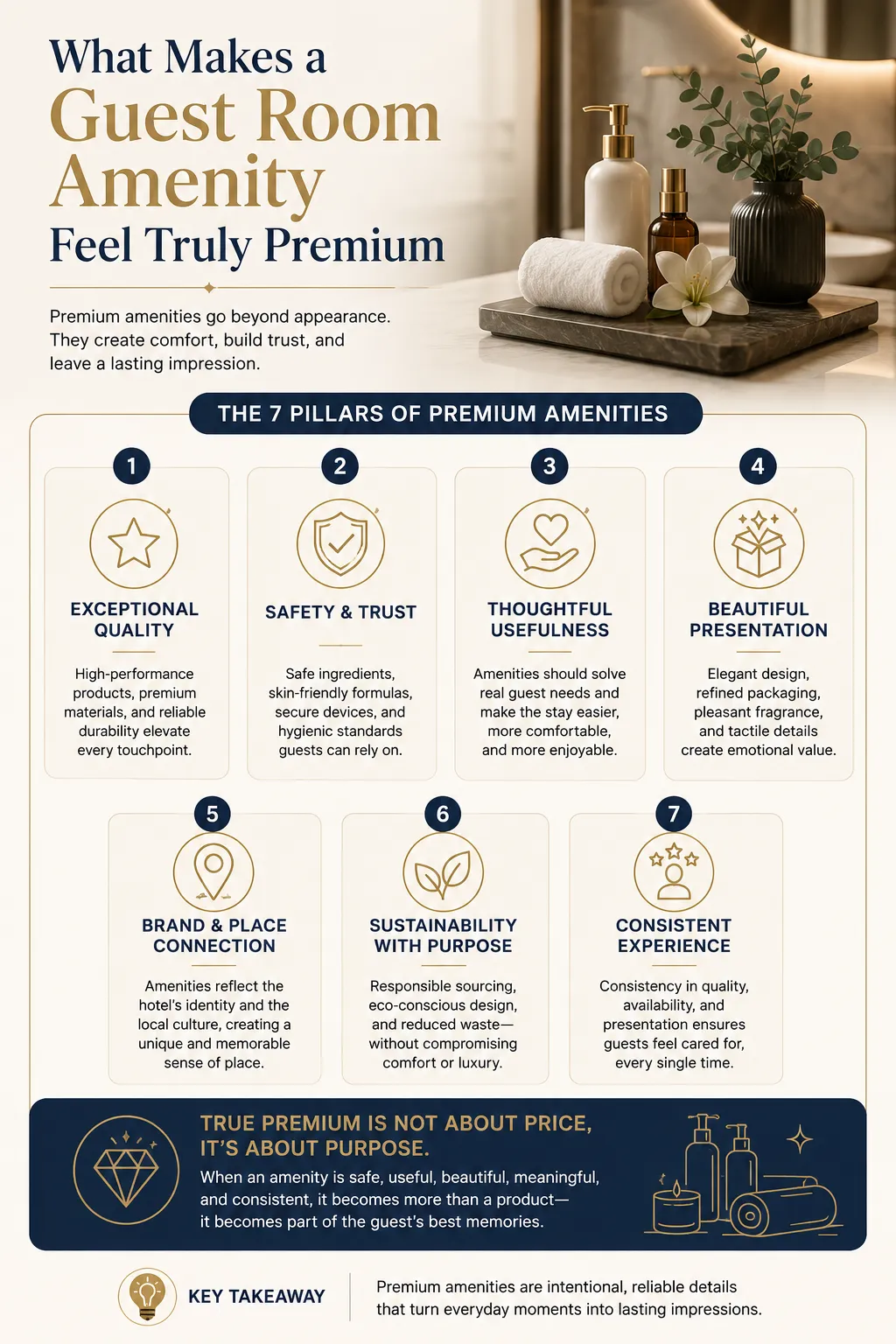
What Makes a Guest Room Amenity Feel Truly Premium
A premium guest room amenity is not simply the most expensive object a hotel can place beside the sink, on the nightstand, or inside the minibar. In a luxury hotel, an amenity feels premium when it makes the guest think, “They understood what I needed before I had to ask.” That moment can come from a beautifully scented bath product, a robe with the right weight, a welcome snack that reflects the destination, a charger placed exactly where a traveler would look for it, or a pillow option that helps someone sleep deeply after a long flight. The object matters, but the feeling behind it matters more. In luxury hospitality, physical details are only part of the promise; the strongest hotels combine design, comfort, service, cleanliness, and emotional ease into one seamless stay. Forbes Travel Guide describes luxury evaluations as covering the entire guest journey, including cleanliness, efficiency, gracious service, sense of luxury, guest comfort, wellness, and sustainability, which shows why amenities must support the full experience rather than stand alone as decorative extras.
Premium Starts With Purpose, Not Price
The first question a luxury hotel asks is not, “Is this amenity expensive?” The better question is, “Does this improve the guest’s stay in a way they can feel?” A premium amenity has a clear purpose. It solves a problem, removes a small inconvenience, creates comfort, adds beauty, or strengthens the guest’s connection to the property. A marble tray holding ordinary products may look polished in a photo, but it will not feel premium if the lotion is sticky, the shampoo dries out the hair, the coffee tastes flat, or the lighting around the vanity makes it hard to get ready. True luxury is practical before it is ornamental.
This is why the best hotels treat amenities as part of the room’s service design. Every item has a job. The bottled water by the bed supports comfort during the night. The soft slippers make the transition from shower to bedroom feel clean and calm. The garment steamer tells a business traveler that the hotel understands presentation. A local chocolate or small-batch tea creates a sense of place. A universal charging station prevents the irritation of searching through luggage at midnight. Individually, these details may seem small. Together, they communicate competence, care, and anticipation.
Research on hotel amenities also supports this practical approach. A Cornell hospitality report found that guests may overestimate the likelihood that they will use some amenities, while the return on specific amenities can vary by brand, guest type, and repeat-visit behavior. The lesson for luxury hotels is important: premium selection should be based on real guest value, not assumptions or trends copied from competitors.
The Five Qualities Guests Notice Immediately
Guests often judge an amenity in seconds. They may not consciously analyze the weight of a bottle, the texture of a towel, or the placement of a coffee machine, but they feel the result. A guest room amenity usually feels truly premium when it delivers five qualities at once: usefulness, sensory pleasure, design harmony, trust, and memorability.
| Premium Quality | What It Means in a Guest Room | Example |
| Usefulness | The amenity solves a real need without friction. | A fast, easy-to-find charging hub beside the bed. |
| Sensory pleasure | The item feels, smells, sounds, or tastes refined. | A body wash with a balanced fragrance and rich texture. |
| Design harmony | The amenity fits the room’s materials, colors, and mood. | Ceramic bath dispensers that match a spa-style bathroom. |
| Trust | The guest feels safe using or consuming it. | Skincare with clear labeling and reputable ingredients. |
| Memorability | The item creates a small story the guest can recall later. | A locally made welcome treat tied to the destination. |
Usefulness comes first because luxury guests have little patience for beautiful objects that create effort. A premium hair dryer that works quickly is better than a decorative one hidden in an awkward drawer. A robe that fits different body types is better than one chosen only because it photographs well. A tea set with clear brewing instructions is better than a rare blend guests do not know how to enjoy. Premium amenities respect the guest’s time, body, and attention.
Sensory pleasure is the second layer. Luxury is often felt through the senses before it is understood intellectually. The cap of a bath product should open easily. The lotion should absorb cleanly. The towel should feel substantial but not rough. The slippers should be quiet underfoot. The coffee should smell fresh. The room fragrance should be elegant, not overpowering. These details matter because the guest room is private space. Once the door closes, the guest interacts with the hotel through touch, scent, temperature, light, sound, and taste. Amenities are the hotel’s quietest form of service.
Design harmony is what keeps premium amenities from feeling random. A minimalist urban hotel, a coastal resort, a historic mansion property, and a desert wellness retreat should not all use the same amenity language. The products may be equally high quality, but the presentation should differ. A luxury hotel in New York may choose sleek, architectural packaging and a refined fragrance profile. A resort in Santa Barbara may choose botanical bath products, woven trays, and sun-washed tones. A mountain lodge may use warm textures, restorative teas, and sleep-focused details. Guests remember amenities more clearly when they feel connected to the room and destination.
The Difference Between Expected and Memorable
Many in-room amenities are now expected. Toiletries, coffee and tea, Wi-Fi, a safe, a hair dryer, a TV, and basic personal care items are no longer automatic signs of luxury; they are part of the baseline in many hotel categories. Cvent notes that common amenities such as toiletries, coffee and tea kits, mini fridges, free Wi-Fi, fitness access, and TVs have become widely expected, which means premium hotels must go beyond availability and focus on quality, personalization, and distinctiveness.
The difference between expected and memorable is execution. A standard room may provide shampoo. A luxury room provides a bath and body experience that feels curated: a pleasing scent, elegant packaging, reliable performance, enough product for the stay, and placement that makes the bathroom feel calm. A standard hotel may provide coffee. A luxury hotel considers the roast, the machine, the cups, the sweeteners, the creamer quality, the water, the waste, and whether the guest can prepare it without reading a complicated manual. A standard hotel may provide a welcome item. A luxury hotel chooses something that feels personal, seasonal, or connected to the property’s story.
Memorable amenities also create a sense of discovery without adding clutter. A handwritten note with a small local pastry, a sleep balm on the turndown tray, a wellness card with a simple breathing ritual, or a pressed linen spray beside the bed can feel more premium than a large basket of generic goods. The key is restraint. Luxury hotels do not need to fill every surface. They need to choose fewer items with stronger intention.
Premium Amenities Must Feel Personal Without Feeling Intrusive
Personalization is one of the clearest ways to elevate a guest room amenity, but it must be handled with taste. The best version feels helpful: a nonalcoholic welcome drink for a wellness traveler, hypoallergenic pillows for a guest who requested them before arrival, child-friendly bath products for a family, or a running map and recovery balm for someone booked into a fitness package. The wrong version can feel invasive, overly familiar, or wasteful.
Personalization works when the hotel uses information the guest has willingly shared, connects it to the purpose of the stay, and keeps the gesture elegant. A honeymoon couple may appreciate sparkling wine, flowers, and a bath ritual. A frequent corporate guest may prefer extra hangers, a proper desk setup, and a quiet room with preferred coffee. A guest arriving after an international flight may value water, blackout curtains, calming tea, and a simple late-night snack more than an elaborate decorative display.
The luxury market has become more experience-driven, and McKinsey’s hospitality research highlights that affluent guests increasingly value distinctive experiences over purely tangible products. That does not make amenities less important; it makes them more strategic. The amenity becomes premium when it supports the experience the guest came to have.
Trust Is Part of the Luxury Feeling
An amenity cannot feel premium if the guest does not trust it. Trust comes from cleanliness, safety, quality, labeling, freshness, and consistency. A guest should know what a product is, how to use it, and whether it suits common sensitivities. This is especially important for skincare, bath products, edible items, wellness tools, baby amenities, pet amenities, and anything involving technology or data.
For bath and body products, trust may come from recognized formulation quality, clear ingredient communication, tamper-resistant presentation, and a scent that feels refined rather than aggressive. For food and beverage amenities, it means freshness, allergen awareness, thoughtful sourcing, and proper storage. For technology, it means simple functionality, strong privacy protection, and no confusing setup. EHL’s hospitality technology overview notes that AI, IoT, and digital tools can support personalized guest experiences, but hotels must also protect privacy and maintain trust as digital reliance grows.
Trust also includes consistency. A premium amenity should not be excellent in a suite and disappointing in a standard luxury room unless the difference is clearly part of the room category. Guests notice when a brand promise changes from one stay to another. They may forgive a smaller room; they are less forgiving when the basics feel careless. If the hand soap is watered down, the robe feels worn, the coffee capsules are missing, or the bedside charger does not work, the guest begins to question everything else.
Technology Has Become an Amenity, Too
Modern premium amenities are not limited to robes, lotions, slippers, and minibar items. In-room technology is now part of how guests judge comfort. A luxury guest expects strong connectivity, easy entertainment access, intuitive lighting, convenient charging, responsive temperature control, and technology that does not require effort. Hotel Dive, reporting on J.D. Power’s 2025 North America Hotel Guest Satisfaction Index Study, noted that satisfaction with room condition, cleanliness, and amenities improved guests’ perception of value, and that 40% of surveyed guests considered smart TVs or streaming capability a necessary hotel amenity.
This matters because premium is not always visible in a product photo. A beautifully designed room can still feel frustrating if the outlets are hidden, the thermostat is confusing, or the guest cannot stream a movie after a long day. In luxury hospitality, technology should feel almost invisible. The best systems work quickly, respect privacy, and give guests control without forcing them to learn a new interface. Convenience, when executed quietly, becomes a luxury amenity in itself.
The Practical Test for a Truly Premium Amenity
A luxury hotel can evaluate any guest room amenity with a simple test: Would the guest miss this if it disappeared, remember it after checkout, or associate it with the hotel’s identity? If the answer is no, the amenity may still be useful, but it may not be premium. The strongest amenities usually pass at least one of those standards. Guests miss the perfect pillow, remember the signature scent, talk about the local welcome gift, appreciate the bedside water, and return because the room made life feel easier.
A premium amenity should also pass the operational test. It must be easy for housekeeping to replenish, durable enough for repeated service, safe for guests, aligned with procurement standards, and financially sensible. Luxury does not mean careless spending. It means choosing details that create more emotional value than their physical size suggests. A small amenity with high relevance can outperform a costly item that guests ignore.
Ultimately, a guest room amenity feels truly premium when it blends comfort, beauty, usefulness, trust, and emotional intelligence. It should never feel like a random object placed in the room because a competitor uses it. It should feel like a thoughtful part of the stay, chosen for a specific guest, in a specific property, for a specific reason. Once that foundation is clear, the next step is understanding who the luxury guest really is, what they value, and how their expectations shape every amenity decision before they even open the room door.
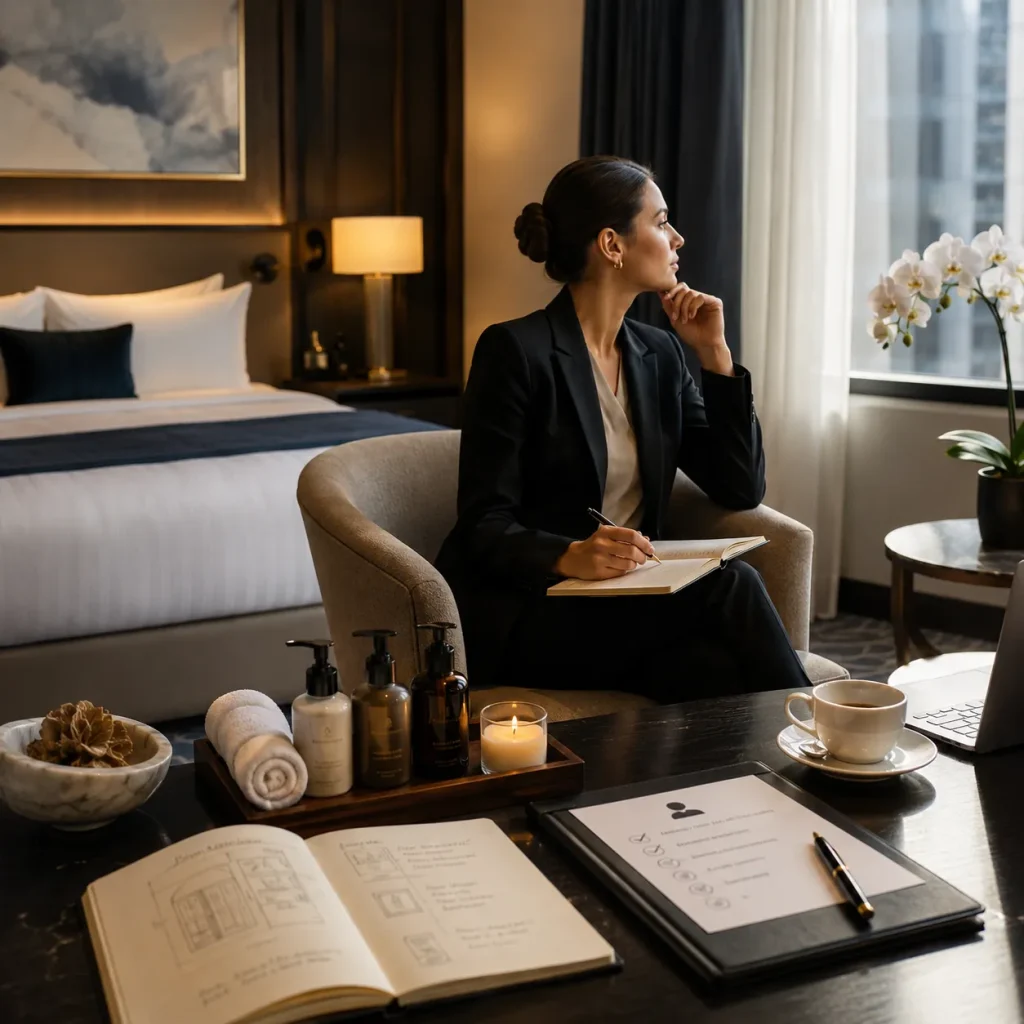
Understanding the Luxury Guest Before Selecting Amenities
Before a hotel chooses a bath collection, pillow menu, minibar concept, sleep kit, fragrance, robe, welcome gift, or in-room technology package, it has to understand the person who will actually use those details. Luxury guest room amenities are not selected for a room in isolation; they are selected for a guest with a purpose, a mood, a schedule, a set of expectations, and a personal definition of comfort. The same amenity that delights one traveler may feel unnecessary to another. A silk eye mask may be perfect for a long-haul guest recovering from jet lag, while a family traveling with children may care more about gentle bath products, extra towels, easy snacks, and a room setup that makes bedtime smoother. A business traveler may barely notice a decorative welcome tray but deeply appreciate a powerful steamer, reliable charging points, strong coffee, and a quiet workspace. Understanding these differences is the first step in building an amenity program that feels intentional rather than generic.
Modern luxury travelers are not a single audience. Some want privacy and quiet. Some want wellness and recovery. Some want cultural connection. Some want convenience. Some want a room that feels residential and understated, while others enjoy a more glamorous sense of occasion. McKinsey’s research on today’s luxury traveler emphasizes that the strongest luxury experiences begin by understanding how the guest wants to feel during and after the trip, not merely by offering expensive products or standard high-end services. That insight matters because amenities are emotional signals. They tell the guest whether the hotel understands the real purpose of the stay.
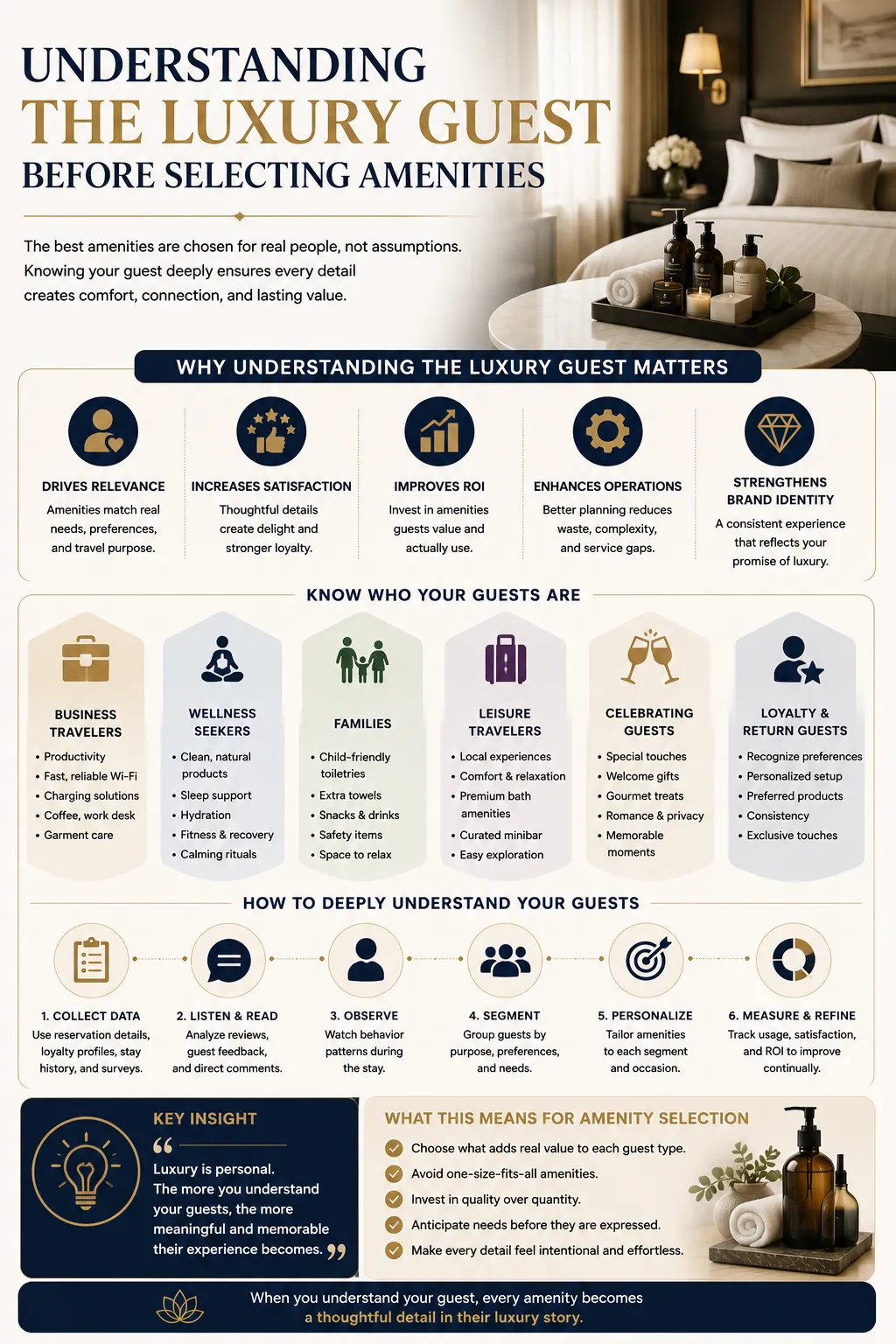
Luxury Guests Buy Feelings, Not Just Features
A hotel room is a functional space, but a luxury guest does not judge it only by function. They judge it by the feeling it creates when they enter, unpack, bathe, rest, work, dress, and wake up. Amenities are part of that feeling. A perfectly placed bottle of water beside the bed can communicate care. A locally made welcome treat can create a sense of place. A calming pillow spray can turn turndown service into a ritual. A clean, intuitive charging station can make the room feel effortless. These details may be small, but they influence whether the guest feels restored, respected, pampered, productive, inspired, or at home.
This is why luxury hotels should begin with guest motivations before product selection. Is the guest traveling for a romantic escape, a milestone celebration, a wellness retreat, a corporate meeting, a family vacation, medical recovery, cultural exploration, or a once-in-a-lifetime trip? Each purpose changes the amenity strategy. A couple celebrating an anniversary may respond well to champagne, flowers, bath salts, and a beautifully arranged dessert. A wellness guest may prefer herbal tea, magnesium bath soak, yoga equipment, clean-label snacks, and a sleep-supportive room environment. A senior executive may value privacy, garment care, desk comfort, and a minibar that supports late-night work without forcing a restaurant order.
The difference between average amenities and memorable luxury amenities is often relevance. Many hotels can buy attractive products, but fewer can select products that match the emotional reason the guest booked the stay. Virtuoso’s 2025 Luxe Report notes that affluent travelers continue to prioritize personalized experiences, deeper connections, exploration, and transformative travel. For hotel rooms, that means amenities should support the experience the guest is seeking, not simply fill space on a shelf.
Segmenting Guests Without Stereotyping Them
Guest segmentation helps hotels make better amenity decisions, but it must be used carefully. A luxury hotel should never reduce guests to one narrow label. Not every younger traveler wants only technology. Not every older traveler wants only traditional comforts. Not every affluent guest wants visible extravagance. Segmentation should guide preparation, not replace thoughtful service.
A helpful approach is to consider both the guest profile and the stay occasion. A guest may behave very differently on a business trip than on a vacation. The same person who wants speed, privacy, and a perfect workspace during a weekday conference may want indulgent bath products, slow breakfast, and spa-style amenities during a weekend escape. The hotel’s job is to recognize context.
| Guest Type or Stay Occasion | What They Often Value | Amenities That May Feel Premium |
| Business traveler | Efficiency, quiet, grooming, sleep, connectivity | Steamer, strong coffee, universal chargers, blackout curtains, ergonomic workspace |
| Wellness traveler | Recovery, rest, clean ingredients, calm atmosphere | Herbal tea, yoga mat, bath soak, pillow spray, air quality support |
| Romantic traveler | Mood, privacy, indulgence, beauty | Bath ritual, premium chocolates, flowers, soft lighting, champagne alternatives |
| Family traveler | Ease, safety, flexibility, kid-friendly comfort | Child-size robes, gentle toiletries, practical snacks, extra towels, bedtime items |
| Cultural traveler | Authenticity, local discovery, story | Regional treats, local craft items, destination-inspired scent, neighborhood guide |
| Repeat VIP guest | Recognition, consistency, personal preferences | Preferred pillow, favorite beverage, customized minibar, familiar welcome note |
This kind of segmentation makes amenities more useful because it connects room details to real behavior. A luxury amenity is not premium just because it is rare; it becomes premium when it fits the guest’s situation. For example, a hotel may offer a luxury shaving kit, but it becomes more meaningful when provided proactively to a guest attending a formal event. A bottle of local olive oil may be beautiful, but it becomes more memorable when paired with a short card explaining its regional origin and how guests can experience the producer nearby. A yoga mat is useful, but it becomes more premium when the room also includes enough floor space, a simple stretching guide, and access to on-demand wellness content.
Listening to Guest Data and Human Signals
Luxury hotels have more information than ever, but the best amenity decisions still come from combining data with human observation. Reservation notes, loyalty profiles, pre-arrival questionnaires, guest messages, past stay history, spa bookings, dining preferences, package type, room category, and purpose of travel can all help a hotel choose better amenities. However, the information must be used respectfully. Personalization should feel elegant, not invasive.
For example, if a guest has previously requested feather-free bedding, the room should be prepared that way before arrival. If a guest always orders green tea, placing a premium green tea selection in the room feels thoughtful. If a family has requested a crib, the hotel can also provide baby-safe bath amenities and extra waste bags. If a guest booked a spa package, the room can include calming tea, a robe in the correct size, and a wellness-focused turndown item. These choices are not random upgrades; they are evidence that the hotel listened.
Technology can support this process, but it should not make the experience feel mechanical. McKinsey’s research on hotel customer experience found that personalization is especially important for younger travelers, with personalized service valued significantly more by Gen Z guests than by baby boomers. This does not mean every guest wants the same type of personalization. It means luxury hotels need flexible systems that help staff recognize preferences and adapt the room experience without making the guest repeat information.
The human side is just as important. Housekeeping, front desk, concierge, spa, restaurant, and butler teams often notice details that systems miss. A guest who asks for extra water every evening may need more bedside hydration. A guest who uses the gym daily may appreciate recovery amenities. A guest who mentions a poor night’s sleep may benefit from a different pillow or calming turndown ritual. These signals should feed back into the amenity strategy, so the room becomes more intelligent over time.
Understanding the Guest’s Definition of Wellness
Wellness has moved far beyond the spa. For many luxury guests, wellness now includes sleep quality, air comfort, hydration, nutrition, movement, mental calm, digital balance, and recovery from stress. This shift has a major impact on guest room amenities. Hotels can no longer treat wellness as a separate department downstairs. The room itself must support rest and restoration.
Sleep is one of the strongest examples. Hilton’s 2025 travel trends coverage reported that more than one in four travelers would book a spa or wellness treatment to improve sleep while on vacation, showing how closely rest and travel experience are now connected. For luxury hotels, this makes bedding, lighting, temperature control, sound management, pillow choice, calming bath products, and evening rituals more important than ever. (stories.hilton.com)
Wellness amenities should still feel refined, not clinical. A guest room does not need to look like a medical lab to feel restorative. A calming tea selection, a clean aromatherapy option, a comfortable robe, a well-designed bath ritual, filtered water, healthy minibar choices, blackout solutions, and a simple stretching mat can all support wellness in a natural way. The key is balance. Guests should feel that the hotel is helping them recover, not instructing them how to live.
The wellness guest also tends to read labels more closely. They may care about ingredients, allergens, fragrance intensity, caffeine levels, sugar content, and sustainability claims. This means bath products, snacks, and minibar items must be chosen with transparency. A luxury amenity that creates doubt loses its appeal quickly.
Recognizing the Rise of Conscious Luxury
Many luxury guests still want comfort and indulgence, but they increasingly expect those experiences to be responsible. Sustainability does not mean removing pleasure from the stay. It means designing amenities that feel beautiful, high quality, and thoughtful without obvious waste. Refillable bath dispensers, plastic reduction, locally sourced products, durable packaging, certified materials, energy-conscious technology, and meaningful community partnerships can all support a more responsible version of luxury.
Booking.com’s 2025 sustainable travel research reported that traveling more sustainably remained important for most travelers globally, while travelers also showed growing awareness of tourism’s impact on communities. For hotels, this means sustainability cannot be treated as a hidden operational issue only. Guests are increasingly aware of whether the products in the room feel excessive, disposable, or disconnected from the destination.
However, luxury hotels must avoid making sustainable amenities feel like a downgrade. A thin towel, cheap dispenser, weak bath product, or poorly designed paper package will not impress a guest simply because it claims to be eco-friendly. The best properties make responsible choices feel elevated. A refillable ceramic bottle can look better than a disposable plastic one. A locally made soap can feel more distinctive than an imported generic brand. A glass water bottle can feel more premium than single-use plastic. A smaller curated minibar can feel more refined than a wasteful selection of items guests rarely touch.
Mapping Amenities to the Guest Journey
Understanding the luxury guest also means understanding the rhythm of the stay. A guest experiences the room in stages: arrival, unpacking, refreshing, working or exploring, bathing, sleeping, waking, and departing. Amenities should support each stage with quiet precision.
At arrival, the guest needs orientation, refreshment, and reassurance. This is where welcome drinks, water, room fragrance, lighting, and a simple note can create the first emotional impression. During unpacking, guests notice storage, hangers, garment care, luggage space, and the location of practical items. Before dinner or meetings, they rely on mirrors, lighting, bath products, grooming tools, steamers, and hair dryers. At night, they need bedding, temperature control, blackout curtains, charging access, quiet, and perhaps a calming turndown detail. In the morning, they judge coffee, tea, water pressure, towels, skincare, and how easy it is to get ready.
Forbes Travel Guide explains that its hotel standards consider the full guest journey, including cleanliness, staff knowledge, gracious service, guest comfort, sense of luxury, wellness, and sustainability. This broader view is useful because guest room amenities are not separate from service; they are part of how service is felt when no staff member is present.
The best amenity programs are therefore built around moments, not categories. Instead of asking only, “Which toiletries should we buy?” a hotel asks, “How should the guest feel after a shower?” Instead of asking, “What should be in the minibar?” it asks, “What will this guest want when room service is too much effort?” Instead of asking, “Do we need a pillow menu?” it asks, “How can we help different guests sleep well without complicating the room?”
Turning Guest Understanding Into Better Choices
Once a hotel understands its guests, amenity selection becomes more disciplined. The hotel can avoid copying competitors, overfilling rooms, or choosing products only because they look impressive in marketing photos. It can prioritize amenities that match real needs, reinforce the property’s identity, and improve the stay in measurable ways.
A resort with guests seeking recovery may invest more in sleep, bathing, wellness snacks, sun care, hydration, and outdoor comfort. A city hotel with business and cultural travelers may focus on grooming, technology, garment care, premium coffee, local guides, and quiet convenience. A family-friendly luxury property may create amenities that reduce parental stress while still feeling polished. A boutique hotel with a strong local story may make regional products central to the room experience.
The most successful luxury amenities begin with empathy. They are chosen because the hotel understands why the guest is there, what the guest may need before asking, what small frustrations can be removed, and what emotional memory should remain after checkout. When a hotel understands the guest this clearly, every amenity becomes more than an object. It becomes a message: you are known, your comfort matters, and this stay was designed with intention. That understanding naturally leads to the next decision: selecting amenities that also express the hotel’s own brand identity, property story, and sense of place.
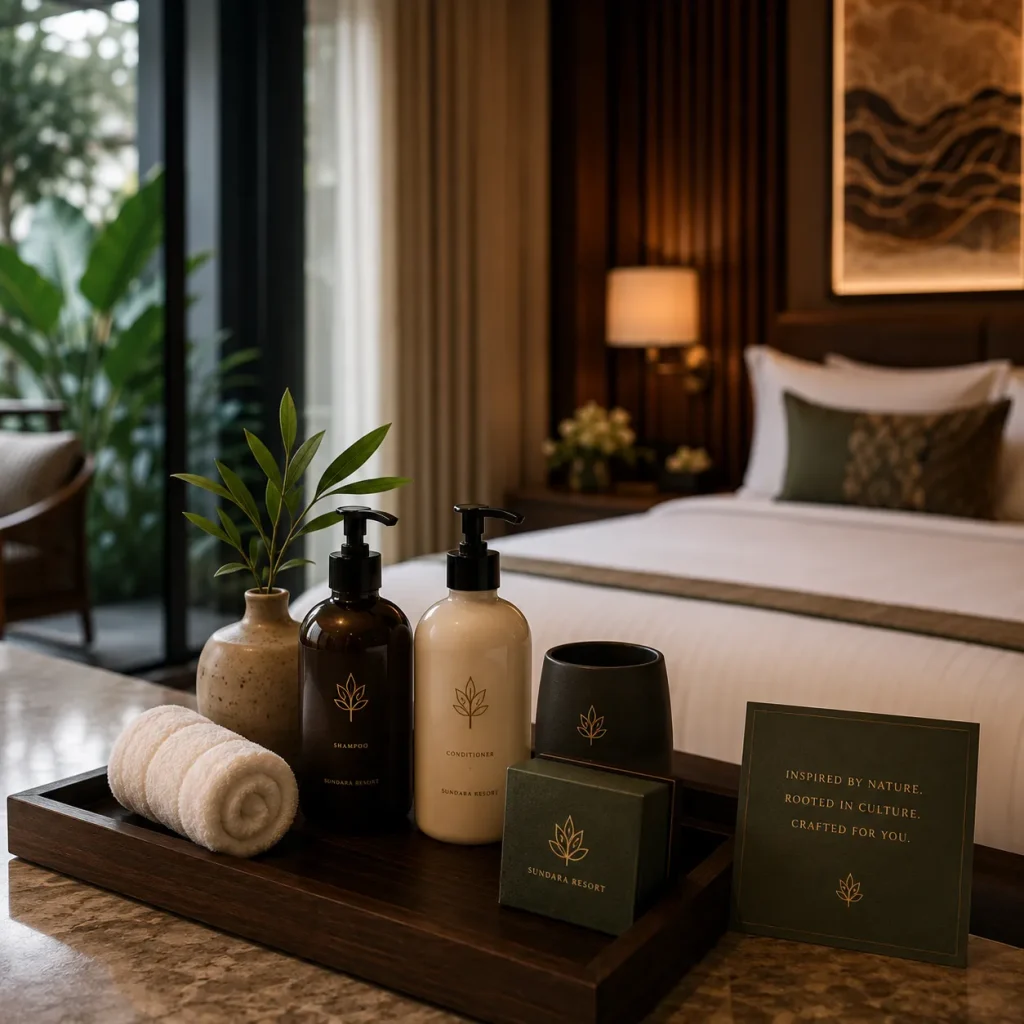
Aligning Amenities With the Hotel’s Brand Identity and Property Story
A guest room amenity becomes more powerful when it feels as if it could only belong in that hotel. A bottle of shampoo, a robe, a tea selection, a minibar item, a pillow menu, or a welcome gift may be beautiful on its own, but in a true luxury property it should also express the hotel’s brand identity, location, values, and style of service. Guests may not describe this process in technical terms, but they feel it immediately. When the amenities match the room design, the service culture, the destination, and the promise made by the brand, the stay feels coherent. When amenities feel generic or disconnected, even expensive products can seem forgettable.
Brand alignment is one of the most important differences between ordinary in-room amenities and premium guest room amenities. A luxury hotel is not simply choosing products; it is building a private world around the guest. Every detail should answer the same quiet question: “What kind of experience does this hotel stand for?” A historic palace hotel, a modern wellness retreat, a fashion-led city property, a secluded island resort, and a refined business hotel should not all provide the same room experience. Their amenities may share high quality, but they should communicate different emotions, textures, rituals, and stories.
This matters because luxury hospitality is increasingly defined by experience rather than product alone. McKinsey’s hospitality research notes that the strongest factor influencing lodging loyalty is “an experience worth paying more for,” and that experience, not physical product by itself, is what differentiates the luxury segment. Amenities are part of that experience. They help translate a brand promise into something the guest can touch, smell, taste, use, and remember.
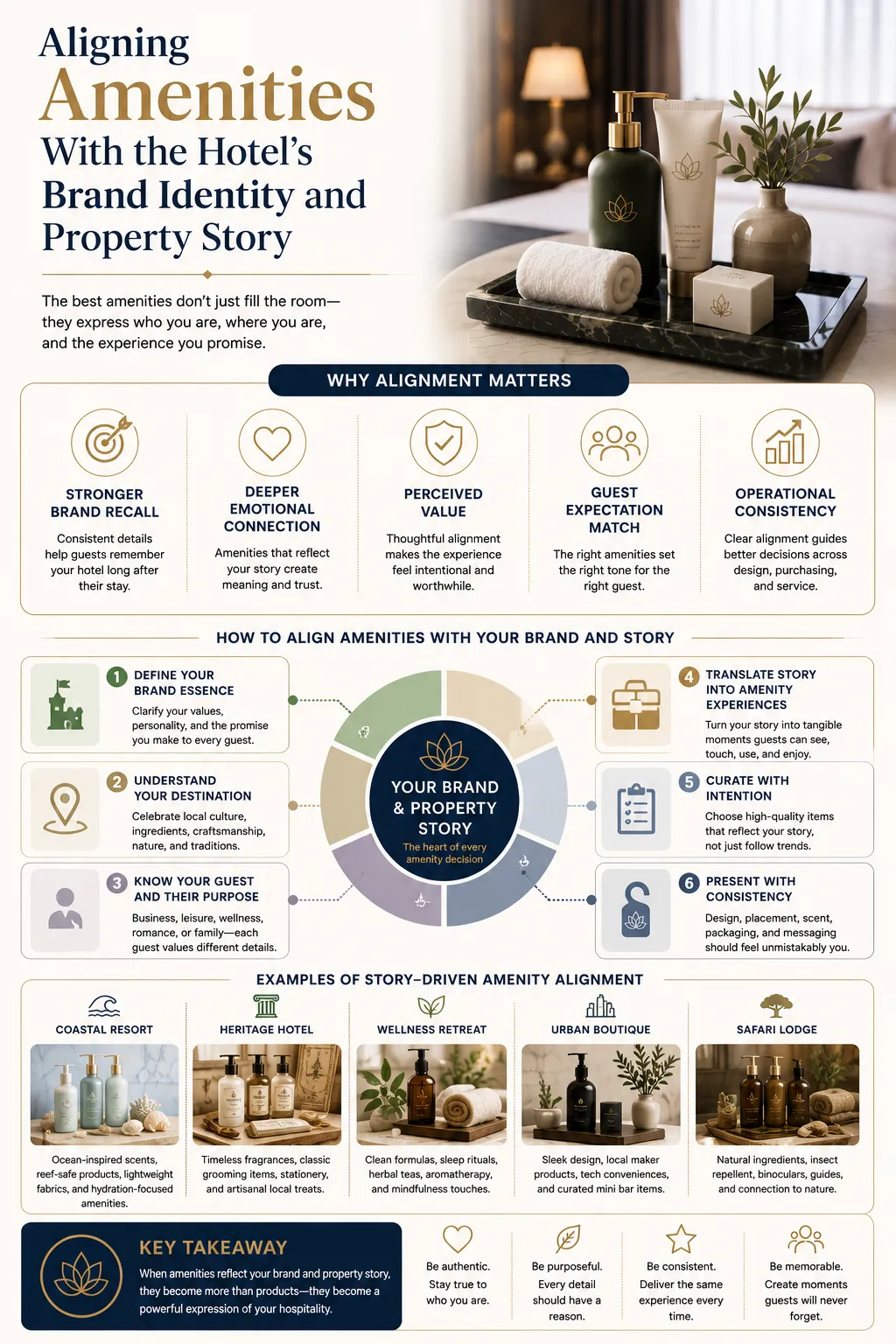
Brand Identity Should Act as the Amenity Filter
Luxury hotels are constantly offered new products: skincare lines, fragrances, bedding, wellness tools, coffee systems, minibar concepts, smart devices, sustainable packaging, and local gifts. Without a clear brand filter, it is easy to choose items because they are trendy, visually impressive, or used by competitors. That approach usually leads to rooms that look polished but lack personality.
A strong hotel brand uses identity as a selection tool. If the property is built around calm, privacy, and retreat, the amenities should feel quiet, tactile, and restorative. If the brand is energetic and design-led, the amenities may be bolder, more playful, and more social. If the hotel’s identity is rooted in heritage, the amenities should respect craftsmanship, tradition, and timeless presentation. If the brand promise is wellness, then sleep, bathing, nutrition, air quality, and recovery should be treated as core room experiences, not optional extras.
The filter should be practical. Before approving an amenity, the hotel can ask: Does this item match our visual language? Does it support the emotional promise of the stay? Does it belong in this destination? Does it reflect our service philosophy? Would a guest associate this detail with us after checkout? If the answer is unclear, the item may still be high quality, but it may not be right for the brand.
This is especially important for luxury hotel groups with multiple properties. Brand consistency does not mean every hotel room should feel identical. It means every property should express the same deeper values in a way that fits its location. Rosewood, for example, describes its approach as creating personal experiences, celebrating culture and community, and building connections between people and place. That kind of philosophy encourages amenities that feel locally rooted rather than standardized across every destination.
The Property Story Gives Amenities Emotional Meaning
A hotel’s property story may come from its architecture, neighborhood, landscape, founder, heritage, design concept, cultural setting, or local community. Amenities become more memorable when they help guests understand that story without needing a long explanation.
A coastal resort might use sun care, after-sun balm, woven trays, locally harvested salt, herbal iced tea, and bath products with marine or botanical notes. A mountain lodge might focus on warming teas, rich textures, recovery balm, wool slippers, fireside snacks, and skincare that protects against dry air. A city hotel in an arts district may choose a limited-edition postcard, a local coffee roaster, a sculptural tray, and a minibar curated around neighborhood makers. A historic mansion hotel may use stationery, floral arrangements, classic grooming tools, and bath products that feel elegant rather than trend-driven.
The key is not to force a theme. Guests do not need every object in the room to announce the destination. A few precise details are usually more effective than a heavy-handed concept. A small card explaining the local maker behind a welcome chocolate can do more than a room filled with tourist-style souvenirs. A signature scent inspired by the garden can feel more refined than obvious decorative motifs. A tea blend sourced from the region can quietly connect the guest to place without turning the room into a gift shop.
Aman’s official brand story offers a useful example of this principle. The company describes its properties as sensitive and authentic to geography, design, and cultural heritage, with architecture that remains true to each destination. For amenity planning, this kind of identity suggests restraint, local sensitivity, and simplicity rather than loud branding or excessive display.
Visual Consistency Makes Amenities Feel More Expensive
Guests often judge quality before they use an amenity. Presentation affects expectation. A premium product can lose impact if it is placed in cheap packaging, arranged carelessly, or surrounded by visual clutter. A modest item can feel elevated when it is presented with balance, clean spacing, quality materials, and the right lighting.
Visual consistency includes color, shape, material, label design, tray style, bottle format, paper quality, and how amenities are arranged in the room. A serene spa-style hotel may use matte ceramic dispensers, natural stone, soft neutral tones, and minimal labels. A glamorous city hotel may use polished metal, dark glass, jewel tones, and sharper lines. A residential-style hotel may prefer woven baskets, linen pouches, ceramic cups, and warm wood. None of these choices is automatically better; the right choice is the one that fits the property’s identity.
This is where many hotels make mistakes. They may choose a famous bath brand because it is recognizable, but the packaging clashes with the bathroom. They may place too many items on the vanity, making the space feel crowded. They may mix different design languages: rustic trays, glossy plastic bottles, modern tech devices, and formal stationery all competing for attention. The guest may not identify each mismatch, but the room feels less controlled.
Forbes Travel Guide notes that its standards evaluate the full guest journey, including sense of luxury, guest comfort, wellness, sustainability, cleanliness, efficiency, and service. This broader view matters because amenities are not isolated decorative objects. They contribute to the guest’s perception of comfort, order, and quality throughout the stay.
Service Philosophy Should Shape the Amenity Program
A hotel’s brand identity is not only visual. It is also behavioral. Amenities should support the way the hotel serves guests. A brand known for anticipatory service should provide amenities before the guest has to request them. A brand built around privacy should keep amenities discreet, easy to use, and free from unnecessary interaction. A brand known for sociability might use amenities that encourage discovery, nightlife, local events, or shared experiences. A wellness brand should make recovery feel effortless.
The Ritz-Carlton’s Gold Standards are described by the company as the foundation of its values and operating philosophy. For an amenity program, that kind of service-led identity means room details should not merely look prestigious; they should help staff deliver care, recognition, and consistency.
This is why amenity planning should involve more than procurement and design teams. Housekeeping, front office, butlers, spa leaders, food and beverage teams, concierge staff, and engineering teams all understand how guests actually use the room. Housekeeping knows which products are frequently used, wasted, moved, or requested. Concierge teams know which local items guests ask about. Spa teams understand fragrance sensitivity, relaxation rituals, and product credibility. Engineering teams know whether technology is reliable. When these voices shape amenity choices, the final room experience becomes more useful and more aligned with real service.
A beautiful amenity that creates operational friction can weaken the brand. If a luxury hotel promises effortless calm but housekeeping struggles to refill complicated containers, guests may encounter empty bottles. If a hotel promises technological ease but the smart controls fail regularly, the amenity becomes a source of frustration. If a hotel promises sustainability but provides products with vague claims and poor quality, guests may see the effort as performative. Brand alignment must work in practice, not only in concept.
Signature Amenities Create Brand Memory
The most successful luxury hotels often have at least one or two signature amenities that guests remember long after checkout. A signature amenity does not have to be extravagant. It simply has to be distinctive, consistent, and emotionally connected to the brand.
Westin’s sleep positioning is a clear example. Its official Sleep Well program includes the Heavenly Bed, Lavender Balm, and Sleep Well Menu, all designed around the idea of restorative rest. This shows how an amenity can become more than a product; it can become part of the brand’s identity and a reason guests remember the stay.
A signature amenity can be a scent, a bed, a bath ritual, a robe, a tea service, a local welcome gift, a minibar philosophy, a wellness kit, a children’s amenity, or a turndown detail. The best ones are easy to understand and hard to confuse with another hotel. They also create continuity. A repeat guest should feel the pleasure of recognition: the same calming scent, the same perfect pillow style, the same elegant tea ritual, or the same locally inspired welcome gesture adapted to a new destination.
However, signature does not mean repetitive. A hotel group can keep a consistent ritual while allowing each property to localize the expression. For example, a brand may always offer a welcome tea, but the blend changes by region. It may always provide a sleep amenity, but the scent and materials reflect the local environment. It may always include a minibar item from a local maker, but the product changes with the destination. This creates both brand recognition and a sense of discovery.
Local Partnerships Should Feel Curated, Not Random
Local sourcing is one of the strongest ways to connect amenities with the property story. Guests increasingly appreciate items that reveal something about the destination: a regional chocolate, handmade soap, ceramic cup, local honey, neighborhood coffee, botanical bath product, artisan textile, or small craft object. But local does not automatically mean premium. The hotel still has to evaluate quality, consistency, safety, packaging, availability, and brand fit.
A local amenity should feel curated. It should match the hotel’s service level and design language. A rustic product may be charming in a countryside retreat but feel out of place in a sleek urban tower unless it is presented with sophistication. A handmade item may be meaningful, but it must still meet hygiene and durability standards. A food item may be authentic, but it must include allergen information and remain fresh throughout the stay.
Bvlgari Hotels & Resorts offers an example of balancing brand identity with local context. The company describes its hotels as making a strong reference to local culture while maintaining an Italian contemporary luxury feel, rare materials, design furniture, and custom-built details. That balance is important: the destination is present, but the brand’s own design authority remains clear.
| Brand or Property Direction | Amenity Choices That Support It | Amenity Choices That May Weaken It |
| Wellness retreat | Sleep rituals, clean bath products, herbal tea, recovery tools | Sugary minibar, harsh fragrance, cluttered vanity |
| Historic luxury hotel | Classic stationery, refined florals, heritage-inspired grooming items | Trendy plastic packaging, overly casual snacks |
| Urban design hotel | Sculptural objects, premium tech, local coffee, bold minibar curation | Generic toiletries, traditional décor that feels unrelated |
| Nature-based resort | Sun care, refillable water, natural textures, local botanicals | Wasteful packaging, amenities disconnected from the landscape |
| Quiet ultra-luxury sanctuary | Minimal presentation, discreet service tools, calming scent | Loud branding, excessive signage, complicated devices |
Sustainability Must Match the Brand Promise
Responsible luxury is now part of brand identity for many high-end properties. A hotel that speaks about place, community, wellness, or modern values cannot ignore the waste created by amenities. But sustainability has to be expressed in a way that still feels premium. Guests should not feel that environmental responsibility means lower comfort.
Six Senses is a strong example of a brand that connects wellness and sustainability directly. The company describes its values as merging wellness and sustainability to support personal health and the health of the planet. It also describes a zero-waste philosophy that includes upcycling materials and producing materials on site to reduce transportation-related impacts.
For guest rooms, this can translate into refillable bath products that look beautiful, filtered water in glass bottles, reduced single-use packaging, local products with shorter supply chains, durable slippers or reusable items, and minibar selections that avoid unnecessary waste. The important point is that sustainable amenities should be designed, not merely substituted. A cheap dispenser with a weak pump can damage the perception of quality. A beautiful refillable vessel with excellent product inside can feel more premium than disposable miniature bottles.
The Room Should Tell One Clear Story
The best luxury hotel rooms do not feel like collections of unrelated upgrades. They feel edited. The bath products, bedding, lighting, minibar, stationery, technology, robes, artwork, fragrance, and welcome amenity all seem to belong to the same world. That coherence is what makes the room feel expensive, calm, and memorable.
A hotel can achieve this by creating a clear amenity narrative before purchasing begins. For example: “This room should feel like a private coastal residence designed for restoration.” Or: “This suite should feel like a modern urban atelier for creative travelers.” Or: “This villa should feel like a quiet sanctuary connected to the landscape.” Once that story is defined, every amenity must earn its place.
Aligning amenities with brand identity and property story is not about decoration. It is about trust. When every detail supports the same promise, guests feel that the hotel knows itself. And when a hotel knows itself, it becomes easier for guests to remember it, recommend it, and return to it. After the brand story is clear, one of the most visible and personal decisions comes next: choosing bath, body, and skincare products that guests trust enough to use every day of their stay.
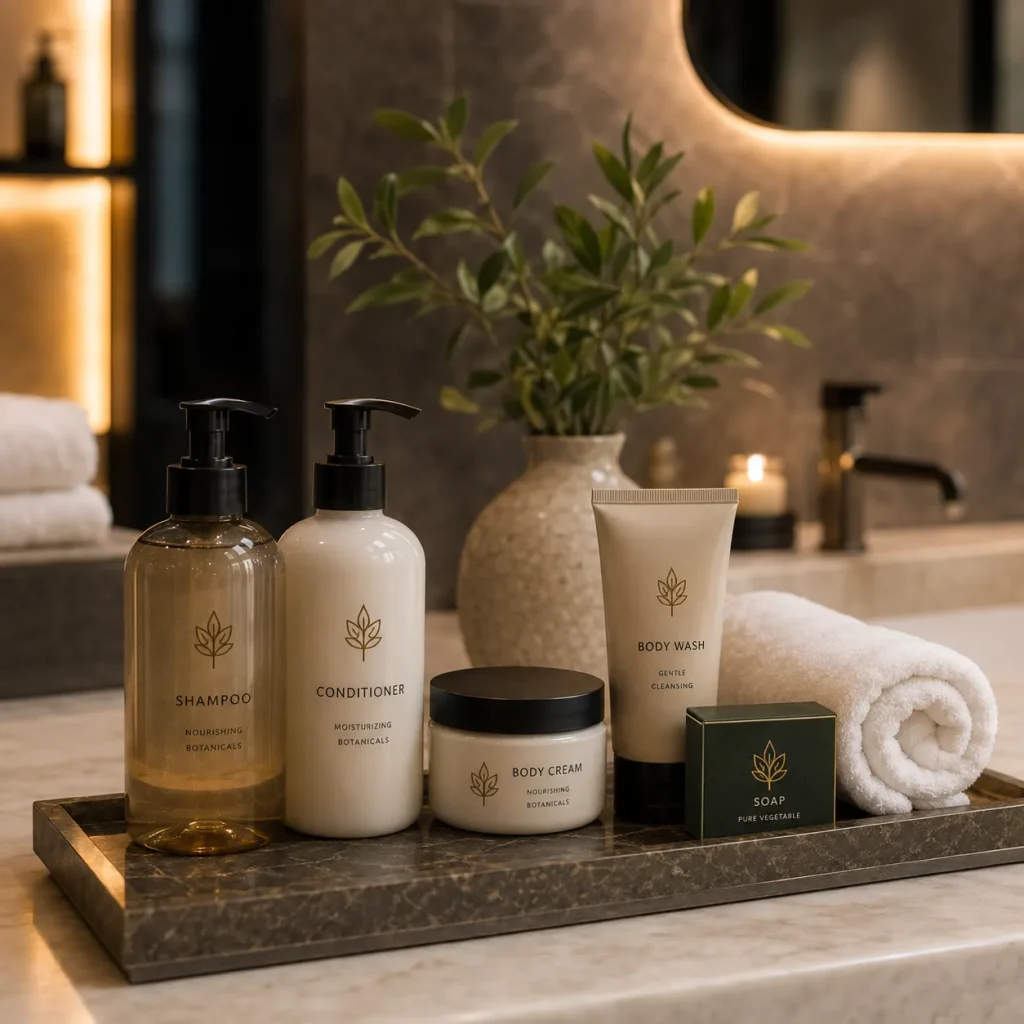
Choosing Bath, Body, and Skincare Products Guests Trust
Bath, body, and skincare products are among the most personal guest room amenities a luxury hotel can offer. Unlike a decorative tray, a welcome card, or a piece of technology, these products touch the guest’s skin, hair, face, and senses. They are used in private moments: after a long flight, before an important dinner, early in the morning, or at the end of an exhausting day. For that reason, guests judge them with a different level of sensitivity. A shampoo that leaves hair dry, a lotion that feels sticky, a body wash with an overpowering fragrance, or a dispenser that looks unclean can weaken the entire impression of the room. In a luxury setting, bath and skincare amenities must feel beautiful, but they must also feel safe, effective, fresh, and trustworthy.
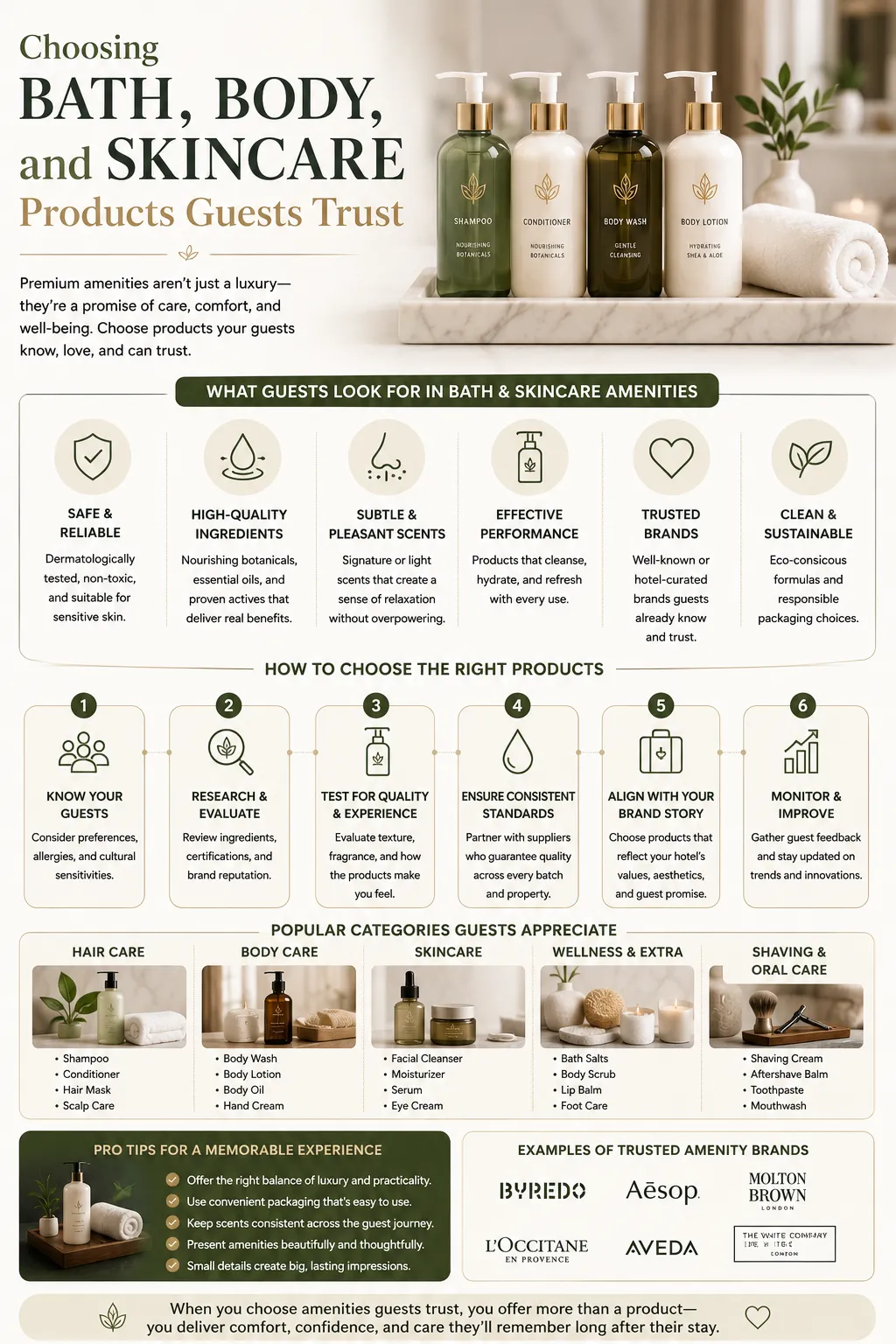
Trust begins with a simple promise: the guest should feel comfortable using the product without hesitation. That means the hotel has chosen formulas with care, verified supplier standards, considered common sensitivities, checked packaging and hygiene, and made the presentation feel aligned with the property. The best bath products do not merely fill the bathroom shelf. They turn showering, bathing, grooming, and moisturizing into a quiet extension of the hotel’s service philosophy.
Performance Matters More Than Brand Name Alone
A recognizable skincare or fragrance brand can create instant confidence, but brand name alone is not enough. Luxury guests may be impressed when they see a respected label, yet their final opinion comes from performance. Shampoo should cleanse without leaving hair stripped. Conditioner should soften without feeling heavy. Body wash should create a pleasant lather and rinse cleanly. Hand soap should not leave the skin tight after repeated use. Lotion should absorb smoothly, hydrate well, and avoid a greasy finish. A facial cleanser or moisturizer, if offered, should be gentle enough for a wide range of guests.
Hotels should test products in the same way guests use them. A formula that feels elegant in a showroom may behave differently with the property’s water pressure, water hardness, climate, and bathroom conditions. A conditioner that works beautifully in a humid coastal resort may feel too rich in a dry desert property. A highly aromatic body wash may feel exciting in a spa boutique but overwhelming in a small urban bathroom. A lotion that absorbs well in summer may feel too light for winter guests in a mountain hotel.
This is why luxury hotels often evaluate bath products through repeated trials, not one-time sampling. Housekeeping leaders, spa teams, front office managers, and test guests can provide different insights. The spa team may notice whether the fragrance fits the property’s wellness identity. Housekeeping may notice whether bottles leak, pumps clog, or residue builds up on stone counters. Guests may comment on scent, texture, hair feel, or whether they would want to use the product again. A truly premium bath line earns trust through daily use.
Safety, Compliance, and Documentation Are Part of Luxury
Skincare trust is not only emotional; it is also operational and regulatory. Hotels need suppliers that can provide proper documentation, clear ingredient information, batch traceability, and evidence that products are manufactured responsibly. In the United States, the FDA explains that the Modernization of Cosmetics Regulation Act of 2022 created requirements involving facility registration, product listing, serious adverse event reporting, recordkeeping, and safety substantiation for cosmetic products. That matters for hotels because a bath amenity is not just a design item; it is a cosmetic product guests apply to their bodies.
Luxury hotels should therefore ask suppliers practical questions before selecting a line. Where are the products manufactured? What quality controls are used? Are formulas stable in hotel bathroom conditions? Can the supplier provide ingredient lists, safety documentation, allergen information, and certificates where relevant? How are batches tracked if a guest reports irritation? What is the shelf life after opening? How should products be stored before placement in rooms? These questions may not appear in marketing photos, but they protect the guest and the brand.
A hotel should also avoid vague wellness claims that sound attractive but are difficult to support. Words such as “clean,” “natural,” “non-toxic,” “hypoallergenic,” or “dermatologist-inspired” can be useful only when they are backed by clear formulation standards and honest communication. A luxury guest does not need a science lecture in the bathroom, but they do need confidence. Clear labels, credible suppliers, and consistent quality make the product feel more premium than exaggerated claims.
Fragrance Should Be Elegant, Not Aggressive
Fragrance is one of the most powerful parts of a bath amenity program. It can make a hotel memorable, reinforce the property story, and create a signature sensory identity. A guest may forget the exact name of the shampoo, but they may remember the calm herbal scent in the shower or the warm citrus note in the hand wash. When done well, fragrance turns the bathroom into part of the luxury experience.
However, fragrance is also one of the easiest ways to lose trust. The FDA identifies fragrances as one of the common classes of cosmetic allergens, along with preservatives, dyes, metals, and natural rubber. The FDA also notes that it does not have the same legal authority to require allergen labeling for cosmetics as it does for food, which is why guests with fragrance sensitivities may need to choose fragrance-free products and review ingredient lists carefully.
For luxury hotels, this means scent should be selected with restraint. A bath product can smell refined without filling the room aggressively. The fragrance should not compete with the hotel’s lobby scent, fresh flowers, cleaning products, or food and beverage amenities. It should also not linger so strongly that guests feel they cannot use perfume, cologne, or personal skincare afterward. The safest approach is usually a balanced fragrance profile: recognizable enough to create memory, soft enough to suit many guests, and supported by fragrance-free alternatives when possible.
The difference between “fragrance-free” and “unscented” is also important. The American Academy of Dermatology advises people with dry or sensitive skin to use fragrance-free products and explains that products labeled “unscented” may still contain ingredients that mask odors and can irritate sensitive skin. This distinction matters in hospitality because guests may request fragrance-free options for medical, personal, or comfort reasons. A hotel that responds accurately shows respect and competence.
Ingredient Transparency Builds Guest Confidence
Luxury guests increasingly read labels. Some are managing sensitive skin, eczema, rosacea, allergies, pregnancy-related sensitivities, fragrance intolerance, or personal ingredient preferences. Others simply expect transparency from premium brands. A hotel does not need to place long technical explanations on every bottle, but guests should be able to understand what they are using.
Ingredient transparency is especially important for leave-on products such as body lotion, hand cream, facial moisturizer, lip balm, sunscreen, or sleep balm. Rinse-off products such as shampoo and body wash still matter, but leave-on products remain on the skin longer and may raise more sensitivity concerns. Hotels should be careful with strong essential oils, heavy fragrance, aggressive exfoliating acids, dyes, and highly active facial skincare. A luxury bathroom is not the right place to surprise every guest with a strong active ingredient.
The European Union has also expanded fragrance allergen labeling requirements for cosmetics through Regulation 2023/1545, which amended the EU cosmetics framework regarding the labeling of fragrance allergenic substances. For international luxury hotels, this is a reminder that ingredient disclosure expectations are becoming more detailed in major markets, especially for fragrance-related allergens.
A practical hotel standard is to offer one beautifully scented main line and keep a fragrance-free or sensitive-skin alternative available on request. The alternative should not feel like a downgrade. It should be presented with the same cleanliness, quality, and care as the main amenity line. Guests who need gentler products should still feel included in the luxury experience.
| Trust Factor | What Guests Notice | What Luxury Hotels Should Check |
| Formula performance | Hair feel, skin comfort, hydration, rinse quality | Real-use testing across room types and climates |
| Fragrance balance | Scent strength, elegance, irritation risk | Signature scent fit and fragrance-free backup options |
| Ingredient clarity | Label readability and sensitivity concerns | Complete ingredient lists and supplier documentation |
| Packaging hygiene | Clean pumps, sealed products, fresh appearance | Tamper resistance, refill protocols, housekeeping standards |
| Brand alignment | Whether products fit the room and hotel story | Design, scent, materials, and property identity |
| Sustainability | Waste, refills, materials, local sourcing | Plastic reduction without lowering guest comfort |
Packaging Must Feel Hygienic and Beautiful
The move away from single-use miniature bottles has changed how hotels present bath amenities. Larger-format dispensers and refillable containers can reduce waste, but in luxury hotels they must be handled with exceptional care. A refillable bottle that looks elegant, works smoothly, and is cleaned properly can feel modern and responsible. A scratched container, sticky pump, weak label, or half-empty bottle can immediately raise doubts.
Hygiene perception is as important as actual hygiene. Guests want to feel that the product is fresh, secure, and not casually shared in a way that compromises cleanliness. Hotels should use tamper-resistant systems where appropriate, establish clear refill and replacement procedures, train housekeeping teams, and inspect pumps, caps, labels, and trays daily. The product should look newly prepared for every guest, even when the container is designed for repeated use.
Sustainability should support the luxury impression rather than weaken it. The American Hotel & Lodging Association’s Responsible Stay initiative identifies waste reduction, responsible sourcing, energy efficiency, and water conservation as core focus areas for hotel sustainability, while emphasizing that hotels are working to reduce single-use plastics and other materials while maintaining the quality, cleanliness, and amenities guests expect. That balance is essential. Luxury guests may appreciate reduced plastic, but they still expect the bathroom to feel polished, generous, and impeccably maintained.
The Bath Line Should Match the Hotel’s Identity
A bath and skincare collection should feel like part of the hotel’s world. A sleek urban hotel may choose architectural packaging, subtle fragrance, and a high-performance grooming feel. A coastal resort may select mineral, citrus, herbal, or marine-inspired notes with lightweight textures suited to sun and humidity. A mountain retreat may prefer richer body creams, warming scents, and products that help with dry skin. A wellness resort may prioritize gentle formulations, botanical clarity, and sleep-supportive rituals. A heritage property may choose a classic fragrance profile, elegant labels, and products that feel timeless rather than trendy.
The most memorable bath amenities often create a sensory link to place. A desert hotel might use notes of sage, cedar, fig, or orange blossom. A vineyard resort might choose grape seed oil, herbal soap, or a local olive-based lotion. A tropical resort might include after-sun gel, nourishing hair conditioner, and a body oil suited to warm weather. These choices work best when they are subtle. Guests should feel the destination, not be overwhelmed by it.
Local partnerships can also strengthen trust, but only when the supplier can meet luxury standards. A small local skincare brand may have a beautiful story, yet the hotel still needs reliable production, consistent quality, clear labeling, and appropriate testing. Storytelling should never replace safety or performance. The ideal partner offers both: a meaningful connection to place and professional-grade reliability.
Premium Means Inclusive, Practical, and Easy to Use
Trust also comes from usability. Bottles should be easy to identify in the shower. Labels should be readable in low light and without glasses when possible. Shampoo, conditioner, body wash, and lotion should be clearly differentiated by name, shape, placement, or color contrast. Pumps should dispense the right amount without requiring force. Products should be placed where guests naturally need them, not arranged only for photography.
Hotels should also consider different hair types, skin types, ages, and accessibility needs. A single shampoo cannot be perfect for every guest, but it should be broadly acceptable. Conditioner should work well enough for guests with dry or textured hair, not only fine hair. Body lotion should hydrate without leaving residue on clothing. Hand wash should remain comfortable after repeated use. Families may need gentler child-friendly products. Guests with disabilities may need dispensers mounted at reachable heights and packaging that can be opened with limited grip strength.
These practical details are part of luxury because they reduce friction. A guest should not need to call the front desk because the conditioner is impossible to read, the pump does not work, or the scent is too strong to tolerate. The best bath amenities feel effortless from the first use.
Guest Feedback Should Shape the Final Choice
A bath amenity program should never be considered finished after launch. Hotels should track guest comments, online reviews, housekeeping observations, spa feedback, product usage, allergy-related requests, and replacement patterns. If guests frequently ask to buy the products, that is a positive sign. If guests leave products untouched, complain about scent, request alternatives, or bring their own items, the hotel should investigate. Luxury amenity selection is a living process.
Feedback can reveal small adjustments with major impact. A hotel may keep the same brand but switch to a lighter fragrance. It may add a fragrance-free lotion. It may move from wall-mounted dispensers to elegant pump bottles on a tray. It may introduce seasonal bath salts in suites or offer different haircare options on request. These refinements show that the hotel is listening.
Choosing bath, body, and skincare products guests trust requires more than good taste. It requires a careful blend of sensory design, ingredient awareness, supplier discipline, hygiene standards, sustainability, and empathy. When these products are chosen well, the bathroom becomes more than a functional space. It becomes a private ritual that reinforces comfort, care, and confidence. After the guest feels clean, refreshed, and understood, the next layer of luxury begins where the longest part of the stay often happens: the bed, the sleep environment, and the wellness amenities that define true comfort.
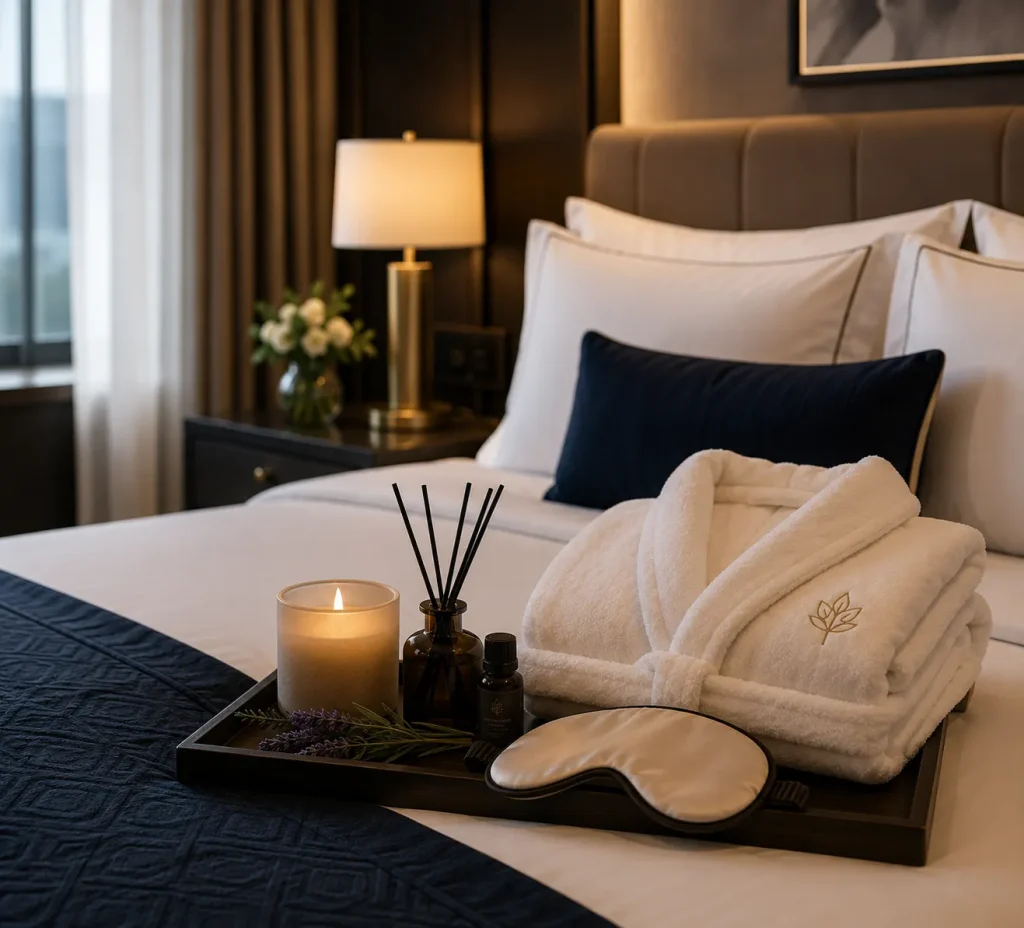
Bedding, Sleep, and Wellness Amenities That Define Comfort
In a luxury hotel, comfort is judged most honestly when the guest tries to sleep. A room can look beautiful at arrival, the bathroom can feel polished, and the welcome amenity can be memorable, but if the bed is uncomfortable or the sleep environment feels poorly controlled, the entire stay loses its sense of luxury. Bedding, sleep, and wellness amenities are therefore not secondary details. They are central to the guest’s emotional memory of the hotel. Most guests spend more time in bed than anywhere else in the room, and sleep quality influences how they feel the next morning, how they experience the destination, and how they describe the property after checkout.
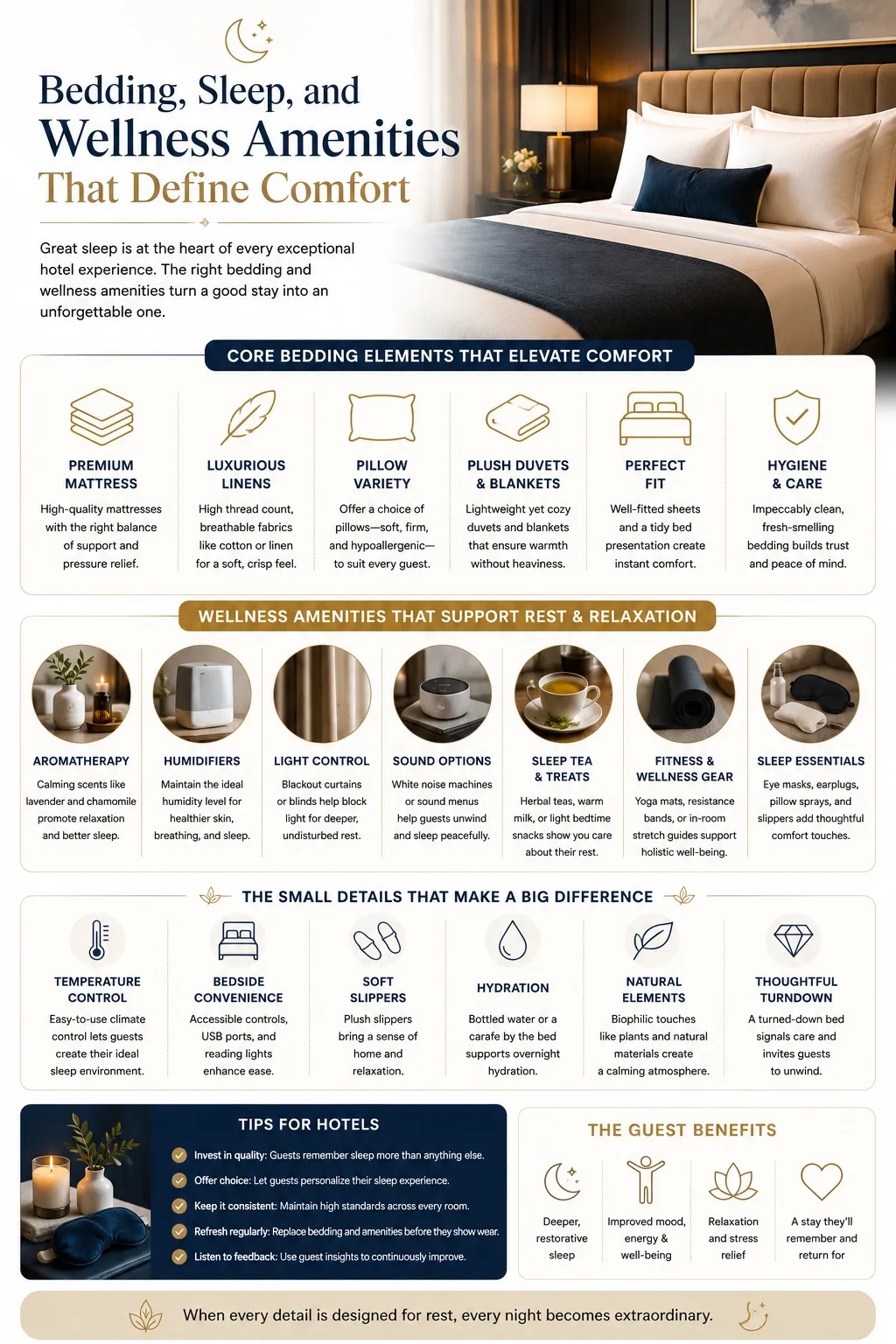
Luxury hotels understand that premium sleep is not created by one object. It is created by a system: mattress support, pillows, linens, duvet weight, room temperature, blackout performance, sound control, bedside convenience, calming rituals, air quality, hydration, and the ability to personalize small details without effort. The Centers for Disease Control and Prevention states that adults generally need at least seven hours of sleep each day, which makes the hotel room’s sleep environment a serious part of guest care rather than a decorative feature.
The Bed Is the Centerpiece of Comfort
The bed is the most visible promise of rest in a guest room. Luxury guests may notice the headboard, the symmetry of the pillows, the crispness of the sheets, and the volume of the duvet before they ever lie down. But visual presentation is only the beginning. A bed must look inviting and perform consistently night after night. A premium bed should feel supportive without being hard, soft without being unstable, fresh without smelling heavily laundered, and generous without becoming too warm.
Hotels often invest heavily in mattresses because the mattress affects both comfort and brand memory. A guest may forget the exact room number but remember that they slept exceptionally well. This is why some hotel brands turn beds into signature assets. Westin’s Sleep Well program, for example, is built around sleep-focused features such as the Heavenly Bed, a lavender balm, and a Sleep Well Menu, showing how bedding and bedtime rituals can become part of a hotel’s identity rather than a hidden operational purchase.
However, a famous mattress or plush bed alone does not guarantee comfort. Guests have different body types, sleep positions, ages, temperature preferences, and sensitivity levels. A side sleeper may need pressure relief at the shoulder and hip. A back sleeper may prefer firmer support. A guest with back discomfort may notice sagging immediately. A couple may judge the mattress by how well it controls motion transfer. Luxury hotels choose bedding systems that satisfy the widest range of guests while offering personalization when needed.
Premium Linens Must Feel Clean, Soft, and Breathable
Linens are one of the most direct sensory signals in the room. Guests feel them against the face, hands, and body. For that reason, premium linens should communicate cleanliness, softness, breathability, and quiet elegance. The goal is not simply a high thread count or a label that sounds impressive. The real standard is how the sheet feels after hours of sleep: Does it breathe? Does it stay smooth? Does it feel cool and fresh? Does it avoid roughness, stiffness, or excessive heat?
Luxury hotels often choose cotton percale, sateen, linen blends, or other high-quality textiles based on climate, brand style, and guest expectations. A warm tropical resort may prioritize breathable, crisp fabrics that help guests stay cool. A mountain property may use richer textures and warmer layering. A city hotel may want a smooth, tailored feel that supports both business and leisure guests. The bedding should reflect the property story while still meeting universal comfort expectations.
Cleanliness is equally important. A sheet can be expensive, but if it looks tired, smells too strongly of detergent, or shows wear, it no longer feels premium. Housekeeping teams need strict inspection standards for stains, pilling, thinning fabric, loose seams, and inconsistent bed presentation. In luxury hospitality, the bed should look newly prepared for that specific guest, never recycled from an anonymous operational cycle.
Pillows Are Where Personalization Becomes Practical
Pillows are one of the easiest ways to improve sleep comfort because guests have strong individual preferences. Some want soft down. Some want firmer support. Some prefer synthetic fill because of allergies. Some need a contour pillow, body pillow, or thinner pillow to avoid neck strain. A luxury hotel should not assume one pillow style is enough.
A pillow menu can be highly effective when it is simple, clear, and easy to request. The mistake is offering an impressive list that becomes confusing or slow to deliver. Guests should not need to study ten pillow descriptions at midnight. A better approach is to provide a strong default setup and offer a few meaningful alternatives: soft, firm, hypoallergenic, cooling, contour, or body pillow. The request process should be effortless through housekeeping, butler service, an app, or a quick call.
The best hotels also track repeat preferences. If a returning guest requested a hypoallergenic pillow during a previous stay, preparing the room that way before arrival feels deeply personal. This is the kind of amenity personalization that does not feel invasive because it solves a practical need. It quietly tells the guest, we remembered what helps you rest.
The Sleep Environment Matters as Much as the Bedding
Even the best bed cannot overcome a poor sleep environment. Temperature, light, sound, and comfort all shape sleep quality. The Sleep Foundation notes that people sleep better when the bedroom is optimized for temperature, noise, light levels, and comfort, which directly connects hotel room design to restfulness.
Blackout curtains are one of the most important sleep amenities in luxury rooms, especially for international travelers, shift-adjusted business guests, and anyone recovering from jet lag. They should close fully, block edge light, and be easy to operate. A beautiful drapery system that leaves a bright line across the room at sunrise will not feel luxurious to a tired guest. Lighting controls should also support sleep. Bedside switches must be intuitive, and guests should be able to turn off all unnecessary lights without walking around the room.
Noise control is equally critical. Guests may tolerate a smaller room if it is quiet, but they rarely forgive repeated sleep disruption. Hotels should consider door seals, corridor acoustics, elevator proximity, HVAC noise, plumbing sounds, window insulation, and minibar hum. A white noise machine, sound masking option, or calming audio feature can help, but it should never be used to hide preventable design problems. True luxury begins with a quiet room, not a gadget that compensates for poor planning.
Climate control should feel precise and understandable. Guests should be able to adjust the room temperature without struggling with a confusing thermostat. The HVAC system should operate quietly and avoid blowing directly onto the bed. In warm destinations, breathable bedding and effective cooling matter. In cold climates, layers, throws, and underfoot comfort help the guest feel cocooned without overheating.
| Comfort Element | What Guests Feel | Premium Hotel Standard |
| Mattress | Support, pressure relief, stability | Balanced comfort across body types and sleep positions |
| Pillows | Neck support, softness, allergy comfort | Strong default pillows plus easy personalization |
| Linens | Freshness, softness, breathability | Clean, smooth, climate-appropriate fabrics |
| Duvet and layers | Warmth, weight, cocooning | Cozy without overheating or feeling heavy |
| Blackout | Darkness and sleep continuity | Full coverage with simple controls |
| Sound control | Peace, privacy, uninterrupted rest | Quiet room design before add-on devices |
| Bedside setup | Ease and calm | Water, charging, lighting, and essentials within reach |
Wellness Amenities Should Support Recovery, Not Create Clutter
Wellness amenities have become increasingly important because many luxury guests now travel with recovery, health, and emotional balance in mind. Hilton’s 2025 travel trends coverage reported that more than one in four travelers planned to book a spa or wellness treatment to improve sleep while on vacation, showing how closely sleep and travel wellness are now connected.
In the guest room, wellness should feel natural and useful rather than forced. A yoga mat placed in a closet can be helpful, but only if there is clean floor space to use it. A sleep balm can be elegant, but only if the fragrance is subtle and alternatives are available for sensitive guests. A meditation card can be calming, but only if the room is quiet enough to make meditation realistic. A luxury wellness amenity should support the body without making the guest feel instructed, judged, or overwhelmed.
Effective wellness amenities often include herbal tea, mineral water, electrolyte options, calming bath salts, a pillow mist, a gentle stretching guide, recovery balm, eye mask, earplugs, or a small turndown ritual. Some hotels may add in-room fitness equipment, guided breathing content, circadian lighting, air purifiers, or sleep-tracking technology. These can be valuable, but they must remain easy to use. Wellness loses its luxury when it requires setup, troubleshooting, or a learning curve.
Hydration, Nutrition, and Bedtime Rituals Shape the Night
Bedside water may seem basic, but in a luxury room it is essential. Guests should not have to search for water in the middle of the night or choose between an overpriced minibar bottle and a call to room service. Filtered water in glass bottles, elegantly placed beside the bed or on the desk, supports comfort and sustainability at the same time. In dry climates, high-altitude destinations, spa resorts, and long-haul travel markets, hydration becomes even more important.
Nutrition also affects the bedtime experience. A minibar filled only with alcohol, candy, and salty snacks may not support the modern luxury guest’s wellness expectations. Hotels can still offer indulgence, but the selection should be balanced. Herbal teas, low-sugar snacks, nuts, fruit, dark chocolate, nonalcoholic beverages, and light room-service options can make the room feel more thoughtful. Westin’s Sleep Well Menu is one example of turning bedtime food and beverage into a branded wellness ritual rather than leaving it as an afterthought.
Turndown service can also transform sleep amenities into a memorable ritual. A perfectly prepared bed, softened lighting, fresh water, closed curtains, a small sleep tea, a calming note, or a gentle balm can help the guest transition from the public energy of the hotel to the private calm of the room. The best turndown amenities are restrained. They should not crowd the bed, create waste, or feel childish. A single well-chosen detail is often more luxurious than a tray of items the guest will not use.
Wellness Technology Must Be Intuitive and Private
Technology can improve sleep and comfort, but only when it is invisible in the best sense. Smart thermostats, circadian lighting, streaming relaxation content, app-based requests, and in-room tablets can all support wellness. But complicated technology can quickly become the opposite of luxury. A guest who cannot turn off a glowing control panel at night will not appreciate how advanced it is.
Luxury hotels should test sleep-related technology from the guest’s perspective. Can the guest dim the lights from bed? Can they turn off the TV completely? Are there bright standby lights from devices? Is the alarm clock easy to reset? Are charging points near both sides of the bed? Does the room tablet create privacy concerns? Are wellness apps optional rather than intrusive? Technology should give guests control, not make them feel monitored.
Privacy is especially important with sleep and wellness data. If a hotel offers sleep tracking, app-based wellness programs, or connected room controls, guests should understand what is optional and what data is being used. The safest luxury approach is to make technology helpful, simple, and discreet.
Comfort Must Be Consistent Across Room Categories
Luxury guests understand that suites may offer more space and richer amenities, but basic sleep comfort should not collapse in entry-level rooms. Every guest paying for a luxury property should receive a high-quality mattress, clean linens, strong pillows, effective blackout, quiet conditions, and reliable climate control. Suites can add enhanced bedding, expanded pillow menus, in-room wellness equipment, upgraded bath rituals, or personalized sleep programs, but the foundation must remain consistent.
Consistency is also operational. Mattresses need rotation and replacement schedules. Pillows need inspection. Duvets need seasonal adjustments. Linen inventory must be strong enough to avoid overuse. Housekeeping should report wear before guests do. Engineering should monitor HVAC noise, curtain function, lighting controls, and sound issues. Comfort is not only purchased; it is maintained.
A truly premium bed is not defined by how it looks on opening day. It is defined by how it feels after hundreds of stays, countless laundry cycles, repeated housekeeping resets, and changing guest expectations. Luxury hotels protect sleep quality through disciplined maintenance because they know that rest is one of the hardest experiences to recover once it is lost.
The Real Luxury Is Waking Up Better
The strongest bedding, sleep, and wellness amenities all work toward one outcome: the guest wakes up feeling better than they expected. That feeling may come from a supportive mattress, breathable sheets, a pillow that fits, silence through the night, a dark room, a calming tea, or the simple relief of having everything needed within reach. These amenities are premium because they support the guest’s body and emotions at the same time.
Luxury hotels choose sleep amenities with empathy. They understand that travel can be tiring, unfamiliar, and physically disruptive. They design the room to reduce those stresses before the guest has to name them. A hotel that helps guests sleep well earns a deeper kind of loyalty because it becomes associated with restoration, not just service.
When bedding, sleep, and wellness amenities are selected with this level of care, comfort becomes more than softness. It becomes a promise that the hotel can protect the guest’s most private hours. Once that promise is in place, the next layer of the luxury room experience is convenience: the technology, controls, and personalization tools that make every in-room interaction feel effortless.
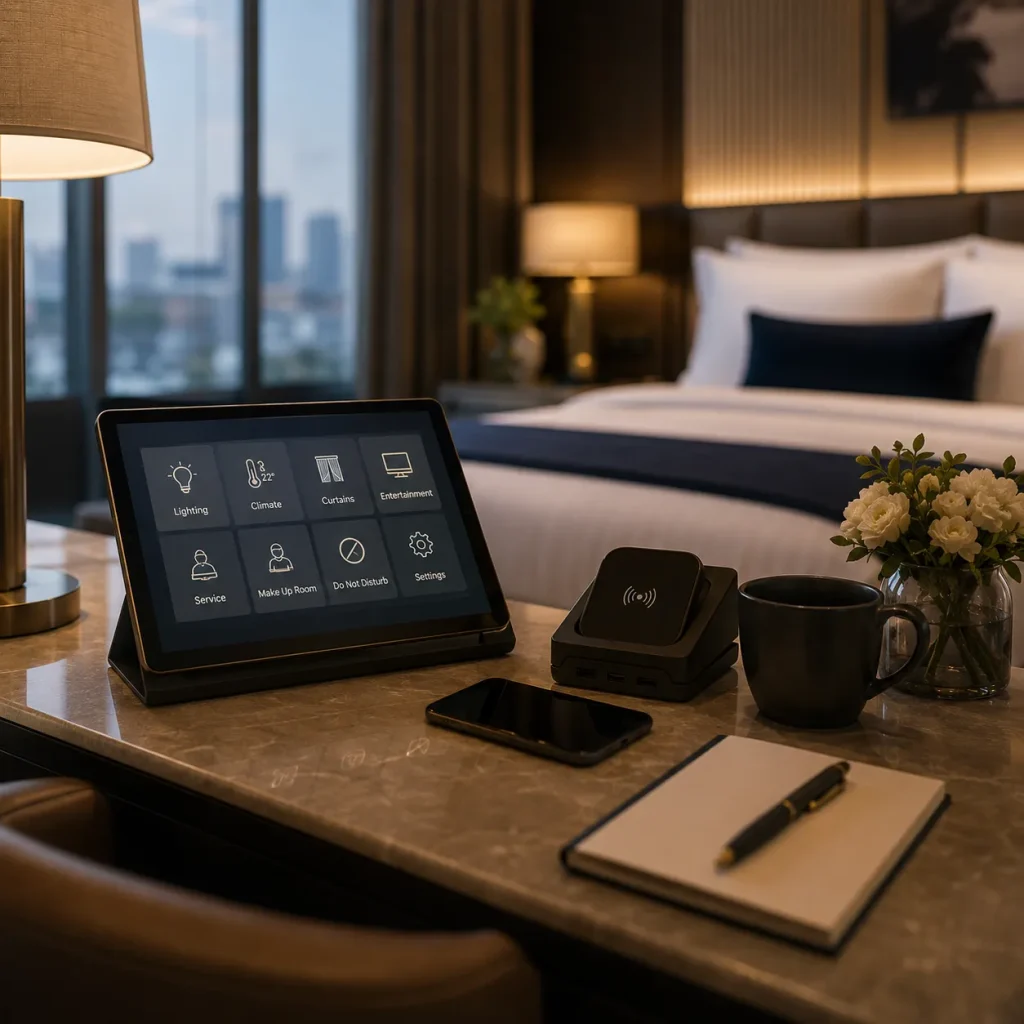
In-Room Technology, Convenience, and Personalization
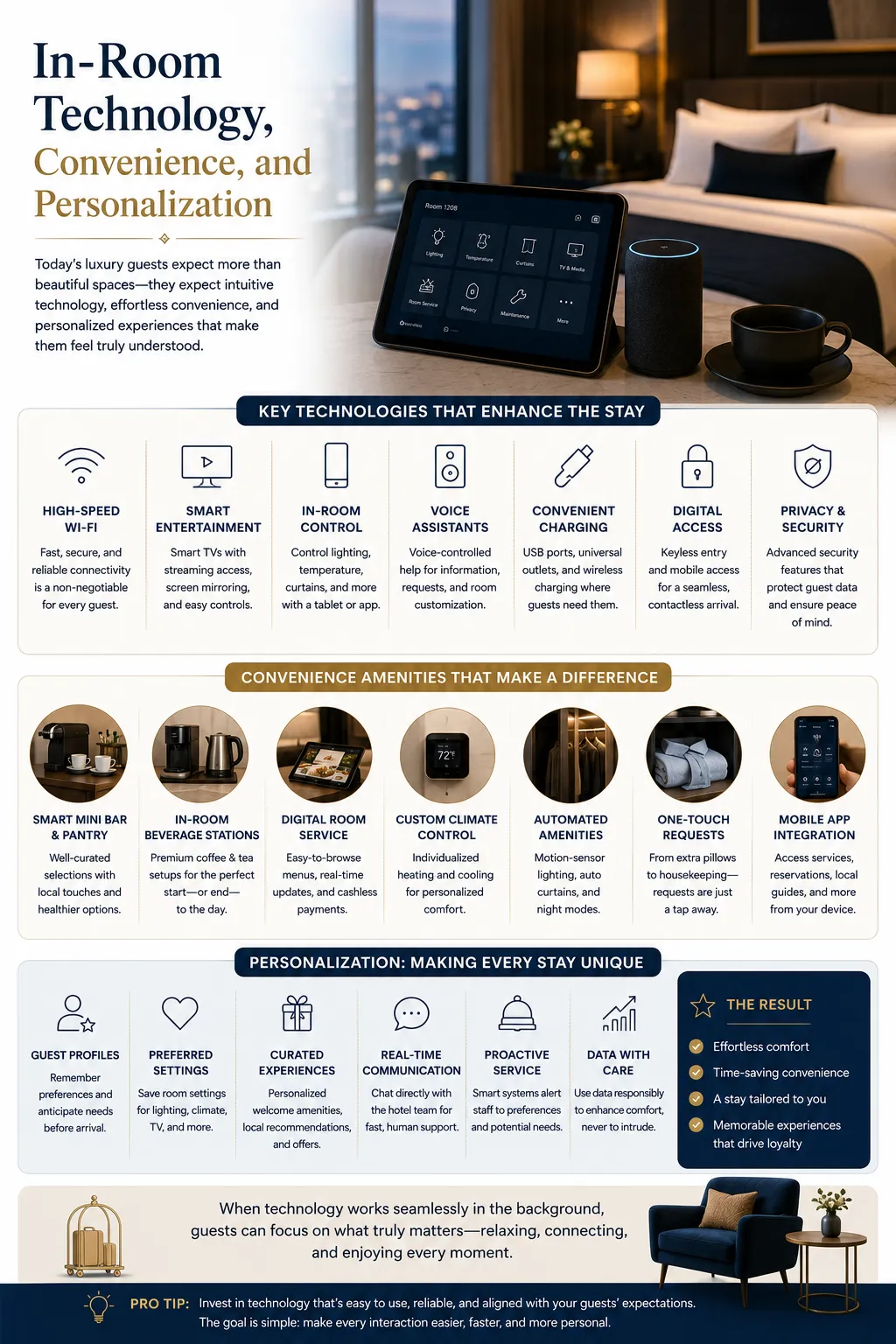
In a luxury hotel, technology should not feel like technology. It should feel like ease. Guests do not enter a premium room hoping to study a control panel, troubleshoot a streaming system, scan multiple QR codes, or call the front desk because the thermostat is confusing. They want the room to respond naturally: lights that make sense, outlets where they are needed, a television that connects smoothly, temperature controls that work quickly, curtains that close properly, Wi-Fi that feels invisible, and service requests that can be handled without friction. The best in-room technology amenities are not impressive because they look futuristic. They are impressive because they remove small moments of effort from the stay.
Luxury hotels choose technology differently from standard properties because their guests expect both convenience and emotional comfort. A guest paying for a high-end stay may appreciate innovation, but they will not forgive complexity. A room tablet can be useful if it simplifies dining, spa booking, housekeeping requests, and local recommendations. It becomes annoying if it is slow, hard to navigate, or the only way to reach a human. A smart TV can make the room feel residential and personal. It becomes a problem if the guest cannot log out, cast content securely, or operate the remote without confusion. A digital key can make arrival smoother. It becomes frustrating if it fails at the elevator or does not work for a traveling companion. In luxury hospitality, convenience must be reliable before it can be considered premium.
Premium Technology Begins With Frictionless Basics
The foundation of a modern luxury room is not the most advanced feature; it is the absence of avoidable inconvenience. Guests expect strong Wi-Fi, convenient charging, intuitive lighting, quiet climate control, secure entertainment access, and easy communication with the hotel. These are now part of room comfort in the same way high-quality linens and clean bathrooms are. If the basics fail, more advanced amenities feel like decoration.
Charging is a perfect example. A luxury room should support the way people actually travel: phones, tablets, laptops, watches, headphones, cameras, and sometimes medical or wellness devices. Outlets and USB-C ports should be placed at both sides of the bed, near the desk, and close to seating areas. Guests should not have to move furniture to plug in a phone. A universal adapter or international charging solution can be especially valuable in properties with a global guest base. The design should be clean, but the priority is practical access.
Wi-Fi should be fast enough for work, video calls, streaming, and multiple devices. More importantly, it should be simple to join. Luxury guests should not have to enter long codes, reauthenticate repeatedly, or pay unexpected fees after arrival. A strong internet connection supports business travelers, families, creators, remote workers, and guests who simply want to relax with familiar entertainment. It is no longer a bonus; it is part of the room’s infrastructure.
Lighting also defines convenience. A beautifully designed room can still feel poorly executed if guests cannot find the right switch at night. Bedside controls should make it easy to turn off all lights, adjust reading lamps, and create a softer evening mood. Motion lighting in closets or bathrooms can help, but it should be gentle and not disturb sleep. Luxury lighting works best when it gives guests control without requiring explanation.
Entertainment Should Feel Residential and Secure
The hotel television has changed from a simple screen into a major in-room amenity. Guests now expect the entertainment experience to feel closer to home: smart TV functionality, streaming access, casting, clear menus, strong picture quality, and easy logout. J.D. Power’s 2025 North America Hotel Guest Satisfaction Index found that 40% of guests considered a smart TV or the ability to stream their own entertainment a “need to have” amenity, up from 21% in 2019; the same study reported that 72% of guests said their room included a smart TV and 60% used it during their stay.
For luxury hotels, this creates both opportunity and responsibility. A well-designed entertainment system can make the room feel personal, calm, and familiar. After a long flight or a demanding day, being able to watch a favorite show without technical difficulty can feel surprisingly luxurious. But privacy is essential. Guests need confidence that their accounts will be logged out automatically, their viewing history will not remain visible, and the next guest will not have access to their profile. The best systems make sign-in easy and sign-out automatic.
Hotels should also consider the difference between guest types. A business traveler may want screen casting for presentations or video calls. A family may need child-friendly entertainment and simple parental controls. A couple may want music, films, and room controls integrated into a relaxed evening experience. A wellness traveler may appreciate guided meditation, stretching videos, sleep audio, or spa content. The technology should support different use cases without cluttering the interface.
Smart Room Controls Must Be Intuitive
Smart room technology can elevate the guest experience when it helps the room adapt to personal comfort. Temperature, lighting, shades, entertainment, and service requests can all be integrated into a connected room experience. Hilton’s Connected Room concept, for example, allows guests to control temperature, lights, TV, and more from a mobile device or TV remote, showing how major hotel brands have used technology to make rooms feel more personalized and familiar.
However, smart controls should never make the room harder to use. A luxury hotel must assume that some guests love technology, some tolerate it, and some prefer traditional controls. The solution is not to force every guest into an app-based experience. The room should offer multiple paths: physical switches for immediate use, a remote or tablet for convenience, and mobile app control for guests who want it. This layered approach respects different comfort levels.
Temperature control is especially important. Guests should be able to adjust heating or cooling quickly and understand what setting they have chosen. The system should not reset unexpectedly during the night, create excessive noise, or require staff intervention. Shades and blackout curtains should also be easy to operate. Automated curtains can feel elegant, but only if controls are obvious and the movement is smooth, quiet, and reliable.
The highest standard is invisible intelligence. A room may prepare a preferred temperature before a returning guest arrives, soften lighting at turndown, or display relevant dining options based on the time of day. But these features should feel helpful, not intrusive. The guest should always remain in control.
Convenience Should Include Choice, Not Just Automation
Luxury hospitality is human at its core. Technology should give guests more choice, not remove service. Some guests want to bypass the front desk, use a mobile key, message housekeeping, order dining digitally, and check out through an app. Others want a warm welcome, a conversation with the concierge, and a staff member who can solve problems personally. Premium hotels serve both preferences.
Mobile check-in and digital room keys can be excellent convenience amenities when they work smoothly. Marriott’s mobile app, for example, allows guests to opt in to Mobile Key and share it with up to three travel companions, which reflects how digital access is becoming more flexible for real travel situations. This kind of feature can reduce arrival friction, especially for repeat guests, late-night arrivals, and travelers who prefer minimal waiting. But a luxury hotel should still make traditional check-in feel gracious. Digital convenience should be an option, not a replacement for hospitality.
In-room service requests should follow the same principle. A tablet, app, QR menu, or messaging platform can make it easy to request towels, book a spa treatment, schedule housekeeping, ask for ice, order breakfast, or arrange transportation. But the system must be fast, accurate, and connected to actual operations. Nothing feels less premium than sending a digital request and wondering whether anyone saw it. If a guest uses technology to ask for something, the response should feel as attentive as a phone call to a well-trained staff member.
| Technology Amenity | What Makes It Feel Premium | What Makes It Feel Frustrating |
| Smart TV and streaming | Easy casting, strong picture, automatic logout | Complicated login, privacy concerns, slow interface |
| Mobile key | Smooth arrival, companion sharing, secure access | Failed entry, app errors, no staff backup |
| Lighting controls | Clear bedside options and soft evening settings | Too many switches, confusing panels, bright standby lights |
| Climate control | Quiet, precise, easy temperature adjustment | Noisy HVAC, slow response, unclear thermostat |
| Room tablet or app | Fast service requests and useful hotel information | Slow menus, forced digital use, unanswered requests |
| Charging access | USB-C and outlets exactly where guests need them | Hidden outlets, outdated ports, not enough access |
Personalization Should Feel Useful, Not Overdone
Personalization is one of the strongest reasons to invest in in-room technology, but it must be thoughtful. A guest does not need the room to announce that it knows everything about them. They need the room to remember what improves their stay. Preferred pillow type, room temperature, coffee choice, minibar preferences, newspaper selection, fragrance sensitivity, housekeeping timing, and dining restrictions can all help create a more comfortable experience when used respectfully.
The goal is quiet recognition. A returning guest who prefers sparkling water should find it in the room. A guest who requested feather-free bedding should not have to ask again. A guest who always needs extra hangers should find them in the closet. A guest who prefers nonalcoholic beverages should not receive champagne as the default welcome amenity. These details make the room feel intelligent because they reduce repetition.
Technology can help hotels collect and organize this information, but staff judgment is what makes it hospitable. A system can record a preference; a trained team decides how to act on it elegantly. Personalization should also be easy to update. Preferences change by trip purpose. The same guest may want a work-focused room during a conference and a softer wellness setup during a weekend escape. Luxury hotels should avoid locking guests into assumptions.
Privacy and Data Security Are Part of the Amenity Experience
As rooms become smarter, privacy becomes part of luxury. Guests must trust that the hotel protects their information, their payment details, their streaming accounts, their room access, and their personal preferences. The Federal Trade Commission advises businesses to build data security around five principles: know what personal information they have, keep only what they need, protect what they keep, properly dispose of what they no longer need, and plan for security incidents. These principles are highly relevant to hotels because personalization often depends on sensitive guest data.
Luxury hotels should be transparent about what technology is optional, how guest data is used, and how accounts are cleared after checkout. Smart speakers, tablets, connected TVs, digital keys, app messaging, and room-control systems should all be designed with privacy in mind. Guests should not feel recorded, tracked, or exposed. If a room includes voice controls, cameras for video conferencing, or app-linked devices, the hotel must make privacy settings clear and give guests simple ways to opt out.
Payment security matters as well. The PCI Security Standards Council states that PCI DSS defines requirements to protect environments where payment account data is stored, processed, or transmitted. For hotels, this affects mobile payments, room charges, digital ordering, self-service kiosks, deposits, and stored card information. A luxury guest may never see the security system behind these interactions, but they feel the result when payments are smooth, accurate, and trustworthy.
Technology Should Support Staff, Not Replace Care
The best luxury hotels do not use technology to distance themselves from guests. They use it to free staff from repetitive tasks so they can deliver more meaningful service. A digital request system can help housekeeping prioritize needs. Guest profiles can help the front desk prepare better arrivals. Smart room data can alert engineering to a malfunctioning thermostat before a complaint occurs. A mobile app can reduce lines, while staff remain available for guests who want personal attention.
This balance is essential. A hotel that relies too heavily on automation can feel cold, especially in the luxury segment. Guests may appreciate speed, but they still value warmth, discretion, and human problem-solving. Technology should make the room more responsive and the staff more informed. It should not make the guest feel abandoned.
A premium technology strategy also considers maintenance. Every device in the room creates a promise. If the tablet battery dies, the smart TV freezes, the curtains stop halfway, the app request disappears, or the digital key fails, the hotel has created frustration instead of convenience. Luxury hotels need strong testing, backup procedures, staff training, and replacement schedules. A simpler system that works perfectly is more premium than an advanced system that fails often.
The Real Goal Is Effortless Control
The purpose of in-room technology is not to impress guests with features. It is to give them effortless control over their private environment. They should be able to rest, work, dress, bathe, dine, stream, read, sleep, request service, and leave the room without unnecessary effort. When technology is chosen well, it disappears into the comfort of the stay. The guest does not say, “This hotel had many devices.” They say, “Everything was easy.”
That is the standard luxury hotels should use when selecting in-room technology, convenience tools, and personalization systems. The amenity must be useful, reliable, secure, elegant, and aligned with the hotel’s service culture. It must support both digital-first guests and guests who prefer traditional hospitality. Most importantly, it must protect the emotional quality of the room: calm, privacy, comfort, and control.
When convenience and personalization are handled with this level of care, technology becomes more than a feature. It becomes a quiet expression of respect for the guest’s time and preferences. After building a room that feels effortless and personal, luxury hotels must also consider how every amenity reflects a growing expectation that comfort should be responsible, sustainable, and thoughtfully sourced.
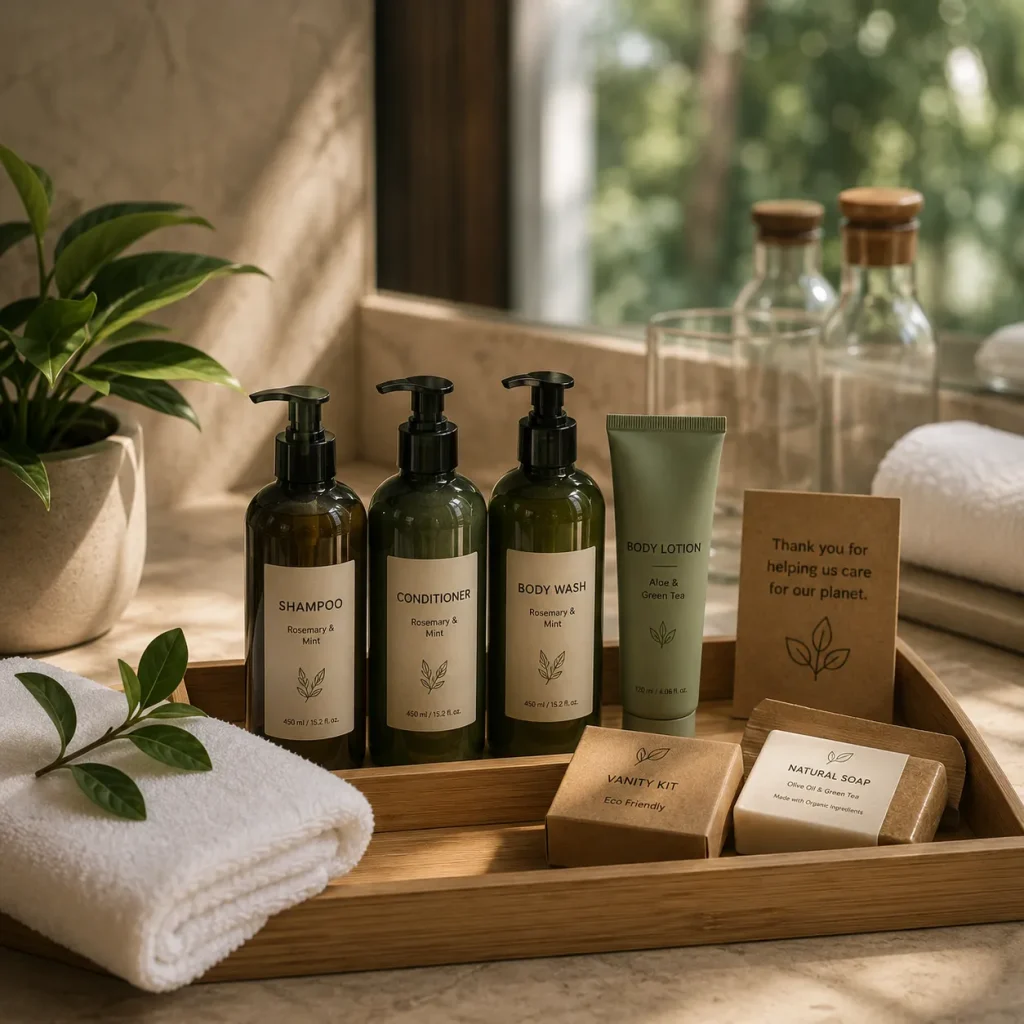
Sustainable Amenities and the Rise of Responsible Luxury
Sustainability has moved from a behind-the-scenes hotel operation into a visible part of the luxury guest experience. In the past, some hotels treated eco-friendly amenities as a cost-saving measure or a quiet housekeeping policy. Today, responsible luxury is much more ambitious. It asks whether a guest room can feel indulgent, beautiful, comfortable, and personal while also reducing waste, supporting local communities, conserving resources, and avoiding unnecessary harm. For luxury hotels, the goal is not to make the guest feel that something has been taken away. The goal is to make responsible choices feel like a natural part of refined hospitality.
This shift matters because travelers are paying closer attention to how hotels operate. Booking.com’s 2026 sustainability research found that 85% of travelers said more sustainable travel is important or very important to them, and travelers booked more than 100 million room nights in 2025 at accommodation partners with third-party sustainability certification on Booking.com’s platforms. The same research also showed that guests are thinking beyond recycling and towel reuse; many are considering extreme weather, overcrowding, seasonality, and the pressure tourism places on destinations. For luxury hotels, this means sustainable amenities are no longer just about replacing plastic bottles. They are part of a broader promise: the stay should be memorable for the guest and respectful toward the place that makes the experience possible.
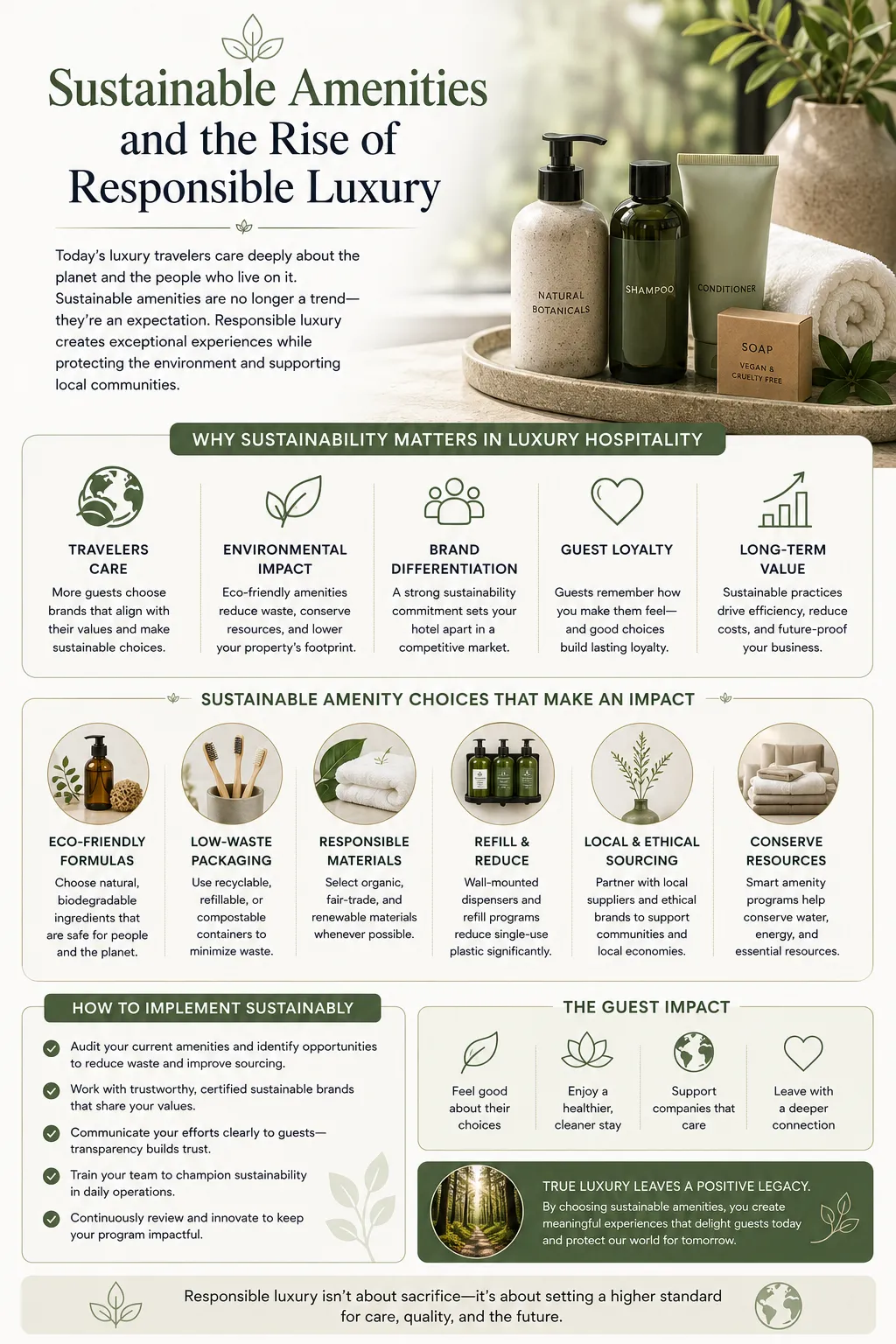
Responsible Luxury Should Never Feel Like a Downgrade
The most important rule of sustainable amenity selection is simple: sustainability must support the luxury experience, not weaken it. Guests may appreciate plastic reduction, local sourcing, and lower waste, but they still expect softness, cleanliness, beauty, ease, and reliability. A poorly designed refillable bottle, rough recycled paper, weak bath product, thin towel, or cheap-looking dispenser can make sustainability feel like a compromise. That is not responsible luxury; it is poor execution.
Forbes Travel Guide’s Responsible Hospitality program defines responsible luxury in a way that is especially useful for hotels. The program focuses on best practices that protect the environment and support employees, guests, and communities without compromising guest experience. This is the standard luxury hotels should apply to every guest room amenity. A sustainable amenity should look intentional, feel premium, and perform beautifully. If a hotel replaces single-use plastic water bottles with glass bottles, the glass should be elegant, clean, easy to use, and replenished consistently. If it replaces miniature toiletries with refillable bath products, the containers should feel hygienic, attractive, and aligned with the bathroom design. If it uses local snacks, they should be fresh, well packaged, and clearly labeled.
The guest should not feel that they are being asked to sacrifice comfort for values. Instead, the room should suggest that the hotel has already done the hard work: choosing better materials, working with better suppliers, designing better systems, and making the responsible option feel effortless.
Waste Reduction Starts With the Guest Room
The guest room is one of the most visible places to reduce waste because amenities are often small, frequently replaced, and heavily packaged. Single-use plastic bottles, disposable vanity kits, plastic-wrapped slippers, paper-heavy stationery, excess minibar packaging, unused printed materials, and individually wrapped items can quickly make a luxury room feel wasteful. A responsible amenity program studies what guests truly use and removes or redesigns what creates unnecessary waste.
AHLA’s Responsible Stay initiative identifies waste reduction as a major hotel sustainability focus and notes that hotels are reducing single-use plastics and other materials while maintaining the quality, cleanliness, and amenities guests expect. It also describes common hotel actions such as switching from small plastic toiletries to larger-format shampoo, conditioner, and shower gel bottles, adding water refill stations, and improving recycling programs. For luxury hotels, these ideas must be elevated through design. Large-format bath products should not look institutional. Water stations should not feel like a budget convenience. Recycling should be discreet, clear, and easy to use.
A premium waste-reduction strategy often includes refillable bath containers, glass water bottles, reusable laundry bags, recyclable or compostable packaging where infrastructure supports it, digital room directories, and on-request vanity items instead of automatic placement of products many guests never open. However, luxury hotels must be careful with “on request” systems. Removing every small item from the room can make the experience feel stingy if the guest has to call for basic needs. The better approach is to keep essential comforts available, remove low-use disposable items, and make additional amenities easy to request without embarrassment or delay.
Responsible Sourcing Makes Amenities More Meaningful
Sustainability is not only about reducing waste. It is also about where products come from, who benefits from the purchase, and whether the amenity reflects the destination in a respectful way. Booking.com’s 2025 research found that 73% of travelers wanted the money they spend to go back to the local community, while 69% wanted to leave places better than when they arrived. This has direct meaning for luxury hotels. A locally made welcome treat, regional tea, artisan soap, handcrafted tray, small-batch coffee, or destination-inspired bath product can support the community while making the guest experience more memorable.
The Global Sustainable Tourism Council criteria describe sustainable tourism through four broad themes: effective sustainability planning, maximizing social and economic benefits for local communities, enhancing cultural heritage, and reducing negative environmental impacts. These themes can guide amenity decisions. A hotel should ask whether a product supports local suppliers, respects cultural identity, reduces unnecessary transportation or packaging, and fits the property’s story. A luxury resort might use locally produced honey, woven baskets made by regional artisans, or bath products inspired by native botanicals. An urban hotel might partner with a neighborhood coffee roaster, independent chocolatier, or design studio. A heritage property might commission stationery, ceramics, or textile details connected to local craftsmanship.
Responsible sourcing also requires discipline. A product is not automatically premium because it is local, handmade, or described as natural. Hotels still need reliable production, safety documentation, consistent quality, attractive packaging, allergen information, and fair supplier relationships. A local amenity should feel curated, not improvised. The best choices give guests a sense of place while meeting the same standards expected from any luxury supplier.
Water, Energy, and Laundry Choices Are Amenities Too
Some of the most important sustainable amenities are not placed on a tray. They are built into how the room works. Water-efficient fixtures, energy-conscious lighting, smart climate systems, efficient laundry practices, refillable water options, and durable textiles all shape the guest experience. AHLA identifies four major hotel sustainability pillars: energy efficiency, water conservation, waste reduction, and responsible sourcing. It also notes that hotels are focusing on areas such as low-flow faucets and showers, laundry water reduction, efficient equipment, water-smart landscaping, and energy-efficient design.
In luxury hotels, these systems must be almost invisible. A water-saving shower should still feel generous. A low-flow faucet should not feel weak. Energy-efficient lighting should still create warmth, elegance, and flattering bathroom visibility. A smart thermostat should conserve energy when the room is empty but respond quickly when the guest returns. Linen reuse programs should be optional, clearly explained, and never used as an excuse for tired bedding or towels.
Laundry is especially important because luxury rooms rely on linens, towels, robes, slippers, duvets, and spa textiles. A hotel can reduce environmental impact by choosing durable fabrics, extending product life through proper care, avoiding over-laundering where appropriate, and replacing items before they look worn. Guests should never see sustainability as a reason for lower textile quality. In responsible luxury, a towel should still feel plush, a robe should still feel inviting, and sheets should still feel fresh. The difference is that the hotel has chosen materials and care systems more intelligently.
Sustainable Bath Amenities Need Hygiene, Beauty, and Trust
Bath products are often the most visible symbol of a hotel’s sustainability strategy. Many luxury hotels have moved from disposable miniature bottles to refillable or large-format containers, but this change only works when hygiene perception is excellent. Guests must feel confident that the product is clean, fresh, secure, and professionally maintained. A scratched bottle, sticky pump, faded label, or half-empty dispenser can quickly damage trust.
A strong sustainable bath program combines formula quality, packaging design, refill protocols, and housekeeping training. The product should perform well, smell balanced, and suit the property’s identity. The container should look intentional, not like a cost-saving substitution. Housekeeping should inspect pumps, labels, trays, and product levels daily. When wall-mounted dispensers are used, they should be installed at comfortable heights, cleaned thoroughly, and protected from tampering. When freestanding refillable bottles are used, they should be stable, elegant, and easy for guests to identify.
Hotels should also think about what they remove from the bathroom. Disposable razors, toothbrushes, shower caps, combs, cotton pads, and sewing kits may not need to be automatically placed in every room, especially if usage is low. But when guests request them, the response should be quick and polished. Sustainable luxury is not about saying no. It is about placing the right amenities in the room by default and making everything else available with ease.
The Minibar Can Become More Responsible and More Memorable
A traditional minibar can be one of the least sustainable areas of the room: too many imported products, excess packaging, food waste, plastic bottles, and items that do not reflect the guest’s lifestyle. A luxury hotel can make the minibar more responsible without making it less indulgent. In fact, a thoughtful minibar can become one of the most memorable parts of the room.
A better minibar might include local sparkling water in glass bottles, regional snacks, premium nonalcoholic beverages, low-sugar options, plant-forward items, fair-trade chocolate, small-batch nuts, herbal teas, or seasonal treats from nearby makers. The selection should still include pleasure. Responsible luxury does not require replacing every indulgent item with a health product. It means choosing better products, reducing unnecessary packaging, and offering a range that respects modern guest preferences.
Hotels can also use portion control intelligently. A small, excellent local chocolate may be more impressive than a large generic candy bar. A beautifully packaged regional tea may feel more luxurious than several low-quality sachets. A curated minibar should feel edited, not empty. The guest should sense that every item was chosen for quality, relevance, and story.
Transparency Prevents Greenwashing
Guests are increasingly aware of vague sustainability language. Phrases such as “eco-friendly,” “green,” “clean,” and “planet-conscious” can sound appealing, but they lose credibility when they are not specific. The Federal Trade Commission explains that its Green Guides are designed to help marketers avoid environmental claims that mislead consumers, including guidance on how claims are interpreted, substantiated, and qualified. For hotels, this means amenity communication should be clear and modest. Instead of claiming that an entire bathroom program is “sustainable,” a hotel can explain that refillable containers reduce single-use plastic, that a snack is sourced from a local producer, or that paper packaging is recyclable where local facilities accept it.
Transparency does not require long signs or preachy messages. Luxury communication should be brief, elegant, and useful. A small card can explain the local maker behind a welcome amenity. A bathroom note can describe why refillable products were chosen and how hygiene is maintained. A digital room directory can give guests deeper information if they want it. The tone should be confident, not defensive.
| Amenity Area | Responsible Luxury Approach | What to Avoid |
| Bath products | Elegant refillable containers, excellent formulas, clear refill standards | Cheap dispensers, vague “natural” claims, poor pump maintenance |
| Water | Glass bottles, filtration, refill stations, easy replenishment | Removing water entirely or relying only on minibar sales |
| Minibar | Local, seasonal, lower-waste, balanced indulgence and wellness | Overfilled imported selection with excess packaging |
| Textiles | Durable robes, high-quality towels, responsible laundering | Thin towels or worn linens presented as sustainability |
| Printed materials | Digital directories plus refined essential print pieces | Excess paper or QR-only systems that frustrate guests |
| Local amenities | Curated partnerships with quality and safety standards | Token local items that feel random or poorly made |
Responsible Amenities Must Still Delight the Guest
The rise of responsible luxury does not mean the end of indulgence. It means indulgence becomes more intelligent. A room can still have beautiful bath products, plush towels, excellent coffee, elegant slippers, thoughtful turndown service, and a memorable welcome amenity. The difference is that each detail is selected with a wider sense of responsibility: less waste, better sourcing, clearer claims, stronger local connection, and better long-term value.
Luxury hotels choose sustainable amenities well when they begin with the guest experience and work backward through design, operations, suppliers, and impact. The result should feel calm and seamless. The guest notices the quality first, then appreciates the responsibility behind it. That is the strongest version of sustainable hospitality: not a lecture, not a compromise, but a more thoughtful form of comfort.
When sustainable amenities are chosen with care, they help a hotel express modern luxury in a way that feels generous, honest, and future-facing. The next step is making sure every supplier, product, and operational process can consistently meet the hotel’s safety, quality, and sourcing standards before the amenity ever reaches the guest room.
Sourcing, Safety, Quality Control, and Supplier Standards
A luxury hotel’s amenities are only as reliable as the sourcing system behind them. Guests may see a polished amenity tray, a beautiful bath collection, a soft robe, a minibar snack, or a sleek charging station, but behind every item there should be a disciplined process of supplier evaluation, safety verification, quality control, and operational testing. In a premium hotel, amenities are not casual purchases. They are small promises placed directly into the guest’s private space. If they perform well, they create trust. If they fail, they can create irritation, waste, safety concerns, allergic reactions, negative reviews, or brand damage.
This is why leading luxury hotels treat amenity sourcing as a cross-functional decision rather than a simple procurement task. Purchasing teams may negotiate price and availability, but they should not make the decision alone. Housekeeping understands replenishment and durability. Spa teams understand skincare credibility and fragrance sensitivity. Engineering understands electrical safety and maintenance. Food and beverage teams understand allergens, shelf life, and storage. Brand and design teams understand presentation. Legal, risk, and finance teams understand contracts, insurance, liability, and compliance. A premium amenity program is strongest when all of these perspectives shape the final choice.
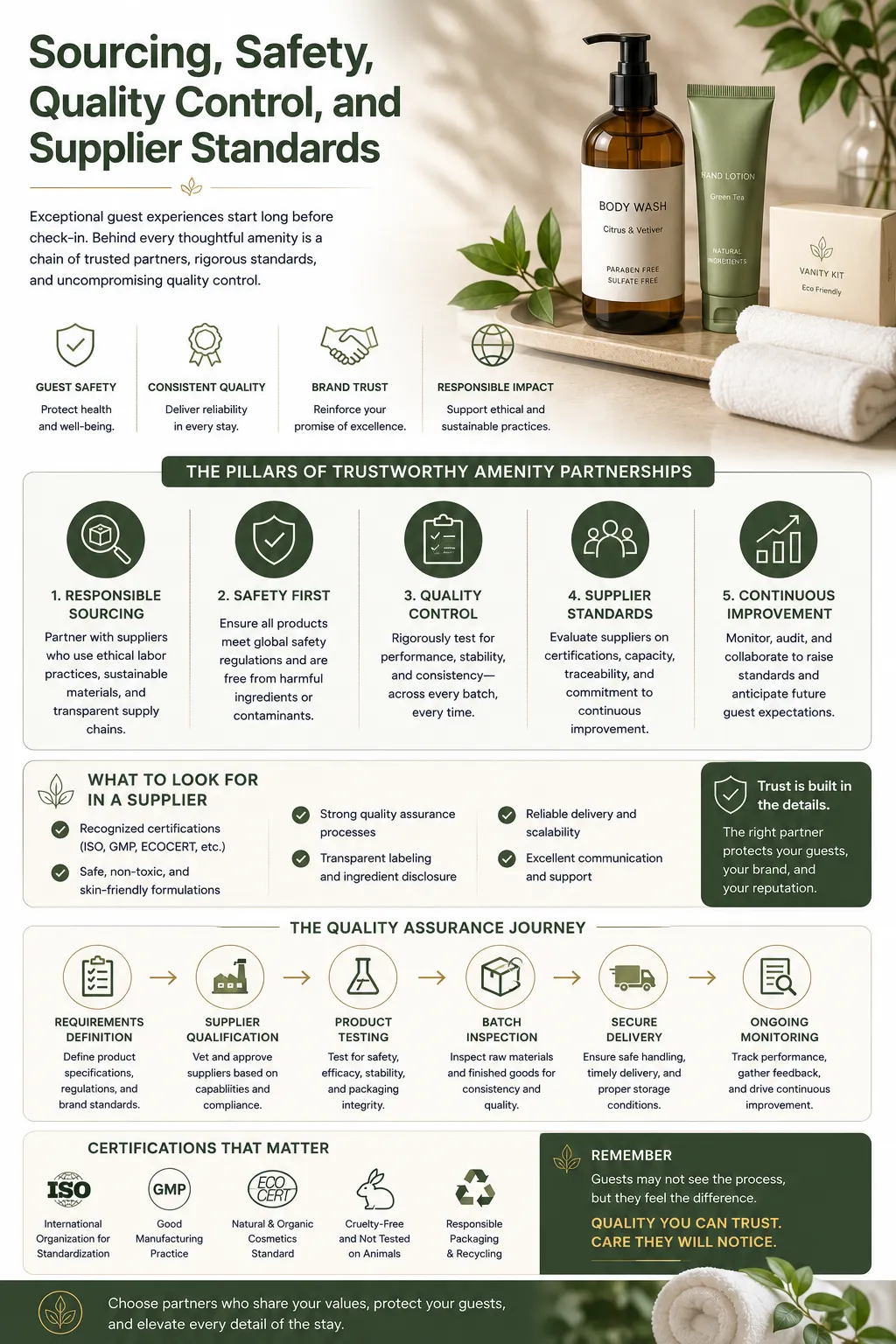
Sourcing Starts With a Clear Product Standard
The first mistake in amenity sourcing is choosing from samples before defining the standard. A hotel may receive an elegant bottle, a soft slipper, a beautiful candle, or a locally made snack and immediately imagine it in the room. But a sample is only the beginning. Before approving anything, the hotel needs a written product specification that explains exactly what the amenity must do, how it should feel, how it should look, how long it must last, how it will be stored, how it will be replenished, and what evidence the supplier must provide.
A good specification includes product dimensions, materials, ingredients, fragrance profile, packaging requirements, labeling needs, shelf life, minimum order quantities, lead times, replacement procedures, sustainability claims, allergen information, testing documents, and acceptable defect rates. It should also describe the desired guest experience. For example, a bath product specification should not merely say “premium shampoo.” It should describe the expected hair feel, scent strength, pump performance, ingredient restrictions, packaging style, refill method, and documentation required from the manufacturer. A robe specification should include fabric weight, shrinkage tolerance, laundering performance, sizing range, stitching quality, textile safety, and replacement criteria.
This level of detail may seem operational, but it is part of luxury. Guests do not experience procurement documents, but they experience the results. They feel whether the robe remains soft after repeated laundering, whether the lotion pump works smoothly, whether the minibar chocolate tastes fresh, and whether the charger is placed safely and functions without overheating. A clear product standard prevents the hotel from confusing attractiveness with quality.
Supplier Due Diligence Protects the Brand
A luxury hotel should know who is making its amenities, where they are made, how they are tested, and whether the supplier can perform consistently over time. Supplier due diligence should review manufacturing capacity, quality systems, financial stability, insurance coverage, recall procedures, ethical sourcing policies, subcontractor use, packaging capabilities, and business continuity plans. A supplier may produce an excellent first batch, but the hotel also needs to know whether the same quality can be maintained across seasons, room counts, renovations, new properties, and sudden demand changes.
Quality management standards can help structure this review. ISO 9001 is a globally recognized quality management standard designed to help organizations improve performance, meet customer expectations, and maintain a system for continual improvement; ISO notes that certification can add confidence because an accredited conformity assessment body has independently confirmed the certification body’s competence. A luxury hotel does not need every supplier in every category to hold the same certification, but it should prefer partners with documented quality systems, clear accountability, and a habit of measuring defects, complaints, corrective actions, and process improvements.
The hotel should also ask how the supplier manages change. Ingredients may change. Packaging vendors may change. Textile mills may change. Production may move to another facility. A premium supplier should notify the hotel before meaningful changes are made, especially when the amenity touches skin, involves food, uses electrical components, or carries sustainability claims. Silent substitutions can damage guest trust quickly. A lotion that suddenly smells different, a towel that becomes rougher, or a snack that changes allergen status should never reach the room unnoticed.
Cosmetics Require Strong Safety Documentation
Bath, body, and skincare amenities require special attention because guests apply them directly to their skin and hair. In the United States, the FDA explains that the Modernization of Cosmetics Regulation Act of 2022 requires a responsible person to list marketed cosmetic products with FDA, including product ingredients, and to maintain records supporting adequate safety substantiation; FDA also notes that neither law nor FDA regulations require one fixed set of tests for every cosmetic product or ingredient. This is important for hotels because a trusted supplier should be able to explain how product safety is supported, not simply rely on attractive branding.
For cosmetic amenities, hotels should request ingredient lists, safety assessments, batch traceability, stability information, preservative system details, shelf-life guidance, fragrance allergen information where applicable, and adverse event procedures. They should also understand how the product is manufactured, filled, stored, and shipped. ISO 22716 gives guidelines for the production, control, storage, and shipment of cosmetic products and focuses on quality aspects of cosmetic manufacturing. A supplier that follows recognized cosmetic good manufacturing practices is better positioned to deliver consistent products that look, smell, and perform the same from one batch to the next.
Hotels should be especially careful with products that make strong claims. “Natural,” “clean,” “organic,” “hypoallergenic,” “dermatologist-tested,” and “sensitive skin” can all sound reassuring, but they should be supported by credible documentation. The hotel’s reputation is connected to the amenity once it is placed in the room. If guests experience irritation or question the claim, they will usually blame the property as much as the supplier.
Food, Beverage, and Minibar Items Need Allergen Discipline
Welcome treats, minibar snacks, local pastries, chocolates, teas, nuts, bottled beverages, and turndown sweets can be memorable, but they also carry food safety and allergen responsibilities. The FDA identifies milk, eggs, fish, Crustacean shellfish, tree nuts, peanuts, wheat, soybeans, and sesame as major food allergens under U.S. requirements, with sesame recognized as the ninth major allergen effective January 1, 2023. FDA guidance also states that food labels are an important tool for helping consumers with food allergies avoid ingredients they may react to.
For hotels, this means edible amenities need clear ingredient and allergen information, even when the product is small or locally sourced. A beautiful handmade cookie is not premium if the guest cannot tell whether it contains nuts, dairy, wheat, egg, sesame, or another relevant allergen. A welcome amenity placed in a room should have enough labeling or accompanying information to make the guest feel safe. This is especially important when amenities are prepared by local partners, pastry teams, or small producers that may not be used to hotel-scale labeling expectations.
Hotels should also manage shelf life and storage carefully. Chocolates can bloom, oils can turn rancid, teas can lose aroma, bottled beverages can expire, and fresh welcome items can become unsafe if left too long at room temperature. A premium food amenity should be rotated, dated, stored correctly, and removed before it declines. The guest should never wonder whether the item is fresh.
Textiles Must Pass the Touch, Durability, and Safety Test
Textile amenities include robes, slippers, towels, sheets, pillow protectors, throws, eye masks, laundry bags, yoga mats with fabric components, and sometimes decorative cushions or blankets. Because many of these items touch the skin for long periods, the hotel should evaluate both comfort and safety. OEKO-TEX Standard 100 is a label for textiles tested for harmful substances, and the standard applies stricter human ecology requirements when skin contact is more intensive or the skin is more sensitive. This kind of third-party textile testing can help hotels verify that soft goods meet expectations beyond surface appearance.
Durability is just as important. A robe that feels perfect in a sample room may shrink, stiffen, fade, pill, or lose shape after repeated commercial laundering. Towels can look luxurious on arrival but become scratchy after months of use. Slippers can flatten, tear, or create storage waste. Hotels should test textiles through real laundry cycles before approval, not merely by touching a showroom sample. They should measure shrinkage, colorfastness, seam strength, absorbency, drying time, and guest comfort after repeated use.
Some textile products may also fall under flammability requirements depending on their use and market. The U.S. Consumer Product Safety Commission explains that the purpose of the general wearing apparel flammability standard is to reduce injury and loss of life by prohibiting dangerously flammable textiles and textile products for clothing use from being distributed in U.S. commerce. Robes and similar wearable items should therefore be reviewed with appropriate safety expectations, especially when supplied in large quantities across multiple properties.
Electronics and Room Devices Must Be Tested, Safe, and Maintainable
Luxury rooms increasingly include charging hubs, smart speakers, hair dryers, garment steamers, kettles, coffee machines, lighting controls, air purifiers, clocks, tablets, and streaming devices. These amenities can improve convenience, but they also introduce electrical, cybersecurity, maintenance, and usability risks. A beautiful device is not premium if it overheats, fails frequently, creates cable clutter, or confuses guests.
Product certification is one way to reduce risk. UL Solutions states that its product certifications demonstrate that products have been tested to applicable standards and provide credibility to authorities and the marketplace. For hotels, this means electrical and electronic amenities should be purchased through reputable channels, verified for the destination market, and supported by documentation. Chargers, adapters, kettles, steamers, and hair tools should be checked for appropriate voltage, plug type, thermal protection, auto-shutoff where relevant, cord durability, and replacement procedures.
Maintenance matters as much as the initial purchase. A room device should be easy for housekeeping to inspect and easy for engineering to replace. Cords should not fray. Batteries should not swell. Tablet screens should not crack unnoticed. Coffee machines should be cleaned according to a clear schedule. A technology amenity becomes unsafe or unluxurious when no department owns its ongoing condition.
A Practical Supplier Standards Checklist
| Amenity Category | Evidence Luxury Hotels Should Request | Why It Matters |
| Bath and skincare | Ingredient list, safety substantiation, batch codes, GMP evidence, fragrance information | Protects skin comfort, consistency, and guest trust |
| Food and beverage | Allergen declaration, ingredient list, shelf life, storage guidance, lot tracking | Reduces allergen risk and freshness problems |
| Textiles | Material composition, laundering test results, textile safety certification, shrinkage data | Ensures softness, durability, and safe skin contact |
| Electronics | Product certification, voltage compatibility, warranty, maintenance instructions | Reduces fire, failure, and guest frustration risks |
| Sustainable products | Verified claims, material evidence, recycling or refill documentation | Prevents vague claims and supports responsible luxury |
| Local artisan items | Production capacity, quality samples, safety documentation, packaging standards | Keeps local storytelling premium and consistent |
Quality Control Continues After Launch
The supplier selection process does not end when a contract is signed. Luxury hotels need ongoing quality control from the first delivery through daily room placement. Incoming shipments should be inspected for damage, expiration dates, batch numbers, color variation, leakage, missing labels, incorrect quantities, and packaging defects. Storage areas should be clean, organized, climate-appropriate, and managed through first-in, first-out inventory rotation.
Housekeeping should have clear standards for what is acceptable in a guest room. A pump bottle with residue, a wrinkled label, a robe with loose threads, a chipped tray, a stale snack, or a malfunctioning charger should be removed before a guest sees it. Luxury quality control depends on staff empowerment. Team members should be encouraged to reject items that do not meet the standard instead of placing them because inventory is low or replacement requires extra effort.
Guest feedback should also feed into supplier scorecards. Complaints about scent, texture, allergy concerns, product performance, minibar freshness, device failures, or textile comfort should be tracked by product and supplier. A supplier that performs well in price but poorly in guest satisfaction is not truly cost-effective. The hotel should review defect rates, complaint frequency, delivery reliability, replacement speed, sustainability documentation, and responsiveness during issue resolution.
Responsible Claims Need Proof
Sustainable sourcing has become an important part of amenity selection, but responsible claims must be precise. The Federal Trade Commission states that its Green Guides are designed to help marketers avoid environmental claims that mislead consumers and include guidance on how claims may be interpreted, substantiated, and qualified. A luxury hotel should therefore avoid placing broad claims such as “eco-friendly,” “natural,” or “green” in the room unless the supplier can explain exactly what the claim means.
Better language is specific. A bath container may be refillable. A paper box may contain a stated percentage of recycled content. A textile may carry a recognized certification. A local snack may be produced within a defined region. A water system may reduce single-use plastic bottles. Specific claims are easier for guests to trust and easier for the hotel to defend.
The Real Standard Is Guest Trust
Sourcing, safety, quality control, and supplier standards may seem invisible, but they shape everything the guest feels. A luxury amenity should arrive in the room with a chain of confidence behind it: the right supplier, the right documentation, the right testing, the right storage, the right training, and the right inspection. Without that discipline, even beautiful amenities become risks.
The best luxury hotels understand that quality is not a single decision. It is a system repeated every day. Every robe, bottle, snack, device, tray, pillow, and wellness item must meet the same promise: safe, fresh, elegant, functional, and aligned with the hotel’s identity. Once that standard is protected, the next challenge is balancing the emotional power of guest delight with the practical realities of operations, replenishment, and cost.
Balancing Guest Delight, Operational Practicality, and Cost
A luxury hotel amenity program succeeds only when it can satisfy three demands at the same time: it must delight the guest, work smoothly for daily operations, and make financial sense for the property. If an amenity impresses guests but creates housekeeping delays, storage problems, waste, supplier inconsistency, or maintenance failures, it will eventually weaken the experience it was meant to enhance. If an amenity is efficient and inexpensive but feels ordinary, it does not support the promise of luxury. The real skill is not choosing the most lavish item in every category. It is knowing where to invest deeply, where to simplify, where to personalize, and where to remove amenities that no longer earn their place.
Luxury hotels face this balance more sharply than many other lodging segments because guest expectations are high and operating costs are complex. A five-star room is expected to feel generous, effortless, and beautifully prepared, yet every object placed in that room must be purchased, stored, inspected, replenished, cleaned, tracked, and sometimes repaired or replaced. CBRE’s 2025 analysis of U.S. hotel operating expenses found that in 2024, expenses above gross operating profit rose 4.1% year over year, while total hotel revenue increased 2.3%, showing why hotels must pay close attention to controllable operating expenses even when demand remains strong.
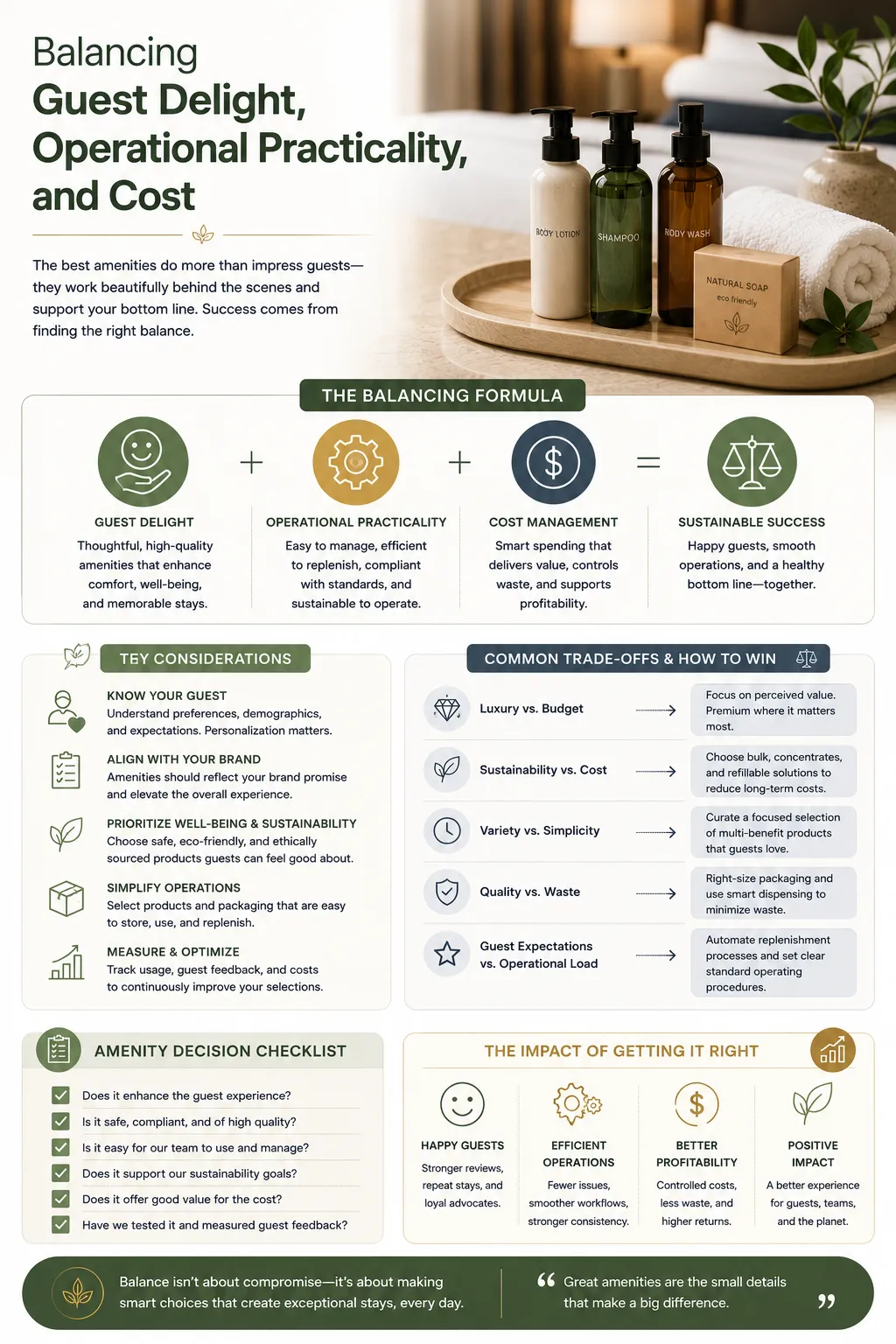
Guest Delight Should Be Measured by Real Value
Guest delight is not the same as abundance. A crowded vanity, overfilled minibar, large welcome basket, complicated pillow menu, or excessive number of disposable items can look generous but may not improve the stay. In some cases, too many amenities make the room feel cluttered, wasteful, or difficult to use. True guest delight comes from relevance. The guest should feel that the hotel has anticipated a real need or created a memorable moment without adding friction.
This is why luxury hotels should separate amenities into three categories: essential comfort amenities, signature brand amenities, and situational personalization amenities. Essential comfort amenities are the non-negotiables: excellent bath products, clean towels, quality bedding, water, Wi-Fi, charging access, a safe, a hair dryer, proper lighting, and reliable climate control. Signature brand amenities are the details guests associate with the property, such as a distinctive sleep ritual, local welcome gift, signature scent, curated minibar, or memorable turndown touch. Situational personalization amenities are provided based on guest purpose, preference, or occasion: child-friendly bath products, feather-free bedding, celebration items, wellness kits, garment care, or favorite beverages for repeat guests.
This structure prevents overinvestment in items that do not matter while protecting the details that do. J.D. Power’s 2025 North America Hotel Guest Satisfaction Index found that guests’ improved perception of value was driven by higher satisfaction with guest rooms, including condition, cleanliness, and amenities such as smart TVs. The same study noted that when guests experienced a problem during the stay, satisfaction dropped sharply, which is a reminder that reliability can matter more than novelty.
The Total Cost Is Bigger Than the Purchase Price
An amenity’s price tag rarely shows its true cost. Luxury hotels need to calculate total cost of ownership, not just unit cost. A bath product may seem affordable per bottle, but the real cost includes storage, refill time, pump replacement, product waste, housekeeping training, quality inspections, leakage, guest complaints, and supplier minimum orders. A beautiful welcome amenity may look inexpensive, but if it requires refrigeration, daily preparation, allergen labeling, room-specific delivery, and frequent replacement, its operational cost may be much higher than expected.
The same principle applies to technology. A smart speaker, tablet, or streaming system may appear impressive during installation, but the hotel must consider software updates, privacy controls, breakage, replacement parts, guest support, engineering time, cybersecurity, and staff training. A garment steamer may delight business travelers, but if it fails often, leaks, or creates burn risks, it becomes a liability. A luxury robe may feel worth the investment, but only if it withstands commercial laundering, keeps its shape, and does not disappear from rooms at an unsustainable rate.
Hotels should evaluate every amenity through a practical cost lens: initial purchase price, labor minutes per room, replenishment frequency, storage space, loss rate, breakage rate, cleaning requirement, training burden, guest usage, review impact, and brand value. An amenity with a higher unit cost may still be smart if it is highly valued, durable, low-maintenance, and strongly connected to the brand. A cheaper amenity may be expensive in disguise if it creates complaints, waste, or repeated staff intervention.
Operational Practicality Protects the Guest Experience
Luxury guests should never see the operational effort behind the room. They should only experience the result: everything is clean, fresh, placed correctly, and ready to use. For that to happen, amenities must be practical for the teams who manage them. Housekeeping should be able to identify, place, clean, and replenish each item quickly and consistently. Engineering should be able to maintain devices. Food and beverage teams should be able to control freshness and allergens. Purchasing should be able to secure supply without last-minute substitutions.
A highly customized amenity program can sound appealing but become difficult to execute at scale. If every arrival gift is different, every room category has a different setup, and every guest segment requires a separate checklist, mistakes become more likely. Luxury hotels need personalization, but they also need standardization behind the scenes. The best systems use a strong default setup with controlled variations. For example, the standard room may include a consistent bath line, water, coffee, tea, sleep basics, and charging access. Then the hotel adds personalized layers based on clear triggers: family stay, wellness package, celebration, VIP arrival, long stay, business traveler, or returning guest preference.
This approach helps staff deliver thoughtful service without chaos. It also protects consistency. A guest should not receive an excellent amenity experience on one visit and a weaker one the next because the system depends too heavily on individual memory or last-minute decisions. Luxury is emotional, but it must be operationally repeatable.
Data Helps Separate Assumptions From Actual Use
Hotels often assume guests want certain amenities because those amenities appear on trend lists, competitor websites, or pre-arrival surveys. But what guests say they may use is not always what they actually use. Cornell hospitality research on hotel amenities found that guests generally overestimated their likelihood of using amenities, and that returns differed by amenity type; in the study, internet access attracted first-time guests, complimentary bottled water produced the highest ROI for returning guests, and fitness center use showed negative ROI over a twelve-month period for the brands analyzed.
This does not mean luxury hotels should remove fitness centers or reduce amenities only to what is used most often. Luxury value is not always measured by direct usage. Some amenities create confidence simply by being available. A guest may not use the sewing kit, but they may appreciate knowing the hotel can provide one. A guest may not use the yoga mat every stay, but it may reinforce the brand’s wellness identity. The point is that amenity decisions should be based on evidence, not habit.
Hotels can track several signals: consumption rates, guest requests, repeat-stay preferences, online review mentions, housekeeping replacement patterns, minibar sales, waste levels, maintenance tickets, and complaint categories. They can also compare amenity performance by room type, length of stay, guest segment, season, and purpose of travel. A Boston Hospitality Review study of expected and actual hotel amenity use found that usage can vary meaningfully by length of stay and amenity type, including cases where guests underpredicted some services and overpredicted others. That kind of variation is exactly why a single, rigid amenity strategy rarely works for every luxury guest.
A Simple Matrix for Amenity Decisions
Luxury hotels can make better choices by placing amenities into a decision matrix based on guest impact and operational complexity.
| Amenity Type | Guest Impact | Operational Complexity | Best Decision |
| High-impact, low-complexity | High | Low | Invest and standardize across rooms |
| High-impact, high-complexity | High | High | Offer selectively, personalize, or reserve for suites and VIPs |
| Low-impact, low-complexity | Low | Low | Keep only if it supports brand basics |
| Low-impact, high-complexity | Low | High | Remove, redesign, or make available on request |
A bedside water setup, intuitive charging, high-quality linens, reliable Wi-Fi, and excellent bath products usually fall into the high-impact category because many guests notice them and they support core comfort. A custom celebration cake, elaborate floral installation, or highly specialized wellness tool may be high-impact for the right guest but too complex for every room. These amenities are better used selectively. Low-impact, high-complexity amenities are the most dangerous because they drain time and budget without creating strong guest memory.
The matrix also helps hotels avoid emotional decision-making. A general manager may personally love a certain amenity, a supplier may present a beautiful concept, or a competitor may launch something attention-grabbing. But if the amenity does not create enough guest value relative to its complexity, it should be reconsidered. Luxury does not mean saying yes to every impressive idea. It means editing with confidence.
Sustainability Can Reduce Waste and Preserve Luxury
Sustainable amenities often help balance cost and guest delight when they are designed well. Refillable bath products, glass water bottles, digital directories, reusable laundry bags, local sourcing, and reduced single-use packaging can lower waste while also making the room feel more modern and thoughtful. However, sustainable choices must still meet luxury standards for beauty, hygiene, and performance.
AHLA’s Responsible Stay initiative notes that hotels are reducing single-use plastics and other materials while maintaining the quality, cleanliness, and amenities guests expect. It also highlights steps such as large-format bath products, water refill stations, keyless mobile entry, and improved recycling programs. This is important because cost control should not appear to the guest as a reduction in care. When sustainability is executed poorly, it can feel like the hotel is taking something away. When executed well, it feels more refined than the old disposable model.
A luxury hotel might replace plastic water bottles with elegant refillable glass bottles, remove rarely used disposable bathroom items from automatic placement, and offer a beautifully presented on-request amenity menu. It might reduce minibar waste by curating fewer, better items from local suppliers. It might replace printed directories with a digital guide while keeping a small, beautifully designed printed essentials card for guests who prefer not to scan a code. The goal is not minimalism for its own sake. The goal is thoughtful reduction.
Cost Control Should Never Be Visible as Cheapness
Guests are sensitive to signs of cost cutting. They notice thinner towels, lower-quality bath products, missing water, reduced housekeeping quality, worn robes, weak coffee, empty minibars, and technology that has not been maintained. A luxury hotel can simplify, but it cannot look careless. Cost control must happen through smarter selection, better supplier negotiation, improved forecasting, reduced waste, longer-lasting materials, and operational discipline, not through obvious downgrades.
The most effective savings often come from removing complexity rather than reducing quality. A hotel may choose one excellent bath line instead of several mediocre variations. It may offer a concise pillow menu instead of a long list that is difficult to stock. It may provide a smaller but better minibar. It may standardize amenity trays so housekeeping can reset rooms faster and more accurately. It may replace low-use disposable items with elegant on-request service. These changes can improve the guest experience while reducing unnecessary cost.
Cost control should also protect staff time. Every added amenity affects labor. If a room attendant must arrange ten small items, check multiple expiration dates, clean around clutter, replace complicated packaging, and report device issues, the room takes longer to prepare and mistakes become more likely. A well-edited amenity program respects staff workflow, which ultimately protects cleanliness and consistency for guests.
The Best Balance Feels Generous and Effortless
A well-balanced luxury amenity program does not feel restricted. It feels precise. Guests find what they need, enjoy a few memorable surprises, and never sense the operational system behind the room. The hotel invests where the guest feels the most value: sleep, bath, cleanliness, convenience, personalization, local identity, and reliable service. It avoids wasteful gestures that look impressive but are rarely used. It gives staff a room setup they can execute beautifully every day. It gives owners a cost structure that supports long-term quality rather than short-term extravagance.
The strongest luxury hotels understand that every amenity has to earn its place. Some earn it through comfort. Some earn it through brand memory. Some earn it through personalization. Some earn it through operational efficiency. The best amenities do several of these at once. A glass water bottle can support hydration, sustainability, design, and cost control. A smart TV can support guest satisfaction, residential comfort, and perceived value. A signature bath line can support brand identity, sensory pleasure, and retail opportunities. A well-designed turndown amenity can create emotional memory with minimal waste.
Balancing guest delight, operational practicality, and cost is not a compromise that weakens luxury. It is the discipline that makes luxury sustainable over time. Once a hotel knows which amenities deserve investment and which should be redesigned or removed, the next step is to test, measure, and improve the program continuously so every detail stays relevant to real guest expectations.
How Luxury Hotels Test, Measure, and Improve Amenity Programs
A luxury hotel amenity program should never be treated as a one-time purchasing decision. Guest expectations change, products age, suppliers adjust formulas, sustainability standards evolve, technology becomes outdated, and different guest segments respond to amenities in different ways. What felt premium five years ago may now feel expected, wasteful, or inconvenient. This is why the best luxury hotels treat guest room amenities as a living system: they test before launching, measure after placement, listen to staff and guests, and improve continuously.
Testing matters because amenities influence several parts of the guest experience at once. A bath product affects scent, skin comfort, bathroom design, housekeeping workflow, sustainability goals, and supplier risk. A smart TV affects entertainment, privacy, engineering support, guest satisfaction, and perceived value. A welcome amenity affects arrival emotion, food safety, local storytelling, and cost. A pillow menu affects sleep, storage, laundry, and personalization. Luxury hotels cannot judge these details only from a sample box or product presentation. They need evidence from real use.
Deloitte’s hotel guest experience research argues that hotels must combine high-touch hospitality with the “right-this-instant” utility guests receive from other industries, and it recommends starting with focused proofs of concept, measuring impact, and iterating often rather than trying to transform everything at once. That approach fits amenity programs perfectly: test small, learn quickly, improve carefully, then scale only what truly strengthens the stay.
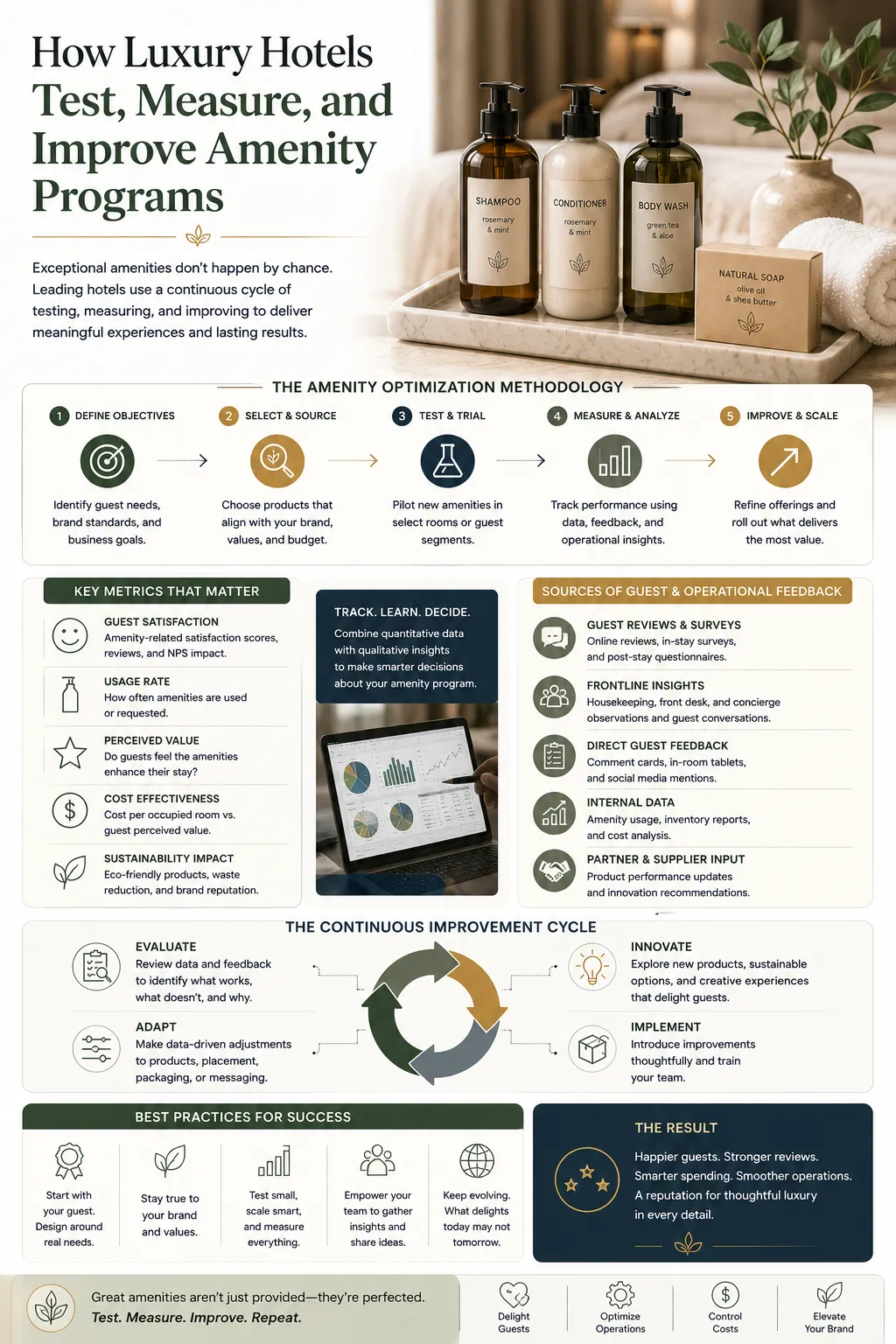
Start With a Clear Guest Experience Hypothesis
Before testing any amenity, the hotel should define what the item is supposed to achieve. A vague goal such as “make the room feel more luxurious” is not enough. A stronger hypothesis is more specific: “This turndown tea should improve the guest’s perception of restfulness,” “This refillable bath line should reduce plastic waste without lowering hygiene perception,” “This charging station should reduce guest calls about adapters,” or “This local welcome gift should increase positive review mentions about sense of place.”
A clear hypothesis helps the hotel decide what to measure. If the amenity is designed to improve sleep, the hotel should track sleep-related comments, pillow requests, turndown feedback, blackout complaints, and bedding satisfaction. If the amenity is designed to improve convenience, the hotel should track service calls, maintenance tickets, usage rates, and guest comments about ease. If the amenity is designed to support brand identity, the hotel should monitor whether guests mention it in reviews, ask to buy it, photograph it, or associate it with the destination.
This discipline prevents luxury hotels from launching amenities only because they are fashionable. Trends can inspire ideas, but they should not replace strategy. A hotel should know whether the amenity supports comfort, wellness, personalization, brand memory, sustainability, operational efficiency, or revenue. The strongest amenities usually support more than one goal.
Test the Amenity in a Real Room, Not Just a Meeting Room
Many amenities look impressive in a boardroom but behave differently inside an actual guest room. Lighting changes packaging color. Bathroom humidity affects labels and pumps. Marble counters show residue. Technology may look sleek but create cable clutter. A fragrance may feel subtle in an open office but overpowering in a small bathroom. A robe may feel luxurious for five minutes but become too warm after a shower. A welcome tray may photograph beautifully but leave little space for the guest’s own items.
Luxury hotels should therefore build a room-level test before full rollout. The test should include product placement, guest visibility, housekeeping reset, replenishment, cleaning, storage, accessibility, safety, and brand fit. Staff should physically use the products. The shampoo should be tested in the shower. The kettle should be filled, boiled, cleaned, and stored. The charger should be used with different devices. The pillow should be slept on. The minibar item should be opened and tasted. The refillable bottle should be pumped repeatedly, wiped down, and inspected under bathroom lighting.
This stage often reveals small problems that would otherwise become guest complaints. A label may be too small to read without glasses. A pump may dispense too little product. A bath salt jar may be difficult to open with wet hands. A smart control panel may have a standby light that disturbs sleep. A ceramic tray may chip too easily. These details are not minor in luxury hospitality. They are the difference between an amenity that feels effortless and one that creates irritation.
Use Controlled Pilots Before Property-Wide Rollout
Once an amenity passes the room test, the next step is a controlled pilot. A pilot can be limited to certain floors, suites, loyalty guests, spa-package guests, long-stay guests, or a specific arrival type. The goal is to compare performance before and after introduction, or between rooms with and without the amenity. A controlled pilot gives the hotel cleaner evidence than a general launch, especially when evaluating cost, guest response, operational complexity, and repeat behavior.
Cornell hospitality research on hotel amenities found that managers should examine the return on investment of each free product or service rather than assuming all amenities create equal value. The study focused on bottled water, internet access, and fitness-center availability, and its summary notes that positive or negative returns can be site-specific, that hotels should conduct market tests at the brand level, and that guests may overestimate how likely they are to use certain amenities.
This lesson is especially important for luxury hotels. Guest surveys are useful, but they are not enough. Guests may say they want a long list of wellness tools, but actual usage may be low. They may not request bedside water in advance, yet remember and appreciate it after arrival. They may claim sustainability matters, but reject a refillable dispenser if it looks unhygienic. A pilot shows what guests actually use, notice, praise, ignore, or complain about.
Measure Both Emotion and Operations
Amenity success should be measured with both guest-facing and operational metrics. Luxury is emotional, but it must be operationally repeatable. An amenity that delights guests but slows housekeeping, creates waste, breaks frequently, or causes supplier issues may not be sustainable. Likewise, an amenity that is easy to manage but never improves the guest experience does not deserve premium room space.
A practical amenity scorecard should include several categories.
| Measurement Area | What the Hotel Should Track | Why It Matters |
| Guest response | Survey scores, review mentions, direct comments, repeat requests | Shows whether guests notice and value the amenity |
| Usage | Consumption, take-home rate, refill rate, untouched items | Reveals real behavior instead of assumed preference |
| Operations | Housekeeping time, replenishment accuracy, storage needs, training effort | Shows whether the amenity can be delivered consistently |
| Quality | Defects, breakage, leakage, complaints, maintenance tickets | Protects trust and prevents recurring failures |
| Financial impact | Cost per occupied room, waste cost, supplier minimums, replacement rate | Keeps luxury generous without becoming uncontrolled |
| Brand value | Social mentions, retail inquiries, VIP feedback, local-story recognition | Measures memorability beyond basic function |
| Sustainability | Packaging waste, refill success, local sourcing, disposal method | Connects the amenity to responsible luxury goals |
The most useful scorecards combine numbers with context. A low-use amenity is not automatically a failure if it creates strong brand identity or supports a high-value guest segment. A high-use amenity is not automatically successful if it is costly, messy, or frequently complained about. The hotel should ask whether the amenity creates enough value for the guest, the brand, and the operation.
Read Reviews for Amenity Signals
Online reviews, post-stay surveys, direct messages, and staff notes reveal how guests describe the room in their own language. This matters because guests may not respond to amenities in the way hotels expect. They may not say “bath amenity program,” but they may write, “The shower products smelled incredible,” “The pillows were perfect,” “I loved the local chocolate,” “The room had every charger I needed,” or “The TV was impossible to use.” These comments are direct signals of what is working and what needs improvement.
Review analysis should look for repeated themes, not isolated opinions. One guest may dislike a fragrance; ten similar comments suggest the scent may be too strong. One guest may complain about a robe size; repeated comments may indicate a sizing problem. Several mentions of “thoughtful details” may show that the amenity program is building emotional memory. Several comments about missing items may reveal a housekeeping checklist issue rather than a product issue.
J.D. Power’s 2025 North America Hotel Guest Satisfaction Index reported that improved perceptions of value were connected to higher satisfaction with guest rooms, including room condition, cleanliness, and amenities such as smart TVs. The same report found that 40% of guests considered smart TVs or the ability to stream their own entertainment a “need to have” amenity, up from 21% in 2019, which shows how quickly an amenity can move from novelty to expectation.
Include Staff Feedback in Every Review Cycle
Guests experience the amenity, but staff understand whether it can be delivered well. Housekeeping knows if bottles leak, trays collect dust, slippers are overstocked, labels peel, or guests move items to inconvenient places. Engineering knows which devices fail. Spa teams know whether skincare products match wellness positioning. Food and beverage teams know whether edible amenities create allergen or freshness concerns. Front desk and concierge teams know which items guests request, praise, or misunderstand.
A luxury hotel should create a formal staff feedback loop for amenities. This can be a monthly room-experience meeting, a digital defect log, a housekeeping comment form, or a short review during operations briefings. The key is to make feedback specific. Instead of asking, “Do guests like the new amenity?” managers should ask: Is it easy to place? Does it stay clean? Does it create delays? Are guests asking questions? Are there recurring complaints? Is inventory accurate? Are replacements available? Does the item still look premium after repeated use?
This staff insight protects consistency. Forbes Travel Guide states that its standards cover every touchpoint of the guest experience, from reservation through departure, including cleanliness, efficiency, staff knowledge, gracious service, sense of luxury, guest comfort, wellness, and sustainability. It also notes that properties are regularly reassessed and standards are refined annually to reflect current luxury guest expectations. Amenity programs should follow the same principle: reassess often, improve based on evidence, and never assume yesterday’s standard is enough.
Improve Through Editing, Not Only Adding
Many hotels try to improve amenities by adding more. Luxury hotels often improve by editing better. If guests do not use a disposable vanity kit, the answer may be to remove it from automatic placement and make a better version available on request. If a minibar feels cluttered, the answer may be fewer items with stronger local identity. If a pillow menu is confusing, the answer may be three excellent choices instead of twelve. If technology creates calls for assistance, the answer may be simpler controls rather than more features.
Improvement can take several forms: keep, upgrade, reposition, personalize, seasonalize, replace, or retire. A successful bath line may be kept but paired with clearer labels. A welcome amenity may be seasonalized to reduce repetition for returning guests. A sleep kit may be moved from all rooms to turndown-on-request if usage is low. A local snack may be replaced if supplier consistency declines. A smart device may be removed if it creates more frustration than convenience.
The best improvement cycle is disciplined and calm. The hotel does not chase every trend, but it also does not let amenities become stale. It reviews performance, listens to guests, respects staff, checks costs, and makes targeted changes.
Make Testing Continuous, Not Occasional
Amenity testing should happen before launch, after launch, and throughout the amenity’s life. Suppliers change. Guest demographics shift. Labor pressures affect execution. Sustainability expectations rise. Technology ages quickly. Deloitte’s 2026 hospitality outlook notes that operators face pressure from changing guest behavior, capital constraints, labor challenges, and rising interest in AI-enabled efficiency, all of which make disciplined testing and resource allocation more important for hospitality providers.
A luxury hotel can create an annual amenity audit supported by quarterly mini-reviews. The annual audit can evaluate every major category: bath products, bedding, sleep, minibar, technology, wellness, sustainability, local gifts, printed materials, and on-request items. Quarterly reviews can focus on specific issues such as guest complaints, seasonal products, supplier changes, or room-category differences. For sustainability-related amenities, Forbes Travel Guide’s Responsible Hospitality program is a useful model because it frames responsible practices across rooms, food and beverage, spa, front office, waste management, energy efficiency, resource conservation, community, health security, and vendor selection without compromising guest experience.
The Best Amenity Programs Learn Faster Than Guest Expectations Change
A luxury amenity program is successful when it can learn. It notices when guests begin expecting streaming as a basic comfort. It sees when a bath fragrance becomes too polarizing. It understands when refillable packaging needs better hygiene communication. It recognizes when a local partnership creates strong emotional value. It removes amenities that create waste and strengthens the details that guests truly remember.
Testing, measuring, and improving amenities is not a mechanical exercise. It is a hospitality discipline. The goal is to protect the guest’s sense that every detail has been chosen with intelligence, care, and restraint. When luxury hotels measure well, they do not make the room feel analytical. They make it feel more human. Every improvement helps the hotel move closer to the ideal guest reaction: nothing felt random, nothing felt difficult, and every small detail seemed to belong. This is the foundation for turning carefully chosen amenities into signature moments that guests remember long after checkout.
Turning Small Details Into a Signature Luxury Stay
A luxury hotel stay is rarely remembered because of one single amenity. Guests may admire the view, enjoy the bath products, sleep well in the bed, appreciate the welcome gift, or notice the convenience of perfectly placed chargers, but the lasting impression comes from how all of those details work together. A signature luxury stay is created when small amenities stop feeling like separate objects and begin to feel like one thoughtful experience. The guest should not sense a collection of purchases. They should feel a clear hospitality point of view: this hotel knows who it is, understands who I am, and has prepared this room with purpose.
This is the final test for any premium guest room amenity program. The amenity must do more than look expensive. It must support comfort, trust, beauty, convenience, wellness, sustainability, and brand memory at the same time. A guest may not remember every product name, but they will remember how the room made life easier. They will remember that the water was waiting at the bedside, the towels felt fresh and generous, the lighting softened naturally in the evening, the bath products smelled refined without being overwhelming, the bed made sleep feel protected, and the welcome item connected them to the destination. These are small details, but in luxury hospitality, small details carry the emotional weight of the stay.
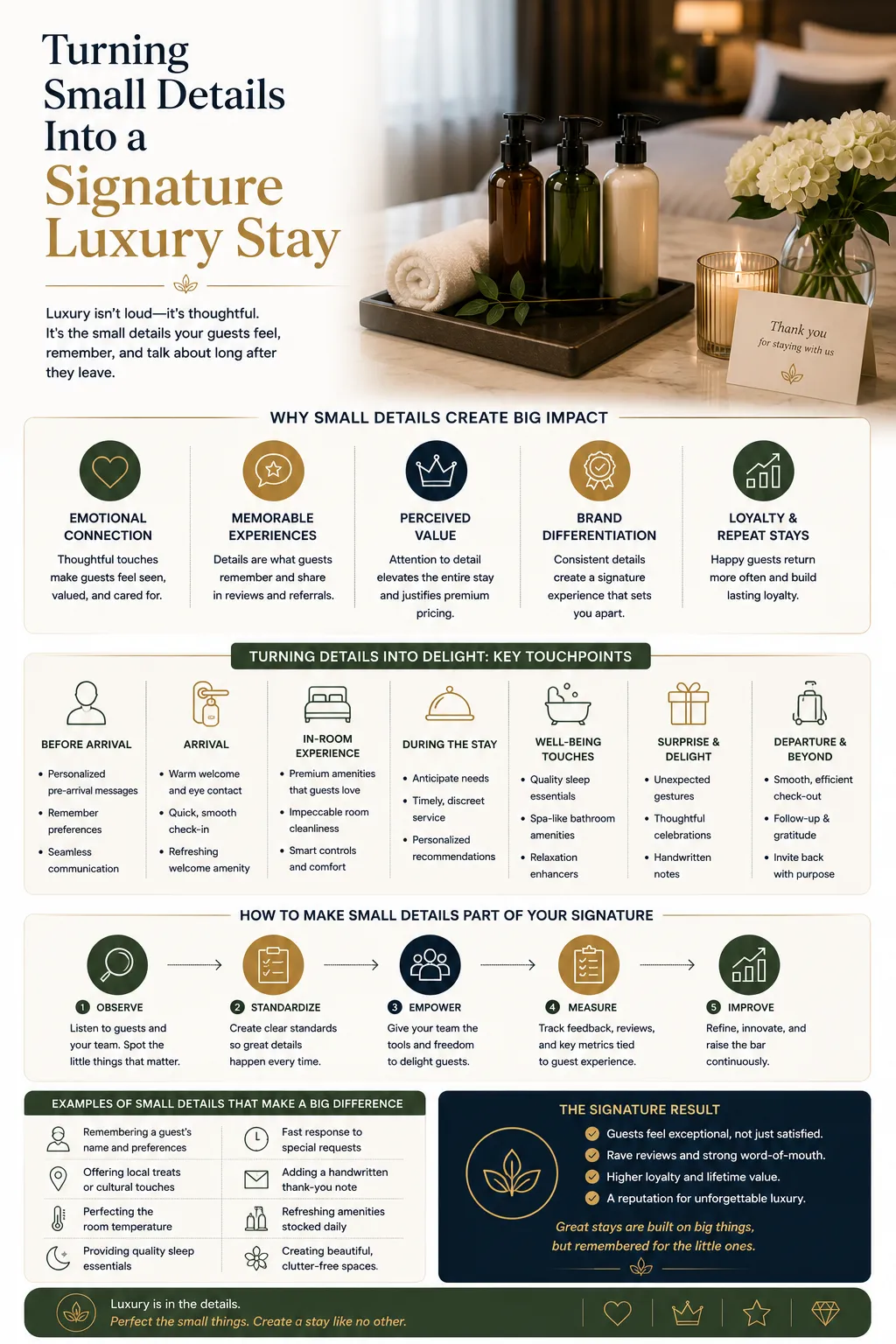
A Signature Stay Begins With Coherence
The best luxury hotels do not let amenities compete with each other. Every detail should feel connected to the same story. A minimalist wellness retreat should not place loud, heavily branded products in the bathroom. A heritage palace hotel should not use casual disposable items that weaken its sense of elegance. A coastal resort should not ignore sun care, hydration, and after-sun comfort. A modern urban hotel should not make guests search for charging points, struggle with outdated entertainment, or call for basic business conveniences. Coherence is what turns amenities from useful objects into a branded experience.
Forbes Travel Guide explains that its hotel standards cover the full guest journey, including cleanliness, efficiency, staff knowledge, gracious service, sense of luxury, guest comfort, wellness, and sustainability. That broad view matters because amenities are not isolated features; they are part of how the entire stay is judged, from arrival through departure. A guest room amenity feels more premium when it supports the same standard of care the guest experiences from the front desk, housekeeping, spa, restaurant, concierge, and departure team.
Coherence does not mean everything must match perfectly. It means everything must belong. A local chocolate, a ceramic bath bottle, a linen robe, a smart TV, a bedside charger, and a sleep tea can all live together beautifully if they share the same design restraint, quality level, and emotional purpose. The guest should feel that the hotel has edited the room carefully. Nothing should feel random, excessive, cheap, confusing, or placed only because another luxury hotel has it.
Small Details Should Remove Small Frictions
Many memorable amenities are not dramatic. They are practical. A guest may be more grateful for an easy-to-use steamer than for an elaborate decorative object. They may value a quiet air-conditioning system more than a fashionable wellness gadget. They may remember that the room had enough outlets more than the brand of the desk chair. Luxury often reveals itself through the absence of irritation.
Small frictions matter because travel already creates pressure. Guests arrive tired, hungry, jet-lagged, rushed, excited, nervous, or emotionally invested in an important occasion. They may need to prepare for a meeting, calm a child, dress for dinner, recover from a flight, or sleep before an early departure. The room should help without forcing them to think. The best amenities answer questions before they are asked: Where can I charge my phone? Can I get water at night? Will this shampoo work well? Can I make coffee quickly? Is the room dark enough to sleep? Can I request more towels without effort? Is there a place for my luggage? Can I trust this snack if I have allergies?
When hotels remove these small frictions, guests often describe the stay as “effortless.” That word is important. Effortlessness is one of the quiet signatures of true luxury. It does not always require grand gestures. It requires careful observation and disciplined execution.
Signature Amenities Should Create a Repeatable Memory
A luxury hotel should identify which amenity details it wants guests to associate with the brand. This could be a sleep ritual, a signature scent, a welcome drink, a locally sourced turndown treat, a particular style of robe, a bath ritual, a minibar philosophy, a wellness amenity, or a distinctive stationery experience. The item does not have to be extravagant. It has to be memorable, consistent, and meaningful.
McKinsey’s research on exceptional hotel customer experience notes that the top factor influencing lodging loyalty is “an experience worth paying more for,” and that experience, not product alone, differentiates the luxury segment. This is why the strongest amenities are not simply premium products; they are experience markers. They help the guest remember the stay as something specific rather than interchangeable.
A signature amenity should be easy to describe. “They had the most calming sleep ritual.” “The bathroom products smelled like the garden outside.” “Every evening, they left a local tea and a tiny handmade sweet.” “The bed was unforgettable.” “The minibar was curated from neighborhood makers.” These comments show that the amenity has become part of the hotel’s identity. It has moved from function to memory.
However, a hotel should avoid creating too many signature details at once. If every amenity tries to be the star, the room becomes noisy. The best properties often choose a few strong moments and let everything else support them. The signature moment should feel natural, not forced.
Emotional Value Often Comes From Restraint
Luxury hotels sometimes make the mistake of equating generosity with volume. They add more bathroom items, more snacks, more printed cards, more pillows, more decorative objects, and more technology. But abundance is not always premium. Too many amenities can make the room feel cluttered and less restful. They can also create more waste, more cleaning complexity, and more decisions for the guest.
Restraint is a luxury skill. It means choosing fewer items with better quality, clearer purpose, and stronger presentation. A single beautiful welcome amenity tied to the destination can be more powerful than a large basket of generic snacks. One excellent sleep product can be more memorable than five unused wellness items. A simple bedside setup with water, lighting control, and charging can feel more luxurious than a table crowded with branded accessories.
Restraint also protects the guest’s own space. A hotel room is not a showroom. Guests need room for their phone, glasses, skincare, laptop, book, jewelry, luggage, and personal routines. Amenities should support private living, not occupy every surface. The most refined rooms feel prepared but not overfilled.
| Signature Detail | What It Should Do | What Makes It Memorable |
| Welcome amenity | Create arrival warmth and sense of place | Local, fresh, personal, beautifully presented |
| Bath products | Build trust and sensory pleasure | Balanced fragrance, strong performance, elegant packaging |
| Sleep ritual | Help the guest transition into rest | Simple, calming, useful, consistent |
| Technology | Remove friction and give control | Intuitive, private, reliable, easy to ignore when not needed |
| Minibar | Offer comfort, indulgence, and discovery | Curated, local, fresh, not overfilled |
| Sustainable detail | Reduce waste without reducing comfort | Clear, premium, hygienic, effortless |
Staff Turn Amenities Into Hospitality
An amenity may be physical, but its success depends heavily on people. Housekeeping places it correctly, keeps it fresh, notices defects, and replenishes it before the guest has to ask. Front office teams gather arrival details and preferences. Concierges understand which local items create authentic discovery. Spa teams know whether wellness products feel credible. Food and beverage teams manage freshness and allergens. Engineering keeps technology and comfort systems working. Without staff ownership, even the best amenity program becomes inconsistent.
This is where luxury hotels separate themselves from properties that only buy expensive products. A premium amenity is not finished when it is delivered by a supplier. It must be integrated into service culture. Staff should know why the amenity was chosen, how it supports the guest experience, what quality standard it must meet, and when it should be replaced, upgraded, or removed. A room attendant who understands the purpose of a sleep amenity will place it more carefully. A concierge who understands the story behind a local welcome gift can explain it naturally. A front desk agent who knows a returning guest’s preferences can help the room feel personal before arrival.
Deloitte’s guest experience research emphasizes that hotels need data-driven strategies to meet changing consumer needs and differentiate the brand, while also improving the guest experience through focused testing and iteration. In practical terms, hotels should not rely only on inspiration or instinct. They should listen to staff, track guest feedback, review usage, study complaints, and improve the amenity program continuously.
The Most Powerful Amenities Feel Personal Without Needing Attention
A signature luxury stay should not require the guest to notice every detail immediately. Some of the best amenities work quietly. The guest discovers them at the exact moment they are needed. A robe is hanging where it should be after a shower. A reading light falls at the right angle. A glass bottle of water is close enough to reach at night. The coffee setup is simple before an early meeting. The extra blanket is easy to find. The bathroom products are clearly labeled. The room can be darkened without a struggle. Nothing demands applause, but everything earns appreciation.
This kind of personalization is subtle. It does not always require a name printed on a card or a custom display. It may mean remembering a feather-free preference, preparing nonalcoholic options, placing child-friendly amenities in a family room, offering a yoga mat for a wellness guest, or adjusting the minibar for a repeat visitor. The guest feels recognized because the room works better for them.
The best personalization is also respectful. It uses information the guest has shared or behavior the hotel has responsibly observed. It avoids assumptions that could feel intrusive. It gives the guest comfort, not the feeling of being watched. When personalization is discreet and useful, it becomes one of the strongest forms of premium hospitality.
Responsible Luxury Strengthens the Signature
Modern luxury is not only about pleasure. It is also about responsibility. Guests increasingly expect high-end hotels to reduce waste, source thoughtfully, support local communities, and communicate sustainability honestly. But responsible amenities must still feel beautiful. A refillable bath product should look elegant and hygienic. A local snack should taste excellent and include clear allergen information. A digital room directory should be easy to use, but essential information should still be accessible. A sustainable water program should feel generous, not restrictive.
Responsible luxury strengthens a hotel’s signature when it feels connected to the property story. A resort that uses local botanicals, refillable ceramic bottles, regional foods, glass water bottles, and artisan-made trays is not simply reducing waste. It is creating a more distinctive room experience. A city hotel that partners with local makers gives guests a more authentic connection to the neighborhood. A wellness retreat that reduces unnecessary packaging while improving sleep, hydration, and bathing rituals makes sustainability feel like care rather than limitation.
The Final Standard: Would Guests Remember It?
At the end of the amenity selection process, luxury hotels can ask one simple question: Will this detail make the stay easier, more comfortable, more trustworthy, more personal, or more memorable? If the answer is no, the amenity may not deserve space in the room. Every item should earn its place through usefulness, emotion, brand alignment, or operational value.
A signature luxury stay is built through hundreds of small decisions. Some are visible, like the welcome gift or bath collection. Others are invisible, like supplier standards, staff training, storage systems, maintenance schedules, and quality checks. Guests may not know the work behind the details, but they feel the result. The room feels calm. The amenities feel chosen. The service feels anticipatory. The hotel feels different from every other property they could have booked.
That is the real purpose of premium guest room amenities. They are not there to decorate the room. They are there to express care when staff are not present, to support the guest’s private routines, to connect the stay to the hotel’s identity, and to create small memories that last beyond checkout. When luxury hotels choose amenities this way, the guest does not leave remembering a list of products. They leave remembering a feeling: everything was exactly where it should have been, and every detail seemed to understand them. For readers who want quick, practical answers before making amenity decisions, the final section addresses the most common questions luxury hotels ask when refining the guest room experience.
Ready to Source the Right Hospitality Supplies for Your Project?
Whether you are opening a hotel, upgrading a restaurant, equipping a café, or preparing an event space, the right supplies can directly affect your budget, timeline, and guest experience. KW Hospitality helps you source reliable hospitality products through a structured, professional, and supplier-focused process.
Send us your RFQ and let our sourcing team support you with product selection, supplier coordination, pricing review, and procurement guidance tailored to your project needs.
Submit your RFQ today and take the next step toward smarter hospitality sourcing.
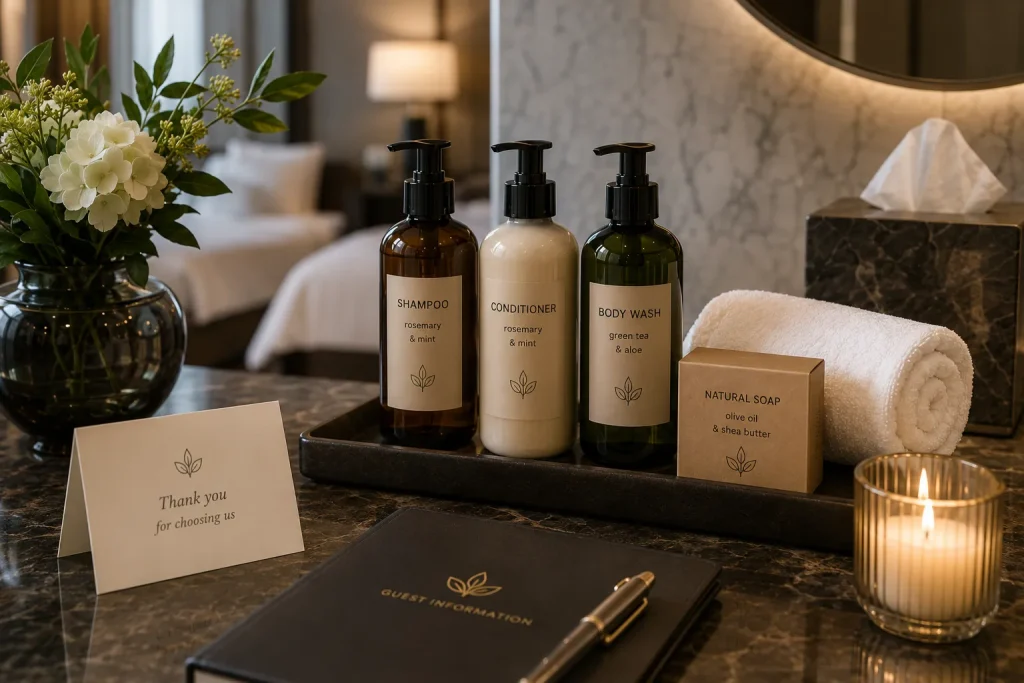
Frequently Asked Questions
Choosing premium guest room amenities is one of the most detailed parts of luxury hotel planning because amenities affect comfort, hygiene, brand identity, sustainability, cost, and guest memory at the same time. A hotel can invest heavily in design, service, and architecture, but the guest still experiences luxury through small private moments: washing their hands, charging a phone, making coffee, taking a shower, sleeping through the night, opening the minibar, or discovering a thoughtful welcome item. The following questions answer the most common concerns hotels face when selecting amenities that feel refined, useful, responsible, and worth remembering.
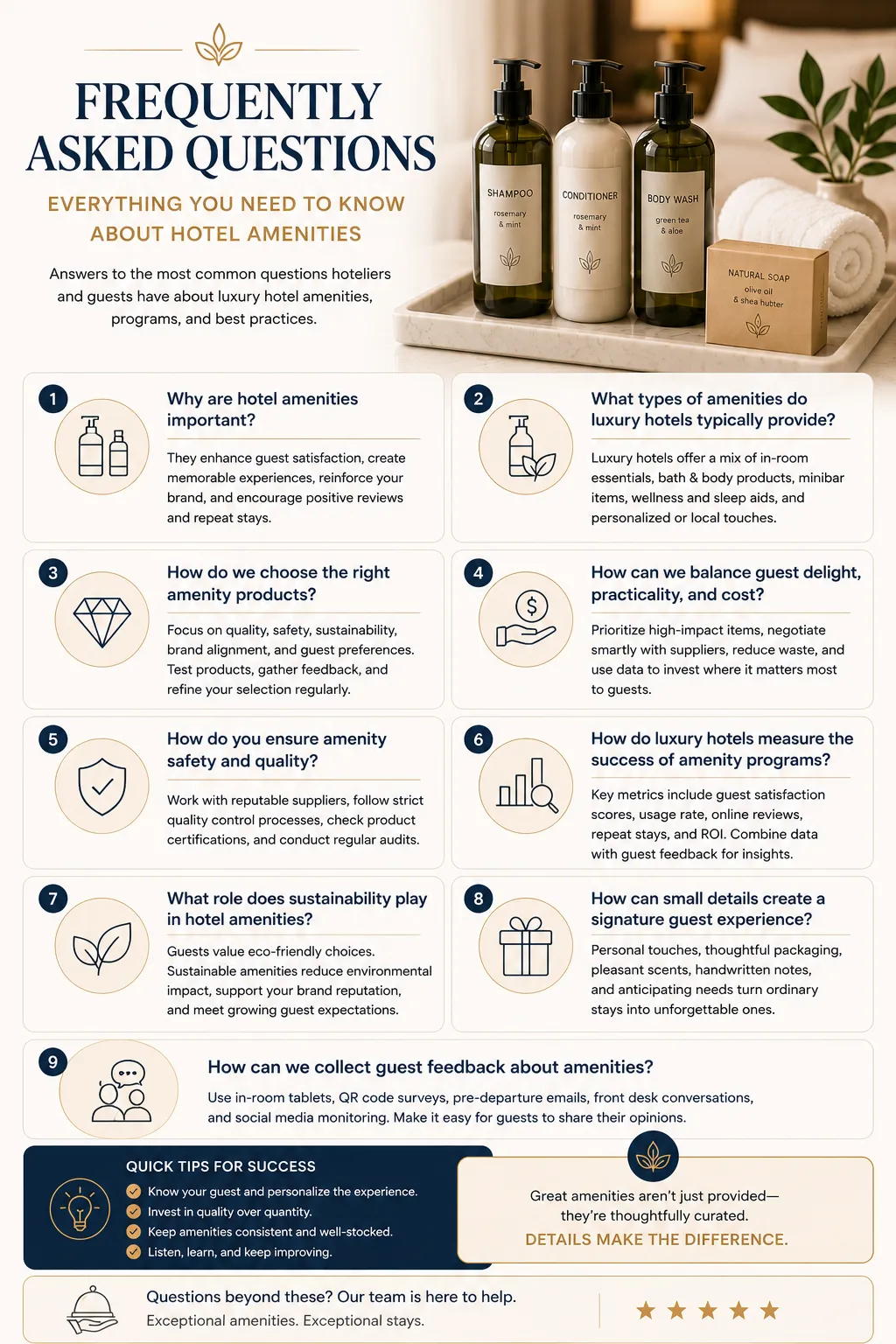
What makes a hotel amenity truly premium?
A hotel amenity feels truly premium when it combines usefulness, quality, trust, design, and emotional relevance. It should solve a real guest need or create a meaningful moment without adding clutter or effort. Expensive products are not automatically premium. A beautifully packaged lotion that irritates skin, a smart device that confuses guests, or a welcome gift that feels generic will not strengthen the stay. The best amenities feel intentional. They match the hotel’s brand, fit the room design, perform reliably, and make the guest feel understood. Forbes Travel Guide notes that luxury expectations are shaped by the full guest journey and are continually reviewed with expert input, which reinforces the idea that premium details must support a complete experience, not just look attractive in isolation.
How do luxury hotels decide which amenities guests actually want?
Luxury hotels study guest profiles, stay purpose, feedback, usage patterns, staff observations, and repeat-guest preferences before making amenity decisions. A business traveler may value garment care, strong coffee, quiet, and charging access. A wellness guest may care more about sleep, hydration, clean bath products, and calming rituals. A family may appreciate gentle toiletries, extra towels, practical snacks, and child-friendly touches. Hotels also test amenities instead of relying only on assumptions because guests may say they want certain products but rarely use them once in the room. The strongest amenity programs combine data with human judgment, using both guest behavior and staff insight to decide what deserves permanent placement.
Are luxury hotel amenities more about comfort or branding?
They should serve both. Comfort is the foundation because the guest must first feel clean, rested, safe, and cared for. Branding adds memorability by making the amenities feel connected to the hotel’s identity and location. A coastal resort might focus on hydration, sun care, marine-inspired bath products, and relaxed textures. A heritage city hotel might choose classic stationery, refined grooming products, local pastries, and elegant turndown details. A wellness retreat might emphasize sleep, filtered water, bath rituals, and calm fragrance. When comfort and branding work together, amenities become part of the hotel’s signature rather than interchangeable products.
Which guest room amenities matter most in a luxury hotel?
The most important amenities are usually the ones that support private comfort: excellent bedding, quality bath products, fresh towels, reliable Wi-Fi, convenient charging, proper lighting, water, coffee or tea, a safe, and intuitive climate control. These essentials shape the daily rhythm of the stay. Signature amenities, such as a local welcome gift or sleep ritual, can create stronger memories, but they should never compensate for weak basics. A guest may enjoy a beautiful turndown amenity, but they will remember the wrong thing if the room is noisy, the shower products feel cheap, or the bed is uncomfortable.
Why are bath and skincare amenities so important?
Bath and skincare amenities are especially important because they touch the guest’s skin, hair, and senses. Guests use them in private moments, often when they are tired, preparing for an event, or trying to relax. Luxury hotels need products that perform well, smell balanced, feel safe, and include clear information. In the United States, the FDA explains that the Modernization of Cosmetics Regulation Act of 2022 includes requirements related to cosmetic product listing, facility registration, adverse event reporting, recordkeeping, and safety substantiation. That makes supplier credibility and documentation essential when hotels place cosmetic products in guest bathrooms.
Should luxury hotels use famous skincare brands or custom products?
Both can work, but the right choice depends on the hotel’s identity and guest expectations. A famous skincare brand can create instant recognition and trust, especially in high-end urban hotels, spa properties, or fashion-driven brands. A custom or locally inspired line can feel more distinctive if it is well formulated, beautifully packaged, and professionally manufactured. The hotel should not choose a bath line only because the name is impressive. It should test fragrance, texture, pump performance, ingredient clarity, packaging durability, and guest response. A lesser-known product that performs beautifully and fits the property story may feel more premium than a famous label that clashes with the room.
How important is sleep when choosing guest room amenities?
Sleep is one of the most important parts of luxury hospitality because the guest’s final impression of the room is shaped by how they wake up. Bedding, pillows, mattress support, blackout curtains, sound control, temperature, bedside water, and calming turndown details all influence sleep quality. The CDC states that adults generally need at least seven hours of sleep each day, which shows why hotels should treat sleep as a core comfort priority rather than a decorative amenity category. A premium sleep program should feel simple, quiet, and personalized, with options such as pillow preferences, breathable linens, and easy lighting control.
What technology amenities do luxury guests expect now?
Luxury guests increasingly expect technology that feels effortless: fast Wi-Fi, convenient charging, streaming or casting capability, smart TVs, simple lighting, quiet climate control, and easy digital service requests. The technology should not replace hospitality; it should remove friction. J.D. Power’s 2025 North America Hotel Guest Satisfaction Index found that 40% of guests considered smart TVs or the ability to stream their own entertainment a “need to have” amenity, up from 21% in 2019. It also found that 72% of guests said their room included a smart TV and 60% used it during the stay.
How can hotels personalize amenities without making guests uncomfortable?
Personalization should be useful, discreet, and based on information the guest has willingly shared or clearly demonstrated through past stays. A hotel can remember feather-free bedding, favorite water type, preferred pillow, coffee choice, fragrance sensitivity, or dietary restrictions. It should avoid gestures that feel invasive, overly familiar, or based on assumptions. Quiet recognition is usually better than dramatic personalization. A returning guest who finds their preferred tea, pillow, and extra hangers already prepared will feel cared for without feeling watched.
Are sustainable amenities still considered luxurious?
Yes, when they are designed well. Sustainable amenities can feel more modern and premium than disposable alternatives if they are beautiful, hygienic, high-performing, and easy to use. Refillable bath products, glass water bottles, local snacks, durable textiles, digital room directories, and reduced single-use packaging can all support responsible luxury. Booking.com’s 2026 sustainability research reported that 85% of travelers said more sustainable travel is important or very important to them, and that travelers booked more than 100 million room nights in 2025 at accommodation partners with third-party sustainability certification on its platforms.
How can hotels avoid making sustainability feel like cost cutting?
Hotels avoid that mistake by maintaining comfort and presentation. A refillable bath bottle should look elegant and feel hygienic. A water program should be generous, not restrictive. A digital directory should be easy to use, not a frustrating replacement for basic information. AHLA’s Responsible Stay initiative highlights waste-reduction steps such as large-format bath products, keyless mobile entry, and water refill stations, while still emphasizing the need to maintain the quality, cleanliness, and amenities guests expect. Sustainability feels luxurious when the guest notices the quality first and then appreciates the responsibility behind it.
What supplier standards should luxury hotels require?
Luxury hotels should require suppliers to provide documentation, consistency, safety evidence, quality control processes, clear labeling, reliable lead times, and transparent claims. For cosmetics, hotels should review ingredients, safety substantiation, batch tracking, fragrance information, and manufacturing standards. For food amenities, they should confirm allergens, shelf life, storage instructions, and freshness controls. For textiles, they should test laundering, softness, shrinkage, and durability. For technology, they should verify product safety, maintenance requirements, privacy, and replacement procedures. A premium amenity is not truly premium if the supplier cannot support it consistently.
How should hotels communicate environmental claims about amenities?
Environmental claims should be specific, accurate, and supported. Instead of saying a product is simply “green” or “eco-friendly,” a hotel should explain the actual improvement: refillable containers, reduced single-use plastic, local sourcing, recyclable packaging where accepted, or a certified material. The Federal Trade Commission explains that its Green Guides are designed to help marketers avoid environmental claims that mislead consumers. Luxury guests do not need long explanations in the room, but they do appreciate honest, clear, and tasteful communication.
How often should luxury hotels review their amenity program?
A luxury hotel should review its amenity program continuously, with deeper audits at least annually and smaller reviews throughout the year. Guest expectations change quickly, especially around technology, wellness, sustainability, and personalization. Hotels should track guest comments, product usage, housekeeping feedback, supplier performance, online review mentions, waste levels, and cost per occupied room. An amenity that once felt fresh may become expected, and an item that looked impressive at launch may become operationally difficult. Continuous improvement keeps the room experience relevant and prevents amenities from becoming stale or wasteful.
What is the biggest mistake hotels make when choosing amenities?
The biggest mistake is choosing amenities for appearance instead of real guest value. A luxury room should not be filled with products simply because they look expensive, follow a trend, or appear in competitor hotels. Every amenity should earn its place by improving comfort, strengthening trust, expressing the brand, supporting sustainability, or creating a memorable moment. The most successful luxury hotels edit carefully. They invest in the details guests feel every day, personalize where it matters, remove low-value clutter, and build a room experience that feels generous without being excessive.
What is the simplest way to judge whether an amenity belongs in a luxury room?
The simplest test is to ask: Does this amenity make the stay easier, more comfortable, more personal, more trustworthy, or more memorable? If it does not achieve at least one of those goals, it may not belong in the room. Premium amenities are not about filling space. They are about expressing care when staff are not present. When chosen with discipline, even small details can turn a guest room into a signature part of the hotel experience—one that guests remember, talk about, and want to return to.