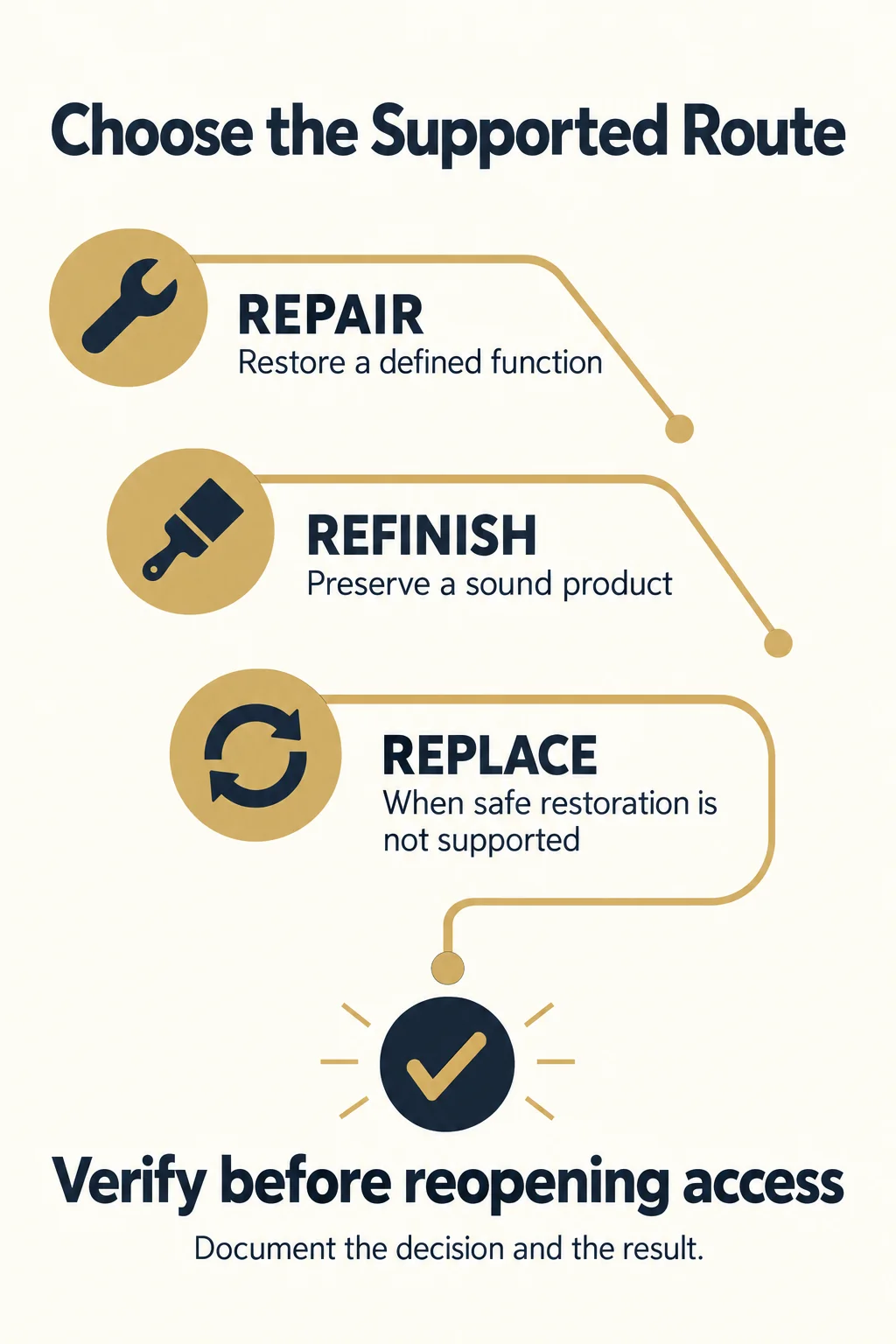
Repair accessibility supplies when a defined fault can be corrected with compatible parts and the equipment can be verified for safe service. Refinish only when deterioration is superficial and the approved process preserves the surface, dimensions, and function. Replace when structural integrity, dependable operation, or supportability cannot be restored. The decision should begin with the guest’s ability to use the equipment safely; the price comparison comes after that threshold is met.
For a hospitality property, accessibility supplies can include fixed grab bars, shower seats, pool lifts, assistive listening equipment, and portable guest assistance devices. These products do not share one useful life or one maintenance procedure. A loose wall fixing calls for a different investigation than a scratched housing, a depleted battery, or an intermittent receiver. Treating every defect as cosmetic can leave an essential feature unavailable. Replacing every worn-looking item can consume funds that would be better spent correcting installation problems or keeping compatible spares.
This guide gives hotel engineering, operations, and purchasing teams a practical way to classify defects, compare viable interventions, and document a return to service. It addresses property-owned equipment and installed features, not repairs to a guest’s personal mobility device. The regulatory discussion concerns U.S. hospitality properties; Canadian and other locations need their own jurisdictional review. Product-specific instructions and site conditions determine the actual repair method, inspection interval, and acceptance criteria.
The useful question is how much dependable service an intervention will restore, under the conditions where the item is used. That means examining the supporting wall or anchor, exposure to cleaning chemicals and water, parts availability, installation compatibility, and the interruption to guest access. A documented decision can then connect the defect to an approved remedy, a realistic cost, and a named person responsible for confirming that the equipment is ready.
Classify the Defect Before Comparing Costs
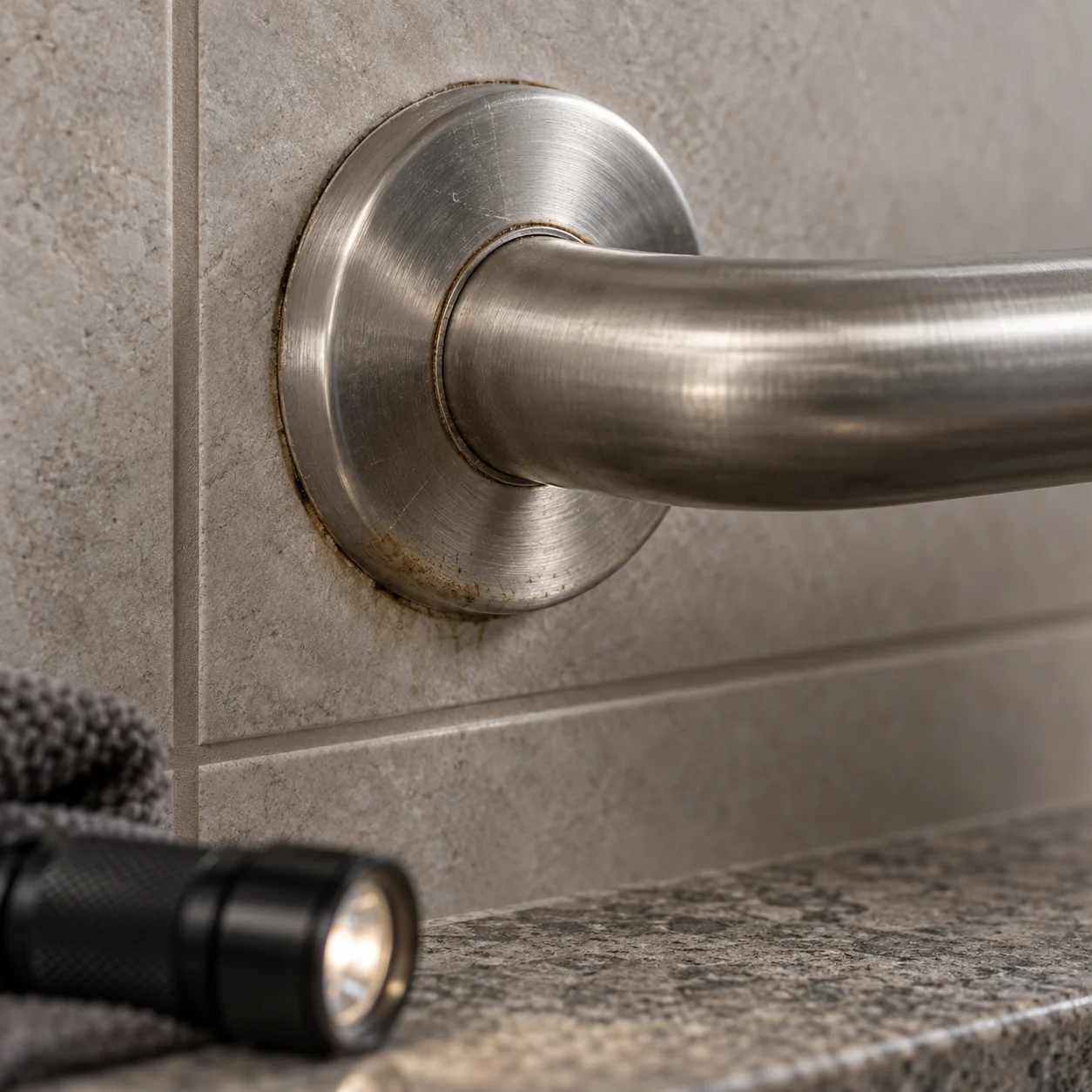
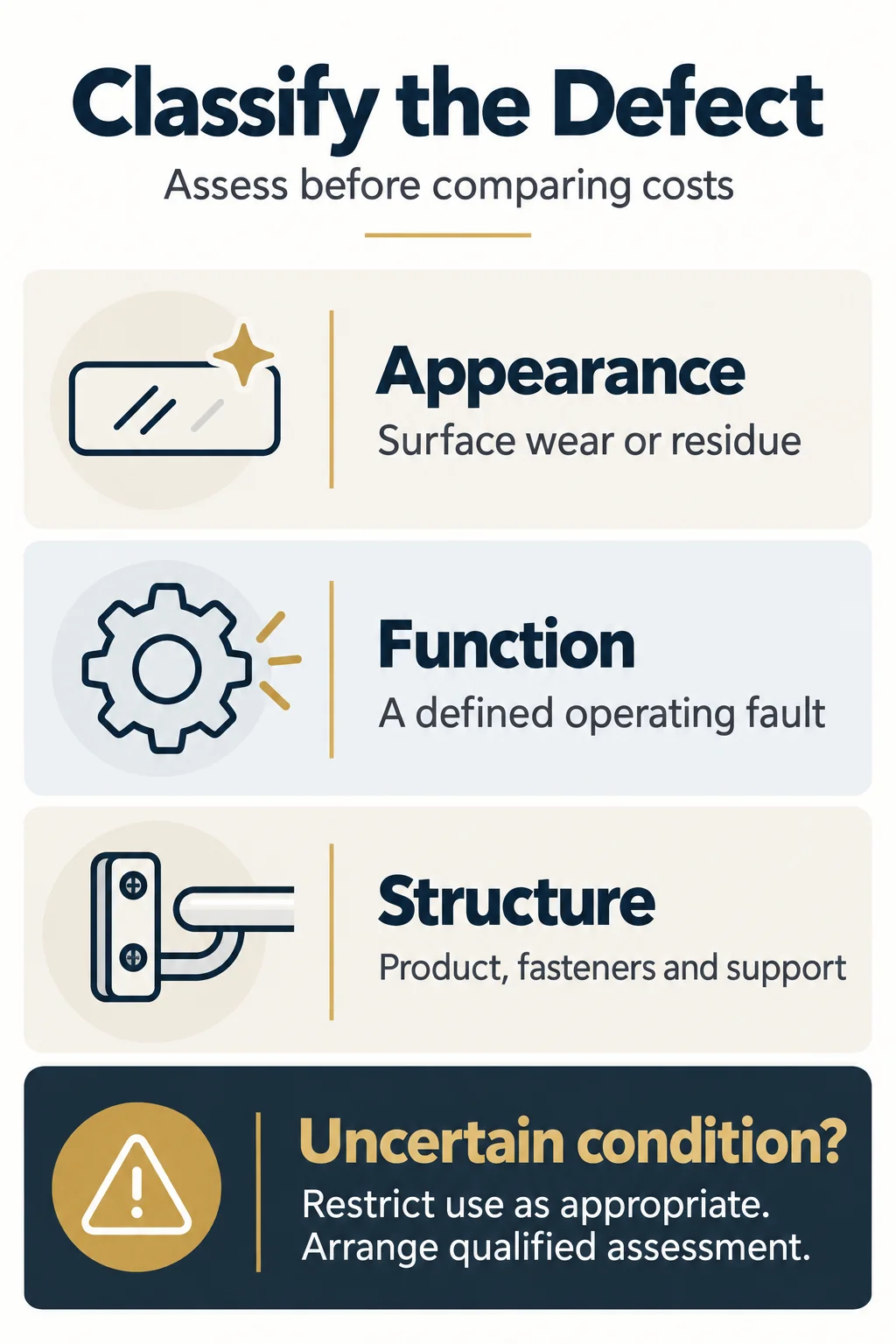
Begin by separating appearance, function, and structural condition. Cosmetic wear affects how an item looks; a functional fault affects what it does; structural damage can compromise the load path through the product, fasteners, and supporting construction. These categories can overlap. Corrosion around a mounting plate may look like a finish problem while concealing damage underneath. When staff cannot establish which category applies, the item belongs in an assessment queue with access controlled as appropriate. Uncertainty is a reason to investigate, not a reason to keep a potentially unsafe feature in use until the next renovation.
Set immediate withdrawal triggers
As an operating policy, withdraw equipment from guest use when there is a cracked or distorted load-bearing part, movement at an attachment, a sharp or abrasive contact surface, unexpected movement, failed controls, or another defect that could make use unsafe. Isolate electrical or moving equipment using its prescribed procedure and the property’s applicable safety procedures. Do not ask a guest or an employee to act as a test load. Arrange assessment by a person qualified for the equipment and the defect.
For U.S. properties covered by the relevant accessibility requirements, required accessible features and equipment must remain operable. Isolated or temporary interruptions for maintenance or repair are recognized, but that does not establish an automatic allowance to leave equipment broken indefinitely. Make the service interruption visible to operations, assign an owner, and arrange prompt restoration. A warning sign explains a restriction; it does not restore access.
| Observed condition | Initial classification | Decision direction |
| Dull finish or removable surface residue; function intact | Potentially cosmetic | Clean by the prescribed method, then reassess |
| A replaceable component fails; surrounding assembly is sound | Potentially repairable | Confirm diagnosis, compatible part, and acceptance test |
| Bar moves at the wall, seat cracks, or metal is distorted | Potential structural defect | Withdraw; assess product and supporting installation |
| Pitting, coating loss, or rust around a joint | Condition uncertain | Assess depth and substrate before considering refinishing |
| Recurring control failure or unavailable approved parts | Reliability or supportability problem | Compare a documented repair route with replacement |
This matrix is a triage tool, not a declaration that any specific product is safe. Record the asset identification, location, observed symptom, photographs, and the circumstances in which the problem occurs. A label reading ‘loose seat’ is less useful than a description identifying movement at the hinge, bracket, or wall. If the model or serial information is missing, resolve identification before ordering parts that merely appear similar.
Look beyond the visible item
A grab bar is only as dependable as its complete installation. A new bar on damaged backing can leave the original problem unresolved. Likewise, a replacement shower seat may have a different footprint, projection, or mounting arrangement. Review the substrate, fastening system, waterproofing, and required clearances as part of the intervention. Design requirements for structural strength are not permission for staff to improvise a field load test. Use the applicable installation documentation and a qualified assessment where integrity is in doubt.
Choose Repair or Refinishing Only Within a Verified Scope
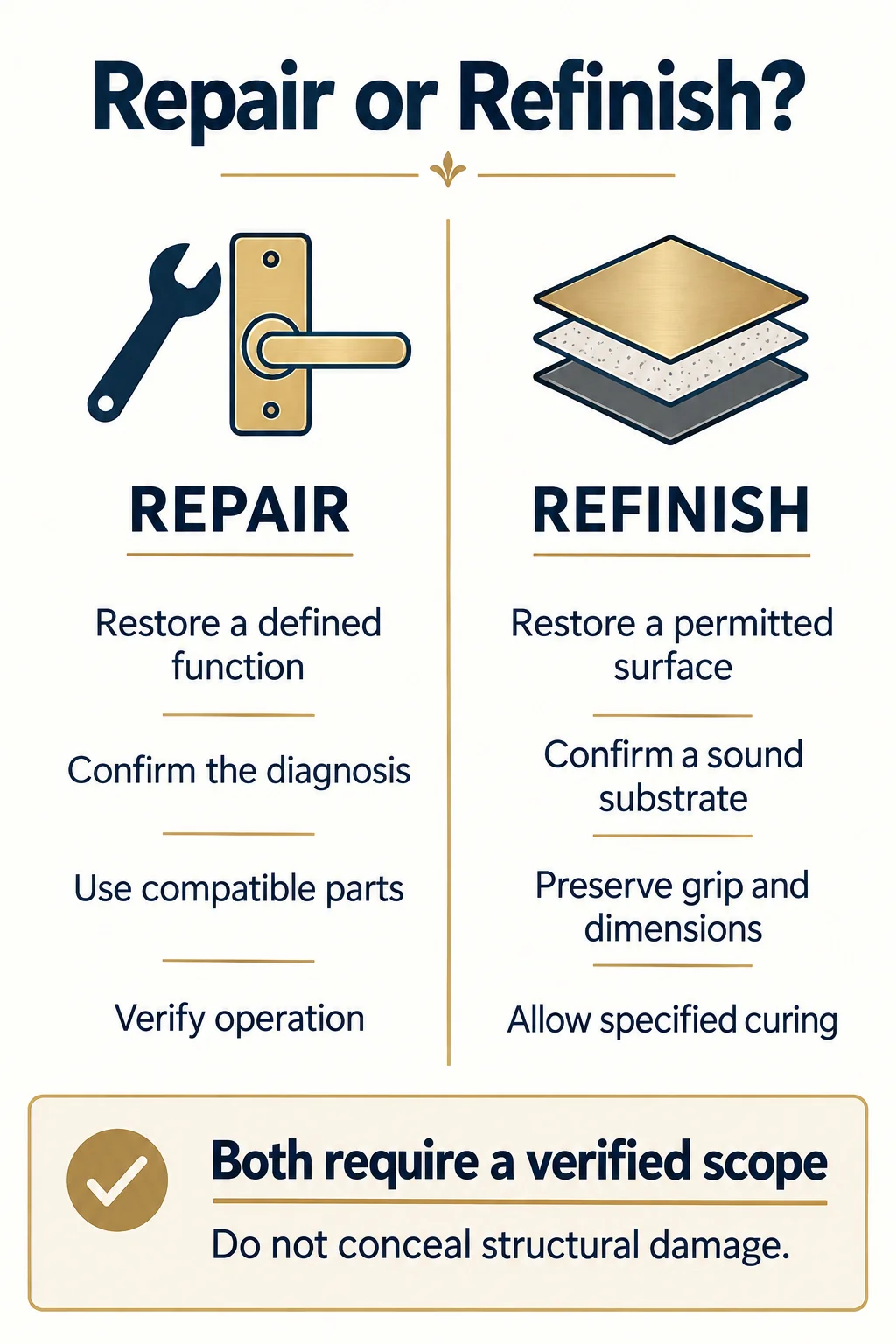
Repair restores a defined function; refinishing restores a surface. Both can extend service when the underlying product and installation remain suitable, but neither should conceal an unresolved defect. Establish what has failed, what work the manufacturer permits, which parts or materials are compatible, and how the result will be accepted. A repair quotation that lists labor and a replacement component without defining the diagnosis leaves a major gap. A refinishing quotation that promises a like-new appearance without addressing substrate condition, grip, cleanability, or curing leaves a different gap. Approve the scope before approving the price.
Repair a component without creating a new configuration
Candidate repairs may include replacing a manufacturer-specified battery, charger, receiver accessory, control component, or serviceable seat component. Eligibility depends on the exact model and instructions. Matching connector shape, screw spacing, or nominal dimensions does not establish compatibility. Confirm the part identifier, revision where relevant, intended use, and any programming or setup requirements. Ask the supplier to state whether substitutions are authorized and whether the intervention affects warranty coverage or other documented product conditions.
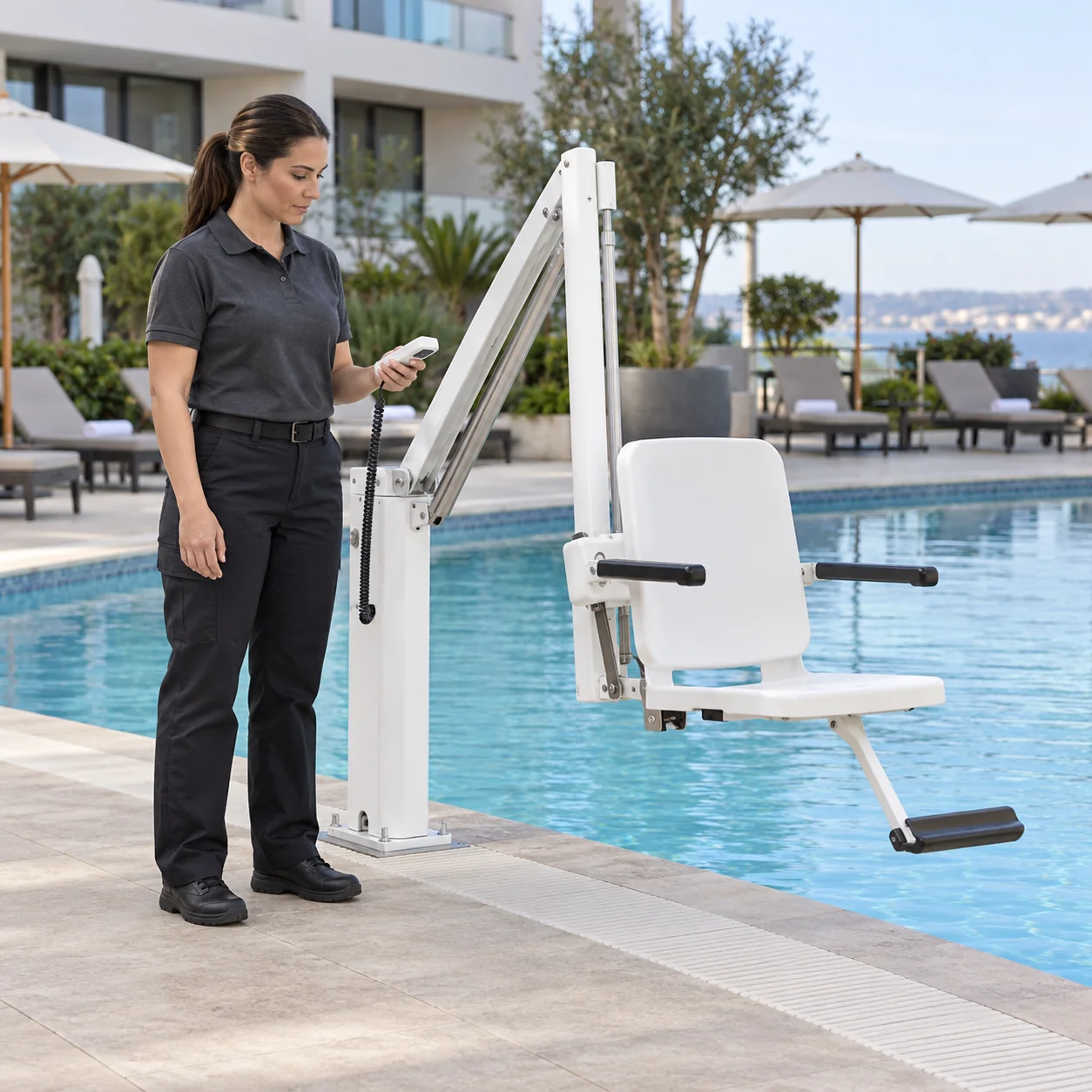
For a powered pool lift, an apparently weak battery can be only one part of a fault. The charger, connections, controls, actuator, or mechanical resistance may also need assessment. Buying successive batteries without a diagnosis can extend downtime while leaving the failure unchanged. Route troubleshooting and repairs through the appropriate service provider, and require the prescribed operational checks before release. Do not bypass interlocks, overload protection, or emergency functions to make the equipment operate.
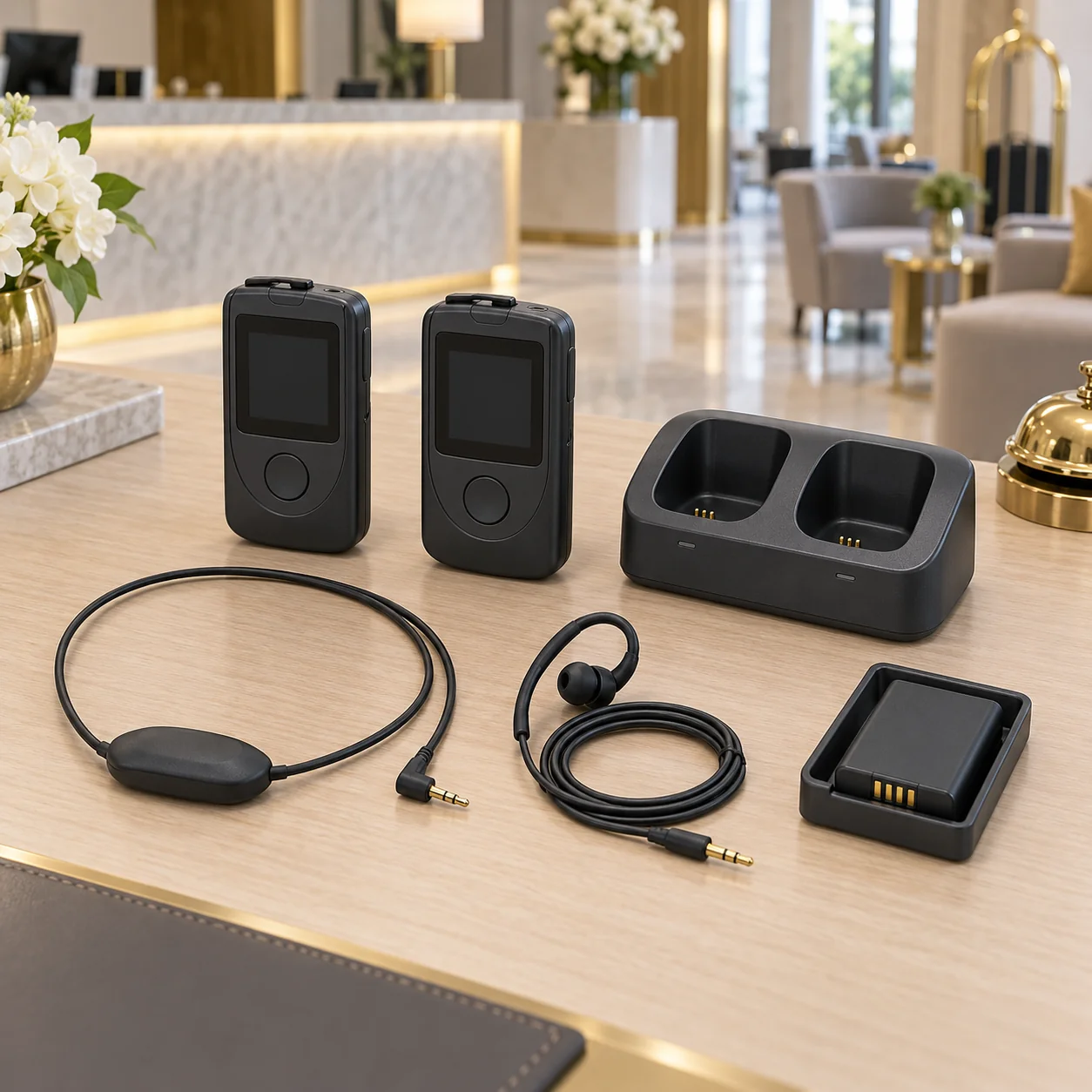
For assistive listening equipment, confirm performance across the working system, including the transmitter, receiver, charging arrangement, and applicable earphone or hearing-loop accessory. A receiver that powers on but does not deliver usable audio has not been restored. Keep incompatible accessories out of the same issue kit, and separate hygiene-related replacement of contact items from repair of the electronic unit.
Distinguish cleaning from refinishing
Cleaning removes contamination by an approved process. Refinishing changes or renews the surface. Start with the least invasive permitted cleaning approach; discoloration alone does not establish that a coating must be removed. If the surface remains damaged, identify the substrate and finish before choosing further work. Avoid universal prescriptions for abrasives, acids, paint, or polishing compounds across stainless steel, coated metal, plastics, and molded seating materials.
Consider refinishing only after assessment confirms that the underlying material is sound and the proposed process is permitted for that product. The finished result must preserve usable gripping surfaces, rounded edges, operable joints, cleanability, and relevant dimensions. A thicker coating can affect fit or clearance; aggressive surface removal can change texture or obscure the extent of deterioration. A cosmetic contractor’s finish sample can establish appearance, but it does not establish load-bearing capacity or installation compliance.
Request the preparation method, compatible finish system, curing conditions, time before use, cleaning restrictions, and acceptance standard in writing. Preserve identification and safety labels as required for the product. Where no supported refinishing route exists for a safety-critical surface or component, obtain a replacement component or assembly with documented suitability. Do not fill, paint over, or polish away evidence of cracks and deep corrosion to return an item to service.
Treat repeat failures as a diagnostic signal
When the same defect returns, compare the work history with the operating environment. Recurrence at one location can point to exposure, installation, or use conditions; recurrence across several identical units can justify a supplier investigation. Record the pattern without assuming a cause. Correcting the environmental or installation problem may be necessary whether the next decision is repair or replacement. Age alone cannot explain every failure, and a new unit can fail again under the same unresolved conditions.
Compare Replacement Against the Remaining Service You Can Support
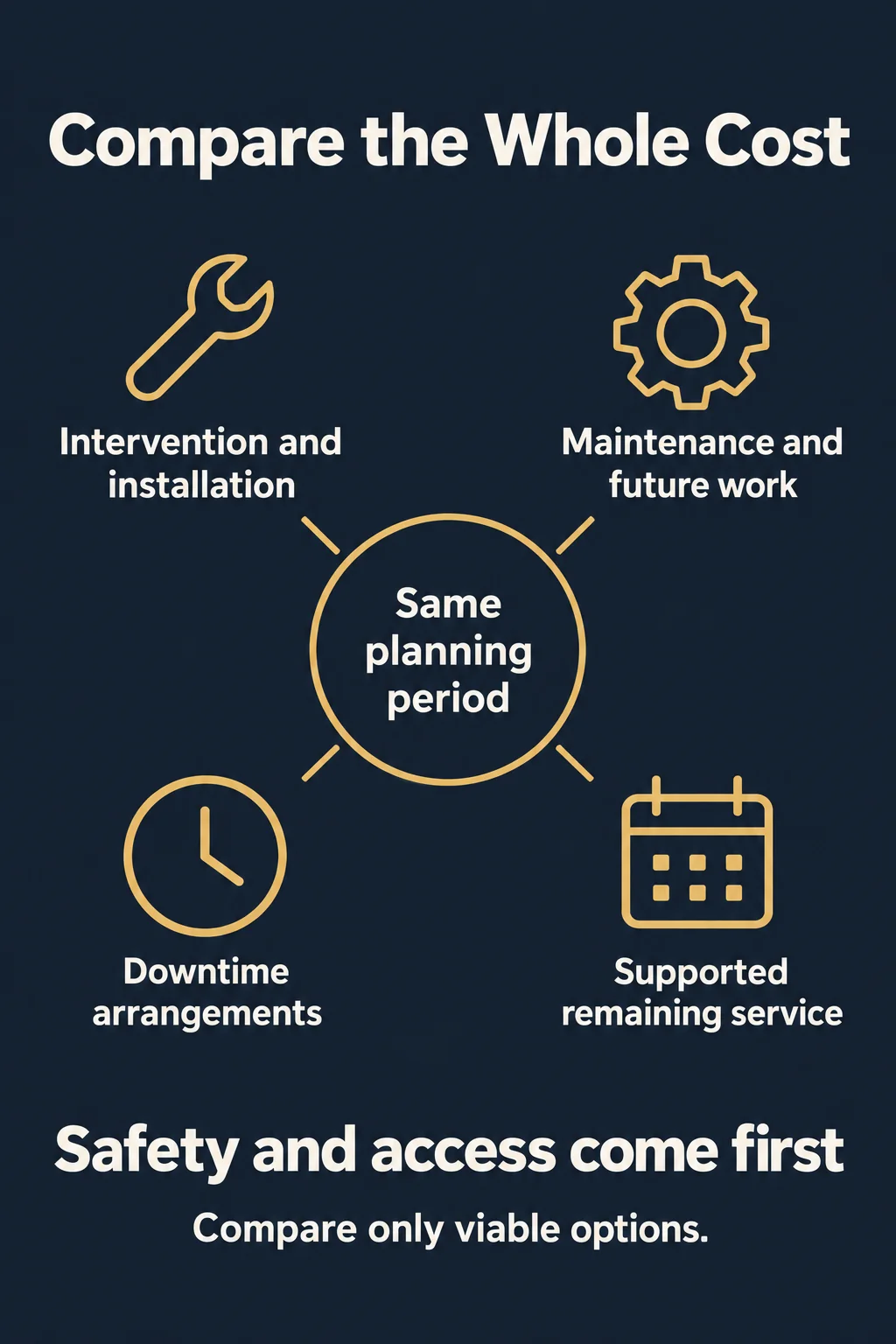
Replacement becomes the stronger option when there is no documented route to restore safety and function, when essential parts cannot be obtained, or when repeated failures make continued operation unreliable. For options that already meet those conditions, compare costs over the same planning period. Include installation, testing, downtime arrangements, maintenance, and any further replacement needed within that period. The percentage of a new purchase price consumed by a repair is only a screening figure. It does not establish remaining life, justify unsafe use, or capture the cost of an inaccessible room or amenity.
Use a common planning horizon
Build the comparison from today forward. The original purchase price is a sunk cost for this operating decision; the equipment’s remaining book value may matter separately to accounting. For each viable option, add intervention cost, delivery, installation, commissioning, temporary access arrangements, expected maintenance, and subsequent interventions during the selected period. Subtract a residual value only when it is supportable and apply the same convention to every option. Keep assumptions visible rather than presenting a precise total as a forecast.
The following three-year example is illustrative, in U.S. dollars, and is not a quotation or a product lifespan claim. Assume a qualified assessment has already found both options acceptable. Repair restores an existing assembly for one further year, after which replacement is planned; replacing now supports the full three-year period. Costs are undiscounted, no residual value is assumed, and maintenance costs are assigned to the years when each unit is in service.
| Three-year cost item | Repair now, replace after one year | Replace now |
| Current repair or installed replacement | $700 | $1,600 |
| Later installed replacement | $1,600 | $0 |
| Maintenance during the period | $280 | $120 |
| Temporary arrangements and disruption | $300 | $150 |
| Total under these assumptions | $2,880 | $1,870 |
In this example, replacement now costs $1,010 less over three years, even though the initial repair costs $900 less. If assessment instead supports the repaired equipment for the full period, the later $1,600 replacement may fall outside the horizon and the conclusion can change. Recalculate with that scenario and its maintenance assumptions. For material capital decisions, finance can incorporate discounting and defensible residual values; do not quietly assign a longer life to the option you prefer.
Apply access constraints before accepting the cheapest total
A lower-cost option may be operationally unavailable if it cannot restore required access in the necessary time. Confirm when parts or replacement equipment can actually arrive, who can install them, and what testing remains after delivery. Do not price an unsafe workaround as a legitimate temporary option. If a compliant temporary arrangement cannot be established, management must address the affected room or amenity’s availability and guest communication while restoration is expedited.
There is no universal repair-cost percentage or calendar replacement age that works for all accessibility supplies. A property may use an internal review threshold to trigger a second quotation or management approval, but it should label the threshold as its own purchasing policy. A cheap repair to an unsupported safety-critical assembly can be unacceptable; a relatively expensive repair to a well-supported system may still be the best viable choice.
Prevent replacement from becoming an installation change order
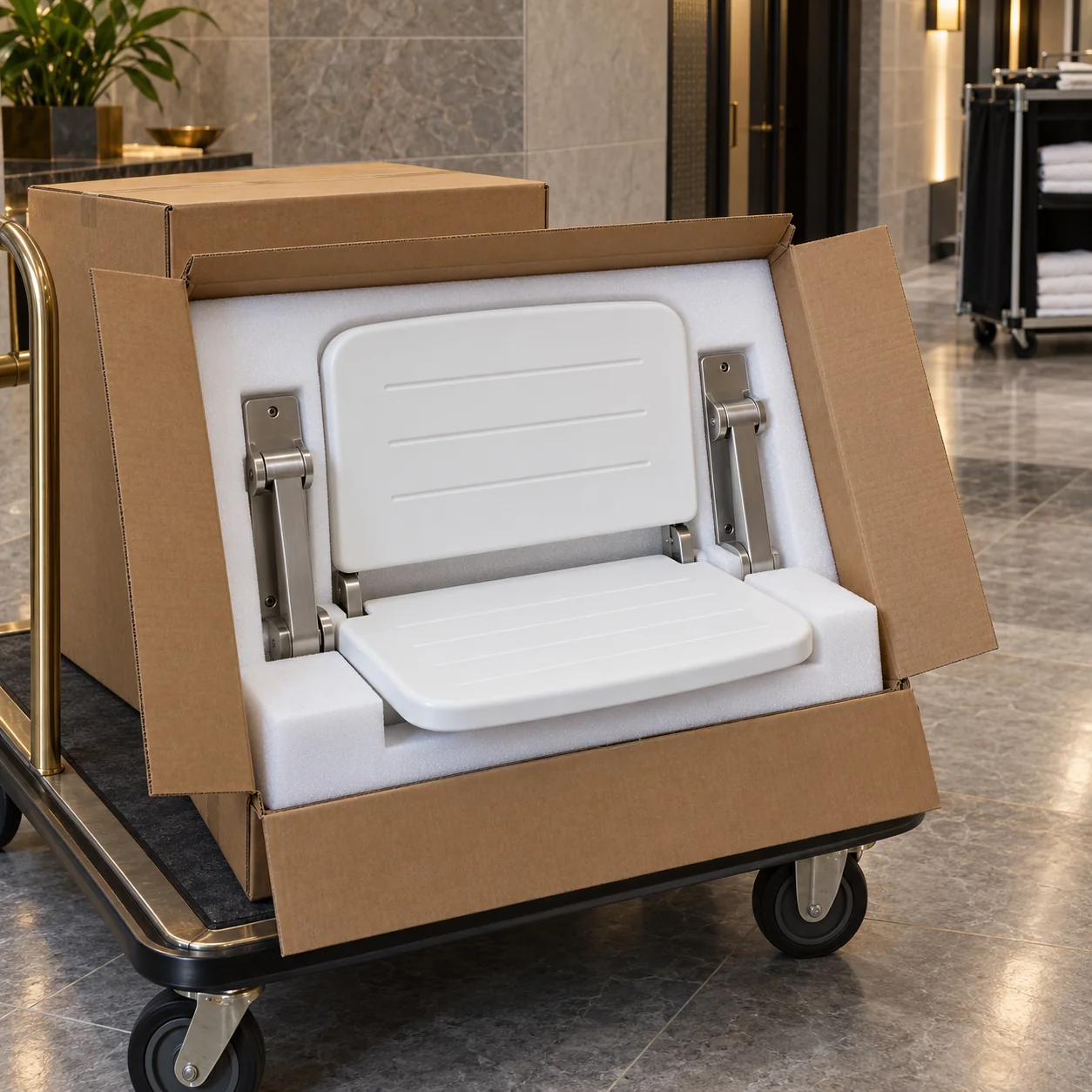
Before ordering, compare the replacement’s dimensions, mounting pattern, rated capacity, power requirements where applicable, operating clearances, and service access with the actual site. Include removal, disposal, backing or anchor work, finish restoration, waterproofing, and commissioning in the quotation where relevant. A unit described as accessible does not establish that its installed location will be accessible. Have any changes to the installation reviewed for the requirements that apply to that property.
Ask for current parts support, service documentation, warranty terms, lead times, and the process for managing discontinued components. These are procurement questions, not promises to assume from a catalog photograph. For the wider room inventory, the separate guide to lifecycle decisions for guest room supplies provides a broader purchasing context. Keep the safety and access acceptance criteria in this article attached to accessibility equipment.
Control Downtime and Verify the Return to Service
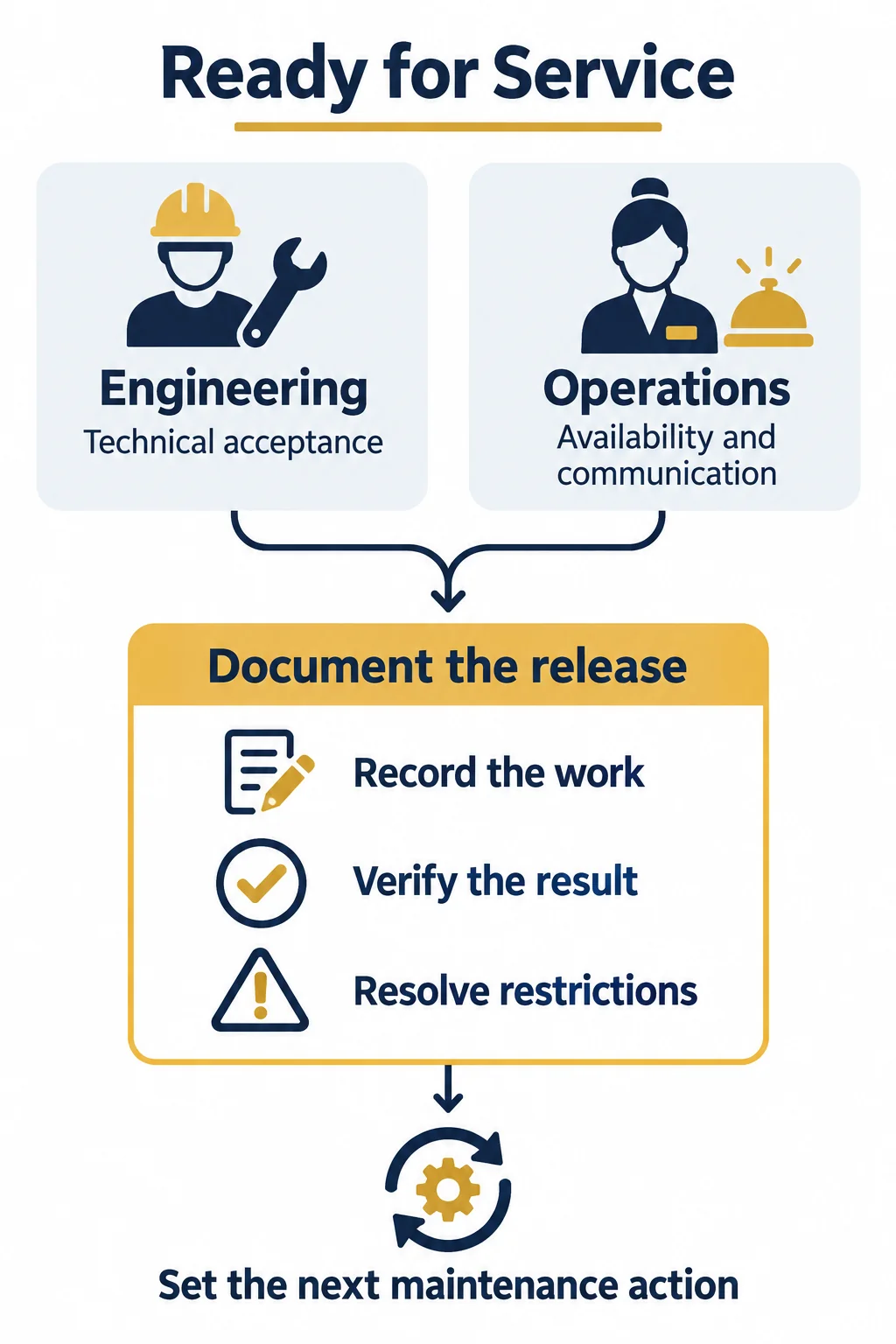
A repair is complete when the equipment is ready for its intended use in its actual location and the property has recorded the evidence. Delivery of a part, completion of a coating, or closure of a contractor invoice is not enough. Assign engineering responsibility for technical acceptance and operations responsibility for availability and guest communication. The two roles need a shared release decision so a room or amenity is not advertised as available while work remains unfinished. Plan inspections and maintenance around the product instructions, exposure, and use pattern, with additional assessment after incidents or recurring faults.
Match verification to the equipment
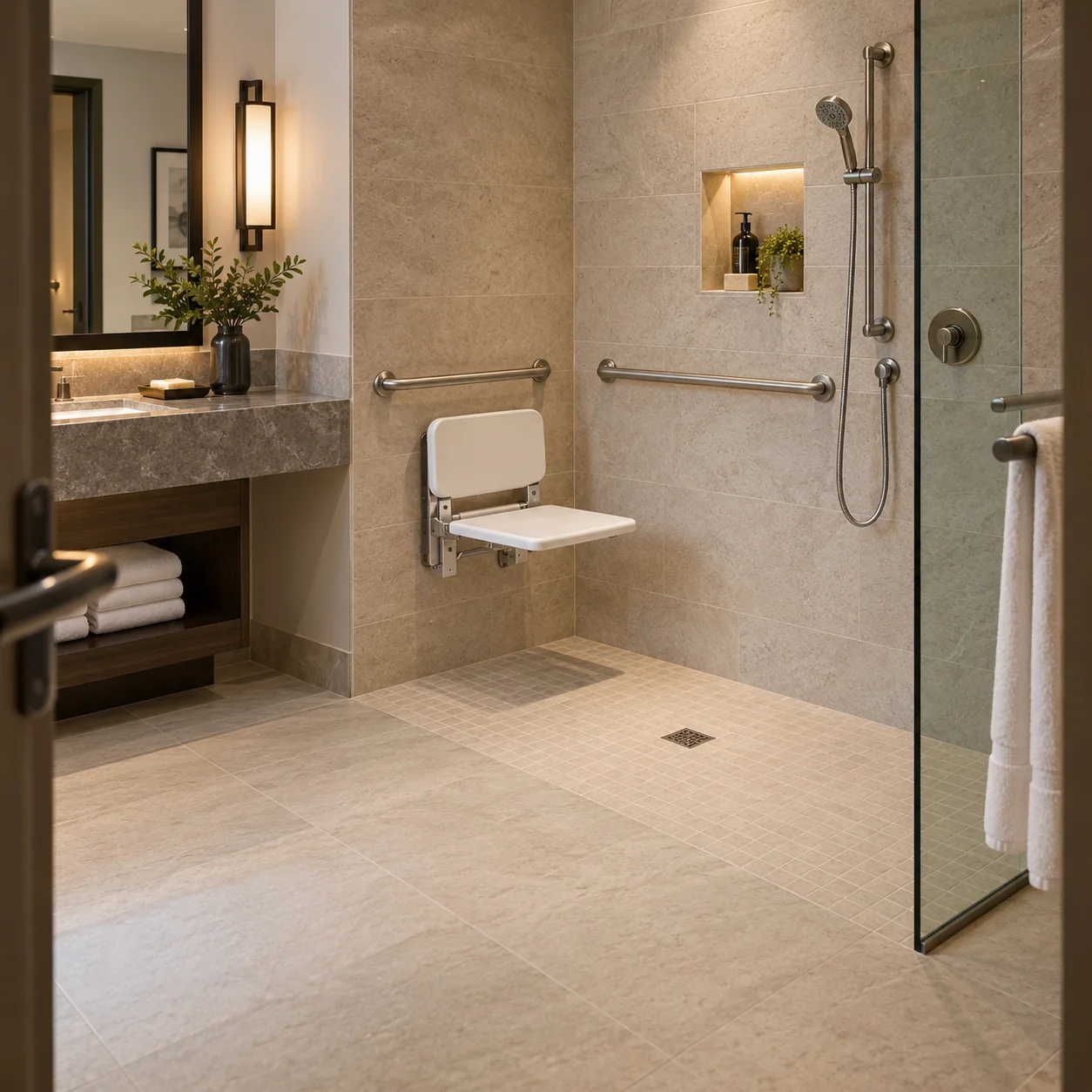
For fixed grab bars and shower seats, acceptance should address the product, attachments, supporting construction where affected, surface condition, and the installed position. A grab bar must not rotate within its fittings. A seat’s movement should match its intended mechanism and remain secure in use. Any structural uncertainty needs resolution by the appropriately qualified party. Record the applicable installation criteria and the evidence used; a general note saying ‘looks good’ cannot explain what was accepted.
For powered equipment, use the manufacturer’s prescribed commissioning and functional checks, including applicable control and emergency functions. For listening devices, verify the intended signal path and usable output with the relevant accessories. Follow the required cleaning process and allow any coating, adhesive, or sealant to reach its specified service condition before release. Testing methods and loads are product-specific; do not substitute an informal demonstration for an acceptance procedure.
Give the work record a useful ending
The closure record should connect the original symptom to the diagnosis, the approved scope, the parts or materials used, the person performing the work, and the acceptance result. Record unresolved limitations, the release date, and the next maintenance action. If the equipment remains restricted, keep that restriction active in the same system operations uses to control availability. A paid invoice and a closed purchase order should never silently cancel an engineering hold.
Tell reservations and front-desk teams exactly which feature is affected and when its status will next be reviewed. Keep descriptions of room and property features accurate. Discuss any proposed alternative with the guest in terms of the features they need, without assuming that another room, a different device, or staff assistance is equivalent. Operational communication should support restoration of access, not present the outage as resolved when it is not.
Use maintenance history to improve the next purchase
Track time out of service, repeat faults, parts waiting time, and expenditure by asset and location. Compare failure patterns with cleaning routines, moisture exposure, storage, and usage. Where the manual sets intervals, follow them; where it leaves room for an operating schedule, base the schedule on the relevant conditions and qualified advice. Avoid describing an invented monthly or annual interval as a universal requirement.
Keep critical spares only when compatibility, storage conditions, shelf life where relevant, and likely demand justify them. A spare battery that has not been maintained as instructed is not dependable backup. Before discontinuing an equipment family, identify accessories and spare parts that will become stranded. Remove retired or unresolved defective items from the available inventory so they cannot return to service through a shift change or an informal equipment swap.
Conclusion
Use repair when a supported intervention restores a defined function, refinishing when a permitted surface process preserves a sound product, and replacement when safety, reliable operation, or future support cannot be restored. Make the comparison across the whole installed system and a common planning period, then verify the result before reopening access. This approach gives engineering a defensible acceptance decision and purchasing a clear scope to quote. It also makes the record useful later: the property can see why work was approved, what evidence supported release, and which conditions should trigger the next review.
When replacement is the justified route, prepare the asset list, quantities, model information, site measurements, installation photographs, required functions, delivery destination, and target date before seeking a quotation. State whether the request includes removal, installation, or supply only, and identify any temporary access constraints. Keep the qualified technical review separate from supplier price approval.
To discuss sourcing for a replacement project, contact KW Hospitality with that information and the approved specification. Ask for written confirmation of available options, compatible accessories, documentation, lead times, and commercial terms. Final selection should remain conditional on the product and installation meeting the property’s requirements.
Frequently Asked Questions
Does a warranty replacement automatically establish that the installation is safe?
No. Warranty coverage addresses the supplier’s obligations under its terms. It does not by itself establish that the wall, anchor, wiring, clearances, or other site conditions are suitable. Accept the replacement through the same product-specific installation and commissioning process used for a purchased unit, and resolve the cause of the original defect if it involved the site.
Can we use spare parts taken from another retired unit?
Only consider that route when the exact part is compatible, its condition and history can be established, and the manufacturer permits its reuse for the application. Similar appearance is insufficient. Avoid transferring an unknown safety-critical component from one unsupported assembly to another. Document any accepted reused part so future service staff can identify the actual configuration.
Should an unused item be replaced simply because it is old?
Not automatically. Low use does not remove the effects of storage, corrosion, battery aging, or support discontinuation. Review the product’s instructions, condition, applicable service-life limits, and parts support. Inspect and verify stored equipment before issue. Conversely, a young item with a serious defect may require withdrawal or replacement well before its accounting depreciation period ends.
Can the property lend a portable shower chair while a fixed seat is unavailable?
Do not assume that a portable chair satisfies the requirements for the installed shower or meets the guest’s transfer needs. The answer depends on the facility, the required accessible features, and the suitability of the proposed arrangement. Obtain the relevant technical review and communicate accurately with the guest. A temporary device is not an automatic substitute for a required fixed feature.
Do these lifecycle rules authorize modifications to a guest’s wheelchair?
No. This guide addresses property-owned equipment and installed features. A guest’s wheelchair or other personal mobility device may have individualized settings, warranties, and service requirements. Do not adjust or repair it without the owner’s authorization and appropriate qualified service. Hotel staff can help arrange assistance without treating the device as part of the property’s maintenance inventory.