
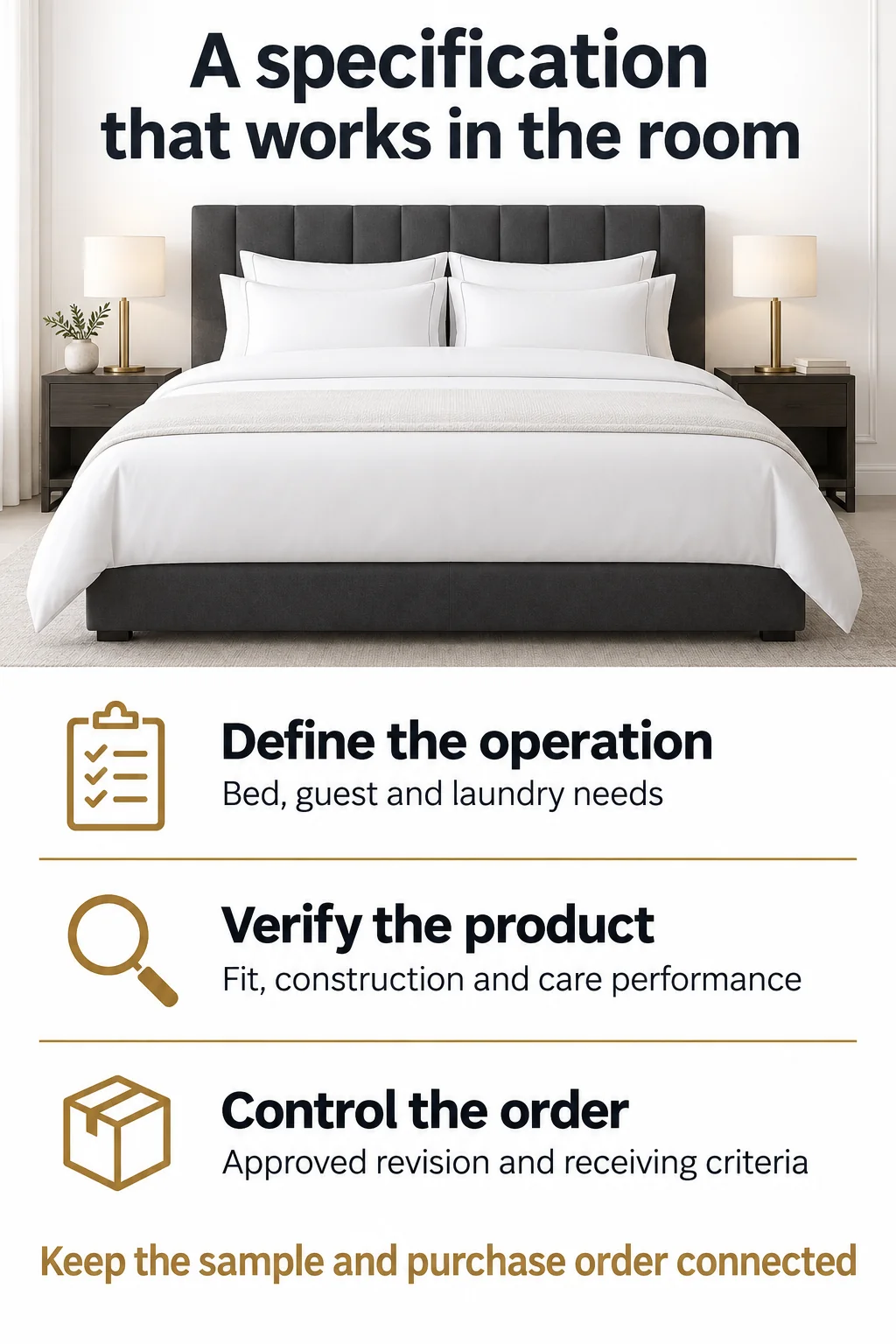
A useful purchase specification for hotel bedding and bed linens connects an operating need to a measurable product requirement, a verification method, and a decision rule. Instead of asking for “luxury white sheets,” the buyer defines which bed the sheet must fit, how it should feel after laundering, how housekeeping will handle it, and what evidence will support acceptance. The same logic applies to pillowcases, duvet covers, inserts, protectors, and other layers that make up the finished bed.
This connection matters because the bedroom and the laundry evaluate the same textile differently. Guests experience its surface, warmth, noise, and appearance. Room attendants experience its orientation, weight, closure, and ease of fitting. Laundry teams encounter its drying behavior, dimensional change, finishing requirements, and sorting needs. Purchasing must translate these observations into an order that suppliers can price and production teams can reproduce.
The starting point is the property’s actual operating system: mattress dimensions, bed presentation, room mix, laundry process, available storage, and replenishment schedule. A specification should preserve essential outcomes while leaving room for suppliers to propose suitable constructions. It should also identify when a suggested alternative changes the operating assumption behind the quote.
This guide shows how to build that specification, from the room requirement through sample evaluation to the purchase order. It includes a requirement-to-evidence matrix, a worked sizing example, and sample purchasing language. The numerical examples are hypothetical planning illustrations, not universal hotel standards, laboratory results, or specifications for a KW Hospitality product. Final targets need agreement between the buyer, housekeeping, laundry, and the supplier before production is released. For properties buying across multiple room types, the objective is a controlled family of compatible items that can be reordered reliably without reopening every decision.
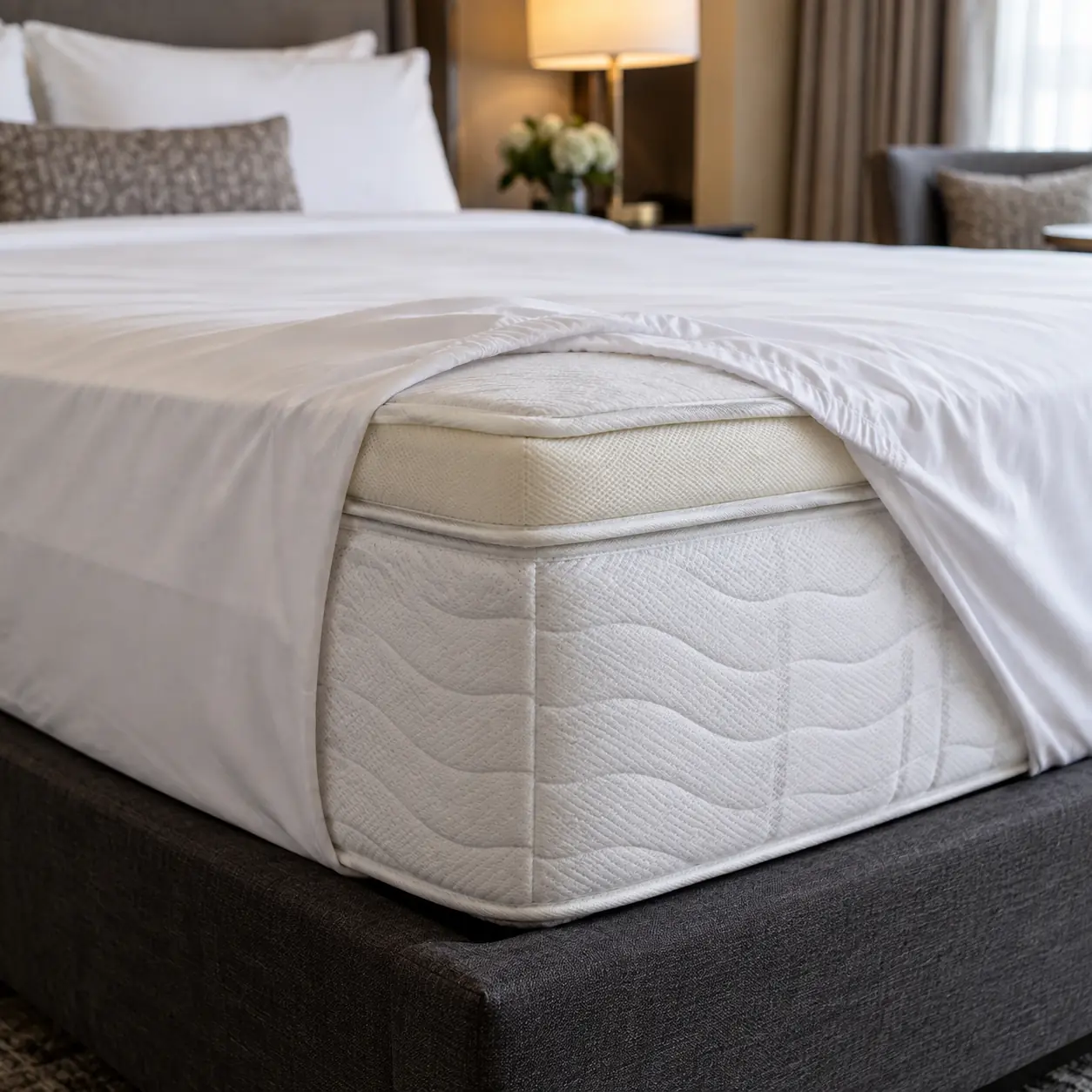
Define the Bed and Laundry Operating Requirements
Begin with the complete bed as it will be used and reset, then work backward to the individual articles. Record the mattress, topper, protector, sheets, pillow arrangement, and covering system for each room type. Identify which dimensions and operating conditions are shared and which require a separate item. This prevents a purchasing description from hiding practical differences behind a familiar size name. The result should be a short operating brief owned jointly by housekeeping and procurement, with laundry confirming the care process. Resolve conflicting requirements at this stage, while the team can still change the design without altering a production order.
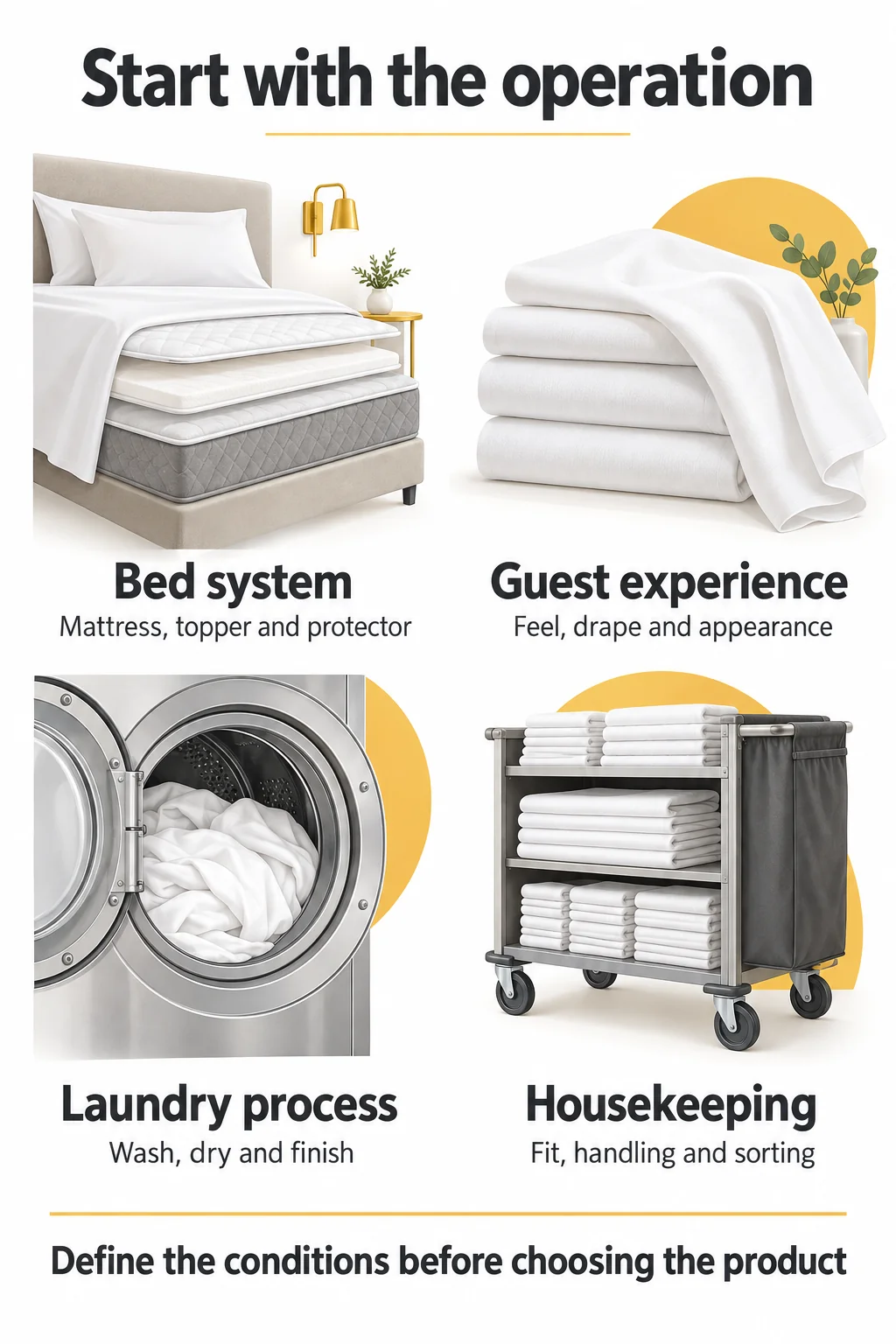
Map the actual interfaces
Measure mattress width, length, and depth on representative beds. Record whether the measurement includes the installed topper and protector. A fitted sheet has to accommodate that assembled depth; a flat sheet needs enough usable fabric for the intended drop and tuck. A label such as Queen or King does not replace these dimensions, particularly when stock comes from more than one market or mattresses have changed during renovations.
Treat pillowcase-to-pillow and duvet-cover-to-insert fit as separate interfaces. Record pillow dimensions and loft, the desired envelope overlap, duvet insert dimensions, and any corner attachment arrangement. A generous-looking empty cover can behave differently once it contains a bulky insert. Have housekeeping make a complete bed using the proposed components before freezing those interfaces.
Distinguish washable outer linens from filled bedding. The specification for a duvet cover concerns its shell fabric, dimensions, closure, and handling. The corresponding insert requires its own shell and fill descriptions, fill quantity, construction, care process, and fit criteria. Likewise, a mattress protector needs an explicit requirement for the protection function being purchased; “protector” alone does not establish liquid resistance or a particular barrier performance.
Define the care environment before selecting fabric
Obtain the intended wash, extraction, drying, and finishing process from the laundry operator. Record the chemical system, relevant temperatures, cycle duration, equipment, load conditions, and any ironing or calendaring. The supplier should confirm compatibility with that documented process and identify restrictions. Do not substitute a generic hot-wash instruction for the operator’s actual program, and do not treat a textile’s heat tolerance as proof that a cleaning process achieves a hygiene outcome.
Set an observable guest-facing goal as well. For example, replace “luxurious feel” with a comparison against an approved, laundered reference sample under the same evaluation conditions. Ask reviewers to describe smoothness, crispness, drape, and unwanted noise separately. This gives the team a record it can use when judging alternatives without pretending that personal preference is a laboratory measurement.
Separate the item specification from inventory planning
Define the number of each article used per occupied bed and then assign quantities by SKU, meaning the unique item and size identifier. Count pillowcases individually; a “set” can conceal different contents. Model inventory against bed count, occupancy assumptions, change policy, laundry turnaround, rejected pieces, and contingency stock. Avoid adopting a fixed par multiple without checking what it covers. The detailed inventory calculation belongs alongside the specification, while the specification controls the identity of the pieces being counted.
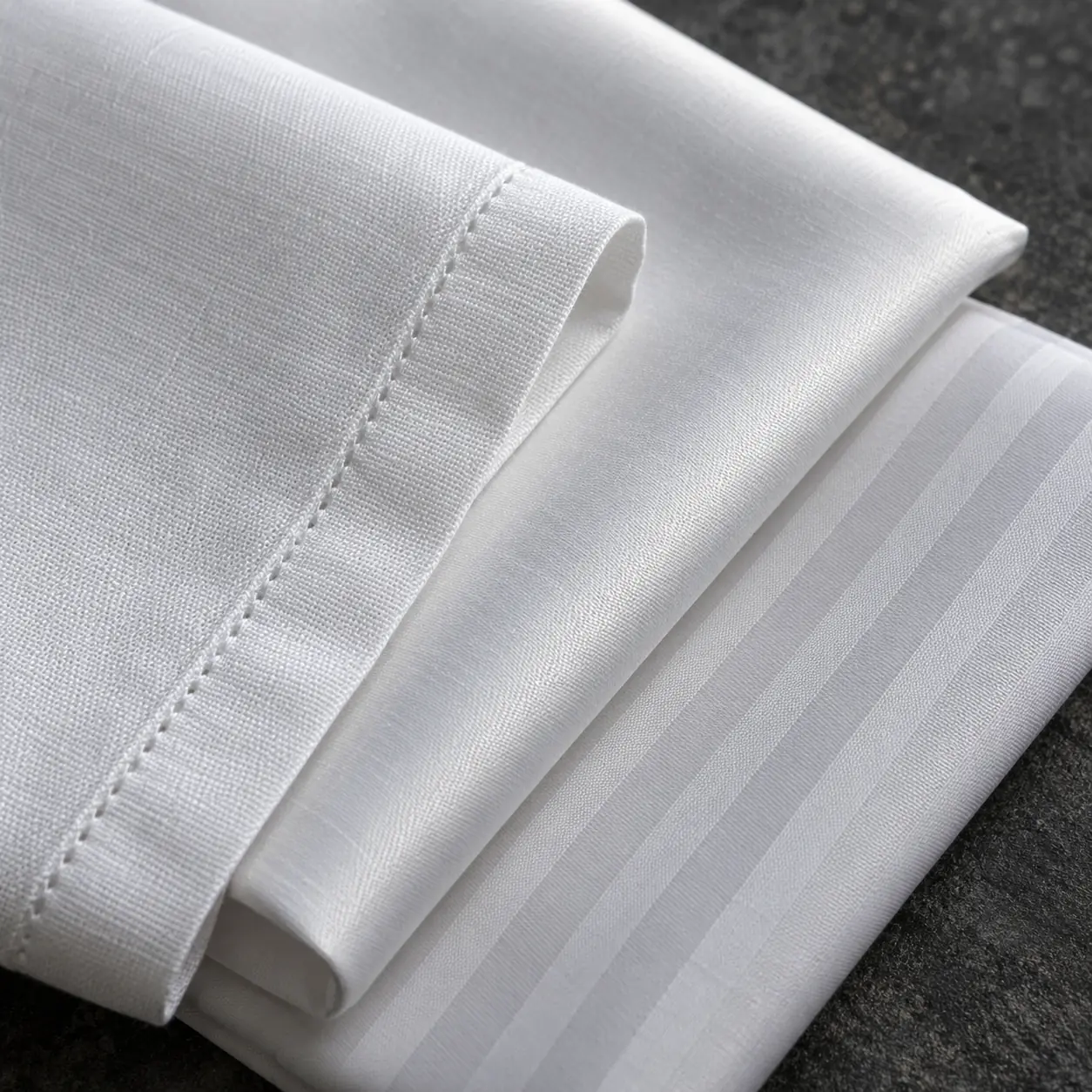
Translate Requirements into Measurable Product Specifications
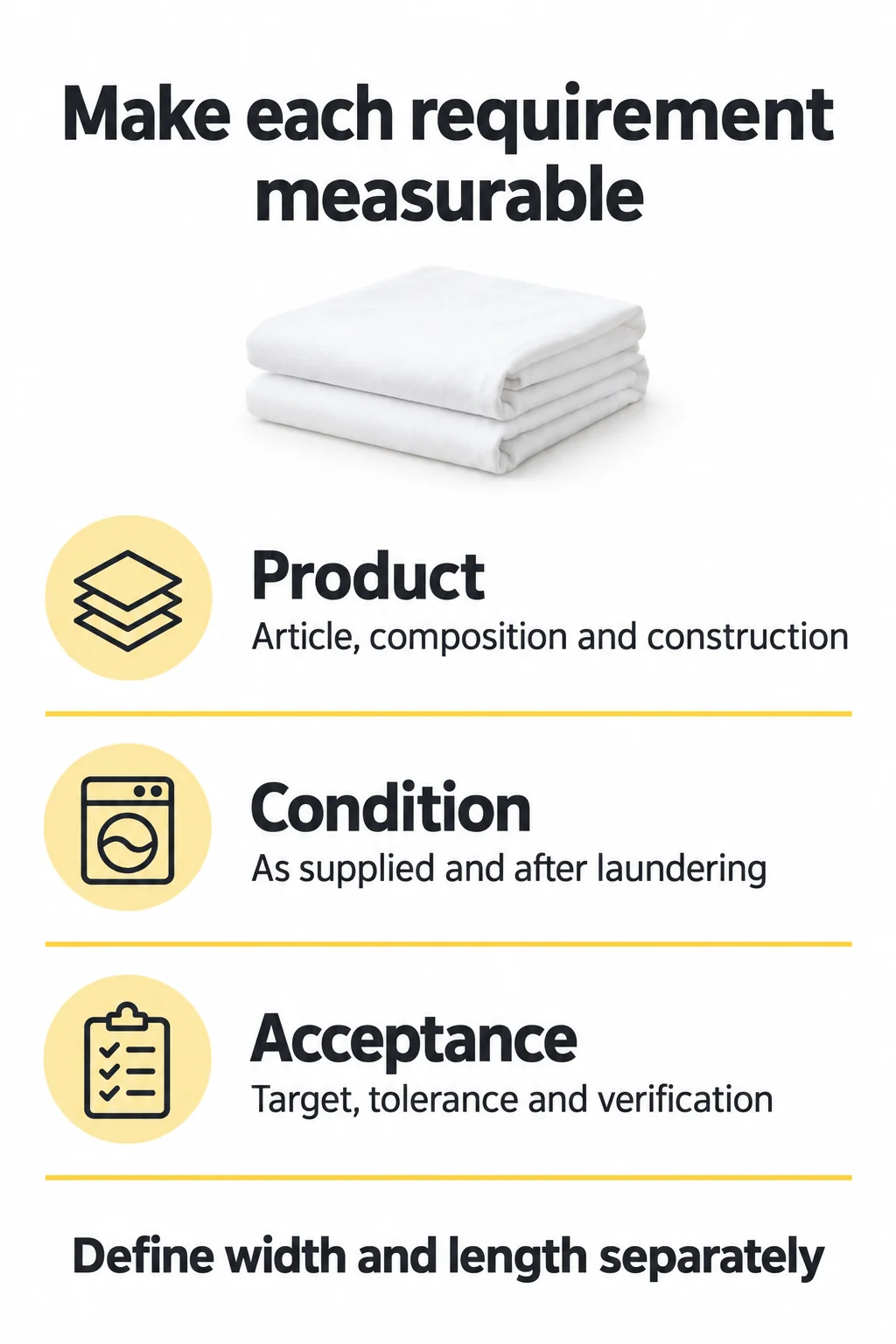
Write each requirement in a form that another person can verify without relying on the original buyer’s memory. A complete line identifies the article, the property being controlled, the target or acceptable range, the condition in which it is measured, and the evidence needed. Separate supplied dimensions from usable dimensions after the agreed care process. Also separate mandatory requirements from preferences and supplier-proposed alternatives. This structure makes the request easier to quote and helps the team recognize when two offers describe different products. The matrix below is a design aid for building specification lines; it is not a universal acceptance standard.
| Operating requirement | What to specify | Evidence and decision basis |
| Sheet fits the assembled bed | Width, length, pocket or tuck allowance; supplied and laundered condition | Measurements and a bed-making trial on the identified mattress system |
| Surface matches the room concept | Fiber percentages, weave, finish, approved laundered reference | Supplier declaration and consistent comparison to the reference |
| Linen remains usable through care | Direction-specific dimensional limits and defined care exposure | Before-and-after measurements linked to the actual trial conditions |
| Construction supports handling | Hem and seam details, closure, elastic or attachment arrangement | Inspection and repeated fitting or closure trial |
| Sets remain visually coordinated | White or color reference and comparison conditions | Side-by-side review of the finished articles under agreed lighting |
| Filled bedding fits and performs as intended | Shell, fill composition, fill mass, compartment construction, dimensions, care | Component identification, fit trial, and agreed product-specific evaluation |
| Replacement stock stays compatible | SKU, revision, identification, approved construction and change control | Traceable records and approval before substitutions |
Specify fabric construction without buying a marketing label
Require fiber composition by percentage and distinguish shell, fill, elastic, and other components where relevant. Record weave or knit construction, fabric mass where useful, and any finish that affects the purchasing decision. When a supplier quotes thread count, ask for the counting basis and construction details so the figure can be interpreted consistently. Thread count by itself cannot establish fit, seam quality, laundered appearance, or service life.
Cotton and cotton-polyester constructions can both be candidates, but neither composition automatically meets every property’s requirements. Use the actual proposed article to compare tactile preference, drying and finishing behavior, and dimensional stability. Percale and sateen describe different weave constructions, not complete quality grades. Avoid ranking samples by one label while overlooking a change in fabric mass, yarn construction, finish, or maintenance needs.
Define tolerances explicitly. “Approximately 100 inches” gives neither the supplier nor the receiving team a clear decision rule. State whether a limit applies to each item or a sample average, whether dimensions include hems, and how the article is laid out and measured. An average should not conceal individual pieces that cannot fit the bed.
Work backward from usable dimensions
For a flat sheet, a simple planning model is: usable width equals mattress width plus the allowances needed on both sides. Establish those allowances on the actual bed; they may include the side drop and fabric tucked underneath. Develop length separately to reflect the head-end presentation and foot tuck. This geometry is a starting model, not a substitute for a fitting trial.
Consider a hypothetical 60-inch-wide mattress requiring 18 inches of side allowance on each side. The required usable sheet width is 60 + 18 + 18 = 96 inches. Assume the buyer and supplier agree to a maximum width shrinkage of 4% under a specified trial. The smallest starting width that would still yield 96 inches is 96 ÷ 0.96 = 100 inches. Simply adding 4% to 96 produces 99.84 inches, which falls slightly short after a 4% reduction.
Manufacturing tolerance needs its own allowance. If the supplied-width tolerance is minus 1 inch, a 101-inch nominal width gives a 100-inch minimum before the assumed shrinkage. For this example, that minimum becomes 96 inches afterward. All of these values are illustrative; they must be replaced with agreed dimensions and demonstrated behavior for the selected article. Repeat the calculation for length using its own shrinkage assumption. Do not apply this flat-sheet calculation directly to an elasticized fitted sheet; pocket shape, elastic recovery, and the complete bed interface also matter.
Make filled bedding requirements specific
For pillows and duvet inserts, document fill composition and mass separately from overall article weight. Do not treat equal fill mass as proof of equal warmth, loft, or comfort. Describe the required shell, seams, compartment layout, closure or attachment features, and approved reference. If warmth, barrier function, allergen-related performance, or another specialist claim is essential, require a relevant test or certification with a defined scope rather than accepting an unqualified adjective.
Once these fields are ready, you can discuss the proposed bedding specification with KW Hospitality before requesting samples. Share the room and laundry assumptions with the specification so that proposed alternatives address the same operating need.
Validate Samples Under the Intended Care Process
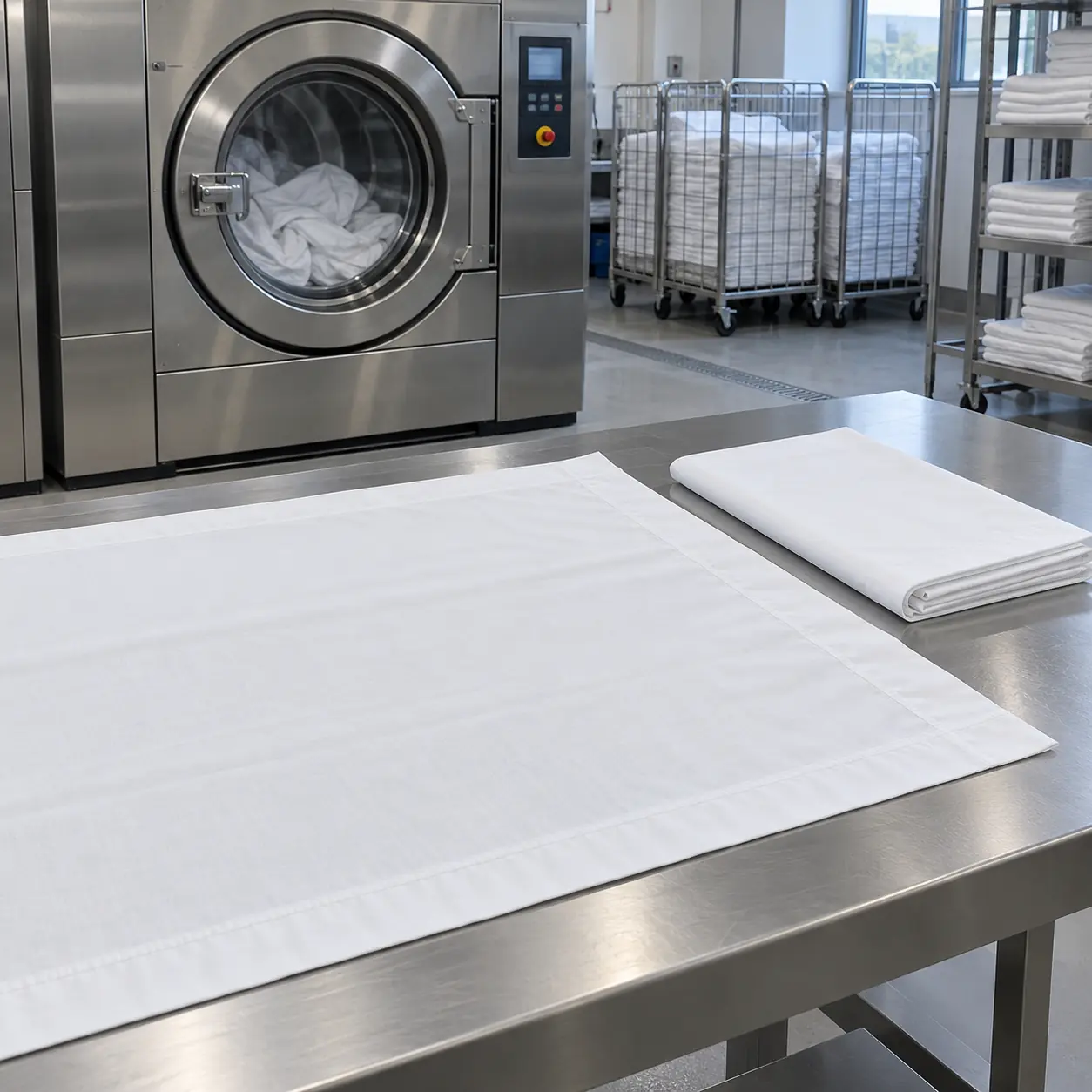
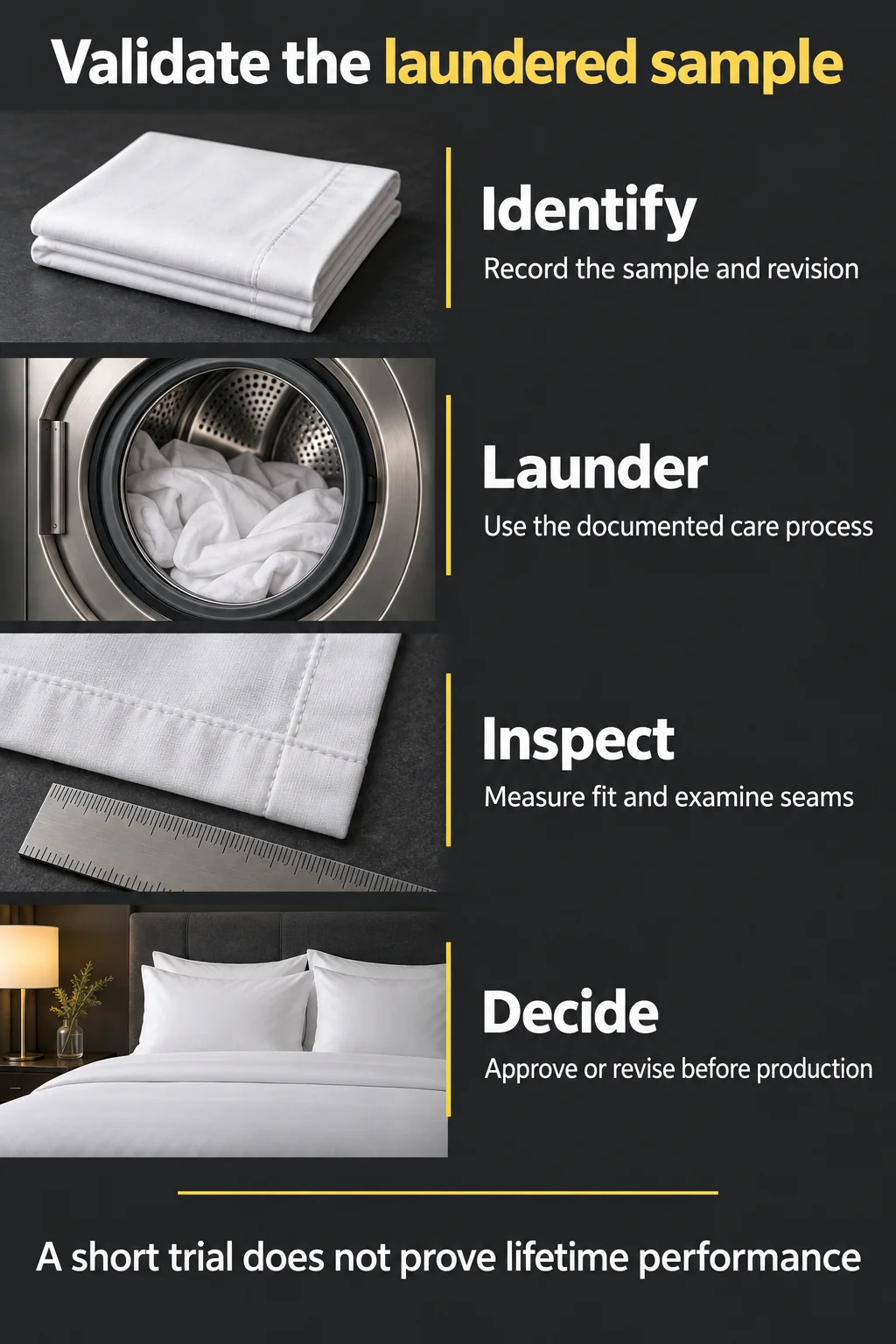
Approve samples against the written requirements in both supplied and laundered conditions. The important question is whether the proposed article still performs its intended job after the care process it will encounter, including fitting, handling, appearance, and component compatibility. Identify each sample and document the trial so a second evaluator could understand what was done. A small operational trial can reveal problems early, but it does not establish whole-lot consistency or prove a lifetime claim. Where a performance requirement needs formal evidence, agree the applicable test method, edition, sample preparation, and acceptance limits with a competent laboratory before relying on the result.
Establish a baseline and a reproducible trial
Identify whether the submission is a stock sample, a prototype, a pre-production article, or a unit from the intended production run. Record the supplier reference, SKU, revision, sample date, construction, and care instructions. Photograph and measure the articles before laundering, using consistent measurement points and a defined relaxed condition. Keep an untested control when practical and retain the accepted, laundered sample as a separate physical reference.
Choose care exposures that can reveal early dimensional and appearance changes. For example, the team might inspect a sample after the first cycle and again after a later agreed number of cycles. Those checkpoints are a project decision, not evidence that every product needs the same test schedule. Record the actual wash and finishing conditions; an unexplained change of dryer program can make later comparisons misleading.
Use several relevant articles and sizes when the risk warrants it. A single flat-sheet sample cannot validate fitted-sheet elastic, duvet-cover closures, or pillowcase overlap. Record deviations from the planned care process and avoid presenting an operational screening trial as a standardized laboratory test.
Evaluate fit and workmanship after laundering
Measure width and length independently. For shrinkage expressed as a positive reduction, calculate (before dimension − after dimension) ÷ before dimension × 100. A width changing from 100 inches to 97 inches has reduced by 3%. If the article grows, record the expansion and direction explicitly instead of disguising it as a passing shrinkage result. Use the same measurement condition before and after.
Inspect seam opening, skipped stitches, hem distortion, skew, pilling, color change, elastic recovery, and closure function as applicable. Then put the articles back on the bed. Ask whether a pillow remains covered, a fitted corner stays in place, the duvet sits correctly in its cover, and attendants can achieve the intended presentation without excessive adjustment. Record the observation and its link to the specification.
Where reset time matters, compare candidates using the same bed arrangement and a consistent task definition. A timing exercise should not mix different pillow counts or give one candidate a practiced operator and another a first attempt. Record the conditions and use the result as local operational evidence, without promising a labor saving across unrelated properties.
Decide what happens when a sample fails
Classify failures by their effect on use. A sheet that cannot fit the assembled bed needs a dimensional or construction correction. An unacceptable surface after laundering may require a different fabric or finish. A closure that takes too long to handle may require a design change. A failure caused by an undocumented care deviation first requires a controlled repeat of the intended trial.
Revise the specification and resample the affected configuration before release. Do not accept a verbal assurance that production will be different from the sample while leaving the purchase order unchanged. The broader guide to evaluating guest room supplier samples explains the distinction between sample approval and evidence of production consistency.

Carry the Approved Specification into the Purchase Order
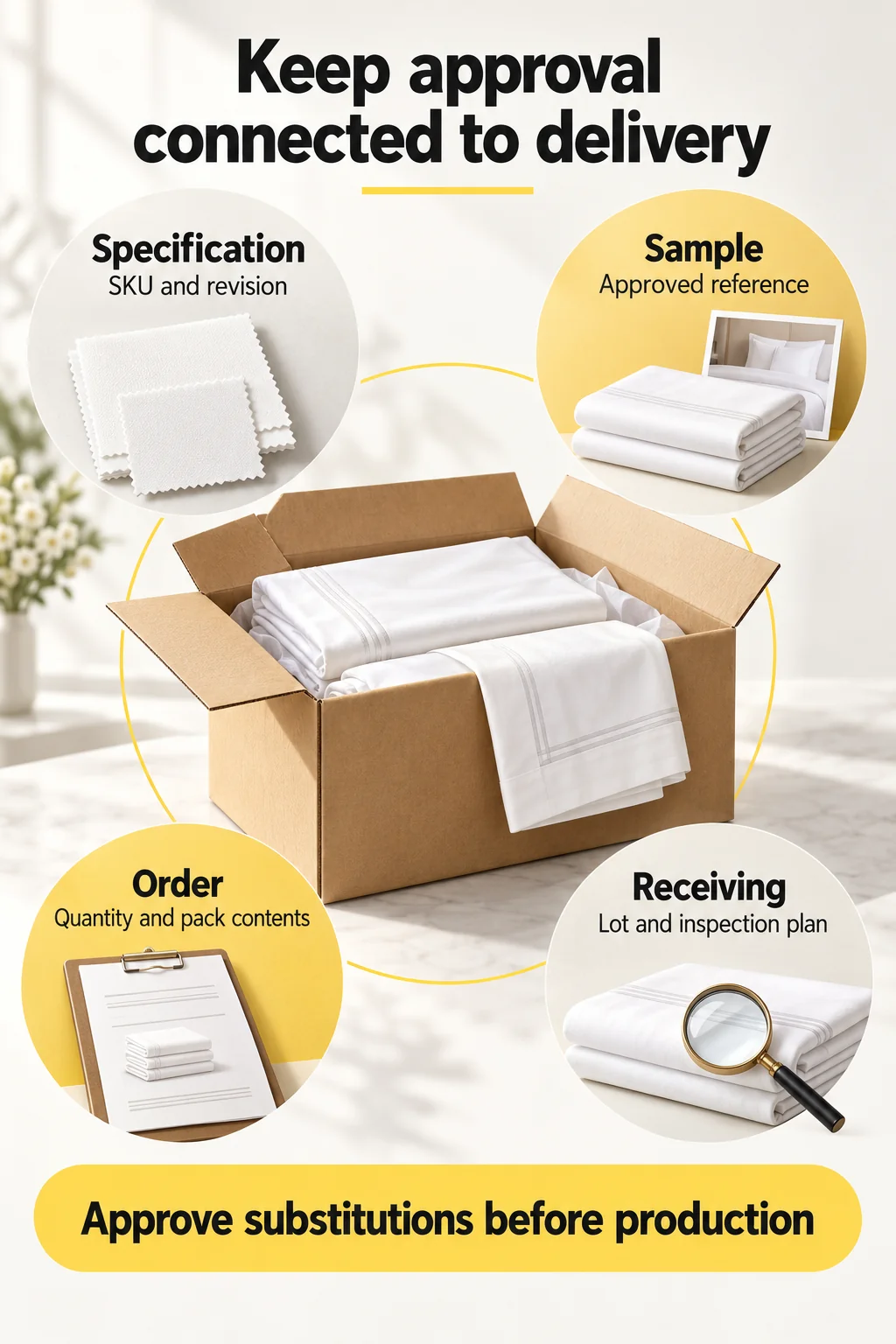
The purchase order should identify the exact approved configuration and the documents that control it. Attach the specification revision, approved sample references, quantity schedule, packing requirements, and agreed inspection arrangements. Require suppliers to disclose departures from the request before comparison and to obtain approval before changing a controlled feature after award. This closes the gap between a successful sample review and the goods that arrive at the property. Keep commercial terms separate enough to compare clearly, but connect them to the same SKU and revision so a cheaper quotation cannot quietly represent a different linen construction or pack quantity.
Use explicit specification language
For the worked flat-sheet example, a dimensional clause could read: “Supplied finished width: 101 inches nominal, tolerance ±1 inch, measured including hems under the agreed relaxed measurement procedure. Width after the documented care trial: minimum 96 inches. Width reduction during that trial: maximum 4%. Each inspected article must meet both laundered-width and dimensional-change requirements.” This is illustrative wording for the example, not a complete production specification or a universal tolerance recommendation.
The actual specification must also define length, construction, care-trial procedure, sample selection, and other relevant features. Replace references such as “documented care trial” with the identifier of a procedure both parties possess. Avoid leaving blanks or unresolved approvals in the version released to production.
Define document precedence when a catalog description, quotation, drawing, and specification disagree. For example, the parties can agree that the signed purchase specification and its approved change notices control product characteristics, while the accepted quotation controls separately identified commercial terms. Resolve conflicting information before signing rather than expecting a receiving inspector to interpret it later.
Control quantities and quotation assumptions
List each article, size, revision, unit quantity, pieces per pack, and packs per carton. State whether the price is per piece, pair, pack, or complete set and spell out set contents. Request minimum quantities by size and customization, sample costs, production lead time after approval, and the delivery assumptions used in the quote. Where freight is included, identify the destination and included handling services.
Compare offers only after recording deviations. A supplier may change fiber blend, usable dimensions, closure design, packing, or replenishment availability while retaining the same general product name. The guest room supplies bid comparison guide provides the wider commercial framework; this bedding specification supplies the technical baseline.
Define receiving and reorder controls
Agree a lot identification and inspection plan proportionate to the order. It should identify who selects samples, which cartons and sizes are represented, what is inspected, and what findings trigger a hold, expanded inspection, correction, or rejection. If a statistical sampling plan is used, define its parameters and defect classes together. A sampling acceptance decision does not mean every item in the shipment is defect-free.
Require carton labels and durable article identification appropriate to the operation. Keep size codes consistent with housekeeping’s sorting system. Check count, SKU, visible condition, and packing at receipt; conduct the agreed dimensional or wash verification before full rollout when the purchasing plan requires it. Segregate nonconforming stock and retain lot information so a problem can be traced.
For reorders, control changes to fiber blend, fabric construction, finish, dimensions, seam design, closure, manufacturing source, and packaging wherever those changes could affect the approved outcome. Define the claims process, notice period, required evidence, remedies, and responsibility for return or replacement freight. Do not assume that a sample approval creates a warranty or a lifetime supply commitment.

Conclusion
A reliable bedding and bed linens specification begins with the bed and laundry operation, converts each important need into a measurable requirement, and carries the approved result into production and receiving. Dimensions need a measurement condition; comfort needs a consistent reference; performance claims need evidence matched to their scope. The worked sizing example shows why usable dimensions, shrinkage allowance, and manufacturing tolerance must be considered together. The same discipline should guide pillowcases, duvet covers, inserts, and protectors. Keep the approved article, specification revision, and purchase order connected so that future replenishment supports the same room standard.
Before seeking a final quote, bring together the room-type schedule, assembled mattress measurements, bedding layers, laundry process, required quantities by SKU, delivery location, and target date. Use the KW Hospitality contact form to request a bedding sourcing discussion, and identify which requirements are mandatory and which alternatives you are willing to evaluate. This gives the sourcing conversation a defined starting point and keeps sample approval focused on the property’s actual needs.
Frequently Asked Questions
Can one sheet size serve several mattress depths?
It may, but approve the full depth range through fitting trials. An article that works on the deepest mattress can leave excess fabric on a shallower bed, while the shallow-bed choice may not retain enough tuck or pocket coverage on the deeper one. Include the topper and protector in each configuration and consider the effect on bed-making and appearance before consolidating SKUs.
Does pre-shrunk mean that further dimensional change is impossible?
No. Ask what treatment the description refers to and what residual dimensional change the supplier will commit to under the agreed care process. Record supplied and laundered dimensions separately. The purchasing decision should rest on measured fit and accepted limits, not the phrase alone.
Should every hotel specify the same thread count?
No. Select the actual construction against guest experience, fit, care behavior, and the approved reference. If thread count forms part of the specification, define how it is stated and verified. Increasing a single headline number does not resolve inadequate dimensions, weak seams, or an unsuitable care process.
What if the laundry contractor changes after the order is placed?
Compare the new process with the one used for approval before treating the linens as qualified for it. Identify changes in chemistry, temperature, drying, and finishing, obtain supplier guidance, and run a controlled trial when those changes could affect performance. Preserve the original approval record so the team can distinguish a product deviation from a changed operating condition.
Can a supplier replace an approved material with an equivalent?
Only through the agreed change process. Ask the supplier to identify the proposed differences and provide evidence for the outcomes they could affect. A replacement described as equivalent may still change laundered fit, tactile preference, sorting, or replenishment compatibility. Update the revision and obtain the required approval before the substitute enters the order.
Is a short wash trial enough to estimate replacement life?
It is useful for screening early failures, but it cannot establish a dependable service-life figure by itself. Longer-term estimates need evidence linked to similar use, care, handling, and discard rules. Keep preliminary trial results separate from a life claim, and record field performance by SKU and lot once the linens are in service.