
Measure a hotel steam cooker’s idle water use by recording the change in its dedicated water-meter total while the appliance is in a documented, stable, ready-to-cook state with no food inside. Divide that volume by the observation time in hours. Include every water supply within the stated boundary, repeat the observation during representative service gaps, and keep startup, cooking, shutdown, and cleaning separate. This produces a useful replacement baseline; a drain that appears to run continuously does not, by itself, establish how much water the cooker uses or whether it has a fault.
The business question is how much of that idle consumption the hotel can avoid while preserving kitchen readiness. A breakfast operation, a banquet kitchen, and an all-day restaurant can have very different gaps between batches. A machine with a modest standby rate can accumulate substantial use over long idle periods. Conversely, replacing a high-use machine may save less water than expected if most consumption occurs during cooking, required flushing, or an upstream process that the proposed measurement excludes.
For a defensible decision, the chief engineer and executive chef should agree on the operating states to observe before procurement compares equipment. Record the current machine’s condition, identify service opportunities, and distinguish the existing baseline from the baseline after repairs. That prevents a replacement proposal from taking credit for water savings a repair could deliver.
The following method is a practical facility audit, not a certification test or a substitute for the appliance’s installation and operation manual. It explains the measurement boundary, observation procedure, calculations, and evidence needed from suppliers. The worked numbers are explicitly hypothetical. Use US gallons consistently, or convert the entire calculation to liters or cubic meters before applying the hotel’s actual water and wastewater tariff.
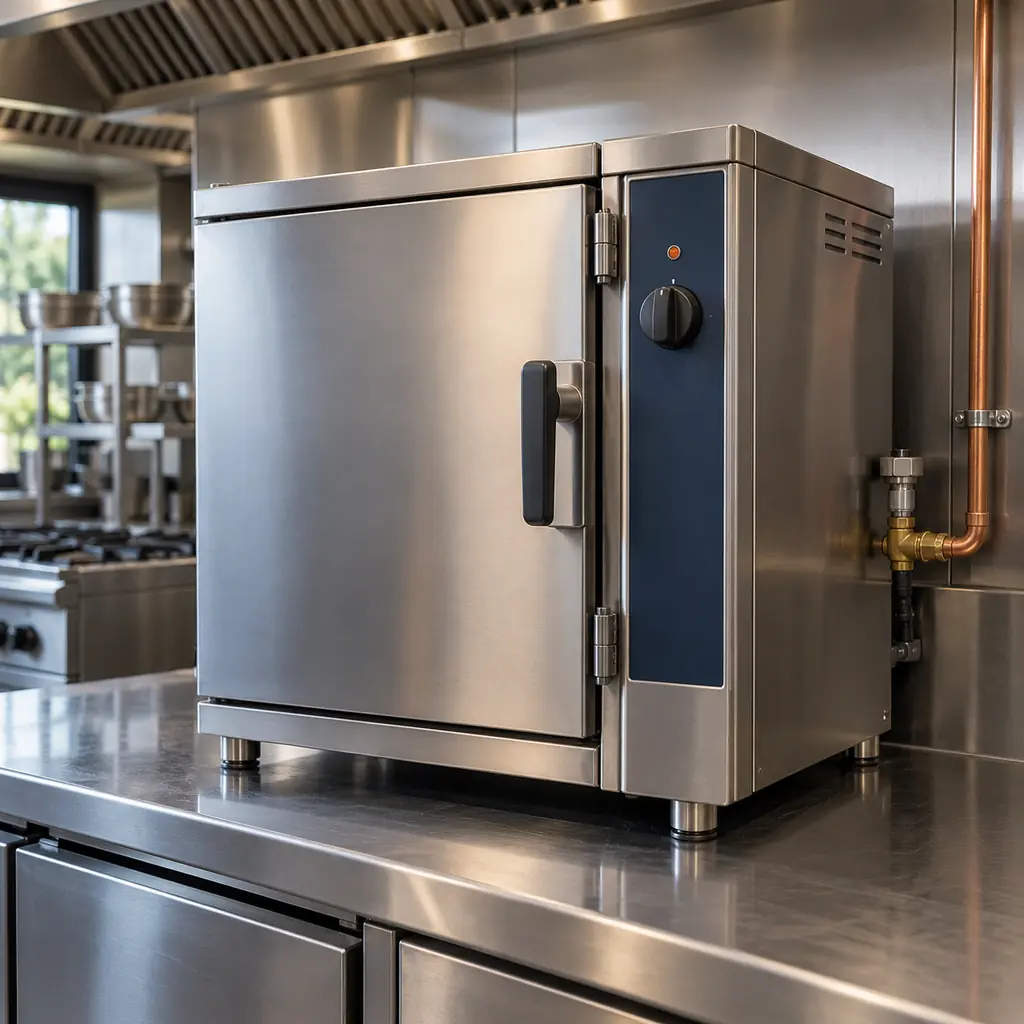
Define Idle Mode and the Water Boundary
For this audit, idle means a documented period when the steam cooker is ready for the next cooking task but contains no food. Record the actual control setting rather than relying on the word “on.” Automatic standby, an energy-saving setting, and an empty compartment left steaming continuously can produce different results. Treat each as a separate state. Also state what the meter measures: the appliance’s complete dedicated water supply, selected branches, or a shared supply. A precise rate with an incomplete boundary is still an incomplete result, particularly when the cooker receives steam from equipment elsewhere in the building.
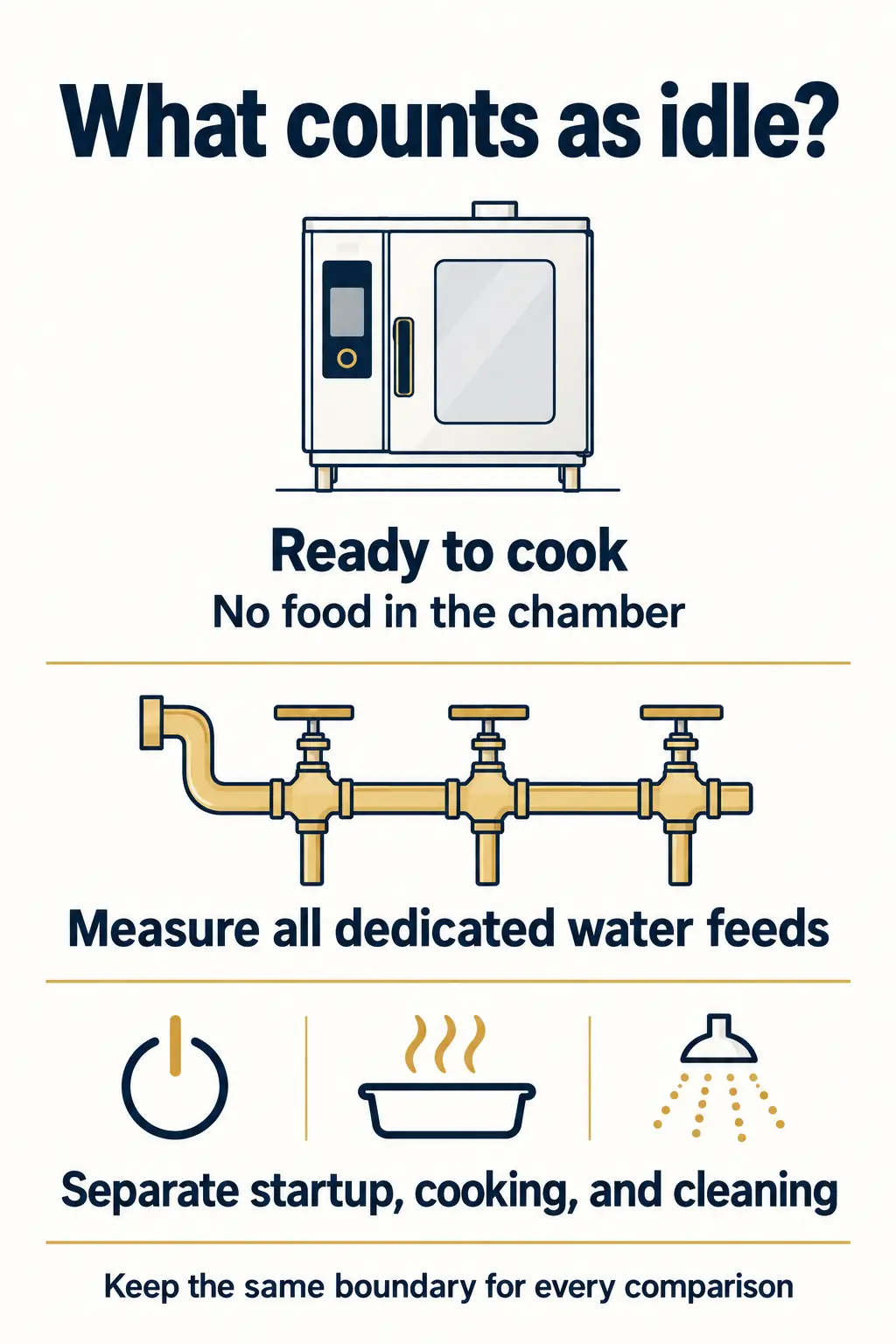
Separate the operating states
Build a short service timeline before choosing intervals. Record when the equipment starts, when batches enter and leave, when settings change, and when shutdown or cleaning begins. Do not create a test gap by interrupting food production or treating food-holding time as empty idle time.
| State | What the observation represents | How to use the result |
| Fill and preheat | Initial water addition and heating before readiness | Record as a startup event |
| Active cooking | Food being processed at a recorded load | Compare at equivalent output |
| Ready or standby | No food; documented readiness setting | Establish the idle baseline |
| Empty constant steam | No food; cooking control remains active | Record separately as an operating practice |
| Shutdown and drain cycle | Required transition after stopping | Record as an event, not steady idle |
| Cleaning or descaling | Maintenance-related water use | Track separately at its actual frequency |
Trace the water before reading the meter
EPA’s commercial steam-cooker guidance explains that boiler-based equipment can receive steam from a built-in generator or a central boiler, and that condensate-cooling water may continue during standby. Boilerless does not necessarily mean connectionless: some reservoir designs refill automatically, while connectionless units are filled manually.
For the hotel’s audit, sketch the actual supply arrangement and mark the meter positions. Include separate generator-feed and condensate-cooling branches when they serve the cooker. Add the measured volumes of independent branches, but never add a parent meter to a child meter that it already includes. Record water-treatment reject or regeneration water separately when it falls outside the appliance meter. Use the same inclusion rule for the existing and proposed equipment.
For a central-steam installation, a meter on the local cooling-water connection cannot establish total water use. EPA’s boiler and steam systems guidance relates boiler makeup to condensate losses and blowdown. A shared boiler meter also serves other loads. Have a qualified engineer define a defensible allocation or report the cooker result as local water only; do not present an unallocated building total as steamer consumption.
For a manually filled reservoir, no inlet flow during idle does not prove no water consumption. Water can be drawn from stored inventory and replenished later. Track additions over a representative cycle with comparable starting and ending levels, including the refill associated with the observed use. If inventory cannot be reconciled safely using the manufacturer’s procedure, flag the interval as unsuitable for a reliable consumption estimate.
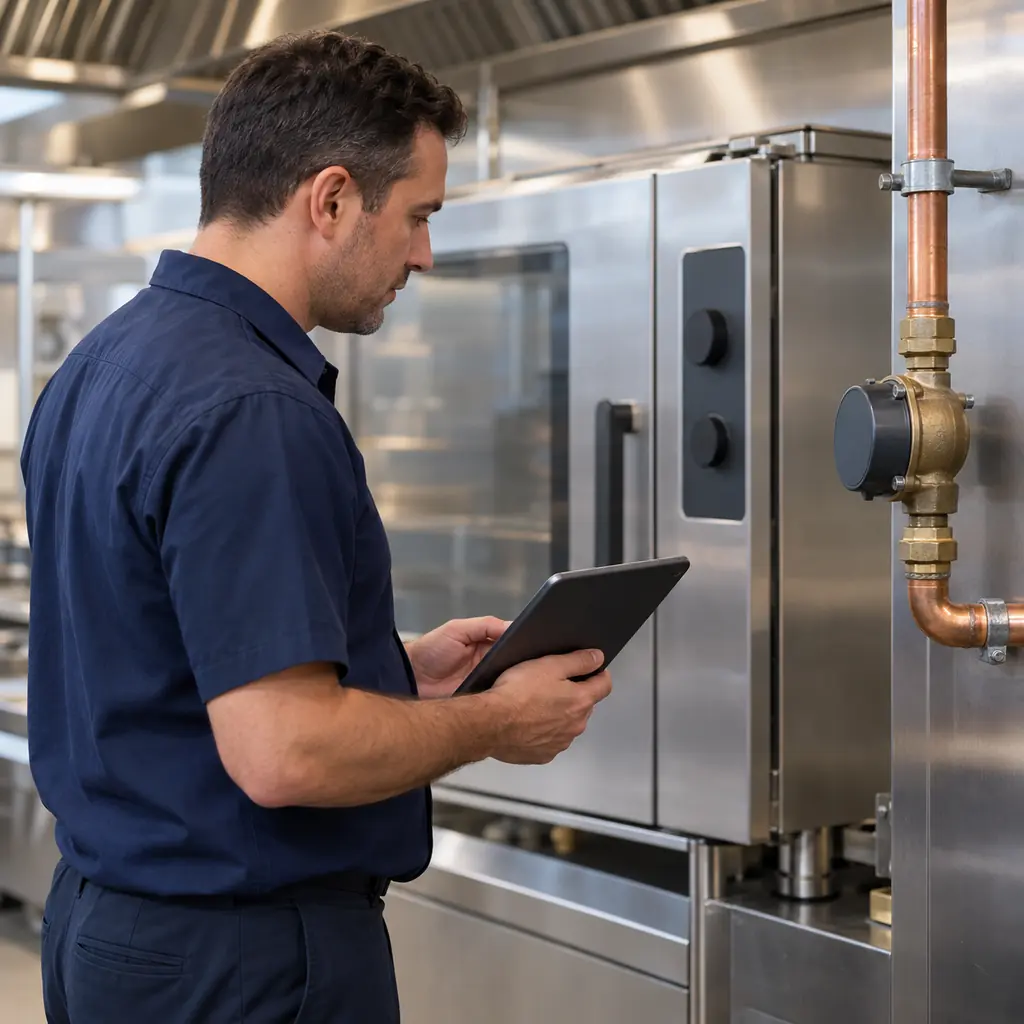
Measure Idle Consumption During Real Service
Use a suitable installed totalizing meter, or have qualified personnel select and install temporary equipment for the application. Observe the cooker in its normal approved operating condition without altering cooling flow, disconnecting drains, opening service covers, or bypassing controls. Start after the selected readiness state has stabilized and the previous transition has finished. The observation must last long enough to capture representative refill or cooling cycles and a measurable change in the register. Repeat across the service gaps that matter to the hotel, keeping operating mode and water boundary consistent within each comparison.
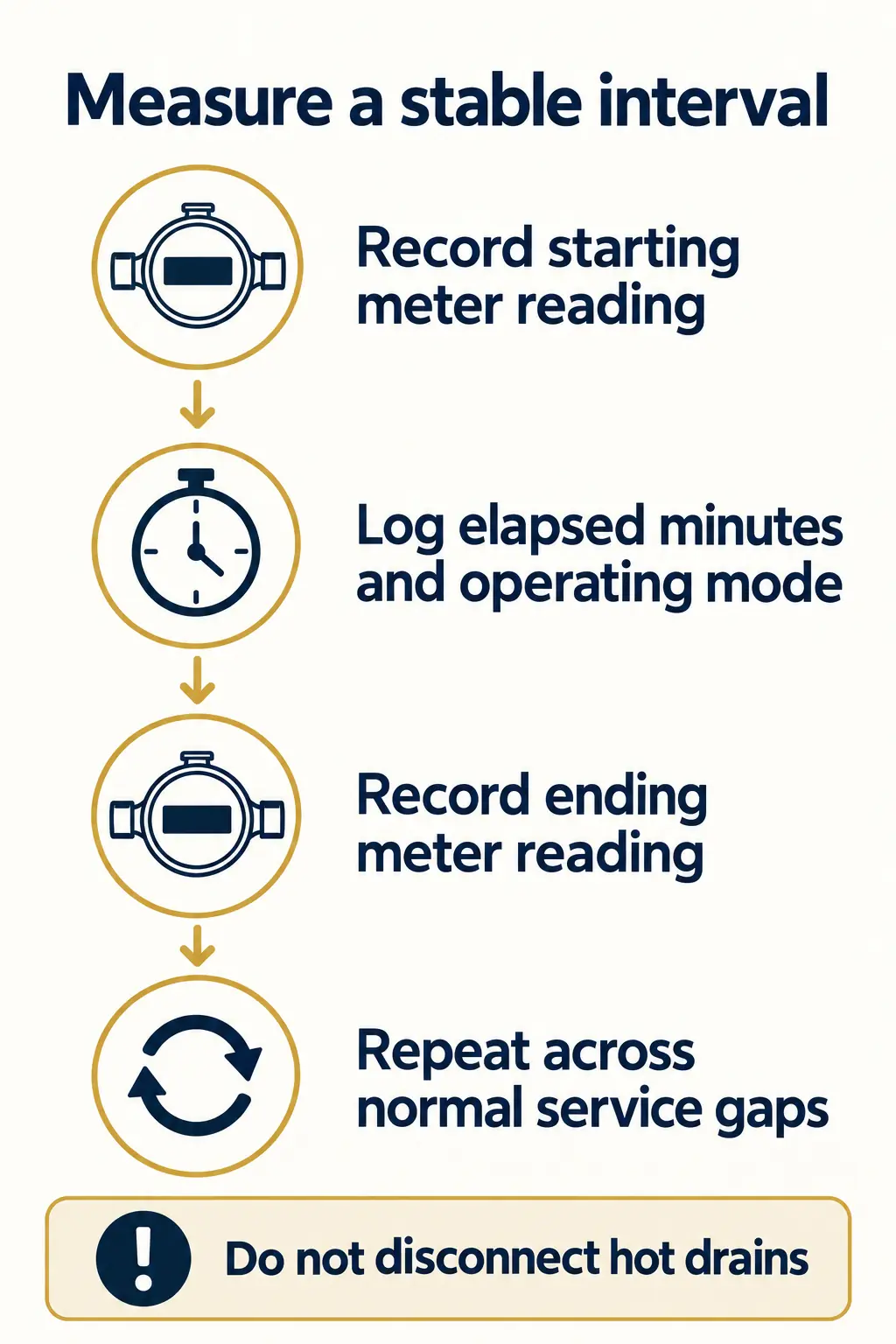
Make the instrument fit the question
EPA’s metering and submetering guidance describes how meter technology and application affect accuracy, including low-flow performance and suitability for hot water. Ask facilities personnel to verify the expected flow range, register resolution, pipe conditions, temperature rating, and calibration status. A portable clamp-on instrument is useful only if it can measure the actual installation and low-flow range adequately.
Do not confuse display resolution with accuracy. If a register changes only in one-gallon increments, a short unchanged reading cannot establish a small idle rate. As an illustration of resolution alone, one gallon over 15 minutes corresponds to 4 US gal/h. That display is too coarse to support a precise claim of 0.2 US gal/h from such a short test. Extend the interval or use a more suitable instrument; report “below the measurement capability of this setup” when justified, rather than automatically recording zero.
Run the observation
1. Identify the exact model and suffix, steam source, enabled compartments, water treatment, and meter boundary. Record the meter units and the operating manual used.
2. Agree with the kitchen team on a real no-food interval. Set the approved readiness mode and use the manufacturer’s prescribed door position. Record these conditions so the next test can match them.
3. Once the transition has ended, record the cumulative start reading and time for every independent supply meter. A timestamped photograph can reduce transcription errors.
4. Observe without changing controls. Note refills, cooling cycles, door openings, setting changes, and any unexpected demand. If cooking restarts, close the idle interval immediately or classify the mixed interval separately.
5. Record the end readings and elapsed minutes. Check whether reservoir inventory is comparable at both ends; a refill deferred beyond the end can understate consumption.
6. Repeat during representative breakfast, banquet, or between-service gaps. Retain each interval, including excluded observations and the reasons for exclusion.
A 30- to 60-minute window can be a practical starting point where operations permit it. This is an editorial suggestion, not an ASTM or ENERGY STAR requirement. Use a longer window when cycling or register resolution demands it. For a kitchen with only short gaps, record several complete gaps and transitions separately instead of manufacturing an unrealistic long standby period.
Keep enough context to interpret the result
Each record should identify the date, appliance, meter, units, control mode, enabled compartments, door condition, start and end readings, elapsed time, and observed events. Add the previous activity, water-boundary notes, and whether the observation was accepted. Preserve pre-repair and post-repair readings as different groups. Never average standby and constant-steam observations together and label the result as one model’s standby rate.
A model-specific example shows why transitions matter. The Vulcan C24EA Series manual describes an approximately 15-minute generator drain cycle and requires power to remain available after switching the appliance off for that cycle. It also gives a particular idle door-position instruction. These details apply to the covered models; verify the instructions for the hotel’s exact equipment. Flow immediately after shutdown is not automatically evidence of a leaking valve.

Calculate Annual Water Use and Replacement Savings
Calculate the idle rate from accepted observations of the same operating state, then apply it only to the hours the hotel actually spends in that state. Keep the measured rate, estimated schedule, and assumed future performance visibly separate. A replacement estimate is strongest when the proposed unit has comparable measured data under the same boundary and readiness conditions. When those data are unavailable, use a clearly labeled scenario and show how the result changes with the assumption. Do not convert a supplier’s general operating-water figure into an idle-water measurement simply because both are expressed per hour.
Calculate the interval rate and combine observations
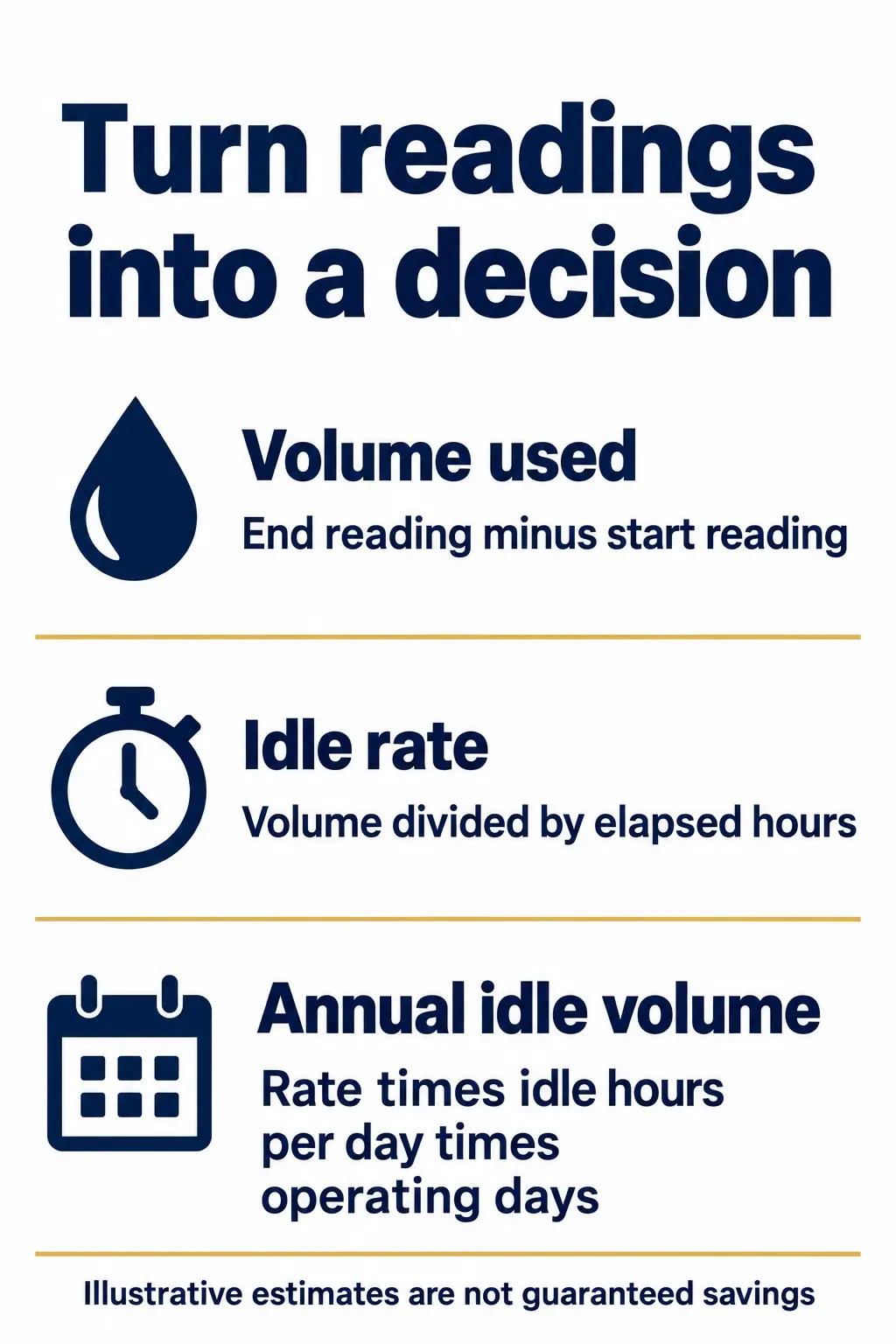
Observed volume = ending cumulative reading − starting cumulative reading.
Idle rate in US gal/h = observed US gallons ÷ (elapsed minutes ÷ 60).
Sum volumes from independent inlets covering the same observation before dividing by the elapsed hours. For repeated accepted intervals of the same state, use total volume divided by total observed hours. This weights the result by duration. A simple average of interval rates can distort the baseline when a five-minute observation receives the same weight as a one-hour observation. Preserve separate state averages when settings or enabled compartments differ.
If the meter reads liters, divide by 3.785411784 to obtain US gallons. One US gallon is approximately 3.785 liters; one cubic meter is approximately 264.172 US gallons. Do not mix US and Imperial gallons. A negative register change is invalid unless a documented rollover or meter reset has been properly reconciled; it is not a negative consumption credit. A zero-length observation can never establish a consumption rate.
Work through an illustrative comparison
The following numbers demonstrate the calculation. They are not measurements from a KW Hospitality project, a manufacturer performance claim, or a typical hotel benchmark. Assume a suitable dedicated meter covers all local water feeds, inventory is comparable, and the current machine is in stable standby.
| Input or calculation | Illustrative value |
| Start and end meter readings | 1,200.0 and 1,204.5 US gal |
| Water used during the interval | 4.5 US gal |
| Elapsed time | 30 minutes = 0.5 hour |
| Existing idle rate | 4.5 ÷ 0.5 = 9.0 US gal/h |
| Assumed candidate idle rate | 1.5 US gal/h; hypothetical, to be verified |
| Idle schedule for both alternatives | 5 hours/day × 360 days/year |
| Existing annual idle volume | 9.0 × 5 × 360 = 16,200 US gal |
| Candidate annual idle volume | 1.5 × 5 × 360 = 2,700 US gal |
| Estimated annual idle-water reduction | 13,500 US gal, approximately 51.1 m³ |
| Assumed combined marginal water/sewer price | $12 per 1,000 US gal, in one chosen currency |
| Illustrative annual water/sewer saving | 13,500 ÷ 1,000 × $12 = $162 |
The 1.5 US gal/h assumption is not an ENERGY STAR idle-water limit. At only two idle hours per day, with all other example inputs unchanged, the estimated reduction falls to 5,400 US gallons and $64.80 per year. This sensitivity shows why the hotel’s idle schedule is as important as the difference between machine rates.
Separate idle savings from the whole business case
For different day types, calculate rate × idle hours/day × operating days/year for each group and add the results. Weekday breakfast service and seasonal banquet days need not share one schedule. If the new operating plan reduces idle hours, use each alternative’s own hours and include any additional restart events elsewhere in the comparison. Do not claim schedule savings twice by also subtracting those same gallons as a separate improvement.
A whole-appliance annual estimate adds active cooking, startup, shutdown, and cleaning water to idle water. Use comparable accepted food output for cooking and count event volumes at their real frequency. If a full-day meter total already includes those events, do not add them again. Likewise, treatment losses or shared-boiler consumption belong in the total only when consistently measured or defensibly allocated.
Apply the marginal water and wastewater charges the hotel would actually avoid. Fixed charges may remain unchanged; sewer credits, billing units, and tariff tiers can alter the result. Energy savings require separate electricity, gas, or steam data. Water-only simple payback equals the incremental installed investment divided by positive annual water/sewer savings, but it is not total project payback. Include maintenance, treatment, labor, readiness, and useful remaining life in the wider decision.
The downloadable workbook provides a meter log, a separate hypothetical example, and editable comparison inputs. It supports the calculations above without replacing the need to validate the operating state and measurement boundary.
Choose Repairs, Controls, or Replacement
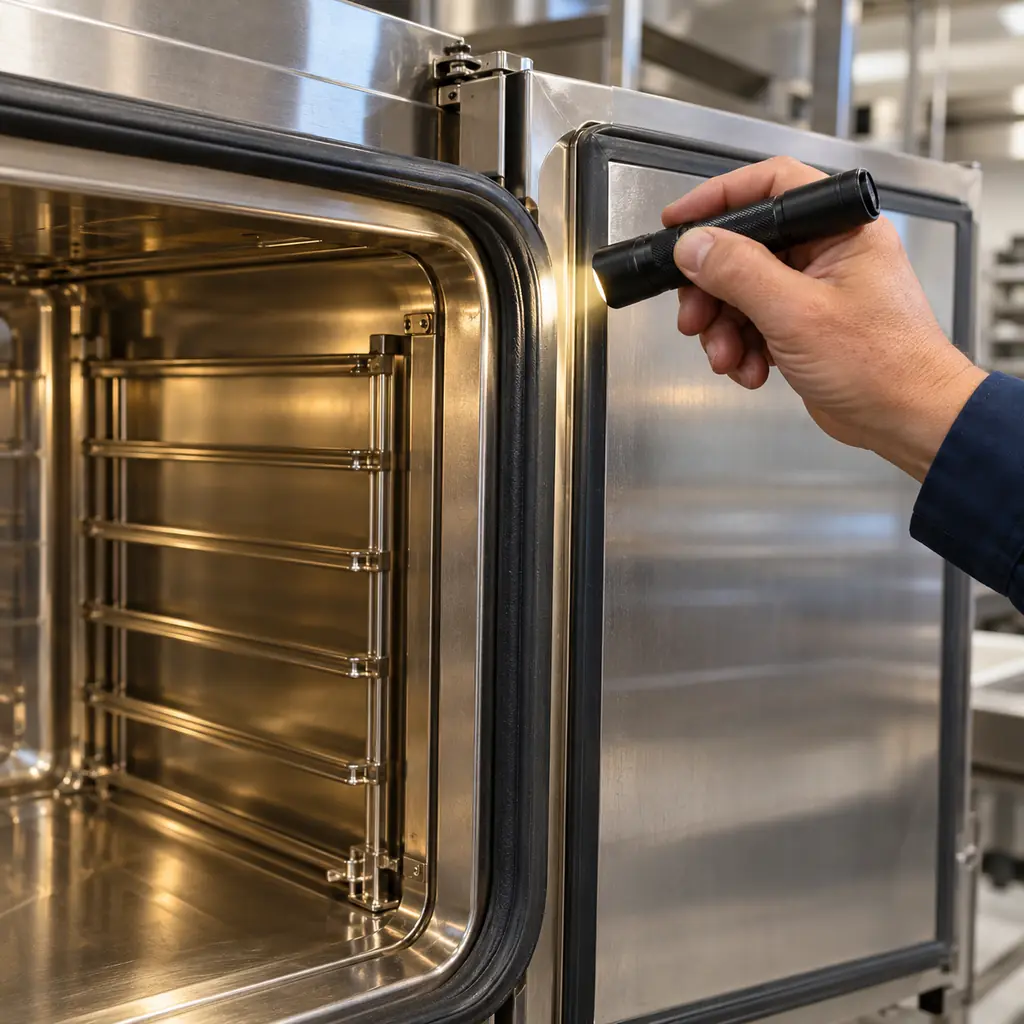
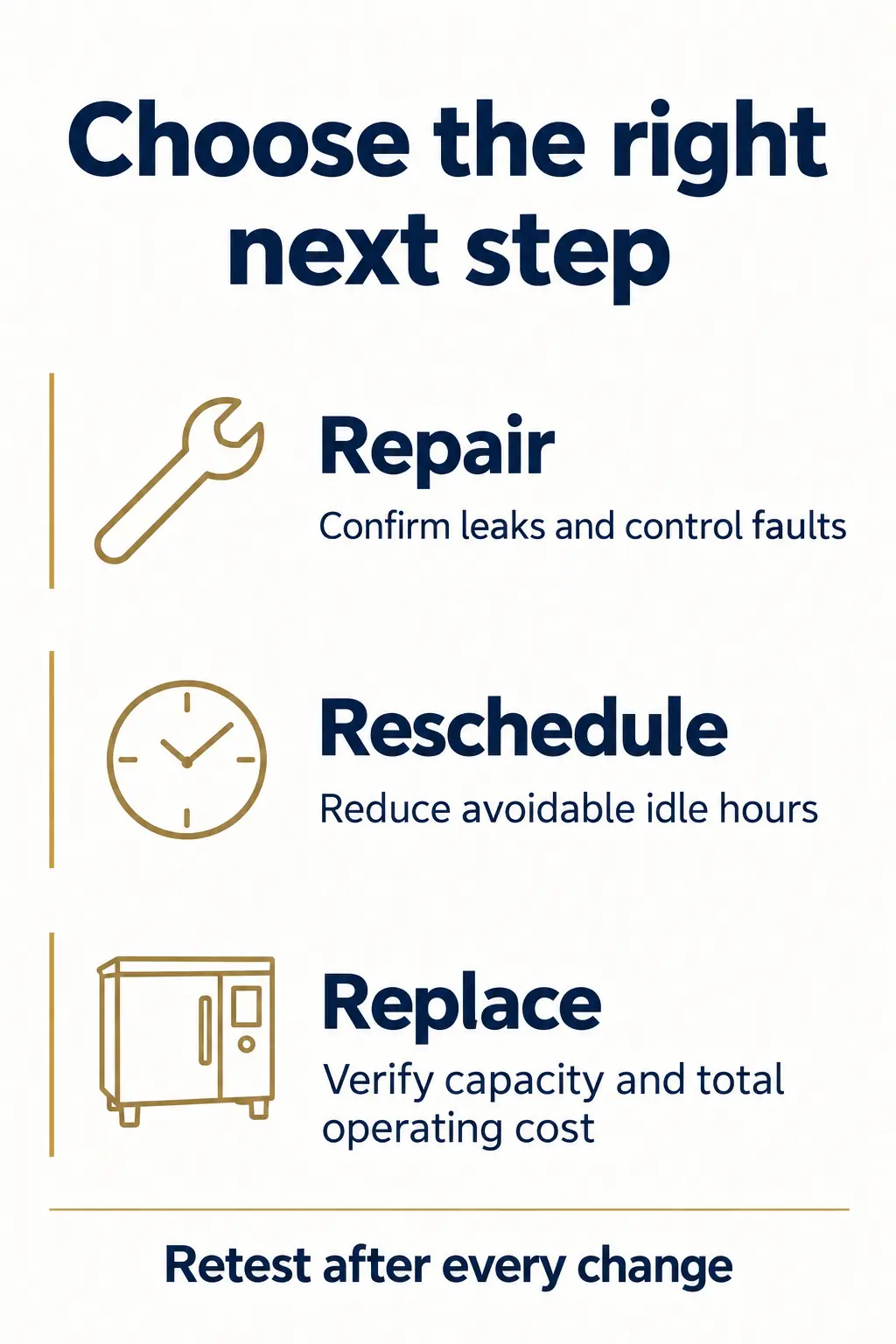
Use the measured baseline to decide what to investigate next, rather than imposing one universal replacement threshold. The same idle rate can have different consequences in kitchens with different operating hours and service requirements. Investigate abnormal behavior, test approved scheduling changes, and obtain comparable candidate data before committing to equipment. Keep each intervention’s result separate, and repeat the observation after service so procurement can compare replacement against a realistic maintained baseline. The purchase decision should preserve required food output and readiness while accounting for the full installation and operating costs relevant to the hotel.
Match the finding to the next action
| Finding | Useful next action | Evidence needed before deciding |
| Long empty periods in constant-steam mode | Review approved timer and standby practices with kitchen staff | Repeated state-specific rates and acceptable readiness |
| New, erratic, or unexplained flow | Request authorized inspection of controls, valves, and operating condition | Exact model instructions and post-service measurements |
| High use after required maintenance | Compare repair, retained operation, and replacement | Same boundary, service schedule, and food output |
| Low local flow but central steam supply | Resolve the omitted upstream water boundary | Defensible allocation or an explicit local-only comparison |
| Candidate lacks credible idle data | Request a demonstration or monitored trial | Documented mode, duration, inlets, and production capability |
Required cooling, flushing, and blowdown should not be reduced simply to produce a better reading. A service technician should distinguish designed operation from a fault. Any scheduling trial must follow the manual and preserve food-process controls; a faster restart cannot be assumed. There may be a worthwhile operating improvement even when replacing the whole appliance is not justified by water savings alone.
Read certification and supplier data in the right units
The current ENERGY STAR Commercial Steam Cooker Key Product Criteria specify cooking energy efficiency and maximum idle energy rates in watts or Btu/h. They do not establish a universal maximum idle-water rate in gallons per hour. ENERGY STAR’s commercial steam-cooker reporting fields list water consumption separately. Ask what operating condition a published water number represents and which supplies it includes before comparing it with the hotel’s field idle result.
Request the exact model and suffix, usable pan dimensions, compartment configuration, and fuel or steam source. Ask for startup and recovery times, peak batch throughput with the hotel’s menu, idle-water data for the intended mode, and active-cooking water data at a stated load. Also obtain the required pressure and water-quality range, treatment requirements, drain and ventilation provisions, service access, utility ratings, and the complete installed scope. A low-water candidate that cannot meet the required production window is not an equivalent replacement.
When reviewing commercial cooking equipment, use the meter log and kitchen schedule to turn a general product inquiry into a comparable specification. For a sourcing proposal, submit a steam-cooker RFQ with the current model, measured boundary and states, peak production needs, available utilities, water-quality information, site constraints, and delivery location. Request the evidence behind any projected savings instead of accepting a percentage alone.
After installation, repeat the baseline procedure at the same boundary and approved readiness condition, then verify actual production and restart performance. Explain differences in enabled compartments, hours, treatment, or menu before attributing the change entirely to the new machine. Keep the commissioning results with the purchase record so the hotel can check performance later.
Conclusion
Measure idle water use before replacing a hotel steam cooker by defining the operating state, capturing all relevant water supplies, and recording enough representative meter data to reveal normal cycling. Convert the result into annual idle volume using the hotel’s real schedule, then compare maintained equipment and candidate alternatives on equivalent service. Keep hypothetical values clearly labeled and separate water savings from energy and other benefits. The most useful outcome is a documented decision: correct an operating practice, investigate a fault, retain the cooker, or buy a replacement whose capacity and measured performance meet the kitchen’s needs.
Frequently Asked Questions
Can the hotel’s main water meter measure one steam cooker’s idle use?
Only when other demand is excluded or quantified well enough to identify the cooker’s contribution. A kitchen meter that also serves a dishwasher or prep sink measures a mixed load. A dedicated suitable submeter is usually more interpretable. If the boundary remains shared, describe the result as shared demand and do not claim appliance-specific savings from it.
Does an unchanged meter reading prove zero idle water use?
No. The display may be too coarse, the flow may fall below the instrument’s reliable range, or a reservoir may refill after the observation ends. Check resolution, low-flow capability, and inventory cycles. A valid zero-flow conclusion requires an adequate measurement setup and representative duration; a short unchanged register alone is insufficient.
Should staff shut off cooling water during the test?
Do not alter required cooling or tempering flow to improve the result. Observe a manufacturer-approved mode and have qualified personnel resolve any suspected control fault. The purpose is to measure safe normal operation. A lower reading obtained by defeating a required function is not an acceptable replacement benchmark.
How many observations are enough?
There is no universal count for this practical audit. Include the operating modes and service gaps that drive the hotel’s annual use, and continue until the observed variation can be explained well enough for the decision. Report the individual intervals and range. Repeat unusual results and collect additional data when a purchase decision depends on a small difference close to the measurement uncertainty.
Should a connectionless model always replace a plumbed steamer?
No. Compare water use over a complete relevant cycle, including manual additions, while checking batch capacity, refill labor, recovery time, and the required production window. A connectionless reservoir can have no inlet flow during idle while still losing stored water. Equipment architecture alone does not establish the hotel’s savings or service suitability.
Can water-only savings justify the investment?
Sometimes, but calculate the hotel’s actual avoidable charges and installed investment first. In the hypothetical example, annual water/sewer savings are only $162 despite a 13,500-gallon reduction. Energy, maintenance, reliability, remaining equipment life, and production performance may materially change the decision. Do not present a water-only calculation as the complete financial result.
References
1. U.S. Environmental Protection Agency — WaterSense at Work: 4.4 Commercial Steam Cookers
2. U.S. Environmental Protection Agency — WaterSense at Work: 6.5 Boiler and Steam Systems
3. U.S. Environmental Protection Agency — WaterSense at Work: 2.1 Metering and Submetering
4. Vulcan — C24EA Series Electric Counter Convection Steamers: Installation & Operation Manual, F37523 Rev. C (4-20)
5. ENERGY STAR — Commercial Steam Cooker Key Product Criteria
6. ENERGY STAR — ENERGY STAR Commercial Steam Cookers Template