
SECTION 1: The Psychology of Luxury in the Modern Hotel Bathroom
In the world of high-end hospitality, the guest bathroom is no longer perceived as a simple functional space designed solely for routine cleansing; rather, it has evolved into a symbolic sanctuary where the hotel’s identity is translated into texture, temperature, fragrance, light, ergonomics, and the deliberate orchestration of micro-moments that communicate comfort, privacy, indulgence, and trust. Today’s luxury traveler—whether arriving from a long-haul twelve-hour flight between continents, transitioning from a boardroom to a quiet weekend escape, or stepping away from an internalized world of digital fatigue—interprets the bathroom not through its objects alone, but through the emotional cues those objects deliver: the smooth glide of a plush oversized towel against the skin, the distinct scent profile of a signature hotel shampoo that smells like a blend of cedar, citrus, and memory, the soft but intentional warmth of a well-set vanity lighting arrangement that makes one feel instantly “put together,” the quiet hum of a high-performance hair dryer that reassures the guest that everything in this property has been selected with thoughtfulness and respect. This emotional dimension is what shapes true luxury. And in the modern era, where guests compare experiences across global portfolios—from Vancouver to Miami, from Montreal to Dubai—hotels must understand that excellence is not only about offering amenities, but offering amenities that feel designed for the guest on a psychological level.
Hotels that master this psychological dimension understand that luxury is delivered through anticipation: the feeling that your needs were understood before you articulated them, the impression that your comfort was engineered into the very bones of the space, and the subtle awareness that the property has invested in materials, products, and systems that elevate not only the experience but also the guest’s relationship with their own wellness. For this reason, modern luxury bathroom amenities must speak to the senses with intentional softness and strength at the same time. They must carry visual refinement without becoming ornamental, and they must embody sustainability without compromising the perception of purity, hygiene excellence, or performance. They must feel artisanal and modern, bespoke yet universal, indulgent but responsible—an increasingly delicate balance in the hospitality sector, but one that defines the current era of premium guest expectations. And for operators, designers, procurement teams, and brand managers, understanding the psychology behind what impresses a sophisticated guest is essential, because the bathroom is often the first private moment a traveler experiences after arrival, and therefore the first environment that silently communicates the true quality of the hotel.
To analyze this psychology more clearly, one can separate the emotional triggers of luxury bathrooms into sensory pillars: touch, scent, light, sound, temperature, and presentation. Each of these pillars contributes to a cohesive moment that feels curated, effortless, and memorable. Touch relates to the materiality of the amenities—the softness and weight of the towel, the density of the robe, the ergonomic comfort of the toothbrush handle, the smoothness of the lotion texture as it melts into the skin. Scent defines atmosphere: whether the property leans toward botanical aromatics, coastal freshness, dark woods, spa-inspired herbal blends, or signature branded fragrances, scent functions not only as an amenity element but as an identity anchor. Lighting affects how a guest sees themselves, and therefore how they feel: poor lighting creates insecurity, while proper lighting elevates confidence. Sound includes not only the insulated quiet of the bathroom itself but also the hum of electrical amenities—luxury is the absence of harsh noise. Temperature influences comfort: heated floors, warm towel racks, ergonomic faucet controls, and thermostatic shower systems all create an environment where guests subconsciously relax. Finally, presentation—the curated placement and arrangement of amenities—tells the guest that their experience has been staged with care, consistency, and cleanliness.
Luxury Expectation Menu — What Today’s Guests Subconsciously Evaluate
(A simple menu-style block to illustrate psychological triggers)
Scent Expectations
A signature fragrance that becomes part of the hotel’s identity
A scent profile that communicates cleanliness and calm
Aromas that avoid chemical or overly perfumed notes
Touch Expectations
Thick robes and high-GSM towels with spa-level softness
Smooth, residue-free lotions and soaps
Ergonomic, high-quality grooming tools
Lighting Expectations
Even, flattering LED lighting
Anti-shadow vanity mirrors
Adjustability for makeup, shaving, and relaxation
Presentation Expectations
Neatly arranged amenities with consistent styling
Clean, unbroken packaging
Zero clutter; refined minimalism
Sustainability Expectations
Refillable bottles without appearing budget
Bamboo grooming sets
Thoughtful reduction of single-use plastics
Technology Expectations
High-performance hair dryers
Anti-fog mirrors
Silent ventilation and seamless heating systems
These expectations reveal an important truth: no matter how architecturally stunning a bathroom may be, it ultimately succeeds only when the amenities themselves reinforce the promise of the hotel. The guest interacts far more with the products than with the tiles or fixtures. The scent of the conditioner, the comfort of the slippers, the feel of the bathrobe—these experiences stay with them. In many cases, guests may not even consciously analyze what impressed them; they simply leave with the impression that “everything felt perfect,” and that subconscious perfection directly drives repeat stays, rave reviews, and premium brand reputation.
For procurement managers, general managers, and hotel owners, this psychological foundation must guide every decision about which amenities to source. Low-cost items send a message of compromise, even when the rest of the hotel is stunning. Overly branded items can feel generic. Cheap packaging weakens the perceived cleanliness. Products that smell overly artificial break the emotional connection. Sustainability applied incorrectly may feel like a cost-saving measure instead of an elevated experience. But executed with proper refinement, sustainable and luxurious amenities—like bamboo toothbrush sets, refillable aluminum toiletry bottles, and eco-certified shampoos—strengthen guest respect and trust, while reducing the hotel’s environmental footprint. This is precisely where KW Hospitality plays an essential role: by guiding hotels toward products that elevate the sensory promise, support sustainability, and maintain procurement efficiency all at once, ensuring that every amenity contributes to the emotional story the property wants to tell.
This is why many leading hotels in Canada and the United States are redesigning their bathroom amenity programs, moving away from random assortments and toward coordinated, cohesive, psychologically intelligent collections that feel premium, intentional, and unmistakably aligned with their brand values. A guest may forget the color of the lobby carpet or the artwork in the corridor, but they will remember the body wash scent, the softness of the robe, the smoothness of the slippers, and the calming experience of their first shower after arrival. These seemingly small sensory interactions carry disproportionate power in shaping guest satisfaction, and therefore demand careful investment.
In essence, the psychology of luxury in the modern bathroom lies in the invisible details that create visible and emotional impact. When amenities whisper quality rather than shout branding, when materials offer calmness rather than clutter, when lighting builds confidence rather than harshness, when sustainability aligns seamlessly with sophistication—then a hotel bathroom becomes a sanctuary worthy of the luxury category. And understanding this psychology is the cornerstone from which all future amenity decisions must flow.
In Section 2, we will explore how luxury hotels craft their toiletry programs, how scent becomes part of a property’s identity, how packaging influences guest perception, and how KW Hospitality helps hotels transition into refillable, sustainable, yet ultra-premium toiletry lines that both impress guests and optimize long-term procurement.
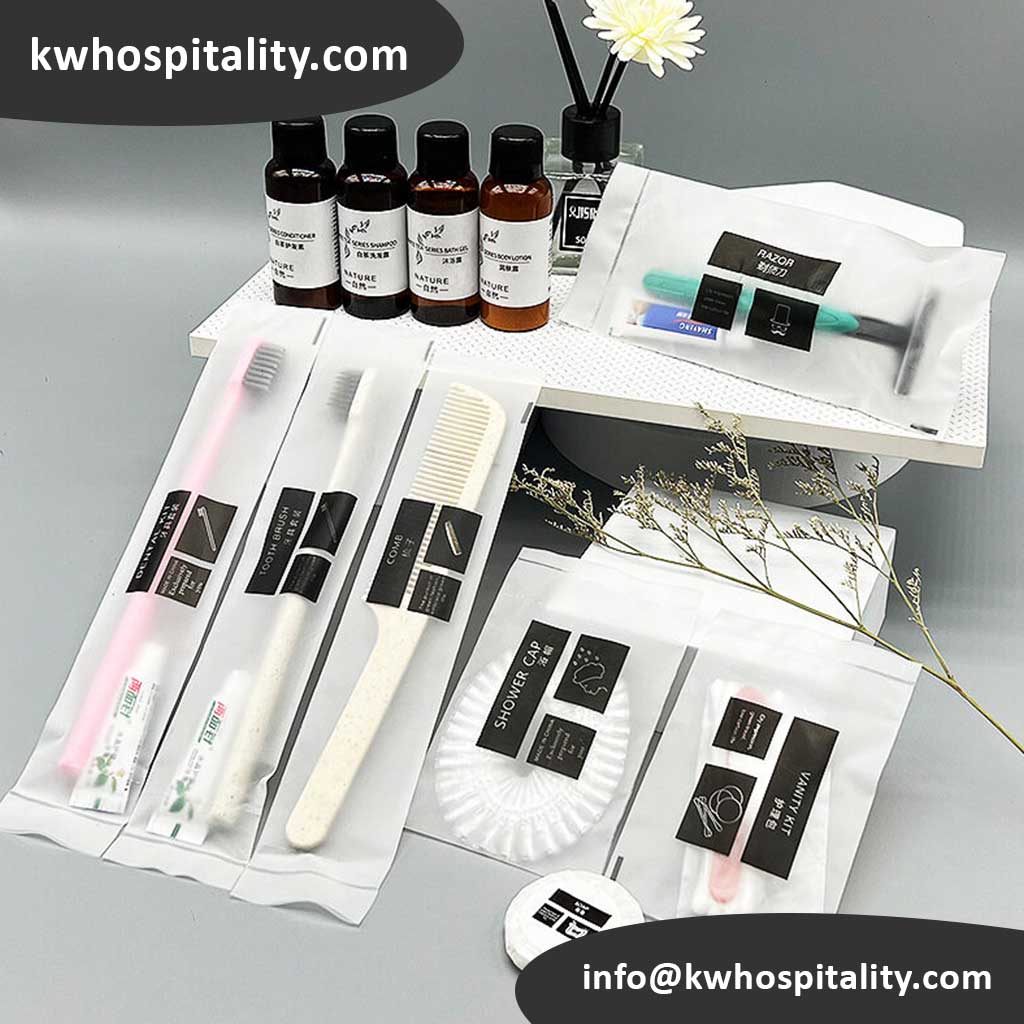
SECTION 2: Signature Hotel Toiletries
Crafting a Memorable Scent & Identity
In the refined world of luxury hospitality, where every touchpoint acts as a silent ambassador of a hotel’s character, the toiletries placed inside the guest bathroom have transcended their utilitarian role and evolved into powerful instruments of emotional branding, sensory immersion, and experiential differentiation. For discerning travelers in cities like New York, Vancouver, Montreal, Los Angeles, or Toronto, a hotel’s toiletry collection is often the first intimate interface through which they begin to interpret the hotel’s values, aesthetic philosophy, cleanliness standards, and overall commitment to guest well-being. Luxury today is not merely about offering “branded” products or high-end bottles; it is about crafting a toiletry experience that is sensual, intelligent, sustainable, and deeply aligned with the story the property wants its guests to carry with them long after checkout. The selection of shampoo, conditioner, body wash, lotions, and soaps must therefore operate on multiple levels at once: they must look exceptional, feel exceptional, smell exceptional, perform exceptionally, and—equally important—uphold the hotel’s environmental promise in a way that still feels indulgent rather than restrictive. This delicate balance is where the world’s leading luxury hotels succeed, blending artistry, chemistry, psychology, and procurement strategy to create toiletry programs that quietly shape guest loyalty.
What many guests may not realize is that the creation of a signature toiletry line is a highly intentional process that involves the coordination of perfumers, cosmetic chemists, brand designers, hospitality procurement teams, operations leaders, and sustainability experts. The very scent that envelops a guest as they step into the shower is the result of dozens—sometimes hundreds—of deliberate selections regarding fragrance notes, intensity, botanical origins, phthalate-free compositions, and compatibility with humidity and steam. The bottle that sits elegantly beside the vanity is the consequence of material studies involving durability, recyclability, opacity, hand-feel, pump torque, refill mechanics, and the visual relationship with the bathroom’s design palette. The formula itself is a fusion of guest expectations (clean but not drying, fragrant but not overpowering, silky but not oily) and the brand’s commitment to ingredient transparency, eco-responsible manufacturing, and global compliance standards. In this way, toiletry amenities are not small, simplistic freebies—they are carefully engineered expressions of luxury.
The Power of Scent in Luxury Hospitality
More than any other sense, scent has the ability to anchor emotional memory. A signature fragrance, when well-chosen, becomes an unspoken extension of a hotel’s personality: subtle yet unforgettable, calming yet distinctive, clean yet sensual. Luxury properties understand that the right scent can transport a guest into a private oasis of serenity after a long day of travel, resetting their emotional state and preparing them for the unfolding rhythm of the stay. A crisp citrus-bergamot blend may evoke modernity, lightness, and coastal freshness, whereas a deeper combination of sandalwood, vetiver, and amber might convey intimacy, warmth, and sophisticated calm. Botanical blends featuring eucalyptus, sage, basil, or white tea often evoke wellness and spa inspiration, which many North American luxury travelers associate with self-care and restorative downtime.
Crafting such fragrances requires expertise: perfumers must ensure that the aromatic molecules remain stable in humid bathroom environments, that the scent doesn’t conflict with housekeeping cleaning products, and that the intensity remains pleasant across diverse shower temperatures. This is why luxury hotels rarely adopt generic fragrances; instead, they opt for expertly formulated blends that subtly whisper the hotel’s identity. Through careful sensory design, the fragrance becomes a branding asset equal in importance to the lobby’s architectural design or the softness of the bedroom textiles. When performed well, a guest can smell a particular shampoo or lotion weeks later and immediately recall the tranquility of their stay—a kind of emotional “souvenir” that hotels rely on to strengthen brand recall.
This emotional resonance is especially important in competitive markets. In cities where dozens of high-end hotels compete for the same clientele, the toiletry scent can become a distinguishing signature—something guests talk about, rave about, and sometimes even purchase to bring home. A Four Seasons guest may remember the herbaceous mint-tea blend, while a Ritz-Carlton guest may recall a refined bergamot-neroli profile. Boutique luxury hotels often collaborate with perfumers to develop custom scents that become part of their brand DNA. And increasingly, hotels in the U.S. and Canada are moving toward sustainable formulations featuring natural oils, cold-process botanical extracts, and biodegradable compounds—ensuring that their sensory identity aligns with modern eco-values.
A Quick Sensory Menu: What the Ideal Luxury Toiletry Should Evoke
Cleanliness
Fresh, natural, non-chemical scent
Silky lather, no residue
Transparent ingredient clarity
Calm
Soft botanical undertones
Balanced essential oils
Spa-like aromatics
Confidence
Packaging that feels premium in the hand
Smooth, even application
No irritation, no heaviness
Identity
A scent guests associate with the brand
A visual design that complements the bathroom
Cohesive storytelling across all toiletry items
Packaging: The Visual Language of Luxury
The packaging of a toiletry product communicates just as strongly as the formula or scent. Luxury hotels understand that guests judge quality through visual and tactile cues—how the bottle sits on the counter, the smoothness of the pump mechanism, the subtlety of the label typography, the weight of the cap, the harmony between colors and bathroom finishes. A bottle that feels light or flimsy instantly undermines a guest’s confidence, no matter how excellent the product inside may be. Conversely, a well-designed bottle creates a sense of calm orderliness and intentional design, reinforcing the impression of a well-operated property.
In the modern hospitality landscape, packaging design involves balancing luxury aesthetics with sustainability commitments. Gone are the days when five-star hotels could display miniature plastic toiletry bottles in rows without raising environmental concerns. Brands in the U.S. and Canada now prioritize refillable systems—reusable aluminum bottles, glass containers with reinforced bases, or PET-R bottles made from high-grade recycled materials. The challenge is ensuring that these refillable bottles still look—and feel—luxurious. This is where KW Hospitality adds value: by helping hotels source refined, sustainable bottles that elevate guest perception instead of diminishing it. Hotels often worry that switching to refillable systems may reduce the sense of indulgence; however, when executed with high-quality materials and elegant design, refillable bottles actually feel more premium, signaling sophistication and ethical leadership simultaneously.
For example, a brushed aluminum bottle with laser-etched branding feels contemporary and upscale, while a matte black refillable PET-R bottle with weighted base communicates modern minimalism. Soft gray typography, textured labels, and subtle embossing support the hotel’s brand language. Sustainability becomes an aesthetic advantage—not a compromise.
Formula Excellence: The Chemistry of Guest Satisfaction
While scent and packaging create the emotional entry point, the formula determines whether the guest leaves the shower feeling refreshed, moisturized, and delighted—or disappointed. Luxury hotels cannot afford formulas that feel cheap, watery, overly perfumed, or drying, because guests associate the performance of toiletries directly with hygiene standards and brand quality. The formula must deliver generously without requiring excess usage; it must lather richly, rinse cleanly, and leave the skin or hair feeling balanced and nourished.
Modern luxury formulas incorporate:
Sulfate-free surfactants that are gentle yet effective
Botanical extracts for hydration and skin tone improvement
Vitamin blends (B5, E) for nourishment
Aloe vera, chamomile, tea tree, or marine extracts
Hydrating oils such as jojoba or argan—but used intelligently to avoid heaviness
Balanced pH for skin sensitivity
Hotels increasingly request vegan, cruelty-free, paraben-free, and silicone-free formulas to meet modern guest expectations. But performance must remain uncompromised. Procurement teams often test 20–30 formulas before selecting the final one, ensuring consistency across various climates, water hardness levels, and usage scenarios.
KW Hospitality regularly supports hotels in this testing stage, providing curated samples, comparative formulation notes, and cost-quality optimization strategies to ensure the final product exceeds guest expectations while also fitting budget projections.
A Helpful Comparison Table: High-End vs. Mid-Range Toiletries
| Feature | True Luxury Toiletries | Standard Mid-Range Toiletries |
|---|---|---|
| Fragrance Profile | Custom-blended, multi-layered, identity-driven | Generic citrus/floral notes |
| Formula | Botanical extracts, sulfate-free, balanced pH | Basic surfactants, simpler formulas |
| Packaging | Refillable aluminum, glass, PET-R, elegant pumps | Basic plastic tubes or bottles |
| Branding | Minimalist, refined, aligned with interior design | Standard hotel logos, simple labels |
| Sustainability | Zero-plastic strategies, refill systems | Partially recyclable packaging |
| Guest Perception | Elevated, memorable, premium | Acceptable but forgettable |
This comparison illustrates how a truly luxurious toiletry program becomes an extension of the hotel’s elevated service culture—something that budget-oriented programs simply cannot replicate.
KW Hospitality’s Role in Toiletry Procurement
KW Hospitality works closely with hotels across Canada and the United States to help them build bespoke toiletry programs that align with their design vision, sustainability goals, and operational realities. By collaborating with high-quality partner manufacturers, KW ensures that hotels receive premium formulas, eco-responsible packaging, reliable supply chains, scalable pricing, and the capability to customize scents, packaging colors, logos, and product configurations. This consultative approach eliminates guesswork and enables hotels to transition into modern luxury standards without operational disruption.
With global guest expectations rising, hotels cannot rely on outdated miniature bottles or generic industrial products. They need toiletry programs that are emotionally intelligent, visually refined, environmentally conscious, and operationally efficient. KW Hospitality ensures this balance is achieved.
Luxury toiletries are more than amenities—they are memory-shapers, brand communicators, and comfort-anchors that influence every guest’s perception of quality. As the industry evolves, hotels that invest in exceptional scent design, sustainable packaging, and premium formulas inevitably rise above the competition and build deeper guest loyalty.
In Section 3, we move from sensory indulgence to technical excellence as we explore: “High-Performance Hotel Hair Dryers & Grooming Technology: Engineering Luxury, Safety, and Guest Confidence.”
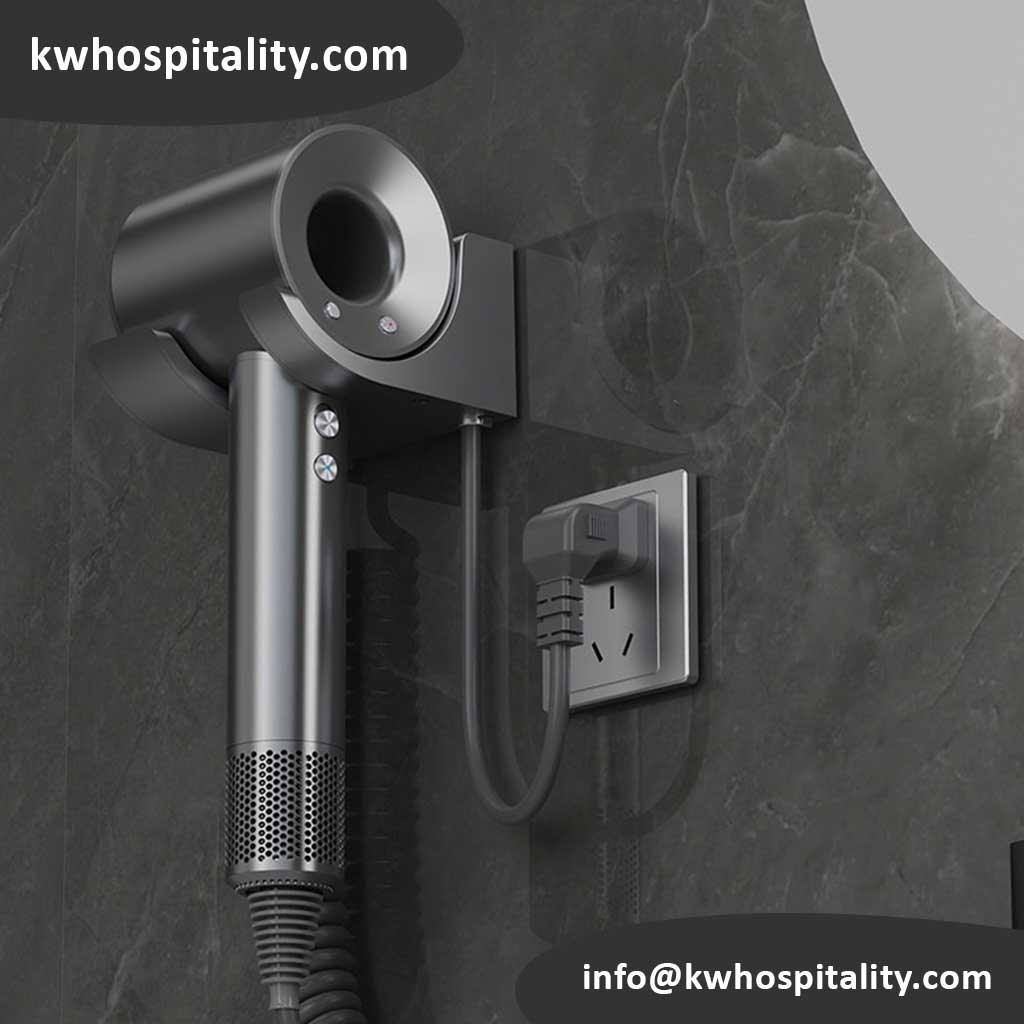
SECTION 3: High-Performance Hotel Hair Dryers & Grooming Technology
Engineering Luxury, Safety, and Guest Confidence
In the refined universe of luxury hospitality—where a single detail can elevate a guest’s sense of belonging or subtly diminish their trust—the hotel hair dryer is one of those deceptively simple amenities that carries far more psychological and experiential weight than most operators realize. While it may appear to be a purely functional device, the hair dryer is often the first electrical product a guest physically interacts with in the private sanctuary of the bathroom, and therefore it becomes an unspoken indicator of the hotel’s commitment to performance, safety, hygiene, and thoughtful procurement. A flimsy, underpowered, loud, or outdated hair dryer communicates neglect; it suggests that the hotel has overlooked the small details, and that—despite the beauty of the lobby or the comfort of the bed—corners may have been cut behind the scenes. Conversely, a well-engineered, high-performance, ergonomically balanced hair dryer instantly communicates excellence, responsibility, and respect for the guest’s time, comfort, and confidence. This is why the world’s most respected luxury properties—from top-tier lifestyle brands in Toronto and Chicago to coastal retreats in Vancouver and Miami—invest in hair dryers that align with their brand positioning, interior design language, and guest profile expectations.
The psychology behind this amenity is surprisingly layered. A guest who steps into a luxury bathroom expects everything to feel harmonious, and the hair dryer becomes part of the tactile narrative. How heavy or light it feels in the hand, how smoothly the airflow switches adjust, how quickly it dries hair without overheating, how quietly it performs, how elegantly it rests in its holster or drawer—these seemingly microscopic details create a subconscious emotional rhythm that either reassures the guest or interrupts their sense of luxury. Many travelers, especially those with long or sensitive hair, have experienced frustration at standard hotel hair dryers that take too long to dry, deliver uneven heat, or feel bulky and awkward to use. For them, discovering a premium, fast-drying, salon-grade device becomes an unexpectedly delightful surprise—one that immediately elevates their mood and solidifies their perception of the hotel’s attention to detail. In this way, the hair dryer becomes not merely a tool, but a micro-luxury that elevates the overall guest experience in ways more impactful than many expensive design elements.
The Technical Anatomy of a Luxury Hotel Hair Dryer
When evaluating hair dryers for luxury properties, it is essential to go beyond wattage and pricing, and instead examine the engineering fundamentals that define true performance. High-end units often incorporate professional-grade AC or advanced DC motors, designed to deliver stronger airflow while maintaining significantly lower noise levels—a crucial factor in ensuring guests feel comfortable using the device early in the morning or late at night without disturbing others. The heating coils are often engineered with tourmaline, ceramic, or ionic technology, which allows the dryer to produce smoother heat that seals hair cuticles, reduces frizz, and enhances shine. This is especially important in North America’s varying climate zones, where humidity, dryness, and seasonal weather conditions can drastically influence hair behavior. A premium dryer must perform reliably in humid cities like New Orleans or Vancouver, as well as in cold, dry climates like Montreal or Edmonton.
Ergonomics also play a central role in defining luxury. A hair dryer designed for professional salons usually balances its weight toward the handle rather than the head, allowing for smoother wrist movement and minimizing fatigue—an attribute that guests easily notice, even if they cannot articulate why the device feels better. Luxury hotels should opt for dryers with anti-slip coatings, intuitive button placement, removable nozzles, and cool-shot functions, because these features represent the operational standards of modern grooming expectations. As these technical elements come together, the hair dryer becomes part of the hotel’s promise of quality, offering not only beauty but also convenience and emotional reassurance.
A Grooming Experience Menu — What Guests Expect from a Luxury Hair Dryer
Fast & Efficient Drying
Strong airflow that reduces drying time by 30–40%
Consistent heat distribution
Ionic sealing for frizz control
Quiet Performance
Motor engineering that minimizes disruptive noise
Gentle hum that does not disturb neighboring rooms
Ergonomic Comfort
Balanced weight for effortless handling
Soft-touch grip
Intuitive button placement
Safety & Durability
Overheat protection
Reinforced wiring and durable ABS or polycarbonate shells
Secure mounting or storage solutions
Aesthetics & Presence
Sleek, modern design that matches bathroom finishes
Refined color palettes (charcoal, pearl white, champagne, matte black)
Subtle branding that feels premium
How Grooming Technologies Influence Guest Confidence
Luxury grooming technology—from hair dryers to beard trimmers, makeup mirrors, straighteners, and even advanced bathroom lighting—is rooted in the emotional psychology of self-presentation. Guests in high-end hotels often prepare for important business meetings, romantic dinners, weddings, conferences, or media engagements. The bathroom is where they transform themselves from tired travelers into confident individuals ready for the next moment of their journey. When the grooming tools provided by the hotel empower them to look polished, refreshed, and composed, their emotional connection to the property deepens. They feel supported. They feel understood. And they feel valued.
A premium hair dryer does more than dry hair—it helps a guest feel put together, which is one of the strongest intangible outcomes a luxury hotel can deliver. This emotional satisfaction translates directly into repeat bookings, positive online reviews, and word-of-mouth advocacy. In contrast, when grooming tools fail to meet expectations, guests may experience frustration, delay, or disappointment—emotions that influence their evaluation of the entire hotel stay.
Sustainability & Energy Efficiency: A New Standard for Luxury Hotels
As North American hotels adopt more assertive sustainability strategies, hair dryers have become part of the environmental conversation. Properties increasingly seek units that offer lower energy consumption, longer lifespan, and responsible material composition. Efficient motors reduce electricity usage; durable housings reduce replacement frequency; and recyclable materials support the hotel’s long-term environmental commitments.
This shift represents an important evolution in guest expectations. Travelers—especially those who prioritize eco-friendly lodging—want to feel that their comfort does not come at the expense of environmental responsibility. Luxury hair dryers can support both sides of this equation when they are sourced intelligently. Lightweight, high-performance models with energy-efficient motors not only align with LEED and ESG initiatives, but also enhance the guest’s ability to experience sustainable luxury without compromise.
Quick Comparison Table — Standard vs. Luxury Hotel Hair Dryers
| Feature | Luxury Hair Dryer | Standard Hair Dryer |
|---|---|---|
| Motor Type | Professional AC / Advanced DC | Basic DC |
| Noise Level | Quiet, engineered hum | Loud, high vibration |
| Technology | Ionic, ceramic, tourmaline | Basic heating coil |
| Drying Time | 30–40% faster | Slower, uneven heat |
| Ergonomics | Balanced, soft-grip, intuitive | Heavy, awkward |
| Durability | 3–6 year lifespan | Frequent replacements |
| Guest Rating Impact | High | Neutral or negative |
KW Hospitality & Engineering a Better Guest Experience
KW Hospitality plays a critical role in helping hotels select grooming technologies that are not only luxurious, but also operationally intelligent. Our KW-1800 Series hair dryers, for example, have been designed specifically for hospitality environments, combining salon-grade performance with safety features, quiet engineering, and customizable color finishes that align with different hotel design narratives. We assist properties in comparing wattage efficiency, noise output, air pressure, long-term maintenance costs, mounting solutions, and sustainability metrics—ensuring that the final procurement decision enhances guest satisfaction while optimizing the hotel’s operating budget.
KW Hospitality also partners with manufacturers capable of producing bespoke finishes, allowing hotels to match their dryers to their design palette—dark charcoal for contemporary properties, matte beige for coastal resorts, brushed silver for urban lifestyle brands, or signature white and gold for high-end boutique hotels. This level of customization transforms the hair dryer from a commodity into a branded asset.
As we move deeper into the anatomy of the modern luxury bathroom, Section 3 has revealed that grooming technologies like hair dryers play an outsized role in shaping guest trust, emotional comfort, and overall perception of sophistication. A hotel that invests in premium grooming tools invests in its guests’ confidence—and few amenities create such an immediate, memorable impact.
In Section 4, we shift our attention to one of the most tactile and emotionally satisfying elements of the luxury bathroom: “Luxury Towels, Bathrobes, and Textiles: The Fabric of Comfort.”
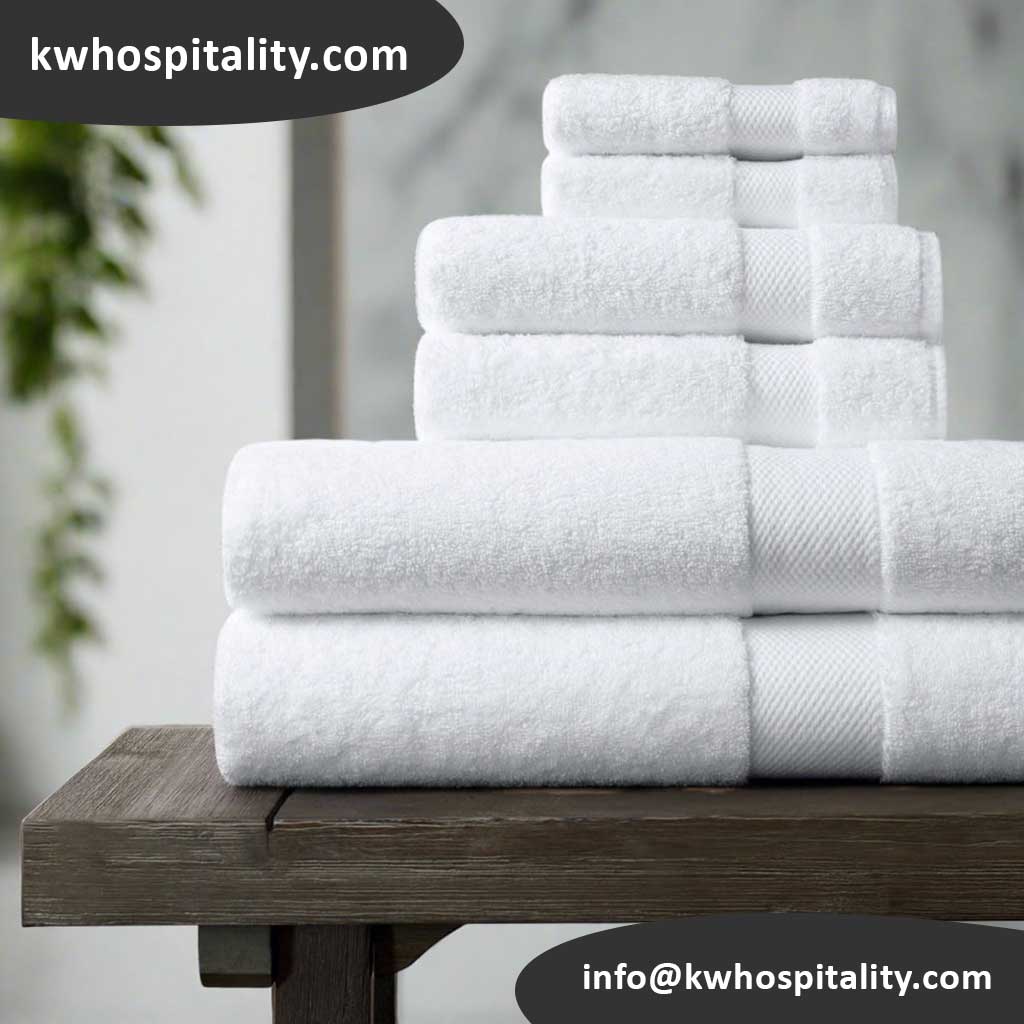
SECTION 4: Luxury Towels, Bathrobes, and Textiles
The Fabric of Comfort
In the quiet intimacy of the luxury hotel bathroom—where light softens against marble veining, where the air smells faintly of botanical shower steam, and where every surface carries the promise of restorative calm—few amenities exert as profound an emotional effect on guests as the towels, bathrobes, and textile elements arranged with understated elegance. While architecture shapes the room and toiletries define its scent identity, it is the textiles that ultimately embrace the guest, quite literally wrapping the body in softness, warmth, and a subtle sense of belonging. For many travelers, the moment they reach for a plush towel after stepping out of the shower, or slip into a perfectly weighted bathrobe that drapes effortlessly across the shoulders, marks the instant they transition fully into “luxury mode”—the moment the hotel experience becomes not merely visual but deeply sensual. And in the hospitality world, where guest loyalty is often built on emotional memory rather than rational assessment, textiles play a surprisingly powerful role in forming long-term brand attachment.
Luxury hotels understand that towels and robes are not simple functional items—they are sensory ambassadors that must communicate quality, hygiene, indulgence, and care. A towel that feels coarse or thin immediately reduces the perceived standard of the bathroom; a robe that is lightweight, stiff, or poorly stitched suggests cost-cutting; linens that degrade after a few washes undermine guest trust and introduce operational inefficiencies. By contrast, a thick, absorbent, cloud-soft towel signals that the hotel has invested in comfort at a granular level; a plush robe with a velvety interior conveys that the guest’s after-bathing ritual matters; matching textiles in complementing tones evoke harmony, cleanliness, and refined taste. These experiences are not accidental—they are the result of thoughtful procurement, precise manufacturing standards, and careful curation of materials, GSM weights, weaving techniques, and laundering durability. And as hotels continue to elevate guest expectations in the U.S. and Canada, textile selection becomes a critical part of the hospitality art form.
The Sensory Science of Towels: What Defines True Luxury?
To appreciate the nuanced role towels play in guest satisfaction, one must understand the delicate science of textile engineering. Luxury towels are defined not merely by softness but by a balanced interplay of GSM (grams per square meter), yarn quality, weaving method, absorbency, hand-feel, and longevity. In premium hospitality environments, towels typically range from 600 GSM to 800 GSM—the sweet spot where plushness meets practicality. Lower GSM towels often feel thin and lack absorption, while excessively high GSM towels may feel heavy, take longer to dry, and become impractical for hotel laundry operations. The ideal luxury towel achieves something special: it feels indulgent without being cumbersome, it absorbs water effortlessly, it maintains structural integrity across dozens of industrial wash cycles, and it retains its softness without excessive pilling.
The weaving method—whether zero-twist, combed cotton, long-staple Turkish cotton, Egyptian cotton, or bamboo-cotton blend—determines the tactile signature of the towel. Zero-twist yarns create an airy, cloud-like softness, while Turkish cotton offers absorbency with an airy loftiness that improves over time. Egyptian cotton, prized for its long fibers, yields a smooth, absorbent texture that feels denser and silkier. Bamboo blends introduce natural hypoallergenic properties, moisture control, and antibacterial advantages that appeal to guests seeking wellness-focused luxury. Each material creates a different emotional nuance: Turkish cotton feels spa-like; Egyptian cotton feels refined; bamboo feels fresh and eco-conscious.
These small differences shape perception in powerful ways. Consider a guest stepping out of the shower with steam swirling around a marble vanity, reaching for a towel that is visibly full, weighty, and inviting. The towel envelopes the guest in warmth; water disappears instantly into the fibers; the texture feels buttery without being slippery; it drapes naturally over the shoulders in a way that signals care, hospitality, and calm. This moment—fleeting yet intimate—is exactly the type of emotional checkpoint that luxury hotels rely on to distinguish themselves from competitors. Towels become a tactile expression of the hotel’s promise.
A Short Textile Experience Menu — What the Guest Should Feel
Comfort
Softness that soothes the skin
Gentle draping and warmth
Zero irritation, even for sensitive skin
Luxury
Plush thickness, not heaviness
High GSM without rigidity
Elegant finishing (hemming, stitching, edge design)
Cleanliness
Bright, consistent white or curated color palette
Fresh scent that signals hygiene excellence
Uniformity across all towel sizes
Efficiency
Quick absorbency
Fast-drying characteristics
Longevity through many wash cycles
Bathrobes: The Silent Signature of Hospitality Ritual
While towels offer a moment of comfort, the bathrobe delivers an entire ritual. In many luxury hotels, the robe becomes the guest’s personal cocoon—the embodiment of ease, privacy, and relaxation. It is what they wear when ordering room service after a long flight, when stepping out onto a balcony, when preparing for sleep, or when moving between the shower and the vanity during a slow morning. The robe’s role is emotional, practical, and symbolic: it allows the guest to feel unhurried, protected, and gently embraced by the hotel’s care.
Luxury robes typically fall into three categories:
Plush Terry Robes — soft, heavy, absorbent, ideal for colder climates or spa-inspired properties.
Waffle Weave Robes — lightweight, breathable, often preferred in warmer climates or modern minimalist hotels.
Velour or Microfiber-Lined Robes — extremely soft and warming, blending luxury with practicality.
The choice of robe type must align with the property’s identity. A mountain resort in Whistler or Banff may choose thick terry robes for warmth and coziness. A beachfront resort in California or Florida might offer lightweight waffle robes for airy comfort. A high-design boutique hotel in Montreal may prefer velour-lined robes with contemporary tailoring for a tailored, fashion-forward experience. Luxury robes often include thoughtful details: double belts, reinforced stitching, piped edges, generous sizing, interior pockets, and high-grade embroidery for discreet branding.
A poorly chosen robe can undermine the guest’s emotional connection to the space; a thoughtfully curated one becomes part of the memory they carry home. Guests frequently purchase robes from their favorite hotels because the robe becomes an extension of the experience—something they want to relive. This is why premium textiles are not operational expenses but revenue-generating branding assets.
Operational Intelligence: Laundering, Longevity, and Procurement
Behind the scenes, the quality of towels and robes is tested not through guest use alone but through the relentless demands of the laundry cycle. Industrial washing, high heat, strong detergents, and frequent rotations challenge textile durability. Luxury hotels must therefore balance guest softness with operational longevity. Towels made from long-staple cotton fibers withstand washing better and retain shape without thinning prematurely. Robes with double-stitched hems maintain structure over prolonged use. Proper GSM selection ensures that textiles do not become overly heavy when wet, minimizing strain on housekeeping teams and machinery.
Hotels in North America increasingly integrate ESG-driven laundry programs, using eco-friendly detergents, lower-temperature washes, and water-saving systems. This aligns cleanly with sustainability goals—but only if textiles are sourced correctly. Cheap textiles deteriorate under eco-laundry conditions, while premium textiles designed for low-impact washing last significantly longer.
KW Hospitality supports hotels in selecting textiles that meet both guest expectations and operational realities. Through partnerships with textile manufacturers capable of producing high-GSM, long-lasting linens with reinforced stitching and eco-friendly fibers, KW ensures that properties receive products that elevate experience while reducing long-term replacement costs.
A Helpful Textile Comparison Table
| Feature | Luxury Towels/Robes | Standard Hotel Textiles |
|---|---|---|
| Material | Turkish/Egyptian cotton, bamboo blends | Basic cotton/poly |
| GSM | 600–800 GSM | 300–450 GSM |
| Softness | Spa-grade, plush, smooth | Thin, coarse |
| Durability | 100+ washes without major wear | Degrades quickly |
| Aesthetic Appeal | Elegant weight, premium stitching | Functional but plain |
| Guest Impression | Memorable, indulgent, comforting | Forgettable or disappointing |
Color, Presentation & the Visual Psychology of Textiles
While most luxury hotels opt for pure white towels and robes—symbolizing cleanliness and universal elegance—many modern properties in Canada and the U.S. are experimenting with muted tones that complement their interior design: sand, charcoal, slate, warm beige, or soft eucalyptus green. When coordinated properly, color adds depth to the bathroom aesthetic and enhances the perceived intentionality of the design. The key is consistency. A mismatched color palette or faded towels immediately disrupts the guest’s perception of quality.
Presentation also matters. The way towels are folded, stacked, or draped influences the bathroom’s visual harmony. Rolled towels evoke spa-like relaxation; flat stacks communicate order; draped towels across the tub invite use. Robes displayed on elegant wooden hangers or placed neatly in open closets elevate their perceived value.
Textiles—towels, bathrobes, mats, and other soft elements—shape the guest experience through warmth, comfort, and tactile luxury. They are more than accessories; they are emotional touchpoints that must be engineered with precision and curated with elegance. Luxury hotels that invest in premium textiles not only enhance guest satisfaction but also reinforce their identity as properties that care deeply about every moment of the stay.
In Section 5, we move from the softness of textiles to the invigorating world of water: “Shower Systems, Water Pressure, and Spa-Inspired Experiences: Engineering the Perfect Bath Ritual.”
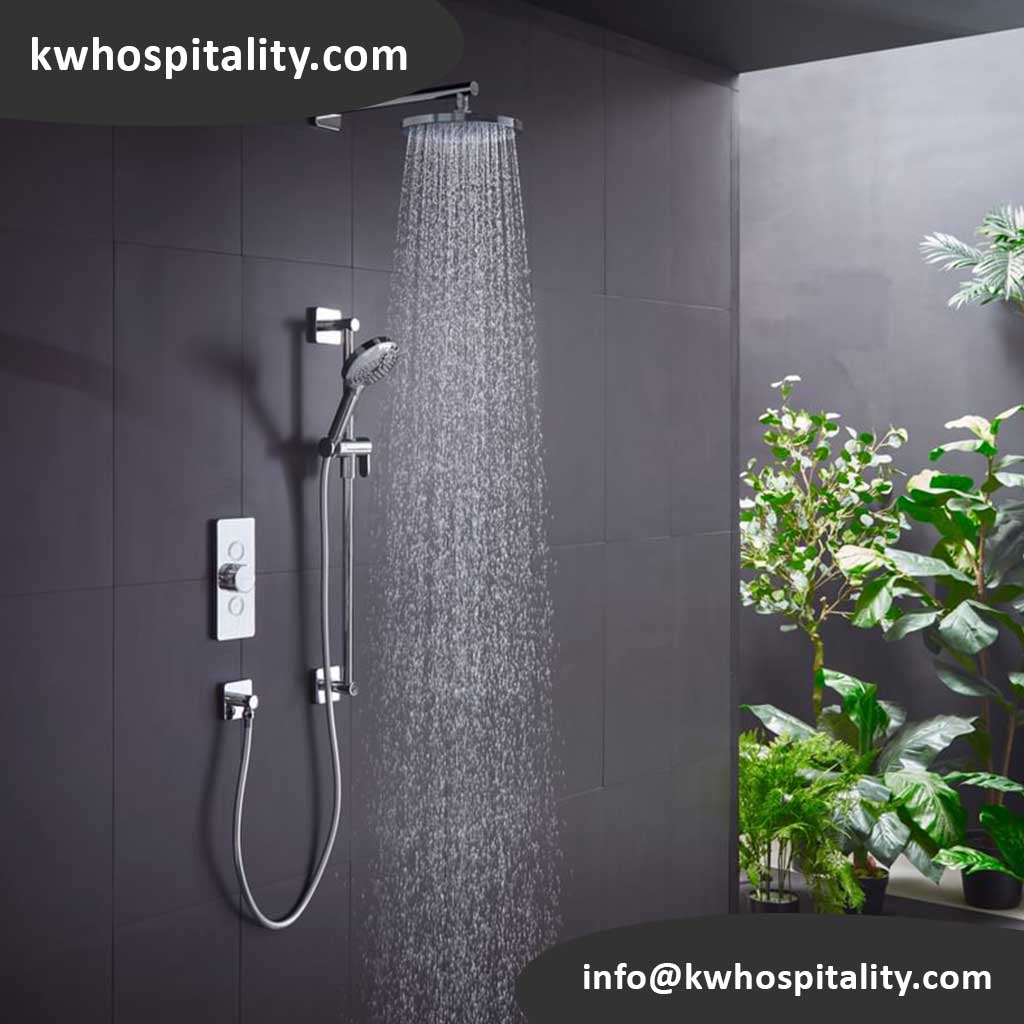
SECTION 5: Shower Systems, Water Pressure & Spa-Inspired Water Experiences
Engineering the Perfect Bath Ritual
Within the refined choreography of a luxury hotel bathroom—where elegant lighting softens the contours of stone, where fragrances from carefully curated toiletries evaporate into the air, and where textiles offer warmth and comfort—the shower becomes the central stage upon which the guest’s most intimate daily ritual unfolds. Unlike other amenities that the guest may examine briefly or appreciate visually, the shower is an immersive, full-body environment that must deliver emotional release, physical restoration, functional reliability, and sensory pleasure with absolute precision. A luxury hotel can have the most breathtaking marble walls, the most exquisite fixtures, and the most high-grade amenities, but if the shower experience feels weak, inconsistent, cold at the wrong moment, too hot too quickly, or acoustically harsh, the entire bathroom experience begins to unravel in the guest’s mind. This is why the shower system—its engineering, hardware, pressure balance, temperature stability, water distribution pattern, acoustic softness, drainage performance, and tactile comfort—is one of the most decisive elements in determining whether a guest perceives a hotel as merely good or unequivocally exceptional.
Luxury travelers today, particularly in North America’s sophisticated markets like Vancouver, Toronto, Chicago, New York, Miami, and Montreal, have grown accustomed to elevated shower experiences that mirror the standards of wellness spas and boutique retreats. They no longer view the shower as a utilitarian box designed for cleansing; instead, they expect a sensory environment that soothes the mind, reduces tension, supports personal grooming, and invigorates the body. They want a shower that draws them in with warmth, embraces them with pressure, and restores them with rhythm—the kind of shower where the world outside the bathroom dissolves for a few precious moments. They expect rainfall heads that mimic nature, handheld sprayers with adjustable modes, thermostatic controls that maintain consistent temperature, and anti-scald protection that ensures safety and reliability. When these elements are executed correctly, the shower becomes a sanctuary, a retreat, a deeply personal form of luxury that significantly influences overall guest satisfaction.
The Emotional Psychology of a Perfect Shower
The sensory journey begins before the water even touches the skin. It begins when the guest first enters the shower enclosure and notices how the water fixtures are arranged, how easily the controls can be reached without stepping fully under the stream, how intuitive the temperature dial feels beneath the hand, and whether the showerhead height and spray orientation align with natural human posture. These design decisions are not random; luxury hotels understand that emotional comfort begins with ease. A confusing or awkward shower system disrupts the pre-relaxation moment—something luxury properties cannot afford.
Once the water starts flowing, the psychological transition into relaxation depends heavily on pressure and temperature stability. Guests associate strong, consistent pressure with cleanliness, invigoration, and satisfaction. Weak pressure signals cost-control, outdated engineering, or infrastructure neglect. Luxurious pressure, by contrast, feels intentional, comforting, and energizing. Temperature stability is equally essential; fluctuations create anxiety rather than pleasure. A properly engineered system maintains the selected temperature without spikes or dips, even during peak usage periods when multiple guests in the building are showering simultaneously.
The emotional dimension extends to sound as well. A luxury shower should not echo harshly or create metallic drumming within the enclosure. It should produce a soft, enveloping water sound that feels peaceful and private. When the water lands on stone or tile, it should create a soothing rhythm—more like rainfall in a quiet forest than the aggressive clatter of industrial plumbing. These details, though subtle, shape a guest’s memory of the property more powerfully than many realize.
Engineering the Experience: The Technical Anatomy of Luxury Shower Systems
Luxury shower systems differ from standard hotel showers not merely in appearance but in the engineering principles that define them. A high-end property typically incorporates:
Thermostatic mixing valves that maintain steady temperature
High-flow plumbing design to ensure consistent pressure
Pressure-balancing cartridges to prevent sudden temperature shocks
Rainfall showerheads engineered with micro-nozzle distribution
Handheld sprayers with multi-mode adjustments
Anti-limescale silicone jets for easy cleaning and long-term performance
Acoustic insulation within the wall cavity to reduce metallic resonance
Rainfall showerheads are especially complex. While many hotels install inexpensive versions that appear luxurious but perform poorly, true luxury rainfall systems distribute water through carefully engineered nozzle grids that simulate natural rainfall. The droplets must be soft, large enough to feel full, yet gentle enough to avoid needle-like sensation. The water volume must feel abundant without being wasteful. The aeration ratio must be precise to ensure coverage without overspray. Guests immediately notice when rainfall heads are engineered properly—they feel enveloped, comforted, and fully immersed in warmth.
Handheld sprayers serve complementary purposes, offering flexible control for rinsing, targeted pressure for muscle relief, gentle modes for sensitive skin, and practical functionality for families or guests with mobility considerations. Adjustable spray functions—pulsating, mist, concentrated stream, and rain—allow guests to tailor their experience, reinforcing the notion that luxury is synonymous with choice.
Water Pressure Menu — What Guests Expect in a Luxury Shower
Invigoration
Strong, consistent water volume
No drops in pressure when neighboring rooms use water
Comfort
Stable temperature from start to finish
Smooth, soft droplet texture
Control
Easy-to-understand handles
Adjustable spray modes
Convenient placement of handheld sprayers
Atmosphere
Quiet operation
Soft acoustics
Visually elegant fixtures
Material Selection & Aesthetic Excellence
Beyond performance, the visual presence of shower fixtures must align with the hotel’s design language. Luxury properties often opt for brushed brass, polished chrome, matte black, brushed nickel, or champagne gold finishes. But aesthetics are only one part of the equation—these materials must also offer corrosion resistance, anti-fingerprint properties, anti-limescale coatings, and long-term durability under high-volume use.
The tactile feel of the controls also matters. Smooth-turn dials, firm resistance, soft-click selectors, and ergonomic handle shapes contribute to the perception of quality. A shower system that feels “stiff,” “loose,” or “cheap” undermines even the most elegant bathroom design.
Hotels that seek longevity must choose fixtures with solid brass or stainless steel internal components. Cheaper alloys corrode quickly, leading to temperature inconsistencies and premature failure. For sustainability-focused properties, water-saving aerators can be integrated—but only when engineered without sacrificing the luxurious sensation guests expect.
KW Hospitality guides properties in selecting fixtures that achieve this delicate balance: indulgence without waste, performance without complexity, elegance without overpricing, and durability without compromising tactile luxury.
Drainage, Floor Engineering & Hygienic Flow
One of the most overlooked aspects of a luxury shower is drainage performance. A beautifully designed shower becomes frustrating if water pools, drains slowly, or splashes across the floor. Proper slope engineering, appropriate drain size, and concealed linear drains contribute to a seamless guest experience. Luxury hotels avoid center drains that visually disrupt flooring; instead, they opt for sleek linear drains integrated along the edge of the shower floor or beneath stone slabs.
Anti-slip flooring must be carefully selected to ensure safety without compromising visual elegance. A successful luxury shower floor feels secure, warm, and refined—not rough, cold, or overly industrial.
Hygiene also plays an essential role. Anti-mold grout, antimicrobial tiles, and easy-to-clean silicone jets ensure long-term cleanliness. Housekeeping teams benefit from surfaces and fixtures designed with cleaning efficiency in mind, minimizing creases or corners where residue can gather.
A Practical Comparison Table: Standard vs. Luxury Shower Systems
| Feature | Luxury Shower System | Standard Hotel Shower |
|---|---|---|
| Water Pressure | Strong, consistent | Weak or inconsistent |
| Temperature Control | Thermostatic, stable | Fluctuations common |
| Showerhead | Engineered rainfall + handheld | Basic fixed head |
| Acoustics | Quiet, soft water noise | Metallic or harsh |
| Material Quality | Solid brass, anti-limescale | Mixed alloys, faster wear |
| Design Integration | Matches interior palette | Generic |
| Guest Impact | Memorable, spa-like | Functional but forgettable |
Sustainability in Water Experiences: A Modern Imperative
Sustainability in shower systems is no longer an optional add-on; it is an expectation among environmentally conscious luxury travelers. Hotels in Canada and the U.S. increasingly seek shower systems that balance indulgent sensory experience with responsible water consumption. Advanced aeration technologies allow systems to create the perception of high-volume flow while using significantly less water. Thermostatic valves reduce waste by reaching temperature faster. Anti-leak cartridges and durable materials extend operational life.
KW Hospitality helps properties navigate this balance by selecting systems engineered for efficiency without compromising guest delight. The future of luxury is sustainable luxury—where resource-conscious design enhances, rather than diminishes, the guest experience.
The shower system represents the heart of the hotel bathroom experience—a multisensory orchestration of engineering, materiality, acoustics, and emotional psychology. When executed with excellence, it becomes a sanctuary of restoration that guests remember long after they leave. When overlooked, it becomes the fastest way to weaken guest satisfaction.
In Section 6, we transition to another intimate and surprisingly influential amenity: “Slippers & In-Room Comfort Apparel: A Small Item With an Outsized Guest Impact.”
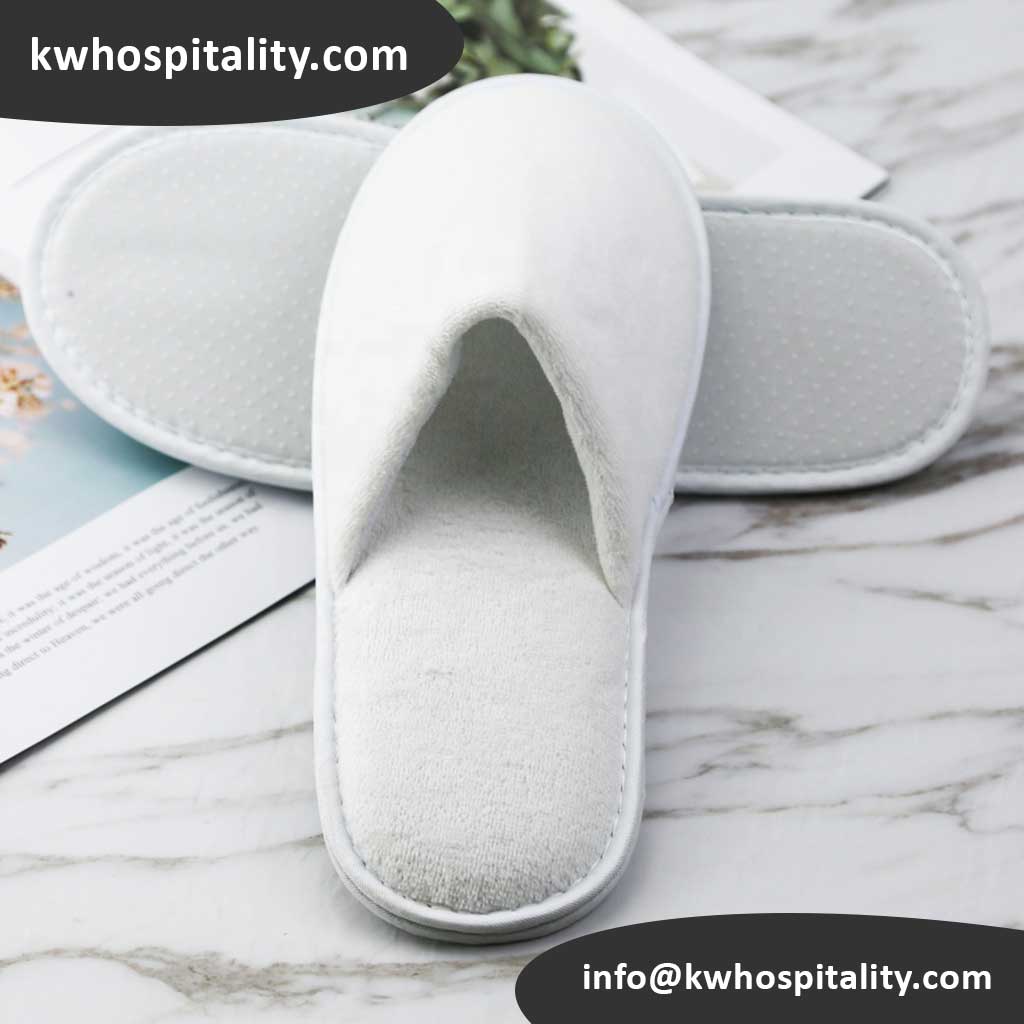
SECTION 6: Slippers & In-Room Comfort Apparel
The Small Amenity With Outsized Emotional Impact
In the refined universe of luxury hospitality, where the smallest gestures often create the deepest emotional resonance, hotel slippers stand as a deceptively simple amenity that profoundly influences guest perception, comfort, and overall satisfaction. While slippers may appear to be mere accessories—lightweight, inexpensive items placed discreetly in the closet or beside the bed—they are, in reality, one of the most psychologically significant touchpoints of the entire in-room experience. This is because slippers act as a bridge between the outside world and the private sanctuary the hotel room represents. The moment a guest slips their feet into a pair of soft, cushioned, perfectly fitted slippers, they symbolically cross into a realm of ease, relaxation, and personal belonging. The body relaxes; the mind softens; the guest begins to feel “at home” within the luxurious narrative the hotel is weaving for them. And in the hospitality industry—where emotional influence is the currency of loyalty—this transition is priceless.
Luxury hotels understand that a premium slipper experience does not begin with the slipper itself, but with the broader emotional psychology surrounding cleanliness, warmth, protection, and thoughtful hospitality. The mere presence of well-made slippers signals to guests that the property respects their comfort at the most intimate level. They communicate hygiene assurance in a way that flooring or cleaning protocols alone cannot achieve. Guests who hesitate to walk barefoot on unfamiliar surfaces suddenly feel liberated. Guests who arrive after long flights find immediate relief for tired feet. Guests who associate slippers with spa environments instantly feel cocooned in calm. And guests who have never before encountered high-end hotel slippers perceive an unexpected layer of indulgence—one that elevates the entire stay.
This emotional impact is amplified by the tactile sensation of the slipper. When a luxury slipper is engineered properly—with plush cushioning, soft terry or velour fabric, sturdy EVA soles, ergonomic width, and reinforced stitching—it creates a sense of enveloping comfort that resonates far beyond the few moments the guest spends wearing it. It becomes a constant reminder that the hotel is thinking about them, caring for them, and anticipating their needs in ways they did not expect. Poorly made slippers, however—thin, flimsy, scratchy, or lacking structure—undermine the emotional architecture of the room. They signal indifference, cost-cutting, and disregard for guest well-being. This is why slippers represent one of the clearest tests of a hotel’s commitment to detail: luxurious slippers tell the guest that the hotel cares about every detail, while cheap slippers send the opposite message.
The Tactile Vocabulary of Luxury Slippers
A guest slipping their feet into hotel slippers is experiencing a series of sensory elements that shape their emotional interpretation of the property. These elements include:
Material softness: Terry cloth, velour, microfiber, bamboo-cotton blends
Inner cushioning: Memory foam, multi-layer EVA, quilted padding
Structural integrity: Firm sole, reinforced stitching, secure toe placement
Warmth: Retention of heat without causing moisture buildup
Fit: One-size-fits-most ergonomics that feel neither loose nor constricting
Each of these details may appear small, but together they create a sensory vocabulary that signals warmth, professionalism, and hospitality intelligence. Guests can instantly differentiate between a generic slipper and a thoughtfully engineered one, even without consciously analyzing the construction. It is an intuitive response, much like noticing the softness of a towel or the clarity of premium lighting.
Luxury slippers should therefore be designed with intention, not merely purchased in bulk. The ideal slipper should feel welcoming from the moment it is touched, lightweight yet structured, soft yet durable, elegant yet understated. It should visually complement the interior palette of the room or bathroom—whether the design theme favors natural woods, muted textiles, marble surfaces, or sleek contemporary finishes.
A Short Comfort Menu — What the Ideal Luxury Slipper Should Deliver
Warmth
Gentle insulation
Soft, cozy material contact with the skin
Comfortable indoor temperature balance
Ease
Easy slip-on silhouette
Sturdy yet flexible soles
Balanced fit for various foot shapes
Confidence
Clean, fresh, and hygienically packaged
No loose threads or thin fabric
Quality visible at first glance
Identity
Subtle hotel branding
Fabric tones that match the room design
Premium packaging that signals care
Sustainability and the Rise of Eco-Friendly Slippers
As sustainability becomes a defining pillar of North American luxury hospitality, the category of slippers—once dismissed as a disposable amenity—has come under renewed scrutiny. Guests are increasingly aware that millions of hotel slippers are discarded annually, and modern travelers now expect properties to adopt responsible sourcing practices without compromising comfort. This shift has led to the development of bamboo slippers, recyclable EVA soles, organic cotton uppers, and minimalist biodegradable packaging. These innovations allow hotels to provide slippers that feel indulgent while still aligning with ESG commitments.
Bamboo- and plant-based fibers offer natural antibacterial properties, softness, moisture control, and biodegradability—making them ideal for eco-luxury environments. Recycled PET fabrics provide durability while reducing waste. Even the packaging of slippers is evolving: many luxury hotels are eliminating plastic wrappers in favor of kraft paper sleeves, cotton dust bags, or elegant banded wraps.
KW Hospitality has played a central role in guiding hotels through this eco-transition, helping properties switch from traditional slippers to eco-designed, premium-grade alternatives that enhance guest comfort while significantly reducing environmental impact. Through partnerships with specialized manufacturers, KW ensures consistent quality, customizable branding, and sustainable materials that still meet the luxurious expectations of guests.
Procurement Considerations: Cost, Longevity & Brand Alignment
Selecting slippers is not simply a matter of choosing a model from a catalog; it requires procurement intelligence. Hotels must consider:
Fabric type: terry, velour, waffle, microfiber, bamboo blend
Sole structure: EVA, rubberized EVA, biodegradable materials
Density: thickness of the cushioning and upper layers
Branding: embroidery, printing, embossed labels
Sizing: universal fit vs. size variations for suites
Packaging: hygiene, sustainability, visual identity
The procurement decision must balance guest expectations with operational realities. Higher-end slippers elevate satisfaction but must also be financially sustainable across the hotel’s occupancy cycles. Cheap slippers reduce upfront costs but degrade quickly, deliver poor guest impressions, and may ultimately increase negative reviews or reduce return rates—far outweighing their initial savings.
KW Hospitality supports properties by analyzing usage volume, brand positioning, guest demographics, and sustainability strategies. Through this process, KW helps hotels develop a slipper program that integrates beautifully into their brand while maintaining long-term cost efficiency and exceptional guest impact.
A Helpful Comparison Table — Standard vs. Luxury Hotel Slippers
| Feature | Luxury Slippers | Standard Slippers |
|---|---|---|
| Material | Terry, velour, bamboo blends | Thin polyester |
| Cushioning | Multi-layer EVA or memory foam | Minimal padding |
| Durability | Strong stitching, structured sole | Wears quickly |
| Comfort Level | Plush, warm, spa-grade | Basic or poor |
| Sustainability | Bamboo, recycled components | Mostly disposable |
| Branding | Embroidered or subtle printing | Generic |
| Guest Impact | Memorable and indulgent | Forgettable or negative |
The Role of Slippers in Suite-Level Luxury
Slippers take on added importance in premium suites, where the emotional expectations of the guest escalate dramatically. In these settings, slippers must feel even more indulgent—heavier, softer, more structured, and often personalized. Some luxury hotels offer upgraded slippers in suites:
Plush double-layer velour slippers
Memory-foam soles
Monogrammed or embroidered designs
Matching robe-and-slipper ensembles
In suite environments, slippers become a hallmark of refinement—a tactile symbol of elevated service.
Although small in size and humble in appearance, slippers represent one of the most emotionally influential touchpoints in the luxury bathroom experience. They soothe, protect, and embrace the guest at their most private moments, silently strengthening their connection to the hotel’s identity and hospitality philosophy. Whether designed for sustainability, comfort, or brand expression, slippers offer hotels an extraordinary opportunity to impress guests in a deeply personal way.
In Section 7, we shift from wearable comfort to the refined artistry of bathroom design accessories: “Bath Accessories: Trays, Tumblers, Tissue Boxes, Waste Bins & the Art of Cohesive Bathroom Aesthetics.”
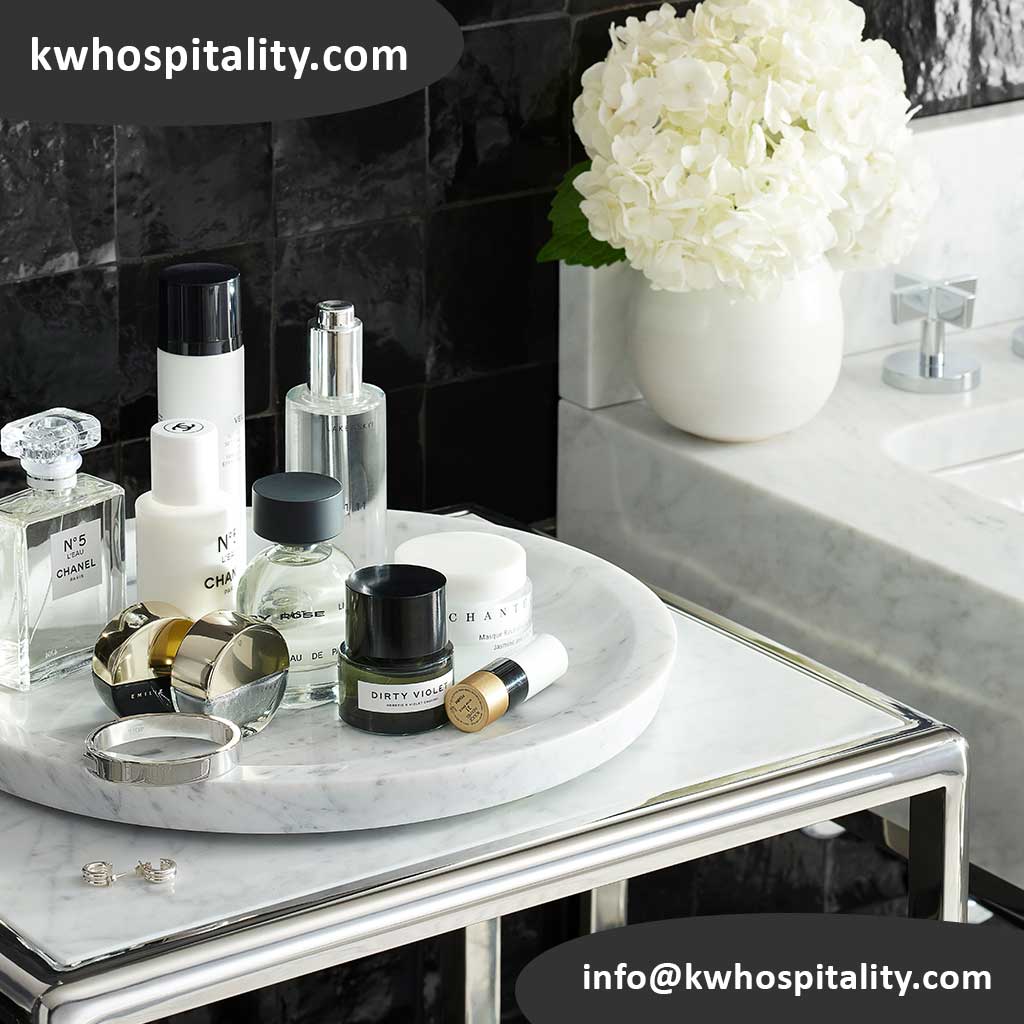
SECTION 7: Bath Accessories
Trays, Tumblers, Tissue Boxes, Waste Bins & the Art of Cohesive Bathroom Aesthetics
In the refined choreography of a luxury bathroom—where scent, texture, lighting, and water converge to create a sensory sanctuary—bath accessories function as the quiet architectural elements that bring visual harmony, functional clarity, and emotional balance to the space. Though often overlooked by inexperienced operators or budget-focused procurement teams, accessories such as amenity trays, tumblers, soap dishes, tissue boxes, dispensers, and waste bins represent the most visible punctuation marks in the bathroom environment. They shape the rhythm of the countertop, guide the guest’s eye, elevate the presentation of amenities, and reinforce the hotel’s design story. A luxury bathroom is not defined solely by marble, glass, or high-end fixtures—it is defined by how thoughtfully every object sits within that environment, how intentionally each accessory integrates with the color palette, how seamlessly the materials converse with one another, and how elegantly the overall composition communicates sophistication, cleanliness, and calm. These accessories—small in size, but monumental in emotional influence—form the aesthetic backbone of the bathroom.
Luxury guests are incredibly perceptive when it comes to design cohesion. They may not consciously analyze every accessory, but they instantly sense when a bathroom feels harmonious versus when it feels disjointed. A mismatched tumbler here, a plastic tissue box cover there, a mass-market waste bin paired with stone countertops—these inconsistencies disrupt the emotional flow of the room. By contrast, when accessories are coordinated in material, finish, silhouette, and placement, they communicate a refined sense of intentionality. A brushed metal amenity tray paired with matching metal dispensers creates visual unity; a leatherette tissue box cover in a warm earthy tone softens the stone environment; a polished resin tray brings modern clarity to a darker palette; matte black accessories provide contemporary contrast in minimalist interiors. These subtle details convey to the guest that the hotel has considered every inch of their environment with care.
More importantly, accessories silently shape the guest’s interpretation of cleanliness and hygiene excellence. When designed elegantly and positioned logically, they help organize the countertop, eliminate visual clutter, and elevate presentation. A toothbrush holder with a refined silhouette communicates sanitation. A structured amenity tray signals order. A discreet waste bin tucked into the right corner suggests thoughtful workflow design. A soap dish with proper drainage prevents residue buildup, reinforcing the perception of cleanliness. The guest may never consciously think about these details, but they absolutely feel them—and that emotional perception becomes part of the hotel’s reputation.
The Material Language of Luxury Bath Accessories
Luxury bath accessories are defined not just by their shape or function but by the material story they convey. Materials in a luxury bathroom must do more than perform—they must express identity, permanence, and sensory appeal. Hotels often choose from the following premium categories, each offering a different aesthetic emotion:
Faux leather (PU or eco-leather): Soft, warm, sophisticated; adds a tactile hospitality feel that pairs beautifully with wooden and neutral-toned bathrooms.
Resin: Sleek, modern, minimalist; ideal for contemporary properties wanting clean lines and high visual purity.
Stone or marble: Evokes durability, timelessness, and natural elegance; perfect for high-end suites and spa-inspired bathrooms.
Stainless steel or brushed metal: Modern, architectural, and durable; aligns with urban, masculine, or high-design properties.
Wood or bamboo: Warm, organic, sustainable; adds spa-like tranquility and natural softness.
Matte black coated metals: Currently a dominant trend in North America; communicates modernity, bold contrast, and luxury minimalism.
Each material carries its own “temperature”—resin and metal feel cool, leather feels warm, wood feels organic—and this interplay contributes to the guest’s emotional reading of the room.
Hotels must choose materials intentionally based on the interior design palette, the brand’s visual identity, and the emotional tone the bathroom seeks to convey. Incoherent material choices, such as mixing resin with low-grade plastic or pairing leatherette accessories with chrome fixtures, weaken the overall design impact. Luxury is not created through expensive materials alone—it is created through consistent materials.
KW Hospitality helps hotels design cohesive accessory collections by selecting materials that match the bathroom’s architectural language while balancing sustainability and long-term durability.
Aesthetic Cohesion Menu — What Guests Subconsciously Expect
Visual Harmony
Matching materials and finishes
No style contradictions
Clean lines and proportional balance
Functional Clarity
Easy-to-locate accessories
Logical positioning
Intuitive use
Hygiene Excellence
Smooth cleanable surfaces
No residue buildup areas
Anti-fingerprint or anti-rust finishes
Personality & Identity
Accessories that match brand themes
Subtle, elegant branding
Distinctive silhouettes that feel premium
Amenity Trays: The Silent Organizers of Luxury
Among all accessories, the amenity tray is the most influential in shaping the countertop’s visual clarity. It frames the toiletries, organizes the presentation, and signals premium curation. When the tray is chosen and placed correctly, it transforms an assortment of products into a curated collection.
Luxury trays should:
Match the bathroom’s material palette
Have reinforced edges and a structured silhouette
Feel weighty but not bulky
Allow enough space for amenities without creating crowding
Include velvet or PU lining to prevent noise and sliding
Hotels often underestimate how powerful a well-designed tray can be. It acts like a picture frame: whatever sits within it immediately feels more valuable.
Tumblers & Toothbrush Holders: Hygiene Meets Design
Tumblers, toothbrush holders, and amenity cups play an unexpectedly emotional role. They are the closest-contact accessory items, meaning guests associate them directly with hygiene. A luxury tumbler must feel stable, clean, and refined. It should have:
A weighted base
Easy-to-clean interior
Hygienic finish (smooth resin, polished metal, or lined leatherette)
A shape that communicates order and cleanliness
Poor-quality tumblers instantly degrade trust. Luxury hotels choose materials that feel pure, durable, and sanitary.
Tissue Box Covers & The Psychology of Cleanliness
The tissue box cover is one of the subtle details that significantly elevates the bathroom. A bare cardboard tissue box breaks the illusion of luxury. A well-made cover:
Conceals branding
Adds color and texture balance
Completes the accessory ensemble
Reinforces the hotel’s identity
Leatherette covers are soft and inviting; resin covers are crisp and modern; metal covers are bold and architectural. Each communicates a different emotional tone.
Waste Bins: The Most Overlooked Luxury Element
A waste bin may seem insignificant, yet it is one of the most visible items in the room. A cheap plastic bin disrupts the luxury narrative more quickly than many hoteliers realize. Luxury waste bins should be:
Weighted and structured
Lined discreetly
Proportional to the room
Easy to clean
Designed with matching materials
A coordinated waste bin anchors the room’s aesthetic integrity. Anything less breaks the illusion instantly.
Comparison Table — Standard vs. Luxury Bath Accessories
| Feature | Luxury Accessories | Standard Accessories |
|---|---|---|
| Materials | Resin, metal, leatherette, stone | Plastic, painted alloys |
| Durability | High, long-term | Prone to wear |
| Aesthetic | Cohesive, elegant | Mixed, generic |
| Hygiene | Smooth, high-grade surfaces | Stains easily |
| Guest Impact | Elevated, memorable | Neutral to negative |
KW Hospitality & Custom Accessory Manufacturing
KW Hospitality collaborates with specialized manufacturers across Asia to produce coordinated bathroom accessory sets tailored to hotel branding, design palettes, and durability needs. This includes:
Custom resin blends
Leatherette stitching and finishing
Color-matched metals
Engraved or embossed branding
Sustainable bamboo accessory lines
Anti-fingerprint coatings
Hotels benefit from cohesive design, stable pricing, scalable production, and long-term supply chain consistency—a luxury that elevates both brand perception and operational smoothness.
Bath accessories are the connective tissue of the luxury bathroom. They bring order, harmony, and emotional balance to the space while revealing the hotel’s design intelligence. When selected with care, they elevate the guest’s perception of cleanliness, refinement, and aesthetic coherence. When overlooked, they quietly unravel the illusion of luxury.
In Section 8, we shift from accessories to one of the most sensorially intimate items in the bathroom: “Luxury Soaps & Solid Bars: Texture, Lather, Fragrance & The Art of Pure Clean.”
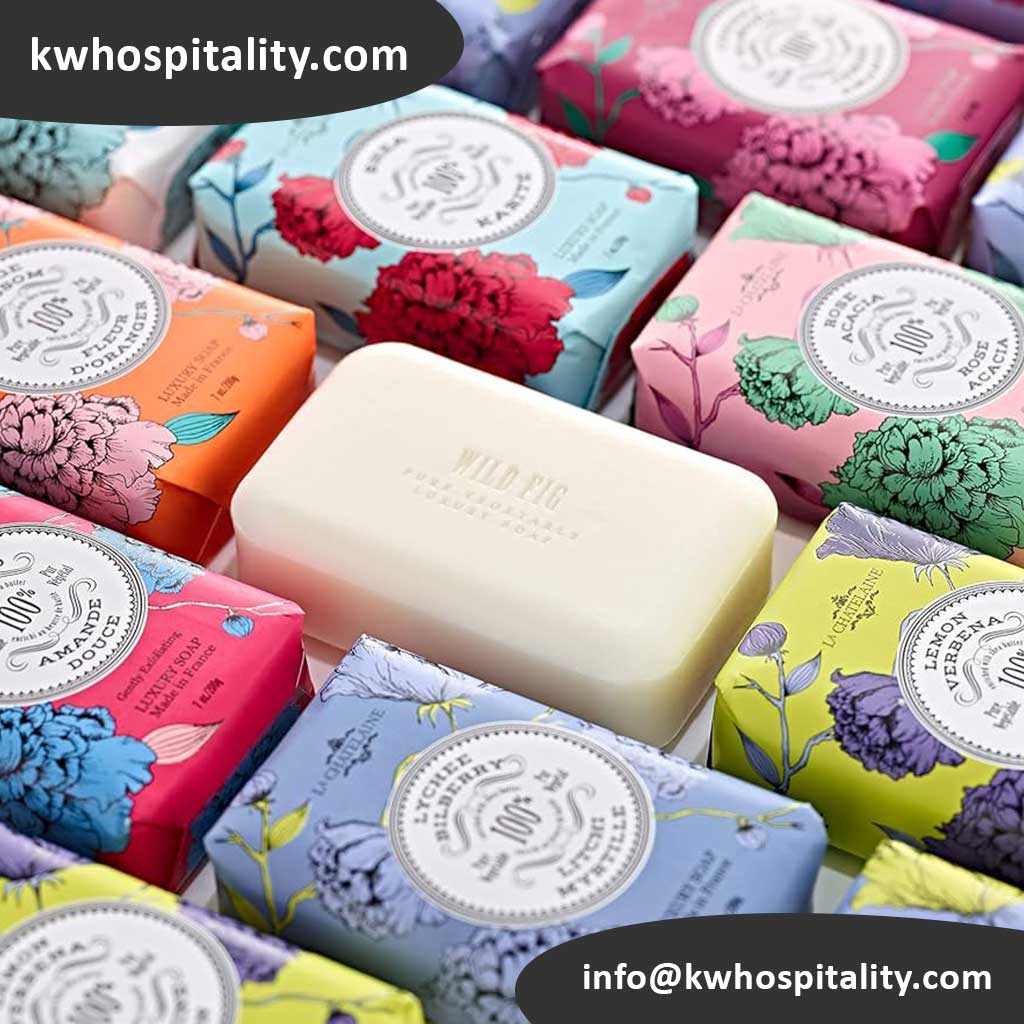
SECTION 8: Luxury Soaps & Solid Bars
Texture, Lather, Fragrance & The Art of Pure Clean
Among all bathroom amenities that a luxury hotel offers, few evoke nostalgia, comfort, sensuality, and purity as profoundly as a beautifully crafted bar of soap. Even in an age where liquid cleansers dominate modern bathroom design, the presence of a solid soap bar—meticulously wrapped, softly scented, elegantly molded, and placed with intention—represents one of the oldest and most intimate rituals in hospitality. For many travelers, receiving a beautifully designed soap bar triggers memories of childhood, home, past vacations, or beloved boutique hotels. It is an object that blends emotional familiarity with refined indulgence. In the luxury sector, soap bars are no longer mere cleansing tools; they are premium guest experiences shaped through fragrance artistry, cosmetic chemistry, tactile sophistication, and branding intelligence. Hotels in North America’s most competitive markets—Montreal, Vancouver, Toronto, New York, Los Angeles, Miami—recognize that guests evaluate the quality of the bathroom not only by the shower system or the toiletry bottles but by the small soap they hold in their hands. This single touchpoint carries immense emotional weight.
The tactile impression of a soap bar is immediate and powerful. A premium luxury soap bar should feel silky yet firm, substantial yet not oversized, elegant in curvature yet ergonomic in hand. When a guest lifts the soap from its tray, they should sense the weight of quality—a density that promises longevity, a smoothness that invites use, and a subtle fragrance that begins to release even before water touches it. The lather must not simply foam; it must feel creamy, enveloping, spa-like. It should glide across the skin with a velvety softness, cleansing thoroughly while leaving the body feeling nourished rather than stripped. The fragrance, often developed with the same care as fine perfume, must bloom softly under warm water, filling the enclosure with an aroma that feels both luxurious and personal. These elements, when harmonized, create a cleansing ritual that transcends functionality and becomes restorative, sensual, and memorable.
Beyond the sensory experience, the visual presence of the soap bar contributes dramatically to the bathroom’s aesthetic narrative. Luxury soaps often feature embossed hotel logos, botanical illustrations, or sculpted silhouettes that evoke design unity with the bathroom’s materials—whether marble, stone, resin, or metal. Thoughtfully designed wrapping—using textured papers, elegant folding styles, wax-sealed bands, tissue paper envelopes, or eco-certified recycled materials—adds a tactile and emotional layer to the experience. Guests subconsciously judge the quality of the hotel’s operations by the care taken in such details. A flimsy, generic wrapper signals cost-cutting, whereas a carefully designed packaging solution demonstrates pride, precision, and brand integrity.
The Sensory Science Behind a Premium Luxury Soap Bar
Luxury soap-making is an art form rooted in chemistry, fragrance design, and material engineering. The formulation of a high-end soap bar depends on several critical components, each carefully chosen to optimize both performance and sensory pleasure.
Premium soaps should incorporate:
High-quality plant oils (olive, coconut, palm, jojoba) for a creamy, moisturizing lather
Butters (shea, cocoa, mango) to enrich texture and nourish skin
Natural glycerin — a humectant that retains moisture and prevents dryness
Botanical extracts such as chamomile, green tea, aloe, or marine minerals
Cold-process or triple-milled production methods for longevity and smoothness
Fine fragrance oils or essential oils artfully blended to create hotel signature scents
Triple-milled soaps, in particular, are prized in luxury hospitality because they are dense, long-lasting, and produce a uniquely rich lather. The milling process removes excess water and air, resulting in a bar that feels silky, resists cracking, and maintains integrity over multiple uses. Guests instantly notice the difference between a triple-milled luxury soap and a mass-produced one.
Fragrance composition is equally important. Many luxury hotels work with fragrance houses to create signature blends—often botanical, aquatic, herbal, citrus, or wood-based profiles that align with the brand’s identity. A soap’s fragrance should never overpower; instead, it should introduce itself softly, bloom gently under warm water, and linger subtly on the skin without conflicting with the guest’s personal fragrances.
Luxury Soap Experience Menu — What Guests Should Feel
Purity
Clean-rinsing formula
No harsh residue
Skin left soft, not tight
Indulgence
Rich, creamy lather
Soft fragrance that fills the shower
Smooth hand-feel and refined curvature
Comfort
Hypoallergenic ingredients
Moisturizing oils and butters
Gentle exfoliation (if applicable)
Identity
Embossed logos, sculpted shapes
Beautiful wrapping
Fragrance aligned with hotel’s brand
The Role of Soap in Guest Psychology
The soap bar is often the first amenity a guest touches, even before turning on the shower or opening toiletry bottles. This initial tactile impression can define the guest’s trust in the hotel’s hygiene standards. A premium soap signals purity; a poorly made one creates doubt. Because soap is used directly on the skin, guests instinctively evaluate the hotel’s cleanliness based on the soap’s quality.
Moreover, soap bars interact with the memory system in a profound way. Scents associated with cleansing rituals often become emotionally anchored, meaning that guests may remember a hotel long after departure simply because of the soap’s fragrance. This is why many luxury hotels develop signature soap scents that become part of their brand identity.
Soap also contributes to the bathroom’s organized aesthetic. Placing a beautifully wrapped soap on a refined tray or dish elevates the visual storytelling of the room, signaling that the hotel values presentation as much as performance.
Sustainability: The Evolution of Eco-Luxury Soaps
As sustainability continues to shape North American hospitality, soap bars have become a champion of eco-friendly practices. Unlike single-use plastic toiletry bottles, soap bars are inherently lower in packaging waste and generally produce a smaller environmental footprint. Luxury hotels now embrace:
Plastic-free wrapping
Biodegradable papers
Recycled cardboard boxes
Natural dyes and inks
Organic or cruelty-free formulations
Palm oil alternatives sourced responsibly
Soap bars are uniquely positioned as a sustainable alternative that still feels premium. Many guests now associate bar soaps with clean, honest, environmentally responsible luxury.
KW Hospitality assists hotels in transitioning to eco-forward soap programs that maintain exceptional sensory experiences while reducing waste, cutting long-term costs, and strengthening ESG reporting metrics.
Comparison Table — Luxury vs. Standard Hotel Soaps
| Feature | Luxury Soap Bar | Standard Soap Bar |
|---|---|---|
| Production | Triple-milled or cold-process | Mass-produced, basic milling |
| Ingredients | High-quality oils, butters, extracts | Basic surfactants |
| Texture | Smooth, dense, refined | Hard, chalky, or brittle |
| Fragrance | Signature, layered, subtle | Strong, artificial |
| Packaging | Elegant, branded, eco-friendly | Plastic wrap or plain paper |
| Longevity | Long-lasting | Dissolves quickly |
| Guest Impact | Memorable, indulgent, spa-like | Functional but unimpressive |
Soap Dish & Placement: The Frame That Completes the Experience
Just as a painting is incomplete without a frame, a luxury soap bar achieves its full aesthetic potential only when placed on a thoughtfully selected soap dish. Soap dishes made from resin, stone, metal, or acrylic reinforce the bathroom’s design language. A well-designed dish:
Drains effectively, preventing soap residue
Matches surrounding accessories
Creates a visual moment of elegance
Shows guests that the hotel understands hospitality artistry
A beautifully molded bar placed on an elegantly sculpted dish transforms the bathroom into a curated environment that whispers sophistication.
KW Hospitality & Custom Soap Programs
KW Hospitality collaborates with boutique soap makers, international fragrance houses, and high-volume manufacturers to help hotels develop tailored soap programs that match their brand vision, budget, and sustainability goals. This includes:
Bespoke hotel fragrances
Custom molds and embossed logos
Eco-forward packaging solutions
Premium sample testing
Supply chain stability and cost optimization
Through these partnerships, hotels achieve a soap experience that guests rave about—one that strengthens brand identity and elevates every cleansing ritual into a refined wellness moment.
Luxury soap bars are more than cleansing tools—they are sensory experiences, emotional triggers, aesthetic statements, and brand ambassadors. They speak to purity, indulgence, craftsmanship, and environmental responsibility. When a hotel chooses its soap with intention, it elevates the entire bathroom environment.
In Section 9, we move from cleansing rituals to grooming practicality as we explore: “High-End Shaving, Dental & Personal Care Sets: Bamboo Kits, Eco Grooming, and the New Hygiene Standard.”
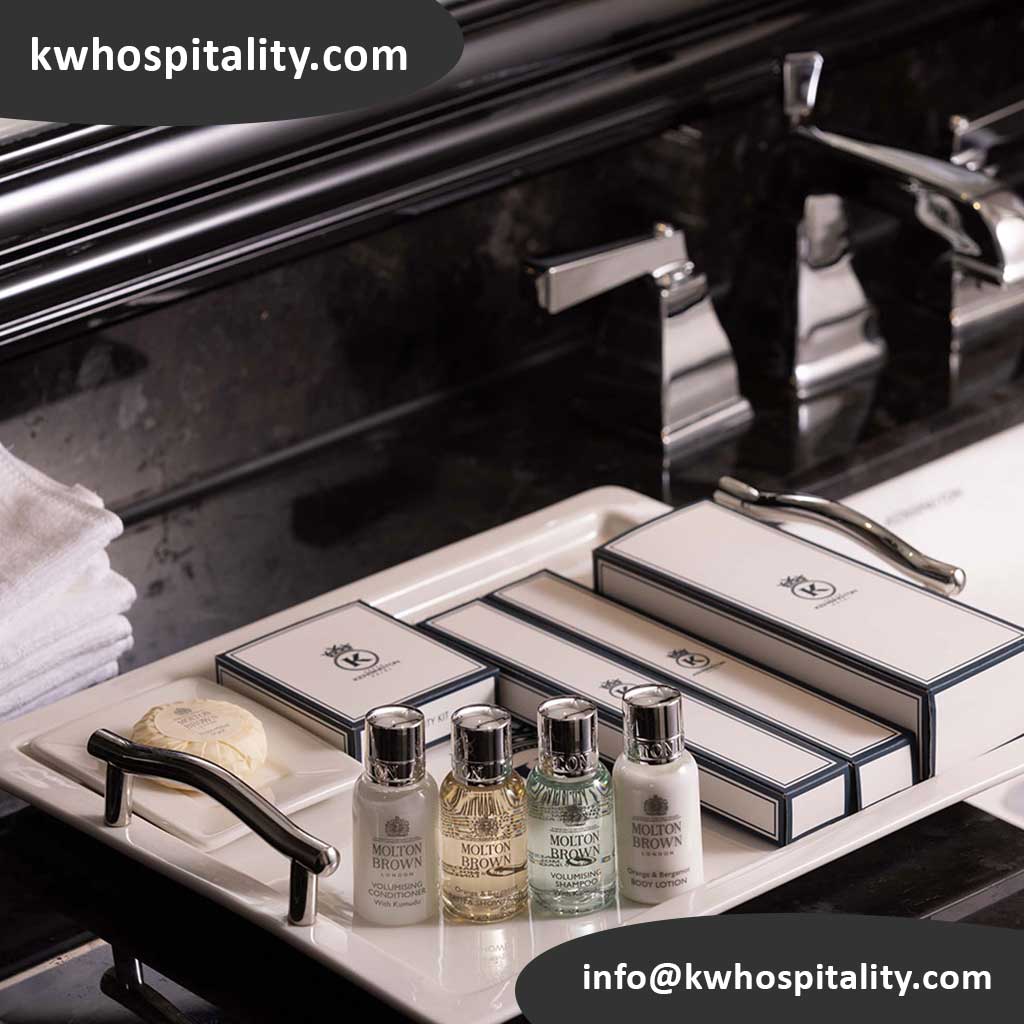
SECTION 9: High-End Shaving, Dental & Personal Care Sets
Bamboo Kits, Eco Grooming, and the New Hygiene Standard
In the evolving landscape of luxury hospitality—where the guest bathroom has transformed into a sanctuary of wellness, design, hygiene excellence, and sensory storytelling—one category of amenities stands out as both practical and symbolic: the shaving, dental, and personal care sets that guests rely on for their most essential grooming rituals. While these items may seem small and utilitarian compared to grand architectural elements or premium textiles, they carry enormous emotional weight because they speak directly to the hotel’s commitment to guest preparedness, personal comfort, and thoughtful anticipation of need. A guest who discovers a beautifully packaged bamboo toothbrush, a refined razor set, or a carefully curated grooming kit feels immediately cared for—almost as if the hotel had predicted an unspoken requirement or a forgotten item. In luxury hospitality, this anticipation is not simply a service gesture; it is a form of emotional intelligence that strengthens the guest’s trust in the property.
Modern luxury hotels are increasingly expected to provide grooming sets that go far beyond the generic, flimsy plastic kits of decades past. Today’s well-traveled guest—especially in North America’s design-forward markets like Montreal, Vancouver, Toronto, San Francisco, and New York—demands personal care products that are luxurious in feel, sustainable in material composition, hygienic in their presentation, and elevated in aesthetic design. They want grooming tools that reflect quality, precision, and environmental responsibility. A bamboo toothbrush with charcoal-infused bristles evokes modern eco-luxury; a razor set with lubricated blades and ergonomic handles signals performance; a dental floss package wrapped in compostable film communicates intelligent hospitality; a shaving cream sachet formulated with botanical extracts reflects a refined understanding of wellness. These personal care amenities, when designed thoughtfully, become touchpoints that guests remember and often appreciate more deeply than large-scale features because they demonstrate intimate understanding of guest routines.
Luxury grooming items blend utility with refinement. A shaving kit, for example, should not merely be functional—it should feel elegant from the moment the guest opens the packaging. The razor should have weight and balance, the handle should feel smooth and comfortable in the hand, and the blades should glide cleanly across the skin without irritation. A well-designed shaving cream sachet should release a subtle, pleasant fragrance that aligns with the hotel’s scent identity, evoking botanical freshness or modern herbal calm instead of harsh chemical notes. The difference between a luxury shaving kit and a generic one is emotional: one transforms grooming into a ritual, while the other reduces it to a chore.
Dental kits carry similar psychological significance. A flimsy plastic toothbrush communicates indifference, while a bamboo toothbrush with soft, thoughtfully aligned bristles communicates care. The texture of the bamboo handle, the precise curvature that enhances brushing comfort, the subtle branding, and the biodegradable packaging all contribute to a feeling of curated hospitality. Guests often take such toothbrushes home, which means the hotel’s brand enters their personal environment—an invaluable extension of brand influence. Toothpaste sachets or tubes should feel premium, with fresh, clean flavors developed to avoid the harshness or artificial taste common in low-quality dental kits. Even the sound of the packaging—the crinkle of eco-paper versus the snap of cheap plastic—contributes quietly to the sensory perception of luxury.
The Move Toward Eco-Forward Grooming Sets: A New Era of Luxury Hygiene
One of the most important transformations in luxury hospitality is the shift from plastic-based grooming sets to sustainable alternatives. Bamboo toothbrushes, wheat-straw razors, compostable floss containers, and recyclable paper packaging are becoming the new standard not simply because they reduce environmental impact but because they elevate the emotional resonance of the guest experience. Guests increasingly interpret eco-friendly amenities as signs of sophistication, global awareness, and modern brand intelligence.
Bamboo toothbrushes have become particularly iconic in luxury hotels because they check multiple boxes simultaneously:
they are visually elegant with a warm, organic aesthetic
they are tactilely pleasing, offering a soft natural grip
they communicate sustainability without sacrificing performance
they allow subtle, tasteful branding
they offer an elevated sensory alternative to mass-market plastic brushes
Similarly, razors with biodegradable or recyclable components appeal to eco-conscious guests without compromising shaving precision. Shaving gels or creams packaged in aluminum sachets or tubes feel premium, modern, and environmentally aligned. Dental floss wrapped in compostable corn-fiber packaging signals hygiene and sophistication. Sustainability, in this context, is not a compromise but an upgrade—an opportunity for luxury hotels to differentiate themselves meaningfully.
KW Hospitality has been at the forefront of this transition, supplying bamboo grooming sets to major hotels across Canada and the U.S., including boutique luxury properties and established chains. Our ability to source high-quality bamboo products, refined packaging, customizable branding, and consistent production ensures hotels can fully embrace eco-luxury without sacrificing operational stability or aesthetic consistency.
Guest Expectation Menu — What Luxury Grooming Kits Must Deliver
Cleanliness
Hygienic packaging
Sterile, sealed presentation
Smooth materials that feel safe and sanitary
Performance
Sharp, smooth razors
Soft-bristled toothbrushes
Quality toothpaste that actually tastes premium
Sustainability
Bamboo handles
Compostable or recyclable packaging
Reduced plastic footprint
Elegance
Minimalist design
Subtle branding
Pleasant fragrance (shaving products)
Inside the Anatomy of a Luxury Shaving Set
Luxury shaving kits are defined by refinement, not complexity. A typical high-end kit includes:
a razor with a weighted handle for balance
lubricated blades to prevent irritation
a botanical shaving cream or gel
subtle, gender-neutral fragrance profiles
refined packaging that aligns with bathroom aesthetics
The razor should offer smooth movement, not tug or drag across the skin. Handle texture—whether matte, grooved, or polished—should provide secure grip. The shaving cream should foam softly and rinse cleanly without residue. Luxury hotels avoid harsh artificial scents, opting instead for botanical blends such as bergamot, sage, cedar, or eucalyptus.
Quality shaving kits elevate guest confidence and support grooming rituals that are essential for business travelers, event attendees, and anyone preparing for an elevated experience.
Dental Sets: Minimalism, Hygiene & the Hotel’s Promise of Care
Dental kits may appear simplistic, but they are a powerful symbol of hospitality preparedness. Guests interpret a thoughtfully assembled dental kit as reassurance that the hotel anticipates their needs—not reactively, but proactively. A luxury dental kit includes:
a bamboo or wheat-straw toothbrush
soft bristles engineered for sensitivity
a smooth ergonomic handle
premium toothpaste with clean, refreshing taste
minimalist eco-packaging
Because these items touch the mouth—one of the most intimate areas of the body—their perceived hygiene quality directly influences the guest’s sense of trust in the room.
Hotels must therefore avoid generic plastic kits, which feel sterile in the wrong way and lack emotional warmth. Bamboo, with its natural antibacterial properties, feels both clean and comforting.
Comparison Table — Luxury vs. Standard Grooming Sets
| Feature | Luxury Grooming Kits | Standard Hotel Kits |
|---|---|---|
| Materials | Bamboo, wheat straw, eco-friendly components | Plastic handles, basic metal blades |
| Packaging | Paper, kraft, compostable, minimal | Plastic wrappers |
| Performance | Smooth, gentle, premium-quality tools | Basic functionality |
| Guest Impression | Thoughtful, modern, memorable | Cheap, forgettable |
| Environmental Impact | Low plastic, biodegradable options | High plastic use |
The Aesthetic & Branding Power of Personal Care Kits
Grooming kits offer hotels a unique branding opportunity because they are portable, memorable, and highly intimate. A guest may forget what the lobby looked like but will remember a well-packed dental or shaving set they used multiple times during their stay. Subtle branding—engraved bamboo handles, embossed kraft paper sleeves, or minimalist printed logos—allows hotels to extend their identity into the guest’s private space.
Even the opening experience matters. A grooming kit that unfolds with quiet elegance—clean folds, refined typography, soft materials—evokes calm and confidence. A kit that cracks loudly or tears poorly creates subconscious friction. Luxury lies in these invisible details.
KW Hospitality & The Future of Grooming Sets
KW Hospitality has become a trusted partner for hotels seeking to modernize their grooming amenities. Working with sustainable materials, skilled factories, and refined packaging designers, KW offers:
bespoke bamboo toothbrushes
custom-branded razors
shaving gels aligned with hotel scent identities
eco-friendly floss and dental kits
competitively priced, high-quality solutions
stable supply chains with consistent quality control
This holistic approach ensures that hotels can differentiate themselves through amenities that are not only luxurious but also environmentally responsible and aligned with global hospitality trends.
High-end shaving, dental, and personal care sets represent far more than grooming convenience—they are intimate symbols of the hotel’s attentiveness, design intelligence, and emotional warmth. Through sustainable materials, refined packaging, and luxurious performance, these small amenities elevate the guest experience in profound ways.
In Section 10, we transition from tactile tools to environmental artistry as we explore: “The Art of Perfect Lighting in the Luxury Bathroom: Atmosphere, Function, & Emotional Design.”
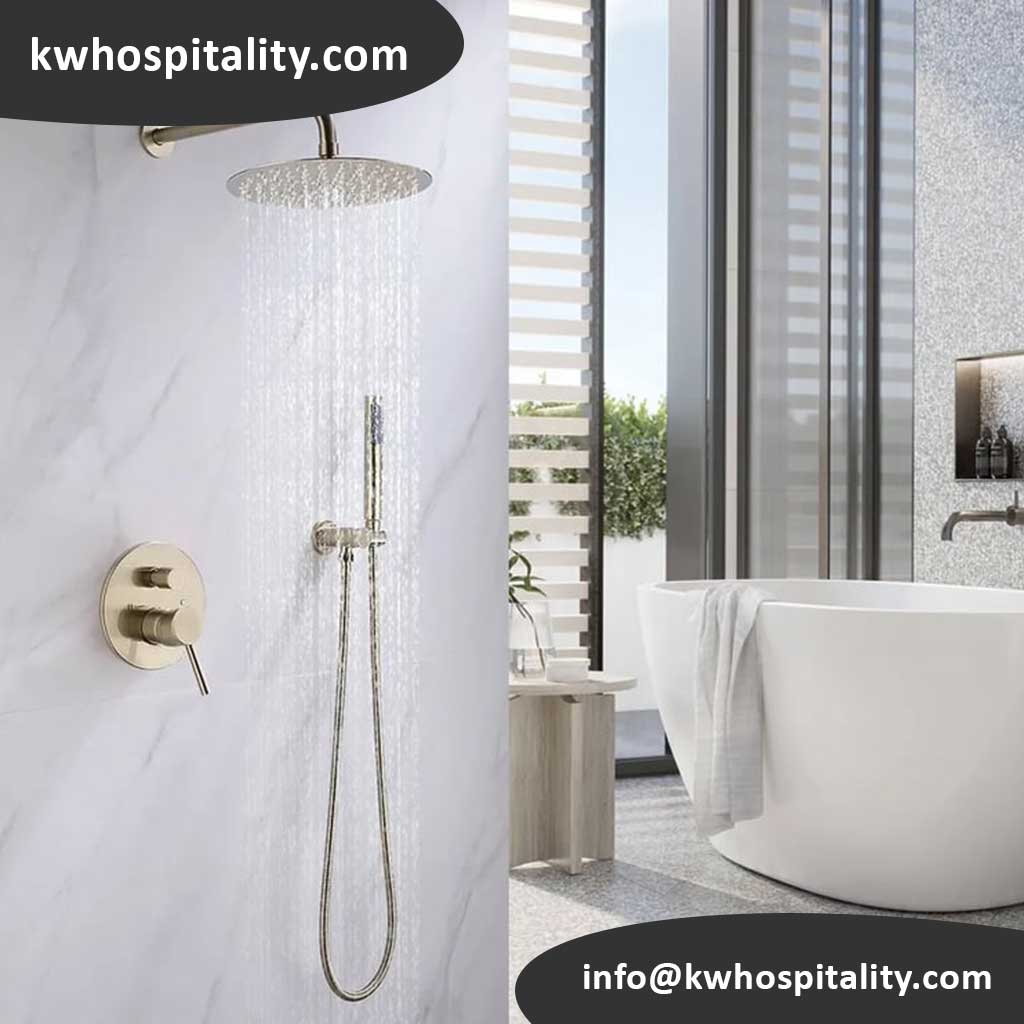
SECTION 10: The Art of Perfect Lighting in the Luxury Bathroom
Atmosphere, Function, & Emotional Design
In the modern luxury bathroom—where stone, water, scent, texture, and thoughtful accessories harmonize to shape the guest’s experience—lighting stands as the invisible conductor that orchestrates the entire sensory composition. No matter how exquisite the fixtures, how refined the toiletries, or how plush the towels, the bathroom cannot truly feel luxurious if the lighting is harsh, uneven, shadowed, or cold. Light is the element that reveals all others; it is the medium through which the guest perceives color, cleanliness, softness, and beauty. And in luxury hospitality, where perception is everything, lighting becomes one of the most powerful tools for shaping emotional response. A warm, balanced glow can transform a simple bathroom into a sanctuary of serenity. A poorly lit space, by contrast, can make even the most expensive interiors feel sterile, flat, or visually uninviting.
For guests arriving after a long day of travel, stepping into a perfectly illuminated bathroom creates an immediate sense of welcome. The light should feel soft enough to soothe the senses yet bright enough to support grooming tasks. It should flatter skin tone, reduce visual fatigue, and create an overall atmosphere of calm. Luxury hotels in cities like Montreal, Toronto, Vancouver, New York, Los Angeles, and Chicago invest heavily in lighting design because they understand that guests subconsciously associate good lighting with hygiene, comfort, beauty, and premium service. When light is warm, even, and intentional, the guest instinctively feels that the bathroom is clean, well-maintained, and thoughtfully crafted. When light is cold, dim, or unbalanced, the guest may feel discomfort even if they cannot articulate why.
Lighting also has a profound influence on the guest’s self-perception. The bathroom mirror is where guests prepare for business meetings, weddings, photoshoots, romantic dinners, or simply for a restful night’s sleep. Vanity lighting that casts shadows, highlights imperfections, or distorts color creates frustration and insecurity. Conversely, lighting that mimics natural daylight—soft, diffused, and evenly distributed—enhances confidence. Guests who feel beautiful, refreshed, and “their best selves” inside a hotel bathroom are far more likely to view the property positively, recommend it, and return. Lighting, therefore, is not merely a design element but a psychological tool that has direct impact on guest satisfaction.
The Three Pillars of Luxury Bathroom Lighting
Luxury bathroom lighting is built upon three foundational pillars: ambient lighting, task lighting, and accent lighting. These pillars must be balanced so seamlessly that the guest does not consciously think about lighting at all—they simply feel good in the space.
1. Ambient Lighting: The Emotional Atmosphere
Ambient lighting creates the general mood of the bathroom. It should be warm, welcoming, and free of glare. In luxury settings, ambient lighting often comes from:
concealed LED ceiling panels
cove lighting that washes softly across the ceiling or walls
indirect light strips integrated into architectural forms
frosted glass diffusers for even illumination
Ambient lighting must eliminate shadows while preserving intimacy. The goal is to create an enveloping glow that calms the senses. Color temperature is crucial: luxury hotels typically use 2700K to 3000K tones, which mimic warm residential light rather than cold commercial illumination. This warmth relaxes the mind, complements skin tones, and enhances the visual richness of stone surfaces.
2. Task Lighting: Precision at the Vanity
Vanity lighting is arguably the most critical component of the luxury bathroom. It must support grooming rituals with professional-grade accuracy, yet feel soft and flattering. Task lighting should be placed at face level, evenly illuminating both sides of the face to avoid shadows under the eyes or chin. This often involves:
vertical LED strips flanking the mirror
integrated backlighting within the mirror
side-mounted sconces with frosted diffusers
uniform light without flicker
A well-lit mirror transforms shaving, makeup application, skincare routines, and grooming into effortless experiences. Hotels that master task lighting empower guests to feel confident and polished.
High-end vanity lighting often includes Color Rendering Index (CRI) ratings of 90+, ensuring true-to-life color accuracy. This is essential for makeup application, hair styling, and overall self-presentation. A guest who feels accurately illuminated feels emotionally supported by the space—a defining hallmark of luxury hospitality.
3. Accent Lighting: Refinement & Spatial Definition
Accent lighting adds dimension and sophistication. It can highlight architectural features, create visual layers, or enhance the bathroom’s spatial rhythm. Common uses include:
under-vanity LED strips that create floating effects
backlit shelves or niches that showcase amenities
spotlighting on artwork or stone textures
perimeter lighting that enhances symmetry
Accent lighting is rarely noticed consciously, but it dramatically elevates perceived luxury. It creates depth, softness, and richness—qualities that make a bathroom feel like a spa.
Lighting Quality Menu — What Luxury Guests Expect
Comfort
No harsh shadows
Warm color temperature
Flattering illumination
Clarity
Balanced, even light distribution
True color rendering
No flickering or dim patches
Calmness
Soft edges
Quiet ambience
Seamless transitions between zones
Luxury Identity
Integrated architecture
Subtle sophistication
Light that reveals material beauty
Mirror Lighting: The Heart of the Guest’s Self-Image
The bathroom mirror is where personal transformation takes place, and lighting must support this moment with precision. Luxury hotels often invest in anti-shadow mirror lighting, where LED panels are integrated around the mirror’s perimeter or embedded behind frosted glass. The goal is to create a halo of soft, even illumination that highlights the guest’s features without distortion.
High-end properties also incorporate:
anti-fog technology
magnification panels for makeup or grooming
touch controls for brightness and color temperature
smart sensors that activate lighting automatically
These additions create a sense of intelligent hospitality—technology that feels natural, intuitive, and helpful.
Sustainability & LED Innovation: The New Standard for Eco-Luxury
Luxury today must also be sustainable, and the evolution of LED technology has made it possible to provide premium lighting experiences while significantly reducing energy consumption. Modern LED systems offer:
extremely long lifespans
minimal heat output
dramatically lower electricity consumption
dimming capabilities that enhance mood
improved CRI for natural color
For hotels with ESG goals or LEED certification pathways, lighting upgrades represent one of the most efficient routes to measurable improvement.
KW Hospitality advises properties on sustainable lighting procurement, helping hotels implement solutions that reduce operational costs while elevating the guest experience—a double benefit rarely achieved so seamlessly.
Practical Comparison Table — Standard vs. Luxury Bathroom Lighting
| Feature | Luxury Bathroom Lighting | Standard Lighting |
|---|---|---|
| Color Temperature | 2700–3000K warm tones | 3500–5000K cool tones |
| Distribution | Even, shadow-free | Patchy, uneven |
| Mirror Integration | Backlit, side-lit, anti-fog | Basic overhead |
| Technology | High-CRI LED, dimmable, smart controls | Fluorescent or basic LED |
| Atmosphere | Spa-like, calming, flattering | Functional but harsh |
| Guest Impact | Transformative, confidence-boosting | Neutral or negative |
Lighting as a Branding Tool
Hotels often underestimate how deeply lighting shapes brand identity. A hotel known for its warmth may favor golden, soft tones. A sleek, urban hotel may choose cooler, architectural lighting with clean lines. A wellness-oriented boutique may favor diffused natural-style light with organic undertones.
Lighting is not merely illumination; it is design language.
A guest who senses harmony between lighting and the hotel’s personality perceives the brand as thoughtful, consistent, and emotionally intelligent. That perception strengthens loyalty.
KW Hospitality & Lighting Procurement Strategy
KW Hospitality supports hotels in evaluating lighting vendors, selecting high-CRI LED systems, integrating smart controls, and ensuring long-term durability across demanding hospitality environments. Through factory partnerships, KW provides hotels with procurement pathways that reduce costs without compromising luxury standards—ensuring that lighting becomes a competitive advantage rather than an operational burden.
Lighting is not decoration—it is emotion. It shapes how the guest feels, how they see themselves, how they experience the bathroom, and how they remember the stay. When lighting is executed with care, the bathroom becomes more than a space; it becomes a sanctuary of clarity, beauty, and calm.
In Section 11, we transition to another critical visual element of the luxury bathroom: “Luxury Mirrors, Anti-Fog Technology & Magnification Systems: Clarity, Engineering, and the Guest’s Self-Perception.”
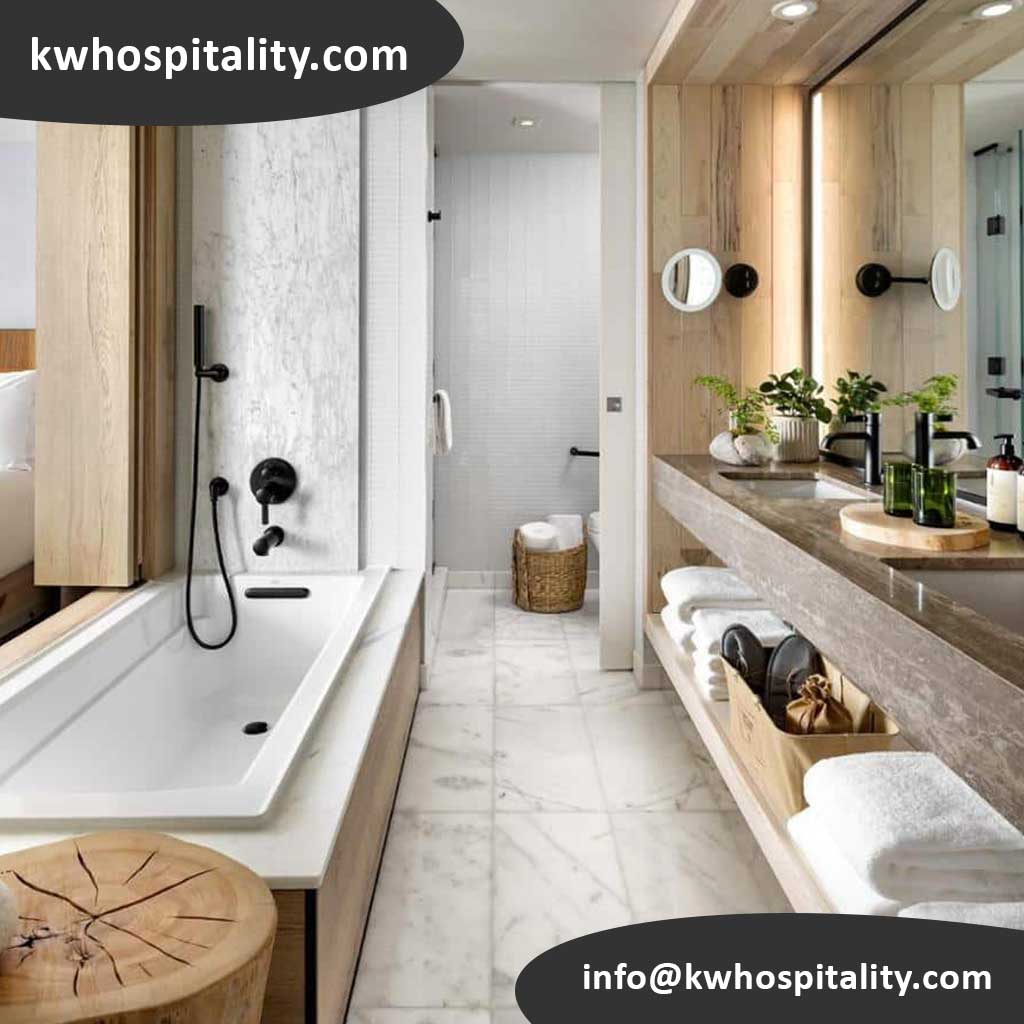
SECTION 11: Luxury Mirrors, Anti-Fog Technology & Magnification Systems
Clarity, Engineering, and the Guest’s Self-Perception
In the quiet, intimate world of the luxury hotel bathroom, the mirror becomes more than a reflective surface—it becomes a stage upon which the guest encounters their own image, prepares for moments that matter, and reconnects with themselves after hours of travel, fatigue, or daily routine. Unlike other bathroom elements that communicate luxury from a distance, the mirror invites the guest into a face-to-face dialogue. It shapes their self-confidence, influences their emotional state, and acts as a silent companion in the rituals of grooming, skincare, shaving, makeup application, or simply refreshing oneself before stepping out into the world. For this reason, luxury hotels in North America’s most competitive markets—Montreal, Vancouver, Toronto, San Francisco, New York, Miami—have come to understand that mirrors must deliver not only clarity but also psychological comfort, functional precision, and design harmony. A well-engineered mirror elevates the guest experience dramatically; a poor mirror, conversely, can silently undermine their perception of the hotel.
The luxury bathroom mirror is expected to perform flawlessly under challenging conditions: humidity from hot showers, temperature fluctuations, heavy usage, repeated cleaning cycles, and strong lighting. The mirror must remain bright, clean, shadow-free, and free of fog, while also integrating seamlessly with the lighting design and overall bathroom aesthetic. A mirror that fogs immediately after a shower disrupts the guest’s grooming routine and signals outdated engineering; a mirror that casts uneven shadows creates frustration and dissatisfaction. Conversely, a mirror with anti-fog technology, perfectly balanced illumination, high-quality reflective coating, and ergonomic magnification options communicates a level of sophistication that resonates deeply with guests. It tells them: This hotel thinks about the details. This hotel values your comfort. This hotel understands modern luxury.
The Emotional Psychology of Mirror Excellence
A mirror may seem like a simple functional object, but in the luxury hotel environment, it carries enormous emotional significance because it is the only amenity that interacts directly with the guest’s self-perception. Lighting and scent influence mood, towels influence touch, soaps influence memory, but the mirror influences how the guest sees themselves. A poorly lit, low-quality, or fogged mirror forces the guest to see a distorted version of their face—exaggerating shadows, dulling skin tone, or creating an unflattering reflection that can subtly diminish confidence. This emotional disruption is amplified because guests rely heavily on mirrors for rituals tied to self-presentation: shaving before a business meeting, applying makeup before an event, adjusting hair before a dinner, or simply refreshing after the shower.
A luxury mirror, by contrast, should feel almost magical in the way it supports and enhances the guest’s image. It should reveal details with precision but without harshness. It should provide clarity without exaggeration. It should flatter the skin tone, minimize unflattering shadows, and create a sense of visual serenity. When guests see themselves in a flattering, well-lit mirror, they feel “put together”—more beautiful, more confident, more ready for the world. This psychological uplift strengthens their emotional bond with the hotel.
Engineering Elements That Define a Luxury Hotel Mirror
Behind the elegance of a premium bathroom mirror lies a sophisticated blend of materials, coatings, electrical engineering, and ergonomic design. The quality of the reflective surface depends on high-grade silver or aluminum coatings applied with uniformity to ensure true-to-life color rendering. Cheap mirrors distort reflections or subtly warp facial proportions—an unacceptable flaw in luxury hospitality. Premium mirrors must offer:
High reflectivity with minimal distortion
Copper-free backing to prevent corrosion
Anti-fog heating pads or film distributed evenly across the surface
Integrated LED lighting with high CRI ratings
Durable edges and mounting systems that withstand humidity
Smart features such as dimming, touch controls, or motion activation
The anti-fog element is especially crucial. In luxury environments, guests expect the mirror to remain clear even after a steaming hot shower. Anti-fog systems achieve this by gently warming the mirror surface through an integrated heating pad or by using anti-fog coatings. This ensures uninterrupted grooming, enhancing both convenience and satisfaction.
Lighting integration is equally important. Mirrors should emit light that mimics natural daylight, with color temperatures between 2700K–3500K and CRI scores above 90. This enhances color accuracy, supports makeup application, and flatters skin tone. Many luxury mirrors offer adjustable lighting modes—cooler light for precision tasks, warmer light for relaxation—giving guests more personalized control.
Luxury Mirror Experience Menu — What Guests Expect
Clarity
No fog, no streaks
True-to-life reflection
Even illumination across the face
Comfort
Flattering light temperature
Minimal glare
Comfortable distance and height
Precision
Magnification zones for detailed grooming
High CRI lighting
Edge-to-edge uniformity
Elegance
Sleek silhouette
Integrated lighting
Refined materials and finish
Magnification Mirrors: Precision Tools That Shape Guest Confidence
Magnification mirrors—whether wall-mounted, adjustable, backlit, or embedded into the main mirror—play a crucial role in luxury hospitality because they offer guests the ability to perform detailed grooming with absolute control. These mirrors must provide 5x to 10x magnification without distortion, waviness, or chromatic aberration. Distorted magnification creates frustration and makes grooming more difficult; precision magnification enhances confidence.
Luxury magnification mirrors should:
rotate smoothly
extend easily from the wall
remain stable at all angles
integrate LED lighting without hotspots
offer anti-fog properties
match the bathroom’s design palette
Guests notice immediately when these details are executed properly. A magnification mirror that moves too loosely or too stiffly feels cheap; one that offers flawless clarity at every angle feels premium.
Materials & Aesthetic Integration
Luxury mirrors must align with the bathroom’s design language. The frame—or lack thereof—communicates style:
Frameless mirrors offer sleek minimalism
Metal-framed mirrors add structure and sophistication
Backlit mirrors create floating, ethereal effects
Leather-wrapped or stone-inlaid mirrors speak to opulence and craftsmanship
The finish of mirror components such as mounting brackets or magnification arms must match other bathroom hardware—matte black, brushed nickel, champagne gold, polished chrome, or warm brass. Even small mismatches disrupt cohesion.
KW Hospitality assists hotels in selecting mirrors that integrate perfectly with their lighting plan, hardware finishes, architectural lines, and brand identity.
Comparison Table — Standard vs. Luxury Mirrors
| Feature | Luxury Hotel Mirror | Standard Mirror |
|---|---|---|
| Anti-Fog | Integrated heating pad or coating | None or ineffective |
| Lighting | High-CRI LED, adjustable, integrated | Single overhead light |
| Reflection Quality | Distortion-free, crisp, color-accurate | Mild warping, lower reflectivity |
| Magnification | Precision-engineered, stable | Often missing or low quality |
| Durability | Copper-free, moisture-resistant | Prone to deterioration |
| Aesthetic | Seamless, architectural | Functional but plain |
| Guest Impact | Confidence-boosting, memorable | Average or frustrating |
Smart Mirror Features: The Future of Luxury Hospitality
As technology advances, luxury hotels are embracing smart mirror innovations that enhance convenience, personalization, and hygiene. These include:
Motion-sensing illumination
Auto-dimming modes
Touch-free controls
Built-in Bluetooth speakers
Integrated clocks, weather, or energy feedback
Temperature indicators or anti-fog presets
These features allow guests to interact with the bathroom environment more intuitively, creating a seamless balance between luxury and modernity.
KW Hospitality & Mirror Procurement Intelligence
KW Hospitality works directly with mirror manufacturers specializing in hotel-grade anti-fog surfaces, LED integration, and architectural-grade durability. Through rigorous quality control, custom sizing, and finish matching, KW ensures that hotels receive mirrors that elevate both functionality and design. From boutique properties seeking unique sculptural mirrors to large chains requiring volume consistency, KW provides tailored solutions with competitive pricing and guaranteed performance.
Luxury mirrors represent the point at which engineering, design, and emotional psychology converge. They allow guests to see themselves clearly, beautifully, and confidently—an experience that profoundly shapes their overall perception of the hotel. When executed well, mirrors transform the bathroom into a sanctuary of clarity and refinement.
In Section 12, we turn our attention from reflections to underfoot comfort: “Premium Bath Mats & Under-Foot Comfort: Safety, Softness & The Psychology of Warm Grounding.”
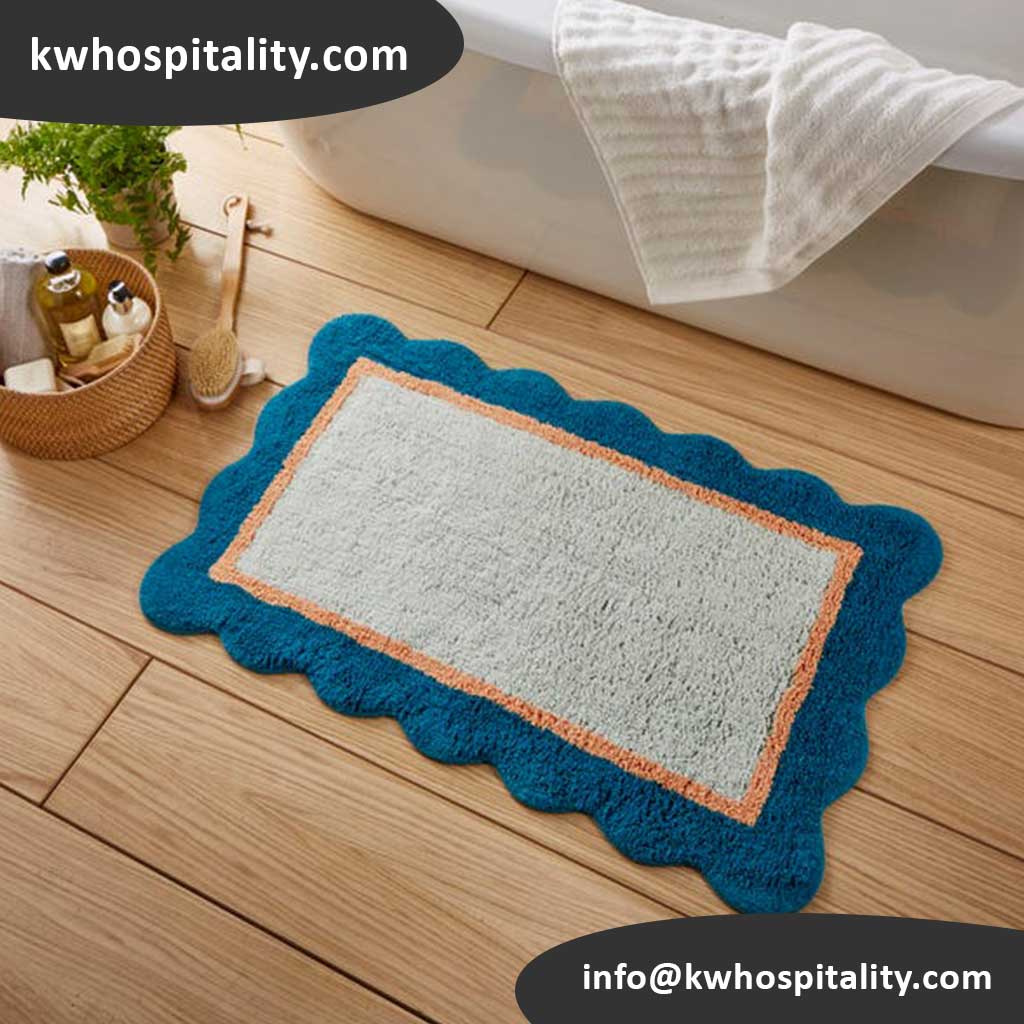
SECTION 12: Premium Bath Mats & Under-Foot Comfort
Safety, Softness & The Psychology of Warm Grounding
In the orchestration of a luxury hotel bathroom, where water, light, scent, textiles, and accessories work together to shape an immersive sanctuary, the bath mat often operates as one of the most quietly influential elements in the entire guest experience. Though it sits humbly at the foot of the shower or bathtub, far from the glamorous spotlight of marble countertops or magnified mirrors, the bath mat is the first surface the guest touches with their bare feet after emerging from the restorative warmth of water. It is the transition point—the threshold between the internal comfort of the shower and the external environment of the bathroom—and therefore it holds significant emotional power. A premium bath mat is not simply a textile; it is a sensory grounding mechanism, a signal of cleanliness, and a promise of comfort. It is also a safety tool, a design enhancer, and a subtle expression of hospitality intelligence. When a guest steps onto a thick, absorbent, warm-feeling bath mat that hugs the feet with softness and stability, they immediately sense the hotel’s commitment to detail. When the mat is thin, slippery, or poorly placed, the emotional rhythm of the bathroom breaks.
Luxury hotels in North America’s leading markets—Montreal, Toronto, Vancouver, Los Angeles, Chicago, New York—have learned that bath mats must be engineered with the same care and sophistication as towels and robes. They serve not only functional purposes but also psychological ones: grounding the guest after a shower, reinforcing perceptions of hygiene and safety, and providing tactile reassurance. A premium bath mat contributes to the overall flow of the bathroom, acting as a visual anchor that brings balance to the space. It must be absorbent enough to handle moisture without feeling wet underfoot, dense enough to offer cushioning, sturdy enough to remain flat, and aesthetically aligned with the room’s palette. It must also withstand the rigors of hotel laundering cycles without losing softness or structural integrity.
Bath mats are one of the most emotionally intimate textiles because they interact with the guest at a moment of heightened sensitivity: immediately after bathing. The body is warmed, pores are open, senses are refreshed, and the guest is vulnerable to temperature shifts and tactile impressions. A cold, thin mat disrupts comfort; a plush, warm mat extends the feeling of relaxation. Hotels that understand this nuance invest in bath mats that deliver a spa-like sensation, reinforcing the guest’s overall perception of refined luxury.
The Sensory Science of Under-Foot Luxury
A luxury bath mat should offer a sensory experience that blends warmth, texture, cushioning, and stability. This requires deliberate engineering across multiple dimensions:
1. Thickness & Density:
High-quality mats often fall between 700–900 GSM, although some luxury properties prefer even higher densities. The mat must feel plush but not bulky, absorbent but not soggy. Thickness creates warmth, while density ensures durability and flatness.
2. Material Composition:
Luxurious bath mats typically use long-staple cotton, Egyptian cotton, Turkish cotton, or bamboo-cotton blends. Bamboo fibers contribute natural antibacterial properties and moisture-wicking capabilities. Egyptian cotton offers silky softness, while Turkish cotton improves absorbency over time.
3. Absorbency & Quick-Dry Engineering:
A bath mat must rapidly absorb water from the feet to prevent slipping and maintain a feeling of cleanliness. Yet it must also dry quickly enough to support multiple uses between housekeeping cycles.
4. Under-Foot Texture:
The tactile sensation should remind guests of spa environments—soft, supportive, embracing. The surface must not feel rough, flat, or abrasive.
5. Safety & Stability:
Anti-slip backing (silicone-based or textured weave) ensures the mat remains fixed in place even when the bathroom floor is wet.
The combination of these elements creates a grounded experience that relaxes the guest at an almost subconscious level.
Comfort & Safety Menu — What Luxury Guests Expect Underfoot
Warmth
No cold shock after showering
Thick fibers that retain temperature
A cocooned, spa-like sensation
Cleanliness
Fresh, dry, absorbent surface
No lingering moisture
Sense of hygiene conveyed immediately
Support
Cushioned density
Stability without sliding
Ergonomic softness
Aesthetic Harmony
Colors that match towels, robes, or flooring
Elegant, proportional sizing
Premium stitching and border detailing
Bath Mats as a Design Tool: The Visual Anchor of the Bathroom
In addition to delivering sensory comfort, bath mats play an essential visual role. They act as a design anchor, grounding the shower zone and providing balance to the overall layout. A bath mat that matches the towel and robe sets creates visual cohesion and communicates consistency. Many luxury hotels prefer white bath mats to signal cleanliness and align with spa aesthetics, but muted tones such as stone grey, sand beige, charcoal, or soft taupe are increasingly popular in modern properties.
The placement of the bath mat matters as much as its material. It should be positioned precisely where the guest steps out of the shower—neither too close to the wall nor too far forward. A misaligned mat can create visual disorder, whereas a perfectly placed mat enhances symmetry and flow.
Operational Durability: The Behind-the-Scenes Excellence
Bath mats must endure the most demanding laundering cycles of any textile in the bathroom. They are subjected to:
high-heat washing for sanitation
industrial detergent exposure
repeated tumble drying
constant moisture contact
Luxury mats must maintain shape, softness, and absorbency through dozens—even hundreds—of cycles. Mats that flatten, pill, or deteriorate quickly create operational frustrations and damage guest perception.
KW Hospitality supports hotels by sourcing mats engineered for durability without compromising softness. This includes long-fiber cotton mats with reinforced weaving and bamboo-blend mats designed for quick-drying performance.
Comparison Table — Standard vs. Luxury Bath Mats
| Feature | Luxury Bath Mats | Standard Bath Mats |
|---|---|---|
| Material | Egyptian/Turkish cotton, bamboo blends | Mixed fibers, low-quality cotton |
| GSM | 700–900+ | 300–500 |
| Absorbency | Fast, deep, consistent | Slow or uneven |
| Comfort | Plush, warm, cushioned | Thin, cold, flat |
| Durability | Long-lasting under heavy laundering | Wears down quickly |
| Safety | Anti-slip backing | Minimal stability |
| Guest Impact | Spa-like grounding experience | Basic, forgettable |
Bath Mats as Eco-Luxury: Sustainability in Under-Foot Comfort
Sustainability plays an increasingly central role in the textile choices of modern hotels. Luxury bath mats made from bamboo-cotton blends or organic cotton not only reduce environmental impact but also enhance guest perception by aligning with wellness and eco-conscious values. Bamboo fibers:
grow rapidly without pesticides
require minimal water
offer natural antibacterial properties
create soft, breathable textiles
Some hotels are adopting low-water-dye techniques, recycled cotton fibers, or biodegradable anti-slip materials. These innovations reinforce the hotel’s commitment to responsible luxury.
KW Hospitality assists properties in transitioning to eco-forward mat programs that deliver the expected softness and safety while supporting long-term sustainability goals.
KW Hospitality & Under-Foot Comfort Solutions
KW Hospitality provides hotels with:
premium cotton and bamboo bath mats
customized GSM levels
embroidery and branding options
color-matching to towel programs
durable weaving optimized for industrial laundering
scalable procurement solutions with stable pricing
Our curated manufacturing partnerships ensure that mats not only feel luxurious but also perform consistently across hundreds of guest cycles—protecting both guest satisfaction and operational budgets.
Bath mats, though often underestimated, play a profound role in shaping the emotional experience of the bathroom. They provide grounding, warmth, safety, and visual harmony—all in a single, quiet moment beneath the guest’s feet. When thoughtfully chosen, they become indispensable elements of luxury hospitality.
In Section 13, we move into one of the most strategic and transformative topics in modern hotel bathrooms: “Sustainability Deep-Dive: Zero-Plastic Bathroom Programs, Refillable Systems & Eco-Luxury Design.”
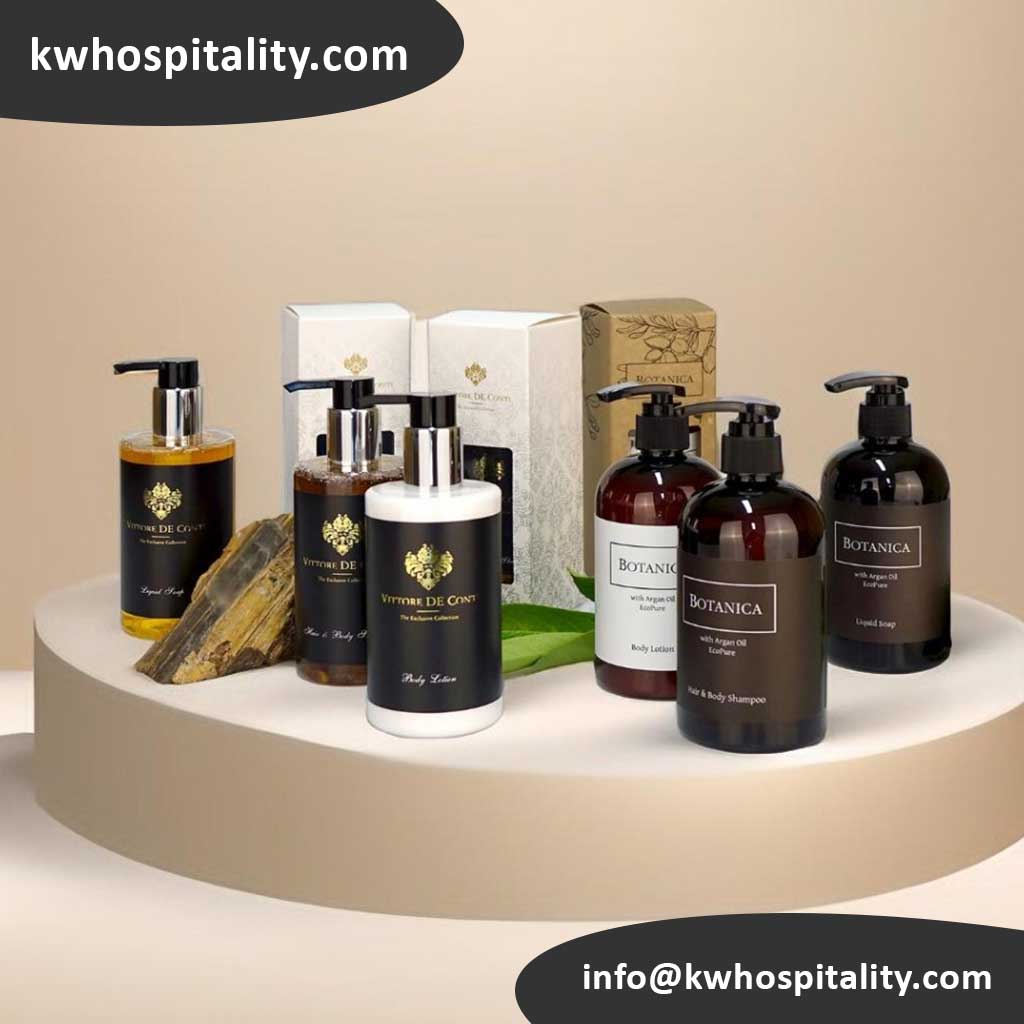
SECTION 13: Sustainability Deep-Dive
Zero-Plastic Bathroom Programs, Refillable Systems & Eco-Luxury Design
In the contemporary landscape of luxury hospitality—where refined aesthetics, sensory comfort, and elevated guest services define the competitive edge—sustainability has emerged not as a supplementary feature but as a central pillar of what it means to deliver modern luxury. Today’s luxury traveler, whether staying in Montreal, Toronto, Vancouver, New York, Los Angeles, Chicago, or any major global destination, carries a heightened awareness of environmental responsibility and expects hotels to reflect these values through thoughtful design, ethically produced amenities, and intelligent procurement. The bathroom, more than any other space in the hotel, becomes the canvas upon which these sustainability commitments must be visibly executed. It is the room where plastics have traditionally been most abundant, where water and energy consumption are concentrated, and where guests interact most directly with materials, packaging, and product quality. As a result, the zero-plastic movement has transformed the bathroom from a simple functional environment into a symbol of the hotel’s environmental ethos and long-term stewardship.
For luxury hotels, sustainability must never compromise comfort, elegance, or performance. Instead, it must elevate the guest experience by replacing wasteful materials with refined, modern, beautifully designed alternatives. The zero-plastic bathroom is not a minimalistic or stripped-down environment; it is an evolved environment—warmer, cleaner, more premium, more sensory-rich, and more emotionally intelligent. Refillable bottles in brushed aluminum or frosted glass feel more substantial and luxurious than flimsy single-use plastics. Bamboo toothbrushes with engraved hotel logos feel artisanal and thoughtful. Wheat-straw razors and compostable floss containers communicate responsibility without sacrificing function. Paper-wrapped soap bars convey purity and natural simplicity. In this way, sustainability becomes a design advantage, not a limitation.
This transformation is driven by both guest expectations and global regulatory pressures. Jurisdictions across the United States and Canada have already begun restricting or banning single-use plastic toiletry bottles. Hotels that resist adaptation risk falling behind both operationally and reputationally. But those who embrace eco-luxury bathroom strategies—integrating refillable dispensers, plastic-free grooming sets, biodegradable packaging, recycled-material textiles, and water-energy efficient fixtures—strengthen their brand positioning, reduce long-term supply costs, and win guest loyalty from increasingly eco-conscious travelers. Guests who step into a bathroom that looks refined and sustainable feel aligned with the hotel; they feel that they are participating in something meaningful without sacrificing indulgence.
The Emotional Power of Sustainable Bathroom Design
Luxury guests today interpret sustainability not through signage or brochures, but through the tactile and visual cues of the bathroom environment. Sustainability feels luxurious when it is expressed through natural textures, elegant packaging, and material authenticity. Bamboo, for example, evokes calm and wellness—its organic warmth contrasting beautifully with the coolness of stone, marble, or glass. Aluminum refill bottles feel weighty and strong, communicating permanence rather than disposability. Matte pump dispensers feel higher-end than plastic screw caps. Kraft-paper amenity wrappers evoke a spa-like purity, signaling clean, minimalistic sophistication. When guests encounter these materials, they do not see sacrifice—they see refinement.
The psychological impact is amplified by the way sustainable amenities are presented. A refillable bottle neatly positioned on a resin tray looks curated. A bamboo shaving kit wrapped in natural paper feels artisanal. A plant-based bath sponge placed beside the shower evokes wellness. These details shape the emotional flow of the bathroom, reinforcing a sense of tranquility and purpose. Sustainability in luxury hospitality succeeds when it enhances aesthetic harmony, not when it interrupts it.
The challenge for many hotels lies in avoiding sustainability that feels cheap or utilitarian. Poorly designed refill bottles, low-quality compostable materials, and inconsistent accessory palettes can make the bathroom look mismatched or budget-oriented. True eco-luxury demands design cohesion, durability, tactile richness, and refined branding—precisely the elements KW Hospitality helps properties achieve.
The Architecture of a Zero-Plastic Luxury Bathroom Program
A hotel cannot “go plastic-free” through one or two small changes. It requires a fully integrated system that includes:
1. Refillable Bottle Systems (Shampoo, Conditioner, Body Wash, Lotion)
The heart of the zero-plastic movement. Luxury properties use:
aluminum bottles with laser-etched branding
thick PET-R bottles with matte finishes
frosted or tinted glass bottles with secure mounting
pump mechanisms designed to avoid dripping and clogging
The bottles must look premium and match the bathroom’s design palette. They must also be tamper-resistant and simple for housekeeping to refill hygienically.
2. Bamboo & Eco-Friendly Grooming Kits
Replacing single-use plastics with:
bamboo toothbrushes
wheat-straw razors
paper-wrapped dental kits
floss in compostable casing
plant-fiber combs
These items create a natural, wellness-oriented emotional aesthetic.
3. Paper-Wrapped Soaps & Biodegradable Packaging
High-end soap bars wrapped in textured paper feel more spa-like than plastic packaging.
4. Zero-Plastic Accessory Kits
Shower caps, sewing kits, vanity kits, and cotton pads are packaged in recycled kraft, not cellophane.
5. Waste Bins & Recycling Integration
Bins must include discreet recycling compartments, reflecting environmental commitment without clutter.
6. Water-Reduction Engineering
Sustainability extends beyond plastic to include:
low-flow aerated showerheads
thermostatic valves that reduce temperature-waste
motion-sensor faucets
optimized drainage systems
7. Communication Without Preaching
Subtle notes, discreet icons, or soft branding communicate sustainability without lecturing guests. Luxury messaging must be gentle and refined.
KW Hospitality leads properties through every step of this transition, ensuring that the final result feels cohesive, elegant, and unmistakably premium.
Eco-Luxury Menu — What Guests Expect from Sustainable Amenities
Elegance
Beautiful packaging
Natural materials that feel rich
Subtle, refined branding
Performance
High-quality formulas
Durable refill dispensers
Comfortable, functional grooming tools
Integrity
Biodegradable materials
Vegan, cruelty-free ingredients
Transparency in sourcing
Consistency
Matching design language
Cohesive palette
Uniform placement throughout the hotel
Operational & Procurement Intelligence: The Sustainability Advantage
Contrary to earlier industry assumptions, sustainable amenity programs often reduce long-term costs. While initial investments may be higher than purchasing mass-market plastic bottles, refill systems drastically lower ongoing consumption. Hotels using refillable systems typically save:
60–80% on long-term toiletry costs
50–70% on waste disposal
significant storage space
frequent labor reductions in restocking
Hotels also eliminate the risk of regulatory penalties in regions where single-use plastic is banned. Meanwhile, high-quality eco-amenities improve guest satisfaction scores, strengthen brand reputation, and increase likelihood of repeat stays.
KW Hospitality’s procurement model provides:
competitive pricing from trusted factories
custom design options
guaranteed durability for refill dispensers
FSC-certified packaging solutions
fragrance alignment with hotel branding
consistent supply chain stability
This allows properties to transition into eco-luxury without logistical strain or aesthetic compromise.
Comparison Table — Traditional vs. Zero-Plastic Luxury Bathroom Programs
| Feature | Traditional Program | Zero-Plastic Luxury Program |
|---|---|---|
| Packaging | Plastic bottles, wrappers | Aluminum, glass, kraft, bamboo |
| Aesthetic | Mixed, inconsistent | Cohesive, natural, elevated |
| Guest Perception | Standard, expected | Modern, responsible, refined |
| Environmental Impact | High waste | Low waste, sustainable |
| Operational Cost | Higher in long term | Lower with refill systems |
| Brand Storytelling | Minimal | Strong, wellness-aligned |
| Regulatory Risk | Increasing | None |
KW Hospitality Leadership in Eco-Luxury Bathroom Solutions
KW Hospitality specializes in helping property owners, procurement directors, and operations leaders create bathroom programs that combine:
beauty
sustainability
functionality
hygiene excellence
brand storytelling
Through collaborations with premium factories, fragrance houses, and eco-certified packaging manufacturers, KW designs custom zero-plastic programs that elevate the property’s identity while aligning with modern environmental expectations.
Hotels that adopt these programs quickly discover a competitive advantage: guests feel that they are staying in an environment that cares—not just aesthetically, but ethically. And in the luxury sector, ethical beauty is rapidly becoming the most desirable form of beauty.
Sustainability is no longer a trend; it is the new definition of luxury. A zero-plastic bathroom program elevates guest experience, strengthens brand identity, and supports global responsibility—all while creating a more elegant, more meaningful environment. Eco-luxury bathrooms are not merely functional spaces—they are statements of hospitality’s future.
In Section 14, we move from environmental innovation to operational excellence, exploring how hotels maintain impeccable cleanliness and hygiene in luxury bathrooms: “Hygiene Excellence & Housekeeping Protocols: Cleanliness Engineering, Guest Trust, and the Invisible Luxury Standard.”
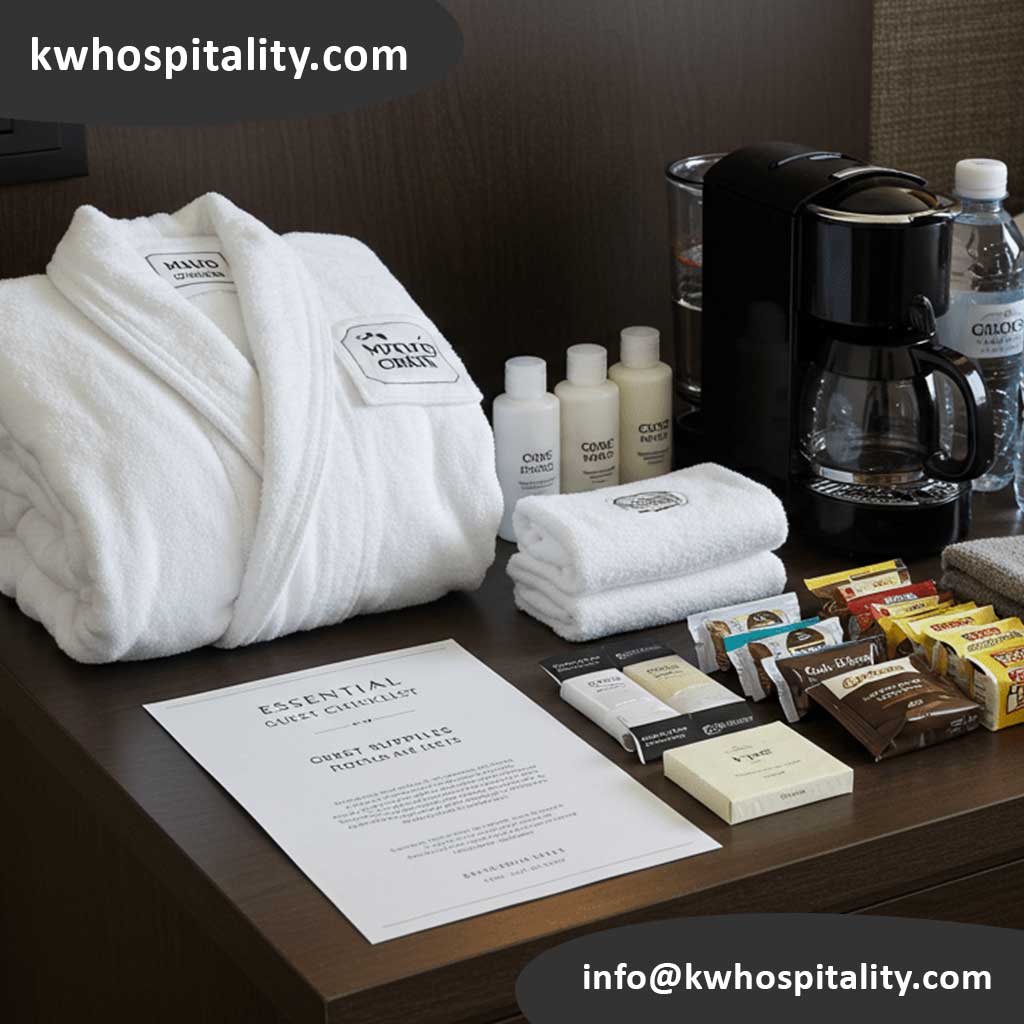
SECTION 14: Hygiene Excellence & Housekeeping Protocols
Cleanliness Engineering, Guest Trust & the Invisible Luxury Standard
In the refined ecosystem of a luxury hotel bathroom—where lighting, textiles, fragrances, materials, and water experiences converge to create a sanctuary-like environment—there exists a dimension of excellence that the guest rarely sees, but always feels: the engineering of cleanliness. Behind every immaculate countertop, every perfectly polished faucet, every flawless mirror, and every neatly placed amenity lies a sophisticated choreography of operational discipline, scientific hygiene practices, and housekeeping precision that determine whether a bathroom truly embodies luxury. While design speaks to the eyes, and scent speaks to the senses, hygiene speaks directly to trust. A guest may forget the color of the marble or the wattage of the lighting, but they will never forget whether the bathroom felt impeccably clean—or slightly off. And in the world of luxury hospitality, where emotional comfort and psychological assurance define the experience, cleanliness is not simply an expectation; it is the most important pillar of perceived luxury.
Luxury hotels have long understood that a bathroom’s beauty collapses instantly if hygiene excellence is compromised. A single trace of moisture under a toiletries bottle, a faint streak on the mirror, a speck of dust on a vent, or a towel that smells even slightly less than fresh can fracture the guest’s emotional sense of safety and attention. Guests judge cleanliness not analytically but intuitively; they scan surfaces unconsciously, reading micro-cues that form a grand conclusion: this hotel cares about me, or this hotel neglects details. Because cleanliness communicates care at the most intimate level, it becomes the foundation upon which all other luxury experiences rest. And unlike lighting, textiles, or amenities—which may impress the guest but do not necessarily break their trust—cleanliness can immediately dissolve or reinforce the entire perceived value of the stay.
This is why luxury hotel housekeeping systems must operate at levels resembling clinical precision, though delivered with the softness and warmth of hospitality artistry. Modern five-star hotels in cities such as Montreal, Toronto, Vancouver, New York, Los Angeles, and Chicago employ layered protocols that combine microbial hygiene practices, moisture management, fabric sanitation, surface engineering, cross-contamination prevention, scent calibration, and visual detailing. These systems are not simply “cleaning routines”—they are cleanliness engineering frameworks, built upon scientific research, operational checklists, ergonomic tools, and training programs designed to ensure absolute consistency. The guest never sees this machinery of excellence, yet every moment of their bathroom interaction is shaped by it.
The Psychology of Cleanliness in Luxury Bathrooms
Cleanliness in luxury environments operates on two levels: visible cleanliness and perceived cleanliness. Visible cleanliness refers to what the guest can objectively confirm: spotless surfaces, sparkling fixtures, fresh linens, dust-free shelves, and well-organized amenities. Perceived cleanliness, however, is far more complex and emotionally driven. It is influenced by scent, lighting, material texture, air quality, humidity levels, and even the sound of the bathroom when the guest enters.
Guests perceive a bathroom as clean when:
the air smells neutral or pleasantly fresh, never chemical or stale
surfaces reflect light evenly
grout lines appear crisp and bright
towels feel soft, not stiff or perfumed
glass surfaces show no streaks
the shower floor is dry and spotless
amenities are arranged symmetrically
the room “feels” freshly prepared
These perceptions are deeply psychological. They create reassurance, comfort, and confidence—qualities that define luxury far more than expensive materials alone. Cleanliness, ultimately, is the most intimate form of guest care because it touches the guest at their most vulnerable and private moments.
The Science Behind Hygiene Excellence
Modern luxury hotels apply principles of hygiene science to ensure consistent performance. This includes:
hospital-grade disinfectants compliant with EPA/Health Canada standards
microfiber cloth systems that reduce bacterial spread
color-coded cloth protocols to prevent cross-contamination
HEPA-filtered vacuums to eliminate fine particulates
steam sanitation for grout, corners, and high-touch areas
anti-microbial coatings on certain surfaces
precise moisture management to prevent mold growth
Every component of the bathroom—from shower fixtures to accessories—must be selected with these protocols in mind. Smooth, non-porous surfaces reduce bacteria retention. Seamless designs prevent dust accumulation. Anti-fingerprint finishes keep fixtures looking pristine between housekeeping cycles.
KW Hospitality supports hotels in sourcing amenities and materials that not only look luxurious but also clean more effectively and maintain hygiene excellence with minimal labor impact. This aligns guest satisfaction with operational longevity.
Luxury Housekeeping Workflow: The Invisible Ritual
A luxury bathroom cleaning process follows a strict sequence designed for efficiency, sanitation, and aesthetic perfection. Though each hotel fine-tunes its own method, a typical workflow includes:
Ventilation & Humidity Reset: Opening ventilation points to release trapped moisture and recalibrate air quality.
Surface Sanitization: Wiping all high-touch surfaces with disinfectant, following top-to-bottom patterns to prevent recontamination.
Glass & Mirror Detailing: Using streak-free solutions and microfiber cloths to achieve flawless reflections.
Toilet Sanitization: Applying multi-stage disinfection including exterior, interior, and flush controls.
Shower & Tub Deep-Clean: Removing residue, sanitizing hardware, flushing drains, addressing grout lines.
Accessory Reset: Replacing or repositioning trays, tumblers, waste bins, tissue boxes in perfectly aligned placements.
Towel & Linen Presentation: Folding, layering, and hanging with precision—straight edges, uniform spacing.
Amenity Placement: Positioning toiletries, bath salts, cups, slippers, and grooming kits according to strict brand alignment.
Scent Calibration: Ensuring neutral freshness; avoiding chemical over-sprays.
Final Detail Sweep: Checking corners, under fixtures, edges of countertops, and alignment of all items.
This ritual must be completed with consistency equal to the precision of a staged performance.
Housekeeping Excellence Menu — What Luxury Hotels Must Achieve
Visual Perfection
flawless glass
streak-free mirrors
organized amenities
aligned textiles
Sanitation Precision
high-grade disinfectants
anti-microbial methods
cross-contamination control
Atmospheric Balance
neutral or spa-like scent
proper humidity control
comfortable temperature
Operational Elegance
silent workflow
efficient movement
invisible presence
The Hidden Role of Scent in Cleanliness Perception
In luxury hotels, clean does not mean “smells like disinfectant.” Instead, scent must blend with air quality to create a fresh, pure, almost invisible cleanliness. Harsh chemical odors destroy the perception of luxury because they trigger associations with industrial cleaning rather than refined hospitality. Luxury bathrooms often utilize:
subtle botanical diffusion
odor-neutralizing HVAC filters
low-fragrance, high-performance cleaning agents
soft linen scents that do not overpower toiletries
Guests should feel that the room smells natural, not artificially sanitized.
Training: The Human Engine of Cleanliness Excellence
Luxury housekeeping is not achieved through products alone—it requires skilled housekeeping staff trained in:
ergonomics
surface identification
chemical safety
guest privacy etiquette
time management
inspection protocols
brand consistency standards
Housekeepers in luxury hotels are artisans. Their craft directly shapes guest emotion. Their precision is what allows every other element of the bathroom to shine.
Hotels that invest in training create a sustainable cycle of excellence, where clean rooms generate positive reviews, which generate higher occupancy, which fund further improvements.
KW Hospitality encourages hotels to combine product quality with training frameworks, enabling seamless execution of five-star bathroom standards.
Comparison Table — Standard vs. Luxury Bathroom Hygiene Systems
| Feature | Luxury Hygiene Protocol | Standard Hygiene Protocol |
|---|---|---|
| Cleaning Tools | Microfiber, steam, HEPA systems | Basic cloths and chemicals |
| Disinfection | Hospital-grade, eco-safe | Generic cleaners |
| Detailing | High-precision, multi-step | Surface-level |
| Scent Strategy | Neutral, botanical, refined | Strong chemical scents |
| Housekeeping Skill | Highly trained specialists | Basic training |
| Guest Impact | Exceptional trust + comfort | Moderate satisfaction |
KW Hospitality & Cleanliness-Oriented Procurement
KW Hospitality supports properties by sourcing:
easy-clean accessory sets
anti-fingerprint fixtures
refillable dispensers that resist residue buildup
textiles optimized for industrial laundering
ergonomic tools that enhance housekeeping efficiency
This ensures hygiene excellence is embedded into the design itself—reducing workload, improving consistency, and elevating guest trust.
Cleanliness is the invisible architecture of luxury. It shapes perception, builds trust, and defines whether the guest feels safe, comfortable, and cared for. No matter how beautiful the bathroom is, it is hygiene excellence that makes it truly luxurious.
In Section 15, we shift into one of the most transformative evolutions in luxury bathroom design: “Advanced Dispensing Systems: Smart Refill Solutions, Anti-Theft Engineering & Modern Eco-Luxury Presentation.”
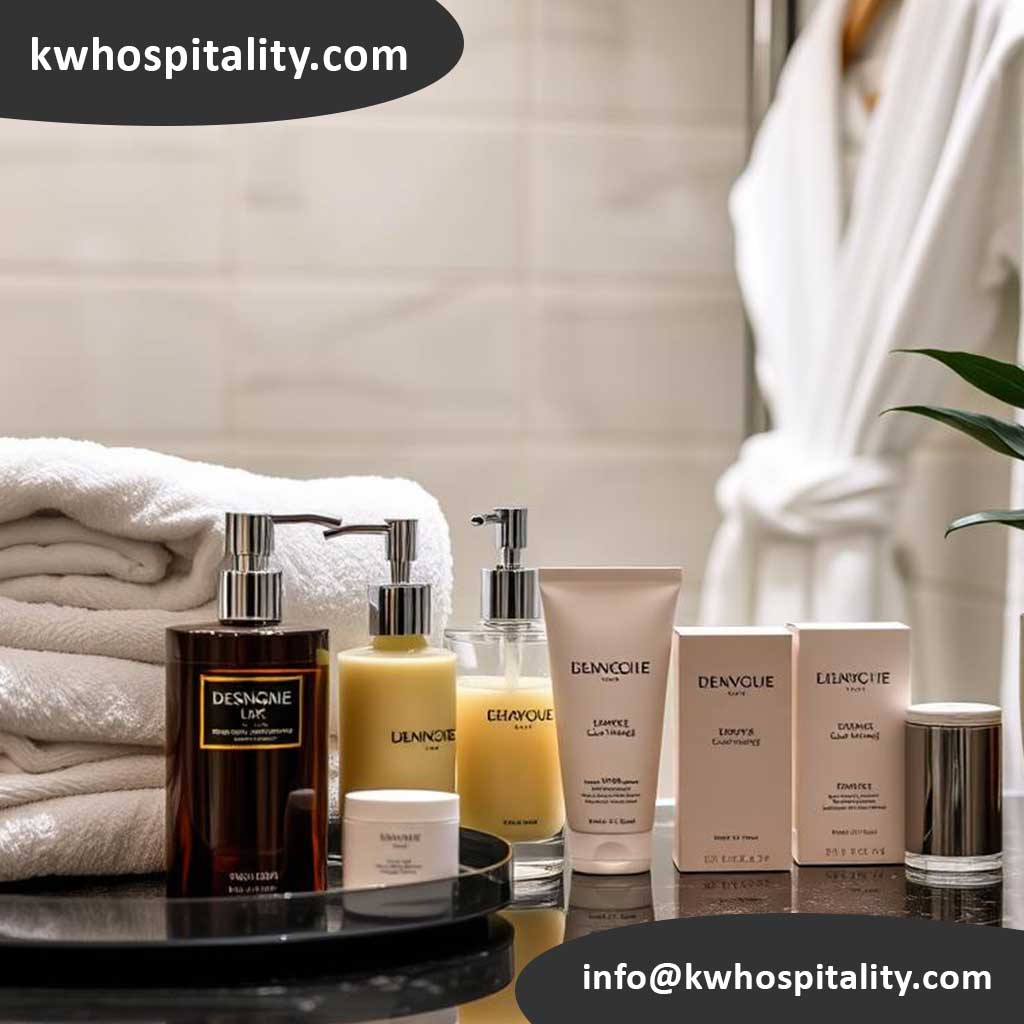
SECTION 15: Advanced Dispensing Systems
Smart Refill Solutions, Anti-Theft Engineering & Modern Eco-Luxury Presentation
In the modern era of luxury hospitality, where design intelligence, sustainability commitments, and guest expectations intersect more dynamically than ever before, the transition from single-use toiletry bottles to advanced dispensing systems has become one of the most influential evolutions in bathroom amenity design. What began as a regulatory and environmental response has matured into a sophisticated design movement—one that redefines luxury not through excess, but through elevated practicality, refined presentation, and intelligent engineering. Today’s luxury guest, whether stepping into a bathroom in Montreal, Toronto, Vancouver, New York, Los Angeles, or Miami, expects a seamless, elegant, hygienic, and aesthetically pleasing dispensing experience that aligns with the hotel’s brand identity while eliminating the clutter, waste, and inconsistency associated with miniatures. The dispenser is no longer an afterthought or a utilitarian necessity; it is a central design element that influences the emotional rhythm of the guest’s interaction with the bathroom.
The most refined dispensing systems offer not only eco-friendly advantages but also a noticeably upgraded tactile and visual experience. Single-use bottles—even when made beautifully—still imply disposability and short-term thinking. Dispensers, when executed with care, communicate permanence, stability, and trust. They allow hotels to showcase custom fragrance programs and premium formulations at full scale, free from the constraints of miniature packaging. They express design cohesion through matching hardware finishes—matte black, brushed nickel, champagne gold, polished chrome, or textured resin. They align with the bathroom’s architectural geometry and lighting. And they support hygiene excellence by preventing product residue, ensuring precise dosage, and maintaining a pristine presentation between housekeeping cycles. In this way, dispensers become part of the bathroom’s spatial composition and emotional landscape.
However, not all dispensing systems are created equal. The market is flooded with low-quality models that clog, leak, discolor, loosen from their mounting plates, or trap moisture behind the bracket. Luxury hotels cannot risk such failures, as they directly impact guest perception of cleanliness and operational excellence. High-end dispensing systems must be engineered for durability, stability, ease of use, and long-term maintenance efficiency. They should incorporate anti-theft mechanisms that prevent product removal or sabotage, tamper-resistant locking systems that allow only housekeeping access, and hygienic refill processes that eliminate contamination risks. They should feature secure pump heads that dispense smooth, controlled amounts of product without sputtering. And they must feel luxurious to the touch—silky pump action, clean edges, solid weight, and flawless finish quality.
The Emotional Psychology of Dispensers in Luxury Bathrooms
Guests subconsciously interpret dispensers as a reflection of the hotel’s values. A poorly made dispenser signals cost-cutting, whereas a well-designed one communicates intention, care, and modern luxury. Dispensers influence perception in several ways:
Cleanliness: Guests trust a bathroom more when dispensers appear spotless and professionally mounted.
Sustainability: High-quality dispensers communicate environmental responsibility without sacrificing elegance.
Brand Identity: Custom labels, finishes, and fragrances create a cohesive narrative.
Comfort: Smooth, predictable pump action feels refined and reduces irritation.
Continuity: Uniform dispensers across all rooms build brand consistency and luxury expectation.
Guests do not analyze dispensers consciously, but the emotional impact is profound. They sense the hotel’s operational sophistication, environmental awareness, and design intelligence instantly.
The Engineering of a True Luxury Dispenser System
Luxury dispensing systems are defined by several engineering features that differentiate them from standard or budget solutions.
1. Tamper-Resistant Mounting & Anti-Theft Mechanisms
Dispensers should lock into a secure bracket system that prevents removal by guests. High-end systems use:
concealed locking tabs
magnetic or screw-secured mounts
reinforced backing plates
These systems eliminate the risk of product theft while keeping the design clean and elegant.
2. Precision Pumps & Smooth Dispensing
Dispensers must release consistent product amounts without sputtering or dripping. Premium pumps use:
controlled-compression springs
durable stainless-steel or aluminum pump heads
clog-resistant internal channels
silicone backflow valves
Smooth dispensing is a hallmark of luxury.
3. Hygienic Refill Systems
Housekeeping must be able to refill dispensers quickly without cross-contamination. Luxury refill solutions include:
sealed bulk bags with no-touch transfer
wide-mouth refill openings with silicone gaskets
easy-to-remove internal canisters
4. Material Durability
Luxury dispensers use materials that resist discoloration, corrosion, cracking, and bacterial growth:
aluminum
high-density PET-R
frosted or lacquered glass
matte-coated resin
These materials maintain visual integrity across hundreds of cleaning cycles.
5. Labeling That Enhances Brand Storytelling
Typography, iconography, and color palettes must match the hotel’s aesthetic. Labels should be:
waterproof
smudge-resistant
elegantly minimal
easy to read without disrupting design harmony
KW Hospitality provides custom labeling solutions aligned with each property’s brand DNA.
Luxury Dispenser Experience Menu — What Guests Expect
Visual Harmony
Matching finishes
Clean mounting alignment
Minimalist aesthetic
Functional Excellence
Smooth pump action
No leaks or residue
Easy-to-identify product labeling
Hygiene Assurance
Spotless surfaces
No pooling product under bottles
Odor-free materials
Sustainability Impact
Elimination of plastic waste
Refillable architecture
Beautiful, durable containers
Placement Strategy: The Spatial Logic of Dispensers
Luxury dispenser placement must follow ergonomic and aesthetic rules. Poor placement disrupts the guest experience. Ideal placement principles include:
Shoulder-height positioning near eye level while showering
Symmetrical alignment when using sets of two or three bottles
Space-efficient mounting that avoids visual clutter
Consistency across rooms to strengthen guest familiarity
Dispenser spacing must accommodate natural hand movements and avoid interference with shower caddies, grab bars, or fixtures.
Refillable vs. Cartridge-Based Systems: A Strategic Comparison
| Feature | Refillable Dispensers | Cartridge-Based Systems |
|---|---|---|
| Hygiene | Housekeeping-managed sanitation | Manufacturer-sealed cartridges |
| Cost Efficiency | Lower long-term cost | Higher ongoing cost |
| Sustainability | Very high | Moderate |
| Aesthetic Customization | Fully customizable | Limited options |
| Operational Ease | Slightly more training required | Extremely user-friendly |
| Guest Perception | Spa-like, elegant | Modern, clinical |
KW Hospitality helps hotels evaluate which system aligns best with their brand identity, operational capacity, and sustainability commitments.
Dispensers as Brand Identity Touchpoints
Luxury brands increasingly create signature scent programs—custom shampoos, conditioners, body washes, and lotions aligned with the hotel’s identity. Dispensers become canvases for this sensory storytelling. Through elegant typography, color coordination, and premium finishes, hotels create a cohesive narrative that guests associate with comfort, refinement, and memorability.
When a guest smells a hotel’s signature shower gel at home, the memory of the stay reactivates. This creates emotional loyalty that no advertisement can replicate.
KW Hospitality & Advanced Dispenser Procurement
KW Hospitality provides:
custom-designed dispensers with premium finishes
anti-theft mounting hardware
bulk refill ecosystem design
labeling solutions matching hotel branding
fragrance and formulation partnerships
sustainable material options
Through long-term factory partnerships, KW ensures that products maintain durability, aesthetic cohesion, and cost efficiency while elevating the guest experience.
Dispensing systems have become one of the defining features of modern eco-luxury bathrooms, blending sustainability with refined aesthetics, operational intelligence, and sensory storytelling. They eliminate waste while elevating elegance, creating an experience that is both responsible and indulgent.
In Section 16, we transition from technology-driven solutions to the deeply human priority of accessibility: “Accessibility & Universal Design in the Ultra-Luxury Bathroom: Discreet Support, Inclusive Aesthetics & Seamless Guest Empowerment.”
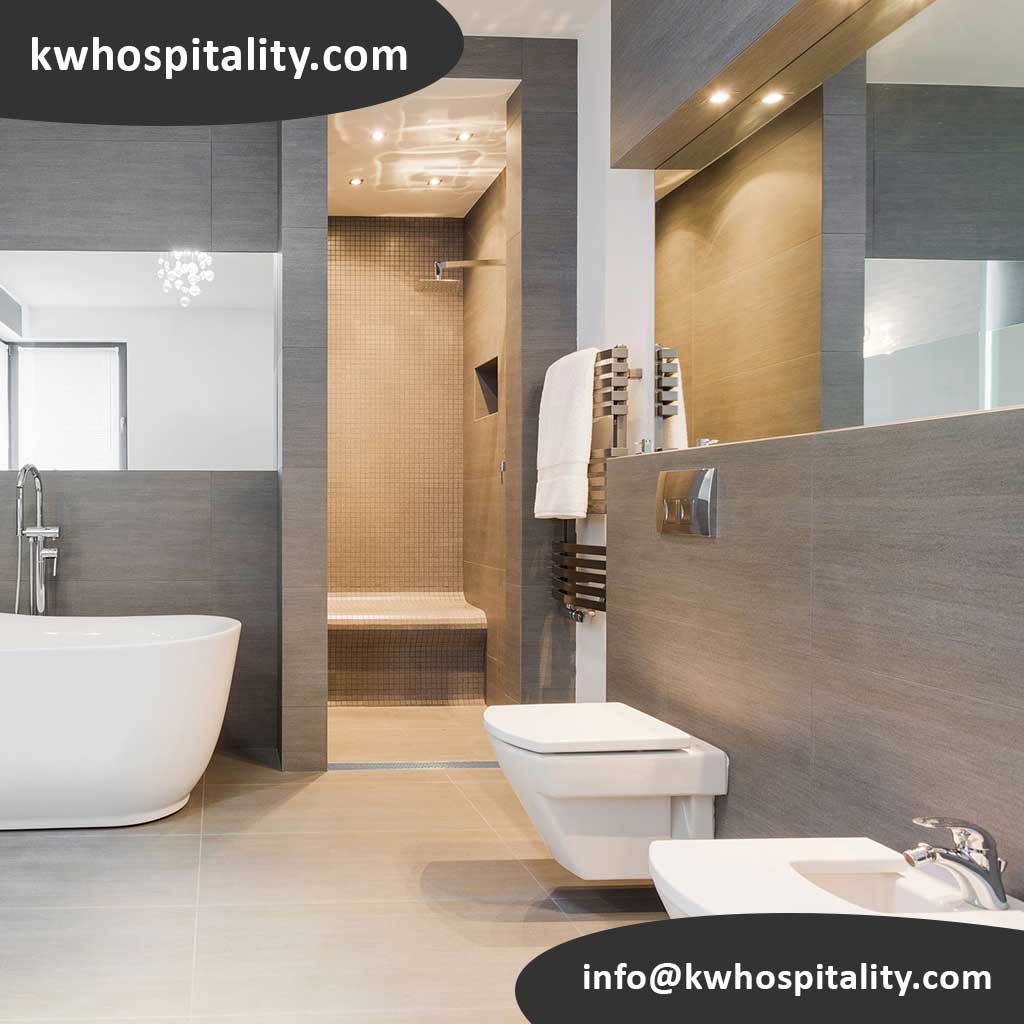
SECTION 16: Accessibility & Universal Design in the Ultra-Luxury Bathroom
Discreet Support, Inclusive Aesthetics & Seamless Guest Empowerment
In the contemporary landscape of ultra-luxury hospitality, where elegance, comfort, sustainability, and emotional experience bind together to form a brand’s identity, accessibility has emerged as one of the most defining measures of true excellence. A bathroom can possess exquisite marble, flawless lighting, hand-crafted amenities, and impeccable hygiene—but if even one guest feels restricted, unsafe, or unsupported within that space, then the environment has not achieved its highest purpose. Luxury is no longer defined solely by visual beauty or sensory indulgence; it is defined by inclusion—the ability of every guest, regardless of mobility, age, physical ability, sensory capacity, or personal circumstance, to interact with the environment confidently, gracefully, and without needing to ask for help. The ultra-luxury bathroom must therefore operate at the intersection of refined aesthetics and discreet functionality, where support features blend into the design so naturally that they feel intentional, elegant, and emotionally considerate rather than clinical or utilitarian.
In cities such as Montreal, Vancouver, Toronto, New York, Los Angeles, Boston, and Chicago—where hospitality competition is increasingly influenced by guest diversity, demographic evolution, and evolving legal frameworks—luxury hotels are redefining their design philosophies to incorporate universal design principles not as regulatory requirements, but as brand pillars. Guests with mobility limitations, visual impairments, older guests, pregnant guests, and even perfectly healthy guests recovering from long flights or feeling fatigued after a day of travel benefit profoundly from environments engineered for comfort and ease. The psychological comfort that comes from a bathroom that is intuitive, welcoming, and physically supportive cannot be overstated. It creates dignity. It creates emotional ease. It creates trust. And it communicates the deepest message a luxury property can send: every guest matters equally.
Universal design in the luxury bathroom requires the elimination of any element that forces the guest to “adapt” to the room. Instead, the room adapts to the guest—subtly, beautifully, intelligently. This includes grab bars that blend into metallic finishes with sculptural elegance; lowered towel bars that remain visually symmetrical; lever-style faucet handles that require minimal effort; wide turning radii; roll-in showers that feel open and spa-like; slip-resistant flooring that looks like handcrafted stone; and well-placed seating that mirrors the luxurious proportions of spa lounges rather than medical fixtures. The design should never remind the guest of limitations—it should instead create a fluid, uninterrupted experience where movement feels effortless and the environment feels crafted around them.
The Emotional Dimension of Accessibility in Luxury Bathrooms
To understand why accessibility is such a profound pillar of luxury hospitality, one must consider the emotional experience of the guest. A bathroom is one of the most private, vulnerable spaces in the hotel room. It is the place where guests bathe, dress, groom, recover, and engage in rituals of self-care. If even one element of this environment feels difficult, awkward, unsafe, or anxiety-inducing, it disrupts not only the physical flow of the stay but also the guest’s emotional connection to the hotel. A poorly placed towel bar, a slippery floor, a faucet too high to reach, a shower bench that feels institutional—each of these small failures accumulates into a feeling of exclusion. Conversely, when accessibility features are integrated seamlessly into the aesthetic composition of the bathroom, guests feel welcomed, understood, and respected.
Luxury guests with accessibility needs often report two competing frustrations: excessive sterility (bathrooms that feel clinical) or excessive minimalism (beautiful but unusable environments). The true art of accessible luxury lies in the middle—creating bathrooms that feel indulgent, warm, and sophisticated, yet offer discreet support for every movement. A grab bar rendered in matte black or brushed nickel becomes a design feature rather than a concession. A fold-down shower bench upholstered in water-resistant, elegantly textured materials becomes a spa element rather than a medical requirement. A magnified mirror mounted at inclusive height becomes a thoughtful gesture rather than an accommodation. This emotional reframing is what separates functional accessibility from luxury accessibility.
The Architectural Foundations of Accessible Luxury
Creating a universally accessible bathroom requires architectural precision. Clearances must be calculated, not estimated. Heights must follow ergonomic logic, not aesthetic randomness. Pathways must be open and unobstructed. The following architectural principles define the modern ultra-luxury accessible bathroom:
1. Barrier-Free Entry & Wide Turning Radius
Doorways should be wide enough to allow comfortable wheelchair passage, with no raised thresholds to interrupt the transition. Turning radii must allow mobility devices to rotate without obstruction. These features also benefit parents with strollers, elderly guests, and anyone carrying luggage.
2. Roll-In, Zero-Threshold Showers
A roll-in shower not only enhances accessibility but also elevates aesthetic minimalism. The floor plane remains uninterrupted, creating a seamless spa-like environment. Proper grading ensures safe drainage, preventing water accumulation while maintaining visual continuity.
3. Elegant Grab Bars Integrated Into the Design Palette
Modern grab bars no longer resemble medical hardware. They are available in stone-matched finishes, matte metals, brushed brass, and architectural forms that mimic towel bars. The goal is to integrate them into the visual language of the room so they feel intentional and design-forward.
4. Inclusive Faucet and Shower Controls
Lever-style faucets, large-grip shower handles, and thermostatic valves are essential for ease of use. These elements benefit not only mobility-limited guests but also anyone with wet hands, arthritis, or temporary fatigue.
5. Height-Optimized Fixtures
Mirrors, vanities, shelves, and dispensers must be placed at heights accessible for guests whether standing or seated. This includes adjustable or dual-height mirrors, roll-under sinks, and towel bars positioned for effortless reach.
6. Slip-Resistant Flooring That Preserves Luxury Aesthetics
Advanced slip-resistant materials now offer textures and finishes that replicate natural stone while meeting ADA and CSA standards. This ensures safety without compromising beauty.
7. Lighting That Supports Visual Accessibility
Even, shadow-free illumination, high-CRI lighting, and dimmable options support guests with visual sensitivities while maintaining luxury ambiance.
KW Hospitality assists hotels in evaluating materials and fixtures that meet accessibility codes while preserving design elegance across property-wide bathroom programs.
Accessibility Experience Menu — What Luxury Guests Expect
Freedom of Movement
No physical barriers
unobstructed pathways
intuitive fixture placement
Emotional Comfort
no “medical” visual cues
warm materials and finishes
refined lighting
Effortless Interaction
easy-to-grip fixtures
smooth transitions
supportive surfaces
Safety Without Compromise
slip-resistant flooring
secure grab bars
stable shower seating
The Aesthetic Integration of Accessible Features
Designers often misunderstand accessibility as a challenge to aesthetics, when in fact it is an opportunity to elevate visual sophistication. The key is to integrate accessible features with the same meticulous care given to decorative hardware or lighting. For example:
A grab bar can mirror the shape of a towel bar.
A shower bench can match the stone slab of the vanity.
A roll-under sink can be sculpted from seamless materials.
A height-adjustable mirror can be framed with luxury finishes.
Accessibility does not need to be obvious. The most successful luxury bathrooms hide functionality within beauty.
For properties that want absolutely seamless integration, KW Hospitality provides access to manufacturers producing bespoke accessible hardware collections in matching finishes—creating a visually unified bathroom even when regulations require specific placements or materials.
Accessibility & Sustainability: A Complementary Relationship
Accessible bathrooms often align naturally with sustainability goals. For example:
Zero-threshold showers reduce the need for plastic or vinyl barriers.
Lever faucets support low-flow engineering without user frustration.
Slip-resistant stone tiles eliminate the need for rubber mats.
Adjustable lighting reduces energy waste through personalized brightness.
Both principles—accessibility and sustainability—reflect the same core philosophy: luxury should never place burden on people or the environment.
Comparison Table — Standard Accessible Bathroom vs. Luxury Accessible Bathroom
| Feature | Standard Accessible Bathroom | Ultra-Luxury Accessible Bathroom |
|---|---|---|
| Aesthetics | Functional but plain | Seamless, elegant, design-forward |
| Grab Bars | Institutional appearance | Color-matched, sculptural, discreet |
| Shower Design | Functional roll-in | Spa-like, zero-threshold, visually refined |
| Fixtures | Standard ADA/CSA compliant | Ergonomic + luxury finishes |
| Lighting | Basic overhead lights | High-CRI, evenly diffused luxury illumination |
| Guest Experience | Adequate | Empowering, inclusive, emotionally elevating |
KW Hospitality & Inclusive Design Procurement
KW Hospitality provides:
accessible hardware in luxury finishes
ADA/CSA-compliant fixtures that match brand aesthetics
zero-threshold shower systems
accessible dispenser mounting solutions
inclusive mirror systems
slip-resistant flooring products
consultation on layout, ergonomics, and guest flow
Our goal is to help hotels build inclusive bathrooms that dignify guests while strengthening brand identity and exceeding regulatory compliance.
Accessibility, when done beautifully, becomes one of the purest expressions of luxury. It communicates respect, emotional intelligence, and design mastery. It transforms the bathroom from a functional space into an inclusive sanctuary where every guest—without exception—feels welcomed and empowered.
In Section 17, we move from architectural inclusivity to deep relaxation and ritual, exploring one of the most desired features in ultra-luxury bathrooms: “Bath Tubs, Jacuzzis & Hydrotherapy Experiences: Immersion, Wellness & the Modern Ritual of Water.”
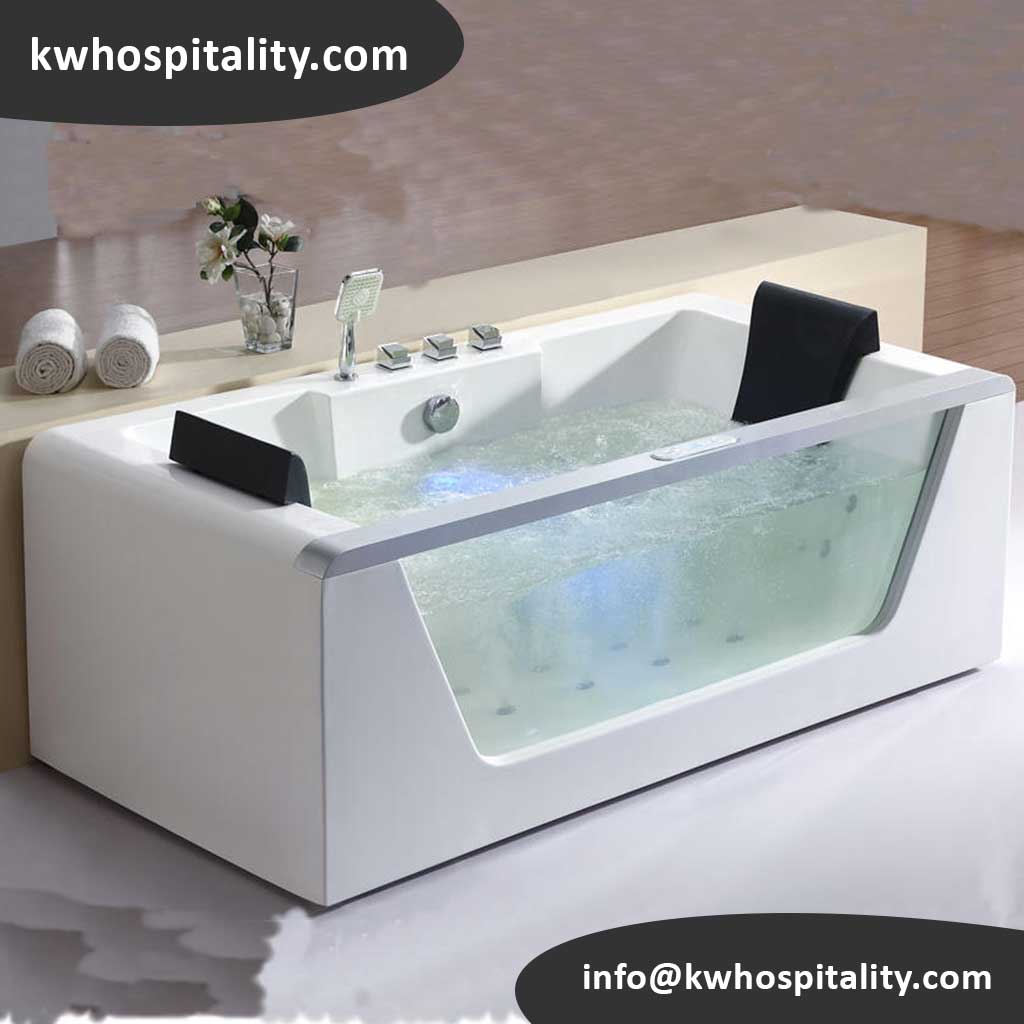
SECTION 17: Bath Tubs, Jacuzzis & Hydrotherapy Experiences
Immersion, Wellness & the Modern Ritual of Water
In the evolving universe of luxury hospitality, where guest expectations increasingly revolve around restoration, wellness, and sensory indulgence, the bathtub and its accompanying hydrotherapy elements have reclaimed their place as one of the most sought-after, emotionally resonant features of the hotel bathroom. Once considered merely functional, bathtubs have transformed into architectural statements of relaxation—personal sanctuaries within the sanctuary of the room. For many guests, especially in urban centers such as Montreal, Toronto, Vancouver, New York, Los Angeles, and Miami, the bathtub signifies a pause from motion, a retreat from overstimulation, a return to oneself. It is the one moment in the hotel stay where the guest’s mind and body feel fully suspended, disconnected from obligation, surrounded by warmth, privacy, and fluidity. When a bathtub is executed with elegance, ergonomic intelligence, wellness-focused design, and premium materials, it becomes not just a fixture but a ritual—a deeply personal, restorative experience that guests remember long after checkout.
The modern luxury bathtub is therefore not defined by size or cost alone, but by emotional engineering: the way the shape cradles the body, the way the water embraces with heat retention, the way the surrounding lighting softens the air, the way the fixtures glide under the fingertips, and the way the overall environment communicates calm. The psychology of soaking is powerful. Water immersion slows breathing, reduces muscle tension, lowers stress hormones, and stimulates the parasympathetic nervous system. For frequent travelers, business guests, honeymooners, and wellness-oriented guests, a bathtub offers something even the best shower cannot deliver—a complete disengagement from external pressures and a deep, sensory re-grounding. This is why hotels with well-executed bathtubs consistently see higher guest satisfaction scores, more social media sharing, stronger premium room sales, and greater emotional loyalty.
Luxury bathtubs must therefore combine four core pillars: design aesthetics, ergonomic comfort, hydrotherapy potential, and experiential storytelling. The design must complement the architecture of the bathroom, integrating seamlessly with stone, tile, lighting, and accessories. The shape must allow for full or partial immersion without discomfort—wide enough to relax the shoulders, deep enough to submerge the legs, and contoured to align with natural spinal curves. The hydrotherapy offerings—ranging from air jets and whirlpool systems to chromotherapy lighting, aromatherapy integration, and silent circulation—must elevate the experience beyond simple soaking. And finally, the bathtub must become part of the hotel’s storytelling narrative, aligning with the brand’s commitment to wellness, tranquility, and thoughtful luxury.
The Emotional Psychology of Hydrotherapy in Luxury Hotels
Hydrotherapy delivers not just physical benefits but emotional clarity. Guests stepping into a warm bathtub often describe the sensation as a form of release—a moment where external noise dissolves and internal balance returns. Luxury hotels capitalize on this psychological transformation by designing environments where hydrotherapy feels intimate, private, and deeply intentional.
Guests experiencing hydrotherapy in a luxury setting feel:
cocooned by warmth and silence
supported by ergonomic shaping
soothed by tactile water movement
elevated by lighting, scent, and audio elements
valued by the hotel’s dedication to their wellbeing
Hydrotherapy becomes a form of emotional hospitality—a gesture that communicates depth of care beyond aesthetics.
Types of Luxury Bathtubs & Their Design Philosophy
Luxury hotels utilize a variety of bathtub forms, each offering different emotional and experiential benefits.
1. Freestanding Sculptural Tubs
These tubs act as visual masterpieces, often placed as the centerpiece of the bathroom. Their curves, purity of form, and materiality (acrylic resin, cast stone, matte mineral composites) evoke modern elegance. They communicate independence, serenity, and architectural boldness.
2. Deep Soaking Tubs (Japanese-Style / Ofuro Tubs)
Designed for immersion, these deeper tubs emphasize therapeutic warmth and meditative stillness. Their smaller footprint combined with increased depth creates a cocoon-like environment ideal for wellness-focused properties.
3. Drop-In or Built-In Tubs
Integrated into stone or tile surrounds, these tubs create a grounded, symmetrical appearance. They are ideal for spacious, spa-inspired environments where water, stone, and lighting merge into a cohesive sanctuary.
4. Jacuzzis & Whirlpool Systems
Offering pressurized water movement or air jets, these tubs prioritize physical therapy, muscle relaxation, and indulgence. Modern luxury Jacuzzis operate with quiet motors, self-cleaning systems, and ergonomic jet placement.
5. Hybrid Hydrotherapy Systems
Some luxury hotels combine aromatherapy, chromotherapy, and silent air systems for a multi-sensory bathing ritual.
KW Hospitality helps hotels select tubs that match their space, guest demographic, brand philosophy, and operational realities.
Hydrotherapy Experience Menu — What Guests Expect
Comfort
deep, enveloping water
supportive ergonomic angles
heat-retaining materials
Serenity
smooth water movement
no harsh mechanical noise
soft, warm lighting
Aesthetic Harmony
seamless integration into bathroom architecture
matching fixtures
balanced proportions
Wellness Enhancement
aromatherapy compatibility
chromotherapy lighting
silent jets or air infusion
Material Selection: The Foundation of Luxury & Durability
Luxury bathtubs must not only feel beautiful—they must maintain their appearance and performance across thousands of guest cycles. Common high-end materials include:
1. Solid Surface (Stone Resin / Mineral Composite)
Offers heat retention, smooth touch, durability, and sculptural elegance.
2. Cast Iron with Enamel Coating
Classic durability with excellent temperature retention; heavy but timeless.
3. Acrylic Reinforced with Fiberglass
Lightweight, warm to the touch, a cost-efficient luxury option with modern finishes.
4. Porcelain-on-Steel
Sleek, crisp, easy to clean, but requires careful handling.
Each material impacts not only aesthetics but also operational flow—cleaning time, maintenance costs, and long-term performance.
Placement & Spatial Design: The Art of Creating a Bathing Sanctuary
Bathtub placement determines the emotional flow of the bathroom. The most successful designs consider:
line of sight from the bedroom
proximity to windows for natural light
privacy balance through frosted or smart glass
distance from vanities to maintain spatial openness
integration of ledges for candles, amenities, or accessories
Lighting around the bathtub is equally crucial. LED strips beneath freestanding tubs create floating effects. Adjustable sconces nearby offer warmth for evening baths. Chromotherapy systems support relaxation or energy stimulation.
Hydrotherapy & Sustainability: A Modern Intersection
Sustainability does not conflict with hydrotherapy; it refines it. Modern tubs can incorporate:
optimized water volume
insulated shells to reduce reheating
energy-efficient motors for Jacuzzis
low-flow filler faucets that maintain pressure
self-cleaning jet systems
intelligent water management
Hotels can therefore offer indulgence while reducing utility consumption.
KW Hospitality helps properties evaluate suppliers whose hydrotherapy systems merge luxury with environmental responsibility.
Comparison Table — Standard vs. Luxury Bathtubs in Hotels
| Feature | Standard Hotel Tub | Luxury Hotel Hydrotherapy Tub |
|---|---|---|
| Material | Basic acrylic | Stone resin, cast iron, mineral composite |
| Ergonomics | Generic shape | Sculpted, body-supporting curvature |
| Water Experience | Still water | Air jets, silent hydromassage, chromotherapy |
| Aesthetic Impact | Functional | Architectural centerpiece |
| Heat Retention | Moderate | Excellent |
| Guest Emotional Impact | Limited | Transformative, wellness-driven |
KW Hospitality & Hydrotherapy Procurement Strategy
KW Hospitality collaborates with premium bathtub and hydrotherapy manufacturers to provide:
customized shapes and finishes
sustainable hydrotherapy systems
ergonomic design consulting
anti-slip flooring integration
hardware and faucet pairing
logistics coordination for large installations
cost-optimized procurement for large projects
This ensures that hotels create bathing experiences that resonate with modern luxury travelers seeking wellness, sanctuary, and emotional reconnection.
Immersive bathing is not just relaxation—it is one of the most powerful emotional touchpoints in the luxury hotel journey. A well-designed bathtub or hydrotherapy system transforms the bathroom into a restorative wellness retreat, elevating the guest’s experience from functional to unforgettable.
In Section 18, we shift from immersion to personalization as we explore: “Guest Personalization & Amenity Configurations: Tailoring Bathroom Experiences to VIP, Family, Business & Wellness Travelers.”
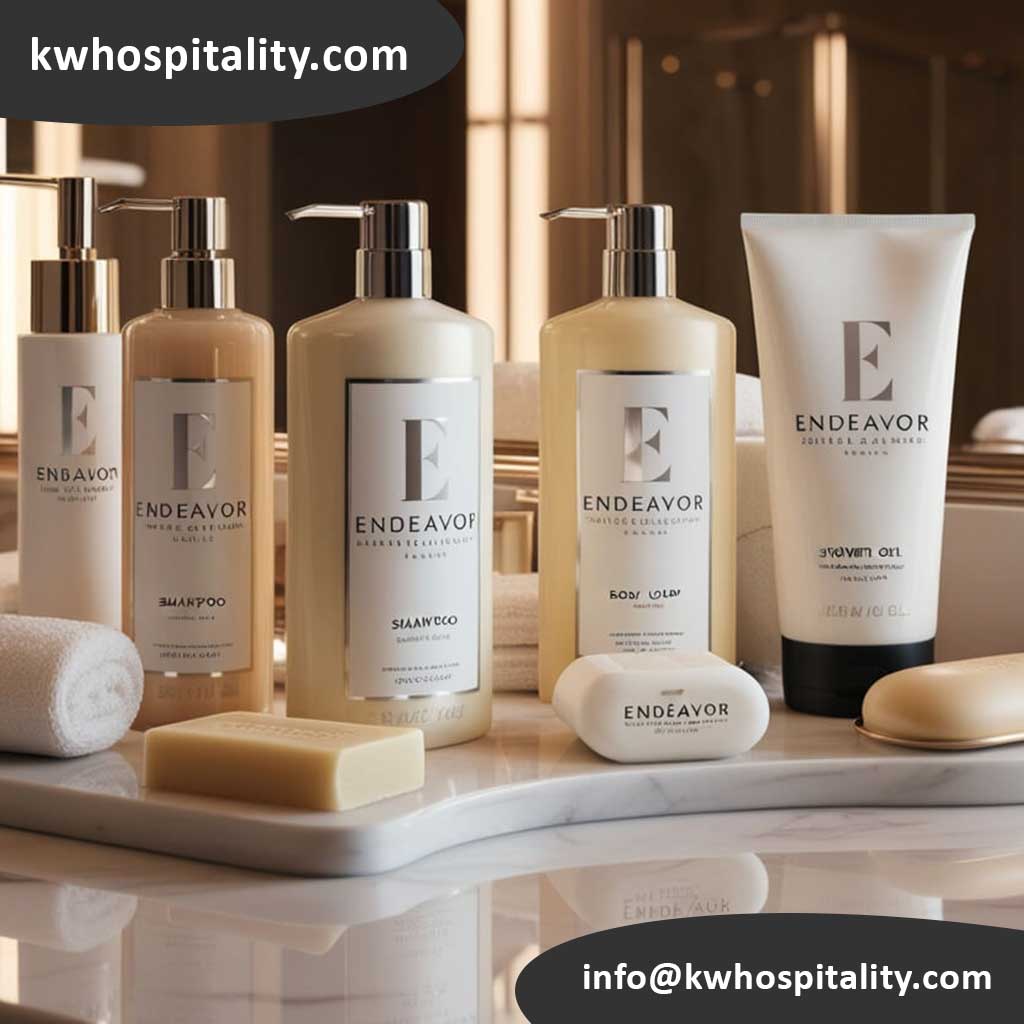
SECTION 18: Guest Personalization & Amenity Configurations
Tailoring Bathroom Experiences to VIP, Family, Business & Wellness Travelers
In the ever-evolving world of ultra-luxury hospitality, where emotional intelligence increasingly defines the competitive landscape and where the role of the bathroom has transformed from a purely functional space into a curated sanctuary of comfort, wellness, and sensory expression, the ability to personalize amenities for different guest profiles has become one of the most powerful levers of guest satisfaction and brand distinction. Modern travelers no longer seek uniformity; they seek recognition. They wish to feel that the hotel has anticipated their needs, understood their routines, predicted their preferences, and tailored the environment—especially the bathroom—to harmonize with the emotional state they bring into the room. Whether the guest arrives exhausted from a long-haul flight, energized for a business summit, seeking intimacy and celebration for a honeymoon, or hoping to immerse in wellness rituals that reconnect them to themselves, the bathroom becomes a canvas upon which luxury hotels express attentiveness. The days of a one-size-fits-all bathroom setup have faded. Instead, luxury hotels are entering an era where personalization is not a privilege but an expectation, and the bathroom—because of its intimacy, its rituals, and its emotional significance—stands at the center of that transformation.
For hotels in high-competition markets such as Montreal, Toronto, Vancouver, New York, Los Angeles, San Francisco, and Miami, the bathroom is often the decisive factor in how guests evaluate the overall experience. It is the room where the earliest impressions of cleanliness, comfort, scent identity, lighting sophistication, and amenity quality are formed. It is where the guest transitions from public persona to private self, from stress to rest, from travel fatigue to emotional grounding. Because of this, luxury hotels must understand that each traveler carries a unique set of expectations, anxieties, desires, and rhythms. The business traveler needs functional precision and efficiency; the family needs comfort and safety; the VIP guest requires exclusivity and sensory indulgence; the wellness traveler seeks calm, balance, and intentional design; and the romantic guest desires softness, intimacy, and aesthetic elegance. By tailoring bathroom amenities, layouts, fragrances, accessories, and textile configurations to these distinct emotional needs, hotels can create transformative experiences that feel deeply personal—even when executed at scale.
Personalization does not mean overwhelming the guest with choices or adding excessive items that complicate the aesthetic, but rather curating the bathroom in a way that feels quietly attentive, effortlessly intuitive, and emotionally aligned. It may involve shifting amenity styles, modifying lighting programs, adjusting towel types, adding or subtracting accessory sets, tailoring fragrance intensity, or altering the layout of grooming tools. It may involve customizing slippers, robes, and bath salts; printing personalized message cards; offering premium razor kits for business executives; providing kid-friendly soaps for families; arranging wellness-focused oils and exfoliants for spa enthusiasts; or even modifying the placement of amenities to match the height and usage patterns of different guest profiles. When these gestures are designed subtly and delivered consistently, the guest perceives an invisible choreography of care—one that elevates their emotional connection to the hotel.
Understanding Guest Profiles Through Bathroom Rituals
Every type of guest engages with the bathroom differently. Understanding these patterns allows hotels to tailor the experience with precision. Business travelers, for example, prioritize efficiency: they seek bright, shadow-free mirror lighting for grooming, high-quality razors and shaving gels, gentle but invigorating fragrances for morning showers, and intuitive dispenser placement that minimizes decision friction. They appreciate bath mats positioned with ergonomic logic, grooming tools arranged for immediate use, and towel configurations that support hurried routines. Elegance matters, but functionality defines satisfaction.
Families, particularly those with young children, require safety, ease, and supportive amenities. This might include non-slip surfaces, lower towel placements, gentle baby-friendly soap bars or body washes, additional bath mats, and cleaning protocols that remove any trace of previous usage. A family bathroom setup must accommodate unpredictability—wet hands, splashing, storage needs—and therefore must feel both soft and secure.
VIP guests, such as celebrity travelers, luxury consumers, and premium-suite occupants, expect a bathroom that expresses exclusivity, sensory richness, and artisanal identity. They want personalized fragrance blends, oversized plush towels, upgraded hydrotherapy amenities, dual mirror lighting programs, custom-branded robes, sculptural soap bars, premium bamboo grooming kits, organic body scrubs, spa-level bath salts, and amenities arranged with visual artistry. For VIPs, the bathroom is an extension of the suite’s emotional narrative—a display of refinement and mastery.
Wellness travelers—arguably the fastest-growing luxury demographic—desire bathrooms that operate almost as private spa chambers. They value diffused warm lighting, aromatherapy oils, bath rituals, hydrotherapy features, magnesium-infused salts, stone massage tools, exfoliating scrubs, and refillable dispensers filled with essential-oil-based products. The bathroom must feel calming, natural, grounded, and sensorially nurturing.
Romantic travelers, including honeymooners and anniversary guests, seek intimacy and emotional warmth. Soft lighting, double-sized bathtubs, scented candles (battery-operated or real depending on safety policy), rose-scented bath gels, plush textiles, and discreet arrangements all enhance the atmosphere. The bathroom becomes a stage for shared experience.
Hotels that understand the nuances of these guest profiles gain a tremendous competitive advantage.
Personalization Menu — Configuring Bathroom Experiences by Guest Type
Business Traveler Configuration
Bright, cool-accurate vanity lighting
High-performance shaving kits
Energizing bath products (citrus, mint, eucalyptus)
Minimalist tray layout for fast access
Quick-dry towels and bath mats
Subtle but modern scent strategy
Family Configuration
Gentle, low-fragrance amenities
Non-slip floor accessories
Additional towels and bath mats
Kid-friendly soaps or bubble bath
Safe-height dispenser placement
Soft lighting for nighttime use
VIP & Suite Configuration
Luxury-tier amenities (premium fragrances, branded collections)
Oversized bath sheets and robe upgrades
Hydrotherapy or chromotherapy enhancements
Double amenity quantities
Personalized welcome card in bathroom
Sculptural accessory sets
Wellness Configuration
Aromatherapy kits
Magnesium or Himalayan bath salts
Warm-toned lighting scenes
Eco-friendly bamboo grooming sets
Premium body exfoliants
Sound-based relaxation (waterfall or soft ambient)
Romantic Configuration
Soft, warm lighting only
Rose-infused products
Bathtub accessories for shared soaking
Linen arrangements that feel sensual
Candle-like lighting accents
The Operational Intelligence Behind Personalization
Personalization is not an act of improvisation. It requires a refined operational system that organizes guest data, anticipates needs, supports housekeeping efficiency, and maintains inventory fluency. Hotels must integrate personalization across:
pre-arrival communication
PMS guest preference data
inventory segmentation
housekeeping workflow mapping
procurement planning for varied amenities
brand-wide personalization standards
KW Hospitality plays a central role in this process by helping hotels design amenity ecosystems with modular configurations—allowing staff to quickly adapt bathroom setups for different guest types without operational strain.
Table: Operational Complexity vs. Guest Impact
| Personalization Level | Guest Impact | Operational Complexity |
|---|---|---|
| Basic (fragrance selection, towel variation) | Moderate | Low |
| Moderate (guest-type amenity sets, lighting adjustments) | High | Medium |
| Advanced (fully customized wellness/VIP packages) | Very High | High |
Hotels that balance these levels strategically achieve exceptional satisfaction while controlling labor and procurement costs.
The Aesthetic Consideration: Personalization Without Clutter
One of the greatest challenges of personalization is preserving the minimalist, spa-like serenity expected in luxury bathrooms. Adding too many items risks disrupting design cohesion. Personalization must therefore operate like invisible luxury—felt deeply, seen subtly.
This includes:
using matching accessory materials
ensuring symmetry regardless of configuration
keeping color palettes neutral
integrating personalized items into existing trays, not external add-ons
The bathroom should always maintain its calm, curated appearance.
KW Hospitality & Personalized Amenity Programs
KW Hospitality helps hotels develop:
curated modular amenity sets for each guest type
signature fragrances and wellness-focused formulations
premium-tier VIP amenities
children’s eco-friendly amenity options
personalization-friendly packaging design
procurement forecasting systems
This ensures that personalization is not just a gesture—it becomes a structured, scalable brand advantage.
Personalization transforms the luxury bathroom from a beautiful space into a meaningful, emotionally attuned environment that recognizes the individuality of each traveler. It elevates hospitality from service to relationship—creating loyalty, differentiation, and unforgettable impressions.
In Section 19, we move deeper into the wellness dimension as we explore: “Mini-Spa Elements: Salt Scrubs, Bath Oils, Aromatherapy & Transformative In-Room Wellness Rituals.”
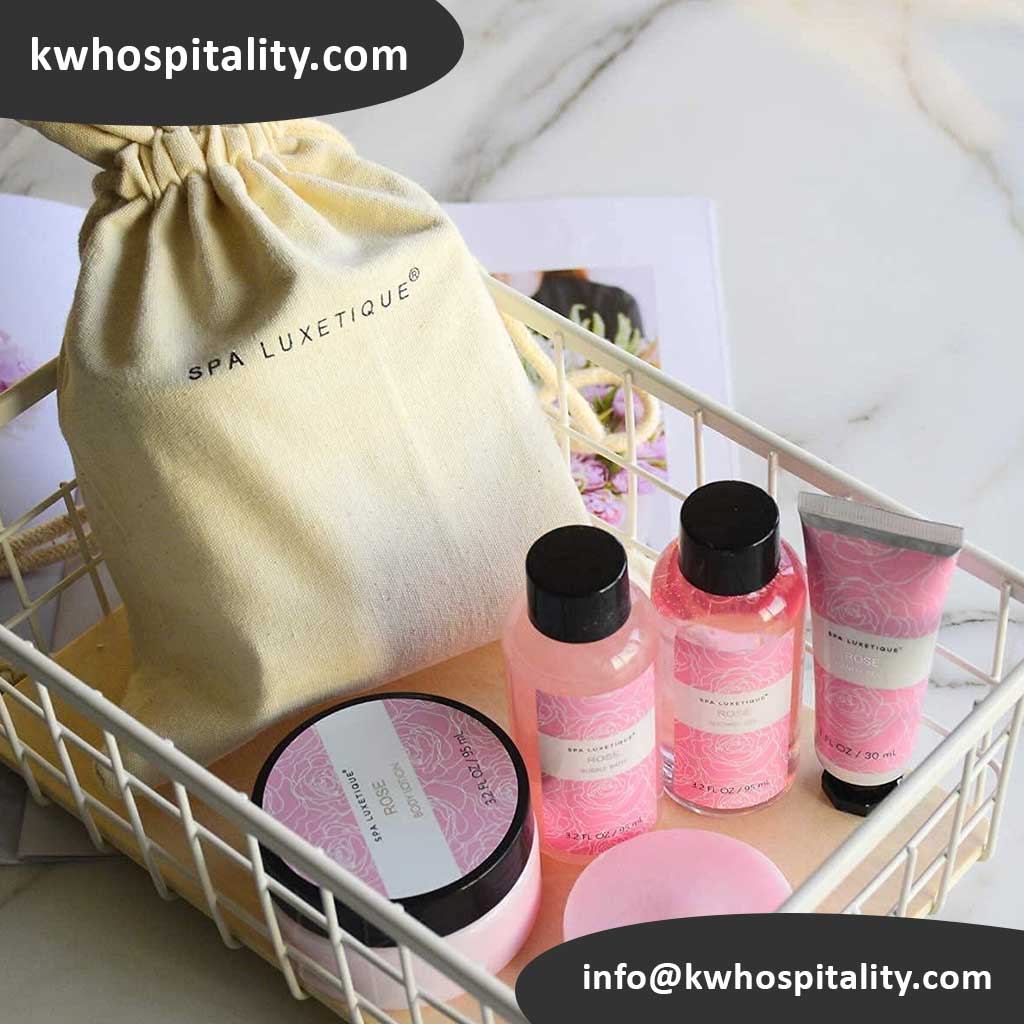
SECTION 19: Mini-Spa Elements
Salt Scrubs, Bath Oils, Aromatherapy & Transformative In-Room Wellness Rituals
In the modern era of luxury hospitality, where wellness has evolved from a desirable add-on to a defining pillar of the guest experience, the bathroom has become more than a functional environment—it is a sanctuary of renewal, a chamber of sensory recalibration, and a private retreat where guests can disconnect from digital overstimulation, urban intensity, and travel exhaustion. The introduction of mini-spa elements such as salt scrubs, botanical bath oils, aromatherapy diffusers, massage stones, and restorative soaking rituals signals a profound shift in how luxury hotels imagine the purpose of the bathroom. No longer simply a place to bathe or groom, the bathroom becomes an intimate spa suite, carefully curated to invite slow living, mindful restoration, and sensory nourishment. For the guest settling in after a long-haul flight, preparing for an important event, recovering from a busy conference, or enjoying a celebratory moment, these wellness elements provide an emotional refuge—a quiet promise that the hotel understands their human need for grounding, stillness, and indulgence. When executed with refinement, intention, and aesthetic harmony, mini-spa amenities elevate the bathroom into a serene ritual environment where the guest feels cared for on a deeper, almost spiritual level.
Luxury hotels in competitive wellness-oriented markets like Montreal, Vancouver, Toronto, Los Angeles, New York, and Miami have discovered that guests increasingly value experiences that soothe the mind as much as they pamper the body. Salt scrubs that exfoliate gently, bath oils that envelop the skin in botanical warmth, aromatherapy blends that shift mood and energy, and curated ritual kits that guide the guest through moments of restoration all contribute to an elevated, emotionally intelligent bathroom environment. Unlike traditional amenities—which focus on practicality—mini-spa elements focus on transformation. A hotel that includes magnesium bath salts, eucalyptus oil droppers, aromatic body serums, bamboo massage tools, or volcanic stone foot sabers is not merely providing amenities; it is offering an experience of wellness sovereignty, allowing the guest to shape their own restorative journey. This is particularly powerful in an era when time, privacy, and personal space have become some of the most desired luxuries.
Mini-spa amenities also influence how the guest perceives the hotel as a holistic wellness brand. When the bathroom offers rituals that mirror the intention of a high-end spa, guests feel that their wellbeing is valued beyond the transactional nature of accommodation. They form emotional associations with the hotel: this is where I felt calm, this is where I recovered, this is where I felt restored. Such associations translate into loyalty, premium upsells, repeat bookings, and stronger brand advocacy. Moreover, guests often photograph and share such amenities on social media platforms, creating organic, aesthetically rich brand exposure. For contemporary hotels aiming to attract wellness travelers, influencers, and premium-tier guests, these bathroom rituals are a strategic competitive advantage.
The Sensory Architecture of Mini-Spa Bathroom Experiences
The value of mini-spa amenities lies not in the individual product but in the sensory ecosystem they create as a whole. Each element—texture, scent, temperature, lighting, sound, and touch—interacts to form an immersive ritual. Salt scrubs offer a granular texture that awakens the skin and refreshes circulation. Bath oils diffuse warmth and hydration across the body, softening muscles and calm the nervous system. Aromatherapy oils activate limbic pathways that regulate mood, energy, memory, and emotional balance. Even the simple act of preparing a warm bath transforms the room’s atmosphere—the sound of water filling the tub, the gentle warmth rising through the air, the play of light reflecting on water’s surface—each element contributes subtly to the emotional reset.
Guests often describe in-room spa rituals as “micro-escapes”—short, deeply restorative moments that relieve stress quickly and effectively. A carefully curated aromatherapy selection—lavender for sleep, eucalyptus for respiratory refreshment, bergamot for emotional uplift, ylang-ylang for sensuality, rosemary for mental clarity—can dramatically influence how a guest feels after the experience. The tactile sensation of applying a salt scrub helps the body awaken, shedding tension. A bath oil infused with almond, jojoba, or evening primrose envelops the skin in a velvety moisture that lingers long after the bath is over. Even the placement of these items affects the experience; arranged elegantly on a resin tray, nestled beside candles, or positioned near the tub’s edge, the amenities signal that the hotel has curated the environment for ritual rather than routine.
Hotels that master this sensory architecture create a signature wellness identity that becomes as recognizable as their bedding, fragrance program, or service style. Guests perceive the bathroom not as a utilitarian space but as a personalized wellness retreat—one that elevates their stay from enjoyable to unforgettable.
Mini-Spa Ritual Menu — What Luxury Guests Desire
Exfoliation Ritual
magnesium or Himalayan salt scrubs
botanical exfoliants (rosehip, citrus peel)
moisturizing post-scrub oils
Immersion Ritual
aromatic bath oils
magnesium chloride soaking salts
balancing blends with lavender, sandalwood, eucalyptus
Aromatherapy Ritual
essential oil droppers
reed diffusers with spa-grade blends
pillow sprays for sleep
Mindfulness Ritual
soft lighting scenes
curated playlist suggestions
meditation or breathwork card
Massage Ritual
bamboo or jade massage tools
warm-stone foot packs
hydrating body balms
These rituals extend the emotional bandwidth of the hotel stay, providing restorative moments that resonate deeply with the wellness traveler.
Materials & Formulations: The Backbone of Spa-Grade Bathroom Amenities
Luxury spa amenities must meet rigorous sensory and performance standards. Formulations should be:
free of parabens, sulfates, and harsh chemicals
rich in natural oils and botanical extracts
ethically sourced
biodegradable and environmentally responsible
hypoallergenic and skin-friendly
Packaging must also support the luxury experience, using materials like frosted glass, matte aluminum, textured kraft, or resin-topped bottles that reflect elegance and purity.
KW Hospitality works with boutique and large-scale manufacturers to help hotels source spa-grade products tailored to their brand identity—whether earthy, botanical, minimalist, or modern-luxury inspired.
Procurement Intelligence: Scaling Spa Experiences Across Room Types
One of the greatest challenges in hotel operations is implementing wellness amenities efficiently across varying room categories while maintaining consistency and cost control. Mini-spa amenities require careful planning related to:
quantity forecasting
storage conditions (oils, salts, and botanical products must be protected from heat or humidity)
packaging durability
tamper protection
product shelf life
cost-per-turnover
housekeeping training
KW Hospitality supports hotels through modular spa-amenity kits that streamline distribution and reduce complexity, allowing even mid-size hotels to offer spa-grade experiences without operational strain.
Comparison Table — Standard Amenities vs. Mini-Spa Amenities
| Feature | Standard Amenities | Mini-Spa Luxury Amenities |
|---|---|---|
| Experience | Functional | Transformative & sensory-rich |
| Emotional Impact | Minimal | Deep relaxation & wellness |
| Packaging | Plastic or basic paper | Glass, aluminum, kraft, luxury resin |
| Guest Perception | Expected | Memorable & elevating |
| Brand Value | Low differentiation | High brand distinction |
| Social Shareability | Limited | Highly shareable & aesthetic |
KW Hospitality & Bespoke In-Room Spa Programs
KW Hospitality offers hotels the ability to design custom spa ritual kits—complete with signature oils, bath salts, exfoliants, scent blends, and amenity trays—tailored to their guest demographics and brand story. From organic Canadian botanical suppliers to international fragrance houses, KW connects hotels to wellness-forward manufacturers capable of producing consistent, scalable, and luxury-grade bathroom spa amenities.
These programs transform standard rooms into micro-wellness suites and premium rooms into private spa sanctuaries, redefining the guest journey without requiring architectural renovations.
Mini-spa amenities elevate the bathroom into a sanctuary of personal ritual, emotional restoration, and sensory delight. They deepen the guest’s relationship with the hotel, create powerful memory anchors, and align modern hospitality with the rising global demand for wellness-driven travel.
In Section 20, we shift from tactile wellness to atmospheric refinement as we explore: “Bathroom Scent Strategy: Diffusers, Sprays, Hidden Aroma Nodes & The Science of Emotional Fragrance Mapping.”
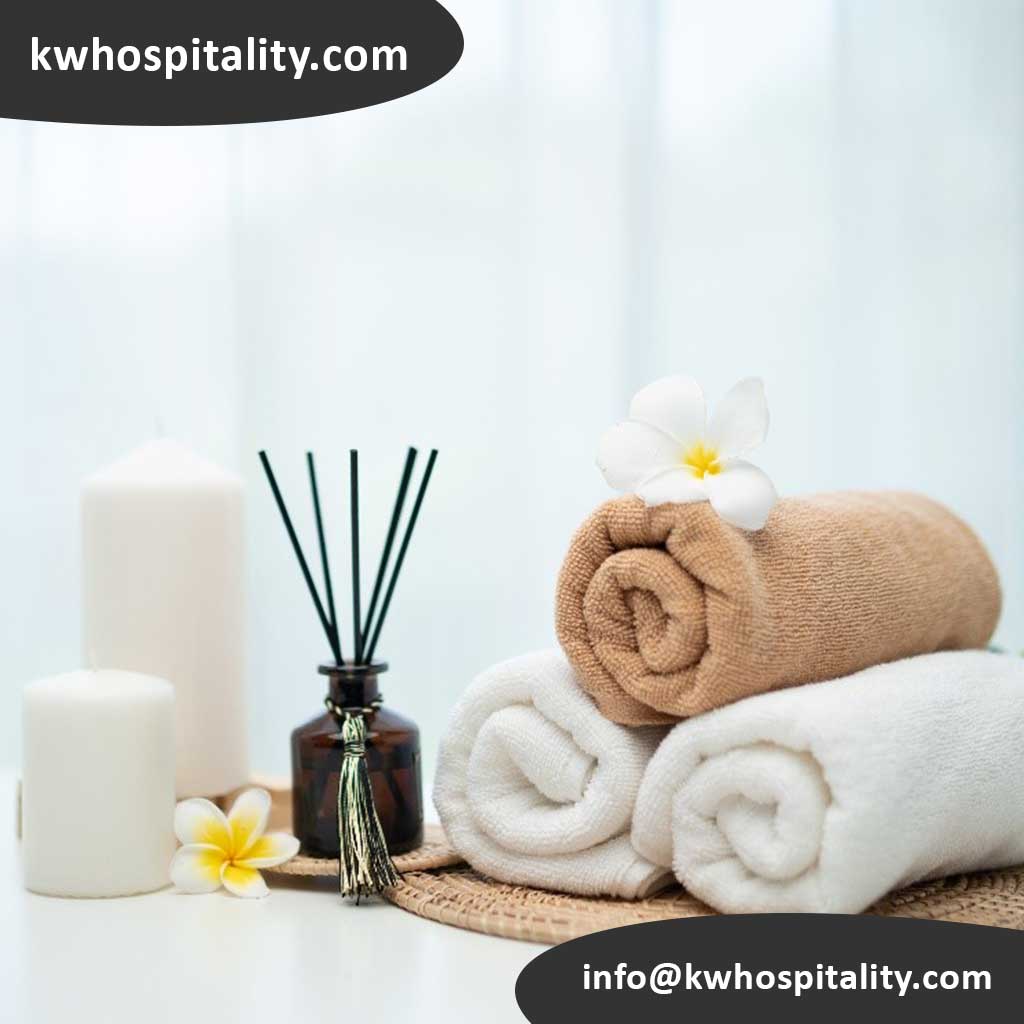
SECTION 20: Bathroom Scent Strategy
Diffusers, Sprays, Hidden Aroma Nodes & the Science of Emotional Fragrance Mapping
In the refined universe of luxury hospitality, where every sensory detail is orchestrated with precision and emotional intent, the role of scent has evolved far beyond the ornamental or the decorative and has become one of the most powerful tools in shaping the guest’s subconscious perception of comfort, cleanliness, wellness, and luxury. The bathroom—an intimate space where guests transition between states of energy, prepare for the day’s demands, unwind from fatigue, or indulge in restorative rituals—responds particularly strongly to scent design. A strategically crafted fragrance environment can transform the bathroom from a purely functional space into a sanctuary that communicates purity, serenity, confidence, and indulgence. Hotels that master scent strategy understand that scent does not merely freshen a room; it sculpts its emotional identity. It sets the tone before the guest even turns on the light. It reassures them that the space is meticulously maintained. It enhances the textures of the amenities and the warmth of the shower. It aligns with the brand’s overall fragrance profile and extends that identity into the most intimate corners of the room. The modern luxury scent strategy is therefore not an afterthought but an element of environmental storytelling—an invisible luxury that profoundly impacts guest memory, comfort, and emotional well-being.
Fragrance perception is one of the most immediate and powerful forms of sensory interpretation in the human brain. Neuroscientific research demonstrates that scent connects directly to the limbic system, where emotions, memories, and instinctual reactions are formed. Because of this, guests evaluate the bathroom’s cleanliness and luxury quality in a matter of seconds based on scent alone. A faint chemical odor instantly lowers perceived luxury, making the space feel clinical or hastily cleaned. A musty or stale scent triggers distrust, implying poor ventilation or suboptimal housekeeping. But a refined, subtle, well-balanced signature scent communicates calm precision—it signals that the environment is cared for, that the hotel invests in invisible quality, that the guest is stepping into a space designed to support their emotional ease. This is why luxury hotels in cities such as Montreal, Toronto, Vancouver, Los Angeles, Miami, New York, and Boston have elevated scent strategy into an essential operational pillar. Scent is no longer used to mask imperfections—it is used to perfect the environment.
The bathroom scent strategy for a luxury hotel must therefore operate with surgical intention, combining fragrance artistry with engineering intelligence. It must consider airflow patterns, humidity behaviors, heat dynamics, amenity placement, shower steam interaction, and the time-of-day cycles that alter scent diffusion. It must harmonize with the hotel’s signature fragrance yet adapt to the bathroom’s unique volume and ventilation characteristics. It must remain subtle enough that the guest never feels overwhelmed, yet present enough to evoke sensory confidence upon entry. Too much fragrance feels artificial. Too little feels neglected. The ideal solution sits in a narrow equilibrium—a delicate, atmospheric presence that establishes emotional comfort without drawing conscious attention to itself.
The Emotional Psychology of Bathroom Scent in Luxury Hospitality
Scent influences how a guest perceives space, light, sound, cleanliness, and even temperature. A fresh botanical scent makes a bathroom feel cleaner and brighter. A warm amber scent creates a cocoon-like atmosphere ideal for unwinding in the bathtub. A eucalyptus-mint blend energizes business travelers preparing for morning commitments. A soft lavender-bergamot composition reassures guests preparing for sleep. A sandalwood or cedar base note adds depth and sophistication to spa-inspired bathrooms. These emotional dynamics are not incidental—they are deliberately crafted components of the guest journey.
Luxury bathroom scent strategies must therefore consider the emotional rhythm of the stay. Many hotels now use multi-phase scent mapping programs that adjust the fragrance presence based on housekeeping cycles, shower usage, and HVAC patterns. For example, subtle diffusion during housekeeping resets the room to a neutral-clean environment, while warm, aromatic tones deepen after the guest begins a bath ritual. This layered approach is part of what separates luxury scent strategy from simple odor management; it is emotional sculpting expressed through fragrant air.
Fragrance Categories That Define the Ultra-Luxury Bathroom
While signature scents vary by brand, the most successful luxury bathroom fragrances fall into several sophisticated categories, each designed to evoke a specific emotional state:
1. Fresh Botanical Cleansing Scents
Green tea, mint, eucalyptus, bamboo, lemongrass, aloe, basil, and verbena create a crisp, pure atmosphere that enhances the perception of cleanliness and airiness. These scents work especially well in bathrooms with white stone, chrome fixtures, and daylight emphasis.
2. Warm Spa & Relaxation Scents
Lavender, chamomile, neroli, sandalwood, rose, vanilla, and cashmere musk support evening rituals, baths, and slow-paced routines. They create a soft, nurturing environment where the guest feels embraced by warmth and serenity.
3. Modern Citrus-Energizing Scents
Grapefruit, bergamot, mandarin, yuzu, and lime add brightness and energy, making them ideal for business travelers or morning routines. These scents feel clean, contemporary, and subtly invigorating.
4. Earthy, Wellness-Driven Aromatics
Cedarwood, vetiver, cypress, patchouli, smoked tea, and hinoki wood evoke grounding and wellness—perfect for hotels with strong spa identities or Japanese-inspired design philosophies.
5. Luxury Floral & Resinous Blends
Jasmine, iris, amber, oud, and frankincense create a deeper, more exclusive scent profile often reserved for luxury suites or VIP floors, where the bathroom becomes part of a heightened sensual narrative.
KW Hospitality collaborates with fragrance houses capable of designing custom bathroom fragrances that reflect the hotel’s soul while remaining safe, balanced, and diffusion-friendly.
Scent Delivery Methods: The Architecture of Atmospheric Fragrance
Creating a successful bathroom scent environment requires precision in diffusion systems. The method chosen must match the bathroom’s size, ventilation system, and brand identity.
1. Hidden Aroma Nodes
Discreet fragrance-emitting devices placed behind mirrors, under vanities, or near ventilation inlets create a gentle, even diffusion without visible hardware. They are ideal for luxury bathrooms aiming for complete elegance and invisibility.
2. Reed Diffusers
A classic spa-inspired option, reed diffusers offer passive diffusion and fit aesthetically into tray arrangements. They are best in bathrooms with consistent airflow and moderate humidity levels.
3. Micro-Mist Diffusers
These high-performance systems emit a near-invisible mist at scheduled intervals. When placed discreetly, they provide consistent fragrance reinforcement throughout the day.
4. Scented Bathroom Sprays (But Only When Ultra-Luxury Quality)
Luxury-grade sprays with botanical essential oils can refresh the space instantly but must be used sparingly to maintain subtlety.
5. Shower Steam Oils
Droplets added to the shower floor activate aromatherapy through steam, allowing fragrance to rise with heat. This transforms the shower into a micro-spa experience.
Scent Strategy Menu — Customizing Emotional Impact
For Morning Energy (Business Travelers)
citrus-forward blends
eucalyptus or mint undertones
crisp diffusion patterns
For Evening Serenity (Leisure Travelers)
lavender or chamomile
sandalwood or rose
warm diffusion patterns
For VIP Suites
oud, amber, musk, iris
deeper, richer scent architecture
layering with bath amenities
For Spa & Wellness Properties
hinoki, cypress, vetiver
essential-oil purity
grounding diffusion techniques
Procurement Intelligence: Ensuring Scent Consistency Across Rooms
One of the most challenging aspects of scent strategy is ensuring uniformity across hundreds of rooms. KW Hospitality helps hotels navigate:
diffuser hardware selection
fragrance cartridge replenishment schedules
cost-per-room scent metrics
HVAC integration feasibility
essential oil purity standards
long-term scent identity management
Luxury hotels that succeed in consistent scent delivery strengthen their brand identity in ways few other amenities can achieve.
Comparison Table — Standard Scent Practices vs. Luxury Scent Strategy
| Feature | Standard Hotel | Ultra-Luxury Bathroom Scent Strategy |
|---|---|---|
| Purpose | Mask odors | Create emotional atmosphere |
| Ingredients | Synthetic sprays | Botanical, essential-oil blends |
| Diffusion | Sporadic, manual | Controlled, engineered |
| Brand Identity | Limited impact | Signature fragrance |
| Guest Perception | Clean enough | Spa-like, memorable |
Scent strategy transforms the bathroom into an emotional sanctuary where softness, clarity, freshness, and sophistication blend seamlessly. It shapes memory, enhances rituals, and reinforces the hotel’s luxury identity in a way that few other atmospheric tools can achieve.
In Section 21, we shift from the invisible world of fragrance to the visual artistry of presentation as we explore: “Amenity Trays, Presentation Standards & Housekeeping Styling: The Geometry of Luxury Arrangement.”
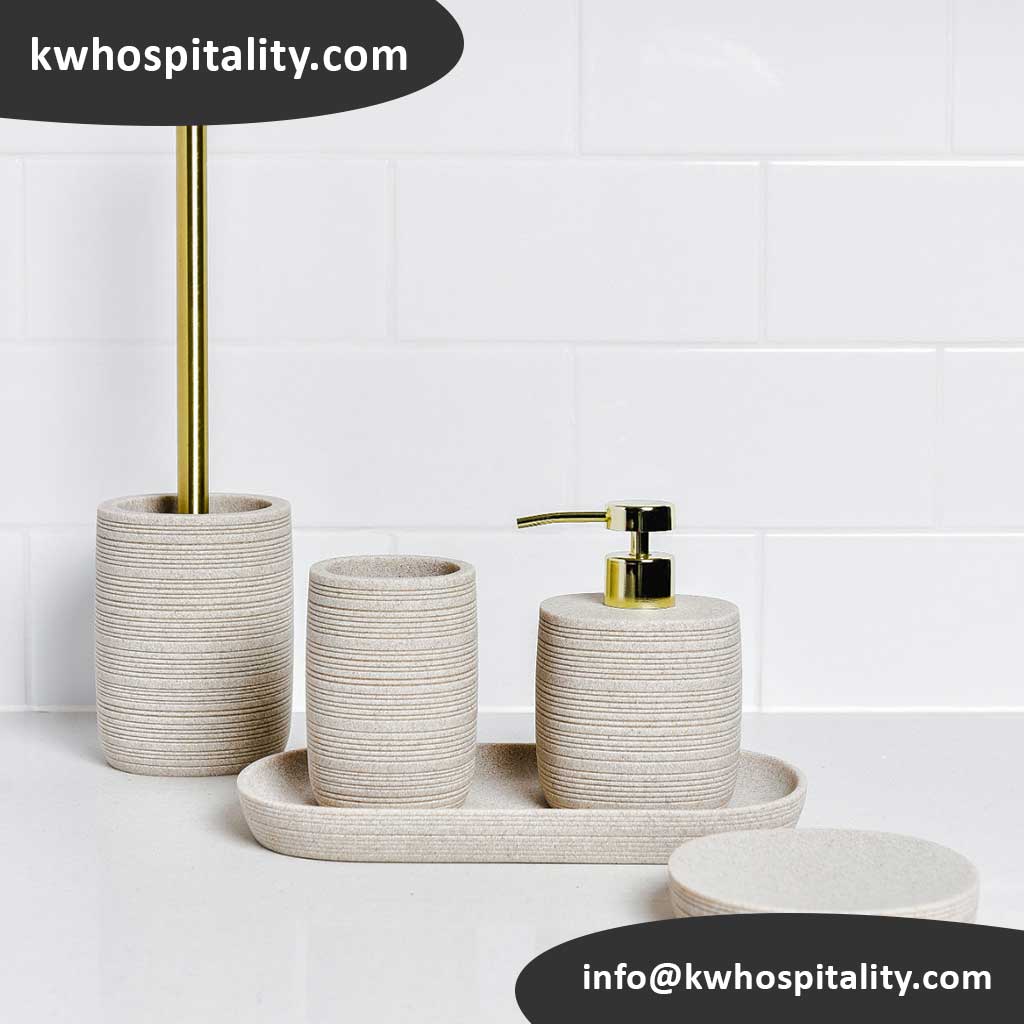
SECTION 21: Amenity Trays, Presentation Standards & Housekeeping Styling
The Geometry of Luxury Arrangement
In the refined architecture of a luxury hotel bathroom, where each design decision shapes emotional response and every small detail contributes to a sense of calm, elegance, and precision, the presentation of amenities on trays—and the broader styling standards that govern their placement—plays a profound and often underestimated role. Guests may not consciously analyze the alignment of a tissue box, the rotation of a tumbler, the spacing between a soap bar and a lotion bottle, or the symmetry of a towel arrangement, yet they instinctively feel the difference between a space that has been styled with intention and one that has been arranged with mere functionality. The geometry of presentation communicates craftsmanship. It signals that the hotel values excellence even in the smallest, quietest corners of the guest’s private environment. It is here—on the amenity tray, on the countertop, beside the bathtub, near the vanity—that the guest encounters their first true moment of emotional connection with the bathroom. Before turning on the water, before touching a towel, before opening a bottle of shampoo, their eyes land on the arrangement. If the styling is harmonious, balanced, serene, and impeccably executed, the guest enters the space with confidence and comfort. If not, the emotional rhythm of the bathroom is disrupted before it begins.
Luxury hotels around the world—from Montreal and Toronto to Los Angeles, New York, Miami, Vancouver, and Chicago—understand that the bathroom must communicate the brand’s identity through presentation. Amenity trays are not utilitarian holders; they are staging platforms for hospitality artistry. They are the frames around the “painting” of amenities, defining how guests perceive textures, materials, colors, and cleanliness. The tray sets visual boundaries, creating order out of what could otherwise become clutter. Stone trays bring weight and permanence. Resin trays bring modern minimalism. Leatherette trays add softness and richness. Metallic trays introduce gloss and refinement. But beyond materials, it is the styling rules—the choreography of placement, alignment, symmetry, spacing, and rotation—that truly elevate the guest experience. These styling decisions must be so precise, so consistent, so seamless across all rooms and all housekeeping shifts, that guests feel they are entering a perfectly composed environment every time.
The styling of amenities operates like luxury mise-en-scène. Housekeepers are not simply placing items; they are performing a ritual of refinement. They must understand the geometry of the tray: the invisible grid, the rule of thirds, the balancing of vertical and horizontal lines, the relationship between height, shape, and shadow. They must understand how to orient labels, how to layer towels, how to fold tissues, how to create symmetry from multiple items, and how to anchor the tray visually so that the arrangement feels calm rather than busy. Styling becomes an extension of the hotel’s philosophy: tranquility expressed through geometry, precision expressed through repetition, beauty expressed through order. In an age where bathrooms have become stages for smartphone photography, social media content, and guest-generated brand storytelling, flawless styling is no longer optional—it is a strategic necessity.
The Emotional Psychology of Amenity Presentation
When a guest enters the bathroom and sees a perfectly arranged amenity display, their mind interprets the visual cues before their conscious thoughts catch up. Balanced arrangements signal cleanliness, care, hospitality, and luxury. Misaligned items, inconsistent spacing, crooked labels, or overcrowded trays communicate disorder and diminish trust. Guests associate order with hygiene, and hygiene with safety and well-being. They associate symmetry with professionalism, and professionalism with value. A tray that displays amenities with intentional spacing, consistent alignment, and harmonious proportions becomes a subconscious reassurance that the room has been prepared with meticulous respect for the guest. This emotional assurance elevates the entire stay, setting the tone for how the guest perceives every aspect of service that follows.
Bathroom presentation also supports the core luxury value of effortless ease. Guests do not want to sift through cluttered trays or rotate bottles to read labels. They want intuitive access, visual clarity, and immediate understanding. A thoughtful arrangement—body wash, shampoo, conditioner in consistent order; soap placed where hands naturally reach; towels folded with the usable edge facing outward—removes friction from the guest’s experience. The less the guest thinks, the more luxurious the encounter feels. In this way, the amenity tray becomes the mediator between beauty and functionality.
Materials & Aesthetic Identity: The Amenity Tray as a Brand Expression
The amenity tray is often the first physical surface that guests touch in the bathroom, making its materiality a critical part of the brand’s sensory expression. Stone trays convey permanence, grounding, and architecture; they pair beautifully with high-end bathrooms featuring marble, granite, terrazzo, or textured tile. Resin trays offer a smoother, softer, contemporary aesthetic that complements modern, minimalist bathrooms. Leatherette trays add warmth and tactile refinement, enhancing suites and VIP rooms where material richness reinforces exclusivity. Metallic trays—finished in brushed brass, matte black, or stainless steel—bring linear precision and modern luxury to bathrooms that emphasize geometric clarity.
Hotels must choose materials not only for aesthetic compatibility but also for durability, cleaning efficiency, resistance to moisture, and long-term maintenance. KW Hospitality assists properties in selecting trays and accessories that withstand high usage, heavy cleaning cycles, and consistent humidity, ensuring that styling integrity remains uncompromised across years of operations.
Geometry of Luxury — Styling Rules That Define Five-Star Bathrooms
Below is a menu of the geometric principles that guide luxury amenity styling. The aim is not rigid compliance but artistic interpretation aligned with the hotel’s design philosophy.
Symmetry Rule
Both sides of the tray should feel balanced in weight, height, and visual density. This does not always mean identical items on each side, but rather a harmonious distribution of proportions.
Label Orientation Rule
Labels must always face outward, readable from the guest’s natural line of vision. Angles disrupt visual calm.
Spacing Rule
Items must be spaced evenly with invisible “breathing room” between them. Overcrowding makes even luxurious products feel cheap.
Height Variation Rule
A combination of low, medium, and tall items creates a pleasing upward visual flow without overpowering the space.
Functional Flow Rule
Items must be placed in order of usage—soap near the sink, shower amenities near the shower, bath items near the tub—to create intuitive guest flow.
Material Harmony Rule
The tray material must match or complement the accessories, fixtures, or countertop.
Styling Menu — Example Configurations for Different Guest Experiences
Modern Minimalist Styling
resin tray
three amenity bottles in a straight linear formation
soap bar angled precisely on a small dish
tissue box aligned with tray edge
no excess items
Spa-Inspired Organic Styling
stone tray
bath salts in glass container
natural loofah or exfoliating sponge
essential oil vial near tub
soft rolled towel balanced on one side
VIP Suite Elevated Styling
leather or brushed brass tray
double amenity sets
sculptural soap bars
small floral element or aromatherapy piece
personalized welcome card
Table — Standard Presentation vs. Luxury Presentation
| Element | Standard Hotel Styling | Luxury Styling Approach |
|---|---|---|
| Tray Material | Generic plastic | Stone, resin, leatherette |
| Item Orientation | Random | Perfect alignment with labels facing forward |
| Spacing | Tight or inconsistent | Even, intentional spacing |
| Symmetry | Basic alignment | Curated geometry and visual balance |
| Emotional Impact | Functional | Elegant, calming, premium |
Housekeeping Training: The Human Craft Behind the Geometry
Luxury amenity styling is ultimately a human craft that depends on well-trained housekeeping teams who understand not only the rules but also the emotional purpose behind them. Training must include visual diagrams, step-by-step positioning guides, ergonomic tray handling techniques, and spot-check systems that ensure consistency across shifts. When staff understand the “why,” not just the “how,” they perform their work with artistry rather than obligation. This is what enables the tray to look as perfect in Room 1183 as it does in Room 4501—and what allows the hotel to maintain its global brand identity across thousands of daily turnovers.
KW Hospitality & Amenity Presentation Solutions
KW Hospitality supports hotels by offering:
curated tray collections in stone, resin, leatherette, and metal
coordinating bathroom accessory lines
presentation training materials
modular amenity programs for different room categories
supplier partnerships for long-term procurement continuity
These solutions help hotels create styling that is not only beautiful but also operationally sustainable.
The amenity tray is more than an accessory—it is a stage upon which the hotel displays its values, its aesthetic, and its commitment to excellence. Perfect styling communicates emotional luxury, operational mastery, and artistic precision, shaping the guest’s entire perception of the bathroom before a single towel or faucet is touched.
In Section 22, we explore a category often overlooked but essential to the guest’s comfort and emotional impression: “High-End Laundry Bags, Shower Caps & Small Touches That Matter: The Unexpected Details That Define Luxury.”
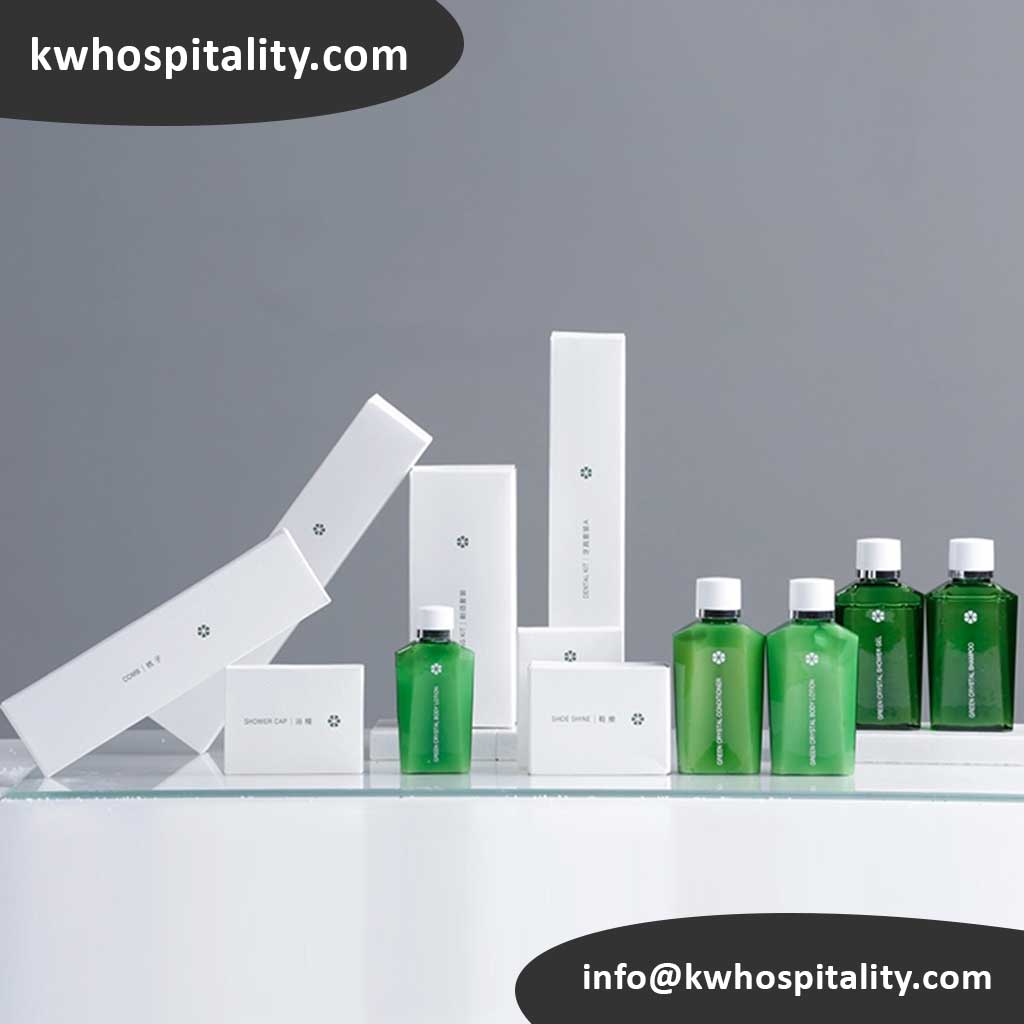
SECTION 22: High-End Laundry Bags, Shower Caps & Small Touches That Matter
The Unexpected Details That Define Luxury
In the intricate world of luxury hospitality, where the narrative of refinement is crafted not only through grand gestures but through the quiet, nearly invisible details that shape the guest’s emotional experience, the importance of small amenities—high-end laundry bags, elegantly packaged shower caps, vanity kits, sewing kits, sanitary bags, and other discreet accessories—cannot be overstated. While these items may seem secondary when compared to larger bathroom elements such as bathtubs, lighting systems, dispensers, or spa-grade toiletries, it is often the smallest, most unassuming touches that reveal the true depth of a hotel’s commitment to excellence. Luxury is not defined by abundance; it is defined by intention. The guest perceives luxury when even the most functional or easily overlooked amenities have been elevated through thoughtful design, premium material choices, sophisticated packaging, and flawless presentation. In this sense, the bathroom becomes a lexicon of subtle cues, each communicating: we have anticipated your needs, even the ones you haven’t spoken.
High-end laundry bags, for example, embody far more than their utilitarian function. In a luxury hotel, a laundry bag must express order, elegance, cleanliness, and professionalism. Made of thick cotton canvas, textured non-woven fabric, soft-touch recyclable paper, or eco-conscious biodegradable fibers, the laundry bag becomes an extension of the hotel’s brand identity. Its typography, color palette, stitching quality, and fold precision reinforce the hotel’s visual harmony. When placed thoughtfully—perhaps inside a drawer wrapped in tissue, or folded with geometrical exactness near the vanity—the laundry bag sends a subtle message: your personal belongings will be handled with care equal to your comfort. For business travelers, laundry bags signify efficiency; for leisure travelers, convenience; for VIPs, discretion. Each guest interprets the laundry bag not as a generic amenity, but as a signifier of operational precision.
The shower cap, another deeply practical item, also carries emotional resonance in the luxury bathroom environment. Guests may only use a shower cap occasionally, but they expect it to be present, impeccably packaged, and beautifully integrated into the amenity arrangement. A flimsy plastic cap wrapped in thin paper signals cost-cutting and reduces the perceived caliber of the entire bathroom. Conversely, a premium shower cap—constructed with thicker elastic, shaped for comfort, packaged in matte-coated cartons with soft embossing or minimalist branding—communicates dignity, durability, and respect for the guest’s grooming rituals. Modern luxury hotels adopt sustainable materials for shower caps, transitioning away from single-use plastics toward biodegradable films, compostable starch-based materials, or reusable fabric-lined caps. This shift not only aligns with sustainability commitments but also enhances the tactile and emotional quality of the guest’s interaction.
Other small touches—vanity kits, nail files, cotton pads, cotton buds, sewing kits, sanitary bags, deodorizing sachets, toothbrush sets, even the placement of tissues—reinforce the perception of care. When these items are packaged with coherence, aligned with the hotel’s design language, crafted from eco-forward materials, and arranged in a way that feels deliberate but never excessive, the bathroom environment transcends functionality and becomes a narrative of hospitality artistry. Each item communicates foresight. Each item suggests consideration. Each item becomes part of a silent dialogue between hotel and guest, where the message is always the same: you are valued at a deeper level than convenience alone.
The Psychology of Small Amenities: Why Tiny Details Have Massive Impact
The psychological influence of small touches stems from a powerful principle: luxury is proven through consistency. A hotel can install stunning marble walls, expensive fixtures, or dramatic lighting, yet if a laundry bag feels cheap, or a shower cap appears poorly made, or a vanity kit is presented without elegance, the illusion of seamless luxury fractures instantly. Guests associate small amenities with the hotel’s operational culture. If the smallest items are excellent, they assume the entire hotel is excellent. If the smallest items feel neglected, they assume the hotel cuts corners behind the scenes. Because these amenities reside within the guest’s private space—where clothing, grooming, hygiene, and self-care occur—their influence is amplified emotionally. The bathroom is a vulnerable environment, and guests subconsciously interpret the quality of small amenities as a measure of trustworthiness.
Furthermore, small amenities create emotional support during travel. A sewing kit can prevent stress before a meeting. A shower cap can preserve a guest’s hairstyle before an event. A high-quality cotton pad can transform a skincare routine into a spa-like ritual. These seemingly tiny conveniences reduce anxiety and elevate comfort, reinforcing the guest’s perception that the hotel understands their lifestyle and cares about their well-being. In this way, small amenities serve as micro-luxuries—simple items that carry disproportionate emotional weight.
Materials, Packaging & Sustainability: The Invisible Luxury of Responsible Design
As global travelers grow increasingly concerned about sustainability, luxury hotels must elevate small amenities through environmentally responsible materials and packaging philosophies. Single-use plastics are becoming incompatible with modern luxury values. In response, high-end hotels are transitioning to biodegradable films, kraft paper with aqueous coatings, FSC-certified cardboard, recycled cotton textiles, and refillable or reusable amenity designs. These materials do not diminish the sense of luxury; they heighten it. Guests perceive sustainable packaging as thoughtful, progressive, and aligned with global best practices. Minimalist packaging design—soft neutrals, embossed logos, matte finishes, eco-friendly inks—reinforces the sophistication of the bathroom environment.
KW Hospitality works directly with eco-forward manufacturers to help hotels procure small amenities that meet environmental goals without sacrificing aesthetic finesse. Through carefully curated collections, hotels can replace generic plastics with biodegradable alternatives, custom-designed boxes, and branded accessory suites that unify the bathroom’s visual identity.
Small Amenity Menu — Curated for Luxury Guests
Laundry Bags
thick cotton canvas or textured eco-paper
elegant typography + reinforced stitching
discreet placement inside drawers or robes
moisture-resistant lining optional
Shower Caps
biodegradable materials or reusable designs
premium elastic, soft-touch film
elegant matte packaging
Vanity Kits
cotton pads, cotton buds, nail file
soft kraft boxes or embossed cartons
aligned with tray aesthetics
Sewing Kits
minimalist color themes
essential thread colors + metal needle
compact yet refined packaging
Sanitary Bags
opaque, fragrance-neutral
biodegradable materials
placed discreetly for privacy
These items, when styled with intentional geometry, reinforce the bathroom’s serenity and operational excellence.
Table — Standard Small Amenities vs. Luxury-Level Small Amenities
| Category | Standard Offering | Luxury Offering |
|---|---|---|
| Laundry Bag | Thin plastic | Canvas, eco-paper, custom-branded |
| Shower Cap | Basic plastic | Biodegradable, reusable, elegantly boxed |
| Vanity Kit | Minimal, generic | Curated tools, eco-forward, aesthetic alignment |
| Sewing Kit | Cheapest components | Elegant color coordination, quality materials |
| Sanitary Bag | Thin plastic | Discreet, biodegradable, fragrance-neutral |
Housekeeping Presentation: The Ritual of Perfect Placement
The presentation of these items must be executed with the same precision as amenity tray styling. Laundry bags should be folded meticulously, aligned with drawer edges, or rolled gently inside wardrobe compartments. Shower caps should sit in perfect alignment with other boxed amenities, their corners and edges facing consistent directions. Vanity kits must be placed symmetrically, with labels readable and spacing even. Sanitary bags must be tucked discreetly but accessibly, never visible in a jarring or disorganized way. Housekeepers become choreographers of these details, ensuring that every room feels equally intentional, equally serene, and equally luxurious.
Guests notice consistency. It becomes part of the brand promise.
KW Hospitality & Small-Touch Excellence
KW Hospitality provides:
eco-luxury shower caps
premium laundry bags
branded accessory kits
modular small-amenity systems
sustainable packaging options
hotel-wide styling guidelines
This allows hotels to elevate even the quietest details into powerful expressions of luxury identity.
Small amenities—thoughtfully designed, impeccably packaged, and beautifully presented—create a subtle but transformative layer of luxury that guests feel deeply, even if they do not articulate it. These touches communicate maturity, refinement, and operational excellence, reinforcing the hotel’s identity as a sanctuary of thoughtful hospitality.
In Section 23, we move from small accessories to the architectural heart of luxury bathrooms as we explore: “Material Selection: Stainless Steel, Brass, Stone, Wood & Glass — Crafting Surfaces That Define Luxury.”
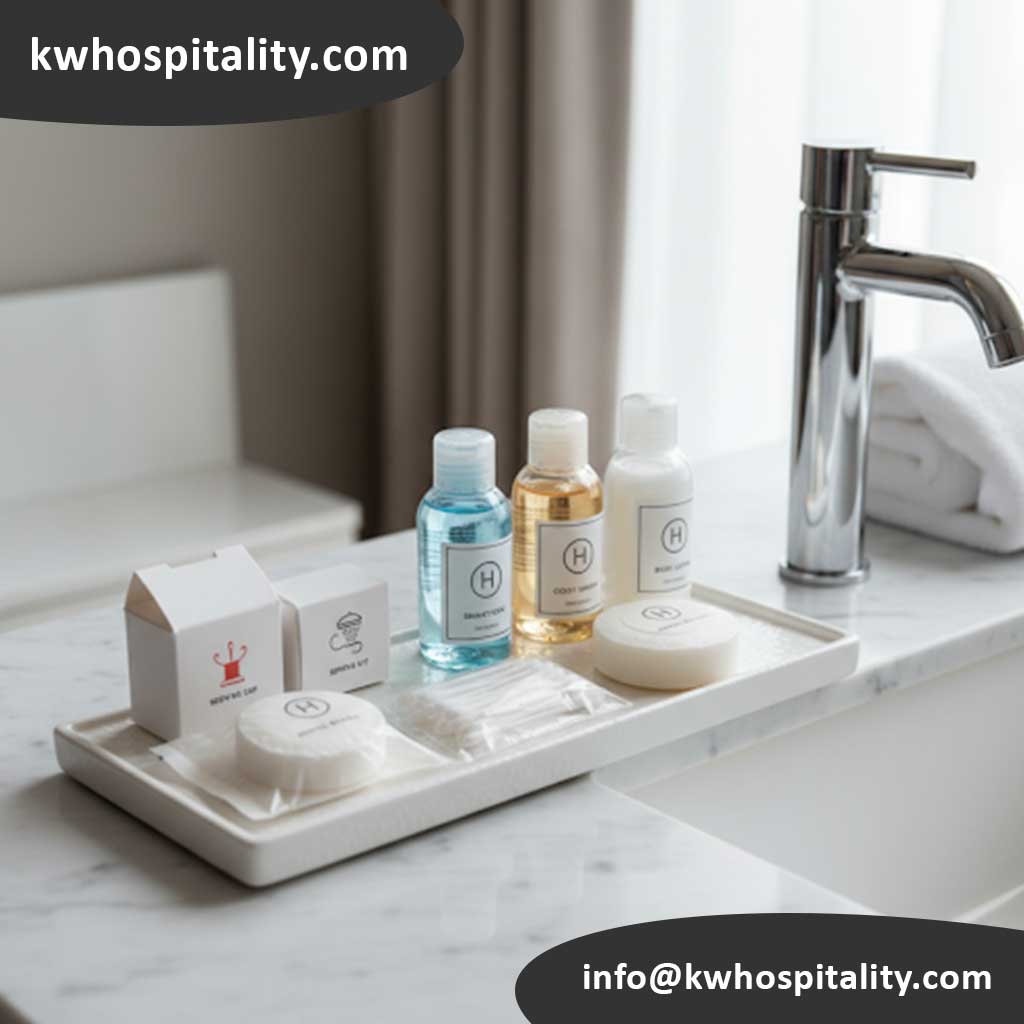
SECTION 23: Material Selection
Stainless Steel, Brass, Stone, Wood & Glass — Crafting Surfaces That Define Luxury
In the world of luxury hospitality, where the bathroom has evolved from a utilitarian enclosure into a multi-sensory sanctuary and a key driver of guest satisfaction, the selection of materials—stainless steel, brushed or polished brass, natural stone, engineered stone, exotic woods, smoked or frosted glass, resin composites, and textured ceramics—plays an extraordinarily powerful role in shaping not only the aesthetic identity of the space but also its emotional resonance, operational longevity, and brand expression. Materials are the silent storytellers of luxury; they define texture, reflect light, influence temperature, and create the tactile language through which guests understand the hotel’s values and its commitment to excellence. A bathroom with thoughtfully selected materials communicates refinement even before amenities are touched or lighting is adjusted. The cold smoothness of marble under the fingertips, the warmth of brushed brass catching soft light, the serenity of frosted glass panels diffusing illumination evenly, the grounded weight of natural stone vanities, and the organic softness of wood accents all contribute to a deeply emotional sensory environment. Guests may not consciously articulate these impressions, but they instinctively feel them—luxury is perceived in the materials long before it is verbalized.
The process of material selection also reflects the hotel’s architectural philosophy. Stainless steel, for example, evokes modernity, hygiene, and precision; it aligns well with contemporary minimalism, urban sophistication, and spaces that emphasize crisp geometry. Its reflective surface enhances brightness, making it ideal for vanity areas where grooming precision matters. Brass, whether brushed, polished, antiqued, or champagne-toned, carries warmth, heritage, and artisanal craftsmanship; it softens the space, enriches the color palette, and introduces a timeless luxury reminiscent of grand European hotels or boutique design houses. Stone—whether marble, limestone, quartzite, onyx, or engineered composites—creates a grounding, elemental foundation that connects the bathroom to nature. The veining patterns, temperature retention, and weight of stone bring a level of permanence and tranquility few materials can replicate. Glass, in its various forms—clear, frosted, textured, smoked, tinted—adds transparency, diffused light, and spatial openness while balancing privacy and aesthetic mood. Wood, when treated and sealed correctly, introduces organic warmth, artisanal softness, and emotional calm, counterbalancing the hardness of stone and steel. Together, these materials form a choreography of sensory experiences that define the bathroom’s ambiance.
Material choice is also deeply connected to operational intelligence and long-term maintenance. Luxury hotels must select materials that not only elevate aesthetics but also withstand rigorous cleaning protocols, humidity fluctuations, repeated usage, and the demands of high occupancy. Stainless steel must resist fingerprinting and water spotting. Brass must maintain its finish without excessive patina unless patina is deliberately part of the design narrative. Stone must resist etching, staining, and erosion from mineral-rich water or strong cleaning agents. Wood must be sealed to prevent warping under steam. Glass must maintain clarity and resist residue from soaps, shampoos, and minerals. Hotels must balance beauty with durability, and durability with hygiene. This is where procurement expertise becomes essential—choosing materials that align with the brand’s aesthetic vision while meeting the operational realities of hospitality.
The Emotional Psychology of Material Surfaces in Luxury Bathrooms
Material psychology is as important as material science. Guests form immediate emotional relationships with surfaces. Cold, glossy materials such as polished marble or stainless steel evoke precision, cleanliness, and modernity. Warm materials such as brass, wood, and matte stone evoke intimacy, softness, and comfort. Textured materials—ribbed glass, honed stone, brushed metal—invite touch and create a sense of depth and craftsmanship. Smooth materials—lacquered wood, polished quartz, satin glass—communicate serenity and minimalism. Even the sound materials produce when touched contributes to the emotional experience; the gentle clink of glass, the soft dullness of wood, the resonant crispness of metal all inform the guest’s sensory journey.
Luxury designers use these emotional cues deliberately. Bathrooms intended for romantic suites may feature warm brass, soft lighting, and matte stone to create intimacy. Wellness-focused rooms may incorporate honed stone, natural woods, and frosted glass to evoke spa-like calm. Executive suites may lean toward stainless steel, glossy stone, and sharp-edged geometry to communicate efficiency and sophistication. Material psychology helps hotels craft not only beautiful bathrooms but emotionally sculpted environments aligned with guest profiles.
Material Selection Menu — How Each Material Serves Luxury Goals
Stainless Steel
communicates hygiene and precision
highly durable and easy to maintain
ideal for modern, minimalist aesthetics
excellent for fixtures, towel bars, and dispensers
Brass (Brushed, Polished, Antique)
adds warmth, luxury, and elegance
ages beautifully when patina is desired
perfect for boutique-style bathrooms
excellent for faucets, handles, and decorative hardware
Natural Stone (Marble, Limestone, Quartzite)
offers timeless luxury, grounding, and visual drama
each slab is unique, providing exclusivity
ideal for vanities, walls, and bathtub surrounds
Engineered Stone / Composite Stone
offers durability, stain resistance, and aesthetic consistency
an excellent choice for high-traffic hotels
Glass (Frosted, Smoked, Textured)
transforms light, enhances openness
essential for partitions, shower enclosures, lighting diffusion
Wood (Teak, Oak, Maple, Walnut)
warms the environment, introduces natural serenity
ideal for shelving, benches, and accent framing
Comparison Table — Standard Materials vs. Luxury Material Specification
| Category | Standard Hotel Materials | Luxury Hotel Materials |
|---|---|---|
| Fixtures | Chrome-coated alloy | Stainless steel, brass |
| Countertops | Laminate or basic quartz | Marble, quartzite, engineered stone |
| Shower Partitions | Clear basic glass | Frosted, smoked, textured, or smart glass |
| Accents | Plastic or MDF | Hardwood, resin, stone |
| Hardware | Generic alloys | Custom-finished brass or stainless steel |
The Procurement Intelligence Behind Material Selection
Luxury material selection must be strategically tied to procurement realities. Hotels often underestimate the long-term operational impact of materials. Stone with heavy veining may require sealing every three months. Brass exposed to high humidity may patina more quickly. Stainless steel with a mirror polish may show fingerprints easily. Engineered stone may resist stains better than natural stone but may not offer the same emotional impact. KW Hospitality works closely with manufacturers and suppliers to evaluate the lifecycle of materials, determine the cost-per-room turnover, assess maintenance requirements, and ensure that design choices align with both operational efficiency and long-term guest satisfaction.
Procurement intelligence also includes evaluating supply chain consistency. Hotels must avoid materials that vary too much from batch to batch unless variation is part of the design intent. KW Hospitality ensures stable sourcing, precise color matching, and long-term continuity for renovations or additional tower expansions.
Durability, Hygiene & Sustainability — The Modern Material Trinity
Today’s luxury hotels must select materials that are beautiful, durable, hygienic, and environmentally responsible. This requires a new generation of finishes—fingerprint-resistant stainless steel, eco-sealed woods, low-VOC resin composites, sustainably quarried stone, and recyclable glass. Sustainability no longer conflicts with luxury; it enhances it. Guests increasingly value materials that feel natural, ethical, and aligned with global responsibility. Hotels that embrace sustainable materials strengthen their brand story and appeal to next-generation travelers.
Material selection is the architectural heartbeat of the luxury bathroom. It shapes the guest’s emotional perception, defines the aesthetic language, influences operational efficiency, and communicates the hotel’s philosophy without words. When materials are chosen with intention, the bathroom becomes a sanctuary of sophistication, comfort, and lasting beauty.
In Section 24, we move into the world of intelligent innovation as we explore: “Smart Technology & Digital Enhancements in the Bathroom: Heated Floors, Privacy Glass, Digital Controls & Sensor-Based Comfort Systems.”
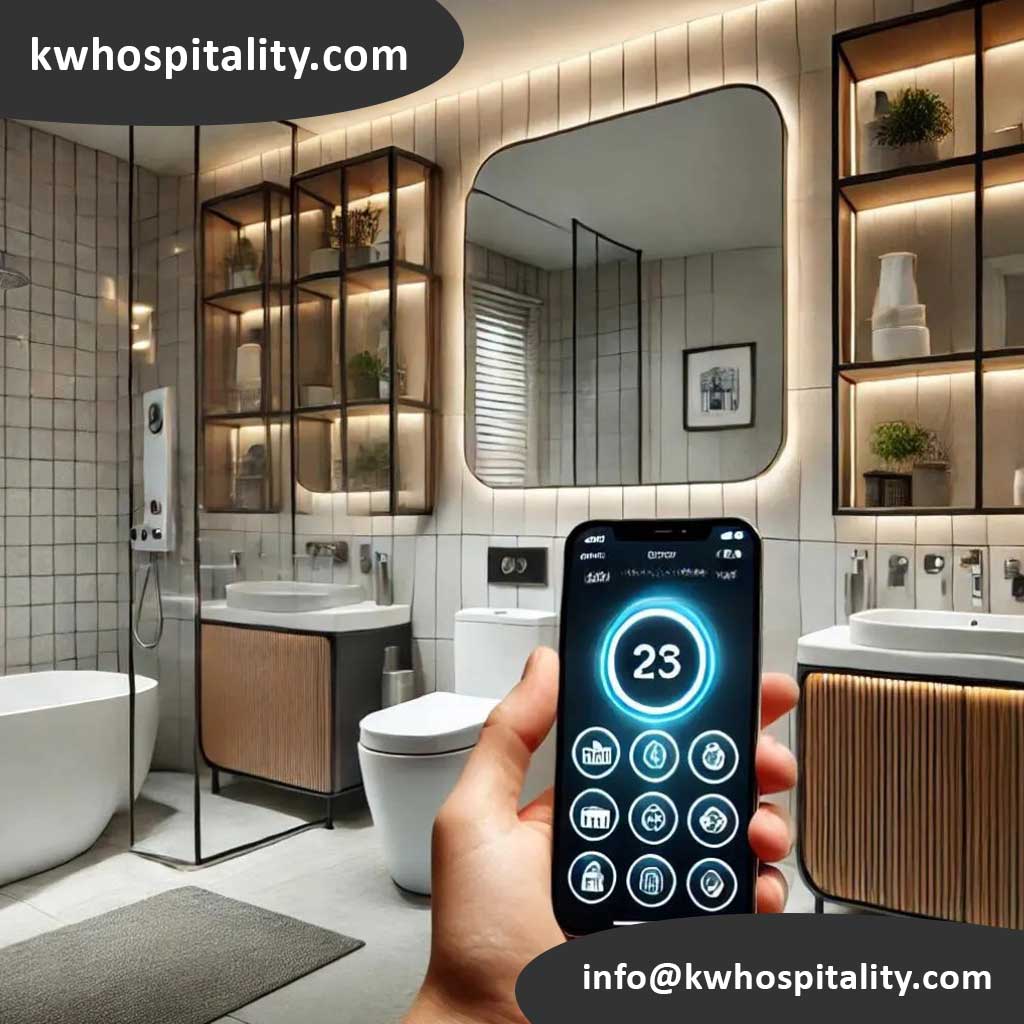
SECTION 24: Smart Technology & Digital Enhancements in the Bathroom
Heated Floors, Privacy Glass, Digital Controls & Sensor-Based Comfort Systems
In the new era of ultra-luxury hospitality, where guest expectations evolve faster than traditional design cycles and where technology increasingly shapes the emotional architecture of hotel experiences, the bathroom has emerged as one of the most significant areas for implementing intelligent, comfort-driven digital enhancements. No longer confined to aesthetic elegance or traditional amenities, the contemporary luxury bathroom is becoming an advanced sensory environment powered by engineering, automation, and digital experience design. Technology, when applied with discretion and hospitality artistry, does not replace the essence of luxury—it elevates it. A heated floor greeting the guest’s feet on a cold morning, a privacy glass wall that transforms from transparent to frosted at the tap of a button, a digital shower control that sets temperature with precision, a humidity-responsive ventilation system that preserves comfort, a mirror embedded with smart lighting profiles calibrated for grooming or relaxation, and sensor-based faucets that balance water conservation with refined touchlessness—all these elements work together to create an environment where technology fades into the background and the experience becomes seamless, effortless, and deeply comforting. Luxury, in this modern context, is defined not just by the beauty of materials but by the intelligence of the environment.
Smart technology in bathrooms is not about showcasing innovation for its own sake; it is about engineering intimacy, convenience, personalization, and wellness. Heated floors, for instance, are far more than a feature—they are a sensory experience, a micro-gesture of comfort that communicates to the guest that the hotel cares about the emotional arc of their morning and evening routines. Privacy glass walls allow bathrooms to maintain architectural openness—flooding the space with natural light—while still giving guests the ability to create privacy instantly, without curtains or blinds. Digital shower systems allow travelers to enjoy the perfect water temperature from the first second, eliminating the ritual of adjusting knobs and waiting for the water to stabilize. Smart mirrors with defogging systems ensure clarity even after a hot shower, while integrated LED lighting scenes adapt to different emotional states—bright for morning grooming, warm for evening relaxation. Sensor-based faucets and dispensers support hygiene excellence while reducing water waste. The beauty of all this technology lies in its invisibility; the room should feel intuitive, not futuristic. It should enhance the guest’s natural rhythms rather than impose complexity.
In flagship luxury hotels in Montreal, Toronto, Vancouver, New York, Miami, Los Angeles, and destinations across Europe and Asia, smart bathroom technology has become a defining differentiator. Guests who might not consciously articulate the importance of a digitally controlled shower or an automatic nightlight built into the vanity still remember how these features made them feel: safe, comfortable, pampered, understood. Technology designed with hospitality intelligence becomes a form of emotional hospitality. It eliminates friction, minimizes effort, and creates a sense of mastery over the environment. This is why luxury hotels increasingly view smart bathroom systems not as upgrades but as foundational components of their brand promise. When a guest steps into a bathroom where every detail responds to them—lighting that adapts, mirrors that clear, faucets that activate, floors that warm, and glass that shifts opacity—they feel enveloped by a sense of curated modern luxury.
The Sensory and Emotional Psychology of Smart Bathroom Systems
Smart bathroom technology enhances the guest’s emotional experience by shaping the sensory environment. Heated floors provide warmth and grounding, allowing the guest to step confidently into the space without the jarring cold often associated with tile surfaces. Privacy glass influences the spatial perception of the bathroom, allowing architectural openness during the day and intimacy when desired. Digital temperature controls minimize uncertainty and enhance trust; the guest no longer worries about scalding water or discomfort. Smart mirrors with tunable lighting replicate natural daylight for grooming or create spa-like tranquility for evening routines. Sensor faucets reduce the need for touch, creating a sense of cleanliness and modern efficiency. All these experiences converge to create an environment where the guest feels supported in their routines.
Guests today value efficiency, autonomy, and comfort. They travel for business, for wellness, for leisure, or for celebration, and each type of traveler benefits from smart systems. Business travelers appreciate time-saving automation. Wellness travelers appreciate the precision of temperature control and the therapeutic lighting. VIP guests appreciate the seamless elegance of privacy glass and mirror-integrated displays. Families appreciate safety features such as anti-scald technology, night lighting, and touchless systems that reduce contamination. The emotional resonance of smart technology extends across demographics, making it an essential part of the modern luxury bathroom’s design philosophy.
Smart Technology Menu — Systems That Redefine the Luxury Bathroom
Heated Flooring Systems
consistent radiant warmth across tile or stone
programmable thermostats for energy efficiency
enhances comfort in cold climates
Privacy Glass
switchable between clear and frosted
maintains architectural openness
offers instant privacy without mechanical components
Digital Shower Controls
precise temperature settings
programmable water flow profiles
multi-jet and rainfall control integration
Smart Mirrors with Integrated LED Profiles
daylight-mimicking grooming lights
warm evening relaxation modes
anti-fog technology
optional clock or weather display
Sensor-Based Faucets & Dispensers
hygiene-enhancing touchlessness
reduced water consumption
premium responsiveness
Humidity & Temperature Sensors
automatic ventilation activation
mold and mildew prevention
ensures consistent comfort
Floor Nightlights & Soft Path Lighting
motion-activated illumination
supports nighttime navigation without glare
Comparison Table — Traditional Bathroom vs. Smart Luxury Bathroom
| Feature | Traditional Bathroom | Smart Luxury Bathroom |
|---|---|---|
| Temperature Control | Manual, inconsistent | Digital precision |
| Privacy | Curtains or doors | Switchable smart glass |
| Lighting | Fixed, static | Adaptive, tunable LED profiles |
| Faucets | Manual | Touchless sensor-based |
| Comfort Systems | None | Heated floors, automated ventilation |
| Guest Experience | Functional | Elevated, intuitive, ultra-luxurious |
Operational Intelligence: Maintenance, Integration & Lifecycle Planning
The introduction of smart bathroom technology requires hotels to adopt new operational strategies. Digital systems need regular calibration, privacy glass requires electrical stability, and heated floors must be assessed periodically for efficiency. Hotel engineering teams must be trained to troubleshoot sensors, maintain lighting systems, and support digital fixtures. While this may seem demanding, the long-term benefits—higher guest satisfaction scores, lower water usage, reduced energy waste from intelligent climate systems, and fewer maintenance calls due to hardware wear—far outweigh the initial complexity.
KW Hospitality collaborates with world-class manufacturers to ensure reliable sourcing, consistent performance, integrated installation support, and long-term compatibility for renovation cycles. This allows hotels to embrace smart systems without operational disruption.
Sustainability & Smart Bathrooms: A Powerful Partnership
Smart technology aligns naturally with sustainability goals. Sensor faucets reduce unnecessary water flow. Digital showers minimize wasted hot water. Automated ventilation systems reduce energy loss. Tunable LED lighting systems consume far less power than traditional bulbs. Heated floors, when properly calibrated, can use less energy than forced-air heating. By combining luxury with smart engineering, hotels reduce their environmental impact while delivering exceptional experiences.
Smart technology transforms the bathroom into an environment of intuition, comfort, precision, and quiet sophistication. It elevates the guest’s experience through seamless convenience and emotional ease, embodying the future of luxury hospitality—where design, engineering, and human well-being merge beautifully.
In Section 25, we will transition from technology to branding and sustainability as we explore: “Amenity Packaging & Branding Intelligence: Typography, Texture, Eco-Materials & The Psychology of Luxury Packaging.”
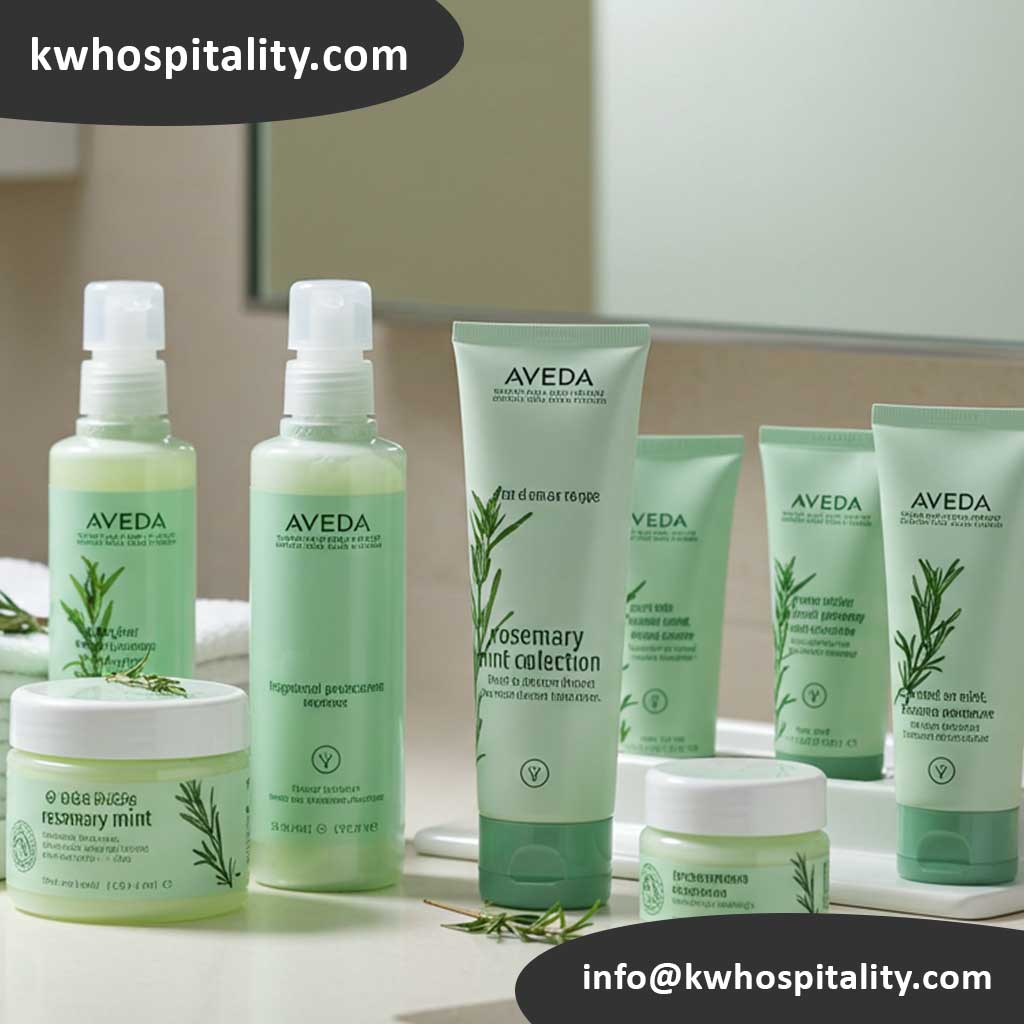
SECTION 25: Amenity Packaging & Branding Intelligence
Typography, Texture, Eco-Materials & The Psychology of Luxury Packaging
In the contemporary landscape of ultra-luxury hospitality, where every aspect of the guest experience must be curated with emotional precision and sensory sophistication, the packaging of bathroom amenities has risen from a purely functional necessity to a strategic expression of brand identity, design philosophy, and environmental commitment. Packaging is no longer simply a container; it is a silent ambassador of the hotel’s values. The moment a guest picks up a bottle of shampoo, unwraps a bar of soap, opens a vanity kit, or touches the paper of an amenity box, they are experiencing the hotel’s brand in physical form. The typography, color palette, tactile texture, material weight, construction quality, scent diffusion behavior, and even the way light reflects off the packaging all contribute to an immediate emotional reaction—one that signals either refined luxury or overlooked detail. The psychology of packaging is subtle yet powerful: it shapes expectations, reinforces trust, and elevates even the smallest interactions into moments of sensory pleasure. When packaging is crafted with intelligence and artistic consistency, the bathroom becomes not just a functional space but an immersion into the brand’s story.
Luxury hotels across North America and globally—whether in Montreal, Toronto, New York, Los Angeles, Vancouver, Miami, or international wellness destinations—have learned that guests subconsciously evaluate amenity packaging with extraordinary sensitivity. A bottle that feels too light may suggest inferior ingredients, even if the formulation is premium. A label with uneven printing or shiny plastic laminate may break the illusion of refined elegance. Conversely, a matte-finished aluminum bottle with embossed lettering or a recycled-paper box with soft-touch coating may instantly communicate environmental consciousness, premium craftsmanship, and brand maturity. In this way, packaging becomes one of the most tactile expressions of luxury. Guests engage with it at moments of intimacy—during a bath, in the shower, while brushing teeth, while preparing for an event—meaning the emotional connection is deeper than with any other product in the room.
Packaging also plays a profound role in sustainability strategy. As the world becomes more environmentally aware, luxury hotels must shift from outdated plastic miniatures toward eco-friendly materials that reflect responsibility without compromising beauty. Refillable dispensing systems now house formulations in aluminum or glass cartridges with minimal packaging waste. For individual amenity sets used in VIP suites or special occasions, hotels increasingly rely on biodegradable kraft boxes, compostable films, recycled FSC-certified paper, soy-based inks, and minimalist label designs that reduce environmental impact. Sustainability becomes not merely a compliance practice but an element of emotional storytelling—guests feel respected when the hotel demonstrates care for the planet. The packaging becomes a symbol of the hotel’s consciousness.
The Psychological Impact of Packaging in Luxury Bathrooms
Packaging influences perception in ways that guests rarely articulate but always feel. A matte finish creates an impression of understated elegance. Embossed typography conveys confidence and craftsmanship. Neutral earth-toned palettes evoke calmness, while black-and-gold palettes communicate modern opulence. Soft-touch papers invite the hand to linger, while minimalist geometry conveys precision. Even the weight of a bottle—heavy enough to suggest quality, yet light enough to feel effortless—creates subconscious emotional cues. The alignment of labels, the symmetry of text blocks, and the spacing between graphic elements all communicate refinement when executed with care and disorder when executed poorly.
Luxury packaging must therefore support the guest’s emotional journey. In the morning, the guest reaches for products that feel energizing; citrus-toned color labels and crisp typography can reinforce this psychological state. In the evening, warm-toned packaging with soft curves encourages relaxation. For VIP suites, packaging may include accents of metallic foil, textured surfaces, or custom illustrations that make the amenities feel collectible. The packaging must harmonize with the bathroom’s architecture: bottles with vertical silhouettes complement tall mirrors and elongated vanities; rectangular boxes align with stone counters and geometric tray arrangements; rounded containers soften minimalist bathrooms with hard surfaces. When packaging aligns with spatial design, the bathroom becomes a cohesive sensory composition.
Brand Identity Through Typography, Color & Texture
Typography is one of the most powerful brand signals in amenity packaging. Luxury hotels gravitate toward serif fonts with elegant strokes, minimalist sans-serif fonts with sharp geometry, or handwritten-style fonts to convey artisanal identity. The choice of font communicates tone—whether modern, timeless, romantic, or wellness-oriented. Color palettes follow similar emotional rules. Soft beige and sand tones are used for wellness properties, while charcoal, navy, and black speak to urban sophistication. Pastels may appear in boutique lifestyle hotels; metallic accents appear in premium luxury suites. Texture deepens the story; a kraft-textured box communicates sustainability, while a velvety soft-touch finish conveys indulgence.
KW Hospitality works with amenity manufacturers that offer custom typography, color imprinting, embossing, debossing, hot foil stamping, and eco-forward coatings, ensuring hotels can create packaging that aligns perfectly with their brand ethos.
Amenity Packaging Menu — Luxury Packaging Archetypes
Minimalist Modern Packaging
matte black or white bottles
sans-serif typography
clean geometry
eco-friendly materials
Botanical Wellness Packaging
earthy tones (sage, sand, eucalyptus)
kraft-textured boxes
essential oil iconography
recycled paper or biopolymer films
Opulent Boutique Packaging
embossed logos
metallic foil accents
heavy-weight glass or aluminum
sculptural bottle silhouettes
Eco-Luxury Packaging
biodegradable boxes
refill-focused structures
subtle, nature-inspired design
low-impact printing techniques
Table — Low-End Packaging vs. Luxury Packaging
| Feature | Standard Packaging | Luxury Packaging |
|---|---|---|
| Material | Thin plastic | Glass, aluminum, eco-paper |
| Typography | Generic | Custom, premium font families |
| Finish | Glossy plastic | Matte, embossed, soft-touch |
| Environmental Impact | High | Low, sustainable |
| Emotional Impact | Minimal | Strong, memorable |
Operational Intelligence & Packaging: Inventory, Storage, & Lifecycle
Packaging must also align with operational realities. Luxury hotels require packaging that stacks efficiently, resists humidity, maintains structural integrity during transport, and allows housekeeping teams to replenish amenities quickly. Overly delicate packaging slows operations. Overly large packaging wastes storage space. Smart packaging design must therefore balance beauty with efficiency. KW Hospitality supports procurement teams in evaluating packaging dimensions, case quantities, material strength, humidity resistance, and label durability to ensure that the chosen designs perform flawlessly under real-world hotel conditions.
Sustainability & Packaging: The Future of Luxury Amenity Design
Sustainability has redefined luxury packaging. Guests now expect biodegradable materials, refill programs, aluminum over plastic, glass when feasible, recyclable paper bands instead of shrink wrap, and minimalist designs that reduce waste. Luxury hotels that embrace eco-forward packaging signal intelligence, responsibility, and contemporary relevance. KW Hospitality works closely with chemical manufacturers and packaging suppliers to ensure that beauty and sustainability coexist, shaping the next generation of amenity programs.
Amenity packaging is an art form—one that communicates luxury through touch, sight, weight, and emotional resonance. When typography, texture, sustainability, and structural elegance align, packaging becomes one of the most profound expressions of the hotel’s identity.
In Section 26, we move from design into strategy as we explore: “Procurement Strategy for 4-Star, 5-Star & Luxury Lifestyle Hotels: Forecasting, MOQ Optimization, Cost Control & Supplier Intelligence.”
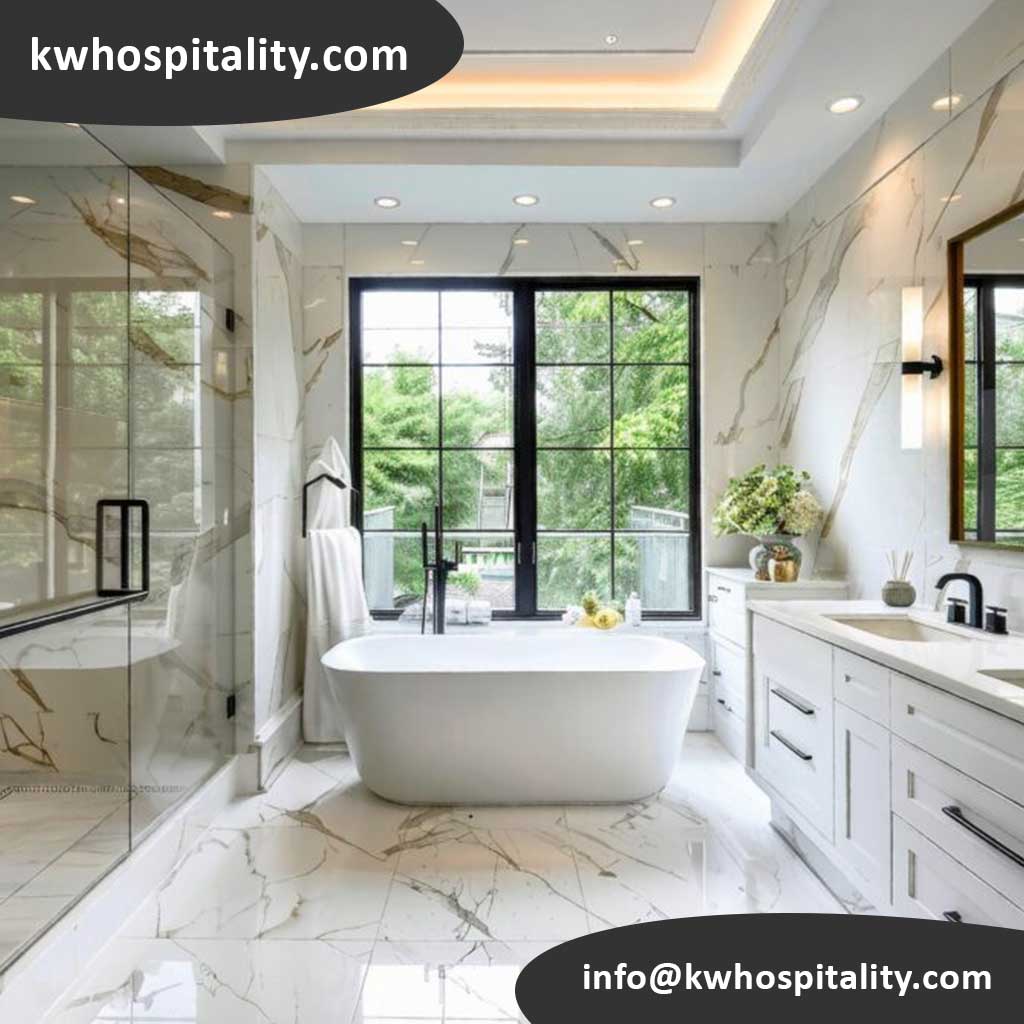
SECTION 26: Procurement Strategy for 4-Star, 5-Star & Luxury Lifestyle Hotels
Forecasting, MOQ Optimization, Cost Control & Supplier Intelligence
In the increasingly competitive and complex landscape of global hospitality, where supply chain pressures, guest expectations, sustainability mandates, and operational consistency converge into an interdependent ecosystem, procurement strategy has become one of the most critical differentiators between merely functioning hotels and truly exceptional luxury properties. Gone are the days when procurement was simply a transactional function focused on price negotiation and bulk purchasing. In the luxury sector—especially in 4-star, 5-star, boutique luxury, wellness-oriented, and lifestyle hotels—procurement has evolved into a multidimensional discipline that blends forecasting science, brand strategy, operational intelligence, and long-term supplier partnership cultivation. The bathroom amenity program, in particular, reflects this shift powerfully. As one of the most visible and emotionally intimate touchpoints in the guest journey, bathroom amenities require a procurement strategy that ensures consistency, excellence, reliability, and alignment with the property’s aesthetic and experiential identity. A single interruption in amenity supply—whether due to MOQs, customs delays, packaging shortages, or supplier inconsistency—can instantly disrupt the guest experience, leading to brand dissatisfaction and operational strain. Therefore, procurement is not a backstage task; it is a core pillar of luxury hospitality excellence.
The modern procurement director at a luxury hotel must balance three movements simultaneously: precision forecasting rooted in occupancy projections and consumption behavior; cost control strategies that reduce waste while protecting luxury standards; and supplier intelligence systems that identify, evaluate, negotiate, and maintain relationships with manufacturers capable of delivering premium-grade products consistently. When these movements operate in harmony, the hotel maintains a seamless guest experience at scale. However, this harmony requires deep expertise—understanding seasonality patterns, calculating reorder points, designing buffer stock frameworks, coordinating with housekeeping to track real-time usage, planning for renovation cycles, and ensuring that all amenity purchases align with sustainability commitments and brand guidelines. For example, a hotel that commissions custom aluminum dispensers with matte finishes must ensure that its supplier produces consistent color batches across thousands of units; otherwise, the visual integrity of the bathroom program is compromised. A hotel switching from single-use amenity bottles to refillable cartridges must anticipate demand shifts, adjust housekeeping workflows, and negotiate long-term formulations with chemical suppliers. Every procurement decision, no matter how small, carries ripple effects throughout the property.
In North American luxury markets such as Montreal, Toronto, Vancouver, New York, Los Angeles, Boston, and Miami, procurement teams face additional layers of complexity due to import regulations, fluctuating exchange rates, freight costs, and rising consumer expectations for sustainable sourcing. Hotels that lack structured procurement frameworks often overspend, understock, or experience inconsistent quality across rooms. Conversely, hotels with advanced procurement strategy create stability, reduce total cost of ownership, enhance guest satisfaction, and strengthen brand reputation. This is where a procurement partner like KW Hospitality becomes invaluable. With long-standing relationships with factories in Asia, optimized MOQs, sustainable material sourcing expertise, and the ability to customize products according to brand aesthetics, KW Hospitality gives hotels not just products—but a resilient, strategic supply chain ecosystem.
The Science of Forecasting: Anticipating Consumption & Avoiding Disruptions
Forecasting in luxury hotel procurement is far more nuanced than simply ordering based on average monthly consumption. It requires a combination of occupancy projections, room category segmentation, seasonal travel patterns, VIP and group booking behavior, promotional campaigns, renovation schedules, and housekeeping turnover rates. Bathroom amenities are consumed differently depending on room type, guest demographics, and stay duration. Suites, for example, may require double amenity sets for VIPs, while wellness rooms may consume more bath salts or oils. Business-heavy hotels may require more shaving kits, while family-oriented hotels consume more cotton pads, shower caps, and children’s amenities. Forecasting must therefore be dynamic, integrating qualitative and quantitative factors into a predictive model that ensures the right amount of stock at the right time, minimizing both shortages and excess storage costs.
Advanced forecasting models examine year-over-year guest behavior, local event calendars, group booking patterns, and market fluctuations. Smart procurement teams also incorporate supplier lead times, shipping durations, customs clearance cycles, and buffer stock requirements. For example, an overseas shipment of custom-packaged shampoo bottles may require six weeks of lead time plus additional days for inspection and distribution. Failure to plan for such timelines can create disruptions that cascade through housekeeping operations. KW Hospitality assists hotels in developing forecasting models that integrate lead time data, consumption patterns, and seasonal cycles, ensuring uninterrupted supply throughout the year.
MOQ Optimization: The Art of Balancing Volume, Storage & Cash Flow
Minimum Order Quantities (MOQs) are one of the most misunderstood and strategically significant components of hotel procurement. Manufacturers often require MOQs to maintain production efficiency, especially for custom products involving unique molds, materials, or packaging designs. Hotels must navigate MOQs intelligently—ordering enough to secure cost advantages but not so much that storage space becomes strained or capital becomes unnecessarily tied up. The optimal MOQ is not simply the lowest price per unit; it is the point at which cost efficiency, storage feasibility, product freshness, and design longevity converge.
Luxury hotels with multiple room categories must also account for how MOQs intersect with brand consistency. For example, a hotel introducing a new amenity packaging design must calculate whether it can commit to a 20,000-unit MOQ without risking changes to the brand identity in the near future. Hotels undergoing renovations must align MOQs with phased build-outs. KW Hospitality specializes in negotiating favorable MOQs with factories while helping hotels calculate optimal ordering volumes that balance cash flow, purchasing power, and long-term design stability.
Cost Control Without Compromise: Protecting Luxury While Managing Budgets
One of the most challenging aspects of procurement in luxury hospitality is achieving cost control without diminishing experience quality. Cost control does not mean sourcing cheaper products; it means making strategic decisions that maximize value while protecting the emotional and sensory quality of the guest experience. This may involve transitioning from single-use bottles to elegantly branded dispensers that reduce long-term cost while enhancing sustainability. It may involve selecting amenity formulations that offer premium scent profiles yet utilize eco-certified ingredients that reduce both cost and environmental impact. It may involve standardizing accessories—tissue boxes, trays, waste bins—to reduce SKU count and increase purchasing leverage.
Procurement also influences labor efficiency. For example, switching to easy-clean dispenser brackets reduces housekeeping time. Selecting packaging that stacks efficiently reduces storage burden. Choosing materials that resist humidity and staining reduces long-term replacement frequency. The smartest procurement strategies reduce operational strain while elevating guest satisfaction.
KW Hospitality supports hotels in orchestrating cost-control strategies that enhance, rather than diminish, luxury expression. By partnering directly with factories, KW eliminates unnecessary middle layers, reduces freight inefficiencies, and ensures consistent quality.
Supplier Intelligence: Evaluating & Partnering With the Right Manufacturers
Supplier intelligence refers to a hotel’s ability to identify, evaluate, and maintain relationships with reliable manufacturers capable of delivering consistent quality at scale. In luxury hospitality, supplier reliability is non-negotiable. A single inconsistent batch of bottles, a color mismatch in packaging, or a delayed shipment of dispensers can disrupt the guest experience across hundreds of rooms. Therefore, hotels must evaluate suppliers based on manufacturing capability, quality assurance systems, sample consistency, production capacity, sustainability compliance, and communication reliability.
KW Hospitality’s advantage lies in its deep relationships with vetted factories across China and Taiwan—factories that understand hotel requirements, adhere to strict quality control systems, and demonstrate long-term supply stability. By managing the relationship between hotel and manufacturer, KW Hospitality reduces risk and enhances performance.
Hotel Procurement Menu — Strategic Pillars for Success
Forecasting Excellence
dynamic models
seasonal consumption analysis
lead time integration
MOQ Optimization
cost-efficient quantities
storage feasibility
design continuity
Supplier Reliability
quality audits
production capacity
communication performance
Cost Control Intelligence
value engineering
sustainability optimization
SKU consolidation
Brand Alignment
packaging consistency
fragrance coherence
material quality
Comparative Table — Weak Procurement vs. Intelligent Luxury Procurement
| Feature | Weak Procurement | Intelligent Luxury Procurement |
|---|---|---|
| Forecasting | Reactive, inconsistent | Predictive, data-driven |
| Supplier Network | Generic, unstable | Vetted, long-term, premium |
| Costs | High due to inefficiency | Optimized through strategy |
| Guest Experience | Inconsistent | Seamless, elevated |
| Sustainability | Neglected | Integrated into procurement |
Procurement is the unseen engine of luxury hospitality—the discipline that ensures every bathroom amenity, every accessory, every bottle, every scent, every texture, and every detail is available, consistent, and aligned with the hotel’s brand promise. When procurement strategy is intelligent, the guest experience becomes effortless, stable, and emotionally resonant.
In Section 27, we reach the grand culmination of the entire article as we explore: “Crafting a Cohesive Bathroom Experience: From Arrival to Checkout — The Holistic Luxury Journey.”
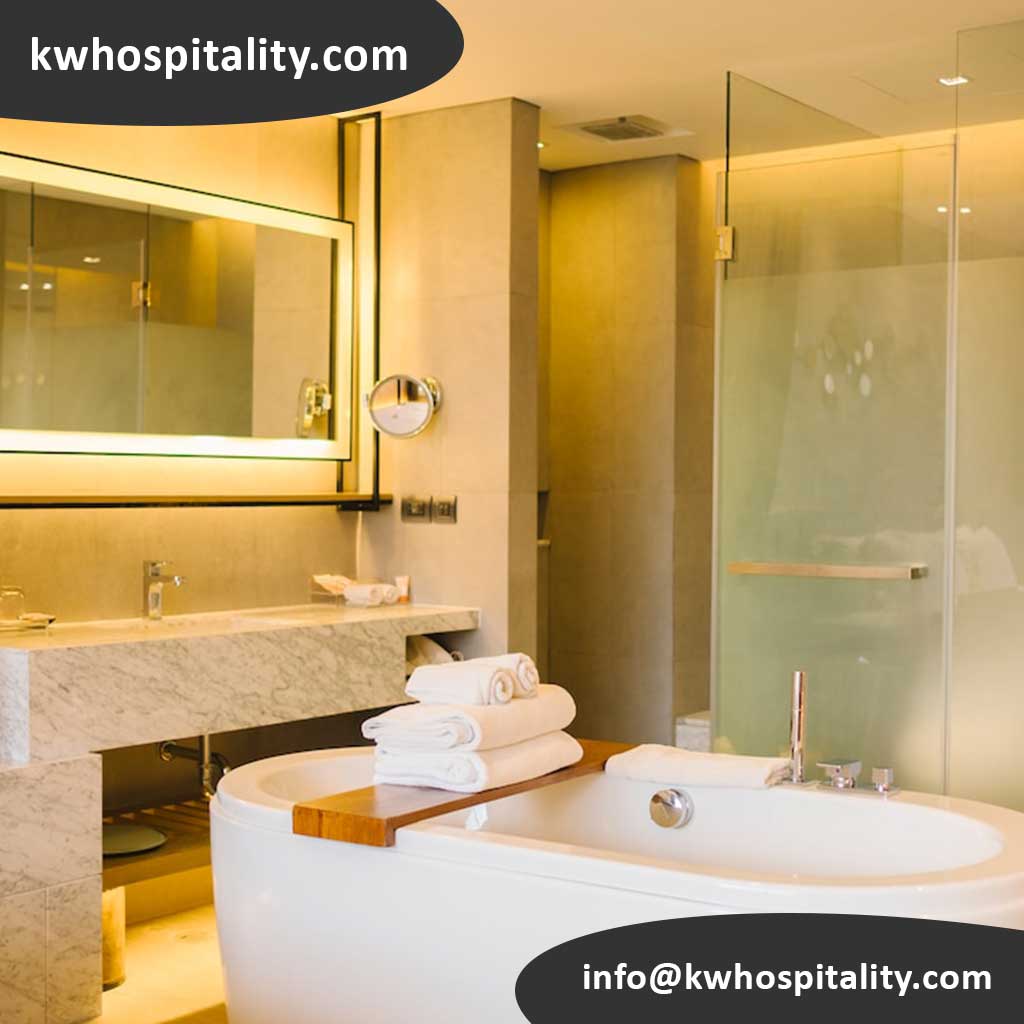
SECTION 27: Crafting a Cohesive Bathroom Experience
From Arrival to Checkout — The Holistic Luxury Journey
In the world of ultra-luxury hospitality, where the measure of excellence is no longer defined by aesthetics alone but by emotional orchestration, sensory layering, operational consistency, and narrative cohesion, the bathroom stands as the central sanctuary through which the guest’s entire perception of the hotel is filtered. Guests may admire the lobby, appreciate the service, enjoy the dining, and praise the architecture, but it is the private experience within the bathroom—silent, intimate, unobserved—that determines whether they felt truly cared for, understood, and enveloped in luxury that transcends the expected. The luxury bathroom experience is not a collection of stand-alone features; it is an interconnected journey that begins the moment the guest opens the room door and continues until the final morning when they prepare to depart. It is a choreography of cleanliness, fragrance, texture, temperature, lighting, functionality, personalization, sustainability, and ritual. When designed with intentionality, every element—from the materials and fixtures to the towels and trays, from the amenities to the scent strategy, from accessibility to hydrotherapy, from digital enhancements to procurement integrity—works together to create an emotional arc that mirrors the essence of luxury hospitality: a seamless environment where the guest feels restored, inspired, and valued.
The journey begins long before the guest steps into the bathroom. It begins with expectation. The first glimpse of the doorway, the sound the door makes when opened, the way the light reflects across the stone floor, the faint scent that drifts from the vanity area—these subconscious impressions shape the guest’s anticipation. A cohesive bathroom experience ensures that this anticipation is met with immediate reassurance. The bathroom must feel fresh, meticulously prepared, and emotionally inviting. The alignment of towels, the gleam of polished fixtures, the softness of lighting, the symmetry of the amenity tray, the crystal clarity of the mirror, the serenity of neutral fragrance—all signal that the space has been curated not only for utility but for pleasure, comfort, and emotional calm. The guest’s first step into the bathroom sets the tone for their entire stay.
Once the guest begins interacting with the space, cohesion becomes even more vital. The transitions between different elements must feel fluid, natural, and intuitive. The heated floor warms the feet in the morning. The lighting adapts to the guest’s mood—bright for energizing, soft for unwinding. The dispenser system offers products that match the hotel’s scent identity and sustainability values. The shower responds instantly with precise temperature control. The bathtub invites immersion through ergonomic shape and sensory promise. The accessories—tissue boxes, trays, waste bins—match the room’s material palette. The small amenities—cotton pads, shower caps, sewing kits—are packaged in ways that reinforce brand sophistication. The space feels balanced, aligned, coherent. The guest never encounters a visual or sensory “break” in the experience; there are no mismatched materials, no awkward placements, no inconsistent packaging styles, no disjointed lighting behavior. The bathroom becomes an environment of emotional continuity.
And yet, cohesion is not solely about aesthetics. It is deeply tied to operational excellence. A guest may not know how many hours of training went into housekeeping styling, how procurement teams ensured product consistency, how supplier partnerships maintained stable delivery cycles, or how engineering teams calibrated the smart systems—but they feel the results. Cohesion is experienced through trust. When a towel feels soft every day, when a dispenser never clogs, when stone surfaces remain spotless, when fragrance remains consistent, when accessibility features blend seamlessly into the design, when amenities never run out, when every small element is exactly where it should be, the guest perceives the hotel not as a collection of departments but as a unified, intelligent organism. Luxury becomes the art of effortlessness. Guests sense that everything they touch, smell, see, and hear has been designed for their well-being, even though the invisible machinery behind the scenes operates with extraordinary complexity.
As the guest settles into their stay, the bathroom becomes a retreat—a place of self-care, transformation, and rhythm. Morning rituals set the emotional tone for the day: crisp lighting, energizing scents, fresh towels, intuitive organization. Evening rituals bring closure and calm: warm lighting, soft fragrances, bath salts dissolving in warm water, steam rising gently, mirrors remaining clear, textures inviting touch. A cohesive bathroom experience allows guests to modulate their own states of mind, using the space as a sanctuary for restoration or preparation. This autonomy—supported by intelligent design and flawless execution—is one of the defining characteristics of ultra-luxury hospitality.
When the stay approaches its end, the bathroom plays one final role: the memory anchor. Guests remember how they felt every time they stepped into the bathroom. They remember the scent. They remember the softness of the textiles. They remember how intuitive everything was. They remember whether they felt pampered, understood, and elevated. These emotions become the deciding factor in whether they return, whether they recommend the hotel, and whether they begin associating the brand with personal well-being. The bathroom becomes the psychological imprint of the entire property.
The Cohesive Experience Menu — The Elements That Must Function as One
Atmosphere & Sensory Flow
fragrance consistency
lighting harmony
temperature and material feel
Functionality & Ritual Support
intuitive amenity placement
ergonomic flow
hydrotherapy options
Operational Excellence
perfect housekeeping
smart inventory management
reliable fixtures & systems
Design Unity
matching materials
unified packaging
coherent tray arrangements
Emotional Impact
comfort
serenity
trust
delight
The cohesive bathroom experience is not built from parts—it is built from relationships between parts.
Table — Fragmented Experience vs. Cohesive Luxury Experience
| Dimension | Fragmented Bathroom | Cohesive Luxury Bathroom |
|---|---|---|
| Materials | Mismatched | Harmonized, intentional |
| Amenities | Inconsistent packaging | Unified brand identity |
| Scent | Varies by product | One signature fragrance profile |
| Lighting | Harsh or uneven | Layered, purposeful |
| Guest Emotion | Confused or indifferent | Calmed, valued, inspired |
KW Hospitality & The Art of Cohesive Bathroom Programs
KW Hospitality specializes in building complete bathroom ecosystems—materials, amenities, accessories, packaging, dispensers, textiles, spa elements, scent strategy, procurement forecasting, and training frameworks—ensuring that every component supports the hotel’s brand identity. By integrating manufacturing partnerships, design consultation, sustainability expertise, and supply chain coordination, KW Hospitality helps hotels create cohesive bathroom journeys that feel natural to the guest and operationally achievable for the property. A cohesive bathroom experience is not accidental; it is engineered, curated, and safeguarded.
A cohesive bathroom experience is the final frontier of luxury hospitality—a narrative woven through touch, scent, light, temperature, materiality, convenience, and care. It is where the guest discovers whether the hotel truly understands them. It is where the hotel’s brand becomes intimate. It is where luxury transcends aesthetics and becomes emotional truth. When all elements align, the bathroom becomes a sanctuary that guests do not simply use—they remember, they desire, they return for.
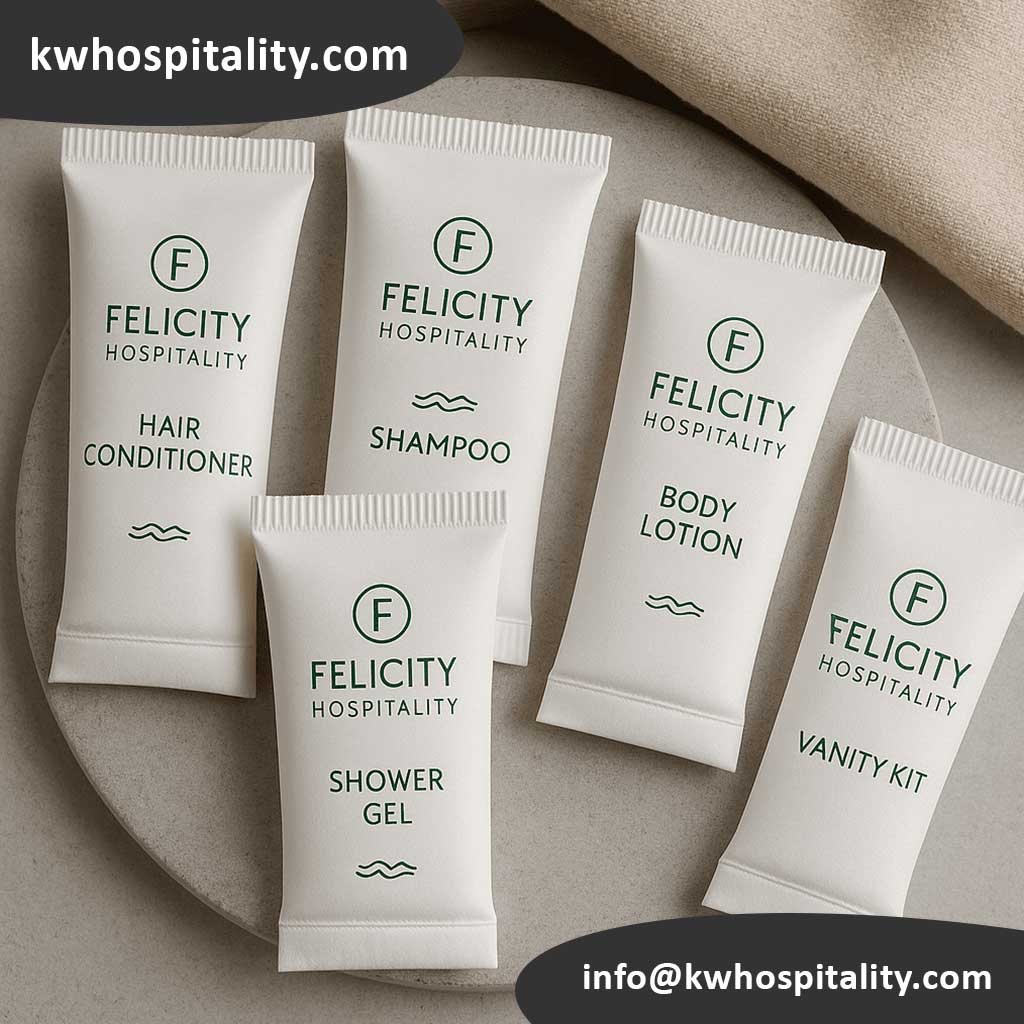
KW Hospitality — Luxury Bathroom Amenities That Redefine Guest Experience
At KW Hospitality, we believe the luxury bathroom is not merely a functional space—it is the emotional core of every hotel stay, the silent stage where guests experience intimacy, restoration, and sensory comfort. Our philosophy is rooted in the idea that true luxury is expressed through mastery of details: the weight of a dispenser, the warmth of a floor tile, the softness of a towel, the geometry of an amenity tray, the fragrance of a formulation, the refinement of packaging, and the reliability of procurement. Each element contributes to an experience that feels effortless, intentional, and unforgettable.
KW Hospitality brings together design intelligence, sustainability, manufacturing excellence, and procurement strategy to help hotels create fully cohesive bathroom environments that elevate brand perception and deepen guest loyalty. Through long-standing relationships with specialized factories in Asia, we offer custom-engineered amenities, curated accessory collections, refined packaging, high-performance dispensers, luxury textiles, and sustainable product systems that align with each property’s visual identity and operational goals.
Our solutions are built around three pillars:
luxury quality, operational intelligence, and sustainable responsibility.
We ensure that every amenity—from shampoo bottle to shower cap, from vanity tray to textile, from dispenser system to signature scent—is harmonized within a unified design and procurement framework. This allows high-end hotels, boutique lifestyle properties, wellness resorts, and 4- and 5-star operators to maintain aesthetic excellence without compromising budget efficiency or supply continuity.
With KW Hospitality, hotels gain more than a supplier—they gain a strategic partner capable of optimizing MOQs, managing lead times, coordinating factory production, designing packaging systems, standardizing accessories, and forecasting inventory based on guest consumption. We help properties transition toward eco-forward programs, including aluminum dispensers, refillable systems, compostable packaging, and reduced-plastic formulations. Our goal is simple: create guest experiences that feel modern, meaningful, and masterfully curated.
Every item we produce or source is engineered to feel luxurious in the hand, present beautifully on the vanity, perform consistently for housekeeping, and express the hotel’s brand through touch, texture, fragrance, and form. From the moment a guest enters the bathroom until the final moment before checkout, KW Hospitality ensures that every detail communicates refinement—and that every sensory interaction strengthens emotional connection to the property.
Luxury is not built from isolated components; it is built from cohesion.
At KW Hospitality, cohesion is our signature.
If your property is ready to upgrade its amenities, elevate guest satisfaction, reduce long-term costs, and align with global sustainability standards, KW Hospitality is ready to support you at every step—from concept to manufacturing, delivery, and implementation.
Transform your bathroom program into a fully cohesive luxury experience.
Partner with KW Hospitality today.
👉 Schedule a consultation: info@kwhospitality.com
👉 Explore tailored amenity solutions: kwhospitality.com
👉 Request samples for your property: We deliver across Canada, the U.S., and internationally.
KW Hospitality — Design smarter. Source better. Impress every guest.
RFQ
"*" indicates required fields
FAQs ( Frequently Asked Questions )
GENERAL BUYER QUESTIONS
What qualifies an amenity program as “luxury” in a hotel setting?
A luxury amenity program is defined by high-quality formulations, premium packaging, cohesive visual identity, carefully curated accessories, sustainability integration, and consistent presentation. Products must feel indulgent, smell refined, and function beautifully. Packaging should match the hotel’s design aesthetic, and the entire setup must create a sense of thoughtful intention rather than generic supply.
What are the core bathroom amenities every 4-star or 5-star hotel should offer?
At minimum: shampoo, conditioner, body wash, lotion, bar soap, vanity kit, shower cap, sanitary bag, dental kit (optional but preferred), shaving kit (upon request), and high-quality towels. Luxury properties also include amenities like bath salts, loofahs, premium robes, and specialty skincare items.
How do luxury guest expectations differ between business, leisure, and wellness travelers?
Business travelers value efficiency, clarity, accessible placement, and high-performing formulations. Leisure travelers look for indulgence, fragrance, and visual beauty. Wellness guests expect natural ingredients, eco-forward packaging, and sensory balance. A strong amenity program satisfies all three without compromise.
Which bathroom amenities most influence guest satisfaction scores?
Shampoo and conditioner quality, towel softness, water pressure, dispenser reliability, lighting quality at the mirror, scent experience, and cleanliness of presentation consistently rank highest in guest satisfaction surveys.
Are luxury amenities worth the additional procurement cost for hotels?
Yes. Premium amenities significantly improve guest perception, reduce complaints, elevate review scores, and strengthen brand loyalty. The ROI typically appears through repeat bookings, stronger guest satisfaction, and improved competitive positioning—especially in urban markets.
What factors should procurement managers consider before selecting an amenity brand?
Formula quality, packaging durability, brand story alignment, sustainability requirements, MOQ feasibility, lead times, warehouse/storage needs, cost-per-room calculations, compliance with local regulations, and supply chain reliability.
How often should hotels update or refresh their amenity program?
Every 3–5 years is typical, though packaging updates or sustainability transitions may occur sooner. Guest expectations evolve, and suppliers introduce better, more eco-conscious options regularly.
What determines whether a hotel should use a dispenser system or single-use bottles?
Factors include brand standards, sustainability goals, cost targets, room style, maintenance capability, local environmental regulations, and guest demographic. Dispensers reduce waste and operating costs, while minis offer a more traditional luxury feel.
What are the biggest mistakes hotels make when choosing bathroom amenities?
Selecting items based solely on price, ignoring sustainability mandates, choosing packaging that doesn’t match bathroom design, inconsistent product lines, weak forecasting leading to stockouts, and choosing scents that are too strong or polarizing.
How can a hotel ensure amenities align with brand standards?
Use a style guide that includes approved color palettes, materials, typography, fragrance profiles, bottle shapes, and accessory placement. Work with suppliers capable of custom production—such as KW Hospitality.
Does packaging matter as much as the formula itself?
Absolutely. Guests judge the experience before even opening the bottle. Packaging weight, texture, color, and design heavily influence perceived quality.
Should hotels customize private-label amenities or use a global brand?
Private-label amenities offer brand cohesion and cost control, while global brands lend instant recognition. Many luxury hotels choose private-label for uniqueness and consistency across markets.
Are amenity brands important to guests, or is presentation more important?
Presentation, fragrance, and tactile quality often matter more than brand name—especially in luxury lifestyle hotels. Guests want a “feeling of luxury,” not just a recognizable logo.
How can hotels balance luxury expectations with sustainability goals?
By selecting refillable dispenser systems, eco-certified formulas, aluminum or glass packaging, compostable accessory kits, and minimizing single-use plastics. Luxury and sustainability can coexist when design is intentional.
What amenities do VIP suites require beyond standard rooms?
Enhanced formulations, larger bottle sizes, premium accessories (stone trays, upscale cotton pads, loofahs, bath salts), higher GSM towels, robes, upgraded fragrance profiles, and sometimes personalized amenities.
What hotel categories benefit most from luxury-level amenities?
Boutique hotels, lifestyle hotels, wellness resorts, 4-star+, business luxury chains, and design-oriented properties. Amenities strongly influence brand identity in these segments.
Are luxury bathroom amenities a differentiator in competitive urban markets?
Yes. In cities like Montreal, Toronto, New York, Los Angeles, and Vancouver, guests compare hotel bathrooms closely. Luxury amenities significantly influence reviews and repeat bookings.
Do loyalty program guests expect higher-quality amenities?
Absolutely. Loyal guests notice consistency, improvements, and premium touches. Enhanced amenities reinforce loyalty and reward their return.
How do hotels maintain consistency across room types?
By using standardized amenity sets, unified packaging, strict housekeeping SOPs, supplier consistency, and regular QC audits. Suites may receive upgrades, but baseline aesthetics should match across all rooms.
Should amenities differ between standard rooms, suites, and specialty suites?
Yes, but only in size, fragrance intensity, or accessory upgrades—not in quality. Suites often receive double amenities, premium formulation variants, and more elaborate presentation.
FORMULATIONS & INGREDIENTS
What ingredients define a true luxury shampoo or body wash?
Luxury formulations use high-grade surfactants, botanical extracts, essential oils, hydrating agents like glycerin or hyaluronic acid, balanced pH levels, and fragrances developed by professional perfumers. They avoid harsh chemicals, offering a silky lather and nourishing finish that guests immediately recognize as premium.
Are sulfate-free and paraben-free formulas industry standard now?
For luxury hotels, yes. High-end guests increasingly expect clean-label formulations. Sulfate-free shampoos are gentler on hair, and parabens are avoided due to guest preference and global clean-beauty trends.
Which ingredients should hotels avoid due to guest sensitivity?
Common irritants include synthetic dyes, strong preservatives, phthalates, formaldehyde donors, and heavy artificial fragrances. Avoiding these reduces complaints from guests with sensitive skin or allergies.
Do guests notice the difference between natural and synthetic fragrances?
Many do. Natural fragrance profiles tend to feel lighter, more sophisticated, and less “chemical.” Synthetic fragrances can still be premium, but they must be blended professionally to avoid harshness.
How important are essential oils in luxury formulations?
Essential oils elevate the sensory experience and support the emotional tone of the bathroom. Lavender calms, eucalyptus energizes, citrus refreshes. Their inclusion increases guest perception of quality and wellness.
Are vegan and cruelty-free formulations preferred in today’s market?
Increasingly yes. They align with global sustainability trends and improve brand reputation. Many procurement teams now consider vegan/cruelty-free formulations a must for modern luxury positioning.
How do eco-certified formulas affect procurement cost?
They may carry a slightly higher cost, but the increase is offset by improved guest satisfaction, stronger sustainability ratings, and alignment with brand values. Many eco-formulas now offer competitive pricing.
What pH level is ideal for hotel shampoo and body wash?
A pH between 5.0 and 6.5 is ideal—close to the skin’s natural acidity. This ensures gentle cleansing without stripping moisture.
Should all room types receive the same formulations?
Yes, for consistency—unless a hotel purposely uses an upgraded line for suites. Formula quality should never drop below luxury standard.
How long can amenity formulations be stored before losing quality?
Typically 24–36 months when stored properly. Direct sunlight or extreme temperatures may shorten their shelf life.
Do luxury formulas require special dispensing mechanisms?
Not always, but high-viscosity products (like rich conditioners) benefit from pump dispensers designed for thicker formulas. Proper pump engineering ensures smooth delivery and reduces waste.
Are hypoallergenic formulations necessary for premium hotels?
They are highly recommended. Hypoallergenic formulations reduce the risk of negative reactions and guest complaints, especially in hotels with diverse international guests.
What fragrance families work best for hotel bathrooms?
Fresh citrus, green botanicals, soft florals, warm cedar notes, and clean wood accords are preferred. They feel universally pleasant and don’t overwhelm enclosed spaces.
Can hotels create a signature fragrance for their amenity line?
Yes—and many luxury hotels do. A signature scent becomes a brand identifier, enhancing memory and creating emotional connection. KW Hospitality can coordinate this with perfumers.
Are refillable formulations stable over long cycles?
Yes, as long as they are stored properly and used within recommended timeframes. Many luxury refill systems are designed to maintain freshness through sealed cartridges.
Do antioxidants and botanicals improve guest perception?
Absolutely. Ingredients like vitamin E, green tea extract, aloe vera, and chamomile increase perceived quality and align with wellness trends.
Should hotels choose gender-neutral fragrances?
Yes—gender-neutral scents are more inclusive and universally appealing. Strongly masculine or feminine scents can alienate guests.
What type of conditioner formula is ideal for universal hair types?
A lightweight but nourishing formula with smoothing agents like argan oil, coconut oil, or amino acids. It should detangle without feeling heavy.
What makes a lotion feel luxurious versus standard?
Texture, absorption rate, and fragrance sophistication. Luxury lotions absorb quickly, leave no residue, and include hydrating ingredients like shea butter, squalene, or plant oils.
Are “clean beauty” certifications important in hospitality?
Yes, increasingly. Certifications such as ECOCERT, COSMOS, or cruelty-free labels build trust with eco-conscious guests and strengthen the hotel’s sustainability profile.
DISPENSER SYSTEMS
What are the advantages of dispenser systems over single-use bottles?
Dispensers significantly reduce plastic waste, lower long-term procurement costs, eliminate mini-bottle clutter, improve room aesthetics, and streamline housekeeping. They also support sustainability initiatives and are increasingly recognized as elevated, modern luxury rather than cost-saving alternatives.
Are dispenser systems considered luxury?
Yes—today’s luxury hotels widely use premium dispenser systems crafted in aluminum, glass, and matte resin finishes. When well-designed and securely mounted, dispensers look more elegant and contemporary than cluttered sets of small bottles.
Which dispenser materials offer the highest durability?
Aluminum, stainless steel, and high-density resin are the most durable. They resist corrosion, humidity, and rigorous daily cleaning protocols, making them ideal for high-occupancy hotels.
Should hotels use aluminum cartridges or refillable in-room bottles?
Aluminum cartridges provide higher hygiene standards, reduce contamination risks, and speed up housekeeping because cartridges can be swapped quickly. In-room refillable bottles require more labor and stricter cleaning SOPs.
How do lockable dispenser brackets improve security and hygiene?
Lockable brackets prevent tampering and unauthorized refills, ensuring formulations stay pure and guests feel safe. They also maintain consistent positioning and prevent bottles from falling.
How often should dispensers be cleaned by housekeeping?
Exterior surfaces should be wiped daily. Pump nozzles and brackets should be sanitized every 3–5 days depending on occupancy. Cartridge-based systems require less deep cleaning than refillable ones.
Are pump mechanisms more hygienic than squeeze mechanisms?
Yes. Pumps minimize direct contact, release controlled portions, and reduce product contamination. They are considered the most hygienic option for modern hotels.
What style of dispenser fits luxury bathroom design best?
Matte black, brushed brass, and brushed stainless aluminum dispensers are the current luxury standard. Their clean geometry blends seamlessly with contemporary stone and glass.
Can dispensers be customized with the hotel’s logo?
Absolutely. Many properties emboss or print their logo on bottles for stronger brand identity. KW Hospitality provides custom-printing and color-matching for bespoke branding.
Are dispensers cost-effective long-term?
Yes—they dramatically reduce per-room amenity costs after the first year. Hotels save on plastic, shipping, storage, and waste removal. The ROI is substantial for high-volume properties.
What should hotels consider when transitioning to dispensers?
Fixture placement, wall material, staff training, guest communication, supply chain stability for cartridges, and ensuring the aesthetic matches the bathroom’s design language.
Do dispensers reduce overall chemical waste?
Yes. Because guests pump only what they need, hotels avoid the large amounts of leftover product typically found in half-used minis.
Can dispensers work in high-humidity environments?
Yes—premium systems are designed for humidity resistance. Aluminum and stainless steel perform best in spa-like or tropical environments.
What is the ideal volume for dispenser cartridges in 4/5-star hotels?
Typically 300–500 ml. This volume provides enough product for multi-night stays without requiring daily refills.
Should dispensers match the bathroom’s fixtures?
Ideally yes. Matching finishes (brass, chrome, matte black) create visual cohesion and elevate the perceived luxury of the bathroom design.
Can hotels mix brands within a dispenser system?
Hotels can, but it’s not recommended. Mixed branding breaks visual consistency and diminishes luxury presentation. Cohesion is essential.
Are dispensers safe from contamination or tampering?
When properly mounted with lockable systems, dispensers are very safe. Cartridge-based models offer the highest security since they remain sealed until inserted.
What is the expected lifespan of a high-quality dispenser?
Premium dispensers last 3–10 years depending on material, usage frequency, and cleaning methods. Aluminum and stainless steel have the longest lifespan.
Which dispenser mounting system is most stable?
Screw-mounted brackets are the most secure. 3M adhesive mounts work for some applications but are less reliable for long-term, high-traffic use.
Do ADA-compliant rooms require special dispenser placement?
Yes. ADA guidelines require accessible height placement—typically between 36 and 48 inches from the floor—and clear reachability for guests with mobility limitations.
SUSTAINABILITY & ECO PROGRAMS
What are hotels expected to do regarding single-use plastic elimination?
Hotels are expected to reduce or eliminate single-use bathroom plastics as part of global sustainability initiatives. Many regions now legislate against plastic minis, pushing hotels to adopt refillable dispensers, eco-packaging, aluminum bottles, or compostable materials. Guests increasingly expect responsible environmental policies from luxury properties.
Are aluminum bottles more sustainable than plastic?
Yes. Aluminum is infinitely recyclable, more durable, and carries a more premium aesthetic. Its recycling rate is significantly higher than PET plastic, making it one of the most preferred sustainable packaging materials for hotels.
How do refillable systems reduce environmental footprint?
Refillable dispensers minimize the need for manufacturing, transporting, and disposing of thousands of small plastic bottles. They reduce waste volume, lower carbon output from production, and significantly decrease landfill contributions.
What certifications should eco-conscious hotels look for?
ECOCERT, COSMOS, FSC, Cradle-to-Cradle, EU Ecolabel, and cruelty-free/vegan certifications. These labels verify sustainable sourcing, ethical manufacturing, and reduced environmental impact—important for both compliance and guest trust.
Are compostable amenity packages durable enough for hotels?
Yes, modern compostable packaging is strong, moisture-resistant, and designed for hotel environments. They maintain structure during housekeeping operations while decomposing naturally after disposal.
Which sustainable materials work best for accessories?
Bamboo, recycled aluminum, stone composites, FSC-certified wood, and biodegradable resins. These materials balance durability with environmental responsibility while maintaining a luxury aesthetic.
Do eco-programs increase guest satisfaction?
Yes. Modern travelers actively look for sustainability efforts, especially in upscale and boutique properties. Eco-friendly amenities often improve review sentiment and strengthen brand loyalty.
How do hotels communicate sustainability without reducing perceived luxury?
By using premium materials, elegant packaging, refined messaging, and discreet sustainability indicators. Sustainability should enhance—not cheapen—the guest experience.
What is the environmental impact difference between pump dispensers and minis?
Dispensers reduce plastic waste by up to 80–90%. Minis generate considerable waste due to leftover product and single-use packaging. Over a year, a 300-room hotel can eliminate tens of thousands of bottles by switching to dispensers.
Can eco amenities still feel premium and luxurious?
Absolutely. Modern eco-packaging—matte textures, embossed details, minimalist graphics—feels extremely high-end. Many luxury hotels now highlight sustainability as part of their luxury appeal.
Are biodegradable shower caps available?
Yes. Compostable and biodegradable shower caps made from plant-based materials are increasingly common and suitable for upscale hotels.
What are the top sustainable packaging alternatives to plastic?
Aluminum bottles, kraft paper boxes, compostable films, glass containers, FSC-certified cartons, and refill cartridges with minimal waste.
How can hotels reduce amenity waste overall?
By introducing dispensers, optimizing inventory, choosing concentrated formulas, reducing unnecessary SKUs, using refill systems, and adopting guest-on-request items for low-use products.
Should sustainability claims be printed on packaging?
Yes, but subtly. Guests appreciate transparency, but overly “eco-branded” messaging may disrupt the luxury feel. Strategic placement is best.
How can procurement confirm supplier sustainability compliance?
Request certificates, documentation, ingredient transparency, factory audits, and packaging lifecycle reports. Reliable suppliers—like KW Hospitality partners—provide full traceability.
Do waste management strategies affect amenity choice?
Yes. Hotels with robust recycling systems benefit from aluminum and glass. Hotels without such infrastructure may rely more on compostable or biodegradable options to reduce environmental impact.
Is FSC-certified paper better than standard paper?
Yes. FSC certification ensures the paper is sourced responsibly from managed forests, aligning with sustainability and guest expectations.
Do luxury guests truly care about eco packaging?
Increasingly yes. Luxury guests are highly educated, environmentally aware, and expect brands to demonstrate responsibility. Sustainable amenities enhance perceived brand integrity.
Can hotels adopt a fully plastic-free bathroom program?
Yes, through aluminum dispensers, bamboo accessories, compostable amenity kits, refill systems, paper-wrapped soaps, and glass packaging. Many boutique hotels are already plastic-free.
Are refill centers practical for large hotels?
Yes. Central refill stations reduce labor, streamline operations, and maintain hygiene. They’re especially effective for large properties with hundreds of rooms.
TEXTILES & TOWELS
What towel GSM qualifies as luxury?
Luxury towels typically range from 600 to 900 GSM, offering a dense, plush feel, superior absorbency, and a heavy, elegant drape. Towels below 500 GSM feel thinner and are not perceived as luxury in premium hotels.
Are Egyptian cotton towels still the gold standard?
Yes—Egyptian cotton remains a top-tier choice due to its long fibers, softness, and durability, but Turkish and Pima cotton are also widely used in luxury properties due to similar high-quality characteristics.
Do hotels benefit from offering different towel sizes?
Absolutely. Providing bath sheets, standard bath towels, face towels, and hand towels enhances convenience and signals attention to detail, which luxury guests expect.
Are quick-dry towels suitable for luxury hotels?
Not typically. Quick-dry towels are practical but tend to feel less plush. Luxury hotels prioritize comfort over rapid drying; however, spas may use quick-dry textiles operationally.
How long do high-end towels last under hotel laundering?
A well-made luxury towel can endure 150–300 wash cycles, depending on laundering practices, detergent strength, water hardness, and drying temperature.
What colors work best for luxury bathroom textiles?
White remains the universal luxury standard due to its association with cleanliness and spa-like freshness. Some boutique hotels use charcoal, taupe, or sand tones, but white dominates upscale markets.
Should hotels invest in premium bath mats?
Yes. High-quality bath mats prevent slips, elevate the tactile experience, and signal cleanliness. Guests immediately feel the difference underfoot.
Are bathrobes still expected in modern luxury rooms?
Yes—bathrobes remain a hallmark of luxury hospitality. Whether plush, waffle-knit, or lightweight, robes enhance the sense of relaxation and indulgence.
What features define a high-end bathrobe?
Premium cotton, high GSM or thick weave, durable stitching, double belt loops, deep pockets, and a soft inner lining. Fit and weight also influence guest comfort.
How does towel softness influence guest satisfaction?
Softness is one of the most immediately noticeable qualities. Rough or worn towels generate complaints quickly. Plush, velvety towels elevate the perception of cleanliness and comfort.
Should towels be branded with the hotel logo?
This is optional. Many luxury hotels choose subtle embroidery for branding, while others prefer unbranded towels to maintain a spa-like aesthetic and simplify procurement.
Do thicker towels create operational difficulties?
They may take longer to dry and require more storage space, but the elevated guest experience often outweighs the operational challenges for premium hotels.
What is the ideal towel replacement cycle?
Most luxury hotels replace towels every 8–14 months, depending on usage volume and laundry intensity. High-wear towels may require faster cycling.
Are bamboo-fiber towels considered luxury?
Yes. Bamboo blends are soft, antimicrobial, eco-friendly, and absorbent. They align well with wellness-focused luxury properties.
Are darker textiles practical for boutique hotels?
Yes—boutique hotels sometimes use dark textiles to create a bold aesthetic. However, darker colors require closer inspection for lint and fabric wear.
How do towel weights affect drying time?
Heavier towels (700+ GSM) take longer to dry, which increases laundry cycle time. Hotels must balance guest luxury expectations with operational realities.
Which textile blends last longest?
Cotton-polyester blends offer exceptional durability and longevity, but 100% cotton remains the premium choice for luxury feel, even if lifespan is slightly shorter.
Do guests prefer plush robes or lightweight robes?
It depends on the property type. Urban luxury hotels tend to use plush robes, while wellness resorts and beach properties prefer lightweight or waffle robes. Offering both in suites is ideal.
Is it worth offering children’s bathrobes?
Yes for family-oriented or resort properties. Small touches for children increase guest satisfaction and create memorable experiences for families.
Should spa areas use different towel programs?
Yes. Spa towels must be more absorbent, lighter, and faster drying due to higher turnover. Treatment rooms may use specialized towels depending on oils and therapies used.
ACCESSORIES & PRESENTATION
What bathroom accessories should every luxury hotel include?
A luxury bathroom should include a high-quality amenity tray, tissue box cover, soap dish, waste bin, toothbrush holder or stand, vanity mirror, and in some cases, a small decorative element such as a plant or sculpture. These items must match the hotel’s design palette and elevate the visual harmony of the space.
Do material-matched accessories improve visual cohesion?
Yes. Matching stone, resin, metal, or wood accessories create a unified aesthetic that instantly communicates luxury. Inconsistently mixed materials make the bathroom feel less intentional and reduce perceived value.
Should amenity trays match the room’s fixtures?
Ideally yes. A tray that complements the faucet, towel bars, and mirror finish helps create design continuity. For example, brushed brass fixtures pair beautifully with gold-accented or warm-toned trays.
Are resin trays durable enough for heavy usage?
High-quality resin trays are extremely durable, resistant to chipping, and easy to clean. They are widely used in 4- and 5-star hotels for their versatility, modern look, and longevity.
What colors work best for luxury vanity trays?
Neutral tones (black, white, cream, charcoal, stone grey) work best because they complement any bathroom design. Earthy tones also elevate spa-inspired aesthetics. Bold colors should be used cautiously.
How should accessories be spaced on the vanity?
Even spacing, clean alignment, and intentional placement are essential. Items should have breathing room around them—crowded surfaces look cluttered and reduce the sense of luxury. Symmetry enhances visual calm.
Do hotels need separate bath accessories for suites?
Suites often include upgraded accessories—stone instead of plastic, heavier soap dishes, larger vanity trays, or unique textures—to differentiate the guest experience and justify higher room rates.
Which materials resist humidity and cleaning chemicals?
Stainless steel, resin, composite stone, tempered glass, and treated wood resist humidity well. Untreated natural wood or low-quality plastics degrade quickly in hotel environments.
How important is label alignment on amenities?
Extremely important. Misaligned labels break the illusion of luxury and make the setup appear careless. Proper alignment reflects professionalism and attention to detail—highly valued by discerning guests.
What is the ideal way to arrange vanity items?
Clustered by function with visual symmetry. Key items should anchor the center, with secondary items arranged in balanced groups. The setup should feel curated—not randomly placed.
Should hotels use stone or wood accessories?
Stone conveys timeless luxury and durability. Wood adds warmth and organic softness. Both are excellent choices depending on the desired ambiance, but stone is preferred for long-term durability in high-use hotels.
Are metal accessories more durable?
Yes. Metal accessories (stainless steel, brass) are highly durable and resist constant cleaning. However, they must match the bathroom’s finish to avoid visual disconnect.
Do floral accents belong in 5-star bathrooms?
Minimalistic floral accents—such as a single stem, a small orchid, or dried botanical arrangement—add a sense of boutique sophistication if kept fresh and aligned with the design aesthetic.
Should washcloths be folded or rolled?
Both methods are acceptable, but rolling creates a spa-like feel, while folding appears more formal. The key is consistency across all rooms and housekeeping shifts.
What is the recommended placement for shower caps?
Shower caps belong inside a vanity kit area or grouped with small amenity boxes on the tray. They should be placed discreetly yet accessibly, usually on the right-hand side for intuitive usability.
Are tissue box covers necessary?
Yes. Tissue boxes without covers often look cheap and disrupt the luxury aesthetic. Covers in stone, leatherette, metal, or resin elevate the visual harmony of the vanity area.
Do guests value sewing kits and vanity kits?
Yes. Even if used occasionally, these items strongly influence perceived preparedness and care. Guests appreciate when hotels anticipate minor needs.
How can hotels improve visual merchandising in bathrooms?
By using consistent materials, balanced spacing, layered textures, intentional lighting, and flawless presentation standards. Visual merchandising transforms functional items into a luxury display.
Should toothbrush sets match the amenity’s scent profile?
They don’t need to match the scent, but they should match the visual branding of the amenity program. Cohesive packaging reinforces the luxury experience.
Which accessories boost guest perception the most?
Amenity trays, soap dishes, vanity mirrors, premium dispensers, and high-quality tissue box covers have the strongest perceptual impact. They set the tone for the entire bathroom’s design quality.
PACKAGING & BRANDING
Does packaging influence perceived formulation quality?
Yes—packaging often determines a guest’s first impression before they ever use the product. High-quality materials, weight, matte finishes, clean typography, and premium shapes all reinforce that the formula inside is luxurious, even if guests haven’t tried it yet.
Are matte or glossy finishes more luxurious?
Matte finishes are currently the luxury standard. They reduce glare, look modern and understated, and feel soft in the hand. Glossy finishes can appear less premium unless executed with high-quality materials or metallic accents.
What bottle shapes feel premium to guests?
Clean cylindrical or rectangular bottles with smooth edges and balanced proportions feel the most luxurious. Overly complex shapes can feel gimmicky and are harder to clean or store.
Should hotels choose neutral or bold colors?
Neutral colors—white, black, taupe, charcoal, and sand—work best in luxury hotels. They complement bathroom design without clashing. Bold colors are suitable only for boutique properties with strong personality-driven aesthetics.
Does embossing improve brand perception?
Yes. Embossed or debossed logos elevate the tactile quality of packaging and signal craftsmanship. They also reinforce the brand identity subtly but effectively.
Are aluminum bottles better than PET visually?
Absolutely. Aluminum offers a refined, contemporary look with a premium feel. It aligns with sustainability goals, resists deformation, and maintains a consistent appearance across refill cycles.
How does packaging weight affect guest perception?
Heavier packaging feels more expensive and durable, but balance is key. Overly heavy bottles may feel inconvenient. Guests subconsciously associate weight with value, making it an important design consideration.
Should labels include sustainability messaging?
Yes—subtle sustainability icons or text can reassure eco-conscious guests. However, messaging must remain discreet to preserve the luxury aesthetic and avoid appearing overly commercial.
Is minimalist design preferred in luxury hotels?
Yes. Minimalism communicates sophistication, precision, and clarity. Guests associate clean design with high quality and premium modern luxury.
Should amenities follow a unified visual identity?
Absolutely. Fragmented packaging creates inconsistency and reduces perceived luxury. Unified identity—same fonts, colors, shapes, and finishes—creates emotional coherence and enhances presentation.
Can packaging be customized for suites only?
Yes. Many hotels introduce an upgraded packaging line for suites, VIP guests, or club-level rooms. This gives premium guests a differentiated experience while maintaining base-level consistency.
Are pump bottles more premium than flip caps?
Pump bottles generally feel more upscale, especially in dispenser systems. They are easier to use, cleaner, and create a more refined experience at the vanity or in the shower.
What’s the ideal typography style for luxury amenities?
Simple, elegant serif or clean geometric sans-serif fonts. Typography should be easy to read, balanced, and modern. Excessively decorative fonts diminish luxury perception.
Should bottles be opaque or transparent?
Opaque bottles—especially matte—look more premium and hide formula discoloration. Transparent bottles can look fresh and clean but may appear less luxurious depending on the design.
How do hotels prevent label peeling?
By using waterproof adhesives, heat-applied labels, silk-screen printing, or engraving. Peeling labels destroy luxury perception, so production quality is essential.
Does packaging size influence waste management?
Yes. Oversized bottles lead to guest waste and higher disposal volume. Packaging should be proportioned to actual guest usage patterns to reduce waste and cost.
Are multilingual labels necessary?
They are helpful in international markets but should be integrated subtly to avoid cluttering the design. Icons can replace multi-language text in many cases.
Should products include usage icons?
Usage icons help clarify product purpose and improve guest usability without cluttering the design. They are especially helpful for international guests.
Do recycled-content bottles still feel luxurious?
Yes—if designed well. Matte finishes, refined colors, and minimalistic typography allow recycled-content bottles to look as premium as virgin plastic or glass.
What printing techniques elevate packaging?
Hot foil stamping, UV spot coating, silk-screen printing, debossing, embossing, and soft-touch coatings elevate visual appeal and tactile luxury, reinforcing brand excellence.
PROCUREMENT, MOQs & COST MANAGEMENT
What is a typical MOQ for hotel amenities?
Most factories require MOQs between 5,000 and 20,000 units per SKU, depending on packaging type, printing complexity, and customization. Aluminum, silk-screen bottles, or unique molds often require higher MOQs.
Do custom-printed bottles require higher MOQs?
Yes. Custom printing increases setup costs, so manufacturers offset this by requiring higher volumes. Silk-screen printing, embossing, or custom colors almost always increase MOQ requirements.
How can hotels reduce costs without reducing luxury?
By optimizing packaging materials, selecting refillable dispensers, consolidating SKUs, improving forecasting accuracy, reducing emergency shipments, and partnering directly with manufacturers like KW Hospitality to bypass unnecessary middle layers.
What forecasting methods prevent stockouts?
Hotels should use rolling forecasts based on occupancy projections, historical consumption data, housekeeping reporting, seasonality, lead time calculations, and minimum safety stock thresholds. A hybrid method (data + operational insight) is most reliable.
Should hotels centralize or decentralize ordering?
Centralized ordering is more efficient. It ensures consistent quality, uniform branding, volume-based price negotiation, synchronized deliveries, and simpler supply chain management. Decentralized orders usually increase cost and inconsistency.
What lead times should hotels expect for custom amenities?
Typical lead times are 60–90 days, including production and ocean freight. More complex packaging, aluminum bottles, or custom fragrances may require 90–120 days. Air freight is faster but expensive.
How can procurement avoid packaging inconsistencies?
By working with suppliers that maintain strict color-matching processes, using Pantone standards, approving physical samples, documenting QC expectations, and maintaining long-term supplier relationships for packaging stability.
Are long-term contracts beneficial?
Yes. They stabilize pricing, secure production priority, guarantee supply consistency, and allow suppliers to plan raw material procurement efficiently—often resulting in better pricing for the hotel.
Should hotels partner with a single supplier or multiple?
A hybrid approach is ideal. One primary supplier for core amenity lines ensures consistency and cost savings, while secondary suppliers for special items reduce risk and support flexibility.
How do currency fluctuations impact procurement costs?
Amenities sourced from Asia are influenced by USD exchange rates. A weak local currency increases cost, while a strong one improves purchasing power. Hotels often negotiate currency-protection clauses or early-payment discounts.
What factors determine shipping cost?
Weight, volume (CBM), packaging style, carton strength, shipping method (air vs. sea), destination, and seasonal freight rates. Ocean freight is cheapest but slowest; air freight is fastest but significantly more expensive.
Are bulk orders always cheaper long-term?
Not always. Bulk purchases reduce unit price but increase storage requirements, risk of product aging, and capital tied in inventory. Forecasting must balance cost advantage with storage and consumption realities.
How much buffer stock should hotels maintain?
Most luxury hotels maintain 6–10 weeks of buffer stock depending on supplier reliability, occupancy patterns, and shipping lead times. High-season properties may keep more.
Should procurement directors negotiate yearly price protections?
Yes. Annual price-lock agreements help shield hotels from raw material spikes, currency volatility, and global supply disruptions.
Are express shipments ever cost-effective?
Only in emergencies. Air freight can cost 5–10× more than ocean freight. Good forecasting prevents the need for express shipping.
How do hotels evaluate supplier performance?
By measuring on-time delivery, product consistency, packaging durability, formulation quality, communication speed, MOQ flexibility, sustainability compliance, and the supplier’s ability to resolve issues efficiently.
What should hotels request in a sample kit?
Full-size amenities, miniatures (if applicable), dispenser systems, packaging materials, fragrance blotters, ingredient lists, QC reports, accessory samples, and durability tests. A proper sample kit should represent all production realities.
How do hotels calculate per-room amenity cost?
By dividing total amenity expenditure (including shipping, customs, handling, storage, wastage) by annual occupied room nights. Dispenser systems reduce cost-per-room significantly.
Should hotels standardize amenities across all properties?
Yes—brand-wide consistency enhances identity, simplifies procurement, and improves scalability. Boutique hotels under the same brand may still tailor scents or packaging slightly while maintaining overall cohesion.
How does KW Hospitality help simplify procurement?
KW Hospitality manages forecasting, MOQs, manufacturing, QC, packaging development, logistics, and custom branding. Our direct-factory partnerships eliminate middle layers, ensure consistent quality, and stabilize supply chains for long-term operation.
HOUSEKEEPING OPERATIONS & TRAINING
How should housekeeping staff present amenities?
Amenities must be presented with precision: labels aligned outward, spacing consistent, trays clean and dry, and items arranged symmetrically. The presentation should look curated, intentional, and uniform across all rooms, regardless of the housekeeper on shift.
Are hotels required to sanitize dispenser pumps daily?
Daily exterior cleaning is required. Internal sanitization depends on the system: sealed cartridges need less frequent deep cleaning, while open-refill dispensers require more regular internal sanitation—usually every 1–2 weeks.
What is the recommended amenity replenishment schedule?
Daily replenishment of used items, with full restocking based on consumption. For dispensers, housekeeping should check product level every day and top up or swap cartridges as needed.
How can hotels maintain consistent tray styling?
Through standardized SOPs, visual guides (photos or diagrams), training refreshers, and supervisor checks. Consistency improves guest perception and operational reliability.
Should housekeeping receive special training for luxury setups?
Yes. Luxury rooms require elevated presentation standards, knowledge of material care, dispenser maintenance, and placement precision. Training directly impacts guest satisfaction.
How do hotels track amenity consumption per room?
By monitoring housekeeping logs, using inventory software, tracking dispenser usage rates, and comparing consumption trends to occupancy levels. This helps optimize ordering and reduce waste.
Are printed SOPs necessary for amenity placement?
Absolutely. SOPs ensure every room meets brand standards and eliminates variability between staff members or shifts. They’re essential for luxury consistency.
What is the best way to store extra amenities on floors?
In climate-controlled storage rooms with organized shelving, labeled bins, and stock rotation protocols (first-in, first-out). Storage should avoid direct sunlight and excessive humidity.
How do housekeeping teams avoid cross-contamination?
Using gloves, sanitizing tools, maintaining separate cloths for bathrooms and bedrooms, sanitizing dispenser surfaces regularly, and following strict cleaning protocols.
Should amenities be rotated for freshness?
Yes. FIFO rotation prevents product aging, discoloration, or formula breakdown. Regular audits ensure older stock is used first.
How can hotels minimize amenity waste?
Switch to dispenser systems, train housekeeping not to replace unused items, adopt on-request policies for low-use amenities, and forecast inventory accurately.
What’s the best way to manage half-used products?
For single-use minis: do not reuse—dispose immediately.
For dispensers: no issue exists because products remain sealed within the system. This is one reason dispensers improve hygiene.
How can hotels reduce the time spent replenishing dispensers?
Use cartridge-based systems that snap in and out, maintain clear housekeeping SOPs, position dispensers at ergonomic heights, and pre-stage refill carts with loaded cartridges.
Should housekeeping use gloves when handling amenities?
Yes. Gloves protect both the guest and the staff from contamination. They also prevent fingerprints on bottles and accessories, improving presentation.
Do VIP rooms require special housekeeping protocols?
Yes—VIP rooms often include additional amenities, enhanced presentation styling, aromatherapy setups, and more meticulous towel displays. Supervisors typically inspect these rooms personally.
Are broken pumps a common operational issue?
Low-quality pumps break frequently. High-grade pumps made from durable materials rarely fail. KW Hospitality’s dispensers use commercial-grade pumps to minimize downtime.
Should guest comments be stored for procurement review?
Absolutely. Guest feedback on scent, texture, dispenser function, or towel quality helps procurement adjust orders, improve standards, or refine supplier selections.
How can hotels standardize color themes across departments?
By choosing a unified palette for textiles, packaging, accessories, and signage. Procurement, operations, design, and housekeeping must align on approved color standards.
Should housekeeping photograph room setups for QC?
Yes. Photographs ensure consistency, support training, and help maintain brand standards. Many luxury hotels use digital QC checklists with images.
Can KW Hospitality provide training materials?
Yes. KW Hospitality can supply amenity placement guides, tray styling diagrams, dispenser cleaning SOPs, and full training kits to help hotels maintain luxury-level presentation standards.
DESIGN, ARCHITECTURE & GUEST EXPERIENCE
What bathroom design features make amenities look more luxurious?
Features such as floating vanities, stone countertops, frameless glass showers, integrated LED lighting, and minimalistic faucet fixtures elevate the perception of amenities. When the bathroom architecture is clean, modern, and well-lit, even simple amenities appear more refined. Luxury experiences rely on synergy between the product, the fixture, and the environment.
Are stone countertops better for presentation?
Yes. Marble, quartz, granite, and engineered stone create a natural visual richness that amplifies the elegance of amenity displays. They photograph extremely well, resist humidity, and make packaging colors pop.
Does lighting influence how packaging appears?
Lighting is one of the most important factors. Soft, warm, evenly diffused lighting enhances packaging tones and reduces shadows. Meanwhile, harsh white or fluorescent lighting can cheapen the look of even premium products. High-end hotels often use LED mirror lighting for better visual clarity.
Should amenities be placed near the sink or on a tray?
Amenities should always be placed on a tray, not directly on the countertop. A tray creates a visual boundary, controls clutter, protects surfaces, and provides a clean visual hierarchy that feels curated and luxurious.
Do polished or matte finishes create better ambiance?
Matte finishes provide a smooth, modern, calming effect that aligns with luxury bathroom design trends. Polished finishes are bold and reflective but can show fingerprints or water spots. Most modern luxury hotels prefer matte black, brushed brass, or brushed nickel fixtures.
How can hotels integrate smart mirrors into amenity zones?
Smart mirrors with built-in LED lighting create a visually striking vanity area that enhances the appearance of bottles and accessories. Some mirrors include defogging features, digital clocks, and touch-adjustable lighting that support both functionality and ambiance.
What is the best dispenser height for ergonomic use?
The ideal height is 48–52 inches (120–132 cm) from the floor, depending on shower design and ADA requirements. This ensures accessibility for all guests and avoids shoulder strain.
Do heated floors influence product selection?
Indirectly, yes. Heated floors elevate the overall luxury perception of the bathroom, meaning the amenity program must be equally premium to maintain experience consistency. Guests in such environments expect superior formulations and accessories.
How should amenities be presented near freestanding tubs?
They should be placed on a pedestal tray, side table, or dedicated bath caddy. Items should be minimal—typically bath salts, a loofah, body wash, and lotion—styled elegantly to match the tranquil atmosphere of freestanding tubs.
Should amenities match the room’s architectural palette?
Yes. Packaging colors, tray materials, and accessory finishes should complement wall textures, tile colors, and fixtures. Cohesion creates a seamless luxury impression that guests immediately feel.
Does privacy glass affect product placement?
Yes. Frosted or tinted privacy glass changes the lighting dynamic within the bathroom. Amenities should be placed where light enhances their visibility without causing glare or shadow.
Are handheld showers better for VIP rooms?
They provide better usability, are easier for guests to rinse product out of their hair, and feel more luxurious. Many VIP and suite-level bathrooms combine handheld showers with rainfall heads for maximum convenience.
What tile materials complement luxury accessories?
Matte stone, marble, terrazzo, and large-format porcelain tiles provide the best backdrop for high-end amenity setups. They create texture contrast that allows bottles and trays to visually stand out without overwhelming the design.
How does scent design strengthen amenity impact?
A refined, well-balanced scent triggers memory, emotion, and sensory satisfaction. When the bathroom smells fresh and calming upon entry, guests interpret the entire environment—including amenities—as premium. Signature fragrances reinforce brand identity.
Should amenities change by season?
Seasonal adjustments can enhance guest experience in boutique or wellness-focused properties. For example: light citrus scents in summer, warm botanical blends in winter. However, consistency is key for branded hotels.
What makes a bathroom feel “cohesive”?
Consistent materials, harmonious color palettes, intentional lighting, balanced spatial layout, aligned fixtures, and accessories that match in style and quality. Even amenity label alignment contributes to perceived cohesion.
Do signature fragrances matter more than packaging?
Fragrance often creates the strongest emotional connection, but both elements contribute equally to luxury perception. Packaging captures the eye; fragrance captures the memory.
How can hotels create a memorable “arrival moment” in the bathroom?
By ensuring visual symmetry, impeccable cleanliness, premium lighting, a subtle fragrance release, and a well-curated amenity display that signals care and sophistication. The first visual impression of the vanity and shower area sets the tone for the guest’s stay.
What are the most photographed bathroom features?
Freestanding tubs, rainfall showers, stone vanities, LED mirrors, amenity displays, and unique fixtures. In the age of social media, beautiful bathrooms significantly enhance online visibility and brand perception.
How does KW Hospitality help hotels create full bathroom cohesion?
KW Hospitality curates complete bathroom programs—including amenities, dispensers, accessories, textiles, packaging, scent development, and placement design—to ensure every element aligns with the hotel’s aesthetic and operational needs. Our manufacturing partners support custom branding, sustainable materials, and long-term supply stability to guarantee a seamless, luxurious guest experience.
KW HOSPITALITY — LUXURY BATHROOM AMENITIES BUYER’S CHECKLIST
A complete procurement, quality assurance, and operations checklist for hotel buyers, GMs, owners, directors of operations, and housekeeping leaders.
1. FORMULATION QUALITY CHECKLIST
A. Ingredients & Performance
Shampoo is sulfate-free and paraben-free
Conditioner works for all hair types (detangling, smoothing, not heavy)
Body wash is pH-balanced (5.0–6.5)
Lotion absorbs quickly and leaves no residue
Fragrances are refined, gender-neutral, and not overpowering
Ingredients include botanicals, antioxidants, or luxury oils
Hypoallergenic or dermatologically tested formulations
Vegan or cruelty-free certification available
Long-term stability validated (24–36 months)
B. Sensory Experience
Texture feels premium (silky shampoo, creamy conditioner, smooth lotion)
Lather quality is rich and pleasant
Fragrance aligns with brand identity
Signature scent option available
2. PACKAGING & BRANDING CHECKLIST
A. Material & Durability
Premium materials (aluminum, matte PET, glass, high-density resin)
Labels are waterproof and peel-resistant
Packaging withstands humidity and constant cleaning
Pumps and caps function smoothly
B. Visual Identity
Colors match the bathroom palette
Minimalist, elegant, modern design
Unified branding across all items
Logo customization available
Matte or soft-touch finish preferred
Multilingual or icon-based labels (if needed)
3. DISPENSER SYSTEM CHECKLIST
A. Style & Material
Aluminum, resin, or stainless-steel construction
Lockable brackets to prevent tampering
Pumps suitable for high-viscosity formulas
Design matches bathroom fixtures (chrome, matte black, brass)
B. Hygiene & Maintenance
Daily exterior cleaning SOP established
Weekly sanitization SOP (for refillable types)
Sealed cartridge options available
Dispenser height meets ergonomic guidelines
ADA-compliant placement in designated rooms
C. Operational Efficiency
Cartridges quick to swap (less than 10 seconds)
Housekeepers trained in cleaning and replacement
Refill/stock levels easy to monitor
Spare pumps available to prevent downtime
4. ACCESSORIES & PRESENTATION CHECKLIST
A. High-Impact Accessories
Amenity tray (resin, stone, metal, or wood)
Soap dish or soap stand
Tissue box cover
Cotton pad box or vanity box
Waste bin matching other accessories
High-quality vanity mirror (optional)
B. Style & Cohesion
Accessories match in color, finish, and material
Placement diagram or SOP created for housekeeping
Spacing and alignment standards established
Signature styling for suites and VIP rooms
5. TEXTILES & TOWELS CHECKLIST
A. Quality Benchmarks
Towels are 600–900 GSM (luxury standard)
Robes match room category (plush or lightweight)
Bath mats are thick, absorbent, and slip-resistant
Face towels and hand towels included in every setup
B. Durability & Laundering
Towels withstand 150–300 wash cycles
No excessive linting
Colorfastness tested
Quick-dry options available for spa operations
6. SUSTAINABILITY CHECKLIST
A. Environmentally Responsible Materials
Refillable dispenser system reduces plastic waste
Aluminum or high-recycled-content bottles available
Compostable or biodegradable accessory wrappers
FSC-certified paper packaging
B. Certifications
ECOCERT or COSMOS for formulations
Cruelty-free / vegan certifications (if required)
Supplier ESG documentation available
Waste reduction and recycling plan in place
C. Guest Communication
Sustainability messaging is subtle, tasteful, and aligned with brand
In-room card or digital messaging prepared
No overemphasis that breaks luxury aesthetic
7. PROCUREMENT & VENDOR CHECKLIST
A. Vendor Evaluation
Manufacturer provides full traceability
Consistent QC procedures established
Sample kit received (amenities + dispensers + accessories)
Ability to customize formulas and packaging
Reliable supply chain with stable lead times
B. Cost Planning
Cost-per-room-night calculated
Inventory forecasting aligned with occupancy
6–10 weeks buffer stock planned
MOQs reviewed and approved
Annual price protection negotiated
C. Logistics
Ocean freight vs air freight planning complete
Duties and customs costs accounted for
Storage space requirements measured
Reorder lead time defined
8. HOUSEKEEPING OPERATIONS CHECKLIST
A. Training & SOPs
Amenity placement diagrams created
Training for dispenser cleaning and maintenance
Daily, weekly, monthly checklists established
VIP room protocols differentiated
B. QC & Consistency
Supervisors perform random room audits
Housekeeping cross-shift consistency verified
Photo documentation of setups kept for training
Guest feedback logged for procurement review
9. GUEST EXPERIENCE CHECKLIST
A. First Impressions
Amenities arranged symmetrically
Bottles clean and fingerprint-free
Lighting enhances product visibility
Bathroom scented subtly but pleasantly
B. Emotional Touchpoints
Signature fragrance or branded scent present
Luxury towels placed attractively
Robe folded or hung with intention
Bath accessories appear curated, not cluttered
10. FINAL BUYER APPROVAL CHECKLIST
Full amenity program aligns with brand vision
Pricing, forecasting, and procurement plan approved
Sustainability commitments satisfied
Design cohesion verified across all room types
Vendor selected and contract finalized
Samples approved and signed off
QC testing completed
Launch and transition plan prepared
Download the Complete KW Hospitality Buyer’s Checklist
Elevate Your Amenity Procurement With Confidence
In a world where guest expectations evolve faster than traditional procurement cycles, having the right tools in your hands can make the difference between a bathroom experience that merely satisfies and one that inspires genuine delight. Your hotel deserves a procurement system rooted in precision, clarity, and luxury intelligence — and that is exactly why we created the KW Hospitality Luxury Bathroom Amenities Buyer’s Checklist.
This professionally engineered Excel file is more than a checklist. It is a full procurement command center designed to help hotel GMs, purchasing directors, corporate brand teams, and housekeeping managers evaluate vendors with absolute confidence and transparency. Every decision point — from formulation quality to dispenser engineering, from sustainability compliance to visual presentation, from textile durability to staff training workflows — is built directly into the sheet so you can compare suppliers, measure standards, and make data-driven decisions that elevate your guest experience while protecting your budget.
With structured tabs, automated scoring, drop-down selections, and a built-in dashboard that instantly summarizes your performance across all categories, this tool empowers your team to present findings professionally during internal meetings, budget reviews, and brand audits. Whether you are preparing for a renovation, switching suppliers, onboarding a new management company, or standardizing amenities across multiple properties, this checklist ensures your evaluation process is thorough, consistent, and aligned with genuine luxury standards.
Hotels that use rigorous procurement tools outperform those that rely on guesswork. Your guests notice the difference. Your reviews reflect the difference. Your brand reputation grows because of the difference.
Now it’s your turn to use the same level of procurement intelligence that leading luxury hotels apply behind the scenes.
Download the KW Hospitality Buyer’s Checklist Now
Give your team a structured, refined, decision-ready framework that reflects the true sophistication of your hotel’s brand, maintains operational excellence, and helps you present your amenity plans with authority and precision.


