
An accessibility supplies bid comparison starts with one shared specification, one delivery endpoint, and one definition of an acceptable product. Compare prices only after those conditions match. A lower quote can exclude mounting components, protective packaging, destination charges, or practical warranty support. Those omissions can change the purchasing decision even when the product photographs look identical. For a hospitality property, the useful question is what each qualified offer will cost to deliver the required, usable equipment on the agreed schedule.
Accessibility supplies include products with very different functions: grab bars, shower seats, portable bathing aids, accessible operating hardware, and communication accessories. They should not be combined into a single average price per item. Compare each model against its intended application, then roll the matched lines into a project total. This article focuses on bid evaluation after the property has established its needs. It does not determine how many accessible rooms a hotel must provide or approve an installation design.
A disciplined evaluation separates three decisions. First, determine whether the proposed product and installation requirements satisfy the project’s mandatory conditions. Second, normalize quantities, packaging, freight, and commercial scope into a common acquisition cost. Third, examine warranty remedies and plausible additional costs over a stated period. Keeping these decisions visible prevents a weak technical offer from winning through a favorable spreadsheet score.
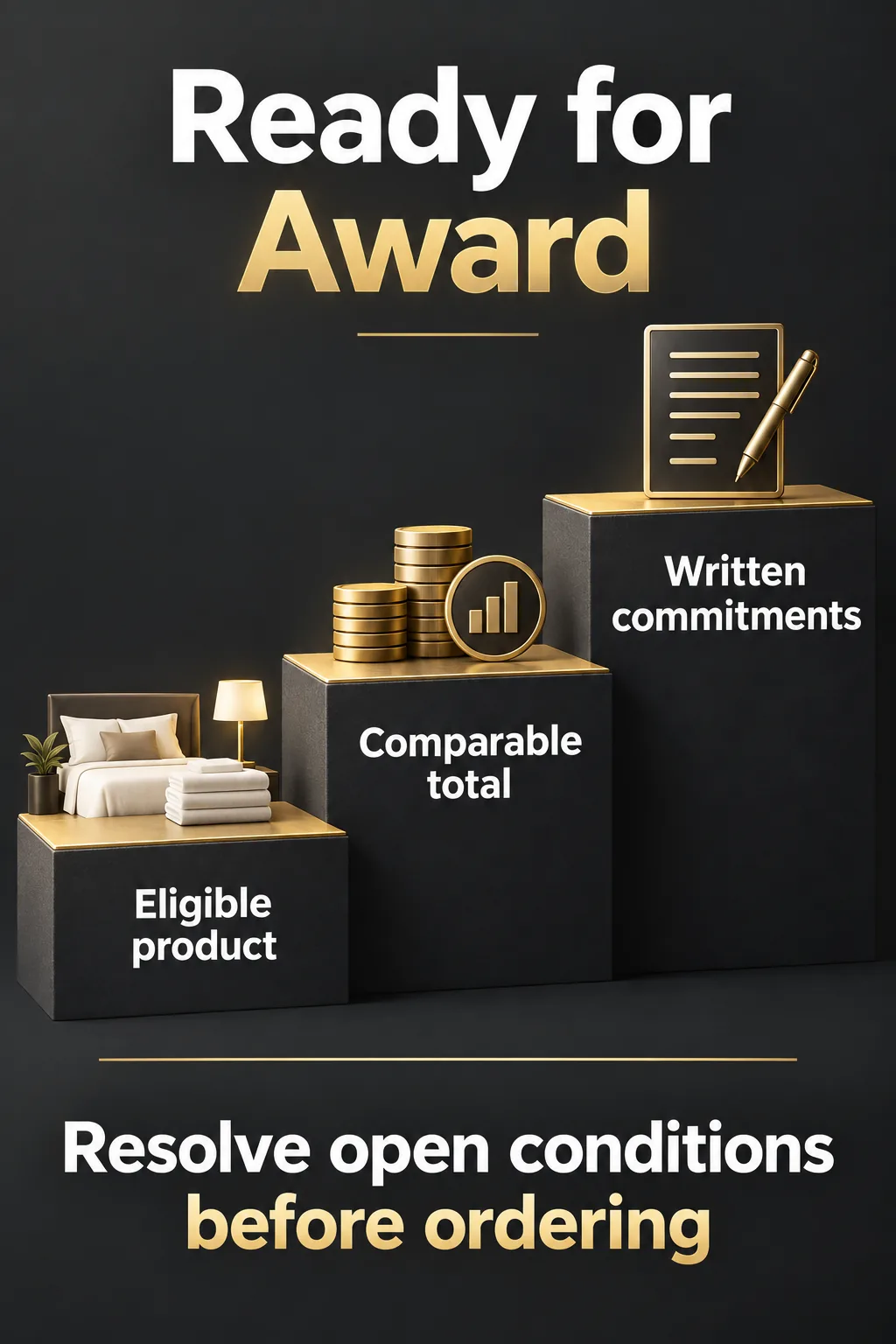
The method below includes a worked comparison and an editable workbook. All example prices and service allowances are hypothetical; they illustrate the calculation rather than represent supplier quotations or market benchmarks. Use current written offers, verified product documents, and a confirmed receiving plan for a live purchase. Record unresolved information as pending instead of entering zero. A bid becomes ready for award when its specifications, costs, delivery obligations, and remedies can be traced to written commitments.
Establish Comparable Quality and Scope
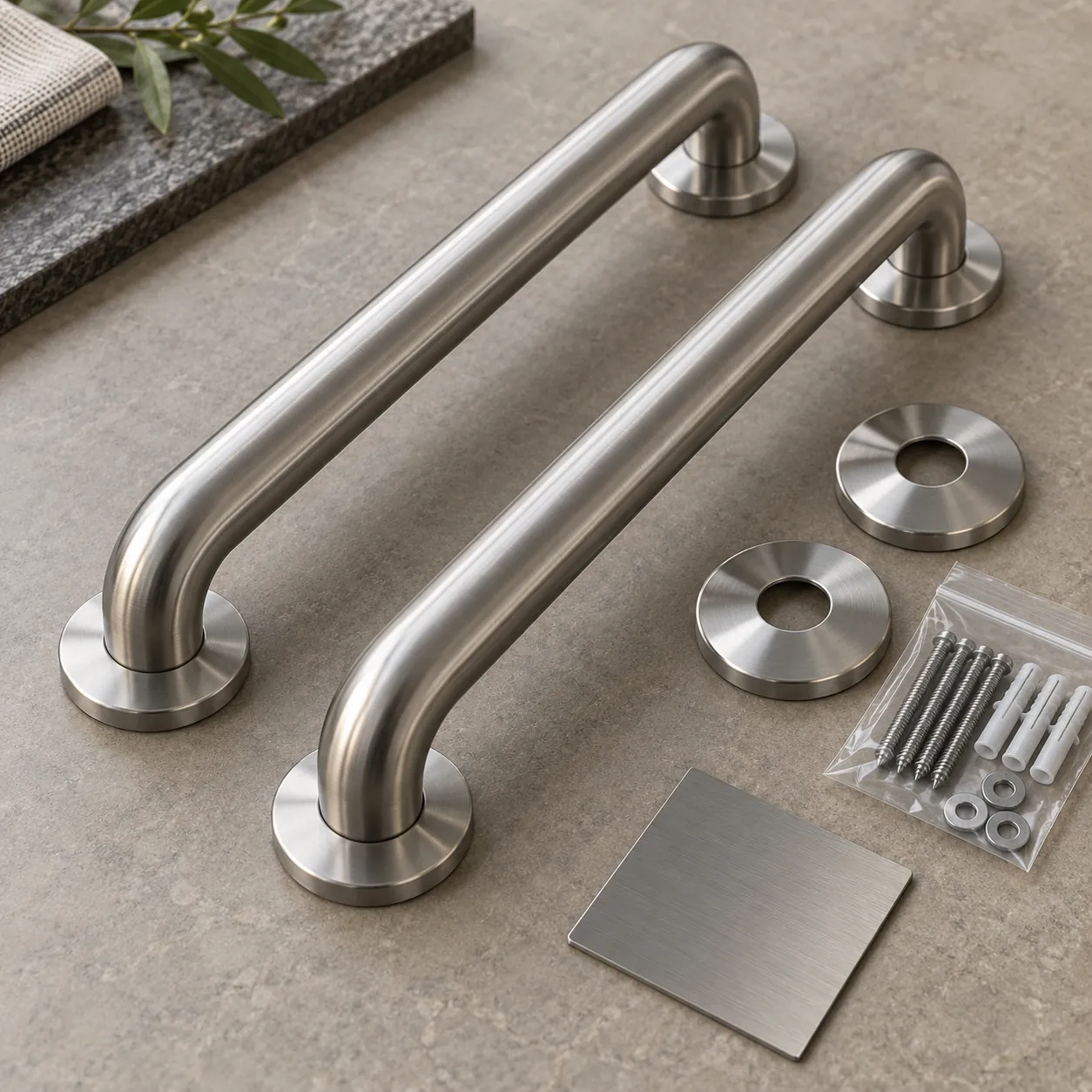
Start by deciding which bids are technically eligible for the same purchase. Quality normalization means comparing documented materials, dimensions, construction, finish, intended use, and installation dependencies against a common requirement. It does not mean assigning a cash discount to a missing safety condition. A grab bar that cannot be supported by the planned wall assembly remains an unresolved technical issue regardless of its price. Build the comparison around an approved product schedule and require suppliers to identify deviations explicitly. Keep each alternative separate until the responsible project reviewer accepts it for the intended location.
Define the unit being purchased
Identify the manufacturer, model, revision, finish, dimensions, handedness where relevant, and contents of every quoted set. Distinguish one bar from a pair, one shower seat from a complete installation kit, and an accessory from the primary product. Record the required operating quantity and the separately approved spare quantity. If two alternatives perform different functions or need different installation arrangements, give them separate comparison lines rather than treating them as interchangeable units.
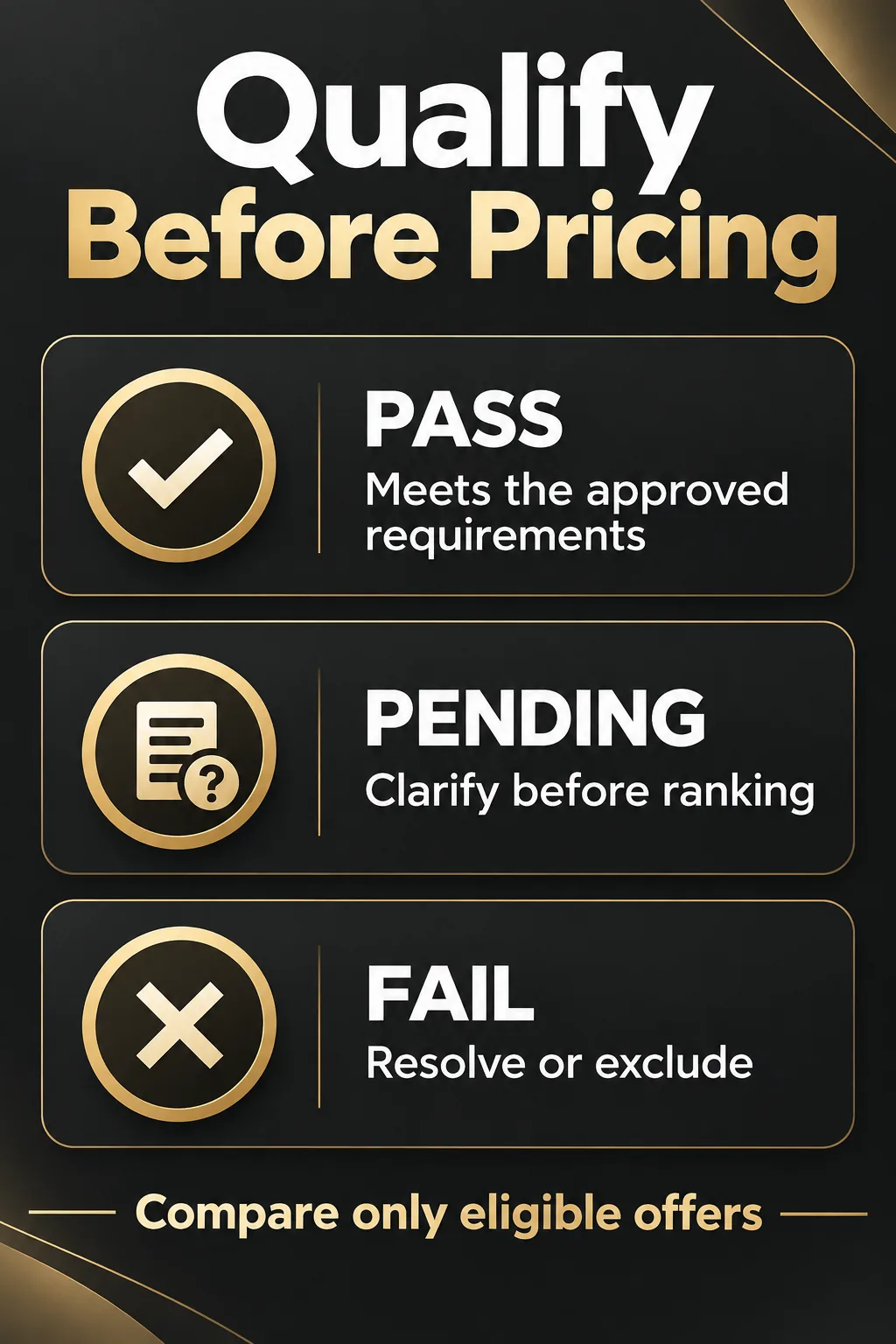
Use a three-state technical decision: pass, pending clarification, or fail. A pending offer may remain in the working comparison, but it should not be shown as the lowest eligible bid. A failed requirement can only be resolved through an approved redesign or a conforming alternative, followed by a revised quote. Do not bury a substitution in the price-adjustment column.
Match evidence to the product and installation
For load-bearing products, request model-specific technical documentation covering the product, fixing arrangement, and support conditions. Accessibility requirements can involve installed geometry and surrounding clearances as well as the product itself. A general accessibility claim on a sales page does not establish that a proposed assembly is suitable for a particular room. Have the project’s qualified reviewer confirm the applicable requirements for its jurisdiction and scope.
For finish consistency, request an approved reference sample and written acceptance criteria for the appearance of the production batch. For cleaning compatibility, obtain the manufacturer’s permitted agents and care instructions. A stainless-steel description alone does not establish grade, construction quality, or resistance under the property’s actual cleaning routine. Supplier samples can demonstrate finish and function, but they do not replace engineering documentation or prove the quality of every future production unit.
| Comparison field | Common basis | Evidence needed |
| Product identity | Exact model and approved revision | Technical sheet and deviation list |
| Materials and finish | Specified grade and sample reference | Material declaration and retained sample |
| Installation scope | Fixings, supports, labor boundaries | Installation instructions and written inclusions |
| Quantity unit | Each, pair, kit, and spare quantity | Itemized bill of materials |
| Acceptance | Agreed inspection and defect remedies | Purchase terms and approval record |
Keep the approved sample reference, inspection method, and remedy for nonconforming goods in the purchase record. Define who can accept a finish variation and who must approve a functional change. This makes the quality basis enforceable within the commercial process and gives receiving staff something more useful than an attractive product photograph.
Normalize Packaging and Freight
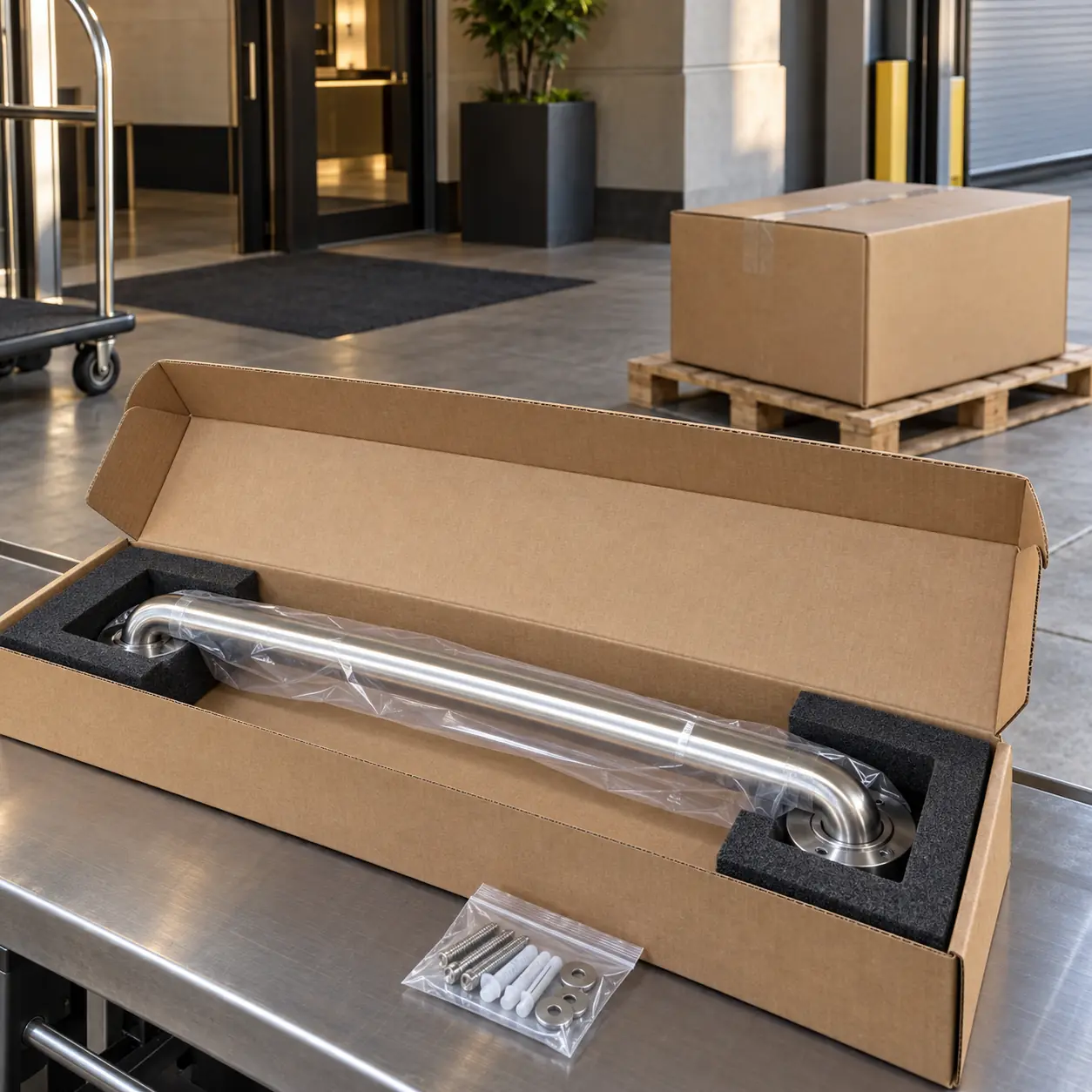
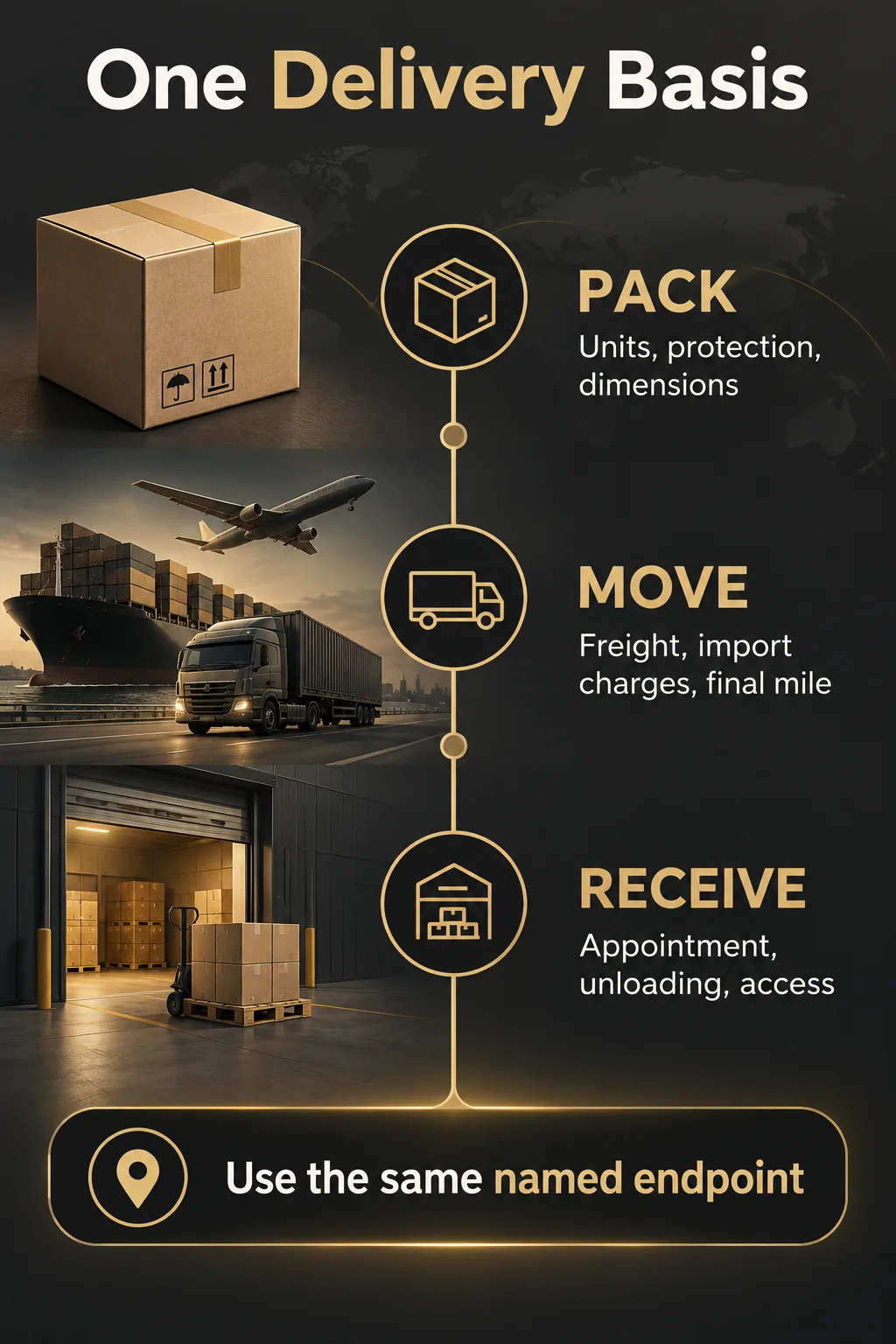
Compare packaging and transport as one delivery system, with the same receiving location and service scope for every supplier. Packaging affects the number of units purchased, shipment dimensions, handling effort, and protection of finished surfaces. Freight affects which costs the buyer must add and which party handles each stage. A quote to a port cannot be compared directly with a quote to the hotel’s receiving area. Ask each supplier to state the packing configuration and delivery endpoint, then add only the costs that remain outside that supplier’s written offer.
Convert pack quantities into purchased units
Record units per inner pack, units per carton, minimum order quantity, and any requirement to order full cartons. For full-carton purchasing, ordered units equal the required quantity divided by units per carton, rounded up to the next whole carton, then multiplied by units per carton. Apply any minimum order requirement before the final carton rounding. Confirm whether mixed models or finishes may share a carton; never assume they can.
If the property needs 95 units and a supplier sells cartons of 12, eight cartons supply 96 units. Record all 96 in the purchase cost. Keep 95 as the required-quantity denominator when comparing cost to satisfy the project, and show the extra unit separately. Do not assign it an automatic resale or spare-parts credit. Its usefulness depends on compatibility, storage, and the property’s replacement policy.
Request packing photographs or an approved packing specification that addresses separation of finished surfaces, restraint of moving parts, protection of protrusions, and segregation of fasteners. Ask for gross carton weights and external dimensions, including the palletized dimensions when applicable. If air freight or parcel shipping may be used, obtain the carrier’s actual chargeable-weight method. Do not insert a generic dimensional-weight divisor into a live quote.
Bring every quote to the same named endpoint
For international shipments, record the trade term, its version, and the precise named place. Trade terms allocate delivery tasks, costs, and risk, but the commercial comparison still needs explicit quotations for the required services. Separate responsibility for arranging transport from the point where transit risk transfers. Ask who provides any agreed cargo insurance and identify its limits and claims process. Avoid interpreting a phrase such as shipping included as a complete delivery commitment.
Resolve origin collection, export handling, main carriage, destination terminal charges, brokerage, applicable duties and nonrecoverable taxes, final-mile delivery, and unloading. The customs classification, origin, valuation, and destination determine the applicable import charges; obtain a current assessment from the appropriate provider. Do not reuse a percentage from an unrelated product or an old shipment. Keep recoverable taxes separate from economic cost while showing their cash-flow effect when material.
Confirm the property’s receiving hours, dock access, liftgate needs, appointment requirements, and whether inside delivery or room distribution is included. A truck arriving at the building is not necessarily delivery to the required storage area. Ask how redelivery, detention, storage, split deliveries, and failed appointments are charged. If a cost is included, mark it included with a reference to the offer. If it is unknown, mark it pending and resolve it before award.
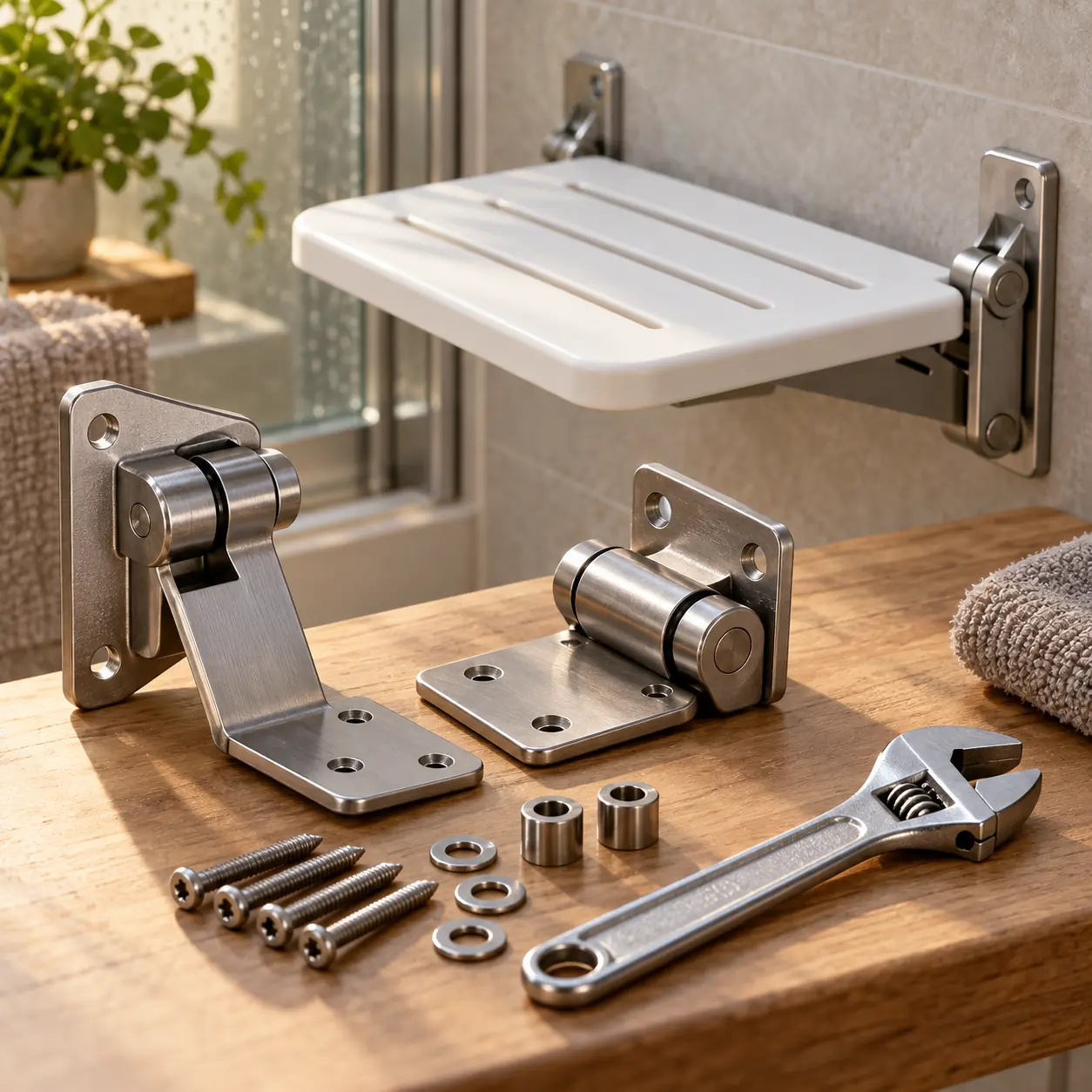
Compare Warranty Remedies and Service
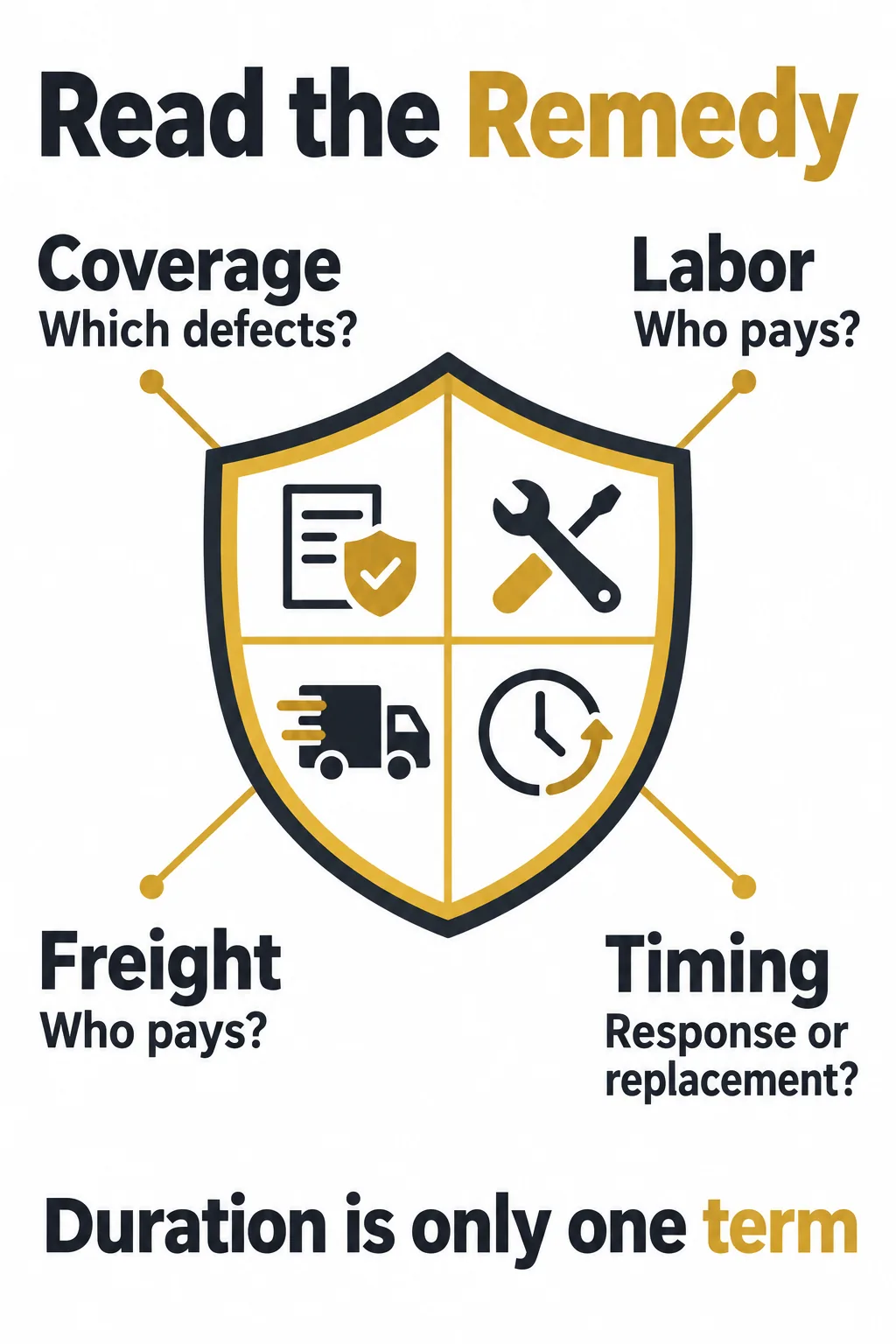
Evaluate warranty support by the remedy the property can actually obtain, the costs it retains, and the time needed to restore service. Duration alone cannot describe those conditions. A longer parts-only warranty may leave the hotel responsible for diagnosis, removal, reinstallation, and replacement freight. A shorter written arrangement may cover more of those activities. Normalize the coverage period for the comparison, but preserve the original terms beside it. Treat service availability, spare-part compatibility, and response commitments as separate questions unless the warranty explicitly includes them.
Identify the covered failure and the available remedy
Ask which defects are covered, who provides the warranty, and whether the remedy is repair, replacement, or credit. Record the coverage start date and any deadline for registration or notification. Confirm commercial hospitality use, permitted cleaning practices, installation conditions, and exclusions. Distinguish coverage for the product structure, moving components, and decorative finish where the terms differ. Do not assume every component shares the headline warranty period.
Map the complete claim process: evidence required, authorization contact, response commitment, return requirements, replacement dispatch, and payment of each associated cost. A response within two business days does not mean a replacement arrives within two business days. If return freight is the buyer’s responsibility, ask where the return goes. A cross-border return can create materially different costs from a domestic replacement arrangement.
| Term to compare | Question for the supplier |
| Remedy | Repair, replacement, or credit, and who decides? |
| Labor | Who pays for diagnosis, removal, and reinstallation? |
| Transport | Who pays outbound and return freight? |
| Timing | What is committed for response and dispatch? |
| Exclusions | Which uses, cleaning agents, or installation conditions are excluded? |
| Continuity | Which compatible parts are available and for how long? |
Keep service assumptions visible
Where reliable experience exists, estimate a service allowance from the expected number of events multiplied by the buyer’s net cost per event. Include only costs outside the remedy and avoid counting the same replacement twice. State the observation period and explain the evidence behind the event estimate. If reliable failure data are unavailable, compare zero-event, one-event, and higher-event scenarios rather than inventing a failure percentage.
Separate an allowance from a supplier charge: it is a buyer assumption used to test a decision. Document a practical replacement route for products whose unavailability could prevent a room or amenity from serving its intended guests. A stocked compatible spare may reduce restoration time, but spare inventory does not correct an unsuitable product. Verify that any substitute keeps the approved installation and functional requirements intact.
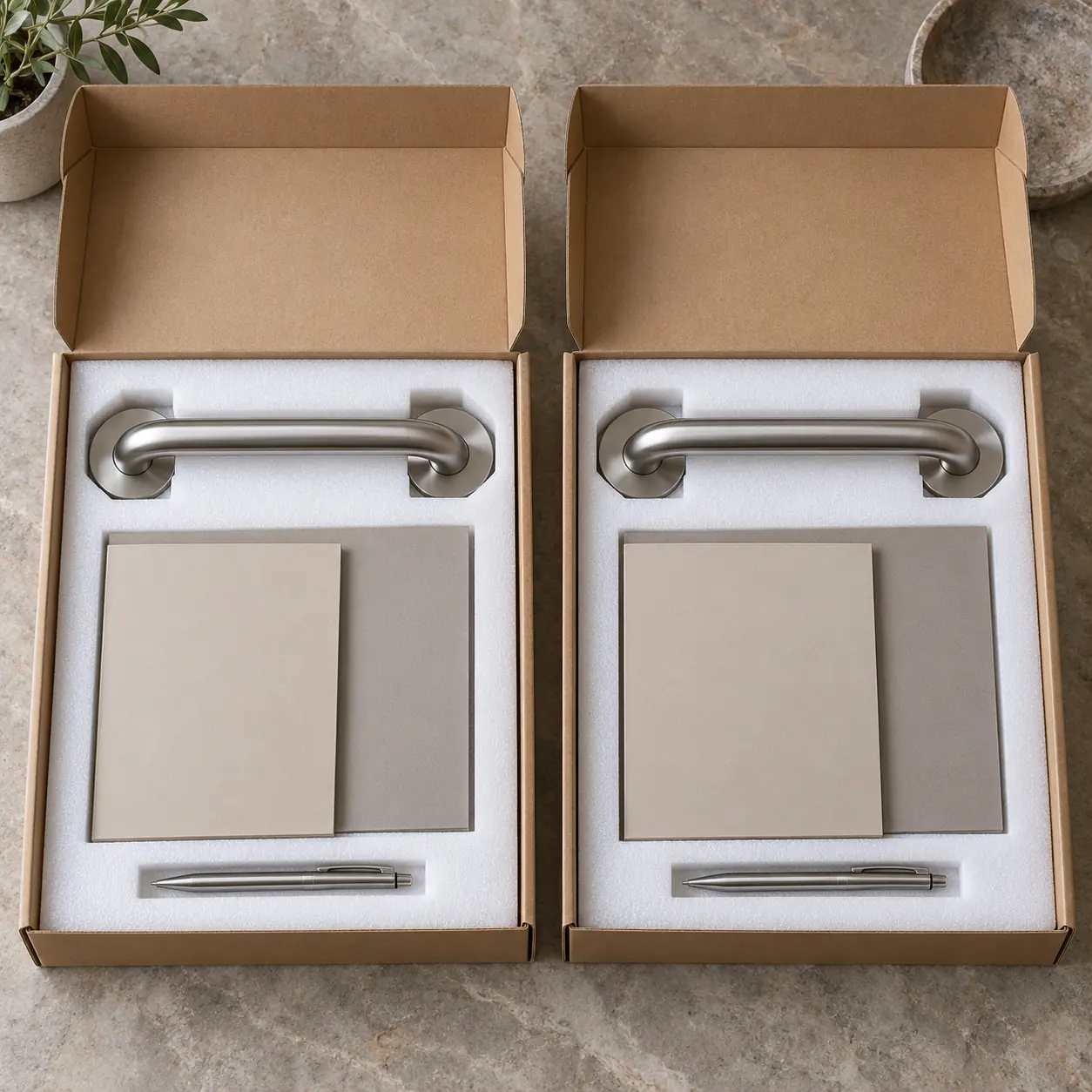
Calculate and Stress-Test the Evaluated Bid
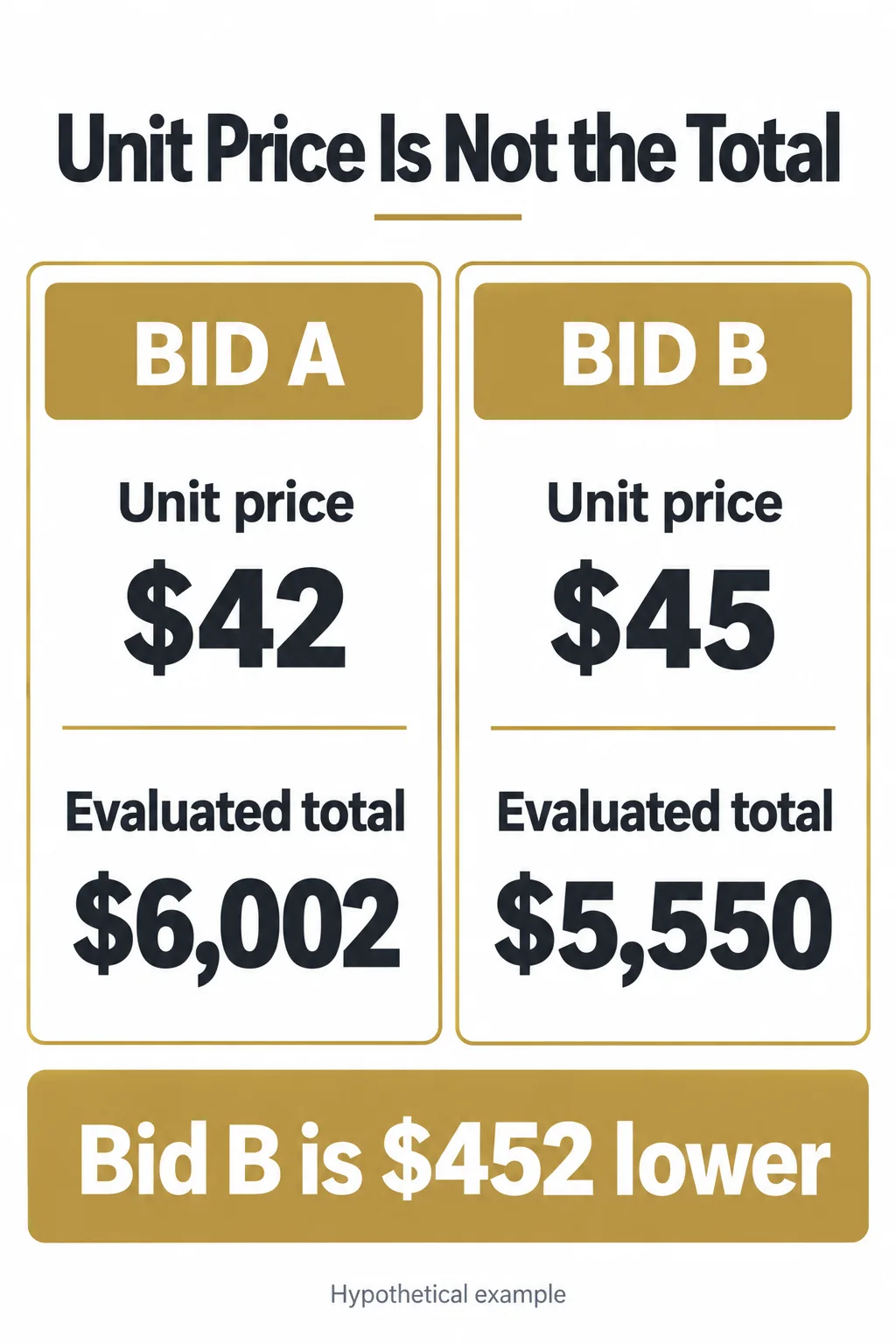
Calculate the common acquisition cost first, then add any clearly identified evaluation allowances. This preserves the difference between money the buyer expects to pay under the purchase and uncertain future costs used for decision-making. The worked example below compares two technically eligible offers for 95 identical specified units delivered to the same receiving point. Both offers require whole cartons. All values are hypothetical US dollars, all listed additions are outside the quoted goods price, and installation is excluded equally. The service allowance uses a common twelve-month evaluation period and is not a prediction of failure.
Use a calculation that can be traced
Common acquisition cost equals ordered goods plus nonincluded packaging, freight and receiving charges, import charges, and approved scope additions. Evaluated bid cost equals common acquisition cost plus the separately stated service allowance. Convert foreign-currency amounts on the same dated exchange-rate basis before combining them. Keep the original currency and rate in the working record so a change in exchange rate can be tested consistently.
| Item (USD unless noted) | Bid A | Bid B |
| Required units | 95 | 95 |
| Units per carton | 12 | 10 |
| Cartons ordered | 8 | 10 |
| Units purchased | 96 | 100 |
| Price per purchased unit | $42.00 | $45.00 |
| Goods cost | $4,032 | $4,500 |
| Additional packaging | $180 | $0 (included) |
| Freight and receiving | $950 | $650 |
| Import charges | $300 | $300 |
| Approved scope additions | $240 | $0 (included) |
| Common acquisition cost | $5,702 | $5,450 |
| Illustrative service allowance | $300 | $100 |
| Evaluated bid cost | $6,002 | $5,550 |
| Evaluated cost per required unit | $63.18 | $58.42 |
Bid A’s unit price is $3 lower, yet Bid B’s common acquisition cost is $252 lower after carton rounding and scope adjustments. With the stated service allowances, Bid B’s evaluated advantage increases to $452. Bid B also leaves five surplus units compared with one under Bid A. Neither surplus receives a credit in this example. The $300 import-charge entries are illustrative amounts, not tariff rates or evidence that real shipments would attract equal charges.
In the workbook, edit the blue input cells and use one approved product line at a time. The calculation shows carton rounding, surplus quantity, acquisition cost, service allowance, and evaluated cost. Eligibility is a separate input: pending or failed offers remain visible for analysis but do not receive an eligible cost per required unit. The example assumes complete cost entries; replace illustrative zeros only after confirming the item is included or genuinely not applicable.
Find the condition that could reverse the ranking
The $452 evaluated difference is the break-even margin for an additional cost affecting Bid B alone. An added $452 makes the example’s evaluated totals equal; more than that reverses the evaluated ranking. If the service allowances are removed entirely, Bid B still leads by $252 on acquisition cost. These are two different thresholds, and the award note should identify which one supports the decision.
Test the most consequential uncertainties: a revised freight quote, a destination charge that was omitted, a change in carton quantity, a currency movement, or an uncovered service event. Change only the affected inputs and preserve the base case. Do not add overlapping contingencies for the same risk. If opening-date suitability is mandatory, an unacceptable delivery schedule should remain an eligibility issue rather than become a speculative room-revenue penalty.
Close the commercial record before award
Request a final written offer that incorporates agreed clarifications and replaces earlier conflicting revisions. Record quote validity, payment milestones, sample approval, production release conditions, delivery timing, acceptance requirements, and warranty documents. A planned ship date should be distinguishable from arrival at the named destination. Where progress depends on buyer approval, record that dependency and its deadline.
The award explanation should state why the selected offer is eligible, its common acquisition cost, the allowances used, and whether the ranking survives the identified uncertainties. Keep unpriced risks and unresolved conditions visible. A weighted quality score can help compare acceptable differences, but a score must not turn a failed mandatory requirement into an acceptable award.
Conclusion
The strongest accessibility supplies bid comparison gives every qualified offer the same scope, quantity basis, delivery endpoint, and evaluation period. Start with technical eligibility, then resolve packaging and transport responsibilities, and finally compare practical warranty remedies. Keep quoted costs separate from assumptions so another reviewer can reproduce the result. In the worked example, the higher unit-price offer has the lower acquisition and evaluated totals, but that outcome follows from the stated inputs rather than a general rule about suppliers. Award only after the selected offer and its supporting commitments are documented.
For a project quotation, prepare the approved product schedule, required quantities and spares, installation dependencies, packing requirements, destination details, receiving constraints, and target date. Use KW Hospitality’s contact form to discuss that scope and request an itemized offer. Ask for deviations, exclusions, freight responsibilities, and warranty terms in writing so the resulting quotation can be compared on the same basis as the other bids.
Frequently Asked Questions
Can a bid remain in the comparison while technical information is missing?
Yes. Mark it pending and show its provisional cost, but exclude it from the eligible ranking until the missing requirement is resolved. Giving missing documentation a zero-cost adjustment creates a false impression that the offer is complete.
Should we give extra units a credit when a supplier has a larger pack size?
Only if the property has an approved use and a defensible valuation for them. The worked example includes the full purchase cost and gives surplus units no credit. Show any approved credit separately so it does not conceal additional cash spending.
Does a delivered quote include unloading and inside delivery?
Do not assume it does. Obtain the exact named endpoint and service description, including unloading equipment, appointment requirements, and movement beyond the delivery point. Add any required excluded service consistently across the offers.
How should we compare a warranty when failure-rate data are unavailable?
Compare the written coverage and claim process first. Then test event-based scenarios using the buyer’s uncovered cost per event. Label those scenarios as assumptions; they do not establish the probability that a product will fail.
Can we average prices across grab bars, shower seats, and communication accessories?
A mixed average hides differences in quantity and function. Normalize each approved product line first, including its required accessories and delivery allocation, then add the lines into a project total. Allocate shared freight only once using a disclosed basis.
Is the lowest evaluated bid automatically the award winner?
No. It must also meet mandatory technical, delivery, and commercial conditions. The evaluated cost supports the decision; the final award still depends on documented eligibility, accepted terms, and the reliability of unresolved assumptions.