The Hidden Backbone of Hotel Development: Understanding FF&E and OS&E from the Start
In the world of hospitality development, the guest typically notices the elegance of the lobby, the comfort of the bed, the polished shine of glassware in the restaurant, and the seamless efficiency of hotel services. What remains largely invisible to the guest, however, is the complex procurement ecosystem that makes this experience possible. At the core of this ecosystem are two critical components that define the physical and operational readiness of any hotel property: FF&E (Furniture, Fixtures, and Equipment) and OS&E (Operating Supplies and Equipment). For hotel owners, developers, project managers, and especially purchasing managers, understanding the distinction and relationship between FF&E and OS&E is not merely a technical matter—it is the foundation upon which successful hotel development projects are built.
From the earliest stages of planning a hotel, the allocation, specification, sourcing, and installation of FF&E and OS&E shape everything from guest satisfaction to long-term financial performance. These categories collectively represent a substantial portion of a hotel’s development budget and operational infrastructure. While architectural design and construction provide the structural shell of a hotel, it is FF&E and OS&E that transform a building into a functioning hospitality environment capable of delivering consistent service standards and memorable guest experiences.
The distinction between FF&E and OS&E may appear simple on the surface, yet in practice it influences budgeting, accounting treatment, procurement timelines, logistics planning, supplier negotiations, and even brand compliance. For hotel purchasing managers, the ability to clearly identify, categorize, and strategically procure FF&E and OS&E items is one of the most critical competencies required during both development and renovation phases of hospitality projects. Misunderstandings or mismanagement in these areas can quickly cascade into costly delays, budget overruns, operational inefficiencies, or inconsistencies with brand standards.
Why Procurement Decisions Shape the Entire Guest Experience
Every detail within a hotel environment—from the comfort of a mattress to the durability of lobby seating, from the shine of stainless‑steel kitchen equipment to the quality of towels in guest bathrooms—originates from deliberate procurement decisions made long before the first guest arrives. These decisions fall squarely under the umbrella of FF&E and OS&E planning, which determines the functional, aesthetic, and operational character of the hotel.
Purchasing managers often operate at the intersection of multiple disciplines: architecture, interior design, engineering, operations, and finance. Their procurement choices influence how a space looks, how it functions, and how long it will continue to perform effectively under the pressures of daily hospitality operations. Selecting durable and aesthetically aligned FF&E pieces ensures that guest rooms maintain a consistent design language while also enduring years of use. Meanwhile, choosing reliable OS&E items—such as kitchen tools, housekeeping carts, or tableware—ensures operational teams can deliver services efficiently without interruption.
The guest rarely notices the procurement strategy behind their experience, yet its effects are everywhere. When a restaurant service runs smoothly because the right equipment was sourced and installed, or when a hotel room feels comfortable due to carefully selected furniture and lighting, the success of strategic hospitality purchasing becomes evident. Conversely, poor procurement decisions can lead to premature equipment failures, mismatched aesthetics, operational bottlenecks, or increased maintenance costs—problems that directly impact guest satisfaction and brand reputation.
Another critical dimension is consistency across the property. Hotels operate as integrated ecosystems where each department—from guest rooms to food and beverage outlets—relies on a coordinated procurement strategy. Without clear differentiation between FF&E and OS&E, departments may face shortages, incompatible equipment, or inconsistent design standards that undermine operational harmony.
The Financial Scale of FF&E and OS&E in Hotel Projects
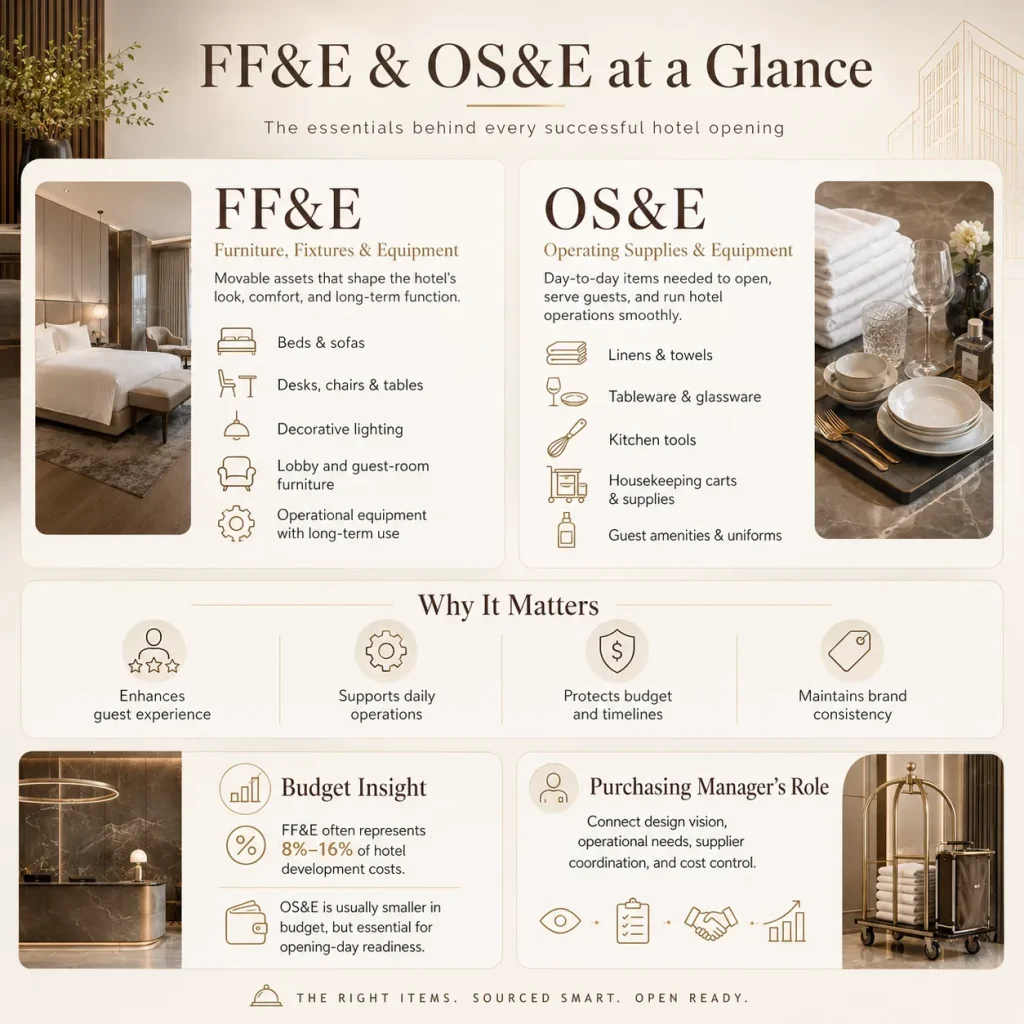
Hotel development budgets are complex financial structures consisting of land acquisition, construction costs, professional fees, contingency reserves, and procurement expenditures. Within this financial framework, FF&E budgets often represent one of the largest capital expenditures after construction costs, while OS&E budgets cover the essential operational tools required to open and run the hotel effectively.
In many hospitality projects, FF&E costs alone may account for 8% to 16% of total project development costs, depending on the property’s positioning, brand standards, and design complexity. Luxury hotels, boutique properties, and high-end resorts frequently allocate even higher percentages due to custom furniture, bespoke lighting, designer fixtures, and premium materials required to achieve distinctive guest experiences.
OS&E, although typically representing a smaller percentage of the development budget compared to FF&E, remains equally critical because it directly supports daily operations. Items such as linens, kitchenware, cleaning equipment, uniforms, guest amenities, and small appliances must be carefully sourced in sufficient quantities to support hotel operations from the moment the property opens its doors.
For purchasing managers, one of the primary challenges is balancing quality, cost control, and operational requirements within the allocated FF&E and OS&E budgets. Unlike many other procurement environments, hospitality purchasing must simultaneously satisfy aesthetic design specifications, operational durability standards, and financial constraints. A dining chair, for instance, is not merely furniture; it is a design element aligned with the interior concept, an operational asset capable of withstanding constant use, and a budget line item subject to cost optimization.
This financial balancing act becomes even more complex in large-scale hospitality developments such as resorts, mixed-use complexes, or multi‑brand hotel properties. In such projects, procurement teams must coordinate thousands of items across multiple departments while maintaining strict budget discipline and ensuring timely delivery aligned with construction milestones.
How Purchasing Managers Bridge Design, Operations, and Budget
Within the hospitality development ecosystem, hotel purchasing managers serve as the operational bridge connecting design vision, operational practicality, and financial accountability. Their role begins long before procurement orders are placed and continues through installation, inventory verification, and pre-opening preparation.
Architects and interior designers typically establish the visual and conceptual direction of a hotel. They produce specifications that define the materials, dimensions, finishes, and aesthetic characteristics of FF&E items. However, these specifications must be translated into procurement strategies that align with real-world supply chains, manufacturing capabilities, delivery timelines, and cost constraints. This translation process is where the expertise of purchasing managers becomes indispensable.
A skilled purchasing manager evaluates each FF&E specification not only for visual alignment with the design concept but also for factors such as durability, maintenance requirements, warranty coverage, supplier reliability, and logistical feasibility. For example, a custom-designed sofa for a hotel lobby may perfectly fit the design concept, yet if the manufacturing lead time extends beyond the construction schedule, procurement teams must negotiate alternative production timelines or identify equivalent suppliers without compromising the design intent.
At the same time, purchasing managers must coordinate closely with hotel operations teams to ensure OS&E selections align with operational workflows. A restaurant kitchen, for instance, requires specialized equipment that supports the menu concept, service volume, and staff efficiency. Housekeeping teams require cleaning tools, storage systems, and linen inventories that support room turnover targets and cleanliness standards. Every OS&E procurement decision must therefore reflect the operational realities of hotel service delivery.
Budget management further complicates the purchasing manager’s responsibilities. Hospitality projects often operate within strict capital expenditure limits, and procurement teams must ensure that the total cost of FF&E and OS&E remains within approved budgets while maintaining quality and brand standards. This requires strategic vendor negotiations, competitive bidding processes, and continuous cost monitoring throughout the procurement cycle.
Why Confusion Between FF&E and OS&E Causes Cost Overruns
Despite the importance of these categories, confusion between FF&E and OS&E remains surprisingly common in hotel projects, particularly during early planning stages or when stakeholders lack experience in hospitality procurement. This confusion can create significant financial and operational problems that ripple throughout the project lifecycle.
One of the most frequent issues arises during budget allocation. When FF&E and OS&E items are incorrectly categorized, procurement budgets may become distorted. Capital items that should fall under FF&E may mistakenly be included within OS&E budgets, or operational items may be overlooked entirely during early cost planning. The result is often a sudden realization late in the project that essential items were never budgeted properly, forcing developers to allocate additional funds or reduce quality in other areas.
Accounting treatment also differs between FF&E and OS&E, which further complicates the issue. FF&E assets are typically capitalized and depreciated over time, reflecting their long-term value within the property. OS&E items, by contrast, are generally treated as operational expenses that may require frequent replenishment or replacement. Misclassification can therefore create accounting discrepancies that affect financial reporting and asset management.
Procurement timing is another critical factor affected by misclassification. FF&E items—particularly custom furniture, lighting fixtures, and specialized equipment—often require long manufacturing and shipping lead times. If procurement teams mistakenly treat these items as OS&E and delay ordering them until later stages of the project, the hotel’s opening timeline may be jeopardized due to incomplete installations.
Operational readiness can also suffer when OS&E procurement is underestimated. Hotels require thousands of operational items—from glassware and linens to housekeeping supplies—before opening day. If these items are not accurately planned and ordered in advance, hotel teams may find themselves scrambling to source essential supplies just weeks before opening, often at higher costs and with limited supplier options.
Early Planning Strategies for Hotel Procurement Teams
To avoid the risks associated with poor FF&E and OS&E planning, successful hotel projects begin with comprehensive procurement strategies developed during the earliest phases of development. These strategies involve collaboration between developers, project managers, designers, and operations teams to create detailed itemized lists of all required FF&E and OS&E components.
One of the most effective tools used in hospitality procurement is the FF&E and OS&E schedule, a detailed document that outlines every item required for the hotel along with its specifications, quantities, suppliers, estimated costs, and delivery timelines. This document evolves throughout the project lifecycle and serves as the central reference point for procurement planning.
Early planning also enables purchasing managers to identify opportunities for bulk purchasing, supplier consolidation, and value engineering, which can significantly reduce project costs without compromising quality. For instance, sourcing furniture from manufacturers capable of producing multiple items across different areas of the hotel may reduce shipping costs and streamline logistics.
Another important strategy involves aligning procurement schedules with construction milestones and installation sequences. Large furniture pieces, built‑in fixtures, and specialized equipment must often be delivered at precise moments within the construction timeline to ensure proper installation and avoid storage complications.
Finally, early procurement planning provides purchasing managers with the flexibility to address supply chain disruptions, manufacturing delays, or material shortages—issues that have become increasingly common in global hospitality projects. By placing orders early and maintaining strong supplier relationships, procurement teams can mitigate risks and maintain project timelines even in unpredictable market conditions.
In essence, understanding FF&E and OS&E from the very beginning of a hotel development project is not simply an administrative task; it is a strategic discipline that influences design realization, operational readiness, financial performance, and guest satisfaction. For purchasing managers responsible for bringing hospitality projects to life, mastering the relationship between these two procurement categories is the first and most essential step toward successful hotel openings and sustainable long-term operations.

What Exactly Is FF&E in the Hospitality Industry?
Within the complex ecosystem of hotel development, few terms carry as much operational and financial weight as FF&E (Furniture, Fixtures, and Equipment). Although frequently used in hospitality projects, the term is often misunderstood, oversimplified, or inconsistently applied across departments. For hotel owners, developers, asset managers, and especially purchasing managers, a precise understanding of FF&E is essential—not only for accurate budgeting and procurement but also for long‑term asset performance and brand alignment.
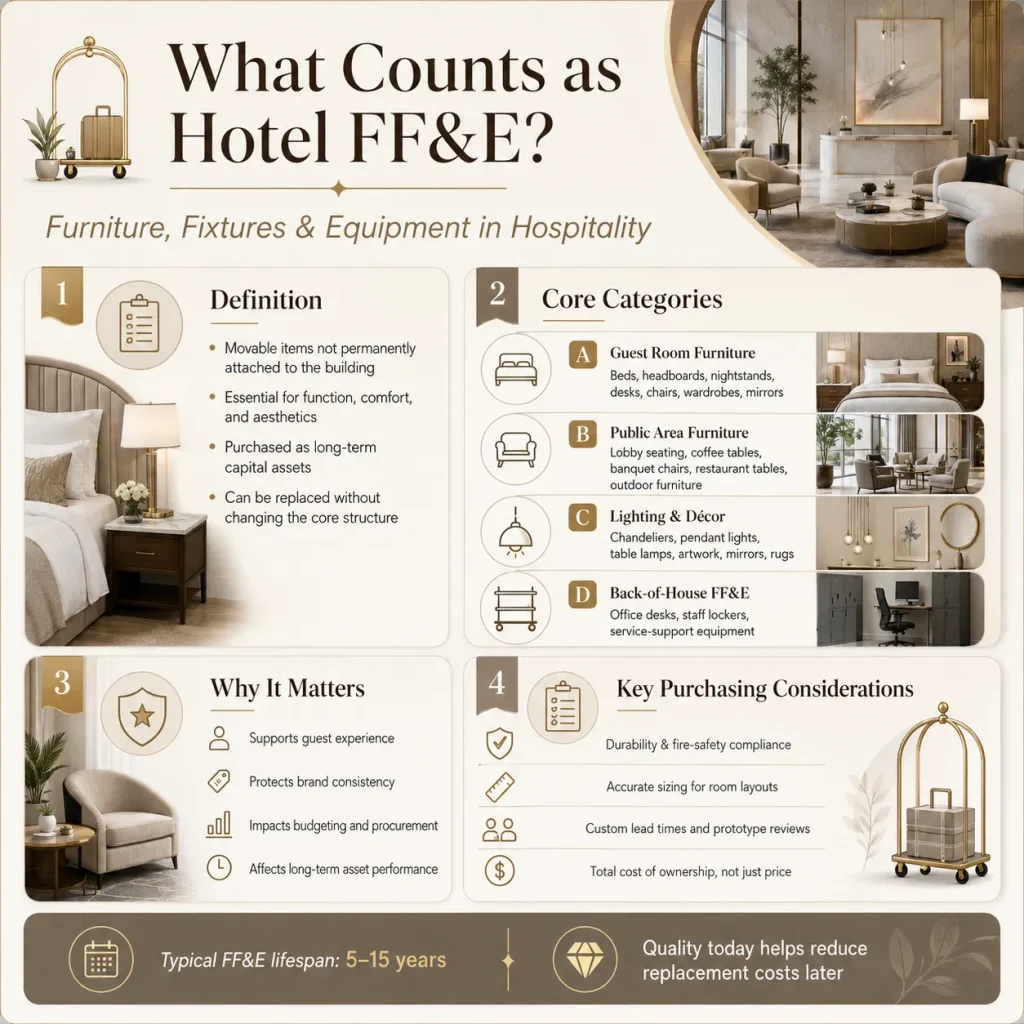
At its core, FF&E refers to all movable items within a hotel that are not permanently attached to the building structure, yet are essential for its functionality, aesthetics, and guest experience. These items are typically capital expenditures, meaning they are purchased as long‑term assets and depreciated over time. Unlike structural elements such as walls, plumbing, or HVAC systems, FF&E components can be removed, replaced, or upgraded without altering the building’s core infrastructure. However, their influence on the identity and operational performance of a hotel is profound.
Understanding FF&E requires more than memorizing a definition. It demands a comprehensive grasp of how these assets interact with design vision, operational durability, brand standards, lifecycle planning, and financial strategy. In hospitality projects—particularly those involving international brands or luxury positioning—the FF&E package can define the competitive differentiation of the property.
Definition of FF&E in Hotel Development
In the hospitality industry, FF&E encompasses furniture, decorative lighting, fixtures not permanently affixed to the structure, and specialized equipment that supports guest services. The key distinction lies in movability and capitalization. If an item can theoretically be removed without damaging the building and is expected to remain in service for multiple years, it is typically classified as FF&E.
For purchasing managers, this classification is not merely academic. It determines how items are budgeted, approved, procured, tracked, insured, and depreciated. Misclassifying FF&E can lead to accounting inconsistencies, inaccurate capital forecasting, and misaligned procurement schedules.
In a typical hotel development project, the FF&E scope is outlined in a comprehensive FF&E specification document prepared by interior designers in coordination with brand representatives and project consultants. This document details item descriptions, materials, finishes, dimensions, performance requirements, and sometimes approved manufacturers. The purchasing manager then translates this specification into actionable procurement strategies—soliciting quotations, negotiating contracts, coordinating production timelines, and managing logistics until installation.
Importantly, FF&E is not limited to visible guest-facing items. While guests immediately notice furniture and decorative lighting, FF&E also includes back‑of‑house equipment such as office desks, staff lockers, and certain operational machinery. Therefore, a holistic understanding of FF&E requires examining both public and non-public areas of the hotel.
Core Categories of Hotel FF&E
Although the scope of FF&E varies depending on property type—luxury resort, boutique hotel, business hotel, or extended‑stay property—its components can generally be grouped into several core categories. Each category carries distinct procurement considerations, durability standards, and financial implications.
Guest Room Furniture
Guest rooms represent the heart of hotel revenue generation, and their FF&E components must strike a delicate balance between aesthetic appeal, comfort, and long‑term durability. Guest room FF&E typically includes beds, headboards, nightstands, desks, chairs, sofas, wardrobes, luggage racks, mirrors, decorative lighting fixtures, artwork, and sometimes televisions (depending on project classification standards).
For purchasing managers, guest room furniture often accounts for a significant portion of the total FF&E budget due to the volume required. A 200-room hotel, for example, may require thousands of individual furniture pieces when considering multiple room types and suites. Even minor cost differences per item can dramatically impact overall project expenditure.
Durability is a primary concern in guest room FF&E selection. Hospitality furniture must withstand frequent use, cleaning chemicals, luggage impact, and shifting occupancy patterns. Therefore, materials such as high‑pressure laminates, solid wood with protective finishes, reinforced upholstery fabrics, and commercial-grade hardware are commonly specified. Compliance with fire safety standards, particularly in international markets, is also mandatory.
Beyond durability, purchasing managers must ensure that furniture dimensions align precisely with architectural layouts. A minor deviation in wardrobe depth or desk width can create installation conflicts, particularly in rooms with tight spatial tolerances. This is why prototype rooms are often developed and reviewed before mass production begins—a step that reduces risk and prevents costly corrections.
Public Area Furniture
Public spaces such as lobbies, lounges, restaurants, conference rooms, and pool areas form the social and experiential core of the hotel. The FF&E in public areas serves both functional and branding purposes, often acting as a physical embodiment of the hotel’s identity.
Lobby seating arrangements, reception desks (when movable), coffee tables, banquet chairs, restaurant tables, bar stools, and outdoor furniture all fall within this category. These items must not only withstand high traffic volumes but also maintain visual impact over time.
Public area FF&E often involves custom manufacturing, especially in luxury or lifestyle hotels where distinctive design is part of the brand promise. Custom pieces increase complexity for purchasing managers because they require prototype approvals, shop drawings, finish samples, and close coordination with designers and manufacturers. Lead times for such items can extend several months, making early procurement planning critical.
Outdoor public area furniture introduces additional considerations, including weather resistance, UV stability, corrosion protection, and maintenance requirements. Selecting inappropriate materials can lead to rapid deterioration, negatively affecting both operational costs and brand perception.
Lighting Fixtures and Decorative Elements
Lighting plays a transformative role in hospitality environments, shaping ambiance, highlighting architectural features, and enhancing guest comfort. Within FF&E, decorative lighting fixtures—such as chandeliers, pendant lights, table lamps, and floor lamps—are typically included because they are not structurally integral to the building and can be removed or replaced without altering electrical infrastructure.
Purchasing managers must evaluate lighting fixtures based on aesthetics, energy efficiency, compliance with electrical standards, and compatibility with local voltage requirements. International hotel projects frequently involve cross-border procurement, where electrical specifications must align with regional regulations.
Decorative elements such as artwork, mirrors, sculptures, and rugs also fall within the FF&E category. Although sometimes perceived as secondary items, these elements significantly influence guest perception and brand storytelling. In boutique hotels especially, curated art collections or custom-designed rugs can become signature features of the property.
Typical Lifespan and Depreciation of FF&E Assets
One of the defining characteristics of hotel FF&E is its long-term asset classification. Unlike consumable operational supplies, FF&E items are capitalized and depreciated over their useful life, which typically ranges between five and fifteen years depending on asset type.
For example:
- Case goods (desks, wardrobes, nightstands) may have a depreciation period of 7–10 years.
- Upholstered seating may require replacement sooner due to fabric wear.
- Decorative lighting fixtures often last longer but may be updated during renovation cycles to refresh design aesthetics.
Understanding lifecycle expectations is crucial for both purchasing managers and asset managers. Hotels typically establish a Furniture, Fixtures, and Equipment Reserve (FF&E Reserve)—a financial provision funded annually from operating revenue to cover future replacement and refurbishment costs. Industry standards often allocate 3% to 5% of total revenue into this reserve fund.
From a procurement standpoint, selecting higher-quality materials may increase initial capital expenditure but reduce lifecycle costs by extending replacement intervals. Purchasing managers must therefore consider total cost of ownership rather than focusing solely on upfront price.
FF&E Budget Planning and Capital Expenditure
Developing an accurate FF&E budget requires detailed coordination between design teams, quantity surveyors, procurement specialists, and hotel operators. Budgets are typically organized by area—guest rooms, lobby, restaurant, meeting spaces, back-of-house—and further subdivided into item categories.
Below is a simplified sample table illustrating a conceptual FF&E budget structure for a mid‑scale 150-room hotel (figures are illustrative only):
| Category | Estimated Cost (USD) | Percentage of FF&E Budget |
|---|---|---|
| Guest Room Furniture | 2,250,000 | 45% |
| Public Area Furniture | 1,000,000 | 20% |
| Decorative Lighting | 600,000 | 12% |
| Restaurant & Banquet Furniture | 750,000 | 15% |
| Back-of-House Furniture/Equipment | 400,000 | 8% |
| Total FF&E Budget | 5,000,000 | 100% |
In real-world projects, these numbers fluctuate based on brand positioning, customization level, geographic location, import duties, and currency exchange rates. For purchasing managers, maintaining strict cost control across these categories is essential to prevent budget overruns that may affect overall project feasibility.
Effective FF&E budget planning also includes contingency allowances, typically ranging between 5% and 10%, to account for unforeseen design changes, freight increases, or currency fluctuations.
The Strategic Importance of FF&E in Brand Positioning
Beyond financial and operational considerations, FF&E defines the tactile and visual identity of a hotel brand. A luxury resort relies on bespoke furniture, high-end materials, and custom-crafted details to communicate exclusivity. A business hotel emphasizes ergonomic desks, task lighting, and functional layouts to support productivity. A lifestyle boutique hotel may prioritize artistic statement pieces that create Instagram-worthy environments.
Purchasing managers must understand these brand narratives to ensure that procurement decisions reinforce rather than dilute the intended positioning. Deviating from approved specifications to reduce costs may compromise brand standards, particularly in franchised or managed properties where compliance audits are strict.
At the same time, value engineering remains a legitimate and often necessary process. Skilled purchasing managers collaborate with designers to identify cost-effective alternatives that maintain visual integrity and performance standards. For example, substituting engineered veneer for solid hardwood may reduce cost while preserving appearance and durability.
In essence, FF&E in the hospitality industry represents far more than furniture and decorative items. It is a strategic investment in guest satisfaction, operational resilience, and long-term asset value. For hotel purchasing managers, mastering the complexities of FF&E—from specification analysis and supplier negotiation to lifecycle planning and capital budgeting—is fundamental to delivering successful hotel projects that perform both financially and experientially.
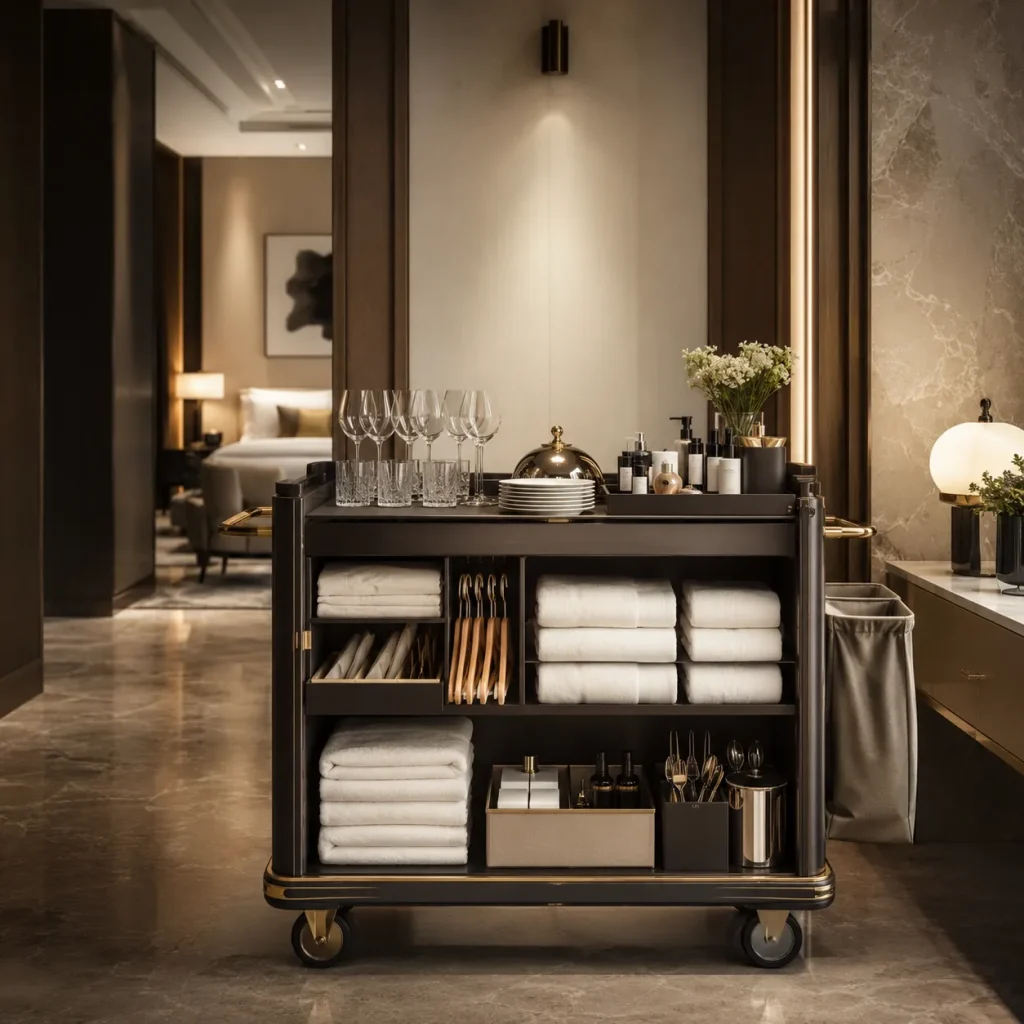
Understanding OS&E: The Operational Essentials of a Hotel
While FF&E (Furniture, Fixtures, and Equipment) often receives considerable attention during hotel development because of its visual impact and capital value, an equally critical component determines whether a hotel can actually function on a day‑to‑day basis: OS&E (Operating Supplies and Equipment). If FF&E provides the physical environment of a hotel, OS&E supplies the operational tools that allow hospitality teams to deliver services consistently, efficiently, and at the level expected by guests and brand standards.
In practical terms, OS&E encompasses the wide array of consumable items, operational tools, small equipment, and service supplies used in daily hotel operations. Unlike FF&E assets, which are capitalized and depreciated over several years, OS&E items are generally treated as operating expenses and require periodic replenishment. Many of these items have relatively short life cycles because they are consumed, washed, replaced, or worn out through constant use.
For hotel purchasing managers, OS&E planning represents one of the most complex aspects of pre‑opening procurement. The sheer volume of items required can be staggering. A mid‑size hotel may need tens of thousands of OS&E units—from linens and towels to teaspoons, hangers, cleaning supplies, and minibar accessories—before welcoming its first guest. These items must be ordered, delivered, inspected, stored, and distributed in precise quantities across every operational department.
Despite their smaller individual costs, OS&E items collectively represent a significant portion of the hotel’s pre‑opening budget. More importantly, they directly affect service quality, operational efficiency, and guest satisfaction. A restaurant cannot operate without the right tableware. Housekeeping cannot prepare rooms without cleaning equipment and linens. Front office staff cannot deliver amenities without the necessary supplies. For this reason, OS&E procurement requires the same strategic attention and logistical planning as FF&E procurement.
Definition and Scope of OS&E
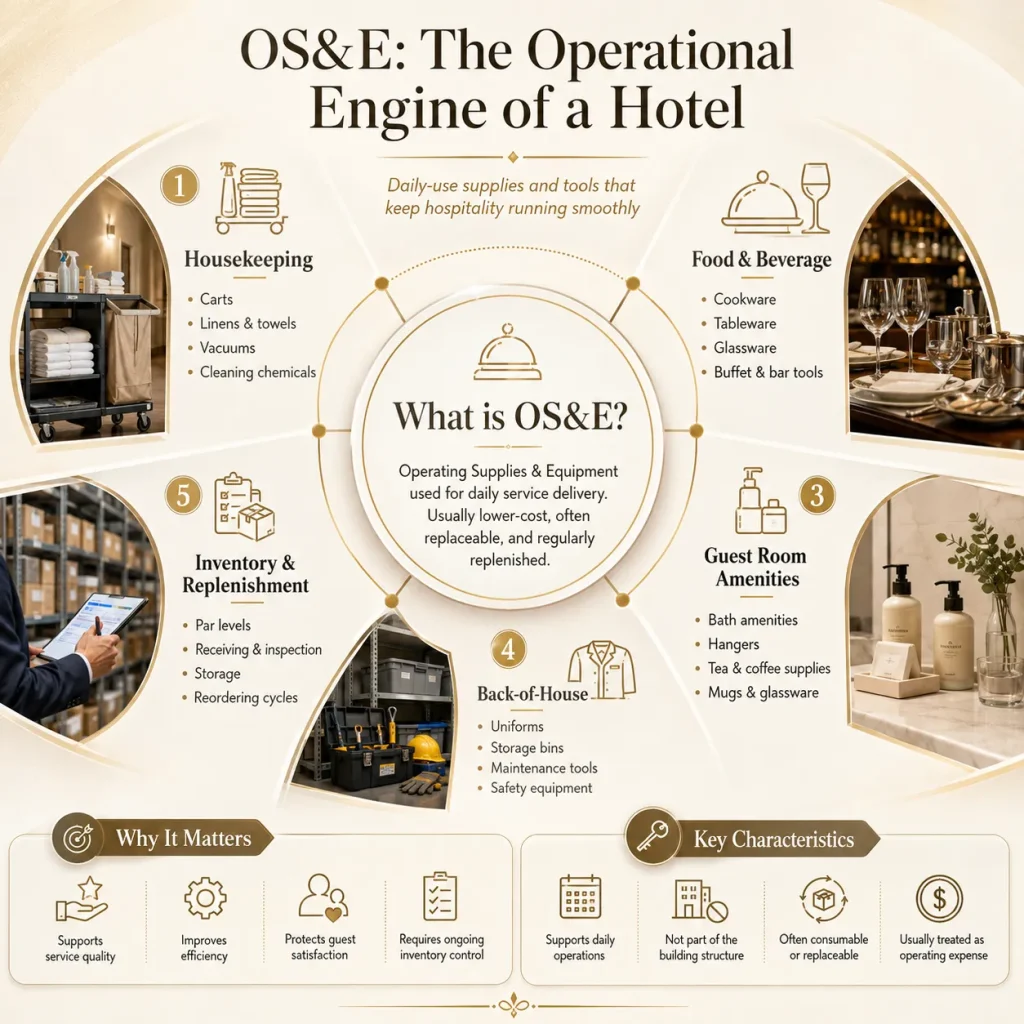
In the hospitality industry, OS&E refers to the operational supplies and small equipment required to run the hotel on a daily basis but that are not part of the permanent furnishing of the building. These items are essential for service delivery yet are not considered long-term capital assets.
The defining characteristics of OS&E include:
- Items that support daily hotel operations
- Typically lower cost per unit
- Often consumable or replaceable
- Generally not depreciated as capital assets
- Require inventory management and periodic replenishment
Because OS&E includes both consumable supplies and durable small equipment, it spans a wide spectrum of products. Some items—such as bath amenities or cleaning chemicals—may be used once and replaced immediately. Others—such as cookware or housekeeping carts—may last several years but are still categorized as OS&E because they are operational tools rather than capitalized furniture.
The procurement process for OS&E usually intensifies during the pre‑opening phase of a hotel project. During this period, purchasing managers work closely with department heads—including housekeeping managers, executive chefs, restaurant managers, and engineering teams—to determine precise item quantities based on operational forecasts.
Key Categories of Hotel OS&E
The scope of OS&E is typically organized by department, reflecting the operational structure of the hotel. Each department relies on specialized equipment and supplies to perform its functions efficiently. Understanding these categories helps purchasing managers develop comprehensive procurement plans and avoid critical shortages during opening operations.
Housekeeping Equipment and Supplies
Housekeeping is one of the most OS&E‑intensive departments within a hotel because it is responsible for maintaining guest rooms, public areas, and back‑of‑house cleanliness. The department relies on a diverse range of supplies and tools that must be carefully selected for durability, efficiency, and ergonomic design.
Typical housekeeping OS&E items include cleaning carts, vacuum cleaners, floor polishers, mops, buckets, microfiber cloths, and cleaning chemicals. Additionally, large inventories of linens and textiles fall under OS&E, including bed sheets, pillowcases, duvet covers, towels, bathrobes, and mattress protectors.
Unlike many other OS&E categories, linens represent a substantial investment because hotels must maintain multiple par levels to support continuous operations. Par levels refer to the number of complete sets required for smooth service. For example, a hotel may maintain three or four sets of linens per guest room: one in use, one in laundry, one in storage, and one as contingency inventory.
Selecting high‑quality textile products is essential because linens experience frequent laundering under industrial conditions. Purchasing managers must evaluate fabric durability, thread count, shrinkage resistance, color stability, and supplier reliability to ensure long‑term performance.
Food and Beverage Equipment
The Food and Beverage (F&B) department is another major consumer of OS&E, particularly in hotels with restaurants, bars, banquet facilities, or room service operations. The variety of items required is immense, ranging from kitchen preparation tools to dining service equipment.
In the kitchen environment, OS&E includes cookware such as pots, pans, knives, cutting boards, mixing bowls, baking trays, and food storage containers. These tools must meet professional culinary standards and withstand high temperatures, heavy use, and strict hygiene protocols.
Dining service requires an equally extensive inventory of tableware and service equipment. This includes plates, bowls, glassware, cutlery, serving platters, beverage dispensers, buffet chafing dishes, coffee machines, and bar accessories. The design and quality of these items directly influence the guest dining experience.
Purchasing managers must also consider breakage rates when planning F&B OS&E quantities. Glassware and porcelain items frequently break during service or washing cycles, so hotels maintain surplus inventory to avoid service disruptions.
Guest Room Consumables and Amenities
Within guest rooms, OS&E items contribute to the comfort, convenience, and overall impression of hospitality services. While guests may focus primarily on furniture and room design, the smaller operational details often shape their perception of quality.
Guest room OS&E typically includes items such as:
- Bathroom amenities (shampoo, conditioner, soap, lotion)
- Slippers and disposable items
- Stationery and notepads
- Laundry bags
- Hangers
- Coffee and tea supplies
- In‑room glassware and mugs
- Ice buckets
- Hair dryers (sometimes classified as OS&E depending on accounting practices)
These items are frequently replenished between guest stays, making them part of the ongoing operational supply chain rather than one‑time capital purchases. For brand hotels especially, guest amenities must align with brand identity and quality standards, often requiring approved suppliers or custom packaging.
Sustainability has become an increasingly important consideration in this category. Many hotels now prioritize refillable dispensers, biodegradable packaging, and environmentally responsible sourcing to reduce waste while maintaining guest satisfaction.
Back‑of‑House Operational Tools
Beyond guest-facing areas, hotels depend on extensive OS&E inventories within back‑of‑house departments. These items support staff productivity, safety, and workflow efficiency across administrative and operational functions.
Examples include office supplies, storage containers, maintenance tools, safety equipment, staff uniforms, laundry carts, and warehouse shelving. Engineering departments may also require specialized maintenance tools and spare components for routine repairs.
Although these items may not influence guest perception directly, they play a vital role in maintaining operational continuity. A shortage of maintenance tools, for instance, could delay equipment repairs and affect guest comfort. Similarly, inadequate storage systems can create inefficiencies in inventory management.
Procurement Cycles and Replacement Frequency
One of the defining differences between OS&E and FF&E lies in their procurement cycles. While FF&E is usually purchased once during construction or renovation phases and replaced years later, OS&E items must be replenished regularly.
Some OS&E items—such as linens or cookware—may last several years but require periodic replacement due to wear and tear. Others—such as cleaning chemicals or guest amenities—are consumed continuously and must be reordered frequently.
Purchasing managers must therefore establish procurement cycles based on usage patterns, supplier lead times, and inventory levels. This involves forecasting consumption rates and maintaining safety stock levels to prevent operational disruptions.
Effective procurement planning also requires coordination with the hotel’s finance department to ensure operational budgets accommodate ongoing supply purchases. While OS&E costs per item may appear small, cumulative expenses can be substantial over the course of a year.
OS&E Inventory Management
Because OS&E includes thousands of individual items with varying usage rates, inventory management becomes a critical operational discipline. Poor inventory control can lead to shortages, overstocking, waste, or financial inefficiencies.
Hotels typically implement structured inventory systems that track quantities, storage locations, and usage patterns across departments. Many modern hospitality operations rely on digital inventory management software integrated with procurement systems to monitor stock levels and automate reordering processes.
For purchasing managers, inventory management begins during the pre‑opening stage. All OS&E items must be received, inspected, counted, and organized before the hotel begins operations. Storage facilities must be properly configured to accommodate different categories of supplies, particularly items requiring specific conditions such as food storage or chemical safety compliance.
Training operational staff on proper usage and storage procedures is equally important. Mishandling of linens, improper cleaning chemical dilution, or careless handling of glassware can significantly increase replacement costs. Establishing clear operational standards therefore protects the hotel’s OS&E investment while maintaining service quality.
The Strategic Role of OS&E in Operational Excellence
Although OS&E items are often perceived as minor components compared to large furniture installations or architectural features, their impact on hotel operations is profound. Operational efficiency, service speed, cleanliness standards, and guest comfort all depend on having the right supplies available at the right time.
A well-equipped kitchen enables chefs to execute menus efficiently. Adequate housekeeping supplies ensure rooms are cleaned quickly and thoroughly. Sufficient linen inventory prevents delays in room turnover. Even small details—such as the weight of cutlery or the quality of glassware—can influence guest perception of the hotel’s standards.
For purchasing managers, OS&E procurement is therefore not simply about buying supplies in bulk. It involves strategic evaluation of supplier quality, cost efficiency, logistics planning, and inventory sustainability. The goal is to create a reliable supply ecosystem that supports smooth hotel operations from opening day onward.
In the broader context of hospitality development, OS&E represents the operational heartbeat of the hotel. While guests may admire the elegance of furniture or the beauty of lighting fixtures, it is the seamless functioning of thousands of operational tools and supplies that allows the hotel to deliver the consistent, high-quality service that defines successful hospitality experiences.
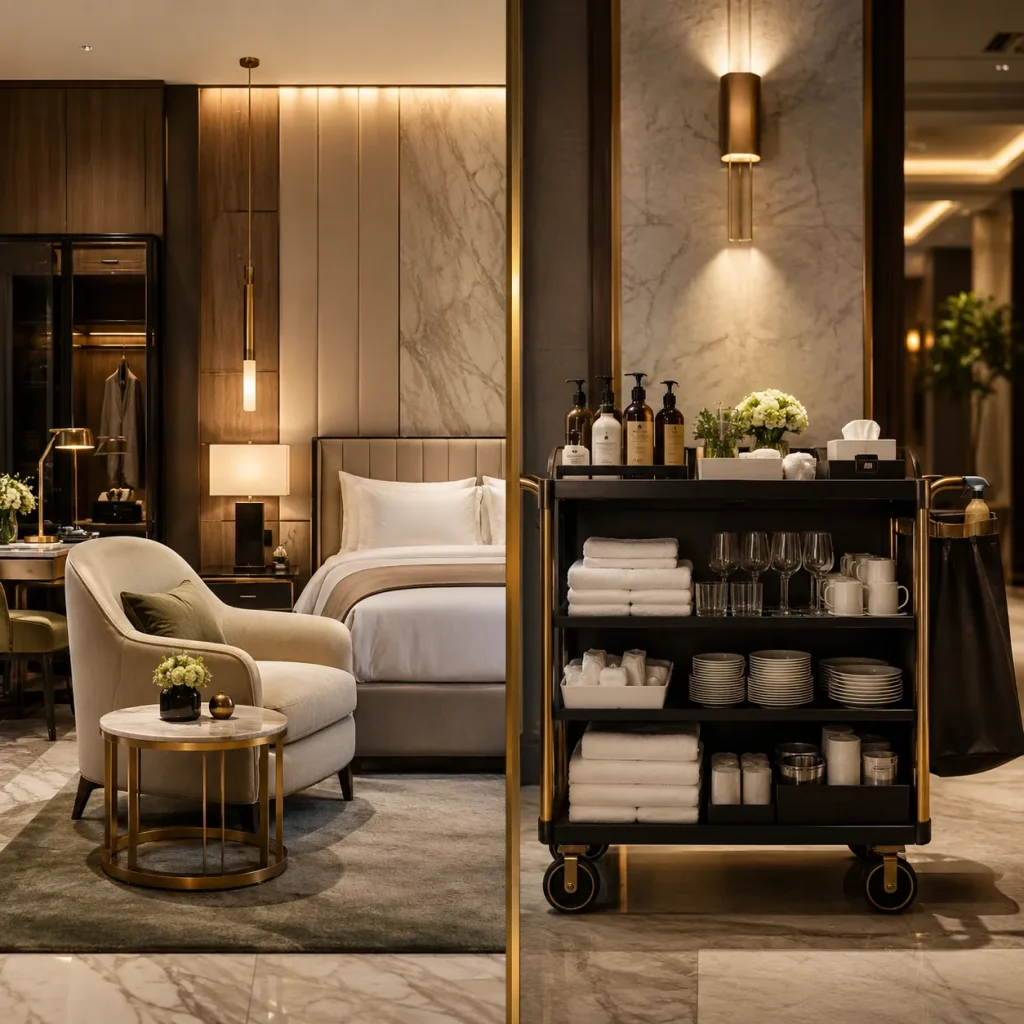
FF&E vs OS&E — The Critical Differences Purchasing Managers Must Understand
In hotel development and hospitality operations, few distinctions are as fundamental—and as frequently misunderstood—as the difference between FF&E and OS&E. Both categories are essential to the successful launch and long‑term performance of a hotel, yet they serve entirely different purposes within the operational and financial structure of the property. For purchasing managers, recognizing these differences is not merely an academic exercise. It directly influences procurement planning, budgeting strategies, accounting treatment, project timelines, supplier negotiations, and operational readiness.
At first glance, the distinction may appear straightforward: FF&E refers to furniture, fixtures, and equipment that form the long‑term physical environment of the hotel, while OS&E refers to operational supplies and smaller equipment used in daily service delivery. However, real-world hotel projects often blur these boundaries, particularly when dealing with hybrid items such as appliances, electronics, or specialized equipment.
Understanding the operational and financial implications of these two categories enables purchasing managers to coordinate procurement processes more effectively, maintain budget discipline, and ensure that both design and operational objectives are met without delays or costly reclassification errors.
Structural vs Operational Assets
The most fundamental difference between FF&E and OS&E lies in the role they play within the hotel environment. FF&E items define the physical structure and aesthetic character of the property, while OS&E items support the daily operational processes that allow hotel services to function.
FF&E assets are generally visible and long‑lasting. They shape how guests perceive the hotel environment and contribute directly to design identity, brand positioning, and spatial functionality. Examples include beds, wardrobes, lobby sofas, restaurant chairs, decorative lighting fixtures, and conference tables. These items typically remain in place for many years and are replaced only during major renovations or refurbishment cycles.
OS&E items, on the other hand, serve as the working tools of hospitality operations. They are used by staff and guests during daily service delivery and are frequently replaced due to consumption, wear, or operational turnover. Items such as linens, tableware, cleaning equipment, kitchen utensils, and guest amenities fall within this category.
For purchasing managers, recognizing whether an item contributes to the structural environment of the hotel or the operational process of service delivery is the first step in determining its classification. This distinction becomes particularly important during early planning stages when procurement schedules and budgets are being established.
Consider the example of a guest room desk lamp. Because it contributes to the room’s design concept and remains installed for many years, it is typically classified as FF&E. By contrast, the coffee pods placed in the room’s coffee machine are OS&E because they are consumable items replenished after each guest stay.
Although this difference may seem obvious in theory, complex hospitality projects often include items that require careful evaluation before classification decisions are made.
Accounting and Capitalization Differences
Another critical difference between FF&E and OS&E involves accounting treatment. Financial classification determines how items are recorded on the hotel’s balance sheet, how their costs are allocated over time, and how replacement budgets are managed.
FF&E items are generally considered capital assets. This means their purchase cost is capitalized and depreciated over a defined useful life, often ranging between five and fifteen years depending on asset type. Depreciation allows the hotel to distribute the cost of these assets across multiple financial periods, reflecting their long‑term contribution to property value and operations.
For example, guest room furniture may be depreciated over seven to ten years, while certain equipment may have shorter depreciation schedules. This accounting treatment aligns with the expectation that FF&E items remain functional for extended periods before requiring replacement.
OS&E items, in contrast, are usually treated as operating expenses rather than capital investments. Their costs are recorded as part of the hotel’s operational budget and are expensed in the period during which they are purchased or consumed. Because these items have shorter lifespans and are frequently replaced, they do not appear as long‑term assets on the balance sheet.
This financial distinction has important implications for purchasing managers. Capital expenditures for FF&E are often subject to strict approval processes, especially in branded hotels or investment-backed developments. OS&E purchases, while still budgeted carefully, typically fall within departmental operating budgets and may follow different approval workflows.
Misclassifying items can therefore create financial reporting complications, distort capital expenditure forecasts, and complicate asset tracking systems.
Procurement Timelines in Hotel Construction Projects
One of the most significant practical differences between FF&E and OS&E lies in their procurement timelines. These timelines must align closely with the overall construction schedule of the hotel project to ensure a smooth opening process.
FF&E procurement typically begins much earlier in the development cycle because many items require custom manufacturing, design approvals, and extended production lead times. Large furniture pieces, decorative lighting installations, and custom-built fixtures often require several months of production followed by international shipping and on-site installation.
For instance, a custom-designed lobby chandelier may require design development, engineering approvals, fabrication, and international logistics coordination before it can be installed. Delaying the procurement of such items can easily disrupt construction schedules and delay project completion.
OS&E procurement usually occurs later in the project timeline, particularly during the pre‑opening phase, when operational departments finalize their requirements. Because many OS&E items are standard products that can be sourced from commercial suppliers, their lead times are generally shorter. However, the sheer volume of items required means procurement teams must still plan carefully to ensure timely delivery and proper storage.
Purchasing managers must therefore create two parallel procurement strategies: one for FF&E items that must be ordered early to meet production and installation schedules, and another for OS&E items that must be staged closer to opening to avoid storage challenges or inventory deterioration.
Coordination with Designers and Architects
FF&E procurement is heavily influenced by interior design concepts and architectural planning. Designers typically define detailed specifications for furniture, finishes, materials, and decorative elements. These specifications form the basis of the FF&E procurement process.
Purchasing managers must work closely with design teams to interpret these specifications, identify qualified manufacturers, obtain competitive pricing, and coordinate prototype approvals. Because design integrity is critical to the hotel’s brand image, substitutions or modifications must be carefully evaluated and approved by project stakeholders.
This level of collaboration rarely applies to OS&E procurement. Operational supplies are usually selected in consultation with department heads rather than design teams. Housekeeping managers determine linen specifications, chefs define kitchen equipment requirements, and restaurant managers select tableware based on operational needs.
As a result, FF&E procurement is design-driven, while OS&E procurement is operations-driven. Understanding this distinction helps purchasing managers structure communication channels effectively during the project lifecycle.
Coordination with Operations Teams
Although FF&E procurement is closely tied to design teams, purchasing managers must also ensure that selections support operational efficiency. Furniture layouts must allow housekeeping staff to clean rooms efficiently, restaurant seating must support service flow, and conference equipment must accommodate event operations.
However, OS&E procurement involves even deeper collaboration with operational departments because these items directly influence staff workflows and service quality. Each department provides detailed input regarding quantities, specifications, and preferred suppliers.
For example, an executive chef may specify professional-grade cookware from particular manufacturers known for durability and heat distribution. A housekeeping manager may require vacuum cleaners with specific ergonomic features to reduce staff fatigue. These operational insights ensure that OS&E purchases align with real-world service demands.
Purchasing managers therefore act as intermediaries between operational teams and suppliers, ensuring that equipment selections meet performance standards while remaining within budget constraints.
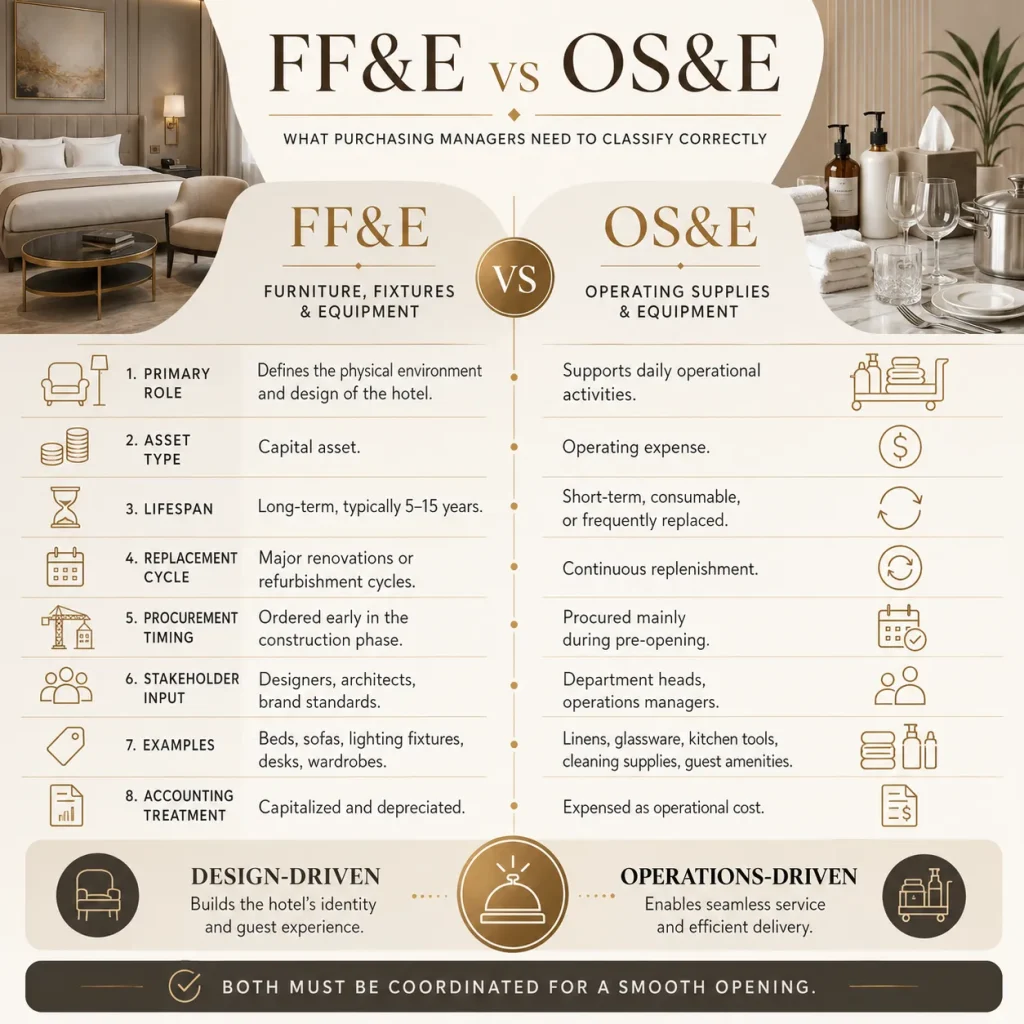
Comparison Table: FF&E vs OS&E in Hospitality Projects
To clarify the differences between these two essential procurement categories, the following comparison table highlights key characteristics relevant to hotel purchasing managers.
| Aspect | FF&E (Furniture, Fixtures & Equipment) | OS&E (Operating Supplies & Equipment) |
|---|---|---|
| Primary Role | Defines the physical environment and design of the hotel | Supports daily operational activities |
| Asset Type | Capital asset | Operating expense |
| Lifespan | Long-term (5–15 years) | Short-term or consumable |
| Replacement Cycle | Major renovations or refurbishment cycles | Continuous replenishment |
| Procurement Timing | Early in construction phase | Primarily during pre-opening phase |
| Stakeholder Input | Interior designers, architects, brand standards | Department heads and operations managers |
| Examples | Beds, sofas, lighting fixtures, desks, wardrobes | Linens, glassware, kitchen tools, cleaning supplies |
| Accounting Treatment | Capitalized and depreciated | Expensed as operational cost |
This distinction may appear simple in theory, yet the real challenge for purchasing managers lies in managing the interaction between both categories simultaneously. Successful hotel openings depend on the seamless coordination of FF&E installations and OS&E readiness across every department.
The Strategic Importance of Clear Classification
Clear differentiation between FF&E and OS&E enables purchasing managers to establish more accurate budgets, procurement schedules, and inventory systems. It also reduces the risk of project delays, financial misreporting, or operational gaps during the critical pre‑opening period.
When classification systems are well organized, procurement teams can track thousands of items efficiently, manage supplier contracts effectively, and coordinate installation schedules with construction milestones. Departments receive the tools they need to operate successfully from day one, and developers maintain greater control over capital expenditures.
In contrast, projects that blur the distinction between FF&E and OS&E often encounter confusion in budgeting, procurement sequencing, and operational preparation. Items may be ordered too late, budgets may be exceeded, or departments may discover essential supplies missing just weeks before opening.
For this reason, experienced hotel purchasing managers treat FF&E and OS&E planning as two interconnected but distinct procurement disciplines. Mastering this distinction ensures that both the physical environment of the hotel and the operational systems behind it come together seamlessly, allowing the property to open smoothly and operate efficiently from the very first day of service.

Strategic Procurement Planning for Hotel Purchasing Managers
In hospitality development, procurement is far more than the simple act of purchasing items for a property. It is a strategic discipline that integrates budgeting, logistics, supplier management, design coordination, and operational readiness into a single structured process. For hotel purchasing managers, procurement planning determines whether a hotel project progresses smoothly toward opening or becomes entangled in delays, cost overruns, and operational gaps.
The scale and complexity of hospitality procurement make it fundamentally different from many other industries. A single hotel development may require the sourcing and coordination of tens of thousands of individual items, ranging from large custom furniture installations to small operational supplies such as teaspoons, bathrobes, or housekeeping chemicals. These items originate from multiple suppliers across different countries, each with unique manufacturing timelines, shipping requirements, and quality standards.
Within this environment, strategic procurement planning becomes the operational backbone of the entire FF&E and OS&E process. Purchasing managers must create systems that ensure every required item is specified, ordered, delivered, inspected, stored, and installed in alignment with the overall construction and pre‑opening schedule. Without such planning, even well-funded hotel projects can face critical disruptions that delay opening dates and inflate costs.
Strategic procurement therefore involves more than simply managing purchase orders. It requires forecasting project needs months or even years in advance, coordinating with designers and operational teams, negotiating supplier contracts, managing global logistics networks, and continuously monitoring budgets and risks.
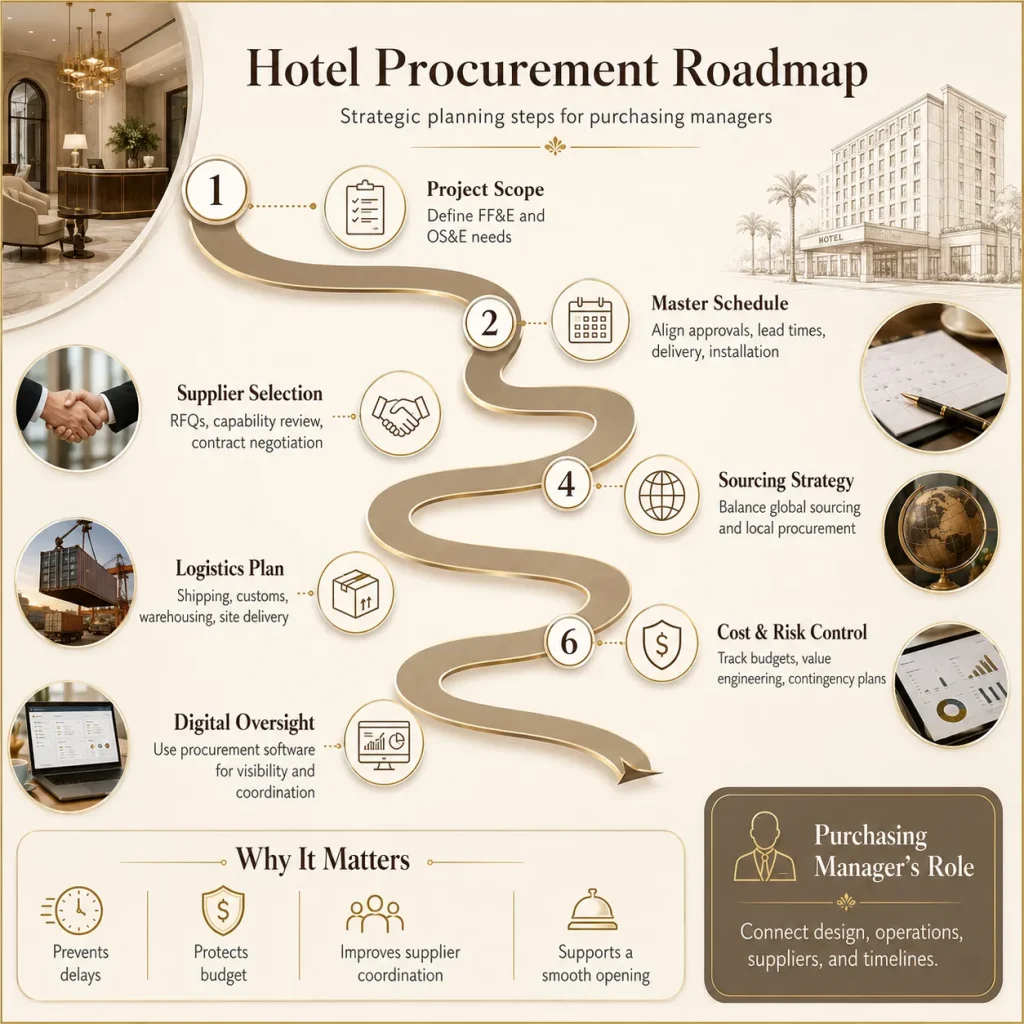
Creating a Master Procurement Schedule
One of the most important tools used by hotel purchasing managers is the master procurement schedule. This document serves as the central roadmap for all FF&E and OS&E purchasing activities throughout the lifecycle of a hotel development project.
The master procurement schedule outlines every major procurement milestone, including specification approvals, supplier selection, production timelines, shipping arrangements, customs clearance, on‑site delivery, installation coordination, and final inspections. Each item category—whether guest room furniture, decorative lighting, kitchen equipment, or housekeeping supplies—is assigned a timeline that aligns with construction progress and operational preparation.
The scheduling process begins once interior design specifications and operational requirements have been finalized. Purchasing managers analyze these specifications and identify potential manufacturing lead times for each category of item. Custom furniture pieces, for example, may require several months for production, while standard operational supplies may be available with shorter lead times.
Construction milestones play a crucial role in procurement scheduling. Furniture installation cannot begin until guest room flooring, painting, and lighting infrastructure are complete. Similarly, kitchen equipment must be installed after mechanical and electrical systems are operational. By mapping procurement timelines against construction schedules, purchasing managers ensure that deliveries occur precisely when installation teams are ready to receive them.
A well-developed procurement schedule also helps prevent common logistical problems such as premature deliveries, insufficient storage space, or installation delays caused by missing components. In large hotel projects, even minor scheduling errors can create cascading effects that disrupt multiple departments.
Vendor Selection and Supplier Negotiation
Selecting the right suppliers is one of the most consequential responsibilities of a hotel purchasing manager. The quality, reliability, and responsiveness of suppliers directly influence the success of FF&E and OS&E procurement.
Supplier selection typically begins with a structured request for quotation (RFQ) or tender process, during which potential vendors submit pricing proposals, technical specifications, manufacturing capabilities, and delivery timelines. Purchasing managers evaluate these proposals not only on price but also on factors such as quality standards, production capacity, previous hospitality experience, and compliance with design specifications.
Negotiation is an equally important phase. Hospitality procurement often involves high volumes of items, providing opportunities for purchasing managers to negotiate favorable pricing structures, volume discounts, extended warranties, or improved delivery terms. However, negotiations must balance cost efficiency with quality assurance. Selecting the lowest-priced supplier may lead to inferior materials or unreliable production schedules, which can ultimately create greater expenses later.
Supplier relationships also play a strategic role. Experienced purchasing managers cultivate long-term partnerships with manufacturers and distributors who understand hospitality requirements. These relationships often provide advantages such as priority production scheduling, faster problem resolution, and greater flexibility when design modifications occur.
In international hotel projects, supplier evaluation must also consider factors such as export regulations, manufacturing certifications, and logistics capabilities. A supplier that performs well in local markets may face challenges meeting international shipping requirements or complying with foreign safety standards.
Global Sourcing vs Local Procurement
Hospitality procurement frequently involves a strategic decision between global sourcing and local procurement. Each approach offers advantages and challenges that purchasing managers must carefully evaluate.
Global sourcing allows hotels to access specialized manufacturers, unique design craftsmanship, or cost-efficient production hubs located in different parts of the world. Many hotel furniture manufacturers, for example, operate in regions known for large-scale hospitality production. These manufacturers may offer competitive pricing for custom furniture while maintaining high production quality.
However, global sourcing introduces logistical complexities. International shipping requires coordination of freight forwarding, customs documentation, import duties, and extended transit times. Currency fluctuations and geopolitical factors may also affect procurement costs.
Local procurement, by contrast, offers advantages in terms of shorter delivery times, reduced shipping costs, and easier communication with suppliers. Local vendors may also provide faster after-sales service and replacement parts, which can be particularly beneficial for operational equipment.
For purchasing managers, the optimal procurement strategy often involves a hybrid approach. High-volume or specialized items may be sourced globally to achieve cost efficiencies, while operational supplies and frequently replaced equipment may be sourced locally to ensure flexibility and quick replenishment.
Logistics, Shipping, and Installation Planning
Once procurement contracts are finalized and manufacturing begins, attention shifts toward logistics coordination, which represents one of the most complex stages of hospitality procurement.
FF&E shipments often involve large furniture pieces, fragile decorative items, and custom equipment that require specialized packaging and transportation methods. Purchasing managers must coordinate freight schedules, shipping containers, insurance coverage, and customs documentation to ensure goods arrive safely and on time.
In international projects, customs clearance can become a critical bottleneck if documentation is incomplete or regulatory requirements are misunderstood. Delays at ports can significantly disrupt construction schedules, especially when installation teams are waiting for key components.
To mitigate these risks, many hospitality projects use centralized receiving warehouses or consolidation centers. These facilities receive shipments from multiple suppliers, inspect items for quality and quantity accuracy, and store them until construction areas are ready for installation. This approach prevents job sites from becoming overcrowded with materials while providing additional quality control checkpoints.
Installation coordination represents the final stage of logistics planning. Large FF&E items such as wardrobes, beds, or banquet tables must be installed in a specific sequence to avoid damaging finished surfaces or blocking construction access routes. Purchasing managers often collaborate closely with installation teams, project managers, and contractors to ensure this process unfolds efficiently.
Cost Control and Risk Management in Hospitality Purchasing
Because procurement represents a significant portion of hotel development budgets, cost control and risk management are central responsibilities for purchasing managers. Strategic planning helps ensure that procurement expenditures remain aligned with financial projections while minimizing exposure to supply chain disruptions.
Budget monitoring begins during the specification stage and continues throughout the procurement process. Purchasing managers track the cost of each item category against approved budgets, identifying potential overruns early enough to implement corrective measures.
One common cost management strategy is value engineering, in which alternative materials, suppliers, or manufacturing techniques are evaluated to achieve cost savings without compromising quality or design intent. For example, modifying a furniture construction method or sourcing equivalent materials from a different supplier may significantly reduce production costs.
Risk management also involves anticipating potential disruptions in supply chains. Global events, shipping congestion, material shortages, or manufacturing delays can affect procurement timelines. Experienced purchasing managers address these risks by maintaining contingency plans, diversifying supplier networks, and placing orders well in advance of critical deadlines.
Another important risk management tool is contractual protection. Procurement contracts should clearly define delivery deadlines, quality standards, warranty terms, and penalty clauses for delays or defects. Such provisions provide leverage when addressing supplier performance issues and help protect the project timeline.
Technology and Procurement Software in Hotel Projects
Modern hospitality procurement increasingly relies on digital tools and procurement management software to handle the complexity of FF&E and OS&E purchasing. These platforms allow purchasing managers to track specifications, supplier contracts, purchase orders, shipment statuses, and installation progress within centralized systems.
Procurement software improves transparency and coordination across project teams. Designers, project managers, and financial controllers can access real-time procurement data, reducing communication gaps and ensuring that decisions are based on accurate information.
Digital systems also enhance inventory tracking, particularly for OS&E items that require large quantities and detailed categorization. Automated reporting features allow purchasing managers to monitor budget allocations, identify potential delays, and generate procurement summaries for project stakeholders.
In large hospitality developments, technology can significantly reduce administrative workload while improving accuracy and accountability across procurement processes.
The Strategic Value of Procurement Leadership
Ultimately, the effectiveness of hotel procurement planning depends on the leadership and expertise of hotel purchasing managers. Their role extends beyond purchasing transactions to encompass strategic coordination between multiple stakeholders, including developers, designers, contractors, suppliers, and operational teams.
Successful purchasing managers anticipate project needs long before they arise, develop robust supplier networks, and maintain constant oversight of budgets and logistics. They ensure that every piece of furniture arrives at the right moment, every operational tool is available before opening day, and every procurement decision aligns with both financial objectives and brand standards.
In this sense, procurement is not simply a support function within hospitality development. It is a strategic driver of project success, ensuring that the hotel transitions seamlessly from construction site to fully operational hospitality environment. Through careful planning, disciplined cost management, and effective supplier partnerships, purchasing managers transform procurement from a logistical challenge into a competitive advantage for the hotel project.
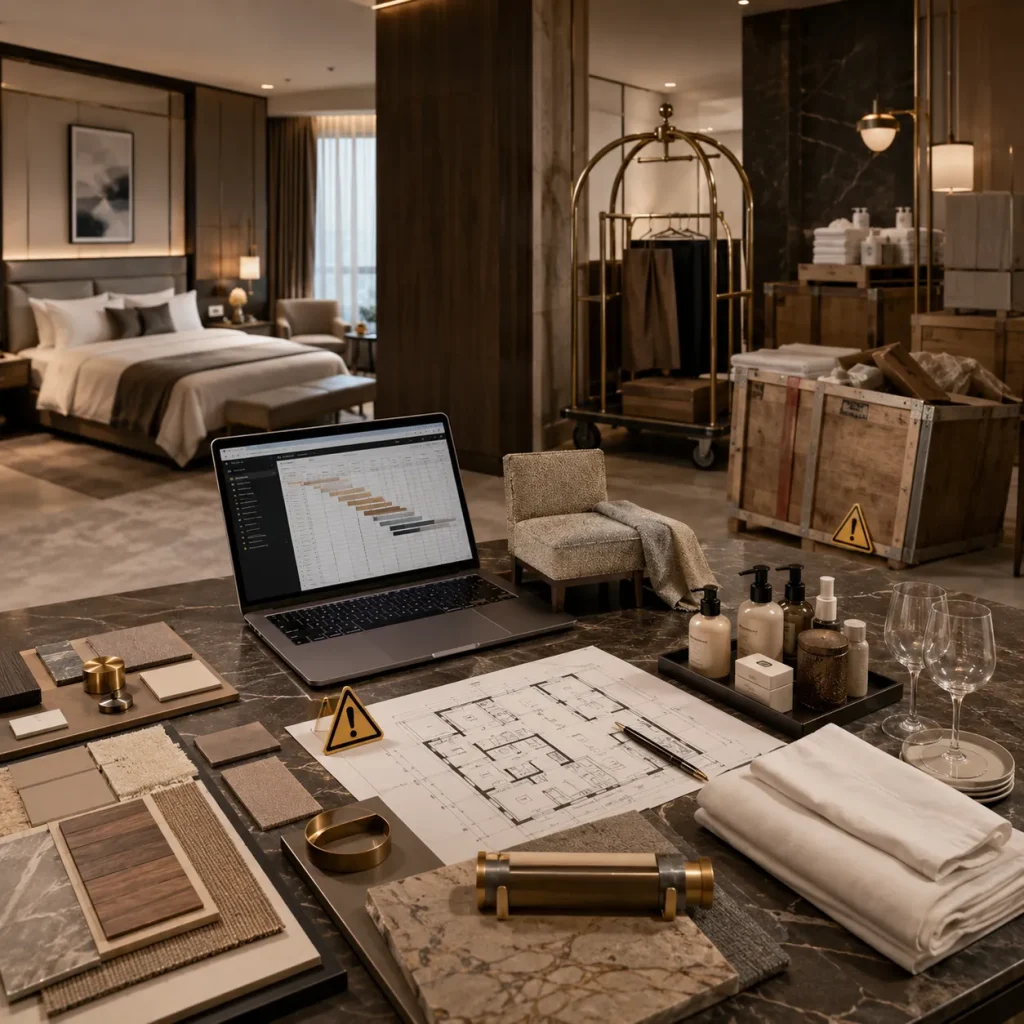
Common Mistakes in FF&E and OS&E Purchasing (and How to Avoid Them)
Even in well-funded and carefully planned hospitality projects, procurement errors remain surprisingly common. The complexity of hotel development—combined with tight construction timelines, large item volumes, international supply chains, and multiple stakeholders—creates an environment where small procurement mistakes can quickly escalate into serious operational and financial problems. For hotel purchasing managers, understanding the most common pitfalls in FF&E and OS&E procurement is essential to ensuring smooth project execution and successful hotel openings.
These mistakes rarely occur because of a lack of effort. In most cases, they result from misaligned communication, incomplete planning, inaccurate forecasting, or underestimating the operational realities of hospitality environments. A chair that arrives late, a linen order that is insufficient, or a supplier that cannot meet production deadlines may seem like isolated issues, but in hotel development such problems often trigger cascading delays affecting multiple departments.
Recognizing these risks early allows purchasing managers to implement preventive strategies, strengthen procurement frameworks, and avoid costly corrections later in the project lifecycle.
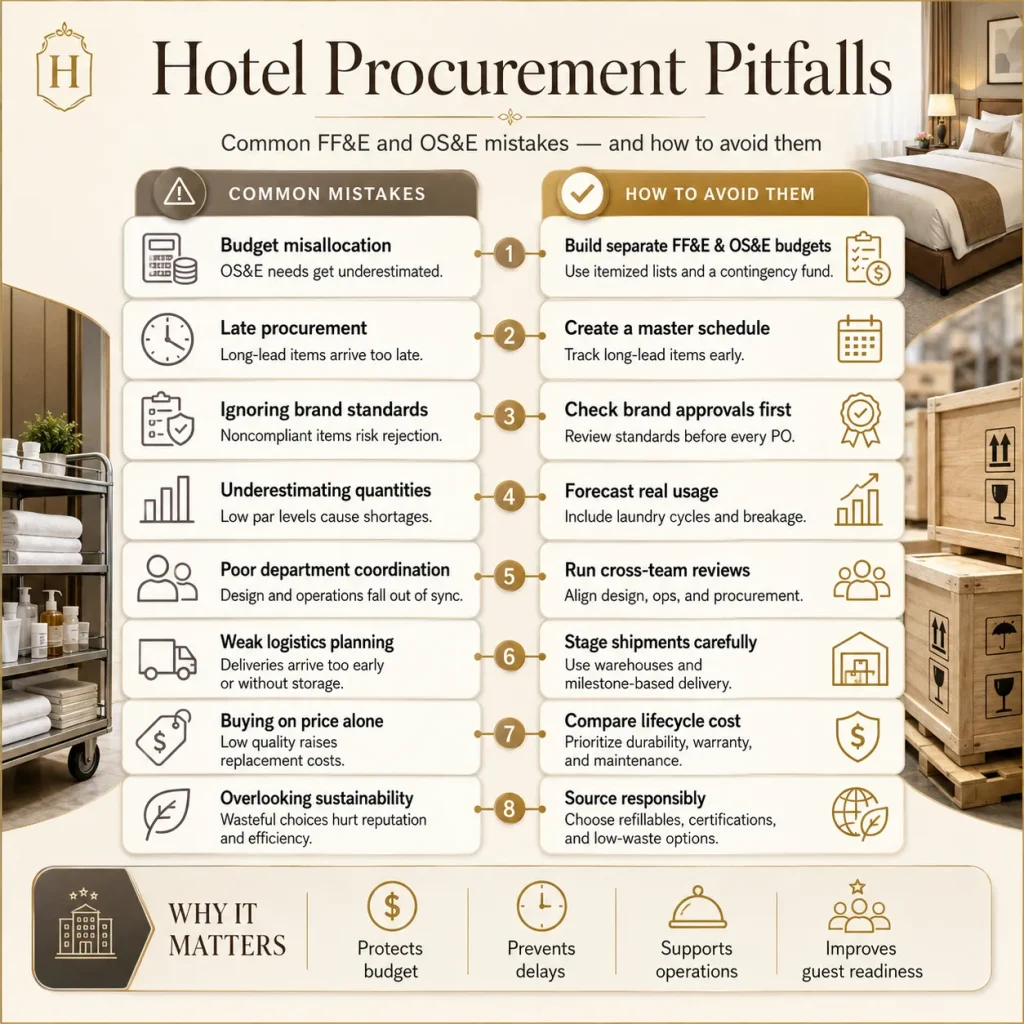
Budget Misallocation Between FF&E and OS&E
One of the most frequent procurement mistakes in hotel development is the misallocation of budgets between FF&E and OS&E categories. Because both categories involve purchasing large quantities of items, inexperienced project teams sometimes underestimate the financial requirements of one category while overestimating the other.
In many hotel developments, the focus initially falls heavily on FF&E because furniture and design elements are visually prominent and closely tied to the brand identity of the property. Designers and developers often devote considerable attention to selecting furniture, decorative lighting, and public area installations. However, OS&E requirements—despite being less visible—can involve thousands of operational items that collectively represent a substantial investment.
When OS&E budgets are underestimated, hotels may discover late in the pre‑opening phase that essential operational equipment has not been adequately funded. Housekeeping departments may lack sufficient linen inventory, kitchens may not have enough cookware or service equipment, and restaurants may face shortages of glassware or cutlery. These situations often force developers to make urgent purchases at higher prices or compromise on product quality.
Avoiding this mistake requires comprehensive budgeting during the early planning stages. Purchasing managers should develop detailed itemized procurement lists for both FF&E and OS&E and collaborate with department heads to ensure operational requirements are accurately reflected in financial projections. Establishing contingency funds also helps absorb unexpected procurement adjustments without disrupting the overall project budget.
Late Procurement and Project Delays
Another critical mistake occurs when FF&E procurement begins too late in the project timeline. Many FF&E items—particularly custom furniture, lighting fixtures, and specialized equipment—require long production lead times that can extend several months or more.
When procurement teams delay purchase orders until construction nears completion, they may find that manufacturers cannot deliver items within the required timeframe. This can lead to incomplete guest rooms, unfinished public spaces, or missing equipment that prevents operational departments from preparing for opening.
Even standard furniture items can experience delays due to shipping congestion, customs clearance issues, or manufacturing backlogs. Global supply chain disruptions in recent years have demonstrated how quickly procurement schedules can shift when unforeseen circumstances arise.
To avoid this risk, purchasing managers must integrate procurement planning directly into the project timeline. The master procurement schedule should identify long‑lead items early and prioritize their ordering well before installation dates approach. Regular coordination meetings with contractors, designers, and project managers also help ensure that procurement activities remain aligned with construction progress.
Overlooking Brand Standards in Chain Hotels
For hotels operating under international brands, brand compliance is a critical factor in procurement decisions. Major hotel chains maintain detailed brand standards that define furniture styles, material specifications, room layouts, equipment models, and even operational supplies.
Failing to follow these standards during FF&E and OS&E procurement can lead to significant complications. Brand representatives may reject non‑compliant items during inspections, forcing the hotel to replace them before opening. In some cases, deviations from approved specifications may even delay brand certification or opening approvals.
This mistake often occurs when project teams attempt to reduce costs by substituting cheaper alternatives without consulting brand guidelines. While cost optimization is a legitimate objective, unauthorized substitutions can undermine the consistency and reputation of the brand.
Purchasing managers must therefore maintain close communication with brand representatives throughout the procurement process. All FF&E and OS&E selections should be reviewed against brand-approved vendor lists and design standards before purchase orders are finalized. When alternative products are proposed for cost-saving reasons, formal approval should be obtained to ensure compliance.
Underestimating Quantity Requirements
A surprisingly common issue in hospitality procurement involves incorrect quantity forecasting, particularly for OS&E items. Hotels operate around continuous guest turnover, meaning that operational departments must maintain sufficient inventory to support cleaning cycles, restaurant service, laundry operations, and maintenance tasks.
If purchasing managers underestimate required quantities, departments may struggle to maintain service standards. For example, insufficient linen inventory can slow room turnover because housekeeping must wait for laundry cycles to finish before preparing additional rooms. Similarly, inadequate glassware in restaurants may cause service delays during peak dining periods.
Quantity forecasting should therefore consider par levels, which represent the number of complete item sets required to maintain uninterrupted operations. Linen inventories typically require three to four par levels, while restaurant service equipment may require additional stock to account for breakage and washing cycles.
Working closely with experienced department managers is one of the most effective ways to determine accurate quantity requirements. Operational staff understand daily usage patterns and can provide realistic estimates that prevent shortages during busy periods.
Poor Coordination Between Departments
Hotel development projects involve collaboration between multiple departments, including design teams, construction managers, operational leaders, and procurement specialists. When communication between these groups breaks down, procurement decisions may fail to reflect practical operational needs.
For instance, interior designers may specify furniture that looks visually appealing but does not allow sufficient space for housekeeping carts to move efficiently within guest rooms. Similarly, restaurant layouts may overlook service flow considerations, resulting in furniture arrangements that hinder staff movement during busy service hours.
Poor coordination can also affect OS&E procurement. Kitchens may receive equipment that does not align with the chef’s menu concept, or housekeeping departments may receive cleaning tools that are incompatible with the flooring materials used in the property.
Purchasing managers play a crucial role in preventing such issues by acting as intermediaries between departments. Regular coordination meetings and cross‑department reviews of procurement lists ensure that design intentions and operational realities remain aligned throughout the project.
Ignoring Logistics and Storage Requirements
Logistics planning is often underestimated during procurement discussions. Hotels frequently operate in urban environments with limited on‑site storage capacity, making it difficult to receive large volumes of FF&E and OS&E shipments simultaneously.
When deliveries arrive before installation areas are ready, items may need to be stored temporarily in unsuitable conditions. This increases the risk of damage, loss, or misplacement. Fragile items such as glassware, lighting fixtures, and decorative pieces are particularly vulnerable when handled multiple times during storage and relocation.
Effective logistics planning involves coordinating shipments with construction milestones and using receiving warehouses or consolidation centers where items can be inspected and stored safely until installation teams are ready. This approach reduces congestion on the construction site and allows procurement teams to verify shipment accuracy before items are distributed across the property.
Neglecting Durability and Lifecycle Costs
Another procurement mistake involves focusing excessively on initial purchase price while neglecting long-term durability and maintenance costs. Hospitality environments subject furniture, equipment, and operational supplies to intensive daily use. Items that appear inexpensive initially may wear out quickly under such conditions, leading to higher replacement costs over time.
For example, selecting low‑quality upholstery fabrics may reduce upfront furniture costs but result in frequent repairs or replacements due to stains, tearing, or fading. Similarly, choosing inexpensive cookware may lead to rapid deterioration in high‑volume kitchens.
Purchasing managers should therefore evaluate products based on total lifecycle cost, which includes durability, maintenance requirements, warranty coverage, and replacement frequency. Investing in higher-quality materials may increase initial expenditure but ultimately reduce long-term operational costs.
Overlooking Sustainability Considerations
As environmental awareness grows across the hospitality industry, sustainability has become an important factor in procurement decisions. Yet some projects still overlook opportunities to incorporate environmentally responsible materials and operational supplies.
Sustainable procurement practices can include selecting energy‑efficient equipment, sourcing furniture made from responsibly harvested materials, choosing refillable guest amenities, and minimizing single‑use plastics. These decisions not only reduce environmental impact but also align with evolving guest expectations and corporate sustainability commitments.
Hotels that ignore sustainability considerations may face reputational challenges or miss opportunities to improve operational efficiency. Purchasing managers can play a leading role by evaluating suppliers based on environmental certifications, product lifecycle assessments, and waste reduction strategies.
Case Examples from Real Hotel Projects
Real-world hospitality projects illustrate how procurement mistakes can affect operations. In one example, a hotel underestimated its restaurant glassware inventory during pre‑opening procurement. Within weeks of opening, the restaurant experienced severe shortages during peak dining hours because breakage rates had not been factored into the original order quantities. Emergency purchases had to be arranged at premium prices, increasing operational costs.
In another project, custom guest room furniture was ordered too late in the construction schedule. Manufacturing delays combined with shipping congestion resulted in incomplete guest room installations just weeks before the planned opening date. The hotel was forced to postpone its launch, causing financial losses and logistical complications for marketing and reservation teams.
Such examples highlight the importance of careful planning, accurate forecasting, and proactive risk management in hospitality procurement.
Building a Procurement Strategy That Prevents Mistakes
Avoiding common FF&E and OS&E procurement mistakes requires a structured approach built on early planning, cross‑department collaboration, supplier reliability, and continuous monitoring of budgets and timelines. Purchasing managers who adopt these practices create procurement systems capable of handling the complexity of hospitality development without sacrificing quality or operational readiness.
Ultimately, successful hotel procurement is not measured solely by cost savings or timely deliveries. It is measured by the seamless integration of thousands of components—furniture, equipment, supplies, and operational tools—that collectively enable the hotel to open smoothly and deliver exceptional service from the very first guest arrival.

The Future of Hotel Procurement: Sustainability, Smart Technology, and Global Supply Chains
The hospitality industry is undergoing a profound transformation, and hotel procurement practices are evolving alongside it. In the past, purchasing departments primarily focused on securing furniture, equipment, and operational supplies at competitive prices while meeting project timelines. Today, however, procurement has become a strategic function that shapes not only project costs but also brand identity, sustainability performance, technological innovation, and operational efficiency.
The modern hotel purchasing manager operates within a rapidly changing landscape influenced by environmental responsibility, digital transformation, shifting guest expectations, and increasingly interconnected global supply chains. These forces are redefining how FF&E (Furniture, Fixtures, and Equipment) and OS&E (Operating Supplies and Equipment) are sourced, evaluated, and integrated into hospitality projects.
As hotel owners, developers, and brands seek to remain competitive in an increasingly sophisticated market, procurement strategies must adapt to new priorities such as sustainable sourcing, smart technology integration, resilient supply chains, and data‑driven purchasing decisions. The future of hotel procurement will not simply involve buying products; it will involve shaping entire hospitality ecosystems built on efficiency, innovation, and responsibility.
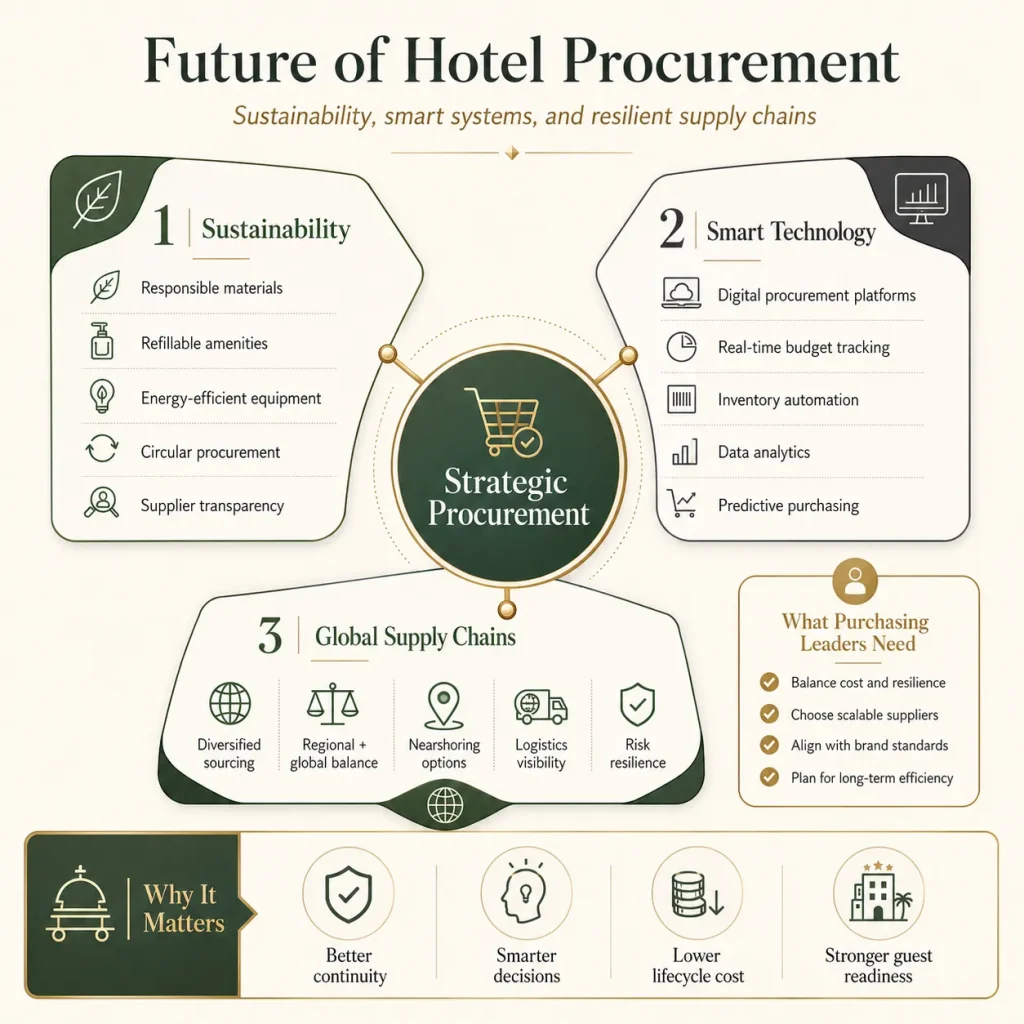
Sustainability as a Core Procurement Principle
One of the most significant shifts in hospitality procurement is the growing emphasis on sustainability and environmentally responsible sourcing. Environmental awareness among travelers has increased dramatically in recent years, and hotel brands are responding by embedding sustainability into every stage of their operations—including procurement.
In the context of FF&E purchasing, sustainability involves selecting furniture and fixtures produced using environmentally responsible materials and manufacturing processes. Many hotels now prioritize suppliers that use certified sustainable wood, low‑emission finishes, recycled materials, and environmentally safe adhesives or fabrics. These decisions help reduce the environmental footprint of hotel development while contributing to healthier indoor environments for guests and staff.
OS&E procurement is also undergoing a sustainability transformation. Hotels are increasingly replacing disposable items with reusable or refillable alternatives. For example, traditional single‑use plastic toiletry bottles are being replaced with refillable amenity dispensers. Similarly, sustainable cleaning products, biodegradable packaging, and energy‑efficient appliances are becoming standard components of modern hotel operations.
Sustainability initiatives extend beyond individual products to include supply chain transparency and lifecycle considerations. Purchasing managers are increasingly evaluating suppliers based on their environmental policies, carbon emissions, waste management practices, and ethical sourcing standards.
The hospitality industry has also begun adopting internationally recognized sustainability certifications that influence procurement decisions. Examples include environmental building certifications, sustainable textile standards, and responsible forestry certifications. These frameworks encourage hotels to prioritize materials and equipment that align with long‑term environmental goals.
For purchasing managers, sustainability is no longer an optional feature but a strategic requirement that influences supplier selection, product specifications, and long‑term operational planning.
Smart Technology and the Digital Transformation of Procurement
Another powerful force shaping the future of hotel procurement is the rapid integration of smart technology and digital procurement systems. As hospitality operations become increasingly technology‑driven, procurement departments must adapt to new categories of equipment, software platforms, and interconnected devices.
Smart technology is transforming hotel environments in multiple ways. Guest rooms are increasingly equipped with automated lighting systems, smart thermostats, digital entertainment platforms, and voice‑controlled devices that enhance comfort and convenience. Public spaces may include intelligent energy management systems, automated check‑in kiosks, and advanced security technologies.
These technological advancements require procurement teams to work closely with IT departments, designers, and operational managers to ensure that equipment selections integrate seamlessly with the hotel’s overall technological infrastructure.
Procurement software itself is also evolving rapidly. Modern digital procurement platforms allow purchasing managers to manage specifications, purchase orders, supplier communications, shipping logistics, and budget tracking within centralized digital systems. These tools reduce administrative complexity while improving transparency and collaboration across project teams.
Data analytics has become an especially valuable feature of these systems. By analyzing procurement data across multiple hotel projects or properties, organizations can identify cost trends, evaluate supplier performance, and optimize purchasing strategies. This data‑driven approach allows procurement departments to make more informed decisions and improve efficiency across large hospitality portfolios.
Automation is also reshaping operational procurement. Some hotel chains now use automated inventory systems that monitor consumption patterns for OS&E items such as housekeeping supplies or restaurant equipment. When inventory levels fall below predetermined thresholds, the system automatically generates purchase orders, reducing the risk of shortages and minimizing manual administrative work.
The Evolution of Global Supply Chains
The globalization of hospitality development has created highly complex procurement networks spanning multiple countries and manufacturing hubs. Many FF&E products—particularly custom furniture, decorative fixtures, and specialized equipment—are manufactured in international markets known for hospitality production expertise.
However, recent global events have revealed the vulnerabilities of highly centralized supply chains. Shipping disruptions, port congestion, material shortages, and geopolitical tensions have demonstrated how quickly global logistics networks can become unstable.
As a result, hotel developers and procurement professionals are rethinking traditional sourcing strategies. The future of procurement will likely involve more diversified and resilient supply chains, combining global manufacturing advantages with regional sourcing flexibility.
Purchasing managers are increasingly adopting hybrid procurement strategies that balance cost efficiency with risk mitigation. High‑volume items may still be sourced from global manufacturing centers where production costs are competitive, while critical operational equipment may be sourced regionally to reduce dependency on long international shipping routes.
Another emerging trend is nearshoring, in which production is relocated closer to the hotel’s geographic region. This approach shortens shipping distances, reduces transportation costs, and improves delivery reliability. Nearshoring also allows hotels to respond more quickly to design changes or replacement needs.
Supply chain transparency is becoming equally important. Procurement teams now seek greater visibility into supplier networks, including manufacturing locations, raw material sourcing, and logistics pathways. This transparency helps identify potential risks early and ensures compliance with ethical sourcing standards.
Sustainable Materials and Circular Procurement Models
Beyond simply selecting eco‑friendly products, forward‑thinking hospitality organizations are exploring circular procurement models that minimize waste and extend product lifecycles. In traditional procurement systems, furniture and equipment are often replaced entirely when they reach the end of their usable life.
Circular procurement approaches instead emphasize repair, refurbishment, recycling, and material recovery. Furniture may be designed with modular components that can be replaced individually rather than discarding the entire item. Upholstery fabrics can be refreshed while retaining the underlying furniture frame, significantly reducing waste.
Some suppliers now offer take‑back programs in which used furniture, mattresses, or equipment are collected and recycled or repurposed. This approach aligns with broader sustainability commitments while reducing landfill waste generated by hotel renovations.
Purchasing managers play a crucial role in supporting these initiatives by selecting suppliers that offer sustainable lifecycle solutions. Over time, circular procurement models can significantly reduce both environmental impact and long‑term replacement costs.
Supplier Collaboration and Strategic Partnerships
The future of hotel procurement will also emphasize stronger partnerships between hotels and suppliers. Rather than treating procurement as a series of isolated transactions, many hospitality organizations are developing long‑term strategic relationships with key manufacturers and distributors.
These partnerships allow suppliers to gain deeper insight into hotel brand standards, design preferences, and operational requirements. In return, hotels benefit from improved product consistency, faster production timelines, and more flexible customization options.
Collaborative supplier relationships can also support innovation. Furniture manufacturers, technology providers, and equipment suppliers often work directly with hotel brands to develop new product solutions tailored to evolving guest expectations.
For example, suppliers may collaborate with hotel brands to design furniture that integrates wireless charging stations, hidden technology compartments, or modular layouts that adapt to changing room configurations. These innovations enhance guest experiences while maintaining design coherence across multiple properties.
Strategic partnerships also enable better supply chain resilience. When procurement teams maintain long‑term relationships with trusted suppliers, they can often secure priority production capacity or alternative sourcing options during periods of global disruption.
The Role of Data and Predictive Procurement
Data is becoming one of the most valuable resources in modern hospitality procurement. Hotels generate enormous amounts of operational data related to purchasing volumes, supplier performance, inventory consumption, and equipment maintenance.
By analyzing this data, procurement teams can transition from reactive purchasing to predictive procurement strategies. Instead of responding to shortages or equipment failures after they occur, purchasing managers can anticipate future needs based on historical trends and operational analytics.
Predictive procurement can improve both efficiency and cost control. For instance, data analysis may reveal seasonal fluctuations in housekeeping supply usage, allowing procurement teams to adjust ordering schedules accordingly. Similarly, equipment maintenance data may indicate when kitchen appliances are approaching the end of their operational lifespan, enabling proactive replacement planning.
Large hotel chains with multiple properties benefit particularly from centralized procurement analytics. By aggregating data across numerous locations, organizations can negotiate better supplier contracts, standardize equipment selections, and identify opportunities for bulk purchasing discounts.
Procurement as a Strategic Leadership Function
As sustainability, technology, and supply chain complexity continue to reshape the hospitality industry, the role of the hotel purchasing manager is becoming increasingly strategic. Procurement leaders are no longer simply responsible for placing orders; they are now involved in shaping long‑term business strategies that influence operational efficiency, environmental performance, and guest satisfaction.
Future procurement teams will require a combination of skills that extend beyond traditional purchasing expertise. Knowledge of sustainability frameworks, digital procurement systems, global logistics networks, and supplier relationship management will become essential competencies.
Hotels that invest in strong procurement leadership gain a significant competitive advantage. Efficient procurement systems reduce project costs, minimize operational disruptions, and ensure that hotels open fully equipped and ready to deliver exceptional guest experiences.
Preparing for the Next Generation of Hospitality Procurement
The future of FF&E and OS&E procurement will be defined by adaptability. Hospitality organizations must remain responsive to technological innovation, environmental responsibility, and evolving global trade dynamics.
Purchasing managers who embrace sustainable sourcing practices, leverage digital procurement tools, cultivate resilient supplier networks, and integrate data‑driven decision‑making will play a central role in shaping the next generation of hospitality development.
In this evolving environment, procurement is no longer a back‑office administrative function. It has become a strategic pillar of modern hotel operations, connecting design vision, operational efficiency, environmental stewardship, and global supply chain management into a unified system that supports long‑term hospitality success.

Final Insights for Hospitality Purchasing Leaders
In the complex ecosystem of hotel development and operations, procurement stands as one of the most influential yet often underestimated disciplines. Behind every elegant guest room, every smoothly operating restaurant, and every meticulously maintained public space lies a carefully orchestrated procurement strategy that ensures the right products arrive at the right time, in the right quantities, and at the right quality standards. For hospitality purchasing leaders, mastering the principles of FF&E and OS&E procurement is not merely an operational requirement—it is a strategic responsibility that directly influences the success of hotel projects and long‑term operational performance.
Throughout the lifecycle of a hotel, procurement decisions shape both the visible and invisible dimensions of the guest experience. Furniture, fixtures, and decorative elements define the aesthetic identity of a property, while operational supplies and equipment ensure that service standards can be delivered consistently and efficiently. When these components are planned and managed with precision, hotels are able to transition smoothly from construction phase to operational readiness, welcoming guests with fully functional facilities and polished environments.
However, achieving this level of coordination requires more than basic purchasing knowledge. Modern hotel procurement management demands a holistic perspective that integrates design collaboration, financial discipline, supplier partnerships, logistics planning, sustainability considerations, and digital innovation. Purchasing leaders must constantly balance competing priorities—maintaining budget control while protecting quality standards, meeting construction deadlines while navigating global supply chain complexities, and supporting brand identity while accommodating operational practicality.
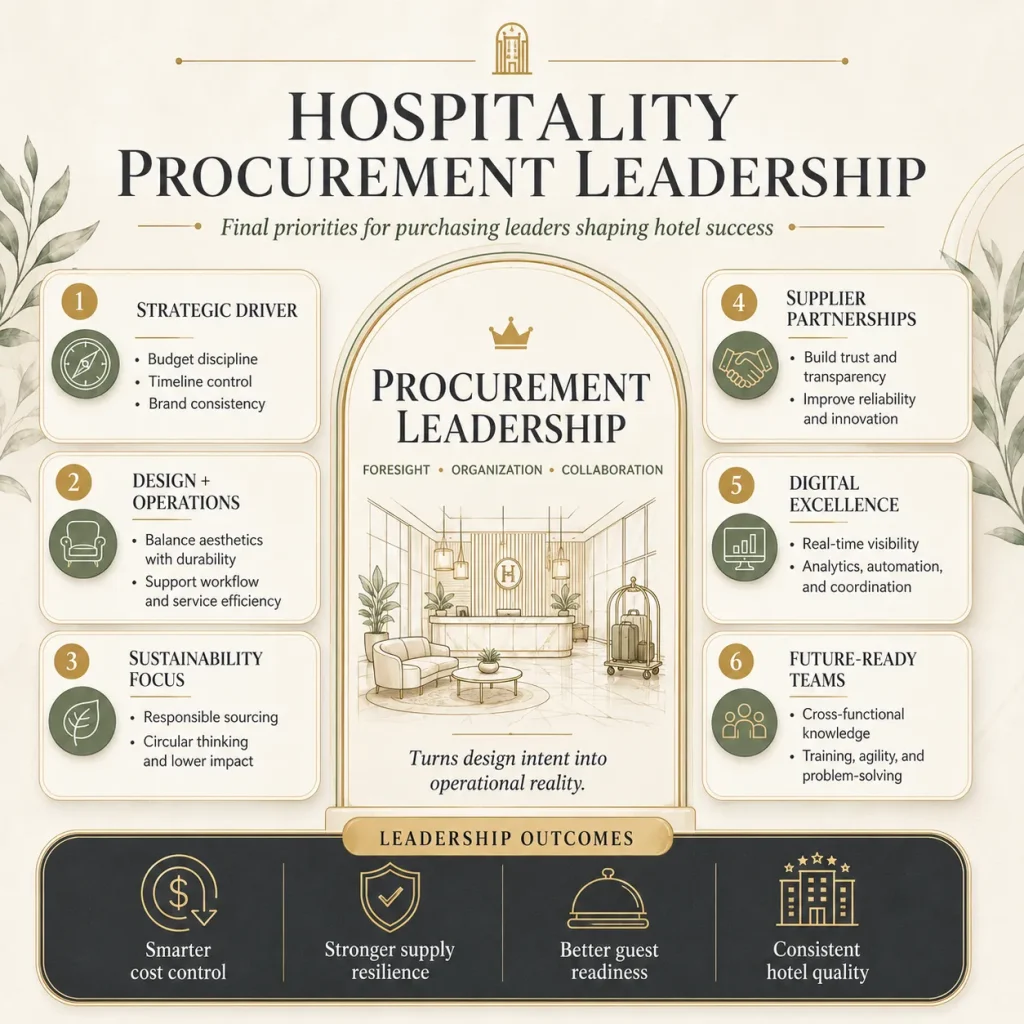
Procurement as a Strategic Driver of Hotel Development
Historically, procurement departments were sometimes viewed as administrative units responsible primarily for processing purchase orders and negotiating supplier prices. That perception has changed dramatically within the hospitality industry. Today, procurement plays a central role in hotel development strategy, influencing cost structures, project timelines, sustainability performance, and brand consistency.
Large hospitality projects often involve thousands of procurement decisions that collectively represent a significant portion of development budgets. Each decision—whether selecting guest room furniture, sourcing kitchen equipment, or ordering housekeeping supplies—carries implications for both financial efficiency and operational functionality.
When procurement is integrated into early project planning, purchasing leaders can contribute valuable insights that improve overall project outcomes. For example, procurement teams may identify alternative materials that maintain design intent while reducing costs, or they may recommend suppliers capable of meeting tight production schedules. These contributions help ensure that development plans remain realistic and aligned with operational needs.
Furthermore, procurement leaders often serve as a critical bridge between designers, architects, contractors, and hotel operators. Their ability to translate design specifications into practical purchasing strategies ensures that creative visions can be implemented within logistical and financial constraints.
Balancing Design Vision with Operational Reality
One of the defining challenges in hospitality procurement lies in balancing design creativity with operational durability. Interior designers frequently focus on aesthetic elements that establish a distinctive brand identity and create memorable guest experiences. While these design goals are essential, procurement professionals must also evaluate whether the specified materials and products can withstand the demands of daily hotel operations.
Hotel environments experience constant use from hundreds or even thousands of guests each month. Furniture must endure frequent cleaning, luggage impact, and repeated movement. Upholstery fabrics must resist stains and wear. Restaurant equipment must perform reliably under high‑volume service conditions. Even seemingly minor items such as door handles, light switches, and bathroom fixtures must meet strict durability standards.
Purchasing leaders therefore act as practical evaluators who ensure that selected products maintain both visual appeal and long‑term resilience. Through close collaboration with designers and operational teams, procurement professionals help identify materials and manufacturing methods capable of delivering both aesthetic excellence and functional reliability.
This collaborative approach also extends to the specification process. When procurement teams are involved early, they can recommend materials and suppliers that align with design concepts while remaining compatible with budget and production timelines. The result is a balanced procurement strategy that supports both creative expression and operational sustainability.
Strengthening Supplier Relationships for Long‑Term Success
Another defining characteristic of effective hospitality procurement leadership is the ability to cultivate strong and reliable supplier relationships. In an industry where project timelines are often tight and specifications highly detailed, dependable suppliers become essential partners rather than simple vendors.
Long‑term supplier partnerships offer several advantages. Suppliers who regularly collaborate with hotel brands develop a deeper understanding of brand standards, design preferences, and operational expectations. This familiarity allows them to deliver products that meet specifications more consistently and with fewer adjustments.
Strategic partnerships also foster innovation. Suppliers frequently introduce new materials, manufacturing techniques, or technological features that can enhance hotel environments. When procurement leaders maintain open communication with their supplier networks, they gain early access to these innovations and can incorporate them into future projects.
Reliability is another critical benefit of strong supplier relationships. During periods of global supply chain disruption, trusted suppliers are often more willing to prioritize long‑standing clients, adjust production schedules, or identify alternative sourcing solutions. These collaborative efforts can help prevent costly project delays and ensure continuity in procurement operations.
For purchasing leaders, building these relationships requires transparency, mutual respect, and consistent communication. Successful partnerships are built not only on pricing agreements but also on shared commitments to quality, reliability, and long‑term cooperation.
Embracing Sustainability as a Leadership Responsibility
Environmental responsibility has emerged as a defining priority within the hospitality industry, and procurement leaders play a central role in advancing sustainability initiatives. Because procurement decisions determine the materials, equipment, and operational supplies used throughout a hotel, they directly influence the environmental footprint of hospitality properties.
Sustainable procurement involves evaluating products based on criteria such as responsible material sourcing, energy efficiency, recyclability, and reduced environmental impact during manufacturing and transportation. For example, selecting certified sustainable wood furniture, energy‑efficient appliances, and environmentally safe cleaning products can significantly reduce the ecological impact of hotel operations.
Beyond product selection, procurement leaders can influence broader sustainability strategies by supporting circular economy principles. Furniture refurbishment programs, equipment recycling initiatives, and waste reduction strategies all contribute to more sustainable hospitality practices.
Guests are increasingly aware of environmental issues and often prefer hotels that demonstrate genuine sustainability commitments. Procurement decisions therefore contribute not only to environmental protection but also to brand reputation and guest satisfaction.
Leveraging Technology for Procurement Excellence
The digital transformation of the hospitality industry has introduced powerful tools that enhance procurement efficiency and transparency. Modern procurement management software allows purchasing teams to track specifications, supplier communications, purchase orders, logistics schedules, and budget performance within integrated digital platforms.
These technologies reduce administrative complexity while improving coordination among project stakeholders. Designers, project managers, financial controllers, and operational teams can access real‑time procurement data, ensuring that everyone involved in a hotel project remains informed about purchasing progress.
Data analytics further strengthens procurement decision‑making. By analyzing historical purchasing patterns and supplier performance metrics, procurement leaders can identify opportunities for cost optimization, supplier consolidation, and inventory efficiency.
Automation also improves operational procurement processes. Inventory monitoring systems can track consumption levels of OS&E items and automatically trigger replenishment orders when stock levels fall below predefined thresholds. This capability reduces the risk of shortages and allows operational teams to focus more on guest service rather than inventory management.
Developing Future‑Ready Procurement Teams
As procurement responsibilities expand, hospitality organizations must invest in developing skilled procurement teams capable of navigating increasingly complex supply environments. The modern procurement professional must combine expertise in logistics management, supplier negotiation, financial analysis, sustainability standards, and digital procurement systems.
Training and professional development play an important role in building these capabilities. Hospitality organizations that prioritize procurement education create teams that are better equipped to manage international supplier networks, evaluate technological innovations, and adapt to evolving market conditions.
Cross‑department collaboration also strengthens procurement teams. By working closely with design, engineering, operations, and finance departments, procurement professionals gain a deeper understanding of the broader hospitality ecosystem and can make more informed purchasing decisions.
A Leadership Perspective on Procurement Success
Ultimately, successful hospitality procurement leadership is defined by foresight, organization, and collaboration. Purchasing leaders must anticipate challenges before they arise, structure procurement strategies that align with project timelines, and maintain strong communication across multiple stakeholders.
When procurement is executed effectively, it remains largely invisible to hotel guests. Visitors rarely think about the logistics behind the furniture they use, the equipment that supports restaurant service, or the operational supplies that enable housekeeping teams to maintain spotless rooms. Yet these elements are fundamental to the guest experience.
By ensuring that every detail—from large furniture installations to the smallest operational tool—is delivered and installed according to plan, procurement leaders create the foundation upon which exceptional hospitality is built.
The future of hotel development will continue to evolve as sustainability priorities, technological innovations, and global supply networks reshape the hospitality landscape. In this dynamic environment, hotel purchasing leaders who embrace strategic thinking, innovation, and collaboration will remain indispensable contributors to successful hospitality operations.
Their work extends far beyond purchasing products. It involves building systems, partnerships, and strategies that transform architectural designs into fully functional hospitality environments ready to welcome guests from around the world.

FAQs About FF&E and OS&E in Hotel Procurement
In hospitality development and operations, procurement involves many moving parts that can often create confusion for hotel owners, developers, project managers, and even operational teams. Understanding how FF&E and OS&E procurement works is essential for ensuring that hotel projects run smoothly from design phase to grand opening and beyond.
The following frequently asked questions address some of the most common concerns and misconceptions surrounding hotel procurement, offering clear explanations that can help hospitality professionals make informed decisions and avoid costly mistakes.
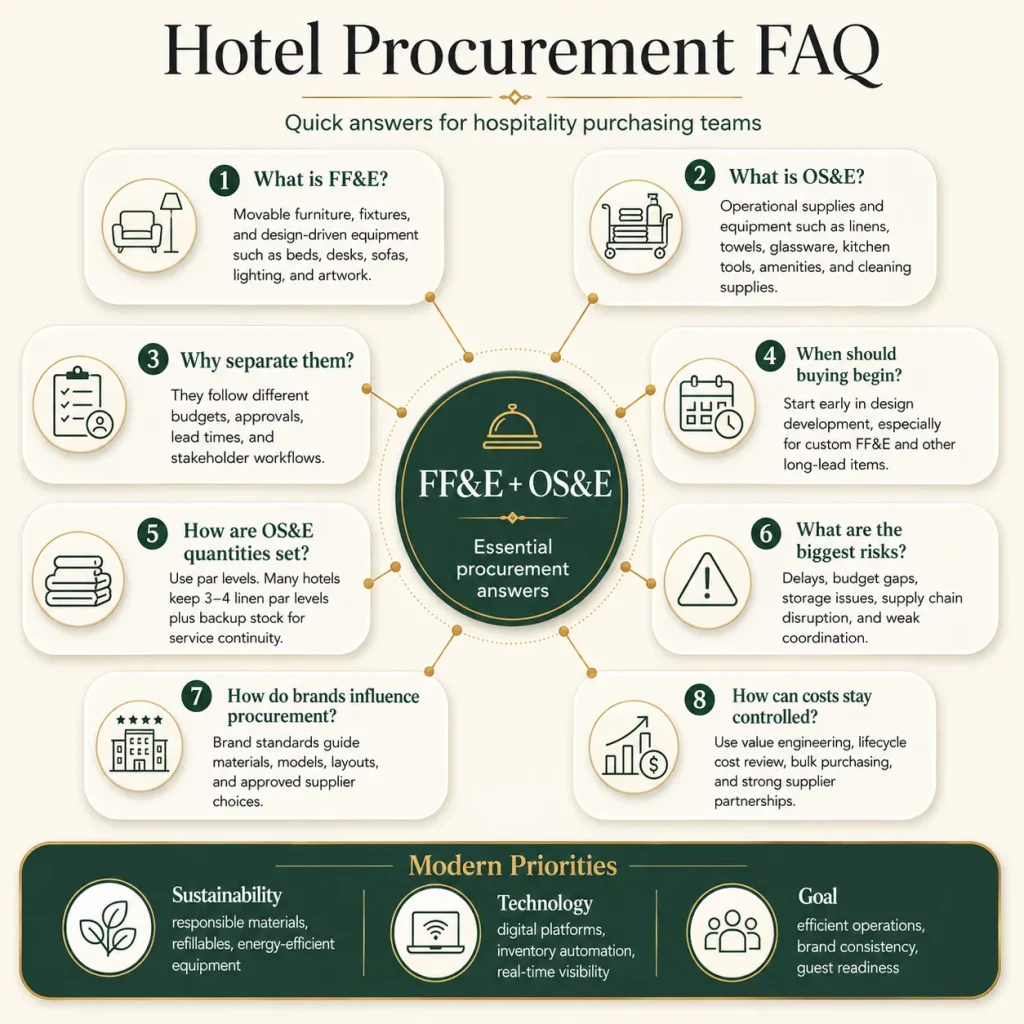
What exactly does FF&E include in hotel projects?
FF&E (Furniture, Fixtures, and Equipment) refers to all movable furniture and decorative items used throughout a hotel property. These elements are typically part of the interior design package and are selected to align with the brand identity, aesthetic concept, and guest experience vision of the hotel.
Common examples of FF&E items include guest room beds, mattresses, wardrobes, desks, chairs, sofas, lounge seating, dining tables, decorative lighting fixtures, artwork, mirrors, and carpets. In public areas such as lobbies, restaurants, and conference spaces, FF&E may also include reception desks, banquet furniture, bar counters, and decorative installations.
Unlike structural elements such as walls, plumbing systems, or built‑in architectural components, FF&E items are movable and can often be replaced during renovations without affecting the building’s structure. However, despite being movable, they are typically installed as part of the final stages of hotel construction or refurbishment.
FF&E items also tend to have longer replacement cycles compared to operational supplies. Many hotels replace major furniture components every seven to ten years during renovation cycles, depending on brand standards and wear conditions.
What is included in OS&E procurement?
OS&E (Operating Supplies and Equipment) refers to the tools, supplies, and operational items required for the daily functioning of a hotel. These items are not part of the design structure but are essential for supporting hospitality services.
Examples of OS&E include housekeeping equipment, bed linens, towels, pillows, blankets, restaurant glassware, cutlery, kitchen utensils, cookware, minibar accessories, guest amenities, cleaning chemicals, laundry supplies, and office equipment.
While FF&E focuses on design and guest environment, OS&E focuses on operational readiness. Without properly planned OS&E procurement, hotel departments such as housekeeping, food and beverage, maintenance, and front office would be unable to operate efficiently.
Another key difference is that OS&E items often require ongoing replenishment. Consumable items such as cleaning supplies, toiletries, and kitchen ingredients are continuously replaced, while durable equipment such as vacuum cleaners or kitchen appliances may last several years but still require periodic replacement.
Why is FF&E and OS&E procurement handled separately?
Although both FF&E and OS&E are essential components of hotel procurement, they are usually managed separately because they serve different purposes and follow different purchasing processes.
FF&E procurement is closely tied to interior design specifications and construction timelines. These items are typically custom manufactured or specially selected to match the design concept of the hotel. As a result, FF&E purchasing often begins early in the development process and involves coordination with architects, designers, and project managers.
OS&E procurement, on the other hand, is driven by operational needs and department requirements. Department heads such as executive chefs, housekeeping managers, and maintenance supervisors play an important role in defining OS&E specifications because they understand the tools and supplies required for daily operations.
Separating these procurement streams allows project teams to manage timelines more effectively while ensuring that both design objectives and operational requirements are addressed properly.
When should procurement begin in a hotel development project?
Procurement planning should begin very early in the hotel development process, often during the design development stage. Waiting until construction is nearly complete can create significant risks because many FF&E items require long manufacturing lead times.
Custom furniture, lighting fixtures, and specialized equipment may take several months to produce, particularly if suppliers are located in international manufacturing hubs. Shipping, customs clearance, and logistics coordination can add additional time to the process.
Starting procurement planning early allows purchasing managers to develop detailed procurement schedules, identify long‑lead items, secure supplier production slots, and coordinate deliveries with construction milestones.
Early planning also helps project teams maintain better budget control and avoid last‑minute purchasing decisions that may lead to higher costs or compromised quality.
How do hotels determine the quantity of OS&E items they need?
Determining OS&E quantities requires careful analysis of operational workflows and occupancy levels. Hotels typically use a system called “par levels” to calculate the number of items required to support continuous operations.
Par levels represent the number of complete item sets needed to maintain smooth service without shortages. For example, housekeeping departments usually maintain three to four par levels of linens. This means that while one set of linens is in use in guest rooms, another set may be in the laundry process, a third set stored as backup inventory, and sometimes a fourth set available for peak occupancy periods.
Restaurants also calculate par levels for glassware, cutlery, and tableware to ensure that enough items are available during busy dining hours while others are being washed.
Accurate par level calculations are essential for preventing shortages that could disrupt hotel service.
What are the biggest risks in hotel procurement?
Hotel procurement involves several potential risks that purchasing managers must manage carefully. One major risk is supply chain disruption, which can occur due to shipping delays, manufacturing shortages, or geopolitical factors affecting international trade.
Another common risk is inaccurate budgeting or forecasting. If procurement budgets do not accurately reflect project requirements, hotels may face financial strain or be forced to downgrade product quality.
Logistics coordination also presents challenges. Delivering large quantities of furniture and equipment to construction sites requires careful scheduling and storage planning to prevent damage or loss.
Finally, communication breakdowns between designers, procurement teams, and operational managers can lead to product selections that fail to meet operational needs.
Effective procurement planning and strong supplier relationships help reduce these risks.
How do hotel brands influence procurement decisions?
For hotels operating under international brands, procurement decisions are often guided by brand standards established by the parent company. These standards define design requirements, material specifications, and equipment models that ensure consistency across all properties within the brand.
Brand standards may include approved supplier lists, furniture design guidelines, lighting specifications, and operational equipment requirements. These guidelines help maintain consistent guest experiences regardless of location.
Before purchasing major FF&E items, procurement teams typically submit specifications to brand representatives for review and approval. This process ensures that purchased items meet brand expectations and maintain design consistency across the brand portfolio.
How can hotels control procurement costs without sacrificing quality?
Cost control in hospitality procurement requires a balanced approach that considers both initial purchase price and long‑term performance. One effective strategy is value engineering, which involves identifying alternative materials or suppliers that maintain design intent while reducing costs.
Bulk purchasing agreements can also help reduce unit costs, particularly for hotel groups managing multiple properties. Establishing long‑term supplier partnerships often results in better pricing structures and improved service reliability.
Another important strategy is evaluating products based on lifecycle costs rather than just initial price. Durable materials and high‑quality equipment may cost more upfront but can significantly reduce maintenance and replacement expenses over time.
What role does sustainability play in modern hotel procurement?
Sustainability has become a major focus in hospitality procurement as hotels seek to reduce environmental impact and meet evolving guest expectations. Procurement teams now prioritize environmentally responsible materials, energy‑efficient equipment, and suppliers that follow ethical manufacturing practices.
Examples of sustainable procurement initiatives include selecting furniture made from responsibly sourced wood, using biodegradable cleaning products, reducing single‑use plastics, and choosing refillable guest amenity systems.
These initiatives not only support environmental goals but also improve brand reputation and appeal to environmentally conscious travelers.
How is technology changing hotel procurement?
Technology is transforming hotel procurement through the use of digital procurement platforms, automated inventory systems, and data analytics tools. These technologies streamline purchasing processes, improve supplier communication, and provide real‑time insights into procurement budgets and logistics schedules.
Automation can also simplify operational procurement by tracking inventory levels and generating replenishment orders automatically when supplies run low.
As hotels continue to adopt smart technology solutions across their properties, procurement teams must increasingly evaluate and integrate advanced digital systems into their purchasing strategies.
Understanding the complexities of FF&E and OS&E procurement allows hospitality professionals to approach hotel development with greater confidence and strategic clarity. By addressing these common questions and concerns, purchasing leaders, developers, and operators can build procurement frameworks that support efficient operations, strong brand identity, and exceptional guest experiences.