
Supplier samples reveal how accessibility supplies are made, handled, assembled, cleaned, and supported. They can expose rough edges, inconsistent finishes, unclear instructions, awkward adjustments, and differences between units before a hospitality property commits to an order. A sample is evidence about the item examined; it is not proof that every delivered unit will perform identically. Its value depends on whether the sample matches the proposed production specification and whether the inspection addresses the conditions in which the property will actually use it.
For hotel purchasing teams, the useful question is not simply whether a shower chair, grab bar, or guest communication device looks acceptable. It is what the sample establishes, what remains unverified, and what evidence must accompany approval. A smooth metal finish does not establish structural performance. A successful demonstration in a quiet office does not establish reliable operation in a guest room. A well-packed courier sample does not establish that a bulk shipment will arrive with the same protection.
This guide treats sampling as a purchasing decision process for hospitality operations. It focuses on workmanship, intended use, cleaning, documentation, replacement support, and the connection between an approved sample and the eventual shipment. Product-specific installation and safety requirements still need separate review. In particular, portable equipment should not be assumed to satisfy requirements that apply to installed accessible features.
The practical approach is to separate direct observations from documentary evidence and unresolved claims. That distinction gives purchasing, engineering, housekeeping, and guest services a shared basis for comparison. It also helps a supplier respond with the exact missing information instead of another general assurance of quality. The goal is a defensible approval decision with a clear specification, a record of limitations, and controls that remain useful when the order reaches the property.
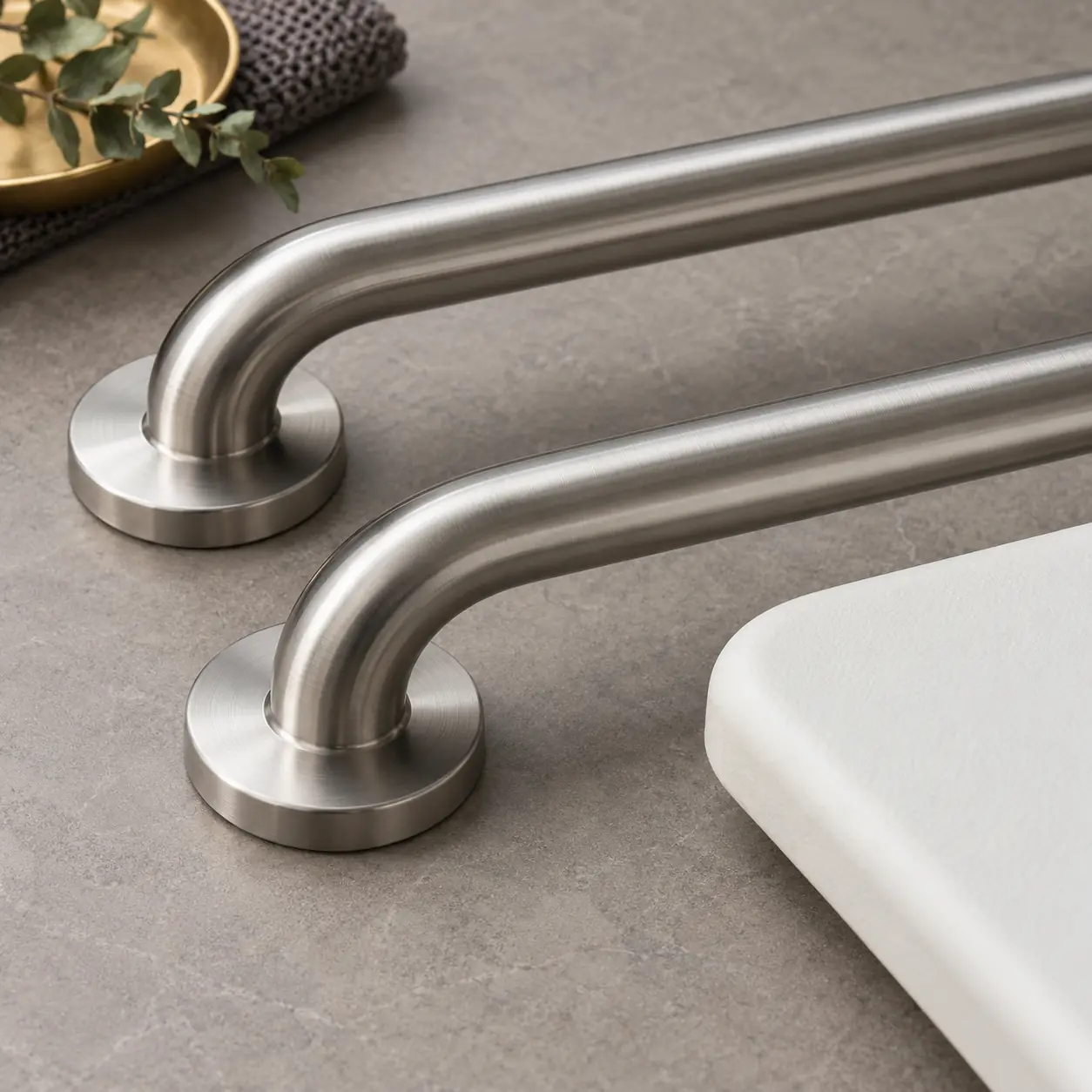
What the Physical Sample Can—and Cannot—Tell You
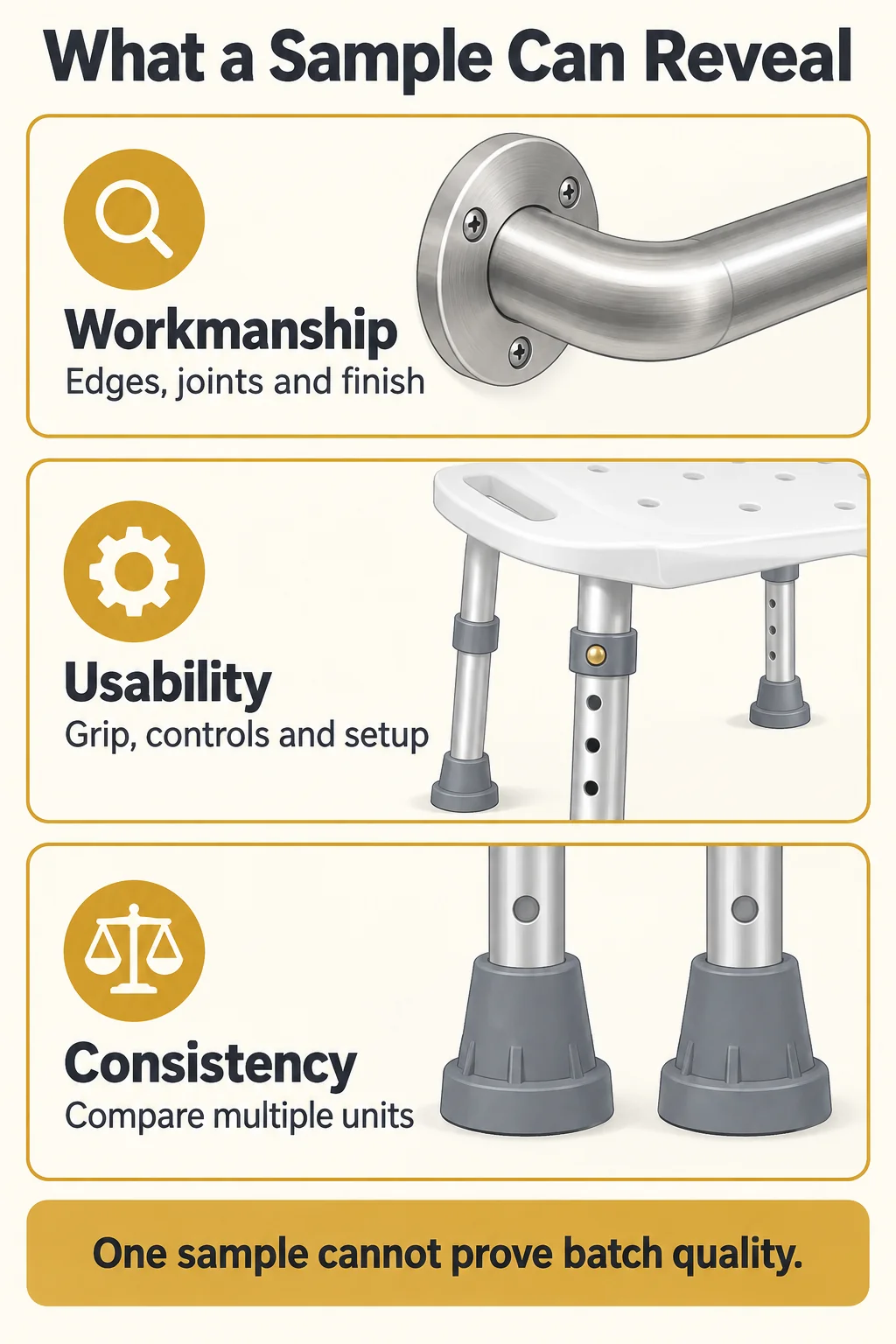
A physical sample is most useful for assessing visible workmanship and everyday handling. It lets the team examine edges, joints, finishes, adjustment mechanisms, packaging, and instructions together instead of judging isolated catalog photographs. Comparing multiple units can also reveal variation that a single carefully selected sample conceals. However, the sample cannot independently establish material composition, long-term corrosion resistance, structural capacity, or the defect rate of a production batch. Start by identifying exactly what arrived, then record each finding as a direct observation, a supported specification, or an unresolved claim. This prevents an attractive finish from being mistaken for complete product qualification.
Establish whether the sample represents the order
Record the supplier, manufacturer when disclosed, exact model, revision, size, finish, and supplied accessories. Ask whether the item came from normal production, was made as a prototype, or was specially prepared for the review. A prototype can support an early design discussion, but its finish and assembly may not represent production tooling or routine quality control.
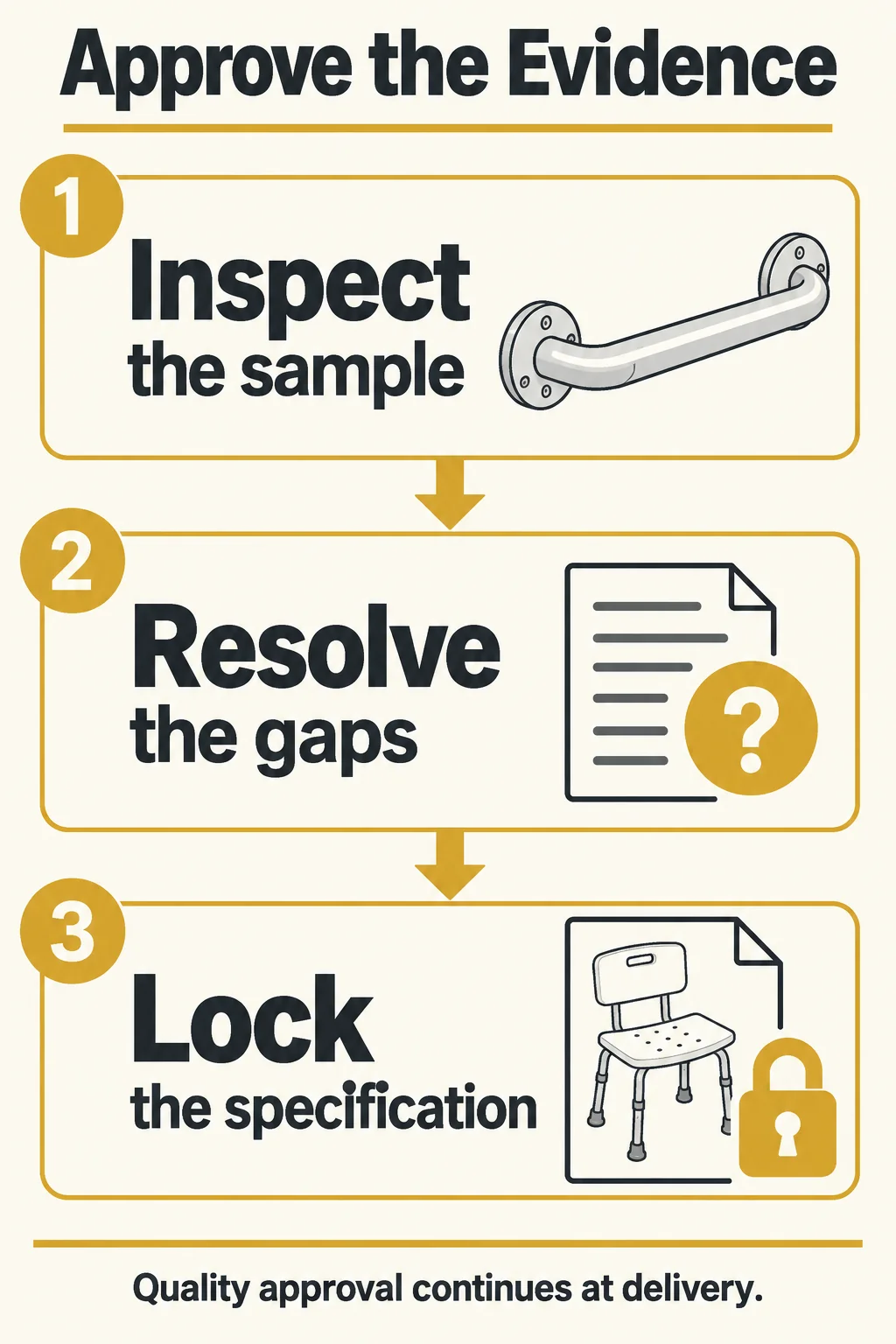
Match the sample to a dated drawing or specification. If the quotation identifies one model while the instructions show another, place the decision on hold until the supplier resolves the discrepancy. Photograph the complete item and distinguishing components. Preserve the original packaging and paperwork so later comparisons do not depend on memory.
Look beyond the most visible surface
Inspect contact edges, undersides, weld transitions, fastener recesses, adjustment holes, and removable components. On a grab bar sample, assess finish uniformity and the completeness of the mounting kit, without assuming the included fixings suit the property’s wall construction. On a shower chair, review the fit of feet and adjustment components against the instructions. A visibly loose part or unexplained movement is a reason to stop the evaluation and seek correction.
A premium appearance can coexist with poor serviceability. Consider whether a worn foot, missing cap, or damaged accessory can be identified and replaced. Avoid treating weight, shine, or a material label as a shortcut to quality. Those characteristics need to be interpreted alongside the design, intended use, and supporting evidence.
Use the evidence distinction consistently
The following examples show how to translate observations into bounded conclusions. They are a purchasing interpretation guide, not a product certification procedure.
| Sample finding | Reasonable conclusion | Still unverified |
| Finish looks uniform under consistent lighting | The inspected surfaces meet the agreed visual reference | Material grade and long-term finish durability |
| Adjustment works as described | The mechanism functions on this unit in the reviewed setting | Repeated-use life and production consistency |
| Several samples differ in assembly fit | Variation exists among the units received | Its frequency across the full order |
| Instructions do not match the model | The documentation is unsuitable for approval | Whether the correct instructions resolve the issue |
Make comparisons fair
Use the same lighting, review location, assembly method, and observation categories for competing suppliers. Distinguish cosmetic preferences from defects that affect use or safety. If multiple units are available, compare their dimensions, included parts, and finish under the same conditions. A small sample set can expose inconsistency, but it does not support a reliable numerical estimate of the shipment’s defect rate.
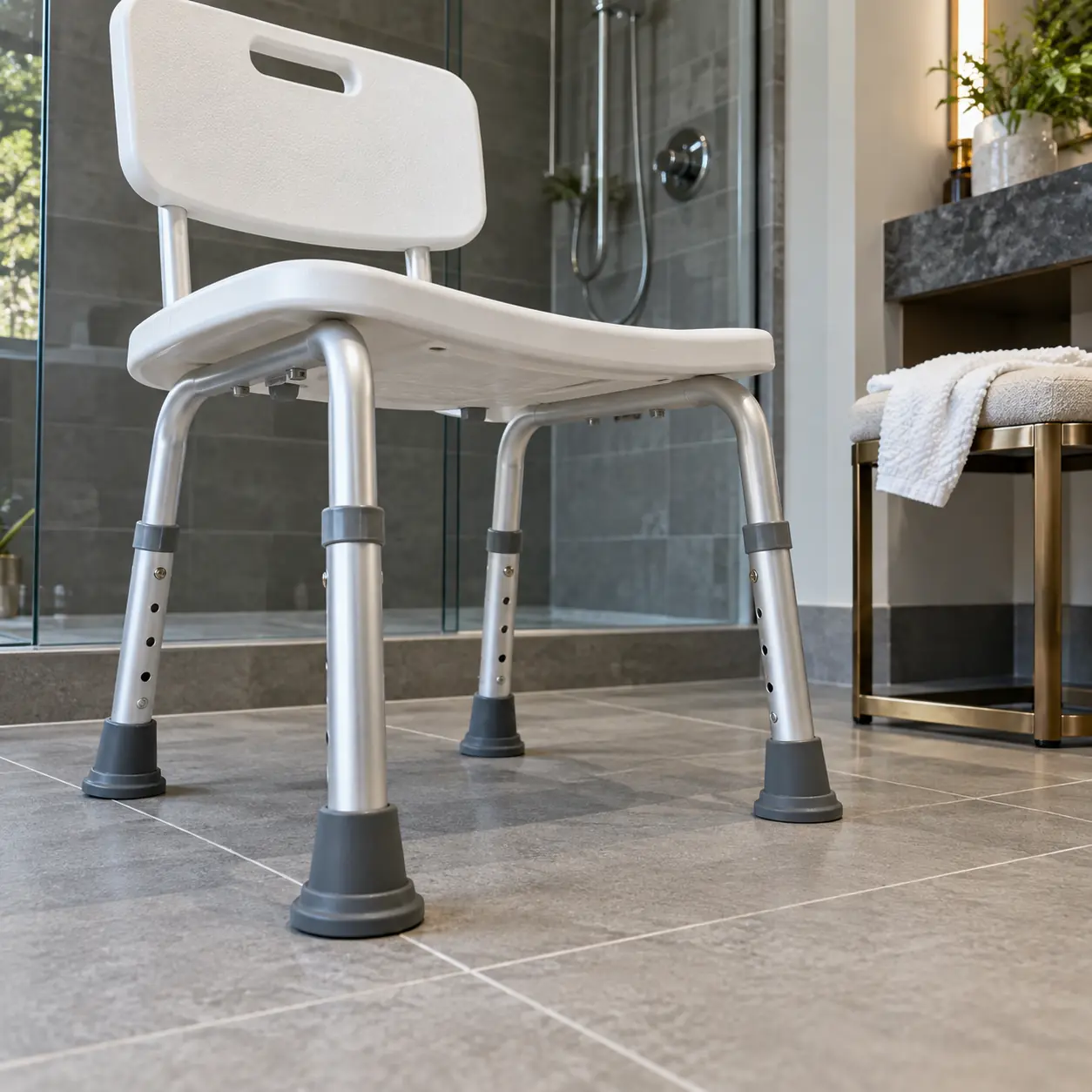
Evaluate Safety Evidence, Usability, and Cleaning Compatibility
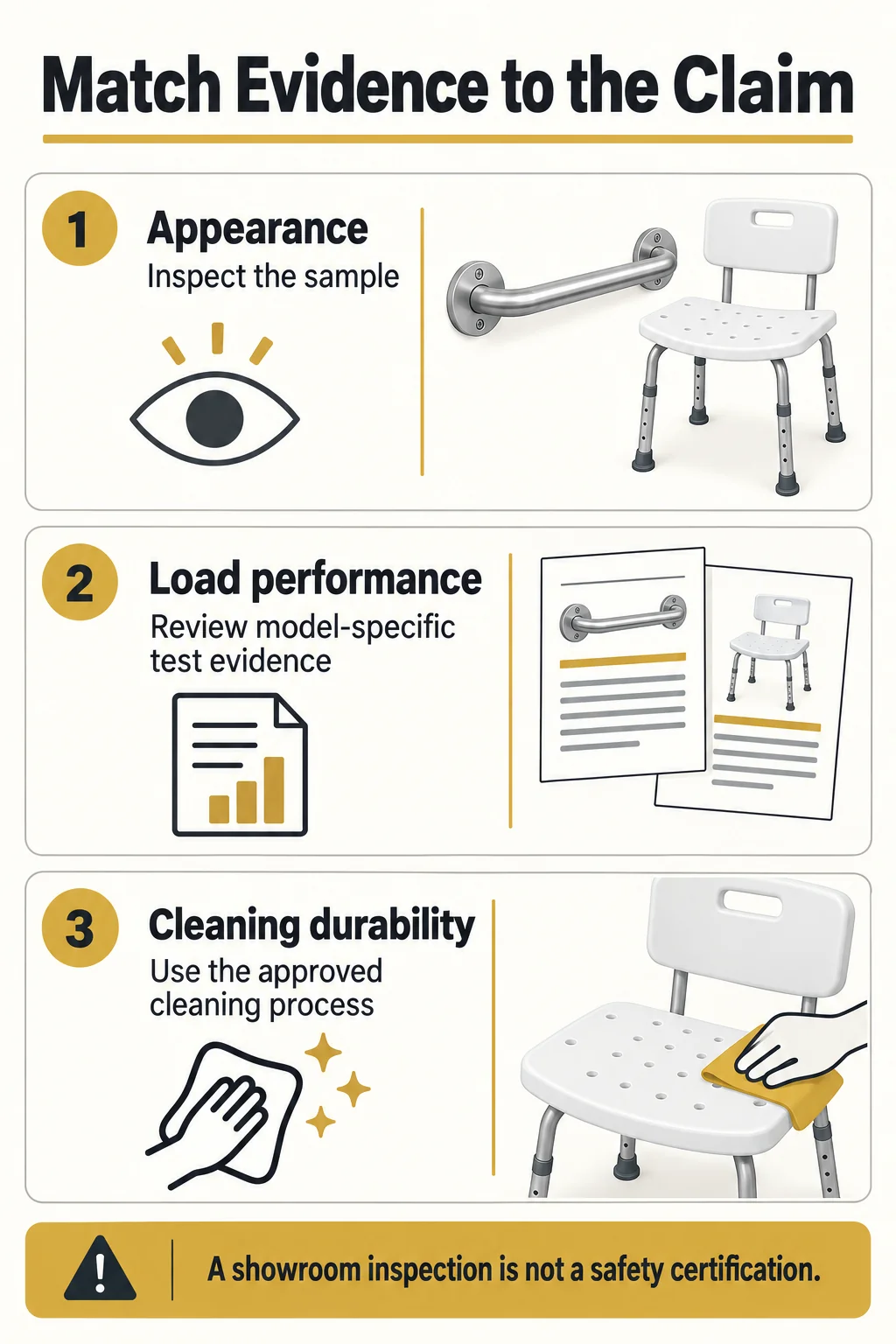
Quality includes how a product behaves in its intended environment, but a hotel sample review should stay within safe, authorized procedures. Verify model-specific instructions and supporting evidence before attempting functional evaluation. Engineering should address installation questions; housekeeping should assess compatibility with the approved cleaning process; guest services should consider setup and handover. Where user feedback is appropriate, involve people with relevant access needs through a planned, voluntary evaluation after safety screening. Do not ask guests or staff to discover a product’s failure limit. Separate routine operation from specialist testing, and document the conditions under which each observation was made.
Treat load and installation claims as separate evidence
Do not improvise a load test by having someone stand on a seat, pull forcefully on a grab bar, or exceed a stated capacity. Request evidence that identifies the exact model, configuration, test method, acceptance criteria, and result. A certificate bearing a supplier’s name is insufficient if the covered product cannot be matched to the sample. Where the consequence of failure warrants it, have a qualified reviewer assess the evidence or commission appropriate testing.
For installed supports and seats, the complete assembly matters, including mounting hardware, wall structure, and installation details. The US accessibility standards address specific installed features and their placement; a portable shower chair should not be assumed to replace a required installed folding seat. A product-level claim also does not establish compliance of the whole room. Have the applicable layout and installation requirements reviewed for the property.
Observe the workflow that staff and guests will encounter
Review unpacking, assembly, adjustment, storage, deployment, and return to service using the manufacturer’s instructions. For a chair, consider whether staff can identify its configuration and confirm correct assembly without guesswork. For a guest communication device, review its intended notifications, power arrangement, instructions, and compatibility with the actual room systems before any operational trial. Do not extend a demonstration of one function into a claim about unrelated alarm or emergency performance.
The usability question is whether the equipment supports the intended guest need in the intended setting. A control can work mechanically yet remain confusing or difficult to distinguish. Staff feedback can identify handling problems, but it does not replace feedback from people with relevant access needs. Record the tasks evaluated and limitations of participation instead of claiming the product suits every guest.
Review cleaning as a controlled compatibility exercise
Ask for written cleaning and disinfection instructions for the exact product and finish. Compare them with the property’s process, including the chemical, concentration, contact time, wiping method, rinsing requirements, and drying procedure. If the instructions and hotel process conflict, resolve that conflict before approval. Do not invent a stronger chemical mixture or shorten a required contact time to make the product appear compatible.
When a supervised sample cleaning trial is appropriate, follow the approved method and record the actual number of cycles. Inspect for changes such as discoloration, tackiness, cracking, loose components, trapped residue, or unreadable markings. These observations can reveal early incompatibility. They do not establish sanitation effectiveness, validated disinfection performance, or years of service life. Avoid converting a short trial into an unsupported durability claim.
Distinguish missing evidence from a failed product
Missing documentation is an unresolved approval condition. A cracked component is an observed defect. These are different findings and should trigger different responses. A documentation gap may be resolved with correctly matched evidence; a physical defect may require a corrected sample and renewed review. Keeping the distinction clear makes follow-up precise and prevents a polished sales response from closing a technical issue.
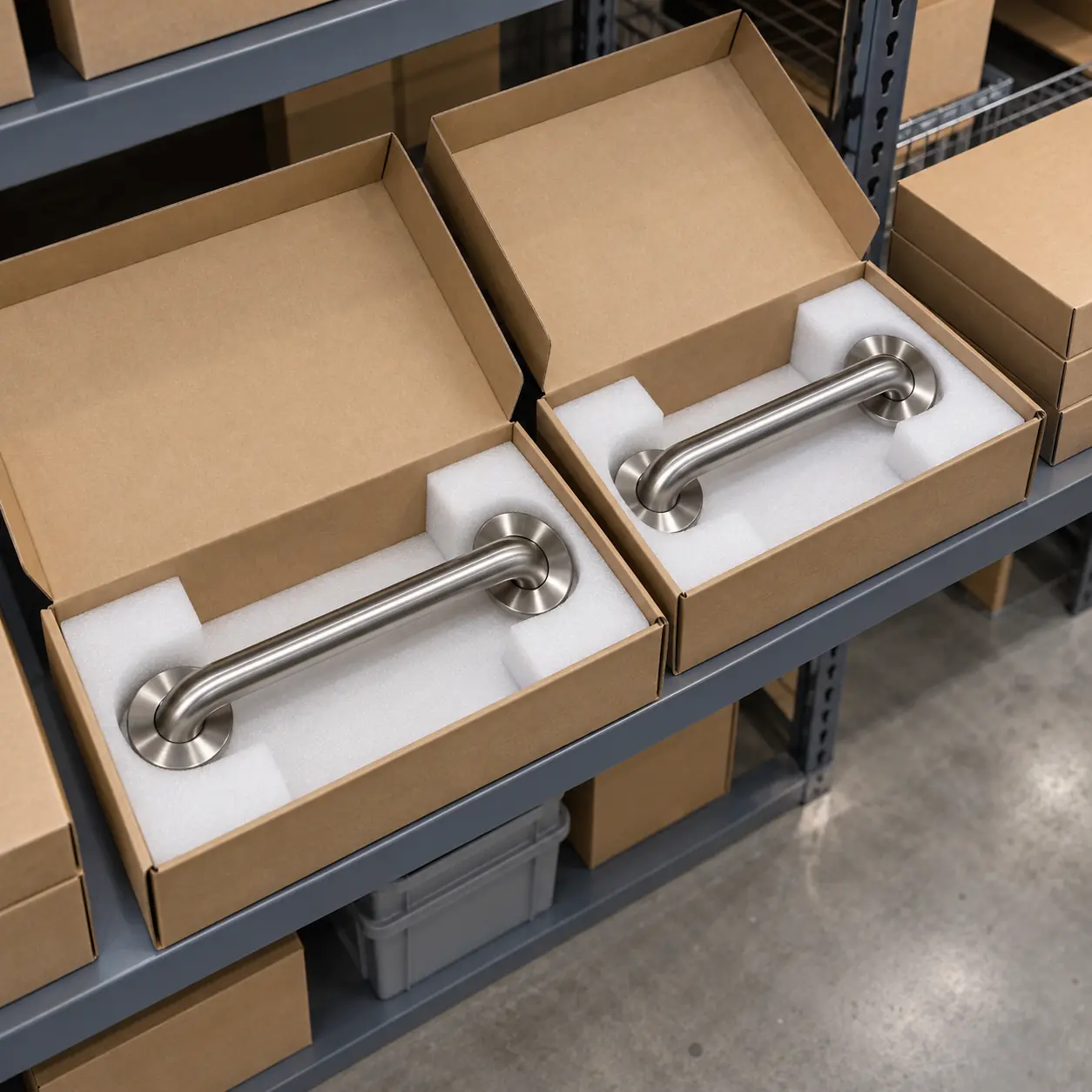
Turn Sample Findings into Purchase and Delivery Controls
Sample approval becomes commercially useful when the order preserves what was approved. Record the model, configuration, materials and finish as supported, included accessories, documentation, packaging, and permitted tolerances in the purchase specification. Retain an identified reference sample when practical, while recognizing that it can age or change during storage. Establish how substitutions and revisions require review, and assign responsibility for checking the shipment. A retained sample is a comparison aid, not a substitute for written requirements. The strongest control is a traceable connection between the reviewed item, the approved documents, the purchase order, and the delivered production lot.
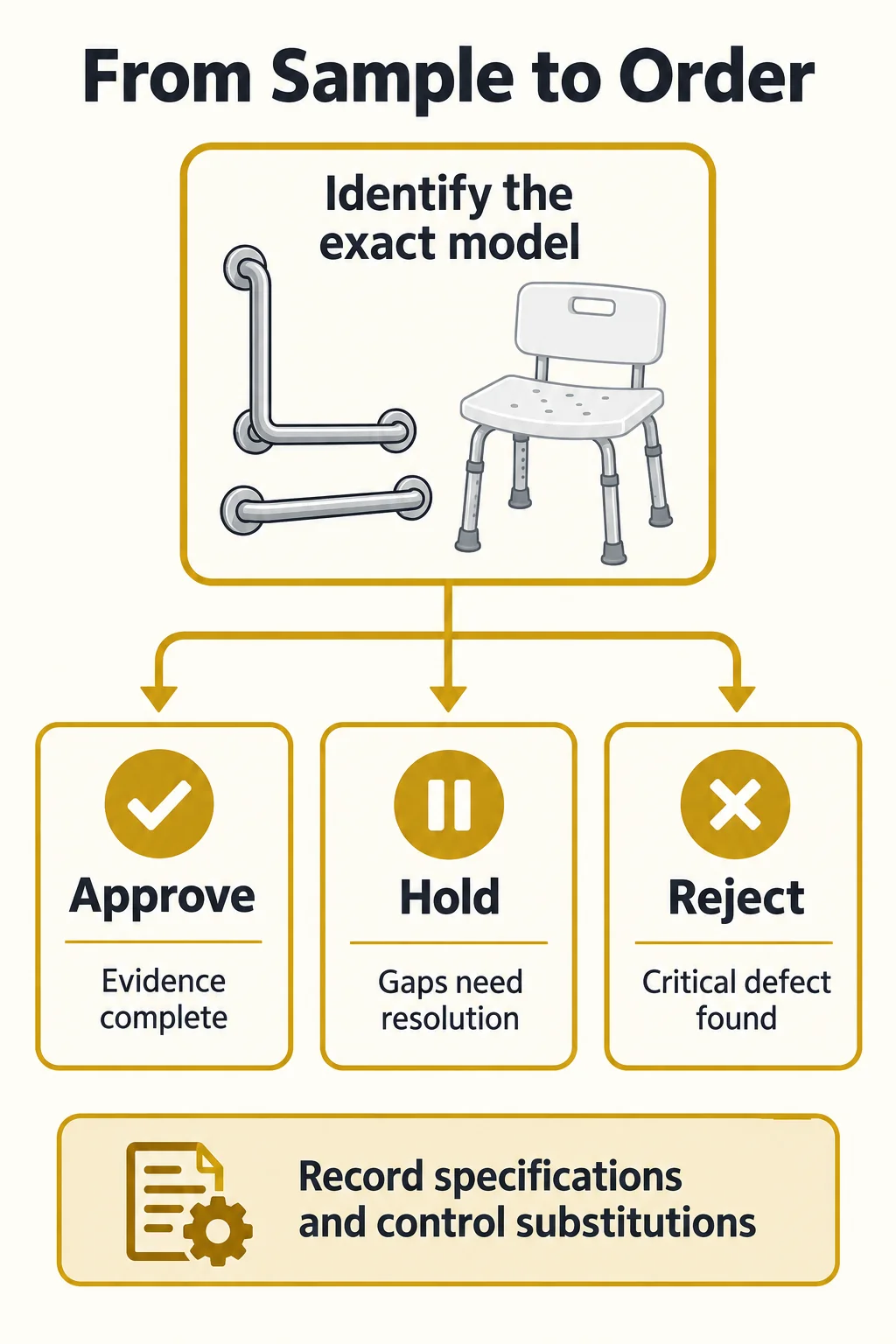
Use approve, hold, and reject as distinct decisions
Approve when required evidence is complete, the relevant observations meet the agreed criteria, and there are no unresolved critical issues. Hold when an answer, document, corrected component, or planned evaluation remains outstanding. Reject when a critical defect or an unacceptable mismatch makes the offered sample unsuitable. These are proposed purchasing categories; define their authority and consequences within the property’s own procurement process.
Do not average a safety concern into an attractive overall score. Price, finish, packaging, and delivery convenience cannot compensate for an unresolved issue that prevents safe intended use. Commercial comparison should follow resolution of mandatory requirements. Give each held item an owner, required evidence, and decision date so conditional approval does not silently become full approval.
Example: two acceptable-looking samples, different decisions
Consider a hypothetical comparison of two shower chair samples. Both look clean and have consistent surface finishes. Supplier A provides instructions matching the exact model but has not confirmed the replacement-foot part number. Supplier B includes a test report that identifies a different model and cannot explain the connection.
The samples should not receive the same approval simply because their appearance is similar. Supplier A has a service-support gap whose significance depends on the property’s stated requirements. Supplier B has an unresolved performance-evidence gap that needs technical clarification before approval. Neither observation establishes that one chair is inherently stronger. The decision follows the evidence available, not an unsupported ranking of physical performance.
Write change control into the order
Identify what cannot change without written approval: model or revision, structural components, finish system, feet and adjustment parts, mounting kit, power accessories where relevant, and instructions. Specify how the supplier must disclose a proposed substitution and what evidence or new sample will be needed. A phrase such as ‘equivalent quality’ leaves too much room for disagreement unless equivalence has measurable meaning.
Agree on inspection timing and the response to nonconforming goods before shipment. The appropriate sampling plan depends on lot size, risk, defect definitions, and the purchasing agreement; there is no universal sample count suitable for every accessibility product. Where formal acceptance sampling is used, have the plan selected and interpreted by a competent quality professional. Sampling does not guarantee that every uninspected unit is defect-free.
Verify replacement support before it becomes urgent
Request exact part identifiers, ordering quantities, lead-time assumptions, warranty conditions, and any stated support period. Ask whether replacements remain interchangeable after a product revision. Availability in a sample kit does not guarantee future supply, so distinguish current stock information from a contractual commitment.
At receiving, reconcile model identification, packaging, accessories, and documentation with the approved record. Follow the agreed inspection process and segregate goods that fail acceptance rather than placing them into guest service. Record discrepancies with photographs and traceable lot information. Approval should continue through delivery and commissioning, followed by the manufacturer’s inspection and maintenance instructions during service.
Conclusion
Supplier samples reveal the quality of the inspected item and the quality of the supplier’s response to specific questions. Their greatest value comes from connecting physical observations to verified documentation and clear order requirements. Inspect workmanship, review intended use and cleaning compatibility, resolve missing evidence, and preserve the approved configuration through purchase and delivery. Do not treat appearance as proof of safety or a single sample as proof of production consistency. When these distinctions are recorded, the team can explain why an item was approved, what conditions apply, and what must be checked before it reaches a guest.
For a sourcing discussion with KW Hospitality, prepare the intended application, product categories, quantities, room or installation constraints, cleaning process, and unresolved sample findings. Ask for model-specific specifications and sample arrangements before comparing quotations. This gives the discussion a concrete technical scope and helps distinguish an acceptable offer from one that still needs clarification.
Frequently Asked Questions
Is one supplier sample enough to approve an order?
One sample may support an initial workmanship and usability review, but it cannot establish variation across a production lot. The appropriate additional samples and delivery inspection depend on product risk, order size, production history, and the agreed quality process. Do not treat a small convenience sample as a statistically representative batch inspection.
Does an ADA claim on the product sheet settle accessibility compliance?
No. Confirm what feature and requirement the claim addresses, and whether the model and installed configuration match. Room layout, placement, installation, and other applicable requirements need separate review. A portable aid does not automatically satisfy a requirement for an installed accessible feature.
Should the property keep the approved sample?
Usually, an identified reference sample is useful when storage is practical. Keep the specification, photographs, revision details, and approval record with it. Document any testing or deterioration that changes its condition. The written specification remains essential because a retained item alone cannot define every acceptance requirement.
Can a cleaning trial predict the product’s service life?
A short trial can reveal early incompatibility under the recorded process. It does not justify a five-year or other service-life prediction. Such a prediction needs appropriate durability evidence, stated assumptions, and conditions that correspond to actual use. Keep trial results limited to what was observed.
What if the delivered product differs from the approved sample?
Apply the purchase order’s agreed acceptance and nonconformance process. Identify and segregate affected goods, document the mismatch, and resolve it with the supplier before release to guest service. Determine whether the difference is an approved revision, a cosmetic deviation, or a change that requires renewed technical evaluation.
Can an attractive sample offset incomplete test documentation?
No. Appearance and technical evidence address different questions. Where performance evidence is required for approval, keep the decision on hold until the evidence is complete and correctly matched. A discount or favorable visual review does not close that gap.