
Volume pricing is not a reward for asking for a large discount. It is an exchange: the buyer gives the supplier something economically useful—more predictable demand, a larger production run, fewer changeovers, simpler packaging, better payment certainty, or a longer planning horizon—and receives measurable value in return. The strongest negotiation therefore begins before the meeting. A hotel must know exactly what it plans to buy, which specifications are fixed, how much volume is genuinely available, when releases will occur, and which costs sit outside the quoted unit price.
Hospitality procurement adds complexity because a single program may combine guestrooms, housekeeping, food and beverage, amenities, furniture, and operating equipment. The same headline quantity can carry very different economics. One consolidated shipment of standard towels may be attractive to a supplier; twelve small releases to different properties, custom packaging, color matching, and short lead times may not be. If those conditions remain vague, the supplier will protect itself through price, minimum order quantities, exclusions, or shorter quote validity.
A productive negotiation makes the commercial baseline comparable, separates credible commitments from optimistic forecasts, identifies the supplier’s real cost drivers, and then links each concession to a defined condition. It also looks beyond unit price to freight, payment terms, tooling, inspection, warranty, replenishment, and claims handling. This guide gives hotel owners, procurement managers, developers, management companies, and purchasing groups a practical, repeatable framework for negotiating sustainable volume pricing without weakening product quality, delivery reliability, budget control, guest standards, or long-term supply continuity.

Establish a Credible Volume and Commercial Baseline
A supplier can price volume accurately only when the volume is attached to a defined scope. Begin by standardizing the specification, unit of measure, packaging, customization, destination, delivery schedule, and service boundary for every quoted line. Then separate the quantity that is approved and funded from the quantity that is forecast, optional, or dependent on future properties. This distinction protects both sides: the supplier can price the committed order confidently, while the hotel avoids promising demand it may never release. A clean baseline also prevents an apparent discount from being created by a thinner material, a smaller pack, excluded freight, or a different warranty obligation.
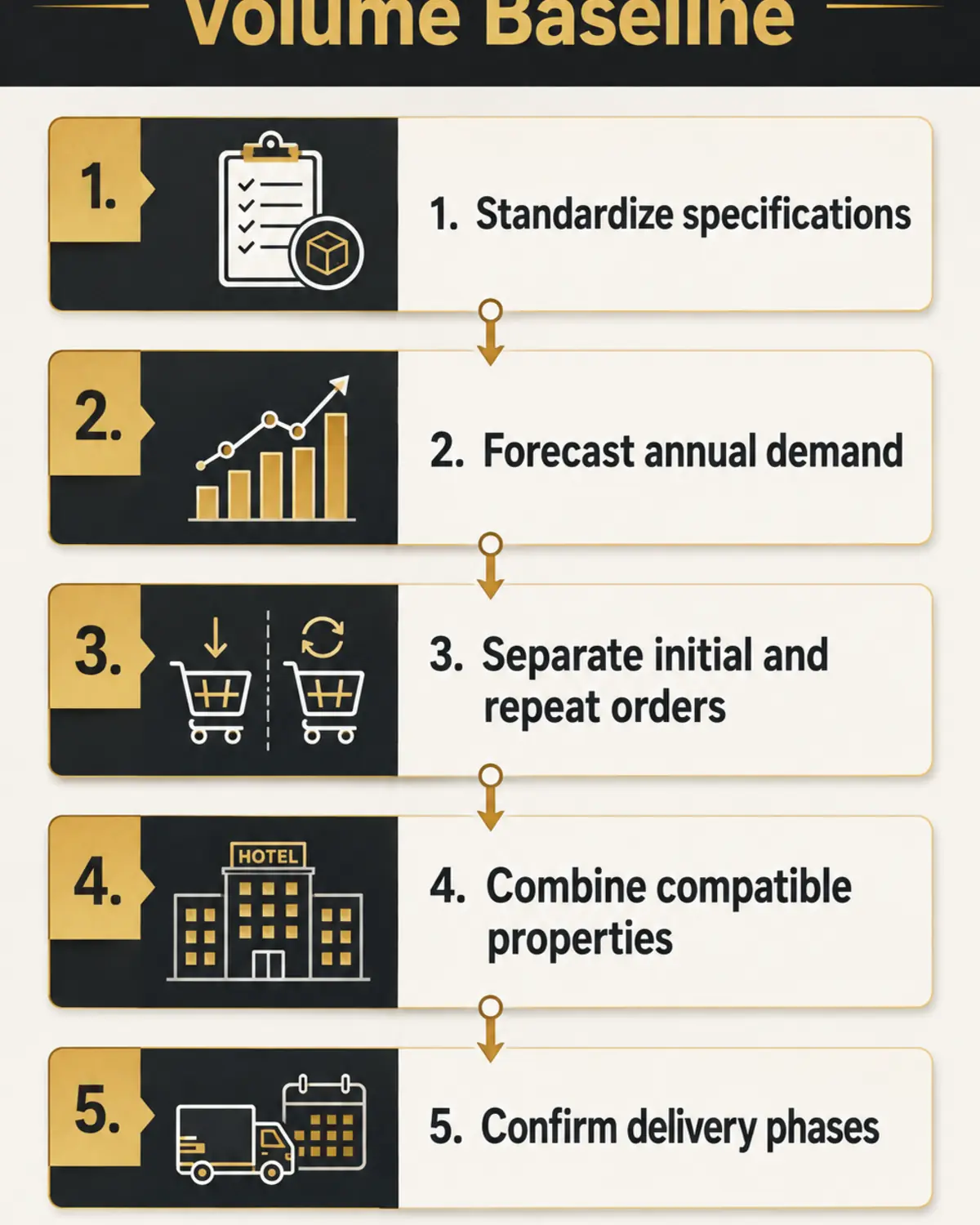
If the requirement is still incomplete, first use a controlled hotel supplies RFQ process. Every supplier should quote the same item codes, specifications, quantities, acceptance standards, delivery locations, and commercial assumptions. Ask suppliers to identify exceptions rather than hiding them in footnotes.
Calculate the volume a supplier can actually use
Convert operational demand into commercially meaningful quantities. For consumables, use annual consumption, occupancy, covers, laundry cycles, or replacement rates. For opening packages, separate initial stock, operational spares, and later replenishment. For a portfolio, group only products that share a compatible specification and can realistically be awarded together. A theoretical total across unrelated categories is not the same as one efficient production run.
Committed volume: approved quantity the hotel is prepared to order under defined terms.
Forecast volume: reasonable demand estimate that may support planning but should not earn the full committed-volume discount.
Option volume: additional properties, phases, or quantities that may be called off if agreed conditions are met.
Release volume: the minimum quantity per production or shipment release, which often matters as much as the annual total.
Normalize the quote before negotiating the number
| Field to normalize | Why it changes price | Question to resolve |
| Specification | Materials, dimensions, tolerances, finish, and performance affect input cost and yield. | Is every bidder pricing the same approved specification? |
| Unit and pack | A case, set, piece, kilogram, or room kit can produce misleading comparisons. | What exactly does one quoted unit contain? |
| Customization | Tooling, artwork, color matching, and setup may be fixed costs. | Which setup charges are included, amortized, or separate? |
| Delivery basis | Freight, duties, brokerage, unloading, and storage can exceed the discount. | Where does supplier responsibility and cost end? |
| Schedule | Rush production, fragmented releases, and peak-season capacity carry premiums. | What production and release pattern is assumed? |
For a broader comparison discipline, review how to compare hotel supply companies beyond the quoted price. Negotiation should begin only after the competing offers have been normalized to one technical and commercial basis.

Understand the Supplier Economics Behind the Quote
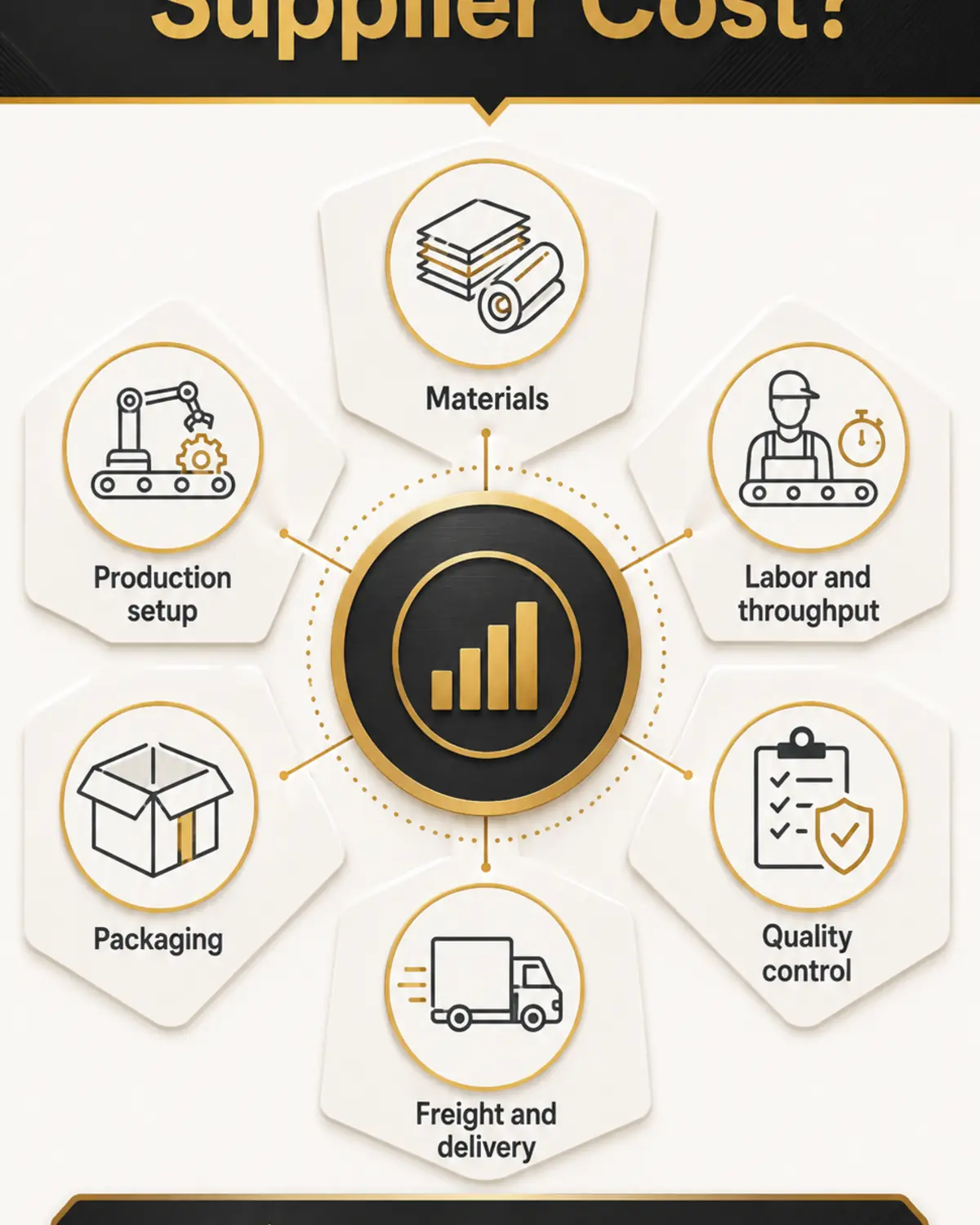
Effective volume negotiation is a cost conversation, not a demand for an arbitrary percentage. A supplier may save money when a larger order improves raw-material purchasing, spreads setup and tooling over more units, reduces production changeovers, fills a container efficiently, simplifies quality control, or makes labor planning more predictable. The same volume may create little saving if it requires many colors, small batches, multiple destinations, urgent releases, custom cartons, or long inventory holding. Ask which operating condition drives the price step and what change would create the next meaningful saving.
Ask diagnostic questions before making a price request
Which portion of the price is material, conversion, packaging, tooling, inspection, logistics, or supplier margin?
At what quantity does the production method, raw-material purchase, carton plan, or freight utilization change?
Would fewer SKUs, shared components, standard colors, or a longer lead time reduce setup and scrap?
Can releases be consolidated without creating excessive stock at the hotel?
Which costs are fixed per program, fixed per SKU, fixed per release, or variable per unit?
Separate legitimate cost from negotiating position
A buyer does not need access to the supplier’s full accounting records, but the commercial logic should be testable. If the supplier says a lower price requires a larger run, ask for the quantity breakpoint and the operational reason behind it. If freight is the constraint, compare carton optimization, consolidation, and shipping terms. If raw materials are volatile, negotiate a defined review formula or validity window rather than accepting an open-ended right to reprice. The objective is not to challenge every margin; it is to connect movement in price to a movement in cost, risk, or commitment.

Structure Volume Pricing as Conditional Tiers
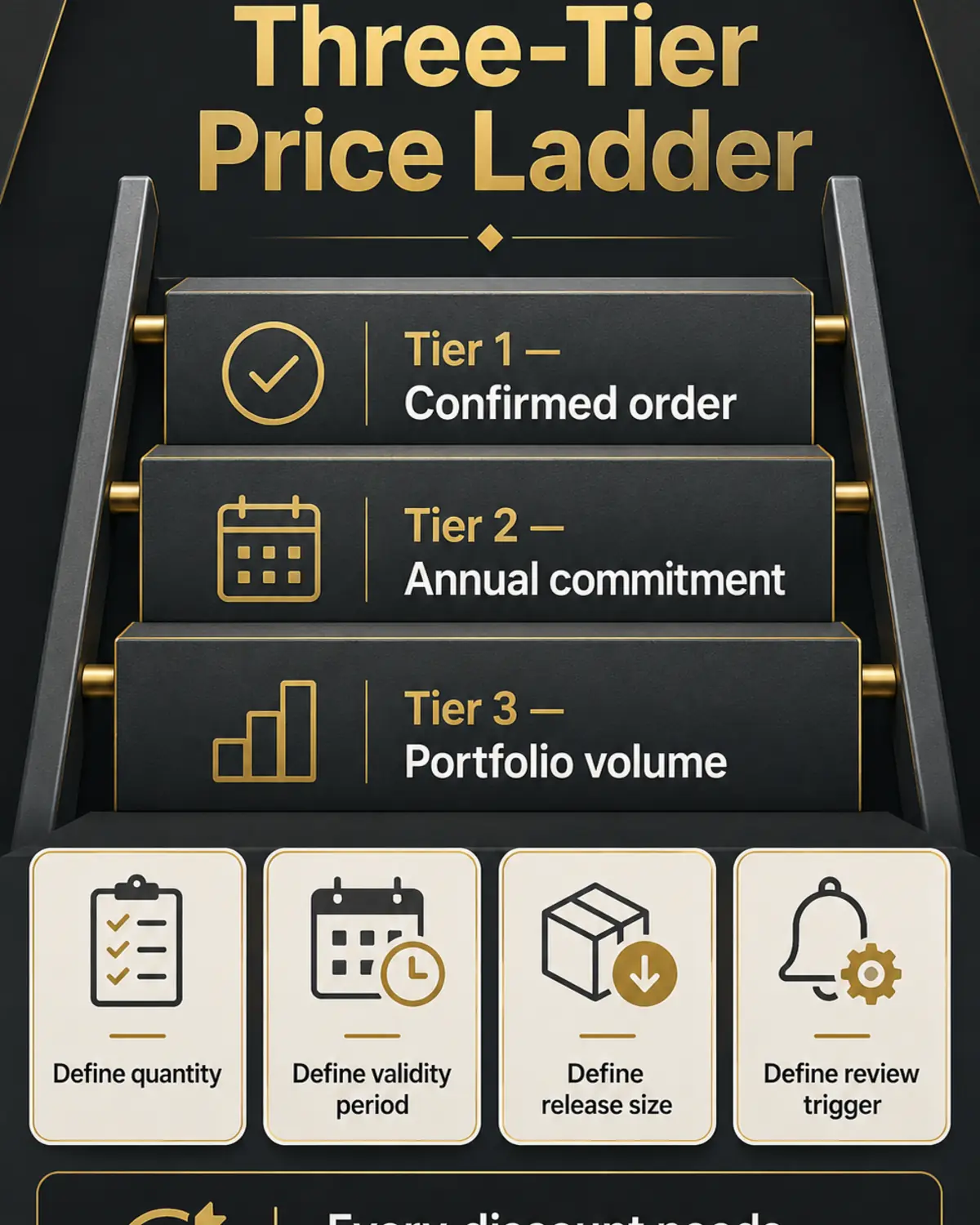
A single target price creates an argument; a conditional price ladder creates choices. Ask the supplier to quote several measurable tiers based on confirmed order quantity, annual commitment, portfolio volume, or release size. Each tier should state what quantity qualifies, how long the price remains valid, whether different SKUs can be aggregated, and what happens if the buyer under- or over-runs the commitment. This structure reveals the supplier’s economic breakpoints and allows the hotel to select a level it can genuinely support rather than claiming a headline volume that operations cannot deliver.
| Tier | Buyer commitment | Supplier response | Control needed |
| Tier 1: confirmed order | One approved purchase order with a defined quantity and delivery window. | Base compliant price and normal service conditions. | Specification, validity, delivery basis, and acceptance criteria. |
| Tier 2: annual commitment | A minimum annual quantity released through agreed call-off orders. | Improved unit price or rebate as cumulative volume is achieved. | Release minimums, tracking, shortfall treatment, and expiry. |
| Tier 3: portfolio volume | Aggregated demand across compatible properties or projects. | Best tier where standardization and planning reduce cost-to-serve. | Eligible entities, common specification, governance, and audit trail. |
Use conditional trades, not unilateral concessions
State proposals in an if-then format: if the hotel confirms the annual quantity by a fixed date, then the supplier applies the agreed tier; if releases are consolidated to a minimum quantity, then the freight or handling rate changes; if payment is made earlier, then the supplier offers a cash discount. This keeps the negotiation balanced and prevents a concession from becoming an unexplained permanent expectation.
Trade forecast visibility for production planning—not for an unconditional discount.
Trade specification standardization for lower setup cost—not for reduced quality.
Trade a longer agreement for price protection, review rules, and supply continuity—not for dependence without safeguards.
Trade earlier payment only when the cash benefit exceeds the hotel’s financing and liquidity cost.
Do not cross the inventory break-even point
A larger order can reduce unit price while increasing total cost through storage, handling, damage, obsolescence, design changes, cash tied up in stock, and inconsistent replenishment. Compare the savings from the next tier with the incremental cost and risk of carrying the additional quantity. For custom or trend-sensitive products, a smaller release under an annual framework may be more valuable than one oversized shipment. The practical objective is the lowest sustainable total cost at the required service level—not the deepest percentage discount printed on the quotation.

Negotiate the Full Value Package, Not Only Unit Price
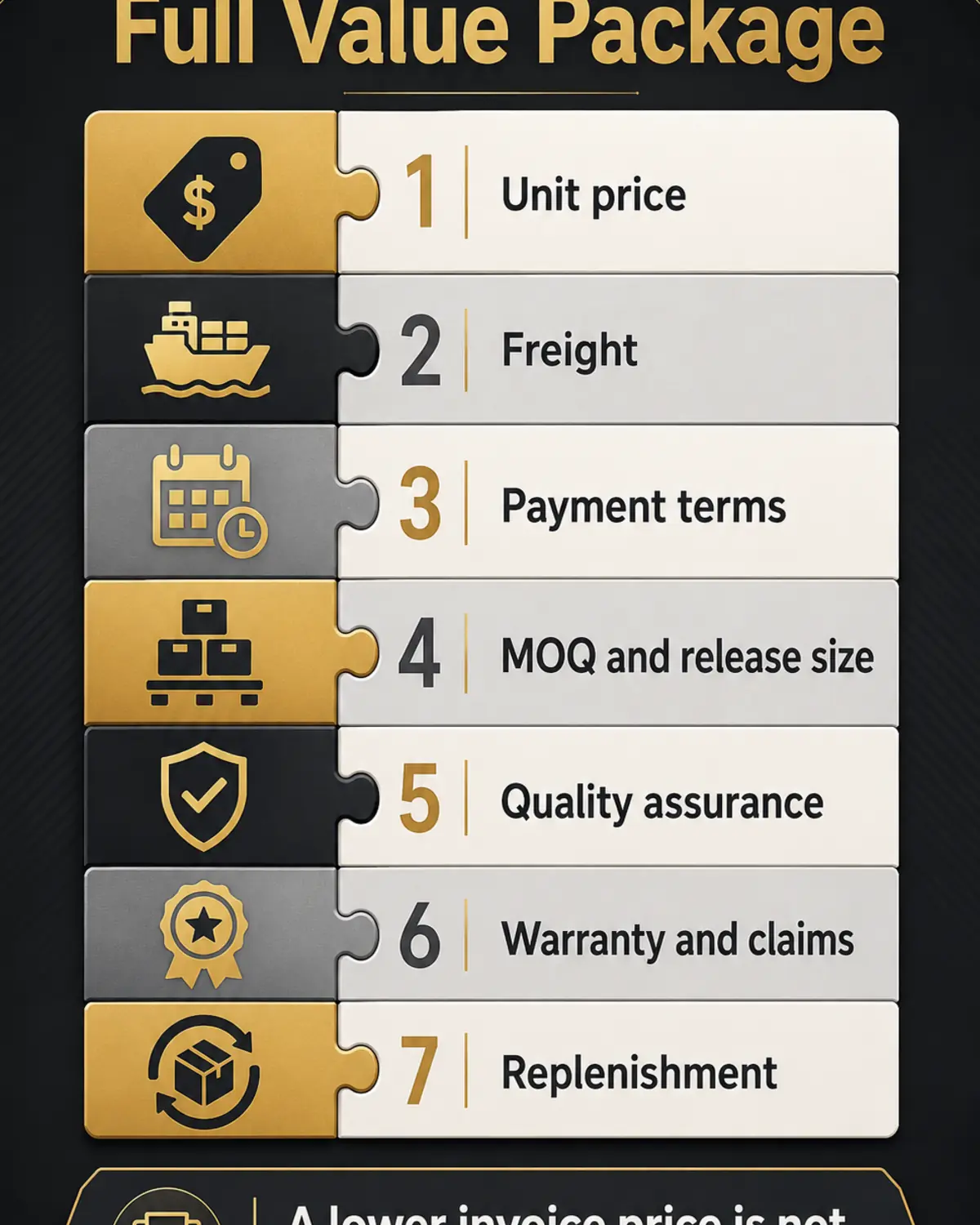
Hospitality suppliers can create value through more than the product price. Freight structure, payment timing, tooling ownership, sample credits, packaging efficiency, quality inspections, spare parts, warranty, claims response, replenishment continuity, and delivery scheduling all affect the hotel’s final cost and operational risk. Rank these variables before the negotiation: identify non-negotiable requirements, preferred outcomes, acceptable fallbacks, and the hotel’s walk-away position. Give each major variable an internal value so the team can compare trade-offs consistently. Then exchange lower-priority flexibility for higher-priority protection instead of forcing every discussion into a single unit-price demand.
Build a total-value agenda
| Variable | Possible buyer request | Possible buyer trade |
| Price and rebates | Tiered price, retroactive rebate, or fixed discount for achieved volume. | Reliable commitment, standardization, or consolidated releases. |
| Payment | Longer terms, milestone payments, or early-payment discount. | Faster approval, deposit, or documented payment schedule. |
| MOQ | Lower MOQ by SKU or permission to mix compatible variants. | Annual category commitment or fewer customization changes. |
| Logistics | Consolidation, optimized cartons, scheduled delivery, or clearer landed cost. | Flexible shipping window or full-container planning. |
| Quality | Control sample, inspection plan, defect remedy, and claim timeline. | Clear measurable acceptance standards and prompt evidence. |
| Continuity | Replacement stock, repeat-order consistency, and price review limits. | Longer framework agreement with performance review. |
Protect quality while reducing cost
Price negotiation should not reopen an approved specification silently. Require every value-engineering proposal to show the exact material, construction, dimension, performance, appearance, packaging, lead-time, and warranty differences. Approve the base specification first, then evaluate alternatives separately. For repeat orders, define whether the control sample, color standard, material grade, and packaging configuration remain binding. A lower price is useful only when the item continues to perform in the intended hotel environment.
Buyers managing multi-category packages can use the wholesale hotel supplies purchasing framework to check specification, MOQ, landed-cost, quality-control, logistics, and replenishment assumptions before final award.

Close the Agreement and Manage It After Award
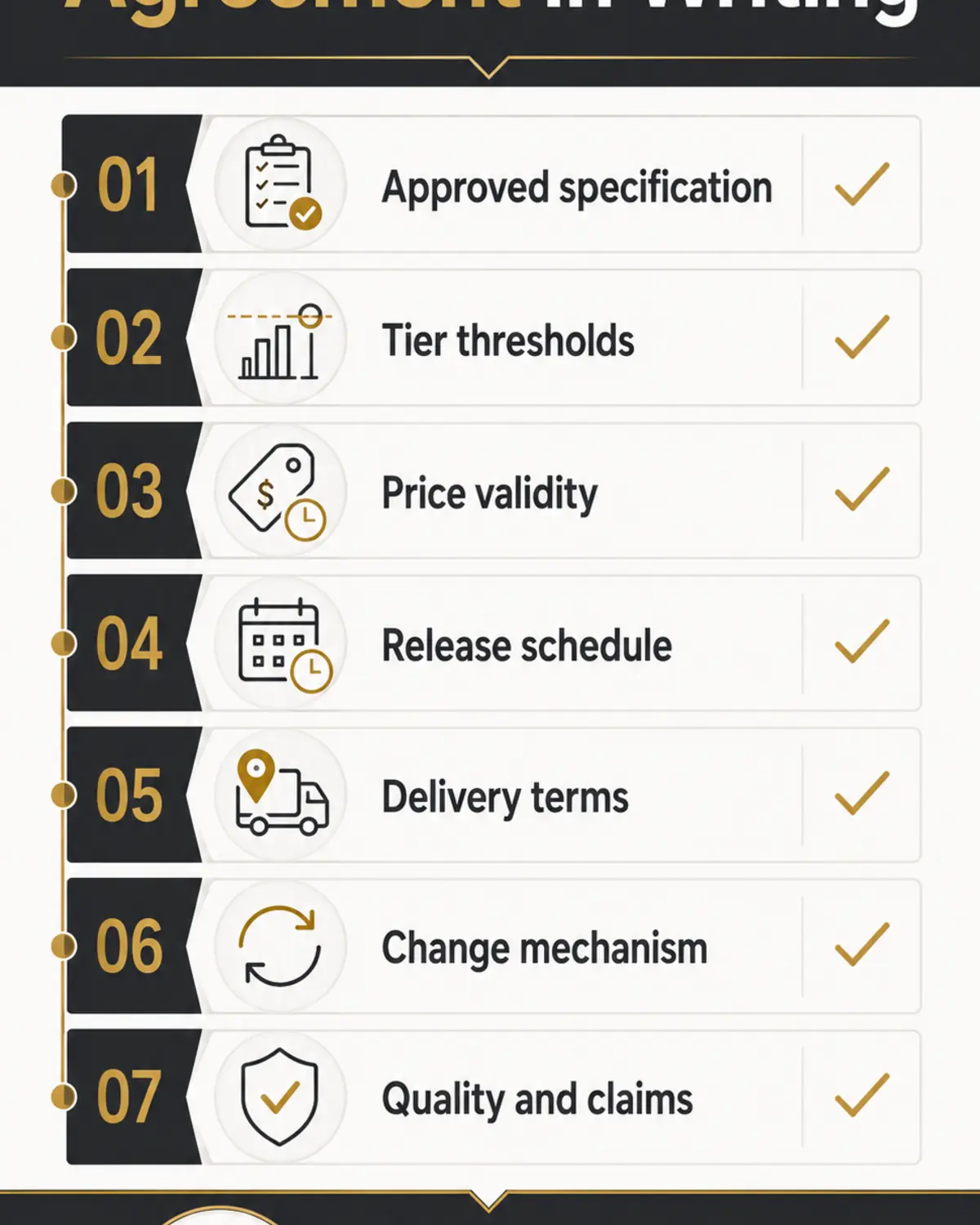
A successful meeting is not a commercial agreement until the terms are written, internally approved, and connected to the purchase process. Record the final specification, qualifying quantities, tier thresholds, unit prices, currency, taxes, delivery basis, quote validity, release schedule, payment terms, tooling, samples, quality controls, warranty, claims, and change mechanism. Identify which document controls if the quotation, purchase order, specification, sample, and framework agreement conflict. The hotel should also assign an owner to track cumulative volume and confirm that invoices apply the correct tier.
Use a disciplined negotiation sequence
Prepare objectives, priorities, authority limits, alternatives, and a walk-away position before the supplier meeting.
Confirm the common facts: specification, quantity, schedule, destinations, current quotation, and exclusions.
Ask questions about cost drivers and breakpoints before proposing a discount.
Offer conditional trades and summarize each provisional agreement as it is reached.
Review the entire package for internal consistency rather than closing each variable in isolation.
Issue a written recap, obtain authorized confirmation, and incorporate the terms into the governing documents.
Add review triggers and performance controls
Longer commitments require boundaries. Define when price may be reviewed, what evidence is required, how much notice must be given, and whether both upward and downward movements are recognized. Track delivered quality, on-time delivery, claim resolution, specification compliance, and replenishment performance alongside spend. A supplier that earns additional volume through consistent performance creates a healthier relationship than one protected by a commitment regardless of results.
When the scope is ready, submit the quantities, specifications, customization requirements, destination, and delivery timing through the KW Hospitality RFQ form. A complete request allows the sourcing team to evaluate realistic volume tiers, manufacturing options, quality controls, and logistics on one commercial basis.

Conclusion
The best volume-pricing agreement is not the one with the most aggressive headline discount. It is the one built on credible demand, a comparable specification, transparent commercial assumptions, and commitments that both parties can perform. Buyers gain leverage by showing suppliers how standardization, planning, release discipline, payment certainty, and portfolio coordination reduce cost or risk. Suppliers can then convert those improvements into defined pricing tiers and stronger service terms instead of protecting themselves against uncertainty. The result should remain workable when actual orders, deliveries, claims, and replenishment begin.
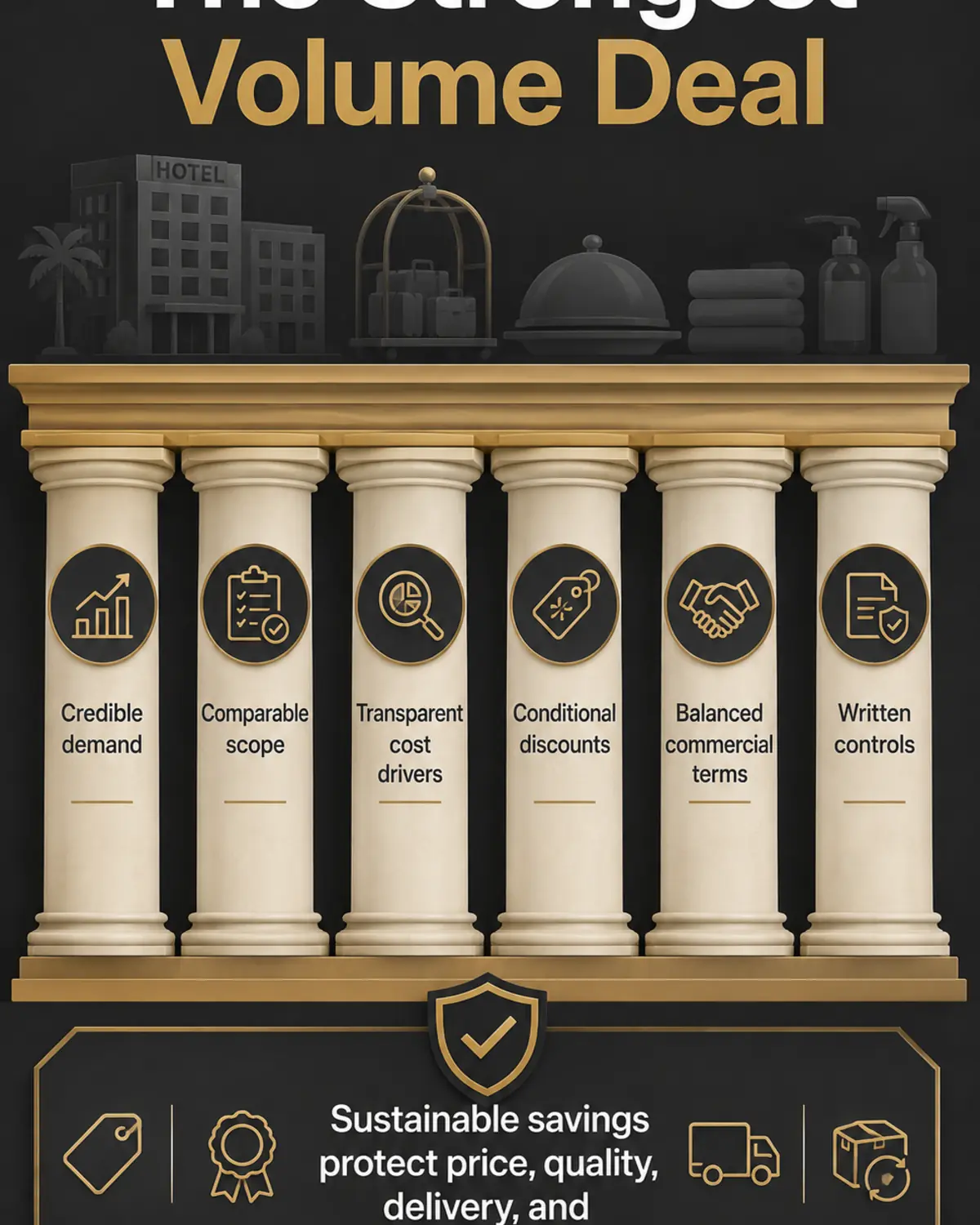
Before award, test the deal against total delivered and lifecycle cost. Confirm that freight, quality assurance, warranty, claims, replenishment, and price-review rules support the hotel’s operating needs. Then put every material term in the governing documents and monitor performance against the same baseline used in the negotiation. This approach produces savings that can survive production, delivery, receiving, and repeat ordering—not just savings that look attractive during quotation review.
Frequently Asked Questions
These questions address the practical issues that often arise when hotels, restaurants, management companies, and multi-property groups negotiate quantity-based pricing with hospitality suppliers.
How much volume is usually required to receive a discount?
There is no universal threshold. It depends on the product, material purchase, production setup, pack size, customization, release pattern, and freight economics. Ask the supplier for measurable price breakpoints and the operating reason for each breakpoint. Compare the saving with any additional inventory, storage, cash-flow, or obsolescence cost created by the larger commitment.
Should a hotel disclose its full annual forecast?
Share enough information to support planning, but label the confidence of each number. Separate confirmed, forecast, and optional volume, and state the assumptions behind the forecast. Do not present an aspirational portfolio total as a binding commitment. A staged agreement can provide planning visibility while reserving the best price for quantities actually committed or achieved.
Is it better to negotiate one large order or an annual agreement?
One large order may create production and freight efficiency, but it can increase inventory and cash exposure. An annual agreement with defined minimum releases can balance supplier planning with the hotel’s storage and consumption needs. The better structure depends on shelf life, customization, design risk, replenishment frequency, warehouse capacity, and the cost difference between the two options.
What can be negotiated if the supplier will not reduce unit price?
Consider freight, payment terms, setup charges, sample credits, packaging, MOQ, mixed-SKU rules, inspection, spare parts, warranty, claims timelines, replenishment stock, price validity, and delivery scheduling. These terms can reduce total cost or operational risk even when the unit price remains unchanged. Value each concession before trading it so that an apparently generous term does not create a larger hidden cost.
How should price increases be handled in a long-term agreement?
Define the review date, notice period, eligible cost drivers, evidence, calculation method, and approval process. Limit changes to the affected cost component and require the same mechanism to recognize decreases where appropriate. The agreement should also state whether open purchase orders, confirmed releases, or goods in production are protected from a later increase.
Can different hotel properties combine their volume?
Yes, when the properties can use compatible specifications, ordering rules, payment arrangements, and delivery plans. Aggregation is less valuable when every property requires different designs, small releases, separate contracts, or urgent destinations. Define which entities qualify, how cumulative volume is recorded, who governs specification changes, and when the portfolio moves to a higher tier.