
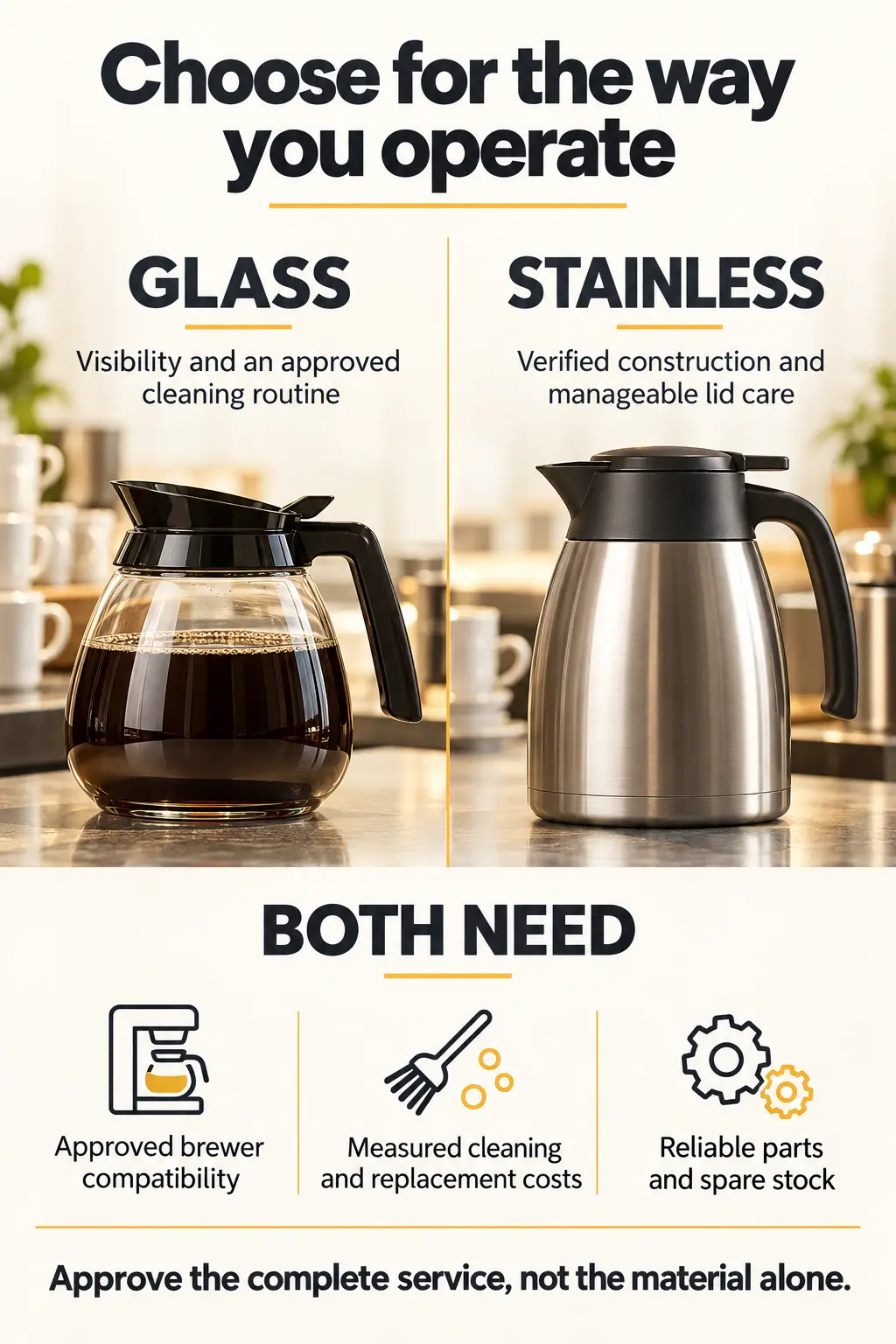
Glass coffee carafes can suit extended-stay hotels that want easy visual inspection and a straightforward, approved washing routine. Stainless steel carafes can reduce exposure to broken glass, while insulated stainless models can hold coffee without continuous heat from a warming plate. Neither material automatically delivers the lowest operating cost. The better choice is the compatible carafe that staff can clean, inspect, replace, and return to service reliably.
Start by separating three products: a conventional glass drip-coffee carafe, a non-insulated stainless carafe, and an insulated thermal carafe. Stainless describes a material; thermal describes a heat-retaining construction. A metal exterior can even conceal a glass liner. Those distinctions affect breakage, cleaning access, heat retention, and whether a replacement belongs on the existing brewer at all.
Extended-stay guestrooms make this decision different from a staffed breakfast station. Guests may prepare several batches between housekeeping visits, leave coffee residue overnight, or move the carafe around a kitchenette. Departure cleaning may uncover heavier buildup than a routine stayover service. A purchasing decision therefore needs to account for actual use and the hotel’s service schedule, alongside the initial equipment budget.
This guide focuses on reusable guestroom coffee carafes, replacement support, and housekeeping work. It does not rank brands or assume that a product intended for home use is approved for a hotel. If your property is reconsidering batch brewing altogether, the separate guide to hotel single-serve coffee makers and supply lock-in addresses that equipment decision.
Use the comparison below to narrow the specification, then test the actual candidates with the people who will service them. The cost example uses hypothetical US-dollar inputs, not supplier quotations, observed hotel performance, or market averages. Its purpose is to show how a small cleaning-time difference can change the result.
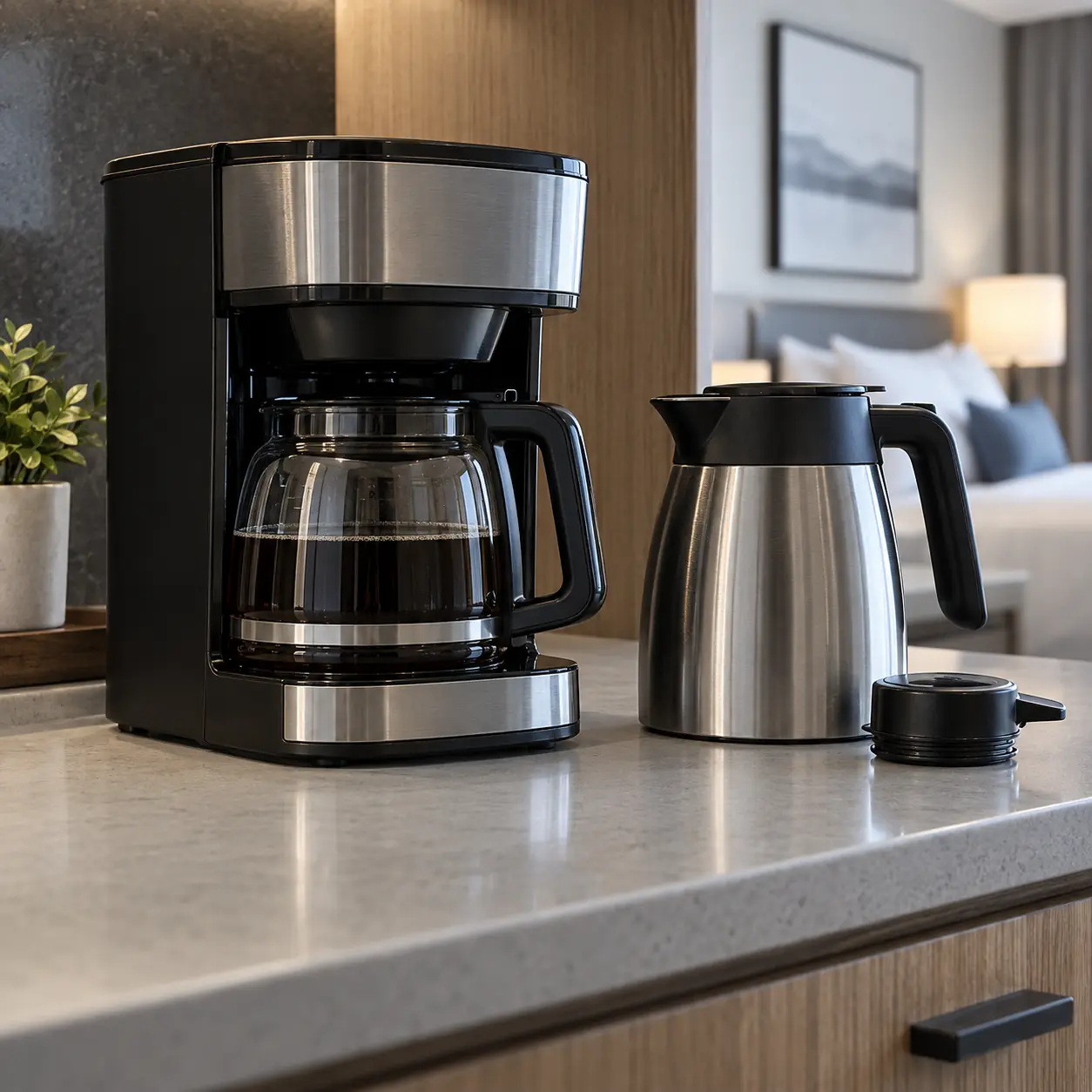
Match the Carafe Construction to the Brewer and Guest Routine
Choose the complete brewer-and-carafe combination before choosing a material. A glass carafe is transparent, but it introduces a breakable vessel into the room. A stainless body avoids that particular glass-body failure mode only when the interior is also metal. An insulated carafe adds a different heat-holding system and often a more elaborate lid. For an extended-stay property, the useful comparison is how each construction supports the intended batch size, serving interval, cleaning method, and replacement route. A familiar appearance or matching advertised cup count does not establish compatibility with an existing coffee maker.
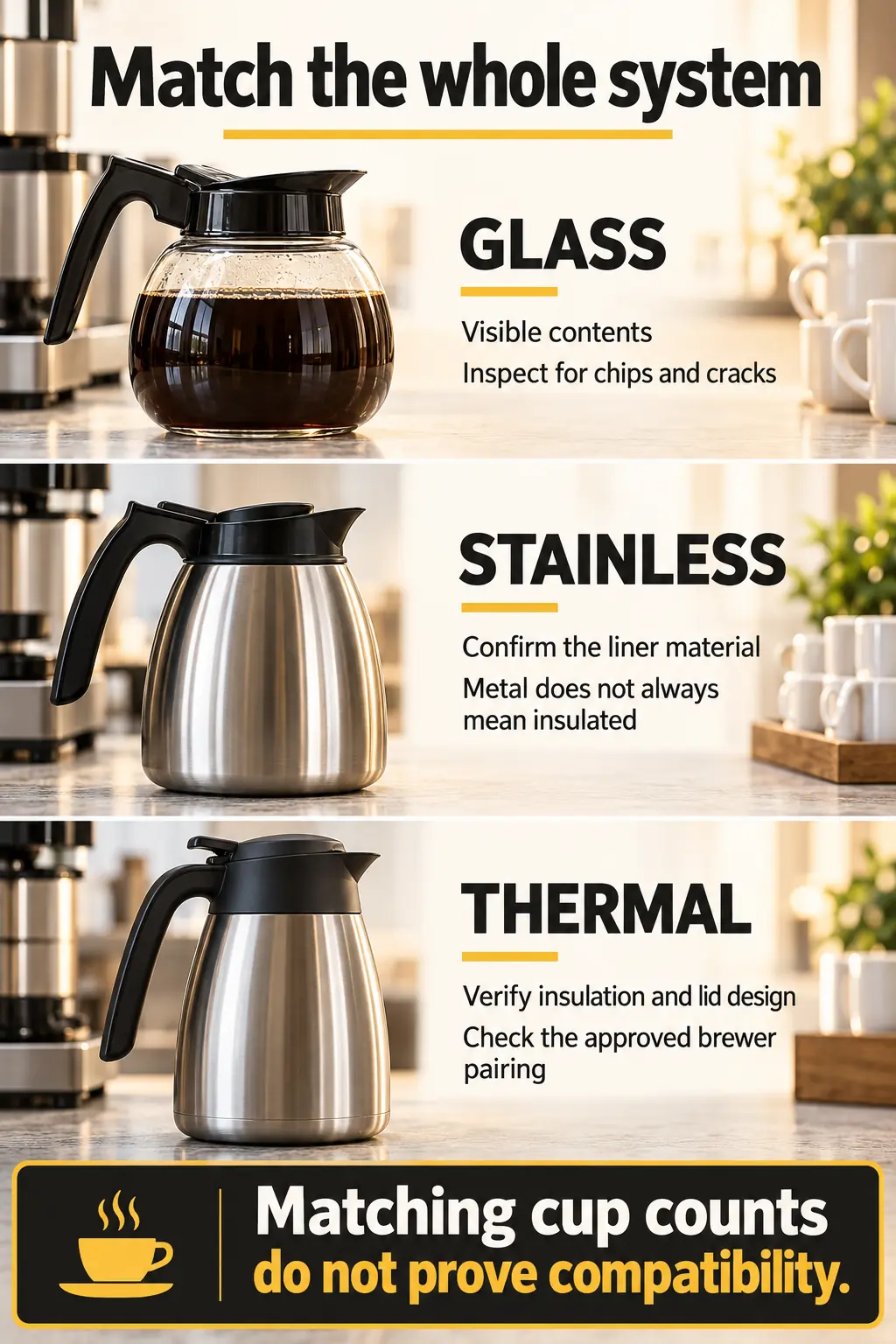
Compare the actual constructions
| Decision factor | Conventional glass | Non-insulated stainless | Insulated stainless with metal liner |
| Seeing remaining coffee | Visible through body | Usually requires opening | Usually requires opening |
| Heat holding | Commonly paired with a warming plate | Depends on the approved brewer | Insulation limits heat loss; performance varies |
| Body damage to inspect | Chips, cracks, damaged rim | Dents, distortion, damaged rim | Dents, distortion, possible insulation damage |
| Cleaning access | Opening and lid design matter | Opening and lid design matter | Opening, stopper, channels, and seals matter |
| Replacement decision | Exact approved carafe and lid | Exact approved carafe and lid | Exact approved carafe, lid, and brewer pairing |
| Dishwasher suitability | Model-specific | Model-specific | Model- and component-specific |
This comparison describes typical design differences, not a universal product specification. Confirm the liner material, insulation type, and permitted use in writing. A stainless exterior is insufficient evidence that a thermal server contains no glass.
Capacity and fit need separate checks
Specify usable capacity in milliliters or liters as well as the supplier’s cup count. Then verify overall height, base diameter, handle clearance, lid profile, and the way the carafe interacts with the brew basket’s drip-stop mechanism. A replacement that sits under the basket can still fail to open the outlet correctly or catch the full flow.
Do not substitute a thermal carafe on a warming-plate brewer unless that exact combination is approved. Compare both a full batch and the smaller batch guests are likely to make. For thermal candidates, evaluate the same starting temperature, fill volume, room conditions, and serving interval; follow any specified preheating procedure. Opening the lid and pouring repeatedly changes the test conditions. A catalog heat-retention claim is not a promise of the same result from a partly filled guestroom carafe.
If compatibility information is incomplete, contact KW Hospitality about sample requirements with the brewer model and photographs of the existing carafe and lid. Ask whether a suitable sample and documented replacement pairing can be supplied before discussing a bulk substitution.
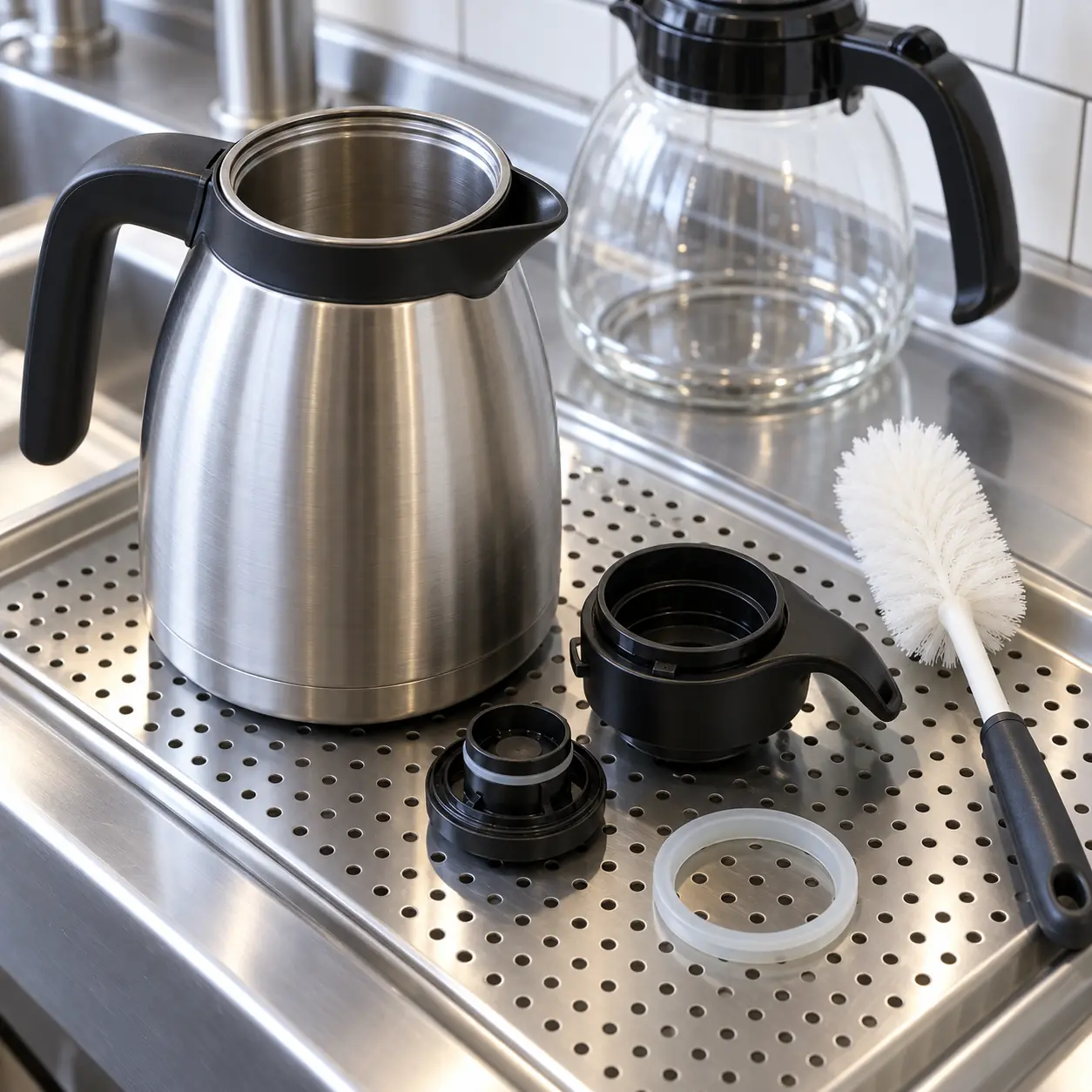
Compare the Whole Cleaning Cycle, Including the Lid
Cleaning cost depends on the complete reset, not just the time needed to rinse the vessel. Transparent glass helps staff see residue, while an opaque body requires deliberate interior inspection. Either construction can have a difficult spout or lid. Thermal stoppers may add channels and seals that need separate attention. In an extended-stay hotel, compare departure cleaning, stayover cleaning, and any exchange service separately because their workload may differ substantially. The preferred design is the one your team can service consistently using the selected model’s instructions, available equipment, and an approved hotel hygiene procedure.
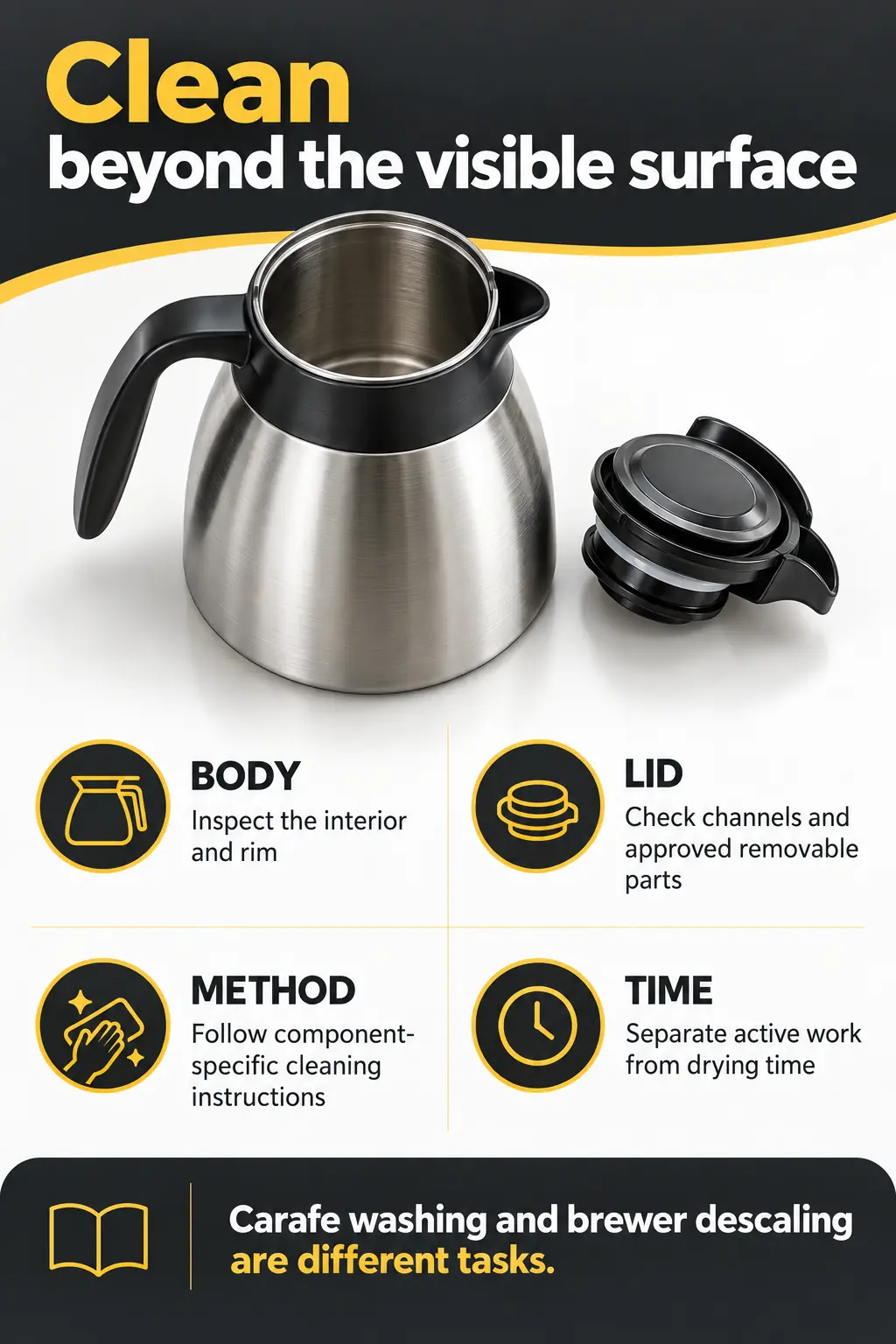
Distinguish washing from brewer descaling
Carafe washing removes beverage residue from the vessel and removable parts. Brewer descaling addresses mineral deposits in the machine. Completing one task does not demonstrate that the other is finished. Keep their instructions and work records separate, and use only the products and methods approved for the relevant component.
Check the manual for the carafe body, lid, stopper, and removable seals individually. Permission to wash a glass body in a dishwasher does not establish permission for every lid or for the hotel’s commercial wash cycle. Likewise, stainless construction alone says nothing about dishwasher suitability. Where instructions call for hand washing, include that work in the comparison rather than assuming an existing dishwashing line can absorb it.
Make the hidden work visible
During a sample trial, observe residue removal, access to the interior, permitted lid disassembly, rinsing, inspection, drying, reassembly, and return to the room. Record active staff time separately from soaking or drying time. Passive time may require more circulating stock even when it adds little labor. Include transport between guestrooms and the wash area if centralized cleaning is proposed.
Use a soft, appropriately sized cleaning tool and the approved cleaning agent. Avoid improvised abrasive treatment; do not mix chemicals. Inspect the rim, handle attachment, lid seating, and accessible pouring channels. Complete any required sanitizing step using the hotel’s approved procedure and compatible products. Appearance alone does not verify hygiene. Let components dry as directed before reassembly and protected storage.
Glass requires protection from sudden temperature changes: do not put a hot vessel on a cold or wet surface. For an opaque thermal carafe, check the interior under adequate light rather than judging only the polished exterior. Persistent residue, inaccessible buildup, leakage, or a damaged component should trigger removal from service and review, not repeated cosmetic polishing.
Plan for use between housekeeping visits
A guest’s rinse should not replace the hotel’s verified reset before the next occupancy. Provide simple, model-specific use and care information and a clear way to request a clean replacement. If staff cannot complete the required cleaning safely and consistently in the kitchenette, evaluate a controlled exchange arrangement. That decision carries transport, drying-space, and spare-stock costs, which belong in the purchasing model.
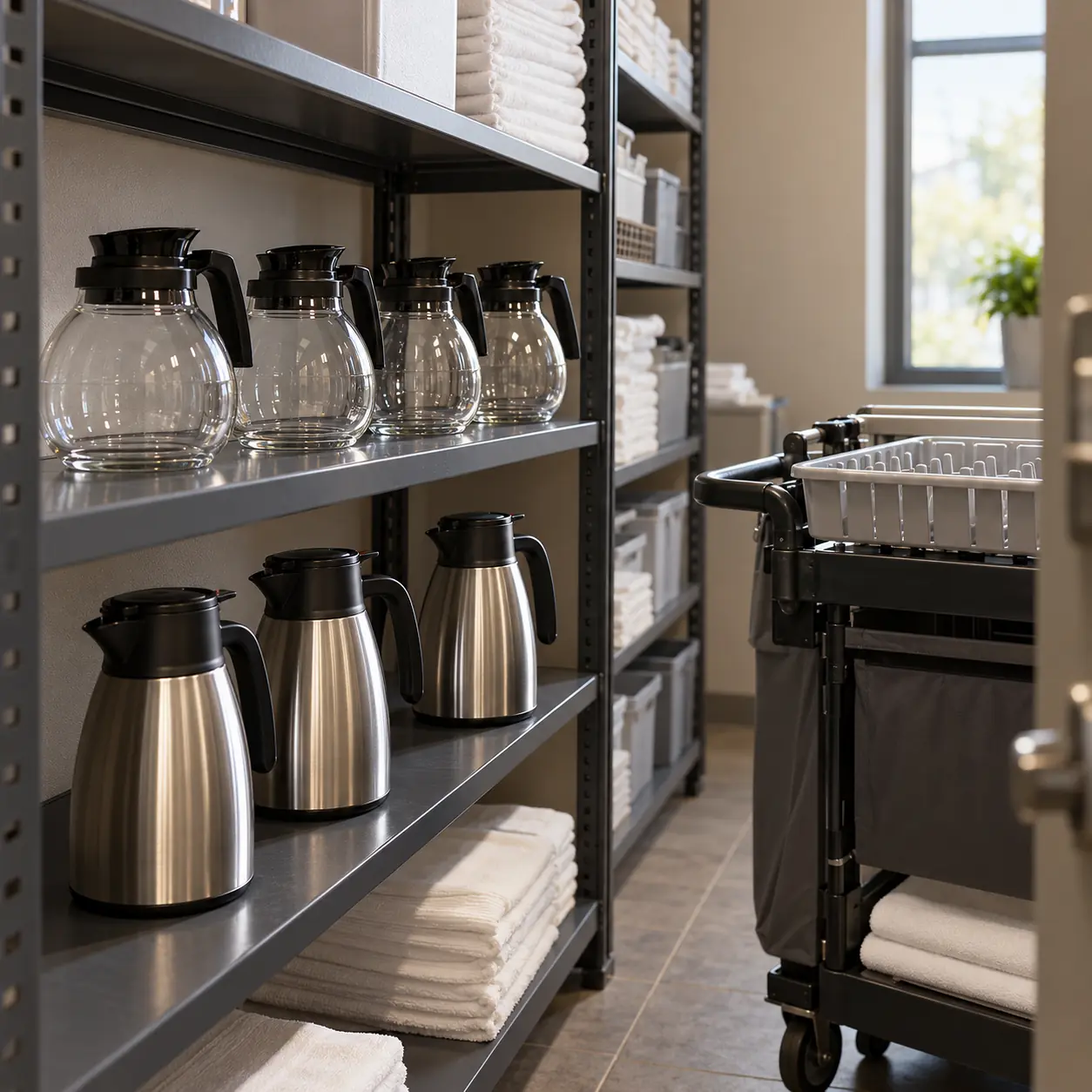
Calculate Replacement and Cleaning Cost on the Same Basis
Compare candidates over the same period, room inventory, and service scope. Replacement purchases are only one part of the cost: active cleaning time, lids and seals, freight, and backup stock can change the result. Count actual cleaning events instead of assuming that every occupied night creates a staff cleaning cycle. Longer stays can reduce departures without reducing coffee use. The calculation below deliberately separates initial purchase, annual replacements, and cleaning labor so a buyer can see which assumption drives the decision and replace it with property-specific evidence before approving an order.
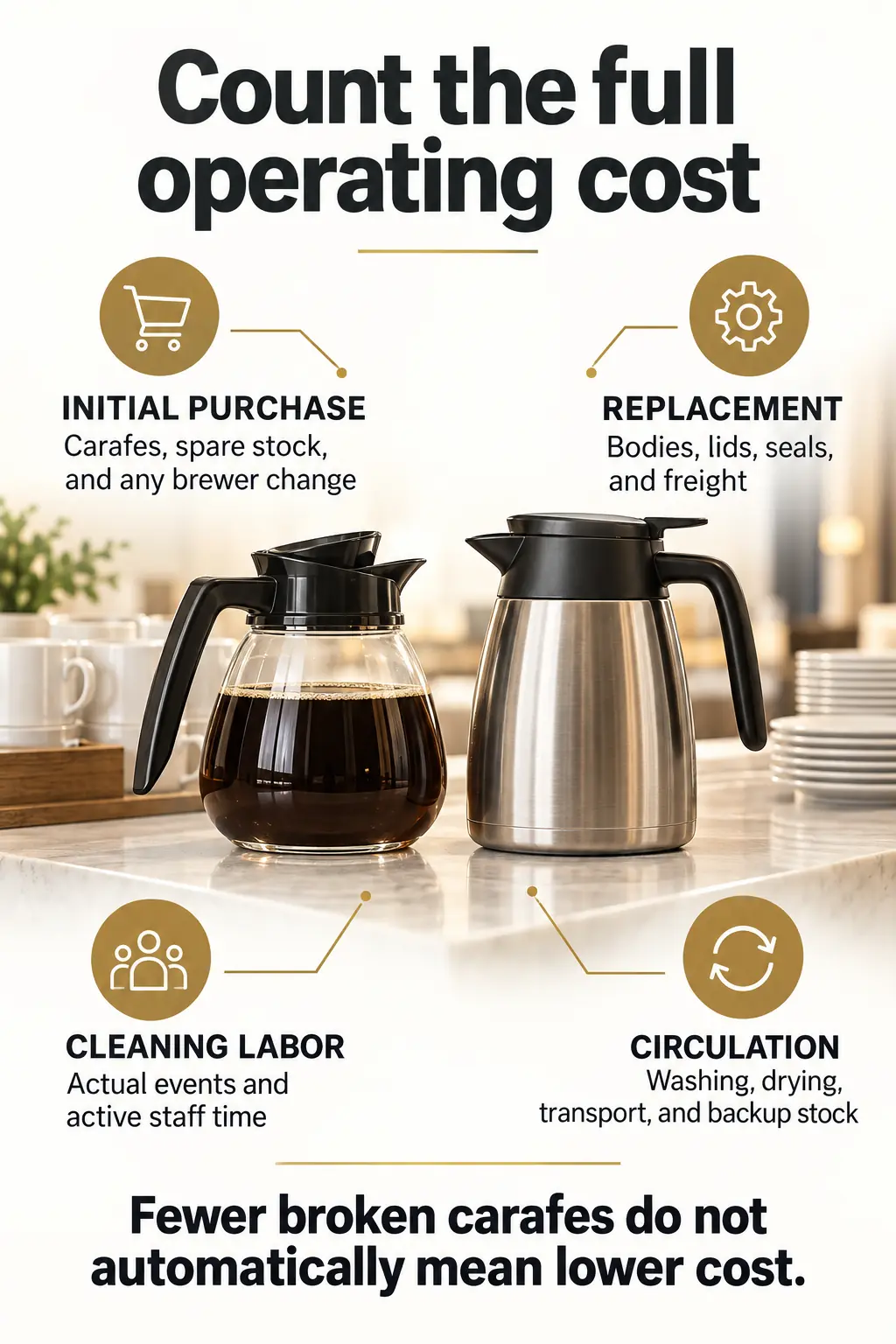
A practical annual cost model
Annual recurring carafe cost equals replacement bodies and complete carafes, plus separately purchased parts, plus cleaning-event count multiplied by active minutes per event and loaded hourly labor cost divided by 60, plus incremental cleaning supplies, utilities, freight, and handling.
Use a loaded labor rate that includes the employment costs your hotel normally assigns to this work. Count a replacement event once: if a new carafe includes its lid, do not add the same lid again as a separate part. Define whether an observed loss includes breakage, missing items, damaged handles, failed seals, or items retired after inspection.
For a new installation, add opening stock and any different brewer cost. For an existing fleet, distinguish sunk purchase costs from the cash required to switch. A stainless carafe that needs a new brewer is an equipment-conversion decision, not simply a more expensive replacement pot.
Worked example: fewer replacements can still cost more
Assume 100 equipped guestrooms and 4,000 staff cleaning events per year. Both candidates are assumed compatible with their approved brewers; brewer costs are equal and omitted. Every value below is hypothetical. The stainless candidate is an insulated model with a metal liner. The example counts 100 initial carafes but excludes spare stock, parts, cleaning supplies, utilities, freight, taxes, and service disruption for both options; price those separately before making a purchase.
| Annual comparison input or result | Glass candidate | Insulated stainless candidate |
| Initial carafes | 100 | 100 |
| Landed cost per carafe | $18 | $42 |
| Initial carafe purchase | $1,800 | $4,200 |
| Replacement events per year | 30 | 10 |
| Annual replacement purchase | $540 | $420 |
| Staff cleaning events per year | 4,000 | 4,000 |
| Active minutes per event | 1.5 | 2.0 |
| Loaded labor cost per hour | $24 | $24 |
| Annual cleaning labor | $2,400 | $3,200 |
| Recurring subtotal: replacements + labor | $2,940 | $3,620 |
| First-year subtotal: initial purchase + recurring | $4,740 | $7,820 |
In this scenario, stainless saves $120 in annual replacement purchases but adds $800 in cleaning labor. Its recurring subtotal is $680 higher, before the excluded costs. This is a sensitivity example, not evidence that stainless is generally more expensive.
At 4,000 cleaning events and $24 per hour, the $120 replacement saving covers only 0.075 extra minute, or 4.5 seconds per cleaning event. If the actual stainless reset adds less time than that, the recurring comparison improves; the additional initial purchase still needs separate consideration. Conversely, an easy-clean stainless design or costly glass incidents could reverse the result. Test the assumption that changes the decision most, rather than debating the material in isolation.
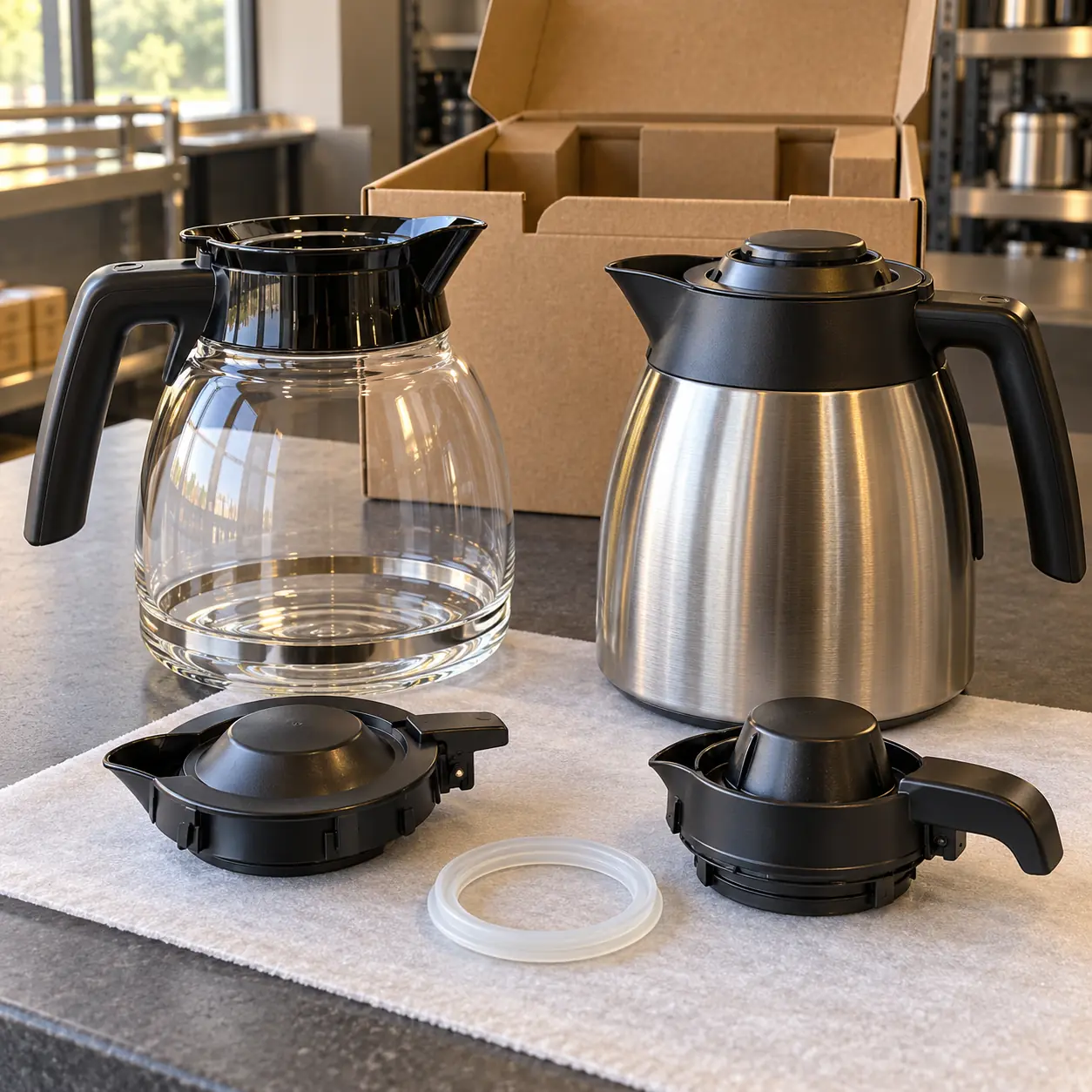
Control Replacement Risk Before Standardizing the Fleet
Reliable replacement support can matter more than a modest difference in purchase price. A durable body is of limited value if a missing lid leaves it unusable or the only approved replacement takes too long to arrive. Before standardizing, connect the supplier’s exact part numbers to the brewer models in service and evaluate how housekeeping will identify, withdraw, and replace a failed item. Use a small operational trial to test usability and cleaning access, while recognizing that a short trial cannot establish long-term failure rates. Keep fleet history and supplier support commitments alongside the sample results.
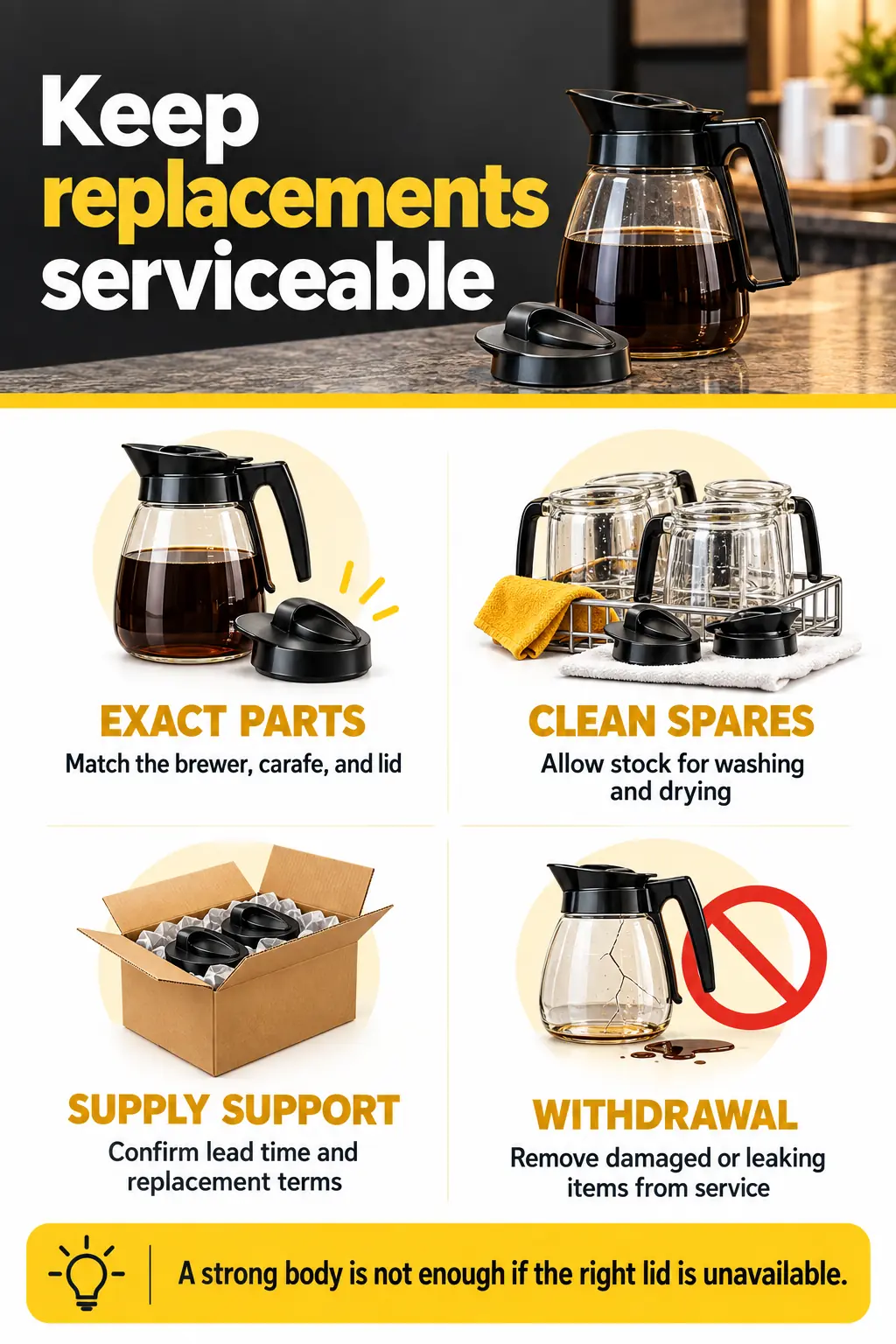
Distinguish repairable parts from reasons to retire a vessel
Remove cracked or chipped glass and any carafe with a loose or compromised handle from guest use. For stainless models, assess dents by their effect on stability, fit, pouring, cleaning access, and any insulated construction; a cosmetic mark and a distorted base are different problems. Leakage or unexplained loss of heat retention requires review of the correct lid, seal, assembly, and vessel condition. Do not assume every heat-retention complaint proves vacuum failure.
Replace serviceable parts only where the manufacturer provides the part and procedure. Avoid improvised handle repairs, generic stoppers, or altered lids. Replacing an inexpensive gasket can be sensible, but only if the correct part is available, staff can reinstall it reliably, and the restored assembly passes the applicable checks.
Size spare stock around the actual service route
Separate stock for replacement failures from stock circulating through washing and drying. For planning, replacement demand during replenishment lead time equals observed daily replacement demand multiplied by the supplier’s lead time in days. Add a buffer for variability, then add any clean exchange units needed to keep rooms supplied while used units are being processed. Use this as a planning method, not a universal spare percentage.
Record the exact brewer and carafe part numbers, compatible lids, approved alternatives, landed price, order quantity, carton protection, lead time, and commercial-use warranty conditions. Do not interpret a general warranty as automatic coverage for broken glass, loss, wear, or misuse. Keep an accepted sample and the cleaning instructions available to staff so later deliveries can be compared with the approved configuration.
Trial the routine and request comparable offers
Include representative room layouts and staff from more than one shift. Observe full and partial batches, pouring into the supplied mugs, lid handling, complete cleaning, drying, and replacement retrieval. Agree on unacceptable leakage, unstable placement, inaccessible residue, and compatibility failures before choosing the preferred sample. Track missing parts and guest requests during the pilot; use longer-term fleet records for reliability assumptions.
When the specification is ready, request a quotation for hotel coffee carafes and replacement support. Include the room count, brewer models, usable capacity, required liner and insulation construction, cleaning method, initial and spare quantities, destination, and required delivery date. Ask for separate pricing for carafes, lids, seals, samples, and freight where applicable, together with written compatibility and replenishment terms. This gives the supplier a defined requirement and makes offers easier to compare.

Conclusion
Choose glass when its approved cleaning routine, visibility, replacement availability, and measured operating cost fit the property. Choose stainless when the specified construction offers a useful reduction in glass exposure or the required heat-holding performance, with acceptable cleaning access and parts support. Neither choice should bypass compatibility approval or inspection. For an extended-stay hotel, the strongest purchasing case combines a practical room trial with actual cleaning-event counts, active labor measurements, and replacement records. That evidence explains whether a higher purchase price buys a service improvement the property can sustain.
Standardize the exact approved combination, retain the sample and instructions, and revisit the decision if the brewer, lid design, service schedule, or replacement supply changes. A carafe program succeeds when clean, functional vessels remain available to guests throughout the stay.
Frequently Asked Questions
Should every room use the same carafe?
Standardization can simplify stocking and staff training when the rooms use the same approved brewer. A mixed fleet may need separate, clearly identified carafe families. Do not force one apparently universal pot across incompatible machines; standardize within verified combinations and make the replacement location easy for staff to identify.
Does a stainless finish mean the carafe is shatterproof?
No. A stainless exterior can surround a glass liner, and plastic lids or handles can still be damaged. Specify the body, liner, and insulation construction separately. Even an all-metal vessel should not be described as indestructible or returned to use automatically after an impact.
Is a stained carafe always ready for replacement?
No. Residue that can be removed using the approved method is different from damage or inaccessible contamination. Clean and inspect the complete assembly. Withdraw it if the required cleaning cannot be completed, a surface or component is damaged, or the manufacturer’s criteria require replacement. A stain disappearing does not by itself verify hygiene.
What if the thermal carafe performs poorly with a small batch?
Repeat the comparison under consistent conditions, including the approved preheating method, fill volume, lid position, and serving interval. A large vessel tested nearly full may behave differently with the small amount a guest actually brews. Consider a better-matched capacity or another approved system if typical use does not meet the hotel’s service requirement.
Can the hotel’s electricity savings justify a thermal conversion?
Possibly, but calculate them from the actual brewer models and their operating patterns. Removing a warming-plate function does not establish a fixed saving across different machines. Account for brew cycles, automatic shutoff, standby behavior, and any additional preheating. Keep this equipment-level comparison separate from the carafe-only cost example.
Are fewer replacements enough to make stainless the greener choice?
No single replacement count establishes the environmental result. Service life, manufacturing, washing, transport, parts replacement, and the actual end-of-life route all matter. Compare documented operating conditions and locally available recovery options; avoid an environmental claim based only on glass or stainless as a material label.
References
- Zojirushi — Thermal Serve Carafe AHGB-10SE/10D
- Hamilton Beach — 8 Cup Programmable Coffee Maker with Thermal Carafe — Model 46240
- Zojirushi — Stainless Steel Vacuum Carafe SH-HC10/15
- Hamilton Beach Commercial — Coffee Maker Use and Care Guide — Document 840290600