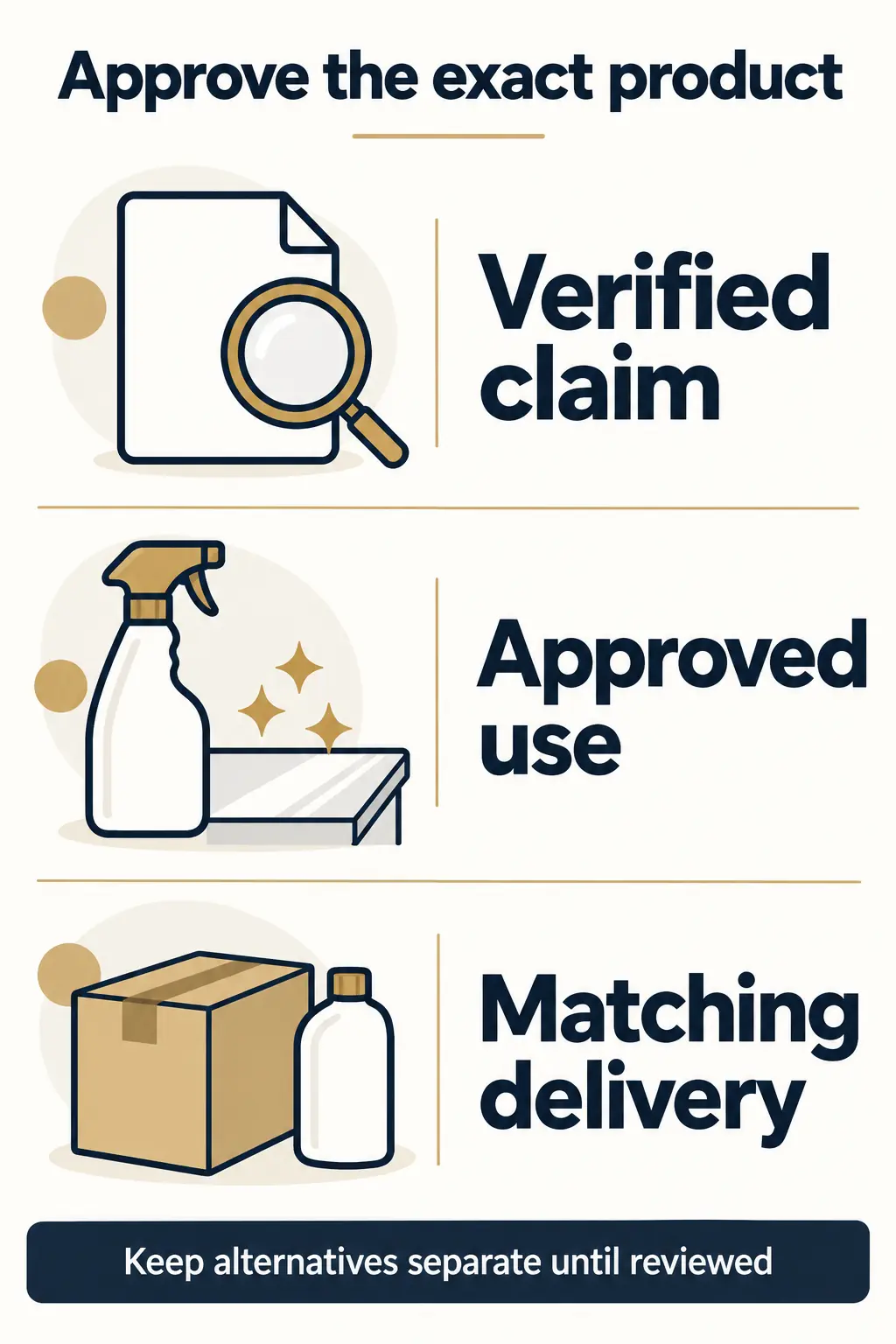
Verify a Safer Choice claim by finding the product in EPA’s current certified-product listing and establishing that the cleaner being offered is the product covered by that record. A familiar brand, a distributor’s green icon, or a photograph of a different bottle does not complete that check. For hotel purchasing, the useful outcome is a documented connection between the official listing, the supplier’s quotation, and the container that will arrive at receiving.
Start with EPA’s Search Products that Meet the Safer Choice Standard. Then compare the product identity with current manufacturer information and ask the supplier to explain unresolved differences. Treat an incomplete match as an unverified claim while you obtain clarification. It does not, by itself, establish that the cleaner is unsafe or that the supplier has deliberately misrepresented it.
This distinction matters when a hotel changes distributors, standardizes purchasing across properties, or accepts an alternative during a stock shortage. A quotation may use a distributor item number, while the bottle carries a manufacturer product code. A purchasing description may omit the fragrance or concentrate designation. These are practical identification problems: some are straightforward to resolve, while others reveal that the proposed substitution needs a fresh review.
The workflow below separates claim verification from operational approval. Establishing the listing match answers whether the Safer Choice claim is supported for the offered product. The hotel must still decide whether that product fits its cleaning tasks, surfaces, dispensing equipment, staff instructions, and destination-market requirements. The suggested records, approval decisions, and receiving controls are hotel procurement practices, not a claim that EPA requires hotels to follow this particular checklist. Used consistently, they help purchasing and housekeeping approve the same item and recognize when a delivery no longer matches that approval.
What Safer Choice Verifies for Hotel Buyers
Safer Choice is a voluntary EPA program that reviews ingredients and other product requirements, including performance, pH, packaging, and volatile organic compounds. EPA’s Learn About the Safer Choice Label explains that certified products must meet the program’s criteria and perform comparably to conventional products in their category. For a hotel buyer, this provides a defined basis for evaluating the environmental and human-health attributes covered by the program. It does not remove the need to identify the exact product or determine whether it works within the property’s approved cleaning process.
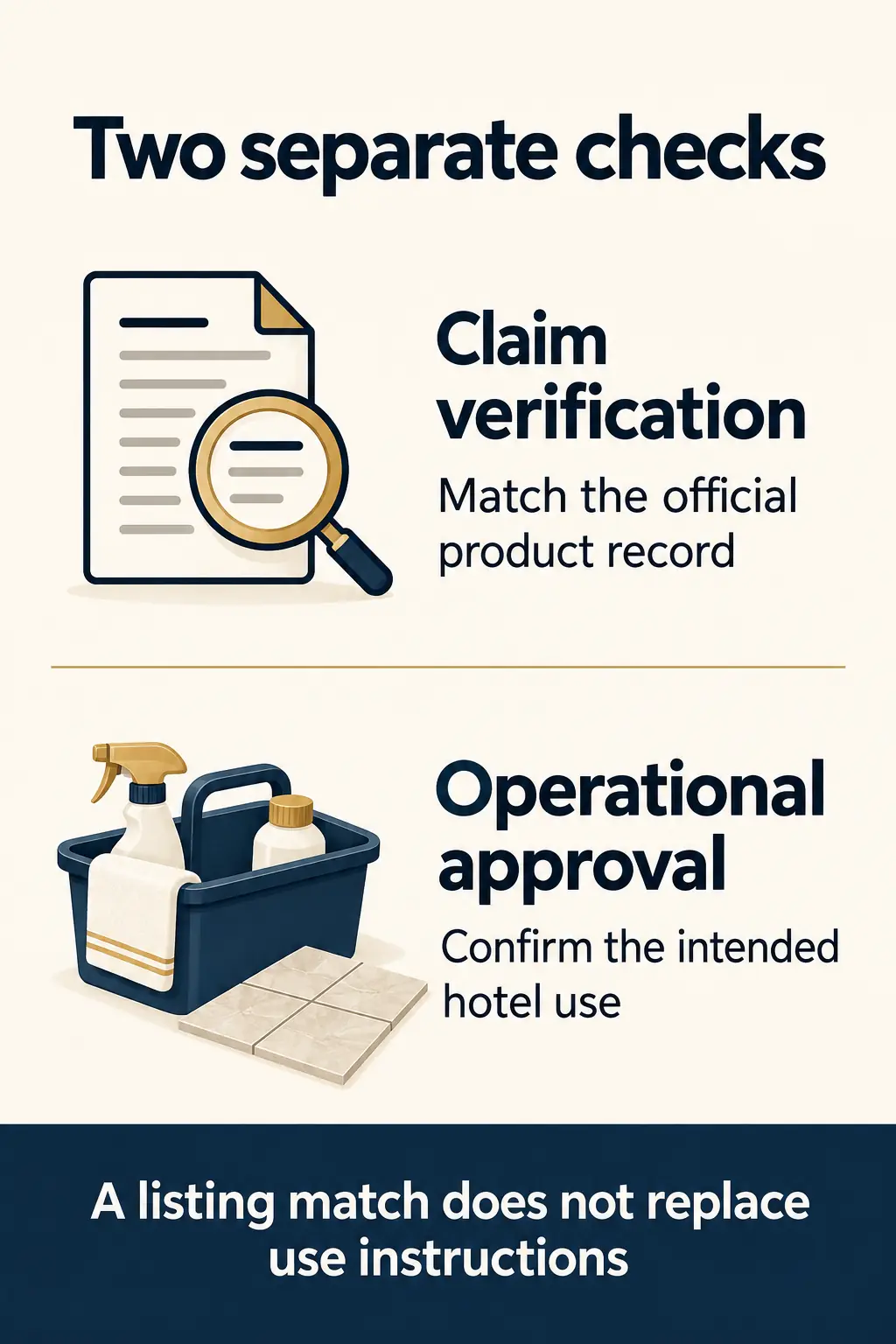
Keep the claim and the purchasing decision separate
Use two approval questions. First, “Have we established the claimed certification for the offered product?” Second, “Have we approved that product for the intended hotel task?” Record both answers. A clear listing match can still leave a dispenser, surface, packaging, or training question unresolved. Conversely, a familiar cleaner that performs acceptably cannot satisfy a contractual Safer Choice requirement merely because staff like using it.
Avoid describing certification as a promise of zero risk, suitability for every surface, or freedom to disregard handling instructions. A supplier’s sustainability presentation should support a precise purchasing description, not replace it.
The same discipline applies to brand coverage. Evaluate the particular item on the quotation instead of assuming that every cleaner from the company carries the same certification. Where a hotel buys several products from one range, use separate approval records. This makes it easier to identify which item needs attention when a supplier changes a name, formula, or stock code without reopening unrelated purchasing decisions.
How to Match the Offered Product to EPA’s Listing
Collect the quotation, a readable current label, and the manufacturer’s product information before searching. Use the product name and company to locate a candidate in EPA’s official listing, then examine its product type and other displayed attributes. If the full name gives no result, try a distinctive part of the name or the company and inspect the candidates carefully. Finding a similarly named cleaner is a starting point. The hotel still needs enough evidence to connect that record to the exact variant and selling unit in the proposed order.
Build an identity crosswalk
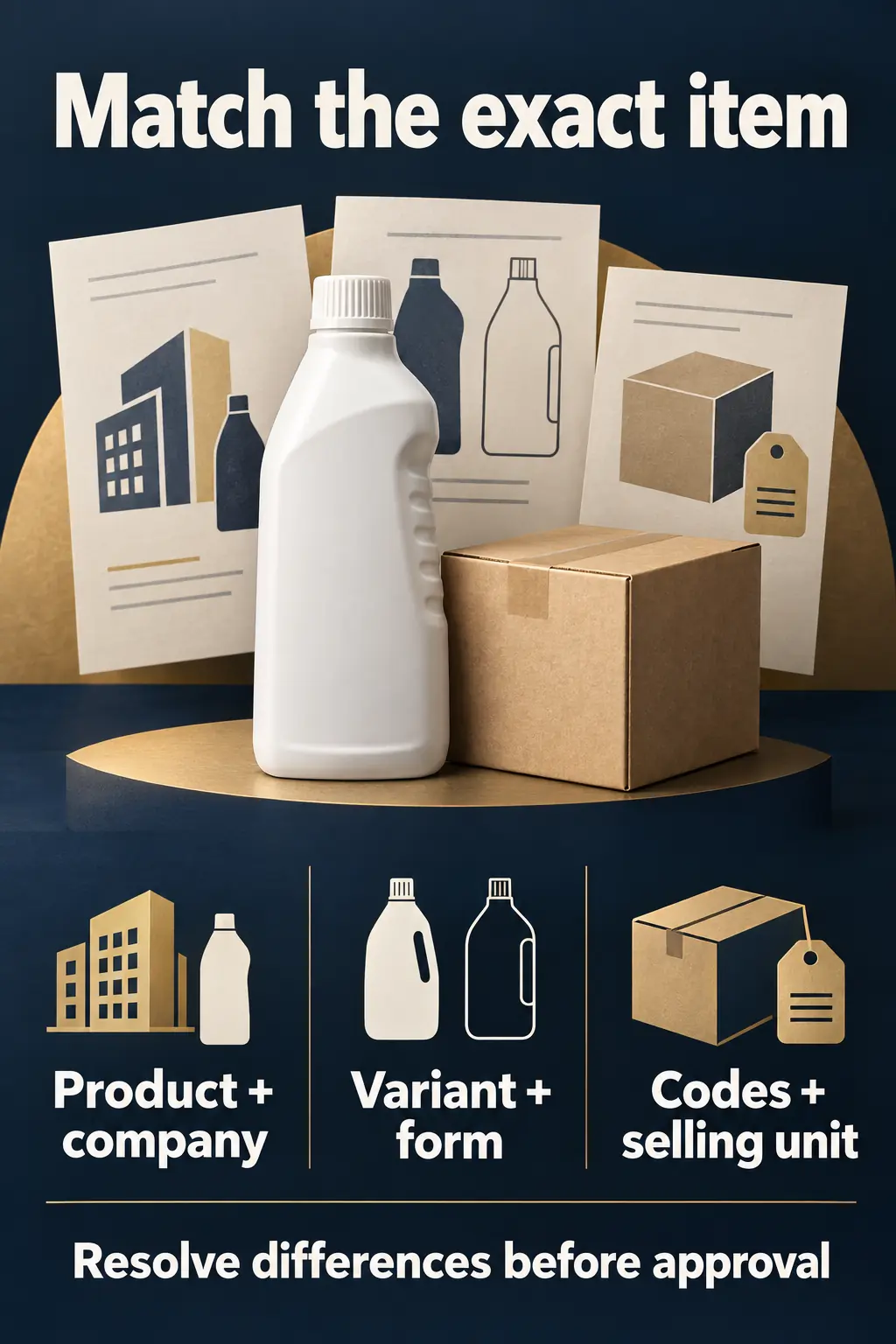
The following comparison is a hotel control for connecting documents that may use different naming systems. It does not assume that every field appears in every EPA record.
| Identity field | Compare across the evidence | Action when unclear |
| Product and company | Official entry, quotation, label, manufacturer information | Resolve shortened names or a different named company |
| Variant and form | Fragrance designation, concentrate or ready-to-use form, intended product type | Obtain documentation for the offered variant |
| Product identifiers | Manufacturer part number, supplier SKU, and any available barcode identifiers | Obtain a written mapping between different codes |
| Selling unit | Container size, units per case, and description of contents | Confirm that the package contains the approved product |
| Claim details | Listing attributes and the exact certification wording requested | Resolve any additional fragrance-free or other claim separately |
EPA’s Download Additional Envirofacts Datasets documents fields that include GTIN, manufacturer part number, and UPC for Safer Choice product data. An identifier field may be empty for an individual record. Do not invent a value or conclude that the product fails solely because the public evidence does not display the distributor’s SKU. Request manufacturer documentation connecting the supplier’s selling code to the named product.
For example, suppose the fictional “Harbor Glass Cleaner” appears on a quote as distributor item HG-12, while its manufacturer documentation uses item HGC-01. No certification is asserted for this invented product. The example shows the identification task: obtain the relationship between those codes, confirm the same product and form, and check the package quantity. Matching bottle color or a shared word in the name would leave that relationship unresolved.
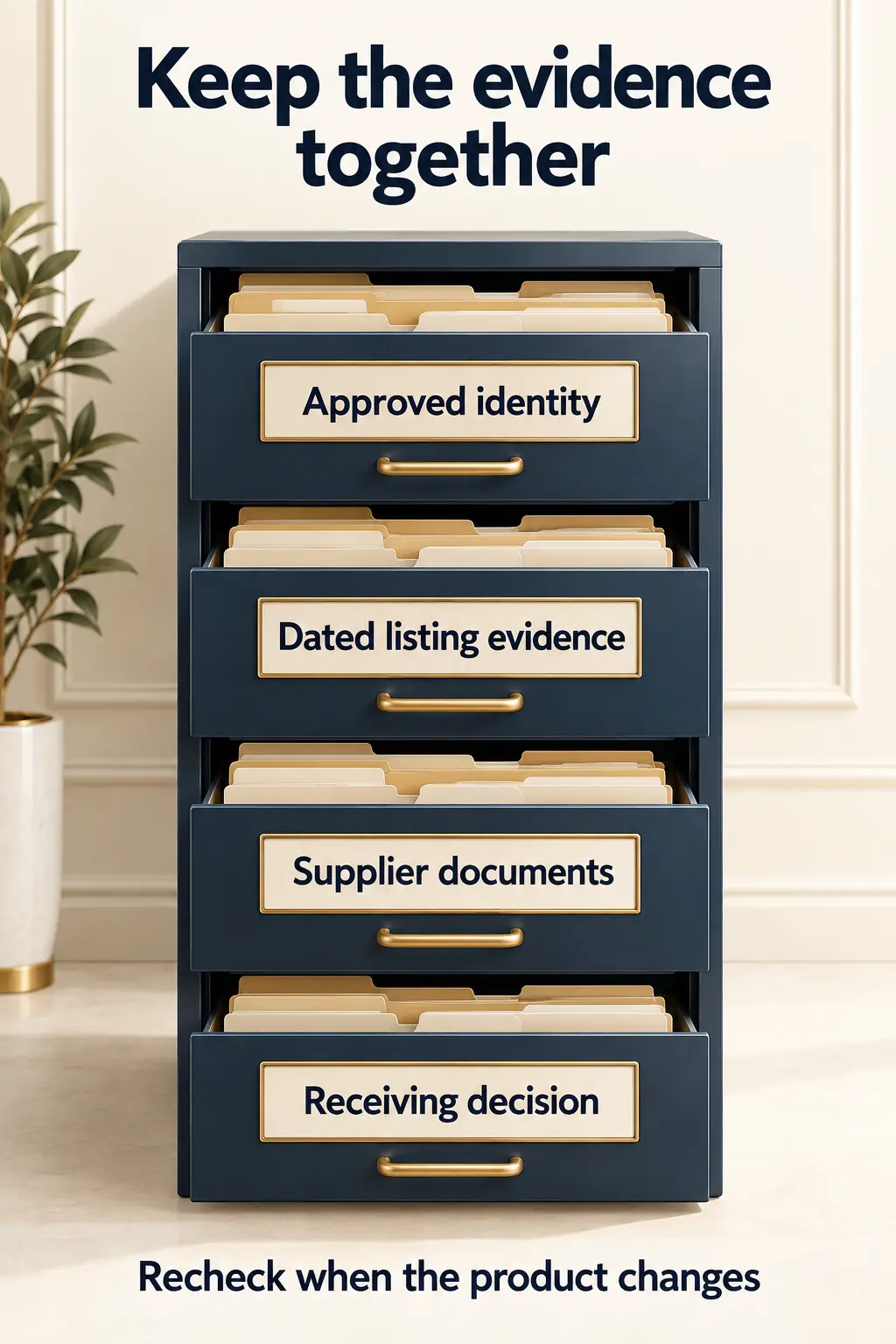
Retain the listing URL and a dated copy of the relevant record with the comparison. A saved screenshot explains what the buyer reviewed; it should not become the sole evidence for every future purchase after the product or claim changes.
How to Resolve Product and Claim Mismatches
When evidence differs, identify the unresolved fact before deciding what to do. A missing distributor code, a changed product name, and a different fragrance are different problems and may require different answers. Send the supplier a focused request that names the quoted item, the candidate official entry, and the discrepancy. Ask for current manufacturer documentation or clarification from the responsible program contact where needed. Until the relationship is established, keep the certification-dependent purchasing decision on hold rather than filling the gap with an assumption.
Apply clear hold and release decisions
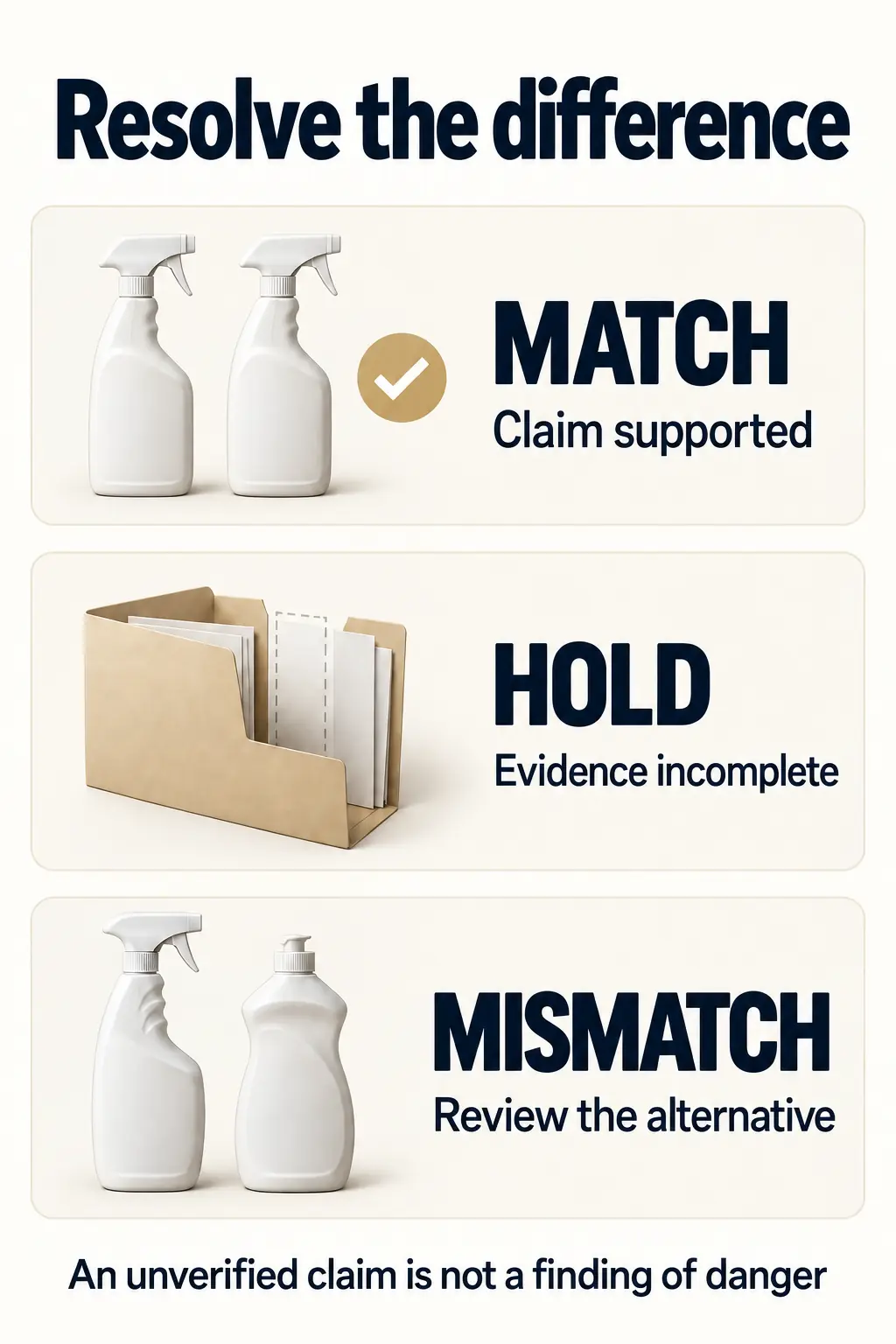
Use this suggested hotel decision logic:
Release the claim check: the current official evidence and supporting identity documents establish the offered product’s claim. Continue with the separate operational approval.
Hold for clarification: a record is missing, an identifier cannot be mapped, a variant differs, or the available evidence is outdated or ambiguous. Assign an owner and a specific question to resolve.
Reject the proposed match: reliable evidence establishes that the offered item is a different product or does not satisfy the stated purchasing requirement. Request a compliant alternative or a formally reviewed specification change.
“Hold” describes the hotel’s approval state. It is not a public accusation against the supplier or a determination that the chemical is dangerous.
Handle private labels and review flags accurately
EPA’s Safer Choice and Design for the Environment (DfE) Standard, section 3.7.1, allows private-label products that are identical or very similar to the certified product, with differing ingredients approved in the partnership agreement. It requires advance permission identifying the private-label product, its owner, and the certified base product. A supplier’s statement that two formulas are “the same” therefore does not, alone, establish the private-label claim. Request evidence of the applicable relationship and permission rather than insisting that every legitimate private label must have an identical name.
A double-dagger symbol (‡) in EPA’s product listing means the company is overdue for its yearly partnership review. It does not automatically mean the product has been decertified. Read the current explanation and obtain clarification before making a procurement decision that depends on standing; do not translate the symbol into a stronger conclusion than EPA states.
Reopen approval when the offered variant changes
Consider a second fictional example: a hotel approved “Cedar Room Cleaner, Fragrance-Free Concentrate,” but the replacement quote says “Cedar Room Cleaner, Citrus Ready-to-Use.” These invented names make no real certification claim. Even if the supplier describes the replacement as equivalent, the hotel has a different identity and operating configuration to review. Do not transfer the earlier approval automatically. EPA’s Frequently Asked Questions on Safer Choice explains that formulation changes involving new ingredients require review. For the hotel, the immediate task is to obtain evidence for what is now being offered and assess the changed use conditions.
How to Document Approval Before Receiving
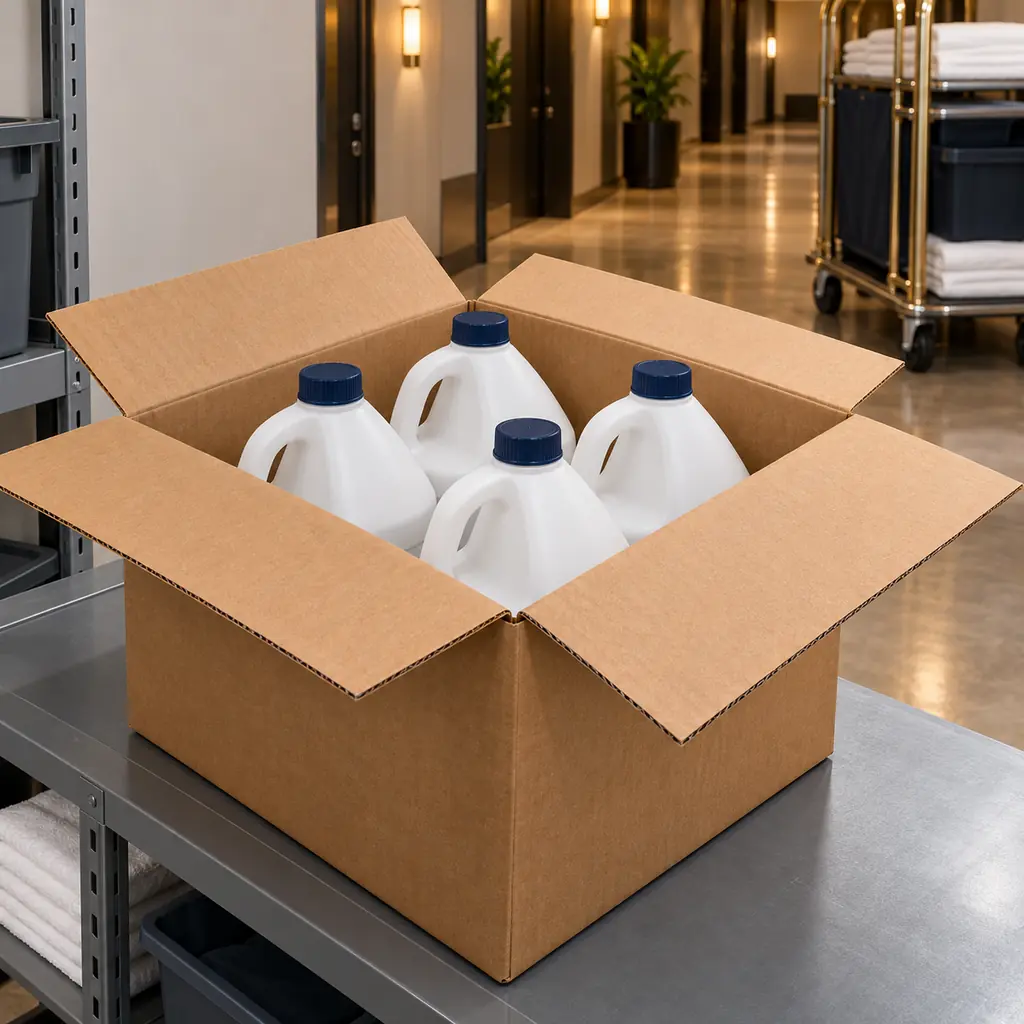
Create one approval record that purchasing, housekeeping, and receiving can all use. It should name the accepted product, connect the selling code to that identity, identify the evidence reviewed, and show any unresolved conditions. Keep claim verification and operational approval in separate fields so a completed database check cannot accidentally authorize use. The checklist below is a proposed hotel workflow, not an EPA-prescribed receiving standard. Assign local owners and use it from quotation review through delivery, with every unresolved item producing a recorded hold, clarification, or approved change.
Complete product-claim approval checklist
| Check | Evidence or action | Completion condition | Suggested owner |
| 1. Define the requirement | Record the exact certification claim, intended cleaning task, and property | Requirement is specific enough to evaluate | Purchasing |
| 2. Identify the offered item | Collect the quote, current label, manufacturer name, product name, variant, and form | Offered identity is complete and consistent | Purchasing |
| 3. Check official evidence | Save the relevant EPA record, URL, check date, and any displayed status notation | Claim is supported or a specific question is logged | Purchasing |
| 4. Map the selling unit | Connect supplier SKU, manufacturer code, available identifiers, package size, and case count | Documents establish what the quoted unit contains | Supplier and purchasing |
| 5. Resolve exceptions | Document private-label relationships, name differences, missing evidence, and changed variants | Each discrepancy is resolved or the item remains on hold | Purchasing |
| 6. Complete operational review | Review intended surfaces, dilution, dispenser compatibility, instructions, and staff needs | Housekeeping approves the defined use or records a hold | Housekeeping |
| 7. Control the order | Put the approved identity, evidence requirement, and substitution rule on the purchase order | Supplier acknowledges the required item and exceptions process | Purchasing |
| 8. Compare the delivery | Check containers and labels against approval; record delivery and batch identifiers where available | Delivered identity matches or affected goods are held | Receiving |
| 9. Release and maintain | Record claim and operational decisions, approvers, evidence location, and recheck triggers | Only approved goods enter use; changes return for review | Purchasing and housekeeping |
Use the editable Word checklist for local procedures, Excel to track decisions, or the PDF for receiving-desk review.
Build these requirements into the solicitation using the hotel supplies RFQ guide. A useful order condition is: “Supply the approved product and variant; alternatives require written approval before dispatch.” Tailor the wording to the hotel’s purchasing terms and identify who can approve an exception.
At receiving, photograph an unexpected label and isolate the affected delivery while the difference is reviewed. Recheck after a product-name or formulation change, a new private-label relationship, an unexplained selling-code change, or a proposed substitution. Set any additional periodic review interval through the hotel’s procurement policy; do not present an invented interval as an EPA requirement.
Conclusion
A defensible Safer Choice purchasing decision connects the official product evidence to the exact item quoted, ordered, and delivered. Preserve that connection through a documented identity comparison, a clear response to unresolved differences, and receiving instructions that staff can apply. Keep the certification check separate from approval for surfaces, equipment, and everyday use. For a housekeeping sourcing request, include the approved product identity, required claim, quantity, destination, and supporting documents when you submit your housekeeping sourcing requirements. Identify alternatives separately so their evidence and operating requirements can be reviewed before the hotel accepts a change.
Frequently Asked Questions
Does an ingredient on the Safer Chemical Ingredients List certify the finished cleaner?
No. EPA’s Safer Chemical Ingredients List, or SCIL, concerns ingredients, not certification of the finished product. EPA’s Safer Choice FAQ distinguishes the two. Request evidence for the actual cleaner instead of accepting a list of eligible ingredients as a substitute for product-level verification.
Is a Safer Choice product automatically fragrance-free?
No. Verify the fragrance-free claim separately. EPA’s Safer Choice Label – Fragrance-Free criteria exclude fragrance materials and masking scents. “Unscented” is not synonymous with fragrance-free, and a qualifying product can still have an odor from its ingredients. Do not use smell or an ordinary Safer Choice logo as the sole approval test.
Does Safer Choice prove that a cleaner disinfects hotel surfaces?
No. Do not infer an antimicrobial claim from Safer Choice certification. EPA maintains a separate DfE-Certified Disinfectants list containing registration and product information. Where disinfection is required, check the relevant registered product and label directions, including the intended use and contact time. EPA’s Learn About Design for the Environment (DfE) Certification explains the efficacy evidence associated with pathogen-kill claims.
Can an old screenshot remain in the approval file?
Yes, as historical evidence of what was checked. It should not silently become a permanent approval for renamed, reformulated, or substituted goods. Keep the original record and add the new review when circumstances change, so the file explains both the original decision and the current approved item.
What if the EPA website is temporarily unavailable?
Record the access problem and keep the certification check open. Existing records may help identify the proposed item, but they do not prove that an unseen current entry is unchanged. Follow the hotel’s escalation process for urgent purchasing; do not mark a fresh verification complete merely to remove the delay.
Can several package sizes share one hotel approval?
They can share an identity review when the supporting documentation establishes that they contain the same approved product and variant. Still record each selling unit, code, and case quantity. Container size can affect storage, manual handling, dispensing, and price comparisons, so those practical details need their own purchasing checks.
References
U.S. Environmental Protection Agency — Search Products that Meet the Safer Choice Standard
U.S. Environmental Protection Agency — Learn About the Safer Choice Label
U.S. Environmental Protection Agency — Download Additional Envirofacts Datasets
U.S. Environmental Protection Agency — EPA’s Safer Choice and Design for the Environment (DfE) Standard
U.S. Environmental Protection Agency — Frequently Asked Questions on Safer Choice
U.S. Environmental Protection Agency — Safer Choice Label – Fragrance-Free
U.S. Environmental Protection Agency — DfE-Certified Disinfectants
U.S. Environmental Protection Agency — Learn About Design for the Environment (DfE) Certification