
The words supplier and distributor are often used as if they describe two completely different kinds of company. In hotel procurement, the boundary is less tidy. A supplier is any organization that provides the product or service you buy. It may be a manufacturer, an exporter, a sourcing partner, a wholesaler, or a distributor. A distributor is a more specific commercial role: it normally purchases or controls goods for resale and adds functions such as inventory, assortment, local delivery, credit, technical support, or warranty coordination.
That distinction matters because the best buying route depends on the purchase, not the title printed on a company’s website. A direct source can be attractive for a large, standardized order that needs custom finishes, private labeling, or factory-level cost control. A distributor may be the stronger choice when a property needs mixed products, smaller quantities, immediate stock, one local invoice, or reliable replenishment. For a hotel opening or renovation, the most practical answer is often a hybrid: buy high-volume or customized lines closer to production, while using distributors or local specialists for stocked, regulated, service-intensive, or urgently replaceable items.
This guide gives purchasing managers a decision framework that goes beyond unit price. It explains what the labels usually mean, how the two routes differ in minimum order quantity, lead time, selection, quality control, logistics, warranty, and replacement continuity, and which questions expose the real commercial model behind the sales pitch. The goal is not to declare one channel universally better. It is to help you choose the route that gives the hotel the right specification, total landed cost, delivery reliability, service coverage, and operational continuity for each product category.

Supplier and Distributor Are Roles, Not Quality Labels
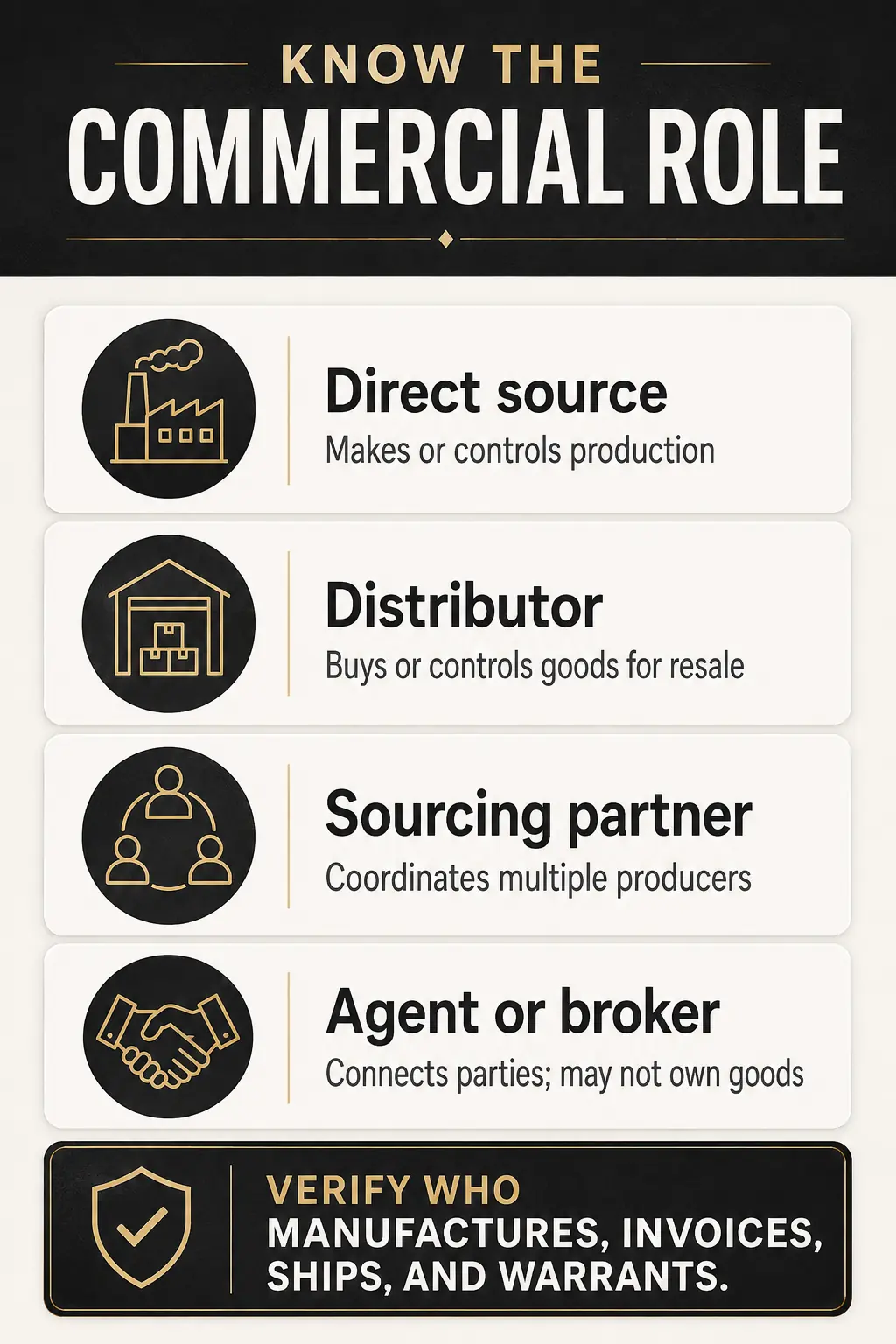
A distributor is always a supplier to its customer, but not every supplier is a distributor. The word supplier is an umbrella term that describes the buying relationship; distributor describes a channel position and usually a resale model. In practice, a hotel supply company may combine several roles. It might hold inventory for standard lines, coordinate production for custom goods, source from multiple factories, and use local partners for installation or after-sales service. Buyers should therefore verify what the company does for the specific category instead of assuming that “direct,” “factory,” “authorized,” or “distributor” guarantees better price, quality, or accountability.
What a direct hotel supplier usually provides
A direct supplier may be the manufacturer itself, a manufacturer-owned sales office, or a trading or sourcing company that places the order with production. Its main advantage is proximity to specification and manufacturing decisions. The buyer may gain more control over materials, dimensions, finishes, packaging, branding, tooling, approved samples, and production scheduling. That access is valuable when the order is large enough to justify setup, engineering, or factory coordination.
Direct does not automatically mean that the seller owns a factory, offers the lowest total cost, or will manage export documentation and claims well. Ask who manufactures the goods, who takes title, who invoices the hotel, where quality control occurs, and which party is contractually responsible if the delivered product differs from the approved sample.
What a distributor usually provides
A distributor generally buys products for resale and earns a margin for making those products easier to buy. The added value may include local or regional inventory, a mixed catalog, lower order quantities, consolidated invoicing, credit terms, rapid delivery, replacement stock, technical guidance, returns handling, and warranty administration. A capable distributor reduces the buyer’s coordination burden and can make small or recurring purchases economical.
The tradeoff is that the distributor may have less control over manufacturing changes, may offer only selected brands or models, and may add another commercial layer between the hotel and the producer. Those costs are not automatically wasteful: inventory, local service, credit, and returns all have real value. The correct question is whether the added service is worth the margin for this purchase.
| Business model | Typical commercial role | What the hotel should verify |
| Manufacturer or direct source | Produces or controls production for the ordered item | Factory identity, capacity, export readiness, sample control, warranty responsibility |
| Distributor or wholesaler | Buys or controls goods for resale and may hold inventory | Stock ownership, authorized status, substitution rules, returns, replenishment, service area |
| Sourcing partner | Coordinates one or more producers and may consolidate categories | Fee or margin model, supplier disclosure, inspection scope, logistics and claims ownership |
| Agent or broker | Introduces or represents a buyer or seller without necessarily taking title | Commission, authority to bind parties, invoice path, liability and conflict disclosure |

The Differences That Matter in Hotel Procurement
The channel decision changes more than the quoted price. It affects how much the hotel must order, how quickly goods can arrive, how many categories can be combined, who approves changes, how quality is verified, and what happens when an item fails after opening. Compare the routes on a common commercial basis: the same specification, quantity, delivery destination, required date, packing standard, inspection scope, warranty, and Incoterm or delivery responsibility. Without that baseline, a direct quote and a distributor quote may represent different products and services even when the product name appears identical.
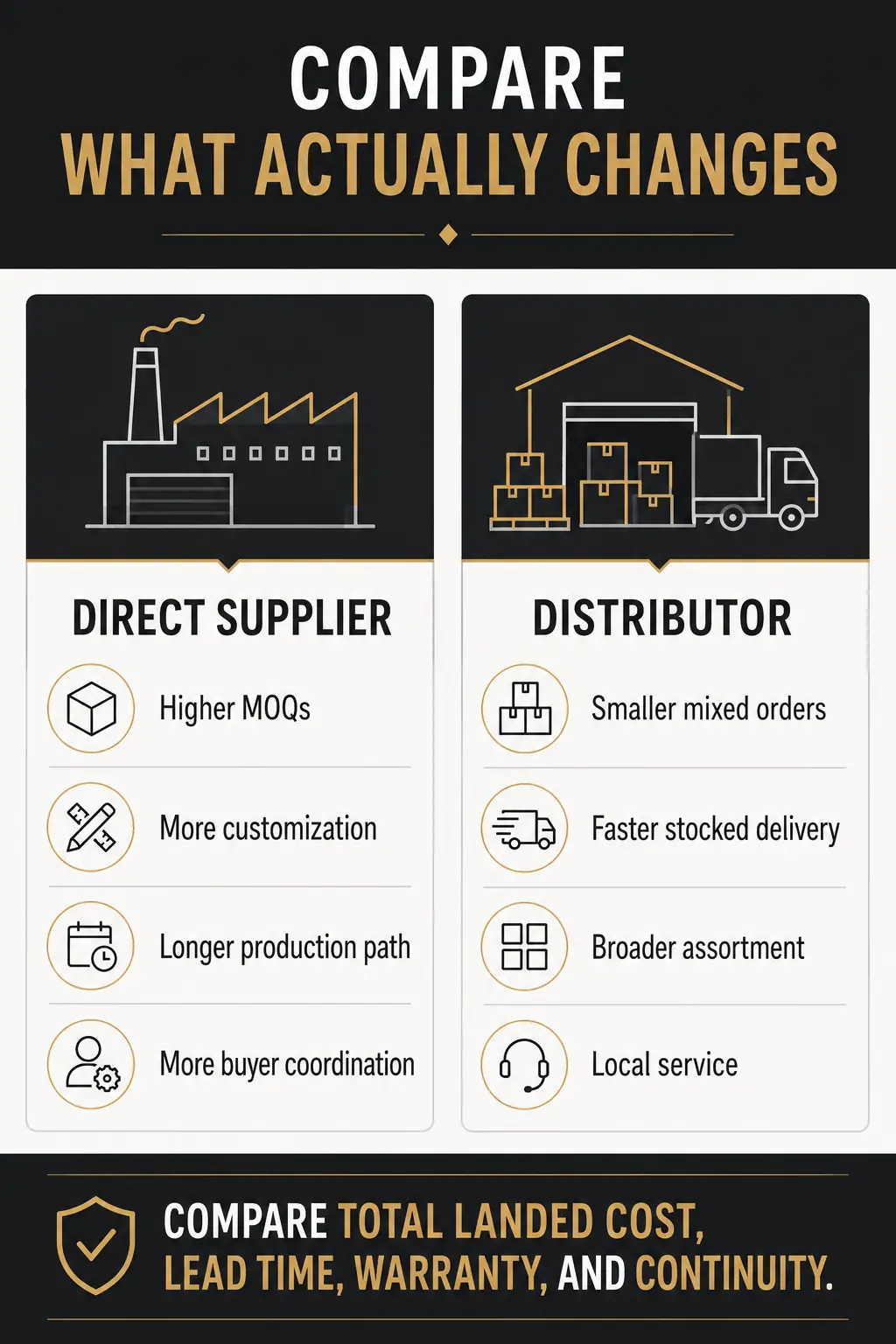
| Decision factor | Direct supplier route | Distributor route |
| Order quantity | Often favors full cartons, production runs, or higher MOQs | Often supports smaller, mixed, or replenishment orders |
| Customization | Usually stronger for dimensions, materials, finishes, branding, and packaging | Usually limited to stocked configurations or supported programs |
| Lead time | Includes sampling, production, inspection, export, and transport | Can be faster when suitable stock is already local or regional |
| Catalog breadth | Deep in the producer’s category but narrower across a full hotel | Broader assortment across brands and adjacent categories |
| Price visibility | May expose production-level pricing but not all buyer-side coordination costs | Includes a resale margin but may bundle inventory, service, credit, and delivery |
| Quality control | Buyer may need stronger sample, inspection, and production oversight | Distributor may prequalify products, but factory and batch controls can be less visible |
| After-sales support | Depends on export capability and distance from the property | Often easier locally for returns, parts, troubleshooting, and warranty coordination |
| Replacement continuity | Strong when production records and approved standards are retained | Strong when the distributor stocks the line; weaker if models are substituted or delisted |
Minimum order quantity is a commercial design variable, not a nuisance to examine after selection. A factory may quote an attractive unit cost only at a production quantity far above the hotel’s usable demand. Excess stock consumes cash and storage space and can become obsolete after a design change. A distributor’s higher unit price can still create a lower total commitment when it allows smaller buys and dependable replenishment.
Speed also needs a precise definition. “Available” may mean raw material is available, production capacity is available next month, stock exists in another country, or finished goods are in a nearby warehouse. Request the quantity physically available, stock location, allocation status, dispatch date, transit basis, and the consequence if the promised stock is sold before your purchase order is accepted.
Finally, separate purchase price from total landed and lifecycle cost. Include samples, tooling, inspection, freight, duty, storage, installation, training, spares, energy, cleaning, maintenance, breakage, returns, warranty administration, and expected replacement. The route with the lowest line-item price may not produce the lowest cost of putting a compliant, usable product into hotel operation.

Choose by Purchase Scenario, Not by Company Label
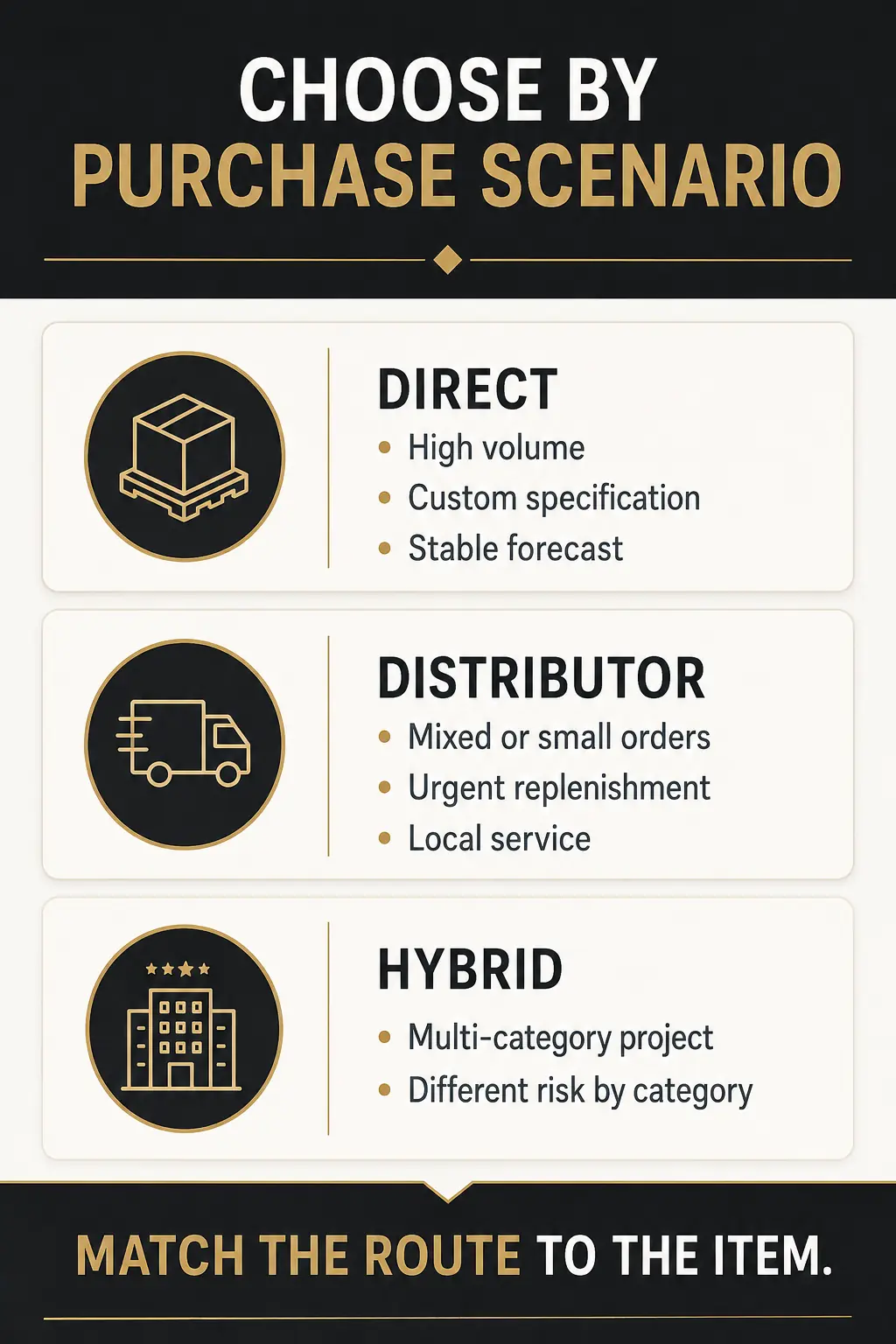
The same hotel may make the correct decision to buy one category directly and another through a distributor. Category conditions should drive the route: volume, specification stability, customization, installation, regulation, replacement urgency, storage capacity, and the hotel team’s ability to manage samples, quality, freight, and claims. Before selecting a channel, define the property requirement and compare alternative supplier models using a consistent scope. KW Hospitality’s wholesale hotel supplies buying framework provides a broader method for translating operating needs into specifications, costs, quality controls, and a weighted award decision.
Buy closer to the source when scale and specification control dominate
A direct route is usually worth investigating for large room counts, portfolio-wide standards, custom furniture, branded amenities, bespoke finishes, special packaging, or products with stable and forecastable demand. The route becomes more attractive when the hotel can commit to the production minimum, approve samples on schedule, document tolerances, arrange inspection, manage import or delivery responsibilities, and hold enough replacement stock.
Direct sourcing is also useful when future repeat orders must match an approved material, color, pattern, tooling set, or construction detail. Contract documents should identify ownership and retention of molds, artwork, specifications, reference samples, and production records. They should also define how a future order will be checked against the original approval.
Use a distributor when availability and service outweigh factory-level control
A distributor is often better for opening shortages, mixed smallwares, replacement parts, maintenance items, foodservice supplies, locally certified equipment, and categories where the hotel cannot economically reach a factory minimum. It is also valuable when rapid delivery, local returns, installation coordination, credit, or one account across several brands reduces operational risk.
For recurring purchases, test the distributor’s replenishment model. Ask which items are stocked, which are special order, the normal and worst-case restock time, whether substitutions require approval, how discontinued products are handled, and whether the hotel can reserve inventory or agree a service level for critical lines.
Use a hybrid strategy for multi-category projects
Hotel openings and renovations rarely fit one channel. A practical package may place high-volume customized guestroom accessories with a direct source, buy branded appliances from an authorized distributor, use local specialists for installation and commissioning, and purchase urgent OS&E top-ups from regional stock. The procurement schedule should show each route, owner, approval gate, delivery milestone, and interface risk so consolidation does not hide accountability.
A hybrid plan works only when the hotel controls the master specification and item schedule. Every line should retain a unique identifier, approved description, quantity, delivery phase, and responsible seller. Otherwise, savings in one channel can be lost through duplicated scope, missing accessories, incompatible interfaces, or unclear warranty boundaries.

How to Compare Either Route Before You Award the Order
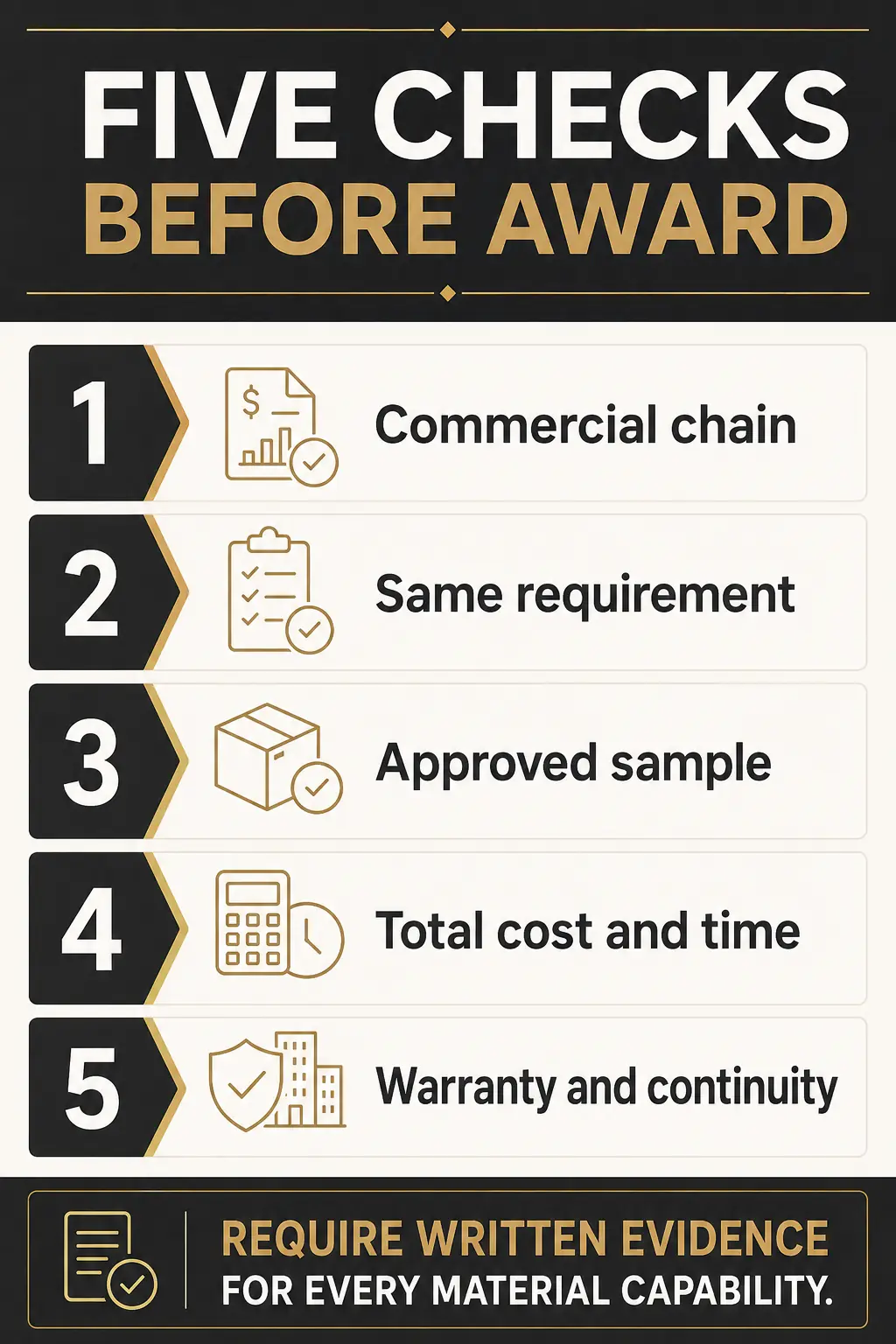
Evaluate the organization that will sign the contract, not an assumed channel label. A distributor with documented stock, trained support, transparent substitutions, and a clear claims process may be safer than an unverified “factory-direct” seller. A capable direct supplier may create better value than a distributor that cannot control specifications or future availability. Use one RFQ baseline, request evidence for every material capability, normalize costs and exclusions, and score both commercial and operational risk before award. The strongest proposal is the one that can prove what will be supplied, by whom, when, under which acceptance standard, and with what remedy if performance falls short.
1. Confirm the commercial chain
Identify the legal seller, manufacturer, brand owner, warehouse location, exporter, importer, installer, and warranty provider. Ask which party owns the goods at each stage and which entity appears on the quotation, invoice, packing list, shipping documents, and warranty. If the seller uses subcontractors or partner factories, define whether substitutions require written approval.
2. Issue the same requirement to every bidder
Provide a line-by-line item schedule with quantities, units, dimensions, materials, finishes, performance, packaging, labeling, delivery destination, required date, sample process, inspection method, and required documents. State permitted alternatives separately from mandatory requirements. The hotel supply RFQ guide explains how to create a common technical and commercial baseline before comparing prices.
3. Control samples, changes, and quality
Define which sample becomes the approval standard, who signs it, where it is retained, and which characteristics will be inspected in production and on receipt. Set measurable tolerances where possible. Require written change control for materials, components, finishes, dimensions, factories, or packaging. A preproduction sample is not enough if the contract does not connect it to batch acceptance and remedies.
4. Normalize total cost and time
Convert every quotation to the same delivery and service basis. Add exclusions and buyer-incurred costs instead of treating them as zero. Compare realistic lead time from final approval through production, inspection, dispatch, transport, customs, local delivery, installation, and operational testing. Include schedule contingency for sample rejection, peak production periods, and documentation corrections.
5. Test after-sales and continuity
Ask how defects are reported, which evidence is required, who pays for return or replacement freight, how quickly critical replacements ship, and whether credits, repairs, parts, or replacement goods are the remedy. For products the hotel must match later, document model-life policy, production record retention, minimum repeat order, spare-parts duration, and notice before discontinuation.
| Question | Why it matters | Evidence to request |
| Who is the legal seller and who manufactures? | Clarifies accountability and supply-chain visibility | Company details, quotation, factory information, authorization if relevant |
| Is the quoted quantity in stock or made to order? | Separates immediate availability from a production promise | Stock location and quantity, allocation or production plan |
| What can change without approval? | Prevents silent substitutions and specification drift | Change-control clause and approved-sample record |
| What is included in the delivery basis? | Makes total landed cost comparable | Itemized freight, duty, insurance, delivery, installation, exclusions |
| Who handles defects and warranty? | Determines the practical remedy after delivery | Claims workflow, response time, warranty terms, local service coverage |
| How will repeat orders match? | Protects design and operational continuity | Model-life policy, retained specifications, reorder MOQ, parts plan |
When the purchase scope is ready, submit a project-specific hospitality supplies RFQ to KW Hospitality. Include product categories, quantities, specifications or reference images, delivery location, required date, customization, sample, inspection, and packing requirements so the proposed sourcing route can be evaluated against the actual project rather than a generic product request.

Conclusion
Do not choose a hotel supplier because “direct” sounds cheaper or a distributor because “local” sounds safer. Choose the commercial route that best fits the item’s volume, customization, urgency, service requirement, replacement risk, and the hotel’s own procurement capability. Direct sourcing is strongest when scale and production control justify the coordination. Distribution is strongest when inventory, assortment, lower quantities, rapid replenishment, local support, or consolidated buying create more value than factory access. For complex projects, a controlled hybrid is often the most resilient answer.
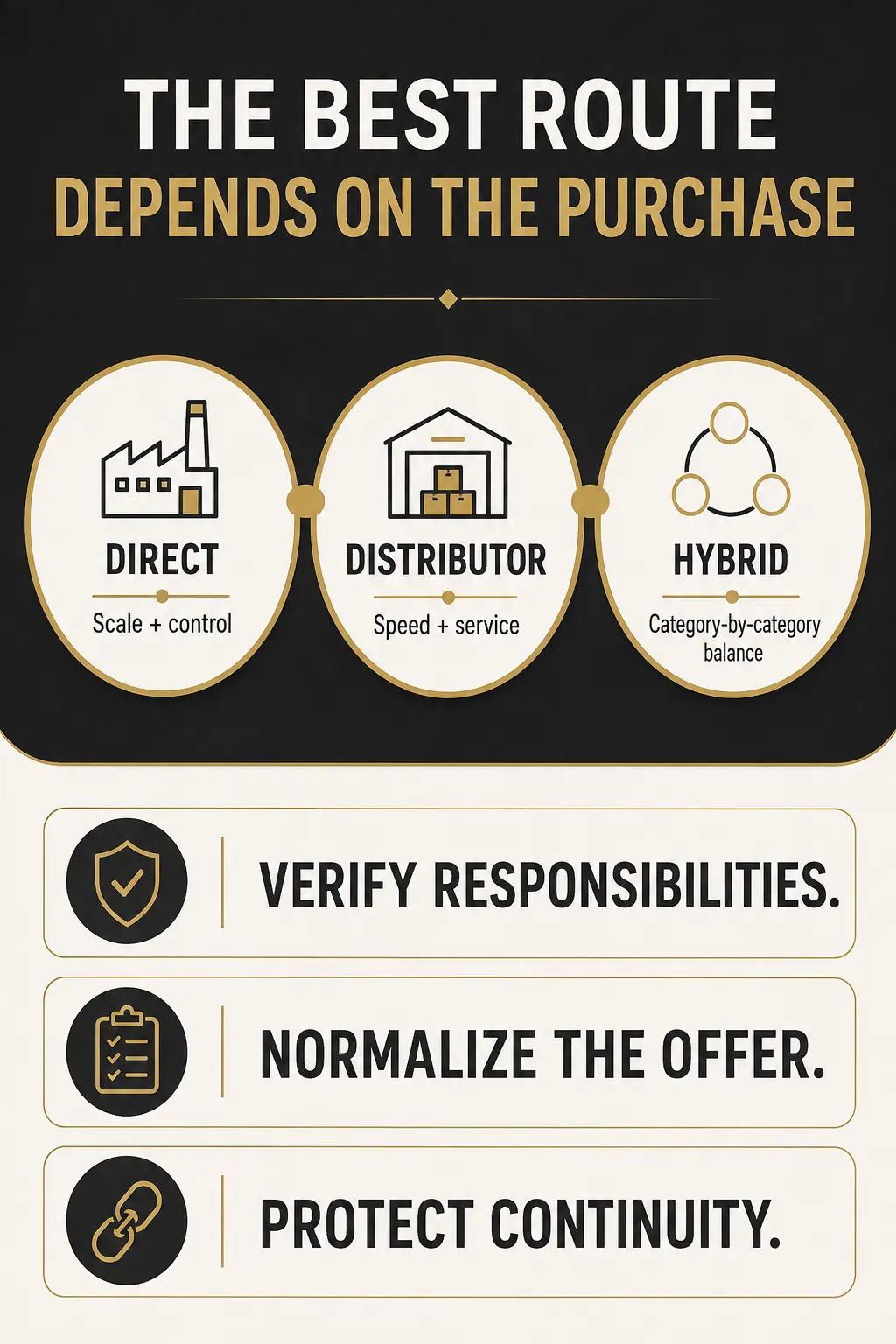
The award decision should rest on verified responsibilities and a normalized offer. Confirm who makes, owns, sells, ships, installs, warrants, and replaces the product. Compare total landed and lifecycle cost, not only unit price. Connect approved samples to measurable acceptance criteria, require written change control, and protect repeat-order continuity. When those controls are present, both direct suppliers and distributors can be excellent partners; when they are absent, either label can conceal avoidable risk.
Frequently Asked Questions
The answers below address the practical questions purchasing teams most often face when choosing between a direct source and a distributor.
Is a hotel supplier the same as a manufacturer?
No. A hotel supplier is any company that supplies products or related services to the hotel. It may manufacture the product, buy it for resale, source it from partner factories, represent a brand, or coordinate several vendors. Verify the role for the specific item and identify the legal seller and manufacturer separately.
Is buying direct from a supplier always cheaper?
Not necessarily. A direct quote may have a lower unit price but require a higher minimum order, longer production lead time, buyer-managed inspection, international freight, duty, storage, and more coordination. Compare total landed and lifecycle cost at the quantity the hotel can actually use.
When is a distributor the better choice for a hotel?
A distributor is often better for mixed or small orders, stocked replacements, urgent opening needs, local delivery, returns, credit, technical support, authorized products, spare parts, and categories requiring installation or local compliance. The added margin can be justified when those services reduce cost or operational risk.
Can a hotel use both direct suppliers and distributors?
Yes. A hybrid sourcing strategy is common in openings, renovations, and multi-category purchases. High-volume customized lines may be sourced closer to production, while stocked, branded, regulated, or service-intensive categories are purchased through distributors or local specialists.
What should a hotel ask before buying from either one?
Confirm the legal seller, manufacturer, stock or production status, specification, permitted substitutions, sample and inspection process, delivery basis, total cost, warranty owner, claims remedy, replacement lead time, and repeat-order continuity. Request written evidence for any capability that affects the award.
Should a hotel compare quotes using unit price?
Unit price is only one input. Normalize the same product specification, quantity, packing, delivery basis, service scope, warranty, and schedule. Then add freight, duty, inspection, storage, installation, maintenance, breakage, returns, and replacement risk to compare the real commercial outcome.